




Abstract
The purpose of this systematic review is to summarize the potential effects of the WeChat and WhatsApp mobile applications in cancer management. This systematic review was written in accordance with PRISMA guidelines. CINAHL, PubMed, ProQuest Nursing and Allied Health Database, PsycINFO, PsycARTICLES, and ERIC were utilized for the literature search. Articles were included if they evaluated the outcomes of using WeChat/WhatsApp for cancer management, and excluded if they were qualitative studies, not published in peer-reviewed journals, protocols for a future study, or conference abstracts. 20 studies were included in this systematic review, with a total sample of 3110 participants. Interventions were utilized to share educational information with participants, follow-up after surgical operations, and in clinical communication. Outcomes, including pain, medication adherence, self-efficacy, quality of life, and depression, were statistically significantly improved in the WeChat/WhatsApp intervention groups in comparison to the control groups or to baseline measurements of the study participants. Outcomes of sleep and rehospitalization rate were improved without reaching statistical significance. Outcomes of anxiety, fatigue, and adverse drug reactions were found to be conflictive among included studies. This systematic review suggested that use of WeChat/WhatsApp on cancer management might improve various physical and psychosocial health outcomes among oncological patients. Limitations of the study include solely reviewing English language articles published in academic journals and most of the studies being from one country. Future research should be conducted in various countries among diverse communities, including rural areas, to ascertain the effects of WeChat/WhatsApp in different populations.
Introduction
Cancer is a disease of high prevalence in the world. In 2018, 18.1 million new cancer cases and 9.5 million cancer-related deaths were reported worldwide. 1 Based on data from 2015 to 2017, an estimated 39.5% of men and women will be diagnosed with cancer at one point during their lifetimes. By 2040, the annual number of new cancer cases is estimated to be 29.5 million, with 16.4 million cancer-related deaths. 1 Cancer management poses a serious financial burden on health systems, with an estimated national expenditure of 150.8 billion dollars in the United States in 2018. 1 Cancer also poses significant physical, social, and financial burdens on patients, their caregivers, families, and governments.
The introduction of technology into health care delivery has allowed for the management of noncritical care within the community, reduced hospitalizations and lowered costs to health systems. 2 The term of mHealth is defined as a health practice supported by mobile devices, including mobile phones, patient monitoring devices, personal digital assistants, and other wireless devices. 3 The integration of mHealth into health care allows for a more personalized, participatory, preventative, accessible, and cost-effective approach to health care delivery. 2 The use of WeChat/WhatsApp in cancer management is a form of mHealth. WhatsApp is the most popular messaging service application in more than 100 countries with over 2.5 billion active users. The greatest use of WhatsApp is in India (390 million users), followed by Brazil (108 million users) and the United States (75 million users). 4 WeChat is among one of the top applications in the world based on user count, currently with over one billion active users and an average 19 million daily active users in the United States.5,6 It is the most popular social network application in China and used by 78% of the 16–64 aged group in the country. 5 The use of WeChat/WhatsApp as a mode of mHealth effectively capitalizes its familiarity since patients can readily navigate the platform and utilize its features.
Although some literature reviews have synthesized the results of using WeChat/WhatsApp for chronic disease management, there is a lack of specific knowledge synthesis on their use for cancer management. In a recent literature review, researchers investigated the value of WeChat in chronic disease management, including diabetes, hypertension, coronary heart disease, and cancer. 7 WeChat was found to facilitate quick communication between providers and patients, acting as an effective tool for health promotion, and follow-up appointments. 7 The absence of an updated review regarding the use of WeChat/WhatsApp in cancer management creates a knowledge gap in this emerging field. In response, research questions of this review were: (1) What are effects of WeChat/WhatsApp related cancer management interventions on patients’ physical health outcomes? (2) What are effects of WeChat/WhatsApp related cancer management interventions on patients’ psychosocial health outcomes?
Methods
The principles of the PRISMA statement 8 was followed in the process of conducting this review. Papers were included if they investigated the use of WeChat or WhatsApp platforms as interventions for patients 18 years or older with oncological diseases. We included quantitative studies published in English peer-reviewed journals. Papers were excluded if they: (a) had a study population that did not relate to oncological diseases, (b) investigated interventions that were not associated with WeChat or WhatsApp, (c) were qualitative studies, (d) were not published in peer-reviewed journals, (e) were protocols for a future study, (f) were conference abstracts, reviews, cross-sectional or case studies, editorials, news articles, patent documents or commentaries. This systematic review did not use animals or recruit human participants. Thus, an ethics approval was not needed.
Databases, such as CINAHL, PubMed, ProQuest Nursing and Allied Health Database, PsycINFO, PsycARTICLES, and ERIC, were selected for the literature search (Figure 1). The databases were systematically searched in the field of Title and Abstract using a combination of the keywords, ((cancer) OR (oncolog*) OR (tumor)) AND ((WeChat) OR (WhatsApp)), in May 2021 by two reviewers (TH & PZ). Consistency in screening was ensured via independent evaluation by two researchers (TH & PZ), and discussions to reach consensus. The citations were exported into EndNote software to remove any duplicates. The rest of the citations were screened for relevance based on the established inclusion and exclusion criteria. Eligible articles were searched for full text documents. Then, the full text documents were carefully reviewed, with reasons for exclusion noted. Further, a manual search was conducted in the reference lists of eligible articles for additional papers not found in the electronic search. In December 2021, another systematic search was conducted to update most recent publications. Study selection flow diagram.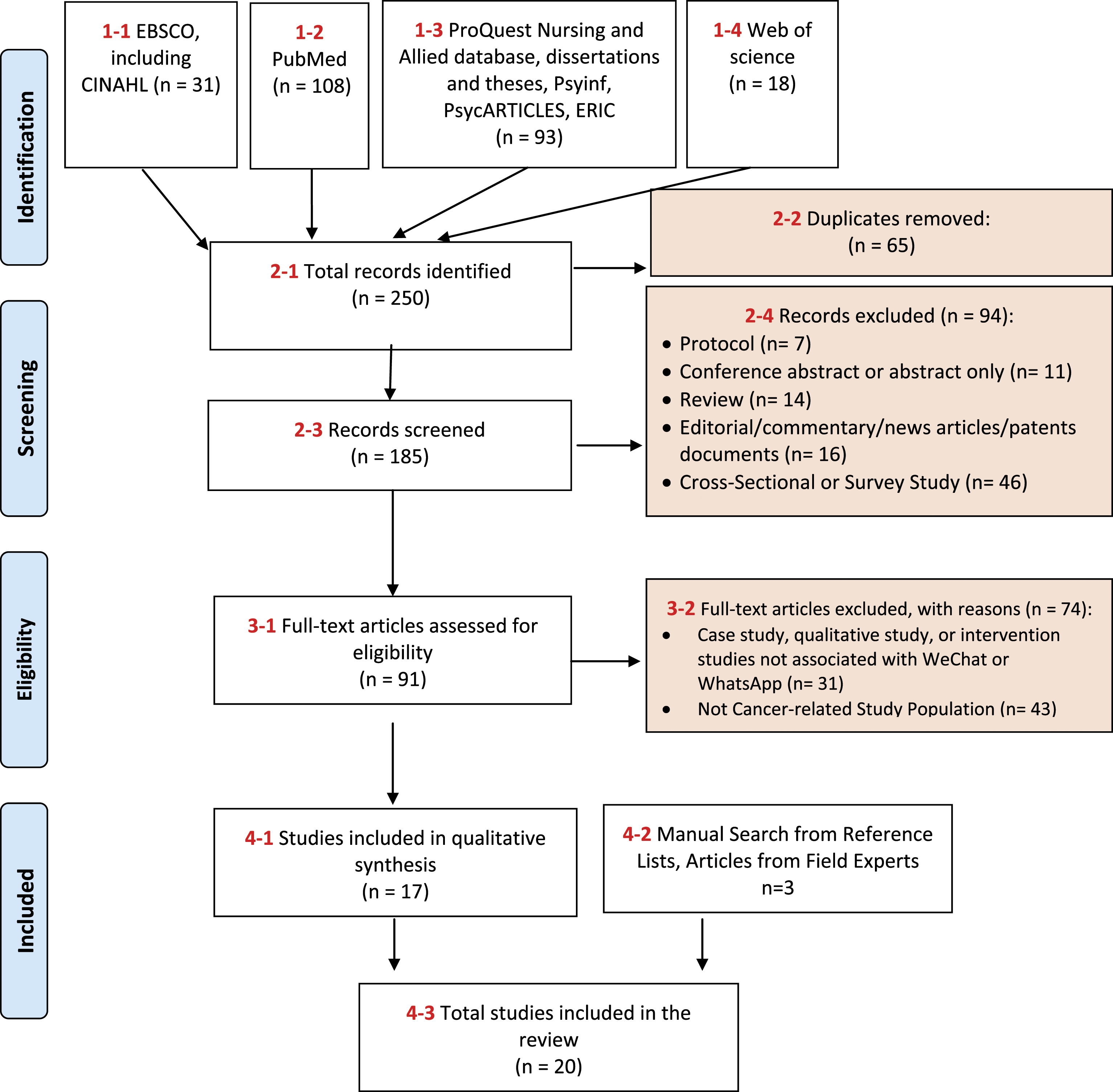
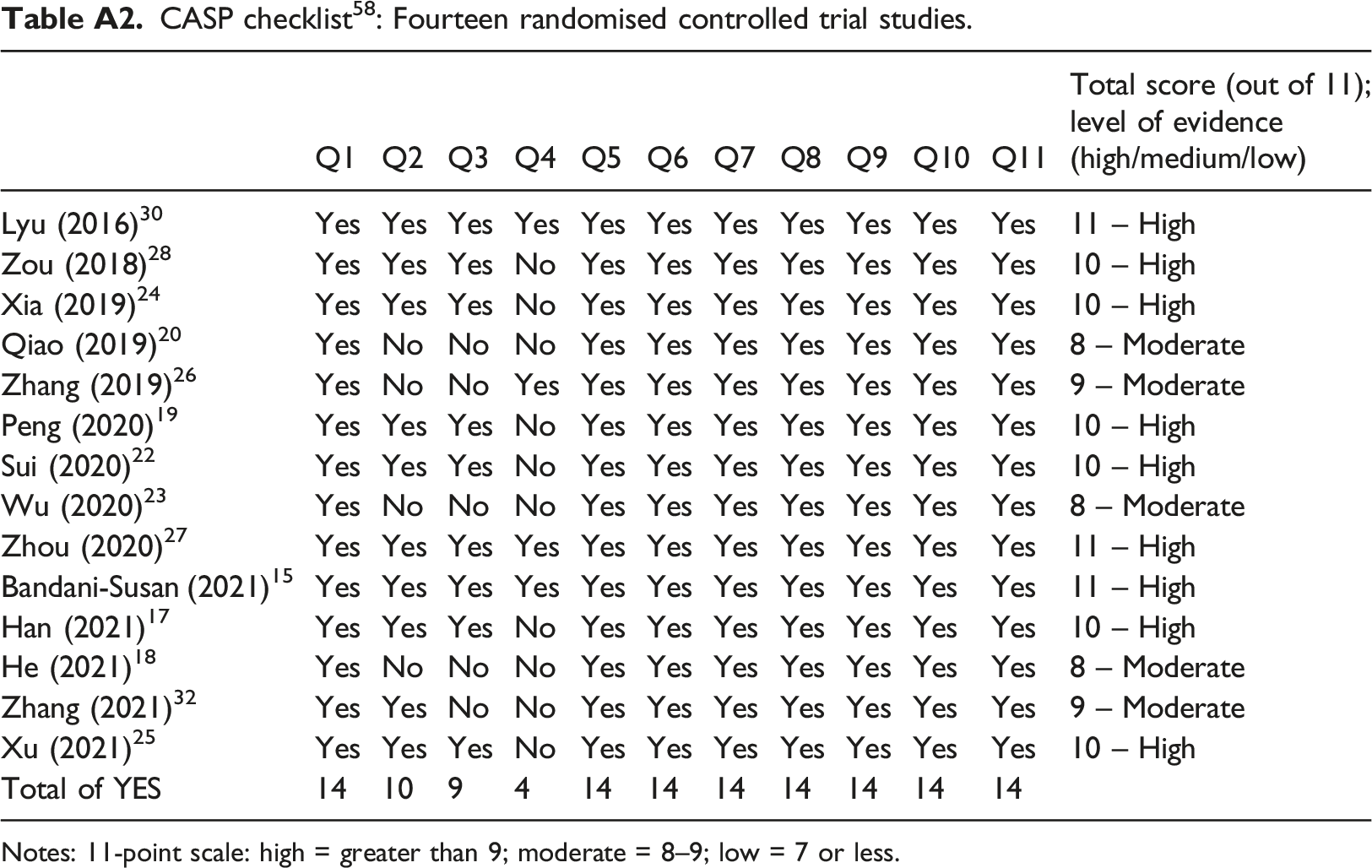
The Critical Appraisal Skills Program Checklists have been applied as quality assessment tools to assess the included papers (Appendix 1). 9 Using these checklists and consulting current literature in the field, we classified the quality of papers as low, moderate, or high according to the final score.10–13 Two researchers (TH & PZ) independently evaluated each article; any discrepancies in ratings were discussed to reach a consensus. All papers included in this review were with moderate to high quality.
Two reviewers (TH & PZ) independently extracted data according to pre-determined criteria. From each paper, various data including authors’ information, publication year, sampling strategies, sample characteristics, study design, features of the intervention, outcomes, measurements, significant findings, and limitations were extracted. The extracted data were entered into an Excel spreadsheet. The reviewers discussed disagreements in data extraction in order to reach a consensus.
Descriptive statistics (e.g. mean and percentage) were used to describe the characteristics of included studies. Then, thematic analysis was used to summarize the findings for each research question. Two reviewers (TH & PZ) independently conducted the thematic analysis. Categorization results were compared and any disagreements were resolved with a consensus decision. Due to the heterogeneity of the measurement tools used by the included studies, a meta-analysis was not performed since attempting to combine different measurements for the same variable would be inappropriate.
Results
Characteristics of included papers
Characteristics of included studies.
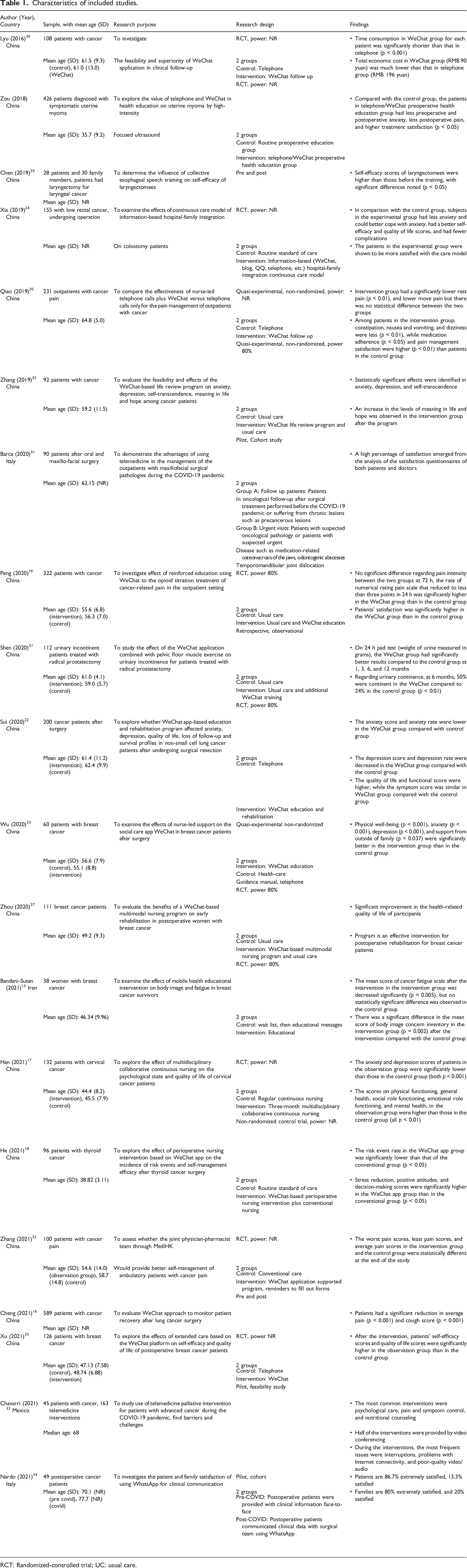
RCT: Randomized-controlled trial; UC: usual care.
Characteristics of the interventions
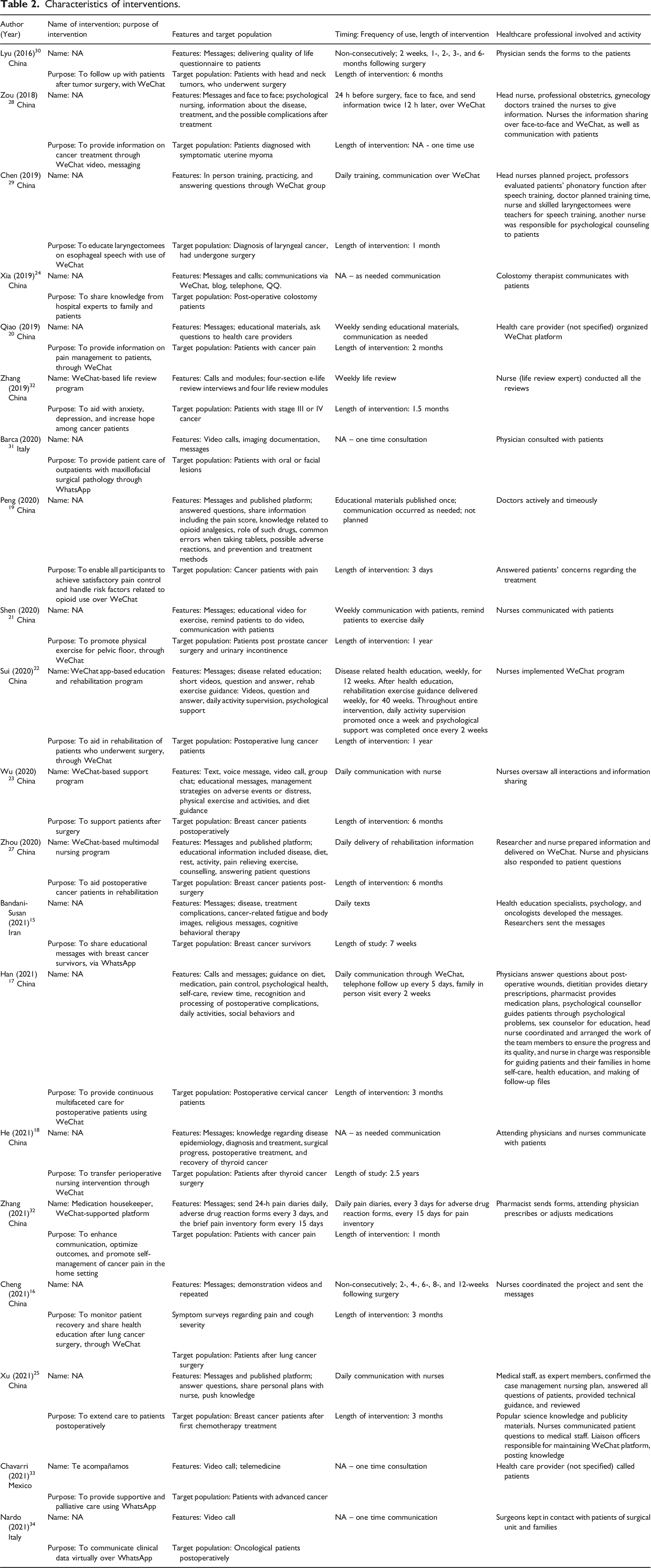
Characteristics of interventions.
Physical health outcomes
Pain
Outcomes of WeChat/WhatsApp interventions.
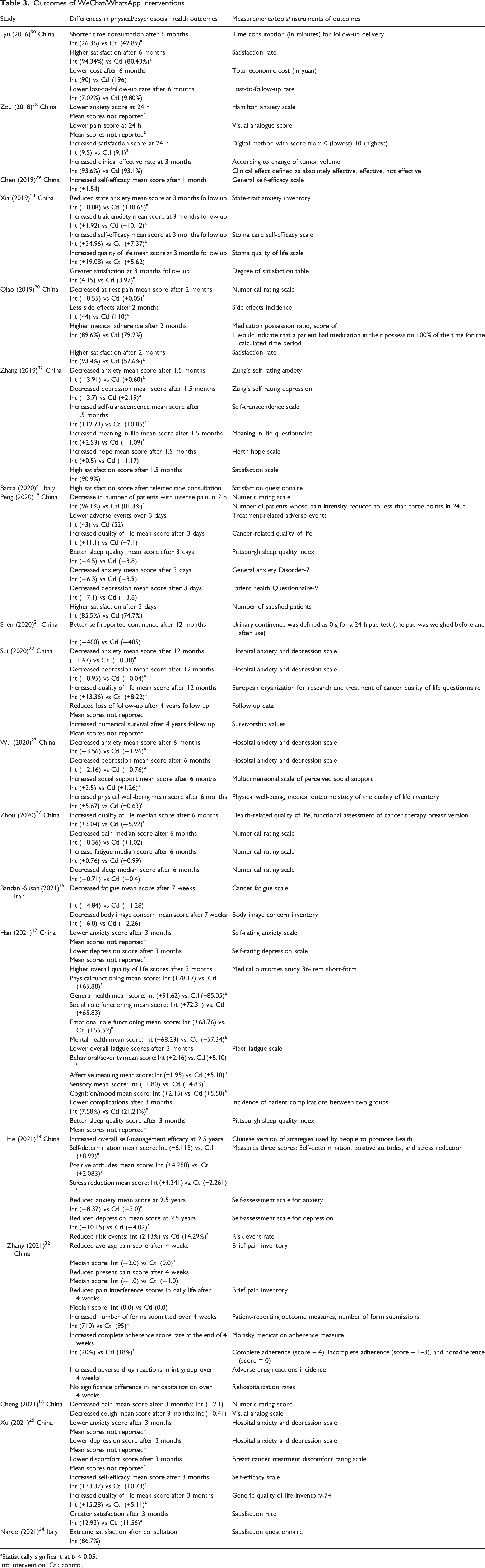
aStatistically significant at p < 0.05.
Int: intervention; Ctl: control.
Fatigue
Three randomized controlled trials (15%, 3/20) reported conflicting findings related to the fatigue outcome using a Numerical Rating Scale, 27 Cancer Fatigue Scale, 15 and the Piper Fatigue Scale. 17 In a randomized controlled trial among a breast cancer population, participants of the WeChat intervention group received daily rehabilitation information through text messages. 27 The intervention group had an increase in the fatigue median score after 6 months. 27 However, the other randomized controlled trials on breast and cervical cancer patients reported significant lower fatigue mean scores after a 7-week WhatsApp intervention (p = 0.005) and statistically significant lower fatigue scores after a 3 month WeChat intervention (p = 0.000).15,17 Daily communication through WeChat occurred as part of a multidisciplinary collaborative continuous nursing intervention, involving guidance on diet, medication, pain control, daily activities, and social behaviors. 17 In the other randomized controlled trial, daily educational messages were sent through WhatsApp regarding breast cancer treatment, fatigue, body image, religion, and cognitive behavioral therapy. 15
Sleep
Three (15%, 3/20) studies (three randomized controlled trials) reported improved sleep outcomes using the Pittsburgh Sleep Quality Index 17,19 and a Numerical Rating Scale. 27 In a non-specified and breast cancer population, better sleep quality mean scores and improved sleep median scores were found in the WeChat intervention group after 3 days and 6 months, respectively.19,27 Another randomized controlled trial reported significant improvements in sleep quality in a cervical cancer study population undergoing the WeChat intervention, after 3 months (p < 0.001). 17
Medication adherence
Two (10%, 2/20) studies (one randomized controlled trial, one quasi-experimental non-randomized trial) reported improved medication adherence using the Medication Possession Ratio 20 and the Morisky Medication Adherence Measure. 32 Both studies found statistically significant higher medical possession ratio scores after 2 months (p = 0.031) and increased complete adherence score rates after 4 weeks (p < 0.001) in a non-specified cancer population.20,32 The randomized controlled trial utilized WeChat to send daily pain dairies, adverse drug reaction forms every 3 days, and pain inventory forms every 15 days. 32 The quasi-experimental non-randomized trial provided information weekly on pain management through WeChat and telephone while the control group received telephone follow up. 20
Rehospitalization rate/incidence of side effects or adverse drug reactions
Five (25%, 5/20) studies (three randomized controlled trials, two non-randomized trials) reported conflicting findings related to the side effects outcome using the calculated Side Effects Incidence, 20 Treatment-Related Adverse Events, 19 Incidence of Patient Complications, 17 Risk Event Rate, 18 Adverse Drug Reactions Incidence, and Rehospitalization Rates. 32 In the studies with an intervention period ranging from 2 months to two and a half years, significantly lower complication, side effects, or risk event incidence were noted between the WeChat intervention groups and the usual care or telephone control groups (p ≤ 0.05).17,18,20 These studies investigated patients with cervical, thyroid, and non-specified cancer. In a randomized controlled trial with a 3-day intervention among patients with non-specified cancer, lower adverse events were reported in the WeChat intervention, but the difference was not statistically significant. 19 However, in a 1-month randomized controlled trial with non-specified cancer patients, a significant increase (p = 0.003) in adverse drug reactions was observed in the WeChat intervention group that received daily pain diaries, adverse drug reaction forms and the Brief Pain Inventory form biweekly. 32
Cough, urinary continence, treatment discomfort, survival
Some outcomes were only reported in a single study using a specific measurement tool, including cough using a Visual Analog Scale, 16 urinary continence using a 24-h pad test, 21 treatment discomfort using the Breast Cancer Treatment Discomfort Rating Scale, 25 clinical effectiveness according to the change of tumor volume, 28 and numerical survival using calculated Survivorship Values. 22 Significant decreases in cough mean scores were reported after 3 months of a WeChat intervention among a lung cancer study population (p < 0.001). 16 As well, after 1 year of WeChat intervention, there was significantly improved self-reported continence in post-surgical prostate cancer patients, compared to the participants’ immediate post-surgical continence (p < 0.001). 21 Statistically significant lower treatment discomfort scores were reported among breast cancer patients after a WeChat and telephone intervention period of 3 months, compared to a telephone control group. 25 In a 4 year follow up period of a randomized controlled trial, there was increased non-statistically significant survivorship values reported when comparing the WeChat intervention group to the telephone control group. 22
Psychosocial health outcomes
Self-efficacy/confidence
Four studies (two randomized controlled trials, one pre-post study, one non-randomized trial) reported improved self-efficacy using the Self-Efficacy Scale , 25 Stoma Care Self-Efficacy Scale 24 General Self-Efficacy Scale, 29 and the Chinese version of Strategies Used by People to Promote Health. 18 In the randomized controlled trials, statistically significant increased self-efficacy mean scores were found in the WeChat intervention group after 3 months (p < 0.001).24,25 The non-randomized trial reported statistically significant increased overall self-management efficacy findings in thyroid cancer patients after two and a half years of WeChat-based perioperative and conventional nursing, in comparison to solely conventional nursing (p < 0.001). 18 To complement the aforementioned studies, the pre-post study reported a significant increased self-efficacy mean score among laryngeal cancer patients after 1 month of the intervention (p < 0.05). 29
Quality of life
Seven (35%, 7/20) studies (six randomized controlled trials, one non-randomized controlled trial) reported increased quality of life outcomes using the Cancer-Related Quality Of Life Tool, 19 European Organization for Research and Treatment of Cancer Quality of Life Questionnaire, 22 Medical Outcome Study of the Quality of Life Inventory, 23 Stoma Quality of Life Scale, 24 Health-Related Quality of Life Functional Assessment of Cancer Therapy Breast Version, 27 Medical Outcomes Study 36-Item Short-Form, 17 and the Generic Quality of Life Inventory-74. 25 Increased quality of life scores were reported in all studies, with six studies reaching statistical significance (p ≤ 0.05).17,22–25,27 These six studies had intervention periods ranging from 3 months to 1 year.17,22–25,27 All six studies compared the effects of a WeChat intervention to a telephone, guidance manual, or routine standard of care control group.17,22–25,27 The research study participants had the following cancer types: rectal, cervical, lung, and breast.17,22–25,27 One randomized controlled trial comparing the WeChat intervention to usual care, for a period of 3 days, reported non-statistically significant improvements in quality of life scores among non-specified cancer patients. 19
Anxiety
Nine (45%, 9/20) studies (seven randomized controlled trials, two non-randomized controlled trials) reported conflicting findings related to the anxiety outcome using the Hospital Anxiety and Depression Scale,22,23,25 the Self-Assessment Scale for Anxiety, 18 the Self-Rating Anxiety Scale, 17 General Anxiety Disorder-7, 19 Zung’s Self Rating Anxiety, 26 State-Trait Anxiety Inventory, 24 Hamilton Anxiety Scale. 28 Statistically significant decreased anxiety mean scores occurred in studies with longer WeChat interventions (one and a half months to two and a half years) compared to telephone or guidance manual control groups (p < 0.05),22,23,25 with the sole exception of the one-time WeChat presurgical communication (p < 0.05). 28 In another shorter randomized controlled trial, with a 3-day usual care and WeChat intervention, decreased anxiety mean scores were reported for anxiety, but statistical significance was not reached. 19 One randomized controlled trial reported conflictive findings on anxiety for the information-based hospital-family integration continuous care intervention group, with decreased state anxiety mean scores, and increased trait anxiety mean scores. 24 However, this can be explained by the intervention group having statistically lower state and trait anxiety mean scores compared to the control group (p ≤ 0.000). 24 Among post-surgical patients, the intervention group received messages and calls sharing an education program on colostomy care from the colostomy therapist. 24
Depression
Seven (35%, 7/20) studies (four randomized controlled trials, three non-randomized controlled trials) reported improved depression outcomes using instruments such as Zung’s Self Rating Depression, 26 Hospital Anxiety and Depression Scale,22,23,25 Self-Rating Depression Scale, 17 Self-Assessment Scale for Depression, 18 and the Patient Health Questionnaire-9. 19 Six studies, ranging from 3 months to two and a half years, reported statistically significant lower depression scores in the WeChat intervention groups compared to usual care, telephone, or guidance manual control group (p ≤ 0.05).17,18,22,23,25,26 One randomized controlled trial reported non-statistically significant decreased depression mean scores with a WeChat intervention of 3 days. 19 The studies investigated the impact of the interventions on populations with lung, breast, cervical, thyroid, and advanced cancer.17–19,22,23,25,26
Social support, spiritual outcomes, body image concern
Some outcomes were only reported in one single study using a specific measurement tool, including social support using the Multidimensional Scale of Perceived Social Support, 23 positive spiritual outcomes using the Self-Transcendence Scale, Meaning In Life Questionnaire, Herth Hope Scale, 26 and body image using the Body Image Concern Inventory. 15 Non-statistically significant increased social support mean scores were reported among a breast cancer study population, after a 6-month WeChat education intervention (p = 0.209). 23 In the quasi-experimental non-randomized study, the intervention group underwent a WeChat life review program and usual care for one and a half months, while the control group received usual care. 26 Spiritual outcomes reached statistical significance demonstrated by an increased self-transcendence mean score (p = 0.001) and increased meaning in life mean score (p = 0.001), but the differences in hope mean score were not significant (p = 0.0980). 26 In addition, significant decreased body image concern scores were reported by breast cancer patients after 7 weeks of a WhatsApp educational intervention (p = 0.002). 15
Discussion
Summary of findings
Findings of this review suggested that the use of WeChat and WhatsApp in cancer management has potential effects on physical and psychosocial health outcomes among oncological patients. Physical outcomes explored in the included studies were pain, fatigue, sleep, medication adherence, re-hospitalization rate or incidence of side effects, cough, urinary continence, treatment discomfort, and survival outcomes. Psychosocial outcomes explored were self-efficacy, quality of life, anxiety, depression, social support, spiritual, and body image concerns. This review found that certain outcomes, including pain, medication adherence, self-efficacy, quality of life, and depression, were significantly improved in the WeChat/WhatsApp intervention groups in comparison to control groups or baseline measurements. In outcomes of sleep and re-hospitalization rate, improvements were reported without reaching statistical significance. In addition, the potential effects of WeChat/WhatsApp on anxiety, fatigue, and adverse drug reactions were found to be conflictive among included studies.
Physical health outcomes
Our findings indicated that the use of WeChat/WhatsApp in cancer management has the potential to improve pain control. The significant impact of the pain outcome has been supported in another research study, which investigated the use of WeChat video calling in a post-total knee arthroplasty population, with a statistically significant pain score difference reported between the WeChat intervention and routine care group. 35 The similarities of the results may be due to the post-treatment nature of the study population, with pain being a key indicator of either surgery or cancer treatments. The correlation of decreased pain and the use of WeChat/WhatsApp has major implications for cancer management and may improve the lives of patients.
Our findings indicated that the use of WeChat/WhatsApp in cancer management has the potential to improve medication adherence. In this review, two studies investigated the impact of WeChat/WhatsApp on medication adherence, and both studies reported a significant difference between intervention and control groups. Medication adherence in cancer management is crucial in achieving optimal quality of life as cancer medication non-adherence has been shown to lead to lower survival rates and reoccurrence of disease.36–38 Consistent with our findings, one randomized controlled trial examining the influence of an educational WhatsApp intervention among diabetes and hypertension patients reported a clinically significant 15% increase in medication adherence after the intervention. 39 Given the importance of medication adherence in cancer management, interventions using WeChat/WhatsApp could have notable impacts on disease treatment.
Psychosocial health outcomes
Our findings indicated that the use of WeChat has potential effects on self-efficacy among cancer patients. This finding is consistent with another randomized controlled trial evaluating the use of WeChat in a diabetic study population. 40 The trial reported significant improvements in self-efficacy among the WeChat intervention group compared to routine care. 40 Among cancer patients, previous literature has reported high self-efficacy to be associated with increased healthy behaviors such as regular exercise and communication with healthcare providers, greater determination in achieving desired health outcomes, and higher quality of life. 41
Our findings indicated that the use of WeChat/WhatsApp has potential beneficial effects on quality of life. This finding is supported by a literature review of 98 publications, exploring the impacts of social media on breast cancer survivors. 42 Among the included studies, psychosocial well-being was most commonly measured as an outcome of interest. 42 The literature review concluded that online groups and communities may improve the well-being of breast cancer survivors by providing opportunities for social engagement. 42 In addition, in a pre-posttest study among persons with dementia and their caregivers, supplementary video conferencing health care through Zoom, WhatsApp, or FaceTime was reported to reverse the decline in quality of life. 43
Our findings indicated that the use of WeChat/WhatsApp might have potential effects on depression outcomes among cancer patients. Depression is one of the most common symptoms affecting cancer patients, and is a risk factor for reduced survival. 44 Consistent with our findings, a cross-sectional research study investigated the prevalence of depression among cancer patients and reported a significant difference between depression in users of social networks and non-users. 44 In addition, a systematic review of 42 studies concluded that social media can provide social, emotional, or experiential support in patients with chronic diseases, such as cancer. 45 Treatments combining the use of WeChat/WhatsApp and medicine may improve depressive symptoms among cancer patients, ultimately improving health outcomes.
Our findings indicated that the use of WeChat has potential effects on social support; however, we only found one study reporting on the outcome. Consistent with our findings, a single-group pilot study among breast cancer survivors investigated a targeted physical activity intervention, via the MapMyFitness application, and utilized a social cognitive theory-based, Facebook-delivered health education intervention. 46 The ability to engage in social roles or activity were greatly improved after the use of the MapMyFitness application and Facebook intervention. 46 Our findings are also supported by a literature review, which highlighted that social media helps to improve well-being by allowing breast cancer survivors to engage with wider social networks and connect with peers having similar experiences. 42 Social media has been emphasized to improve social relations of cancer patients; however, further research on WeChat/WhatsApp is necessary to clarify its effects on social support.
Conflictive outcomes
In this review, conflictive findings were reported for the anxiety, fatigue, and adverse drug reactions health outcomes. The majority of the included studies found potential effects of WeChat/WhatsApp on anxiety in cancer patients. However, one randomized controlled trial reported an increased trait anxiety mean score after 3 months of participation in an information-based WeChat-associated intervention. 24 This result can be explained by the timing of measuring scores, with the initial measurement taking place before the surgery, and the comparison taking place 3 months after discharge, when participants could be feeling anxiety post-surgery. In regard to the fatigue outcome, one randomized controlled trial studying breast cancer patients reported an increased fatigue score amongst the WeChat intervention group. 27 This trial was specifically studying post-operative women with breast cancer, and those in early rehabilitation from intensive surgery, which could have increased their levels of fatigue. 27 In comparison, the other studies investigated breast cancer survivors and inpatient cervical cancer participants who had not undergone intensive surgery prior to study participation.15,17 Lastly, one randomized controlled trial reported a significant increase in adverse drug reactions incidence after a WeChat intervention. 32 The authors noted in the discussion that the pain management team had added new drugs for pain management during the study period, which may have caused increased adverse drug reactions. 32 Thus, the result may not be an effect of the WeChat intervention.
Use of WeChat/WhatsApp during the COVID-19 pandemic
Among 20 included studies, three (15%, 3/20) pilot studies investigated the use of WhatsApp in cancer management during the COVID-19 pandemic and reported high patient satisfaction to this innovative intervention.31,33,34 Consistent with our findings, studies demonstrate the success of using WhatsApp or telephone services in maintaining health communication between patients, caregivers, and physicians.47–49 Many oncological patients may be immunosuppressed from previous chemotherapy/radiation treatments, and subject to greater risk of infection. 50 By implementing technological solutions, immunosuppressed oncological patients can experience the full extent of cancer management while reducing their exposure to infectious agents.
Limitations of utilizing WeChat/WhatsApp in cancer care also exist. WeChat/WhatsApp communication is not a complete substitute for in-person visits and utilizing this technology may not be feasible for all patients or clinical situations. For example, one included pilot study indicates that technical difficulties may occur and interfere with the delivery of health care. 33 Determined from a clinical study, a significant limitation of WeChat/WhatsApp is the inability to conduct a face-to-face physical examination. This means that physicians cannot weigh their patients and accurately prescribe dosages for weight-based drugs.51,52 As corroborated by research in the field, included articles indicate that Internet connections should be secure, transmitted data must be uncorrupted, and lastly, confidentiality must be maintained.26,34,53 As well, patient privacy must be ensured in all situations, and further security measures must be taken when transmitting clinical information online. Patient privacy and data security are the major concerns during use of WeChat and WhatsApp in healthcare. These concerns have created barriers to the global adoption of WeChat and WhatsApp in healthcare practice. In the current 20 studies, there is no report on security measures taken. Current literature suggested developing guidelines in the management and use of WeChat and WhatsApp in order to prevent the unwanted consequences.54,55 We also encourage future researchers to complete a full technology assessment to ensure patient privacy in use of online communications. 53
Implications
Findings of this review have implications for cancer patients, health care providers, health care organizations, communities, and society. For cancer patients, utilizing familiar online communication tools such as WeChat or WhatsApp will provide increased accessibility and facilitate contact with physicians via mobile devices. This is especially important when patients face financial, geographical, or physical limitations to accessing health care. WeChat/WhatsApp is used more frequently in developing countries, as they are more accessible compared to Text Messaging Services, which may require external payment. For health care providers, WeChat/WhatsApp provides a convenient and dynamic method for remote follow up with patients. The use of mHealth also allows for physicians to have continuous communication with patients, compared to conventional care. Health care organizations could also benefit from utilizing WeChat/WhatsApp by reducing costs and time on administrative tasks. Physicians will be able to virtually connect with patients instead of coordinating a time when both parties can physically be present at the office. This limits time spent on transportation and inherently reduces the need for large office spaces. The introduction of mHealth can facilitate more equality in accessing timely care in rural communities; however, efforts must be made to mobilize stable Internet access in such geographical locations before implementing mHealth programs.
Limitation and future research
There are some limitations in this review. Firstly, this review only included articles written in English. Studies focusing on WeChat or WhatsApp have been written in a variety of languages; however due to our research team knowledge, we were solely able to include English articles. Secondly, included articles were published in academic peer-reviewed journals, and articles from industrial or commercial publications were excluded. The majority of the included studies in this review were conducted in China; thus, our findings cannot be generalized to all cancer patient populations. Thirdly, there is a large variation in intervention design and implementation process. We noticed this limitation and included Table 2 to describe the features of each intervention. In the future, research studies should carefully review existing literature and design interventions through evidence-based approaches. We recommend that future studies can investigate the impact that duration, number of messages or calls, and types of messages or calls has on cancer patients. Lastly, the ages of the cancer patients were not specified in this review, which may impact findings since younger patients might be more comfortable navigating online platforms.
This review identified several directions for future research. Firstly, there is a need to disentangle conflicting findings of WeChat/WhatsApp and health outcomes within the current literature. For example, future research should examine the effects of WeChat/WhatsApp on anxiety, fatigue, and adverse drug reactions in a large-scale randomized controlled trial. Secondly, access to health services continues to be an issue in rural communities 56 and further research should be done to uncover the impacts of using WeChat/WhatsApp to connect with rural cancer patients. Finally, the majority of the studies were conducted in one country, China, limiting the generalizability of the findings. Future research should be encouraged in various countries and settings to further investigate the effects of WeChat/WhatsApp.
Conclusion
This review summarizes the potential effects of WeChat/WhatsApp use in cancer management on physical and psychosocial outcomes. Throughout the included studies, the applications were utilized to the full extent of the platforms, with knowledge being transmitted through public accounts, messages, push reminders, and video and audio calls. This review suggested that use of WeChat/WhatsApp on cancer management might improve various physical and psychosocial health outcomes among oncological patients. Future research should be conducted in various countries among diverse communities, including rural areas, to ascertain the effects of WeChat/WhatsApp in different populations.
Footnotes
Author contributions
Conceptualization, PZ and TH; methodology, PZ; formal analysis, PZ and TH; data curation, PZ and TH; writing of original draft preparation, TH and PZ; writing of review and editing, PZ, TH, YL, NT, MD, HZ, and CZ; supervision, PZ; funding acquisition, PZ. All authors have read and agreed to the published version of the manuscript.
Declaration of conflicting interests
The author(s) declared no potential conflicts of interest with respect to the research, authorship, and/or publication of this article.
Funding
The author(s) disclosed receipt of the following financial support for the research, authorship, and/or publication of this article: This research was funded by the Social Sciences and Humanities Research Council Institutional Grant (Ref # 102090).

Appendix
CASP checklist
57
: Six cohort studies. Notes: 12-point scale: high = greater than 10; moderate = 9–10; low = 8 or less. CASP checklist
58
: Fourteen randomised controlled trial studies. Notes: 11-point scale: high = greater than 9; moderate = 8–9; low = 7 or less.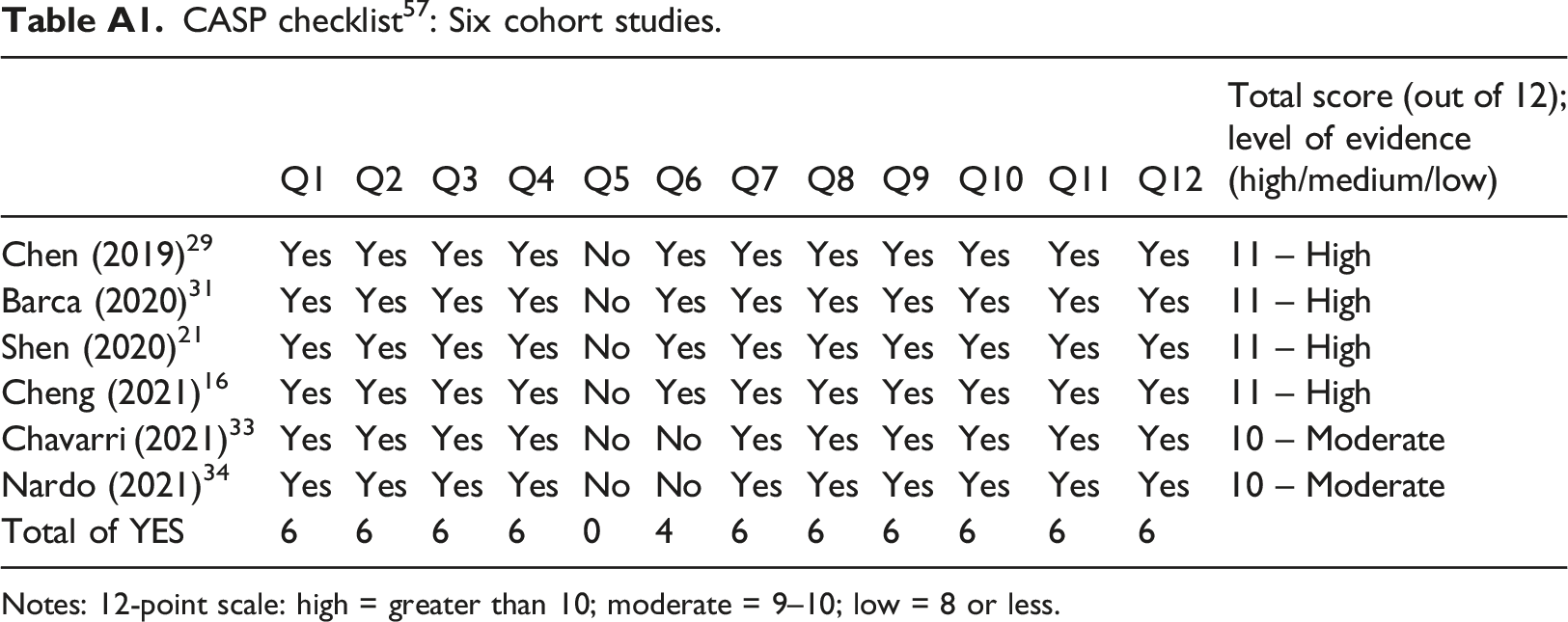
Q1
Q2
Q3
Q4
Q5
Q6
Q7
Q8
Q9
Q10
Q11
Q12
Total score (out of 12); level of evidence (high/medium/low)
Chen (2019)
29
Yes
Yes
Yes
Yes
No
Yes
Yes
Yes
Yes
Yes
Yes
Yes
11 – High
Barca (2020)
31
Yes
Yes
Yes
Yes
No
Yes
Yes
Yes
Yes
Yes
Yes
Yes
11 – High
Shen (2020)
21
Yes
Yes
Yes
Yes
No
Yes
Yes
Yes
Yes
Yes
Yes
Yes
11 – High
Cheng (2021)
16
Yes
Yes
Yes
Yes
No
Yes
Yes
Yes
Yes
Yes
Yes
Yes
11 – High
Chavarri (2021)
33
Yes
Yes
Yes
Yes
No
No
Yes
Yes
Yes
Yes
Yes
Yes
10 – Moderate
Nardo (2021)
34
Yes
Yes
Yes
Yes
No
No
Yes
Yes
Yes
Yes
Yes
Yes
10 – Moderate
Total of YES
6
6
6
6
0
4
6
6
6
6
6
6
Q1
Q2
Q3
Q4
Q5
Q6
Q7
Q8
Q9
Q10
Q11
Total score (out of 11); level of evidence (high/medium/low)
Lyu (2016)
30
Yes
Yes
Yes
Yes
Yes
Yes
Yes
Yes
Yes
Yes
Yes
11 – High
Zou (2018)
28
Yes
Yes
Yes
No
Yes
Yes
Yes
Yes
Yes
Yes
Yes
10 – High
Xia (2019)
24
Yes
Yes
Yes
No
Yes
Yes
Yes
Yes
Yes
Yes
Yes
10 – High
Qiao (2019)
20
Yes
No
No
No
Yes
Yes
Yes
Yes
Yes
Yes
Yes
8 – Moderate
Zhang (2019)
26
Yes
No
No
Yes
Yes
Yes
Yes
Yes
Yes
Yes
Yes
9 – Moderate
Peng (2020)
19
Yes
Yes
Yes
No
Yes
Yes
Yes
Yes
Yes
Yes
Yes
10 – High
Sui (2020)
22
Yes
Yes
Yes
No
Yes
Yes
Yes
Yes
Yes
Yes
Yes
10 – High
Wu (2020)
23
Yes
No
No
No
Yes
Yes
Yes
Yes
Yes
Yes
Yes
8 – Moderate
Zhou (2020)
27
Yes
Yes
Yes
Yes
Yes
Yes
Yes
Yes
Yes
Yes
Yes
11 – High
Bandani-Susan (2021)
15
Yes
Yes
Yes
Yes
Yes
Yes
Yes
Yes
Yes
Yes
Yes
11 – High
Han (2021)
17
Yes
Yes
Yes
No
Yes
Yes
Yes
Yes
Yes
Yes
Yes
10 – High
He (2021)
18
Yes
No
No
No
Yes
Yes
Yes
Yes
Yes
Yes
Yes
8 – Moderate
Zhang (2021)
32
Yes
Yes
No
No
Yes
Yes
Yes
Yes
Yes
Yes
Yes
9 – Moderate
Xu (2021)
25
Yes
Yes
Yes
No
Yes
Yes
Yes
Yes
Yes
Yes
Yes
10 – High
Total of YES
14
10
9
4
14
14
14
14
14
14
14