




Abstract
Digital transformation has become inseparable from education, and its implementation has broadly increased due to the increased adoption of e-learning during the COVID-19 pandemic. The present study evaluated the levels and influence of computer anxiety and digital readiness for academic engagement among undergraduate students. A cross-sectional study was conducted on 272 medical students enrolled in a medicine program. Two previously validated instruments were adopted. We examined the association between students’ sociodemographic variables, internet use, and perceived academic performance during e-learning and their computer anxiety and digital readiness. The results show a significant effect of gender, age, and internet use on students’ computer anxiety and digital readiness. Males’ information-sharing behavior and skills outperformed those of females, and students’ computer anxiety decreased with increasing age. In addition, the results indicate that the greater the students’ internet use, the better their digital readiness for academic engagement. Furthermore, computer anxiety and digital readiness affect students’ perceptions of their academic performance in e-learning. The rapid rate of technological advancements and the integration of e-learning into education means that careful attention must be paid to student characteristics as well as their skills. This will allow educators to create a successful, personalized learning framework.
Keywords
Introduction
Higher education institutions are promoting digital transformation that allows the implementation of digital tools in all aspects of students’ academic experiences, and digital readiness and computer acceptance are vital to successfully incorporating these technologies into a curriculum.1,2 Students who experience high levels of computer anxiety—that is, the fear and apprehension felt when considering the implications of using technology—may face barriers in their academic experience and performance.3,4 Moreover, digital readiness for academic engagement, which is defined as “technology-related knowledge, skills, and attitudes and competencies for using digital technologies to meet educational aims and expectations in higher education,” 5 is necessary for college students’ learning outcomes and experiences. 6
Even though we live in a very technically advanced world, students’ willingness to adopt digital technology in education and academic literacy cannot be assumed, and not all students are equally prepared for sudden transformations in technology and digital learning.7–10 Most governments around the world temporarily locked down educational institutions to control the spread of the COVID-19 pandemic. To maintain learning continuity during this situation, educational systems suddenly shifted to e-learning for distance learning, with entire courses delivered online. E-learning can be supported in diverse forms, including virtual classrooms, audio and video tape, and e-mails, to mention a few. A recent study evaluating the digital readiness of higher education students and its effect on socio-emotional experiences demonstrates that students need support to adapt to the challenges of e-learning. 2 Previous studies have shown that students’ sociodemographic characteristics (such as gender, age, and computer experience) are correlated with their levels of digital appetite.11–14 The results of those studies, however, are contradictory and differ with education delivery formats as well as cultural and social factors.
Although extensive research has been conducted to address the factors that can enhance students’ academic experience in e-learning environments,7,15–17 the correlation of computer anxiety and digital readiness to academic performance has yet to be discussed in the context of e-learning. 18 A growing body of research has explored students’ digital readiness levels,2,5,9 however, the extent to which these levels are affected by students characteristics is not fully explored. 5
We believe that this exploration is also important in traditional settings. Universities around the world are increasingly adopting digital assignments, online discussion forums, and social media platforms for communication. 19 The benefits of including such technological advancements are several. For example, students and instructors benefit from saved data or records of all communications and submitted assignments, which enables a system of monitoring students’ academic achievements and progress. In addition, many medical schools’ laboratories are equipped with smart screens, digitalized video, and bedside computer charting, enabling students to practice various skills and procedures and actively engage in learning through those practical skills. Evaluating the healthcare students’ computer anxiety and digital readiness is critical in such a learning environment and to provide an insight into the future workforce competency.20,21
The present study aimed to provide an understanding of medical students’ readiness for e-learning and for computer technology in general. The objectives of the study were • to evaluate computer anxiety and digital readiness among a sample of medical students, • to investigate the relationship between computer anxiety and digital readiness, • to determine the sociodemographic factors associated with students’ computer anxiety and digital readiness, and • to determine whether there is a significant association between computer anxiety and digital readiness and students’ perceptions of academic performance in an e-learning environment.
Materials and methods
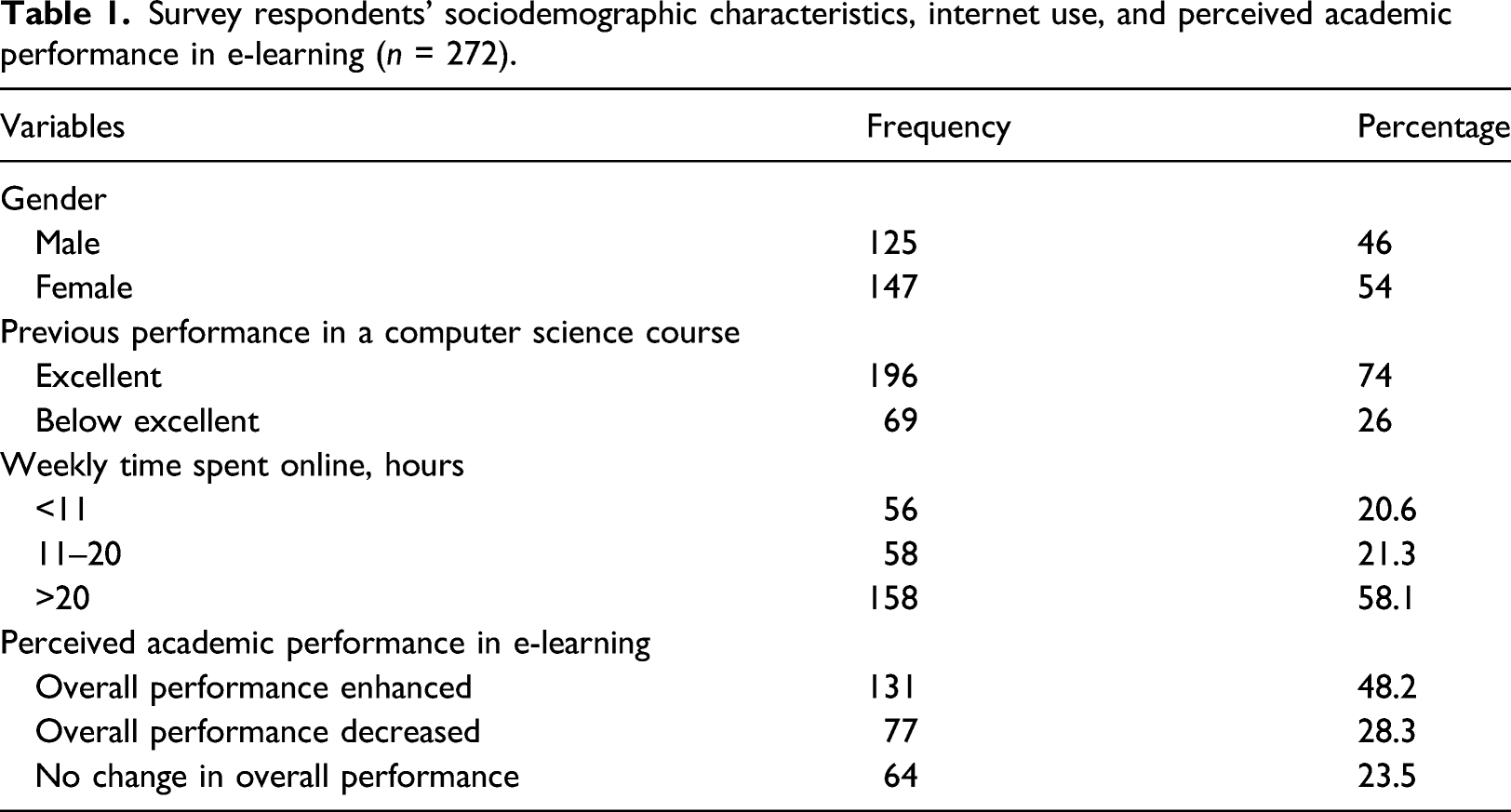
This cross-sectional study was conducted at the College of Medicine, King Saud Bin Abdulaziz University for Health Sciences, Saudi Arabia at the time when e-learning was employed during the COVID-19 pandemic. The college adopted a common approach to implement e-learning, using diverse platforms such as Blackboard Collaborate and Microsoft Teams. Through these platforms, students attended and participated in classes and had presentations, discussions, and meeting with one another to accomplish the required educational tasks, such as problem-based learning sessions, and personal and professional development presentations as well as course lectures. Additionally, video-based sessions were conducted in place of the required physical presence during practical lectures. A total of 272 of the 781 students enrolled in the second to sixth year of the medical program completed the survey. Students who failed to attend at least one exam for the enrolled blocks were excluded from this study. The participants’ mean age of was 21.2 (SD = 1.5) years, and their overall academic performance was excellent, with 199 (73.2%) students having an excellent grade point average (GPA) (4.5 or above) and 73 (26.8%) having a GPA below excellent (below 4.5). GPA was reported on a scale of 5.
The data collection tool in our study was a survey comprising two previously validated measuring scales: the Computer Anxiety Scale (CAS) and Digital Readiness for Academic Engagement (DRAE) scale. The scales’ reliability was measured using Cronbach’s alpha. The 16-item CAS 22 measured computer anxiety among the study subjects, who responded on a 5-point Likert scale ranging from “strongly disagree” to “strongly agree.” The scale includes items such as “I feel anxious whenever I am using computers” and “I am confident in my ability to use computers” (reversed item), with higher scores indicating greater computer anxiety. The minimum and maximum scores range from 16 to 80. The Cronbach’s alpha reliability coefficient of the CAS in this study was 0.89, and the validity of the CAS was ensured by the counsel and evaluation of three experts before application. To measure the students’ digital readiness, the DRAE scale 5 was adopted, which was developed to understand the collective influence of digital competencies in various academic learning activities on students’ engagement. All 17 items are measured on a 5-point Likert scale. The DRAE comprises five subscales: digital tool application (DTA), information-seeking skills (ISS), information-sharing behavior (ISB), digital media awareness (DMA), and digital application usage (DAU). The scores of the 17 items can be calculated individually for each subscale, with higher scores indicating a higher level of readiness. Each of these subscales is important in improving college students’ digital competencies. All the scales were internally consistent (the Cronbach’s alpha coefficient ranged from 0.68 to 0.89). The data were collected more than 20 weeks after the start of e-learning during the COVID-19 pandemic via an online survey (i.e., Google Forms) with three reminders over the course of 12 weeks.
Variables
In addition to the CAS and DRAE scales, sociodemographic variables were included in the research instrument. The choice of variables was based on the literature review.14,23,24 The student characteristic variables—gender, age, prior undergraduate computer experience, and number of hours on the internet per week—were used to investigate their influence on the student’s computer anxiety and digital readiness for academic engagement. The students’ prior experience was assessed by their earlier computer science course grades at a college preparatory school before joining the medical program. The course is mandatory for all students entering the medical program. As the grades were predominately high, the variable was classified into two categories: excellent (a grade of A+ or A) or below excellent (B+ and below). Self-reported time online per week was assessed by the question “How many hours a week do you spend using the internet?”
Other factors that were examined in previous studies and found to be correlated with computer anxiety and digital readiness were not examined here, as they were irrelevant. For example, English proficiency 1 is a requirement of entry to the medical program, and the English proficiency level was high based on grades in an English course taken by the students before entering the college of medicine.
The student’s perceived academic performance during e-learning was assessed by the question “How would you describe your overall academic performance during e-learning?” There were three response options: “overall performance enhanced,” “overall performance decreased,” and “no change in overall academic performance.” The academic performance during e-learning was considered an outcome variable and the computer anxiety and digital readiness levels of students as factors of performance.
Statistical analysis
Continuous and categorical variables are expressed as mean (SD) and percentages, respectively. The associations between the categorical variables were tested using the chi-square test, and the correlations between quantitative variables were estimated using Spearman’s coefficient. In this study, the multivariate general linear model (GLM) was used to assess the effects of categorical factors and age as covariates on computer anxiety and digital readiness. The GLM was used because the dependent variables (the CAS and DRAE scales) were correlated. Before the analyses, the assumptions of parametric statistics (i.e., normality, homogeneity of variances, linearity, and multicollinearity) were tested. The effect of each variable on the combined scales was evaluated by Pillai’s trace. Univariate and multivariate outliers were identified and eliminated from the analysis, resulting in a final analysis sample of 272, with six observations removed. When a main effect or an interaction was significant for scores on the subscales in a multivariate test, a univariate analysis of variance test was performed separately for each subscale to locate the sources of the differences. Bonferroni post hoc pairwise comparisons were used. Partial η 2 was used as an estimate of effect size (partial η 2 : small = 0.01, medium = 0.06, large = 0.14). 25 First, all the factors and their interactions were tested, and nonsignificant interactions were removed from the final model. R-squared values are reported, which represent the percentage of the variance explained in each dependent variable accounted for by the factors in the model. To examine the association between computer anxiety and the DRAE subscales and academic performance, a multinomial regression analysis was conducted, as the outcome here is a categorial (three-level) variable. A p-value of <.05 was considered statistically significant. The data were analyzed using the JMP software package (JMP 14, SAS Institute, Cary, North Carolina).
Ethical consideration
The students were informed (by consent forms) of the aim of the study and were promised anonymity and confidentiality. Participation in the study was voluntary. After ethical review, the study was approved by the ethics committee at King Abdullah International Medical Research Centre (Study Protocol SP20/495/J).
Results
Survey respondents’ sociodemographic characteristics, internet use, and perceived academic performance in e-learning (n = 272).
Descriptive statistics, bivariate correlations, and internal consistency (alpha) for computer anxiety scale and digital readiness for academic engagement subscales.
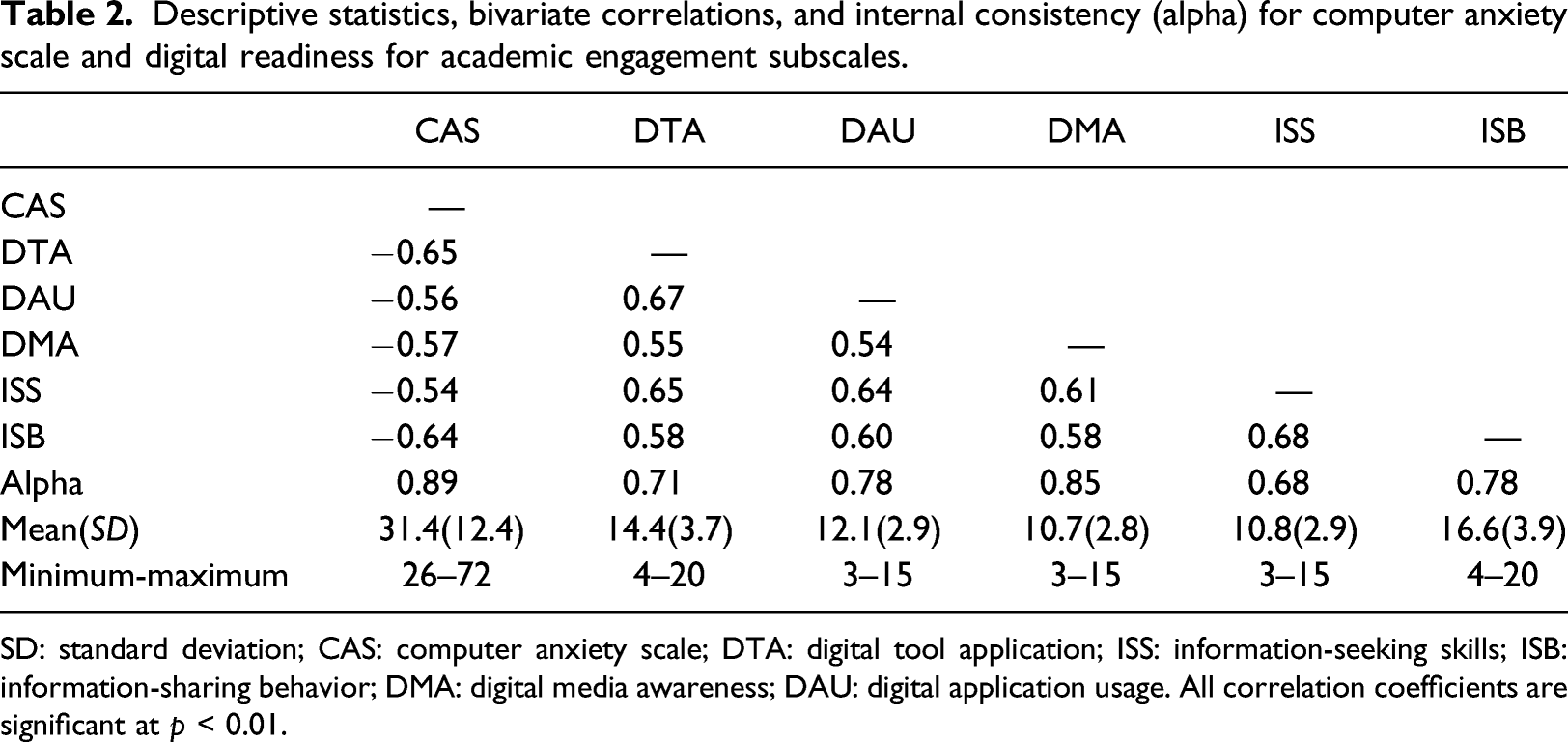
SD: standard deviation; CAS: computer anxiety scale; DTA: digital tool application; ISS: information-seeking skills; ISB: information-sharing behavior; DMA: digital media awareness; DAU: digital application usage. All correlation coefficients are significant at p < 0.01.
Gender, previous computer science score, internet use, and age
The assumption of the homogeneity of covariances was not met (Box’s M = 651.5, F = 4.6, p = .003). However, the GLM is relatively robust against the violation of this assumption when the sample size is adequate. 26 Therefore, Pillai’s trace was used to examine the data.
Performance in a previous computer course had no significant effect on the dependent variables, although the p-value was very close to significance (Pillai’s trace = 0.05, p = .051, partial η 2 = 0.04). The results show significant strong main effects of gender (Pillai’s trace = 0.11, p < .001, partial η 2 = 0.11), time spent on the internet (Pillai’s trace = 0.20, p < .001, partial η 2 = 0.10), and age (Pillai’s trace = 0.09, p < .001, partial η2 = 0.09) on the combined dependent variables.
General linear model of computer anxiety scale and digital readiness for academic engagement subscales (n = 272).
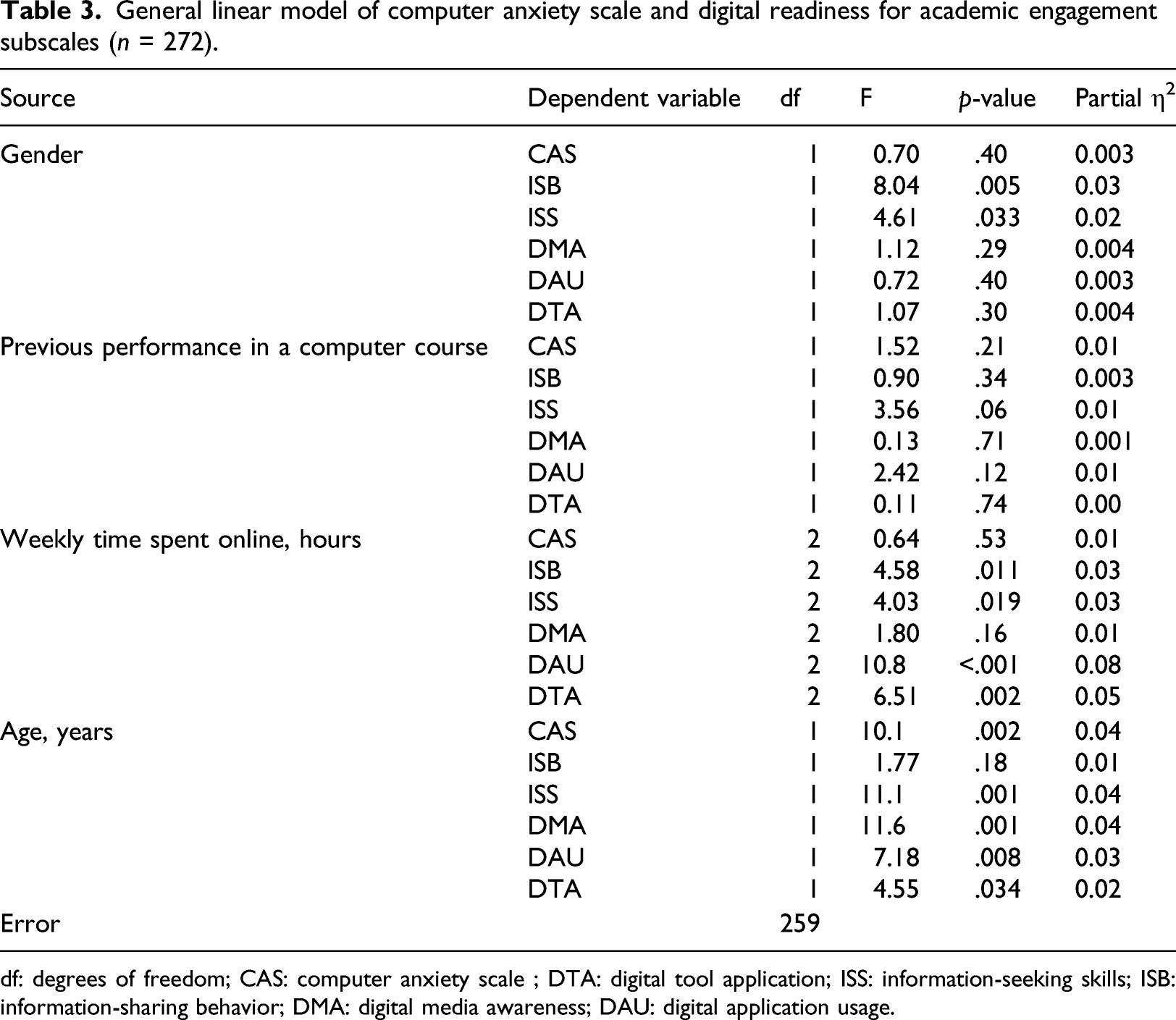
df: degrees of freedom; CAS: computer anxiety scale ; DTA: digital tool application; ISS: information-seeking skills; ISB: information-sharing behavior; DMA: digital media awareness; DAU: digital application usage.
Estimated marginal means (EMM) and standard errors (SE) for the scores of computer anxiety and digital readiness by gender, previous performance in computer science, and internet use with age as covariate.
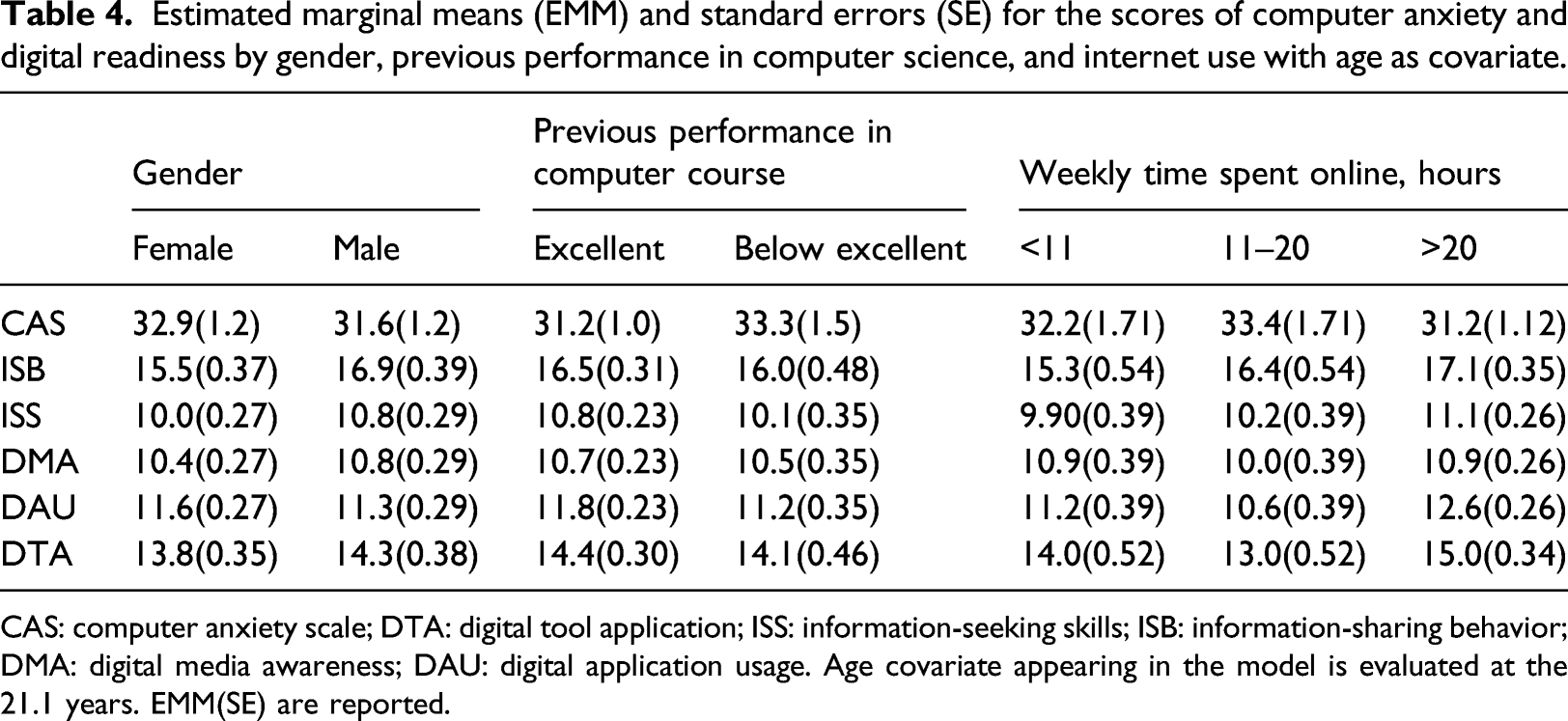
CAS: computer anxiety scale; DTA: digital tool application; ISS: information-seeking skills; ISB: information-sharing behavior; DMA: digital media awareness; DAU: digital application usage. Age covariate appearing in the model is evaluated at the 21.1 years. EMM(SE) are reported.
For the time spent on the internet per week, analysis of the dependent variables separately revealed significant differences on the level of ISB (F(2,259) = 4.58, p = .011, partial η2 = 0.03), ISS (F(2,259) = 4.03, p = .019, partial η2 = 0.03), DAU (F(2,259) = 10.8, p < .001, partial η2 = 0.08), and DTA (F(2,259) = 6.51, p = .002, partial η2 = 0.05). Pairwise comparisons revealed significant differences in ISB, ISS, and DAU scores between students who spent less than 11 h on the internet and those spending more than 20 h (p = .008, p = .033, and p = .008, respectively). In addition, the total DAU score for those spending 11–20 h compared to those spending more than 20 h was significantly different (p < .001). The total DTA score for those spending 11–20 h was significantly lower than for those spending more than 20 h (p = .002).
Estimate parameters of the general linear model with significant variables affecting the total computer anxiety scale and digital readiness for academic engagement subscales.
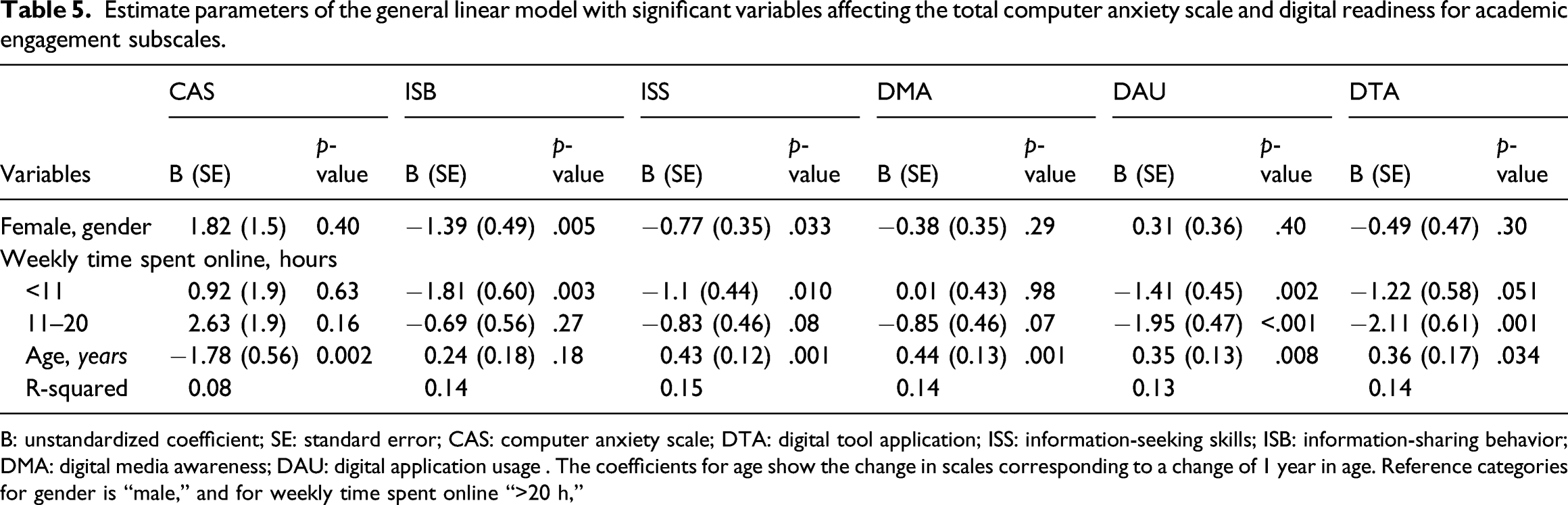
B: unstandardized coefficient; SE: standard error; CAS: computer anxiety scale; DTA: digital tool application; ISS: information-seeking skills; ISB: information-sharing behavior; DMA: digital media awareness; DAU: digital application usage . The coefficients for age show the change in scales corresponding to a change of 1 year in age. Reference categories for gender is “male,” and for weekly time spent online “>20 h,”
Perception of academic performance in e-learning, computer anxiety, and digital readiness for academic engagement
Results of multinomial regression analysis.
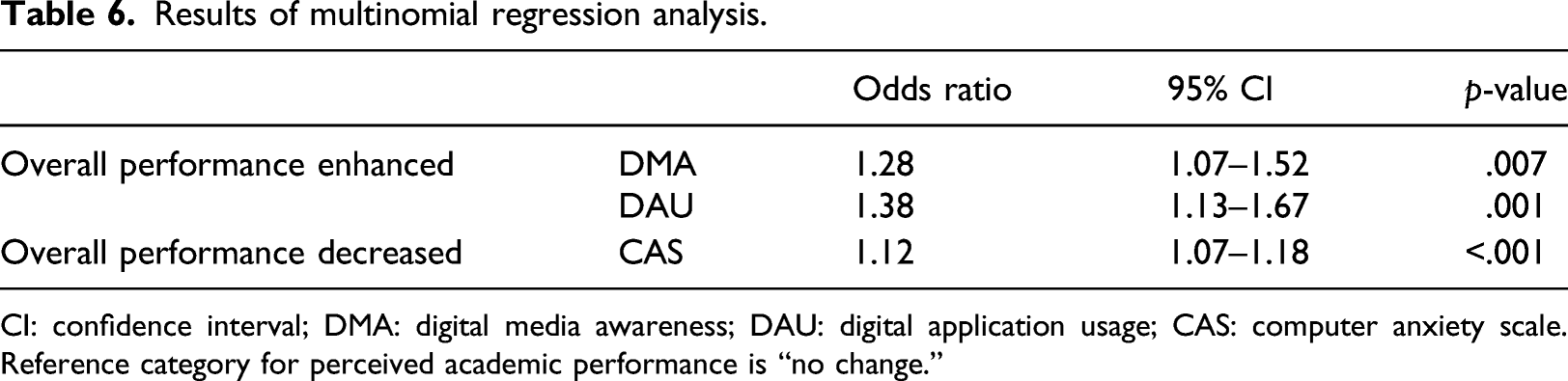
CI: confidence interval; DMA: digital media awareness; DAU: digital application usage; CAS: computer anxiety scale. Reference category for perceived academic performance is “no change.”
Discussion
This study investigated computer anxiety and digital readiness for academic engagement among undergraduate medical students. To the best of our knowledge, this is the first study in a medical school with that objective. It sought to determine the factors that affect students’ academic experiences, especially during the shift to an e-learning environment, by exploring the relationships between computer anxiety, digital readiness, gender, age, previous computer experience, and internet use.
Significant differences were found between female and male students in the ISB and ISS subscales. In recently published studies investigating university students’ information-sharing behavior and social media use, male students are more likely to share learning resources (e.g., class notes), and they use social media for educational purposes more frequently than their female counterparts. 27 Future research may investigate whether these differences in gender have an impact on the actual academic performance. In addition, course educators may foster different learning paths with the target to enhance course satisfaction. Here, gender was not significantly related to computer anxiety. Prior studies on the relationship between gender and computer anxiety have yielded inconsistent results.22,28–33 Further research is needed to determine the accuracy for the correlation and to clarify the differences between the various findings across cultures.
Age was negatively associated with computer anxiety and positively associated with students’ digital readiness. This suggests that older students may have more experience in using computers and feel less anxious about them, whereas younger students with less experience are more anxious. Thus, one might assume that older students were more ready for the shift to digital learning than younger students during the shift to e-learning in the COVID-19 pandemic. The relationship between computer experience and students’ anxiety is well established in the literature; the more that people are experienced and knowledgeable in using computers, the less anxious they are about computers.14,34
Most of the digital readiness subscales were further positively and significantly associated with internet use, showing that greater internet use leads to better digital readiness for academic engagement among students. This supports the results of a previous study. 33 A greater provision of digital technology sessions and resources to students is recommended to enhance their digital readiness.
Perceived academic performance was found to be associated with computer anxiety, digital media awareness, and digital application usage. With the development of technology and the rapid shift from traditional to online learning, this research offers a potential path to understand how students’ computer anxiety and digital readiness affect their learning outcomes. Our results show that students with a perceived decreased performance in e-learning were likely to have higher computer anxiety. By contrast, those with a perceived increase in performance were more likely to have higher digital media awareness and digital application usage scores. Previous research has shown that students with digital readiness—that is, who are confident in using their digital skills in their academic work—have more opportunities for academic achievement in e-learning environments. 9 In addition, the students here may have perceived that strong digital skills are necessary for academic success. 35 However, in this study, the learners’ perceived academic performance in e-learning was evaluated by a single-question measurement. In future work, our measured academic performance should be validated and compared to other valid measures, such as actual academic performance.
Limitations
Some limitations may affect the interpretation of our findings. The study had a low response rate, with only 272 of 781 students enrolled in the medical program participating. However, our response rate is considered acceptable in online surveys. 36 In addition, the sample is not representative of all medical students, as it was collected from only one university. For this reason, another study could be conducted to expand the sample and include students from different academic institutions and specialties. Moreover, our study did not examine whether the level of student online course satisfaction was associated with computer anxiety and digital readiness. This highlights the need for future studies to address any possible association. This study analyzed only certain variables and identified their associations with computer anxiety and digital readiness. Consequently, further research should identify new, unrecognized factors. For instance, race and ethnic background, socioeconomic status, physical and/or mental disabilities, learning difficulties (e.g., dyslexia), as well as the digital readiness of the course educator and his/her willingness to use e-learning may or may not affect apprehension and anxiety of students. Finally, the study used a self-report instrument for data collection, which may have introduced response bias. 37
Conclusion
Using e-learning and digital technologies in delivering the curriculum provides several potential benefits. In order for students to benefit from such a learning environment, digital readiness and low computer anxieties are essential. Course educators are, therefore, encouraged to assess the digital readiness of their students before incorporating said tools in their learning activities. These assessments would support educators in adequately meeting their students’ learning requirements by employing more helpful resources in view of individual learners’ profiles. Moreover, the integration of technology courses into continuing education and enhancement workshops is recommended to support learners’ academic engagement.
Footnotes
Declaration of conflicting interests
The author(s) declared no potential conflicts of interest with respect to the research, authorship, and/or publication of this article.
Funding
The author(s) received no financial support for the research, authorship, and/or publication of this article.
