




Abstract
Mobile Health applications have shown different usages in the COVID-19 pandemic, which consisted of empowering patient’s awareness, promoting patient’s self-care, and self-monitor behaviors. The purpose of this study is to identify key features and capabilities of a mobile-based application for self-care and self-management of people with COVID-19 disease. This study was a descriptive-analytical study that was conducted in two main phases in 2020. In the first phase, a literature review study was performed. In the second phase, using the information obtained from the review of similar articles, a questionnaire was designed to validate identified requirements. Based on the results of the first phase, 53 data elements and technical key features for mobile-based self-care application for people with COVID-19 were identified. According to the statistical population, 11 data elements for demographic requirements, 11 data elements for clinical requirements, 15 data elements for self-care specifications, and 16 features for the technical capability of this app were determined. Most of the items were selected by infectious and internal medicine specialists (94%). This study supports that the use of mobile-based applications can play an important role in the management of this disease. Software design and development could help manage and improve patients’ health status.
Introduction
COVID-19, an infectious disease emerging from SARS-CoV-2 with human pandemic potential, has created a worldwide health crisis. 1 The disease rapid progression and lack of awareness of its behavioral patterns necessitate an immediate initiative to tackle the health emergency. 2 To minimize the risk of contracting the coronavirus from person to person during an epidemic, various governments have taken extensive “preventive measures” including “social distancing” and “quarantine” of those at risk.3,4 Since a great number of patients do not necessarily need to be hospitalized and it is a must to do self-care and self-monitoring at home, the current initiatives, in this regard, include following the health protocols and abiding by the self-care instructions.5,6 Therefore, given the quarantine and public need, the level of public awareness and sensitivity to COVID-19 should be strengthened, and the importance of self-protection should be taught to the people through adequate preventive measures. People’s awareness and skills in self-care should be increased. 7
Self-care is an action in which each person uses the knowledge and proficiency acquired as a source of healthcare independently. 8 This proceeding can also involve consulting and seeking professional or non-technical assistance from others. 9 Although self-care is considered as an activity that people take to maintain, and promote their health, sometimes this care applies to children, family, friends, neighbors, and fellow citizens. 10 In doing so, treatment and lifestyle associated with family, community, and health care providers are performed to manage the underlying signs and symptoms. 11 Health care organizations have recommended individuals not to leave their houses due to the high rate of spread of the new virus; hence, attention is drawn to the self-care guidelines for better management of the disease.5,7
The World Health Organization (WHO) insisted on improvements in People health and necessary services through electronic technologies. 12 Digital technologies and electronic health for training people, people at risk and those with mild symptoms at this time can be helpful. 13 It is estimated that there are >5 billion mobile users, and according to the State of Mobile report in 2019, 194 billion apps have been downloaded worldwide implying that a vast majority of people have easy access to apps. 14 Mobile Applications offer a variety of useful functions ranging from remote tracking by health professionals to infection control and training patients. 15 Apps that deal with health-related issues including prevention, diagnosis, self-care, and disease management help patients improve their health, accordingly. 12
Needless to say, that information needs assessment and software capabilities are necessary to design a mobile self-care application for patients who do not need to be hospitalized. Due to the lack of similar studies in this case, therefore, the aim of this study was to design a mobile-based application for self-care education as one of the new self-care methods and disease management strategies with patient intervention. This research was conducted to identify features of a mobile-based self-care application for patients with COVID-19 not requiring hospitalization. This COVID-19 mobile app can enjoy functional capabilities such as educational information, special care programs for each user, medication reminders, and monitoring the disease improvement (respiratory status, gastrointestinal symptoms, severe cough and fever, and sense of smell) and daily sleeping and rest habits, as well as following the patient’s recovery process for those who have COVID-19 disease.16,17
Methodology
The present descriptive-analytical study that was carried out in two main phases in 2020.
Phase 1
The team cooperatively planned and performed a search strategy to identify relevant literature that was specific to mHealth solutions intending COVID-19. In the first phase, a literature search was conducted and the articles were screened based on the inclusion criteria to extract and recognize the data elements and technical features of the COVID-19 self-care application. Then, the keywords searched using online databases of PubMed, IEEE Xplore, CINAHL, Scopus, Science Direct, and Web of Science as well as the WHO website and combined with the underneath search pattern: I. “COVID-19” OR “Coronavirus” OR “COVID” OR “SARS- COVID” II. “Mobile” OR “Mobile Health” OR “mhealth” OR “Smartphone” OR “Mobile phone” OR “Mobile application” OR “apps" III. “Self-care” OR “Self-management” “Self-care Strategies" IV. “Data Requirements” OR “Minimum Data Set” OR “Technical Capabilities" V. (I) AND (III) VI. (II) AND (IV) VII. (I) AND (II) AND (III) AND (IV)
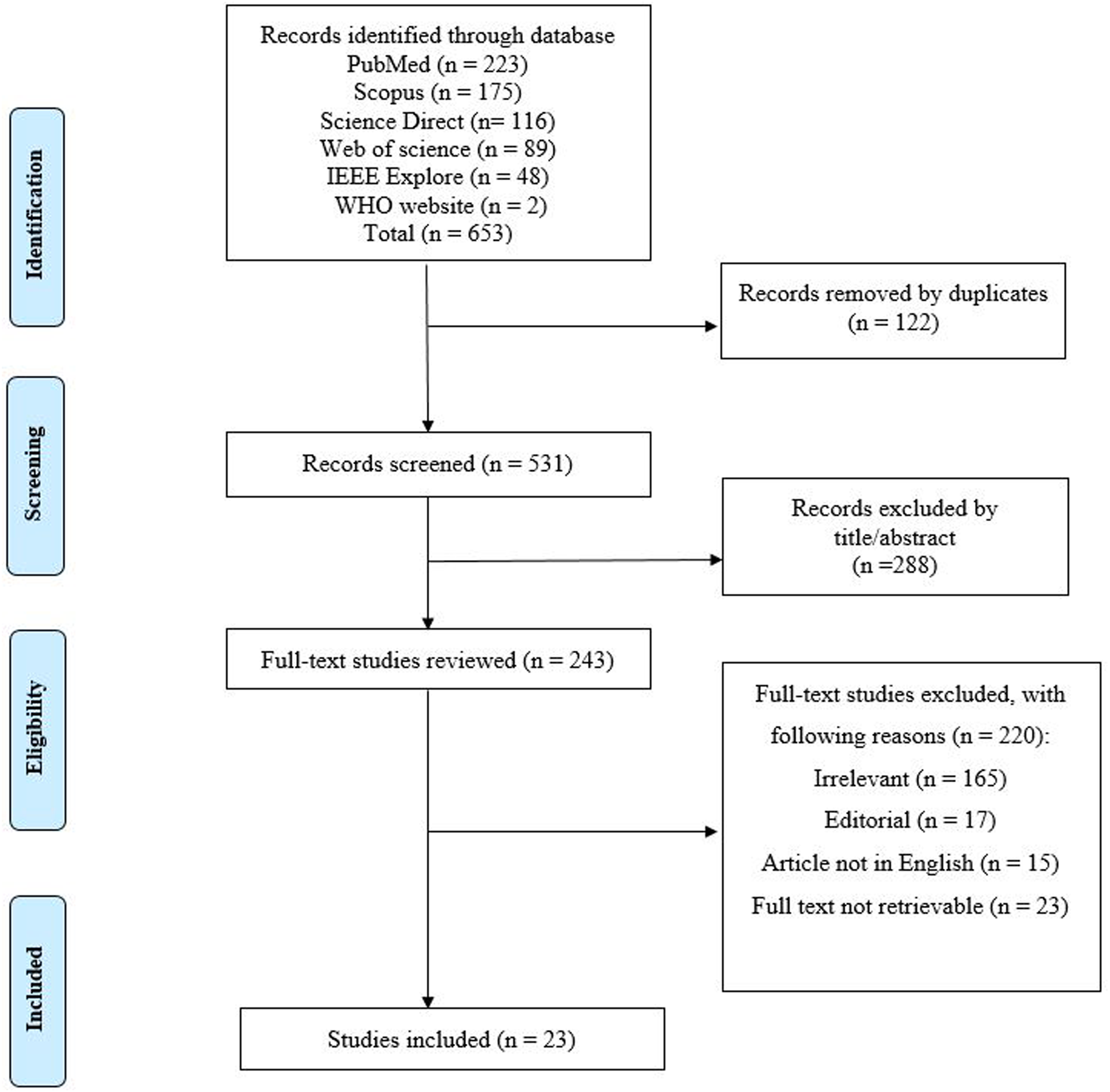
The inclusion criteria were review and research articles (full-text access) in the English language. Exclusion criteria were as follows: (1) Letters to the editor (LTE), (2) abstracts, (3) systematic review protocol, (4) short reports, and (5) non-English-language articles. The publication was between 2019 and 2020; applying these criteria, the search for articles carried on until the articles were duplicated. The screening and review process for eligible articles was conducted according to the PRISMA guidelines (Figure 1). PRISMA diagram of articles included.
18
Phase 2
In the next phase, using the data acquired from the review of studies, a questionnaire was planned to validate identified requirements. The validity of this questionnaire was evaluated and confirmed by 13 infectious and internal medicine specialists working in the corona centers of Khalkhal, Ardabil, and Tehran, who were randomly allocated to the research. The 53 items of the questionnaire contained four parts, an 11 item demographic information, 11 item clinical requirements, self-care education, disease monitoring requirements 15 items, and technical capabilities 16 items on a five-point Likert scale. Scores of each section of the questionnaire was ranged from 1 to 5 (I completely agree = 5, I agree = 4, I have no opinion = 3, I disagree = 2, and I completely disagree = 1).
In this stage, infectious and internal medicine specialists were asked to rank the importance or usefulness of features identified in the literature review. Each of the data elements and identified features was regarded as necessary items, according to 10 infectious and internal medicine specialists, if that item obtained at least an average of 2.5 and more. The questionnaire has shown acceptable reliability with a Cronbach’s alpha of 0.88. Moreover, the validity of the instrument applied was evaluated and confirmed by four specialist physicians. Finally, all statistical analyses were done using IBM SPSS Statistics software (Version 24) (IBM SPSS Statistics, Armonk, USA).
Ethical approval
The study protocol was approved by the Ethics Committee of Khalkhal University of Medical Science (IR.KHALUMS.REC.1399.010). Each participant signed an informed consent form.
Results
Selection and characteristics of source documents
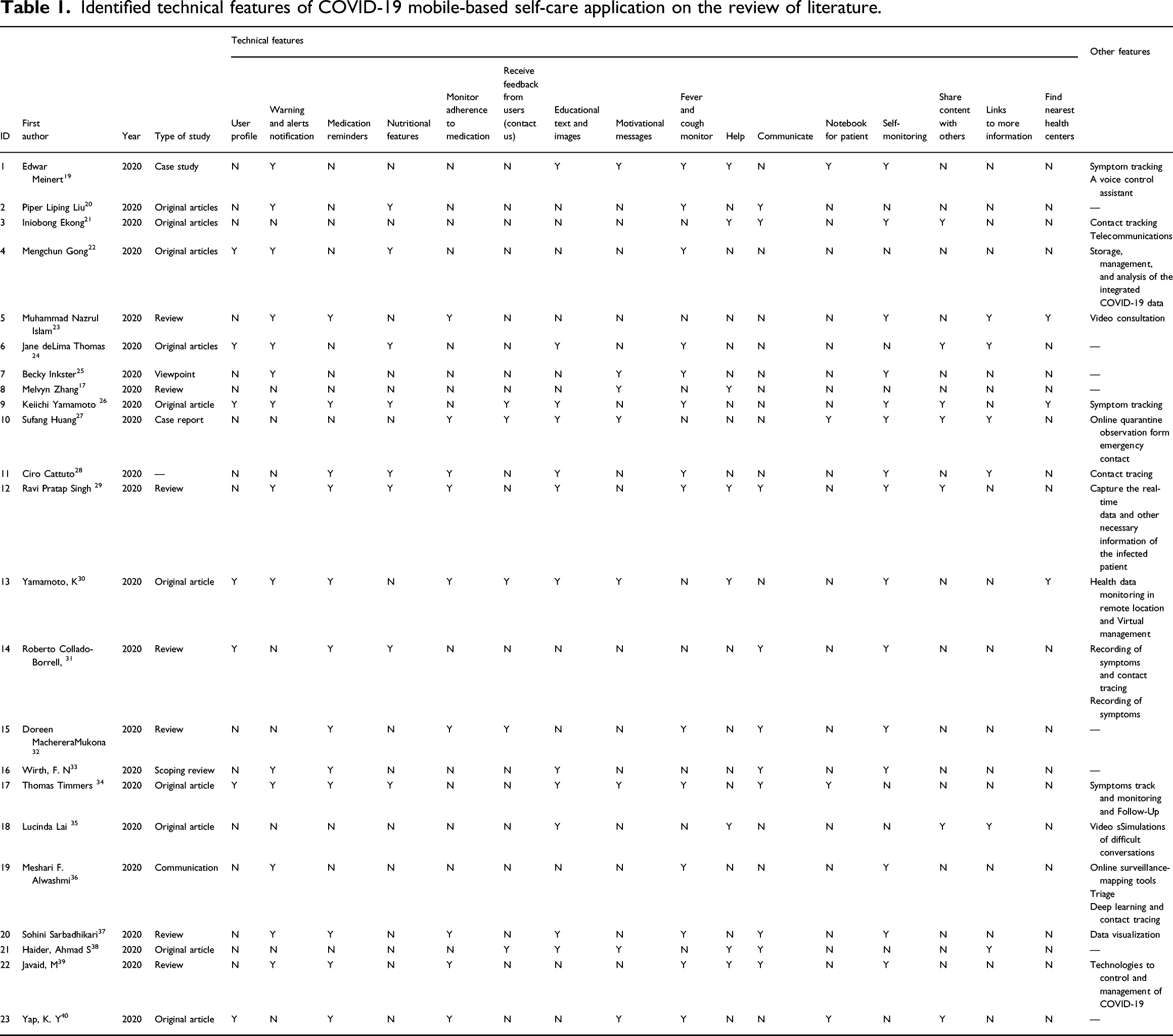
Identified technical features of COVID-19 mobile-based self-care application on the review of literature.
Data Extracted
Based on the analysis of retrieved articles, 53 items were identified in four categories; (1) demographic data elements, (2) clinical data elements, (3) self-care and disease monitoring data elements, and (4) technical features.
As shown in Table 1, sixteen main features were identified for the COVID-19 mobile-based self-care application based on literature. Patients education (n = 19), warning notifications (n = 14), self-assessment and self-monitoring features (n = 13), alert dialogs (n = 12), and share content with others (family and friends) (n = 11) were the most frequently identified technical features of COVID-19 self-care mobile application. Figure 2 depicts the most frequent technical features. Frequency of identified technical features of COVID-19 Mobile-base Self-care Application on the review of literature.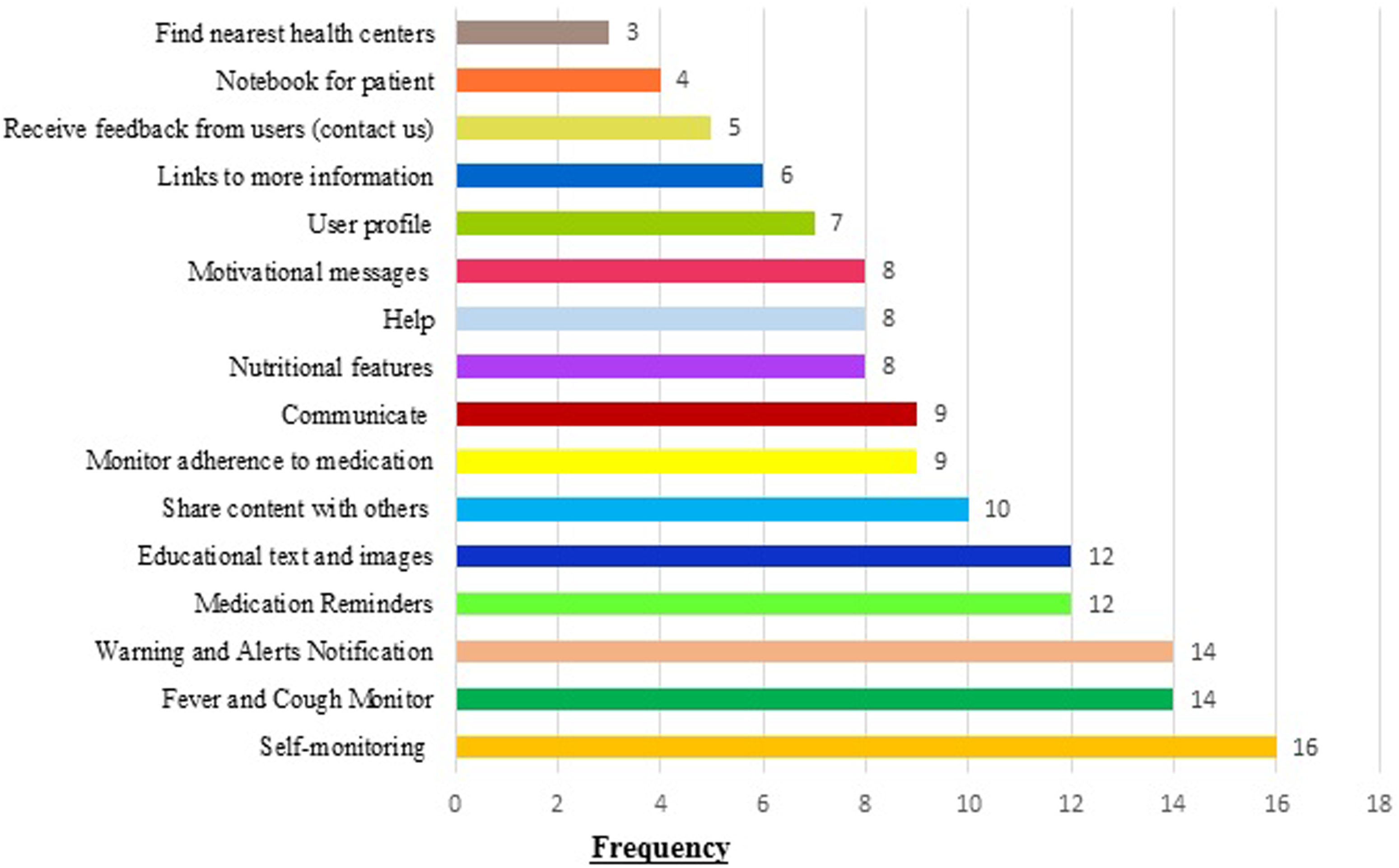
Scoring
The Mean and Std.deviation of given scores and selected data elements/technical features.
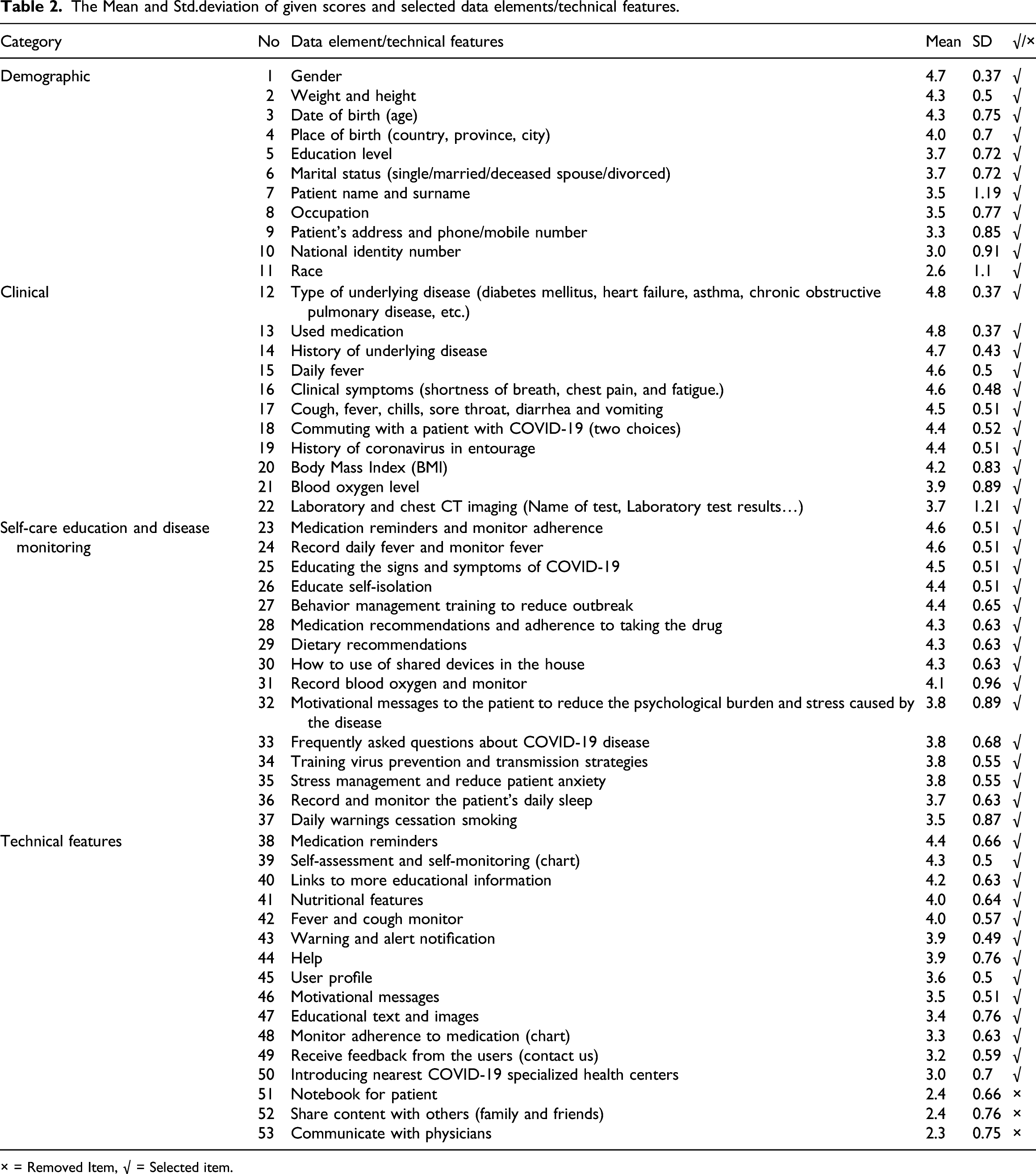
× = Removed Item, √ = Selected item.
In addition to healthcare, useful interventions promoting healthy behavior such as self-care instructions are crucial requirements of COVID management. Identification of data elements and technical features for mobile-based self-care applications for people with COVID-19, were selected. Physicians by answering the questions of the Likert scale questionnaire prioritized and determined common elements based on their expertise as well as their experiences of what a patient with Covid-19 needs for self-care; the elements that had the highest score are given priority. A Practical self-care mobile application with features such as reminders, warning notifications, symptom monitor, and manage the disease could improve the situation of patients.
Discussion
Self-care can be one of the main and practical approaches in the management and prevention of infectious illnesses 41 which promote general health and wellbeing. 42 Due to the prevalence of COVID-19 disease as a contagious infectious disease and the significance of self-care in the prevention of this disease, the participation of patients with this disease in self-care instruction is important for disease management. 43 Therefore, it seems the development of a mobile-based application is useful for infectious diseases. 44
In the present study, 53 technical features and data elements for mobile-based self-care application for individuals with COVID-19 were recognized, and according to the statistical population, 11 elements for demographic requirements, 11 elements for clinical requirements, 15 elements for self-care specifications, and 16 elements for technical specifications were detected. Three technical features, including ‘‘Communicate with physicians,” ‘‘Notebook for patients,” and ‘‘Share content with others,” in the technical feature category, had the lowest mean and were left out. Finally, 50 elements were approved for this app.
Demographic requirements
The findings of the study show that 11 data elements are essential for the demographic part of the application. Demographic information is regarded as necessary data for identifying, calling, and following patients. 45 Sharpe and Niakan in their studies emphasized the identifying of demographic information to promote management of people living with HIV.43,46 In a study by Saeedinia et al., 47 according to the statistical population, 13 data elements were identified for demographic information of a smartphone’s self-care system to prevent COVID-19. Authors indicated that the completeness of identifying information can ameliorate self-care skills to prevent coronavirus, symptoms management, motivate and decrease stress, and enhance personal hygiene and communication with health care workers. 47 In the current study, “gender, height and weight, and age” had the highest mean score among the demographic characteristics that were in line with the results of studies by Sharp et al., 43 Niakan et al., 46 and Saeedinia. 47
Clinical requirements
According to the results, the “used medication” and “history of underlying disease and type of underlying disease” had the highest frequency among other clinical elements for the self-care application of COVID-19.
Previous studies have shown an increased susceptibility of COVID-19 infection and high mortality in patients with underlying diseases, including diabetes mellitus, hypertension, respiratory system disease, and cardiovascular disease.48,49 Also, Lippi et al., 50 demonstrated chronic obstructive pulmonary disease (COPD) is related to a significant, over five-fold raised risk of severe COVID-19 infection. Guan et al. 51 showed that the presence of any co-existing disease was more common among patients with severe disease in contrast to non-severe patients. Attention to medications used in the treatment of comorbidities might save countless lives by COVID-19 disease. 52 Medicines such as statins, angiotensin-converting enzyme inhibitors (ACEIs), and angiotensin receptor blockers (ARBs) may raise the vulnerability of COVID-19 infection and the odds of lung injury secondary to augmented angiotensin-converting enzyme 2 (ACE2) expression.53,54
Self-care education and disease monitoring requirements
The “medication reminders and monitor adherence,” “training the signs and symptoms of COVID-19,” and “record daily fever and monitor fever” had the highest mean among the self-care education and disease monitoring requirements. The typical manifestations of COVID-19 disease are fever, cough, fatigue, and gastrointestinal symptoms.46,54,55 Personal health records (PHRs) are appropriate for the daily management of physical status versus the highly infectious diseases. 26
As mentioned above, “medication reminders and monitor adherence” also had the highest score. Self-care refers to proceeding that patients undertake to maintain and enhance health, such as approaches to reach and maintain high levels of medication adherence. 57 Narasimhan et al., 58 indicated that a voice call reminder system may ameliorate medication adherence and in turn enhance treatment outcomes among patients with Tuberculosis. The results of studies on HIV patients showed that smartphone applications such as text message reminders may have the potential to improve adherence to antiretroviral therapy.43,59 The usability and acceptability of a smartphone application have been evaluated to assist oral chemotherapy adherence and symptom management in people suffering from cancer. 60 People with chronic conditions such as diabetes can enhance their adherence to treatment and manage their disease by using self-care app features such as medication reminders, blood sugar monitoring, and diet and exercise recommendations. 43
Technical capability
“Links to more educational information” had the highest score in the data elements for the technical capability of the COVID-19 self-care application. Saeidnia et al. 47 showed that the data elements of communication with health and medical units, educational messages, communication with the physician, and receiving news from reputable sources had the highest score in the technical capability of COVID-19 self-care application. In addition, in another study, the element of educational information was reported to be the highest score among the technical features of the diabetes self-care application 45 . Monitoring adherence to medication use is another feature confirmed in the present research that is consistent with the findings of other studies such as Swendeman et al., 61 Narasimhan et al. 58 , and Perera et al. 59
Conclusion
The requirements and technical capabilities of a mobile-based self-care application for patients with COVID-19 were recognized in four categories of demographic, clinical, self-care education and disease monitoring, and technical features. The symptoms of COVID-19, record daily fever, and monitor the fever and medication reminders, and monitor adherence were the most highlighted technical features of the COVID-19 self-care application. Due to the infectious nature of COVID-19 disease and the need for self-isolation of patients, the use of mobile-based applications can play an important role in the management of this disease. Also, Researchers can use these findings as a foundation for designing and creating new COVID-related mobile-based applications.
Limitations
The present study had some limitations. At the first phase, there was a limitation of studies in this issue. Moreover, to collect the data, researchers had to visit specialists in person.
Footnotes
Acknowledgements
The authors thank from the infectious and internal medicine specialists who have collaborate with us sincerely to the end of study.
Declaration of conflicting interests
The author(s) declared no potential conflicts of interest with respect to the research, authorship, and/or publication of this article.
Funding
The author(s) disclosed receipt of the following financial support for the research, authorship, and/or publication of this article: This study was financially supported by Khalkhal University of Medical Sciences in 2020.
