




Abstract
This article reviews the peer-reviewed literature addressing the healthcare information available on YouTube. Inclusion and exclusion criteria were determined, and the online databases PubMed and Web of Knowledge were searched using the search phrases: (1) YouTube* AND Health* and (2) YouTube* AND Healthcare*. In all, 18 articles were reviewed, with the results suggesting that (1) YouTube is increasingly being used as a platform for disseminating health information; (2) content and frame analysis were the primary techniques employed by researchers to analyze the characteristics of this information; (3) YouTube contains misleading information, primarily anecdotal, that contradicts the reference standards and the probability of a lay user finding such content is relatively high; (4) the retrieval of relevant videos is dependent on the search term used; and (5) videos from government organizations and professional associations contained trustworthy and high-quality information. YouTube is used as a medium for promoting unscientific therapies and drugs that are yet to be approved by the appropriate agencies and has the potential to change the beliefs of patients concerning controversial topics such as vaccinations. This review recognizes the need to design interventions to enable consumers to critically assimilate the information posted on YouTube with more authoritative information sources to make effective healthcare decisions.
Keywords
Introduction
Video-sharing sites are popular sources of information. YouTube, the most well known of these sites, exceeds 2 billion views per day, 1 with a new video being uploaded on average every minute and an average user spending at least 15 min a day on the site. 2 A recent Health Information National Trends Survey (HINTS) reports a substantial increase in the use of the Internet for retrieving health information. Recent surveys have found that 8 of 10 Internet users accessed health information online.3,4
Patients with chronic illnesses in particular are increasingly relying on Internet-based resources to manage their conditions. 5 According to surveys conducted by the Pew Research Center, decisions made by 75 percent of such patients on how to treat their condition were influenced by the knowledge acquired through online health information searches.5–8 These results suggest that a platform like YouTube has the potential to serve as an important vehicle for sharing and disseminating timely health-related information, both in its function as a repository of videos and as a social networking interface where users can interact and socialize. In fact, this interaction may increase its influence on healthcare decisions, extending its benefits beyond being a diagnostic aid or an educational tool for healthcare conditions and their management to being a source for information sharing among patients coping with illness.9,43
However, healthcare providers and government agencies alike have expressed concern about the veracity and quality of the information available on this platform,10–13 primarily for two reasons: increased use of YouTube to post anecdotal information and more importantly, its minimal guidelines and interventions regulating the content of the material uploaded on the site. These issues raise questions about the trustworthiness of this information source and the risk of disseminating misleading information. As a result, government agencies and researchers are currently examining the use of social media as a platform for communicating health information. This article reviews the peer-reviewed literature investigating the content and veracity of healthcare information available on YouTube. It discusses the implications of these studies and provides suggestions for future research to support the dissemination of reliable information to healthcare consumers.
Method
Inclusion and exclusion criteria
The inclusion criteria for the studies included in this review were as follows: (1) the domain of the article was related to health care; (2) the primary focus of the article was to understand the type of healthcare information available on YouTube; (3) the article was published in a peer-reviewed journal; (4) the article detailed the methodology of the study reported; and (5) the article was available in English. Articles were excluded if they contained only conceptual or theoretical discussions on the potential use of YouTube and similar social media for healthcare information dissemination.
Search strategy
The online databases Web of Knowledge, an academic citation and indexing service, and PubMed, the MEDLINE database of references and abstracts on life sciences and biomedical topics, were searched using the following search phrases: (1) YouTube* AND Health* and (2) YouTube* AND Healthcare*. In this review, the term health care was used to include studies that focus on procedures and methods that could be used by a healthcare consumer to maintain and improve their physical and mental health. The initial search was conducted on the second week of October 2012, and a subsequent search was conducted on the third week of November 2012. These searches yielded 94 articles from the Web of Knowledge database and 77 articles from PubMed. The initial screening was done by the first author (K.C.M.). The second author (A.J.R-R.) separately reviewed the screened articles to ensure that the articles met the inclusion criteria. The discrepancies were discussed by the two researchers until a consensus was met. In all, 31 articles met the inclusion criteria, and a search of their references yielded 2 additional articles appropriate for this review. Among the 33 articles subsequently screened for content, 10 did not meet the inclusion criteria. Of the 23 articles remaining, 2 analyzed the linguistic features and social support mechanisms of the videos and user comments, and another focused on identifying the personal health information present on YouTube. These articles were excluded due to their narrow scope. Two studies investigating smoking and smoking cessation on YouTube which focused on understanding the influence of camouflaged advertisements supporting the use of tobacco were also excluded. Thus, in total, 18 articles were included in this review. The selection process for study inclusion is shown in Figure 1.
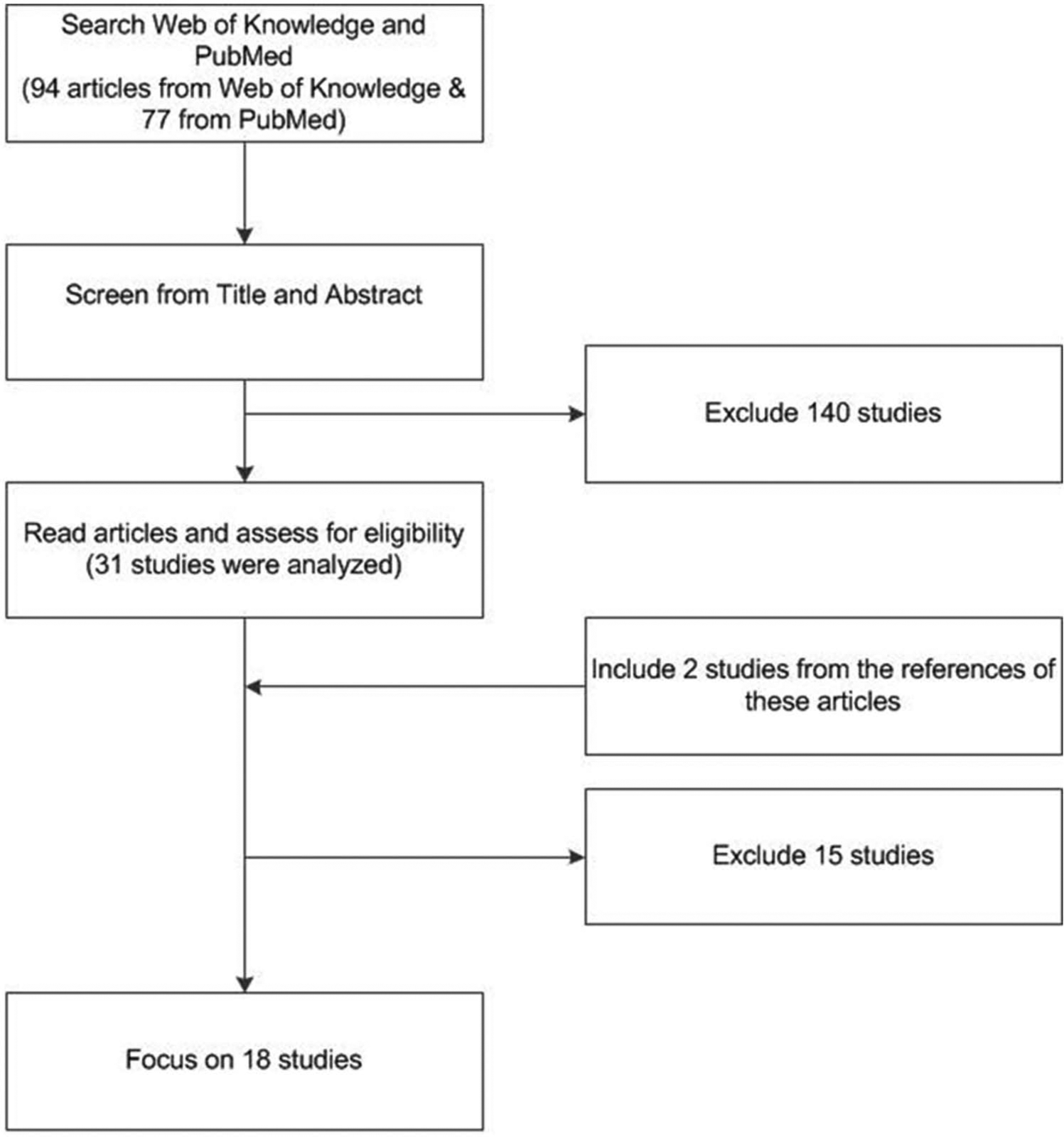
Selection process for study inclusion.
Results
Of the 18 articles reviewed, 11 were from the United States, 5 from Europe, 1 from Canada, and 1 from India. A total of 11 studies focused on the informational content available for various health conditions, 5 focused on the portrayal of controversial medical issues such as vaccination and organ donation, 1 focused on the quality of information, and 1 focused on the portrayal of dentistry. Table 1 summarizes the key findings of the 18 articles reviewed.
Main results of reviewed studies.

HPV: human papillomavirus; CPR: cardiopulmonary resuscitation; AMI: acute myocardial infarction; CDC: Centers for Disease Control and Prevention; UN: United Nations; WHO; World Health Organization; AMTA: American Music Therapy Association; PSA: prostate-specific antigen.
Methodological characteristics and analytical techniques
YouTube offers four ways of sorting search results: (1) relevance, (2) upload date, (3) view count, and (4) rating. Of the 18 studies reviewed here, 14 (77.8%) sorted their results based on relevance, 1 (5%) on view count, and 2 (11.1%) employed both relevance and view count; the remaining study 27 employed a snowball technique, viewing a video, followed by viewing those suggested by YouTube as being relevant to emulate a typical strategy followed by a typical user. All studies subsequently applied content analysis by reviewing the videos and coding them according to view count, clip length, the source of the video, comments, and viewer ratings. Table 2 shows these elements extracted from YouTube by the individual studies.
Methodological elements.
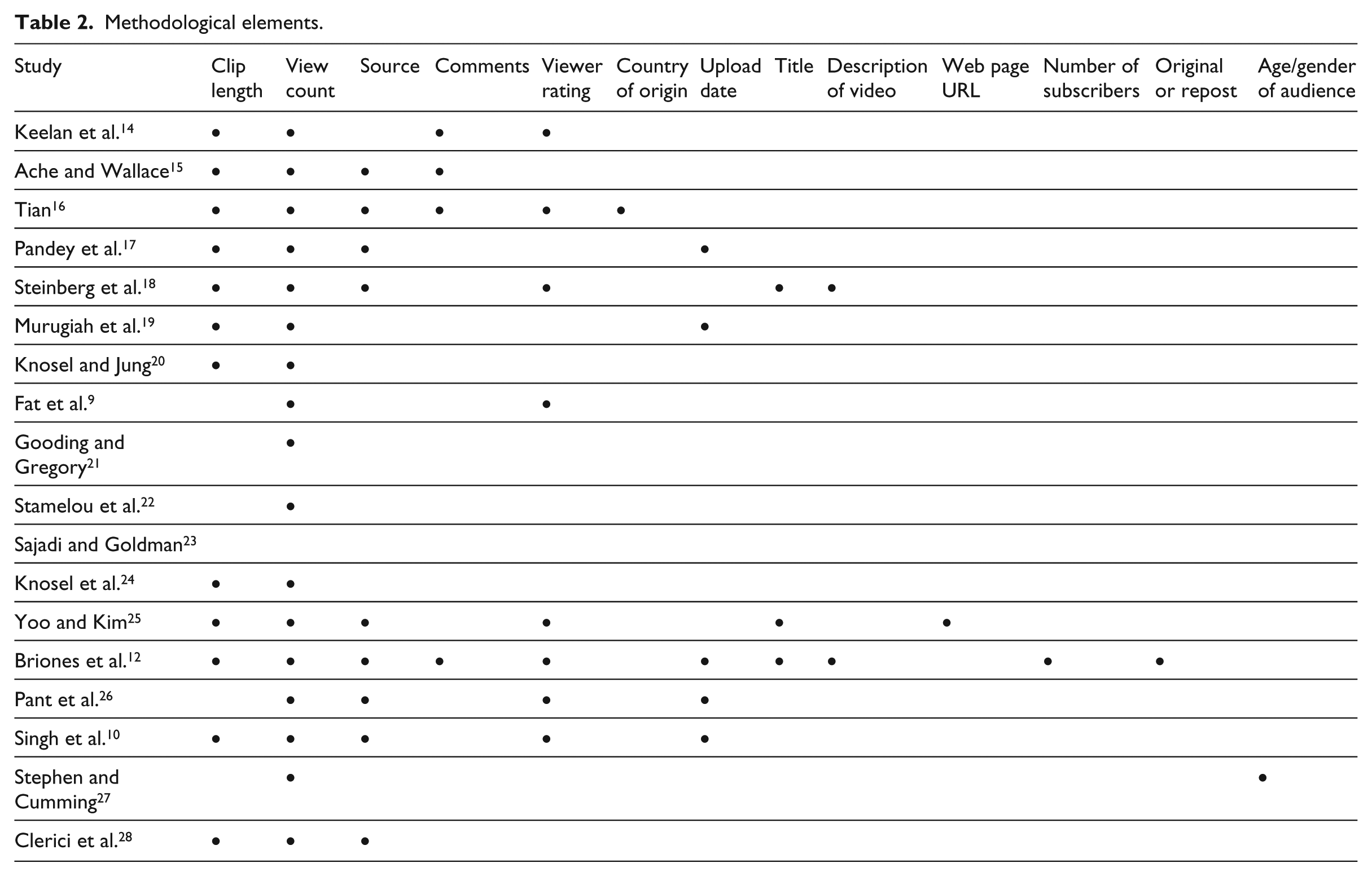
As Table 2 indicates, view count and clip length were most frequently extracted for analysis, with 87 percent of the studies using view count and 57 percent using clip length to compare the videos.
Two of the 18 studies supplemented this content analysis with framing analysis,16,25 a method that analyzes the frames in the media from an affective and a cognitive perspective. One of these studies focused on the portrayal of organ donation on YouTube 16 and the second on obesity. 25 For example, in the study examining obesity, framing analysis was used to examine the videos for causal claims and solutions pertaining to obesity. This involved analyzing the frames of the video for behavioral, biological, and systematic causal claims and treatment options. In 89 percent of the 18 studies reviewed, two or more reviewers analyzed the content and subsequently computed the level of inter-rater agreement (IRA). The IRA ranged from 0.6 to 1.00. The specific analytical techniques used in the studies are seen in Table 3 below.
Analytical techniques and resulting categories.
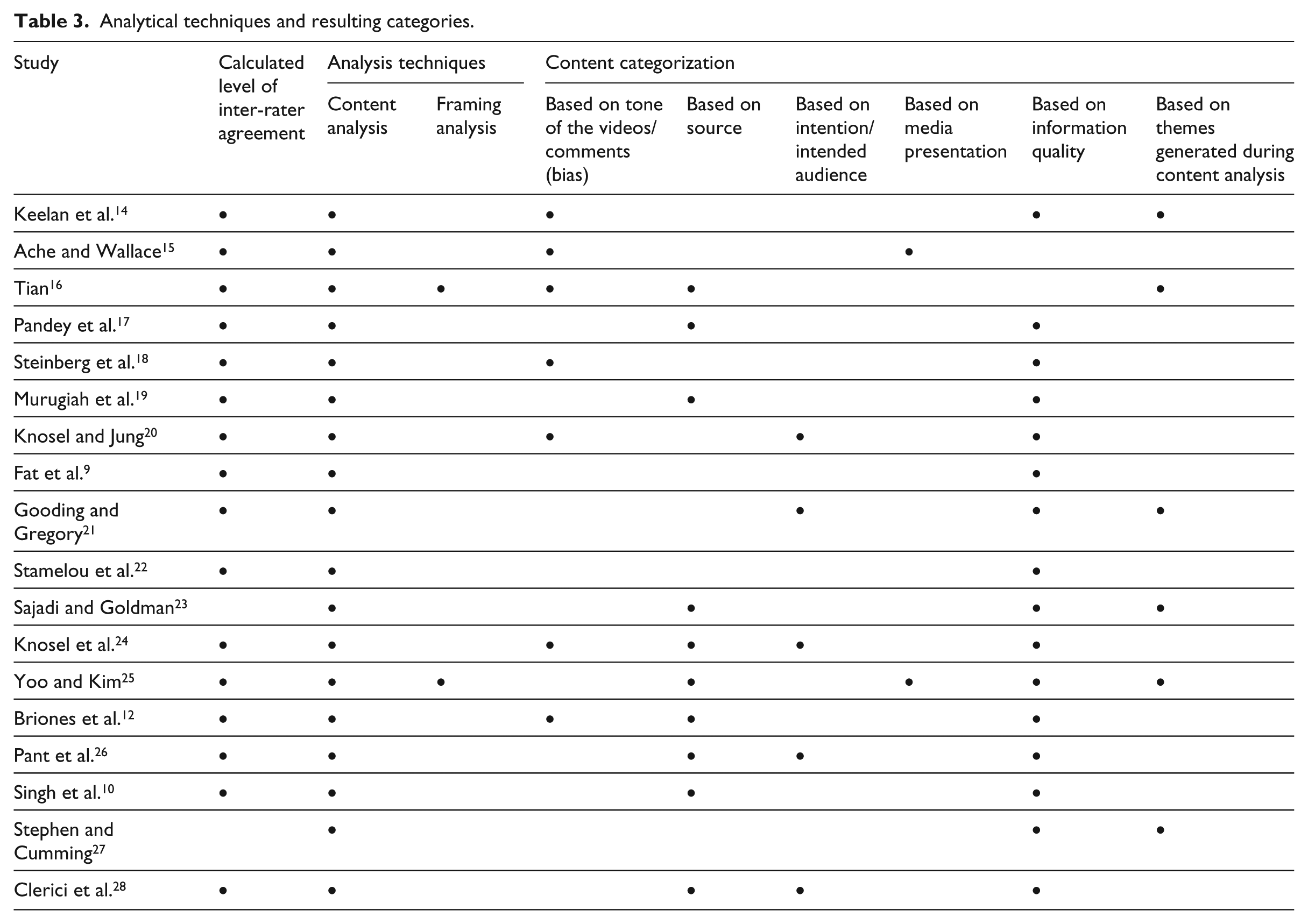
Seven (38.8%) studies evaluated the video content by categorizing its tone as positive, negative, or neutral/ambiguous based on the portrayal of the issue/condition.9,12,14,15,18,24,29 Generally, videos were categorized as positive if their approach encouraged consumers to seek an intervention, and negative if they discouraged viewers from doing so. The study on organ donation by Tian 16 applied this analysis to the text comments, categorizing the videos studied based on the poster’s behavioral intention.
Nine (50%) studies analyzed the content based on the source.10,12,15–18,25,26,28 The primary source types used were organizations, including governmental agencies, non-profit, and for-profit organizations; independent users; and news agencies. Two (11.1%) studies15,25 analyzed the content focusing on videos from the media; the categories included podcasts, TV news coverage, TV documentaries, TV commercials, and university lectures. Five (27.7%) studies20,21,24,26,28 categorized the content based on the intended audience of the video, with patients, care givers, and healthcare professionals being the primary types.
In all, 16 (88.89%) studies9,10,12,14,17–28 assessed the credibility and veracity of the information in the video by assessing its quality in relation to that needed for informed healthcare decision-making. These studies focused on understanding how this information compared to reference standards. Finally, 5 (27.78%) studies14,16,21,23,25,27 used inductive coding, meaning they categorized the information based on the general themes identified while conducting the analysis.
Characteristics of information available on YouTube
The 18 articles reviewed fell into two primary categories: those focusing on specific healthcare issues/conditions and those investigating health care–related videos related to diagnosis, treatment, and disease management procedures.
Studies focusing a health issue
The five studies focusing on specific healthcare concerns analyzed videos on vaccinations (n = 3), organ donation (n = 1), and obesity (n = 1). Keelan et al. 14 found that 32 percent of the videos they analyzed were not supportive of immunization and that these videos received a higher mean star rating and more views than the supportive ones. 14 More importantly, these videos contained information that contradicted the reference standards. Ache and Wallace 15 found that 25.3 percent of the videos they analyzed were not supportive of the vaccination for human papillomavirus (HPV). 15 The number of views for videos supporting and those not supporting this vaccine were similar, suggesting that the chance of an information seeker finding contradictory information is high, a problem compounded by the view comments, which contained biased and inaccurate information. Briones et al.’s 12 study focusing on the sources of HPV videos suggested that the majority originated from news sources, followed by user- and organization-generated content. However, the results of this study, conducted 3 years after that of Ache and Wallace, 15 found that 51.7 percent of the videos expressed negative attitude toward the HPV vaccine. This study did not find any significant differences between the source and the number of views and the like/dislike rating. Videos with a negative tone and those that disapproved of the vaccine were more liked than the ones that approved the vaccine.
In contrast, Tian 16 found that the healthcare issue of organ donation was in general positively portrayed: 95.8 percent of the videos he analyzed portrayed it positively and 2.5 percent portrayed it negatively. In all, 92 percent of the comments analyzed were positive and 5.7 percent were negative. The negative video portrayals and viewer comments focused on the corruption involved with this procedure, the high cost of the process, and the resulting unfair advantage for the wealthy. One potential explanation for the high incidence of positive videos was that a large number of them were posted by entities promoting organ donation. Specifically, 34.4 percent of the videos were generated by organizations, 6.5 percent by TV interviews, and 35.2 percent by individuals and students who support organ donation.
Yoo and Kim 25 investigated the portrayal of obesity, finding that 36.5 percent (n = 417) of the videos were user-generated, 20.6 percent TV news stories, and 14.9 percent public service announcements. More than half, 59 percent, analyzed the causes of obesity, with the primary ones being behavioral causes (74%) followed by systematic (36.6%) and biological/genetic (17.5%) causes. The solution options found exhibited a similar trend, advocating behavioral changes, followed by systematic solutions and medical treatment.
Studies investigating videos related to diagnosis, treatment, and disease management procedures
In all, 9 of the articles reviewed focused on assessing the veracity of the information in the videos researched, which included a range of health problems and one exploring music therapy. For example, Steinberg et al. 18 examined the portrayal of prostate cancer and found that the informational content was fair or poor in 73 percent (n = 51) of the videos with no significant differences related to video content or the number of views. Though they found support for prostate-specific antigen (PSA) testing, surgery, or radiotherapy in 69 percent of the videos, the informational content was of moderate quality.
Murugiah et al.’s 19 study, focusing on videos related to cardiopulmonary resuscitation (CPR), found that 88.5 percent (n = 52) of the videos were meant for lay rescuers and the remaining for healthcare professionals. In all, 48 percent of total videos analyzed came from people with unknown credentials. Though agencies such as the American Heart Association had YouTube channels, they provided few videos showcasing the CPR technique. One of the important findings of this study was that several videos skipped important steps in the CPR process and performed some steps incorrectly. In addition, similar to the study by Shepherd 29 , no significant differences were found in the number of views per day between the inaccurate and accurate CPR demonstration videos.
Stamelou et al.’s 22 studies on the information quality of YouTube content on movement disorders found a trend similar to the findings of Shepherd 29 and Murugiah et al. 19 suggesting that the information was misleading, providing inaccurate depictions of movement disorder conditions and their treatment.
This situation was also observed in videos on incontinence, with Sajadi and Goldman 23 finding under half (46%) of the videos contained useful information. Of this useful information, 64 percent came from healthcare professionals or organizations. This study also found a proliferation of advertisements from for-profit companies, with 92 percent of incontinence-related videos promoting incontinence briefs or pads. In contrast, the content analysis of the videos on infantile spasms conducted by Fat et al. 9 suggested that 56 percent of the videos depicted high-quality videos, correctly diagnosing the condition in 60–64 percent of them. Fat et al. 9 determined that the retrieval of the videos was dependent on the search term used.
Pant et al. 26 examined YouTube content for acute myocardial infarction (AMI). They found that anecdotal videos from patients and videos from professional organizations primarily focused on the symptoms, signs, and treatment of a heart attack, while videos from non-teaching hospitals and graphic representations concentrated on the pathophysiology of the disease. The personal videos featured individual experiences of the symptoms and signs of the disease (58%), followed by methods for prevention and treatment (45%) and perspectives on the news reports related to newer diagnostic techniques (9%). Videos categorized as personal experiences recorded the maximum number of dislikes. Out of 104 videos examined by Pant and colleagues, only 7 videos discussed the need for immediate treatment when suspecting a myocardial infarction. Six of these came from professional organizations.
In 2012, Clerici et al. 28 analyzed videos on rhabdomyosarcoma. They found that 82.5 percent (n = 149) of the videos involved personal experience, and only 16.7 percent of all the videos included useful information. Only one, a video created by a physician, was completely accurate. Approximately 7 percent of the videos provided information about rhabdomyosarcoma itself, 7.3 percent discussed treatment for it, and the rest depicted reactions to the loss of a person due to the disease. This study concluded that there was a lack of quality videos on YouTube featuring information on the various aspects of the disease including its treatment.
Singh et al., 10 studying videos related to rheumatoid arthritis, reported that 54.9 percent (n = 102) of the videos were found useful and 30.4 percent were misleading, including misinformation about the causal mechanism of the condition and the promotion of unscientific therapies. In addition, 19 percent of these misleading videos portrayed the standard treatment methods as lethal and pathogenic. About one-third (36.3%) of the videos were from independent users, followed by for-profit organizations (22.5%), government entities/schools/professional organizations (21.5%), and health information websites (19.6%). Notably, 73.9 percent of the videos from medical advertisements and for-profit organizations were misleading. This study also found that there were no differences in number of views between the useful and misleading videos, suggesting a high probability for a lay user to encounter misleading information.
Finally, the study focusing on music therapy videos on YouTube conducted by Gooding and Gregory 21 found that although the therapy videos had adequate visual and audio fidelity, they lacked effective narrative description and identification information. One of the top five music therapy videos exhibited poor quality according to the standards set by American Music Therapy Association (AMTA).
Discussion
In an effort to make informed healthcare decisions, patients are increasingly turning to the Internet to better understand their medical conditions and treatments. As seen in this review, YouTube hosts videos providing information on the pathogenesis, diagnosis, treatment, and prevention of various health conditions. The majority of the videos reviewed in the articles cited were narrative experiences posted by individual users. This review of 18 articles provides six insights on the characteristics of health-related information available on YouTube: (1) YouTube hosts health care–related communication and health consumers are viewing this information; (2) public service announcements from organizations, documentaries, and TV shows, and user-generated anecdotal content in which users discuss their perspectives and their experiences were the most commonly found sources; (3) misleading information is found on YouTube, and the probability of healthcare consumers encountering such material during the information-seeking process is high; (4) reliable postings from government/professional organizations are available; (5) overall, there was little difference between the frequency of viewings between misleading and accurate posts; and (6) there has been little research on developing interventions to increase the ease with which users can find useful healthcare information on YouTube.
Three major safety concerns were identified when consumers use information obtained from YouTube for health care decision-making: (1) YouTube is used as a medium for promoting unscientific therapies that are yet to be approved by the appropriate agency, 10 (2) YouTube contains information contradicting reference standards/guidelines, and (3) YouTube has the potential to change the beliefs of patients about controversial topics such as vaccinations.
Studies have suggested that pharmaceutical companies and for-profit institutions have a presence on YouTube and are increasingly using it to advertise their products.10,26 YouTube also contains information on the use of drugs 23 that are yet to be approved by the Food and Drug Administration and that may be dangerous when used without medical supervision. Companies are using YouTube portal to reach health consumers and circumvent government regulations.30–32
YouTube users can create and upload videos to express their opinions on healthcare topics. Many of these videos contain information that negatively portrays public health interventions. The results of content analyses suggested that the majority of video clips addressing vaccination portrayed it negatively, with the negative portrayal videos receiving a higher number of views than the positive ones. 14 The results of early studies conducted by Ache and Wallace 15 in 2008 found that 32 percent of the videos on HPV vaccination were negative portrayals. A more recent study conducted by Briones et al. 12 found 51.7 percent of the videos on HPV vaccine portrayed it negatively. This suggests an increased proliferation of content having a negative tone over the past few years. In addition, with all three studies12,14,15 suggesting that the negative videos had a higher average number of likes than their positive counterparts, the probability of a lay user perceiving such videos as the ones they should watch may significantly reduce the effectiveness of health campaigns. 33
The educational value of showing videos providing instruction on healthcare procedures has been demonstrated for both professionals and laypersons. 45 People rely on YouTube to find such demonstration videos and learn specific procedures such as CPR, 19 pelvic floor muscle exercises, 27 and music therapy. 21 Video-based self-instruction, that is, learning from a video depicting a procedure, has been found to be an effective way to understand a method.34,35,42 Hence, it is important that video content depicting such procedures is accurate. 44
The typical information available from governing bodies included information on symptoms, treatment and preventive methods, and risk factors. Some organizations interviewed patients who narrated their experiences with a disease/condition. Singh et al. 10 recommend that government, professional organizations, and healthcare professionals actively participate on YouTube by developing and uploading such videos to YouTube, as studies have identified that the information provided by such sources is trustworthy. YouTube can become a powerful information dissemination platform if healthcare professionals and organizations contribute to it.
Only minimal barriers can realistically be applied to video uploads due to the nature of such video hosting portals as YouTube. However, there is a need to develop better algorithms and design interfaces to provide results’ information that is accurate. In addition, integrating verified information available from federal agencies such as MedlinePlus, the medical information glossary maintained by the National Library of Medicine, and public report cards generated by federal entities such as Medicare (e.g. Medicare Hospital Compare) might increase the trustworthiness and veracity of the information available. Incorporating features such as crowdsourcing, whereby current YouTube users are encouraged to report inaccurate and misleading information, could be another strategy for preventing the spread of misinformation. Interfaces that integrate YouTube videos with the references from clinical research studies for the claims made could also enhance the dissemination of accurate information.
Anecdotal information from patients is becoming increasingly available to the public in the form of YouTube videos and as discussion posts on peer-support groups. 36 Studies have indicated that when making treatment choices, such anecdotal information is heavily weighed by the health consumers. 37 Hence, there is also a need to integrate consumers’ narrative accounts into the decision-making process by presenting anecdotal information in ways that complement the quantitative quality information provided by federal entities.
Seeking, filtering, and integrating useful, trustworthy, and valid sources of health information, a complex cognitive activity in itself is becoming increasingly difficult, compounded by the increasing amount of medical information available. Healthcare consumers need to develop skills for accessing, comprehending, and effectively using the information available on the Internet. In addition, as consumers use this information as a source for making decisions, issues such as trust and credibility become important considerations. As this review suggests, there is a need to understand how consumers make health care–related decisions and to identify effective ways for disseminating trustworthy information on the Internet so that it becomes an effective part of their healthcare decision-making process.
Conclusion
The Internet provides many opportunities for consumers to gain information on health care. These resources can provide novel ways for consumers to gain information and share their experiences of investigation, diagnosis, and treatment of disease.38–41 Studies on the use and implications of YouTube for healthcare communication are still in the nascent stage. As seen from this review, YouTube holds a vast amount of data pertaining to health care. Some of this information is misleading or incorrect. With the results of recent surveys suggesting that YouTube is ranked as the third most accessed website worldwide, the probability of disseminating such misleading information to healthcare consumers is high and can have catastrophic implications. There is a significant lack of research on developing interventions for the effective dissemination of YouTube videos for healthcare communication.
YouTube could be used as a very effective information resource if guided search practices are followed. Interventions need to be developed to assure that consumers are able to critically assimilate the information posted on YouTube with more authoritative information sources to make effective healthcare decisions. To address this issue, we call for further cross-disciplinary research focusing on human factors engineering and user-centered design to develop interventions that support effective filtering and integration of useful, trustworthy, and valid sources of health information on social media, including YouTube.
Footnotes
Acknowledgements
All the authors have contributed to the following: (1) the conception and design of the study, or acquisition of data, or analysis and interpretation of data; (2) drafting the article or revising it critically for important intellectual content; and (3) have made final approval of the version to be submitted. All persons who qualify as authors have been listed in this article.
Declaration of conflicting interests
The authors declared no potential conflicts of interest with respect to the research, authorship, and/or publication of this article.
Funding
The authors received no financial support for the research, authorship, and/or publication of this article.