




Abstract
During 2020, life globally underwent drastic changes due to the outbreak of COVID-19. To contain the spread, many governments limited physical contact. In Denmark, restrictions included closing schools, switching to online education, assembly bans and many other initiatives (Haug et al., 2020), thereby strongly limiting adolescents’ social life. The enforced restrictions offered a unique opportunity to examine whether limiting adolescents’ social leeway affects their hazardous alcohol use in a natural experiment. For many years, Danish adolescents have had the highest prevalence of past month intoxication in Europe (ESPAD Group, 2020) and their alcohol use often revolves around social gatherings (Bloomfield et al., 2013; Meyer et al., 2020). Hence, Danish adolescents provide an interesting case for examining how restrictions may have affected adolescents’ social life and related alcohol use, thereby shedding light on whether decreased social interaction leads to decreased hazardous alcohol use in adolescents.
Across Western societies, experimentation with alcohol is so common among adolescents that it has been interpreted as largely “typical”, and to some degree, developmentally appropriate (Grønkjær et al., 2011; Silvers et al., 2019). First-year students in particular often use social drinking to interact in new social relations (Abar & Maggs, 2010; Bendtsen et al., 2015). In line with this, previous studies show that young Danes increase or initiate alcohol use shortly after admission to upper secondary school (Christensen et al., 2018; Meyer et al., 2020; Tolstrup et al., 2019). A recent survey among young Danes (aged 15–20 years) conducted in autumn 2019, found that 82% drank alcohol in the past 30 days, 55% expected their alcohol use to increase during the transition from lower to upper secondary school, and 64% reported that they increased or initiated their alcohol use during upper secondary school. Further, the survey showed that boys drank more frequently and were more often intoxicated than girls (Meyer et al., 2020).
During typical times, young adulthood is a particularly risky period for elevated alcohol use and mental health distress (Lee et al., 2017), and in times of crises, individuals with weaker psychosocial resources may respond in more hazardous ways to the demands and uncertainties (Metzger et al., 2017; Papp & Kouros, 2021). For example, European cross-sectional studies found that young adults (aged 18–25 years) generally drank more than usual during the first wave of COVID-19 and that the increased consumption was strongly associated with poor mental health (Jacob et al., 2021; Kilian et al., 2021; Vanderbruggen et al., 2020). Further, Kuntsche et al. (2015) found that among alcohol-using adolescents in Europe, girls were more likely to use drinking as a coping mechanism, indicating the importance of examining gender differences in alcohol use during the COVID-19 pandemic.
Repeated measurement studies provide stronger evidence for the potential impact of COVID-19 and related restrictions on adolescents’ drinking patterns and related consequences. Some studies from the United States and Australia have been published (Chaffee et al., 2021; Clare et al., 2021; Jaffe et al., 2021; Papp & Kouros, 2021) and, overall, the findings are inconsistent, showing both an increase and a decrease in alcohol use. For example, Clare et al. (2021) found that Australian adolescents (mean age = 19.8 years) decreased their overall alcohol consumption, binge drinking and alcohol-related consequences during the first wave of COVID-19, whereas and Kouros et al. (2021) found that U.S. college students (aged 18–21 years) were significantly more likely to use alcohol and marijuana daily during the pandemic compared to reports collected during a normative period (i.e., before COVID-19). One repeated measurement study from Europe (Evans et al., 2021) found a reduction in self-reported alcohol use among adolescents in England during the first wave of COVID-19 compared to their pre-pandemic use. To our knowledge, no previous studies using repeated measures have examined the impact of COVID-19 and related restrictions on adolescents’ alcohol use and related consequences in Nordic countries. Denmark is of particular interest due to the high rates of social drinking among adolescents, which typically increase during the transition to upper secondary schools (Meyer et al., 2020; Tolstrup et al., 2019). In addition, previous studies among both younger and older students found an increasing use of alcohol with increased independence and decreased parental guidance and support (Caria et al., 2011; D’Amico et al., 2005; Vallentin-Holbech et al., 2018). Hence, the present study examined changes in hazardous alcohol use during the second wave of the COVID-19 pandemic among Danish first-year students in upper secondary school. More specifically, we examined first-year students who had just transitioned to upper secondary school (August 2020) and followed them during the first three months (November 2020). Because restrictions increased during this period, thereby decreasing the students’ social life, this offered a unique “societal laboratory setting” to test whether decreased social interaction leads to decreased hazardous alcohol use in adolescents.
COVID-19 restrictions
In March 2020, the Danish government closed all educational institutions and switched to online teaching. Bars and cafes were required to close or limit opening hours and national assembly bans on a maximum of 100 persons were enforced. Similar restrictions were subsequently implemented to varying degrees with relaxations during the summer of 2020 (e.g., assembly bans on 500 persons). During the autumn of 2020, the government and the health authorities implemented a national surveillance system to weekly assess risks related to COVID-19 providing a so-called risk level. The risk level was assessed for each of 98 municipalities on a scale of 1–5, where 1 reflected a low number of COVID-19 cases and local outbreaks and 5 reflected a high number of COVID-19 cases and a high risk of exceeding treatment capacity in hospitals. The implementation of preventive measures (facial masks, hand sanitiser, social distancing, etc.) and restrictions (e.g., banning the sale of alcohol after 10 pm, online teaching and the cancellation of school parties) depended on the local risk level and various ways of administrating the measures and restrictions by the local authorities, and thus differed among regions and municipalities.
Of particular relevance for the present study, in the autumn of 2020, the national assembly ban was further constricted, from 250 persons in August to 50 persons in September and to only 10 persons in November (Danish Health Authority, 2020; The Danish Ministry of Health and Senior Citizens, 2020). Furthermore, teaching switched from physical to online between August and November. Hence, due to increased COVID-19-related restrictions in November, students’ social lives were more restricted in November compared to August, e.g., they mostly met online and the assembly ban of 10 meant that it was not possible to host a social event where all students in one class (28–30 students) could participate.
We hypothesised that (1) the students’ hazardous alcohol use would not increase during the transition to upper secondary school (as observed previously) because of increased COVID-19 restrictions that limited their social life, (2) changes in the students’ hazardous alcohol use would be associated with gender, (3) changes in the students’ hazardous alcohol use would be associated with social interactions, and (4) adolescents feeling more anxious or lonely due to the COVID-19 crisis would be more likely to engage in hazardous alcohol use compared to students feeling less anxious or lonely.
Methods
Data and procedure
Data stem from a repeated measurement study among Danish first-year students in four upper secondary schools located in Jutland in three different Danish cities: a city with less than 50,000 citizens; a city with less than 100,000 citizens; and a city with more than 250,000 citizens (names are left out to protect the anonymity of schools). School principals invited students and allocated time for them to answer two web-based questionnaires during school hours. Students were informed that participation was voluntary, and that data were collected for research purposes and in accordance with the Danish GDPR legislation. In addition, the web-based surveys contained a request for informed consent that the students needed to read before entering the survey.
Data were collected in August 2020 just before the beginning of the second wave of COVID-19 (T0) and again in November 2020, three months into the second wave (T1), where social distancing was an integrated daily practice (risk level 3–4). Due to the constriction of the assembly ban from August (maximum of 250 persons) to November (maximum of 10 persons), the majority of students physically attended school in August whereas the majority attended online in November. Hence, some students completed the surveys during online lectures and others in a classroom setting. In total, 543 students were eligible to participate in the study, 502 (92%) students completed the T0 survey and 482 (89%) students completed the T1 survey.
Measures
The students answered questions about their hazardous alcohol use in the past 30 days, their participation in parties, online and physical meetings with classmates, mental health and well-being. The survey was based on existing and validated questionnaires and was piloted among another sample of first-year students in upper secondary school.
Alcohol use was calculated for the past 30 days using Timeline Follow-back (TLFB) (Sobell et al., 1996). TLFB is a retrospective tool for assessing substance use quantity and frequency patterns using a blank calendar format providing an overview of dates, weekends and unique events (e.g., semester start and holidays). The electronic version of the TLFB tool is highly consistent with the standard interview-based TLFB (Martin-Willett et al., 2019). Students were informed about the definition of “one standard drink” and instructed to enter the number of drinks they had consumed day-by-day in the past 30 days. From this, three variables were calculated: (1) number of drinking days; (2) number of days binge drinking; and (3) maximum drinks per drinking day representing students’ high-intensity drinking.
Alcohol-related negative consequences were measured using Rutgers Alcohol Problem Index 23 items (RAPI23) among students reporting alcohol use in the past 30 days, e.g., “had a fight, argument or bad feeling with a family member” (White & Labouvie, 1989). For each item the response options were “yes” (1) or “no” (0), indicating whether students experienced the consequence within the past 30 days (Martens et al., 2007). All items were combined into an additive score in the range of 0–23 and the reliability was good in this sample (Cronbach's alpha = 0.81).
Students drinking in the past 30 days were additionally asked to respond “yes” (1) or “no” (0) to six alcohol-related consequences based on a Danish study (Meyer et al., 2020). During the past 30 days, has this happened to you while you were drinking or because of your drinking?: Felt discomfort, vomiting or had hangovers the next day, Self-inflicted accidents (e.g., falling down a staircase, falling off a bike, falling on the dancefloor), Intimate contact (e.g., kissing, hugging, holding hands) that you regretted when you became sober, Had intercourse or other sexual contacts that you later regretted, Being physically forced to have sexual intercourse that you did not want/say yes to and Had quarrels or other confrontations with your boy/girlfriend.
Social interaction was assessed by asking students to report the number of events, where alcohol was included, in which they had participated in the past 30 days (e.g., pre-parties, house parties, concerts, etc.). In addition, students were asked to report the number of fellow students they typically met with outside school hours, both in real life and online.
Mental health (loneliness, symptoms of depression and anxiety): students who indicated that they ever felt lonely were asked to what extent loneliness had affected them in the past 30 days using a 5-point scale from “Not at all” (0) to “Very much” (4) (Pedersen et al., 2015). Symptoms of anxiety and depression were measured using the 4-item Patient Health Questionnaire for Depression and Anxiety (PHQ-4) (Lowe et al., 2010). The students ranked how often in the past two weeks they had been bothered by, for example, “Little interest or pleasure in doing things”, utilising a 4-point scale from “Not at all” (0) to “Almost every day” (3). The level of severity was normal (0–2), mild (3–5), moderate (6–8) or severe (9–12) (Kroenke et al., 2009).
Co-variables: co-variables included in the analyses were self-reported student IDs that identified each respondent in both surveys, a school identification serving as cluster variable, age at T0, gender (male [1], female [2], other [3]) and a dummy variable to reflect the COVID-19 national risk levels (1–5).
Analysis
Hypotheses were tested using the statistical package STATA 17.0. Our final sample for the analyses consisted of 352 first-year students who had complete data at both T0 and T1. A power analysis, based on the change in the dependent variable “number of drinking days”, students nested within schools and a random effect variance of 0.49, estimated the statistical power (beta = 0.896).
Differences between responders and non-responders were assessed by comparing the characteristics of the analytical sample (n = 352) to students who only responded to the T0 survey (n = 150). Sample mean values were calculated for all dependent variables at both T0 and T1 (Table 2).
Due to the hierarchical structure of the study design – where students were nested within schools, time was measured within students and the non-normality of several dependent variables – we applied multilevel models (MLM) with random intercepts that are developed to allow for the nesting of multiple individuals within a group and can be fitted for both continuous, count and dichotomous dependent variables (Curran et al., 2010; Hair Jr & Fávero, 2019). In addition, we were unable to measure how the different regions administrated the COVID-19-related resources and how each school may have different ways of adjusting to the national recommendations on preventive measures and restrictions; hence, modelling the nesting in schools was important. Using MLM, we estimated the changes in the number of drinking days, number of binge drinking days, social interaction, loneliness and in the PHQ4-score from T0 to T1 (Goldstein, 2003, 2007; Twisk, 2006). For alcohol-related consequences, Sidak-Holms adjusted p values were calculated for multiple comparisons.
The final multilevel regression models included time as a temporal variant (level 1) within-subject independent variable with fixed effects nested within students, students (level 2) nested within schools with random effects, and schools (level 3). We included random intercepts for students given the potential variability in alcohol consumption between students (Hair Jr & Fávero, 2019). Further, the models controlled for age, gender and COVID-19 national risk levels. Multilevel mixed-effects linear regression models were fitted for continuous variables (STATA package mixed), multilevel negative binomial regression models for count variables (STATA package menbreg) and multilevel logistic regression models estimated the change in dichotomous variables (STATA package melogit). School cluster size was in the range of 43–171 students and significantly differed between the four school settings (Pearson chi-square(3) = 0.000, p = 1.000). Note, however, that the primary hypothesis concerned the (lack of) change in alcohol use between times of measurement at the student level.
Associations between alcohol use and alcohol-related consequences were examined by Spearman's rank correlation coefficients.
To investigate whether the variation in hazardous alcohol use between students can be explained by students’ characteristics, the relationships between changes in hazardous alcohol use and gender, social interaction and mental health were tested by including interaction terms in separate, additional models. Four participants identified as non-binary and were excluded from the analyses investigating the gender × time interaction effect.
Results
Sample characteristics
The attrition analyses (Table 1) showed no difference in terms of age, gender and alcohol use; however, a difference in school setting mainly due to a very low attrition rate (7%) from the three-year education located in a large city (Pearson chi-square(3) = 28.04, p < .001). Similar to previous studies among Danish students in upper secondary schools (Pisinger et al., 2019), the analytical sample included a majority of female students (66.8%; age range = 15–20 years; mean age = 16.78 years). In addition, the prevalence of any drinking in the past 30 days (72.7%) was lower compared to a similar normative period before COVID-19 (i.e., 82% in the study by Meyer et al., 2020).
Comparison of means and prevalence between T0-only responders and the analytical sample
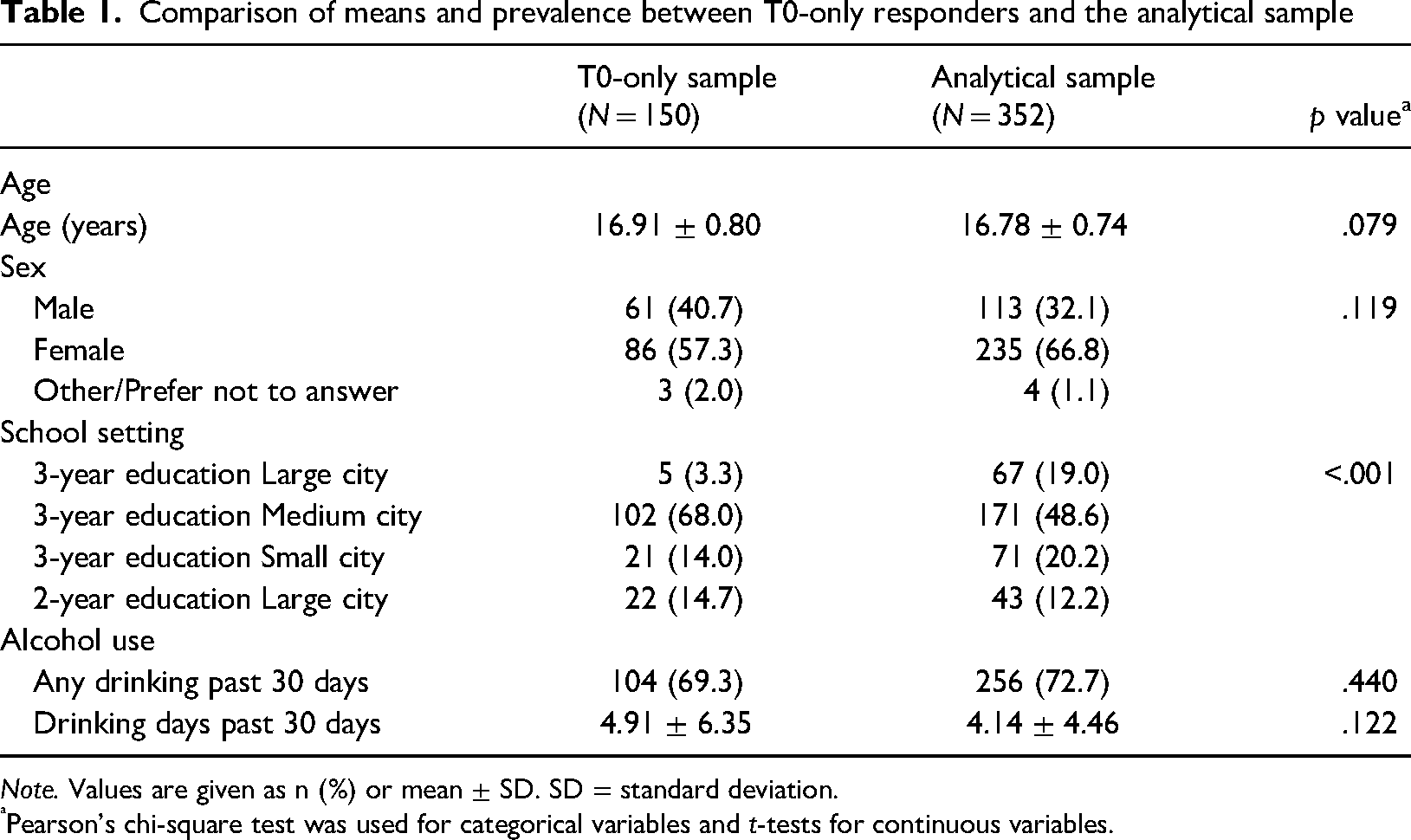
Note. Values are given as n (%) or mean ± SD. SD = standard deviation.
Pearson's chi-square test was used for categorical variables and t-tests for continuous variables.
Change in adolescent hazardous alcohol use
There was a significant effect of time in both alcohol use in the last 30 days and alcohol-related negative consequences. Students reduced the past month number of days drinking alcohol from a mean of 4.14 ± 4.46 days to 2.67 ± 4.04 days and reduced past month binge drinking from a mean of 2.35 ± 2.35 days to 1.46 ± 2.59 days from T0 to T1. The random effects of student and school were statistically significant (see Tables 2 and 3).
Random-intercept regression models for changes in hazardous alcohol use, social interaction and well-being
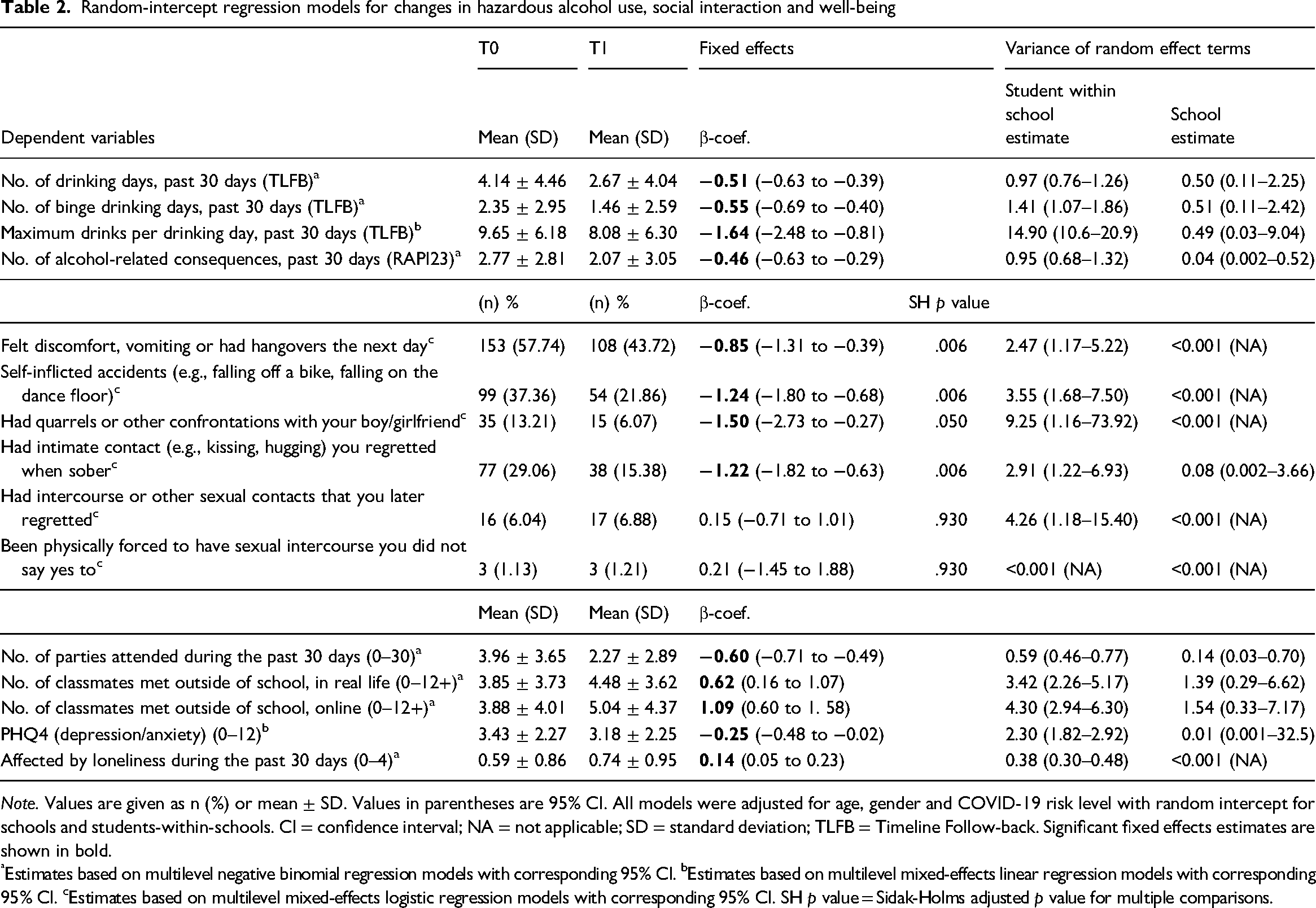
Note. Values are given as n (%) or mean ± SD. Values in parentheses are 95% CI. All models were adjusted for age, gender and COVID-19 risk level with random intercept for schools and students-within-schools. CI = confidence interval; NA = not applicable; SD = standard deviation; TLFB = Timeline Follow-back. Significant fixed effects estimates are shown in bold.
Estimates based on multilevel negative binomial regression models with corresponding 95% CI. bEstimates based on multilevel mixed-effects linear regression models with corresponding 95% CI. cEstimates based on multilevel mixed-effects logistic regression models with corresponding 95% CI. SH p value = Sidak-Holms adjusted p value for multiple comparisons.
Random-intercept regression models for the relationship between change in hazardous alcohol use and students’ characteristics
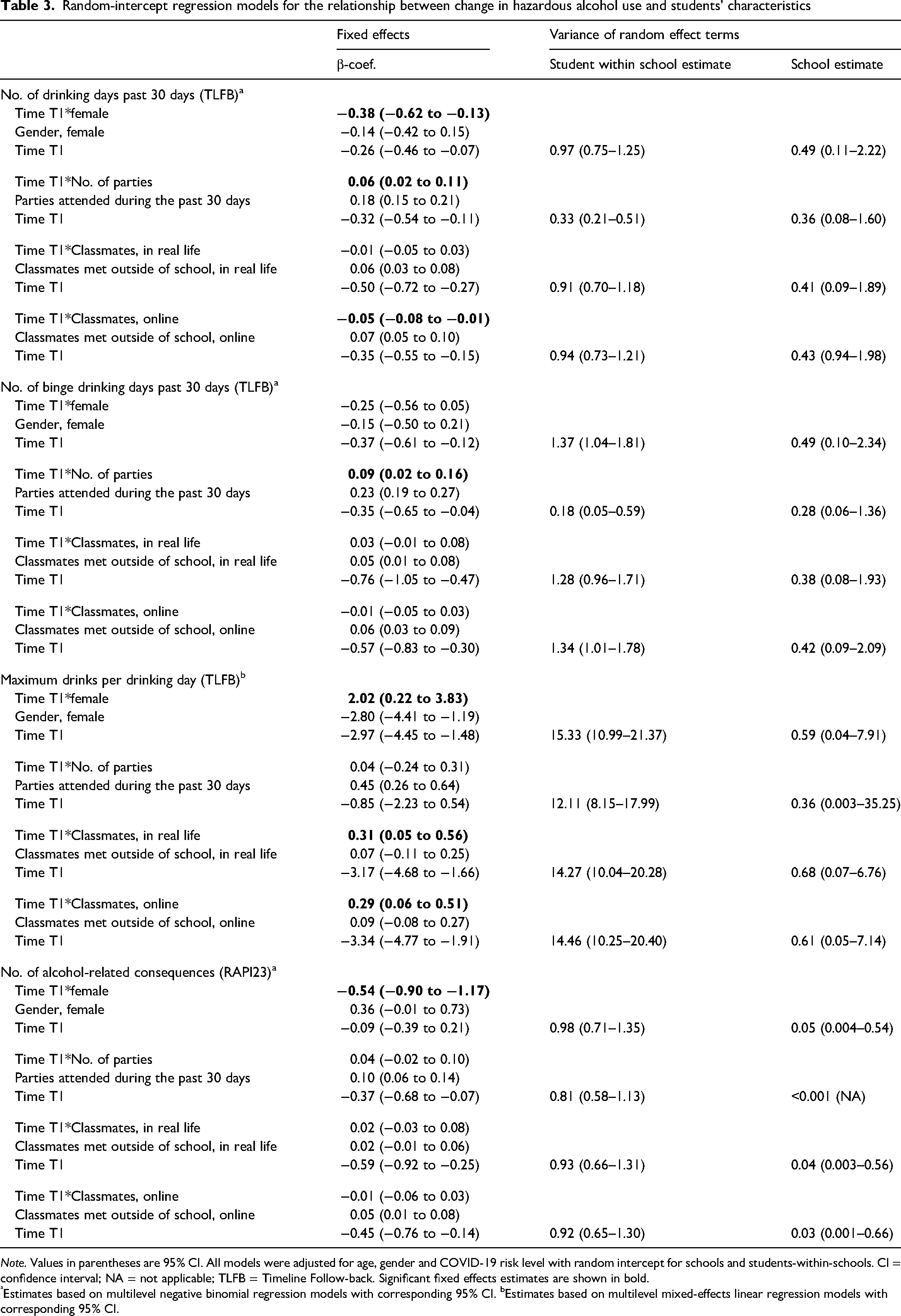
Note. Values in parentheses are 95% CI. All models were adjusted for age, gender and COVID-19 risk level with random intercept for schools and students-within-schools. CI = confidence interval; NA = not applicable; TLFB = Timeline Follow-back. Significant fixed effects estimates are shown in bold.
Estimates based on multilevel negative binomial regression models with corresponding 95% CI. bEstimates based on multilevel mixed-effects linear regression models with corresponding 95% CI.
The past 30 days the maximum drinks per drinking day decreased significantly from a mean of 9.65 ± 6.18 drinks at T0 to 8.08 ± 6.30 drinks at T1, indicating less high-intensity drinking among students.
The RAPI23 score measuring alcohol-related consequences was significantly associated with all three measures of alcohol use (rho: 0.26–0.46, p < .001), indicating a strong positive relationship between alcohol use and number of reported alcohol-related consequences. The RAPI23 score decreased significantly from a mean of 2.77 ± 2.81 at T0 to 2.07 ± 3.05 at T1. The prevalence of four out of six individual items on alcohol-related consequences decreased significantly from T0 to T1. However, the prevalence of the two individual items on sexual intercourse did not change (see Table 2).
Social interaction and mental health
Students attended significantly fewer parties at T1 compared to T0. However, at T1, students were seeing significantly more classmates in their spare time, both in real life and online, indicating that students were socially interacting despite attending fewer parties and social events. Students reported, on average, mild symptoms of depression and anxiety at both T0 and T1 but had a significantly lower mean PHQ4 score at T1 (3.18 ± 2.25) compared to T0 (3.43 ± 2.27), indicating fewer symptoms of depression and anxiety. However, significantly more students reported being affected by loneliness during the past 30 days at T1 compared to T0 (see Table 2).
Relationship between change in hazardous alcohol use and student characteristics
Table 3 shows a significant relationship between gender and changes in number of drinking days, high-intensity drinking and the RAPI23 score, but not for the six individual items (insignificant results not shown). We found a steeper reduction among girls for mean number of drinking days (from 3.91 ± 3.88 to 2.15 ± 2.86) compared to boys (4.59 ± 5.31 to 3.79 ± 5.65). The same tendency was found for alcohol-related consequences, where girls reported a steeper reduction of consequences than boys (mean 3.02 ± 2.90 to 1.99 ± 3.03 and 2.27 ± 2.57 to 2.19 ± 3.09, respectively). Compared to the girls, we found a steeper reduction among boys for high-intensity drinking (mean 8.91 ± 5.84 to 7.82 ± 6.44 for girls and 11.48 ± 6.55 to 8.69 ± 6.03 for boys) (see Table 3).
The decrease in days drinking and binge drinking was significantly less pronounced among students attending more parties relative to students attending fewer parties at T1 than at T0. In addition, students increasing the number of parties in the past 30 days did not decrease the number of days drinking or binge drinking. Hence, attending more parties resulted in more drinking.
The additional analyses showed that the decrease in drinking days was steeper among students socialising with more classmates online, resulting in the same level of drinking days for all students at T1. Further, the decrease in high-intensity drinking was steeper for students socialising with fewer classmates relative to students socialising with a higher number of classmates both online and in real life. No significant relationship was found between social interaction and change in alcohol-related consequences. Changes in hazardous alcohol use were not significantly related to mental health or loneliness (results not shown).
Discussion
Direct change in hazardous alcohol use during the second wave of COVID-19
Previous studies have shown that alcohol is closely linked to adolescents’ social lives and that adolescents’ alcohol use typically increases in the transition from lower to upper secondary school (Gohari et al., 2019; Jackson & Schulenberg, 2013; Meyer et al., 2020; Pedersen et al., 2020; Tolstrup et al., 2019). This study investigated whether alcohol use also increased during the COVID-19 pandemic, which has markedly limited students’ opportunities to socialise. More specifically, we examined changes from the students who transitioned to upper secondary school in August 2020 until three months later (November 2020), when the COVID-19-related restrictions were further constricted. Hence, students’ social lives were more restricted in November compared to August. The results clearly show that a (normally) anticipated increase in alcohol use at the transition to upper secondary school does not apply when Danish adolescents (aged 15–20 years) are limited in their social interaction, which was the case during the COVID-19 pandemic in 2020.
As hypothesised, alcohol use did not increase among Danish first-year students in the first months of upper secondary school during the second wave of the COVID-19 pandemic. In contrast, we found a marked reduction in the number of days students drank alcohol and binge drank when comparing rates in November (where restrictions were more constrained) to August. In our study, we do not have comparable data from before the COVID-19 pandemic, and there are (as far as we know) no others who have studied and published for this specific three-month period. Hence it can be questioned whether the marked decrease can be attributed to the COVID-19 restrictions or whether students in Danish upper secondary schools generally (i.e., under normal circumstances) drink more in August than in November. However, recent studies (Meyer et al., 2020; Tolstrup et al., 2019) support our hypothesis, that Danish first-year students generally increase their alcohol use during their first semester in the period from August to November. In addition, previous studies measuring changes in students’ alcohol use mainly found increasing alcohol use during a similar period (e.g., Caria et al., 2011; Vallentin-Holbech et al., 2018). Few studies found decreases (statistically insignificant) during the three-month study periods (e.g., Ekman et al., 2011), indicating that the decrease found during the second wave of the COVID-19 pandemic with a high likelihood can be attributed to the restrictions and limitations of students’ social lives. It should be noted that during the study period (from August to November), all major social school events were cancelled, providing very limited opportunities to socialise at parties and gatherings; further, the national assembly ban was for a limit of 250 persons in August and only 10 persons in November 2020, additionally limiting the opportunities to host or participate in, for example, house parties. Additionally, studies from Europe show a decrease in adolescents’ use of alcohol during the first wave of the pandemic. For example, a cross-sectional study from Belgium (Bollen et al., 2021) and a repeated measurement study from England (Evans et al., 2021) found a reduction in self-reported alcohol use among adolescents (mean age = 19.76 years) during the first wave of COVID-19 compared to their pre-pandemic use. In contrast, some repeated measure findings from the United States show an increase in drinking days among young adults during the first wave of the pandemic (Graupensperger et al., 2021; Jackson et al., 2021; Lechner et al., 2020; Papp & Kouros, 2021).
Similar to other recent repeated measurement studies from the United States and Australia (Clare et al., 2021; Jackson et al., 2021), students in our study decreased the maximum number of drinks consumed per drinking day. We also found a reduction in the number of alcohol-related consequences students had experienced during the past 30 days, measured with RAPI23. Furthermore, we found a reduction on four out of six individual items measuring negative consequences related to hazardous alcohol use (Meyer et al., 2020). For example, the students reported a decrease in self-inflicted accidents, quarrels with girl/boyfriend and episodes of intimate contact that the student later regretted. In addition, the prevalence of alcohol-related consequences in the present study was lower in November compared with a recent study among Danish students (aged >18 years) conducted in the spring of 2019 (i.e., before COVID-19) (Pisinger et al., 2019). Pisinger et al. (2019) found that 35% of the students in their study reported alcohol-related injuries in the past 30 days and 20% reported alcohol-related quarrels or fights in the past 30 days. In comparison, in November, 22% of the students in our study reported alcohol-related self-inflicted accidents in the past 30 days (37% in August) and about 9% reported having alcohol-related quarrels or fights (16% in August).
Relationship between change in hazardous alcohol use and student characteristics during the second wave of COVID-19
The decrease in high-intensity drinking was steeper among boys than among girls, reflecting the difference in the number of drinks boys and girls consumed during circumstances that were more normal in August 2020. On average, the maximum drinks consumed by boys and girls in August 2020 were 12 and 9 drinks, respectively. In November, the average was in the range of 8–9 drinks for both boys and girls. Contrary to a recent Australian study among students at secondary schools (Clare et al., 2021), which found a decline in alcohol-related consequences among both boys and girls, our study found that only girls significantly reduced the number of alcohol-related consequences during the three-month period. We found no difference between boys and girls on the six individual items for alcohol-related harms (e.g., intimate contact that the student later regretted) (Meyer et al., 2020). These findings support the gender differences in young students’ alcohol culture that must be taken into account when developing preventive interventions.
The COVID-19-related restrictions affected the students’ social life, and our results show that during the study period, they attended fewer parties but kept seeing and interacting with peers in their spare time. We anticipated that students’ social interaction would be associated with their alcohol use. This was true for the number of parties attended, as students participating in more parties weekly increased the number of drinking days and binge-drinking days. Further, a steeper decrease in drinking days was found among students interacting with a higher number of peers online. In addition, the decrease in high-intensity drinking was strongly associated with less interaction with peers both online and in real life, reflecting that alcohol use among young Danes is closely linked to social drinking (Abar & Maggs, 2010; Meyer et al., 2020).
Across many high-income countries, adolescent hazardous drinking has decreased since the millennium, promoting examinations of potential explanations including changes in the social landscape (Kraus et al., 2018; Looze et al., 2015). A study from Norway suggests that the most important factor for the decrease in intoxication in 13–17-year-olds during 2000–2013/14 is the decrease in going out with friends (Rossow et al., 2020). However, findings based on ESPAD data found that going out with friends had little/no impact, or showed inconsistent results, on the decline in heavy episodic drinking across Finland, Norway and Sweden during 1999–2015 (Raitasalo et al., 2021). Several factors are most likely at play, such as parental factors (Vashishtha et al., 2020) and perceived access to alcohol (Raitasalo et al., 2021) as well as the increased use of digital social platforms for socialising or leisure and entertainment (Luomanen & Alasuutari, 2022). In the present study, attending parties was linked to hazardous drinking, but we also saw indications that increased interaction online was related to the decline.
It may be expected that a crisis such as a pandemic will result in poorer mental health, and studies have found that young people experienced an increase in anxiety, depression and stress due to the pandemic (Jones et al., 2021). In addition, studies examining the impact of COVID-19 on young and old adults show a strong link between increased alcohol consumption and impaired mental health (Jacob et al., 2021; Kilian et al., 2021; Rodriguez et al., 2020; Vanderbruggen et al., 2020). Furthermore, restrictions, social distancing and self-isolation may increase feelings of loneliness, and studies have found this to be true during the pandemic, especially among women and young people (Brooks et al., 2020; Marmot et al., 2020; Pierce et al., 2020). Although some findings suggest that college students increased drinking to reduce distress related to COVID-19 (Bollen et al., 2021), our study did not indicate that students drank more to deal with stressful situations or to get through difficult times. This fits with our understanding of adolescent drinkers, who are more frequently motivated by positive than negative effects and tend to endorse social motives more than coping motives (Bloomfield et al., 2013; Howard et al., 2015).
Surprisingly, students reported better mental health (PHQ4) at T1 compared to T0. This might be explained by the finding that they were seeing more classmates in their spare time online and in person (albeit attending fewer parties), perhaps providing better opportunities to share anxieties and worries related to COVID-19, such as online teaching and social distancing, and jointly finding solutions enabling new strong relationships. However, it is important to note that the students’ average level on the PHQ4 scale indicated mild symptoms of anxiety and/or depression at both time points. Further, this study does not provide the possibility to assess whether the PHQ4 scores were higher or at the same level as before the pandemic. However, a recent cross-sectional study found that Danish adolescents (aged 15–20 years) reported an increase in poor mental health during the first wave of COVID-19 compared to before the pandemic and that more than 50% felt lonely or isolated due to the COVID-19 restrictions (Pisinger et al., 2021). Likewise, our results show an increase in students’ feeling affected by loneliness but none of the changes across time in students’ mental health or loneliness were related to their reduced hazardous alcohol use. This might indicate the difference in how and in what contexts adolescents and adults use alcohol, and that the connection between alcohol and social interaction, such as party-related aspects, is stronger for adolescents than for adults. While the reduction we see among the students in our study might relate to the limited opportunities to socialise, the increased consumption among adults reported in other studies is probably related to the fact that more adults have used alcohol to cope with difficult challenges and poor mental health. Taken together, these results indicate that alcohol has different functions for adolescents and adults, and that adolescents' decisions, not least around alcohol use, are more influenced by their peers’ actions and norms than those of adults, which becomes even clearer when a pandemic changes our social life, daily routines and life circumstances.
Strengths and limitations
A major strength of our study is the use of repeated measures that do not rely upon delayed recall of alcohol consumption and that were collected via a confidential online survey known to provide high qualitative data (Ekholm et al., 2008). However, the data were obtained from self-administrated questionnaires; therefore, over- or underreporting cannot be ruled out.
Our study does not include data from a similar period (August to November) before COVID-19; therefore, the decrease in alcohol use and related consequences may not only be attributed to the COVID-19 restrictions and the associated limitation of students’ social lives but may also be subject to seasonal fluctuations. However, as already described, previous studies among Danish students in upper secondary school (Meyer et al., 2020; Pisinger et al., 2021; Tolstrup et al., 2019) indicate that students under normal circumstances increase their use of alcohol during their first year in upper secondary school.
Further, the study sample was recruited from three Danish cities and may not generalise to the general population of young adults. However, the sample had similar levels of alcohol use and a comparable demographic profile to Danish students at upper secondary school (Pisinger et al., 2021). In addition, context-related reasons for change may not generalise to students in other countries.
Conclusion
While pre-COVID-19 studies point to adolescents increasing their alcohol use or initiating drinking in connection with the transition from lower to upper secondary school, our study found hazardous alcohol use decreased significantly among Danish students transitioning to upper secondary school during the second wave of the COVID-19 pandemic where students’ social life gradually became more limited with intensified restrictions.
Further, our findings show that hazardous alcohol use is closely intertwined with adolescents’ social lives and that the pandemic has been challenging for their well-being, such as increased feelings of loneliness and indications of mild symptoms of anxiety and depression. The decrease in hazardous alcohol use was clearly related to gender, but we did not find a clear connection between changes in adolescents’ well-being and changes in their hazardous alcohol use, which is in contrast to studies among adults and young adults during the pandemic.
The close link between alcohol use and adolescents’ social lives is an important frame that will be relevant when designing interventions to promote healthier and less risky choices throughout the next phase(s) of the pandemic and in general.
Footnotes
Acknowledgements
The authors thank students and teachers at the participating schools who gave their time to be involved in this project. In addition, we thank Natascha Hareskov Jensen for her contribution to the data collection and Adrianna del Palacio Gonzalez for her valuable advice on the statistical strategy.
Data statement
The raw data supporting the conclusions of this manuscript will be made available by the corresponding author upon reasonable request.
Declaration of conflicting interests
The author(s) declared no potential conflicts of interest with respect to the research, authorship, and/or publication of this article.
Funding
The author(s) disclosed receipt of the following financial support for the research, authorship, and/or publication of this article: This work was supported by TrygFonden, Denmark.
