




Abstract
Gasoline blending stocks (naphthas) are comprised of normal, iso- and cycloparaffins and aromatic hydrocarbons with carbon numbers ranging from C4 to C12. Heavy straight run naphtha (HSRN, CAS number 64741-41-9) was selected for toxicity screening because substances of this type contain relatively high levels (28%) of cycloparaffins by comparison to other naphtha streams and the data complement toxicity information on other gasoline blending streams. Rats were exposed by inhalation to wholly vaporized material at levels of approximately 100, 500, or 3000 parts per million (ppm) daily to screen the potential for systemic toxicity, neurotoxicity, reproductive toxicity, and developmental effects to postnatal day 4. All animals survived the treatment period. Principal effects of repeated exposure included increased liver weights in males and females, increased kidney weights in males, and histological changes in the thyroid, secondary to liver enzyme induction. These changes were not considered to be toxicologically meaningful and are not relevant to humans. There were no treatment-related effects in functional observation tests or motor activity; no significant reductions in fertility or changes in other reproductive parameters; and no evidence of developmental toxicity in offspring. The overall no observed adverse effect concentration was 3000 ppm (approximately 13 600 mg/m3). In conclusion the HSRN effects on liver and kidney are consistent with the results of other studies of volatile fractions or other naphthas or formulated gasoline, and there were no HSRN effects on neurological developmental or reproductive parameters.
Keywords
Introduction
The US Environmental Protection Agency (US EPA) announced a voluntary chemical data collection effort in 1998 called the High Production Volume (HPV) Challenge Program. 1 The HPV chemicals are those produced or imported into the United States in aggregate quantities of at least 1 million pounds per year. Approximately 400 petroleum substances were sponsored in the EPA’s Challenge Program by companies belonging to the Petroleum HPV Testing Group. The various substances were organized into 13 categories to facilitate data sharing and to avoid redundant testing. These categories included crude oil, gases, gasoline, kerosene/jet fuel, gas oils, heavy fuel oils, lubricating oils, waxes, aromatic extracts, asphalts, grease thickeners, petroleum coke, and hydrocarbon wastes. This article reports an investigation into the toxicological hazards of heavy straight run naphtha (HSRN).
Naphthas are used primarily to manufacture motor gasoline, which is a complex material typically composed of over 200 petroleum hydrocarbons and trace quantities of performance additives. Gasoline is manufactured by blending petroleum streams collectively referred to as low-boiling point naphthas that have physical and chemical properties that make them suitable for use in gasoline formulation. Based on definitions established by the Chemical Abstract Services (CAS), there are 81 low-boiling point naphthas that together comprise a specific subset of petroleum substances that are sufficiently similar to be assessed on a collective basis for purposes of human health characterization. More specifically, these low-boiling point naphthas are complex substances comprising hydrocarbons with carbon numbers predominantly in the range of C4 to C12.
There are 4 general types of hydrocarbon molecules that may be present in naphthas and other petroleum products: linear paraffins (including normal, ie, straight chain and iso-, ie, branched), cycloparaffins (also referred to collectively as naphthenes), olefins, and aromatics. The designation of each of the naphtha streams indicates the process by which it was produced and may also indicate the predominant types of hydrocarbons that may be present. For example, HSRN is produced from crude oil by distillation at atmospheric pressure and has a hydrocarbon range (C6-C12) that is at the higher end of the naphtha distillation range. The strategy to characterize the toxicological properties of the naphthas collectively was to identify reasonable “worst-case” examples that contained the highest levels of the various types of constituents (ie, paraffins, olefins, cycloparaffins, and aromatics) and to use these data for “read-across purposes” to other naphtha streams with lesser amounts of these various types of hydrocarbons. A further check to assess whether this strategy was reasonable was to compare the toxicological properties of the tested naphtha streams to those of blended gasoline. One complication is that humans are primarily exposed to the more volatile constituents of these substances. Thus, in designing toxicological studies, it is necessary to choose between characterizing the hazards of the substances versus obtaining data that might be more directly useful in risk assessment. Early toxicological studies utilized fully vaporized material as the test substance, whereas later studies concentrated on the more volatile constituents (“light ends”). The significance of this difference and its relevance to the use of the data for hazard characterization and risk assessment is discussed in more detail in the discussion section.
Among the previous studies are 3 that assessed the potential of the volatile constituents of specific types of naphtha streams to produce systemic toxicity and to also examine the potential impact of these streams to influence reproductive and/or developmental processes. The 3 previously characterized naphtha streams that represented the extremes of paraffins, olefins, and aromatics, respectively, were as follows:
Light alkylate naphtha (CAS number 64741-66-8) is a stream manufactured by a process involving reaction of low-molecular-weight olefins and almost entirely (> 99%) comprised of isoparaffins. 2,3
Light catalytically cracked naphtha (CAS number 64741-66-8) is a stream manufactured by conversion of higher to lower molecular weight hydrocarbons in the presence of a catalyst and under conditions of elevated temperature and pressure. Light catalytically cracked naphthas may contain as much as 60% olefins. 4–6
Light catalytically reformed naphtha (CAS number 64741-63-5) is a stream manufactured by a process that removes hydrogen, converting cycloparaffins into aromatics. Light catalytically reformed naphthas may contain as much as 40% aromatics. 7–9
There are also data on the systemic, developmental, and reproductive toxicity of wholly vaporized unleaded gasoline and its volatile fraction that can be used for comparative purposes. 10–13 As a basis for relating blended gasoline to the tested low-boiling point naphthas, in 1990 the industry average gasoline contained 53% paraffins, 33% aromatics, 9% olefins, and 5% cycloparaffins (1990 baseline gasoline as defined in 40 CFR 79.55). More recent survey information documents reductions in aromatic content and the wider use of ethanol as a blending component. Between 1995 and 2005, the average content of retail gasoline was 24.6% aromatics, 11.6% olefins, 63.8% saturates. Revised data on levels of cycloparaffins specifically have not been published but are likely similar to or lower than the levels reported in 1990. 14
The present study investigated the toxicological hazards associated with exposure to HSRN (CAS # 64741-41-9). It was selected to complete the worst-case assessment of petroleum naphthas because it contains relatively high levels (approximately 28%) of cycloparaffins in comparison to other naphthas and to blended gasoline. The results of this study provide a useful comparison with data from previously tested streams that contained relatively high amounts of paraffins, olefins, and/or aromatics. The studies were conducted in accordance with the guidelines for Organization for Economic Cooperation and Development (OECD) 422 and US EPA OPPTS 870.3650 (combined repeated dose toxicity study with the reproduction/developmental toxicity screening test). Parameters assessed included those associated with systemic toxicity, neurotoxicity, fertility, and developmental toxicity. However, unlike previous tests of naphthas, these studies utilized fully vaporized material as the test substance for reasons described in more detail subsequently.
The specific objective of the study of HSRN was to complete a data matrix for naphthas based on examples containing the highest levels of the different hydrocarbon types. The data matrix was then used in an overall assessment of the members of the naphtha category to satisfy the data requirements of the US EPA HPV hazard characterization process. The examples previously listed represented compositional extremes for paraffins, olefins, and aromatics. The HSRN that contains the highest level of cycloparaffins completes the set. The reason to characterize the hazards is to then conduct risk assessment to be sure that the hazards are controlled. This introduces a complication because low-boiling point naphthas (and gasoline) are volatile liquids with wide carbon number ranges. Because of this relatively high volatility, exposure is largely by inhalation. The lowest molecular weight constituents are the most volatile, tend to be overrepresented in the vapor phase, and constitute the material to which humans would be exposed either during manufacture of the naphtha streams individually or during blending and later use of motor gasoline. Thus, there are differences between the bulk liquids and the material to which humans are exposed. The historical strategy was to test the fully vaporized bulk liquids 15 ; in later years, there was a shift in the use of the light end volatile fractions as test materials. In this particular case, it was necessary to fully vaporize the test material in order to assess the toxicological contributions from the cycloparaffinic constituents that normally would comprise a very small fraction of the vapor phase material. This creates the opportunity to compare the results of studies of fully vaporized HSRN and gasoline (representing the substances themselves) versus light ends of gasoline and naphthas containing other constituents (representing the constituents to which humans would be exposed via inhalation) to determine whether or not these two approaches lead to similar conclusions from a risk assessment perspective.
Methods
Test Materials
The test substance was a gasoline blending stock described as “Naphtha, petroleum, Heavy Straight Run (CAS number 64741-41-9)” produced from crude oil by a process of distillation at atmospheric pressure followed by treatment with hydrogen to remove nitrogen and sulfur. It is a complex substance composed of hydrocarbons with carbon numbers in the range of approximately C6 to C12 and a hydrocarbon type distribution of approximately 53% paraffins (normal and isoparaffins), 5% olefins, 28% cycloparaffins, and 12% aromatics. Additional compositional information is provided in Appendix A. The test material was collected as a single lot from 1 US refinery in August 2004 and provided anonymously for use in this program. The sample was shipped in drums from the refinery and held at ambient temperature in a storage facility before use in the toxicity test.
Animal Studies
Male and female Sprague-Dawley rats (CRL: CD[SD]), nonsiblings and nulliparous, were obtained from Charles River Laboratories, Raleigh, North Carolina. A total of 53 males and 105 females with an age at arrival of approximately 46 days were received. Of these, 48 males and 48 females were used to assess the potential for repeated dose effects, and 48 females were used to assess reproductive and developmental toxicity (Table 1). The weights at arrival were approximately 146.5 to 185.4 g (males) and 136.8 to 177.2 g (females). The rats were housed individually in wire mesh cages and apportioned to experimental groups by a computerized program based on animal weight. There were no statistically significant differences in group mean body weights (by gender) among the groups. The animals were maintained on a 12-hour light/dark cycle, at temperatures ranging from 18°C to 26°C and relative humidity ranging from 30% to 70% and given ad libitum access to food (PMI Nutrition International, LLC Certified Rodent LabDiet 5002, pelleted, manufactured by Purina and supplied by Animal Specialties and Provisions, Allentown, Pennsylvania) and water except during periods of exposure or when fasted.
Treatment Groups and Exposure Concentrations Used in the Repeated Dose/Reproductive Toxicity Screening Test of Heavy Straight Run Naphtha.
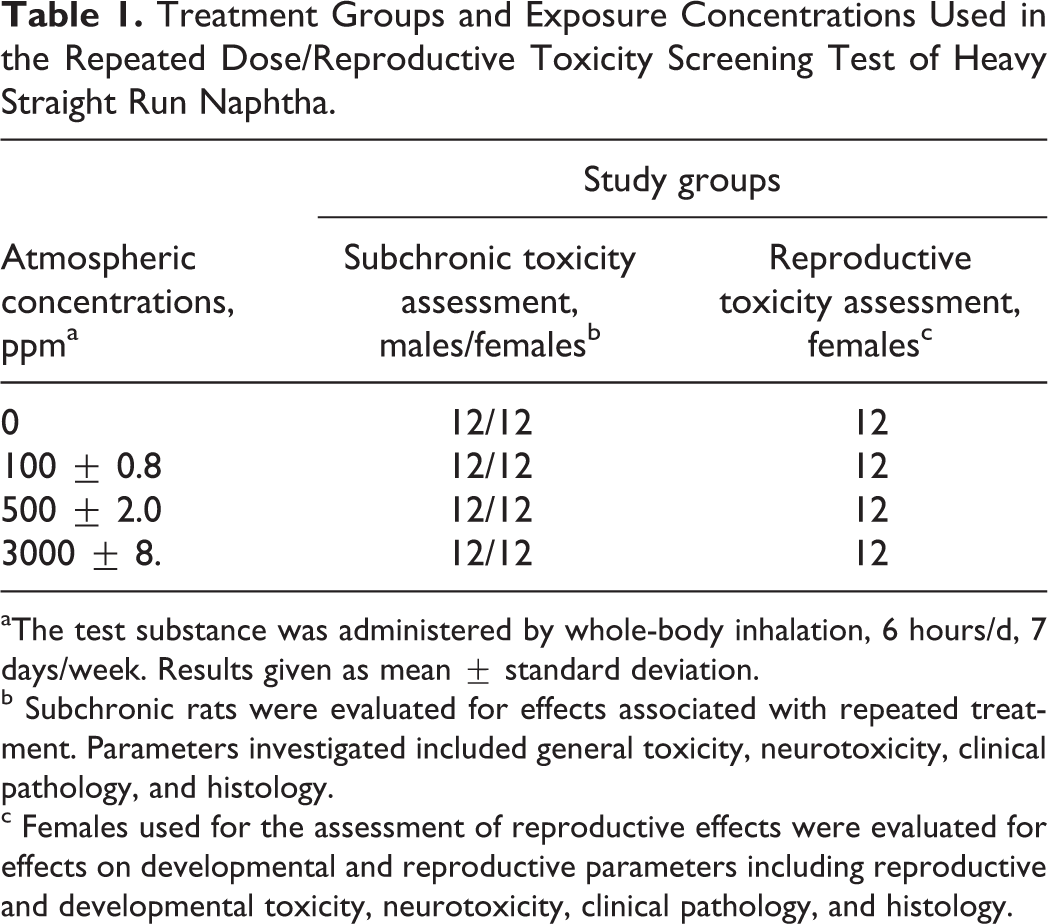
aThe test substance was administered by whole-body inhalation, 6 hours/d, 7 days/week. Results given as mean ± standard deviation.
b Subchronic rats were evaluated for effects associated with repeated treatment. Parameters investigated included general toxicity, neurotoxicity, clinical pathology, and histology.
c Females used for the assessment of reproductive effects were evaluated for effects on developmental and reproductive parameters including reproductive and developmental toxicity, neurotoxicity, clinical pathology, and histology.
The HSRN was tested in a “combined repeated dose toxicity study with the reproduction/developmental toxicity test” following the OECD 422 guidelines and using inhalation as the route of test material administration. The animals were divided into test groups as shown in Table 1.
Rats were exposed on a 6-hour/d, 7-day/week schedule. Male and female rats scheduled for assessment of systemic toxicity were sacrificed after 30 (male) or 31 (female) days of exposure. The female rats scheduled for the reproductive toxicity assessment were exposed for 14 days prior to mating, for a maximum of 14 days of mating, and through a 19-day gestational period for a minimum of 34 days of exposure. Exposures of pregnant dams were discontinued on gestational day 19. The pregnant female rats were allowed to deliver and held without exposure until the scheduled termination on postnatal day 4. Females that did not mate were exposed for 54 days.
Inhalation Exposure System
Animals were exposed in 1.4 m3 chambers constructed of stainless steel and glass (Pesce Lab Sales, Kennett Square, Pennsylvania). The chamber volumes were chosen such that the total volume of test animals was less than 5% of the total chamber volume.
Targeted atmospheric concentrations were 100, 500, and 3000 parts per million (ppm). Dose selection was based on a preliminary 14-day, range-finding study in which male and pregnant female rats were exposed to levels of 250, 1000, or 4000 ppm. Decreased body weight, weight gain, and food consumption as well as increased liver and kidney weights were found in both male and female rats exposed to 4000 ppm. Reduced body weights and increased liver and kidney weights were also observed in males exposed to 1000 ppm. Based on these observations, the highest exposure level selected for the full study (3000 ppm) was expected to produce target organ effects but to not be excessively toxic when administered for a longer period of time.
Chamber atmospheres were generated by flash evaporation of the test material in nitrogen. To accomplish this, the liquid test material was metered into round bottom, flash evaporation flasks. A Harvard Apparatus model 22 Syringe Infusion Pump (Harvard Apparatus, Holliston, Massachusetts) supplied liquid test material for the 100-ppm chamber, and Cole-Parmer Masterflex model 7521-40 pumps (Cole-Parmer, Vernon Hills, Illinois) supplied liquid to the 500- and 3000-ppm chamber evaporation flasks. The flasks were heated to 185°C (control and 100 ppm groups), 210°C (500 ppm group), or 250°C (3000 ppm group) using Unimantle heaters (VWR, Radnor, Pennsylvania). Brooks model 0154E mass flow controllers (Brooks Instruments, Hatfield, Pennsylvania) supplied approximately 10 L/min high purity (>99.9%) nitrogen to the evaporation flasks. (It was necessary to heat the HSRN to convert it into a vapor. The higher the desired vapor concentration, the higher the heating temperature required.) The resulting vapors were swept into the chambers via HEPA-filtered, conditioned air supply lines. Chamber concentrations were controlled by varying the test substance feed rates to the evaporation flasks. The Harvard Apparatus infusion pump, Cole-Parmer Masterflex pumps, Brooks mass flow controllers, and the Unimantle heaters were controlled and monitored by a customized Camile Inhalation Toxicology Automated Data System (CITADS; DuPont, Wilmington, Delaware
The chambers were exhausted by setting the exhaust airflow slightly higher than the incoming chamber air supply such that the exposure chambers would be under slight negative pressure with respect to the surrounding room. Each chamber air supply was set to be at least 240 L/min to achieve a minimum of 10 air changes/hr.
Test substance vapor was monitored approximately once per hour in each of the exposure chambers by drawing a sample of the chamber atmosphere through stainless steel tubing to a Hewlett Packard model 6890 gas chromatograph (GC; Argilent, Santa Clara, California) equipped with a pneumatically operated gas sample valve and a flame ionization detector. Samples were automatically injected onto a 30-m J&W Scientific DB-5 fused silica glass column (Argilent) and were chromatographed using an oven temperature ramp rate of 10°C/min from 40 C to 125 C.
The atmospheric concentrations of test substance were determined from standard curves derived from vapor standards that were prepared daily. Gas standards were prepared by injecting known volumes of liquid test material into Tedlar gas standard bags (SKC Inc, Eighty Four, Pennsylvania) containing either 5 or 12 L of air.
Throughout the 6-hour exposure periods, GC sample results were automatically transferred to a CITADS unit. A Camile Inhalation Automated Reporting and Analysis System (CIRAS; DuPont, Wilmington, Delaware) collated the results of the atmospheric sampling.
Nominal concentrations were calculated daily based on the total daily airflow in a given test chamber, the molecular weight and density of the test substance, and the volume of liquid test substance pumped into the vaporization flask.
Since HSRN is a complex substance with numerous components, an additional analysis was conducted to assure that all constituents were delivered to the exposure chambers. To do this, 12 components (Table 2) that were present at sufficiently high levels in the HSRN sample (Appendix A) for use as analytical markers were selected from a cross section of the peak retention times and concentrations in the exposure chambers were determined on a weekly basis to confirm that the exposure conditions were maintained over the entire study period. For this analysis, samples from all chambers were collected and analyzed in a separate Hewlett Packard model 6890 plus GC equipped with a pneumatically operated gas cylinder valve and a flame ionization detector
Mean Measured Concentrations (ppm) of 12 Components of Heavy Straight Run Naphtha Which Were Used as Markers to Quantify Hydrocarbon Vapor Concentrations in the Exposure Chambers.
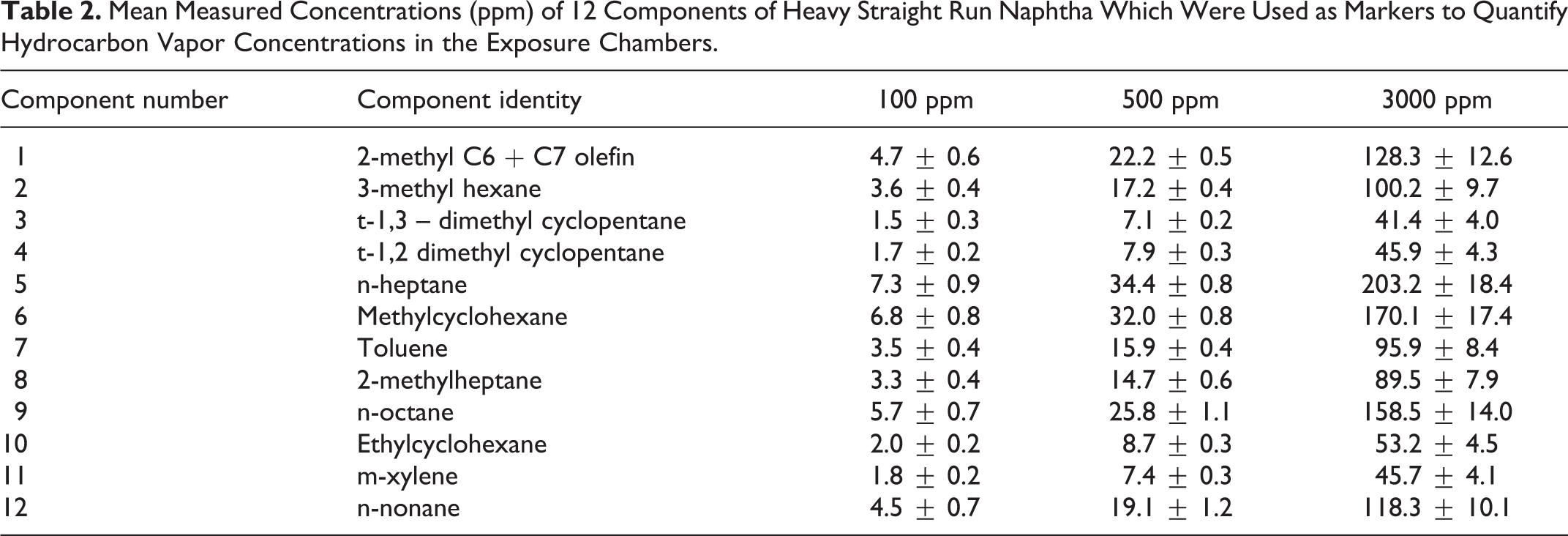
Gas standards were prepared by injecting known volumes of HSRN into Tedlar gas standard bags containing known volumes of air. Concentrations of the 12 components were calculated by multiplying the percentage volume values by the standard concentrations. The cryogenic GC was then calibrated for each of the 12 peaks using the individual component concentrations. The standard curve was entered and an external standard option using a linear function was selected. The GC Hewlett Packard Chemstation software calculated the concentrations of each of the 12 marker components in ppm using a molecular weight of 111 Da, based on a weighted average of the molecular weights of the individual constituents.
Assessment of Systemic Toxicity
As indicated earlier, rats scheduled for assessment of systemic toxicity were exposed for either 30 (males) or 31 (females) consecutive days. The animals were given daily health observations with more detailed clinical examinations prior to exposure, on a weekly basis during the exposure period and on the day of scheduled termination. Body weights and food consumption were assessed on a weekly basis.
The systemic toxicity assessment also included an evaluation of the potential for neurobehavioral effects. Rats in this part of the study were given a neurobehavioral evaluation preexposure (baseline) and then again after 4 weeks of exposure. The 4-week assessments were conducted prior to initiation of exposure on that specific test day, so they had all been given an approximately 18-hour, exposure-free period prior to testing to minimize the potential for any residual acute central nervous system effects. The neurobehavioral measurements included assessments for approach and touch response, auditory response, and tail pinch response. Forelimb and hind limb grip strength were evaluated (Chatillon Digital Force Gauge, Columbus Instruments, Columbus, Ohio), and there was also an assessment of motor activity during which the rats were placed in activity chambers (Coulbourn Infrared Motion Activity System, Whitehall, Pennsylvania) and monitored for 6 consecutive sessions of 10 minutes each for a total of 60 minutes.
Prior to terminal sacrifice, blood samples were collected from all the rats. The rats were fasted for 15 hours prior to sample collection. Blood samples were collected from the orbital sinus of the animals while they were under carbon dioxide anesthesia, and additional blood samples for assessment of coagulation parameters were collected from the abdominal vena cava at terminal sacrifice. Rats were euthanized by carbon dioxide anesthesia and exsanguination. Complete blood counts including reticulocytes were determined on a Bayer Advia 120 hematology analyzer (Siemens Healthcare Diagnostics, Tarrytown, New York) or determined from microscopic evaluation of the blood smear. Wright-Giemsa-stained blood smears were examined microscopically for confirmation of automated results and evaluation of cellular morphology. Coagulation times were determined on a Sysmex CA-1000 Coagulation Analyzer (Siemens Healthcare Diagnostics). Parameters evaluated included red blood cell count, hemoglobin, hematocrit, mean corpuscular (cell) volume, mean corpuscular (cell) hemoglobin, mean corpuscular (cell) hemoglobin concentration, red cell distribution width, absolute reticulocyte count, platelet count, white blood cell count, and differential white blood cell count. There was also a microscopic blood smear examination, and clotting parameters (prothrombin time and activated partial prothromboplastin time) were measured.
Clinical chemistry parameters were evaluated using an Olympus AU640 Clinical Chemistry Analyzer
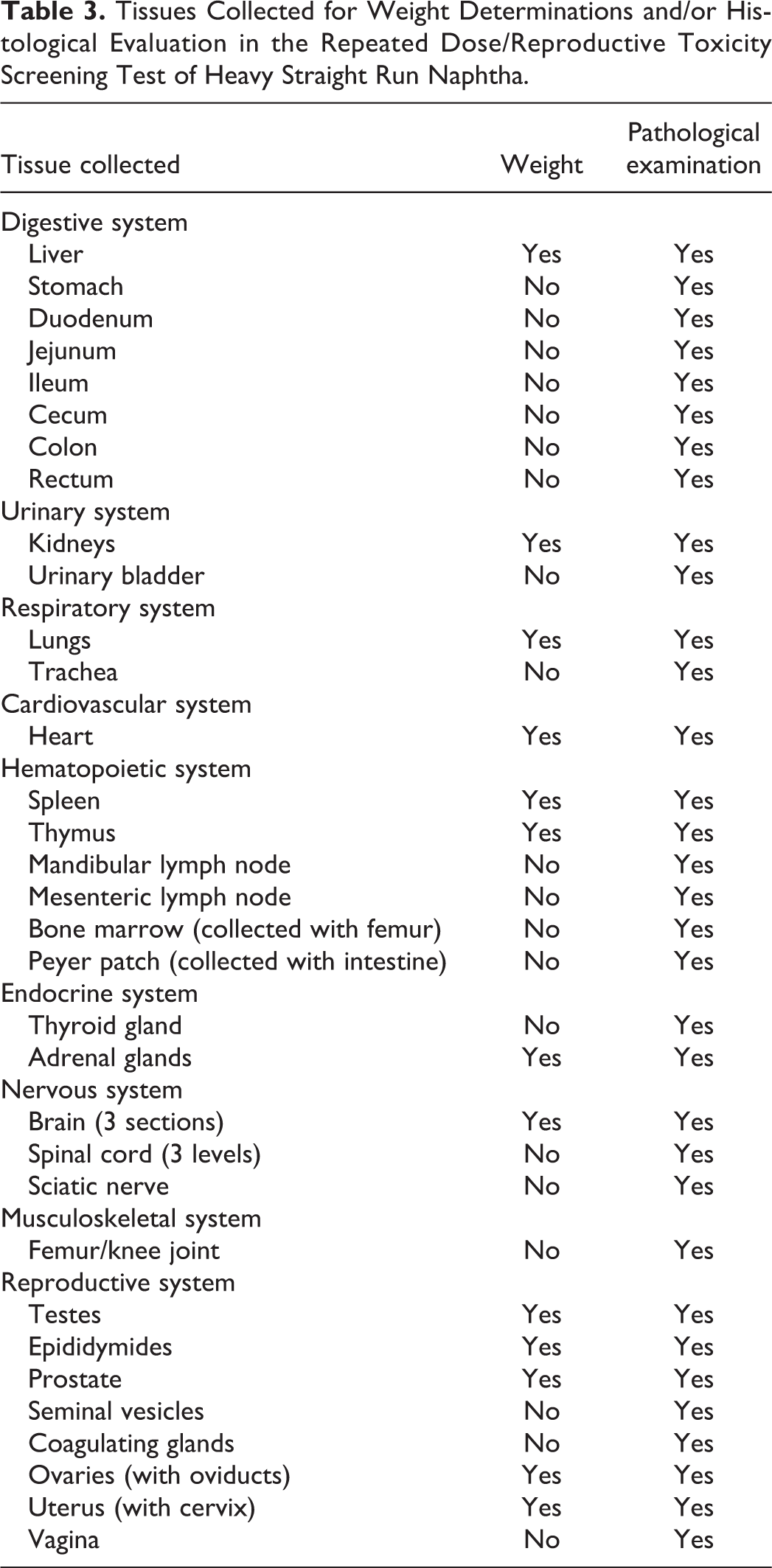
Potential target tissues (Table 3) were obtained at terminal sacrifice. Those indicated were weighed, and these as well as the other tissues in the list were processed for histological evaluation. Testes and epididymides were fixed in modified Davidson solution. All other tissues were fixed in 10% neutral-buffered formalin. Processed tissues were embedded in paraffin, and sections approximately 5 to 6 µm thick were prepared and stained with hematoxylin and eosin. All collected tissues from rats in the control and 3000-ppm exposure groups were processed to slides and evaluated microscopically. As there was limited evidence of pathological changes, examination of tissues in intermediate exposure groups was limited to gross lesions and specific target organs, identified as liver, thyroid, and kidney (males only).
Tissues Collected for Weight Determinations and/or Histological Evaluation in the Repeated Dose/Reproductive Toxicity Screening Test of Heavy Straight Run Naphtha.
Assessment of Fertility and Development
Female rats intended for assessment of fertility and development were exposed for 14 consecutive days prior to mating. During the mating period (2 weeks), the female rats were cohoused overnight with males until evidence of mating (intervaginal plug or sperm in the lavage sample was obtained). The day on which mating was confirmed was designated gestation day 0. The mated rats were exposed until gestational day 19, at which time exposures were discontinued, and the rats were transferred to polycarbonate pans for littering. Once littering occurred (designated as postnatal day 0), the offspring were individually handled and examined for abnormal behavior and appearance. Dead and/or abnormal pups were recorded. Gender was determined for all surviving offspring, and they were individually weighed. On postnatal day 4, all surviving dams and offspring were weighed and sacrificed. Procedures followed for euthanasia, necropsy, gross examination, and tissue collection/fixation of dams were similar to that performed for other adult rats previously described. Additionally, these females were examined for the presence and number of uterine implantation sites and ovarian corpora lutea. Reproductive organs were processed and examined microscopically. The following tissues were weighed: liver, kidneys, lungs, ovaries (with oviducts), and uterus (with cervix). All offspring surviving to postnatal day 4 were evaluated for external abnormalities and then euthanized by intraperitoneal injection of sodium pentobarbital. Offspring found dead or sacrificed in extremis were examined grossly and discarded.
Statistical Analysis
Body weight, body weight gain, food consumption, food efficiency, precoital interval, gestation length, corpora lutea, implantation sites, postimplantation loss, number of pups/litter, live born index, viability index, clinical chemistry parameters, and organ weight parameters were tested using the Levene test for homogeneity 16 and the Shapiro-Wilk test for normality. 17 If significant differences were not found in these tests, the data were analyzed using a test for 1-way analysis of variance 18 and the Dunnett test. 19–21 If differences were significant in the preliminary tests, the data were analyzed using the Kruskal-Wallis test 22 and the Dunn Test. 23
Sex ratio (covariate—litter size) and weights of offspring (covariates—litter size, sex ratio) underwent preliminary testing using the Levene test and the Shapiro-Wilk test as described earlier. If significance was not found in the preliminary tests, the data were analyzed using analysis of covariance 18 and the Dunnett-Hsu test. 24 When significance was found in the preliminary tests, the data were analyzed by nonparametric analysis of covariance. 25
Motor activity and grip strength data were also subjected to preliminary testing using the Levene test and the Shapiro-Wilk test as described earlier. If significance was not found in the preliminary tests, the data were analyzed using repeated measures analysis of variance 26 followed by linear contrasts. 27 If there were significant differences in the preliminary tests, the data were analyzed by sequential application 28 of the Jonckheere-Terpstra trend test. 29
The descriptive functional observation battery parameters, mating index, and fertility index were analyzed using sequential application of the Cochran-Armitage test for trend. 18
Results
Exposure Levels
The mean measured concentrations of test material in the exposure chamber were 100 ± 0.8, 500 ± 2.0, and 3000 ± 8.3 ppm by comparison to target exposure concentrations of 100, 500, and 3000 ppm. The nominal concentrations were 101, 584, and 3410 ppm for the 100, 500, and 3000 ppm chambers, respectively. Weekly evaluation of the marker components provided evidence that stable exposure conditions could be maintained over the entire study period.
Mortality and in Life Observations
All rats survived the exposure period. There was evidence of wet fur and red-stained facial fur in animals from the 3000 ppm exposure groups and also some evidence of red-stained facial fur among females in the 500 ppm group. But there were no other observations of exposure-related effects during the treatment period. The pattern of wet fur is consistent with increases in salivation, lacrimation, and nasal discharge, which are consistent with exposure to substances that are irritating and/or have unpleasant odors or tastes and also increased urination.
Body Weight Changes
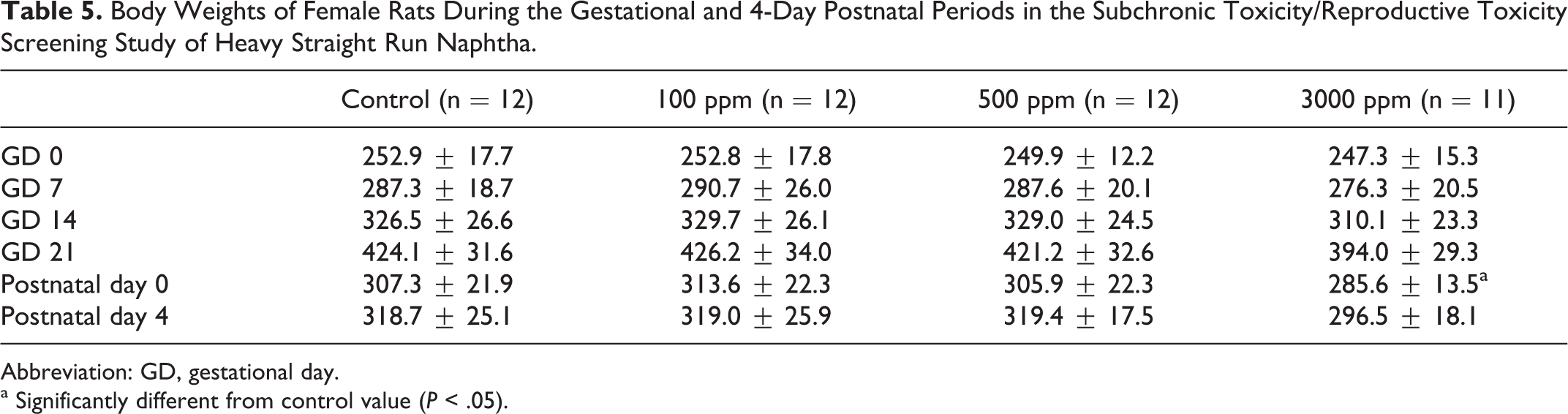
Body weight gains of male and female rats in the 3000 ppm exposure groups were lower than those of the rats in the control groups (Table 4). The final body weights of male rats were 5% (not statistically significant) below control values. The final body weights of female rats from the systemic toxicity assessment group were 8% (not statistically significant) below control values. The body weights of female rats in the fertility/developmental toxicity assessment group were 4% (not statistically significant) below control values at the end of the mating period. Body weights of female rats at the end of the gestation period (gestation day 21) were 7% below control values (not statistically significant), at the start of lactation (lactation day 0) body weights of 3000 ppm exposed females were 7% (statistically significant) below control values, but the differences were no longer statistically significant by study termination (postnatal day 4; Table 5).
Body Weights of Rats Exposed by Inhalation to Heavy Straight Run Naphtha for 30 (Male) or 31 (Female) Days.
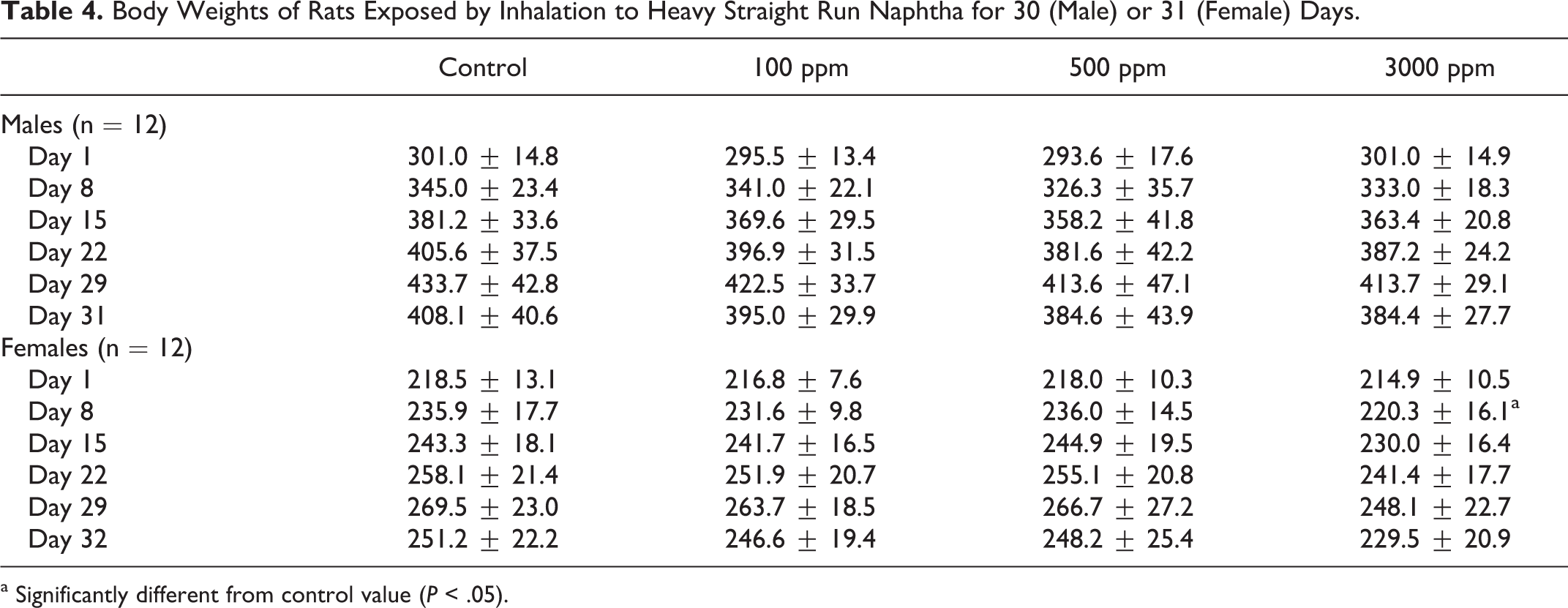
a Significantly different from control value (P < .05).
Body Weights of Female Rats During the Gestational and 4-Day Postnatal Periods in the Subchronic Toxicity/Reproductive Toxicity Screening Study of Heavy Straight Run Naphtha.
Abbreviation: GD, gestational day.
a Significantly different from control value (P < .05).
Clinical Chemistry Evaluation
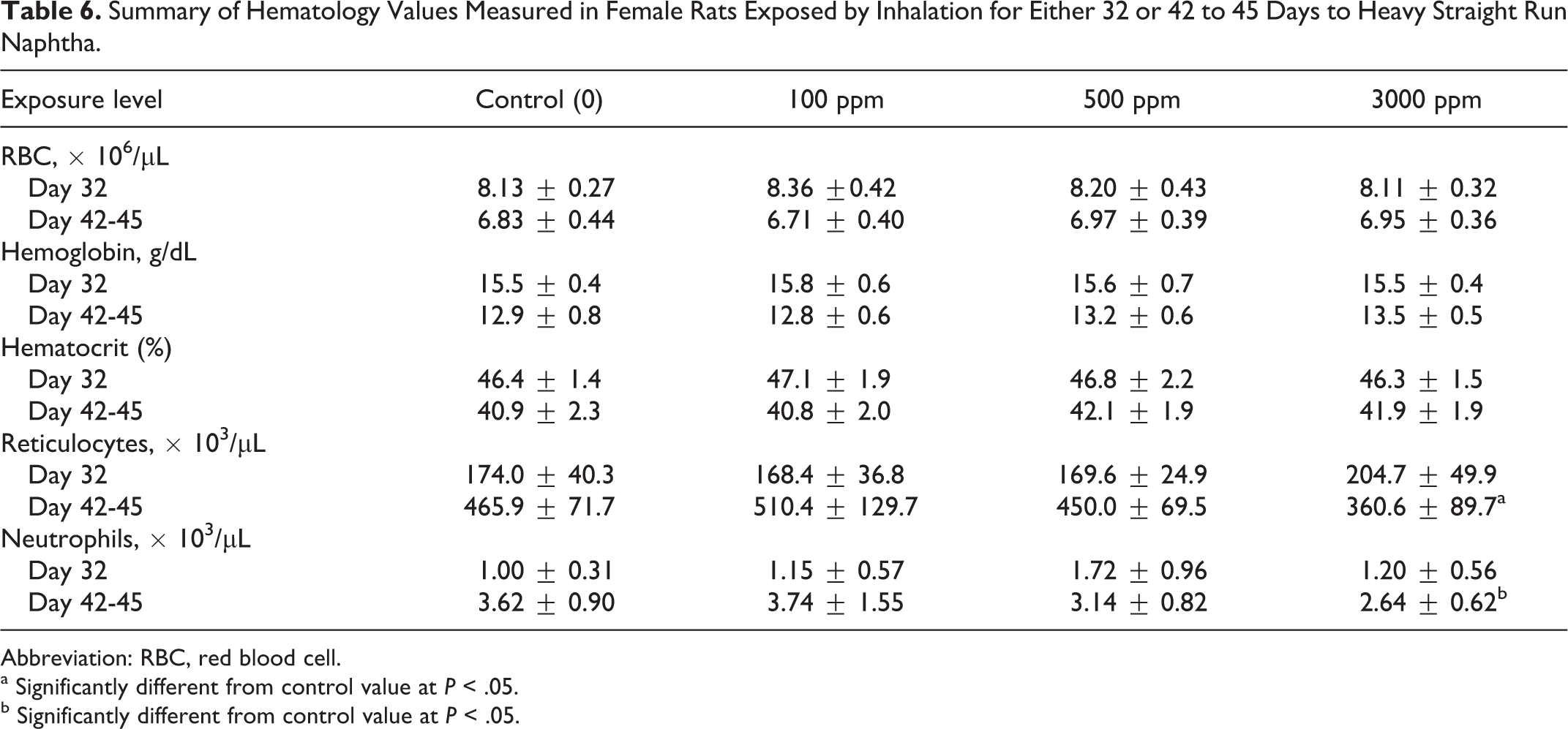
There were no biologically significant, test substance-related changes in hematological parameters among male or female rats in the systemic toxicity evaluation. The only statistically significant changes in hematological parameters were an increase in reticulocytes and a decrease in neutrophils (Table 6). These changes were observed at the 3000 ppm level in female rats in the reproductive/developmental toxicity assessment. The toxicological significance of the reduction in neutrophil count in females exposed for 42 to 45 days is uncertain, particularly as the neutrophil counts were increased although not significantly different in male (data not shown) or female rats exposed for 32 days.
Summary of Hematology Values Measured in Female Rats Exposed by Inhalation for Either 32 or 42 to 45 Days to Heavy Straight Run Naphtha.
Abbreviation: RBC, red blood cell.
a Significantly different from control value at P < .05.
b Significantly different from control value at P < .05.
Small, statistically significant decreases in glucose levels were observed in male and female rats from the 3000 ppm group, and a significant increase in cholesterol was observed in the 3000 ppm female rats (Table 7). The glucose levels were elevated in female rats exposed to 3000 ppm for 42 to 45 days, but the cholesterol levels, although still elevated in the 3000 ppm group, were not significantly different from the control values. Given that the magnitudes of the differences were small and that the differences in female rats largely reversed between 32 and 42 to 45 days, these differences seem of doubtful toxicological significance.
Summary of Selected Clinical Chemistry Values for Male and Female Rats Exposed by Inhalation to Heavy Straight Run Naphtha.
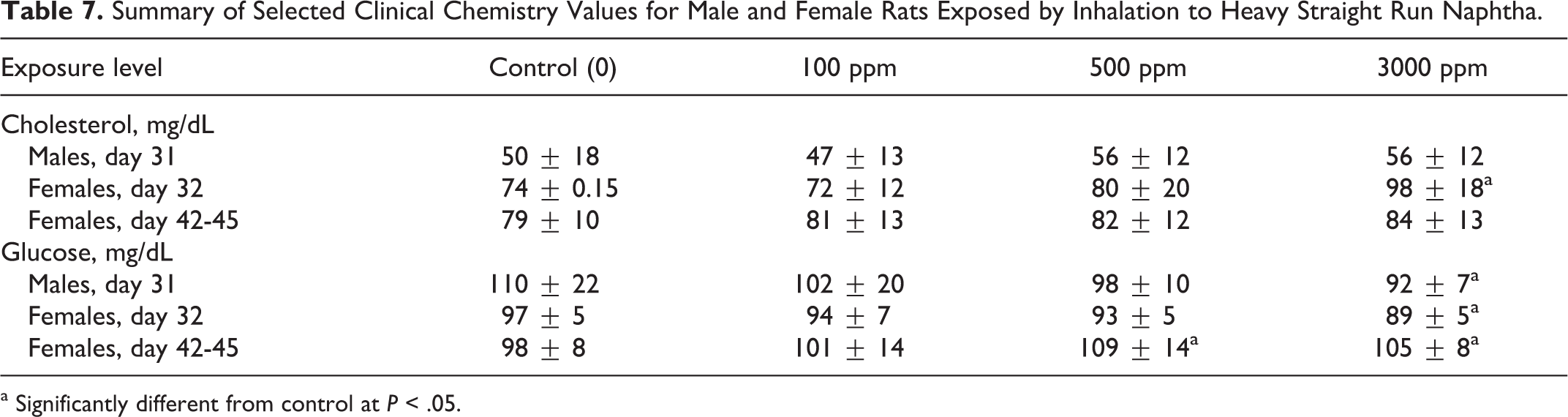
a Significantly different from control at P < .05.
Systemic Toxicity Assessment
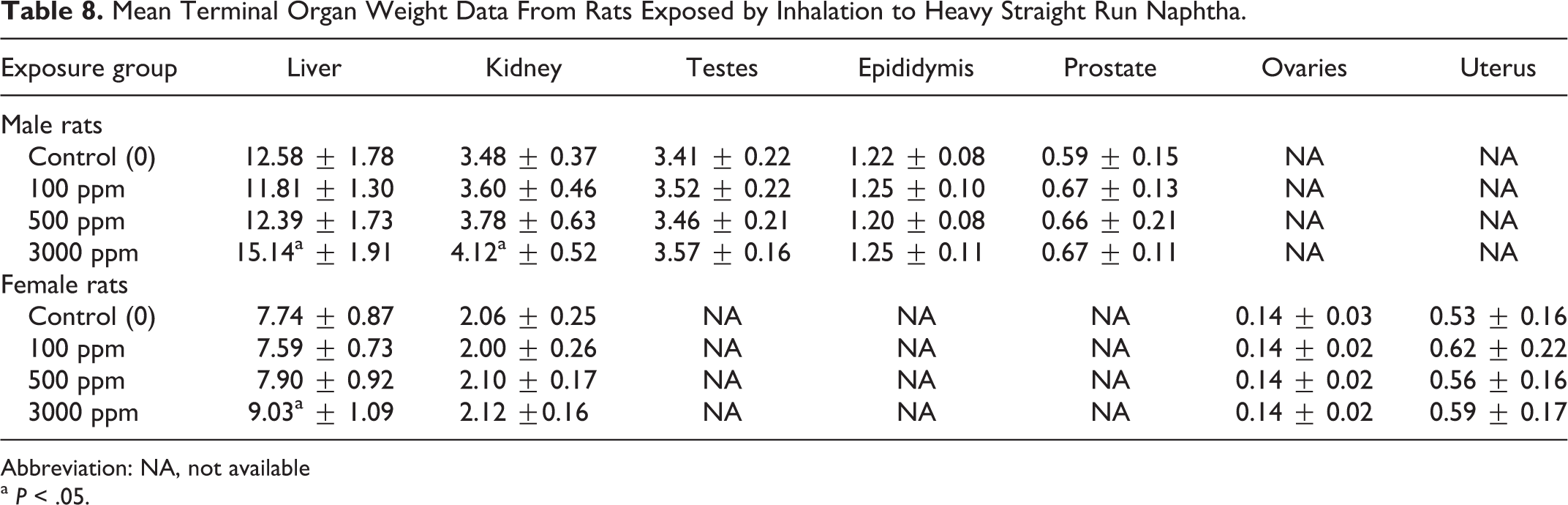
As stated earlier, all rats survived to scheduled termination. There were some small clinical effects and body weights of females in the 3000-ppm group were below control values but for the most part were not significantly different from control values (Table 4). Liver weights were significantly elevated in both male and female rats from the 3000-ppm group, and kidney weights were significantly elevated in male rats. However, there were no significant differences in weights of testes, epididymides, prostate, uterus, or ovaries (Table 8).
Mean Terminal Organ Weight Data From Rats Exposed by Inhalation to Heavy Straight Run Naphtha.
Abbreviation: NA, not available
a P < .05.
The histological findings were limited to the liver, kidney, and thyroid (Table 9). The liver findings were described as minimal hepatocellular hypertrophy characterized by an increase in the size of centrilobular hepatocytes due to an increase in nuclear and cytoplasmic area. The thyroid changes were reported as a low incidence of minimal hypertrophy of thyroid follicular epithelium. The hepatocellular hypertrophy was interpreted as the result of increased levels of hepatocellular enzymes due to increased metabolic demands. 30 The increased liver weights and hepatocellular hypertrophy were not associated with microscopic or clinical pathological changes indicative of liver toxicity.
Summarized Pathology Findings in Rats Exposed by Inhalation to Heavy Straight Run Naphtha.
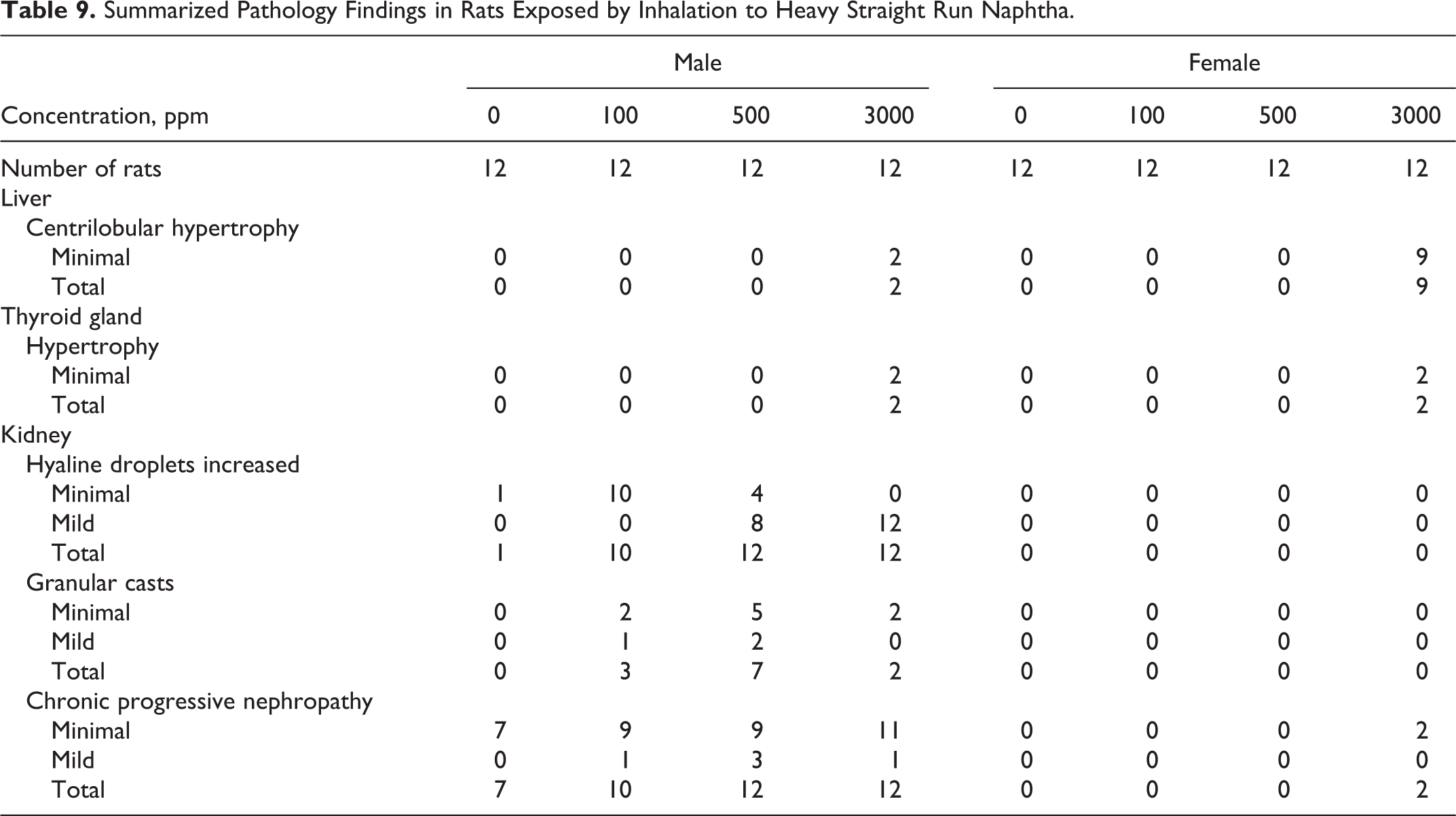
The histological findings in the kidneys included increased hyaline droplet accumulation in the epithelium of the proximal convoluted tubules of the male rats. This was most likely the consequence of an α2u globulin-mediated process that is male rat specific and not relevant to other species. 31–33 However, histochemical staining to confirm the presence of α2u globulin was not carried out. Additionally, it was reported that there was an increase in the presence of granular casts in renal tubules and slight increases in the incidence and severity of chronic progressive nephropathy (CPN), a spontaneous aging lesion in rats. The incidence of CPN in rats is sometimes increased by exposure to xenobiotics, however, as CPN per se is not relevant to humans, an increase in CPN due to exposure to other chemicals is also not considered to be relevant to humans. 31,34
Neurological Evaluations
There were no treatment-related differences in forelimb or hind limb grip strength (data not shown). There were no test substance-related effects or statistically significant effects for any behavioral parameter evaluated in this study, approach and touch, auditory stimulus, and tail pinch (data not shown). In the motor activity investigation, males in the 3000-ppm group had significantly lower total duration and number of movements compared to the control mean values in the baseline and week 4 evaluations (Table 10). In addition, duration and number of movements were significantly lower for 3000 ppm males during the fourth and fifth 10-minute intervals of the baseline evaluation and during the sixth 10-minute interval of the week 4 evaluation. Number of movements was also significantly lower for 3000 ppm males during the second 10-minute interval. However, as similar differences were observed in the pretest and 4-week evaluations, the differences cannot be attributed to treatment.
Motor Activity Assessment in Male and Female Rats Exposed by Inhalation to Heavy Straight Run Naphtha.a
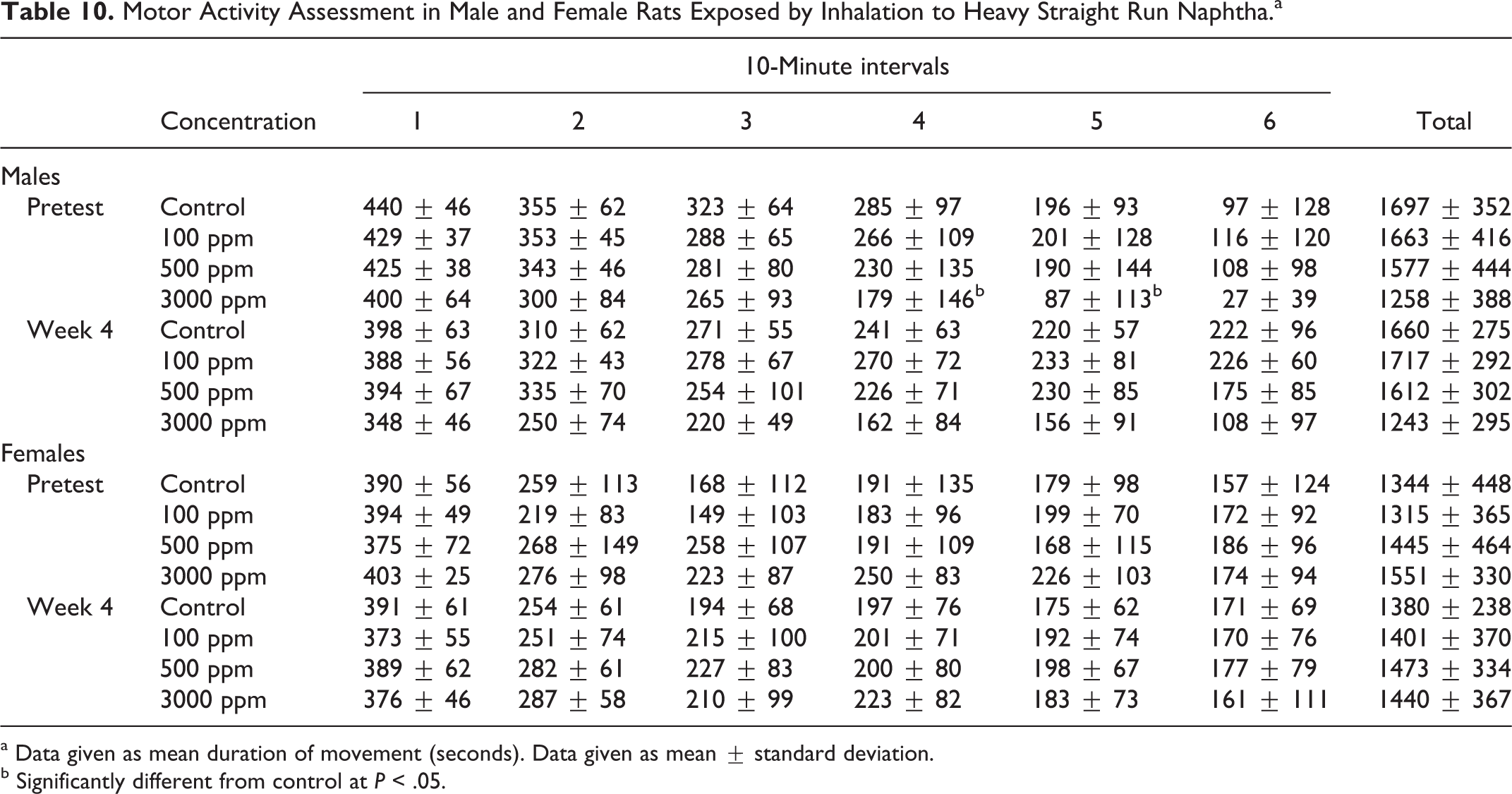
a Data given as mean duration of movement (seconds). Data given as mean ± standard deviation.
b Significantly different from control at P < .05.
Reproductive Toxicity Assessment
There were no test substance-related or statistically significant differences in the mean number of pregnant animals, number of animals delivering, mating index, fertility index, precoital interval, gestation length, number of corpora lutea, number of implantation sites, or percentage of postimplantation loss for any exposure concentration (Table 11).
Summary of Reproductive Parameters Assessed in a Reproductive Toxicity Screening Tests of Heavy Straight Run Naphtha.
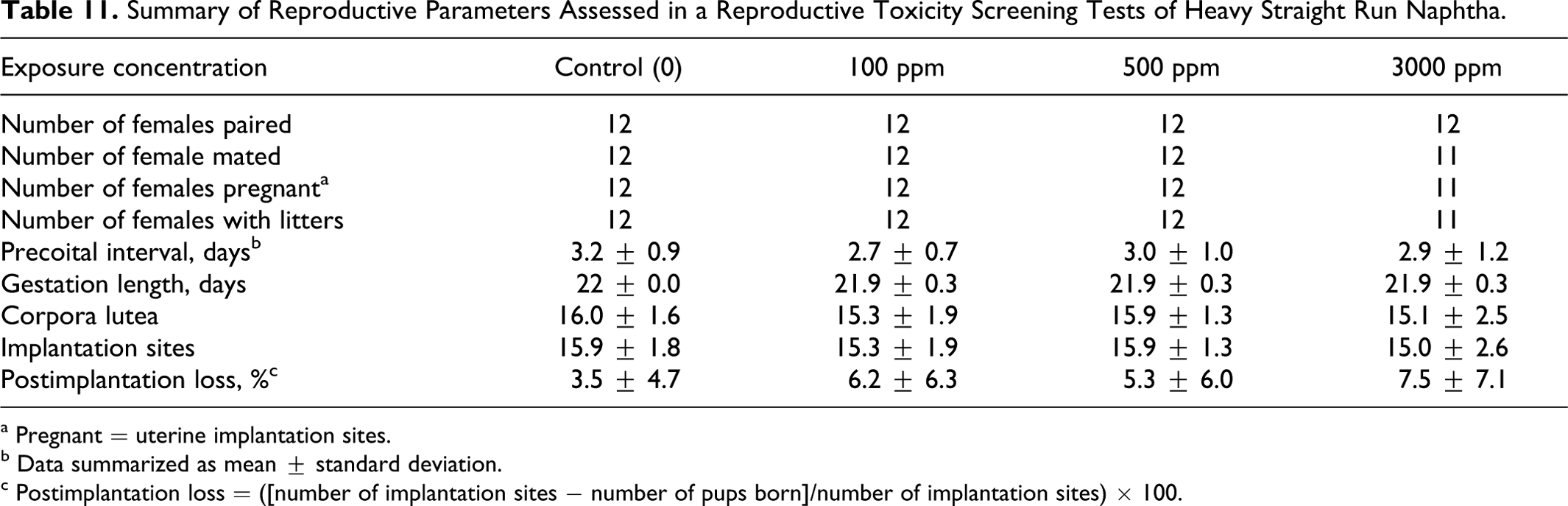
a Pregnant = uterine implantation sites.
b Data summarized as mean ± standard deviation.
c Postimplantation loss = ([number of implantation sites − number of pups born]/number of implantation sites) × 100.
Similarly, there were no test substance-related or statistically significant differences in the number of fetuses born or born alive, live born index, viability index, sex ratio, incidence of clinical observations, or mean offspring body weight on postnatal days 0 or 4 (Table 12). Mean litter weights on postnatal day 0 and 4 were slightly lower for the 3000 ppm group by comparison to control, but this was due to the fact that 1 female in this group delivered while being exposed and lost 5 of 12 offspring between lactation days 0 and 4. All other 3000 ppm litters had 100% viability on postnatal day 4. The data from the litter delivered in the exposure chamber were not included in the calculations of offspring growth and viability.
Survival, Viability, and Growth of Offspring Following In Utero Exposure to Heavy Straight Run Naphtha.a
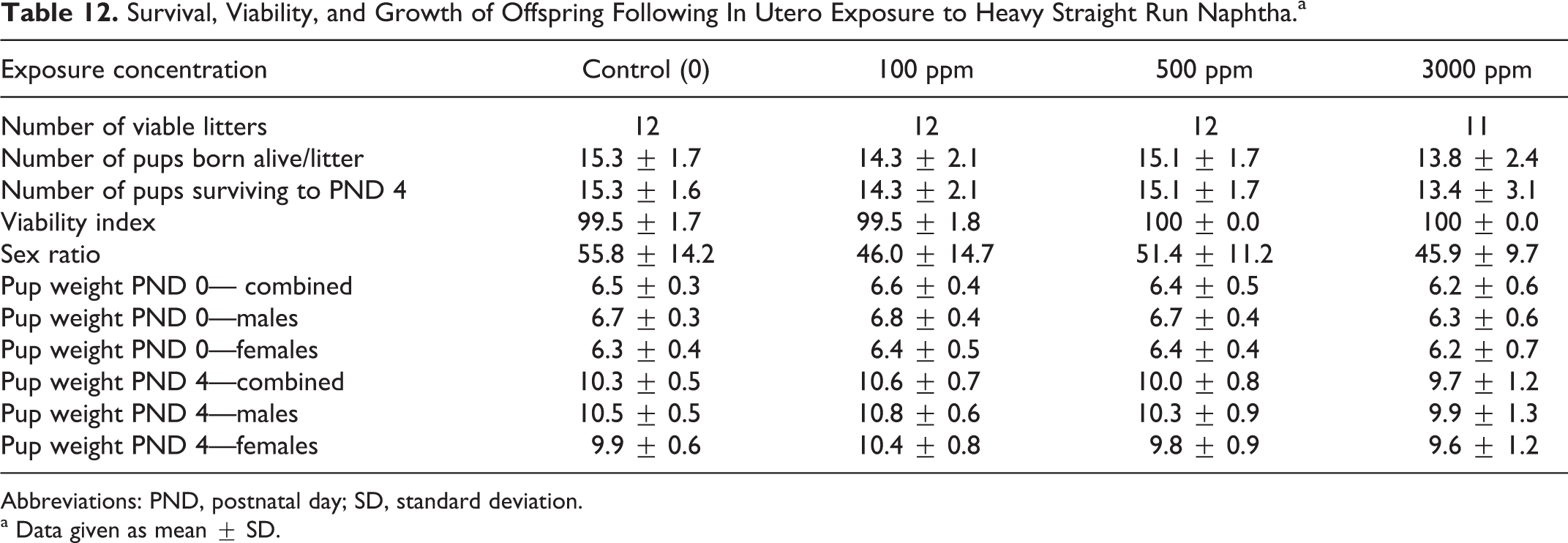
Abbreviations: PND, postnatal day; SD, standard deviation.
a Data given as mean ± SD.
Discussion
The principal objective of this study was to assess the potential for HSRN (64741-41-9) to cause clinical, hematological, and/or specific organ effects or to influence reproductive and developmental parameters in rats exposed by inhalation. There was little evidence of systemic effects in male and female rats exposed daily, 6 hours/d for at least 30 days at levels up to 3000 ppm (approximately 13 600 mg/m3 based on an average molecular weight of 111). All rats survived the treatment period with no evidence of untoward effects other than some evidence of red staining of the fur in some of the rats exposed to 3000 ppm. The red staining provides suggestive evidence of nasal irritation at high exposure levels of certain types of hydrocarbons and is consistent with reports of similar findings in studies of acute, relatively high level exposures to high-molecular-weight aromatic 35 and cycloparaffinic 36 constituents as well as baseline gasoline.
There was also, at best, only limited evidence of clinical, hematological, or specific organ effects. In the 3000 ppm exposure groups, liver weights were significantly increased in both male and female rats, and kidney weights were increased in male rats. The gender specificity of the kidney weight changes as well as evidence of hyaline droplets in kidneys of male rats provided evidence that this was most likely α2u-globulin-mediated male rat nephropathy. The pathological investigation also provided evidence for an increased incidence of chronic progressive nephropathy (CPN), particularly in the kidneys of male rats. Both types of kidney effects are specific to male rats and not considered to be toxicologically relevant to humans. 33,34
The increased liver weights were interpreted by the pathologist as a compensatory effect due to increased metabolic demands. 30 This interpretation was consistent with the results of the histological investigation and supported by the fact that levels of liver enzyme markers were not increased. Increased liver weights have been reported in previous subchronic inhalation toxicity studies of naphthas 2 and formulated gasoline 10 and are expected based on reports that aromatics and possibly naphthenic compounds can induce their own metabolism. 37,38 The pathological investigation also revealed minimal evidence of thyroid gland hypertrophy. In the laboratory report, this effect was used to define the no observed adverse effect level (NOAEL) in the rats. However, the thyroid follicular hypertrophy was interpreted by the pathologist as a secondary consequence of the increased metabolizing capacity of the liver. More specifically, the effects in the thyroid were considered to have been secondary to increased enzyme induction in the liver resulting in increased biliary excretion of thyroid hormone (T4). This results in elevation of thyroid-stimulating hormone (TSH) that produces hypertrophy of follicular cells. Due to the species-specific short half-life for T4 in rodents, rats are uniquely sensitive to thyroid hormone perturbation in association with induction of liver enzymes. 39 Consequently, the observation of thyroid follicular cell hypertrophy was not considered relevant to humans.
There were some statistically significant findings in the hematological and clinical chemistry investigations, but these were of doubtful toxicological significance. Reticulocyte count was significantly reduced in females evaluated at the end of the postnatal period, but there were no effects on reticulocyte count in males or females evaluated for systemic toxicity. Additionally, there was no effect of treatment on red cell mass parameters (hemoglobin content and hematocrit). A reduction in reticulocyte count could be taken as evidence of an effect on red cell production; however, there were no changes in red cell mass parameters, and, therefore, no basis for concluding that the reduction in reticulocyte count was evidence of an adverse toxicological process. Neutrophil count was significantly reduced in females at the end of the postnatal period, but there were no significant differences in counts from males or females in the assessment of effects of repeated exposure. The change in neutrophil count did not follow a dose–response pattern and, accordingly, this change, although statistically significant, was not considered to have been biologically meaningful.
The neurological investigation did not reveal any test substance-related effects on grip strength, functional observations, or motor activity. Some statistically significant effects were observed in males exposed to 3000 ppm. However, these differences were present both in the preexposure (baseline) and in the 4-week evaluations, and the relative magnitudes of the differences were similar in both assessments. Accordingly, these differences were not considered to have been treatment related.
The studies of fertility and development also provided little evidence of treatment-related effects. The only occurrence of note was that mating was not confirmed for 1 dam in the 3000-ppm group, and as a consequence the dam gave birth in the exposure chamber. This dam lost 5 of 12 offspring during the 4-day postnatal period. However, the data for all other dams in this group were similar to the control values.
To summarize the HSRN data, repeated exposure of rats at levels up to 3000 ppm (approximately 13 600 mg/m3) resulted in increased liver and kidney weights (male rats only) and histological changes in the thyroid gland. The liver and thyroid changes were adaptive responses, and the kidney effects were judged to be male rat specific and not relevant to humans. There were no effects in the neurological, reproductive, and developmental parameters assessed in this study. The overall NOAEL was >3000 ppm, the highest concentration tested.
In previous studies to characterize the hazards of blended gasoline, liver weight increases, kidney changes in male rats, and alterations in certain hematological parameters have been previously reported. 10,11 Thus, the results of the study of HSRN are consistent with those previously reported in studies of blended gasoline. More importantly, for purposes of this assessment, no new hazards which would be unique to HSRN, and by extrapolation naphtha streams enriched in cycloparaffins, were identified. Accordingly, these data provide the necessary information to characterize the potential systemic, reproductive, and developmental effects associated with exposure to HSRN. Further, as indicated earlier, the data from this substance that contains relatively high levels of naphthenic constituents can be used with data from studies of other low-boiling point naphthas that contain high levels of paraffinic, olefinic, and/or aromatic constituents, to characterize the toxicological hazards of this group of substances.
One issue that these studies do raise relates to the relationship between hazard characterization and risk assessment. As indicated earlier, gasoline is a complex substance composed of hydrocarbons ranging from predominantly C4 to C12. As shown in Figure 1, gasoline constituents are primarily in the range of C5 to C8. 12 In contrast, gasoline vapor is comprised almost entirely of C4 to C6 hydrocarbons and contains very low levels of constituents with carbon numbers greater than C6. Among other things this means that many of the constituents present in gasoline would not normally contribute to inhalation exposure, the main route of exposure, and more specifically that, although gasoline contains primarily paraffins and aromatics, gasoline vapor contains primarily paraffins and olefins. Aromatics and cycloparaffins comprise almost 40% of bulk gasoline but make almost no contribution to gasoline vapor. Thus, the results of studies of fully vaporized naphtha, such as the material tested in the current study, may not be directly useful in assessing the risk to humans from exposure by inhalation.
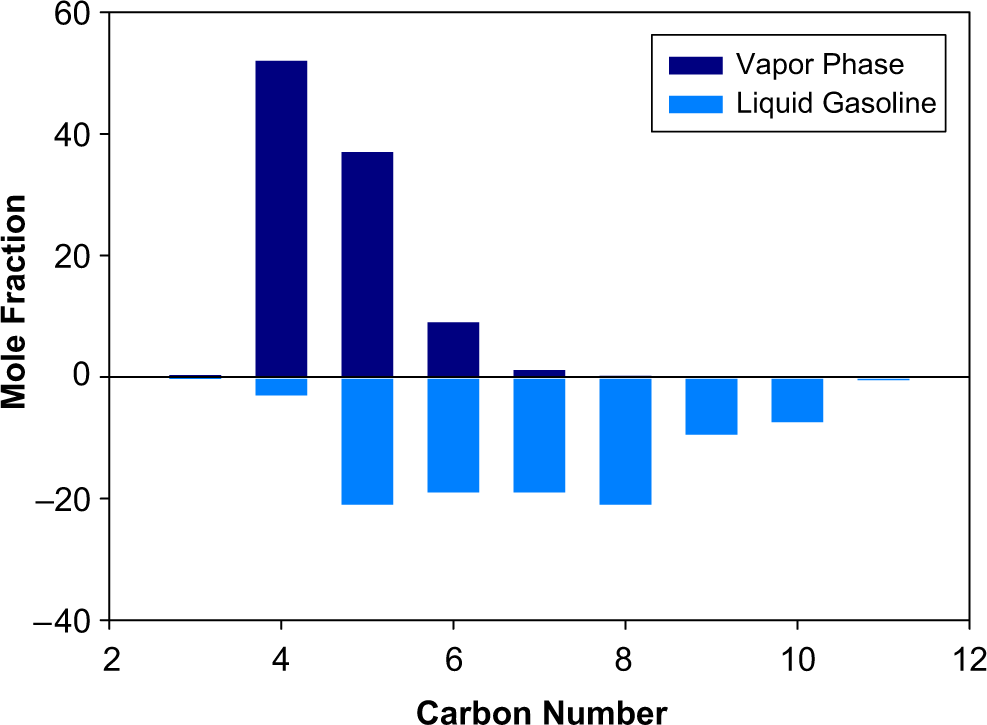
Comparison of hydrocarbon constituents in bulk motor gasoline and in the vapor phase. Data taken from McKee et al. 12
Scala 15 addressed this issue in an article that summarized the findings of toxicological studies of fully vaporized gasoline to that point in time. His position was that the use of fully vaporized gasoline, at least as an initial assessment, represented a reasonable basis for hazard characterization. Once the hazards had been identified, further studies could be conducted to assess their toxicological significance, if possible determine which constituents were associated with these hazards, and to then assess exposure of humans to the complex substance as a whole and to the particularly problematic constituents. At the time Scala wrote his article, the principal systemic effect of gasoline exposure was a pathological change in the kidneys of male rats which, if continued for a sufficient period of time, contributed to the development of renal cell tumors. Subsequent investigations have shown that the male rat kidney effects, which in the gasoline studies were associated primarily with C6 to C10 branched paraffinic molecules, were due to α2u-globulin-mediated nephropathy and are not relevant to humans. 32,33
Since Scala’s publication, studies of gasoline blending stocks have tended to focus on the more volatile constituents, as these are the components to which humans are most likely to be exposed. However, the results of these more recent studies of “light ends” have been similar to those previously reported. Many of the studies have reported male rat kidney effects and liver enlargement although the liver weight increases were not always statistically significant. 2,5,7,8 Several of these articles also reported hematological effects. 2,5,7,8 None of the naphthas 3,4,6,7 or blended gasoline 12,13 has been reported to affect reproductive or developmental parameters when tested at exposure levels that approximated half of the lower explosive limits. Taken together, the effects of the various naphtha streams seem reasonably similar to each other and to blended gasoline. Accordingly, the strategy of testing streams with the highest levels of the various types of constituents seems to have been an effective means of characterizing the hazards of low-boiling point naphthas and blended gasoline. Neither the volatile light ends of naphthas nor their wholly vaporized counterparts were found to pose selective toxicological hazards relevant to human health risk assessment.
As an overall summary, studies of gasoline and low-boiling point naphthas that are used in gasoline blending in assessments of the potential for repeated dose and/or reproductive or developmental toxicity provide little evidence for hazards relevant to human health risk assessment. Although these substances can produce acute central nervous system effects and/or eye and respiratory irritation at high exposure levels and can cause chemical pneumonitis if taken into the lungs as liquids, they do not produce toxicologically important target organ effects or nonacute effects on the nervous system, and they do not produce developmental toxicity or influence reproductive parameters. There were no important differences that were related to the constituents of the naphthas or to whether the tests were conducted on wholly vaporized material when compared to the volatile fractions. As the studies covered examples of the compositional extremes, the results can be generalized to cover all 81 low-boiling point naphthas.
Footnotes
Appendix A
Acknowledgments
The authors would like to thank Chris Sexsmith for quality assurance support and Lynn Bennett for assistance in manuscript preparation.
Declaration of Conflicting Interests
The author(s) declared the following potential conflicts of interest with respect to the research, authorship, and/or publication of this article: The authors of this article are employed by companies that manufacture petroleum products and contractors working on behalf of the petroleum industry HPV program.
Funding
The author(s) disclosed receipt of the following financial support for the research, authorship, and/or publication of this article: This project was sponsored and funded by the Petroleum HPV Testing Group (PHPVTG), an unincorporated group of manufacturers affiliated by contractual obligation to fund a voluntary data disclosure and toxicity testing program on certain petroleum-related chemical substances in response to EPA’s HPV Challenge Program. The American Petroleum Institute (API) manages the PHPVTG’s activities.