




Abstract
When conventional vehicles (eg, methylcellulose and water) impart inadequate physical, chemical, and/or biological properties for proper toxicological assessment of test article formulations, nonconventional vehicles may be considered. Often toxicity data for nonconventional vehicle formulations are limited. Studies were conducted to collect toxicity data from a rodent and a non-rodent species given 2 nonconventional vehicles, Solutol HS15/polyethylene glycol (PEG) 400 and Cremophor RH40/PEG 400, with differing formulations and dose volumes (10 mL/kg for rats; 2 or 5 mL/kg for dogs). In rats, both vehicles caused increase in kidney weights (males only) and decrease in thymic weights (males only) without concurrent microscopic findings; altered urine electrolytes, minimally decreased serum electrolytes (males only), and increased serum total cholesterol (females only) were also present. The Cremophor formulation was also associated with increased serum urea (males only) and urine phosphorus: creatinine. For rats given the Solutol formulation, both genders had decreased urine glucose parameters and males had increased urine volume. In dogs, loose/watery feces and emesis were present given either vehicle, and mucus-cell hyperplasia of the ileum was present given the Solutol formulation. Increased red blood cell mass and decreased urine volume in dogs given 30% Solutol/70% PEG 400 (5 mL/kg/d) were likely due to subclinical dehydration and hemoconcentration. For the Cremophor formulations, dose volume-dependent increased incidence of minimal subepithelial gastric hemorrhage was noted in dogs, and dogs given 5 mL/kg/d showed increased serum urea nitrogen. Overall, regardless of the formulation or dose volume, neither vehicle produced overt toxicity in either species, but the Solutol formulation produced fewer effects in rats. Generally, lower dose volumes minimized the severity and/or incidence of findings.
Introduction
The vehicle is an important aspect of the test article formulation used in toxicology testing. The vehicle can affect the exposure, pharmacokinetics, pharmacodynamics, and toxicological signals of a test article by influencing the absorption, excretion, distribution, metabolism, and/or clearance of the test article. When conventional vehicles (eg, methylcellulose, water, etc) impart poor physical, chemical, and/or biological characteristics to the test article formulation, nonconventional vehicles (eg, Cremophor RH 40, Solutol HS15, and polyethylene glycol 400 [PEG 400]) may be considered. The vehicle is typically chosen in the early phases of drug development and is used in formulations that are dosed to animals by various routes of administration (eg, oral, subcutaneous, etc). A primary goal of nonconventional vehicle formulations is to obtain sufficient in vivo exposure to the new chemical entity (NCE) to help assess and categorize its solubility, bioavailability, systemic exposure, and toxicity. 1
Solubility is often the first limiting factor when testing an NCE in vivo. Although extensive review articles have been published about multiple vehicles, 2,3 limited information still exists on the specific effects of these nonconventional vehicles with respect to their toxicity profile. Although it may be difficult, if not impossible, to find a “best” vehicle for all circumstances, the studies described here with the nonconventional vehicles, Solutol/PEG 400 and Cremophor/PEG 400, were conducted in an effort to generate toxicity data on these vehicles in rats and dogs. These vehicles are castor oil-based surfactants and solubilizers and were chosen because of their ability to form self-emulsification drug delivery system assemblies with poorly soluble drugs. Additionally, they are waxy semisolids at room temperature making them challenging to formulate and dose. The purpose of this study was to test 2 different nonconventional vehicles at different concentrations and dose volumes in order to assess their toxicity profile. The percentages of either Solutol HS15 or Cremophor RH40 in combination with PEG 400, a cosolvent, were chosen based on the preliminary tolerability data, solubization characteristics, and reduced viscosity for oral dosing.
Materials and Methods
Vehicle Formulations
The nonconventional vehicles used in this study were mixtures of 30% Cremophor (BASF; Florham Park, New Jersey) and 70% PEG 400 (Sigma-Aldrich, St Louis, Missouri), 10% Cremophor and 90% PEG 400, 10% Solutol (BASF) and 90% PEG 400, and 30% Solutol and 70% PEG 400. The control vehicle was reverse osmosis-treated water. Vehicle control formulations (reverse osmosis-treated water) were stored at room temperature (15-25°C), and Cremophor/PEG 400 and Solutol/PEG 400 formulations were stored at room temperature (15-25°C) or ∼40°C (±5°C), and formulations stored at ∼40°C were allowed to cool prior to administration. Animals were administered the vehicle formulation via oral gavage daily for 28 days (dogs) or 91 days (rats).
The authors recognize that Solutol is now known by the brand name Kolliphor (change was effective from April 1, 2012). However, since the name change became effective after the conduct of the study and all of the data refer to the material as Solutol, the authors decided to retain the name Solutol for the purpose of this publication.
Animals
Experiments on animals, followed the guidelines established in the Guide for the Care and Use of Laboratory Animals, 4 were conducted in accordance with the GSK Policy on the Care, Welfare and Treatment of Laboratory Animals, and were reviewed by the Institutional Animal Care and Use Committee at GlaxoSmithKline. This work was conducted as part of 3 separate studies (2 dog studies and 1 rat study). Table 1 summarizes the study designs.
Description of the Study Design for the 3 Studies.a
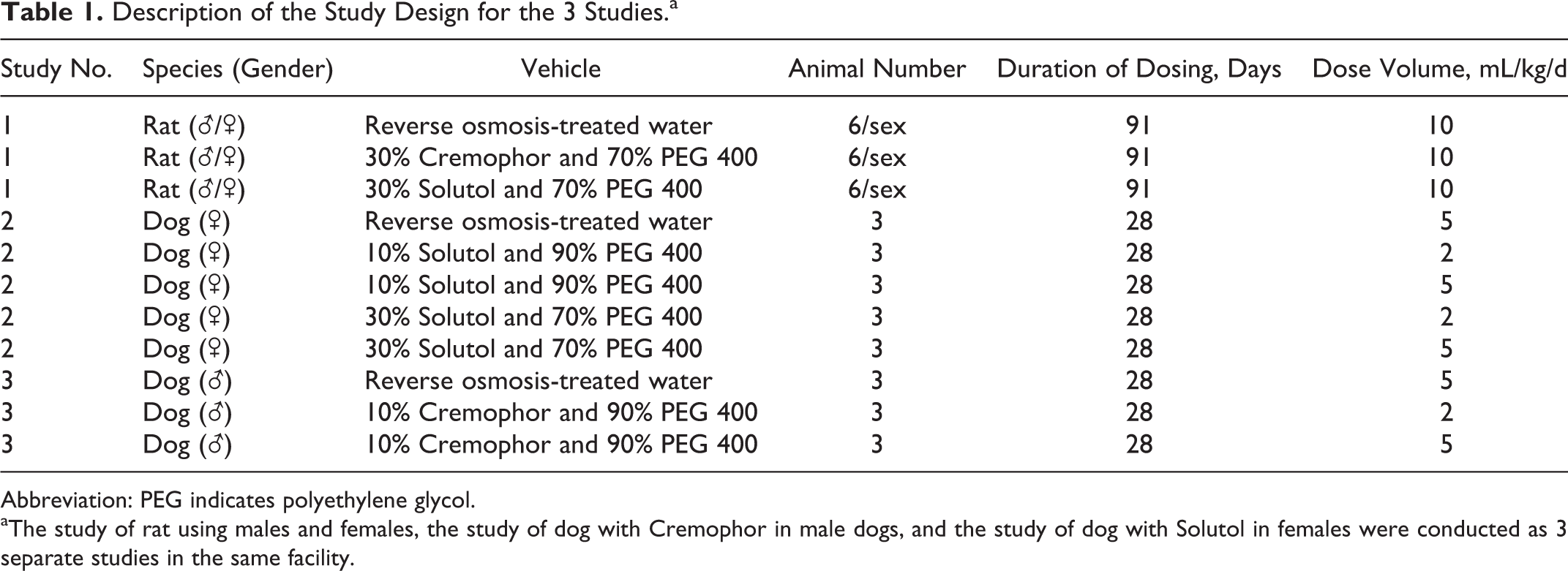
Abbreviation: PEG indicates polyethylene glycol.
aThe study of rat using males and females, the study of dog with Cremophor in male dogs, and the study of dog with Solutol in females were conducted as 3 separate studies in the same facility.
A total of 18 (Crl: CD[SD])-specific pathogen-free rats/sex were obtained from Charles River Laboratories, Inc (Raleigh, NC) and randomized by ranked body weight into 3 groups of 6 rats/sex/group. Rats were identified by a unique animal number by implanted transponder and were approximately 11 weeks of age and weighed between 330 and 380 g (males) and 198 and 241 g (females) on the first day of dosing. Certified Rodent Diet 5002 (PMI Nutrition International, Richmond, Indiana) and municipal water treated by reverse osmosis were available ad libitum throughout the study. Rats were housed 3 per cage in polycarbonate solid-bottom cages with Bed-O’Cobs (The Andersons, Maumee, Ohio) and a rat tunnel (Bio-Serv, Inc, Frenchtown, New Jersey) in an environment with a temperature of 64°F to 79°F, 30% to 70% relative humidity, and a 12-hour light/dark cycle (lights on at 06:00 hours). The animal room had artificial light (30 ft candles at 1 m off of the floor) and ∼14 air changes/h. The rats were acclimated to the animal room conditions for 9 days prior to dosing and were fasted for approximately 16 hours prior to clinical pathology blood collections and necropsy.
A total of 15 female and 9 male beagle dogs (Marshall BioResources, North Rose, New York) were used in this study and were approximately 16 to 30 months of age and weighed 5 to 15 kg at the initiation of dosing. The dogs were identified uniquely by a breeder’s identification number tattooed in the ear and an implanted transponder and were provided certified dumbbells (Bio-Serv, Inc) for enrichment. Dogs were singularly housed in grate-bottomed, stainless-steel kennels in an environment set to a temperature of 64°F to 84°F, 30% to 70% relative humidity, and a 12-hour light/dark cycle. Approximately 300 g of LabDiet brand Certified Laboratory Canine Diet 5007 (pellets; PMI Nutrition International) was offered daily for approximately 3 hours per day, 1 hour after dosing. Food was withheld overnight before the collection of blood samples for clinical pathology and before scheduled necropsy. Municipal water with additional treatment by reverse osmosis was available ad libitum from an automatic watering system. The randomization program of Provantis NT Client Server Oracle was used to randomly allocate animals to groups while balancing body weights across groups. Littermates of the same sex were not assigned to the same group.
Study Procedures
Viability checks were performed at least twice daily with clinical observations 1 to 2 hours after dosing. Body weights were collected on day 1, at least weekly during dosing and on the day of necropsy. Prior to vehicle dosing in dogs and at least once after initiation of dosing in both species (typically on the day of necropsy), blood and urine samples were collected for standardized clinical biochemical analysis (Olympus AU640e; Melville, New York), hematologic analysis (Advia 120; Siemens, Norwood, Massachusetts), and urinalysis (AutionMax; Chatsworth, California) profiles. Blood samples from the jugular vein of dogs without anesthesia and from the abdominal vena cava of rats under isoflurane anesthesia were collected into sterile vacutainer tubes (without anticoagulant for serum biochemical profiles and K2EDTA for hematologic analysis). Urine was collected overnight into sterile containers at room temperature (approximately 25°C) using a metabolism cage (rats) or metabolism pan (dogs). Blood and urine samples were processed within approximately 60 minutes of collection (blood) or receipt (urine). The serum was separated and removed from the pellet immediately and stored at −80°C until analysis within the following 5 days. After measurement of volume, specific gravity (AutionMax), and pH (AutionMax), the urine samples were spun at 2800 to 3700 rpm for 5 minutes, and aliquots of supernatant were stored at −80°C for up to 5 days for the measurement of urine chemistry variables on the Olympus AU640e chemistry analyzer. For rats, an ophthalmologic examination was performed approximately 1 week prior to start of vehicle administration and on day 91. A necropsy with macroscopic examination was performed on all dogs and rats on the day following administration of the final oral dose. Organs were removed and weighed. Sections of the organs were placed in 10% neutral buffered formalin, processed to paraffin, microtomed at 5 µm and then stained with hematoxylin and eosin. The resultant slides were examined by a board certified veterinary pathologist.
Data Analysis
The arithmetic mean and standard deviation (SD) were determined for each group for body weights, body weight change, and clinical pathology end points. For the study of rat, the vehicle-treated groups were compared with the concurrent control group. The assumptions of normally distributed data with equality of variances among groups were tested via Bartlett 5 test after performing the analysis of variance. The variance was estimated for each sex separately. If the variances were found to be unequal among the groups or if the data were not normally distributed, an appropriate transformation was applied to the data prior to analysis. For all subsequent analyses, the sexes were handled separately. For nontransformed and log-transformed data, a Dunnett test 6 –8 was performed. A modified Steel test 9 –11 was performed for rank-transformed data.
Comparative statistical analyses were not performed on the study of dogs due to the low animal numbers although descriptive statistics (ie, arithmetic mean and SD) were determined. Interpretation of the data was made based on comparisons with concurrent controls administered reverse osmosis-treated water and/or pretreatment values.
Results
Solutol/PEG 400 Effects in Rats
All rats survived until the scheduled termination. Following 91 days of once daily dosing by oral gavage with a Solutol/PEG 400 (30/70%) formulation (dose volume of 10 mL/kg) to male and female rats, clinical observations noted in males included sporadic incidences of fecal changes (soft and/or loose/watery) and/or slight brown/orange staining around the anal area. Consistent with this staining, it was noted during the necropsy that most rats of both genders had fluid contents in the cecum. There were no correlating microscopic findings. By day 91, a 6% decrease in mean body weights was noted in male rats (Figure 1). The decreased mean body weight correlated with a 17% decrease in mean body weight gain from days 1 to 91 in male rats. Throughout the study, mean cage food consumption was slightly but consistently lower (generally 7%-8% but reached 13% for a 4-day measurement period) in male rats; data not shown.
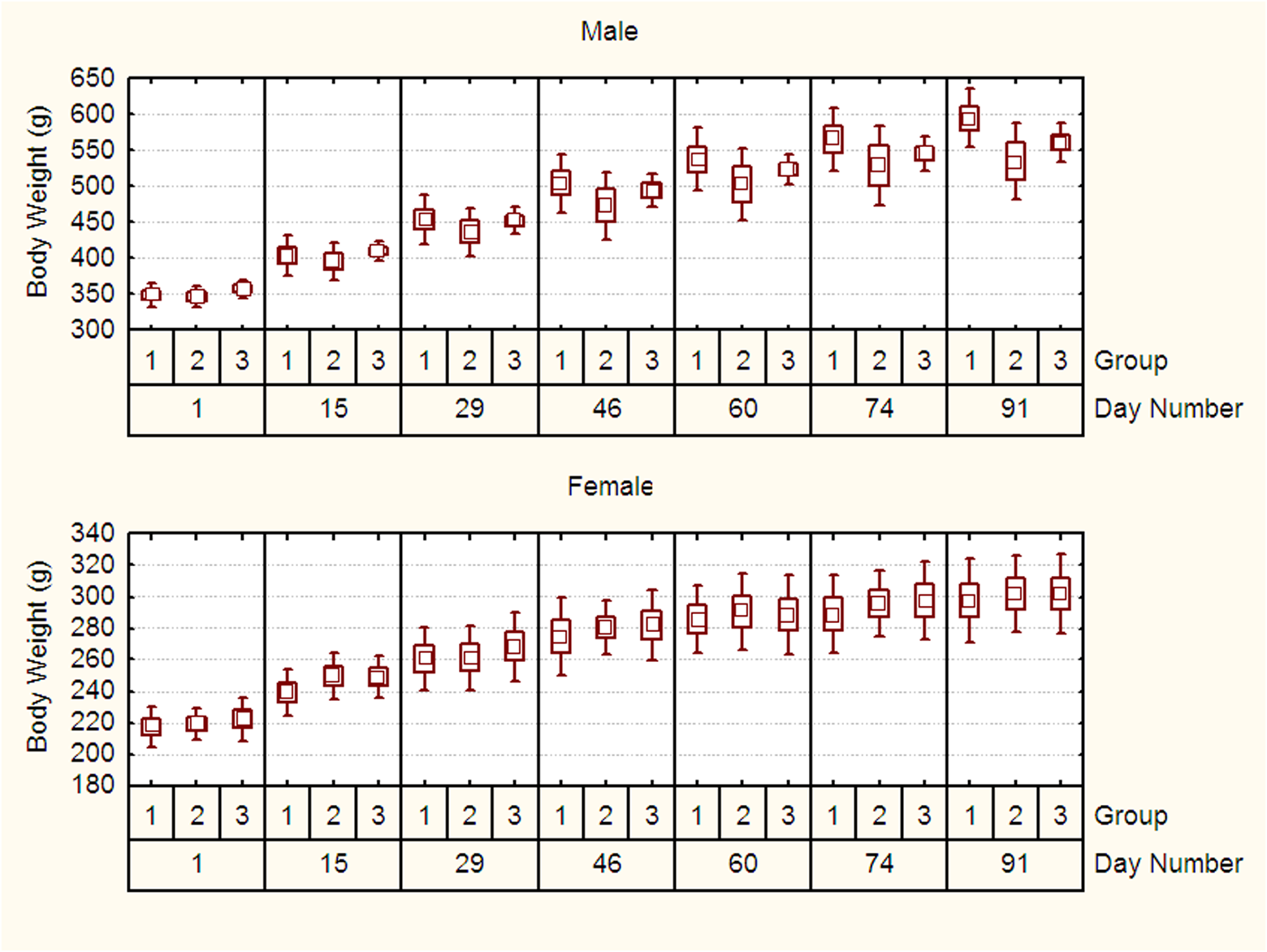
Body weight data for rats treated for 91 days with water (group 1), 30% Cremophor/70% PEG 400 (group 2), or 30% Solutol/70% PEG 400 (group 3). The small boxes in the figure represent the mean of the data, and the larger boxes represent the standard error of the mean. The whiskers represent the standard deviation. PEG indicates polyethylene glycol.
At the end of the 3-month dosing period, male rats given the Solutol formulation had minimally decreased serum sodium and serum chloride, while female rats had minimally increased serum total cholesterol (Figure 2). Males and females had increased urine-specific gravity and alterations in urine electrolytes (Figure 3), while males had increased urine volume (43%; data not shown). Urine electrolyte changes included decrease in urine sodium:creatinine (UNAC) and urine chloride:creatinine (UCLC) in females, decrease in urine potassium–creatinine ratio (UKCR) in both the genders, and increase in urine calcium:creatinine (UCAC) in both genders. Urine glucose alterations in males and female rats included decrease in excretion/collection period (UGLV) and decrease in urine glucose:creatinine (UGLC).
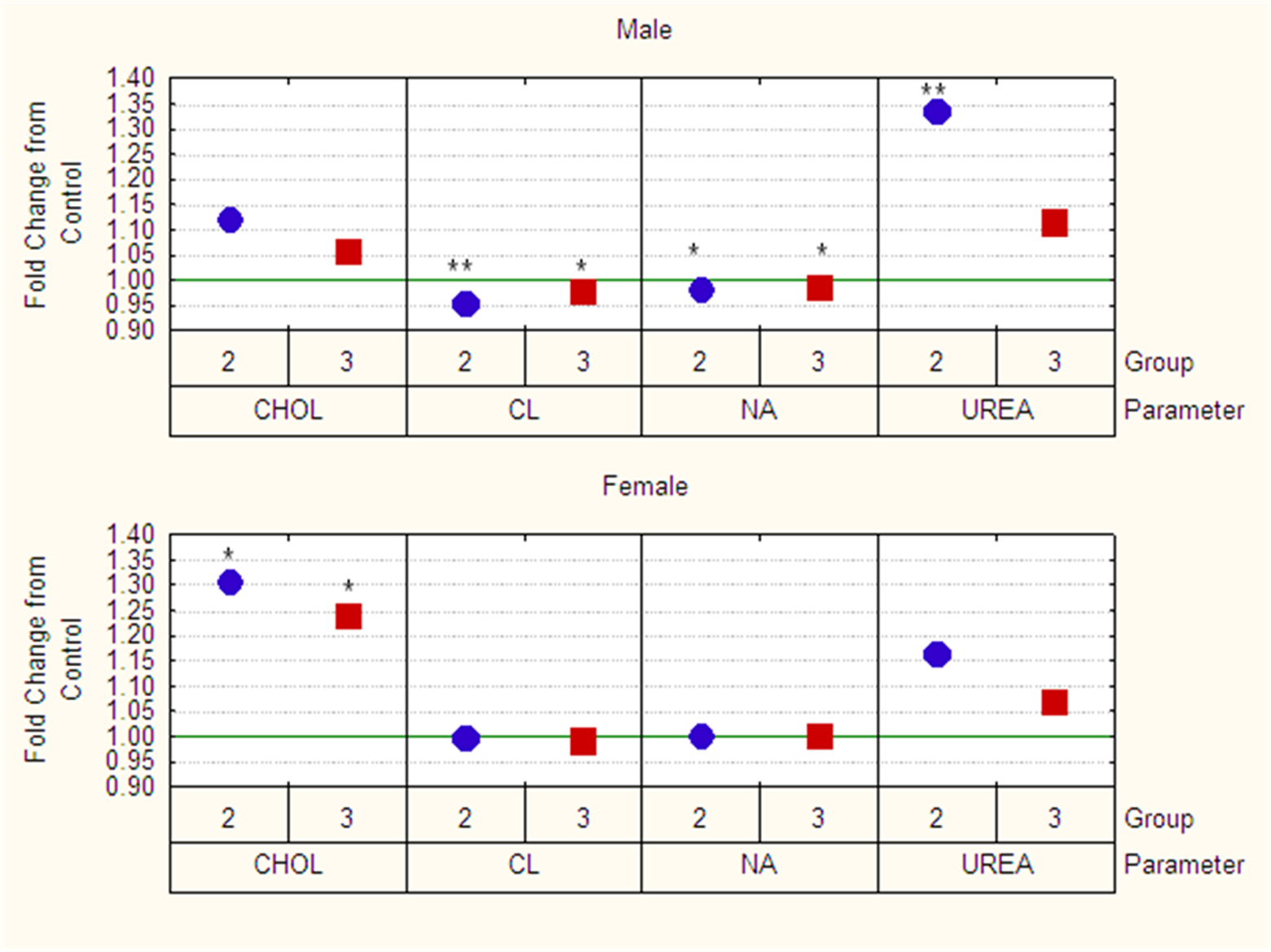
Effects of mean serum clinical chemistry parameters in rats treated for 91 days with 30% Cremophor/70% PEG 400 (group 2) or 30% Solutol/70% PEG 400 (group 3) relative to control mean values. The data are plotted as the mean fold change from the control values. *P < 0.05; **P < 0.01. CHOL indicates total cholesterol; CL, chloride; NA, sodium; PEG, polyethylene glycol.
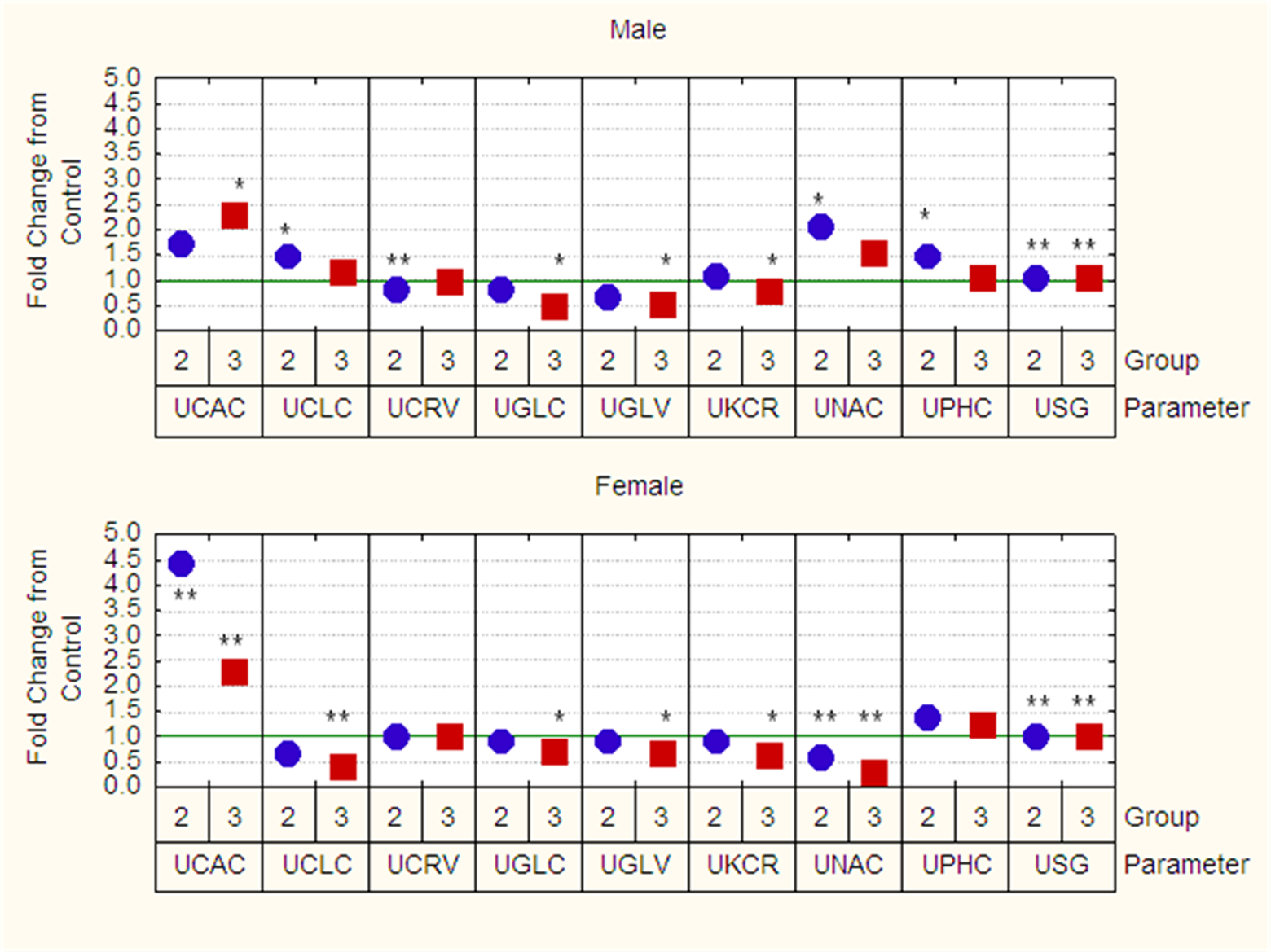
Effects of mean urinalysis parameters in rats treated for 91 days with 30% Cremophor/70% PEG 400 (group 2) or 30% Solutol/70% PEG 400 (group 3) relative to control mean values. *P < 0.05; **P < 0.01. PEG indicates polyethylene glycol; UCAC, urine calcium:creatinine; UCLC, urine chloride:creatinine; UCRV, urine creatinine excretion/collection period; UGLC, urine glucose:creatinine; UGLV, urine glucose excretion/collection period; UKCR, urine potassium:creatinine ratio; UNAC, urine sodium:creatinine; UPHC, urine phosphorus:creatinine; USG, urine specific gravity.
Organ weight changes were noted in male rats and included decrease in thymus and heart weights and increase in kidney weight. The mean absolute and relative (to body weight) thymus weights were decreased 27% and 23%, respectively, while the mean heart weights were decreased 12% and 6%, respectively. The increase in mean absolute and relative kidney weights in male rats was 7% and 14%, respectively. There were no correlating macroscopic or microscopic findings in the heart, kidney, or thymus.
Solutol/PEG 400 Effects in Female Dogs
Following 28 days of once daily dosing by oral gavage with 2 formulations of Solutol/PEG 400 (10/90% or 30/70%) at 2 different dose volumes (either 2 or 5 mL/kg/d) to female beagle dogs, there were no changes in body weights. Dosing animals at 5 mL/kg/d caused a consistent incidence of loose/watery feces starting on day 1 with both formulations. Sporadic emesis was present in all the groups given Solutol/PEG 400 starting on day 1. Intermittent loose/watery feces were observed in females given the lower dose volume (2 mL/kg/d), and females given the higher dose volume (5 mL/kg/d) had loose/watery stools for several days prior to termination.
The only histopathological finding related to the administration of the Solutol formulations was minimal mucus cell hypertrophy of the ileal mucosa in all 3 female dogs given the 10% Solutol/90% PEG 400 formulation at 5 mL/kg/d, 1 female dog given the 30% Solutol/70% PEG 400 formulation at 2 mL/kg/d, and 2 female dogs given the 30% Solutol/70% PEG 400 formulation at 5 mL/kg/d. It could not be determined whether the mucus-cell hypertrophy was a direct effect of the vehicle or a secondary effect of loose stools.
Compared with pretreatment values, Solutol/PEG 400 formulation-related changes in clinical pathology parameters were minimal and included increases in total bilirubin for all formulations and dose volumes administered (Figure 4). For females given 30% Solutol/70% PEG 400 at 5 mL/kg/d, there was an increase in red blood cell mass (hemoglobin, hematocrit, and red blood cell count) and a decrease in urine volume, urine creatinine excretion/collection period (UCRV), UGLV, UGLC, and total protein excretion (Figures 4 and 5).
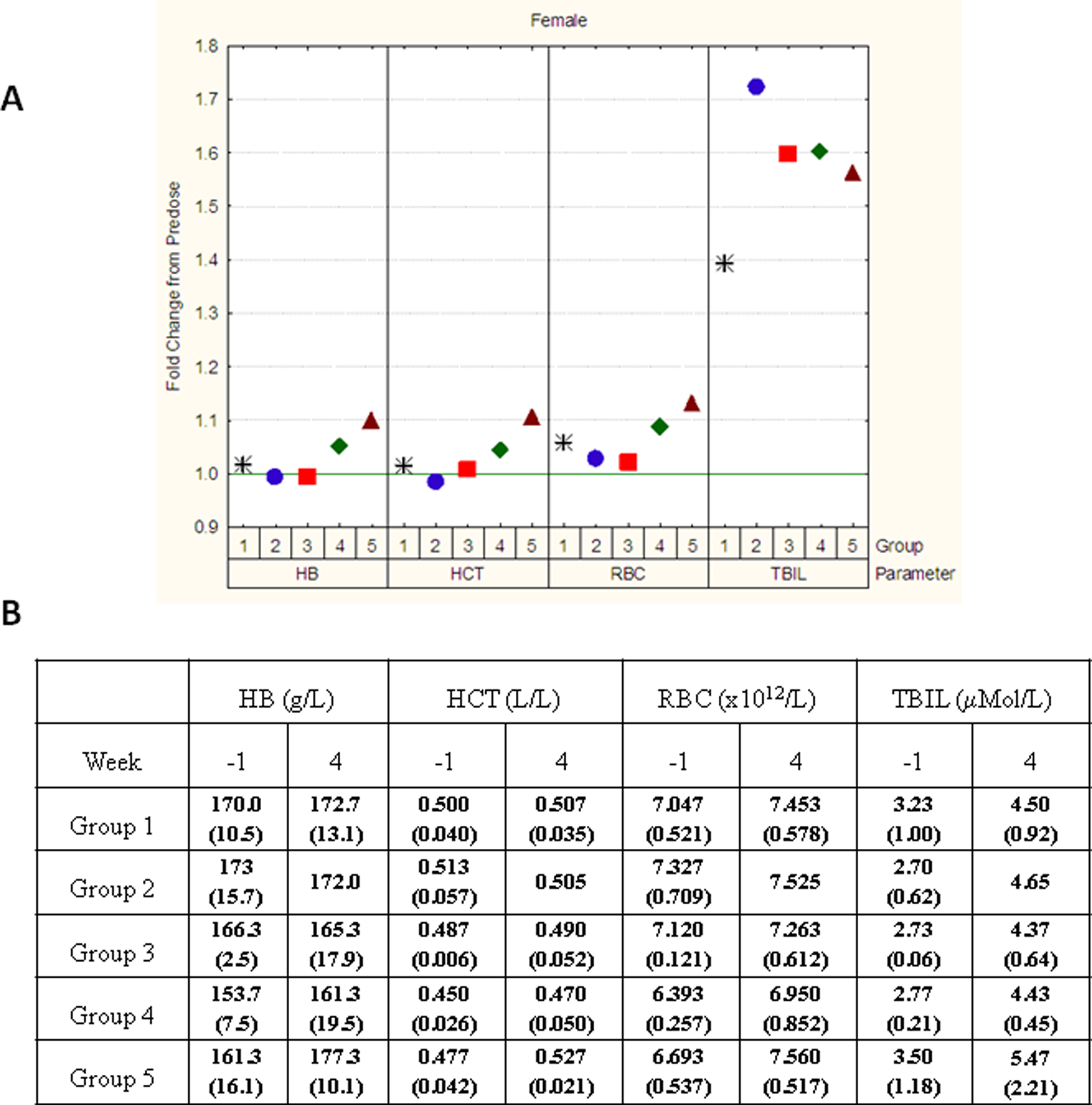
Effects of Solutol/PEG 400 on hematology parameters and serum total bilirubin in female beagle dogs. The groups of dogs (n = 2 or 3) were administered reverse osmosis-treated water (group 1), 10% Solutol/90% PEG 400 at 2 mL/kg/dose (group 2), 10% Solutol/90% PEG 400 at 5 mL/kg/dose (group 3), 30% Solutol/70% PEG 400 at 2 mL/kg/dose (group 4), or 30% Solutol/70% PEG 400 at 5 mL/kg/dose (group 5) for 28 days. To normalize the data to a single y axis, (A) shows the week 4 data relative to the pretreatment values (week 1). (B) shows the absolute mean data (±standard deviation) to demonstrate the variability in the data. The standard deviation is not presented for the group 2 dogs at week 4 because one of the dogs was euthanized on day 24 of the study due to a gavage error. HB indicates hemoglobin; Hct, hematocrit; PEG, polyethylene glycol; RBC, red blood cell count; TBIL, total bilirubin.
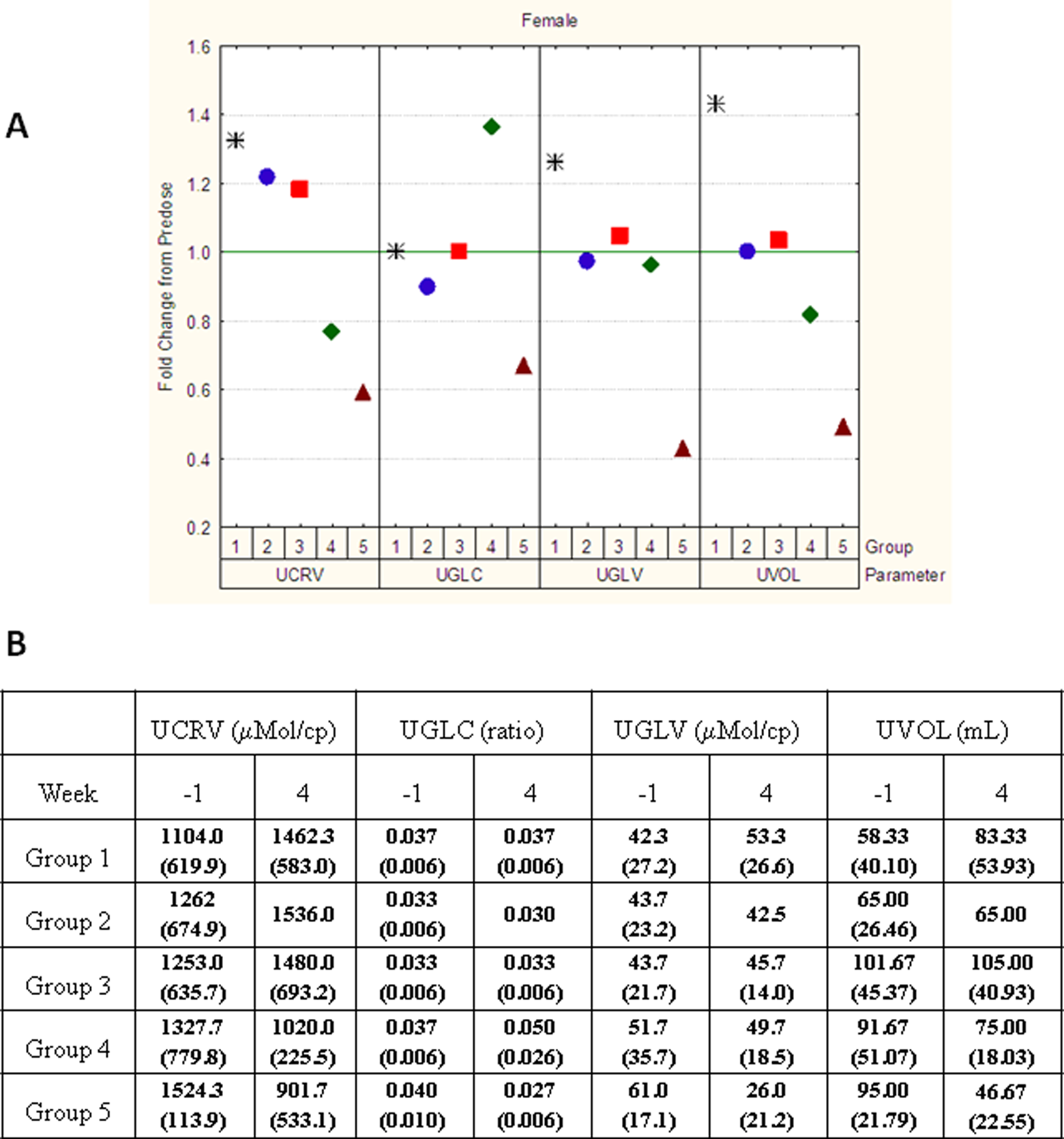
Effects of Solutol/PEG 400 on urinalysis parameters in female beagle dogs. The groups of dogs (n = 2 or 3) were administered reverse osmosis-treated water (group 1), 10% Solutol/90% PEG 400 at 2 mL/kg/dose (group 2), 10% Solutol/90% PEG 400 at 5 mL/kg/dose (group 3), 30% Solutol/70% PEG 400 at 2 mL/kg/dose (group 4), or 30% Solutol/70% PEG 400 at 5 mL/kg/dose (group 5) for 28 days. To normalize the data to a single y axis, (A) shows the week 4 data relative to the pretreatment values (week 1). (B) shows the absolute mean data (±standard deviation) to demonstrate the variability in the data. The standard deviation is not presented for the group 2 dogs at week 4 because one of the dogs was euthanized on day 24 of the study due to a gavage error. PEG indicates polyethylene glycol; UCRV, urine creatinine excretion/collection period; UGLC, urine glucose:creatinine; UGLV, urine glucose excretion/collection period; UVOL, urine volume.
Cremophor/PEG 400 Effects in Rats
There were 2 unscheduled deaths in the males given the Cremophor formulation due to gavage accidents. One rat was killed after biting off the oral gavage catheter and swallowing it on day 5. The other rat was found dead on day 30 and had moderately noisy breathing on day 29. Microscopic findings in the trachea noted in this rat were consistent with a recent misdosing (severe acute inflammation, localized). All other rats survived till scheduled termination. Clinical observations noted in male and female rats included sporadic incidences of fecal changes (soft and/or loose/watery) and/or slight brown/orange staining around the anal area that was consistent with fluid contents in the cecum of most rats noted at necropsy, with no correlating microscopic findings. By day 91, a 10% decrease in mean body weights was noted in male rats (Figure 1). The decreased mean body weight correlated with a 22% decrease in mean body weight gain from days 1 to 91. Throughout the study, mean cage food consumption was slightly but consistently lower (generally 10%-12% in male rats; data not shown).
At the end of the 3-month dosing period, effects were noted in a few clinical chemistry parameters and included mildly increased serum urea and minimally decreased serum sodium and chloride values in male rats as well as minimally increased total serum cholesterol values in females (Figure 2). Males and females had increased urine specific gravity and alterations in urine electrolytes (Figure 3) including increases in UNAC and UCLC in males and decreases in UNAC in female rats. Also, UCRV was decreased in males, UCAC was markedly increased in female rats, and urine phosphorus–creatinine (UPHC) ratio was increased in both genders.
Organ weight changes in male rats included decrease in thymus and heart weights and increase in kidney weight. The mean absolute and relative (to body weight) thymus weights were increased 29% and 23%, respectively, while the mean heart weights were decreased 16% and 6%, respectively. The increases in mean absolute and relative kidney weights in male rats were 15% and 30%, respectively. There were no correlating macroscopic or microscopic findings in the heart, kidney, or thymus.
Minimal, focal or multifocal coagulative hepatocellular necrosis was present in 3 female rats and in 1 male rat (Figure 6), with no correlative change in serum alanine aminotransferase (data not shown). There were no other microscopic findings in any other organs/tissues examined.
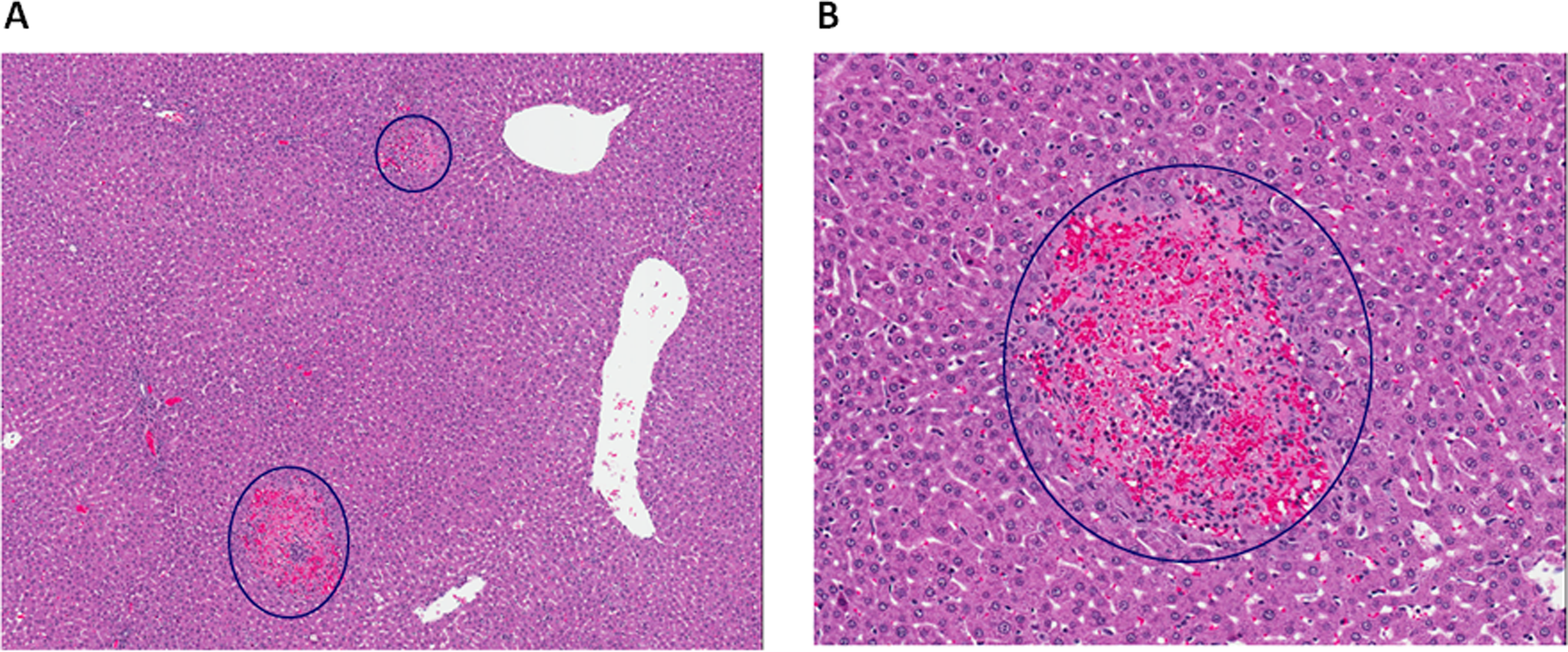
Hepatocellular necrosis in rats administered with 30% Cremophor/70% PEG 400. Representative photographs from the same animal at different magnifications (×2 [A] and ×4 [B]). Circles indicate the areas of coagulative necrosis. PEG indicates polyethylene glycol.
Cremophor PEG 400 Effects in Male Dogs
Following 28 days of once daily dosing by oral gavage with 1 formulation of Cremophor/PEG 400 (10/90%) at 2 different dose volumes (either 2 or 5 mL/kg) to male beagle dogs, there were no changes in body weights. Fecal alterations (loose/watery, mucoid, or red) were present beginning on day 1 and maintained for all but 2 study days in dogs given 10% Cremophor/90% PEG 400 at 5 mL/kg/d. All dogs given either dose volume of the Cremophor formulation had emesis noted at least once during the study. Histopathologically, the administration of the Cremophor formulation was associated with minimal lamina propria hemorrhage in the gastric glandular mucosa in 1 dog given 2 mL/kg/d and in 2 dogs given 5 mL/kg/d, which correlated with grossly evident single/multifocal red areas in the stomach of these male dogs. There was also a minimal increase (30% compared to pretreatment values) in group mean serum urea in dogs given the Cremophor formulation at 5 mL/kg/d. All other findings were considered unrelated to the administration of the Cremophor/PEG 400 vehicle.
Discussion
This series of studies was conducted in order to characterize the toxicological profile of 2 nonconventional vehicles, Solutol/PEG 400 and Cremophor/PEG 400, in common rodent and non-rodent species used in safety assessment studies of pharmaceuticals. In rats, both vehicles caused organ weight changes (decrease in thymus and heart and increase in kidney weights) without concurrent microscopic lesions. Minimal clinical pathology changes (urine and serum electrolyte changes and increased serum total cholesterol) were also noted with both vehicles. Additionally, the Cremophor formulation was associated with minor increase in serum urea, UPHC, and nonadverse minimal coagulative hepatocellular necrosis. The Solutol formulation was associated with minimally decreased urine glucose parameters and increased urine volume in male rats. In dogs, loose/watery feces and emesis were present with either vehicle, and mucus-cell hyperplasia of the ileum was present in dogs given the Solutol formulation. In dogs administered the Cremophor formulations, minimal subepithelial gastric hemorrhage was noted, and in dogs given 5 mL/kg/d it correlated with minimally increased serum urea nitrogen.
Similar to our findings in Sprague-Dawley rats, a study with Fischer-344 rats reported that PEG 400-containing vehicles were associated with loose feces, decreased food consumption and body weight, increased water consumption, and increased absolute and relative kidney weights without correlating macroscopic or microscopic findings in the kidney or the urinary bladder.
12
Also, male Fischer-344 rats had increased urine N-acetyl-β-
Fecal changes observed in rats and dogs with both vehicles and in other studies were not surprising, since high-molecular-weight PEG (PEG 3350) exerts osmotic effects in the gut and is used as a laxative in humans 13 . Additionally, PEG 400 in Hannover Wistar rats reduces gastric emptying starting at 2000 mg/kg (20%) with fecal changes starting at 1000 mg/kg orally (10%) 3 . Furthermore, intravenous injections of PEG 400 in Hannover Wistar rats caused increased serum sodium, decreased serum lactate, increased free fatty acids (FFAs), increased aspartate aminotransferase, and increased glutamate dehydrogenase. 3 The PEG 400 also produced an antidiuretic effect, an antisaluretic effect, an increased urine osmolality, and a decreased phosphate excretion. 3
Similar to our findings, serum and urine electrolyte disturbances have been reported with Cremophor RH40 in Hannover Wistar rats. 3 In the serum, slight changes in serum glucose, protein, FFA, and potassium have been reported in the absence of any serum enzyme changes. 3 In the urine, magnesium and calcium excretions were enhanced. 3 Although magnesium was not measured in our study, the calcium changes observed in Hannover Wistar rats are consistent with our findings in Sprague-Dawley rats, where UCAC was markedly increased in female rats given the Cremophor/PEG 400 formulation and in both genders given the Solutol/PEG 400 formulation.
The minimal, coagulative hepatocellular necrosis observed in rats given the Cremophor formulation was not considered adverse based on the minimal severity and the absence of increase in serum hepatobiliary markers. Coagulative necrosis of hepatocytes is infrequently observed in control rats in routine toxicology studies in our laboratory (unpublished data). Given that the combined male/female incidence of this finding was 33%, along with a complete absence of this finding in either the Solutol or water control-treated rats, it is likely that oral administration of the Cremophor/PEG 400 formulation caused this lesion. No hepatic lesions were observed in dogs given the Cremophor/PEG 400 vehicle.
Little literature exists on the effects of these nonconventional vehicles in dogs. One laboratory has reported increased sodium and chloride electrolytes, cloudy swelling of kidney cells, and increased glomerular volume in dogs administered PEG 400 intravenously at doses up to 8.45 g/kg. 14 Although our results did not produce the same effects, one possible explanation is that the dogs used in our studies were dosed by oral gavage. Similar to the conclusions of these authors, 14 our results show that administration of these vehicles for up to 28 days caused minimal effects in beagle dogs. The Cremophor/PEG 400 vehicle resulted in a dose volume-dependent increased incidence of emesis and minimal subepithelial gastric hemorrhage. Additionally, in dogs given 5 mL/kg/d, fecal alterations and minimally increased serum urea nitrogen were noted. Dogs tolerated administration of 10% Solutol/90% PEG 400 or 30% Solutol/70% PEG 400 at a dose volume of 2 mL/kg/d, with only intermittent loose or watery stools noted. A higher incidence of loose/watery feces was observed in dogs given a higher dose volume (5 mL/kg/d) of the Solutol formulations. Thus, the fecal changes with the Solutol/PEG 400 vehicle can be minimized by the administration of smaller volumes. The fecal changes were associated with minimal mucus-cell hyperplasia of the ileum. The minimal increase in red blood cell mass and decrease in urine volume (and associated changes in other urine parameters) were likely related to increased fecal fluid loss and minimal dehydration.
None of the Cremophor/PEG 400 or Solutol/PEG 400 formulations produced overt toxicity after 91 days of dosing in rats or 28 days of dosing in dogs. However, the formulation with the higher amount of Solutol (ie, the 30% Solutol/70% PEG 400) resulted in slight dehydration and hemoconcentration, whereas the formulation with the lower amount of Solutol (ie, the 10% Solutol/90% PEG 400) did not exhibit such findings and thus may be preferred for studies of this duration or longer. Compared with the Solutol formulations, the Cremophor formulation produced more findings, albeit nonadverse, including minimal coagulative hepatocellular necrosis, minimal lamina propria hemorrhage in the gastric glandular mucosa, slightly decreased body weights and food consumption, and increased clinical observations. Although considered nonadverse, these findings should be taken into consideration when using Cremophor/PEG 400 formulations.
Footnotes
Acknowledgments
The authors would like to acknowledge Mrs Carie Kimbrough for figure production and assistance with statistical methods and the technical staff for conducting the in-life portion of the study, performing the necropsy, preparing and analyzing the clinical pathology samples, and preparing the tissue sections for histopathological examination.
Declaration of Conflicting Interests
The author(s) declared no potential conflicts of interest with respect to the research, authorship, and/or publication of this article.
Funding
The author(s) disclosed of the following financial support for the research, authorship, and/or publication of this article: This study was supported entirely by GlaxoSmithKline.