




Abstract
This article proposes comparing nonprofit news organizations that prioritize social welfare goals with the hybrid organizational form that mixes the institutional logics of charities and business enterprises: the Social Enterprise. The institutional logic comprises organizing templates, patterns of actions and values. These Social News Enterprises (SNEs) are analyzed as hybrids mixing the institutional logics of commercial, public, and alternative news media. Financed by donations and the revenue from services, SNEs engage in public, investigative, and explanatory journalism. Normative behavioral principles of SNEs are used to compare the impact-based model of ProPublica with the growth-focused model of The Texas Tribune.
Keywords
In reproductive biology, hybrids are the offspring resulting from a cross between parents of different species (“Hybrid,” 2019). In organizations and management literature, instead of only being “an outcome,” hybrids are changing agents redefining the same “species” that originated them. In this context, species are, for example, public, private, nonprofit, for-profit (see McCambridge, 2014), or, more generally, categories and sectors with their own dominant logic and organizing template (Davies & Doherty, 2019). Hybrid organizations represent innovative forms that actively mix value systems and action logics of various sectors in their business models (Lüdeke-Freund et al., 2016), bridge conventional categories (Austin et al., 2006), and transfer ideas from one sector to the other (McInerney, 2012).
The term “institutional logic” is very helpful for defining hybrid organizations. In Thornton et al. (2012), institutional logics represent “frames of reference that condition actors’ choices for sense-making, the vocabulary they use to motivate action, and their sense of self and identity” (Thornton et al., 2012, p. 2). This article focuses on hybrid organizations defined as institutions, or “systems of established and prevalent social rules that structure social interactions [by enabling] ordered thought, expectation, and action” (Hodgson, 2006, p. 2). Against this background, hybrid organizations are innovative social structures that deviate from the social rules of established categories, by mixing and incorporating different institutional logics, where the latter refers to way of reasoning about organizing templates, patterns of actions, and values.
This article proposes going beyond existing categorizations of news media organizations, such as digital and traditional, or commercial and non-profit. A variety of new digital news media emerged in recent years and many of them are incorporated as nonprofit organizations (see Massey, 2016; Nisbet et al., 2018). Yet, the use of a nonprofit category can conceal an increasing variety of news organizations that successfully integrate existing institutional logics. Therefore, this article suggests recognizing these news organizations as hybrid, because this represents a double opportunity: to better understand newly emerged news organizations as instigators of institutional logics, and to do so by learning from a vast body of literature concerned with theories and analyses of hybrid organizations. Concerning this last point, this article specifically focuses on the Social Enterprise (SE) model, which is the subject of comprehensive academic debate, and a model for innovative, legal forms for the incorporation of organizations.
SEs are organizations that addresses social problems by means of markets. They exist in different legal forms (e.g., for-profit, nonprofit, cooperatives), but also as combinations of legal forms (e.g., a for-profit organization owned by a nonprofit one). They are entities active in markets for public purpose, which are social spaces that encompasses both private and public efforts to address social problems of public interest, including poverty, inequality, or drug addiction (Mair, 2020). SEs are hybrid models that mix the institutional logics of charities and business enterprises, and so they are distinct from other hybrid models, including business cooperatives, mutual companies, and state-owned enterprises, which mix the institutional logics of private and public entities (Furusten & Junker, 2018; see Figure 1).
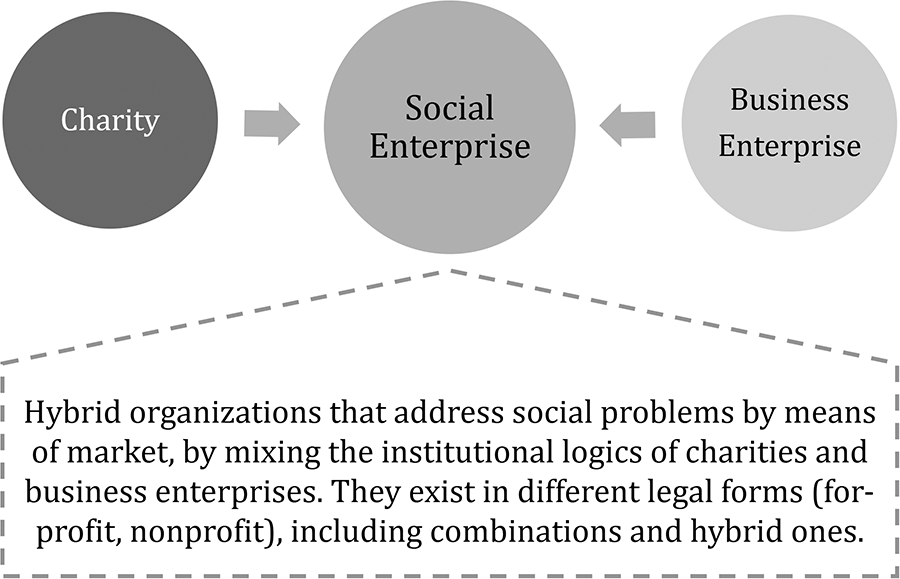
Definition of social enterprise.
SEs are different from regular business enterprises because they are recipients of donations and because the economic surplus generated is in service of their primary social mission (Lüdeke-Freund et al., 2016; Perrini & Vurro, 2006). They are also different from charities, because they are primarily—or at least partially—financed by selling goods and services in mixed markets, which are markets where regulated nonprofit organizations are allowed to compete with unregulated for-profit organizations (Brown, 2010). 1
This research aims at answering the following questions: (a) Are there hybrid organizations in the news media sector that can be compared with SEs? Which institutional logics comprise the basic framework of these organizations? (b) Can the literature on SEs provide normative behavioral principles for hybrid news media organizations?
Answers to these questions can help academics understand newly formed news organizations better, while normative behavioral principles can be used by professionals for improving operations, legitimacy status, and ultimately economic sustainability, which generally remains a challenge, considering the low survival rate among new ventures within the sector (see Massey, 2016). 2
In the next section, the article provides context and critical assessments of the concept of SE. The following sections explain, first, the importance of nonprofit news media in the context of the crisis of the commercial business model, and second, the characteristics of the hybrid model of news media organizations that mixes the institutional logics of public, commercial, and alternative news media. For simplicity, this model is called the Social News Enterprise (SNE) and it is illustrated using ProPublica and The Texas Tribune (hereafter “the Tribune”) as examples.
The second part of the article focuses on challenges and best practices among SEs to answer the second research question. In particular, the analysis provided demonstrates that these challenges are relevant to the study of hybrid news organizations, including ProPublica and the Tribune. These fundamental problems faced by SEs include the Strategy Challenge, the Legitimacy Challenge, the Mission Measurement Paradox, and the Governance Challenge. The solutions to these problems identified in the literature are considered normative behavioral principles for SNEs. Thanks to these principles, it is possible to compare and critically appraise the impact-based business model of ProPublica, with the growth-focused model of the Tribune. Finally, the conclusion focuses on the core takeaways of the article.
The Foundations of the SE and Its Critical Appraisal
The growth of the third sector, a space for public performance that is not covered by the state or the market (Levitt, 1973), is probably the most tangible sign that there is a growing space for privately held organizations focused on social welfare and for more academic research on hybrid organizations. Ariza-Montes and Lucia-Casademunt (2016) questioned the existence of an unambiguous use of the term third sector: Etzioni (1973) links the third sector to hybrid organizational forms that combine the efficiency of for-profit business with the search for common good of state and public administration, whereas Weisbrod (1975), in a simpler way, associate this space with the work of nonprofit organizations.
Data concerning nonprofit institutions serving households (NPISHs) can be used to empirically estimate the growth of third sector in the United States using Weisbrod’s definition. NPISHs are legal entities “principally engaged in the production of non-market services for households and whose main resources are voluntary contributions by households” (Commission of the European Communities—Eurostat et al., 1993, p. 23). Calculations based on data published by the United Nations (“Table 2.4 Value Added by Industries at Current Prices. ISIC Rev. 4,” 2019; “Table 4.7 Non-Profit Institutions Serving Households,” 2019) show that the value added produced by the NPISHs was circa 762 billion (current) dollars in 2008 and over 1 trillion 45 billion dollars in 2016, showing a growth of over 37%. Furthermore, in relation to the gross domestic product (GDP), the value added produced by NPISHs was 5.59% in 2016, growing by 0.23 percentage points since 2008. Given its size and growth, the contribution of the NPISHs to the economy can be compared with one of two other sectors: constructions (3.98% of the GDP in 2016, −0.58 percentage points since 2008) and information and communication (6.73%, +0.48 percentage points since 2008).
Notably, if hybrid organizations were also included, the contribution of the third sector (in Etzioni’s sense) to the U.S. economy would be larger. However, an empirical assessment of such a third sector would be very complicated to develop because of the different shades of organizational forms. In fact, as many observers maintain, the distinction between for-profit and nonprofit started to blur in the 1990s when nonprofit organizations improved their chances to meet their mission goals by adopting a variety of income strategies and diversifying their sources of income (Cooney, 2012), while the business sector began to understand the strategic importance of socially responsible behavior (Young, 2013).
SEs are a product of these changes as they first appeared in this context of nonprofits becoming more commercially entrepreneurial and for-profits becoming more socially conscious. Nowadays, the concept of SE has inspired legal forms for the incorporation of organizations, which include the Low-profit Limited Liability Companies (L3C) in the United States, or Community Interest Company (CIC) in the United Kingdom. 3 Notably, these forms support the “blending of business and social goals” (Cooney, 2012, p. 200). L3Cs are SEs because they are limited liability companies that must meet the following three criteria. First, they must significantly further the accomplishment of one or more charitable or educational purposes as defined by the Internal Revenue Code. These purposes include social and environmental causes, but also art, religion, education, literary activities, scientific ventures, and the prevention of cruelty to animals. Second, L3C can redistribute profits at a market rate (or above) although the profit motive must be secondary to the charitable mission. This part of the regulation makes it possible for L3Cs to be recipients of program-related investment (PRI), which is charitable funding from foundations, but also funding from mainstream investors that are not motivated by the social mission. Third, as is the case with nonprofit organizations, they are not allowed to engage in lobbying and political campaign activities (Cooney, 2012; Florin & Schmidt, 2011).
Although in the literature, SEs tend to be portrayed in a wholly positive light (Dacin et al., 2011), criticisms have also been made, in particular, by supporters of the non-hybrid, nonprofit organizational model. For example, Doherty et al. (2014) considered work on social entrepreneurship to be largely descriptive and undertheorized. Using an institutional perspective, Dart (2004) claims that SEs are becoming more legitimate because of a renewed and pervasive faith in market and business-based solutions in the United States, United Kingdom, and other countries which are members of the Organization for Economic Co-operation and Development (OECD). He claims that SEs are a convenient idea for governments, foundations, or federated funders because they could reduce the need for funding for social purposes. Similarly, McCambridge (2014) portrays SEs as hype. On one hand, she claims that SEs propose features that are already available to nonprofit organizations, and, on the other hand, she is skeptical of the positive potential of embedding features that are typical of for-profits, concerning ownership, accountability, and distribution’s principals, into nonprofit organizations.
Although certainly holding some validity, these criticisms do not affect the rationale for this article. In fact, regardless of the degree of novelty and the motives that particular institutions might have for supporting their expansion, SEs represent an interesting model of hybrid organizations, particularly for the news sector. There is a rich body of literature that can be used to understand the way in which emerging news organizations increase their level of legitimacy and manage social and economic objectives, to create social value and fit a changing environment.
The Nonprofit Appeal Against the Decline of the Commercial Model of News
During the 1980s and 1990s, when SEs were still in the making, news media companies were regularly earning 20% to 30% profit margins and were among the most profitable companies in the United States (Benson, 2017). After 2005, however, their level of earnings dropped dramatically (Pickard, 2019). Due to the combined effect of increased distribution of news and information through the internet and the emergence of new digital platforms (Benson, 2017), the advertising revenue of commercial news media was severely affected. Some scholars, including Pickard (2019) and McChesney (2016), consider this latter factor the principal driver of the crisis of the commercial model of news provision.
Given the dominance of commercial players in markets of news provision, their crisis triggered a general decline in the quality of news available. In the United States, this essentially derived from the loss of 20,000 journalist jobs between 2007 and 2017 (Benson, 2017) and from substantial cuts in news coverage of state, national, and international issues (Pickard, 2019; Pickard & Stearns, 2011). Furthermore, many of the changes that occurred since the new millennium appear to be structural, as only a few quality news providers are likely to survive thanks to the revenue from digital subscriptions (Picard, 2014). However, nonprofit, digital–native news providers have partly occupied the space left by retired commercial ventures. Many scholars observe that in the current situation, news organizations that benefit from the nonprofit form are multiplying and have concrete chances to flourish (Almiron-Roig, 2011; McChesney, 2016; Pickard, 2014).
Many of these nonprofit news organizations propose a new version of “public journalism” (also known as civic journalism), a citizen-centered, bottom-up, trust-building exercise (Konieczna & Robinson, 2014) developed from a concept from the late 1980s and early 1990s, which is nowadays gaining momentum (Ferrucci, 2017). In theory, public journalism engages a community through open dialogue, lets ordinary people have an influence over news organizations’ agendas, galvanizes the community for positive action, and finds solutions to community problems (Ferrucci, 2017; Konieczna & Robinson, 2014). A critical assessment, nonetheless, interestingly points out that serving a (geographically confined) community is not serving the public, and, that already in its early developments, public journalism diverged from the theoretical proposals. This type of journalism was implemented by owners of newspapers that experienced declining circulations, partly because they were convinced that people who felt connected to their geographical communities were more likely to read newspapers (Nip, 2009).
The diffusion of information and communication technologies (ICTs) and the increasing adoption of nonprofit organizational forms are uplifting public journalism’s original idea. The former provides opportunities for cheaper production and distribution of content, and for easier interaction with communities of users. The latter bears the potential for increasing the level of trust and, consequently, it is a good fit for this type of journalism that builds on frequent engagements with its users. Also, the nonprofit status reduces the chances that community engagement is used as a marketing tool, as done by some commercial media (Ferrucci, 2015).
SNE: SEs of the News Media Sector
The term SNE defines a type of SE that prioritizes social welfare goals by providing current information and creating knowledge. Like SEs, SNEs are hybrid organizations that embed the institutional logics of different categories and models, without fully identifying with any of these singularly. These categories are alternative, public, or commercial news media. Notably, a key component of the institutional logic of a news organization is the type—or types—of journalism embraced, given that this is the key activity shaping the information and knowledge provided to fulfill the social mission. Therefore, to answer the first group of research questions, the next sections discuss the features that characterize SNEs and explains the importance of studying SNEs in the way proposed in this article. Finally, this section introduces the organizations used as examples.
Characteristics and Background of SNEs
The notion of SNEs is grounded in the analyses of the literature on SEs, in the characteristics of different categories of news organizations, and in the study of model news organizations that prioritize social welfare and that cannot be fully characterized using any of the existing categories. Given the absence of news organizations incorporated as L3C at the time of writing, nonprofit and crowdfunded news brands were used as model organizations. ProPublica and The Texas Tribune are the examples of nonprofit news organizations developed in this article, but the crowdfunded brands De Correspondent in the The Netherlands, Republik in Switzerland, Mediapart in France, and Hong Kong Free Press also contributed to design the concept of SNEs.
SNEs are hybrid forms that share with public service media a strong commitment to social goals and the need to justify their work in terms of impact. However, SNEs are not recipients of subsidies or other funding provided or collected by governmental institutions. SNEs are different from commercial media because the generation of economic value is secondary to social goals, yet, they have at least two things in common with the latter. First, their revenue models include a mixture of paid subscriptions, selling of advertising spaces, and the organization of events supported by commercial sponsors. Second, they might also experience the need to find mechanisms allowing them to be independent from their largest investors. Finally, SNEs are alternative media, but only in a “soft” sense: They are committed to social change, they include stories and people that are not within the scope of mainstream media, they foster participation and civic action, and they are critical and want to hold political and economic power accountable. However, they are not critical of the existing media system. They collaborate with mainstream media to increase their own impact and/or to generate additional revenue. Also, they see themselves as supplementing the media environment with public affairs coverage and investigative and explanatory journalism, rather than aiming at replacing existing news media (Benson, 2017; Konieczna & Robinson, 2014). Furthermore, in contrast to supporting specific social movements as some alternative media do, SNEs propose solutions to social problems without engaging in advocacy. As Tofel (2013) explains, “Advocacy begins with answers, with the facts already assumed to be established” (Tofel, 2013, p. 11), whereas investigative journalism, on the contrary, proposes solutions only after investigation and knowing the facts, and when these correspond to universal values.
Models and Examples of SNEs: ProPublica and The Texas Tribune
ProPublica was established in 2007–2008 (“About Us,” 2018a) and is led by former editors of major mainstream publications (“Staff,” 2018). This organization defines itself as an “independent, nonprofit newsroom that produces investigative journalism with moral force” (“About Us,” 2018a). It was initially financed by the Sandler Foundation with 30 million dollars for 3 years (Hamilton, 2009). ProPublica has been the recipient of many awards including four Pulitzer Prizes (“Awards,” 2018). Furthermore, ProPublica concentrates on spurring “real-word impact” by investigating stories that have the potential for creating public value in the spheres of government and politics, business, criminal justice, the environment, education, health care, immigration, and technology (“About Us,” 2018a). This brand is a proponent of public journalism, because it concentrates on social problems and solutions, by contributing to the adoption of new laws, or the reversal of harmful policies and practices (“About Us,” 2018a). It often does so by involving its readers, and “common people” more in general, who are the main subjects and initiators of these stories.
The Texas Tribune describes itself as “the only member-supported, digital-first, nonpartisan media organization that informs Texans—and engages with them—about public policy, politics, government and statewide issues” (“About Us,” 2018b, para. 1). Launched in November 2009, it raised a starting capital of approximately 4 million dollars (Batsell, 2017).
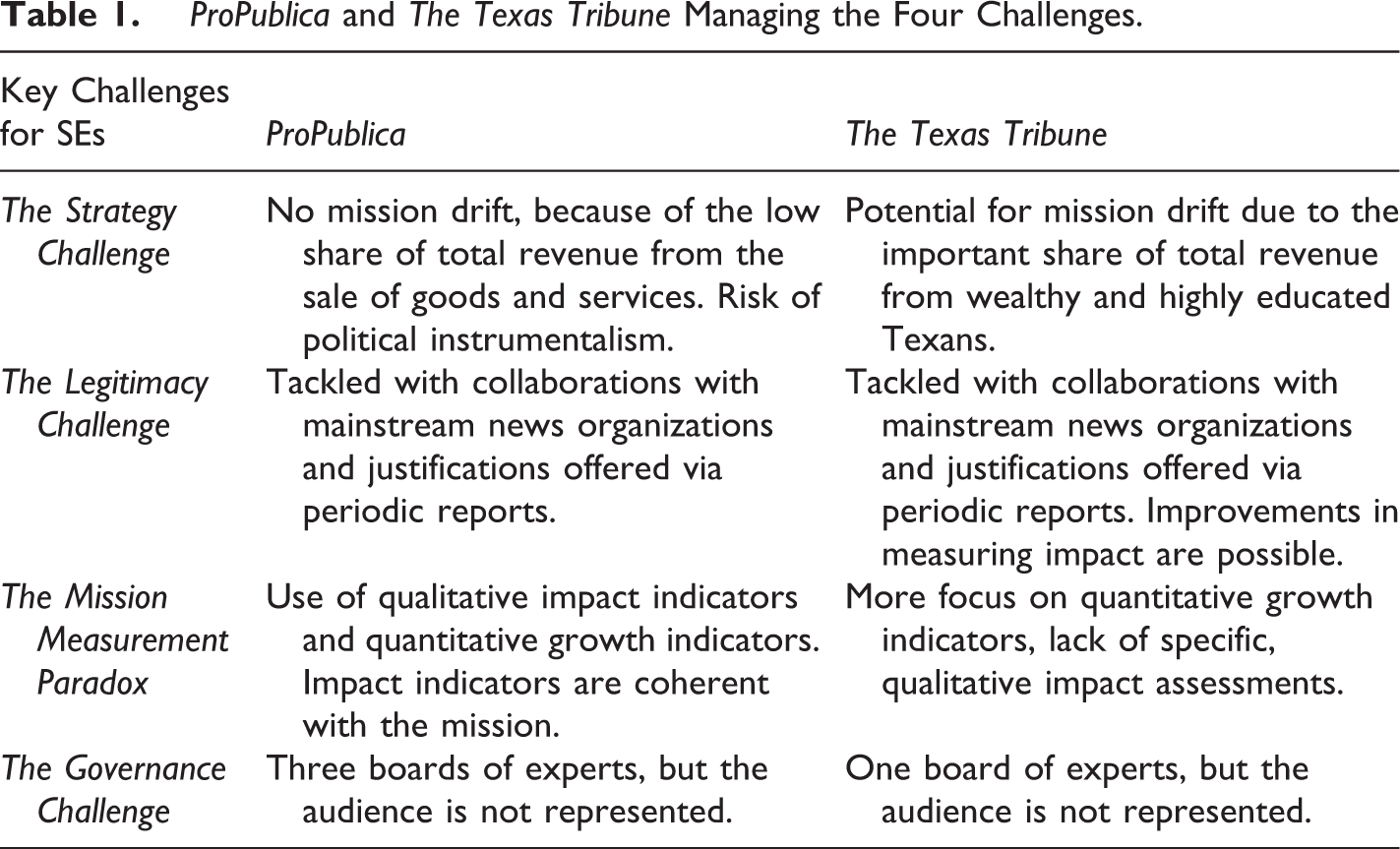
The Tribune and ProPublica are hybrids and excellent examples. They have a lot in common: nonprofit status, adoption of a free access policy and re-use of their content, reception of donations from large foundations, high degree of transparency, focus on investigative journalism, collaborations with mainstream news media to expand their reach, and the ways in which they attempt to engage their respective audiences. However, also interesting are the differences between these organizations that emerge from this analysis (see also Table 1). They have been the subject of many studies, which provide independent assessments that can be used to build the arguments provided in this article. ProPublica, in particular, is considered an interesting success story for investigative reporting and a representative example of nonprofit digital–native news media in academic publications (Almiron-Roig, 2011; Pickard & Stearns, 2011) and specialized reports (Holcomb et al., 2011; Picard, 2011).
ProPublica and The Texas Tribune Managing the Four Challenges.
The Importance of SNEs and the Rationale for This Study
There are four main lines of argument explaining why the study of SNEs is contemporary, important and an original contribution to knowledge in the field, in general, but also in the way that is proposed in this article. First, SNEs deserve to be the focus of academic research because of their growing social value. In fact, many scholars consider the recently emerged, nonprofit media as a fundamental addition to the media system (Almiron-Roig, 2011; McChesney, 2016; Pickard, 2014) given that the latter is currently under-producing the quantity and quality of public affairs and investigative reporting needed by a democracy (Benson, 2017; Hamilton, 2009; Pickard, 2019).
Second, instead of being only part of a scholarly vision for a more democratic media system, SNEs deserve to be the focus of research because they are an important reality. According to the Pew Research Center (2014), 308 new nonprofit news organizations financed by 279 foundations emerged in the United States between 2005 and 2012. Many of them are hybrid news organizations or SNEs. Although Benson (2017) reveals that nonprofit news media organizations have received important financial support from some of the largest foundations, other scholars stress the benefits from engaging in commercial operations and with their audiences. For example, this latter point is demonstrated by the Knight Foundation (2015) using a sample of 20 local and regional organizations, which showed that about 23% of revenue was generated through earned income such as sponsorships, events, advertising, training, subscriptions, and syndication and that 97% of all donations in 2013 were of amounts less than 1,000 dollars. Third, while there are many theoretical models within the fields of economics and management which can be used to assess the business model and performance of commercial news media (see Massey, 2016), there are no generalized guidelines or “blueprints” within these fields that specifically address the institutional logic of hybrid news organizations. Fourth and last, although some communication scholars have discussed the adoption of the L3C fiscal status by news organizations (e.g., Hamilton, 2009; Pickard, 2011), there are currently no studies contemplating the application of the more general model of the SE to the news industry, as proposed in this article.
SNEs and the Four Challenges of SEs
As explained above, this article proposes analyzing and comparing the institutional logics of SNEs by describing how they respond to four fundamental challenges faced by SEs. These challenges are only briefly described here, while full details can be found in Sparviero (2019).
The Strategy Challenge
On one hand, SEs prioritize the satisfaction of social needs, while, on the other hand, they also need to create enough economic value to sustain and potentially expand their operations (Mendoza-Abarca & Mellema, 2016). The parallel pursuit of these objectives is a source of tension, as best efforts to solve social problems can be hindered by economic efficiency. Therefore, SEs can suffer from a “mission drift,” a term denoting the risk of losing sight of the social mission (Ebrahim et al., 2014) or the substitution of long-term social goals with short-term economic objectives (Sparviero, 2019). In the literature, there are specific coping strategies suggested for the management of this challenge. First, a pay-what-you-want (PWYW) strategy, which posits that the seller must accept the price determined by the client, even when this is zero. Second, a “bricolage” strategy, which assumes efforts to use the resources available innovatively rather than concentrating on increasing the level of resources (Mendoza-Abarca & Mellema, 2016). Third, the process of structural separation between value creating activities and social creation activities into different collaborating organizations or organizational divisions (Davies & Doherty, 2019). Fourth, the use of the Social Enterprise Model Canvas, an instrument that helps clarify and monitor objectives thanks to the use of specific indicators (see the Mission Measurement Paradox below; Sparviero, 2019).
The Strategy Challenge also affects nonprofit news media: As Benson (2017) explained, foundations can expect civic impact and economic sustainability from the organizations that they support, “ultimately creating pressures to reproduce dominant commercial media news practices or orient news primarily for small, elite audiences” (Benson, 2017, p. 1). Nonetheless, according to available data and analyses, ProPublica can afford to avoid a mission drift. Its commercial revenue does not play a significant role and the mission generates a level of donations that even allows for expanding its operations, as the recent establishment of a ProPublica Illinois in 2017 demonstrates (see Nisbet et al., 2018). ProPublica is certainly taking advantage of the fact that funding from large foundations tends to be concentrated in a few, large national projects (Nisbet et al., 2018). In the 2016 Return of Organization Exempt from Income Tax (2016a) form, ProPublica declared a revenue of over 14 million dollars, 94% from “Gifts, grants, contributions, and membership fees received” and only 2.3% from services offered. Furthermore, estimates from the figures published in its 2016 report (ProPublica, 2016) suggest that circa 15% of the total revenue was generated by donations and sponsorships of less than 5,000 dollars each. These indicators suggest that support for ProPublica is growing and that it is composed mostly of sizable contributions from donors and, only to a very small extent, of revenue generated from the services provided.
The advantage of this situation is independence from commercial factors and the possibility of following an impact-based model. Such a model allows ProPublica to give third parties the ability to freely re-publish its articles under the Creative Commons license (Tofel, 2013). The main potential drawback of this situation is political instrumentalism, defined by Benson as “attempts to use a media outlet to promote or attack politicians, social movements and/or issues of special concern to the owners” (Benson, 2016, p. 31). However, at least according to an independent study published in 2011 (Holcomb et al., 2011), the content of ProPublica tends to be politically neutral.
Regarding the management of the Strategy Challenge, the Tribune has embraced a different approach. The Tribune can be considered part of those news nonprofits with a local scope (including the MinnPost and Voice of San Diego) that, as Benson (2017) suggests, concentrate on building a diverse funding base mostly from local elites, business and foundations, and only sporadically from national foundations. Among these but also within the landscape of news start-ups more broadly, the Tribune stands out as one of the most aggressively entrepreneurial (Batsell, 2015).
The analysis of its 2016 financial status (from “Donors and Members,” 2018; Return of Organization Exempt From Income Tax, 2016b) reveals that the Tribune is steadily increasing its annual revenue: In 2016, this was close to 7 million dollars, almost double from the 4 million that it used to start its operations in 2009. Furthermore, roughly 40% of this revenue came from small donations and 10% from services. Half of the latter was produced by its annual Tribune Festival and other events. About 36% of the service revenue came from editorial initiatives and subscriptions. This should include the revenue from a syndication deal with The New York Times (see Batsell, 2017) and the revenue from the newsletter The Blast. Only 50% of the total revenue came from “Major Grants and Gifts” of 50,000 dollars or more.
Nonetheless, a sound financial basis is only half of the solution to the Strategy Challenge. As Benson (2017) explained, because boards are composed of managers of mainstream news media, but also because of the need to have content diffused by the latter for greater impact or additional revenue, nonprofit media can find themselves replicating the values of commercial media. The Tribune aims at informing all Texans (“About Us,” 2018b) interested in the issues that they investigate, and yet, the first audience identification survey conducted in 2012 revealed that its readership was almost exclusively composed of a well-educated and relatively wealthy elite: 91% of its readers have a college degree, 52% have a household income of more than 100,000 dollars, and 96% participated in the last election (Batsell, 2017). From this initial survey, the Tribune has finely tuned its revenue model and successfully increased the level of individual donations, but also sold this educated audience to sponsors for its events. Yet, the danger of a mission drift is tangibly there, and such a danger can only be removed by broadening and diversifying the audience further.
The Legitimacy Challenge
Legitimacy can be defined as the generalized perception that “the actions of an organization are desirable, proper or appropriate” (Yang & Wu, 2016, p. 333) in the eyes of the stakeholders involved (Galaskiewicz & Barringer, 2012) or, more broadly, within multiple institutional domains (McInerney, 2012). SEs need to be perceived as trustworthy and accountable (Austin et al., 2006) and they might have trouble doing so because they are problematic for audiences to categorize (Galaskiewicz & Barringer, 2012) or because they create multiple forms of value (McInerney, 2012). Categories such as for-profit and nonprofit are important taken-for-granted constructs of norms, expectations, and standards used by different stakeholders to make judgments about organizations (Galaskiewicz & Barringer, 2012). Therefore, SEs might struggle to be held accountable because the behavioral norms evoked in their claims and behavior span existing categories. The question of gaining legitimacy is much more than only symbolic: It can be necessary to access donative forms of revenue (McInerney, 2012), to obtain a nonprofit status, or to engage with particular business partners. Furthermore, as Massey (2016) demonstrates, independent web-native news sites with a favorable reputation, a synonym of legitimacy in this context, tend to be more sustainable.
The solution to the challenge is “justification” (McInerney, 2012): the act of providing clear and persuasive accounts of strategy and actions. Justification is the basis for legitimation, because it is the instrument that SEs use to shape and align the way in which they do things with the expectations of other actors. Commercial, public, and alternative are also categories of news media that carry their own norms, standards, and expectations from stakeholders. Therefore, it is safe to assume that SNEs face the Legitimacy Challenge, as they are hybrids incorporating some of the characteristics from all of these three types of organizations. For example, Maguire (2008) reported that some nonprofit media experience a trade-off when they sell advertising space, as the latter negatively affects the level of donations. Clearly, some supporters of nonprofit media expect these organizations not to become vehicles of commercial messages or promoters of commercial interests.
Also relevant to the question of legitimacy is the dispute between the Internal Revenue Service (IRS) in the United States and the Council of Foundations. The Council of Foundations has been studying the question of recognition of the tax exemption status for nonprofit media organizations with social goals since 2011 and is lobbying for a better framework that might take into account the specificities of these organizations (Nonprofit Media Working Group, 2015). In doing so, the Council of Foundation is effectively engaging in a collective justification process that attempts to align the expectations of the IRS concerning nonprofit organizations with the standards of nonprofit SNEs proposed by practitioners.
Moreover, the question of legitimacy for SEs, including the ones focused on news, is not only about avoiding the negative consequences that can derive from not fitting the established categories and the relevant norms and standards. It is also about banking on the potential original value created by proposing an alternative to existing structures. Economic theory can explain that consumers can be more trustworthy of nonprofit organizations when they provide a good or service whose value cannot be assessed, or “trust goods” (Brown, 2010), because the latter have no reason to overcharge them. Furthermore, and beyond economic theory, nonprofit organizations are also perceived to be more trustworthy, because studies show that altruism and pro-social attitudes boost sympathy, cooperation, and trust (Borzaga et al., 2014).
The two brands used as examples in this article also face the Legitimacy Challenge and, as explained in more detail below, they carefully invest resources into creating reports that provide justifications for their choices and actions to overcome this challenge. Legitimacy as reliable and original sources of information is gained partly because of the many prizes and recognitions received and partly because established news brands (e.g., The New York Times and The Washington Post) reuse their content. However, although readers are informed of the potential tax advantages linked to donations to nonprofit companies, these organizations do not suggest or imply that nonprofit news organizations bear the potential for a better convergence of interests with their readers than commercial news media.
On the contrary, the status of hybrid news organizations can even be controversial: For example, in 2012, documentary maker Stephen Robert Morse accused the Tribune of not disclosing a corporate sponsorship from one of the companies mentioned in a piece for The New York Times. More generally, he also suggested that the Tribune was using large donations for harming for-profit journalism in Texas by hiring some of the most famous local journalists and by releasing content for free (Morse, 2012). This attempt to delegitimize the Tribune was probably a good reminder that, although SNEs can be perceived as similar to competing commercial ventures, the level of transparency and accountability expected from them is relatively much higher. These values also play a fundamental role in the regular exercise of articulating the organization’s performance described in the next section.
The Mission Measurement Paradox
SEs strive to meet the third challenge, which is connected with the first two, and relate to the measurement of performance with regard to social goals and impact. Although it is a priority in research to understand the various types of contributions of SEs in terms of social values (Peattie & Morley, 2008), the quantification or precise measurement of social impact remains rare (Ormiston & Seymour, 2011) and complicated, due to the nature of social phenomena, multi-causality of underlying factors, and lengthy temporal manifestation (Austin et al., 2006). The “disconnect between mission, objectives, and impact measurement” has been also eloquently labeled “Mission Measurement Paradox” (Ormiston & Seymour, 2011, p. 137). It was defined as a paradox given that, to demonstrate impact, social entrepreneurs often and wrongly use growth measures (see Galaskiewicz & Barringer, 2012) articulated using a universal language of economic ratios and indicators. As argued in Sparviero (2019), to solve this particular challenge, measures of social impact should be carefully crafted to show progress toward the fulfillment of the organization’s social goals.
Regarding the measurement and communication of their respective performances, the two brands analyzed in this article share many common features: For example, both ProPublica and The Texas Tribune publish the financial information contained in the mandatory form for nonprofit organizations (form 990) on their website. They also release an annual report, which includes universal (growth) measures defining the reach of the brands (e.g., page views, unique users, Twitter followers, Facebook likes, and email subscribers) and qualitative indicators like the awards received and comments and opinions from users. In general, both brands clearly attempt to be as transparent as possible by publishing the names of donors and sponsors.
Nonetheless, differences between the two brands exist and, interestingly, they can be related to the characteristics of their respective revenue models. Annual reports of the Tribune (The Texas Tribune, 2014, 2016, 2017) articulate impact through a “value-for-money”-type of account, typical of a growth strategy: These reports explain the activities developed to provide nonpartisan, fact-based journalism and the money necessary to generate it. ProPublica, alternatively, was established from the funding of the Sandler Foundation, whose mission is “to invest in strategic organizations and exceptional leaders that seek to improve the rights, opportunities and well-being of others, especially the most vulnerable and disadvantaged” (“Our Mission,” 2018). Accordingly, this brand’s mission is not just to inform people, but to spur “real-world impact” (“About Us,” 2018a). The way in which ProPublica understands the latter and the methodology used to measure it are the subject of a paper by Richard Tofel (2013). In this article, Tofel (2013) explains that real-world impact is about identifying problems and proposing solutions and supporting for these solutions to be translated into actions. Interestingly, he also argues that real impact does not necessarily require reaching a large audience. Using the story of the Board of Registered Nursing as an example, Tofel (2013) showed that real impact can be triggered by persuading key stakeholders. Most of the members of this board were dismissed by the Governor of California within 24 hr of the publication of the story revealing their incompetence, proven by the provision of licenses to professionals with a criminal record. Therefore, in addition to the indicators of reach and general quality assessment of its work, in its reports ProPublica follows up on its stories and attempts to measure impact by documenting the effects and changing conditions of the people and communities whose problems were documented in their articles.
Therefore, ProPublica illustrates the normative behavioral principle of designing qualitative indicators to illustrate impact, and quantitative indicators to assess the short-term goals of increasing reach. Echoing the meaning of the Mission Measurement Paradox, Tofel maintains that “there is no one reliable measure of journalism’s impact, no single algorithm that can be devised, no magic formula to load into a spreadsheet or deploy in an app” (Tofel, 2013, p. 5).
The Governance Challenge
Finally, the ways in which a SE attempts to meet the two challenges and one paradox described above depends on the system of governance. Hence, the design and management of such a system can be considered a fourth test, or the “Governance Challenge” (Sparviero, 2019). Governance defines systems and processes concerned with direction, control, and accountability. It determines for what and to whom an organization is accountable (Ebrahim et al., 2014). There are many different ways in which the governance of the SE can be structured, yet, the main differences stem from two main factors: the origins of the main sources of funding (e.g., philanthropic donations, governmental support or own revenue) and the way in which the governing board of the organization is composed (Steinberg, 2006). Normative principles of behavior include balancing different stakeholder interests on the board (Spear et al., 2009). Such a multi-stakeholder approach bears the potential for internalizing the objectives of various groups (Borzaga et al., 2014) and for a better alignment of the expectations of the latter with respect to good governance (Wellens & Jegers, 2014).
Both ProPublica and the Tribune are governed by a board of directors composed of academics, business people, distinguished professionals in the fields of news, technology, or law, with many of these directors fitting at least two of these categories (see “Board of Directors,” 2018; “Leadership,” 2018). Unsurprisingly, delegates or directors of foundations (e.g., Herbert Sandler, Angela Filo, S. Donald Sussman) are part of the board of ProPublica, whereas experts in the fields of marketing and advertising (Jann Baskett, Glenn Brown, Alejandro Ruelas, Steve Sachs) are part of the board of the Texas Tribune. In fact, these appointments confirm the former’s focus on large donations, and the latter’s focus on diversifying income through a variety of services. ProPublica also benefits from the support of a variety of professional figures in addition to the ones included in the Board of Directors, as its system of governance also includes two additional boards: the Journalism Advisory Board and the Business Advisory Council (“Leadership,” 2018).
Neither of these organizations seems to have considered a multi-stakeholder approach to governance inclusive of representatives of their audience, although such practice is relatively common among media organizations that prioritize social goals. In fact, there are many examples of public service media organizations that organize audience councils reporting to management boards or advisory committees (e.g., in Austria, Germany, Sweden, Switzerland and in the United Kingdom), or by appointing ombudspersons within their organizations (e.g., in Denmark, Slovenia, Spain and Switzerland; Wagner & Berg, 2015).
Conclusion
This article suggests that organizations generally categorized as nonprofit news media, which prioritize social welfare goals while competing for audiences in the marketplace alongside commercial players, are hybrid and can be compared with SEs. Like other hybrid organizations, these SNEs mix institutional logics of existing categories: public, commercial, and alternative news media. From the viewpoint of society, these organizations are important because they bear the potential for reducing the shortage of public interest information created by the crisis of the commercial model of news provision.
This paper claims that four challenges—the Strategy Challenge, the Legitimacy Challenge, the Mission Measurement Paradox, and the Governance Challenge—are useful for understanding this type of hybrid news organizations. First, it is also through the relevance of these challenges that the distinctiveness of these hybrid news organizations is revealed, as these challenges do not apply to categories with established institutional logics. Second, these challenges serve as vehicles for finding solutions and uncovering normative behavioral principles for SNEs. Many of these hybrid news organizations, for example, have to find ways to generate revenue from selling goods and services without compromising their primary (social) goals. Because they belong to multiple institutional domains or categories, hybrid news organizations must carefully justify their strategic choices and the results of their work. Justification is necessary to align the expectations of stakeholders involved and to gain legitimacy. It is supported by constructing ad hoc qualitative measures for long-term goals, and by using universal, quantitative growth indicators for short-term objectives. The use of proper indicators and their coherence in relation to the strategy and objectives are necessary to avoid a mission drift. Furthermore, these normative behavioral principles suggest that hybrid news organizations should be managed by one or more boards composed of experts with a variety of skills and representing the visions and interests of all stakeholders involved, including the final users.
ProPublica and the Tribune are part of a group of news organizations that prioritize social goals over economic ones and that are hybrid because they mix institutional logics of existing categories. Therefore, they contribute to defining the SNE model, as their organizational settings are analyzed through the lens of the SE. ProPublica and the Tribune adopt some of the normative principles typical of SEs: For example, they integrate the PWYW principle into their revenue model by distributing their content under the Creative Commons license while being financed by voluntary donations. Furthermore, these hybrid organizations justify their operations to gain legitimacy, by providing an account of expenses, investments, reach, impact, and/or their achievements, among other things. Concerning this aspect, ProPublica is exemplary: It adopts its own concept of real-word impact, which is articulated in a specific writing (in Tofel, 2013) and used to assess its operations, as detailed in various reports.
Nonetheless, this analysis also identifies potential improvements to the organizational settings of ProPublica and the Tribune. For example, neither ProPublica nor the Tribune have representatives of their readers in the management board, nor have they developed an “ombudsperson role.” These features, common to public media, integrate the opinions and concerns of the audience, and they go far beyond the regular “feedback mailbox.”
Furthermore, at least at the time of the last audience identification survey (2012), the Tribune was largely used by an elite audience rather than by Texans from a variety of backgrounds, as stated by its mission. This could potentially result in a mission drift, that could be partly addressed by developing a better system of analysis of its social impact, which is currently only in the background of the analysis built on quantitative growth indicators.
Finally, and more generally, the article suggests that there are hybrid news organizations comparable to SEs. Hence, it also implies that the L3C and similar forms should be considered as an alternative to the nonprofit one by news organizations struggling with a mission drift, because they generate insufficient donations, or because they are too conditioned by the revenue generated from selling services.
Footnotes
Declaration of Conflicting Interests
The author(s) declared no potential conflicts of interest with respect to the research, authorship, and/or publication of this article.
Funding
The author(s) received no financial support for the research, authorship, and/or publication of this article.
