



Abstract
When workplace fatalities occur, the coworkers of the victims are exposed to traumatic experiences that can significantly affect them for years. This retrospective document analysis from criminal and coronial court documents, examined the exposure and impact experienced by coworkers when workplace fatalities occur. The findings identify the experiences coworkers encounter when confronted with a workplace fatality, as well as their peritraumatic and posttraumatic responses to the trauma. This study reveals that some coworkers subsequently develop secondary or associated symptoms such as depression, posttraumatic stress disorder, adjustment disorder, anxiety disorder, suicidal ideation and ongoing difficulties in interpersonal relationships, which lead to long-lasting and debilitating impact on them. This study shows that when a workplace fatality occurs, the elements of exposure and the trauma responses in coworkers are significant.
Introduction
Workplace fatalities represent a significant global issue with 360,000 deaths occurring annually (World Health Organization, 2022). These deaths can leave devasting impacts on communities, workplaces and economies (International Labor Organisation, 2023). In Australia, an average of 230 people are fatally injured at work each year, which equates to 1.5 fatalities per 100,000 workers (Safe Work Australia, 2022b). Workplace fatalities in Australia occur predominantly in three industries: transport, postal, and warehousing; agriculture, forestry, and fishing; and construction (Safe Work Australia, 2022b). Men account for 96% of work-related fatalities, with vehicles involved in three out of four deaths.
Workplace fatalities often result in psychological injuries to coworkers who witnessed or were involved in the incident (Tehrani, 2004). These injuries can have profound effects on their health, work productivity and relationships (Brooks et al., 2019; Tehrani, 2004). Furthermore, the broader bereavement literature indicates that violent or traumatic deaths increase the risk of complications in grieving (Currier et al., 2006) and may affect interpersonal relationships among coworkers (Vivona & Ty, 2011).
Research on the investigative, regulatory and judicial responses to workplace fatalities (Quinlan et al., 2016) indicates a growing recognition of the impact of these deaths on families. There is increased acknowledgement that workplace fatalities have psychological, health, social, and economic effects on this group (Jahangir et al., 2023; Matthews et al., 2012; Shan, 2017). While the needs of families are now being recognized, limited attention has been given to understanding the effects of workplace fatalities on coworkers. There are significant gaps in our overall understanding of this complex issue, and we do not know what coworkers have been exposed to and to what extent they have been affected.
Consequently, this study draws on Carlson and Dalenberg's (2000) conceptual framework for the impact of traumatic experiences, to identify why workplace fatalities are traumatic for coworkers as well as factors that may influence a coworker's response to the trauma. According to this theory, three key features characterize an event as traumatic: perceiving the event negatively, lack of control, and suddenness. Workplace fatalities meet all three criteria.
This conceptual framework is beneficial for identifying peritraumatic, posttraumatic, and secondary and associated responses to workplace fatalities. When workplace fatalities occur, there may be immediate or peritraumatic responses. Some people may then experience persistent core or posttraumatic responses to the trauma, which may include re-experiencing and avoidance symptoms. Some individuals may then develop secondary responses to trauma, including symptoms such as depression and ongoing difficulties in interpersonal relationships. According to Carlson and Dalenberg's (2000) theory, trauma responses are influenced by individual biological factors, the person's developmental level at the time of the trauma, the severity of the trauma, the social context preceding and following the trauma, as well as life events before and after the trauma.
This framework has been applied to research examining veterans’ mental health risks (Carlson et al., 2023), the predictive factors of mental health in survivors of intimate partner violence (Labra-Valerdi et al., 2022), the mental health impact of racialized aggression on social media (McCready et al., 2021) and, the aftermath of road traffic trauma on survivors (Wilson et al., 2020).
This study aims to increase our understanding of what the coworkers of those killed at work have experienced and how they have been impacted. Consequently, trauma responses, and the factors influencing them, will be examined.
Methods
Study Design
This study is a retrospective document analysis examining documents from 20 concluded court cases associated with workplace fatalities. These deaths occurred in one Australian state, with the cases concluding in court between 2015 and 2019. Data utilized in this study were produced by the courts during criminal and coronial court processes. Each case yielded documentation from both courts. Specifically, documents from the criminal court included sentencing remarks from judges and victims’ impact statements. Coronial documents included the coroner's findings, summaries of cases, witness statements, police statements, and emergency worker statements.
While all workplace fatalities included in this study were investigated by the coroner, only 20 cases between 2015 and 2019 were also prosecuted and concluded in the criminal courts. In all 20 cases, the employer either plead guilty or was found guilty of breaching workplace health and safety (WHS) laws. The data might have differed if the cases had only gone through the coronial court without involving criminal prosecution.
It was not the purpose of these data sources to intentionally collect, measure, compare or report data on exposure or impact. Rather, the information identified in this study regarding these issues was incidentally recorded in court documents.
Study Context
The Commonwealth of Australia has a population of 25 million people and is the world's 14th largest economy (Department of Foreign Affairs and Trade, 2022). It comprises six states and two territories and has a federal system of government. The Commonwealth, states, and territories are responsible for implementing, regulating and enforcing workplace health and safety (WHS) laws in their jurisdictions (Safe Work Australia, 2022a). Each state and territory has its own court system with these state and territory courts falling within the responsibilities of the relevant Attorney-General or Minister for Justice (Australian Government Attorney General's Department, 2023).
Workplace fatalities fall under the jurisdiction of two branches of the court system. If an employer is prosecuted for breaching WHS laws, the case will progress through an adversarial process, that takes place in the criminal court. Workplace fatality cases will also progress through the inquisitorial process, which takes place in the Coroners’ Court. Both these processes produce court documents.
Data Collection
Documents were obtained directly from the criminal and coronial courts. The documents were sent to the researchers in password protected files and stored on a secure server with identifying details redacted.
All documents supplied by the courts were examined to extract information regarding the experiences of coworkers of those killed at work, as well as any trauma responses that occurred.
Analysis
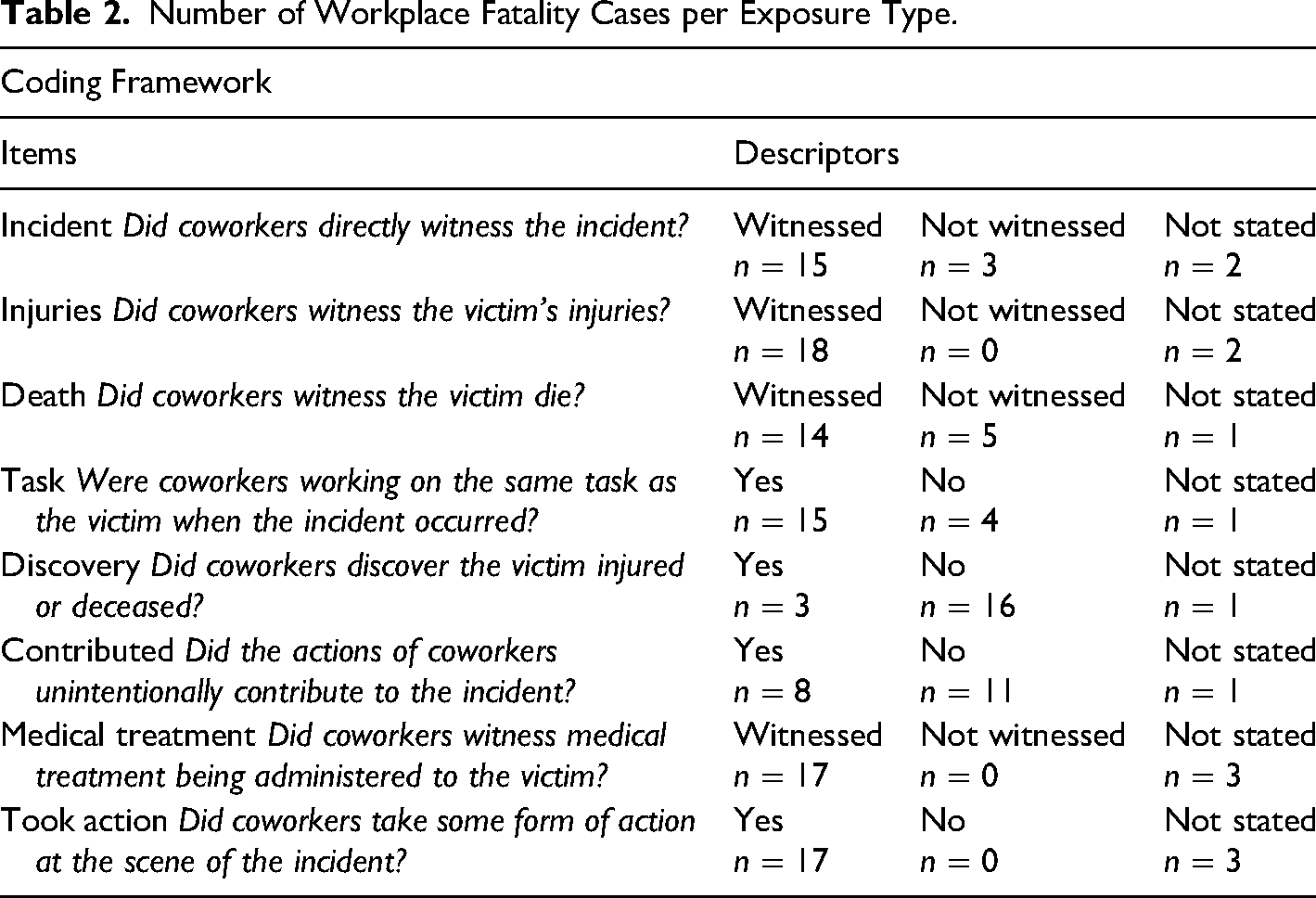
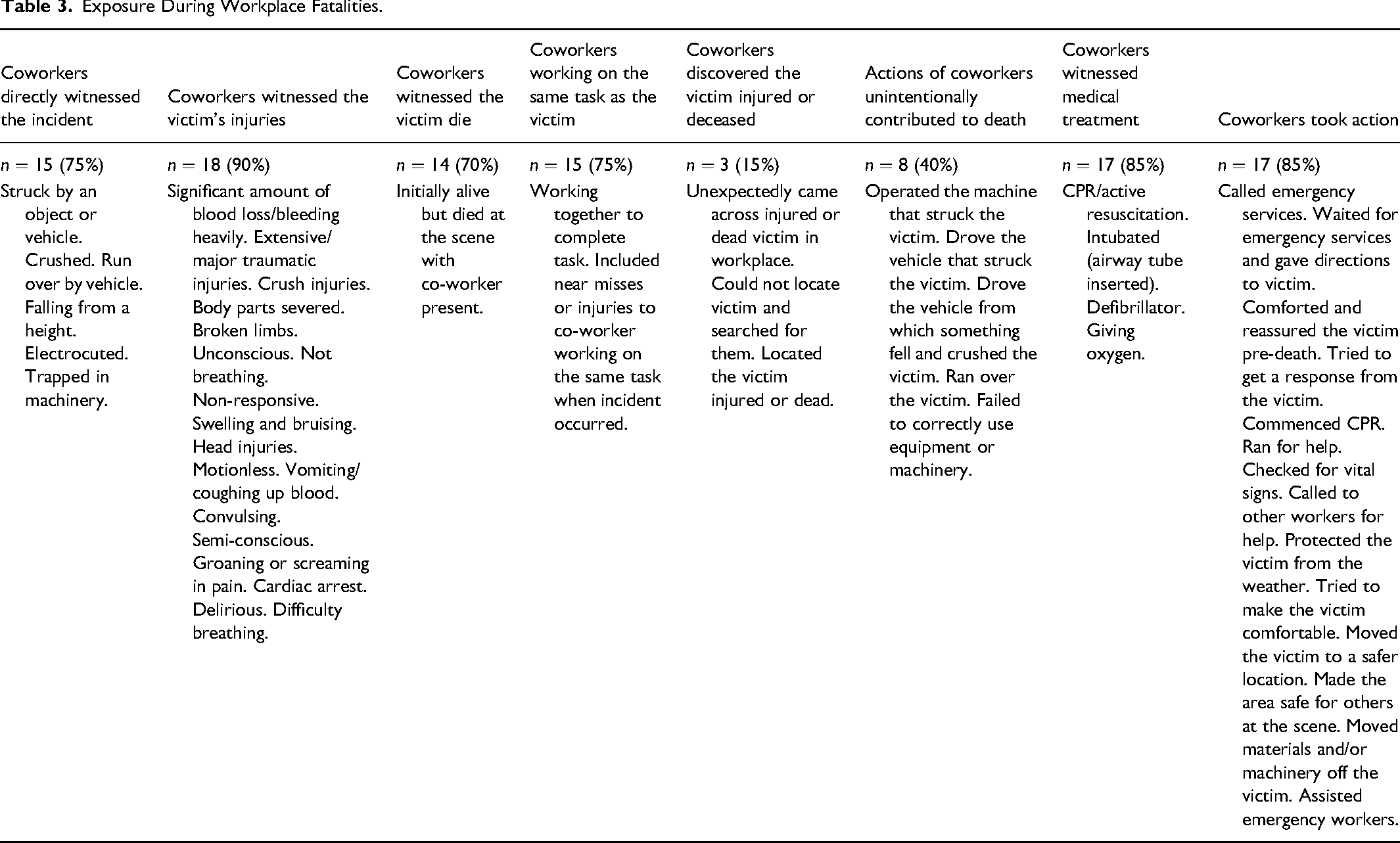
Content analysis was conducted to code and categorize the data. Clear coding guidelines were established by the research team before researchers coded the data from the court documents. Data about exposure were extracted and coded within a framework (Table 2). The data were then categorized under the headings of the coding framework to provide a detailed view of the exposures encountered by coworkers (Table 3). This coding and categorization was reviewed regularly in meetings and in cases of disagreement, differing interpretations were discussed before the final results were decided upon.
Where data about injuries or type of death were highly specific or uncommon, data were omitted from the results to prevent the identification of people or cases. Therefore, some results about exposure were incomplete to ensure that de-identification was achieved. No data about trauma responses were omitted.
To understand the extent of impact, the researchers used Carlson and Dalenberg's (2000) conceptual framework for the impact of traumatic experiences. The data extracted about trauma responses were categorized as peritraumatic responses, posttraumatic responses, and secondary or associated responses to the trauma.
Peritraumatic responses are trauma responses experienced by coworkers during an incident. These responses were categorized as flight, fight, or freeze. Posttraumatic responses are symptoms that persist beyond the initial response to a traumatic event. According to this conceptual framework, posttraumatic responses include re-experiencing and avoidance symptoms across cognitive, affective, behavioral, and physiological modes (Carlson & Dalenberg, 2000). Table 1 explains how posttraumatic responses identified in the court documents were coded according to this framework.
Coding of Posttraumatic Responses Based on the Conceptual Framework for the Impact of Traumatic Experiences (Carlson & Dalenberg, 2000).
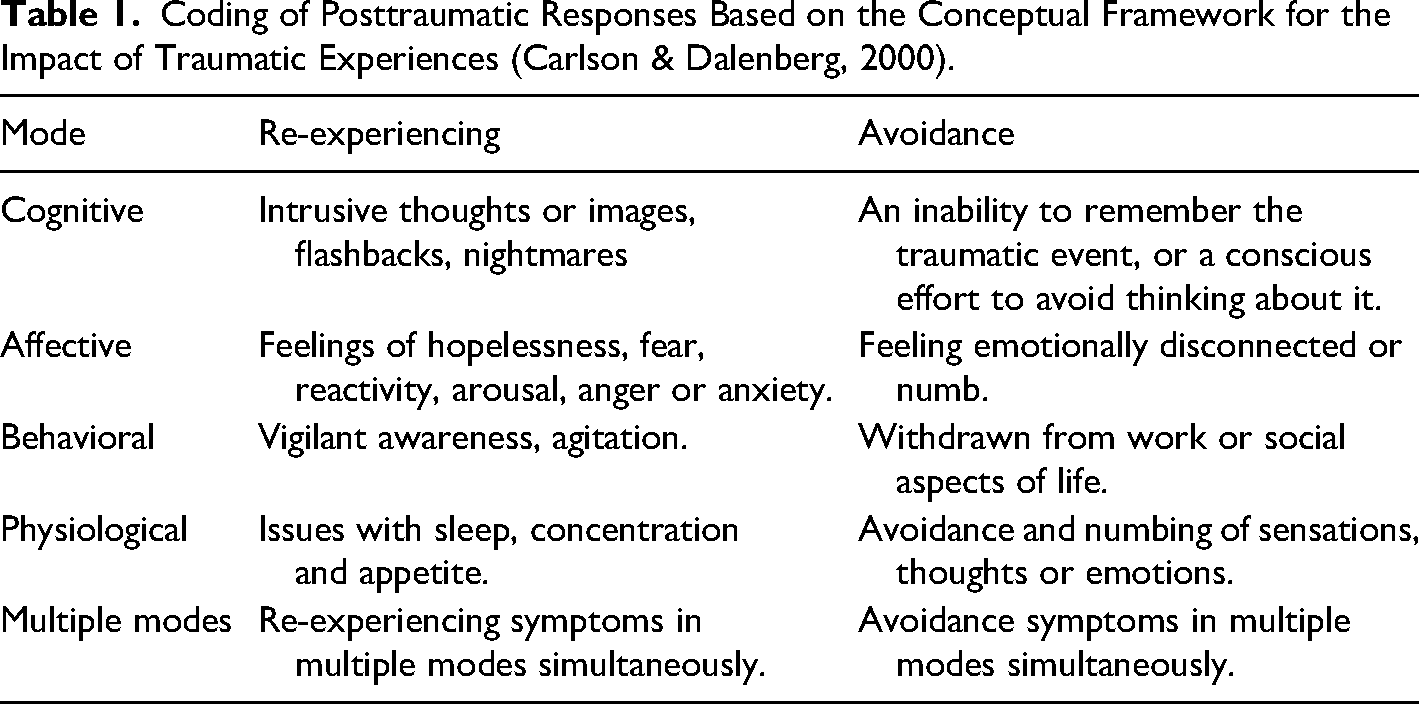
The data were categorized accordingly, with some data identified as belonging to more than one mode. Some responses proved difficult to categorize because there was insufficient information in the documents to determine whether the response showed re-experiencing or avoidance. These are highlighted with asterisks and appear in both categories.
Secondary or associated responses to trauma include depression, aggression, substance abuse, physical illness, low self-esteem, identity confusion, difficulties in interpersonal relationships, guilt, and shame (Carlson & Dalenberg, 2000). Secondary or associated responses were found in documents from criminal courts where cases may take several years to progress from the time of the incident to conclusion.
Ethics and Data Availability
The documents used in this study contained highly sensitive and confidential information. As such, strict human ethics approval processes were undertaken in accordance with the National Statement on Ethical Conduct in Human Research (National Health and Medical Research Council and Universities Australia, 2023). Approval for this study was obtained by Monash University Human Research Ethics Committee, The Department of Justice and Community Safety Human Research Ethics Committee and the Coroners Court Research Committee. Data for this study are not available due to the potential for identification of people or cases, and the requirement to abide by the conditions stipulated by these ethics’ committees including that the raw data is to be accessed only by the research members named in the approvals.
Results
Victims and Coworkers
All workplace fatality victims in the 20 cases were male, as were all coworkers mentioned in the court documents.
Exposure During a Workplace Fatality
Documents from criminal and coronial courts identified coworkers’ experiences when workplace fatalities occurred. Many workers witnessed the extensive traumatic injuries of their coworker. They observed medical interventions, such as the use of defibrillators and cardiopulmonary resuscitation (CPR), with some workers attempting CPR themselves before the arrival of paramedics. Some coworkers comforted and reassured the victim pre-death, while in 70% of cases, coworkers witnessed the victim die. In 75% of the cases, coworkers and the victim were working on the same task, with some of those coworkers also injured or involved in a “near miss.” In 40% of cases, the actions of a coworker contributed to the death of the victim. The incidents included vehicle-related fatalities and failure to correctly use equipment or machinery.
Table 2 provides an overview of these findings, while Table 3 provides a detailed view of the exposures encountered by coworkers.
Number of Workplace Fatality Cases per Exposure Type.
Exposure During Workplace Fatalities.
Trauma Responses Following a Workplace Fatality Incident
This study demonstrates that when a workplace fatality occurs, the trauma responses in coworkers are significant, with some being severe enough to adversely impact their lives.
The court documents described how coworkers experienced flight, fight and freeze peritraumatic responses during the incident. Flight responses included panicking, feeling terrified, agitated and frantic. Some coworkers experienced fight responses and screamed, yelled, or were visibly crying, very emotional and distraught. Some coworkers froze not knowing where to look, what to do or where to go. They felt powerless and some could not speak, walk, or move.
Posttraumatic responses were persistent trauma responses identified in the court documents and were categorized as re-experiencing symptoms and avoidance symptoms. Both categories included cognitive, affective, behavioral, and physiological responses. Following a workplace fatality, some coworkers experienced persistent re-experiencing symptoms such as re-living the experience (cognitive), feeling distressed by the memories of the victim's death (affective and cognitive), and having a vigilant awareness (behavioral). Some coworkers experienced persistent avoidance symptoms such as being unable to recall what happened (cognitive), having lost interest in work (affective), and ceasing to work or socially withdrawing (behavioral).
Due to insufficient information, some trauma responses could have been categorized as re-experiencing symptoms or avoidance symptoms, and so have been listed as both. For example, a coworker may have “issues with alcohol” because they use alcohol to numb the impact of flashbacks (a re-experiencing symptom), or they may use alcohol as a way to avoid the feelings associated with the trauma (an avoidance symptom).
A judge makes sentencing remarks at the conclusion of the criminal process, which can be several years after the incident. Some sentencing remarks included summaries of evidence given by coworkers in court, as well as coworkers’ victim impact statements. Information about secondary or associated responses to trauma was found in these documents. For these 20 cases, there was a mean of 34 months between the incident and sentencing and these data show that some coworkers developed depression, posttraumatic stress disorder (PTSD), adjustment disorder, anxiety disorder, and suicidal ideation during this time. Some coworkers separated from their partners, while others commented on the strain on their marriage, family life, and social life. Trauma responses are indicated according to the conceptual framework for the impact of traumatic experiences in Figure 1.
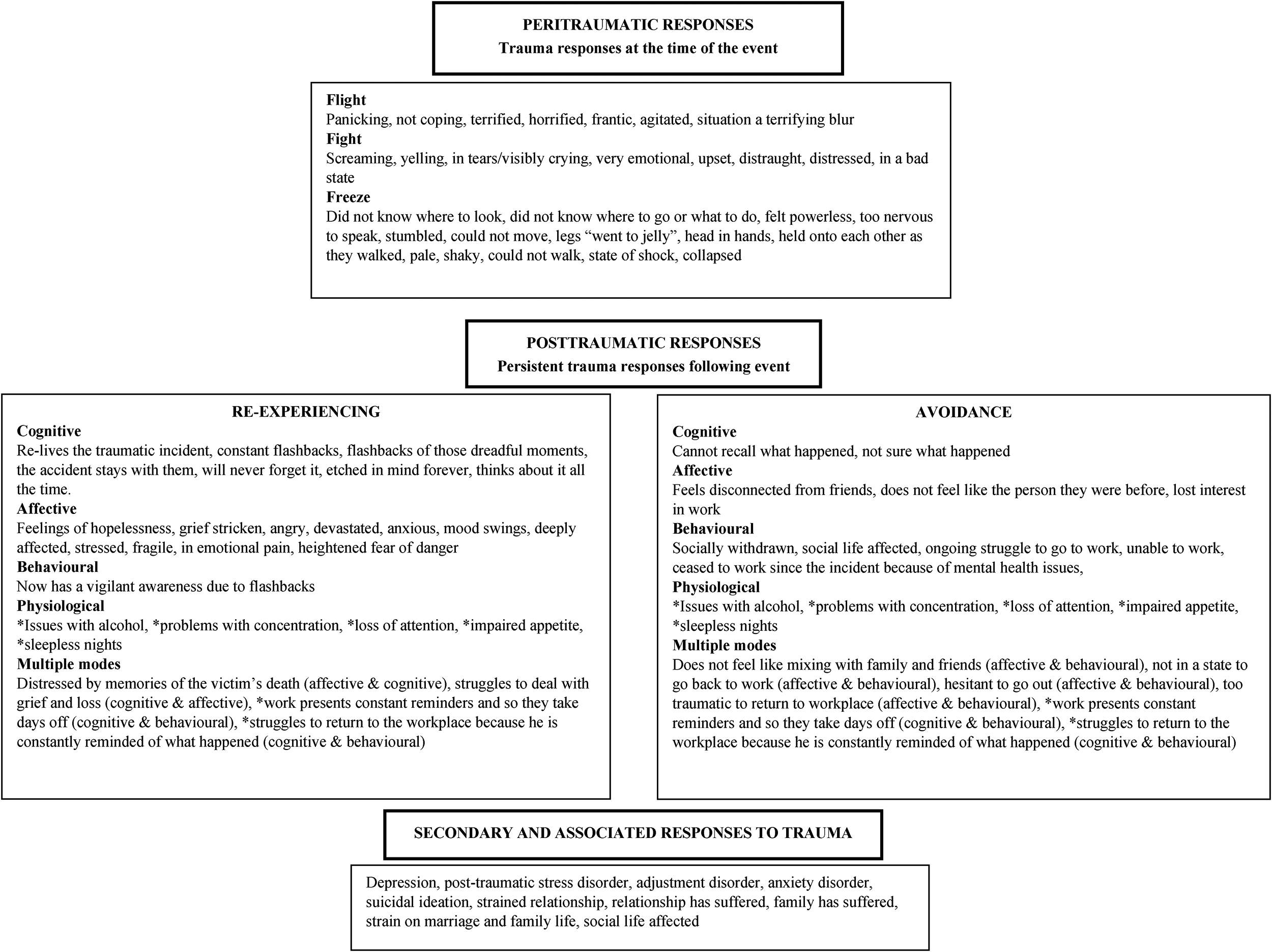
Trauma responses to workplace fatalities.
Discussion
This retrospective case analysis of documentation from criminal and coronial courts, aimed to examine coworkers’ exposure during workplace fatalities. Notably, this study found that coworkers are exposed to major, traumatic experiences when workplace fatalities occur, and their immediate and long-term impacts can be significant and debilitating.
All workplace fatality victims in the 20 cases were male, as were all coworkers mentioned in the court documents. Ethics approval was granted only for these 20 cases, and therefore selection was not based on diversity of age, sex, gender, racial identity, ethnicity, immigration history, or socioeconomic status.
Workplace Fatalities are Traumatic
The Diagnostic and Statistical Manual of Mental Disorders: DSM-5-TR defines an event as traumatic if it involves actual or threatened death, including witnessing unnatural death (American Psychiatric Association, 2022). As previously mentioned, the conceptual framework for the impact of traumatic experiences theorizes that an event must encompass three essential elements to qualify as traumatic: a lack of control over the event, perception that the event is a highly negative experience, and suddenness (Carlson & Dalenberg, 2000). Workplace fatalities meet the criteria of both the DSM-5-TR and the conceptual framework for the impact of traumatic experiences. These sudden and unexpected deaths are perceived by coworkers as highly negative experiences that they had little control over; therefore, they can be considered traumatic events.
Trauma Responses
This study established that coworkers may exhibit active or passive peritraumatic responses to workplace fatalities. According to this study's data sources, 85% of coworkers actively responded by taking action when the incidents occurred, including calling emergency services, providing comfort and reassurance to the victim before death, checking for vital signs, commencing CPR, moving the victim to a safer location, and, moving materials and/or machinery off the victim. When people take action during a traumatic event, they may experience a sense of detachment and disconnection, like being on “auto-pilot” (Lewis, 2012). This peritraumatic dissociation distances a person from the traumatic event and helps them function during the situation (Carlson & Dalenberg, 2000; Lewis, 2012). Additionally, if a person has a sense of purpose or responsibility during a traumatic incident, it may act as a protective factor during the trauma exposure (Shalev & Barbano, 2019).
For other people at the scene of a traumatic incident, they may be unable to respond or take action, which has been categorized as a peritraumatic freeze response. Coworkers who respond this way may later report feelings of guilt, humiliation, shame and inadequacy (Lewis, 2012), with events eliciting such feelings being linked to a higher likelihood of a future secondary or associated trauma response of PTSD (Shalev & Barbano, 2019).
The conceptual framework for the impact of traumatic experiences delineates posttraumatic responses such as re-experiencing and avoidance. Re-experiencing commonly involves recurrent, involuntary, and intrusive recollections of the event, whereas avoidance means persistently avoiding stimuli associated with the trauma (American Psychiatric Association, 2022). The data in this study confirm that coworkers who have experienced workplace fatalities respond in these ways, including experiencing flashbacks, being distressed by memories of the victim's death, and constantly thinking about the incident, as well as exhibiting avoidance symptoms, such as being unable to recall what happened during the incident, social withdrawal, and being unable to return to work. The long-term impacts of trauma are far-reaching and significant, affecting individuals cognitively, affectively, behaviorally, and physiologically. For some, these impacts can lead to secondary and associated responses, as identified in this study. Data in court documents show that some coworkers developed depression, PTSD, adjustment disorder, anxiety disorder, suicidal ideation, and breakdowns in relationships.
A group particularly at risk of significant adverse posttraumatic outcomes is workers who unintentionally cause the incident and, therefore, the death of their coworker (Rassool & Nel, 2012). Such deaths occurred in 40% of the cases and were vehicle-related incidents or involved workers failing to correctly use equipment or machinery. It has been established that exposure to workplace fatalities is traumatic. However, this additional element magnifies the impact, with broader research showing that considerable and long-lasting trauma is associated with feelings of responsibility for the death of another person (Rassool & Nel, 2012). It is an event that is unlike other traumatic situations because the responsibility for the death sits with the person themselves, and can result in posttraumatic guilt and shame (Rassool & Nel, 2012).
Factors That Influence Variations in Response to Trauma
This conceptual framework outlines five factors that explain variations in responses to trauma, including biological factors; an individual's developmental level at the time of the trauma; severity of the trauma; the social context of the individual; and life events that occur before and after the trauma (Carlson & Dalenberg, 2000). It is not possible to ascertain from the court documents the extent to which all of these factors impacted the trauma responses of the coworkers however, it has been identified that “the severity of trauma has the greatest influence on the severity of an individual's response to trauma” (Carlson & Dalenberg, 2000, p. 18). Other studies have also identified trauma severity as contributing to a more severe trauma response (Brewin et al., 2000), a factor is that is particularly pertinent in this study. The information extracted about exposure showed that coworkers witnessed severely traumatic incidents, including extensive injuries, medical treatment, and watching colleagues die. Others, as we have highlighted, unintentionally caused the death of their coworker. The responses identified in this study confirm that workplace fatalities can result in severe trauma responses.
Protective Factors to Reduce Further Harm
Some emotional disequilibria are expected in the immediate aftermath of a traumatic event, which is considered a normal response (Forbes et al., 2007). The data from this study identified emotional disequilibria in the peritraumatic responses shown by coworkers. The data also indicated significant posttraumatic and secondary or associated trauma responses. However, such adverse psychological symptoms are not inevitable, and some people rapidly recover from the impact of trauma and initial disequilibrium (Lee, 2019). Of particular relevance to this issue is the factor identified in the conceptual framework for the impact of traumatic experiences as “the social context of the individual” (Carlson & Dalenberg, 2000) with perceptions of social support operating as a factor in buffering the effects of trauma (Lee, 2019). The perception of support, both before and after a traumatic experience, may strengthen or weaken an individual's ability to cope with the trauma and influence their trauma response (Carlson & Dalenberg, 2000). The provision of information, comfort, and emotional and instrumental support at the time of the incident and immediately after it, may promote recovery and reduce severe physiological distress (Forbes et al., 2011). Research has identified that group cohesion acts as a protective factor (Shalev & Barbano, 2019).
The court documents used in this study did not provide any information about the support these coworkers received at the time of the incident or afterward. Therefore, we cannot ascertain the extent to which they may have been protected from the impact of the traumatic event. Further research may confirm whether post-incident social support for coworkers minimizes the severity of trauma responses. If such a link can be established, such research could improve policy development and practices to minimize the development of long-lasting adverse psychological symptoms in this group.
Public Health and Organizational Aspects of Workplace Fatalities
This study reveals that trauma from exposure to a workplace fatality results in significant psychological, social, and work-related costs for coworkers. The findings suggest that while the trauma directly affects the individual, it may extend to their relationships, workplaces, and the broader economy through absenteeism. These negative ripple effects make workplace fatalities a significant public health concern. To fully understand this public health issue and explore preventive measures, further research is essential.
The organizational aspects of workplace fatalities, including how employers manage the situation post-incident, recognize the needs of employees, and provide support to this group, were not derived from this data. This is an important avenue for further investigation and could offer valuable insights into improving organizational responses to workplace deaths.
Strengths and Limitations
The victims in all 20 cases were male, as were all coworkers identified in the court documents. Therefore, we do not know if the findings identified gender-specific trauma responses or if similar results would have been found if the coworkers were female. Additionally, this is a small sample size limited to cases from one state, and this may impact extrapolation of findings. Data sources, such as police reports, can be considered unbiased. However, victim impact statements from coworkers may be biased by portraying the effects of a workplace fatality more severely, potentially to hold the employer accountable for safety issues leading to the death.
Despite these limitations, this study provides important information about the exposure and impact experienced by coworkers when workplace fatalities occur and highlights the need for further research in this area.
Conclusion
This study showed that workplace fatalities significantly affect coworkers. Drawing on Carlson and Dalenberg's (2000) conceptual framework for the impact of traumatic experiences, it was found that some coworkers experienced peritraumatic responses at the time of the event and that these responses are considered a normal reaction to a highly traumatic situation (Forbes et al., 2007).
Furthermore, some coworkers experienced posttraumatic responses which can be categorized as re-experiencing and avoidance symptoms, including reliving the incident, feelings of hopelessness, issues with alcohol, sleep and concentration problems, and a lack of desire to be with family and friends. These responses are categorized as cognitive, affective, behavioral, or physiological and were severe enough to adversely affect people's lives.
This study also discovered that some coworkers developed secondary or associated symptoms as a result of re-experiencing and avoidance issues, which can have a long-lasting, significant, and debilitating impact on them, with symptoms including depression, PTSD, adjustment disorder, anxiety disorder, suicidal ideation, and relationship breakdowns.
Support after a traumatic experience may strengthen one's ability to cope with the trauma and influence their trauma response (Carlson & Dalenberg, 2000; Forbes et al., 2007; Lee, 2019; van Buschbach et al., 2020). In this study, court documents yielded no information about the support offered to coworkers; therefore, determining the level of psychological protection after the traumatic event was challenging. Further research is needed to investigate the potential correlation between post-incident social support for coworkers and the mitigation of severe trauma responses. Such research could improve policy development and practices to minimize the development of long-lasting adverse psychological symptoms in this group.
Footnotes
Availability of Data
The documents used in this study contained highly sensitive and confidential information. As such, strict human ethics approval processes were undertaken in accordance with the National Statement on Ethical Conduct in Human Research. Data for this study are not available due to the potential for identification of people or cases, and the requirement to abide by the conditions stipulated by the above Ethics’ Committees, including that the raw data is to be accessed only by the research members named in the approvals.
Consent to Participate
Informed consent to participate has been waived by the above Ethics’ Committees.
Declaration of Conflicting Interests
The authors declared no potential conflicts of interest with respect to the research, authorship, and/or publication of this article.
Ethics Approval
The study was approved by Monash University Human Research Ethics Committee (Project ID 26118), The Department of Justice and Community Safety Human Research Ethics Committee (Project CF/21/15910) and the Coroners Court Research Committee (CCOV Reference RC 381).
Funding
The authors received no financial support for the research, authorship, and/or publication of this article.

Prior Dissemination of the Data or Findings
This manuscript has not been published or presented elsewhere in part or in entirety and is not under consideration by another journal.