



Abstract
The study was conducted to ascertain the role of health and safety practices (HSPs) in improving the performance of the firm and safety performance. The study was conducted in Pakistan, a developing country from South Asia. This study collected data from various small and medium enterprises (SMEs) located in Karachi and Sindh, Pakistan. Data were analyzed through statistical packages for scientific solutions. The feasibility of survey data was primarily tested with the help of Cronbach’s alpha coefficient, .80, which shows the construct items to have interitem consistency. Subsequently, descriptive statistics (mean and standard deviation) and inferential statistic techniques (Pearson correlation coefficient of significant [two-tailed] and simple regression) were used. The study findings reveal that HSPs have a significant effect on the performance of SMEs and safety performance. Firms in developing countries need to pay more attention to HSPs so that the positive benefits of increased SME performance and safety performance can be attained. The implications are discussed in detail.
Keywords
Introduction
The world is facing a higher rate of unemployment in the past few years. The International Labor Organization (ILO, 1978) shows the statistics that unemployment has increased from 5.6 million to 193.6 million in 2017 to 2019. According to the forecasting by ILO and United Nations, if the current trend is considered a harbinger of the future, the unemployment figure will touch 470 million by 2030. With these staggering numbers, the situation is getting more dismal over time. For taking stock of the situation and chalking out future strategies, the United Nations organized a conference in 2016. The conference attended by 155 associates came up with 17 sustainable development goals (SDGs). The goals envisaged enhanced employment through innovation. Furthermore, SDGs significantly depend upon encouraging strategies that create a competitive environment for jobs and inspire entrepreneurship. Taking these goals into account, small and medium enterprises (SMEs) play a significant role in improving individual lives in developing countries. Extant literature found that SDGs are positively related to the performance of the organization.
In today’s world, an abrupt increase in industrialization contributed to the global economy by adding thousands of employment opportunities and is a prominent meter of the state’s economic growth (Marconi et al., 2016). However, opponents believe that massive industrialization is responsible for the global depletion of natural resources, harming the global environment, and poor working conditions in third-world countries. In addition, business organizations are working on the philosophies to maximize profits at any cost, especially in developing countries’ contexts where the rate of corruption is high and ethical standards are not strictly followed. Scholars and practitioners agree SMEs in developing countries are suitable examples where employers are least concerned about the SDGs and ethical practices. For instance, in developing countries, SMEs, the workforce is recruited through third-party contractors and provided with poor working conditions. Therefore, in recent years, several unfortunate accidents or work-related diseases have occurred, resulting in human and financial loss for SMEs. Pakistan is also a developing country, and millions of SMEs are registered with Federal and provincial bodies. These bodies have questionable performance. In 2012, a bad incident occurred in a textile manufacturing plant that killed more than 300 workers. Scholars found that the growth of SMEs guaranteed the country’s gross domestic product. Thus, role of SMEs is vital in achieving the SDGs, such as decline in poverty, zero hunger, and sustainable cities and communities. All over the world, the ILO and the United Nations are working hard to stimulate the management of SMEs through various legislation. Past research suggests that SMEs are compromising on the standards and pay in the developing countries context.
According to the SME development authority (SMEDA) in Pakistan, SMEs in total contributed to 90% of national-level gross domestic product. For instance, the total percentage of contribution varies sector-wise, such as 80% to employment, 30% the country’s export, and 40% from consumption on the gross domestic product (Santos et al., 2013). These percentages demonstrated that SMEs play a significant role in improving the economy, prosperity, and relational and human capital, helping in declining the country’s unemployment rate (Varianou-Mikellidou et al., 2019). Unfortunately, due to various social factors and poor policy implementation, we observed 90 to 95% failure rate in Pakistani SMEs (Kersten et al., 2017). As a result, in such a challenging atmosphere, health and safety practices (HSPs) have been ignored and consequently become barriers to attaining sustainable growth of SMEs. Consequently, SMEs are compromising on the given standards and less concerned about implementing HSPs in Pakistan, which is an alarming situation (Khan et al., 2019). The recent survey conducted by ILOs described that approximately 317 million individuals have been facing occupational accidents, of which 6,300 individuals got killed (Singh et al., 2019). Therefore, the HSPs working group is formed by Global Reporting Initiative, in its G4 progress, to encourage sustainable growth and organization transparency.
There is national regulation of health and safety (H&S) industries in Pakistan. The HSP laws in Pakistan generally cover the conventional industrial sector (Ghayur, 2009). In Pakistan, the prevalence of occupational ailments and damages is high because many workers are consistently exposed to H&S hazards. The amended law related to HSPs, named as The Sindh Occupation Safety and Health Act 2017, requires the employer to ensure the safety of the employees and volunteers from all types of hazards at the job (Point 4 of the act) and to provide the employees with the protective environment so that they can be safe from injuries (Points 4a, 4b, 4c, 4d, and 4h of the act). Moreover, Points 4j and 4k of the act make the employer liable for providing medical aid and protection from fire and other disasters. Poor working conditions for the SMEs are affecting the H&S of workers. SMEs data on HSPs are not accessible in Pakistan because most of the accidents are not disclosed to the Labor Department. The poor implementation of HSPs in Pakistan is a big challenge that must be taken into account and linked to the consolidation of the performance of SMEs. Moreover, workers’ health is associated with several coping approaches in response to challenging circumstances, such as occupational injuries, accidents and diseases, occupational hazards, unavailability of Personal Protective Equipment (PPE), First Aid Medical Facility, limited training opportunities, unhealthy environment, and weak supervision. Some other factors such as external and internal politics, intrinsic and extrinsic drivers, and the employees’ social contributions can also affect the performance of HSPs and SMEs.
The disciplines of HSPs vary from country to country, but occupational injuries are more common in developing countries. Moreover, the number of occupational deaths is also higher in developing countries than in developed countries. Most SMEs target to get maximum productivity from their workforce at the cost of poor H&S conditions. In recent years, H&S issues and challenges for SMEs have become a hot issue among policymakers, researchers, and nonprofit organizations (de Souza Moreira et al., 2016). Pakistani SMEs are playing a major role in eradicating poverty and directly or indirectly generating jobs. As designated by the Government of Pakistan in 2018, Pakistan is the ninth populated country globally and contains 54.9 million total workforces. Every year, 41 workers of 1,000 are subject to accidents and injuries (Anwar et al., 2019). Every year 7,444 lethal accidents and 5,680,770 occupational accidents are reported in Pakistan, which reduces productivity and a minimum of 3 days the workers cannot do work as shown in Figure 1. Yet, the accident and fatality rates per 100,000 workforces are around 16,000 and 20.7, respectively (Basu & Basu, 2017). It has been noted that in some SMEs, occupational injuries and death rates are higher compared with larger enterprises.

Industry turnover from 2016 to 2018.
In the last two decades, extant literature has extensively studied the relationship between H&S and the performance of SMEs’. In contrast, occupational injuries, accidents, and diseases are continuously increasing at the workplace as shown in Figure 2. Halkos and Zisiadou (2019) reported that approximately 2.3 million workers had died due to occupational hazards and workplace accidents in SMEs yearly. The better working conditions and performance of SMEs may enhance the policy formulation and accomplishment of HSP management at the workplace (Hofaidhllaoui et al., 2014). The HSPs contribute an active part in achieving the desired progress, sustainable financial progress, and long-term performance of SMEs in a healthy atmosphere. Thus, this study hypothesized that better HSPs might be significantly positively related to the performance of SMEs in the long run. However, in developing countries, there is a need to conduct the study. According to the Pakistani statistics division, SMEs are considered one of the main factors contributing to the nation’s overall gross domestic product (Hyder & Lussier, 2016). To achieve objectives such as high economic growth and living standards, there is a need to focus on safety policy formulation and implementation. This study’s primary objective is to examine the relationship between HSPs and overall performance in the developing country context.
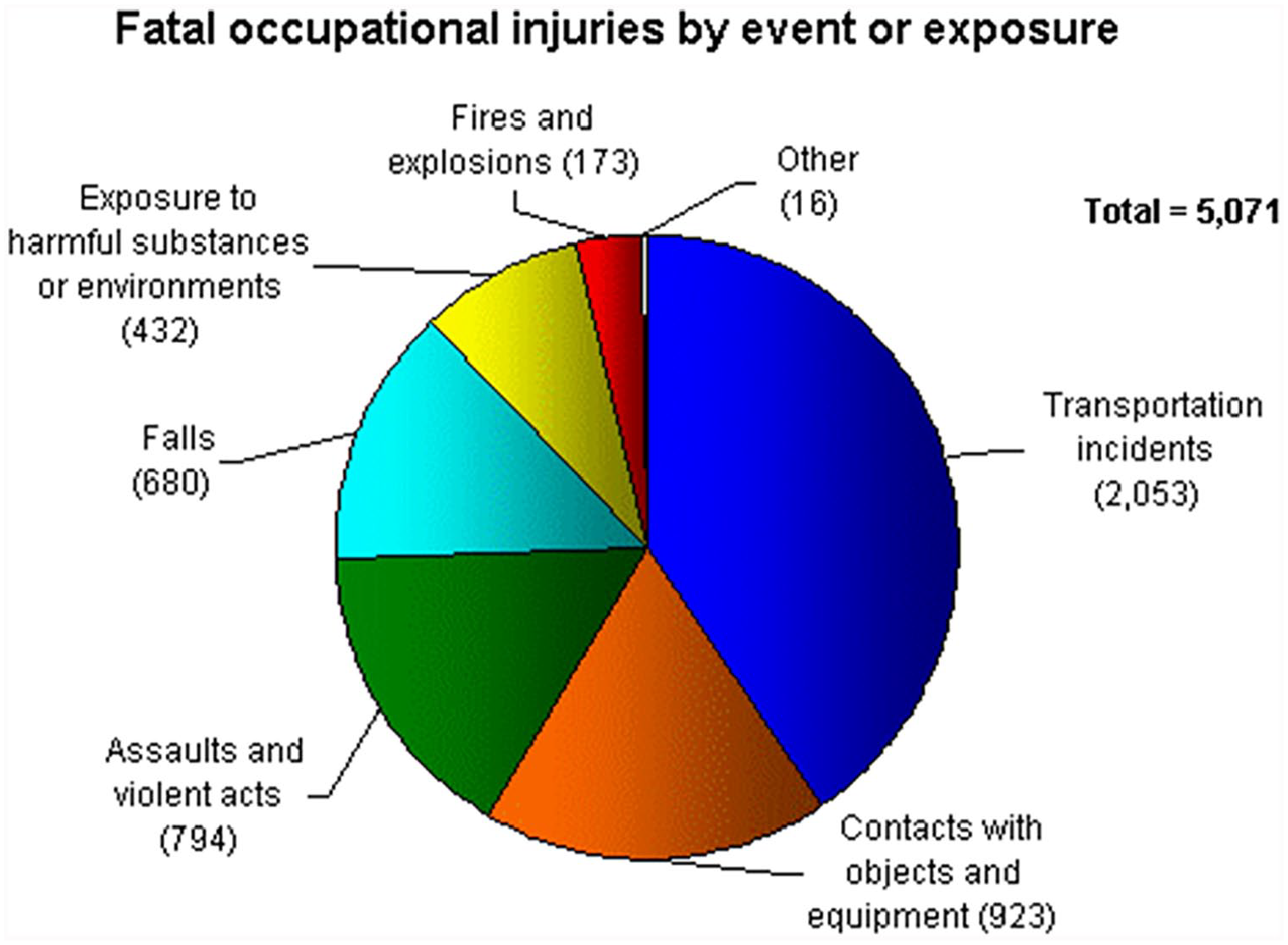
Average occupational injuries, accidents, and diseases per annum.
Research Model and Hypothesis Development
Scholars found that working environments can be enriched with the actual implementation of HSPs at the workplace. H&S management is associated with the industrialization that is implemented by upper level management. The implementation of HSPs declines injuries and work-related accidents among the workers (Jacinto et al., 2009). Extant literature confirmed that HSPs bring a safe work environment for workers, reducing medical treatment costs, unemployment rates, and life miseries for employees. This study confirmed that proper implementation of H&S standards is positively related to the gross domestic product, improves the profitability of the firms, and declines the controlling cost. Jilcha and Kitaw (2017) found that H&S conditions can reduce workplace surcharges.
Moreover, if the SMEs implement poor H&S standards, it increases the burden in terms of higher compensation and loss of productivity. Jensen and Stonecash (2005) suggest that the primary motive for the disinclination of industries to be more problematic is due to lack of training, assets, and skilled workers. In contrast, Ali et al. (2019) suggest that good HSPs can play a vital role in enhancing the functions of SMEs and maximizing production. The information asymmetry between workers and the occupational H&S hazards is more significant than that between workers and occupational HSPs. This asymmetry provides the industries with more opportunities to conceal their problems in dealing with the performance of SMEs. Without professional means to implement the operation of industries, their capability to decimate H&S-associated risks is compromised.
The higher performance of workers’ involvement by the industries enhances the public opinion of the workers’ issues concerning the industries (Guimarães et al., 2018). It boosts the SME managers’ inducement to develop their dimensions of HSPs to comply with environment sustainability desires, SDGs, and ward off a destructive response (Siegel et al., 2019). Empirically, Lyon and Maxwell (2007) narrated improved transparency and voluntary collaboration with the worker. Insider and outsiders’ evidence asymmetry inspires passivity with workers’ sustainability supplies and discourages executive rent removal. Schweitzer et al. (2006) reported that the improved worker’s involvement helps the SMEs implement a more long-term perception to short-term adaptable behavior. The higher the expectation, the higher is the motivation of the workers to invest in work commitment. Truitt (2011) suggested that the worker’s involvement determines the level and gravity of industries’ internal environment, with minor observable sectors for the worker’s training to delay longer to maintain relations with other industrial competitors. Thus, we claim that HSPs and training more workers decrease the injuries/hazards at the workplace, which improves the productivity demand from a vendor for responsible economic behavior and returns to industries from involving in such action. This influences SMEs to be more dynamic in propagating sustainability to their workers’ H&S measures. In light of the abovementioned discussion, the following hypothesis can be formed:
Research Methodology
Research Plan
This study focuses on the potential elements of HSPs on the performance of SMEs. This study limited itself to the Karachi Industrial Zone for data collection because it represents the whole country’s SMEs. This area is a house of about 4,500 enterprises. We divided the SMEs as per the rules of SMEDA. The data were collected through a self-administered survey. In addition, the Likert-type, scale-based questionnaire was developed for data analysis. We used a 5-point Likert-type scale in this study ranging from 1 = strongly disagree to 5 = strongly agree. A final questionnaire was shared with SME workers. Scholars concur that the survey technique is appropriate to collect data in quantitative research. Initially, a total of 140 questionnaires were distributed among the target respondents of which 12 (8.5%) questionnaires were denied, 18 (12.8%) questionnaires were partially filled, and the remaining 110 (78.5%) questionnaires were properly filled, as shown in Figure 3. Descriptive statistics such as mean, frequency distribution, and standard deviation were used to describe the data, while data were analyzed by using Statistical Package for Scientific Solutions. The value of Cronbach’s alpha is .80, which indicates that the construct’s items have interitem consistency.

Rate of response.
Results and Discussions
Demographics of the Respondent
Table 1 shows the demographic information of the respondents. For instance, a higher number of respondents, 48 (43.6%), was in the age of 35~45, while 9 (8.2%) of respondents fall under 25. A total of 20 responders falls under the age of 25~35, which accounts for 18.2% of total respondents. Twenty-one respondents fall under the age group of 45~55, which accounts for 19.1% of total respondents. Twelve respondents that account for 10.9% of total respondents are older than 55 years. The majority of the respondents are male, that is, 97 account for 88.2% of the total respondents, while, on the contrary, female respondents are only 13, which is 11.8% of the total respondents. Most of the respondents were married, that is, 81 (73.6%) of total respondents, while 29 (26.4%) were single. The highest percentage, 61 (55.5%), indicates a more significant number of employees have primary-level education, 22 (20.2%) metric qualified, 15 (13.6) were intermediate accomplished, 9 (8.2%) were graduated, while only 3 (2.7%) completed master education as shown in Table 1.
Demographic Characteristics of the Respondent.

Field of Responding SMEs
The employees are categorized according to their job nature in the SMEs as illustrated in Figure 4. We collected data from the various operational departments. Consequently, there are two significant places where a greater number of employees are engaged. It was observed by collecting data that 48 (43.6%) were in production, 18 (16.4%) were in maintenance, 14 (12.7%) were in the workshop, 10 (9.1%) were in engineering, 8 (7.3%) were in the administration, 5 (4.5%) were in transportation, and 7 (6.4%) were in other departments.

Respondents working in various departments.
HSPs in SMEs
Respondents were provided questionnaires and asked about the presence of HSPs exercising at the workplace. The mean (M) and standard deviation (SD) were used to analyze the data. According to statistical analysis, the mean value of working without PPE, M = 4.91 and SD = 0.29, as shown in Table 2. The mean value of this element is near 5. It means that respondents strongly agreed that they were working without PPE at the workplace. PPE is the backbone of the industry. According to the study of Choudhry and Fang (2008), the Health safety Executive stated that PPE promotes better work performance. Torp et al. (2005) have found that lack of PPE at the workplace brings detrimental effects on the lives of workers.
Health and Safety Practices (HSPs).

Note. HSP = health and safety practices; PPE = personal protective equipment.
The statistical results for health safety policy, availability of first aid kits, and lack of safety culture are also mentioned in Table 2. The value of these variables is around 2, which shows that the majority of the respondents disagreed that these measures are present in their industry. Fernández-Muñiz et al. (2009) have illustrated that accidents can be prevented by health safety actions and policies, which will be favorable to both enterprises and workers. According to the that, first aid medical facility means to deliver the medical facility immediately to the place of incident or to injured workers while working at the workplace. These facilities reduce the medical treatment costs, unemployment rate, and life miseries for employees as well as increase the performance of SMEs, the worker’s confidence, and morale. First aid medical facility provides medical services in time, which saves the workers from extremely severe injury.
Statistical values for accident prevention training provided safety equipment, the declaration of accident record, training to workers, and proper illumination are also depicted in Table 3. The average value of these variables is close to 2, which prescribes that most of the respondents disagree that these measures are present at their company. Lawrence and Robinson (2007) have illustrated that occupational accidents disturb the production of SMEs and spoil the human capital. Economic potential is the backbone of any enterprise. If accidents deteriorate human health and equipment, then it will damage the economic power and working days. Accident prevention training measures reduce the unexpected and undesirable accident rate, thus boosting the productivity and performance of SMEs. The performance of workers has been reduced and severely influenced by their achievement and performance.
Performance of the Organization.

The mean value of proper illumination is M = 4.39 with SD = 0.85 as shown in Table 2. Here, the value is near 4, indicating that respondents agreed that this factor was available to a great extent. Illumination is essential for providing better quality. Proper illumination prevents workers from many diseases, such as eyestrain, headaches, and migraines. Arbury et al. (2016) stated that the standard maximum light should be 30 foot-candles (FC) at the industry working place. Katsuro et al. (2010) have specified that companies have no accident records of injuries and deaths due to the absence of proper illumination. Statistical value for “training of workers” was M = 4.35 and SD = 0.48, as shown in Table 2. It means the respondents agreed that this factor was taken into proper care in their industry. Gopang et al. (2017) have studied that the proper training increases human capital skills that motivate the workers toward their works and employers’ sustained cost, which is spent on training a fresh employee in case an existing employee is disabled or dies.
Workers Performance Measures
Table 3 shows that statistical values to increase quality were M =4.51 and SD = 0.86. Here, the mean of product quality is near 5, which indicates that the respondents strongly agreed that product quality is increased due to the occupational H&S. The mean (M) value of other variables are close to 4, which indicated those responders agreed that due to safety practices in the workplace, the medical cost is reduced, production is boosted, organization reputation increased, work attitude experiences an uptick, efficiency improves, and finally the hiring and insurance cost reduced.
The Influence of HSPs on the Performance of SMEs
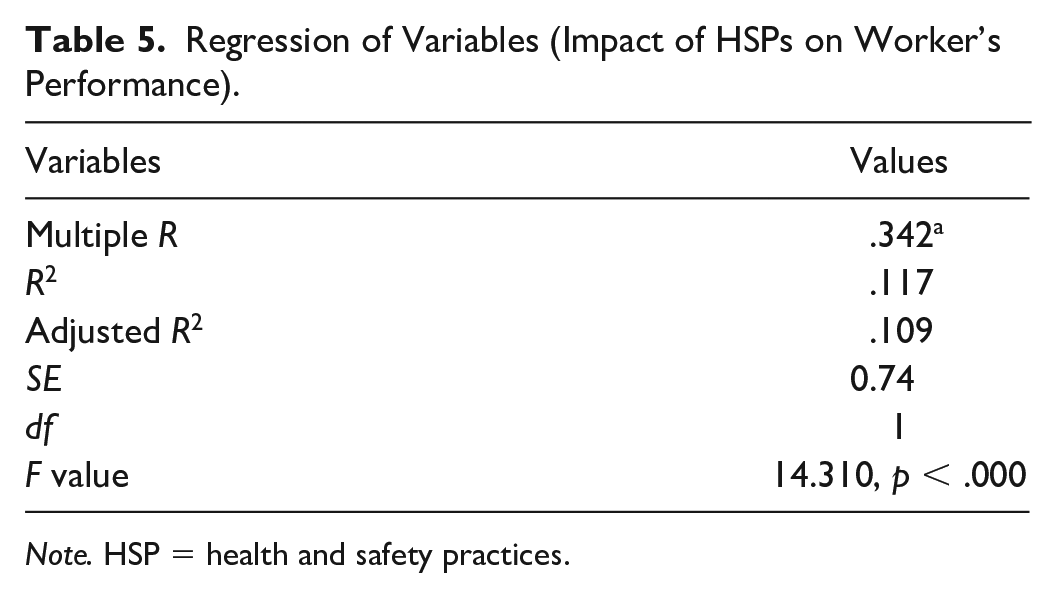
Results of correlation and regression are given in Table 4, and it shows that mean HSPs (forecasters) regressed in contradiction of the overall mean of performance of SMEs. The value of correlation and significance (2-tailed), as given in Table 4 (r = .342, p = .000), show a moderate and direct relationship between HSPs and the performance of SMEs. It illustrates that HSPs are positively affected by the performance of SMEs. Thus, this research corroborates the earlier literature (Fernández-Muñiz et al., 2009; Haas & Yorio, 2019). This research perceived that if a corporation is following HSPs, it affects the performance of SMEs. Table 5 describes the regression value, R2 = .117; it shows that 11% variance in the performance of SMEs is due to these H&S measures. This also emulates that other potential issues such as intrinsic rewards and training and the workers’ internal and external politics may contribute to low SME performance.
Correlations Between HSPs Against the Overall Performance of Workers.

Note. HSP = health and safety practices.
Regression of Variables (Impact of HSPs on Worker’s Performance).
Note. HSP = health and safety practices.
Correlation between HSPs and the performance of SMEs is significant. The result of regression analysis (R2 = .117) reflects that there is an 11% variation in the performance of SMEs due to HSPs. Correctly, this research also observes that SMEs in Pakistan need severe enhancements in terms of H&S measures, that is, external and internal politics, accident anticipation procedures, excess removal system intrinsic and extrinsic drivers, and social contributes of the workers’ consistent medical checkup and protective gears because owners of businesses do not give considerable attention to these essential issues. Therefore, it is suggested that management experts should be more concerned about implementing HSPs.
Conclusion
This research has significantly contributed to the extant literature and explored the relationship between HSPs and the performance of SMEs in Pakistan. There is no proper implementation of H&S laws for the health of the workers, and this is related to the organizational performance in SMEs’ context in developing countries. According to the theory of planned behavior, social factors have a significant influence on individual decisions. SMEs are not well educated, and they only limit themselves to earn short-run profit. The findings of this study help policymakers and SMEs owners realize that strict implementation of H&S laws is positively linked to the organizational performance of SMEs. Our results corroborate with extant literature. This study provides insights to all stakeholders that active implementation of H&S leads to a decline in cost such as injury and insurance cost and motivates organizational workers to perform with an upbeat in their motivation.
Moreover, this research is interesting and timely in the organizational context, where SMEs are badly affected by COVID-19 and bearing huge losses. Past literature suggests that the H&S of SMEs is significantly associated with organizational performance. This study extends the extant knowledge by empirically investigating the relationship between H&S and organizational performance. The result depicts a positive and substantial correlation between predictors and a criterion. The value of the coefficient of multiple correlations (R) between dependent and independent variables is .342. The value of R2 square is .117, which is known as the coefficient of determination, indicating the extent of the real value’s deviation from the expected mean value. The findings indicate that focus on HSPs can affect the performance of SMEs and increase economic growth, employment generation, and accomplish SDGs. In conclusion, that proper HSPs attract, retain, and motivate workers’ health should be embedded in an inclusive work for planning and development policies in SMEs. Continuous research and evaluation will strengthen the knowledge, benefit, and development of HSPs for the performance of SMEs.
Future Research
Pakistan is a developing country, with poor implementation of H&S laws and millions of SMEs workers. There should be potential techniques to implement HSPs for progress in Pakistan. Effective HSPs schemes are multifaceted and comprise long-term, political commitment and sustained effort at all levels. Observing and assessing tools and systems empowering supervision and management volumes, performance management systems that link the performance of SMEs to supported supervision, appraisal, and continued research motivate/train workers to adapt and adjust the organization’s productivity to the changing needs desired for the workplace. This cross-sectional study considers the time and financial constraints, so longitudinal research can also be performed to get a better and in-depth view. Further research is therefore recommended to establish the magnitude and direction of the relationship. Although the relation between HSPs and the performance of SMEs has been established, there is a need to explore the mediating mechanism linking the two. The firm’s reputation and employee motivation can be regarded as two potential mediators in future studies.
Footnotes
Declaration of Conflicting Interests
The author(s) declared no potential conflicts of interest with respect to the research, authorship, and/or publication of this article.
Funding
The author(s) disclosed receipt of the following financial support for the research, authorship, and/or publication of this article: This work has been funded by the China postdoctoral foundation grant # 2020M671235.
