




Abstract
Talisia esculenta is a tree that produces pitomba, a fruit consumed by human beings in several regions of Brazil. The current study reports 3 outbreaks of poisoning by leaves and fruits of T. esculenta affecting sheep and cattle and the experimental reproduction of the disease in sheep. In the first investigated outbreak, sheep ingested the leaves of the plant; another outbreak affected cattle and sheep that ingested leaves and fruits; and in a third outbreak, sheep ingested only the fruits. The animals developed severe nervous signs, but most recovered. Poisoning was reproduced experimentally in 5 sheep by the administration of 30–60 g of leaves/kg body weight and in 2 sheep with doses of 5 and 10 g of seeds/kg body weight, respectively. No significant necropsy or histologic lesions were found.
Introduction
Talisia esculenta (A. St.-Hil.) Radlk (family Sapindaceae) is a 5–15-m-tall tree that produces pitomba (Fig. 1A–D), whose pulp is consumed in several regions of Brazil, especially in the northeast. This tree is native to western Amazonia and is cultivated or grows wild in almost all regions of Brazil. The tree produces edible fruits, which are small drupes with globose, large, oblong seeds, covered by a bittersweet aril ranging from white to transparent when the fruit is mature (Fig. 1D). 6 The tree is also used for shade, and the wood is used mainly for construction inside buildings. 6 Fruit is harvested in March and April, and the fruits, which are sold in markets in northeastern Brazil (Fig. 2), are an important source of income for small farmers in the region. 1 The fruits are also highly sought by birds, which act as seed dispersers. 7 The bark and leaves contain tannin, and the sap is a skin irritant. 2 Talisia esculenta is also used as a medical plant: the seeds are used as antidiarrheal and astringent agents, 13 tea from the seeds is used to treat dehydration, and tea from the leaves is used for backache and for kidney problems. 6 There are no reports of poisoning by T. esculenta in domestic animals or human beings. The current study reports 3 outbreaks of poisoning by leaves and seeds of T. esculenta affecting sheep and cattle and the experimental reproduction of the disease in sheep.
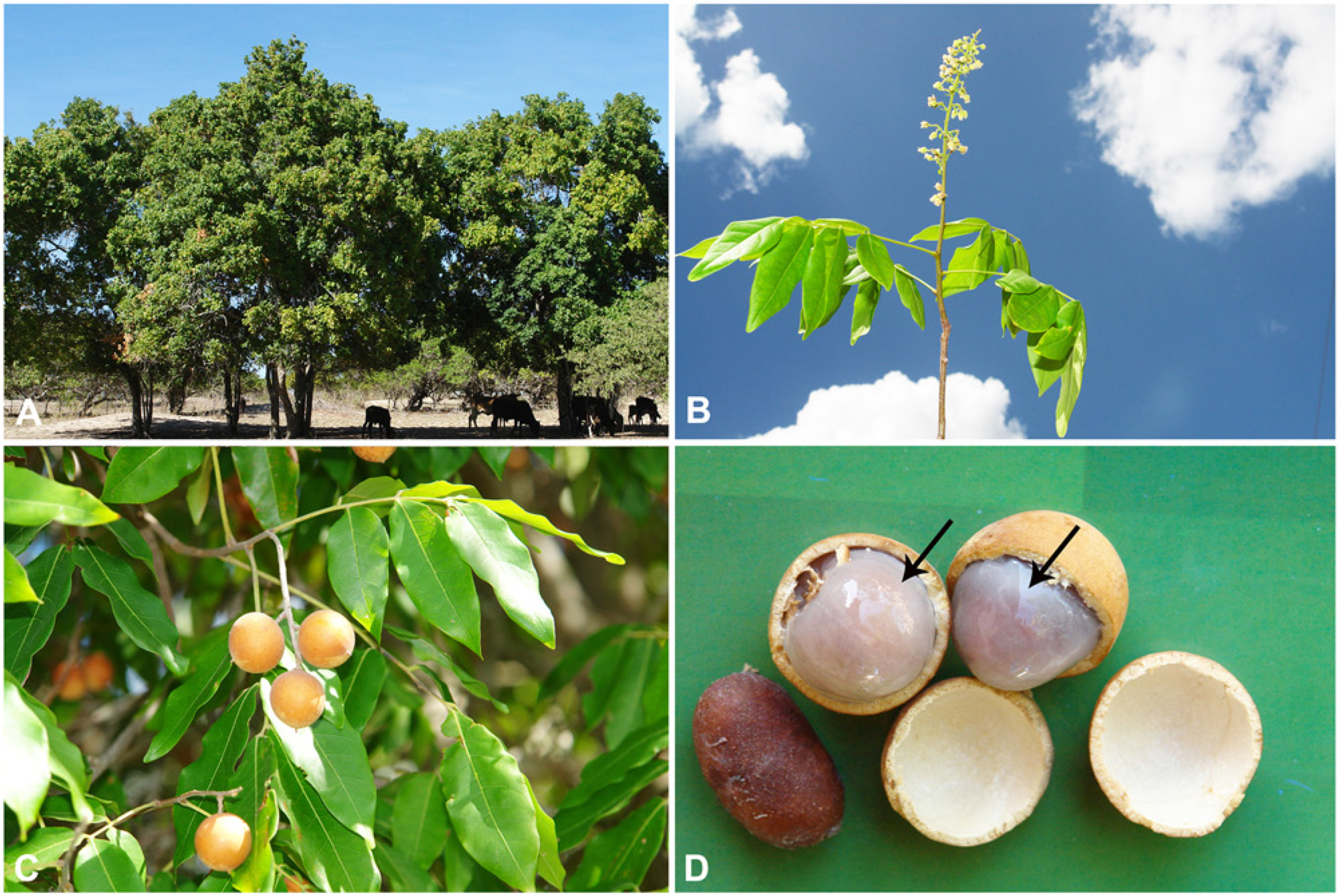
Trees of Talisia esculenta (
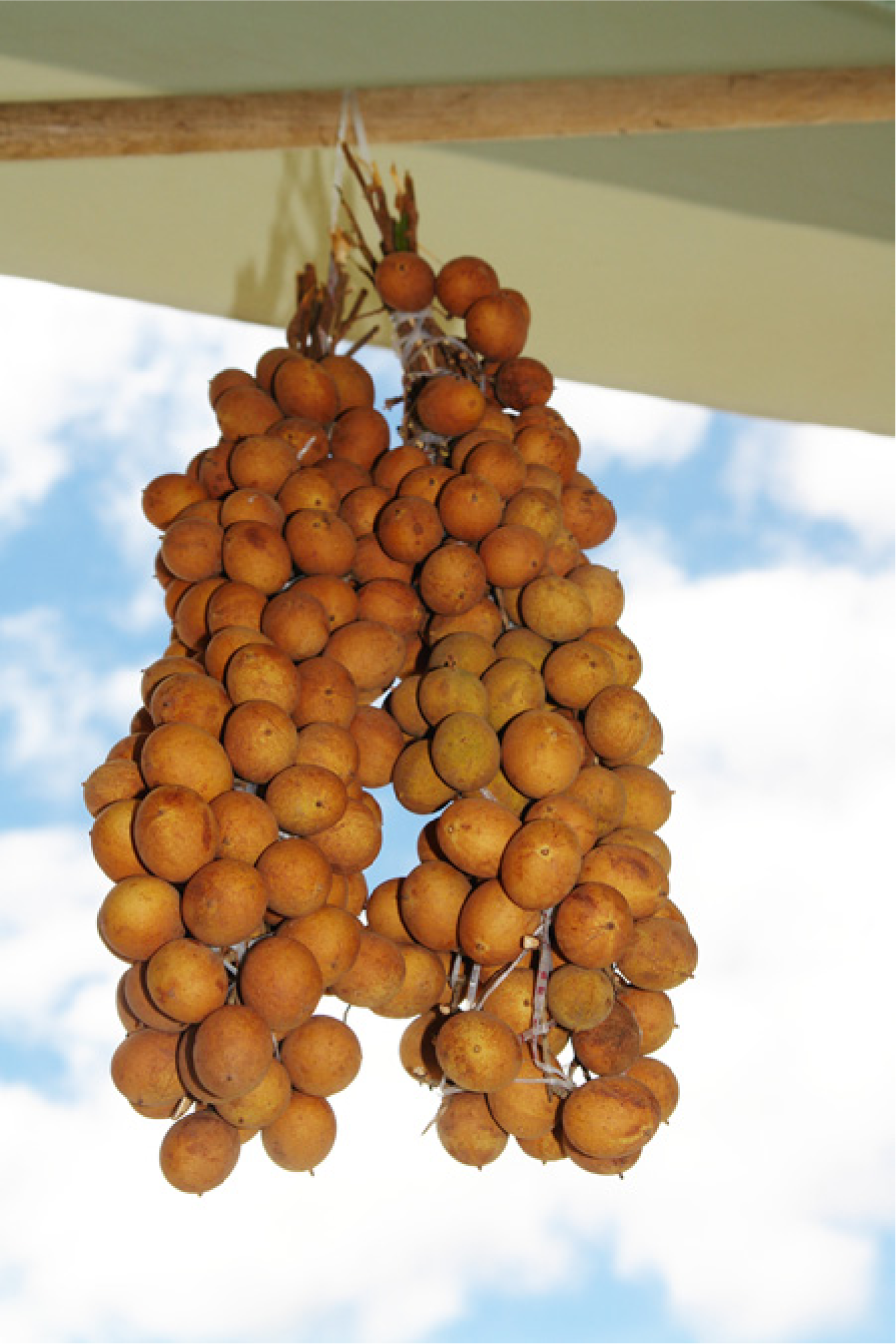
Fruits of Talisia esculenta displayed for sale at a market in the city of João Pessoa, Paraíba, Brazil.
Materials and methods
In the 3 outbreaks reported, farm visits were conducted to obtain epidemiologic and clinical data. To verify whether the clinical signs observed were caused by the ingestion of T. esculenta, the plant was administered to seven 4–7-month-old crossbred Santa Ines sheep that were clinically healthy and weighed between 16 and 19 kg. Before the study began, sheep underwent an adaptation period of 15 days, during which they were dosed with anthelmintic. Before the start of the experiment and after the observation of clinical signs, blood samples were collected in Vacutainer a tubes with and without anticoagulant. Hemograms and the determination of the concentrations of serum total protein, albumin, urea, and creatinine were performed in accordance with a previous study. 14 Samples of rumen fluid obtained with a stomach tube from sheep 1 and 4 were examined for color, smell, consistency, sedimentation and flotation time, pH, and protozoan activity, and by the methylene blue reduction test. 11 Heart rates, respiratory rates, ruminal movements, and rectal temperature were determined in each experimental animal before the start of the experiment and every day after plant ingestion. Before and during the experimental period, the animals were fed commercial concentrated food in an amount equivalent to 1% of body weight, with Cynodon dactylon (Tifton) hay and water available ad libitum.
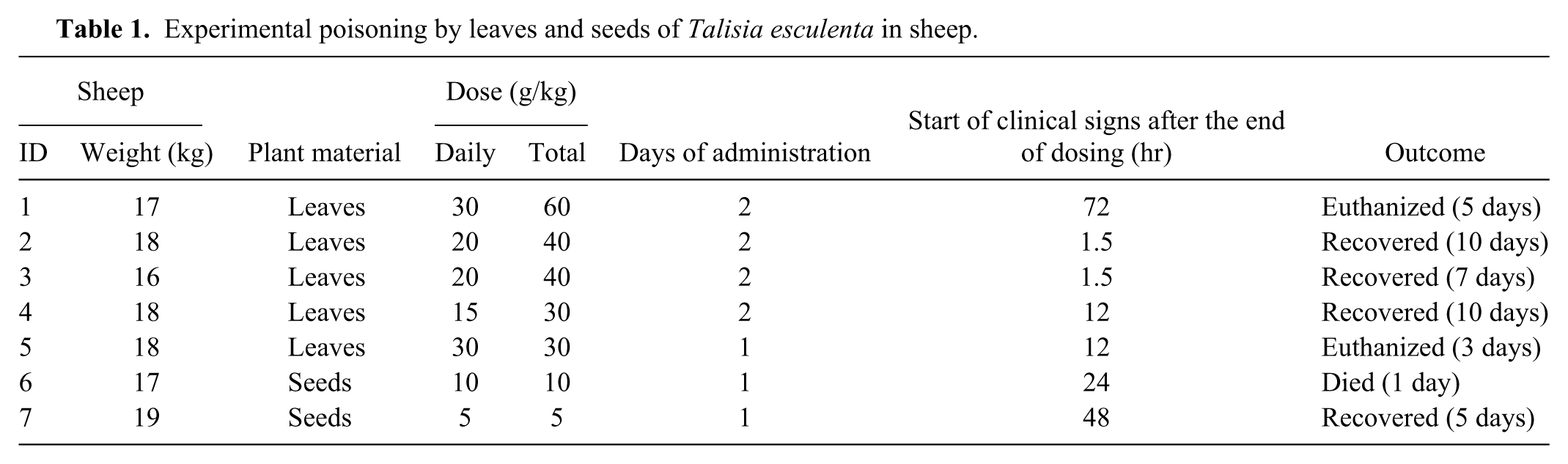
Leaves of T. esculenta were collected in the municipalities of Mata Grande, state of Alagoas, and administered to sheep 1. Sheep 2–5 ingested leaves collected in the municipality of Mãe D’agua, state of Paraíba. The leaves were manually separated from the branches and were orally administered by repeatedly putting small amounts into the mouths of the animals. Seeds obtained from fruits collected in the city of Teixeira, Paraíba were crushed in a blender and administered orally with a syringe to sheep 6 and 7. The doses administered to each animal are shown in Table 1. Sheep 1 and 5 were euthanized because of severe clinical signs and sheep 6 died spontaneously; all 3 sheep were necropsied. Samples of organs from thoracic and abdominal cavities, oral mucosa, tongue, esophagus, skeletal muscles, thyroids, skin, brain, and spinal cord were collected, fixed in 10% neutral buffered formalin, processed routinely, and embedded in paraffin wax. Sections were stained with hematoxylin and eosin. Sections of the central nervous system included the frontal, parietal, temporal, and occipital cortexes, corpus striatum, thalamus, rostral colliculi, cerebellar peduncles, cerebellum, pons, obex, and spinal cord (cervical, thoracic, and lumbar segments). The experiment was approved by the ethical committee on animal experimentation of the Universidade Federal de Campina Grande (UFCG), process CEP 69-2013.
Experimental poisoning by leaves and seeds of Talisia esculenta in sheep.
Results
Spontaneous poisoning
One outbreak occurred in February–March 2012 on a farm in the municipality of Mata Grande, Alagoas (S09° 06′ 42.9″ W037° 39′ 45.3″). All 20 sheep in a flock became ill 1–3 days after beginning to consume the leaves of T. esculenta from a tree that had been pruned and whose branches were left to the animals. Two sheep died 2 days after ingestion of the plant; during the visit, 5 days after plant consumption, 12 sheep had already recovered, and 6 presented with clinical signs. Most sheep were recumbent; some sheep remained standing after being stood up, but recumbency was permanent in others. Ataxia and weakness were observed in several sheep. Others showed severe spastic paresis with stiff limbs, especially the hind limbs. Moderate ruminal bloat was also observed. All clinically affected sheep recovered in 7–15 days.
Another outbreak, observed in April 2012, affected cattle and sheep in the municipality of Maturéia in the state of Paraíba (S07° 21′ 20.0″ W037° 23′ 17.0″). There were 16 cattle and 23 sheep on the farm. According to the farmer, 5 out of 16 cattle of different ages, reared in an area of 52 hectares with 28 trees of T. esculenta, had died after a clinical manifestation period of nearly 24 hr, presenting muscle tremors, rigidity in the 4 limbs, constipation, and halting of rumination. Two other cattle had recovered. During the visit, 1 heifer was affected, showing spasticity in all 4 limbs (Fig. 3A), marked ataxia, and tremors of the head and neck. When excited, this heifer walked with stiff limbs, sometimes showing hypometria or severe uncoordinated movements with marked raising and flexing of the thoracic limbs (Fig. 3B). Of the 23 sheep reared in an area of 18 hectares, 1 was affected, showing permanent lateral recumbency, spastic paralysis, and severe hyperesthesia and hyperreflexia, mainly of the cutaneous trunci reflex. The sheep and the heifer with clinical signs recovered within 1 week.
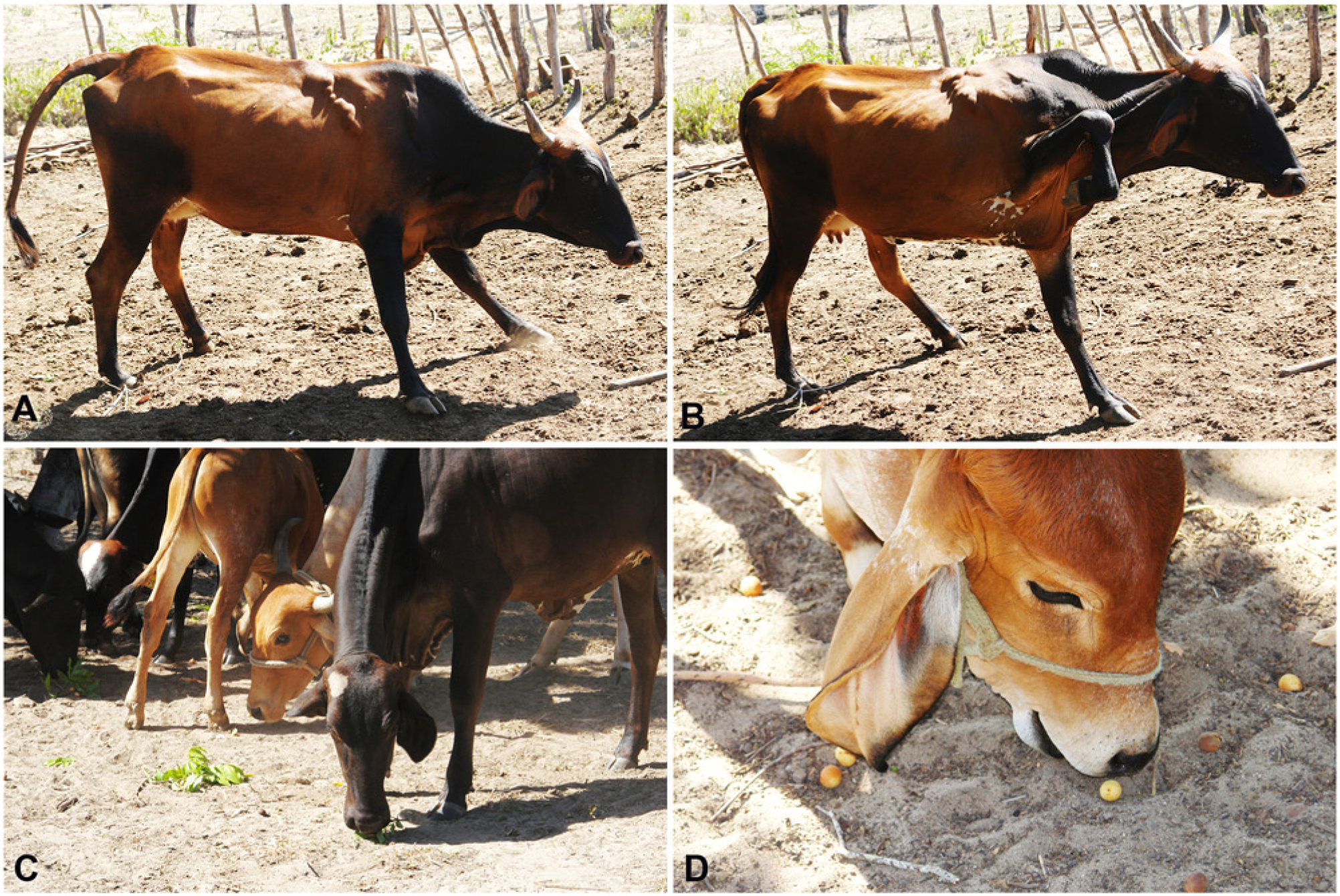
A heifer poisoned spontaneously by Talisia esculenta showing spastic paresis of the 4 limbs and tail, wide-based stance (
The trees of pitomba had initiated fruit bearing in December and still bore fruits during the visit in April. The fruits were ripe, and according to the farmer, the animals had ingested the leaves and fruits in large amounts. The animals began to ingest the plant when the branches bent downward under the increased weight of the fruits. During the visit, the animals were keen to eat the fruits and leaves that had fallen off the plant (Fig. 3C, 3D).
The third outbreak occurred in June 2012, affecting sheep in the municipality of Crato (S07° 16′ 27.2″ W039° 36′ 34.7″), state of Ceará. On this farm, 20 sheep grazed an area of 0.9 hectares with 2 trees of pitomba with a large number of fruits on the ground. All 20 sheep were affected, and 2 died after eagerly ingesting large quantities of the fruits of T. esculenta. Clinical signs were similar to those observed in the first outbreak.
Experimental reproduction
All 7 sheep fed the leaves and seeds of T. esculenta showed clinical signs of intoxication 1.5–72 hr after feeding ceased. Clinical signs were present for 1–10 days (Table 1). The initial signs were sleepiness, staggering gait, apathy, depression, light to moderate tympany, and ruminal hypomotility. Later, the animals showed ataxia (Fig. 4A) and severe depression. Other signs included spasticity of the tail (Fig. 4A), which was slightly raised (sheep 1, 4, and 6), spastic paresis and rigidity of the limbs (Fig. 4B), wide-based stance (Fig. 4A), and abnormal posture (sheep 1 and 4–7). Appetite was preserved except in sheep 5. If the animals were exercised or forced to move, they showed marked ataxia with falls in unusual positions (Fig. 4C, 4D). Sheep 1 and 4, which were more severely affected, showed bruxism, opisthotonus, and hyperemia and edema of the conjunctivae and eyelids; they remained in lateral recumbency, with tremors of the head, ears, and muscles of the gluteal region. In addition, most of the rumen protozoa in sheep 1 and 4 were dead, and there was an increase in the methylene blue test of the ruminal contents. No alterations were observed in the other laboratory tests performed in the rumen fluid. In sheep 4, the feces were covered by mucus. The hemogram and serum concentrations of urea, creatinine, protein, and albumin were within the normal ranges. No significant lesions were observed during necropsy and histologic examination.
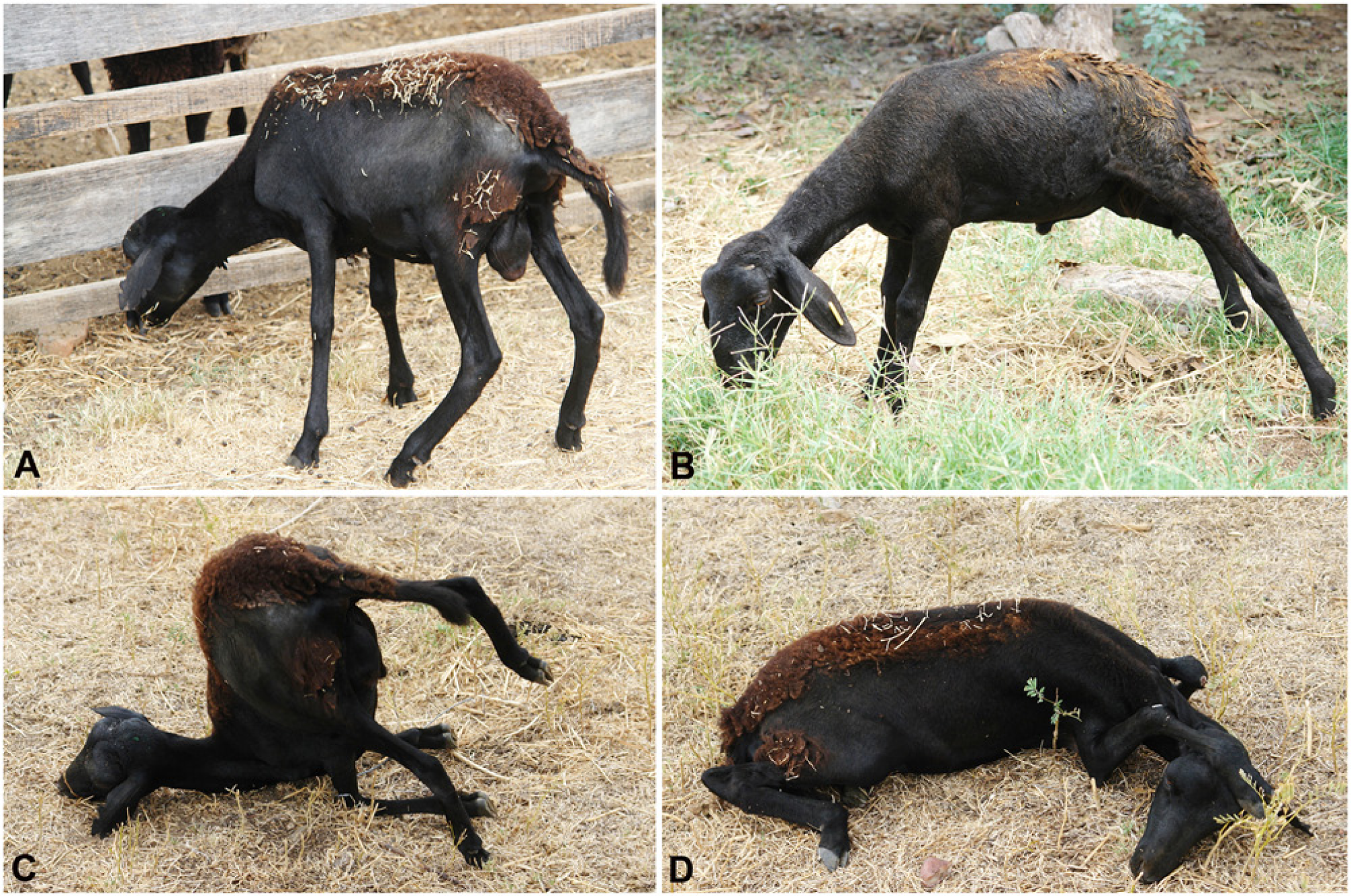
Sheep 4 poisoned experimentally by leaves of Talisia esculenta showing wide-based standing (ataxia), spasticity of the tail (
Discussion
The results of the current study demonstrate that the leaves and seeds of T. esculenta cause acute poisoning in sheep and cattle. The clinical signs caused by seeds or leaves were mostly nervous; however, the bloat with decreased ruminal movements, decreased methylene blue reduction test, and death of rumen protozoa suggest that the digestive system is also affected, most likely by the presence of a poisonous substance in the plant causing rumen stasis and reduced or absent rumen protozoan activity. The toxic compound contained in the leaves and seeds of the plant is unknown; however, a protein called talisin with hemagglutinating activity of human and animal erythrocytes has been identified in the seeds of T. esculenta 4 This protein has insecticidal activity8–10 and an inhibitory effect on fungal growth.4,12 Talisin has also been shown to induce an inflammatory response including the recruitment of neutrophils and mononuclear cells in mice 3 and to cause a noncompetitive inhibition of trypsin. 5 Further studies should be conducted to determine whether the toxicity of T. esculenta to ruminants is caused by talisin.
In the experimental reproduction of the disease, the leaves and seeds from different regions cause poisoning, suggesting that all plants of T. esculenta are toxic. Furthermore, the toxic doses of the seeds were smaller than the toxic doses of the leaves, suggesting that the toxic compound is more concentrated in the seeds than in the leaves. Despite the severe nervous signs observed in the sheep and cattle poisoned by T. esculenta, most animals recovered, and those that died had no significant lesions, suggesting that the poisoning may be reversible if the animals are properly maintained during the clinical manifestation period.
The diagnosis of T. esculenta poisoning should be based on the history of ingestion of seeds or leaves of the plant, the presence of reversible nervous signs, and the absence of significant gross or histologic lesions. The main differential diagnoses are rabies, listeriosis, and botulism, which are common diseases in ruminants in the semiarid region of Brazil.
Despite the fact that the pulp fruit (aril) is part of the typical diet of the human population of northeastern Brazil, attention should be paid to the risk of human poisoning when consuming the seeds or leaves of T. esculenta, which are recommended for medical purposes.6,13 The fact that human beings eat the pulp fruit without ill effects, while ruminants are intoxicated by the plant, might be because human beings do not eat the seeds and leaves of the plant, while ruminants ingest the leaves or the whole fruits, including seeds. Although infusions of leaves are apparently used as folk medicines, dose rates in this form may be insufficient to cause symptoms. Another possibility is that ruminants might be inherently susceptible while human beings are not. To demonstrate this possibility, the fruit pulp, without the seeds, should be given to sheep or cattle to investigate its toxicity to these species.
In conclusion, the seeds and leaves of T. esculenta cause acute nervous signs in sheep and cattle, and farmers should be advised to avoid animal access to the leaves and fruits of this plant. The potential risk of human poisoning by this plant should be taken into account, mainly for children ingesting the seeds or by the use of seeds and leaves for medical purposes.
Footnotes
a.
Vacutainer, BD, São Paulo, Brazil.
Declaration of conflicting interests
The author(s) declared no potential conflicts of interest with respect to the research, authorship, and/or publication of this article.
Funding
This work was supported by the Brazilian National Institute for Science and Technology for the Control of Plant Poisonings, National Council of Scientific and Technological Development (CNPq), grant 573534/2008-0.