




Abstract
The goal of the current prospective field study was to examine the shedding patterns of naturally occurring Staphylococcus aureus intramammary infections and the association of pulsed field gel electrophoresis pulsotype with shedding. Milk samples from 5 multiparous and 2 primiparous cows identified with S. aureus intramammary infections were collected for 21 consecutive days, 3 times throughout the lactation (63 days total). Cyclicity of each quarter was evaluated using a locally weighted regression. Pulsed field gel electrophoresis was used for genotypic cluster comparisons to evaluate the association of strain type and shedding patterns. Although the amount of shedding varied greatly, 97.5% of the samples were culture positive. There were notable differences in S. aureus shedding patterns among cows as well as within cows; however, no consistent cyclic pattern was identified. Quarters infected with S. aureus isolates grouped in genotypic cluster 1 appeared to shed at consistently higher levels with a median cfu/0.01 ml of 154 (ln[cfu] = 5.0). In comparing ln(cfu)/0.01 ml between genotypic clusters over the first 21-day sample period, accounting for the effect of sample day, samples collected from quarters infected with S. aureus in genotypic cluster 1 had a 1.5 times greater ln(cfu) than those collected from quarters infected with strains in genotypic cluster 2. The ability to detect S. aureus from day to day was very consistent. The current study examining naturally occurring intramammary infections would support the conclusions of other studies suggesting that a single quarter sample would be adequate in determining S. aureus intramammary infections status.
Keywords
Introduction
Despite improvements in management, prevention, and treatment, mastitis accounts for 26% of reported morbidity in U.S. dairies, making it the most prevalent and costly disease of dairy cattle.9,23,24 Dependent on cow traits, stage of lactation, current milk price, and cost of replacements, labor, and veterinary care, the estimated cost of mastitis has been calculated at 6% of the value of production.8,16 At 2007 prices, the cost translated into a loss upward of 2.1 billion dollars. 2 It is estimated that 70–80% of this loss is due to subclinical intramammary infections (IMI) caused by organisms such as Staphylococcus aureus. 6 The most prevalent contagious mastitis pathogen in the United States, S. aureus was detected in 43% of bulk tanks examined. 24 Control programs targeting S. aureus have been developed but inconsistently applied throughout the dairy industry.5,11 Although there have been no published reports explaining the inconsistencies, the cost and perceived inaccuracy of diagnosis, as well as producer motivation, are acknowledged hurdles in the broad application of effective control programs. 19
The control of S. aureus is contingent on accurate diagnosis of IMI, yet there remains disagreement on what constitutes a definitive diagnosis of a S. aureus IMI. 1 Complicating efforts to define a S. aureus IMI is the perception that S. aureus is shed intermittently, thus regularly evading diagnosis.7,20 One of the most influential studies on the shedding patterns of S. aureus reported that S. aureus was shed in a cyclical pattern in cows experimentally infected with the Newbould S. aureus strain, and the study concluded that consecutive samples were necessary for accurate diagnosis. 15 Since then, new genotyping technologies, such as pulsed field gel electrophoresis (PFGE), have been used to compare strain relatedness.3,18 Studies examining strain relatedness have brought into question the usefulness of S. aureus research based on experimental infections using the Newbould strain as it was found to be different from those isolated from naturally occurring infections. 18 The goal of the current study was to examine shedding patterns of naturally occurring S. aureus infections over an extended period of time to evaluate the impact that shedding patterns may have on detection of the organism. In addition, PFGE was used for strain comparisons to evaluate the association of strain type and shedding patterns of bacteria.
Materials and methods
Study population and sampling
Milk samples were collected from cows at the Ohio State University dairy herd (Columbus, Ohio). Five multiparous cows (7 quarters) included in the study were initially identified with S. aureus IMI during the previous lactation using quarter level milk samples with ≥1 cfu of S. aureus/0.01 ml. 25 Two primiparous cows (2 quarters) were identified via quarter level screening of all primiparous cows in the herd 1 month prior to the study start date using the same culture inclusion criteria. Milk samples were collected for 21 consecutive days, 3 times throughout the lactation (63 days total, 21 days each during winter, spring, and summer). Approximately 12 ml of foremilk was collected from each quarter during the afternoon milking for culture according to NMC guidelines, 14 and a second sample was taken and preserved with bronopol for somatic cell count (SCC) evaluation at the local Dairy Herd Improvement Association laboratory. Milk samples for culture were kept frozen for up to 22 days and thawed at room temperature for microbiological culture. Disposable, calibrated loops were used to apply 0.01 ml of milk on quarter sections of trypticase soy agar blood agar plates. a Plates were incubated at 37°C and screened at 24 and 48 hr according to NMC 13 guidelines. A presumptive diagnosis of S. aureus was made based on colony morphology, positive catalase test, presence of hemolysis, and a positive coagulase test. Species identification was confirmed at the quarter level by submitting a representative S. aureus isolate from each S. aureus quarter for further biochemical and antibiotic sensitivity testing. b Initially, colony counts were recorded from 1to 99. All samples with ≥100 cfu/0.01 ml on the initial examination were considered too numerous to count. Quarters culture positive with ≥1 cfu/0.01 ml of S. aureus within the first 3 days of the first sample period were designated as quarters with a S. aureus IMI. All of the samples were kept frozen following the initial microbiological examination, were thawed a second time, then 0.01 ml of milk was plated on a single trypticase soy agar blood agar plate to allow for approximation of cfu counts up to 1,000 cfu/0.01 ml.
Strain comparisons
A single representative S. aureus isolate from each quarter was submitted for analysis using PFGE at The Ohio State University, Infectious Disease Molecular Epidemiology Laboratory. The PFGE protocol is adapted from the Canadian protocol created by a subcommittee of The Canadian Committee for the Standardization of Molecular Methods. 10 Bands were visualized, c and the relatedness of the fingerprints was evaluated using BioNumerics software d with position tolerance at 1.5% and by visual inspection. Isolates were grouped into genotypic clusters using Dice coefficient similarity index and a threshold value of 80% relatedness according to a previous study. 21 Main clusters (80% similarity) were given a numerical designation (1–2), with uppercase letters representing subclusters (A–C) with 90% relatedness.
Statistical analysis
Initial exploratory analysis including summary statistics and scatter plots of cfu shed per day per quarter was performed to aid in developing a modeling approach. e Adapting the categorization of colony count published previously, 15 quarters were categorized as low or high shedding quarters according to the mean cfu for the first 21 days. Quarters with a mean 21-day S. aureus cfu ≤ 20 cfu/0.01 ml were categorized as “low shedders” and quarters with a mean S. aureus cfu >20 cfu/0.01 ml were categorized as “high shedders.” As the cfu counts were not distributed normally, quarters were also classified similarly as high and low shedders according to their median cfu/0.01 ml. To account for the non-Gaussian distribution of cfu counts, a log-normal transformation was applied for the evaluation of longitudinal shedding patterns and in evaluating the association of PFGE genotypic cluster with the amount of bacterial shedding, as well as daily changes in shedding. 17 Samples culturing negative, with a cfu of zero, were randomly assigned a value between 0.1 and 0.5 to allow for the log transformation. Somatic cell counts were converted to linear scores (LS) using the following formula: LS = [(ln(SCC/100)/0.693147) + 3] 17 with a minimum of zero and categorized into a low (LS ≤ 4.00, equivalent to 200,000 SCC/ml) and high (LS > 4.00) SCC group, based on the average LS of the first 21 days. Longitudinal shedding patterns of S. aureus over time were examined for each sample period separately (21 days) and together (63 days). This was done using a locally weighted regression f applying a bandwidth window equivalent to a 6.5-day shedding cycle, 19 in addition to looking at the shedding cycle over an entire 21-day sample period.
The effect of genotypic cluster on the daily ln(cfu) for each quarter over the first 21 sampling days and over all 63 days of sampling was assessed. g Different covariance structures were evaluated by comparing Akaike Information Criterion values computed from maximally specified non-nested models. A heterogeneous autoregressive covariance structure was chosen for models of the first 21 days of sampling to account for the nonindependence of the observations, whereas a random intercept for quarter within-cow and random slope for day of sampling was chosen for models including all 63 days of sampling. For the first 21 sampling days, bivariable models with PFGE pulsotype were constructed to screen variables for inclusion in more complex multivariable models at P ≤ 0.25. For all 63 days of sampling, PFGE pulsotype, day of sampling, and season were forced into each model before screening other candidate variables. Variables screened for inclusion were lactation number, days in milk at initial sample day, sample day (1–63), and daily milk yield. Candidate variables with P ≤ 0.10 or variables considered confounders of the PFGE genotypic cluster daily ln(cfu) relationship (causing ≥10% change in the coefficient of PFGE) were retained in final models. Normality and homoscedasticity assumptions were evaluated with graphs of studentized residuals.
Results
Because of culling, only 4 of the original 7 S. aureus–infected cows remained through the entire study and were sampled a total of 63 days, thereby limiting the present authors’ ability to make comparisons throughout the lactation. Of the cows that were culled, 1 was sampled for 42 days and 2 were sampled only for 21 days. In total, there were 397 milk samples collected, with 1 sample day missed from cows 29 (day 61) and 32 (day 9). From the original culture, using only a quarter of a plate per sample, 183 (46%) of the samples had ≥100 cfu/0.01 ml and were considered too numerous to count. Of the original 397 samples, 4 were compromised during storage, which left 393 available for a second culture to provide for colony counts up to 1,000. Therefore, results from the second culture were obtained using an entire blood agar plate for culturing a single milk sample and were used in the analyses presented.
On the initial culture, 387 (97.5%) of the 397 milk samples tested positive (≥1cfu/0.01 ml) for S. aureus. On the follow-up culture, 383 (97.5%) of the 393 milk samples were culture positive for S. aureus. The average, median, and standard deviations for days in milk (dim), milk yield, cfu, ln(cfu), and LS for all cows as well as by parity and PFGE pulsotypes are presented in Table 1. Whether categorized according to mean or median cfu over the first 21days, all quarters were classified as “high” shedders (i.e., shedding a mean or median cfu ≥ 20 cfu/0.01 ml). Collectively, only 26 (6.6%) of the quarter samples had ≤10 cfu/0.01 ml, while 15 (3.8%) had 11–20 cfu/0.01 ml, leaving 351 (89.3%) samples with greater than >20 cfu/0.01 ml. The mean LS was 7.6, with a minimum of 0.4 and a maximum of 9.6. In total, there were 10 quarter samples with a LS ≤ 4 (SCC ≤ 200,000 cells/ml), all occurring less than 100 days in milk. Eight of the 10 samples with an LS ≤ 4 were from a first lactation cow (cow no. 32) 61days in milk on the first day of sampling, with the lowest overall average LS (6.3) and a median cfu/0.01 ml of 174. The 2 remaining samples were from a second lactation cow with an average LS of 8.5 and a median cfu/0.01 ml of 513 and a third lactation cow with the second lowest average LS (6.4) and second lowest median cfu/0.01 ml of 129. The only other first lactation cow examined (cow no. 29) was 130 days in milk on the first day of sampling and had an average LS of 8.3 and a median cfu/0.01 ml of 99. Using the average linear score for the first 21 days, all quarters were classified as high SCC quarters (LS > 4.0).
Descriptive summary of milk samples collected from 9 quarters naturally infected with Staphylococcus aureus.*
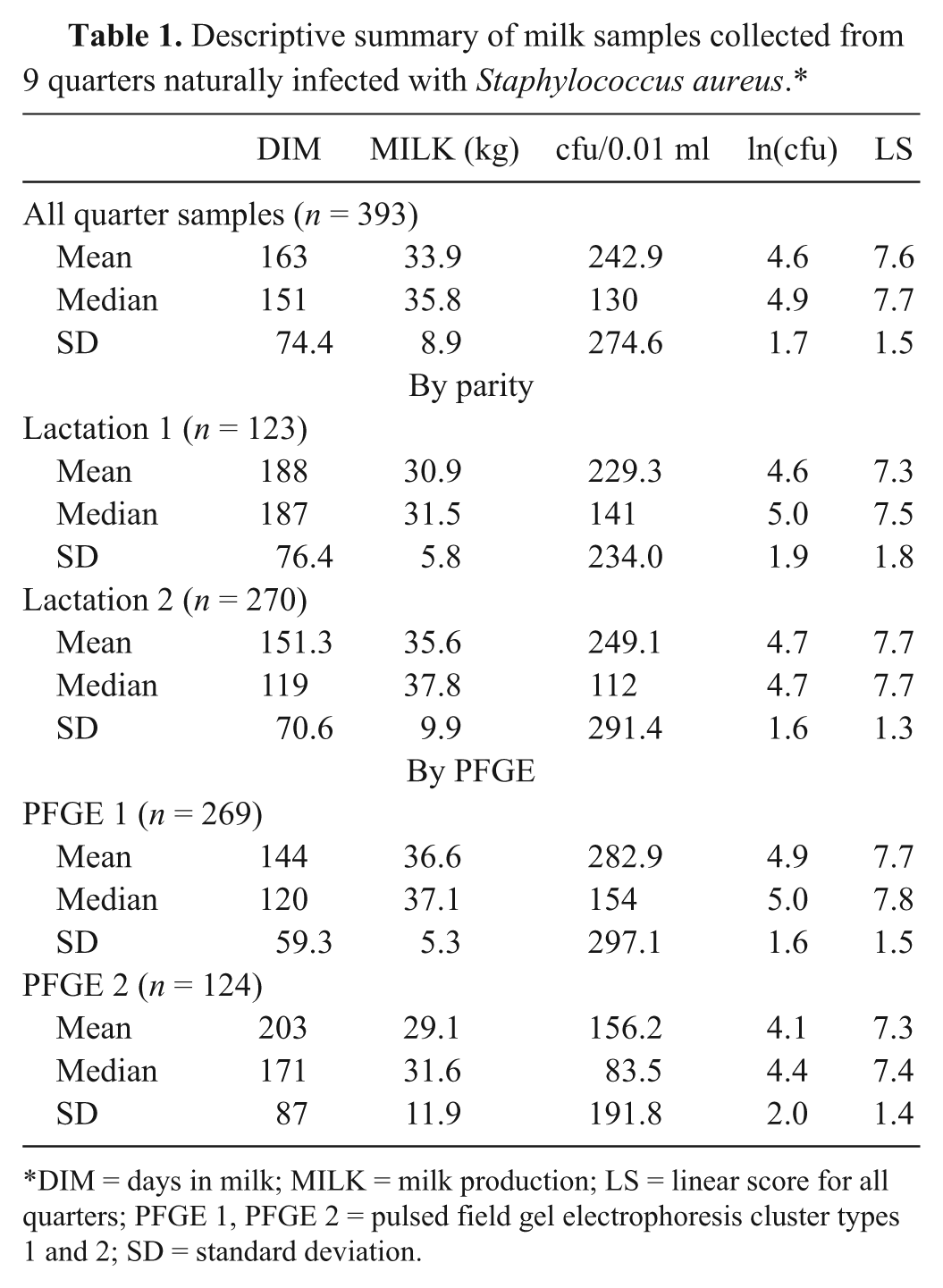
DIM = days in milk; MILK = milk production; LS = linear score for all quarters; PFGE 1, PFGE 2 = pulsed field gel electrophoresis cluster types 1 and 2; SD = standard deviation.
Bacterial shedding patterns
While the amount of shedding varied greatly from day to day, 97.5% of the samples were culture positive. Therefore, the ability to detect S. aureus from day to day was very consistent. Using a locally weighted regression to evaluate shedding patterns over 6.5-day intervals, notable differences in S. aureus shedding patterns were observed between cows as well as within cows; however, no consistent cyclic pattern was identified. While the quarter from cow 29 had a distinct sinusoidal pattern, quarters of cows 853 and 957 had less pronounced patterns, each varying in length and amplitude (Fig. 1). Examining quarters of the 4 cows that were sampled during all 3 sample periods (63 days total), no consistent trends were observed. While a repeated sinusoidal trend (curves for all 3 periods not shown) was noted in cow 853, the amplitude as well as duration of the pattern varied, and shedding was always at a microbiologically detectable limit (≥1 cfu/0.01 ml). Figure 2 illustrates the shedding patterns of cows 884 and 970, each with 2 S. aureus–infected quarters. The remarkable difference in shedding patterns within cows is clear, with each quarter shedding at different yet consistently detectable levels. The right front quarter of cow 884 tested culture negative the last 4 days of the sample period with a median cfu of 86 throughout the entire sampling period, while the right rear quarter was culture positive 100% of the time with a median cfu of 198. Both quarters of cow 970 shed at increasing levels over the first 21-day period; median cfu of the left rear quarter of 970 was 113 cfu/0.01 ml compared to 64 in the right rear.
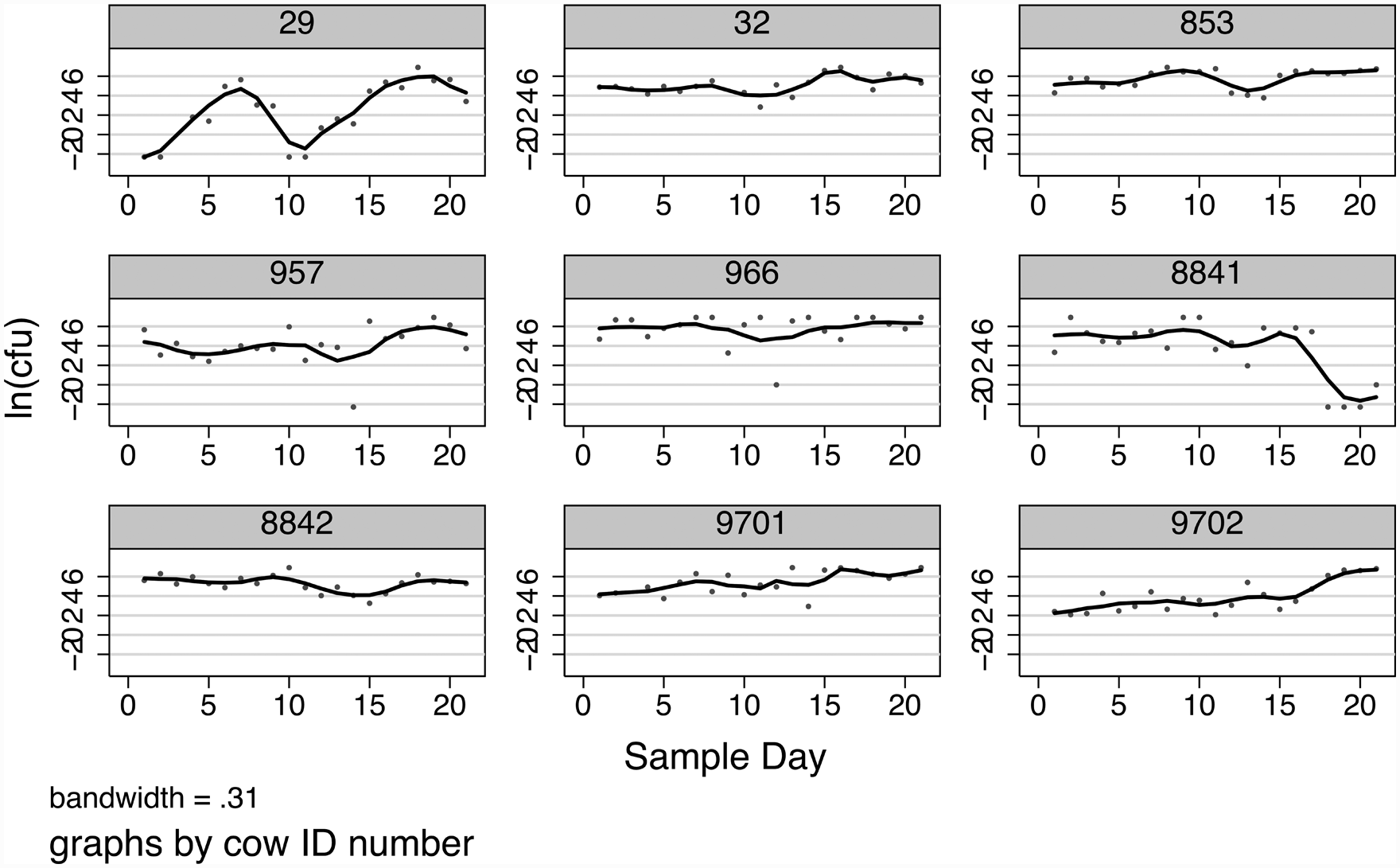
Locally weighted regression (lowess smoother) of daily bacterial counts (ln[cfu]/0.01 ml) of Staphylococcus aureus over the first 21 days using a 6.5-day window. Each individual graph designated by cow quarter ID number. Samples with a cfu of 0 were randomly assigned values between 0.1 and 0.5 to allow for log transformation resulting in ln values less than 0.
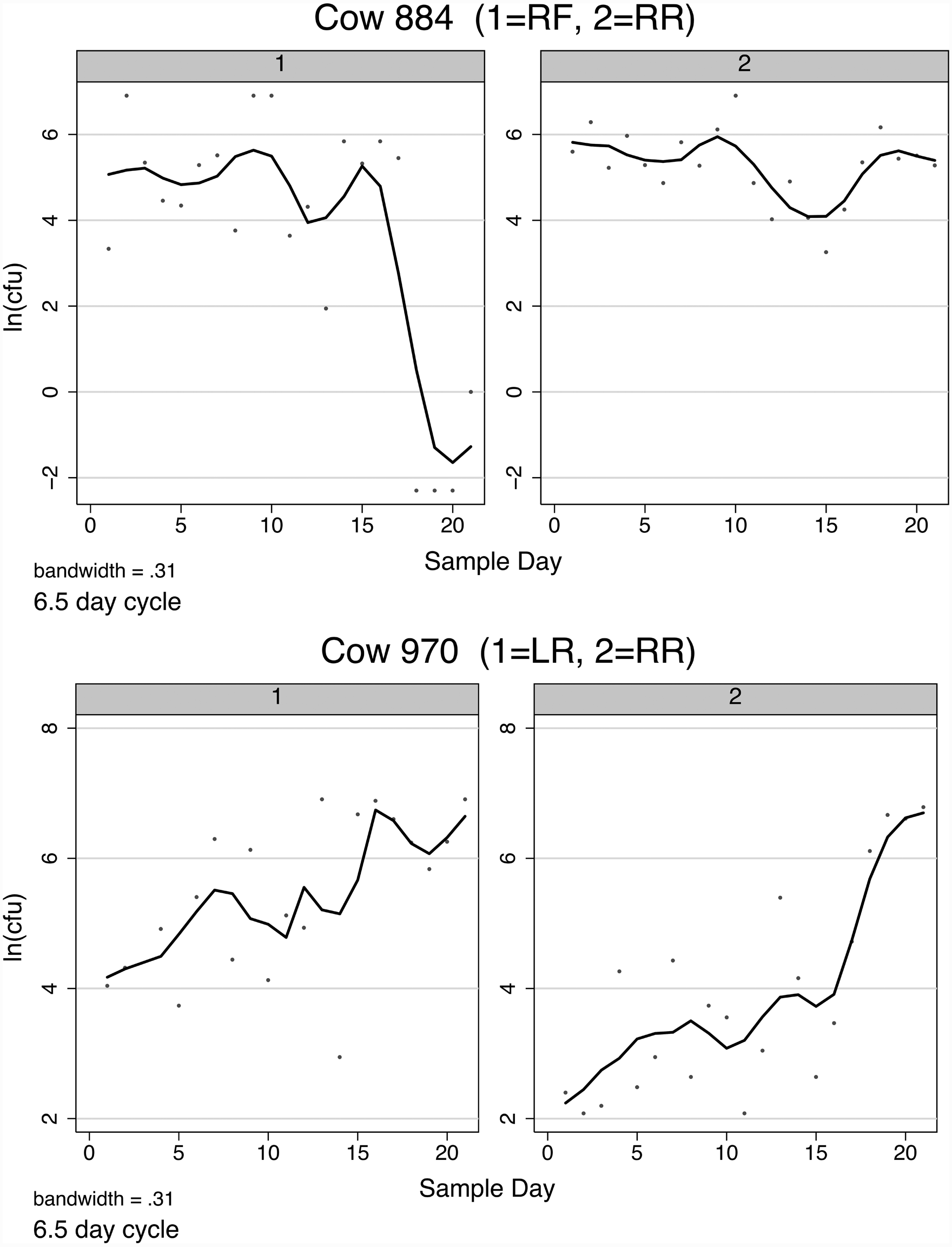
Lowess smoother for ln(cfu)/0.01 ml over a 6.5-day window for the first 21-day sample period; season 1 (winter), in 2 quarters of cows 884 and 970. RF = right front quarter; RR = right rear quarter.
Strain differences
The S. aureus isolates, 1 from each sampled quarter, were grouped into 2 clusters with greater than 80% similarity, type 1 being further divided into subtypes 1-A and 1-B at >90% similarity (Fig. 3). As there was a single isolate representing group 1-B, evaluation of the effects of PFGE pulsotype on shedding of S. aureus and SCC were evaluated at the primary cluster level only (genotypic clusters 1 and 2). The Newbould S. aureus strain was also subjected to PFGE and was grouped with the genotypic cluster 1 isolates at 80% similarity, and into a separate subtype (1-C) when evaluated at >90% similarity. Quarters infected with S. aureus isolates grouped in genotypic cluster 1 appeared to shed at consistently higher levels with a median cfu/0.01 ml of 154 (ln[cfu] = 5.0) compared to S. aureus isolates in cluster 2. While some variation in shedding over time was seen in quarters infected with isolates grouped into genotypic cluster 1 (Fig. 4), the level of shedding remained high throughout sample periods 2 and 3. In contrast, quarters infected with S. aureus isolates grouped into genotypic cluster 2 had a lower median of 83.5 cfu/0.01 ml (ln[cfu] = 4.4) and exhibited varied shedding patterns over each sample period with a notable increase from the first to second sample period, clearly demonstrated by examining the shedding over a 21-day window (Fig. 4). Comparing ln(cfu)/0.01 ml between PFGE genotypic clusters over the first 21-day sample period, and accounting for the effect of sample day, samples collected from quarters infected with S. aureus in genotypic cluster 1 (n = 145) had a ln(cfu) 1.5 times greater than those collected from quarters (n = 41) infected with strains in genotypic cluster 2 (P = 0.0069). However, when comparing the amount of shedding between genotypic clusters over the entire study period, and accounting for the effects of season and sample day, milk samples collected from quarters infected with S. aureus isolates grouped into genotypic cluster 1 had only 1.01 times greater ln(cfu) than quarters infected with S. aureus isolates grouped into genotypic cluster 2 (p = 0.07). This can be appreciated visually as the quantity of bacteria recovered from quarters infected with S. aureus grouped in genotypic cluster 2 appeared to increase to the quantity recovered from quarters infected with isolates in genotypic cluster 1 later in lactation (Fig. 4).
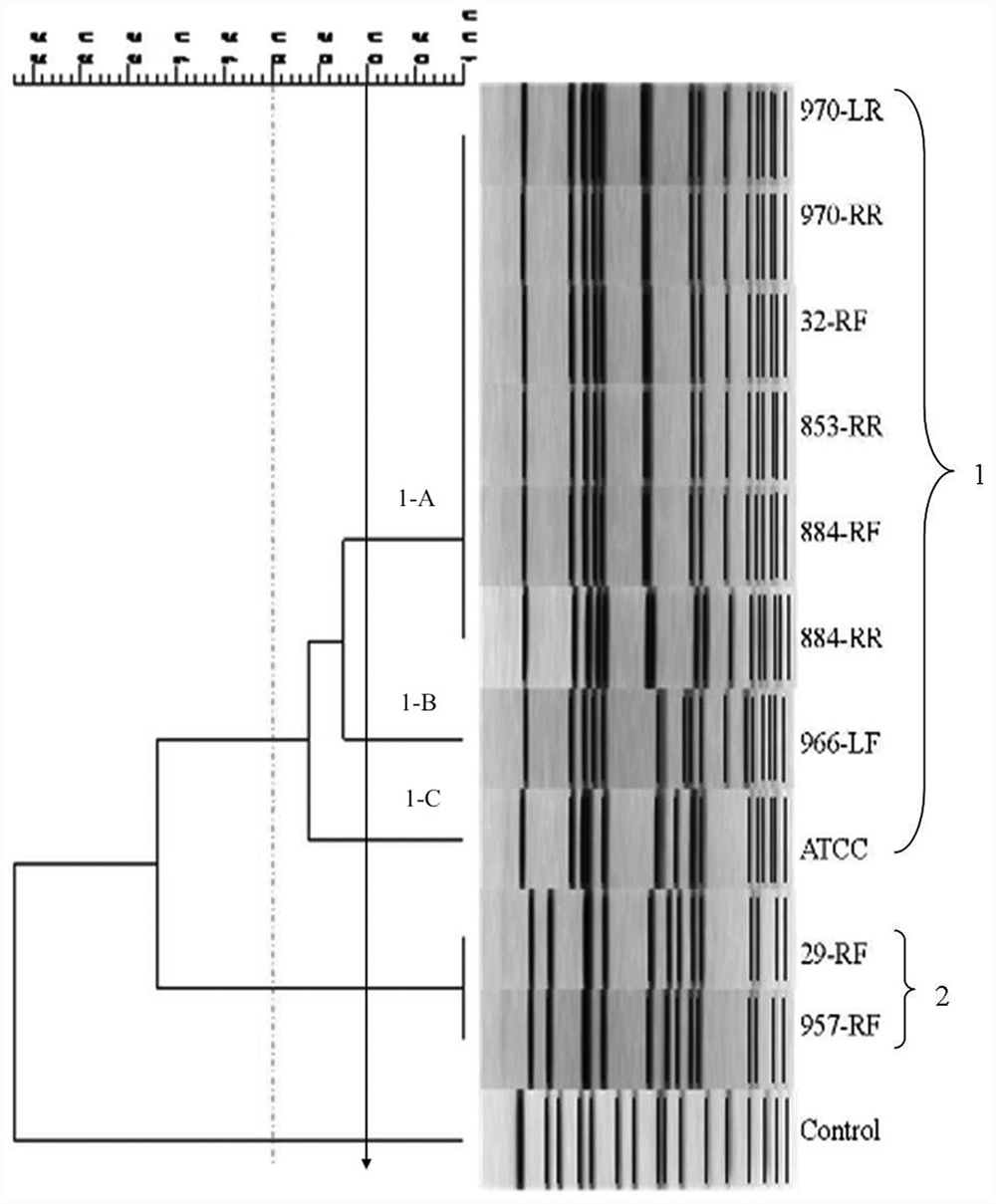
Pulsed field gel electrophoresis (PFGE) image of representative isolates from each Staphylococcus aureus–infected quarter. Position tolerance was set at 1.5%, and isolates were grouped into PFGE genotypic clusters using Dice coefficients and ≥80% relatedness. Clusters were identified using a numerical designation (1–2) with subclassification at 90% similarity designated
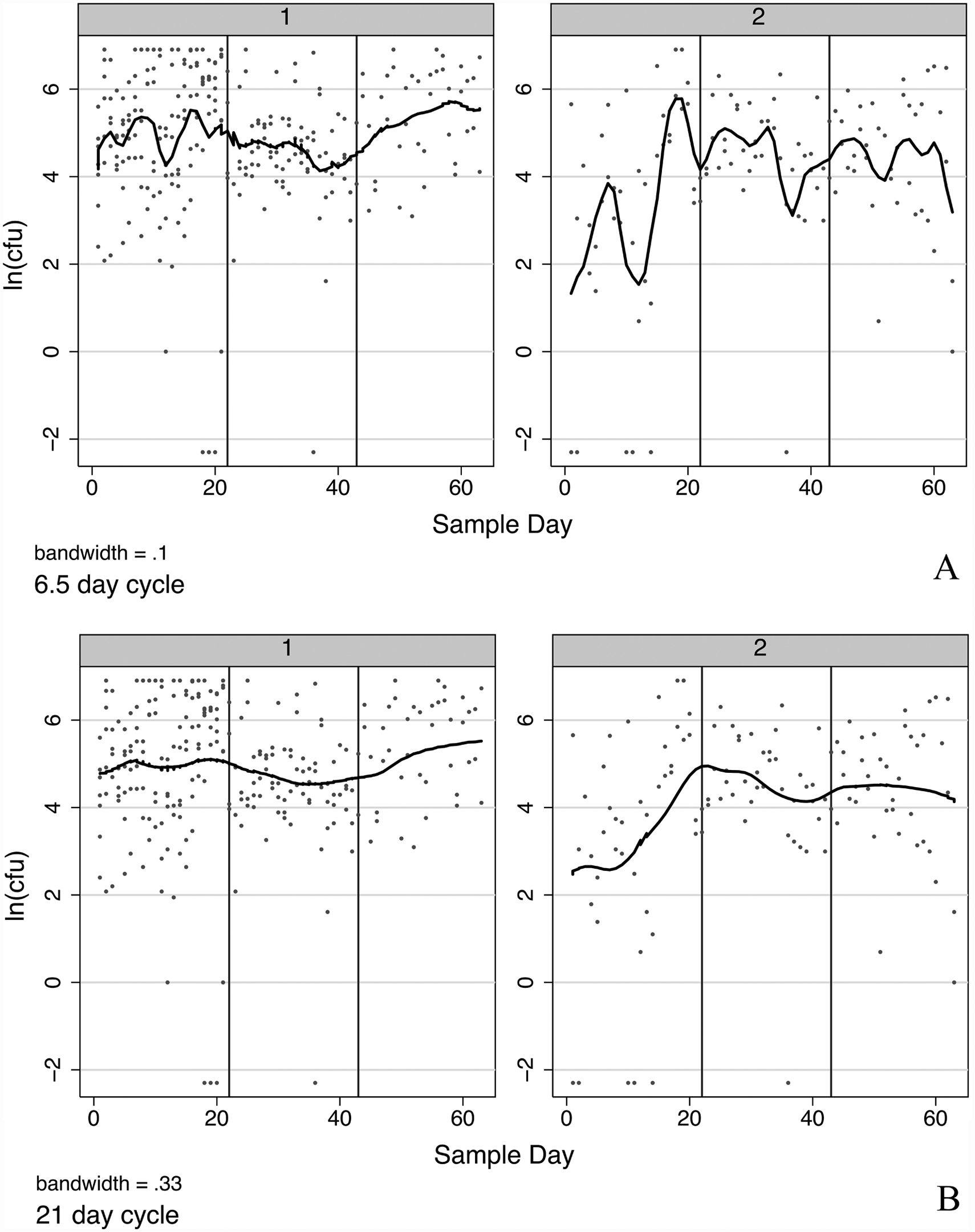
Daily ln(cfu)/0.01 ml by pulsed field gel electrophoresis (PFGE) genotypic cluster for the three 21-day sample periods examined over a 6.5-day cycle (
Discussion
Only 4 published studies have specifically examined the shedding of S. aureus over varied periods of time (Neave F: 1973, Diagnosis of mastitis by bacteriological methods alone. In: Proceedings of the Seminar on Mastitis Control, International Dairy Federation, pp. 19–36. Brussels, Belgium).3,15,19 In one of the most comprehensive papers published on the diagnosis of mastitis by bacteriological methods, 206 S. aureus–infected quarters were sampled up to 20 times (Neave F: 1973, Diagnosis of mastitis). Unfortunately, the report offered little in regard to explaining the frequency of sampling, thus making the time period between sample collections unclear. The second and most influential study on the diagnosis of S. aureus to date was conducted over 28 days examining 19 quarters in 7 cows with experimental S. aureus infections in addition to 4 naturally occurring S. aureus infections sampled for 16 days. 15 The report describes a cyclical shedding pattern of S. aureus in 16 “low-shedding quarters” (mean cfu ≤ 10 cfu/0.01 ml) most of which were experimentally infected with the ATCC isolate 29740 (Newbould strain). 12 In the present study, all quarters were “high shedders.” The differences in shedding status could result from differences between hosts, bacterial strains, and experimental versus natural infections, in addition to differences in inoculum volume. 25
Although the studies employing experimental infections of the Newbould strain have been the foundation of S. aureus IMI diagnostics, recent studies using multilocus sequence typing and PFGE have since reported that the Newbould strain of S. aureus used in the experimental infections appears to have a low affinity for the udder and is more similar to skin isolates than to those recovered from naturally infected mammary glands. 18 However, in the present study, the ATCC Newbould strain was found to be 80% similar to the isolates obtained from natural infections grouped in PFGE genotypic cluster 1. Infections caused by the Newbould strain are reported to shed S. aureus in low numbers (≤10 cfu/0.01 ml) 15 and to have only moderate increases in SCC. 19 In the present study, quarters infected with S. aureus isolates clustered into PFGE genotypic cluster 1 (clustered with the Newbould strain) shed at consistently high levels with a median cfu/0.01 ml of 154 and a median LS of 7.8 compared with isolates in genotypic cluster 2 with a median cfu/0.01 ml of 84 and a LS of 7.4. As only 2 of the 9 quarters were grouped into PFGE genotypic cluster 2, conclusions drawn about such differences should be made with caution.
The effects of sample collection and processing were considered when evaluating the extreme differences in individual shedding patterns across cows, within cows, and even within quarters across sample periods. The fact that 0.01–0.1 ml of milk has been used to represent the total pounds of milk produced at a single milking may have a significant impact on the perceived “cyclical” variation in bacterial shedding. Therefore, while general trends (high or low median cfu or LS) may be explained by strain relatedness, actual variation may be best explained by sample collection and processing and not by within-cow and between-cow differences in infection duration, strain type, or immune function. Although sample variation is inevitable, it highlights the need for consistency for the remainder of all related procedures, from sample collection, sample volume, inoculum volume, and counting so that future comparisons are at least contextually possible. Such consistency does not currently exist. NMC’s published guidelines suggest that 2 out of 3 consecutive cultures should be positive for a quarter to be considered infected.13,14 Although such requirements may be well suited for research conducted in experimental settings, they are cumbersome and cost prohibitive in field studies and day-to-day mastitis diagnostics. In the present study, the ability to detect S. aureus using microbiological culture was remarkably consistent. Although shedding varied tremendously both in numbers of cfu and in its pattern, it appears that such patterns are of little consequence in the accurate detection of S. aureus IMI in these quarters. It has been reported that percentage agreement between duplicate samples was highest for contagious pathogens such as S. aureus (94.2%), suggesting that a single quarter sample might be adequate in determining infection status. 4 Such results were corroborated in a 2009 report that found a 99.7% agreement for S. aureus between the individual samples collected in duplicate. 22 While the current study examining naturally occurring infections further supports the conclusions from both of these studies,4,22 further investigations of multiple dairy herds and different geographical locations are needed to affirm broad application of the practice.
There are limitations that should be noted in the data that were collected in the present study. As several cows were culled prior to the completion of the study, limited data were available to examine the differences in shedding patterns of S. aureus or LS throughout lactation. While a previous report, 19 identified 3 shedding patterns among 11 quarters using cell equivalents obtained using real-time quantitative polymerase chain reaction, the current study was unable to identify any predictable shedding pattern of S. aureus using microbiological culture results. While only 2 first-lactation cows were included in the study, the differences in their LS (8.3 vs. 6.2) highlight the fact that inferences made regarding chronicity of infection based on parity or LS may be misleading. Although one of the first-lactation cows was identified and enrolled in the study at 100 days in milk and the other at 30 days in milk, neither cow was sampled at freshening, or prior to, and therefore it is impossible to determine the actual duration of either infection. The challenge of assessing chronicity of any IMI by LS or parity is further highlighted when examining cow 957: she was diagnosed with S. aureus IMI in the previous lactation, sampled during her third lactation, and had the second lowest LS and cfu/0.01 ml of the entire cohort. As the current study was performed on a single dairy, results may not be representative of other strains of S. aureus such as the “low-shedding” natural infections noted in a previous study. 15 Nevertheless, much can be gained from this examination of naturally occurring S. aureus infections over such an extended sample period. Future studies examining naturally infected quarters over longer periods, in addition to examining the genetic relatedness of strains and shedding patterns, may further aid in developing more coherent understanding of the influence of shedding on the diagnosis of S. aureus IMI.
Footnotes
a.
5% sheep blood, Remel Inc., Lenexa, KS.
b.
Sensititre®, TREK Diagnostic Systems Inc., Cleveland, OH.
c.
Gel Doc™ 2000, Quantity One® software, Bio-Rad Laboratories, Hercules, CA.
d.
BioNumerics software version 4.6, Applied Maths Inc., Austin, TX.
e.
StataCorp LP, College Station, TX.
f.
Lowess, Stata® version 10, StataCorp LP, College Station, TX.
g.
PROC MIXED, SAS Institute Inc., Cary, NC.
The author(s) declared no potential conflicts of interest with respect to the research, authorship, and/or publication of this article.
This project was supported by U.S. Department of Agriculture Animal Health Formula Funds through the Council for Research at The Ohio State University, College of Veterinary Medicine, in addition to grants provided by: COBA/Select Sires, The Ohio Dairy Producers Association, and the Helwig Foundation.