



Abstract
An improvement to a previously reported real-time reverse transcription polymerase chain reaction (real-time RT-PCR) assay for the detection of Vesicular stomatitis virus (VSV) is described. Results indicate that the new assay is capable of detecting a panel of genetically representative strains of VSV present in North, Central, and South America. The assay is specific for VSV and allows for simultaneous differentiation between Vesicular stomatitis Indiana virus and Vesicular stomatitis New Jersey virus. This realtime RT-PCR is able to detect current circulating strains of VSV and can be used for rapid diagnosis of VSV and differentiation of VSV from other vesicular diseases, such as foot-and-mouth disease.
Keywords
Vesicular stomatitis (VS) is an endemic disease in Mexico, Central America, and northern South America with periodic outbreaks observed in the southwestern United States. 7,10,13–15,20 Although Vesicular stomatitis virus (VSV; order Mononegavirales, family Rhabdoviridae, genus Vesiculovirus) can infect horses, clinical signs in cattle and swine mimic that of foot-and-mouth disease (FMD) and include vesicular lesions and ulcerations of the tongue, mouth, and coronary bands of infected animals. There are 2 major serotypes: the Indiana (Vesicular stomatitis Indiana virus [VSIV]) and the New Jersey (Vesicular stomatitis New Jersey virus [VSNJV]). Rapid determination of the disease agent in cattle and swine is required to differentiate between FMD and VS so proper and rapid control measures can be implemented. 7,20 In recent years, a number of rapid diagnostic tests for VSV have been developed, 1,4–6,17 including different real-time reverse transcription polymerase chain reaction (real-time RT-PCR) assays. 11,12,19 These assays, however, either lack diagnostic sensitivity and may miss some current circulating strains of the virus 11,12 or use a cumbersome combination of a large number of primers to ensure accurate and sensitive detection of strains of VSV by targeting the N gene of the virus. 19 A previous study 5 reported the development of a multiplex real-time PCR that targets the L gene of VSV. As part of the validation protocol of the assay, it was determined that the assay was not sensitive enough and failed to detect some of the current strains of the virus. This is particularly important because of the potential genetic variation observed both within each serotype and between the serotypes. 2,3,9,10,16,18 To address this, a collection of phylogenetically characterized reference strains of VSV, representing current genetic lineages of the virus, including a prototype strain of the Tilaran lineage, 19 were evaluated. In addition, Mexican and Colombian VSV field isolates were also evaluated.
Representative strains of VSV covering the United States and Central and South America (Table 1) were propagated in Vero-76 (African green monkey kidney epithelial) cell line, and the RNA was extracted a,b for testing. After evaluating the previously described protocol for real-time RT-PCR, 5 it was observed that 1184HDB, 0703CRB6, 92CRB, UNA82, and 0185PNB strains of VSV were not amplified. To determine the exact nature of the problem, all the strains were tested in the original real-time RT-PCR assay described previously 5 and assessed both by the realtime assay (Table 1) and by agarose gel electrophoresis of the real-time RT-PCR product. After evaluation, the VSNJV strains that did not amplify were 1184HDB, 0703CRB6, 92CRB, UNA82, and 0185PNB, all of which are from Central America (Table 1). Based on the agarose gel electrophoresis results, it was ascertained that the primers were a definite issue for these strains, but without amplification or sequence data, the homology with the probe is unknown. Also based on the electrophoresis results, 89GAS and 92CLB demonstrated strong amplification of the PCR product but a lower threshold cycle (Ct) value compared with the revised protocol, indicative of sequence mismatches in the original primer and/or probe. Sequences of the L gene from these VSNJV isolates, with the exception of 0703CRB6, PAN35, 0804COE1, 0804COE2, and 0804COE3, were aligned c,d and compared with the corresponding VSIV sequences. New primers and probes were designed specifically for the VSNJV based on sequence homology within the region of the L gene already used by the VSIV assay. The forward primers are in the same positions for both VSIV and VSNJV, but there was not sufficient homology between the VSNJV strains to place a reverse primer in the same location as that of the VSIV primer, and therefore, the reverse primer was located further downstream of the VSIV reverse primer resulting in different product sizes, 227 bp and 266 bp for VSIV and VSNJV serotypes, respectively. The final design of the assay consisted of serotype-specific primer pairs (2 primers for each serotype), 1 specific probe for VSIV that is VIC e /NFQ-MBG-labeled and 2 probes for VSNJV, both FAM-labeled with nonfluorescent quenchers, either minor groove binder (MGB) or black hole quencher (BHQ)1, both of which are probe dependant (Tables 2, 3). As a result, and by multiplexing the reaction, VSV can be serotyped as VSNJV or VSIV in real time, based on the differential fluorescence emitted by these probes. This assay was also able to detect viruses of VSIV-1, VSIV-2, and VSIV-3 serotypes but could not differentiate between them because they are all detected by the identical probe in the same channel.
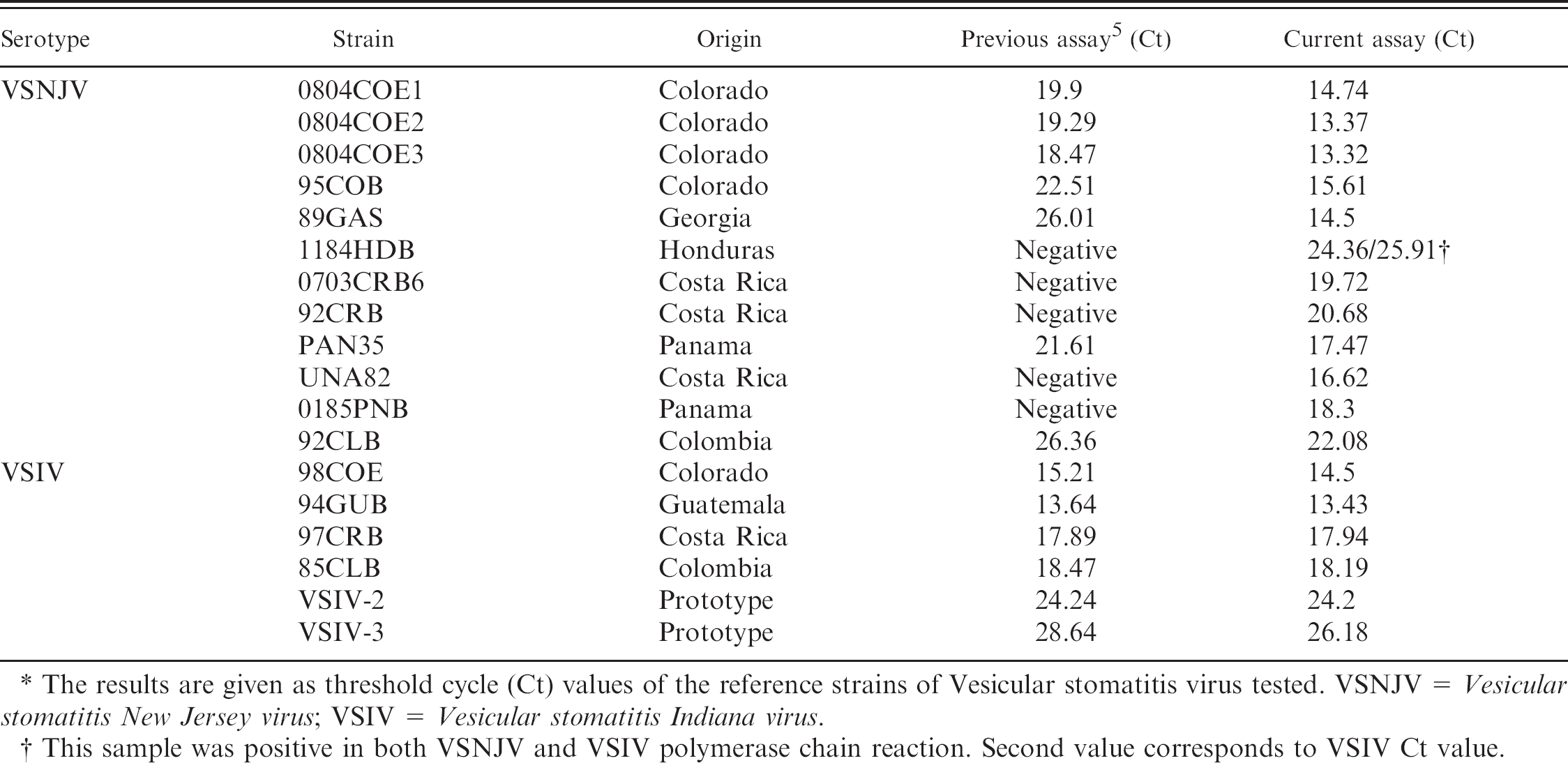
The results are given as threshold cycle (Ct) values of the reference strains of Vesicular stomatitis virus tested. VSNJV = Vesicular stomatitis New Jersey virus; VSIV = Vesicular stomatitis Indiana virus.
This sample was positive in both VSNJV and VSIV polymerase chain reaction. Second value corresponds to VSIV Ct value.
Under the following conditions, all reference strains were detected and correctly serotyped, with the exception of the VSNJV strain 1184HDB, by real-time RT-PCR (Table 1). The sequence for 1184HDB is recognized by both the VSNJV and VSIV probes but will not amplify with VSIV primers alone, so therefore, can be easily typed if the assay is not multiplexed. The one-step multiplex RT-PCR assay was performed using a commercial kit f according to the manufacturer's instructions, with the addition of MgSO4 to give a final concentration of 4 mM. The RNA was extracted as described previously. 5 Primers were added at a concentration of 0.2 μM, with the exception of the VSNJV reverse primer, which was added at a concentration of 0.8 μM. Probes were added at unequal concentrations, 0.2 μM of both VSNJV—FAM-labeled probes and 0.1 μM of VSIV—VIC—MGB probe to produce an optimal reaction for both serotypes. Final reaction volumes were 25 μl, which included a 2-μl RNA sample volume. The protocol incorporated a 30-min reverse-transcription step at 50°C, followed by a 1-min denaturing and polymerase activation step at 95°C. A 3-cycle PCR program was used with the following conditions: 95°C for 15 sec, 54°C for 30 sec, and 72°C for 60 sec, for 45 cycles. All real-time RT-PCR reactions were carried out on an automated PCR instrument, g and data acquisition and analysis were done using the accompanying software. All reactions that were performed during testing of the samples included at least 1 positive control and 1 no-template control. To determine diagnostic specificity, 40 strains of FMD virus comprising all 7 serotypes, and 63 negative bovine epithelial tissues were tested. No false-positives were detected, resulting in a diagnostic specificity of 100%.
Sequence alignment of primers and probes targeted to the L gene of Vesicular stomatitis Indiana virus (VSIV).*

All sequences are in the 5′-3′ orientation. Mismatches in primers and probe are indicated as italic, underlined letters. Sequence numbers are based on GenBank accession J02428 for the complete genome. ID = identification number.
Sequence alignment of primers and probes targeted to the L gene of Vesicular stomatitis New Jersey virus (VSNJV).*
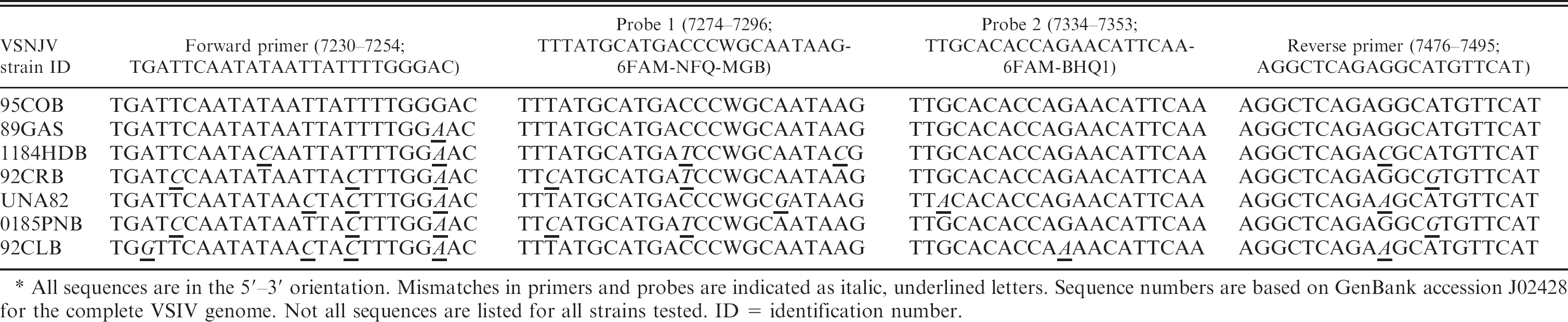
All sequences are in the 5′-3′ orientation. Mismatches in primers and probes are indicated as italic, underlined letters. Sequence numbers are based on GenBank accession J02428 for the complete VSIV genome. Not all sequences are listed for all strains tested. ID = identification number.
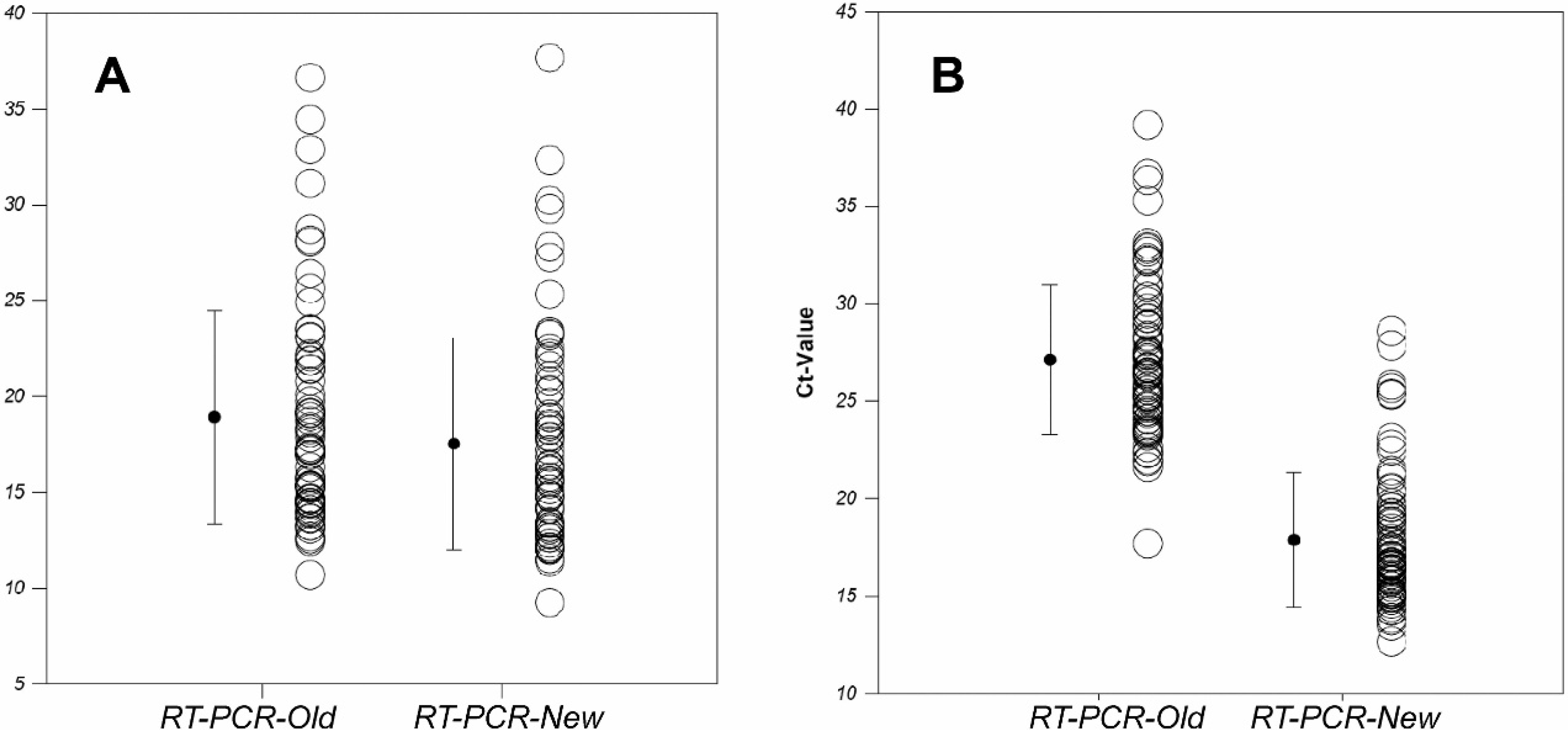
Comparative threshold cycle (Ct) distribution value of 150 samples tested by both the new Vesicular stomatitis virus assay and the previously reported real-time reverse transcription polymerase chain reaction (RT-PCR).
One hundred fifty-nine tissue samples from naturally infected cattle, which included both VSNJV and VSIV isolates obtained from previous outbreaks of VS in Colombia, were tested and compared with results from the original real-time RT-PCR protocol. 5 Previously extracted RNA from these samples was stored at −70°C and was tested by real-time RT-PCR for β-actin 8 to confirm the integrity of the RNA sample before testing with the new VS assay. Nine of these samples tested negative for β-actin and were excluded from further testing. When the Ct values for VSIV were compared, there was no statistically significantly change between the previous and the new assay (Fig. 1A). There was, however, a statistically significant difference between the previously reported 5 VSNJV Ct values and those values in the new assay. The Ct values were consistently observed to be lower for each sample, with the mean difference of −9.24, showing increased sensitivity in the new assay (Fig. 1B). Using the multiplex format, samples were consistently serotyped, and based on comparison to the complement-fixation test, an agreement of 98% (147/150) was observed.
Comparison of Mexican samples between the realtime reverse transcription polymerase chain reaction (RT-PCR) assay and other diagnostic tests.*
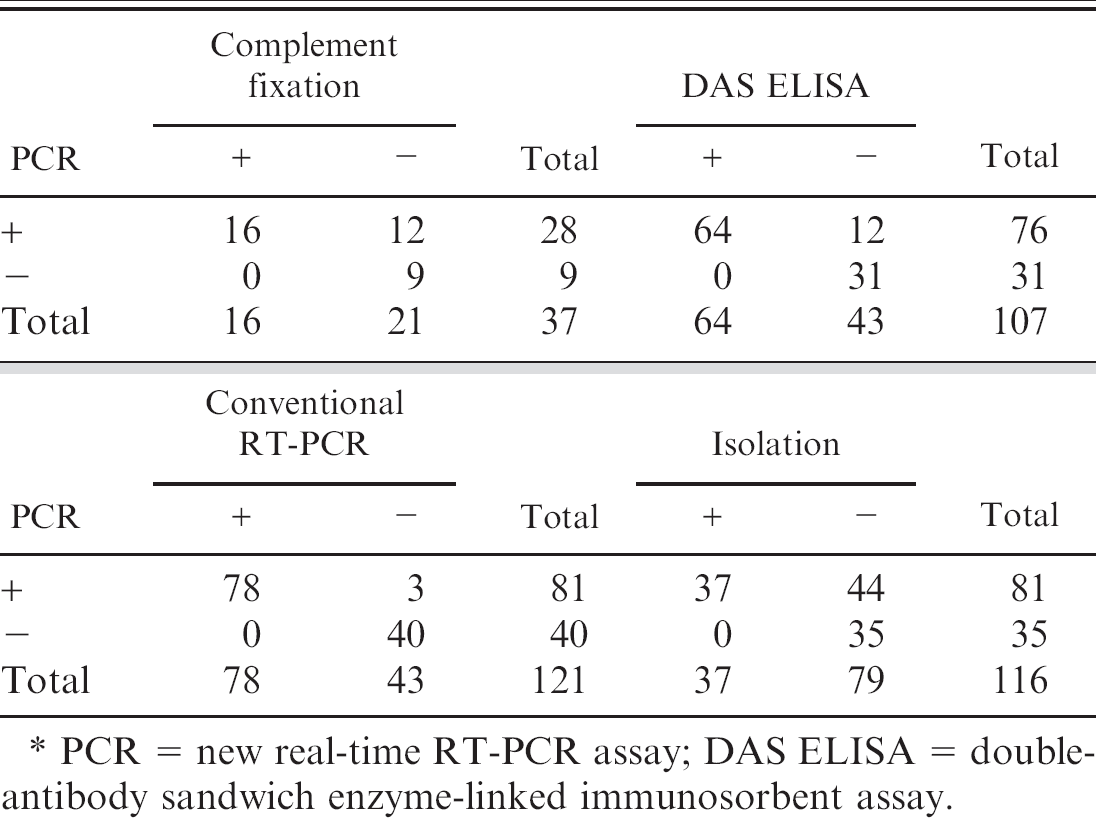
PCR = new real-time RT-PCR assay; DAS ELISA = double-antibody sandwich enzyme-linked immunosorbent assay.
For further evaluation, 125 cattle epithelium samples, obtained from outbreaks of VSNJV in Mexico, were tested by the new real-time RT-PCR assay and compared with virus isolation, complement fixation, double-antibody sandwich enzyme-linked immunosorbent assay (DAS ELISA), and conventional RT-PCR (Table 4). For isolation, tissue samples were homogenized, clarified by centrifugation, and then inoculated onto monolayers of Vero-76 cell lines. Plates were incubated for 2 days at 37°C, after which, they were checked for signs of cytopathic effect (CPE). If CPE was not observed, the plates were frozen at −70°C and then thawed, and the material passaged a second time in the same cell line. After 2 days, if CPE was still not observed in any of the wells, the samples were considered negative. Samples were also tested by DAS ELISA 20 and by complement fixation 20 to confirm that the observed infection was due to VSV. Conventional RT-PCR targets the N gene and was performed only for VSNJV, using the following primers: forward (N274F 5′-CTGGGTTAGCTTTGGAAGAA-3′) and reverse (N913R 5′-CCAGAAGTGAAAGCTGGA-3′). The RT-PCR conditions used were as follows: 50°C for 30 min, a 15-min polymerase-activation step at 95°C, followed by 35 cycles of 94°C for 15 sec, 58°C for 30 sec, and 72°C for 30 sec, with a 7-min extension at 72°C. The real-time assay was compared separately with each of the tests listed above, but not all samples were run in all tests. From Table 4, the real-time RT-PCR assay was shown to be more sensitive than complement fixation, DAS ELISA, and isolation for the detection of VSV. The new real-time assay was slightly more sensitive than the conventional RT-PCR assay because it positively identified 3 isolates classified as negative by the conventional method; therefore, the overall sensitivity of the new real-time RT-PCR assay was 100% compared with 96% by the conventional PCR on known positive samples. For isolation, the new assay detected 38% more positive samples than the DAS ELISA (11%) and 32% more positive samples than complement fixation, thus showing significantly increased sensitivity.
Only testing a variety of field samples will give good correlation to a real-life situation, such as that observed in areas with endemic infections. The overall advantage of a real-time system is that it is faster and involves less sample manipulation. The real-time assay developed in this study performed well, both with reference strains, and with all field samples tested. It amplified all reference strains, accounting for the potential genetic variation reported to date. It also amplified all positive field samples, proving to be more sensitive toward the VSNJV serotype than the previous assay and as sensitive as the assay previously reported for the VSIV serotype. The assay was able to serotype field samples from Colombia, Mexico, and the panel of genetic variants. From the samples tested, only 4 out of 290 (1%) gave a cross-reaction or alternate serotype; however, all samples still amplified and gave a positive result. The correlation between the real-time RT-PCR and the test used for antigen detection proved to be excellent, with the real-time assay proving to be more sensitive, and more positive samples were detected. All normal tissue samples were negative, and all non-VS viruses tested were also negative, proving excellent specificity. The real-time PCR assay also has the capability of detecting VSIV-2 and VSIV-3 prototypic strains; however, field strains of those serotypes will need to be tested. The new assay has proven to be robust, rapid, and sensitive. There is also the added advantage that the amplified products are of different sizes if the samples need to be analyzed by gel electrophoresis. Although the new real-time PCR assay can detect VSV of broad genetic heterogeneity, more field validation is needed to demonstrate the ability of this assay to detect all circulating strains of VSV, particularly for isolates of VSV from other species rather than bovine.
Acknowledgements The authors thank Dr. Lius Rodriguez (Plum Island Animal Disease Center, Agricultural Research Service, U.S. Department of Agriculture) and Dr. Alberto Pineda (Instituto Colombiano Agropecuario, Bogota, Colombia) for providing VSV strains and field samples. The authors also acknowledge the funding received through the Laboratories Directorate of the Canadian Food Inspection Agency.
Footnotes
a.
QIAzol® Lysis reagent, Qiagen Inc., Mississauga, Ontario, Canada.
b.
RNeasy® Mini Kit, Qiagen Inc, Mississauga, Ontario, Canada.
c.
Clone Manager Professional, version 9, Scientific & Educational Software, Cary, NC.
d.

e.
VIC™ dye-labeled primer, Applied Biosystems, Foster City, CA.
f.
Platinum Quantitative RT-PCR Thermoscript One-Step System, Invitrogen Canada Inc., Burlington, Ontario, Canada.
g.
SmartCycler®, Cepheid Inc., Sunnyvale, CA.