



Abstract
Lipopolysaccharide (LPS) antigen was purified from Actinobacillus pleuropneumoniae serovar 7 by phenol-water extraction and fractionated on a, S-100 Sephacryl column. High molecular weight fractions of LPS purified from the S-100 column were pooled and used as antigen in an indirect serovar 7 ELISA. The ELISA was evaluated with sera from pigs experimentally infected with 11 different A. pleuropneumoniae serovars of biotype 1. Estimation of sensitivity and specificity of the A. pleuropneumoniae serovar 7 ELISA was performed using pig sera from herds naturally infected with A. pleuropneumoniae serovar 7 as well as sera from herds free of infection with A. pleuropneumoniae serovar 7. When compared to the complement fixation test (CFT) as a reference test, the ELISA showed much higher sensitivity and statistically equivalent specificity.
Introduction
Actinobacillus pleuropneumoniae is the causative agent of pleuropneumonia in pigs. Porcine pleuropneumonia is a respiratory infection with high morbidity. The disease is recognized worldwide and is a major problem in the modern pig industry. Diagnosis of pleuropneumonia is based on clinical symptoms, isolation of the organism, and/or serocon-version. Different serovars of A. pleuropneumoniae are dominant in different countries and the serovars are considered to vary in patogenicity. 5 Serotype specific serologic testing is therefore important for surveillance of the disease, for monitoring the occurrence of the different serovars and for detection of chronically infected herds in which the infection can remain unnoticed. 4 In Denmark, the most common A. pleuropneumoniae serovar is serovar 2 (63% of all isolates), followed by serovars 6 (26%), 5 (5%), and 12 (4%). (Annual Report. Danish Veterinary Laboratory and Danish Veterinary Institute for Virus Research). Until recently, serologic surveillance in specific pathogen free (SPF) herds was performed by screening for antibodies against A. pleuropneumoniae using the complement fixation test (CFT) monthly for serovars 2 and 6, quarterly for serovar 12, and annually for serovars 1, 5, 7, and 10. The CFT has been used for years but the method is laborious, time consuming, and expensive. ELISA is more readily performed and automated; therefore ELISAs have been developed for A. pleuropneumoniae serovars 2, 5, 6, 8, and 12, 1 , 9–11 , 14 , 15 and are currently used in the surveillance program in stead of the CFTs specific for serovars 2, 5, 6 and 8.
The antigen used in an ELISA is the major determinant of specificity and sensitivity. Although the serovar specific antigenic determinants have mainly been described in the capsular polysaccharide (CP) of A. pleuropneumoniae, 16 reports have shown satisfactory ELISA results based on long-chain lipopolysaccharide (LC-LPS). 7 , 8 In the present study, a high molecular weight LPS antigen was used. The ELISA results were compared with results obtained in the CFT.
Materials and methods
Pvepavation of lipopolysacchavide (LPS). Cultures of A. pleuropneumoniae serovar 7 reference strain WF83 were grown in a fermentor by a previously described method, 2 with the following modifications: After 5 hr of cultivation, the aeration was reduced to approximately 1 liter/min and agitation was set at 200 rpm. For extraction of LPS, 10 g wet weight cell mass was suspended in 50-ml Milli-Q water and 50-ml phenol saturated with Milli-Q water was added. The solution was left for 1 hr at 65°C under vigorous stirring. After cooling on ice for 15 min, the solution was centrifuged at 10,000 × g for 15 min at 4°C. The upper, aqueous phase was isolated, extracted twice with phenol under vigorous stirring with a teflon coated magnet on a magnetic stirrer (700 rpm) at room temperature, and then dialysed against water for at least 18 hr to remove residual phenol. The dialysed aqueous phase was treated with Proteinase K, 100 μg/ml for 6 hr at 45°C to digest residual protein antigens and then ultracentrifuged overnight at 65,000 × g to obtain precipitated LPS as a gel. The preparation was freeze dried and weighed, and 30 mg was dissolved in 1-ml 0.2 M NaCl, 0.25% deoxycholate, 1 mM EDTA, 0.02% NaN3, 10 mM Trizma base pH 8.0 and gel-filtered on an S-100 Sephacryl column (S-100 HiPrep 26/60) a . Five-milliliter fractions were collected and characterized on SDS-PAGE. SDS-PAGE was performed using the method of Laemmli. 12 Ten percent precasted gels b were used. Gels were stained using silver nitrate as previously described. 10 Fractions from the gel filtration chromatography containing material with electrophoretic mobility above the 36.5 kD molecular weight mark were pooled, dialysed, freeze dried, and solubilized in 1 ml Milli-Q water corresponding to 30 mg of freeze dried precolumn LPS per milliliter. This preparation was designated Ap7 LPS antigen and used as antigen in the ELISA. The Ap7 LPS antigen was stored at −20°C until use.
ELISA for A. pleuropneumoniae serovar 7 antibody. The optimal concentration of the Ap7 LPS antigen, serum, and enzyme conjugate were determined by checkerboard titration in microtiter plates. The microtiter plates (PolySorp) c were coated with the Ap7 LPS antigen diluted 1:8,000 in phosphate buffered saline (PBS) and incubated overnight at 4°C (50 μl/well). The plates were blocked with PBS containing 0.05% Tween 20 (PBST) and 1% bovine serum albumin (PBST+BSA) (150 μl/well) for 30 min at room temperature (RT) and then washed with PBST. Test sera were diluted 1:200 in PBST+BSA+ 0.5 M NaCl, added to the wells (50 μl/well) in duplicate, and incubated for 90 min at RT. Afterwards the plates were washed 4 times in PBST and incubated with peroxidase-conjugated goat anti-swine immunoglobulin b diluted 1:4,000 in PBST+BSA (50 μl/well), for 1 hr at RT. The plates were washed 4 times with PBST and the substrate-chromogen solution (0.07% 1,2-phenylenediamine, 0.04% H2O2 in 10 mM citrate [pH 5.0]) (50 μl/well) was allowed to react for 15 min. The reaction was stopped by addition of 0.5 M H2SO4 (150 μl/well). The optical density (OD) at 490 nm was measured with 650 nm as the reference.
Each plate contained positive control sera from pigs experimentally infected with the reference strain of A. pleuropneumoniae serovar 7 and negative control serum from pigs free of infection with A. pleuropneumoniae; wells containing PBST+BSA without serum were used to control background color. The mean optical densities of the positive and negative control sera were used for calculation of the OD% of each serum using the formula:

Serologic assays. Antibody response to A. pleuropneumoniae serovars 1, 2, 3, 4, 5, 6, 7, 8, 9, 10, and 12 was measured by modified CFT for serovars 1, 3, 4, 7, 9, 10, and 12 and by ELISAs for serovars 2, 8, 5, and 6. 3 , 10 , 11 , 14 , 15 Serum samples were considered positive in the CFT when a 1:10 dilution of serum yielded >30% hemolysis. In the ELISAs various cut-offs were used depending on the type of ELISA used.
Sera. Sera used for evaluation of the A. pleuropneumoniae serovar 7 ELISA were from pigs experimentally or naturally infected with A. pleuropneumoniae and from noninfected pigs. Serum samples from naturally infected and noninfected pigs were obtained from a national surveillance program for A. pleuropneumoniae infections in specific pathogen free (SPF) pig herds. The sera used originated from sources described in the following paragraphs.
Mean optical density (OD) values and range of OD of A. pleuropneumoniae serotype 7 ELISA using sera from experimentally infected pigs.
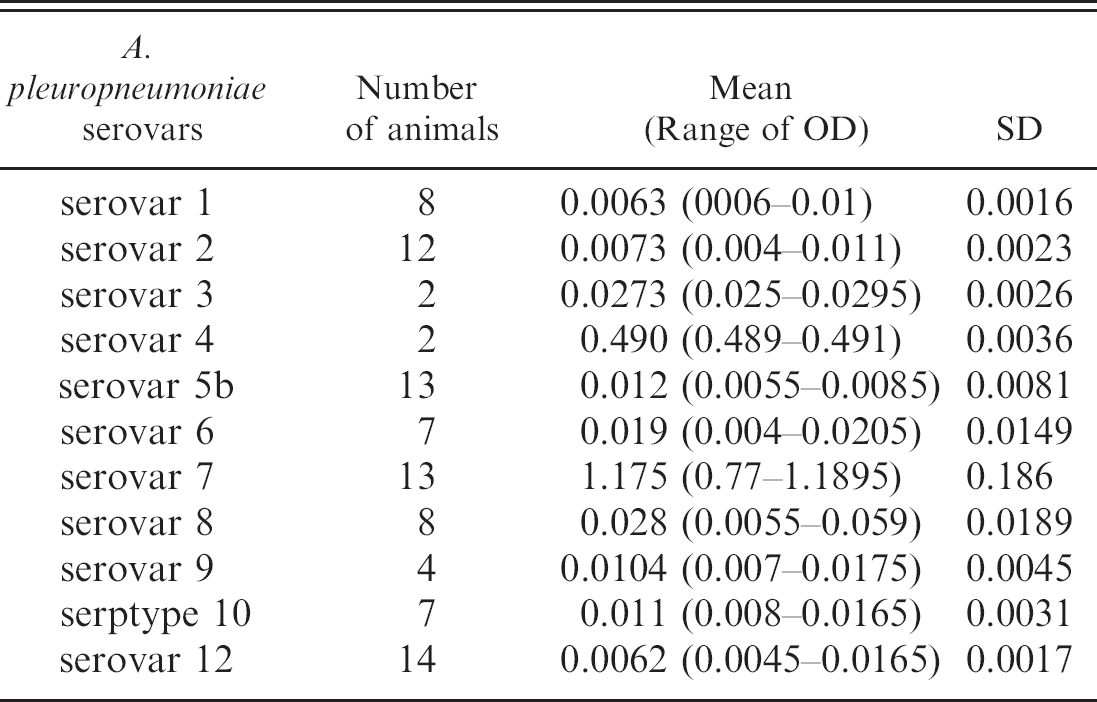
Pigs were experimentally inoculated by aerosol exposure with the reference strains of A. pleuropneumoniae serovar 1 (strain 4074), 2 (S1536), 5b (L20), 6 (Femø), 7 (WF83), 8 (405), 10 (D13039), and 12 (8329) (Table 1). 17 Blood samples were collected before inoculation and after 4–5 wk. Serum samples from pigs experimentally infected with A. pleuropneumoniae serovars 3, 4, and 9 were kindly provided by Dr. Koen Chiers e . The experimental infection of pigs was performed in accordance with a licence from the Danish Animal Experiments Inspectorate.
Sera from Danish SPF herds and from naturally infected herds were used for estimation of herd specificity. Serum samples were obtained from 213 SPF herds that all were negative for infection with A. pleuropneumoniae serovar 7 in the CFT. The herds have been monitored for A. pleuropneumoniae infection by CFT monthly for at least 2 yr. A total of 3,998 blood samples were collected from young pigs (4 to 7 months of age) and, in some of the herds, 10 samples were also collected from sows. Estimation of herd sensitivity was performed using serum samples from 9 herds naturally infected with A. pleuropneumoniae serovar 7. Infection with A. pleuropneumoniae serovar 7 was confirmed by bacterial culture. Serum was extracted from all the samples and tested for A. pleuropneumoniae serovar 7 antibodies using the CFT and the new ELISA. Twenty serum samples from a herd infected with a Danish serovar 15 were used for examination of cross-reaction between serovar 7 and serovar 15.
Statistical analysis. Under the assumption that the highest OD% in an infected herd is normally distributed, a cut-off value corresponding to a herd sensitivity of 99.9% was calculated using the PROBIT function and the UNIVARIATE procedure in the SAS software (version 6.10) f . The test probability of the highest OD% being normally distributed was also calculated using the UNIVARIATE SAS procedure.
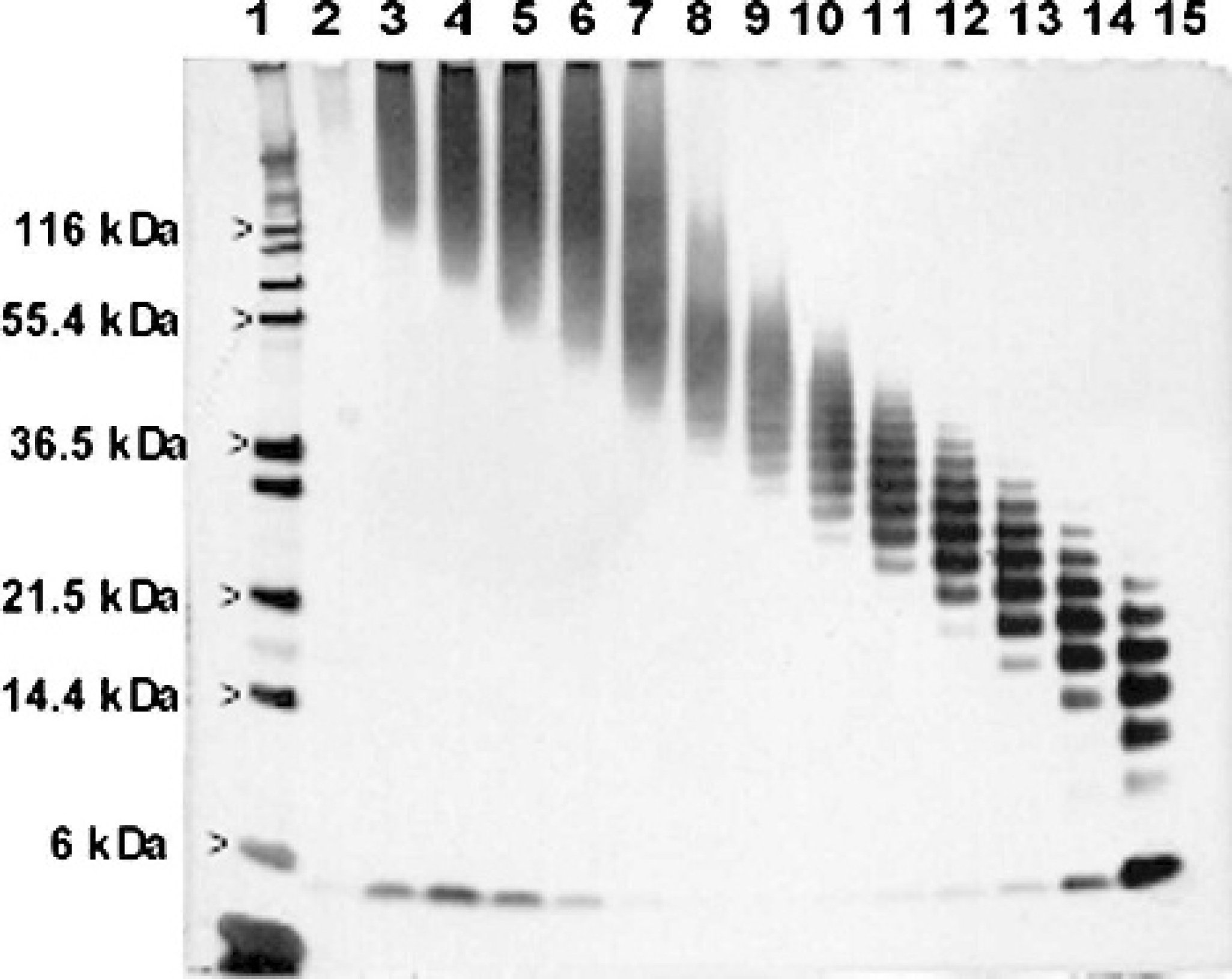
SDS-PAGE analysis of fractions of LPS from A. pleuropneumoniae serovar 7 after gel filtration on an S-100 Sephacryl columm. Fractions 3–7 were pooled and used as antigen in the A. pleuropneumoniae serovar 7 ELISA.
Results
LPS from A. pleuropneumoniae serovar 7 was gelfiltrated and fractions 3 to 7, which contained the relatively high molecular weight LPS (>36.5 kD), were used as antigen in the A. pleuropneumoniae serovar 7 ELISA (Fig. 1). LPS that was not subjected to gel filtration was also tested as antigen but was not able to distinguish between antibodies to different A. pleuropneumoniae serovars, i.e., cross-reactions were observed for sera from pigs infected with other serovars (data not shown).
When the A. pleuropneumoniae serovar 7 ELISA was evaluated with 86 sera from pigs experimentally infected with A. pleuropneumoniae serovars 1, 2, 3, 4, 5b, 6, 7, 8, 9, 10, and 12 (Table 1), sera from pigs experimentally infected with A. pleuropneumoniae serovars 4 and 7 showed mean OD values of 0.49 and 1.18, respectively. Only 2 serum samples from pigs infected with A. pleuropneumoniae serovar 4 were available for the ELISA and both yielded 46 OD%.
The OD% values of the 13 A. pleuropneumoniae serovar 7 sera ranged from 63 to 114 OD%. All sera from pigs experimentally infected with other serovars yielded mean OD values below 0.028, corresponding to OD% values below 3 OD%. Sera taken before inoculation of the pigs all showed negative results (data not shown).
Sera from one herd, infected with a Danish A. pleuropneumoniae serovar 15 were tested for reaction in the A. pleuropneumoniae serovar 7 ELISA and showed negative results in the ELISA.
Sera from a total of 222 herds were tested. Of these, 6 herds had at least 1 sample yielding a positive reaction in the CFT. With the ELISA, these 6 herds and an additional 3 herds had at least 1 sample yielding a result equal to or above 70 OD%. All 9 of these herds were confirmed to be infected with A. pleuropneumoniae serovar 7 by cultivation.
The two highest OD% values from each of the 9 infected herds.
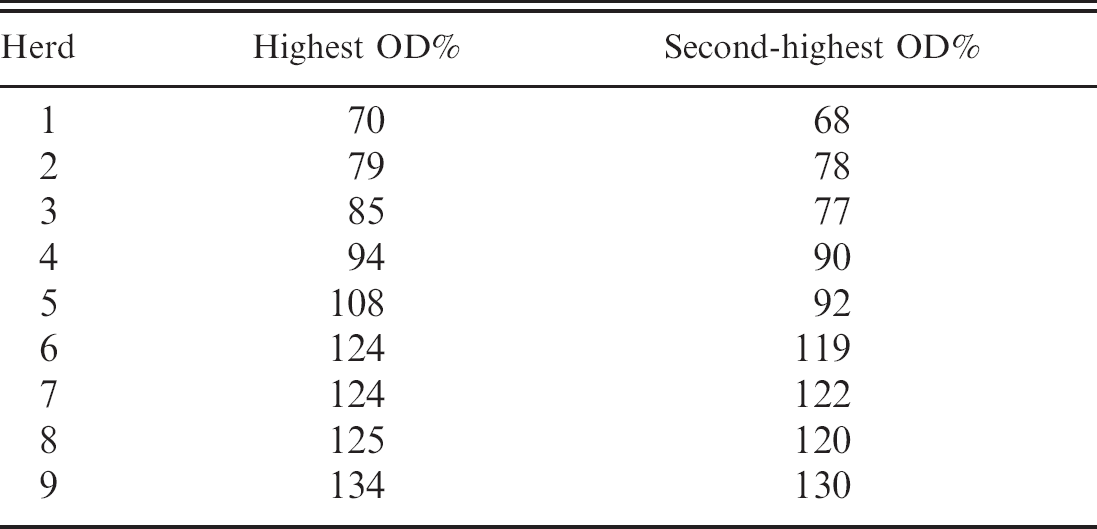
Table 2 shows the highest and second-highest OD% values from the 9 herds. Assuming that the highest OD% in an infected herd is normally distributed (this has a statistical test probability of P = 0.32 in the tested herd samples and may hence be considered an acceptable assumption), the calculated herd sensitivity is 99.9% at a cut-off value of 32.4 OD% in herd samples comprising 20 individual serum samples.
A high-specificity cut-off value for the A. pleuropneumoniae serovar 7 ELISA was estimated using a frequency plot of the number of presumptive negative herds versus the maximal OD% values (Fig. 2). Figure 2 indicates that 2 straight lines could be drawn, one just below all the frequency points, one just above all the frequency points and both passing through the point (29,0) in the plot, suggesting that 29 OD% could be a cut-off value yielding a herd specificity of 100% even when using the ELISA on very large herd samples.
Two out of the 213 negative herds had the highest observed maximum OD% (26 OD%), indicating that on the samples tested in the present study there was a herd specificity of 99% at a cut-off of 26 OD% and both an individual and a herd specificity of 100% at 27 OD%. Based on these results, a cut-off value of 30 OD% was chosen.
Figure 3 shows a histogram of the ELISA results and the CFT results on the individual serum samples from the positive herds. The column height is the number of serum samples having yielded an ELISA result in the OD% interval in question, and the different patterns in the columns show the corresponding CFT results. As is evident from the column pattern, no serum sample yielding an ELISA result below 70 OD% had a positive CFT reaction. Thus, the A. pleuropneumoniae serovar 7 ELISA appears to be considerably more sensitive than the CFT at cut-offs below 70 OD%.
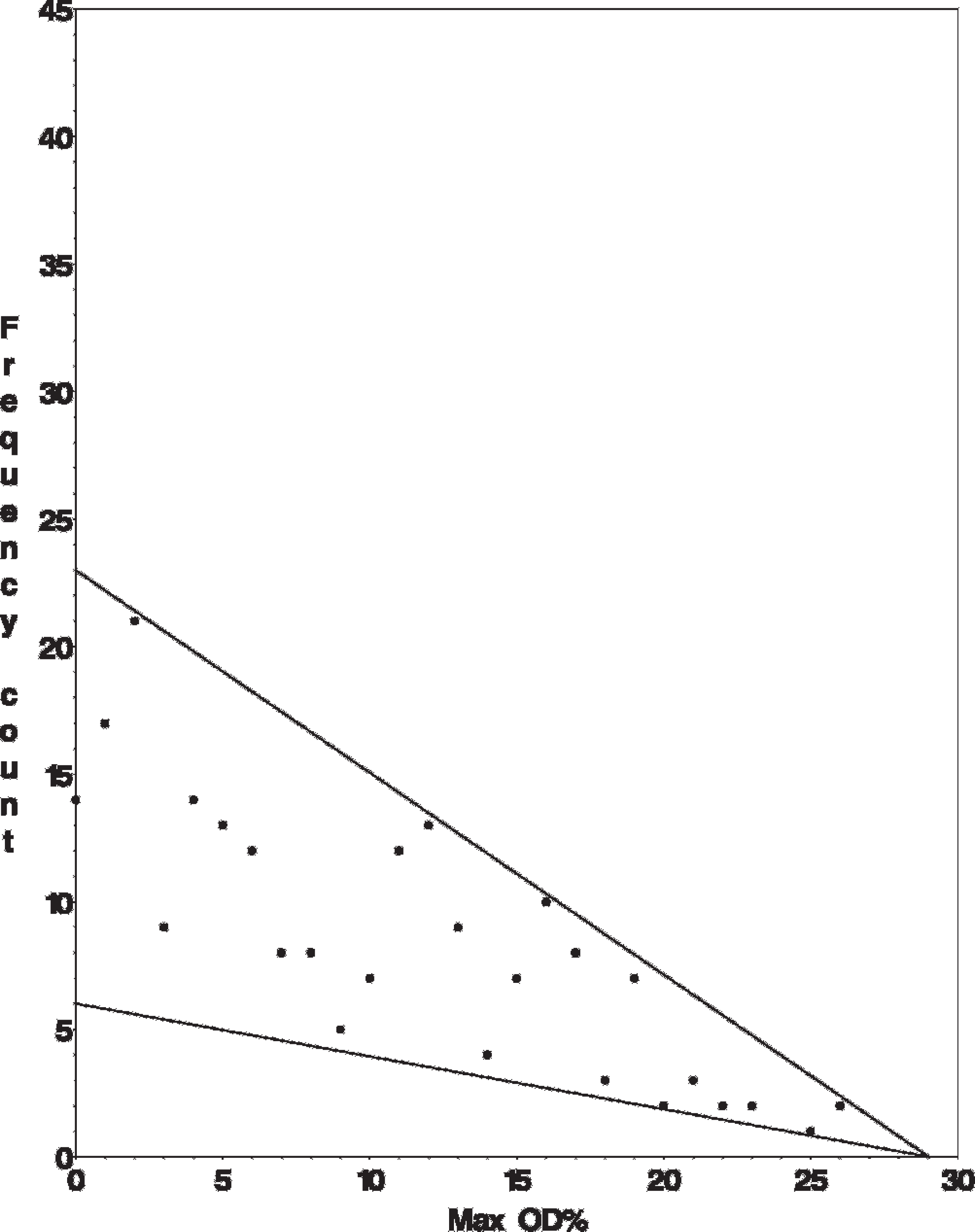
Plot showing the numbers of negative herds yielding any given maximal OD% in 20 individual samples.
Discussion
An indirect ELISA for detection of antibodies against A. pleuropneumoniae serovar 7 was developed. The antigen was purified from the reference strain of A. pleuropneumoniae serovar 7 by phenol extraction followed by size-exclusion chromatography resulting in the separation of the purified LPS in fractions containing LPS molecules of different molecular weights (Fig. 1). The antigen used in the ELISA was LPS with molecular weight of more than 36.5 kD, also designated long chain LPS (LC-LPS), which proved to perform well. This type of antigen has previously been used in an indirect MIX-ELISA where a mixture of LPS from serovars 2, 6, and 12 was used as antigen. 9
In the authors' experience the reference strains for the different serovars of A. pleuropneumoniae are representative for strains of their respective serovars with respect to serologic reactions. Although atypical combinations of capsular polysaccharide and O-chain lipopolysaccharide antigens (K- an O-antigens, respectively) have been reported, e.g., K2:O7 13 and K1:O7, 6 they have been rare and do in general not give rise to serious problems in the serological surveillance of A. pleuropnumoniae infections.
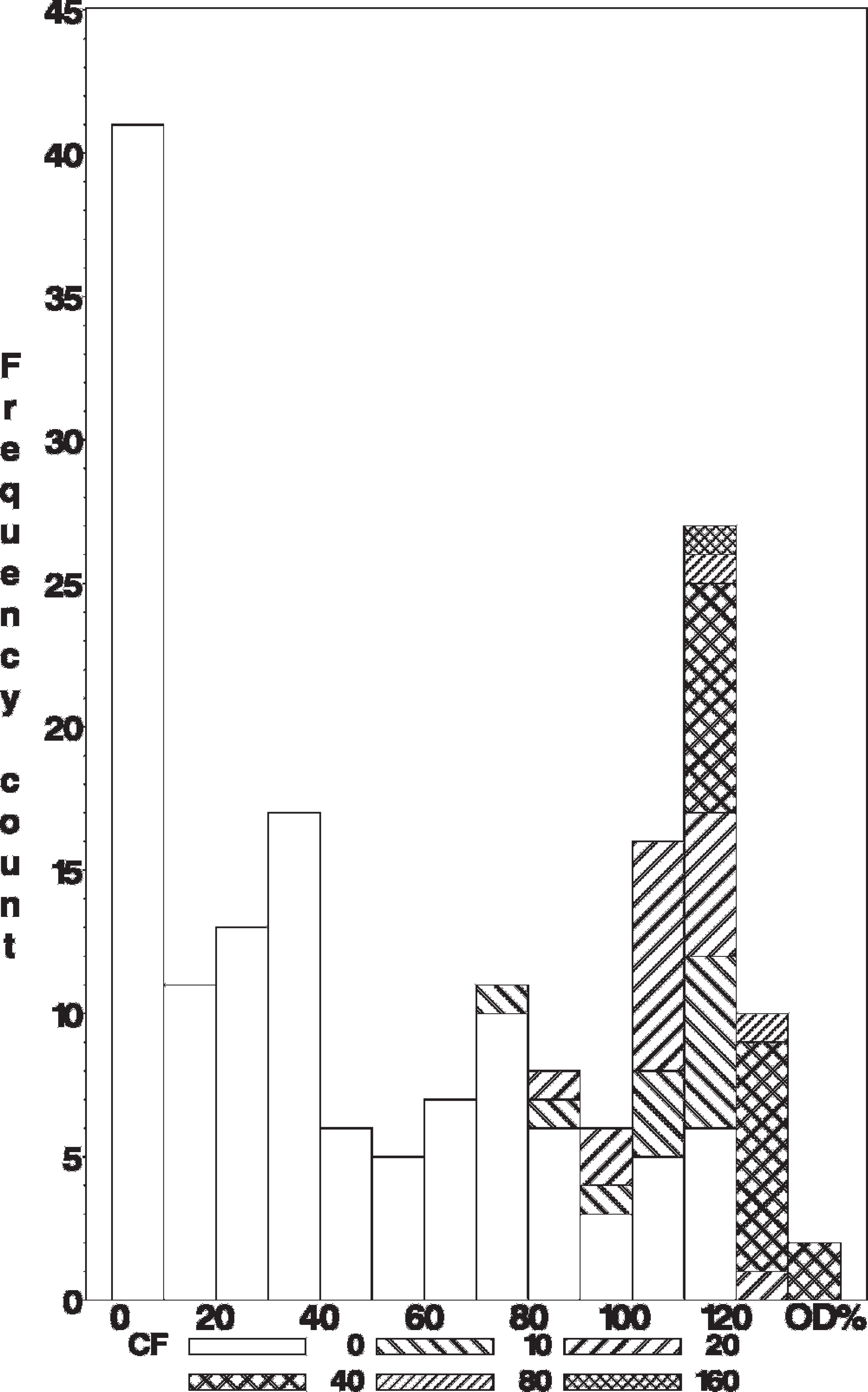
Histogram showing the frequencies of individual samples having yielded OD%-values in intervals of 10 OD% each when tested in the A. pleuropneumoniae serovar 7 ELISA. The different hatching in the columns represents CFT titers of 0, 10, 20, 40, 80, and 160.
A. pleuropneumoniae serovars 4 and 7 have similar O-side chains in their LPS, 16 which can cause serologic cross-reactivity between these serovars. This explains the reactivity of sera from pigs experimentally infected with A. pleuropneumoniae serovar 4 in the A. pleuropneumoniae serovar 7 ELISA. In Denmark, A. pleuropneumoniae serovar 4 is not usually isolated from naturally infected pig herds, (Annual Report. Danish Veterinary Laboratory and Danish Veterinary Institute for Virus Research) therefore only a few sera were available from pigs experimentally infected with A. pleuropneumoniae serovar 4. The fact that the A. pleuropneumoniae serovar 7 ELISA also detects antibodies to A. pleuropneumoniae serovar 4 may be considered an advantage when the ELISA is used for surveillance of A. pleuropneumoniae infections in pig herds. However, this crossreactivity limits the use of the ELISA as a serovar-specific diagnostic tool; therefore, positive reactions in the ELISA should be complemented by isolation and typing of the bacteria to determine if infections are caused by A. pleuropneumoniae serovar 4 or A. pleuropneumoniae serovar 7. A. pleuropneumoniae serovar 15 is not very common in Denmark. So far animals from only 1 herd have been shown to be infected with A. pleuropneumoniae serovar 15 and to have seroconverted against this serovar. A. pleuropneumoniae from this herd has been typed to be a variant of serovar 12 and serovar 15 (K15:O12) g . Sera from the herd were negative in the A. pleuropneumoniae serovar 7 ELISA. It has been shown that capsular polysaccharides of serovar 15 share common substructurel elements with serovar 7 and serovar 12. 16 The ELISA in this study was based on long chain LPS purified from serovar 7 and showed no cross-reaction with serovar 15.
The results presented here indicate a herd specificity and a herd sensitivity of the ELISA both near 100% at a cut-off of 26 OD%. For practical use for surveillance a cut-off of 30 OD% was chosen.
The herd specificity estimate made in this study should be considered to be valid even for large herd samples, because of the method of estimation and the use of ELISA results from 213 herds and a total of 3,998 individual serum samples for the estimation. On the other hand, although the estimated herd sensitivity was also found to be very high, it should be noted that this estimate was based on results from only 9 herds and 180 individual samples.
Therefore, the calculated sensitivity should only be considered as an indication that the true herd sensitivity on herd samples comprising 20 individual serum samples is near or equal to 100% at a cut-off of 30 OD%. Individual sample sensitivity could not be estimated precisely because the true infection history of the individual animals was not known.
The mean OD% of negative samples plus 3 SD yields a cut-off value of 12.3 OD% with a corresponding individual specificity of only 97.8%, which is a relatively low value at 3 SD from the mean. This result implies that the distribution of the OD% values is highly skewed (skewness = 2.59 as calculated by the UNIVARIATE procedure), i.e., there were a small number of samples that yielded considerably higher OD% results than most of the other samples. The reason for this cannot be fully elucidated because the infection history of each individual animal was not known. Nevertheless, the highest individual OD% from any of the 213 negative herds was only 26 OD%, which is below the proposed cut-off of 30 OD%.
Comparison of the results from CFT and the A. pleuropneumoniae serovar 7 ELISA showed a very high sensitivity of the ELISA relative to the CFT. The ELISA yielded a higher prevalence of positive pigs in every herd than the CFT. However, because A. pleuropneumoniae serovar 7 is not very common in Denmark, the herds used in this study were chosen based on seropositivity. Therefore, it is not known whether herds with a low prevalence of positive animals would be more difficult to find using the serovar 7 ELISA.
In conclusion, the LPS antigen-based A. pleuropneumoniae serovar 7 ELISA developed in this study seems to be a good alternative to the CFT. The A. pleuropneumoniae serovar 7 ELISA has a higher sensitivity and a high specificity compared to the CFT.
Acknowledgements
We wish to thank Dr. Koen Chiers for providing sera from experimentally infected pigs. We thank Henriette Vorsholt and Maria Lindeløv Christensen for skillful technical assistance.
Footnotes
a.
Amersham Bioscience, Hillerød, Denmark.
b.
Invitrogen, Carlsbad, CA.
c.
Nunc A/S, Roskilde, Denmark.
d.
Kirkegaard & Perry Lab., Gaithersburg, MD.
e.
University of Gent, Belgium.
f.
SAS Institute Inc., Cary, NC.
g.
Angen, Danish Institute for Food and Veterinary Research. Angen, National Veterinary Institute, Technical University of Denmark, Denmark.