




Abstract
There is a paucity of research on the efficacy of online asynchronous discussion forums in fostering critical thinking, social justice awareness and empathy in pre-service teachers. This study adopted a case study design rooted in the social constructivist/interpretive paradigm. South African university pre-service teachers comprised the study’s sample. To examine how online discussions about Global Citizenship Education (GCE) affected the critical thinking and social justice awareness of a group of pre-service teachers (n = 31), a questionnaire based on Andreotti’s (2006) Soft vs Critical GCE framework was used. To further understand how their involvement in online discussions on global issues influenced their sense of social justice awareness, empathy and critical thinking, certain pre-service teachers’ (n = 9) reflective essays were used. The findings revealed that pre-service teachers’ responses were more consistent with the soft GCE approach. The Soft vs Critical GCE framework was useful for identifying which aspects of online interactions require a more critical understanding of GCE. The findings showed that pre-service teachers who participated in the online GCE conversations had increased social justice awareness, critical thinking skills and empathy.
Keywords
Introduction
The significance of teacher education programmes continues to rise as universities prepare prospective teachers to be global citizens who are capable of shaping the pedagogical direction of the schools in which they will teach. In teacher education, global citizenship is a desirable graduate attribute (Bruce et al., 2019; Marshall, 2011; Tichnor-Wagner et al., 2016; Wang et al., 2011). In order to comprehend the interdependence between global and local communities, it is essential to cultivate critical awareness and encourage engagement with global issues. Equipping pre-service teachers with these skills and knowledge through socially just pedagogies may contribute to developing an informed and engaged ‘glocal’ citizenry.
Socially just pedagogies endeavour to establish collaborative, inclusive learning environments that acknowledge and value students’ cultures, identities, understanding and lived experiences while supporting them in analysing issues of privilege, power, bias and inequality in education (Behizadeh et al., 2019; Waghid, 2023; Waghid & Hibbert, 2018; Waghid & Meda, 2023; Waghid & Ontong, 2022). Developing global citizens with a strong sense of responsibility requires proficiency in integrating Information and Communication Technology (ICT) to support diverse students and promote inclusivity in educational settings. In this regard, I argue that socially just pedagogies, supported by ICT and emphasising student-centred and experiential learning, may be required to develop more resilient and equitable societies. These pedagogies may assist students in understanding the interdependence of local and global contexts and the importance of social equity by encouraging them to examine their preconceptions and biases critically and by providing learning experiences that challenge dominant narratives and promote critical thinking (Waghid, 2016; Waghid & Oliver, 2017). Students can, therefore, become agents of change in their communities and society (Waghid, 2016; Waghid & Oliver, 2017).
Veugelers and Bosio (2021) contend that Global Citizenship Education (GCE) explores and exposes the interdisciplinary and morally critical social, political, economic, intellectual and cultural factors influencing social justice. GCE analyses issues such as trade policies, labour practices, power dynamics, privilege, oppression, diversity, identity and intercultural communication within the analysis of global economic systems, prevalent ideologies and cultural contexts (Veugelers & Bosio, 2021). It is a socially just pedagogy owing to its emphasis on global perspectives, recognition of power and inequality, promotion of social justice and equity, and encouragement of reflection, dialogue and transformation (Blackmore, 2016).
There is a dearth of research on the effectiveness of online asynchronous discussions—a form of ICT—in fostering critical and social justice awareness among pre-service teachers through GCE. In particular, GCE is an underexplored practice in South African teacher education, making the current research pertinent to the discourse. Individual South African universities may seek to promote global citizenship among students through curriculum-based activities, but such initiatives typically emphasise cultural exchange, community service, sustainability and opportunities to study overseas. Therefore, additional research is required to examine the influence of ICT usage on the critical thinking and social justice consciousness of pre-service teachers from historically disadvantaged contexts. The following research questions guide this study:
What specific factors influence a group of pre-service teachers’ critical thinking and social justice awareness in the context of online discussions concerning GCE? How does participating in online discussions on global issues impact social justice awareness, empathy and critical thinking among these pre-service teachers?
Global Citizenship Education in South African Teacher Education
GCE aims to address challenges, including poverty, injustice and human rights abuses that continue to risk sustainability and peace (UNESCO, 2016). GCE is favourable because it enables students to look at these issues as global rather than local and to endeavour to build peaceful, tolerant, inclusive, secure and sustainable communities (UNESCO, 2016). GCE builds upon the Peace and Human Rights Education initiative of UNESCO’s Education Sector (UNESCO, 2016). Its primary objective is to instil in students a commitment to peace, human rights, sustainable development and the creativity, innovation and sense of responsibility necessary to become influential global citizens (UNESCO, 2016).
According to the Minimum Requirements for Teacher Education Qualifications (MRTEQ) policy, (Department of Higher Education and Training [DHET], 2015), South African teacher education institutions are required to construct specialised programmes resulting in the creation of teacher education qualifications. The MRTEQ policy provides a framework for developing initial teacher education curricula and Continuous Professional Development programmes (DHET, 2015).
The MRTEQ policy (DHET, 2015) outlines the seven core responsibilities of a teacher:
Subject expert; Learning facilitator; Interpreter and creator of educational materials; Leader, an administrator and manager; Lifelong learner; Assessor; Citizenship, community and pastoral responsibilities.
According to MRTEQ (DHET, 2015), teachers should model and encourage a critical, devoted and ethical stance that fosters a compassionate community through their citizenship and pastoral roles. The teacher will adhere to the Constitution of South Africa and promote democratic values and processes in the classroom and wider community (DHET, 2015). This role is further defined by the extent to which teachers cultivate an encouraging and challenging learning community and meet their students’ and colleagues’ academic and other requirements (DHET, 2015). In addition, the teacher will gain a critical understanding of community and environmental development challenges, enabling them to establish mutually beneficial relationships with parents and other influential groups. In this capacity, HIV/AIDS education is fundamental (DHET, 2015). The policy acknowledges the significance of global citizenship due to its emphasis on citizenship as a fundamental responsibility for the roles of the teacher.
The Benefits of Online Discussion Forums
Several studies report that student engagement in asynchronous online discussion forums encourages conversation, generation of knowledge and critical thinking (Al-Husban, 2020; Beckmann & Weber, 2016; Murphy, 2004; Richardson & Ice, 2010; Sun & Bin, 2018). Increased levels of involvement in online discussion forums, such as regular responses to posts that extend beyond basic content, are associated with greater knowledge development (Myers, 2022; Raković et al., 2020). For university educators to promote student learning, it is crucial to urge students to actively engage in online discussions by challenging them while motivating them to share their perspectives (Myers, 2022). Learning is active rather than passive for the students, who may even be motivated to increase their subject-matter knowledge.
It has been demonstrated that participation in online discussion forums can improve students’ mental health and motivation to engage in offline civic activities (Pendry & Salvatore, 2015). The degree of connectedness is essential because it promotes a sense of community outside of the classroom, where communication and collaboration skills are crucial for students. Afify (2019) asserts that students engage in more intricate decision-making processes, display higher levels of involvement and collective thought, learn to convey and negotiate evolving knowledge structures, and organise and process information by creating meaning through cooperative engagement. Students are encouraged to actively engage in learning, examine and think critically and contribute to the collective creation of knowledge when online discussion forums are used in the classroom (Afify, 2019).
In online collaborative classrooms, students have more opportunities to learn about and work towards social justice and social change (Ahmad & Gul, 2021; Guthrie & McCracken, 2010). This has also been observed in the South African education context. For instance, Bharuthram and Kies (2013) conducted a study that demonstrated the benefits of incorporating e-learning into an English course for South African students. The inclusion of e-learning compelled these students to actively participate in discussions, leading to increased interaction and information sharing within and beyond the online platform, thus fostering a community of practice. Similarly, Waghid (2016) conducted a separate study that explored the use of films supported by online dialogues on the Facebook platform. The findings revealed that students treated each other equally and developed an understanding of their society’s economic needs. This highlights the potential of online platforms to facilitate social interaction and promote awareness of societal development. In another study conducted by Mtshali et al. (2020) among South African pre-service teachers in a Business Management module, the online discussion forum provided them with a unique context for learning through social interaction. The qualitative findings shed light on how developing nations can address the need to incorporate pedagogical practices in the online space.
Furthermore, several studies (Aguirre-Mendez & Mahoney, 2020; Gul et al., 2023; Huda et al., 2018) indicate that students who participate in online learning that focuses on cultural exchange undergo intellectual transformation. In a study (Ahmad & Gul, 2021), participants reported developing a stronger sense of civic leadership and social justice beliefs through online engagements. Reflection and cooperation during online interactions strengthened clearer and broader connections to establish communities supporting students with distinct talents, such as leadership and thoughts on social justice (Ahmad & Gul, 2021). Students provide an abundance of resources in the form of social networks, websites, articles of news and videos that can influence changes to the curriculum that affect learning outcomes (Guthrie & McCracken, 2010).
A review of relevant studies indicates that students frequently use social media in opposition to global injustices (Jenkins et al., 2020; Mossberger et al., 2007; Myers, 2022; Stornaiuolo & Thomas, 2017). These changes to the current curriculum may increase participation by introducing novel and convenient alternatives to conventional face-to-face discussions and promoting both individual and collective reflection (Guthrie & McCracken, 2010). Furthermore, the potential impact enabled by the integration of technology in experientially centred curricula enables the effects of service to extend well beyond the classroom as students from diverse social, cultural and economic backgrounds explore the enhancement of communities and dynamics through the lens of citizenship, social action, ethics and leadership in order to encourage social change (Guthrie & McCracken, 2010).
Empathy, a form of emotional communication, has been suggested to be essential in asynchronous communication (Preece, 1999). Emotional presence, according to Cleveland-Innes and Campbell (2012), is the outward expression of emotion, affect and feeling by individuals and groups participating in a community of inquiry as they interact and connect with the learning technology, course content, peers and the teacher. Further, Osler (2021) argues that empathy occurs in certain online contexts and paves the way for many other online interpersonal experiences that require empathy, such as simulation, sympathy, inference, projection and shared experiences. These ideas are consistent with Garrison (2015), who emphasises the significance of sharing ideas and emotions with others as a means of intellectual and emotional development. As social beings, we gain intellectual and emotional sustenance from sharing our thoughts and feelings with others (Garrison, 2015). This is likely due to the fact that emotions, as a component of a social presence in an online community of inquiry, play a crucial role in the development of interpersonal relationships by enabling individuals to project their personalities in a socially sensitive and supportive environment (Cleveland-Innes & Campbell, 2012; Garrison, 2015). In this way, students’ emotions in online settings are crucial for understanding the feelings of other individuals since this occurs when interactions are established in an authentic and trustworthy atmosphere within an online community (Cleveland-Innes & Campbell, 2012; Garrison, 2015).
The Soft vs Critical GCE Framework
The Soft vs Critical GCE framework aims to provide educators with a GCE strategy that recognises the complexity and power dynamics of global challenges (Andreotti, 2006). As its two approaches for GCE, the framework recommends a ‘soft’ approach and a ‘critical’ approach. Unlike ‘soft’ GCE, ‘critical’ GCE encourages change without instructing students what they ought to think or do (Andreotti, 2006). This is achieved by providing settings in which students may engage in critical inquiry and experiment with different ways of perceiving and relating to one another (Andreotti, 2006).
In order for students to make well-informed decisions, emphasis is placed on the historical and cultural generation of power and knowledge (Andreotti, 2006). Andreotti’s (2006) framework aims to encourage educators to adopt a more critical approach to GCE, one that addresses the root causes of global issues and encourages students to take action. Students are expected to acquire the knowledge, skills and attitudes necessary to become active global citizens committed to promoting a more just and equitable global society (Andreotti, 2006). Table 1 provides an overview of the Soft vs Critical GCE framework adapted from Andreotti (2006) by exploring soft and critical approaches to GCE with reference to 12 underlying aspects.
Andreotti’s (2006) Soft vs Critical GCE Framework.
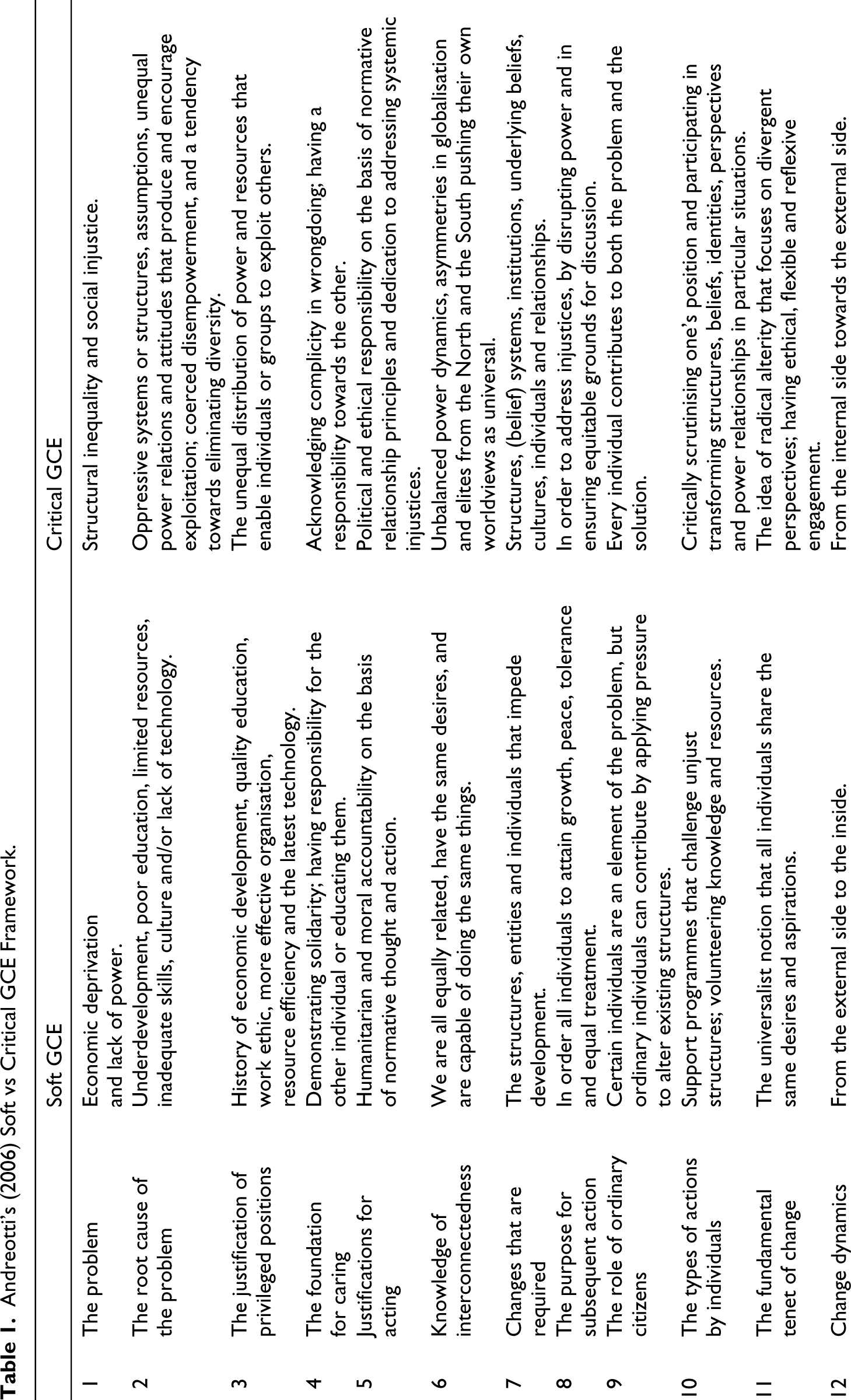
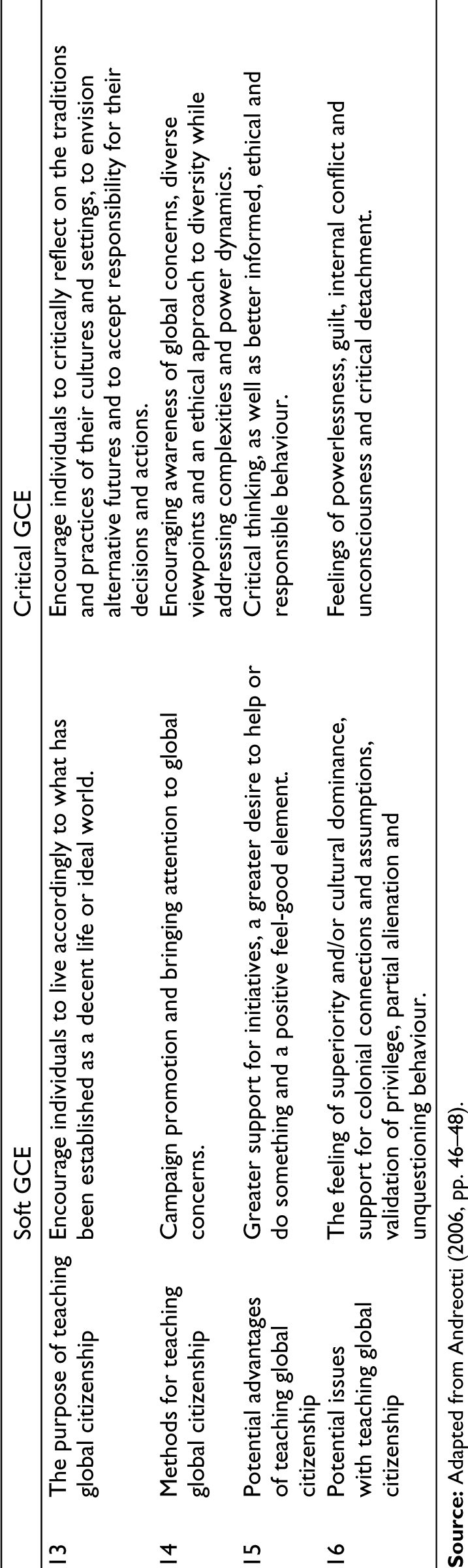
According to Andreotti (2006), there is no universal GCE strategy. Therefore, it is crucial to acknowledge that soft GCE is appropriate in some contexts and can already represent a significant improvement in others. However, Andreotti (2006) acknowledges that teachers who lack the critical literacy to question the core principles and practices they are attempting to assist students in overcoming will unwittingly perpetuate adverse systems.
Critical Thinking, Social Justice Awareness and Empathy as Elements of the Soft vs Critical GCE Framework
According to UNESCO (2015), GCE is based on the three domains of learning, namely cognitive, socio-emotional and behavioural. First, the cognitive domain, as stated by UNESCO (2015), pertains to the knowledge and thinking skills necessary for individuals to better understand the world and its complexities. Second, the socio-emotional domain pertains to the values, attitudes and social skills that enable students to develop effectively, psychosocially and physically, and to live together with others respectfully and peacefully (UNESCO, 2015). Third, the behavioural domain concerns individual conduct, performance, practical application and engagement with others (UNESCO, 2015).
Reviewing Andreotti’s (2006) Soft vs Critical GCE framework, the researcher further identifies three key framework elements, which are intertwined with UNESCO’s (2015) domains for GCE. These elements within the scope of this present study include critical thinking, social justice awareness and empathy. According to UNESCO (2015), the cognitive element places emphasis on students’ ability to acquire knowledge, understanding and critical thinking about global, regional, national and local issues, as well as the interconnectedness and interdependency of different countries and populations. Andreotti (2006) argues that the analysis and critique of relationships among perspectives, language, power, social groups and social practices by students are necessary for their ability to develop critical literacy. Critical thinking, the researcher contends, may further resonate with the behavioural component since it would require students to possess critical thinking skills in real-world situations. In other words, students would have, in this regard, developed the ability to engage in informed, responsible and ethical action through critical thinking (Andreotti, 2006).
Critical GCE has a strong social justice orientation concerning the need to scrutinise unequal power relations (Andreotti, 2006). While social justice awareness is tied to the cognitive element as it requires one to have knowledge about societal structures and critical thinking skills to understand inequities, it also connects to the socio-emotional element, as developing a sense of social justice often involves attitudes of fairness, respect and equality (UNESCO, 2015). Dobson (2005) refers to the notion of justice being more adequately aligned with the political, which may lead to greater equitable relations. Andreotti (2006) refers to being political as a critical GCE approach.
Empathy has a strong behavioural component since it can guide one towards conducting oneself towards others, informing compassionate and understanding behaviours in interpersonal relations (UNESCO, 2015). However, empathy involves understanding and sharing the feelings of others, which the researcher submits requires emotional intelligence, a key part of socio-emotional development (UNESCO, 2015). This is because empathy, the researcher contends, encourages respectful and peaceful coexistence, promoting the development of social skills. However, the researcher submits also involves cognitive skills, as understanding others’ perspectives requires one to think about and interpret others’ feelings and thoughts. This is what Andreotti (2006) also refers to as the basis for caring, where through a critical GCE approach, one displays responsibility towards others instead of always doing things for them.
Methodology
Due to its suitability for investigating complex events in their context, this study uses a case study research design (Yin, 2014). With the use of ‘how’ and ‘why’ questions, the case study provides a comprehensive and in-depth examination of a particular event (Yin, 2008, 2014, 2016). This study is informed by social constructivism, which aims to understand the meaning and interpretation of social processes through the lenses of the engaged persons, groups or organisations (Creswell & Poth, 2017; Denzin & Lincoln, 2011; Mertens, 2015). According to Creswell and Poth (2017), the paradigm also accepts the subjectivity of social processes and rejects the idea of an objective reality or truth. Examining students’ perspectives of their educational experiences using this paradigm enables the evaluation of many viewpoints and interpretations, which is invaluable.
Purposive sampling was used as it permits the selection of participants who can provide beneficial information (Creswell & Plano Clark, 2017). The sample group included 31 third-year pre-service teachers (n = 31) who completed questionnaires, and 9 reflective essays (n = 9) were used. The selection of these pre-service teachers was based on their prior exposure to fundamental educational theories and pedagogies over two years, which placed them in a suitable position to engage in profound and critical reflection on subjects pertaining to GCE. All participants were assured that their participation was voluntary, anonymous and confidential. The Faculty of Education’s ethics research committee endorsed the study, and ethical issues were considered throughout the research procedure. A closed-ended survey based on Andreotti’s (2006) Soft vs Critical GCE framework was adapted and disseminated using Google Forms to more accurately determine 16 variables that affected the pre-service teachers’ critical thinking and social justice awareness in the context of online discussions about GCE. The closed-ended questions were beneficial towards limiting the participants’ responses to predetermined categories, namely a soft or critical GCE approach (Creswell & Plano Clark, 2017).
The questionnaire’s 16 variables include the following:
In my opinion, problems highlighted in the online discussions mainly centred around… I understand that the nature of these problems appeared to be linked to… I acknowledge that developed nations are in positions of privilege edge because of… My understanding concerning the basis for caring in society is a… I understand that one’s grounds for acting are based on… My understanding of interdependence is that… I believe what needs to change in the global environment is the… Change needs to happen… I believe that the role of ‘ordinary’ individuals is that… I believe what individuals can do to ensure some form of change is to… I believe change can happen by… I believe that the basic principle for change… I believe that the goal of global citizenship education is to… I believe that strategies for global citizenship education include… I believe that potential benefits of global citizenship education include… I believe that potential problems with global citizenship education may include…
The aim of the reflective essays was to acquire a better grasp of how the research participants’ involvement in online discussions on global issues influenced their sense of social justice, empathy and critical thinking. The reflective essay questions were designed to encourage the pre-service teachers to provide detailed responses and share personal interpretations and reflections for personal growth and awareness. The reflective essay was guided by nine probing questions:
Describe your experience participating in the online discussions on global issues? In what ways do you feel participating in the online discussions on global issues has impacted your social justice awareness? Can you give a brief example of a situation where participating in an online discussion on a global issue increased your social justice awareness? How do you think online discussions on global issues can be more effective in increasing social justice awareness among pre-service teachers? How has participating in online discussions on global issues influenced your critical thinking skills? Can you describe a situation where your critical thinking skills were challenged during an online discussion on a global issue? How has participating in online discussions on global issues influenced your empathy towards people from different cultures? Can you describe a situation where your empathy towards people from different cultures was challenged during an online discussion on a global issue? In your opinion, what are some of the key factors that shape one’s level of critical thinking and empathy towards people from diverse cultures and backgrounds in the context of online discussions on global citizenship education?
The reflective essays were analysed using ATLAS.ti, a computer-assisted qualitative data analysis (CAQDAS) programme. Through the CAQDAS, the researcher was able to divide the text from the reflective essays into paragraphs and subsequently assigned codes to each unit and then grouped the codes into particular themes in line with the second research question. The researcher, then, compared the findings concerning each theme with the available literature and further contextualised them within the Soft vs Critical GCE framework. The researcher looked for patterns and differences among participants’ responses and subsequently drew conclusions from the findings. Additionally, the selected excerpts of participants’ reflective essays offered details and in-depth reflections, providing rich data for interpretation and analysis. The excerpts were particularly selected because they were representative of the common themes in the data.
Findings
Based on the results from Table 2, the soft GCE approach was coded as relatively higher (n = 15.94) than a critical GCE approach (n =15.06). This suggests that the participant’s responses were slightly more aligned with the soft GCE approach, albeit with a relatively small difference. The findings support the current literature on GCE (UNESCO, 2016), which aims to promote a global perspective and commitment to peace, human rights and sustainable development as a response to challenges like human rights abuses, inequality and poverty. The majority of students appeared to be leaning towards a soft approach to GCE that promotes peaceful, tolerant, inclusive, safe and sustainable communities.
Survey Results Based on Andreotti’s (2006) Soft vs Critical GCE Framework.
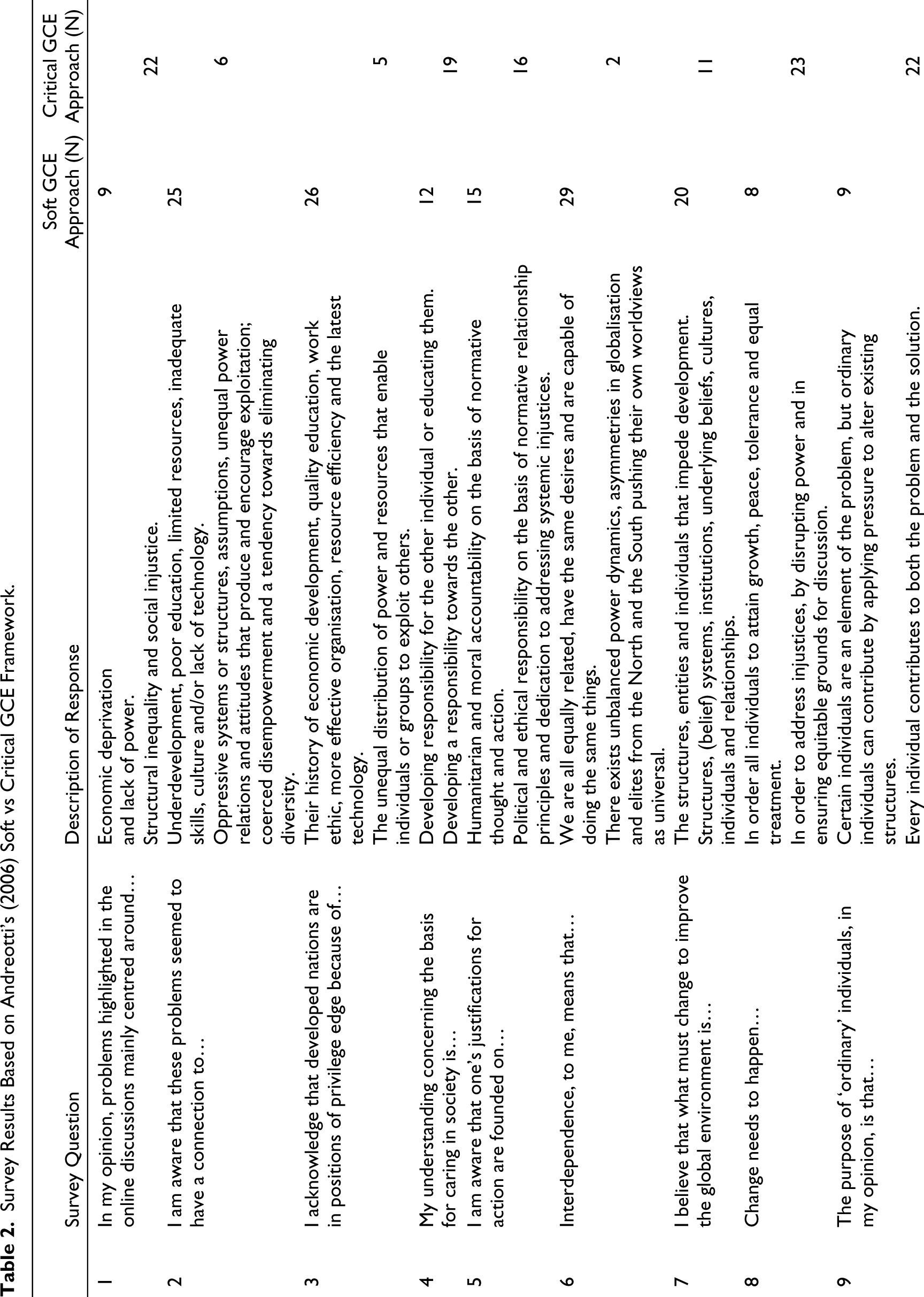
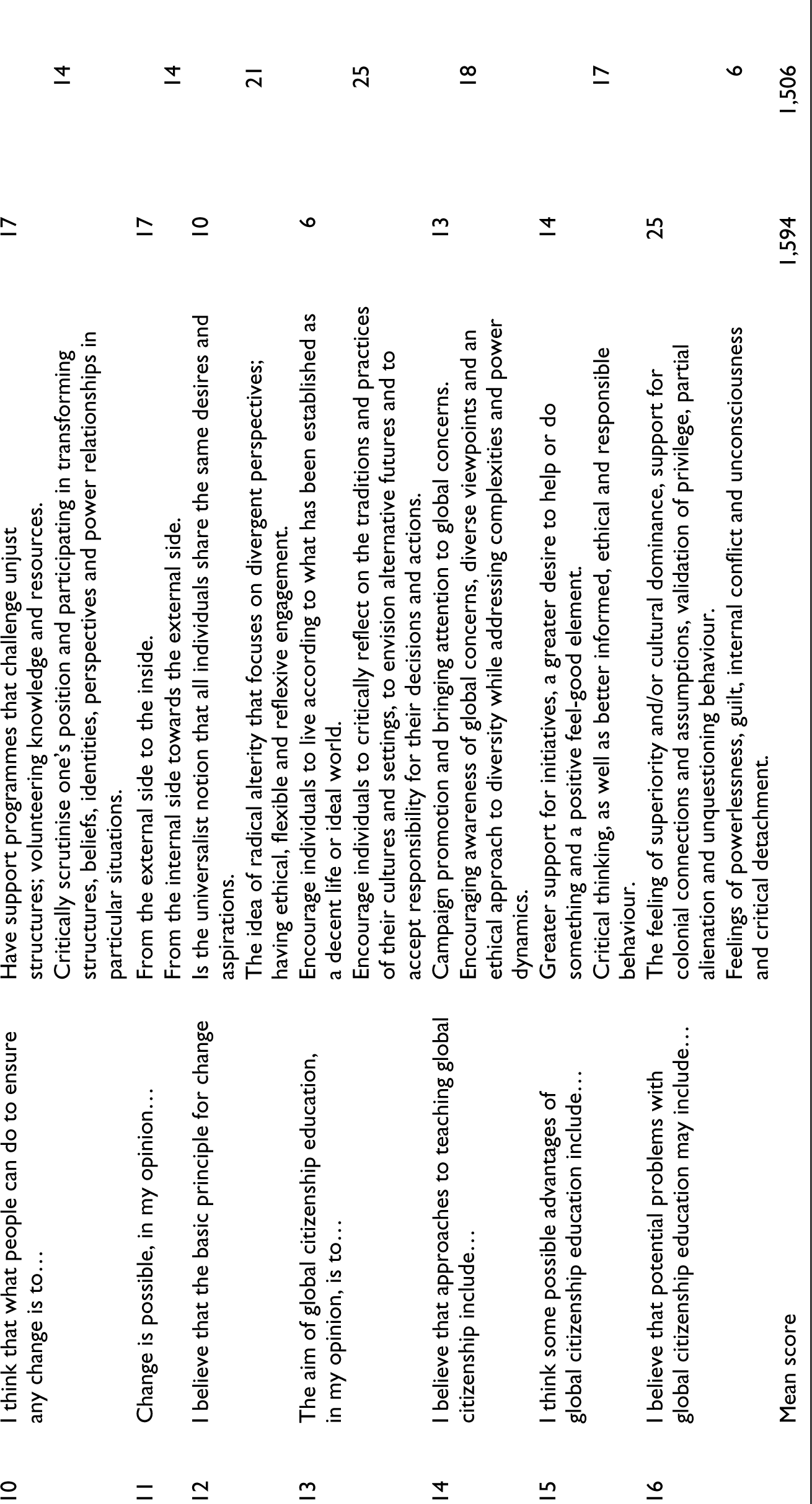
The results based on Andreotti’s (2006) framework further confirm that the specific factors aligned most with the majority of the students in terms of critical thinking and social justice awareness were:
Recognising inequality and injustice; Responsibility towards others; Political and ethical principles; Promoting equitable dialogue and autonomy for development; Accepting personal responsibility for societal concerns; Embracing and valuing diversity; Empowering individuals to engage in critical thinking and responsible action; Promoting engagement with global issues and perspectives; Dealing with complexities and relations of power; and Cultivating autonomous and critical thinking capacities for ethical action.
These factors align with the MRTEQ’s (DHET, 2015) focus on citizenship. This suggests that the results reaffirm their significance through the existing university curriculum designed towards cultivating critical thinking and social justice consciousness among pre-service teachers.
The sample students’ (MM, AC and SS) responses outlined favourably that online discussions influenced their social justice awareness. Student MM’s greater awareness of her position in society and the consequences of her actions on others, that is, her community, are confirmed by her comments:
Participating in these online discussions has impacted me in such a way that I am more aware of my surroundings, and my impact of being socially aware affects other people, whether it is directly or indirectly. Being aware of my surroundings would mean that I pick up litter and even volunteering and help in any way that will be in the betterment of the social justice awareness. (Student MM)
The results confirm that student MM grew more aware of her environment and the necessity of being socially responsible due to engaging in online conversations. MM’s willingness to take action, such as cleaning up litter and volunteering, demonstrates that she is more inclined to cultivate social justice through environmental sustainability that would benefit her community. The finding further aligns with the literature’s claim that students actively participating in online discussions leads to greater knowledge development (Myers, 2022; Raković et al., 2020) and may be prompted to engage in offline civic activities (Pendry & Salvatore, 2015). Student AC’s response demonstrates social justice awareness by emphasising the importance of inclusive learning environments, knowledge-sharing and engagement with critical social and environmental issues. Student AC reports:
Although I am hesitant to ask questions about things I don’t understand in a face-to-face class, an online discussion or group allows me to do so in a setting where others may also ask and answer questions. Sharing the knowledge I have allowed me to connect with a wider audience. Because there were many topics like climate change and overpopulation that I did not know much about, this online dialogue has, for me, become an epistemological method. I do at least realise better now. (Student AC)
Student AC’s response confirms that she overcame her apprehension to question and engage with other students through online conversations, which appeared to foster an understanding of diverse communities. Participating in the online discussions for student AC concerning themes such as climate change and overpopulation helped her deepen her epistemological knowledge, which led to personal development and a more profound zeal to confront social justice issues. This supports Myers (2022) argument that educators should use online discussion forums to provoke and motivate students to share their insights, particularly when they may be less inclined to do so.
Student SS showcases social justice awareness by emphasising the need to understand societal concerns important to social justice, such as poverty and unemployment. Student SS comments:
One way in which my level of social justice increased was through empowerment with knowledge of social issues such as levels of poverty and the high rate of unemployment as they were discussed on the online platform. I have learned that we may stay in the same area but our standard of living is different as one of my colleagues shared a video were rich and poor people were separated. (Student SS)
Student SS’s enhanced understanding of these issues, obtained through the online conversations, has enabled her to see inequities that exist outside of her local community. The mention of a video posted by a fellow student appeared to further conscientise her concerning the inequalities in living conditions between affluent and poor people. These findings further corroborate Guthrie and Mccracken’s (2010) claim concerning the use of resources, such as videos and other media, that can positively influence learning outcomes by promoting individual and group reflection.
The sample students CA, ZC and KM demonstrated a degree of criticality due to the online engagements. Student CA was presented with a challenging question that needed critical thought to respond appropriately. Student CA had to analyse the question deeply and decide how to respond. To put it another way, she had to scrutinise the problem and think imaginatively in order to continue participating in the debate despite the fact that she did not have a fully developed response. Student CA reports:
In one of the discussions, I found it challenging to answer a very important question, it was asked [what are the most pressing global health issues that we face today]. It was challenging because it is a topic everyone can relate to and see on a daily. I had no idea how to answer it as it forced me to think critically about what I wanted to say. Many students brought and answered the pressing issues faced. I agreed with them on the topics raised. I had to think critically of how to still participate although I was not fully answering the question. (Student CA)
The finding is consistent with the literature that participating in asynchronous online discussion forums can promote discourse, knowledge production and critical thinking (Al-Husban, 2020; Beckmann & Weber, 2016; Murphy, 2004; Richardson & Ice, 2010; Sun & Bin, 2018).
Student ZC experienced a possible bias in his thinking and was open to correction and contrasting views from other students during the online discussions. He proceeded to do more research to confirm the accuracy of what had been presented to him. This demonstrated student ZC’s capacity to study and analyse different points of view and evidence in order to formulate an informed and more solidified opinion. Student ZC reports:
On the online platform, a range of different international concerns were discussed, sparking several discussions and perspectives. For example, when a topic was presented about global health and which global health challenges exist today, I felt that all physical illnesses were of the biggest importance and were not properly addressed; yet, when mental illness was highlighted, I was corrected by my peers. This enabled me to think critically and creatively, and after reading the comments and conducting more research, I discovered that mental illness is one of the most serious global health concerns we face today as global citizens. (Student ZC)
This finding is consistent with the literature (Aguirre-Mendez & Mahoney, 2020; Ahmad & Gul, 2021; Huda et al., 2018) by demonstrating that online learning emphasising a cultural exchange can result in intellectual transformation.
Student KM’s response indicates a level of criticality in acknowledging inequality as the root cause of societal problems. KM’s response further emphasises the limits of individual effort in effecting actual change and recognises the importance of strong individuals in bringing about social change. This finding is consistent with the assertion in the literature that collaborative efforts and online learning can promote social change (Ahmad & Gul, 2021; Guthrie & McCracken, 2010; Waghid, 2016; Waghid & Oliver, 2017). However, KM’s response implies that social inequality significantly moulds one’s critical thinking for individuals from different backgrounds. However, while the response does not show critical thinking in action, it offers an honest and informed view of the impact of social injustice on individuals and society. This suggests that social change can only be realised through the collaborative efforts of people and communities, reiterating that the ethic of Ubuntu needs to be practised or lived. In this way, I infer that the notion of Ubuntu can become diluted, losing its actual meaning and potential significance. Student KM comments:
Most of the issues that are faced are rooted from inequality. What is more saddening is the fact that there is little we can do as normal people to affect real change in these people’s lives. Real and effective change is in the hands of the financially powerful people. (Student KM)
In their reflections on their participation in the GCE online discussions, sample students TS, ES and AA demonstrate empathy by recognising the difficulties faced by individuals from various backgrounds.
Student TS reflects on his deeper awareness of the challenges individuals from different backgrounds face due to global problems. TS has learned to connect with people on a deeper level by being considerate and empathetic, fostering a sense of shared humanity and compassion. For student TS, global issues are inevitable and complex, making it all the more important to approach others with kindness. This degree of empathy assists individuals in navigating complex global challenges and fosters a supportive and inclusive environment in which individuals can collaborate to address these problems. TS comments:
As I perceived that various cultures are dealing with global issues in a terrible way, so I intended to be empathic with them as I reflect on how terrible it can be to deal with these global issues that we are dealing with in our various cultures that require a challenging approach dealing with them because these global issues are inevitable. So as a person, you should be considerate approaching people with empathy because their daily lives are challenged affectively. For me, I learned an approach of being considerate dealing with people who are experiencing the effects of global issues on their cultures. (Student TS)
Student ES demonstrates empathy by recognising and caring about the hardships of others. By participating in the global citizenship online discussion, she gained a greater understanding of the water crisis in the Western Cape region of South Africa and the challenges faced by some communities. This new-found knowledge increased her appreciation for her water access, prompting her to use it more responsibly. She furthermore demonstrates compassion by recognising the rising unemployment rate and taking action to assist others. By spreading job listings on social media platforms, she actively seeks to assist job-seekers. This action demonstrates her compassion for unemployed individuals and her desire to assist them in their job pursuits. Student ES reports:
Participating in the global citizenship discussion brought so much light into my eyes. I learned a lot from other students, and I had no idea that the Western Cape still has a water shortage and that some communities go days without water. That made me more appreciative of having water every day, and I am now learning to use water responsibly. I also started sharing job postings on my social media platforms because the number of unemployed people is increasing every day, and sharing a post could help a person. (Student ES)
Student AA further demonstrates empathy by being able to put herself in the position of others from different backgrounds and comprehend their emotions and experiences. Student AA listened to another student’s difficulties during the online discussions concerning the pandemic, such as being unable to travel or attend online courses, and envisioned how she would have felt in a similar situation. Empathy is demonstrated by the mental and emotional exercise of imagining herself in the other person’s position and comprehending their emotions. Student AA comments:
My empathy towards people of other cultures increased. When engaging with participants, seeing their views, and hearing about the issues they found pressing, I was put in the shoes of those people from different cultures. For example, a participant relayed his struggle during the pandemic, his inability to travel to his hometown to perform cultural activities, and his inability to attend online classes due to bad network. Thinking about how I would have felt if that happened to me allowed me to understand and share his feelings. (Student AA)
The responses of students TS, ES and AA highlight the significance of empathy as an element of emotions in online interactions, a notion supported by the literature (Cleveland-Innes & Campbell, 2012; Osler, 2021; Preece, 1999). The students’ responses corroborate Cleveland-Innes and Campbell’s (2012) definition of emotions, which is the external manifestation of emotion when individuals interact with one another in online settings. The empathetic reflections and actions of the students embody the numerous online interpersonal experiences described by Osler (2021), including simulation, sympathy, inference, projection and shared experiences. By participating in online discussions, these students were able to simulate the experiences of others, discern their emotions, transfer themselves into their situations, and develop shared understanding and sympathy (Cleveland-Innes & Campbell, 2012). This demonstrates that online environments, such as the GCE online discussions, can cultivate empathy and pave the way for various interpersonal experiences. These findings further support Garrison’s (2015) assertion that expressing emotions and beliefs are vital for intellectual and emotional development.
Discussion
The aims of this article were twofold: first, to determine which specific factors using Andreotti’s (2006) Soft vs Critical GCE framework influenced pre-service teachers’ online dialogical engagements about GCE; and second, to assess the effects of pre-service teachers’ participation in online discussions about global issues on their critical thinking, social justice awareness and empathy. The findings demonstrated that participant responses were marginally more aligned with the soft GCE approach. In addition, participation in the online discussions increased pre-service teachers’ awareness of social justice, critical thinking skills and empathy. When combined, these elements contribute to forming a community of consciousness, which I submit is essential for the transition from a soft to a critical GCE. The results of this study have further implications for online encounters in teacher education.
If university curricula seek to instil social justice awareness, empathy and critical thinking in pre-service teachers, they may learn more about global issues through online interactions and enhance their ability to teach their prospective students. Through online encounters with GCE issues, students may have the opportunity to develop a justice-oriented perspective, which I argue incorporates critical thinking, a common grounding in social justice issues and the ability to apply students’ understanding to contextual scenarios. Recognising and learning about societal injustices, as well as learning to navigate and disrupt these structures, are crucial components of a justice-oriented perspective. Specifically, it requires knowledge of social justice issues and the ability to critically evaluate the social order and internalise marginalised communities’ perspectives. In lieu of celebrating charity and volunteerism as the primary means of social change, Hytten and Bettez (2011) argue that justice-oriented thinking seeks to identify the fundamental causes of social problems and undermine institutions that privilege certain groups. In contrast, a participatory citizenship approach, according to Hytten and Bettez (2011), places a greater emphasis on the actions of individuals and local communities as opposed to systemic change. I contend that online platforms can be powerful tools for organising and mobilising collective action around justice-oriented causes by recognising the significance of individual actions while concurrently advocating the need for collaborative efforts to address the root causes of societal crises. By emphasising systemic change, such critical actions can aid in forming activist and advocacy networks committed to contesting repressive structures.
In my view, students should also be taught critical empathy, which requires challenging one’s biases and entrenched societal norms and values. This viewpoint is consistent with Lobb’s (2017) assertion that critical empathy requires identifying morally distinct suffering caused by societal illness and injustice. In contrast to empathy, critical empathy is imbued with a moral obligation resulting from the realisation that the specific instance of human suffering under consideration is contingent and superfluous and the result of systemic problems rather than persistently embedded occurrences. This concept of critical empathy distinguishes it from passive empathy by emphasising the ethical and moral implications of the suffering with which one empathises (Lobb, 2017). Individuals are motivated to work for social change and to disrupt the status quo by their moral obligation to alleviate unwarranted suffering caused by structural inequalities. Thus, critical empathy can motivate pre-service teachers in online interactions to feel for the suffering of others and strive to alleviate it.
Participating in online discussions about global issues can also improve pre-service teachers’ comprehension of the significance of freedom and the negative consequences of its absence in society. If students are taught to scrutinise even the most fundamental concepts of development, they will be in a better position to comprehend, as Sen (1999) confirms, the significance of expanding people’s capabilities in order to promote human development and well-being. If pre-service teachers had a firmer comprehension of the significance of empowering individuals to improve their health, education, communities and political participation (Robeyns, 2005), they would have a greater appreciation for the significance of freedoms and capabilities in online interactions. This awareness may facilitate the advancement of human flourishing, social justice and human dignity (Robeyns, 2005). This understanding can help them comprehend the importance of advocating for freedom and human rights and the dangers of authoritarianism and oppression. Pre-service teachers could be prompted to use online interactions to learn about social issues such as xenophobia, gender-based violence and other human rights violations that erode the liberties of individuals in society. In this regard, participating in online discussions about global issues can help pre-service teachers comprehend their obligations as future teachers and advocates for social justice by invoking within them a greater sense of purpose and motivation to enact change.
Conclusion
This study examined the factors influencing pre-service teachers’ online dialogical engagements regarding GCE using Andreotti’s (2006) Soft vs Critical GCE framework and assessed the consequences of participating in such online discussions. The findings demonstrated moderate association with the soft GCE approach. Participating in the online GCE conversations appeared to assist the pre-service teachers to develop their empathy, critical thinking and social justice awareness. In the South African context, these engagements must also tackle the widespread, often subconscious, racism that permeates our language, behaviour and attitudes towards those perceived as different or lesser. By fostering a community of consciousness, pre-service teachers may shift their GCE position from one that is soft to one that is critical. Online connections may be effective tools for developing a worldview that values justice, critical empathy and respect for freedom and its implications for society. This study emphasises the relevance of including these components in teacher education curricula in order to adequately prepare prospective teachers to be social justice activists, thereby hopefully positively impacting systemic change.
This research has certain limitations. First, this research may limit the applicability of the findings to other populations or contexts. In this regard, it is crucial to consider the applicability of these findings to other groups or contexts, such as in-service teachers and learners in educational settings. External factors influencing pre-service teachers’ online dialogical engagements and outcomes may not be fully accounted for. For instance, cultural, socio-economic and institutional factors can influence participants’ engagement with and comprehension of GCE issues. Therefore, further research is suggested in this regard. By exploring these vital intersections, we can cultivate a progressively holistic and equitable educational landscape in South Africa, with the potential to gain valuable knowledge applicable to diverse environments. This transformative process would extend beyond classroom settings and contribute to meaningful social change.
Footnotes
Declaration of Conflicting Interests
The author declared no potential conflicts of interest with respect to the research, authorship and/or publication of this article.
Funding
The author received financial support from the South African National Research Foundation for the research, authorship and/or publication of this article.