




Abstract
Background
Medicinal plants standardization is more concerning for its regulatory aspects based on safety, quality, and efficacy. Nyctanthes arbor-tristris is an Indian-origin medicinal plant that is used for numerous acute and chronic diseases. Due to the lack of an ethnopharmacological perspective based on biomolecular mechanisms, this study is associated to explore quality-based standardization and biomolecular mechanism of Nyctanthes arbor-tristris phytochemicals as a therapeutic application regimen in liver disease and associated complications.
Materials and Methods
2,2-Diphenyl-1-picrylhydrazyl (DPPH) and iron chelating effect of prepared extract of Nyctanthes arbor-tristris was examined for antioxidant effect. High-performance thin-layer chromatography (HPTLC) and liquid chromatography and mass spectroscopy (LC–MS) qualitative and quantitative analysis was conducted to unravel metabolites of Nyctanthes arbor-tristris. Network pharmacology as well as insilico docking analysis were performed to examine molecular interaction of ligands and targeted genes that regulate liver malfunction.
Results
The results revealed that Nyctanthes arbor-tristris significantly (p < 0.05) scavenge DPPH free radicals and iron chelating effect and thus exhibited an antioxidant effect. HPTLC and LC–MS analysis showed several major and minor metabolites Nyctanthes arbor-tristris the content of naringenin, ferulic acid, and caffeic acid was found to be 1.662 ± 0.027, 4.411 ± 0.201, and 4.846 ± 0.154, respectively. Network pharmacology and insilico docking analysis revealed the multi-targeted therapeutic effect of metabolites identified in Nyctanthes arbor-tristris against liver disease and associated pathophysiology’s via regulation in the expression of several genes such as nitric oxide synthase (NOS), tumor necrosis factor alpha (TNF-α), interleukins (ILs), toll-like receptors (TLRs) and serum aminotransferase.
Conclusion
The study concludes that Nyctanthes arbor-tristris play a multi-mechanistic and therapeutic action against liver-associated distortion and functional inability against oxidative and inflammatory stress, hepatocytes fibrosis, and apoptosis.
Introduction
Liver disease or hepatotoxicity has been characterized as a progressive distortion of hepatocytes leading to hepatic fibrosis or hepatitis. National and international settings of healthcare professionals and researchers have strongly emphasized promoting the well beings of human health and evading the severe morbidity and mortality caused by liver disease (Ahmed & Siddiqi, 2006; Fiore et al., 2018; Hong & Tong, 2014; Wu et al., 2019; Yuan & Kaplowitz, 2009).
The liver is acknowledged as a metabolic organ responsible for detoxification, maintains healthy blood sugar levels, and excretes a product called bile (Eid et al., 2015; Hiraganahalli et al., 2012). Progressive distortion of hepatocytes or susceptibility to injury results in liver malfunction. However, progressive distortion of hepatocytes leads to complete liver damage. Major risk factors of liver disease are hepatitis, steatohepatitis, cirrhosis, as well as hepatotoxicity including pollutants, xenobiotics, free radicals, obesity, diabetes, food additives, as well as alcohol (Bai et al., 2016; Bartl et al., 2021; Nitti et al., 2008). Liver illnesses are exponentially considered serious health issues and their management remains a challenge for the modern system of medicine. Hepatitis C/B, alcoholism, and non-alcoholic fatty liver disease have been considered as leading causes of hepatitis. World Health Organization (WHO) reported 2.4m population die each year from liver disease, which affects 10% of the global population. Hepatic diseases were the fourth most common cause of death in Mexico in 2018 (Delgado-Montemayor et al., 2022). The drugs like cisplatin, nonsteroidal anti-inflammatory drugs (NSAIDs) such as acetaminophen (APAP), diclofenac, and other drugs such as valproic acid, carbamazepine, phenobarbital, felbamate, and lamotrigine are associated with hepatotoxicity. Cyclophosphamide that is used to treat tumors caused liver damage, systemic vasculitis, and renal failure (e.g., lupus nephritis and focal segmental glomerulosclerosis; see Au & Pockros, 2013; Devarbhavi, 2012).
Medicinal plants are the most active, essential, affordable, and accessible natural substances for drug discovery and development. The exponential growth in the utilization of herbal medicines or their associated polyherbal formulation is mostly used as complementary medicine as well as an alternative medicine for treating disease. Most of the polyherbal drugs or medicinal plants are used as additive agents with modern pharmaceuticals to synergize the effect of therapeutic agents as well as to mimic the effect of the drugs that show noxious effects. Furthermore, herbal or polyherbal formulations provide a new therapeutic option and give an effective regimen for alleviating liver disease and associated complications (Aher & Wahi, 2011; Rather et al., 2016).
There are several analytical techniques such as gas chromatography and mass spectroscopy (GC–MS), thin-layer chromatography (TLC) or high-performance TLC (HPTLC), liquid chromatography and mass spectroscopy (LC–MS), high-performance liquid chromatography (HPLC), and nuclear magnetic resonance (NMR) have been used exponentially for qualitative as well as quantitative based validation of phytochemicals and generating the quality facts for their quality or regulatory purpose (Ekbbal et al., 2022; Gaurav, 2022). There are various medicinal plants such as Tinospora cordifolia, Boerhavia diffusa, Momordica charantia, Gymnema sylvestre, Butea monosperma, Carica papaya that has been used for various medicinal or pharmacological activities (Basist et al., 2022; Gaurav et al., 2023; Singh et al., 2003; Yang et al., 2011).
Nyctanthes arbor-tristris L. (Family: Oleaceae) Common name: Harsingar, Night Jasmine, etc., is a medicinal plant that is grown in topical region of the Indian subcontinent. It has been used traditionally for hepatoprotective, analgesic, and anti-inflammatory activity (Kakoti et al., 2013), immunostimulant activity, anti-arthritis activity, and anti-cancer. The majority of phytochemicals such as phenols, flavonoids, terpenes, and glycosides are present in high concentrations (Heendeniya et al., 2020; Puri et al., 1994; Uroos et al., 2017). Due to the lack of phytopharmacological evidence, qualitative and quantitative evaluation of phytochemicals and multi-mechanistic effect of Nyctanthes arbor-tristris in reducing liver dysfunction and their associated complications was explored and thus generating the scientific evidence for quality, safety, and efficacy-based regulation of Indian traditional medicinal plants.
Materials and Methods
Chemicals, Reagents, and Software
TLC Silica gel 60 F254 (Merck Germany), and HPTLC system (CAMAG, Muttenz, Switzerland) were used for HPTLC analysis. Software such as Cytoscape (version 3.8.2), SwissADME tool, Autodock Vina (version 1.5.7), and Metascape Network Analyst (
Collection and Authentication of Plant Material
The plant material of Nyctanthes arbor-tristris L. was collected or purchased from the garden premises of Saini enclave society, Delhi, and authenticated by expert botanist Dr. Sunita Garg, CSIR NIScPR, to enhance the credibility of the raw material. The voucher with specimen number (NIScPR/RHMD/Consult/2022/4041-42) was submitted to the laboratory for future reference.
Preparation of Extracts
The crude plant material (250 g) was powdered using a grinder and soaked with ethanol (2.5 L) overnight. After the day, the extraction method proceeded using the Soxhlet method for 10 hrs till complete extraction at 60°C. The prepared extract was filtered and concentrated in a water bath at 60°C temperature. The percentage yield of the obtained extracts was calculated and stored in a dried and air-tight container (Ekbbal et al., 2022).
Total Phenolic and Flavonoid Contents in Nyctanthes arbor-tristris
The content of phenols in Nyctanthes arbor-tristris was examined using reference protocol with some modifications (Gaurav et al., 2020). Briefly, the stock solution of the extract with the concentration of 5 mg/mL was prepared in hydroalcoholic solution. 500 µL from the stock solution and 2.5 mL of FC (1:10, v/v) was mixed in a test tube followed by the addition of sodium bicarbonate solution (2.5 mL; 7.5%) and kept aside for 30 min at room temperature. The absorbance of the sample was determined at 765 nm using a UV spectrophotometer. A standard calibration curve of gallic acid (concentration range: 10–1000 µg/mL) was prepared to determine the content of phenols in Nyctanthes arbor-tristris. The content of phenols was expressed as microgram (µg) gallic acid (GA) equivalent to per milligram (mg) of the extract (µg GAE/mg extract).
The content of flavonoids in Nyctanthes arbor-tristris was examined using reference protocol with some modifications (Parveen et al., 2019). Briefly, the stock solution of the extract in hydroalcoholic solution with 5 mg/mL concentration was prepared. 500 µL from stock solution, 1.5 mL hydroalcoholic solution and aluminum chloride (0.1 mL; 10%), and 0.1 mL sodium acetate (1M) were mixed simultaneously. Thereafter, 2.8 mL of water was mixed in the obtained solution for dilution and the mixture was kept aside for 40 min. After the period, the absorbance of the sample was measured at 415 nm using a UV-spectrophotometer.
A standard calibration curve of rutin (concentration range: 10–1000 µg/mL) was prepared to determine the content of flavonoid in Nyctanthes arbor-tristris. The content of flavonoid was expressed as microgram (µg) rutin (RUT) equivalent to per milligram (mg) of the extract (µg RUT/mg extract).
In vitro Antioxidant Analysis
DPPH Antioxidant Activity
The DPPH antioxidant activity of Nyctanthes arbor-tristris was determined as per the reference protocol (Gaurav et al., 2020). Briefly, 1 mg of extract as a sample was completely dissolved in 1 ml of methanol and named as stock solution followed by preparation of methanolic DPPH solution (0.01 mM), respectively. The different concentrations of the sample ranging (1000–31.25 µg/mL) were prepared DPPH antioxidant activity. Briefly, 20 µL of each concentration and 180 µL of DPPH solution were mixed in 96 well plates and the obtained mixture was kept aside in the dark at room temperature for 30 min. The absorbance of each sample was determined at 517 nm, spectrophotometrically. For reference purposes, Vitamin C was used as standard. The experiment was conducted in triplicate.
Iron Chelating Activity
In this analysis, 1, l0-Phenanthroline-iron (III) reagent was prepared by mixing hydrochloric acid (2 mL: 1 M), 1, l0-phenanthroline monohydrate (0.198 g), ferric ammonium sulfate (0.16 g) in water (100 mL). In brief, 0.2 mL of reagent, standard/extract, methanol (0.6 mL), and water (4 mL) were mixed and kept for 15 min. After the period, the absorbance of each sample was examined at 510 nm, spectrophotometrically. The positive control was used as ascorbic acid (Gaurav et al., 2023).
HPTLC Quantitative Analysis
HPTLC quantitative analysis was conducted to determine and quantify the major constituents in Nyctanthes arbor-tristris. Briefly, a stock solution extract (30 mg/ml) and reference compounds (naringenin, ferulic acid as well as caffeic acid) in methanol were prepared (Choudhry et al., 2014; Gaurav et al., 2020). The solvent system in the form of toluene, ethyl acetate, and formic acid (6: 4: 1, v/v/v) was used for the development of TLC. The TLC plate was developed up to the height of 80 mm in a pre-saturated TLC development chamber. Thereafter, the developed TLC plate was air-dried and visualized under 254 as well as 366 nm of UV light and scanned at 371 nm using an HPTLC scanner (Alam et al., 2017).
LC–MS Analysis
LC–MS profiling of the extract was carried out as per the reference protocol. In this analysis, ACQUITY UPLC (Waters Corp., USA) was furnished with the C18 column (1.7 µm, 2.1 x 100 mm), binary solvent delivery system, auto-sampler, and tunable MS detector Empowered with the software (Waters, Manchester, UK). The mobile phase such as water (B) and acetonitrile (A) was used for the separation of compounds. The flow rate of the nebulizer gas and cone gas was set up to 500 L/h and 50 L/h, respectively. The source temperature was set at 100°C. The capillary voltage and cone voltage were set at 3.0 and 40 KV, respectively. The spectral information was taken from Mass Lynx V4.1 (Waters, USA) and used for identification or +characterization of the metabolites. The m/z value was used to identify the metabolites tentatively and cross-checked from the reported literature, and Mass Bank, and PubChem (Khan et al., 2017; Timsina & Nadumane, 2016; Zahiruddin et al., 2017).
Network Pharmacology and Gene Ontology Analysis
To investigate the biomolecular approach of metabolites identified in NATHE in the pathophysiology of liver malfunction, network pharmacology analysis was conducted using Cytoscape software (version 3.8.2). The genes involved in the pathophysiology of liver disease were collected from Genecard (
In silico Autodock Analysis
Screening of the Target Proteins
In this analysis, the genes that were found with significant interaction with the metabolites were further analyzed using Autodock insilico docking analysis to determine the possible targets in proteins and the active functional group of the ligands are active in the regulation of the expression of the proteins. In this study, the three-dimensional (3D) structure of ligands and proteins was downloaded from RCSB Protein Data Bank (
Ligand Preparation
The 3D SDF format of each ligand was converted into PDB format using BIOVIA Discovery Studio Visualizer 2021 software. Furthermore, the PDB format was further converted into the acceptable version as the PDBQT format using Autodock tool for molecular docking analysis via adjusting the degree of freedom, torsion, ionization, and stereo-chemical variation (Rahman et al., 2019).
Selection of Proteins for Docking
The Autodock is used to paradigm and optimize the structure of the proteins (Eswaramoorthy et al., 2021). Briefly, the 3D structure of proteins such as CAT (ID: 1qqw), CASP-3 (ID: 3gjq), and tumor necrosis factor alpha (TNF-α) (ID: 6rmj) proteins was retrieved from RCSB database in PDB format with R-Value Free: 0.272, Resolution: 2.75 Å, R-Value Observed: 0.211 and R-Value Work: 0.206, for CAT protein, R-Value Free: 0.290, Resolution: 2.60 Å and R-Value Work: 0.236 for CASP-3 and R-Value Free: 0.253, Resolution: 2.65 Å, R-Value Observed: 0.211 and R-Value Work: 0.209 for TNF-α. Tools such as BIOVIA Discovery Studio Visualizer and Autodock Vina were used to determine the interaction profile of ligands and proteins. Command Prompt was used to determine the prediction of molecular interaction (Islam et al., 2013).
Statistical Analysis
A statistical tool such as GraphPad Prism 5.0 was used for the analysis and the statistical significance among the data was determined using one-way ANOVA followed by the Tukey test and results were expressed in the form of mean ± SD (n = 3/6).
Results
Extraction of the plant was conducted, successfully, and the extractive yield was found to be 17.495 ± 0.3823 g of the crude material (g, w/w). After extraction, an estimation of polyphenols such as phenols and flavonoids was determined.
Total Phenols and Flavonoids
Total phenols and flavonoids in the extract of Nyctanthes arbor-tristris were determined as per referenced protocol. The study aimed to explore the polyphenols that are reported to exhibit antioxidant activity. The outcome of the study revealed that in Nyctanthes arbor-tristris extract 1107.36 ± 1.364 µg GA/g of the sample while flavonoid content was found 825. 76 ± 1.103 µg quercetin/g of sample. The amount of polyphenols was found significant in the sample that reveals that the leaf of the Nyctanthes arbor-tristris is enriched in polyphenols types of the metabolites.
In vitro Antioxidant Analysis
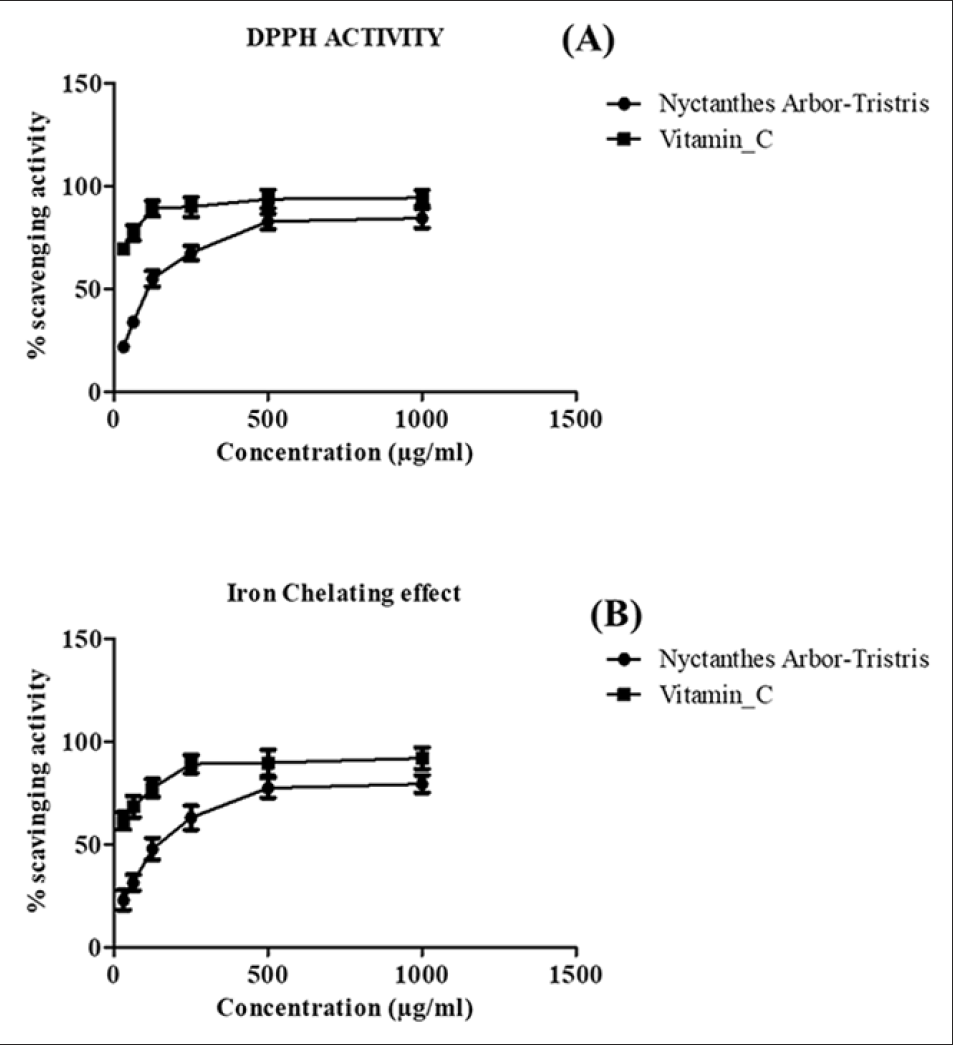
DPPH assay and iron chelating assay of the developed extract were determined, successfully. The results were represented statistically using a graph pad prism and each value was in triplicate. It was found that Nyctanthes arbor-tristris extract exhibits IC50 at 128.68 ± 4.2 for neutralizing DPPH free radicals and exhibits significant anti-oxidant activity against DPPH free radicals. The IC50 146.94 ± 0.836 µg/mg of the sample extract was found active against iron chelations. Moreover, the DPPH and iron chelating effect of vitamin C was found to be 84.02 ± 0.937 and 114.2 ± 1.374, respectively. The results are shown in Figure 1.
Antioxidant Activity of Nyctanthes arbor-tristris Extract Against DPPH Free Radicals (A) and Iron Chelation Effect (B).
HPTLC Quantitative Analysis
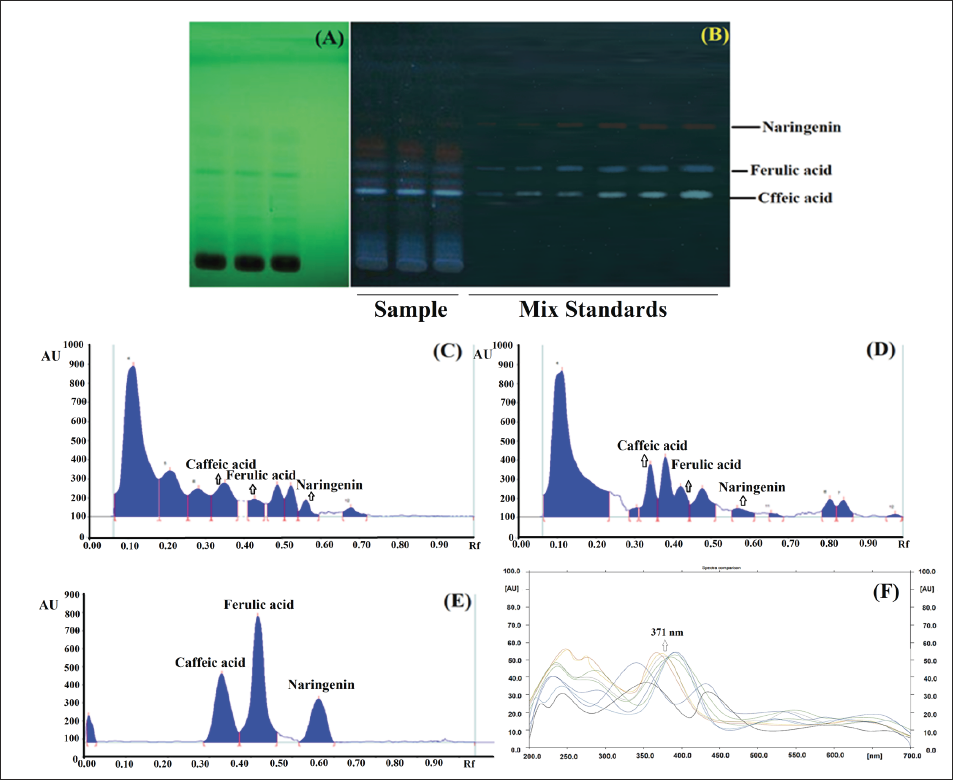
HPTLC quantitative analysis was performed to determine and quantify major metabolites in the sample. ICH guideline was followed to validate the method. The outcome of HPTLC analysis showed that the developed method was found linear, precise, and accurate with respect to the wide range of the standard compound concentration (100–4000 ng/spot). The study showed regression equation and coefficient for naringenin, ferulic acid, and caffeic acid as y = 1.2628x + 803.64; R² = 0.8655, y = 0.7755x + 60.922; R² = 0.9965 and y = 0.8154x + 55.973; R² = 0.9988, respectively. Furthermore, LOD and LOQ were determined to assess the minimum detectable and quantifiable amount of the reference standards in method development. The LOD for naringenin, ferulic acid, and caffeic acid was found as 29.560 ± 0.345, 15.054 ± 0.347, and 17.178 ± 0.289 while LOQ was found 45.619 ± 1.565, 89.578 ± 1.634, and 52.056 ± 1.436, respectively. Furthermore, intra-day as well as inter-day precision was examined in the form of the percent relative standard deviation (%RSD). The results showed intra-day precision of the developed method was found under the range 0.846–2.494, 2.423–3.691, and 1.546–3.865 while inter-day precision was found as 0.369–4.241, 0.865–3.096 and 1.021–2.672, respectively. The accuracy of the developed method was examined to evaluate the percentage of drug recovery, the outcome of the study revealed that naringenin, ferulic acid, and caffeic acid percentage recovery was found under the range 86.721–96.273%, 101.561–102.741%, and 100.758–101.784, respectively. Finally, drug content in the sample was determined and it was found that naringenin, ferulic acid, and caffeic acid were present in Nyctanthes arbor-tristris extract with the concentration as 1.662 ± 0.027, 4.411 ± 0.201, and 4.846 ± 0.154 µg/mg of extract, respectively. The results are represented in Figure 2.
HPTLC Quantitative Analysis of Nyctanthes arbor-tristris for Simultaneous Separation of Caffeic Acid, Ferulic Acid, and Naringenin. (A and B) HPTLC plate at 254 and 366 nm.
LC–MS Profiling of Nyctanthes arbor-tristris
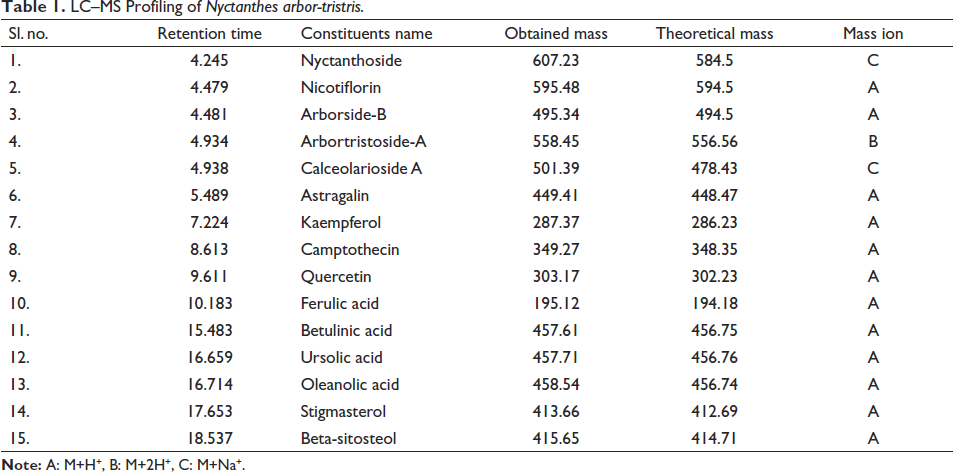
Network pharmacology analysis of the sample was performed as per the reference protocol and the outcome of the study was expressed based on the tentative identification of m/z value of metabolites. The results of the study revealed that Nyctanthes arbor-tristris extract contains several metabolites such as nyctanthoside, nicotiflorin, arborside-B, and arbortristoside-A, flavonoids such as camptothecin, quercetin, phenols such as ferulic acid. Furthermore, some pentacyclic triterpenoid compounds betulinic acid, ursolic acid, oleanolic acid, and Beta-sitosterol. The majority of the metabolites were examined based on peak intensity found in spectra information (Table 1). Furthermore, the identified compounds were identified based on reported literature, mass bank data as well as PubChem details (Agrawal & Pal, 2013; Uroos et al., 2017).
LC–MS Profiling of Nyctanthes arbor-tristris.
Network Pharmacology Analysis
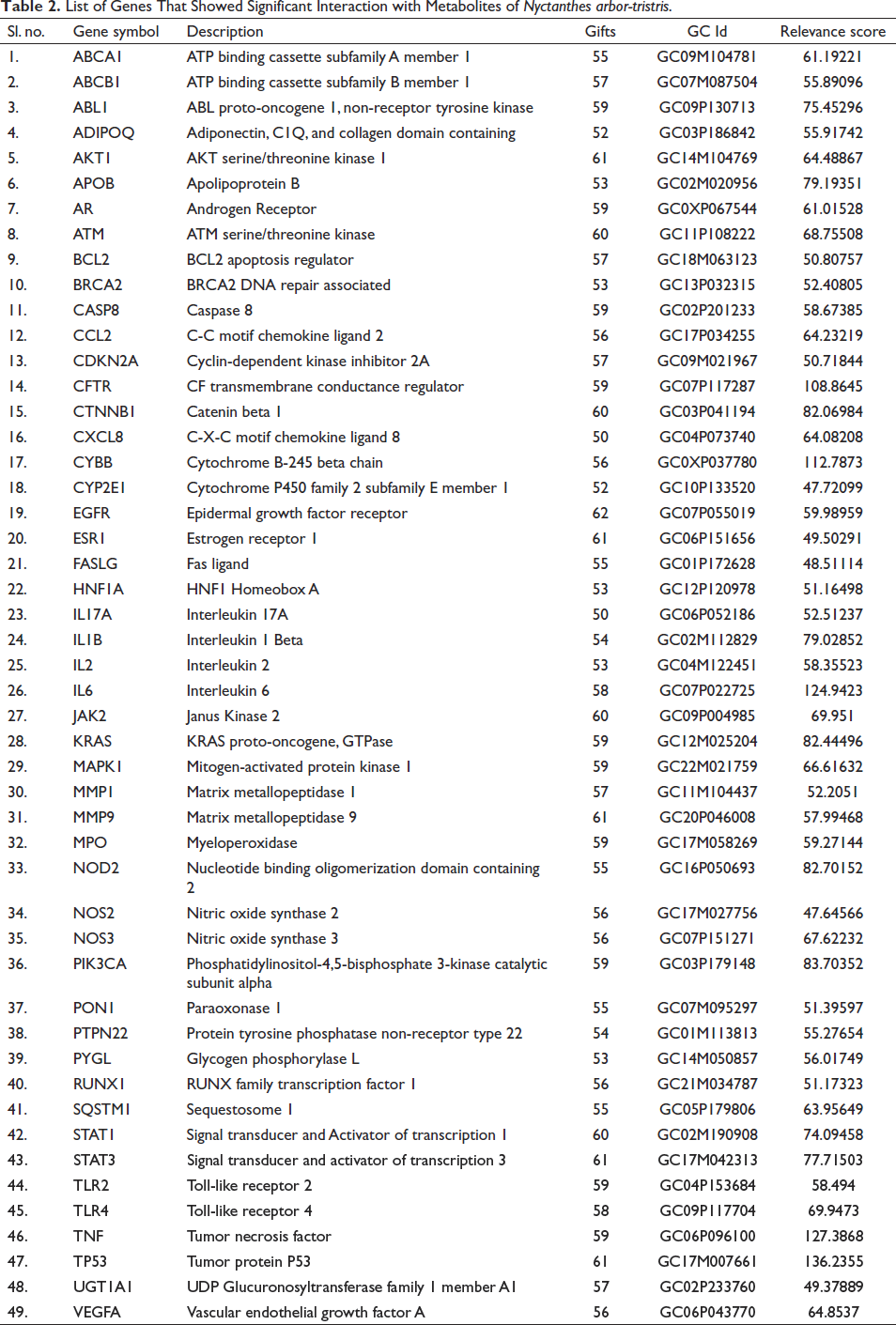
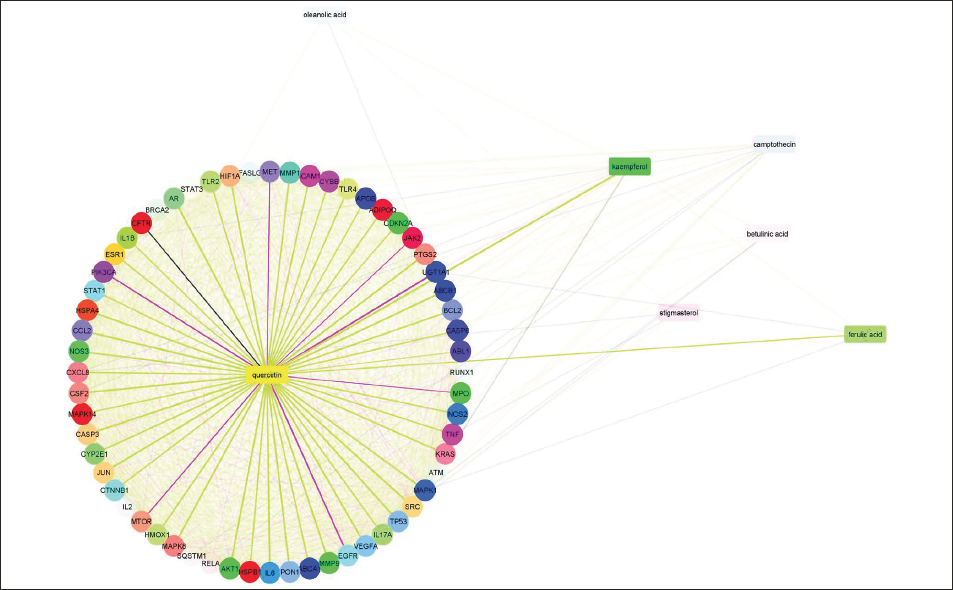
Network pharmacology analysis was examined to determine molecular mechanisms as well as to explore multi-target therapeutic approaches of active principles of Nyctanthes arbor-tristris and how they are involved in the alleviation of hepatic disease. In this study, several genes were analyzed for their ligation effect on the metabolites of the plants using Cytoscape software. In this study, two hundred genes were selected for network pharmacology analysis. The results revealed that the metabolites exhibit partial and significant interaction with each gene. The genes that were not found with no interaction were excluded or deleted during network integration and interpretation. In the developed CPI interaction, the statistical summary represents that 49 genes such as ABCA1, BCL2, EGFR, IL2, MAPK1, MMP1, NOS2, PON1, STAT1, STAT3, TLR2, and TNF were found significantly interacted with the compounds such as quercetin, beta-sitosterol, oleanolic acid, and ferulic acid. Among these metabolites, quercetin was found most active metabolite in Nyctanthes arbor-tristris found with the most prominent interaction with the genes that play an active role in the pathophysiology of liver disease. The genes that were found with significant interaction are summarized in Table 2 and the CPI network of the active compounds interaction with the genes is depicted in Figure 3.
List of Genes That Showed Significant Interaction with Metabolites of Nyctanthes arbor-tristris.
Gene Ontology Analysis
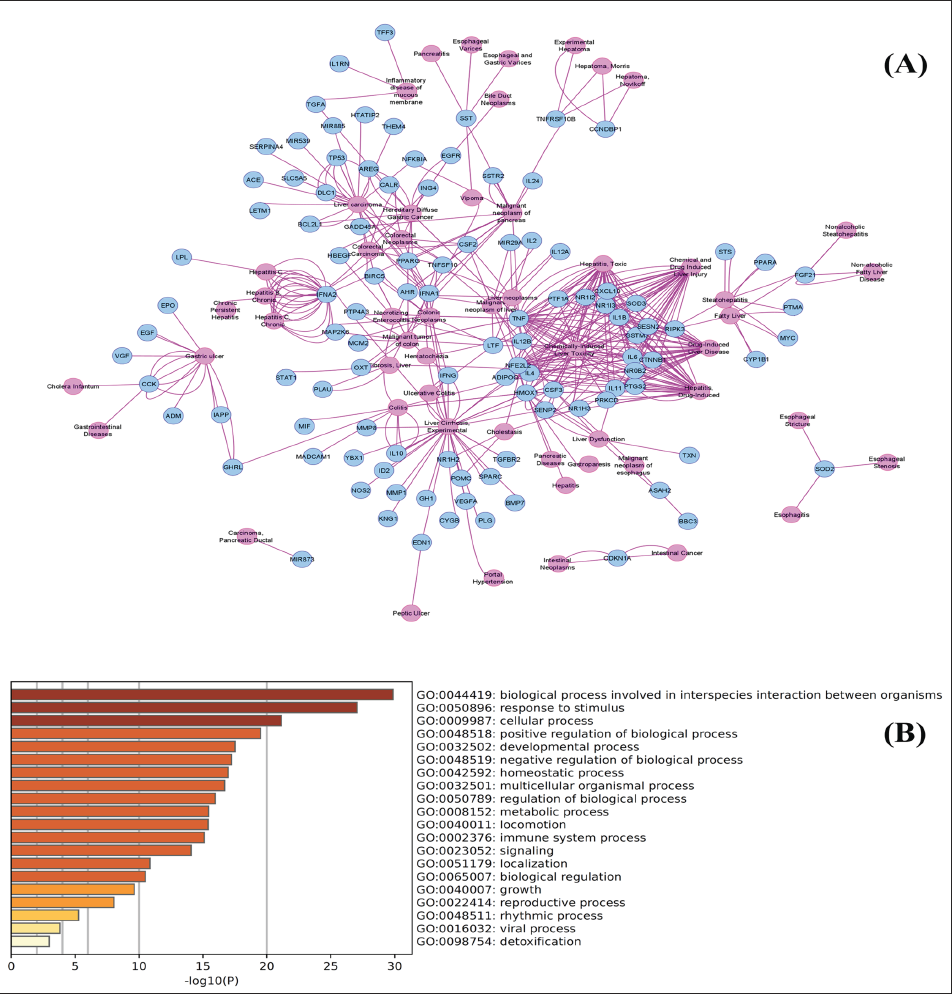
This analysis was conducted to determine gene and disease association approaches that these targeted genes are playing a role form different pathophysiological pathways. This analysis was conducted through the Metascape software and the data was expressed in the form of gene-disease association and pathways analysis. The results of the GO analysis that demonstrate gene and disease association network in form of DisGen net analysis revealed that metabolites that are present in Nyctanthes arbor-tristris play a multi-mechanistic and therapeutic role in the management of hepatic disorders or chronic liver disease via alleviating oxidative and inflammatory stress, positive regulation of cell death against a different type of carcinomas including hepatocytes deterioration, management of ions homeostasis as well as play an important role in the alleviation of pathogenic onsets. Furthermore, it has been found that the genes are most actively playing a role in chemically induced liver disease, liver dysfunction, hepatitis, non-alcoholic fatty liver disease, liver cirrhosis, or drug-induced disease. The genes such as TP53, DLC1, AREG, CALR, and Bcl-2 are involved in the pathophysiology of liver carcinoma, IFNA2 involves in chronic hepatitis B and C while the genes such as interleukins (ILs), TNF, SOD, HMOX1, PTGS2, NR1s, and SESN2 are involved in chemically or drug-induced hepatotoxicity or liver toxicity. The results are depicted in Figure 4.
Gene Ontology and DisGenet Analysis of the Genes to Determine the Multi-mechanistic and Therapeutic Action of Metabolites in Aalleviation of Liver Disease. (A) Gene and Disease Therapeutic Association Network. (B) A Bar Graph of Different Pathways Involved in the Pathophysiology of Liver Disease.
In silico Docking Analysis
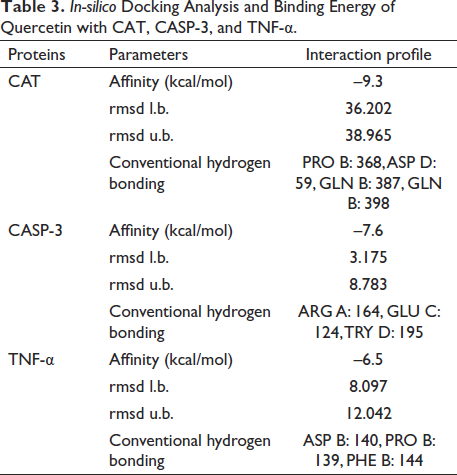
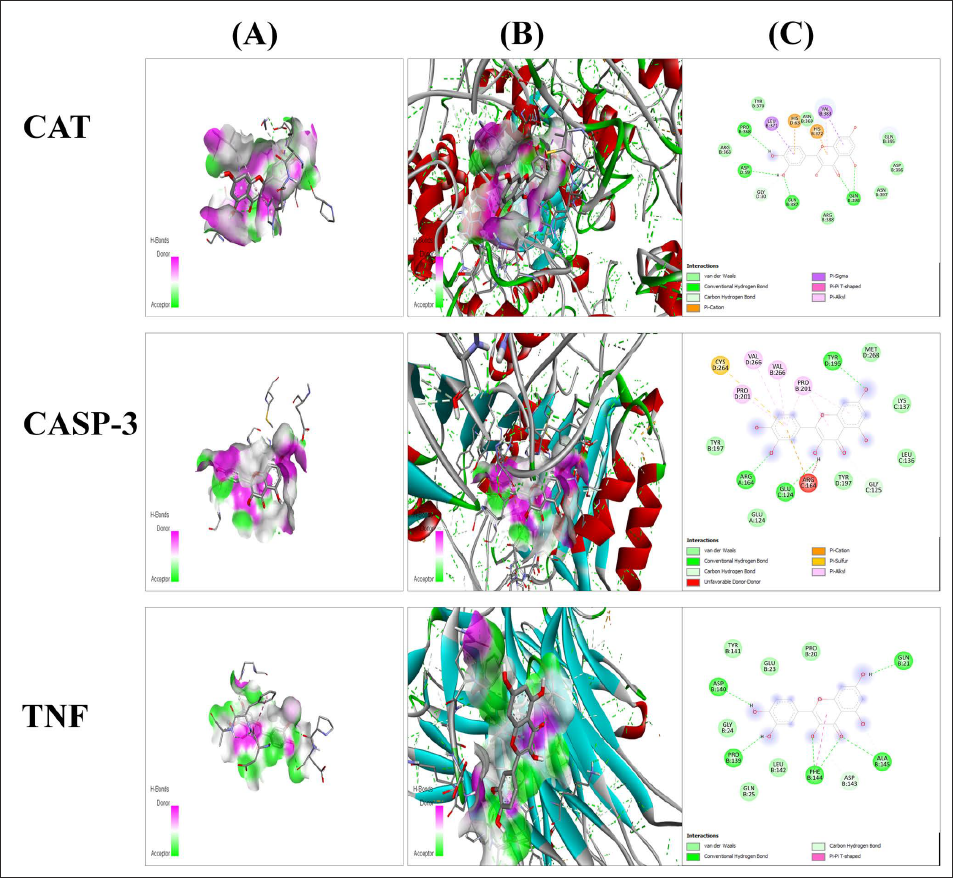
insilico docking analysis was conducted to determine the biomolecular targets or interaction pattern of compounds with the genes significantly involved in the pathophysiological alteration of liver disease. The most bioactive metabolites screened from network pharmacology analysis were processed for insilico docking analysis. In this study, CAT, CASP-3, and TNF-α proteins were further analyzed with quercetin to determine their molecular interaction or binding targets with proteins. The interaction profile of ligands was demonstrated as conventional hydrogen bonding and interaction or binding energy (Kcol/mol). The results showed that quercetin exhibited a strong interaction with proteins with the binding energy level ranging 6.5 to 9.3 Kcol/mol. During analysis, CAT produced molecular interaction with PRO B: 368, ASP D: 59, GLN B: 387, GLN B: 398 amino acids energy pockets. The active functional groups in quercetin were founds in hydroxy (-OH) and ketone (C=O) groups. Furthermore, ARG A: 164, GLU C: 124, and TRY D: 195 molecular attachment were found with CASP-3 while ASP B: 140, PRO B: 139, and PHE B: 144 molecular attachment were found in TNF-α protein. Despite conventional hydrogen bonding, several other molecular attachments were also found with different proteins namely pi-pi, pi-sigma, pi-cation, pi-alkali, and unfavorable donor-donor bonds. The results are summarized in Table 3 and Figure 5.
insilico Docking Analysis and Binding Energy of Quercetin with CAT, CASP-3, and TNF-α.
insilico Docking Analysis and Interaction Profile of Quercetin with CAT, CASP-3, and TNF-α. Columns A, B, and C Represent Ligand and Protein Interaction, 3D Interaction, and 2D Interaction of the Ligand with Proteins, Respectively.
Discussion
Medicinal plants have been used widely as a complementary and alternative medicine for treating disease based on their multi-therapeutic action due to the presence of a complex matrix of phytochemicals (Gautam et al., 2021). Nyctanthes arbor-tristris is one of the Indian-origin medicinal plants that has been traditionally used for several ailments. Due to a lack of phytochemical-based molecular biology evidence, the study explores quality control and the biomolecular approach of Nyctanthes arbor-tristris in the alleviation of liver disorders or associated complications. Methanolic extract of leaves of Nyctanthes arbor-tristris was prepared and quantified for the presence of polyphenols. The outcome revealed significant content of polyphenols that demonstrates the high antioxidant activity of Nyctanthes arbor-tristris (Agrawal & Pal, 2013). It is reported that polyphenols play an immense role in the alleviation of oxidative stress and reduce deleterious effects that are associated with oxidative stress and oxidative stress-induced inflammations. It significantly quenches DPPH free radicals as well as exhibits significant antioxidant activity (Gaurav, 2022; Gautam, 2022; Khan et al., 2022). Michael et al. evaluated the anti-oxidant activity of Nyctanthes arbor-tristris via in vitro antioxidant methods such as DPPH, and NO. The results were expressed as IC50 and showed that the IC50 of the extract was found to be 57.93 µg·mL–1 for DPPH and 91.74 µg·mL–1 for NO (Michael et al., 2013).
Quality, safety, and efficacy-based standardization of medicinal plants is more concerning for their regulatory purpose and to explore their therapeutic principles (Gaurav et al., 2020). HPTLC analysis was conducted for qualitative and quantitative estimation of phytochemicals present in Nyctanthes a&t. The results revealed that Nyctanthes arbor-tristris contains many major and minor constituents and out of them caffeic acid, ferulic acid, and naringenin were qualitatively validated. It has been reported that caffeic acid, ferulic acid, and naringenin are the most active constituents in Nyctanthes arbor-tristris that play an active role in the alleviation of chronic liver disease or associated complications (Bispo et al., 2017; Park et al., 2017; Yang et al., 2018; Kometsi et al., 2020). In LC–MS analysis, several metabolites were identified that are belongs to the family such as polyphenols, pentacyclic triterpenoid, and glycosides. Previous studies that have been reported on the LC–MS profile of Nyctanthes arbor-tristris reported the same outcome that has been found in this study (Agrawal & Pal, 2013; Timsina & Nadumane, 2016).
Furthermore, network pharmacology analysis of Nyctanthes arbor-tristris was conducted to determine the multi-therapeutic effect in the alleviation of liver disease or chronic liver disease. This study showed that the compounds of Nyctanthes arbor-tristris play a multi-therapeutic action against liver disease and associated complications via regulation of oxidative and inflammatory stress, apoptosis, hepatoprotection against drug or alcohol-induced hepatotoxicity, malignant neoplasm, hepatitis B and C or chronic hepatitis, and cholestasis. Several reports have been published on Nyctanthes arbor-tristris phytoconstituents to reveal its hepatoprotective action, showing that caffeic acid regulates enhanced hepatic GSH concentration and provides protection against oxidative hepatic damage by rosmarinic acid (Yang et al., 2013).
Free radicals-induced oxidative stress and progressive distortion of hepatocytes are well reported for the development of various pathogenesis associated with the liver. Excessive free radicals blocks the efficacy of antioxidant hepatoprotective agents (Al-Quraishy et al., 2014; Ghazanfari et al., 2021; Patlolla et al., 2019).
There are many drug or chemical-induced models which have been used progressively for in vitro and in vivo hepatoprotective estimation of active pharmaceutical ingredients or naturally derived drugs even medicinal plants. Carbon tetrachloride (CCl4; 1 ml/kg) 50% in mineral oil or other vehicles is used as a most common and worthful model for hepatotoxicity studies (Delgado-Montemayor et al., 2022). Cancerous drugs such as cisplatin, NSAIDs such as Diclofenac and APAP are associated with hepatotoxicity.
Li et al. evaluated the therapeutic potential of phenethyl ester of caffeic acid against CCl4-induced liver fibrosis. The aspartate aminotransferase (AST), serum aminotransferase (ALT), and total bilirubin (TBil) levels were determined for hepatotoxicity while, glutathione (GSH), catalase (CAT), and superoxide dismutase (SOD) level assessed in liver tissue for determination of oxidative damage. Moreover, NF-E2-related factor 2 (Nrf2) and hepatic stellate cells (HSCs) were also determined to assess inflammatory stress. The outcomes revealed that caffeic acid phenethyl ester actively ameliorates antioxidant enzymes level against oxidative damage and restores normalcy in liver function via regulating inflammatory stress and apoptosis. Furthermore, it was reported that caffeic acid phenethyl ester has a suppression role against HSCs-induced oxidative damage (Li et al., 2015). However, other components of Nyctanthes arbor-tristris such as stigmasterol, oleonilic acid, kaempferol, betulinic acid, and camptothecin are playing an important role in hepatoprotection and associated complications via regulating fatty liver disease, inflammation, oxidative stress, triacylglycerols (TGs), cholesteryl esters, phosphatidylcholines, diacylglycerols, as well as free fatty acids (FFAs). Furthermore, it has been reported that kaempferol regulates the expression of CYP2E1 in alcohol-induced liver injury and enhances the protective effect of the anti-oxidative defense system (Feng et al., 2018; Kinjo et al., 1999; Wang et al., 2015; Yi et al., 2014).
Conclusion
This study concludes that Nyctanthes arbor-tristris possess several varieties of major and minor constituents such as terpenes, phenols, flavonoids, glycosides, etc., and among them, naringenin, ferulic acid, and caffeic acid were quantitatively analyzed by HPTLC method and the content of each was found as 1.662 ± 0.027, 4.411 ± 0.201 and 4.846 ± 0.154 µg/mg of extract, respectively. Furthermore, network biology and polypharmacology analysis unravel the biomolecular approaches of Nyctanthes arbor-tristris metabolites in chronic liver disease and associated complications by reducing oxidative and inflammatory stress, hepatocytes fibrosis, and apoptosis via regulating the genomic expression of nitric oxide synthase (NOS), TNF-α, ILs, toll-like receptors (TLRs), and ALT. The study occupies the lacking of biomolecular and therapeutic factors and generates scientific evidence based on biomolecular approaches of Nyctanthes arbor-tristris in the regulation of liver disease and associated pathophysiology. However, possible implications of this study in further biomolecular and clinical-based examination are necessary to increase the credibility and accessibility of present outcomes.
Footnotes
Abbreviations
WHO: World Health Organization; NSAIDs: Nonsteroidal antiinflammatory drugs; APAP: Acetaminophen; GC–MS: Gas chromatography and mass spectroscopy; TLC: Thin-layer chromatography; HPTLC: High-performance thin-layer chromatography; LC–MS: Liquid chromatography and mass spectroscopy; HPLC: High-performance liquid chromatography; NMR: Nuclear magnetic resonance; RUT: Rutin, DPPH: 2,2-Diphenyl-1-picrylhydrazyl; GO: Gene ontology; PPI: Protein– protein interaction; CPI: Compound–protein interaction; LOD: Limit of detection; LOQ: Limit of quantification; CCl4: Carbon tetrachloride; AST: Aspartate aminotransferase; ALT: Serum aminotransferase; TBil: Total bilirubin; GSH: Glutathione; CAT: Catalase; SOD: Duperoxide dismutase; NOS: Nitric oxide synthase; (TNF-α): Tumor necrosis factor alpha; ILs: Interleukins; TLRs: Toll-like receptors.
Acknowledgments
The authors thank the Department of Pharmaceutical Sciences, Apex University, Jaipur, Rajasthan, for providing the facilities to conduct the research.
Declaration of Conflicting Interests
The authors declared no potential conflicts of interest with respect to the research, authorship, and/or publication of this article.
Funding
The authors received no financial support for the research, authorship, and/or publication of this article.
