




Abstract
Background
The purpose of this study was to investigate the molecular mechanisms and material basis of Huangqi Guizhi Wuwu Decoction (HGWD) in treating clinical Ischemic stroke (IS) using network pharmacology and molecular docking techniques.
Materials and Methods
The study retrieved and screened the practical components of HGWD from the TCMSP, BATMAN-TCM, and ETCM databases. Target prediction was performed using the SwissTargetPrediction database, and disease targets for IS were obtained from the Gene Cards, DisGeNET, and OMIM databases. The regulatory targets for HGWD in treating IS were obtained by VENN analysis, and the protein-protein interaction network of disease targets was constructed using the STRING database. GO analysis and KEGG enrichment analysis were performed using the DAVID database.
Results
A total of 227 active ingredients and 354 drug targets were obtained for HGWD, and after combining them with 4,402 disease targets, 253 potential targets for HGWD to treat IS were identified. GO and KEGG enrichment analyses yielded 251 gene functions and 422 pathways. The study found that the active components in HGWD may treat IS through the IL-17 signaling pathway, TNF signaling pathway, PI3K-Akt signaling pathway, and other targets.
Conclusion
The study identified potential molecular mechanisms and the material basis of HGWD in treating clinical IS. The results suggest that HGWD could be a promising therapeutic approach for treating IS, and further experimental validation is needed.
Introduction
Stroke is a cerebrovascular disease characterized by ischemic and hypoxic injury to brain tissue caused by cerebral vascular obstruction and insufficient glucose and oxygen supply (Ding et al., 2023; Noh et al., 2023). It is characterized by multiple, high mortality, and disability rates. With the population ageing and social life development, the incidence of IS has been increasing year by year. Studies have shown that the overall lifetime risk of stroke in China is 39.3%, and the mortality rate is over 20% (Feske, 2021; Kuriki & Kamiya, 2021). In addition to death, the vast majority of stroke survivors have permanent disabilities of varying degrees, posing a severe threat to national health. Presently, significant progress has been made in the clinical treatment of IS. Although its efficacy is definite, its adverse reactions are apparent, with a limited time window and high side effects. The occurrence and development of IS involve the complex pathological mechanisms of many links and factors. To probe into the pathogenesis of stroke profoundly and to study the safe and effective drugs for treating stroke, at the same time, reducing the death degree of nerve cells after brain injury has become a fundamental problem in the research of IS drugs and is also a severe challenge faced by scientists all over the world (Zhu et al., 2022; Diener & Nickenig, 2021).
With the change in lifestyle in the new era, the incidence of stroke is getting higher and higher, and the role of TCM in prevention and treatment is becoming more and more critical (Shen et al., 2022). Applying classical prescriptions in modern medical treatment to better guide clinical practice requires in-depth research on its therapeutic targets and pathways. HGWD comes from the “Golden Chamber Synopsis” by Zhang Zhongjing of the Eastern Han Dynasty (Lv et al., 2021). It is composed of Huangqi (Hedysarum Multijugum Maxim, HMM), Guizhi (Cinnamomi Ramulus, CR), Baishao (Paeoniae Radix Alba, PRA), Dazao (Jujubae Fructusl, JF) and Shengjiang (Zingiber officinale Roscoe, ZOR). The main components of HMM in the formula are astragalus saponin, polysaccharide, flavone saponin and flavone, which can significantly improve the symptoms of ischemia and hypoxia in brain tissue, thus forming an apparent protective effect on brain tissue (Tang et al., 2022; Li et al., 2022). Cinnamaldehyde and cinnamol are the main components of CR, which can significantly improve the relaxation of vascular endothelium and protect the nerve (Zhang et al., 2020; Cheng et al., 2020). The main component of PRA is total glucosides of paeony, which can effectively improve myocardial ischemia and play an antithrombotic effect (Tan et al., 2020).
Moreover, it has an apparent synergistic effect with HMM and CR. JF has the effects of increasing the content of monoamine neurotransmitters, upregulating synaptic structural proteins, reducing synaptic damage, anti-inflammatory and improving memory (Kandeda et al., 2021; Guo et al., 2020). The main component of ZOR is total ginger phenol, which can give full play to the antioxidant effect and alleviate cerebral ischemia damage (Li et al., 2021; Terry et al., 2011). In addition, the combination of drugs can give full play to the improvement of hemorheology, and cerebral blood insufficiency, promote the increase of local vascular flow, improve the cerebral blood microcirculation, improve the brain tissue blood supply, reduce thrombosis, and repair and maintain nerve damage, but also analgesic and anti-inflammatory.
Modern pharmacological studies and clinical trials have also shown that the prescription has a good effect on various diseases, such as diabetes, post-chemotherapy peripheral neuropathy, cerebrovascular disease, and allergic diseases. It can significantly reduce the levels of high-sensitivity C-reactive protein and D-dimer, relieve nerve tissue damage, improve cerebral circulation, make the practical outcome of cerebral infarction, improve the clinical prognosis, and has high safety (Liu et al., 2020). However, the specific pathogenesis of IS is very complicated and has not yet been fully elucidated. HGWD is a prescription made up of various traditional Chinese medicines, and its mechanism of action is very complicated. There are few reports about the signal pathway, gene and protein, and few about material basis. Therefore, it is necessary to conduct modern pharmacological analysis and research on HGWD. This study aims to elucidate the potential mechanism of HGWD in treating IS through network pharmacological analysis. This study aims to elucidate the main effects and mechanisms of the active substances in HGWD on the body and to provide a new idea for further study of the treatment of IS.
Materials and Methods
Collection of Disease Targets
Based on the Gene Cards database (
Collection of Active Ingredients and Prediction of Component Targets
Collection of Active Components
Huangqi (Hedysarum multijugum Maxim, HMM), peony (Cinnamomi ramulus, CR), cassia twig (Paeoniae Radix alba, PRA), jujube (Jujubae fructusl, JF) and ginger (Zingiber officinale Roscoe, ZOR) as keywords were searched respectively in the TCMSP Database of Systematic Pharmacology of Chinese Medicine (https: //tcmsp-e.com/), BATMAN-TCM database (
Target Prediction of Active Ingredients
Regulatory targets of the active ingredient were downloaded from the TCMSP database and duplicated targets were deleted. Homo sapiens was selected in the UniProt database (
Search for Potential Targets of HGWD in the Treatment of IS
The targets regulated by the active components were mapped to the IS disease targets and mapped by Venn diagram (
Pathway and Biological Function Analysis
Potential targets will be input to David Database (
PPI Network Construction
Potential targets were input into the STRING database (
Network Diagram Construction of TCM-component-disease-target
The correlation between active components of TCM and disease targets was imported into Cytoscape 3.9.1 software to obtain the “TCM-component-disease-target” network graph. The degree value (the higher the degree value, the more nodes associated with the node, and the higher the node’s importance) was used as the primary reference standard for topology analysis. To further analyze the core active components and targets of HGWD in treating IS.
Results
Effective Ingredients of HGWD
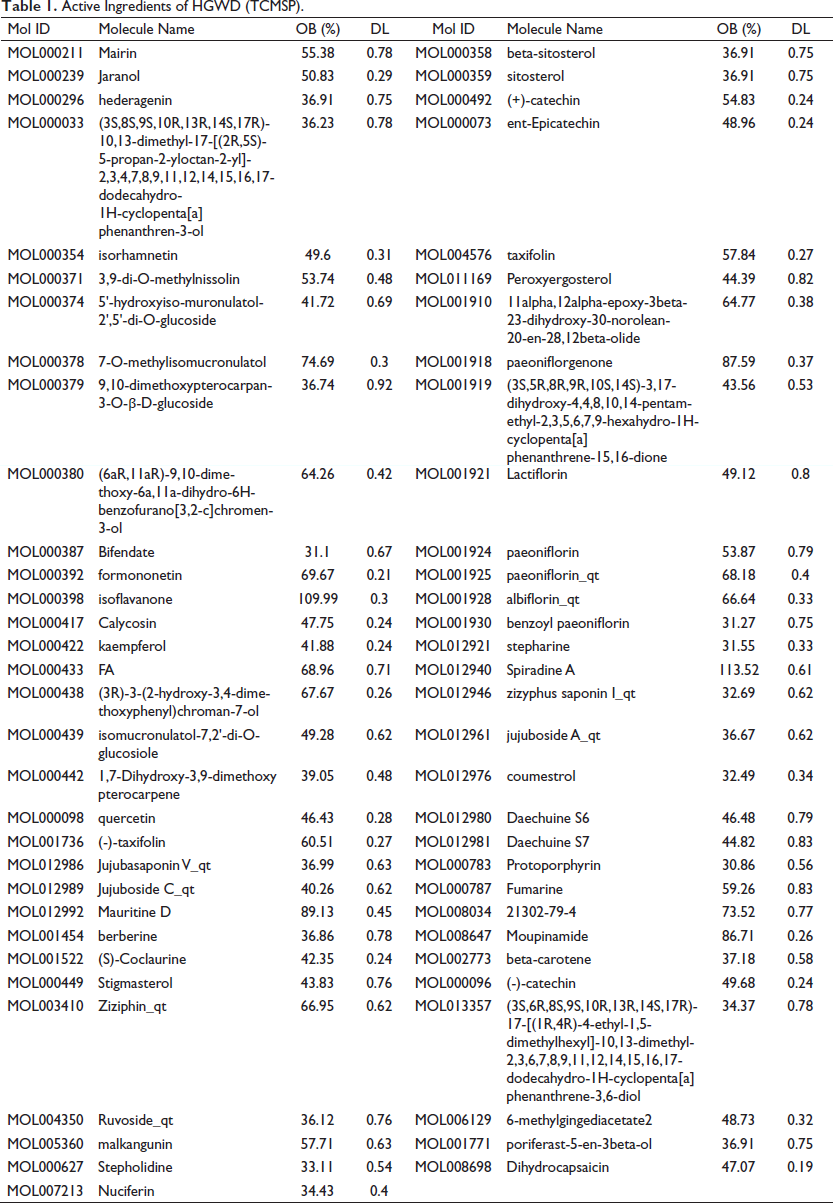
A total of 74 active ingredients were screened based on the TCMSP database, including 20 from HMM, 7 from CR, 13 from PRA, 29 from JF and 5 from ZOR. 63 active ingredients were left after removing the redundant components, and the essential information was shown in Table 1. 92 active components were screened based on the ETCM database, including 20 20 from HMM, 12 from CR, 20 from PRA, 20 from JF and 20 from ZOR. After removing the redundant components, 83 active components were left. A total of 274 active ingredients were screened based on the BATMAN-TCM database, including 35 from HMM, 22 from CR, 35 from PRA, 49 from JF and 133 from ZOR, and 199 active ingredients were left after removing redundant components. A total of 440 components of HGWD were obtained by summarizing the components obtained from the three databases, and 227 active components were left after removing the redundant components.
Active Ingredients of HGWD (TCMSP).
Disease Targets
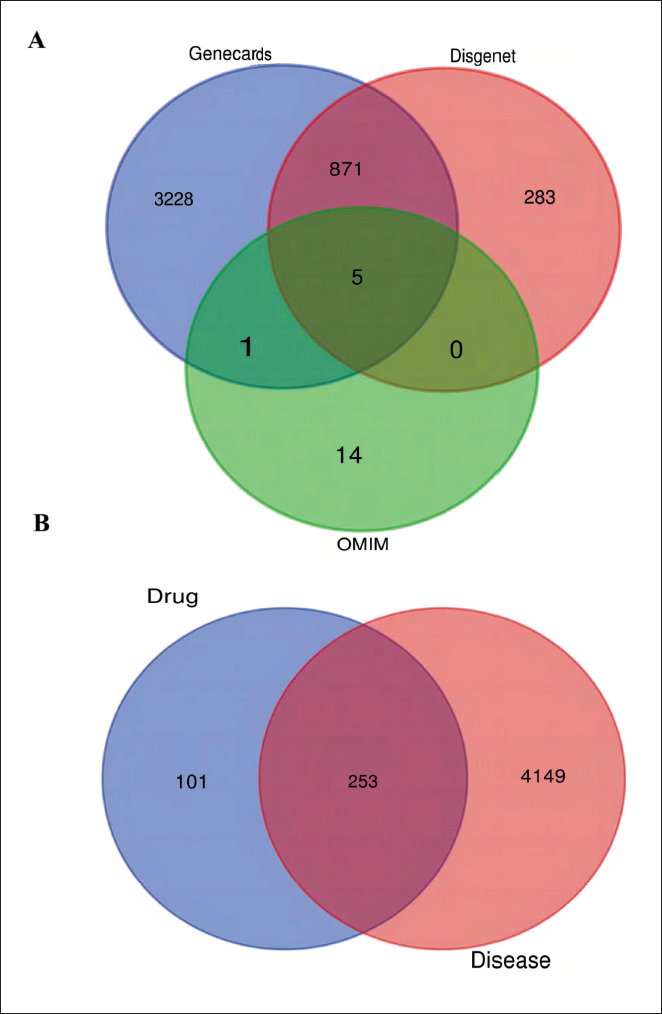
A total of 4,105 disease genes were screened out based on the GeneCards database, 1,159 disease genes were screened out based on the DisGeNET database, and 20 disease genes were screened out based on the OMIM database. All disease genes were summarized and removed to obtain 4,402 disease targets for IS (Figure 1A)
Overlapped Terms-based Analysis. (A) Disease Targets of IS. (B) Potential Targets of HGWD in the Treatment of IS.
Potential Targets of HGWD in the Treatment of IS
Based on the SwissTargetPrediction database, 227 active components were predicted, and the possibility of > 0.5 targets was screened. Combined with the relevant targets obtained from the TCMSP database, all the targets were summarized and deweighted, and a total of 354 component target genes were obtained. The intersection of disease targets and predicted targets of active components were obtained by Venn diagram, and a total of 253 intersection gene targets were obtained (Figure 2B). These targets were potential targets of HGWD in the treatment of IS.
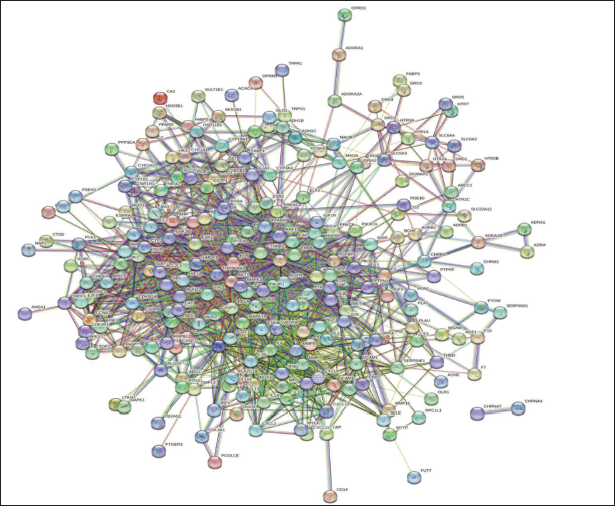
PPI Network Diagram of Potential Targets.
PPI Network Diagram of Active Ingredient Targets
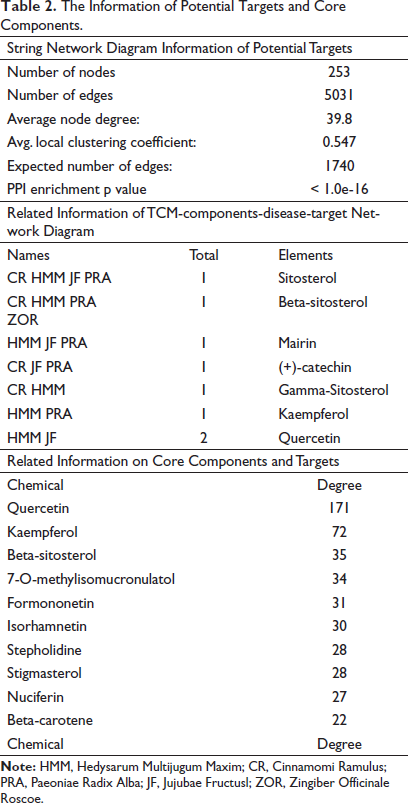
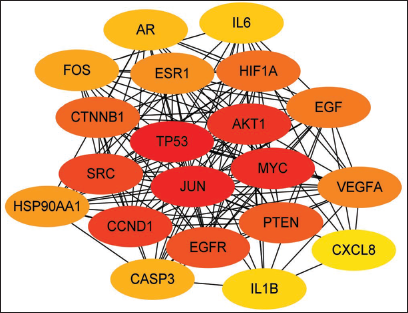
The 253 targets obtained by intersection were input into the STRING database to construct the target-protein interaction network, and the PPI network diagram of potential targets was obtained with medium confidence > 0.7 (Figure 2). The detailed information on the network diagram is shown in Table 2. Then, Cytoscape 3.9.1 software was used to analyze the importance of network nodes based on the degree value of topology parameters, and Cytohubba plug-in was used to screen the top 20 core targets of diseases (TP53, JUN, MYC, AKT1, CCND1, SRC, EGFR, PTEN, CTNNB1, HIF1A, EGF, VEGFA, ESR1, HSP90AA1, FOS, CASP3, AR, IL6, IL1B, and CXCL8), as shown in Figure 3.
The Information of Potential Targets and Core Components.
PPI Network Diagram of Core Targets.
GO Analysis
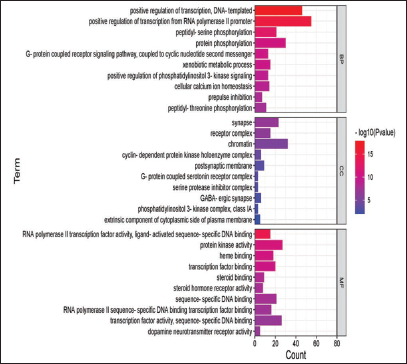
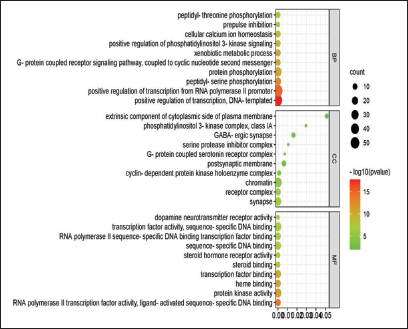
BP analysis showed that HGWD in the treatment of IS mainly involved the positive regulation of transcription, positive regulation of transcription from RNA polymerase II promoter, peptidyl-serine phosphorylation, protein phosphorylation and other biological processes. CC analysis showed that intersection targets mainly involved the synapse, chromatin, postsynaptic membrane, extrinsic component of cytoplasmic side of plasma membrane and other molecular components. MF analysis showed that the intersection targets mainly affected heme binding, transcription factor binding, steroid binding, dopamine neurotransmitter receptor activity, and so on (see Figures 4 and 5).
KEGG Analysis
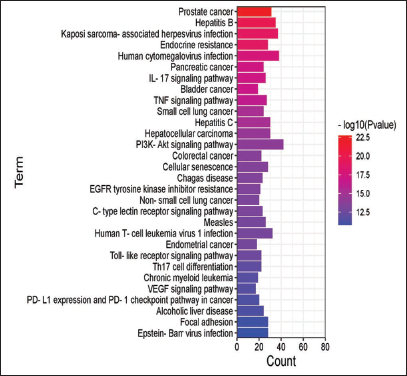
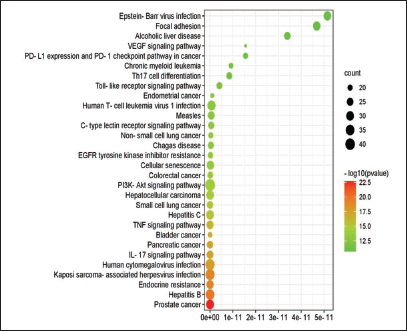
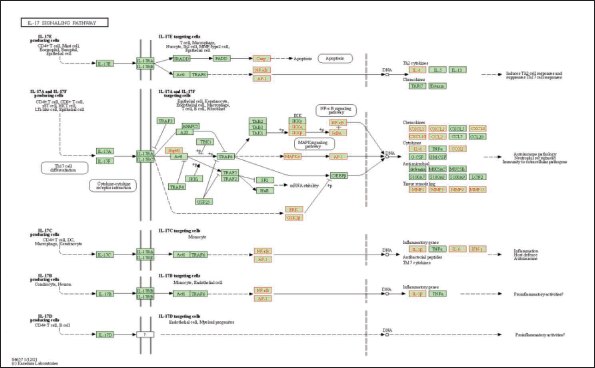
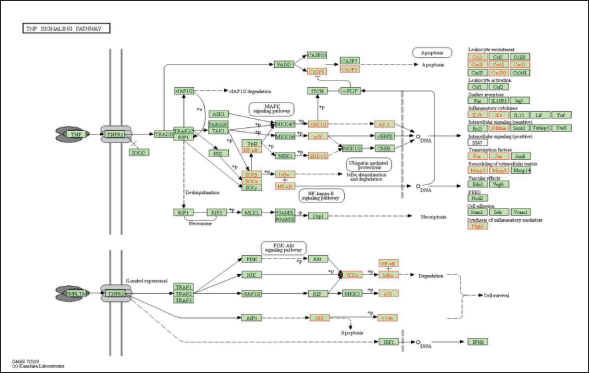
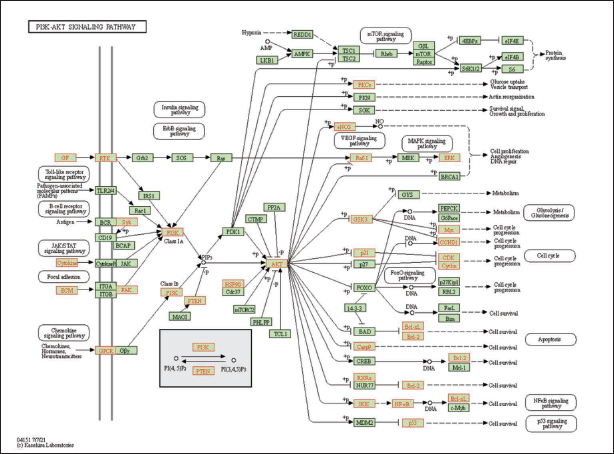
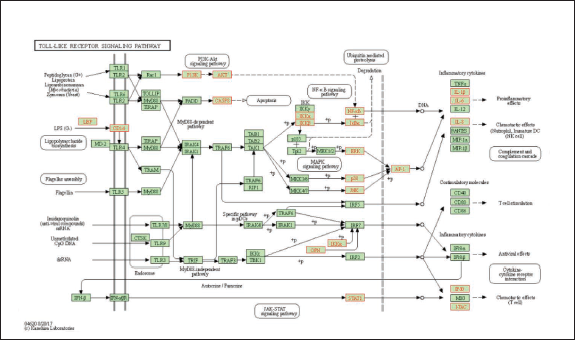
KEGG enrichment analysis showed a total of 422 related pathways (p < 0.05), mainly involving tumor, IL-17 signaling pathway, TNF signaling pathway, toll-like receptor signaling pathway, Th17 cell differentiation, and VEGF signaling pathway. The top 30 with the highest enrichment significance were selected to draw bar charts and bubble charts, respectively, as shown in Figures 6 and 7. According to KEGG enrichment results, the IL-17 signaling pathway, TNF signaling pathway, PI3K-Akt signaling pathway, and toll-like receptor signaling pathway of HGWD in the treatment of IS were drawn (Figures 8–11).
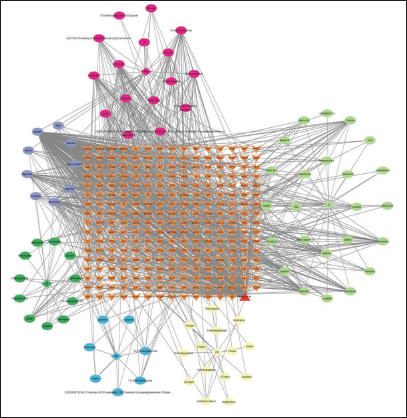
Network Diagram of TCM-component-disease-target
According to the above results, the information on drugs, components and predicted targets are imported into Cytoscape3.9.1 software to construct the “TCM-component-disease-target” network diagram, as shown in Figure 12. The node represents the TCM, component, and target. Furthermore, the edge represents the relationship between TCM and component, component and target. In the figure, the triangular nodes represent diseases, the quadrilateral nodes represent the component-related targets, the elliptical nodes represent the active components of drugs, and the color of the elliptical nodes indicates different drug sources. Otherwise, the amaranth node is the active component of HMM; the green node is the active component of CR; the blue node is the active component of PRA; the cyan node is the active component of JF; the yellow node is the active component of ZOR, the purple node is the common component of the drug, and the standard information is shown in Table 2. The line represents the association between the disease and the target. According to the degree value (the higher the degree, the more critical), the top active 10 ingredients are quercetin, kaempferol, beta-sitosterol, 7-O-methylisomucronulatol, formononetin, isorhamnetin, Stepholidine, Stigmasterol, Nuciferin, and beta-carotene. These may be the key active ingredients of HGWD in treating IS. The essential information is shown in Table 2, which reflects the mechanism of HGWD with multiple components and targets in treating IS.
Discussion
Ischemic stroke, also known as cerebral infarction, is a common disease in neurology, with an incidence of about 70% of strokes. It is caused by various causes of cerebral artery blood flow interruption, ischemic hypoxic necrosis of local brain tissue, and then corresponding neurological defects (Han et al., 2021). Cerebral infarction is relatively common in clinical practice, especially in middle-aged and older adults. If the treatment is not timely, the patient may die, and risk factors still exist after the onset of the disease, which is very likely to lead to its recurrence. The mortality and disability rate of patients with recurrent cerebral infarction will significantly increase (Tu et al., 2022; Hasan et al., 2021). Therefore, it is of great significance to take adequate measures to improve cerebral blood supply and circulation to reduce the recurrence rate of cerebral infarction in the clinical treatment of patients in the convalescent period. Traditional Chinese medicine has unique advantages in the prevention and treatment of stroke, which has the characteristics of multi-target and multi-pathway synergism, and has become a part of the clinical treatment of stroke in China. Modern pharmacology studies (Lv et al., 2021; Y. Wang et al., 2022); Li et al., 2006) found that HGWD on anti-inflammation, analgesia, anti-oxidation, regulating immune function, improving microcirculation, and blood rheology properties play an essential role in such aspects. It can adjust the imbalance of TXB-PGF1a rats, improve blood rheology and microcirculation blood blocking or correct a vicious cycle of high blood viscosity state, and reduce the formation of thrombus; It can effectively improve the hemorheological indexes of cerebral infarction and reduce the neurological deficit. It can improve cerebral blood flow, have an apparent protective effect on cardiovascular and cerebrovascular, and enhance patients’ motor function. However, the specific components and mechanism of its treatment of IS still need to be supplemented.
Regarding anti-inflammatory mechanisms, the network pharmacologic prediction analysis of HGWD in the treatment of IS showed that quercetin, kaempferol, β-sitosterol, and so on. were the main active components. Quercetin is a plant-derived polyphenolic flavonoid compound with many biological effects, such as antibacterial and anti-inflammatory. Yang et al. (2022) showed that quercetin has a neuroprotective effect on transient middle cerebral artery occlusion (tMCAO) rats with cerebral ischemia-reperfusion injury, which protects the blood-brain barrier through the Sirt1 signaling pathway. Ye et al. (2021) showed that quercetin reduced neuropathic pain in chronic constriction injury (CCI) rats by mediating the AMPK/MAPK pathway. Ulya et al. (2021) found that quercetin promotes behavioral recovery in mice with IS, which may be related to the regulation of the melanocortin-4 receptor (MC4R). Zhou et al. (2020) found that kaempferol could reduce the inflammatory injury of PC12 cells induced by oxygen and glucose deprivation (OGD) and reoxygenation (OGD-reoxygenation) by regulating the SIRT1/P66shc signaling pathway, indicating that kaempferol may be an effective intervention option for IS. It was suggested that kaempferol might be an effective intervention for ischemic stroke. Yuan et al. (2021) found that ferroptosis may be an actual cause of OGD/ R-related cell death, kaempferol. Kaempferol can improve OGD/ R-induced neuronal ferroptosis by activating the Nrf2/SLC7A11/GPX4 signaling pathway and then protecting the cell damage caused by cerebral ischemia-reperfusion. Kaempferol can also exert anti-inflammatory and analgesic effects by inhibiting the NF-κB pathway, inflammasome activation, IL-1β generation, oxidative stress and neutrophil recruitment, which may be an essential mechanism of quercetin in the treatment of ischemic stroke. β-sitosterol, a well-known plant-derived nutrient, has good anti-tumor therapeutic activity, mainly manifested as pro-apoptotic, anti-proliferation, anti-metastasis, and anti-invasion effects. Studies have shown that β-sitosterol can interfere with a variety of cell signaling pathways during pharmacological screening, including cell cycle, apoptosis, proliferation, survival, invasion, angiogenesis, metastasis, anti-inflammatory, anticancer, hepatoprotective, antioxidant, cardioprotective, and anti-diabetic effects, and has no apparent toxicity (Khan et al., 2022; Bao et al., 2022).
According to the results of GO analysis, the critical components in HGWD may participate in the molecular composition of synapses, chromatin, postsynaptic membrane, and other molecular components by regulating thepositive regulation of cell transcription, peptidyl-serine phosphorylation, protein phosphorylation, and other biological processes. Furthermore, it can affect the molecular functions of cells, such as heme binding, transcription factor binding, and dopamine neurotransmitter receptor activity, to play a role in treating IS. KEGG analysis showed that the critical targets of HGWD in treating IS were mainly involved in the IL-17 signaling pathway, TNF signaling pathway, PI3K-Akt signaling pathway, and Toll-like receptor signaling pathway. IL-17 is a characteristic cytokine of T helper cell 17, which mainly induces neutrophil activation and triggers the production of chemokines and proinflammatory cytokines through cellular targets (Kumar et al., 2021; J. Yang et al., 2022). Zhang et al. (2021) indicated that IS is a complex pathophysiological process mainly caused by local cerebral ischemia. Inflammatory factors are involved in the physiological process of stroke, leading to poor prognosis. IL-17 is essential in promoting inflammation and inducing secondary injury after stroke. Through clinical studies, Backes et al. (2021) confirmed that the abnormal expression of IL-17 in patients with acute IS was related to the prognosis of stroke. PI3Ks is a unique family of intracellular lipid kinases, Akt is a serine/threonine kinase, and PI3K/AKT pathway is a potential key mechanism of Chinese medicine in treating stroke (Gu et al., 2022; H. J. Wang et al., 2022). Fu et al. (2022) found that activating the phosphatidylinositol 3-kinase (PI3K-Akt) signaling pathway has a protective effect on IS, and its mechanism includes alleviating iron ptosis and improving cognitive impairment. Gu et al. (2022) found that activating the PI3K/AKT signaling pathway could improve the damaged neurovascular unit (NVU) and protect NVU from the effects of ischemic stroke in rats. In the past few years, tumor necrosis factor-α (TNF-α) has become a potential marker of stroke due to its essential role in stroke (Xue et al., 2022). Duan et al. (2022) found that the increase in TNF-α level was related to the etiology of ischemic stroke, and TNF-α level was significantly correlated with the pathogenesis of ischemic stroke. All the above studies indicated that the therapeutic effect of quercetin, kaempferol, β-sitosterol, and the critical components of HGWD might be reflected in inflammation-related signaling pathways and targets, which can effectively inhibit inflammation and play a role in the treatment of ischemic stroke. Therefore, HGWD can reduce the damage of inflammatory factors to cells and promote bidirectional regulation by inhibiting the release of inflammatory factors and inhibiting the expression of inflammation.
Conclusion
By using cutting-edge technologies in bioinformatics and network construction, From the level of network pharmacology and molecular docking, it is demonstrated that HGWD in the treatment of IS through the practical components of quercetin, kaempferol, β-sitosterol, and so on, acting on JUN, MAPK14, RELA, TNF, AKT1, MYC, FOS, TP53, CCND1, MAPK1, and other gene targets. Thus, the IL-17 signaling pathway, TNF signaling pathway, PI3K-Akt signaling pathway, and Toll-like receptor signaling pathway are affected to exert their effects. This study lays a foundation for further in-depth study of its mechanism of action in the future and provides clues and ideas.
Footnotes
Abbreviations
HGWD: huangqi guizhi wuwu wecoction; HMM: hedysarum multijugum maxim; PRA: paeoniae radix alba; CR: cinnamomi ramulus; JF: jujubae fructusl; ZOR: zingiber officinale roscoe; CCI: chronic constriction injury; IS: ischemic stroke; GO: gene ontology; KEGG: kyoto encyclopedia of genes and genomes; DEGs: differentially expressed genes; BP: biological process; MF: molecular function; CC: cellular component; PPI: protein-protein interaction network.
Data Availability
The data used to support the findings of this study are included within the article and are available from the corresponding author upon request.
Declaration of Conflicting Interests
The authors declared no potential conflicts of interest with respect to the research, authorship and/or publication of this article.
Funding
The authors received no financial support for the research, authorship and/or publication of this article.
