



Abstract
China plays the dominant role of the ‘whole nation system’, improves start-ups and innovation ecosystems and creates development cornerstone for building an innovative and scientifically advanced country. China strengthens the supply of key innovative factors such as policies, talents and fund and consolidate foundation for building a national innovation ecosystem to provide institutional guarantee for start-up enterprises. Besides, a ‘four-chain integration’ innovative service system is built combining ‘innovation chain’, ‘industrial chain’, ‘capital chain’ and ‘service chain’ and creates an innovative microecology with start-up characteristics. Regional innovation policy is the catalyst for start-ups. China’s start-ups fully integrate into the national grand strategy and target planning of the region and city, strengthen synergy and interaction of national and regional resources and closely connect the core strategies and industries of the city or region to develop start-ups.
Background
The world is undergoing profound unseen and uncertain changes, where political multi-polarity, economic globalisation and cultural diversity are evolving, and the reshaping of the world development landscape is accelerating, while science and technology are at the core of great change. The strategic game and competition of major countries around scientific and technological innovation are becoming increasingly hot. To occupy a favourable competitive position in new scientific and technological revolution, a new round of technological revolution and industrial development is planned. Strategy for American Innovation, UK Innovation Strategy: Leading the Future by Creating It, Germany Industry 4.0 Strategy, Japan Comprehensive Strategy for Scientific and Technological Innovation, Israel Strategy for Scientific and Technological Innovation and Development have been promulgated successively. From three dimensions of high-tech industry demand, supply capacity and system design, the key points of national Scientific and Technical (S&T) innovation strategies are to grasp the characteristics and orientation of new S&T revolution, seize the opportunity of S&T development and the paradigm of scientific research that is changing, and form S&T institutions and mechanisms adapted to the requirements of new era through institutional innovation so as to achieve higher levels of innovation efficiency (Li, 2018). Excellent scientific research, solid technological innovation, efficient achievement transformation, outstanding driving development and leading international competition ability have become typical characteristics of innovation ecology in technologically developed countries (Xuan et al., 2018).
Compared with major scientifically and technologically advanced countries in the world, China is a later-emerging country. Since the beginning of the new century, China has issued a National Medium- and Long-Term Scientific and Technological Development Plan and Outline of the National Innovation-Driven Development Strategy as strategic support for its economic and social development. As China sets out on a new journey to build a modern socialist country in an all-round way, it gives greater priority to scientific and technological innovation. It takes building an innovative country as a strategic goal and innovation as the primary driving force for development and strategic support for building a modern economy. To strengthen the organized scientific research in important areas to form competitive advantage and win strategic initiative, which is emphasised as a socialist system advantage, concentrate resources to accomplish large and remarkable thing. Strengthening the leadership of the party and nation over major scientific and technological innovation, focusing on the role of market mechanism and optimising the allocation of innovation resources around national strategic needs have become main institutional features of China’s scientific and technological innovation. In addition, China has developed strategies for start-ups, and various innovation entities, such as the government, universities and social venture capital institutions, have taken corresponding measures to promote the establishment and development of start-ups.
The practice of science and technology innovation in China and the world’s science and technology-advanced countries has proved that science and technology innovation is not only a unique field of action with self-organising characteristics, but also a complex system embedded in the grand strategic situation of the country. In the process of realising scientific and technological innovation, there are multiple interactions among innovation elements, innovation entities and innovation subsystems within innovation activities, which contribute to the effective implementation of innovation strategies. At the same time, technological innovation behaviour does not exist in isolation; its existence and development are a broader complex of innovation systems. Along with the innovation situation, the world situation, national strategies and changes in industry demand, such as science and technology, innovation behaviour cannot just stop at the system of internal demand; there is more need to adopt new ideas and methods. The integration of external entities such as enterprises, governments and research institutions commit to establish new relationships and pay more attention to institutional design and grand environment construction based on external innovation systems.
This study analyses the development status of China’s national innovation ecosystem from the perspective of government, enterprises, universities and other innovation entities, and it focuses on start-ups and their innovation ecosystem, which is committed to tracking the growth of start-ups and supporting innovation entities for start-ups. Incorporating the role of universities and start-ups into the construction of innovation ecosystem is also one of the objectives. The article is divided into six parts. The ‘Background’ section is followed by ‘Research Methods’ section. The third part is ‘China’s National Innovation Ecosystem’. The fourth part is ‘Start-Up Policies and Strategies’. The fifth part is ‘Development of Start-Ups in China from 2010 to 2020’. The sixth part is ‘Concluding Remarks’.
Core Concepts and Research Methods
Using systems theory to analyse innovation was the main research paradigm in the late twentieth century (Carlsson et al., 2002). Existing studies generally believe that innovation system is composed of institutional structure, incentive system, skills and creativity of participants, the cultural characteristics of the country, region or department (Blanchflower, 2000). The concept of ecosystem originated in ecology, which conceptualises the flow of matter and energy and proposes that nutrient recycling flows along pathways composed of subsystems oriented by organisational processes (Duncan & Tim, 2018). Innovation ecosystem is a new trend of innovation system research (Zeng et al., 2013). It comes from the perspective of the ecosystem field, which regards innovation as a complex system with dynamic evolution, featuring as diversity symbiosis, self-organising evolution and open collaboration. The driving forces for its rise and development are scientific and technological progress, international competition and ecological development (Li, 2014). The national innovation ecosystem is a core element of the innovation ecosystem, which is expressed as a country’s innovative potential in science and technology, and is an interconnected institutional system for the creation, storage and transfer of knowledge, skills and new technologies (OECD, 2017). From a conceptual point of view, the national innovation ecosystem covers all innovative activities, such as scientific and technological innovation, institutional innovation, management innovation, business model innovation and cultural innovation, which are beneficial to the sustainable development of economy, society, culture and ecology (Tang & Li, 2018). After Freeman clearly put forward the concept of a national innovation system for the first time, Porter, Lundvall and Nelson successively expanded national innovation system theory. The triple helix is proposed and emphasised that the combination of ‘government, industry and science’ is key to the national innovation system (Etzkowitz & Leydesdorff, 2000). With the development and deepening of national innovation system theory, it has gradually become a guiding tool and key means for the formulation of innovation policy and promotion of national competitiveness (Chen et al., 2022). Start-ups have a short time of establishment, few operating resources and many difficulties in terms of capital, technology, talent and system. Based on operation efficiency and improvement of innovation vitality, building an innovation ecosystem conducive to start-up growth has become an important aspect of national innovation ecosystem. The innovation ecosystem of national start-up enterprises specifically involves mechanisms of improving innovation policy system, expanding development resources, improving operation efficiency of innovation organisations and optimising innovation service system to enhance research and development (R&D) survival and development ability of national start-up enterprises, improve labour and education status, cultivate high-tech talents, enhance entrepreneurial atmosphere and continuously improve infrastructure. Innovation ecology can provide a basic framework for start-ups to formulate and implement policies to intervene in the innovation process, to deeply explore the influence of macro institutions, policies, talents, culture and other factors on the behaviours of different innovation entities and their mutual relations and to provide support to efficiently support the innovation activities of start-ups.
The research mainly adopts the methods of literature analysis, policy analysis and text data analysis. The research materials used include (a) national and regional laws, regulations and plans for scientific innovation and start-ups; (b) data reports publicly released by the Ministry of Science and Technology and other government departments and (c) papers and books on national innovation ecosystem and start-ups. From the perspective of national innovation ecosystem theory, this study discusses how China’s national innovation ecosystem promotes start-up development and achieves the improvement of technological and institutional innovation capability. It also tries to find the key of start-ups and improve the efficiency of the national innovation ecosystem and provides some references for discussion.
China’s National Innovation Ecosystem
In the process of boosting the breakthrough of core technologies in the national innovation ecosystem, policies play an important role in guiding, regulating and motivating. At present, China is at a critical stage in implementing innovation-driven development strategy, and the government takes innovation policies as an important means to shape the innovation environment and stimulate innovation vitality (He et al., 2019).
From the perspective of the policy system of national innovation ecosystem, innovation policies mainly include mandatory policy, macro strategy and specific action. Innovation policies pay attention to systemic linkage and collaboration both at vertical and horizontal levels, while mutual combination of different types of policies contribute to national innovation policy system. First, there are deployments in the form of mandatory laws that serve to the national system. Progress has been made in legislation on scientific and technological innovation, for example, Patent Law (promulgated in 1985 and revised for the fourth time in 2020), Technology Contract Law (1987), Law on Scientific and Technological Progress (promulgated in 1993 and revised for the second time in 2021), Law on Promoting Transformation of Scientific and Technological Achievements (promulgated in 1996 and revised in 2015), Regulations on State Awards for Science and Technology and so on. Second, relevant government departments make policy arrangements for scientific and technological innovation on direction guidance, macro deployment and resource allocation, such as ‘National Medium- and Long-Term Science and Technology Development Plan Outline (2006–2020)’, ‘National Science and Technology Innovation Plan’ and so on. Third, under the deployment of macro strategy, China promoted implementation of specific policies, including various measures, methods, opinions, regulations and programmes, such as scientific research institution reform, budget management, talent team, research integrity, basic scientific research, entrepreneurship innovation, talent evaluation mechanism and so on.
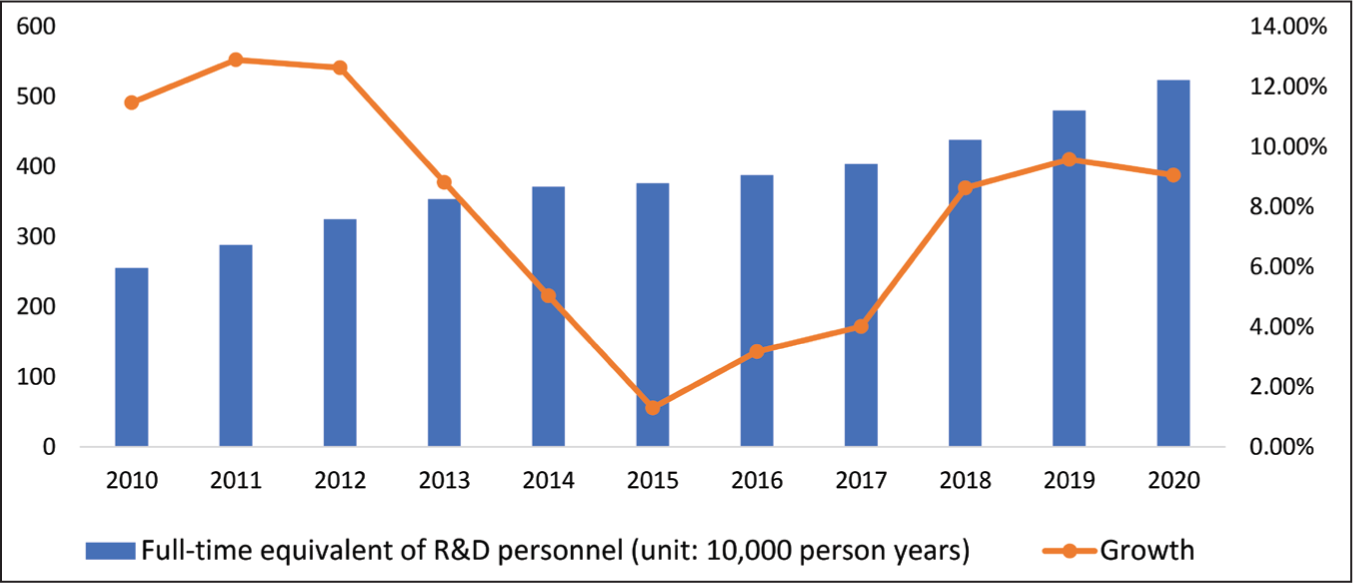
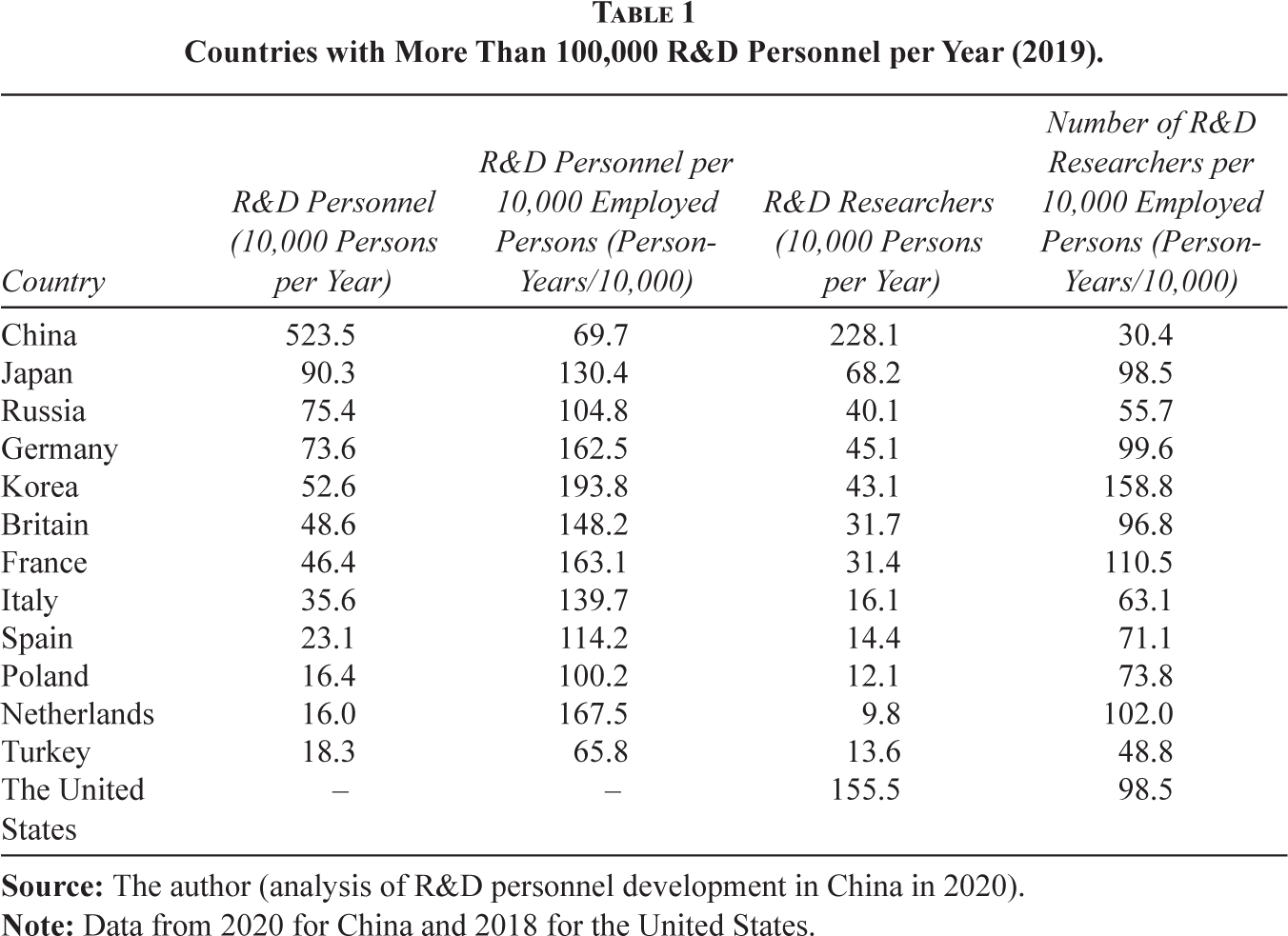
With strategic goal of building an innovation-oriented country, China continues to strengthen talent cultivation and introduction, and constantly expands the ranks of scientific and technological innovators. According to full-time equivalent statistics (Figure 1), in the past decade, the number of R&D personnel in China has doubled from 2.55 million in 2010 to 5.235 million in 2020, with the largest increase of 12.89% in 2011. Among them, 77.6% of the total R&D personnel are from enterprises, 20.4% are from research institutions and universities and 2.0% are from other public institutions. 1 Although R&D manpower scale in China ranks first in the world at present, R&D manpower investment intensity is still relatively low compared with that in major developed countries, but the gap has been reduced. In terms of personnel input scale, the full-time equivalent of R&D personnel and R&D researchers has steadily ranked first in the world (Table 1). In addition to China, the United States, Japan, Russia, Germany and South Korea are major countries with large R&D manpower input. Their R&D personnel and R&D researchers each exceed 500,000 person-years and 400,000 person-years, respectively. China’s R&D manpower investment intensity index is still lagging. In 2019, the number of R&D personnel per 10,000 people in most developed countries was more than twice that of China. In 2019, the number of R&D researchers per 10,000 employed people in most developed countries was about four times that of China. Therefore, constant improvement in the allocation of scientific and technological human resources is still a key action.
Countries with More Than 100,000 R&D Personnel per Year (2019).
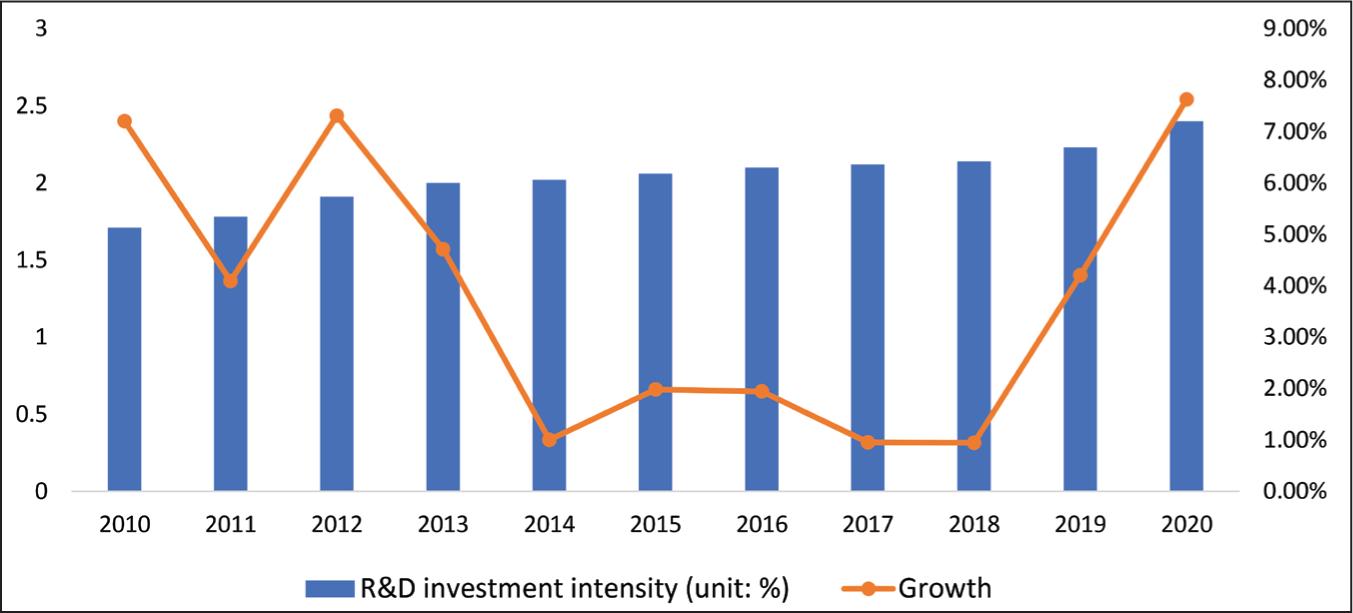
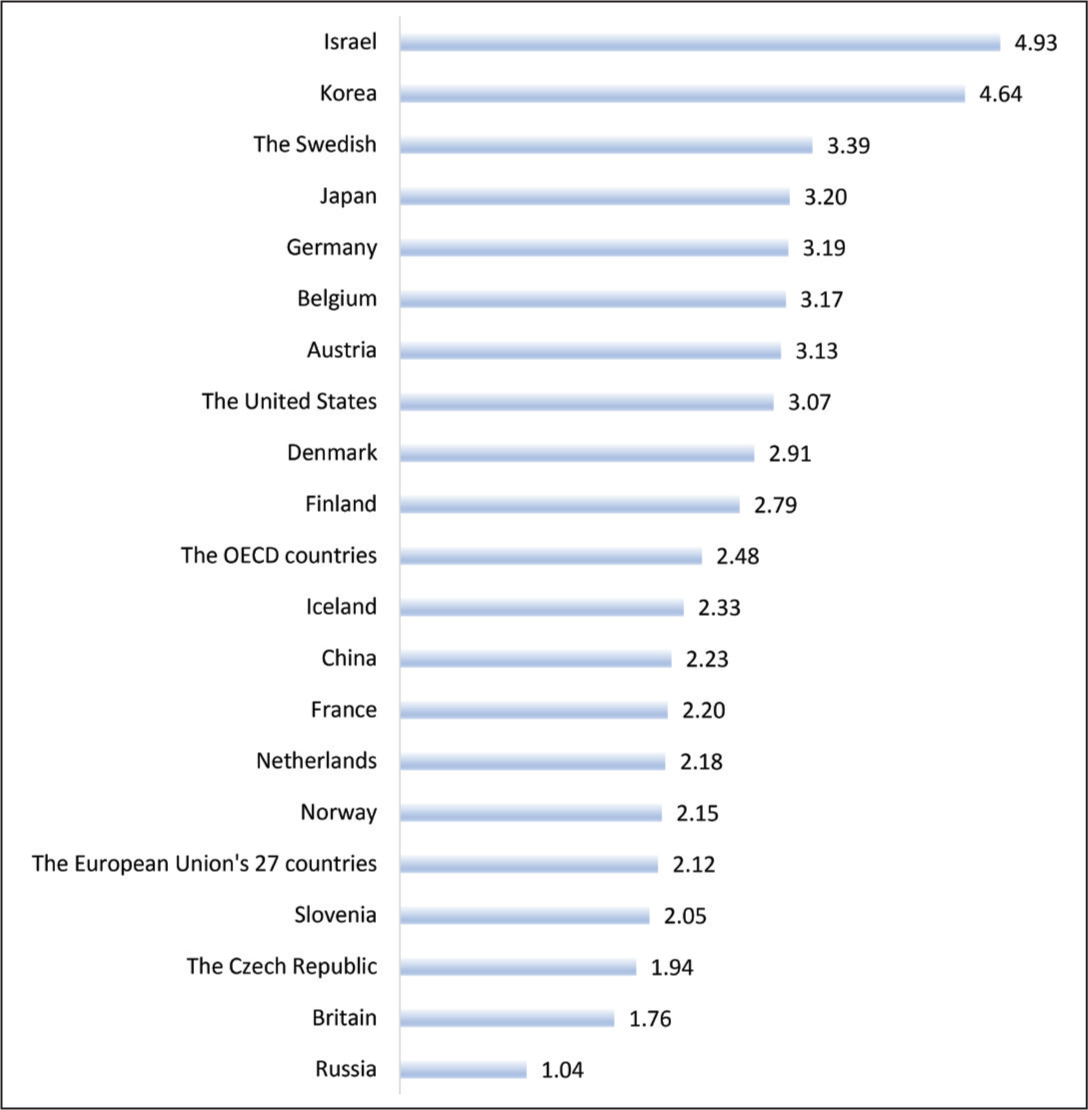
China attaches importance to providing fundamental fund support for national innovation ecosystem. To improve mechanisms for providing long-term and stable support to universities, research institutes and enterprises, it is typical governmental practice to promote scientific and technological innovation. Government guidance and tax leverage will also be adopted to encourage enterprises and social forces to increase investment in scientific research and key technologies. In 2020, China’s R&D investment was 2.44 trillion yuan, ranking second in the world after the United States. R&D funds are invested in enterprises, research institutes, universities and other departments. In 2020, 59.0% of R&D funds were invested in research institutes, 23.4% in universities and 10.9% in enterprises. 2 In the past 10 years, (Figure 2) the intensity of R&D expenditure has shown an increasing trend from 1.71% in 2010 to 2.40% in 2020, with the highest increase of 7.62% in 2020 (National Bureau of Statistics State Science & Technology Commission, 2020). Internationally (Figure 3), China’s R&D investment intensity has exceeded the average level of twenty-seven European countries by 2.12%, reaching the level of medium-developed countries, but there is still a gap between the level of 2.5% and 3.5% in some developed countries. In terms of R&D expenditure types, basic research, applied research and experimental development accounted for 6.0%, 11.3% and 82.7% of R&D expenditures, respectively. Although overall investment in basic research is on the rise, the investment in basic research is slightly insufficient compared with the huge application, especially the experimental development. And it is not matched with the characteristics of high investment in long-term basic research and a macro environment that emphasises the importance of basic research. In the current innovation ecosystem, although the scale of innovation resource input is relatively large and its density and intensity are relatively backward, the proportion of basic research and applied research investment needs to be optimised urgently (Chen, 2021).
China built new types of R&D institutions to create the driving force of national innovation ecosystem. New R&D institutions refer to independent legal entities engaged in scientific research, technological innovation and other services, including public, enterprises or social service institutions (Wang et al., 2020). It operates by market mechanism, focussing on the integration of scientific and technological innovation and industry (Gou & Lin, 2015), with diversified investment subjects, enterprise-oriented operation, innovation chain and industrial chain connection (Zhang et al., 2021), and it has independent management rights and carries out independent accounting for the market (Zhou, 2016). By 2020, new R&D institutions have reached 2,080, and 50.4% of them were established between 2016 and 2020 (New R&D Institute Development Report 2020 compilation group, 2021). These institutions effectively integrate universities, research institutes, enterprises, government, industrial alliances, venture capital funds and other different types of institutions. 3 In terms of legal person, enterprises, public institutions and private non-enterprises account for 68.41%, 22.06% and 9.53% respectively (Liu, 2019). It not only focuses on market demand but also integrates basic research, application R&D research, and organically combines R&D application and product marketisation; at least 46.0% of them have incubated enterprises. They serve a wide range of scientific and industrial fields, covering new-generation electronic information technology, biomedicine, intelligent manufacturing, energy conservation and environmental protection, artificial intelligence and new materials (Kartick et al., 2017). In innovation capability, by 2020, they had undertaken 34,527 research projects, of which more than 50% are national, provincial or ministerial projects, for a total of 68,767 graduate students graduated (Fang & Mao, 2021). In financing mechanism, they adopt the idea of cross-boundary cooperation and innovation, integrate technology and finance, and explore new financing methods such as internet finance and crowdfunding, breaking through the dilemma of traditional financing for R&D institutions and exploring typical practices such as ‘research institute plus operating company’ and ‘one institute, two systems’.
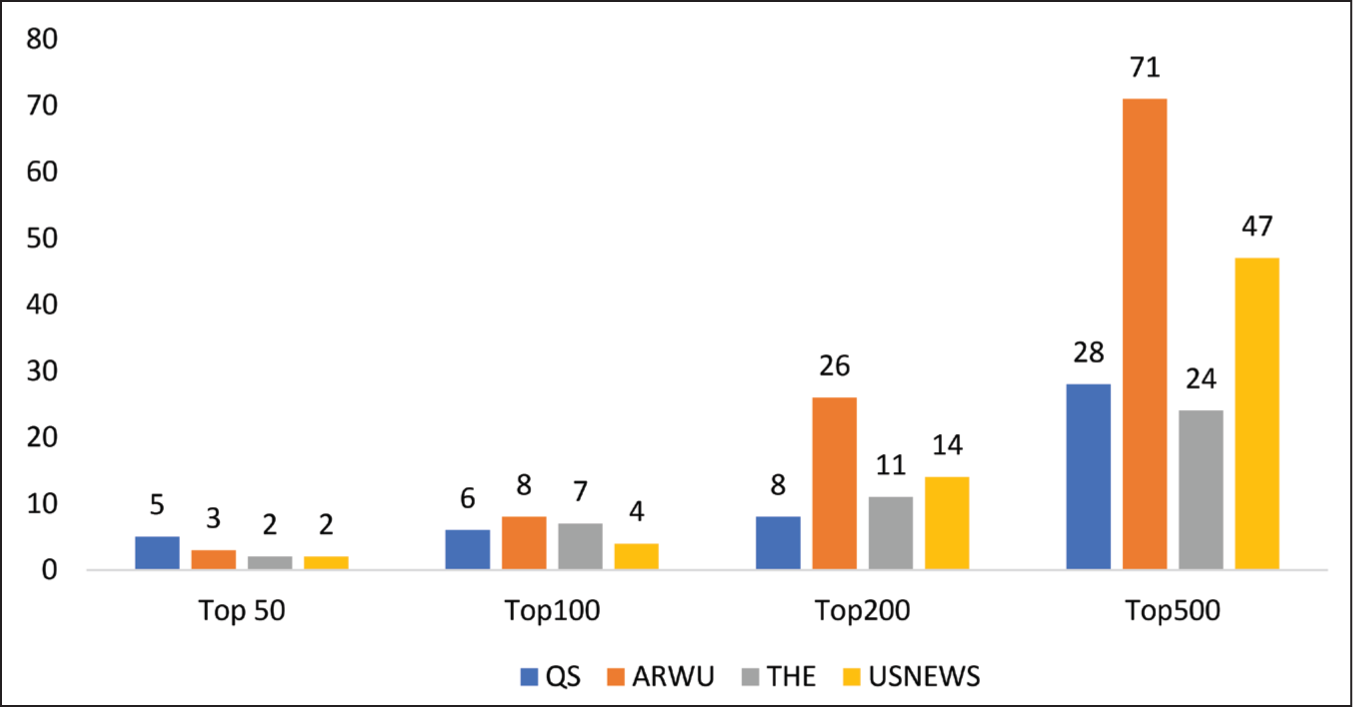
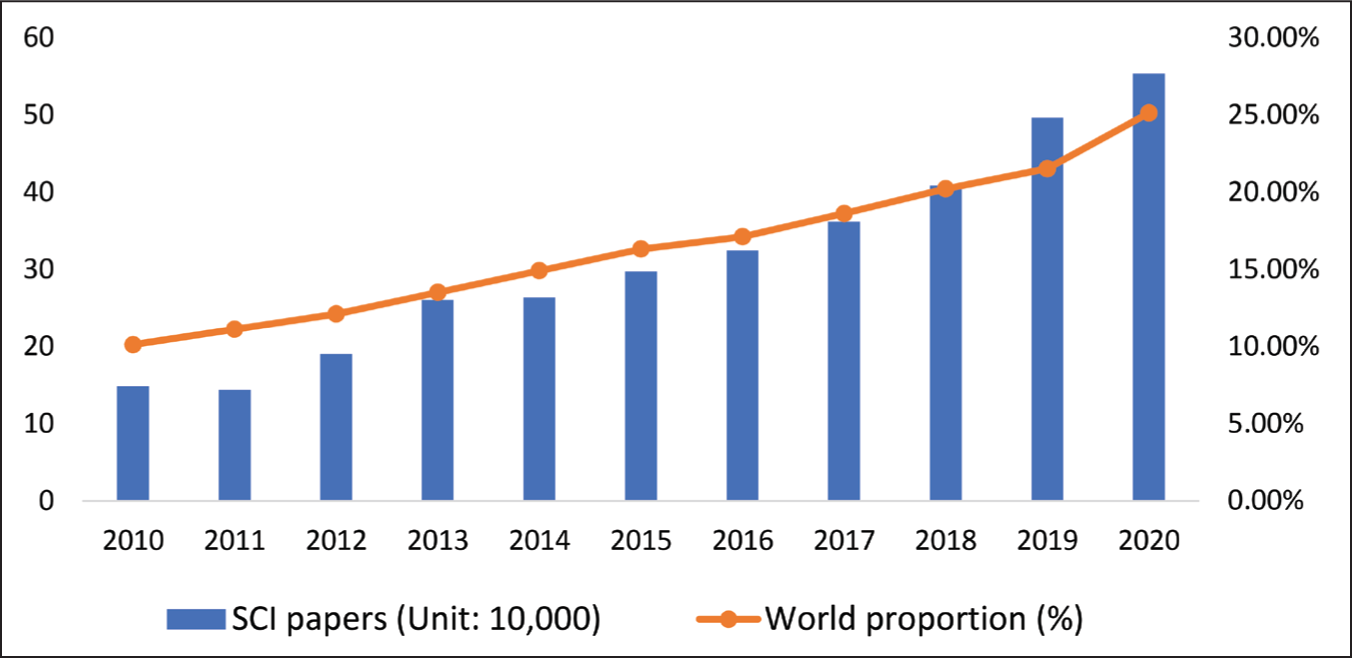
China has worked hard to establish a system of higher education that matches the national innovation system. Since the implementation of enrolment expansion policy of higher education in 1999, China’s gross enrolment rate of higher education has grown by leaps and bounds. From 1999 to 2009, the gross enrolment rate of higher education increased from 10.5% to 24.2%, with an average annual growth rate of 8.71%. From 2010 to 2020, the gross enrolment rate of higher education increased from 26.5% to 54.4%, with an average annual growth rate of 7.46%. China has completed the scale growth process from elite to mass and then from mass to universal in a relatively short period of time, and the development speed is far higher than that of other countries. From the perspective of university development, China has strengthened the construction of first-class disciplines and universities through key construction projects such as 211, 985 and ‘Double First-class’. By 2022, China ranked among the world’s top four rankings (QS, ARWU, THE, and USNEWS), top 50, top 100, top 200 and top 500 had all increased rapidly (Figure 4). Peking University and Tsinghua University have all entered the global top 50, and Shanghai Jiao Tong University and other universities have all entered the global top 100. The scale of higher education in China continues to expand, and the level of education is rising rapidly, providing a high-quality and large amount of human capital. In the past decade (Figure 5), the number of SCI papers and other high-level scientific and technological output has accounted for more than 20% of the world’s total. In terms of innovation achievements, more attention is paid to two aspects which are quality improvement under the premise of ensuring quantity and social production and economic benefits (Chen, 2021). The 2022 Global Innovation Index Report shows that China’s innovation performance has risen to the 11th place in the world, the only middle-income economy country in the GII top 30, remains in the third place in Southeast Asia, East Asia and Oceania, and holds the first place in the upper middle-income group of countries, 4 which shows that China is making efforts to effectively transform innovation input into output and creating a more efficient innovation ecosystem.(Mu & Chen, 2020)
Start-Up Policies and Strategies
As an important part of the innovation ecosystem, the government provide policy support for start-ups (Table 2). Related policies at the national level focus on institutional arrangements to support R&D from aspects of optimising funding modes and gathering high-end talents, especially to support start-ups in tackling key technologies, enhance R&D capabilities and promote self-reliance in high-level science and technology. The government optimised funding model to support start-ups, improved mechanism for R&D programmes, set aside certain budget for funding R&D activities of small- and medium-sized science and technology enterprises in key programmes and precisely supported qualified science and technology start-ups in undertaking national science and technology tasks. China improves mechanisms by using government guidance funds to support start-ups, taking supporting start-ups to make breakthroughs in key core technologies as an important performance assessment indicator, supporting national, local and industrial guidance funds to set up small- and medium-sized enterprise sub-funds and encouraging localities to set up angel investment funds. Besides, supporting small- and medium-sized technology-based enterprises in enhancing key core technologies is an important measure, and encouraging local governments to increase support for technological innovation of small- and medium-sized technology-based enterprises. China implements a series of inclusive preferential policies, such as additional deductions for R&D expenses of small- and medium-sized science and technology enterprises, income tax exemptions for high-tech enterprises and technology transfer enterprises, income tax reductions for small and low-profit enterprises, tax incentives for science and technology business incubation vehicles and tax incentives for enterprises investing in basic research, to stimulate the vitality of technological innovation start-ups. In the aspect of talent, support technology enterprises to gather high-end talents, give awards and subsidies to local financial resources formed by individual income tax in a certain percentage and give priority project support and government investment. Financial subsidies, household registration, social security, tax and other aspects are provided to deepen the reform of granting scientific researchers the right to own or use scientific and technological achievements and stimulate their enthusiasm for innovation and entrepreneurship.
Main Entities and Policies.
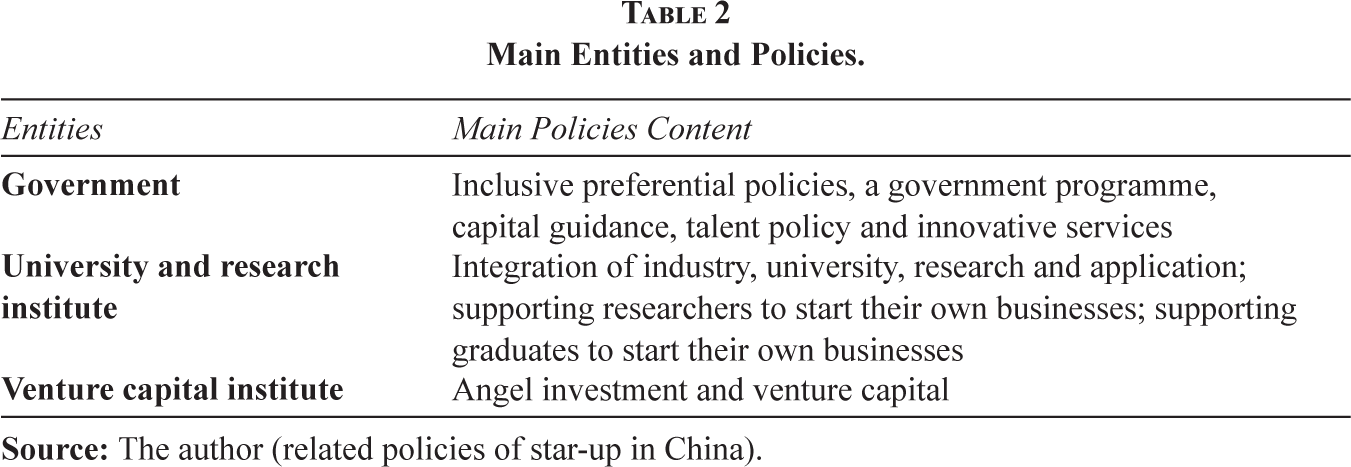
Universities and research institutions strengthen industry–university–research cooperation and innovation. First, to carry out integrated innovation among universities, research institutes and large-, small- and medium-sized enterprises. Launch a special campaign to promote commercialisation of a scientific and technological achievements, open a database of projects for commercialisation of scientific and technological achievements to enterprises and accelerate commercialisation and industrialisation of scientific and technological projects at all levels in enterprises. Enterprises shall be authorised to use job-related scientific and technological achievements through licensing and other means. Second, build several national makerspaces by relying on talents and research resources from universities and research institutes, further optimise the ‘makerspaces, incubators, accelerators, industrial parks’ innovation and entrepreneurship vehicles, and inject R&D concepts and innovation culture genes into early-stage small- and medium-sized enterprises. Third, provide high-level talent support for start-up enterprises, including supporting scientific researchers to establish small- and medium-sized enterprises based on science and technology, establishing and improving income distribution mechanisms that are conducive to encourage technological entrepreneurship, such as equity, option and dividend rights, and supporting graduates to find employment by starting businesses. Support such as rent concessions and entrepreneurship counselling will be provided to entrepreneurs who have settled in technology business incubators or college student entrepreneurship bases.
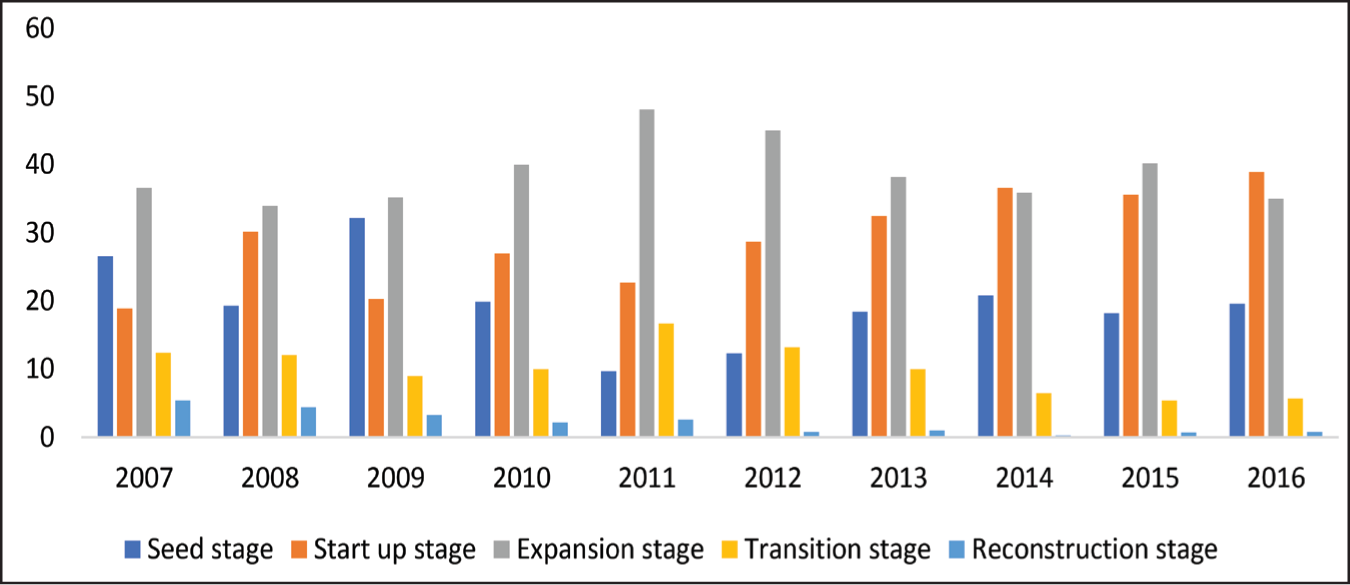
Various types of social capital set up market-oriented equity investment funds, such as angel investment and venture capital, to support the entrepreneurial activities of small- and medium-sized technology-based enterprises (Hu et al., 2017). In 2016 (Figure 6), the investment amount of Chinese venture capital institutions mainly focused on enterprises in the initial, growth (expansion) and maturity (transition) stages, and the investment number of start-ups in the initial stage increased significantly by 8.8% compared with 2015. Investment projects are mainly concentrated in the seed, start-up and growth (expansion) stages. Investment projects in the start-up stage doubled in 2016 compared to 2007. As venture capital institutions have gradually increased requirements on the unique core value of start-ups because they are more cautious and rational in investment, the investment projects mainly focus on the best enterprises in industry, and they have higher requirements on core value and independent intellectual property rights of start-ups instead of simply upgrading technology or copying business model. These bring some difficulty to start-up financing. From the perspective of the operation time of projects invested by venture capital institutions, these institutions prefer relatively stable and mature enterprises and projects in 2016. Among them, the invested enterprises established for more than 5 years account for the highest proportion, 37.85%. About 50% of the start-ups were established less than 3 years ago, among which 29.31% were 1–3 years old and 20.38% were less than one year old. From the perspective of industry distribution, the number of projects in extractive industry, software industry, optoelectronics and opto-mechatronics integration, consumer products and services, medicine and health care accounted for a high proportion of seed stage. Investors recognised the value of early investment in these three industries. Semiconductor, IT services, social services, biotechnology, finance and insurance and other initial projects have received widespread attention.
China has optimised the innovation service system conducive to the development of innovation-oriented enterprises. In terms of enhancing regional innovation capacity and promoting regional innovation networks, China has made great efforts to break the strong independence of traditional innovation chain, which is easy to affect innovation continuity. Taking Zhongguancun National Independent Innovation Demonstration Zone as an example, it has formed an innovative service ecosystem that combines ‘innovation chain’, ‘industrial chain’, ‘capital chain’ and ‘service chain’ to promote start-ups. First, quickly enhance capacity for original and cutting-edge innovation and consolidate the foundation of innovation chain. In 2020, enterprises spent 378.54 billion yuan on R&D, had more than 140,000 effective invention patents, and produced such innovative achievements as China’s first universal Central Processing Unit (CPU), and the world’s first PFD-EDA whole-process solution. Strengthen spatial integration and focus on guiding the original innovation group such as the Western District of Future Science City to develop into a R&D innovation model. 5 Second, improve the layout of industrial chain and give play to the leading role of mature enterprises, strengthen dominant position of enterprises in innovation and continue to support and foster cutting-edge technology companies and start-ups. By 2021, 733 enterprises with over 1 billion yuan, 104 with over 10 billion yuan, 14 with over 100 billion yuan and 91 unicorns were developed. 6 Third, improve the development environment for angel venture capital, establish equity investment funds together with social capital, implement reverse linkage mechanisms for venture capital funds and guide angel and venture capital institutions to focus on early-stage and value investment. By 2020, there are more than 200 business incubators, nearly 600 alliances, associations and non-governmental organisations, along with thousands of law, accounting and intellectual property service organisations. 7 Forth, deepen reform of the personnel system and mechanisms, stimulate talents creativity, strengthen planning and coordination between the demonstration zone and surrounding areas, build a convenient and efficient transportation system, improve education, medical, housing, cultural and other supporting service facilities in the sub-parks and the surrounding areas. 8
The Development of Start-Ups in China from 2010 to 2020
The overall number of start-ups in China has grown rapidly in recent years. From 2013 to 2019, the number of new market entities rose from 11.32 million to 21.79 million, an increase of 92.5%. Among them, the number of new enterprises rose from 2.5 million to 7.4 million, an increase of 196%, which shows that China’s mass entrepreneurship and innovation have achieved notable results. Most of China’s newly established start-ups are in the high-tech industry, and technology and IT industry are the mainstream business directions of start-ups. Most of the enterprises have registered capital of less than one million, and a few of them have registered capital of more than one million. Entrepreneurs with an average age of thirty-four and a bachelor’s degree are the mainstream level of education. Incubators gather various elements and resources to provide start-ups with a series of professional services and development guidance. By 2019, there were 13,206 incubators, 658,000 incubated enterprises and teams. For start-ups, incubation institutions can reduce the risks and costs of entrepreneurs and improve the success rate. The incubation rate of start-ups in 2019 increased by 5.3% compared to 2018. 9
Unicorns are companies that are less than 10 years old and valued at more than $1 billion. 10 A total of 301 Chinese companies are on the Hurun Global Unicorn List 2021. Top of the list is Beijing Byte Dance Technology Co., a social media company with an estimated value of 2.225 billion yuan. 11 From the perspective of industry distribution, e-commerce industry has the largest distribution of unicorns, and social media industry has the largest distribution valuation. Overall, Douyin ranks first with an estimated value of 1.34 trillion yuan, according to the ‘Global Unicorn List 2022’ released by the Hurun Rich Report. Ant Group ranked second, valued at $800 billion; Shein ranked third with a valuation of $400 billion; Shenzhen WeBank ranked fourth with a valuation of 220 billion yuan; Jd.com Technology ranked fifth with a valuation of 200 billion yuan. All five have broken into the global top 10. In terms of the regional distribution of unicorn enterprises, developed regions are more distributed (Table 3). In 2021, the number of unicorn enterprises in Beijing remained the first in China, followed by Shanghai, Guangdong, Zhejiang and Jiangsu. 12
Main Cities and Representative Unicorn Companies in China.
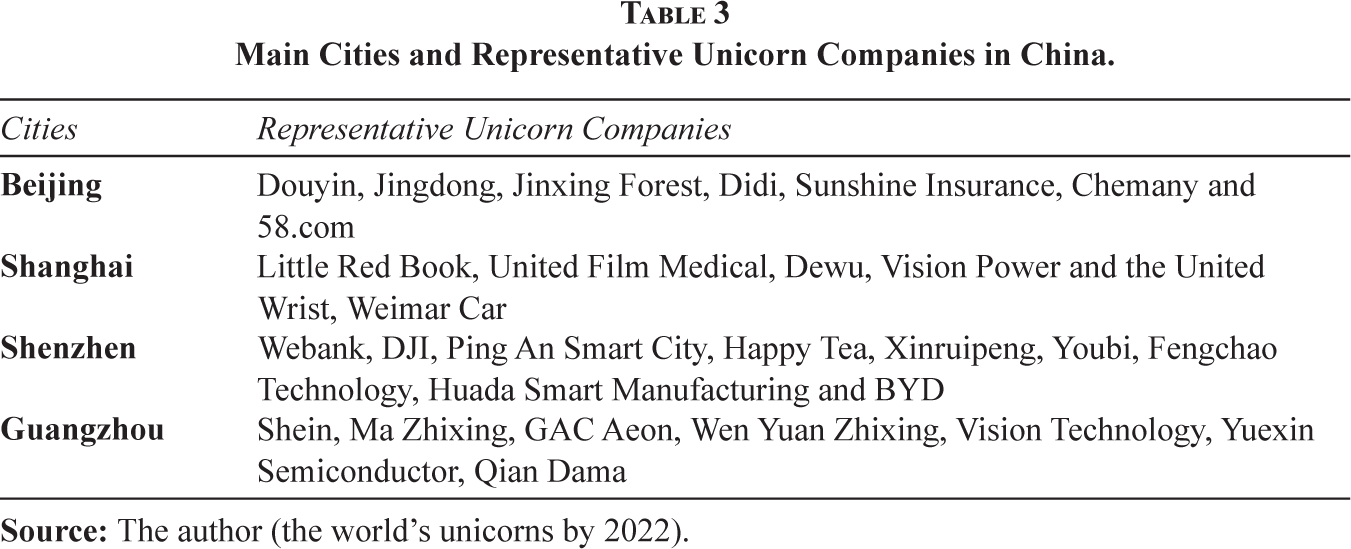
The rapid development of Chinese start-ups and unicorns is largely due to favourable policy support, industrial environment, talent advantages, innovation and entrepreneurship culture and research institute resources in the regions and cities where they are located. By the end of 2021, there are 1,694,000 micro-, small- and medium-sized enterprises operating in Beijing, contributing more than 30% of the city’s tax revenue, more than 40% of its revenue, more than 50% of its patents for technological inventions and more than 60% of its jobs. To meet the strategic goal of building an international science and innovation centre, Beijing relies on its advantages in high-end manufacturing, industrial software and other fields, and cultivate 257 national-level ‘small giants’ that are specialised and innovative. According to the survey, the number of tech companies in Beijing increased from 110 per day in 2015 to 270 in 2021, and the number of unicorns (start-ups established less than 10 years ago and valued at more than $1 billion) increased from 40 in 2015 to 102 in 2021, ranking first in China. Various support measures for ‘specialised and innovative’ start-ups are also increasing, and a package of exclusive policies covering technological innovation, transformation and upgrading, industrial chain support, brand building, market development, listing services and financing needs are tailored for small- and medium-sized enterprises. Through the multi-dimensional and international entrepreneurship service system, Beijing helps entrepreneurs and start-ups to land and develop in Beijing, such as by holding HICOOL Global Entrepreneurship Competition and other one-stop entrepreneurial ecological platforms. Entrepreneurs can gain greater development space in the process of cultivating ‘specialised, specialised and innovative’ enterprises in Beijing. 14 Shanghai has established a system for fostering innovation and entrepreneurship vehicles, guided the high-quality development of various innovation vehicles, and supported the rapid growth of small, medium and micro enterprises based on science and technology. Shanghai arranges valuable entrepreneurial projects, potential entrepreneurs and growing start-up enterprises in a forward-looking manner, and closely links industrial ecological resources through professional services, so that start-up enterprises can become an important member of the carrier development and industrial innovation ecological development. Shanghai’s innovation and entrepreneurship vehicles include science and technology business incubators, makerspaces and university science parks. It has built a graded and hierarchical carrier cultivation, service and management system to continuously incubate new enterprises, foster new industries and form new business form. 15 In 2022, there are more than 500 mass entrepreneurship and innovation carriers in Shanghai, including 189 science and technology business incubators, 170 makerspaces, 15 university science and technology parks, nearly 30,000 incubation service enterprises and more than 4,000 graduated enterprises. Adhering to the dual traction of ‘policy + service’, Shanghai has built and improved a series of policy support and service chains covering the full life cycle of the growth of science and technology enterprises, from start-up teams, small and micro science and technology enterprises, high-tech enterprises to small science and technology giants (including cultivation) enterprises and the listing and cultivation of science and technology innovation enterprises. In 2012, the number of high-tech enterprises in Shanghai was 4,311. By 2021, the number has increased by more than 20,000, supporting a total of 2,498 small technology giants and incubating high-quality scientific innovation enterprises with independent intellectual property rights. 16 They not only provide relevant legal rights protection services for enterprises, but also extend intellectual property services to the field of financing, helping start-ups overcome the problems of tight cash flow, large investment in R&D and financing difficulties. Start-up enterprises are encouraged to participate in entrepreneurship competitions, apply for special funds, actively prepare for scientific and technological innovation-guiding funds and help enterprises establish capital supply chains. 17 Scientific, technological and financial working mechanisms have been explored and formed, and a scientific and technological finance policy and service system have been established.
Concluding Remarks
China makes full use of its nationwide system to improve start-up and innovation ecosystem, build a national innovation ecosystem and lay the foundation for building an innovative country in science and technology. China’s start-up and innovation ecosystem practice have the following characteristics and enlightenment:
The national innovation ecosystem provides institutional guarantee for the innovation system of start-ups. China strengthens the supply of key factors such as policies, human resources, funds to strengthen the foundation of national innovation ecosystem and provide institutional support for start-ups. In recent years, China has given full play to the advantages of socialist system and mechanisms that allow it to concentrate resources to accomplish major tasks. It has made great efforts to strengthen organised research, which is directed by the will of the country to centrally allocate, plan and distribute innovative resources in an integrated way, lead overall innovation and development, and act as the national strategic scientific and technological force. An effective system can greatly improve the operation efficiency of scientific and technological innovation activities, enabling scientific and technological innovation to break the barriers of the organisational system, connect internal and external cooperation to produce high-level innovation results. China has gradually improved its innovation policies, increased the construction of scientific and technological innovation personnel, increased the supply of key policy factors such as funding, improved the institutional innovation system, stimulated the innovation vitality and driving force of innovation entities, loosened the shackles of innovation activities, enabled innovation achievements to be implemented and gradually strengthened the institutional efficiency and consolidated institutional foundation for national innovation ecosystem. To give full play to innovative leading role of innovative organisations in forming national strategic scientific and technological forces, governments at the national and provincial levels strengthen the construction of world-class universities and reserve talents and knowledge innovation foundation. Innovative organisations, such as new R&D institutions, build a unique innovation system paradigm, crossing the boundaries of government, research institutes, universities, enterprises and other types of institutions, and provide institutional guarantee for innovative research and technology transfer. However, compared with other technologically developed countries, China has inherent deficiencies in the development basis of scientific and technological innovation, such as the low level of originality and the output of major basic research, the urgent need to further improve the overall innovation capacity of the industry, the weak capacity for independent innovation and the high dependence of technology on foreign countries. At present, core technologies in key areas being controlled by others have not fundamentally changed.
The innovative service system provides ecological support for start-ups. Start-ups have been established for a short time, and their cumulative effect of advantages is weak compared with those with high maturity. To crack the institutional barriers of innovation systems and innovation activities, start-ups need to rely on the cooperation of multiple innovation entities to build a ‘four-chain integration’ innovation service system combining ‘innovation chain’, ‘industrial chain’, ‘capital chain’ and ‘service chain’. Ecology highlights the internal demands of innovation entities, overall adaptation to external environment and cultural system generated and shaped by their development that can reflect characteristics of innovation. The establishment of micro-ecology in start-up enterprises is the result of top-down advocacy of the national administrative system and bottom-up effective exploration and interaction with innovative start-up enterprises. Based on personalised needs of actual innovation activities of start-ups, multiple cultural micro-ecosystems continue to interact, jointly creating a more inclusive, diverse and complex macro innovation ecosystem. The innovation service system is a bridge to promote the flow, diffusion and transfer of innovative knowledge and technology related to start-ups. It effectively communicates and links two systems of research and industrial innovation, turns the advantages of scientific and technological resources into competitive advantages and improves overall the innovation performance of start-ups. Based on the huge size of start-ups, as an important representative of China’s national innovation ecosystem, the innovation micro-ecology of start-ups plays a leading role. In combination with the innovation demands of national strategies, industries and regional development, China focuses on building an innovation service system represented by Zhongguancun and other national innovation zones. It optimises innovation service capacity in an organised way and strives to break institutional barriers restricting efficient implementation of innovation activities of start-ups at the level of national and regional collaborative innovation policies to build an innovation ecosystem of start-ups with high efficiency and strong sustainable development ability.
Regional innovation policy is the catalyst for start-ups. The development of Chinese start-ups is fully integrated into regional and city’s grand strategy and target planning, which strengthen the synergy and interaction of regional resources, closely connect core important strategies and core industries of the city or region, and prospectively layout relevant innovation chain. Take high-quality linkage of talents, enterprises and capital as an important starting point for the cultivation of start-ups, build a talent intelligence system conducive to the development of enterprises, attract a group of strategic scientific and technological talents, leading talents, scientists and entrepreneur teams at a high level, promote the upgrading of innovation chain of enterprises and encourage cooperation between government guidance funds and social capital. Provide support for the hierarchical classification of start-ups. Cities or regions vigorously support the creation of high-quality intellectual property rights, guide start-ups, especially unicorns, to focus on weak links such as key generic technologies and ‘choke’ technologies, explore low-level innovation and bottleneck breakthrough and strive to form core technology original capabilities in the national strategic science and technology field. Through policies such as talent, technology R&D, and financial support, urban innovation elements will be promoted to converge on high-tech start-ups and unicorns, and the guiding role of national and local funds will be given full play to guide start-ups to develop into high-quality ‘unicorns’. The development of start-up enterprises, especially unicorn enterprises, resonates with the regional or urban construction of scientific and technological innovation centres. With the help of scientific and technological forces such as national laboratories and high-level research universities, the efficiency of innovation system can be improved, and the application and promotion of innovative application scenarios for start-up enterprises can be supported, as well as the application and promotion of pioneering products. In addition, local government should strengthen traction of market-oriented mechanisms, create innovation incubation and cultivation institutions, help start-ups to occupy an important position in industrial chain by enhancing innovation drivers and playing a leading role in innovation, improve the system, mechanism and service environment for the transformation of scientific and technological achievements and encourage the agglomeration and development of service institutions, such as intellectual property service institutions and organisations like technology transfer centres.
Footnotes
Declaration of conflicting interests
The authors declared no potential conflicts of interest with respect to the research, authorship and/or publication of this article.
Funding
This article is funded by Key Project of National Social Science Fund (Project Number 22AGL009): Study on the Effectiveness Evaluation and Risk Prevention of Major Science and Technology Projects ‘Jie Bang Gua Shuai’