




Abstract
The study traces the emergence of science and technology ventures (STVs) in India through two systemic lenses—National Innovation System (NIS) perspective, which espouses a top-down, policy-driven approach to encourage STVs, and the ecosystem perspective, which highlights the role of independent organisations in nucleating STVs. Converging the NIS and ecosystem perspectives—at sectoral levels—is found to be germane for STV emergence. The sectoral systems of innovation (SSI) perspective is then advanced to emphasise how the integration of NIS and ecosystem approaches has enabled a thriving STV landscape in India. The case of biotech sector is discussed to illustrate the integration. Based on this analysis, the study advocates policy intervention at the sectoral level, and a thrust on firm-centric innovation as a complement to investments in fundamental research, to unleash a wave of STVs in the country.
Keywords
Introduction
Scholars have long argued that entrepreneurship is a systemic phenomenon (e.g., Neck et al., 2004; Roundy et al., 2018; Vedula et al., 2022). In doing so, they have emphasised that the success of new ventures 1 goes beyond merely the capabilities of the individual entrepreneur (Isenberg, 2016) and, in fact, hinges upon various regional- or national-level factors, such as (but not limited to) policy advocacy, financial support, market readiness, cultural alignment and availability of specialised human capital (Isenberg, 2010, 2014). This has led to an impetus towards innovation systems research (Krishnan, 2007, 2010; Nelson, 1993), which has attempted to understand how country-specific institutional characteristics engender and constrain entrepreneurial innovation (e.g., Audretsch et al., 2021).
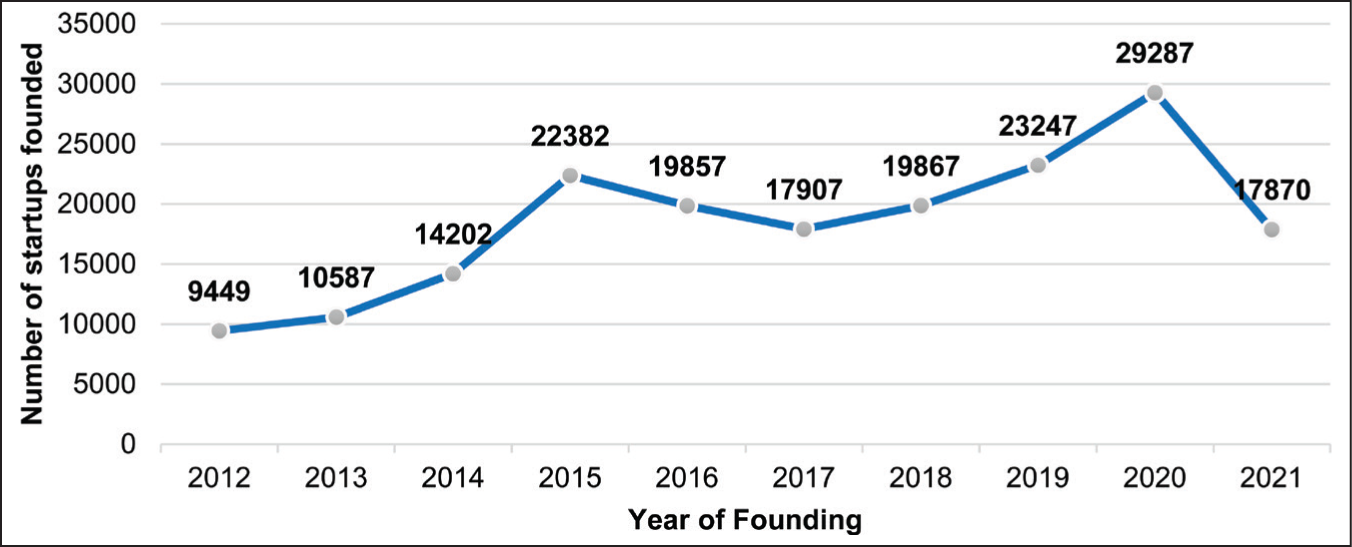
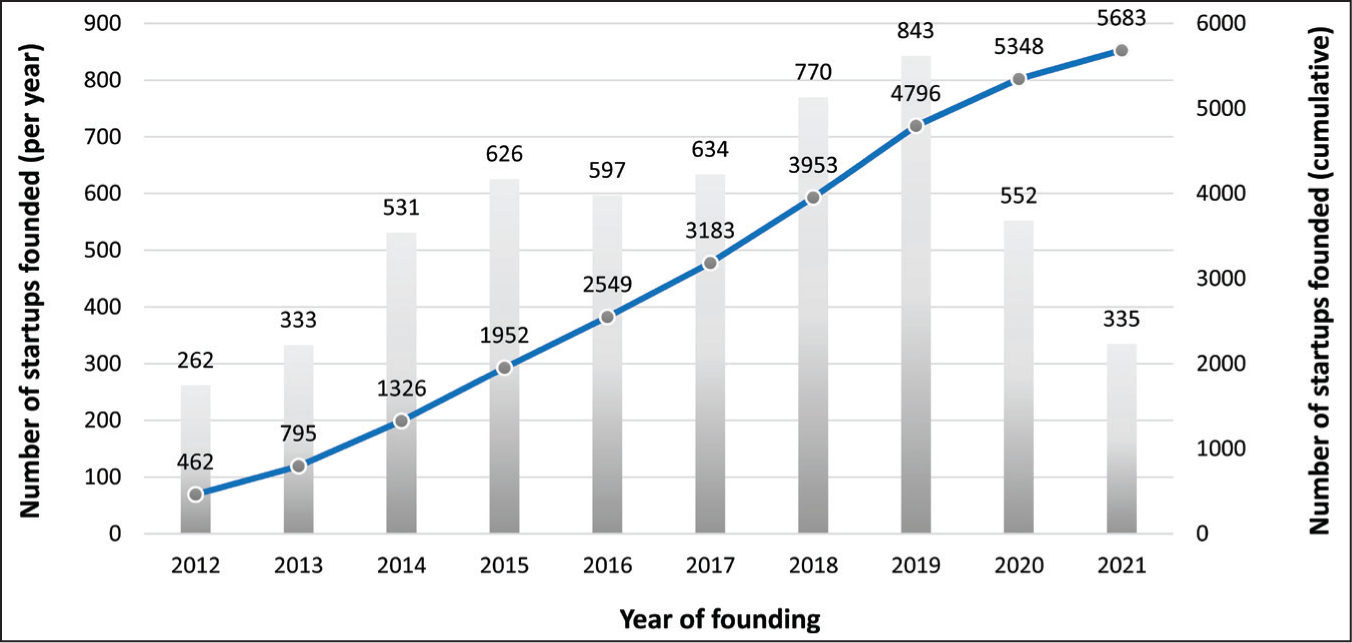
The past decade has witnessed steady growth in the emergence of new ventures in the country (see Figure 1). The imperative to understand factors affecting entrepreneurial innovation stems from the recognition that new ventures have lately become the hub of innovative activity in a nation’s economy, especially given their ability to be agile in the face of extreme environmental dynamism (Bhagavatula et al., 2019). Research has indicated that start-up-based innovation today has grown to the extent of influencing country-level economic outcomes (Tiwari et al., 2021). This applies even more so in the context of science and technology ventures (STVs), for they are seen as key drivers in advancing high-tech industries (Colombo et al., 2010; Fini et al., 2019) and, hence, can go on to positively impact the national economy in many important ways.
In this study, we look at how the institutional environment of India has shaped and supported the emergence of STVs. We define STVs as start-ups that build products and services on the frontier of knowledge, incorporating basic or applied scientific innovation (Villani et al., 2018). These may be spin-outs from universities and public laboratories or standalone ventures. Typically, STVs are prevalent in sectors such as advanced materials, biopharmaceuticals and genomics (Lubik & Garnsey, 2016).
The motivation for the study stems from the following observations: (a) While STVs are key growth drivers for the economy, they face significant market uncertainty (Molner et al., 2019) and typically involve a complex path to commercialization, often involving several stakeholders (Fini et al., 2019). (b) After several lacklustre decades, India has recently witnessed a rapid rise in the number of STVs (Jha, 2018; Krishnan et al., 2021). While a few reports and articles (e.g., Forbes, 2016; OECD, 2014; Mehrotra, 2019) have documented the policy interventions undertaken to create a supportive innovation system for STVs, there is no study that systematically maps and analyses how such a system has evolved and what the critical inflection points are in that journey. We believe such a study can have important implications for the literature on innovation systems as well as policy formulation.
The article is structured as follows: First, we trace the evolution of the STV landscape in India through both the National Innovation System (NIS) and ecosystem perspectives. While the NIS perspective endorses continued policy advocacy, the ecosystem perspective emphasises the key actors that have played a crucial role in nucleating the emergence of STVs. Subsequently, we suggest that the NIS and ecosystem perspectives converge at the sectoral level. In other words, we show, using the sectoral systems of innovation (SSI) lens, how top-down policy advocacy (i.e., NIS perspective) has fruitfully converged with bottom-up organic development (i.e., ecosystem perspective). Then, using the biotechnology sector as an exemplar, we elucidate how this convergence has enabled the proliferation of STVs. We conclude with a call for continued (and enhanced) policy support for STVs, especially in a sectoral context, such that it acknowledges and advances the extant STV ecosystem in the country.
NIS and Ecosystem Perspectives on STV Landscape in India
The research on the emergence of Indian STVs has taken two broad perspectives. One is the NIS perspective, where scholars (e.g., Herstatt et al., 2008; Krishna, 2014; Krishnan, 2010; Kumar, 2014) have observed a top-down policy-driven approach. This perspective contends that the (post-independence) Indian state fervently advanced a scientific temper aimed at nurturing science and technology (S&T) research and development (R&D) within the country (Krishna, 2014). This stream emphasised various policy thrusts, combined with institutional initiatives, taken by the government to advance R&D activity in various S&T sectors of national importance (Krishnan, 2010). Another stream of research has taken an ecosystem perspective. This stream has emphasised S&T innovative activity as a systemic phenomenon involving various national/regional forces, such as educational and financial institutions, complementing innovative entrepreneurial pursuits (Isenberg, 2010). Scholars taking the ecosystem perspective have advanced a somewhat bottom-up perspective, observing that STV activity, which initially emerged as spillovers from multinationals that set up research activity in India (Bhagavatula et al., 2019), gradually gained a foothold in a vibrant environment that (already) embodied scientific temper through educational, cultural and other research-based initiatives in the direction of S&T (Krishnan & Prashantham, 2019).
We see the emergence of STV-based innovation activity in India as a combined effect of both concerted policy push (i.e., NIS-based advocacy) and collective efforts (i.e., ecosystem play) by various institutional constituencies, such as higher educational institutes, research-based laboratories, technology-focused firms, venture capitalists and highly inventive individuals (or groups of individuals). Indeed, in line with the observation by scholars in the broader context of Indian start-ups (e.g., Jha, 2018; Kapturkiewicz, 2021), we find that S&T policy initiatives have been complemented by an entrepreneurial ecosystem focused on STVs. In the rest of this section, we elucidate how NIS and ecosystem aspects shaped and supported the emergence of STVs in India and then show how the two perspectives converge in a sectoral context.
The NIS Perspective
Scholars have long suggested the need for a national systemic perspective on S&T-based innovation in developing economies (Freeman, 2004; Krishnan, 2010; Patel & Pavitt, 1994; Varblane et al., 2007). While innovation, in general, is a pursuit through uncertainty (Fleming, 2001), S&T-based innovation, in particular, demands much higher focus and support owing to the significantly higher levels of uncertainties involved in its commercialisation journey (Lubik & Garnsey, 2016). This is because S&T-based innovation facilitates leaps of knowledge that can result in an order-of-magnitude jump in productivity (Krishnan, 2010). Also, these innovations tend to translate into high-value outcomes (even to the extent of impacting the national economy) if successfully commercialised. For instance, radar and communication technologies that emerged from the MIT Radiation Laboratory played a central role in enabling the Information and Communications Technology (ICT) revolution (Buderi, 2022). In another example, Peters (2006) narrates how the convergence of semiconductors and liquid crystal display technology played a key role in heralding the information age. Also, Patel and Pavitt (1994) observe how basic research in photons led to a revolution in data storage through laser-etched compact discs. Thus, underscoring that S&T-based innovation can provide significant (downstream) benefits to a nation’s economy, even more so in the context of developing countries like India (Patel & Pavitt, 1994; Varblane et al., 2007).
Advancing and nurturing scientific temper has been a cornerstone of India’s S&T policy since independence.
2
The Indian Constitution contains the clause ‘to develop the scientific temper, humanism and the spirit of inquiry and reform’ under Part IV, Article 51A (Fundamental Duties). Indian policymakers are said to have viewed scientific temper as the ‘software’ necessary to actuate the ‘hardware’ of science-based infrastructure in the country (Srinivasan, 2020). As Krishna (2014) has observed, India’s S&T focus
has its roots in the 1950s when political leadership led by Jawaharlal Nehru had given top priority to science and technology institution building. The Scientific Policy Resolution (SPR) of 1958, India’s first S&T Plan of 1974, and Science and Technology Policy Statements in 1983 and 2003 recurrently emphasized building national and local capacities in science and technology and attaining self-reliance in some crucial sectors of the economy. (Krishna, 2014, p. 139)
In its vision of rendering India self-reliant on S&T R&D, the Indian government established several advanced laboratories and science-focused agencies all over the country (Krishna, 2014). As a result, as Krishnan et al. (2021) asserted, ‘[b]y the early 1990s, India had an impressive base of S&T manpower and had built and demonstrated and built technological capabilities in some of the strategic areas’ (2021, p. 3). However, as Krishnan et al. (2021) further observed, the built-up capabilities remained largely confined within the walls of laboratories and did not readily diffuse into application-oriented pursuits until the economic deregulation (promulgated through policy in 1991). Hence, up until the turn of the millennium, the NIS-driven S&T prowess continued to deepen but made a limited contribution to economic development (Krishnan, 2007; Krishnan & Prashantham, 2019).
The Indian government’s policy focus on STVs deepened, and it had to wait till the Department of Science and Technology (DST) of the Government of India set up the National Science and Technology Entrepreneurship Development Board (NSTEDB) in 1982, intending to provide a platform for technology commercialisation. Indeed, as of today, the goal of NSTEDB portrays a keen focus on promoting and developing STV entrepreneurship (Sharma & Dhanora, 2021). 3 By the turn of the millennium, the Indian government had recognised that, (a) innovation is a national priority and needs to be catalysed; (b) supporting innovation demands focused investment in knowledge-based assets, such as R&D and intellectual property; and (c) specific policies are needed to encourage entrepreneurship (OECD, 2014).
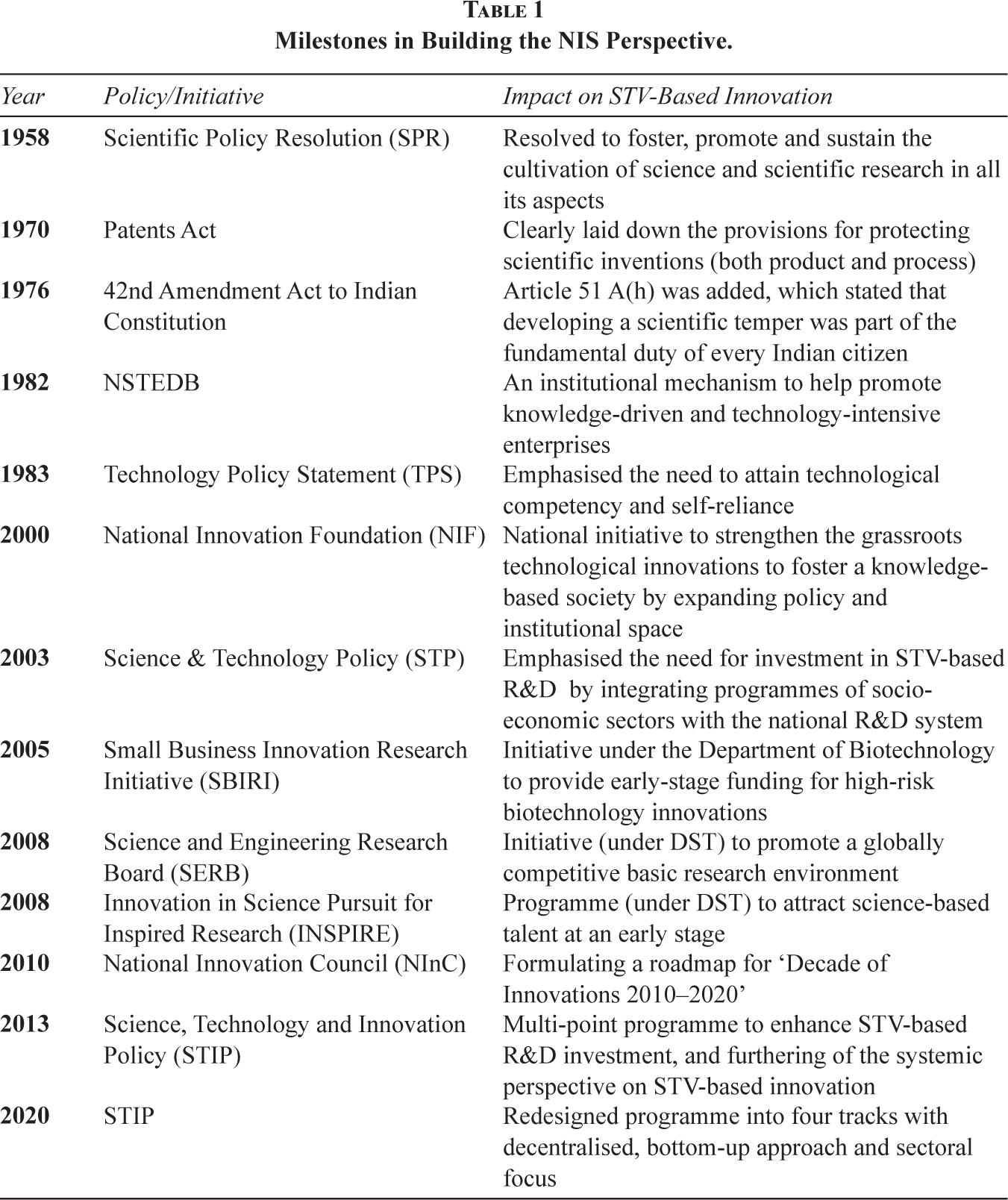
Emphasising its agenda to further STVs, the Indian government declared the past decade the ‘Decade of Innovations 2010–2020’, with the stated objective of increasing the gross expenditure on R&D to 2% of the national GDP by 2020. Further, the Ministry of Science and Technology, Government of India, laid down specific strategies for advancing STV-based innovation in its Science, Technology and Innovation (STI) Policy 2013 (DST, 2013). The STI policy aspired to: (a) continue to promote scientific temper amongst all sections of society, and particularly to enhance the attractiveness of S&T in young minds; (b) establish world-class R&D facilities within India; (c) facilitate public–private partnership (PPP) structures to enable conversion of R&D outputs into societal and commercial applications; (d) create mechanisms to seed and support STV-based high-risk innovations; and (d) create incentives to foster STV-based research and innovation. In Table 1, we trace some important policy milestones representing the NIS-based approach towards advancing S&T R&D.
As is evident from Table 1, the Indian state has continually attempted to nurture a scientific mindset from the grassroots. In the course of advancing S&T research, the Indian government has initiated several policy frameworks (such as TPS and STIP) and enacted institutional mechanisms (such as NIF and SERB), which align with the NIS perspective discussed by scholars (Nelson, 1993; Peters, 2006). This enactment of an NIS-driven approach by the Indian government can be seen as unfolding in a sequence of stages. In Figure 2, we illustrate the trajectory of the Indian NIS approach to S&T innovation based on the discussions by Krishna (2014) and Krishnan et al. (2021).
Milestones in Building the NIS Perspective.
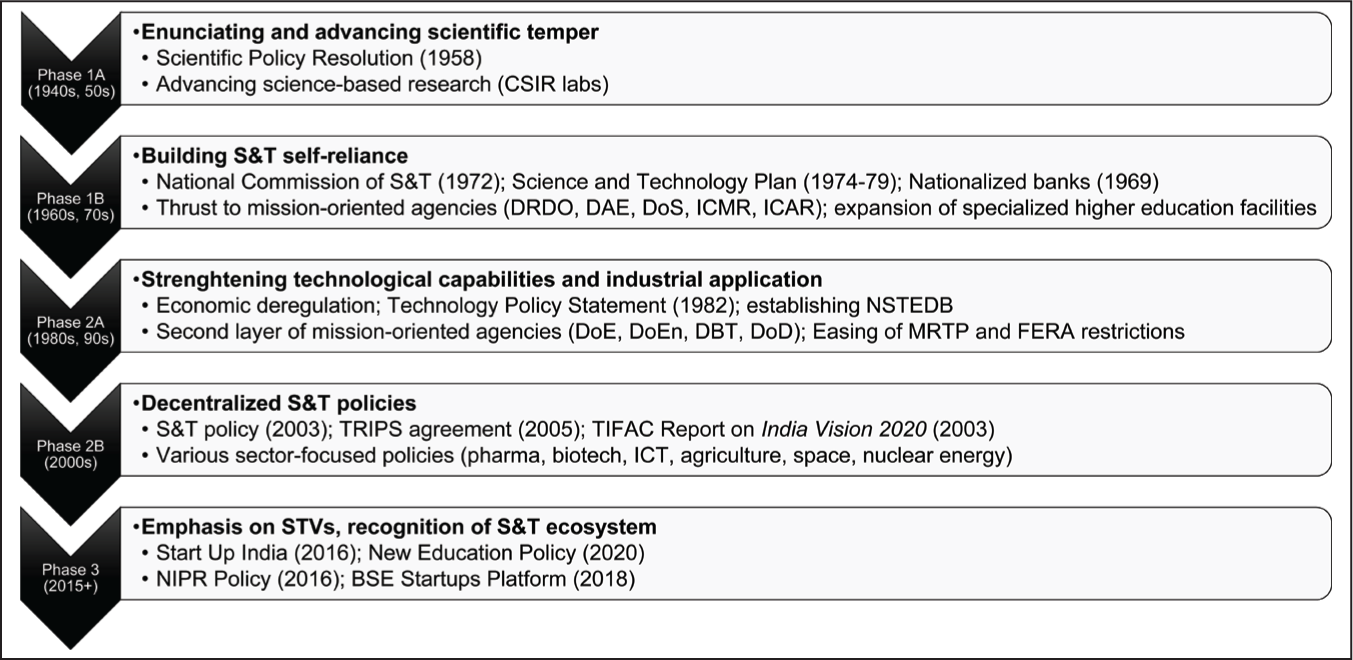
As shown in Figure 2, the focus of the Indian NIS approach in the initial decades following independence was towards building self-reliance in S&T research (see Phases 1A and 1B in Figure 2). This, however, led to the establishment of specialised research and educational institutions but did not translate into successful industrial applications. Thereafter, in the following decades (i.e., the 1980s and 1990s), the NIS approach shifted towards strengthening technological capabilities, and the focus gradually shifted to a sector-specific mode (see Phases 2A and 2B in Figure 2). Finally, around the turn of the millennium (see Phase 3 in Figure 2), the recognition of STVs as an important platform for innovation emerged. This focus on STVs has taken effect both at the national-level (e.g., Start-Up India, NIPR Policy) and the sectoral level (e.g., Small Business Innovation Research Initiative [SBIRI] and Biotechnology Industry Research Assistance Council [BIRAC]).
The Ecosystem Perspective
The research on entrepreneurial ecosystems has gained significant traction in recent years (Wurth et al., 2021). An ecosystem is an ‘alignment structure of the multilateral set of partners that need to interact in order for a focal value proposition to materialize’ (Adner, 2017, p. 40). In the context of STVs, an ecosystem is conceived as a community of institutions centred around the entrepreneur that aim to provide the support and resources necessary for the commercialisation of the entrepreneurial venture (Mason & Brown, 2014; Spigel, 2017). Similar to the NIS perspective, ecosystem scholars also argue that the innovation process cannot be carried out by the entrepreneur alone and a range of complementary capabilities need to work in combination (Isenberg, 2010). In sum, quite in line with the NIS perspective, the ecosystem perspective suggests that it is important to adopt a systemic perspective to STV and its commercialisation process.
While scholars have advocated an ecosystem approach to entrepreneurial innovation in general, it applies even more importantly in the context of STVs. This is due to several aspects of complexity that STVs face: (a) STVs involve a much longer commercialisation journey than other ventures; hence, it becomes important to break silos between stakeholders so as to facilitate consolidation of efforts and tap the synergy from the combined efforts of various stakeholders (Sharma et al., 2021); (b) STVs begin their journey with lab-based technologies that are, typically, in their infancy and, hence, tend to be general-purpose in nature and can have several downstream applications. In this respect, STVs face significant levels of market uncertainty and may involve several pivots before they find success (Lubik & Garnsey, 2016); (c) STVs involve radically novel ideas emerging from individuals with highly specialised scientific knowledge. Such knowledge does not develop overnight and needs a concerted (and coordinated) effort on the part of specialised educational and research institutions (Aldrich & Yang, 2014). Also, research has shown that STVs gain several important benefits from being part of an ecosystem: (a) Nascent ventures can be plagued by liabilities of newness and smallness, which may be overcome through legitimacy gained by sharing brand and expertise with more experienced ecosystem partners, such as established incubators (Sharma et al., 2021); (b) STV innovation can involve high-risk technologies that will need patient capital with a long-term orientation—that is, access to a range of funding opportunities that can be possible through the networks underlying ecosystems (Jha, 2018); (c) opportunity scoping, ideation and prototyping within STVs is contingent upon availability of specialised expertise. Thus, an ecosystem perspective becomes crucial in explaining the success of STVs.
Over the past decade, India has made significant progress in enabling the emergence of STVs and nurturing their innovative pursuits (NASSCOM, 2021; NSTEDB, 2020; Planning Commission, 2012; Startup India, 2016). Government policy has begun to explicitly acknowledge the ecosystem perspective in its efforts to support and encourage STVs (Planning Commission, 2012). There is now a widespread understanding that STV innovation needs a vibrant ecosystem consisting of patient capital, specialised workforce, risk-inclined mindset, policy advocacy and diverse collaboration (Jha, 2021). Several of these ecosystem aspects are mentioned in the DBT Annual Report of 2022 (DBT, 2022). Some of these ecosystem aspects have seen a surge in recent years. For instance, venture funding in India has seen significant growth in the past decade—one study estimates a CAGR of 76% in the decade 2011–2020 (Mangadu et al., 2021). Also, several seed funding initiatives have been established that support early to very early-stage STVs. Graduates from elite higher education institutes such as the Indian Institutes of Technology (IITs) have been increasingly participating in new venture creation (Rault & Mathew, 2019). Further, DST has commissioned the setting up of research parks in some of these elite institutes to further academia and industry collaboration in S&T research, development and commercialisation (DPIIT, 2021).
Technology business incubators (TBIs) have played a significant role in supporting STVs in India. Scholars have argued that incubators can be effective orchestrators of start-up ecosystems (Goswami et al., 2018). Rishi et al. (2021) have indicated, using the case of Atal Incubation Centres (AICs), how effective programme management techniques can turn around the high failure rate of start-ups. 4 The latest NSTEDB report shows that 153 TBIs are active around the country, incubating more than 3,500 STVs. The incubated ventures have filed close to 2,000 patents (NSTEDB, 2020). An excellent example of how TBIs have effectuated the emergence of STV ecosystem is the case of Venture Centre (VC), a TBI located in Pune in the state of Maharashtra. Having been founded as a non-profit autonomous spin-off from one of the Council of Scientific and Industrial Research (CSIR) labs in 2007, VC has graduated more than 650 ventures in specialised areas such as medical devices, diagnostics, biopharma, industrial biotechnology and agriculture, with about 85% of the graduated ventures still active. VC incubatees have filed patents covering more than 100 patent families and mobilised more than ₹500 crores in risk capital. VC has been instrumental in pulling together various infrastructural facilities—such as hot labs, prototyping and fabrication facilities and specialised testing equipment—while also actively partnering with complementors such as investors, IP lawyers and faculty mentors who provide guidance and assistance to STVs in their commercialisation journey. Thus, while TBIs have received ample policy support, they have also leveraged their own formal and informal networks to enhance the ecosystem for STVs in India.
NIS and Ecosystem Research Need to Converge in the S&T Context
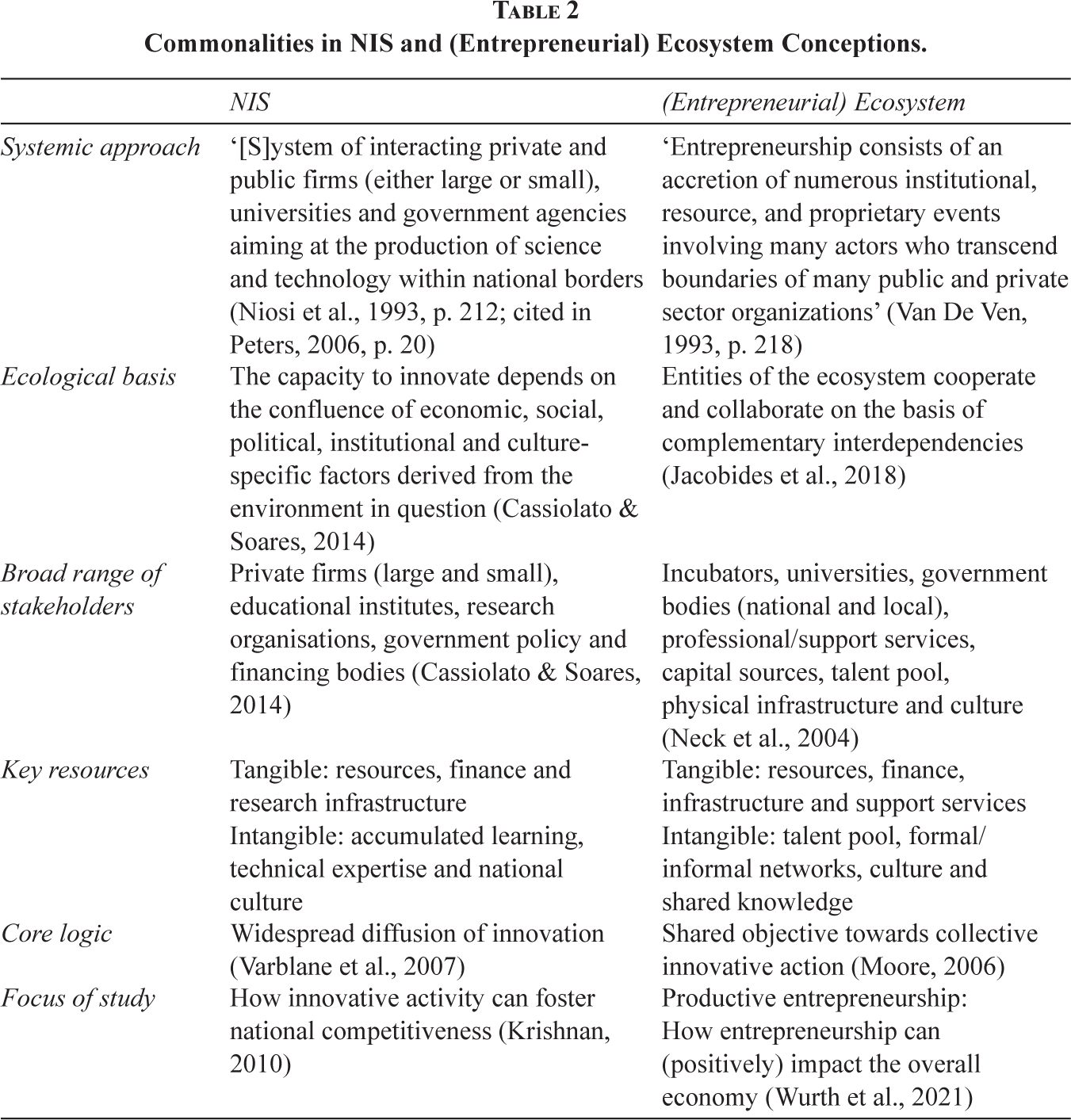
Research has, thus far, followed disparate streams on the NIS and ecosystem perspectives of S&T innovation. Scholars that advocated a policy-driven NIS approach (e.g., Freeman, 2004; Nelson, 1993; OECD, 2014) placed the state at centre stage and suggested a predominantly state-driven innovation agenda, while in the ecosystem perspective, the focus was on the entrepreneur-inventor, with the state playing a somewhat facilitating role in the background (e.g., Spigel, 2017; Stam & Van De Ven, 2021). From the NIS perspective, the state was a focal player, while in the (entrepreneurial) ecosystem perspective, it was just an institutional participant. However, when seen from a conceptual point of view, both NIS and ecosystem conceptions share a common denominator: they embody a systemic perspective on entrepreneurial or innovative activity. Both view innovation as a non-linear process undertaken not as an isolated act of a siloed entrepreneur or researcher but as one that hinges upon contributions from a broad set of stakeholders, including end users of the innovation (Cassiolato & Soares, 2014; Lundvall et al., 2002; Varblane et al., 2007). 5 Table 2 lists the various aspects in which NIS and ecosystem conceptions share commonalities. This provides the basis for how and why NIS and ecosystem perspectives can converge for STVs.
Commonalities in NIS and (Entrepreneurial) Ecosystem Conceptions.
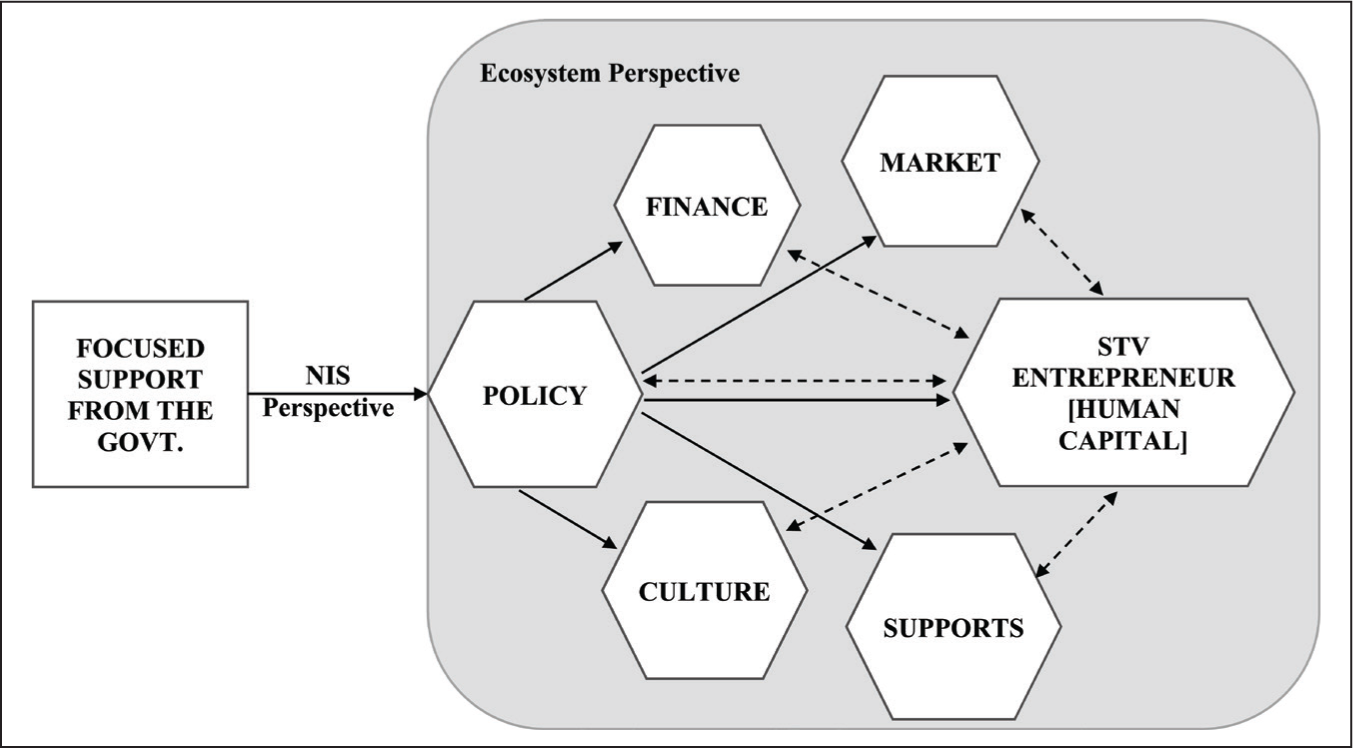
The convergence of the two streams can provide a holistic, systemic perspective on the evolution of STVs (e.g., Spigel, 2017) by laying emphasis not only on the role of the state as a focal actor in bootstrapping a robust innovation system but also giving importance to the organic efforts of distributed actors in building a supportive innovation system. Figure 3 illustrates this convergence where both NIS and ecosystem frameworks are placed on a combined platform. In this combined framework, we acknowledge the powerful position the government occupies in a developing country like India and, hence, portray it as holding a somewhat anchoring role in the STV ecosystem. We propose that the model shown in Figure 3—which combines both NIS and ecosystem perspectives—is a viable framework to illustrate the S&T landscape in India.
NIS-Driven Research Framework for STV-Based Innovation. Bold Arrow Denotes NIS Dynamics, and Dashed Arrows Denote Ecosystem Dynamics. Shaded Box Represents the Ecosystem Research Framework as Adopted from Isenberg (2016).
NIS and Ecosystem Convergence in a Sectoral Context
As described above, the STV landscape in India consists primarily of a state-driven NIS agenda, but one that has begun to manifest as a distributed policy thrust targeted at various constituencies of the STV ecosystem (e.g., DPIIT, 2021). This has created a fertile ground—at the convergence of NIS and ecosystem perspectives—for STV commercialisation. 6 However, the convergence seems to be materialising at a sectoral level. While the NIS-driven approach played an important role in driving and diffusing a scientific temper in Indian culture and its institutions, the real impact on S&T-based innovation materialised only when the focus of the government began distilling into important sectors—such as pharmaceuticals, biotechnology, ICT, space, agriculture and so on—where a focused policy thrust complemented the emergent ecosystems in those sectors (Krishna, 2014). Figure 4 shows the growth trends in select S&T sectors over the past decade (2012–2023).
The Transition to a Sectoral Focus for STVs
As shown in Figure 2 (Phase 2B), around the turn of the millennium, the NIS-based approach of the Indian government shifted to a pattern of targeted sectoral thrusts, especially concerning areas of national importance in S&T. As Krishna (2014) has observed, this ‘shift towards a decentralised mode is mainly concerned with STI policies and institutional measures concerned with economic and knowledge-based growth sectors of the Indian economy’ (2014, p. 153). The decentralised shift veered away from the one-size-fits-all approach of NIS towards creating a sectoral system of innovation (SSI) that would be able to respond to the unique needs of different sectors. This came from the realisation that S&T sectors differed in the nature of their innovation activity. For instance, the agriculture sector had to contend with huge sunk investments before making a transition to new techniques. Similarly, the healthcare and medical devices sectors embodied a more intensive regulatory pathway as compared to ICT. Further, research has also shown that differences in underlying patterns of technology and demand lead to distinctive equilibrium structures in different sectors (Malerba, 2004). Krishna (2014) has also argued that some influential civil society actors served to catalyse the sectoral focus for S&T:
Also, the civil society representatives and science and technology-based activists have all come to influence and shape the S&T policies which are formulated and implemented at the sector level. In other words, even though the government issues overall national S&T policies from time to time, there is no one ‘centre of gravity’. There are multiple actors and agencies at the level of different sectors that have come to play a significant role in shaping S&T policies and the economy as a whole with respect to specific sectors. After 2003, the government did not issue any major overarching S&T policy statement and at the same time various government science and technology departments, ministries and science agencies together have issued over 20 to 25 major policy measures in about 10 sectors of the economy. (2014, p. 153)
Some key sectors targeted for transformation include pharmaceuticals, biotechnology, ICT, nuclear energy, space and agriculture (Krishna, 2014). Policy and programme interventions included setting up industry bodies, sector-specific innovation councils, funding agencies and sector-specific incubators, among others.
From the perspective of the SSI literature, the reorientation of Indian NIS into a sectoral focus for S&T innovation seems pertinent and meaningful owing to the fact that sectoral dynamics can be deeply intertwined with the mechanisms of innovation and commercialisation in that respective specialised area. A sector is typically characterised by activities that draw upon a shared knowledge base and are unified through their linkage with product groups that aim to cater to a given or emerging demand (Malerba, 2004). Actors in a sectoral system are ‘characterized by specific learning processes, competencies, beliefs, objectives, organizational structures and behaviours. They interact through processes of communication, exchange, cooperation, competition and command, and their interactions are shaped by institutions (rules and regulations)’ (Malerba, 2004, p. 16). Thus, the integrated framework we proposed in Figure 3 by combining the NIS and ecosystem perspectives has materialised in an SSI context. Indeed, in line with the SSI argument, our integrated framework shows that state policy plays a pivotal role in shaping and nurturing the (sectoral) ecosystem. In Figure 5, we show how the NIS and SSI approaches shaped the STV ecosystem. As seen in the figure, the NIS perspective on S&T research sowed the seeds for key ecosystem constituencies—notably, human capital, cultural alignment and support systems—to take shape, which, over time, distilled into sectoral ecosystems. Over the past decade, an SSI perspective has taken over, which has further nurtured the emergence of an ecosystem for STVs.
The NIS-Based Scientific Temper Shaped the STV Ecosystem, and the SSI-Based Policy Advocacy Continues to Nurture the Ecosystem Components.
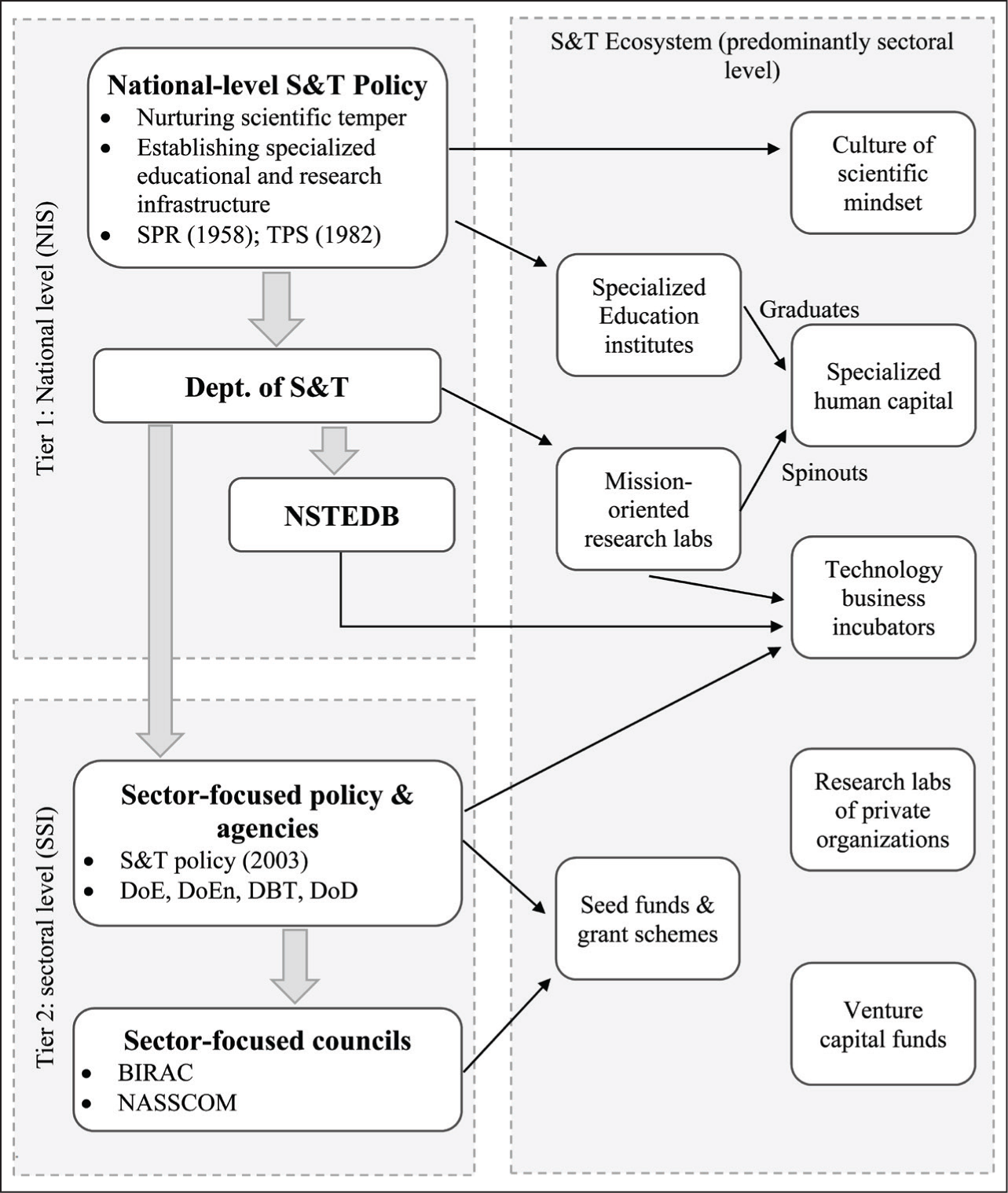
As shown in Figure 5, a combination of NIS and SSI approaches taken by state policy has nurtured and shaped various ecosystem constituents within each sector. The consequent enhancement in the sectoral ecosystem created the ground for STVs to emerge and thrive. ICT, biotechnology, space, agriculture, telecommunications and pharmaceuticals are examples of such sectoral ecosystems that have benefitted from the approach shown in Figure 5. In the following section, we illustrate this using the case of the biotech sector.
The Illustrative Case of the Biotechnology (Biotech) Sector
The biotech sector is characterised by ‘the set of techniques that involve manipulation or change of the genetic patrimony of living organisms’ (Ramani, 2002, p. 381). Though healthcare and pharmaceuticals were traditionally associated with biotech, the sector has grown to encompass a broad spectrum of applications in diverse fields such as medical devices, agriculture, biofuels, animal biotechnology and bioenergy. As suggested by SSI scholars (e.g., Malerba, 2004), the biotech sector has espoused a dynamic system of innovation that has constantly expanded its boundaries. The Indian biotech sector was valued (in bioeconomy terms) at 80.12 billion USD in 2021, accounting for 2.6% of the national GDP, and is expected to reach 150 billion USD by 2025 (BIRAC, 2022).
Ramani (2002) traces the history of biotech emergence in India. The initial policy thrust came from an NIS perspective, with the establishment of the National Biotechnology Board (NBTB) in 1982. This board, which existed for 4 years from 1982 to 1986, served to identify priority areas in biotech as well as infrastructural needs. The deliberations of NBTB recognised that biotech was a technology that necessitated a range of competencies in a variety of scientific disciplines. This led to the establishment of a dedicated government agency in 1986—the Department of Biotechnology (DBT)—to work towards building those competencies. DBT pursued that effort by providing grants to support biotech research at several higher education institutions across the country. Further, DBT, in collaboration with UNIDO, set up several specialised institutions, such as the National Institute of Immunology, the Centre for Cellular and Molecular Biology, the National Facility for Animal Tissue and Cell Culture and the International Centre for Genetic Engineering (Ramani, 2002). It also set up nine biotechnology parks across the country to provide a robust lab and manufacturing infrastructure for the biotech industry.
By the turn of the millennium, sectoral policy focus had precipitated into various policies aimed at fostering innovation. The Biological Diversity Act of 2002 laid down norms for fair and equitable sharing of benefits arising out of the utilisation of biological resources. The Bioinformatics Policy of 2004 served to develop bioinformatics education through developing centres of excellence in bioinformatics at various higher educational institutes around the country. The Biotechnology Industry Partnership Programme of 2008 aimed at collaborating with private players to fund (on a cost-sharing basis) path-breaking research in futuristic biotechnology streams that are normally considered high- or very high-risk. The SBIRI of 2005 aimed at fostering PPPs for small and medium biotech businesses. Hence, as suggested in Figure 5, the NIS approach to biotechnology innovations gradually precipitated into an SSI framework spearheaded by the sector-focused BIRAC. Since its establishment in 2012, BIRAC has played an instrumental role in shaping the contours of the biotech industry by floating grand challenges, supporting academic and translational research, providing incubation to start-ups through sixty incubators spread across the country and funding firms at different stages of the research, development and commercialisation cycle.
Given that biotechnology necessitates extensive research capabilities—to the extent that large pharmaceutical firms opt to outsource biotech research to external specialists—the presence of an ecosystem consisting of various stakeholders such as research firms, support organisations, availability of funding and access to a viable market becomes necessary. Two non-governmental consortiums—the Association of Biotech Led Enterprises (ABLE) and the Confederation of Indian Industry (CII)—have represented the ‘voice of the biotech ecosystem’. Notably, ABLE counts amongst its members some of the premier biotech firms of the country, such as Biocon, Dr. Reddy’s Laboratories, Serum Institute of India and Aurobindo Pharma. According to their website, ‘ABLE has over 400 members from all across India representing all sector verticals like Agribiotech, Bio-pharma, Industrial biotech, Bioinformatics, Investment banks, and Venture Capital firms, leading Research and Academic Institutes and Law Firms and Equipment Suppliers’. 7 The stated vision of ABLE is to find ways to collaborate with the Government of India in their biotech initiatives so as to facilitate and accelerate the pace of growth of the biotech sector.
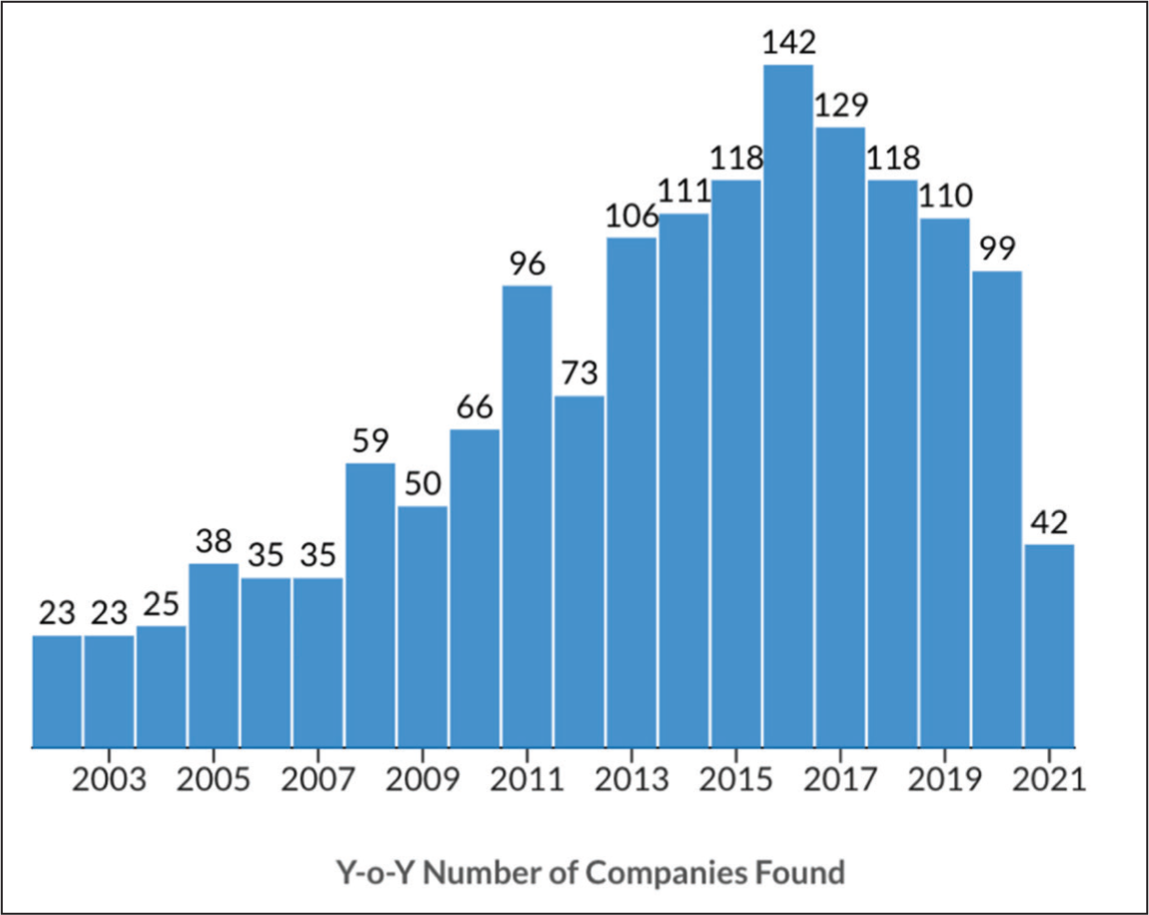
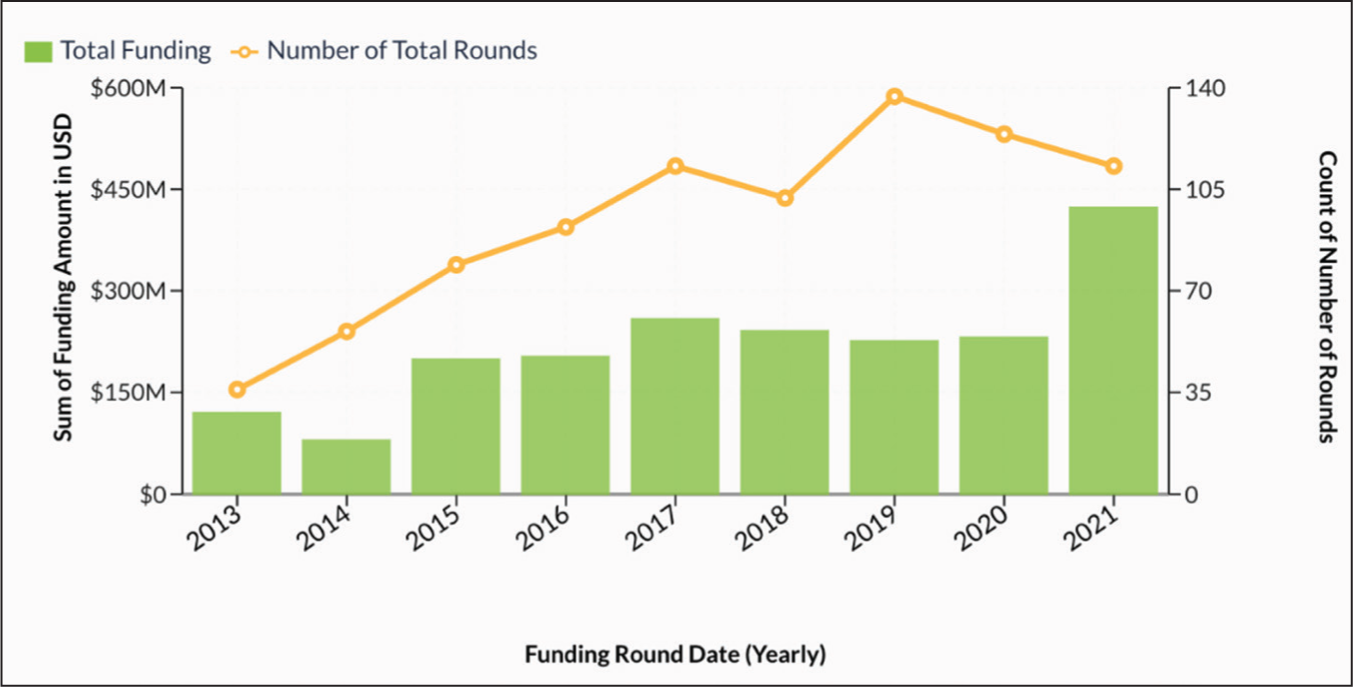
All these efforts have now started to bear fruit. An active biotech start-up ecosystem is beginning to emerge. The inflection point in the evolution of the biotech start-up ecosystem was the establishment of BIRAC and the subsequent creation of biotech clusters around incubators and research parks. In the 10 years since the founding of BIRAC, the number of biotech incubators has increased tenfold from six to sixty; the cumulative number of biotech start-ups has gone up 100 times from 50 to 5,000; and the number of biotech products has increased seventy times from 10 to 700 (BIRAC and The Institute for Competitiveness, 2021). Further evidence is available from the trajectory of start-up founding rates. After years of modest founding rates, in the last decade, over 1,000 new ventures have been founded in this space, and the year-on-year founding rate shows a healthy trend (Figure 6), 8 except for the depressed founding numbers in 2021 that were a result of the global pandemic. We also see that the Venture Capital/Private Equity (VC/PE) funding into biotechnology is on the rise (as seen in Figure 7), with more than $423 million being invested in the sector in 2021 alone. Given that a lot of VC/PE funding comes from outside the country, this is validation that the world sees India as an emerging hub for biotechnology. The emergence of a vibrant biotech ecosystem and BIRAC’s role in kickstarting it are captured by this quote from an industry leader—‘Prior to BIRAC, there was no funding available for private entities and no funds for translation. BIRAC mobilized a pipeline of start-ups. Since there was a pipeline, investment went up’.
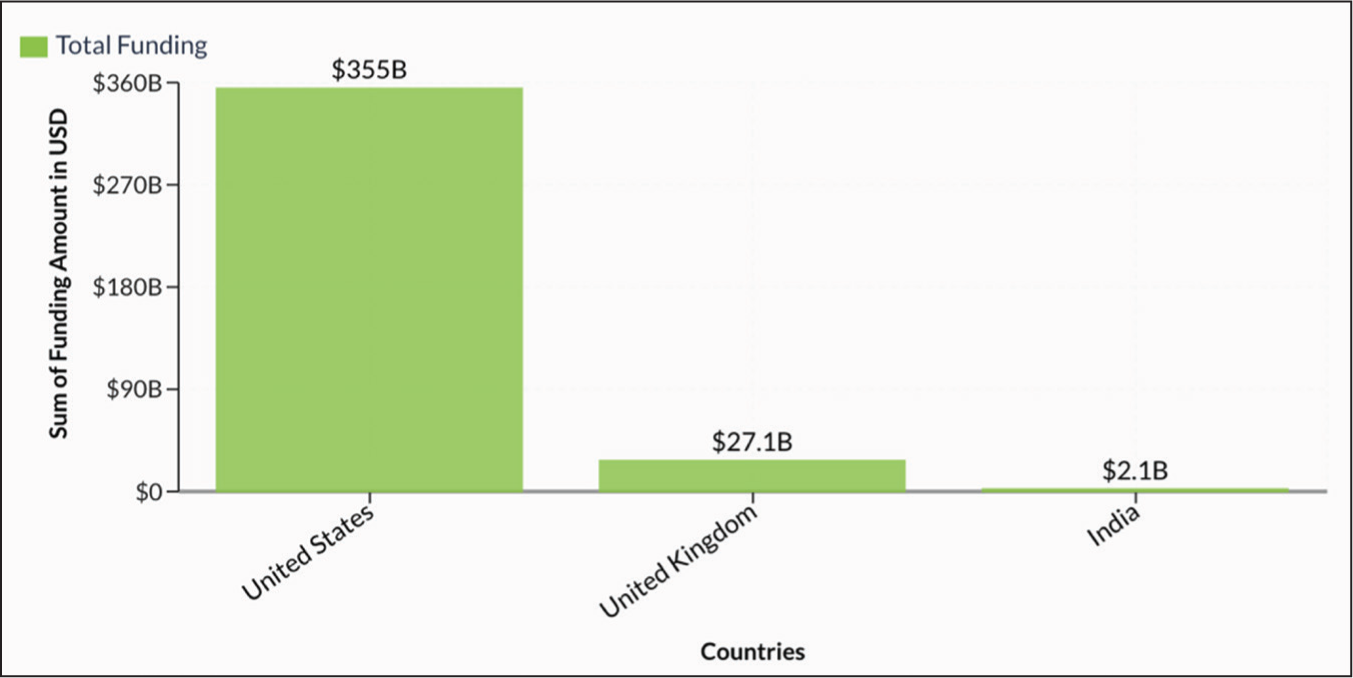
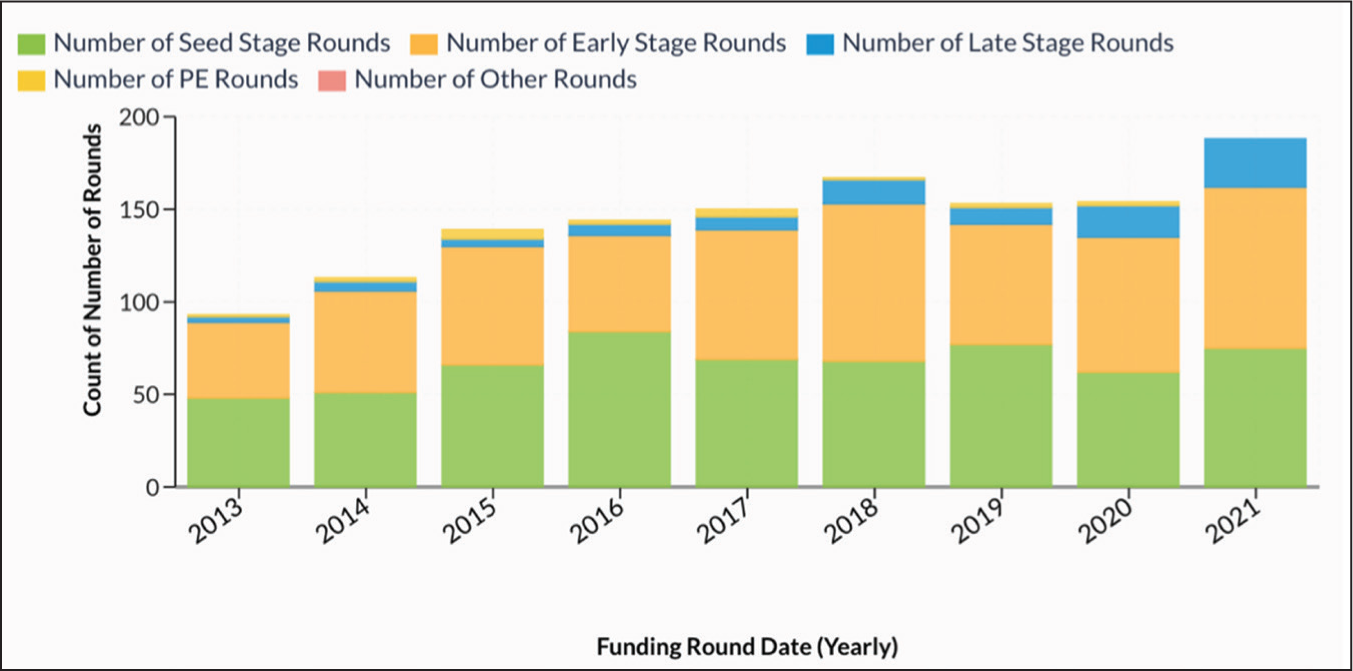
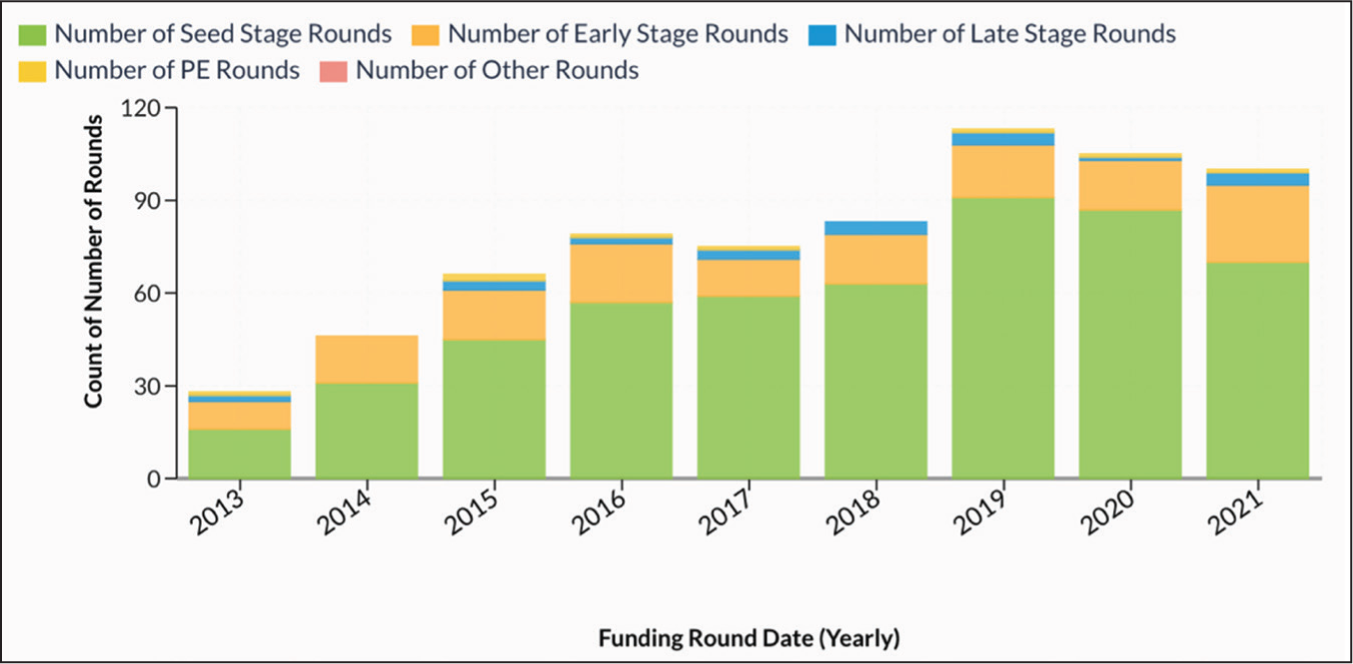
While there are many green shoots, there is more that needs to happen. A comparison with other biotech hubs like the USA and UK is revealing. In comparison to the USA and UK, Indian biotech is still in its infancy. The total funding into US and UK biotech companies in the last decade (between 2012 and 2021) has been $355 and $27.1 billion, respectively. In contrast, the investment in Indian companies has been modest at $2.1 billion (Figure 8). Compared with the UK, which is closer in size to the Indian ecosystem, we also find that late-stage investments in India are very few in number (Figures 9 and 10). This indicates that companies may be struggling to reach the growth stage. Since biotech companies are science-led, they have to resolve several technical and market uncertainties and have a longer path to commercialisation. The fact that India has seen very few late-stage financing rounds could mean one of two things: (a) the ecosystem is young, and it will take a few more years for ventures to reach the growth stage, or (b) there is not enough patient capital to support the ventures through their long route to growth. Interviews with entrepreneurs and industry experts reveal that fledgling biotech ventures face a tough financing environment and dearth of patient capital. This means deliberate measures must be taken to unlock patient capital that can support biotech start-ups.
From the above account, we see that an interplay of NIS and ecosystem appro-aches has laid a strong foundation for nurturing scientific invention, innovation and commercialisation in the biotech sector. The sector that was assessed pessimistically by scholars about two decades ago (e.g., Krishnan et al., 2003) has shown an impressive trajectory. In the recent COVID-19 context, it managed to rapidly scale up SARS-CoV2 vaccine R&D and helped India execute the largest vaccination programmes in the world (The Economic Times, 2022). However, the ecosystem is a work in progress. If India is to realise its aspiration to become one of the biotech R&D hubs of the world with a market size of $150 billion by 2025 (BIRAC, 2022; Hindu Business Line, 2021), there is a need for further interventions to rapidly address the gaps in the ecosystem.
Conclusion
The systemic and national character of innovation has been elaborated and advanced by scholars over several decades now (Freeman, 2004; Peters, 2006). However, the research on the systemic perspective to innovation has taken two trajectories: one embodying the NIS perspective (e.g., Nelson, 1993; Patel & Pavitt, 1994) and another adopting an ecosystem approach (e.g., Audretsch et al., 2021; Spigel & Harrison, 2018).
Though conceptually the NIS approach does take a holistic view, in practice, it tends to get focused on skills, talent, capability and institutional R&D rather than the full cycle of innovation. However, firms are at the heart of innovation, particularly in terms of providing the link to the market. The entrepreneurial ecosystem approach provides the necessary complement that underlines the importance of firms, particularly start-ups. Firm-centric and ‘whole cycle’-oriented innovation support policies act as a catalyst to the development of the entrepreneurial ecosystem, which in turn feeds back into developing the overall innovation system, and such policies are best designed at the sectoral level. In the context of S&T research, development and commercialisation, we, therefore, advocate combining insights from both streams. As we have argued above, this is imperative in the context of STVs given their extraordinarily long and challenging commercialisation journey and, hence, the need for collective effort involving several stakeholders, with the state playing a supportive role.
Our study observes that NIS and ecosystem approaches are converging, fruitfully so, in the domain of S&T-based innovation. In this respect, we advocate continued policy advocacy of S&T-based innovation, albeit with a distilled focus at the sectoral level. If the sectoral-level focus adopted by various S&T agencies of the government can acknowledge and advance the ecosystems characterising those sectors, then we are confident that this will unleash a wave of S&T-driven economic growth and development in India.
Footnotes
Declaration of conflicting interests
The authors declared no potential conflicts of interest with respect to the research, authorship and/or publication of this article.
Funding
The authors received no financial support for the research, authorship and/or publication of this article.