




Abstract
Objective
In evaluating the efficacy of cancer screening programmes, sojourn time (duration of the preclinical detectable phase) and sensitivity of the screening test are the two key parameters. Studies suggest that in breast cancer screening, both parameters may vary depending on age at the time of screening, but few studies have examined other cancers. We expanded an existing probability model for periodic screening by performing simultaneous estimation of age group-dependent and sensitivity at preclinical onset time, and tested the expanded model using data from the Korean National Colorectal Cancer Screening Programme.
Methods
Simulation studies were conducted to assess the performance of the proposed probability model. The method was then applied to the analysis of 376,542 participants aged 50 or over who underwent fecal occult blood testing (FOBT) as part of the National Colorectal Cancer Screening Programme between 2004 and 2007. Age group-dependent mean sojourn time and screening sensitivity of FOBT for colorectal cancer were derived using maximum likelihood estimation.
Results
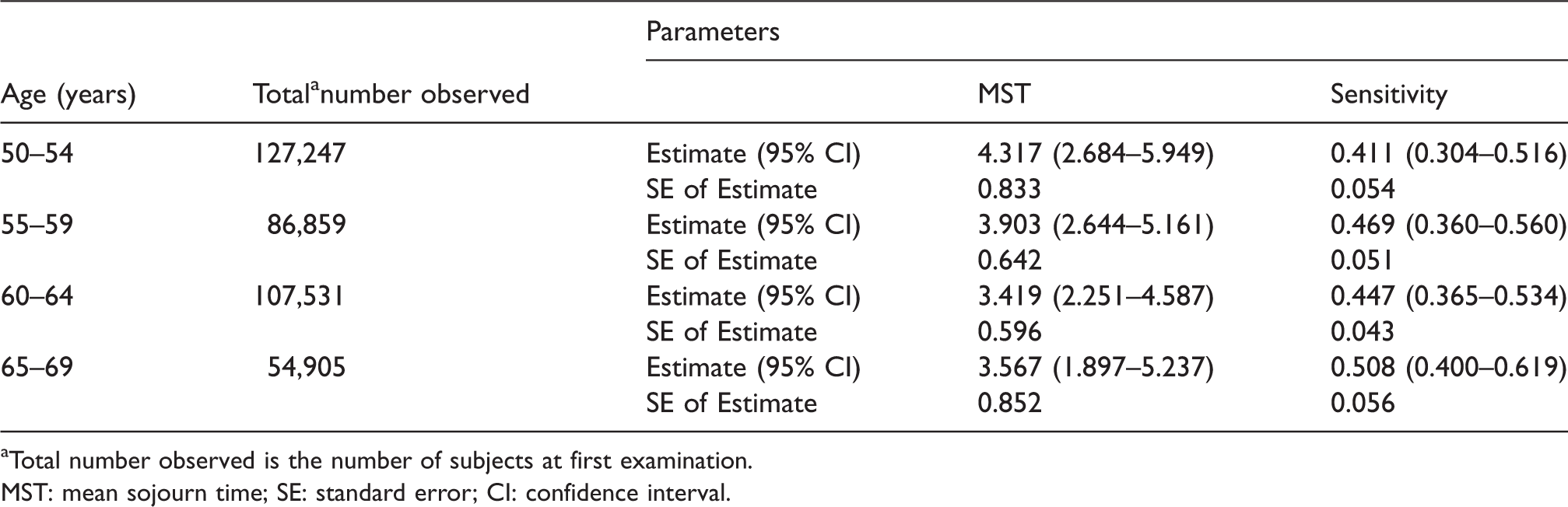
The method performed well in terms of bias, standard deviation, and coverage probability. National Colorectal Cancer Screening Programme data results indicated that the sensitivity of FOBT to detect colorectal cancer increases with age, while mean sojourn time decreases with age (approximately 4.3 years for participants aged 50–54, 3.9 years at age 55–59, 3.4 years at age 60–64, and 3.6 years at age 65–69, with corresponding sensitivity estimates around 41%, 47%, 45%, and 51%, respectively).
Conclusion
Simulation studies showed that the proposed stochastic model considering both mean sojourn time and sensitivity yields highly accurate results.
Introduction
The premise underlying cancer screening programmes is that effective detection methods allow diagnosis at an early stage, when the cancer is still curable. Through early-stage detection followed by appropriate treatment, screening programmes can potentially reduce cancer related morbidity and mortality. The key parameters in modelling the effectiveness of a screening test are test sensitivity (the probability that the screening test is positive, given that the individual is in the preclinical stage), and mean sojourn time (MST) (the average duration of the preclinical stage). 1 Studies have estimated these parameters through various modelling strategies.2–4 Some studies5–7 have focused on probabilistic models of the screening process and estimated the relevant quantities, while others8,9 have sought an optimal screening schedule for breast cancer using a stochastic model based on the threshold method. Jiang et al. 10 extended the Day and Walter 5 Markov model and applied it to a cohort of women participating in the Canadian mammography screening programme. All these studies assumed that the screening sensitivity is constant, and that the sojourn time follows a parametric distribution with a constant mean. However, screening sensitivity and the sojourn time have been shown to vary by age, size of tumour, and cancer location.11–13 Wu et al. 14 have modelled age-dependent sensitivity and transition probability in breast cancer screening data, using a log-normal distribution for the transition probability and a logistic model for the sensitivity. Similarly, Cong et al. 15 proposed a model-based approach incorporating age effects on screening sensitivity and sojourn time distribution. Numerous studies have simultaneously estimated sensitivity and MST for breast cancer screening, but few have investigated this in other cancers. 16
We aimed to expand on the Shen and Zelen 17 probability model for periodic cancer screening examination, by including age-group screening sensitivity and MST in the stochastic model, and constructing the full likelihood. Intensive simulation works were conducted to check the performance of proposed method in terms of bias, standard deviation, and coverage probability. The extended probability model was then tested in a real-world situation using data from the Korean National Colorectal Cancer Screening Programme (NCSP). In Korea colorectal is the third most common cancer and the fourth leading cause of death. Colorectal cancer incidence in Korea has continued to increase over the last few decades from 21.2 per 100,000 in 1999 to 38.6 per 100,000 in 2012. 18 Because a long latency period is usually required for colorectal cancers to develop, early detection through screening can potentially improve patient survival. Several screening modalities exist for identifying colorectal cancer. 19 The Korean NCSP provides an annual Fecal Occult Blood Test (FOBT) as the primary screening test for adults aged 50 and older. Using the proposed method, we evaluated the age group-dependent sensitivity and MST of FOBT for colorectal cancer.
Methods
Notation and previous models
According to Zelen and Feinleib,
2
the natural history of the disease for an individual develops by progressing through three states
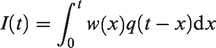
As Lee and Zelen
9
have suggested,
Let
Suppose that each participant’s age of entry to the study is divided into g groups. The jth age interval be defined as
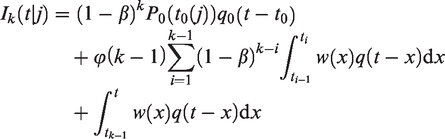
In previous models, Shen and Zelen
17
defined
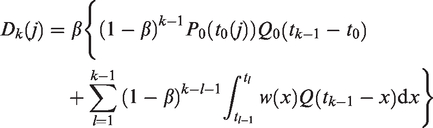
Also, similarly
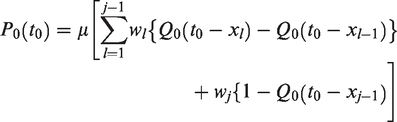
Proposed model
In the previous work by Shen and Zelen,
17
sojourn time distribution and screening sensitivity were assumed to be the same for all age groups. Cong et al.
15
considered modelling age at detection on the sojourn time distribution. However, our inference of model parameters was based on age at preclinical onset and screening age for MST and screening sensitivity, respectively. We parameterised age group-dependent MST and screening sensitivity in the periodic screening examination stochastic model. Let
For the jth age group, the observed data are recorded as
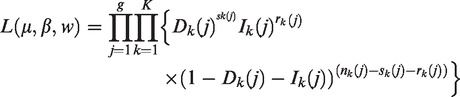
We used the maximum likelihood estimates from the full likelihood function for estimation of the unknown parameters
Additionally, the effectiveness of a screening programme may not only be affected by initial screening participation rate, but also by adherence during consecutive screening rounds. Therefore, we considered the participation rates for sequential screening rounds when simulating our model. It has been reported that adherence to screening follow-up is less than 50% after the first screening examination.
20
Thus, let

If the participation in the following screening is equal, put
Simulation procedure
We conducted a series of simulation studies to assess the bias, mean squared error, and coverage probabilities for the estimated parameters. Our model includes parameters
The simulation consisted of three steps. Step 1: We assume that there are about 1,000,000 individuals who were born in the same year. The individual’s age at initiation of the screening programme was generated uniformly from ages 50 to 69. Four equal screening intervals were used, and the length of screening interval was selected as one year
Application to the data from the Korean NCSP
For illustration, we evaluated our model performance using colorectal cancer screening data from Korea. The NCSP recommends annual FOBT for people aged 50 or older. Study participants were those who received an FOBT through the NCSP between 2004 and 2007. We identified study participants who were diagnosed with cancer between January 2004 and December 2008, through data linkage with the Korea National Cancer Incidence Database of the Korea Central Cancer Registry. Codes C18 (colon) and C19–20 (rectal) in the International Classification of Diseases, 10th edition, were used to identify colorectal cancer cases. Cases with code C17 (small intestine) and C21 (anal) were excluded from analysis. There were four annual screening examinations
Incidence data for colorectal cancer
Data for the age-specific incidence of colorectal cancer were obtained from the Korea Central Cancer Registry 2003. This is a nationwide hospital-based cancer registry, which was initiated by the Ministry of Health and Welfare in 1980. Incidence rates were summarised into five-year age intervals: 0–4 years through 80–84 years, and 85 or older (Figure 1). 24
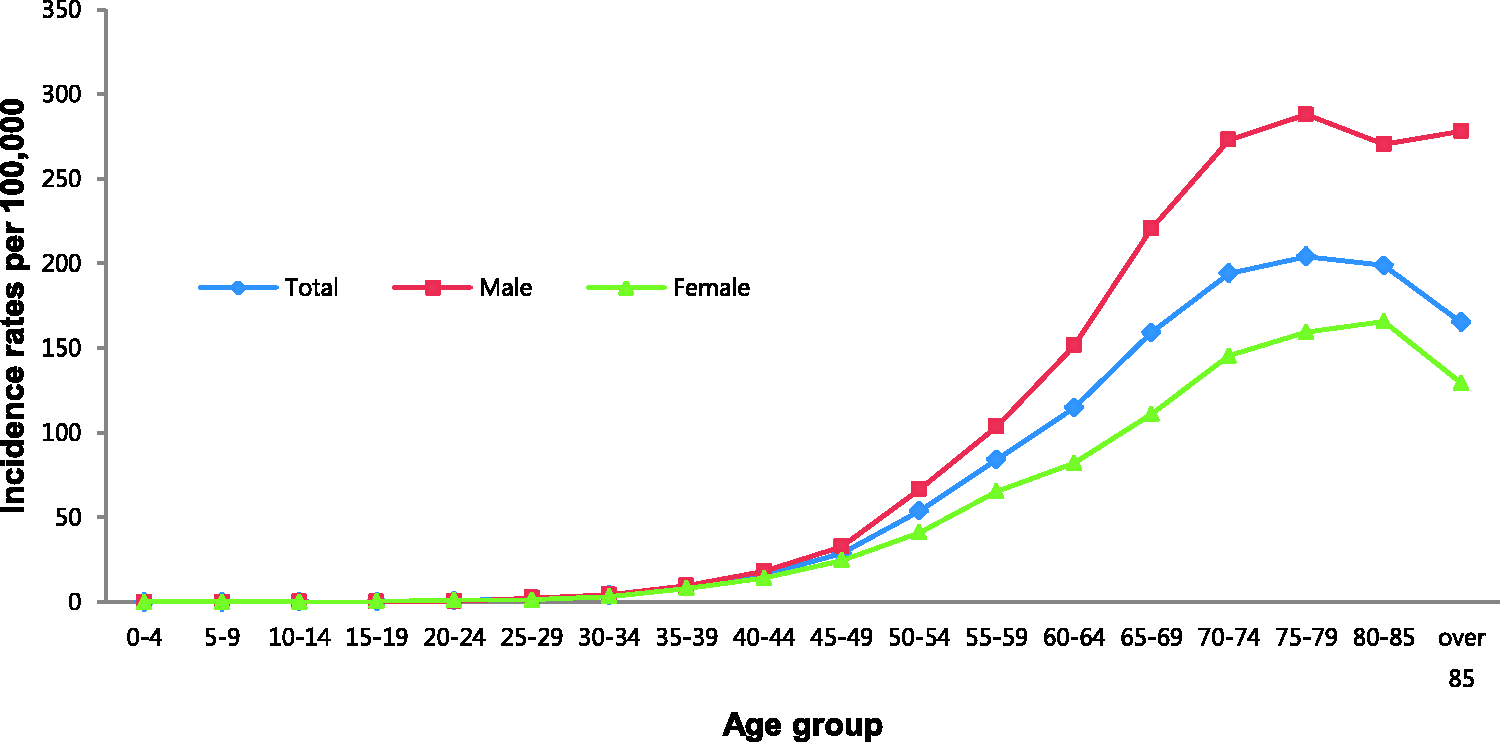
Age-specific colorectal cancer incidence in Korea.
Results
The results obtained from 100 replications are summarised in Table 1 for
Simulation result for
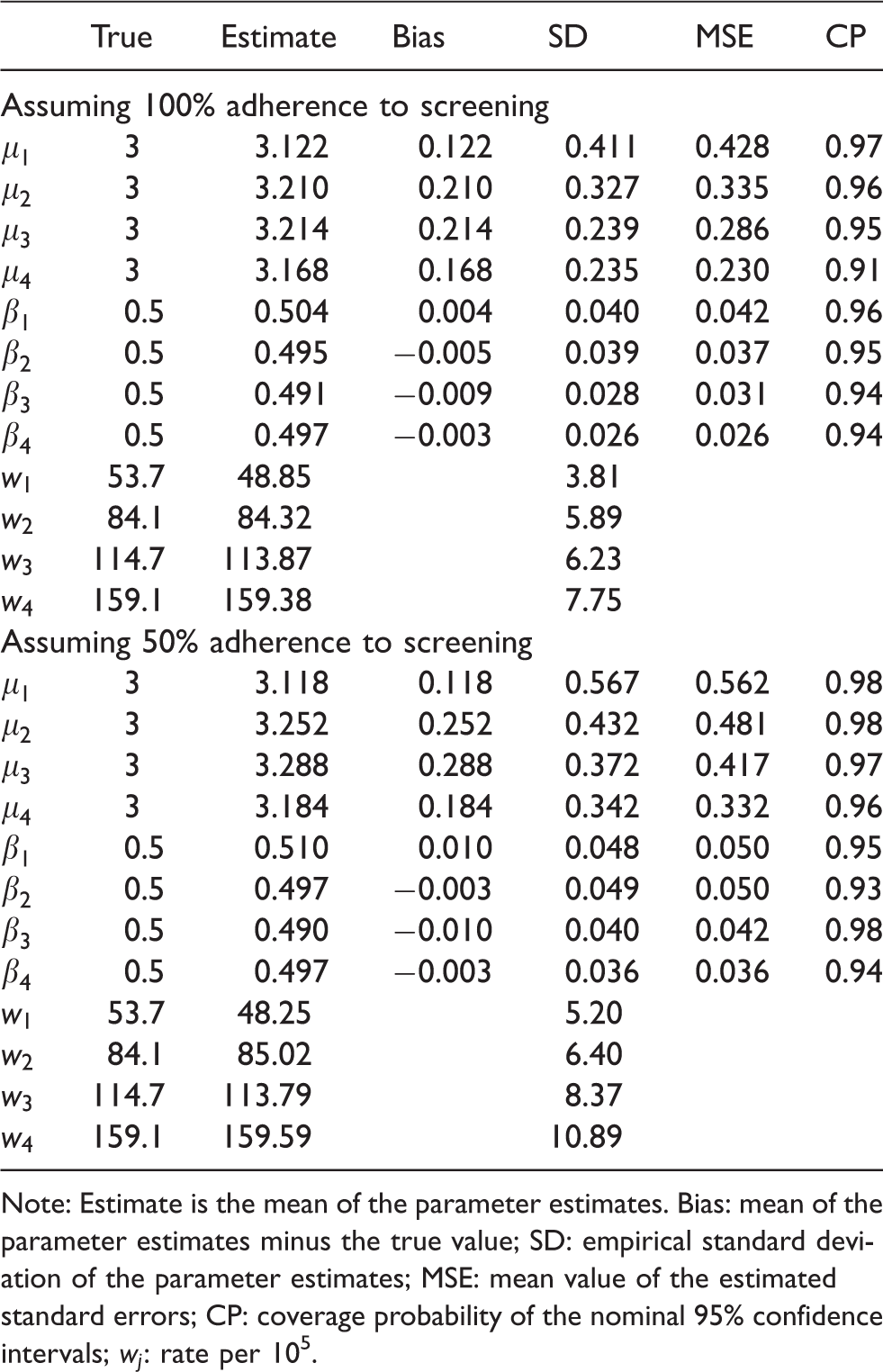
Note: Estimate is the mean of the parameter estimates. Bias: mean of the parameter estimates minus the true value; SD: empirical standard deviation of the parameter estimates; MSE: mean value of the estimated standard errors; CP: coverage probability of the nominal 95% confidence intervals;
Simulation result for
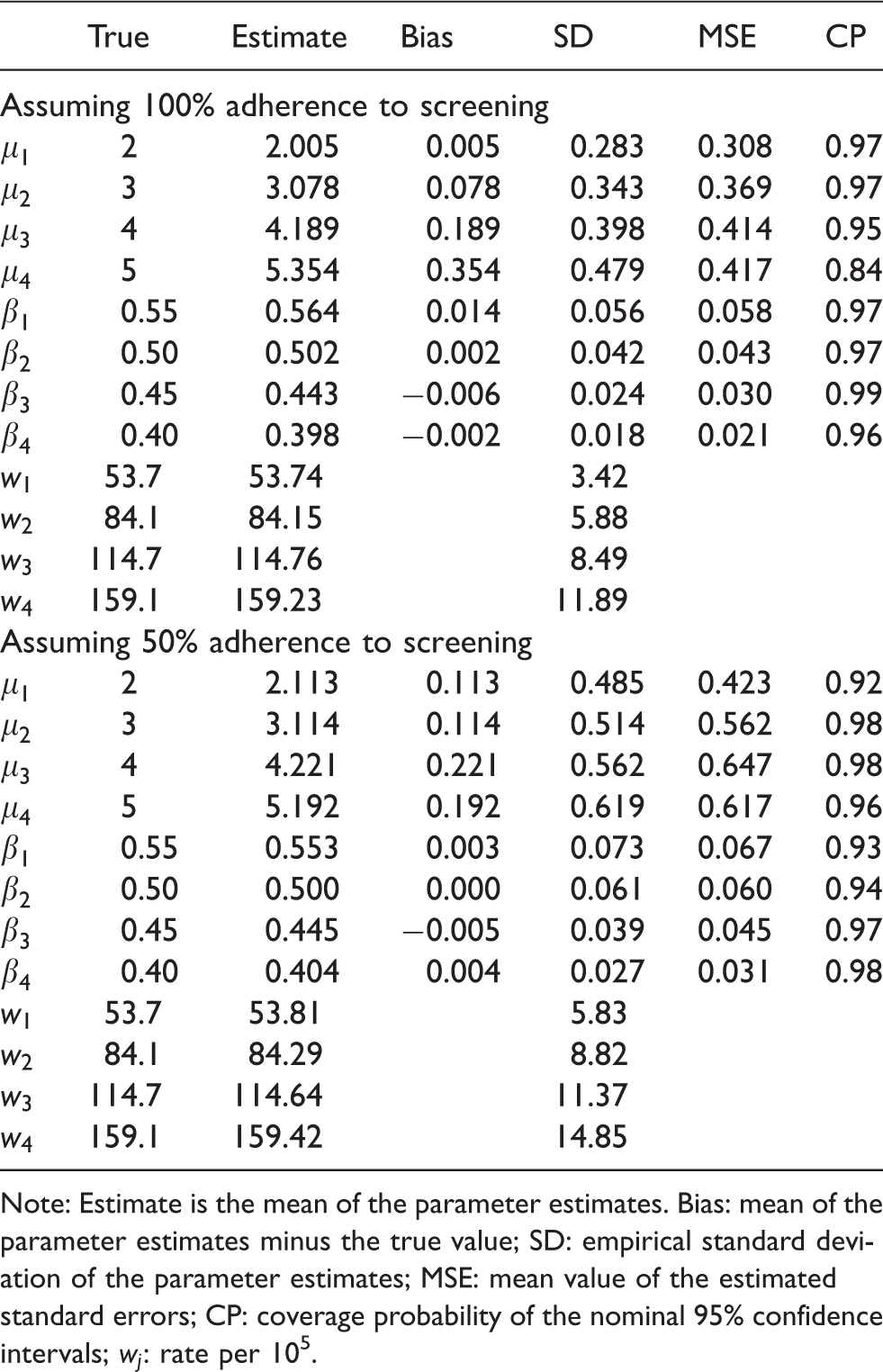
Note: Estimate is the mean of the parameter estimates. Bias: mean of the parameter estimates minus the true value; SD: empirical standard deviation of the parameter estimates; MSE: mean value of the estimated standard errors; CP: coverage probability of the nominal 95% confidence intervals;
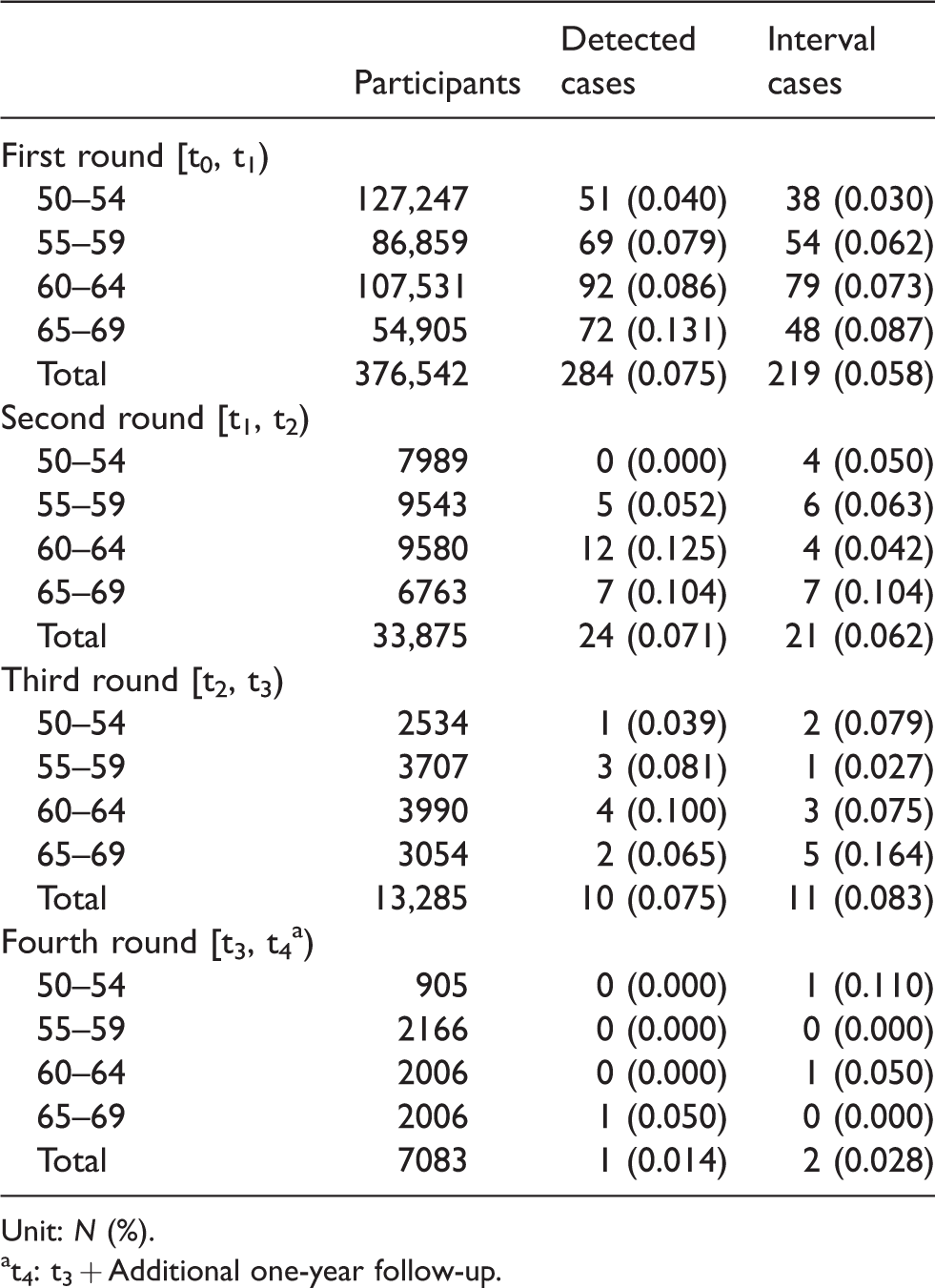
Total number of participants, detected cases, and interval cancers according to age at first screening examination in the Korean NCSP data are shown in Table 3. Percentage of screen-detected cases and interval cases varied from 0.014 to 0.075 and 0.028 to 0.083, respectively. The number of participants who were subsequently screened was relatively small (Table 3). Table 4 illustrates age group-dependent estimates of FOBT sensitivity and MST for colorectal cancer from the NCSP data. MSTs were approximately 4.3 years for participants aged 50–54, 3.9 years for those aged 55–59, 3.4 years for age 60–64, and 3.6 years for age 65–69. Estimates of sensitivity were around 41%, 47%, 45%, and 51% for people aged 50–54, 55–59, 60–64, and 65–69 years, respectively. Based on the results of the proposed model, the MST for those in their 50s was generally longer than for people in their 60s, and the screening sensitivity of FOBT for participants in their 50s was relatively lower than for the older age group. The estimated transition probabilities were
Total number of participants, detected cases and interval cancers according to age at first screening examination, National Cancer Screening Program 2004–2007.
Unit: N (%).
at4: t3 + Additional one-year follow-up.
Results of the proposed model for CRC data from NCSP.
aTotal number observed is the number of subjects at first examination.
MST: mean sojourn time; SE: standard error; CI: confidence interval.
Discussion
In this study, we proposed a stochastic probability model for periodic cancer screening which considers simultaneously the age group-dependent MST and screening sensitivity. Simulations studies showed that the proposed model provides reliable estimates of the model parameters. To our knowledge, this is the first time that the NCSP data have been used directly to obtain age group-dependent estimates of MST and the screening sensitivity for FOBT. After applying our model to the NCSP data, we found that maximum likelihood estimates of the MST varied from 4.3 years for those aged 50–54 to 3.4 years for those aged 60–64. The estimate of sensitivity varied from 41% to 50%. This result is consistent with the previous estimates derived by Launoy et al., 13 who estimated MST to be 4.7 years (95% CI: 3.1–8.4), based on the analysis of French mass-screening programme for colorectal cancer using FOBT. Similarly, Wu et al. 16 have estimated MST to be 4.08 years for males and 2.41 years for females, using Bayesian inference from the periodic probability model. This is an interesting finding that requires further investigation to determine whether the validity of the FOBT varies by gender. In the same study, screening sensitivity was found to increase with age. Gyrd-Hansen et al. 21 estimated the sensitivity of FOBT at 62.1% and MST at about 2.1 years in the Danish randomised clinically controlled screening trial.
Variations in MST and sensitivity by age have previously been addressed by Prevost et al., 7 who analysed data from a FOBT-based colorectal cancer screening programme conducted in Calvados, France. Contrary to our research findings that have suggested a negative association between MST and age group, they found that MST increases with age: MSTs were approximately two years for those aged 45–54, three years for those aged 55–64, and six years for age those aged 65–74. Estimates of sensitivity were approximately 75%, 50%, and 40% for persons aged 45–54, 55–64, and 65–74 years, respectively. Possible explanation for the above discrepancy could be the difference of screening periods.
There are a number of limitations to our study. First, some nuisance parameters related to the distribution of sojourn time and screening sensitivity for those who were not subject to screening examination are set as known values. Second, previous studies have indicated that MST of colorectal cancer varies according to anatomic location of the cancer.13,16,25,26 For example, in the study by Launoy et al., 13 the MST were 6.4 and 2.6 years for distal colon and rectal cancer, respectively, and the sensitivity for the FOBT was around 50% for both distal and rectal cancers. Using a Markov chain model to estimate MST and sensitivity of FOBT, Chiu et al. 26 observed MSTs of 2.06 and 1.36 years and sensitivities of 65.12% and 73.70 for localised and non-localised colorectal cancer, respectively. As information on specific cancer sites was not collected in the NCSP data, we were not able to explore site-specific differences in MST. Further studies should be undertaken to ascertain these findings in the Korean population. One further avenue for future research would be to determine the extent of over-diagnosis due to faecal testing.
Conclusion
In summary, simulation studies show that the proposed stochastic model considering both MST and sensitivity approach can accurately estimate model parameters. The estimated MST of colorectal cancer and sensitivity will help the NCSP determine the periodicity of CRC screening, and provide information on the effectiveness of FOBT in detecting colorectal cancer. Further research is needed to establish differences in MST by gender and anatomical locations, to develop appropriate screening regimes for colorectal cancer in Korea.
Supplemental Material
MSC790775 Supplemental material - Supplemental material for Estimating age group-dependent sensitivity and mean sojourn time in colorectal cancer screening
Supplemental material, MSC790775 Supplemental material for Estimating age group-dependent sensitivity and mean sojourn time in colorectal cancer screening by Na Young Sung, Jae Kwan Jun, Youn Nam Kim, Inkyung Jung, Sohee Park, Gyu Ri Kim and Chung Mo Nam in Journal of Medical Screening
Footnotes
Acknowledgement
We thank the National Cancer Center in Korea for providing access to data.
Declaration of conflicting interests
The author(s) declared no potential conflicts of interest with respect to the research, authorship, and/or publication of this article.
Funding
The author(s) received no financial support for the research, authorship, and/or publication of this article.
Supplemental material
Supplemental material is available for this article online.
References
Supplementary Material
Please find the following supplemental material available below.
For Open Access articles published under a Creative Commons License, all supplemental material carries the same license as the article it is associated with.
For non-Open Access articles published, all supplemental material carries a non-exclusive license, and permission requests for re-use of supplemental material or any part of supplemental material shall be sent directly to the copyright owner as specified in the copyright notice associated with the article.
