




Abstract
Feminized part-time work has been deemed a family policy conundrum yet to be solved by any welfare regime. To identify ways forward, this article examines structural drivers of part-time work decisions through a vignette experiment fielded in the gender-egalitarian context of Norway (N = 3500). Six theory-grounded factors are tested in this multidimensional, causal framework: partner income level, physical and cognitive household labour burdens, the presence of a part-time culture at the workplace, and consequences of part-time work for career advancement and future pensions. Results show that overall, factors that regulate individuals’ material self-interest (partner income, career and pension consequences) have the largest impact on working-time decisions. Additionally, a priming treatment is given with a split sample concerning the factor of cognitive household labour – the organizational dimension of household work. Results from sub-group analyses show that non-primed respondents prefer significantly higher working hours when their cognitive labour burden is lower. Respondents who received experimental priming, however, portray the opposite behaviour (lower working-hour preference when cognitive labour burden is low). The pattern is driven by women, whereas men are left largely unaffected by both the priming and vignette treatment of cognitive labour. Thus, robust findings imply that gender inequality in material circumstances sustains feminized part-time work patterns. Suggestive evidence further indicates that gender inequality in cognitive labour loads may also contribute to sustaining feminized part-time work.
Introduction
Feminized part-time work remains a family policy conundrum yet to be solved by any welfare regime (Morgan, 2012). At the European gender equality frontier of the Nordic countries, feminized part-time work is decreasing, but persists at substantial levels despite generous family policy packages (Mósesdóttir and Ellingsæter, 2017). Because of this, it has been claimed that Scandinavia has yet to reach dual-earner status and instead represents a one-and-three-quarter earner model (Lewis, 2006). In Norway, around 30% of all women employees work part time compared to 12% of men 1 (Statistics Norway, 2023), contributing to a substantial unadjusted gender pay gap of women earning 75% of men’s earnings, on average 2 (Statistics Norway, 2022). Despite this, the Nordic setting remains the best-case scenario for gender equality. In order to move the gender equality frontier forward, the driving forces behind feminized part-time work in gender-egalitarian contexts warrant a more thorough investigation.
Feminized part-time work is politically complex, making it crucial to identify structural forces behind part-time work decisions rather than reducing the issue to the availability of full-time jobs. The vast majority of female part-time work is considered to be voluntary, that is, employees request reduced hours despite full-time work availability (Nicolaisen and Bråthen, 2012; Schwander and Häusermann, 2013). Opportunities to work part time can therefore be a valuable work–life balance tool (Walzer, 1997), which may be politically unpopular to remove. However, it remains desirable to reduce feminized part-time work. For one, reducing part-time work generally would improve overall productivity, as high part-time work rates represent underutilized labour reserves. However, time spent outside the labour market can also be productive, for instance if it is spent raising children (Guryan et al., 2008). The main issue with part-time work is therefore its unequal uptake between genders and its subsequent effect on distributive gender equality. The political challenge of reducing part-time work coupled with its negative consequences for gender equality makes it important to better grasp what drives part-time working decisions in the first place. After all, women’s working-time decisions are not made in a vacuum – social structures can promote or demote their uptake of part-time work availability (McRae, 2003).
Previous research often divides these social structures of part-time work into supply and demand factors. Supply factors consist of the workers’ individual characteristics, such as their education level, and demand factors represent labour market conditions such as organizational structures (Nicolaisen et al., 2019; O’Reilly and Fagan, 1998; Stier and Lewin-Epstein, 2003). Research on these factors is often done separately. However, several factors may plausibly play a role, which has led to a call for multidimensional research on part-time work decisions (Chung and Tijdens, 2013; O’Reilly and Fagan, 1998). By testing six theory-grounded factors in a vignette experiment, the article answers this empirical call. These include three supply-side factors: partner income level, cognitive household labour burden and physical household labour burden, and three demand-side factors: the presence of a part-time culture at the workplace, career consequences and long-term effects on pensions.
Theoretically, the article suggests innovative conceptualizations of the tested supply and demand factors. The clearest theoretical contribution, however, lies in the addition of cognitive household labour burdens as a potential driver of feminized part-time work. Commonly referred to as the ‘mental load’, cognitive labour is the organizational dimension of household work. Cognitive labour is overwhelmingly done by women even in otherwise egalitarian couples (Zimmerman et al., 2002), making it especially relevant for gender-egalitarian contexts. The hypothesis is that carrying the mental load crowds out capacity for full-time paid work (Helgøy and Weeks, 2023; Weeks, 2022). The test of this specific hypothesis is twofold, consisting of a priming treatment and a varied vignette dimension. This allows for a complex analysis of how the effect of cognitive labour may play out on working-time decisions. Until now, cognitive labour has rarely been quantitatively measured at all, and has not been linked to distributive outcomes such as working time.
The article is structured as follows. First, theory and previous research leading to the selection of the supply and demand factors is presented. Second, the theoretical rationale for relevant sub-group analyses is laid out, before a description of data and methods. Main results and sub-group analyses are then presented, before a concluding discussion on what sustains feminized part-time work at the gender equality frontier.
Theory and previous findings
Supply-side factors of part-time work
Supply-side explanations of part-time work suggest that individual worker characteristics contribute to part-time decisions. The present vignette experiment focuses on supply-side factors placed within the household. This is because the initial necessity for part-time work was grounded in women’s responsibility for the private sphere (Walzer, 1997). Today, much theory for the ever-presence of a gendered part-time work pattern remains connected to the traditional gender roles of women being the primary carer, with the man being the primary breadwinner of the family. Consequently, three supply-side factors from the household context are included in the vignette experiment to study their impact on working-time decisions.
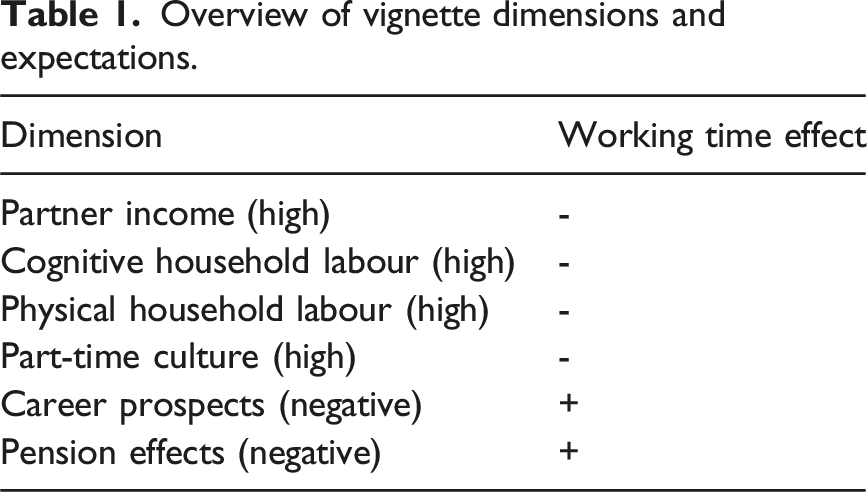
First, partner income level may affect working-time decisions. This has been thoroughly theorized in the literature on the gendered division of labour, which posits that an individual’s relative resources compared to their partner matter in the bargaining for time spent in paid work (Aassve et al., 2014; Brines, 1994). Moreover, it follows logically that the financial feasibility of working part time varies with partner income. Empirically, research on the Norwegian case has found that having a high-income partner demotes transitions from part-time to full-time work (Kitterød et al., 2013). Partner income is thus a varied dimension in the vignette experiment, with the expectation that a higher partner income is connected to lower preferred working hours and vice versa.
Second, the physical division of household labour might matter for part-time work choices. This work entails tasks performed within a household that typically come to mind when discussing housework, such as cleaning or cooking. It is widely established that women still perform substantially more physical household work compared to men and that this may affect their availability and capacity for paid labour (Coltrane, 2000; Hochschild and Machung, 1989; Walzer, 1997). Overall, the equality of the division of physical tasks within the household has increased in the past decades (Kitterød, 2013; Vaage, 2012). Nevertheless, it remains stubbornly gendered, potentially leading to disproportional capacities for paid work within couples. As a result, physical household labour warrants a vignette dimension measuring its impact on working-time behaviour. Here, a higher physical burden should lower preferred working hours, and a lower physical burden should increase preferred working hours.
Third, the vignette experiment measures the effect of cognitive household labour burdens. Recent developments in the literature on the division of household labour identifies the cognitive dimension of household work, or the mental load, as important (Daminger, 2019; Dean et al., 2022). Specifically, the mental load involves anticipating needs, identifying options, making decisions and monitoring progress in the household and the family (Daminger, 2019). Doing this orchestration does not necessarily entail performing a subsequent physical task. For instance, according to a 2008 report, the proportion of men in Norway planning dinner on a weekday is significantly lower than the proportion of men actually cooking it (Holter et al., 2008). This is indicative of the mental load being overwhelmingly gendered, even in otherwise egalitarian couples (Mederer, 1993; Smeby, 2017; Figure S1 in the Supplemental Material for descriptive findings on the present sample), making the concept particularly relevant to study in gender egalitarian settings.
The possible mechanism between the mental load and working time is that cognitive labour crowds out mental capacity to fully engage in the labour market (Helgøy and Weeks, 2023; Weeks, 2022), and hence a high mental load would lower preferred working hours. That would contribute to feminized part-time work since the mental load tends to be higher for women. The theorized mechanism builds on empirical findings that women experience an intensified work–family struggle compared to men (Hochschild, 1997; Offer, 2014). Similar trends have been identified in Norway: the feeling of work–family conflict is amplified for mothers with small children, and is positively correlated with burnout (Innstrand, 2010).
Demand-side factors of part-time work
A great deal of research exists on the demand-factor side of part-time work, explaining how labour market conditions may affect working-time decisions. These conditions range from public policies to informal expectations employers perceive in their work organization. Such conditions are clearly relevant to examine in the Norwegian case, as the labour market is horizontally segregated with women and men being largely employed in different sectors and types of work (Reisel and Teigen, 2014). There is a concentration of part-time workers in female-dominated professions, begging the question of how male- and female-dominated jobs themselves may affect employees’ decisions to reduce hours. Based on previous research, three demand-side factors are tested in the vignette experiment.
First, individuals may perceive varying degrees of career consequences of going part time within their workplaces. Part-time work periods are associated with employer perceptions of lower work dedication, even among employers claiming willingness to accommodate reduced hours (Epstein et al., 1999). Women may therefore refrain from actualizing a part-time preference in male-dominated professions due to these workplaces typically having more intense competition for interesting tasks and promotions (Abrahamsen, 2002). This implies that jobs that have a less hierarchical structure and smaller rewards potential may offer less incentive to stay full time, and vice versa. Perceived career consequences of reducing work hours are therefore included in the vignette, with the expectation that a perception of small/large career consequences leads to a preference for lower/higher working hours, respectively.
Second, the extent to which part-time work is culturally normalized within a given workplace could affect working-time preferences. Research has found that working time relative to the ideal worker matters for negative career outcomes (Abrahamsen, 2002; Epstein et al., 1999). In the male-dominated Norwegian private sector, the ideal worker is easy to identify as a full-time, or even overtime, unencumbered worker, whereas the ideal worker in the female-dominated public sector is more difficult to pin down as working time varies (Abrahamsen, 2002). Part-time work could therefore bring about more part-time work in a positive feedback loop, which is supported by findings that a ‘part-time culture’ among employees has been linked to part-time outcomes (Kitterød et al., 2013). It is thus expected that a workplace which already has several part-time workers leads to a preference for lower work hours and vice versa, which is tested in a vignette dimension.
Finally, long-term considerations of how future retirement pensions are affected by reducing work hours are also included in the vignette. In Norway, part-time work is supported by pension compensations, given for a maximum of 3 years to part-time workers with at least one child under the age of 10. Such a policy can be categorized as supporting dependency on family relationships by compensating for the costs of keeping care within the household (Lohmann and Zagel, 2016), in effect often upholding traditional gender roles (Leitner, 2003). Thus, testing the effect of the pension compensation policy is of vital interest, as it is a pathway to policy change. The vignette dimension comes with the theoretical expectation that working hour preferences decrease when told that pensions will not be affected, and increase when told the opposite.
Overview of vignette dimensions and expectations.
Vignette dimensions across subgroups
Two sub-groups may plausibly differ in the way the vignette dimensions affect their responses to the dependent variable: primed versus non-primed individuals and women versus men. Most prominently, a sub-group analysis is warranted for the study’s secondary experimental treatment, namely a priming of the cognitive household labour dimension for 50% of the sample. In basic terms, the priming makes respondents explicitly aware of cognitive labour and pushes them to think about it in distributive terms. Differences between priming groups can be expected because the mental load has an invisible and implicit nature, making its priming potential substantial. Empirical research on priming cognitive labour supports this (Helgøy and Weeks, 2023).
It is, however, difficult to hypothesize the direction of the differential effect, due to the concept being particularly under-researched (Weeks, 2022). Being made aware of the mental load, your own proportion of it, and the potential link to stress could crystallize its role in everyday life and thereby increase the hypothesized effect (a decrease in preferred working time when responsible for cognitive labour and vice versa). This would be in line with a self-interest logic. Alternatively, given that the priming highlights the distributive nature of the mental load and potential negative consequences, its effect could also lead to wanting to correct for unfairness. In that case, the vignette dimension would lead to a decrease in preferred working time if told that a partner is carrying the mental load, or an increase if told that you yourself are carrying the responsibility.
The second sub-group analysis warranted is gender. This article argues that gendered working-time preferences take form via social structures (McRae, 2003), and not as a result of innate or natural differences between women and men (Hakim, 2000). However, it is plausible that women and men are affected differently by the dimensions due to socialization processes or variation in knowledge about what the dimensions entail, given that their average experiences with them differ. For instance, men have traditionally occupied the role as the provider, or breadwinner, of the family, which has been shown to be a stubborn identity despite changing norms around fatherhood (Reid, 2018). This may make them more sensitive to dimensions related to economic provision in the vignette.
It is expected that the patterns between genders would be even more pronounced within parents, given that gender inequality in couples is exacerbated by parenthood (Dominguez-Folgueras et al., 2018). As parenthood could therefore affect how individuals view some of the dimensions included in the vignette (that is, physical and cognitive household work), it would be interesting to test this in the present sample, however, this remains a limitation of the research due to empirical constraints. 4 Differences between genders are nevertheless relevant. For one, the vignette describes a situation in which all respondents are hypothetical parents. Parenthood is in that sense a premise of the vignette, which is relevant because about 90% of all Norwegian women have children by the age of 45 (Statistics Norway, 2018). Moreover, research suggests that women may take the anticipation of having children into account from a relatively young age, indicated by for instance gendered choices in education (Seehuus, 2019), leading women to more family friendly professions (Charles and Grusky, 2004). This implies that gender roles related to different parenthoods can take form even without being a parent.
Data and methods
In order to test the outlined dimensions, a vignette experiment was conducted through the Norwegian WELTRUST survey in 2022 (Kumlin et al., 2023). The target population of the survey is the Norwegian general population above the age of 18, and a final sample of 3486 respondents was obtained through computer-assisted web interviewing (CAWI). The sample was randomly drawn within strata based on geographical region, age, and gender in order to increase representativeness. However, younger people under the age of 30 remained slightly underrepresented in the survey, and older people over 60 are slightly overrepresented. The invitation to participate in the survey was initially distributed to 9600 individuals, resulting in a response rate of 36%. However, the rate is related to a substantial number of non-contacts – out of the individuals who opened the invitation to participate in the survey (3849), 91% responded.
The vignette
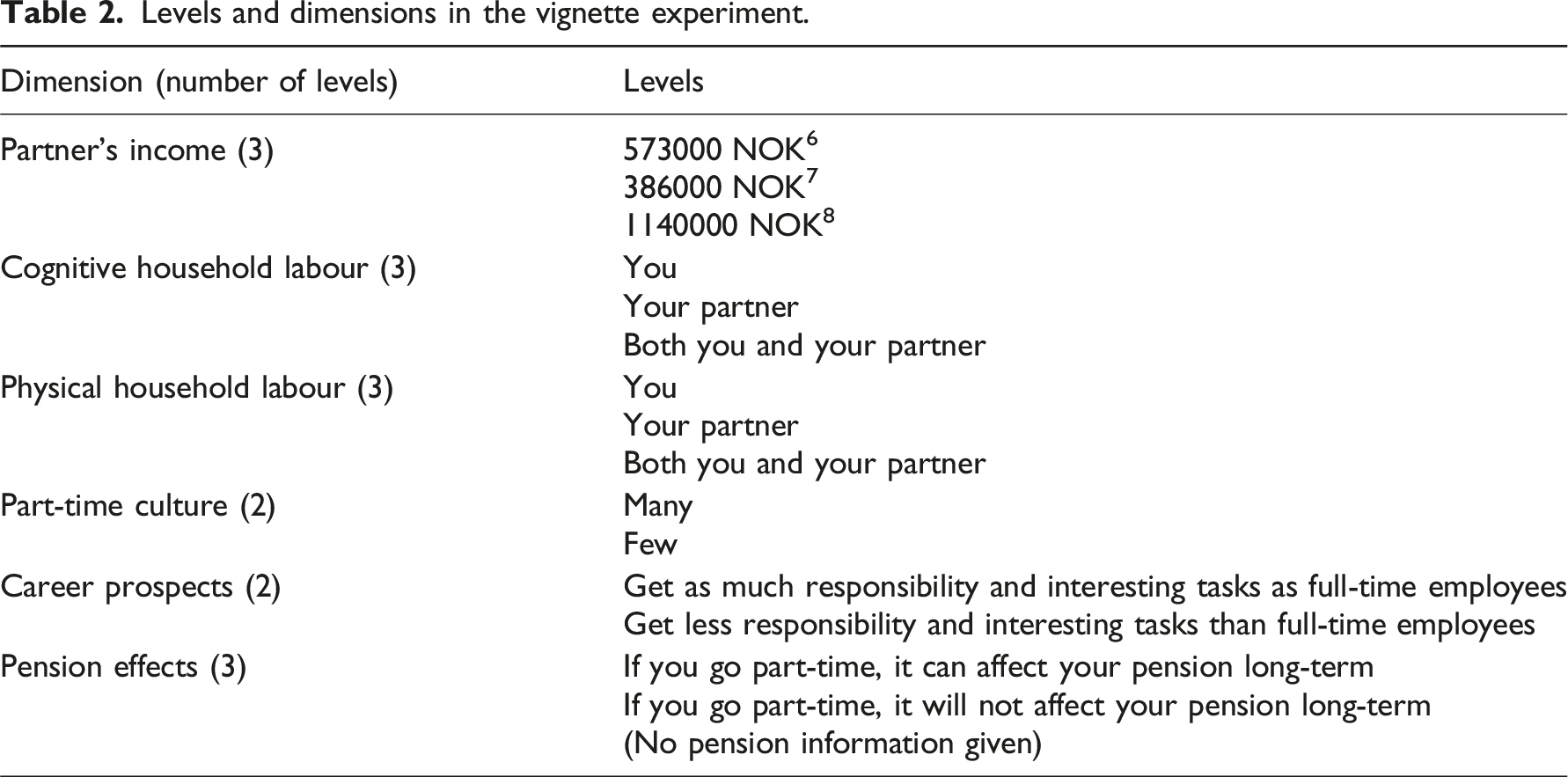
Levels and dimensions in the vignette experiment.
In addition to the vignette experiment itself, a priming treatment concerning the supply-side factor of cognitive labour was given with a split sample (randomized before/after the vignette). Considering the concept’s novelty and invisibility, it is relevant to test whether there is a change in intended behaviour when cognitive labour is made explicit. The priming treatment thoroughly explains the concept of the mental load and gives concrete examples of what it can entail. Respondents were subsequently asked to estimate their own proportion of the mental load, and in a second item, rate how stressful they find combining work and private life. The exact wording of the priming treatment can be found in the article’s Supplemental Material (Section F).
Randomization and identification of treatment effects
With a vignette universe of 324 possible vignette combinations and a sample of 3500 respondents, the entire vignette universe could be utilized. Which vignette combination was given to each respondent was based on random allocation. As the goal of the analysis is to identify the effects of the dimensions on the outcome variable, a multivariate linear regression was run with all of the vignette dimensions as independent variables. This way, the Average Marginal Component Effects (AMCE) can be identified, which refer to the marginal effects of a vignette dimension averaged over the joint distribution of the remaining dimensions (Hainmueller et al., 2014). Although it is possible to include other control variables, this is deemed unnecessary given successful randomization of vignettes. 9 Balance checks confirm that the randomization of vignette dimensions was successful (see Supplemental Material Section H). To conduct relevant subgroup comparisons, regressions are run independently for each group. Conditional marginal means are also inspected, as they provide information on absolute differences per group that are not sensitive to the choice of reference category (Leeper et al., 2020).
Results
Full sample analysis
As a first step, the main effects of the levels of each of the vignette dimensions on actual working-time preferences are studied. This allows us to identify which factors cause people to reduce or increase preferred working hours. AMCEs are visualized in Figure 1, together with their corresponding standard errors. These are not standardized, so a regression coefficient of one would refer to a 10% increase in working-time preference (working time is measured on a 0–10 scale with each unit presenting 10% more working time; 0%–100%). Average marginal component effects (AMCE) of vignette dimensions on preferred actual working time. Full regression results can be found in Table S4 in the Supplemental Material.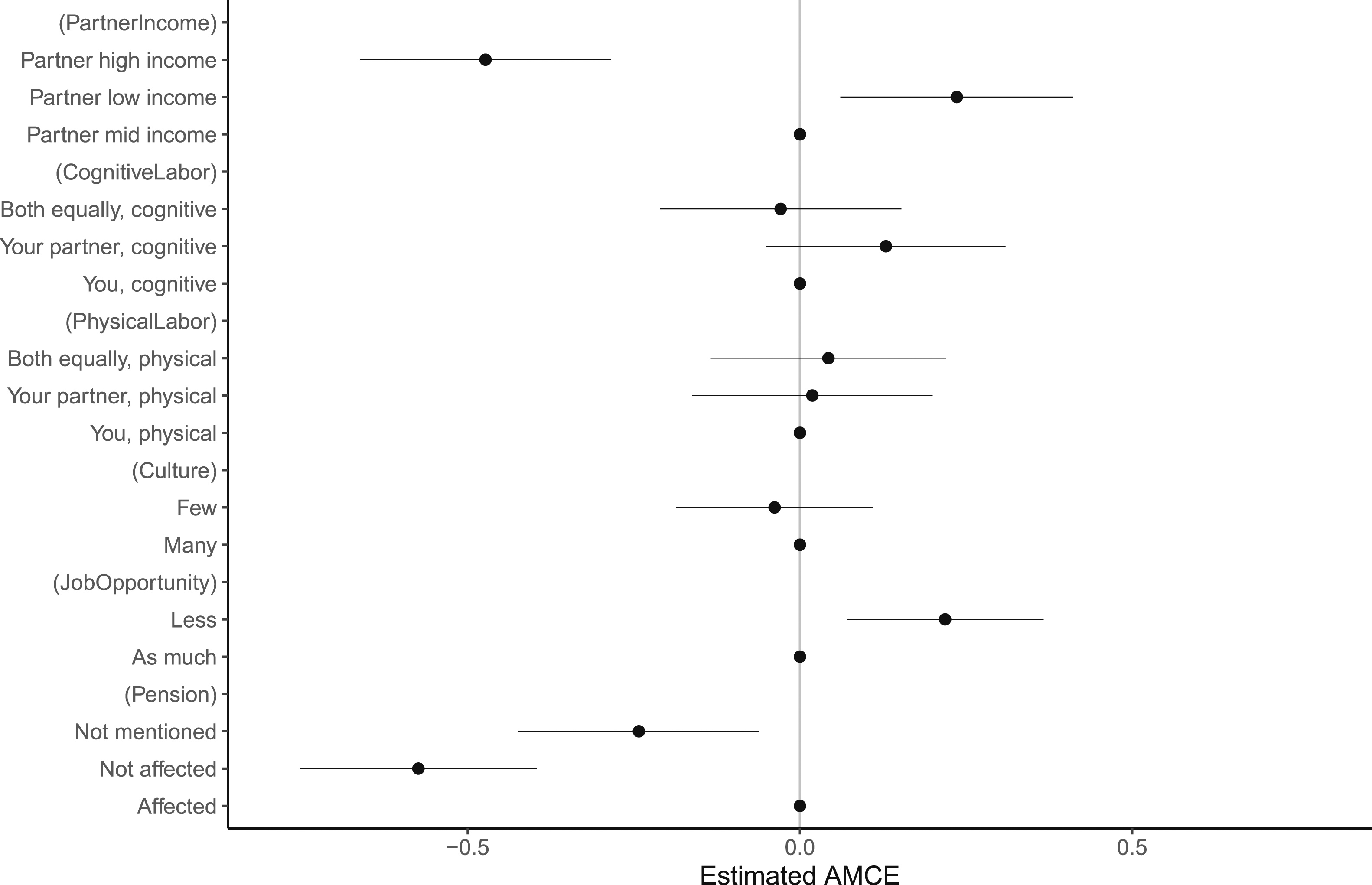
Within supply-side factors, there is a clear impact of partner income, where individuals who have a low-earning partner will prefer significantly higher working hours compared to those with a partner on an average salary. Equivalently, those with a partner earning much more than average will reduce their preferred work hours by almost 5% (b = −0.48). In these results from the full sample, the division of household labour dimensions do not seem to affect working-time preferences.
Within demand-side factors, career prospects and pension effects determine respondents’ working-time preferences. In line with material self-interest mechanisms, when there are fewer responsibilities and interesting tasks for part-time workers, people prefer to work more. Also, in accordance with self-interest, individuals who were told that their pension will not be affected want to work almost 6% (b = −0.58) less than those who were told that their pension may be affected. Individuals who did not receive any information on pension will also want to work less than those who were made explicitly aware of negative pension effects. This result indicates that the policy of compensating for part-time workers’ loss of pension contributions in the small-children phase may help sustain part-time work, depending on workers’ awareness of it. Working in a part-time culture does not affect working-time decisions significantly, indicating that the material conditions could be more important than the surrounding cultural connotations. This is also the overall picture which the main results portray: dimensions that impact people’s material self-interest affect working-time decisions.
Subgroup differences
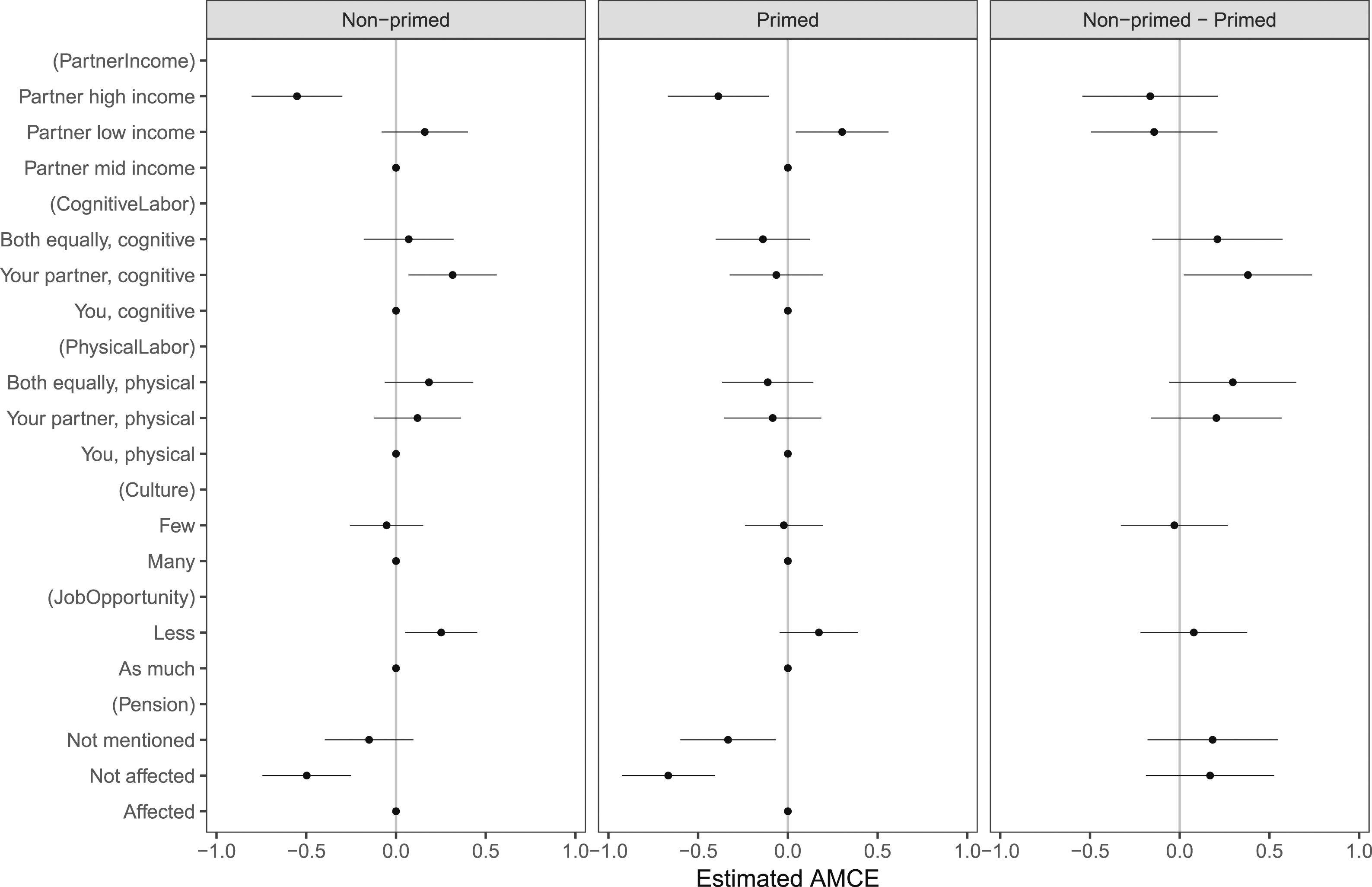
To explore subgroup differences, the AMCEs of the vignette dimensions are calculated for different sample subsets. Importantly, these coefficients only say something about whether individuals who are presented with certain levels of a dimension differ from when presented with the reference category, within the subgroup. In this sense, they are inappropriate to say anything about absolute differences in working-time preferences between subgroups. In order to also provide some insight into this variation that does not depend on the reference category, the conditional marginal means for both gender (Figure S5) as well as priming groups (Figure S6) can be found in the Supplemental Material. To nevertheless inspect whether different dimensions work differently across subgroups, the AMCEs per gender and per priming groups are displayed in Figures 2 and 3. Average marginal component effects (AMCE) of vignette dimensions on preferred actual working time for men versus women. Note: the right-most figure column is a visualization of subgroup differences. Full regression results can be found in Table S5 in the Supplemental Material. Average marginal component effects (AMCE) of vignette dimensions on preferred actual working time for primed versus non-primed individuals. Note: the right-most figure column is a visualization of subgroup differences. Full regression results can be found in Table S5 in the Supplemental Material.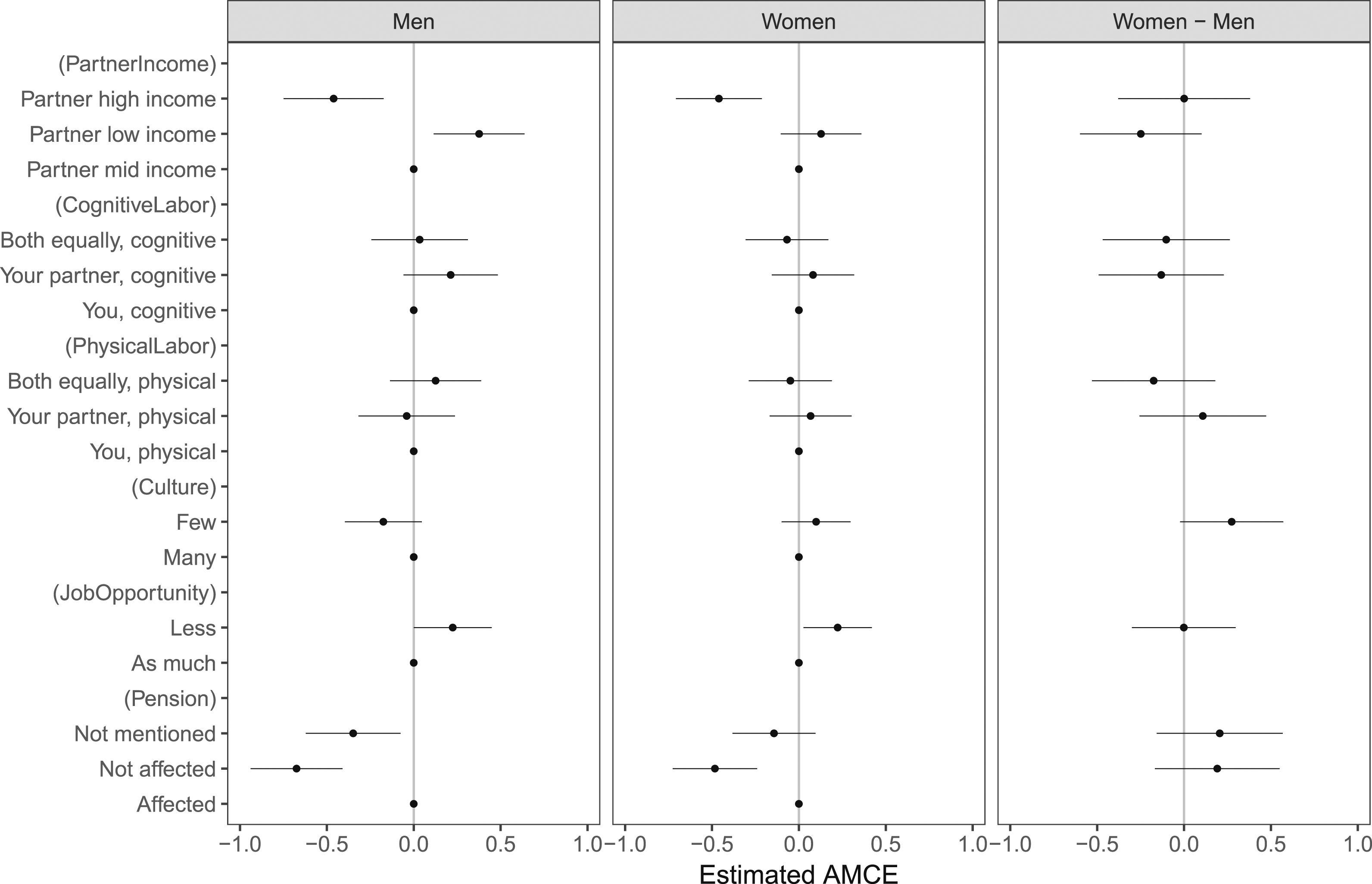
First, from the conditional marginal means (Figure S5), one finding is particularly noteable: men consistently prefer higher working hours than women, across all dimensions. In the AMCEs shown in Figure 2, the significance of some dimensions also differ among women and among men. For supply-side factors, the results for partner income indicate that both genders would work less when their partners earn much more than average. However, only men would significantly increase their working hours in reaction to a low-earning compared to an average-earning partner. Indeed, the conditional marginal means also illustrate that the difference between men and women is largest for the lowest income category of partner’s earnings, and is also statistically significant in absolute terms. This could be linked to the norm that men should take on a breadwinner role. Turning to the division of labour factors, there is little difference between men and women.
Among the demand-side factors, career prospects only significantly impact working-time preferences among women, even though the relationship is the same direction for both genders. Pension information seems to have an impact among both men and women, but the deviation from the reference is more pronounced among men. The conditional marginal means also illustrate that the absolute gap in working hours between men and women is large and statistically significant when pensions are affected, where men compensate more strongly (see Figure S5). Part-time culture is insignificant for both genders, again indicating that objective labour market conditions are most essential. Overall, it seems that men are slightly more driven by material factors than women. However, none of the differences in the size of the regression coefficients between genders are statistically significant, as is shown in the right-most part of Figure 2. The findings for these subgroups should hence be treated with caution.
Turning to the comparison between priming groups, the AMCEs visualized in Figure 3 reveal an interesting picture of how the cognitive labour dimension works differently for primed and non-primed individuals. First, they indicate that the cognitive labour dimension significantly impacts preferred working hours for the non-primed sub-sample. For this group, when an individual’s partner takes on the mental load, preferred working hours increase. Second, an opposing pattern is observed for the primed group. These respondents instead prefer lower working hours when a partner carries most of the mental load, but the finding is not significant. However, the difference between the groups is statistically significant, as shown in Figure 3. The statistical significance is, however, not supported in the conditional marginal means (Figure S6 in the Supplemental Material). This implies that the absolute means between the sub-groups are not statistically different from each other, warranting caution in the interpretation of this sub-group finding. The patterns observed are striking, as it seems like the non-primed group is opting for self-interest by taking on more paid work if their partner does more cognitive labour at home. For the primed group, however, it seems like respondents aim to correct an unfairness in the cognitive labour distribution, and adjust working hour preferences to compensate for an unfairness. Alternatively, it is possible that the primed individuals are coloured by social desirability bias by striving for gender equality in a context where that is a high-standing norm. However, research testing the external validity of these kinds of experiments find low social desirability bias even on sensitive dimensions (Hainmueller et al., 2015). Additionally, even if it were social desirability that drove the primed sample to ‘correct’ their behaviour, the finding is interesting – if making people aware of the mental load and its distributive potential makes it socially desirable to strive for equality, awareness raising is a possible pathway forward. It is nonetheless important to keep in mind that the statistically significant finding is located in the non-primed group, showing that a lower cognitive load can lead to a preference for higher working hours.
Finally, one last level of sub-group complexity is worth noting. Section M in the article’s Supplemental Material shows that it is women who drive the differences between priming groups on the cognitive labour dimension. Women who did not receive priming treatment prefer significantly higher work hours if a partner carries the mental load, and non-primed women lean in the other direction by indicating a (non-significant) preference for lower working hours in the same scenario. The differences between primed women versus non-primed women are consistently statistically significant, across AMCEs and conditional marginal means. When comparing to primed versus non-primed men, it becomes clear that male respondents were left largely unaffected by both treatments relating to the mental load. This suggests that women’s higher mental load burdens may contribute to feminized part-time work.
Discussion
Through a vignette experiment, findings show that feminized part-time work is a multidimensional concept driven by both supply and demand factors. However, across supply and demand factors, those linked to material self-interest seem to have the largest impact on working time preferences. Partner income level, career prospects and future pensions play major roles, in line with theoretical expectations. Sub-group analyses show that the material factors are more pronounced for men than for women, but these differences are mostly insignificant. This supports arguments that feminized part-time work is not fuelled by innate preferences between women and men, but rather by structural factors in the sense that women more often live in scenarios that drive part-time decisions (McRae, 2003). For instance, given the gender pay gap, it is more common for women than for men to have higher-earning partners, which is revealed to be a driver of lower working-hour preferences. Due to empirical constraints, subgroup analyses of mothers versus fathers were not possible, and represent a limitation to the present research. Parenthood may influence how women and men are affected by certain vignette dimensions, and this should therefore be investigated in future research.
Beyond the vignette, the experimental design of the article also included a split-sample priming treatment concerning the dimension of cognitive household labour. Here, half of the respondents were exposed to an explanation of the mental load and were prompted to think about the concept in distributive terms. Sub-group analyses reveal that among non-primed respondents, a lower cognitive labour burden led to a significant increase in preferred working hours. Among primed respondents, the opposite pattern occurs (lower mental load made respondents prefer lower working hours), although the pattern is not statistically significant. The dimension of having a high mental load did not yield any significant effects. Significance tests on the difference between primed and non-primed individuals are inconclusive for the main sample, warranting caution in the interpretation of these general results. However, among women respondents, the difference between priming groups is robust and significant across AMCEs and conditional marginal means.
Future research should dissect why priming the mental load leads to compensating behaviour. It could be methodologically induced, in the sense that the priming prompts respondents to consider personal circumstances and the vignette is purely hypothetical. This could make the hypothetical treatment implausible for primed individuals. Alternatively, primed respondents are compensating for imbalance using the outcome variable available to them in the design, either genuinely or through social desirability. It is not feasible in the present research to draw conclusions in this regard, however, the possible explanations do point to the non-primed group showcasing a more realistic treatment effect of the cognitive labour dimension compared to the primed group. Hence, the findings suggest that for women, having a partner who takes on more cognitive labour can increase their working hour preference. However, this finding should be further explored in future research.
In sum, the division of household labour dimensions does not have a straight-forward effect on working-time preferences. This is surprising, given that part-time work is often seen as a work–life balance tool (Rubery et al., 1998; Walzer, 1997). It is possible that this unexpected finding is due to the gender-egalitarian context of the present research, where equality of household work has come the furthest globally. However, it is also possible that the effect of a disproportional division of household labour works through something that is unsuitable to measure in a vignette experiment, namely ideology. If the division of household labour is ideologically determined to a high degree – that is, if couples with a more equal division of household labour are couples who have egalitarian normative ideals, and vice versa – as opposed to following self-interest logic, working-time preferences would remain more stable across different divisions of household work presented in the vignette. Indeed, some research argues that the division of household labour is linked to individuals’ gender ideology (Pfau-Effinger, 1998).
Breaking feminized part-time work patterns in gender egalitarian settings could be approached by social policies targeting the driving forces of part-time work identified in this article. Equalizing job characteristics of male- and female-dominated fields through promoting a more varied ideal worker in the private sector, or introducing measures that encourage gender-untraditional professional choices, could contribute to working-time convergence between genders. Moreover, equalizing pay levels between sectors in the gender-segregated labour market would on average make partner incomes less gendered. Furthermore, refraining from compensating pension contributions when workers reduce hours in the small-children phase would likely make more women work continuously full-time. Finally, striving for father involvement in family policy may make the mental load more equal over time. As the driving forces of feminized part-time work identified in this article are deeply ingrained in gender roles, no policy offers a simple solution. However, a one-and-three-quarter earner model is no place to settle the gender equality frontier.
Supplemental Material
Supplemental Material - What sustains feminized part-time work at the gender equality frontier? Evidence from a vignette experiment
Supplemental Material for What sustains feminized part-time work at the gender equality frontier? Evidence from a vignette experiment by Anna Helgøy in Journal of European Social Policy
Footnotes
Acknowledgments
I thank Staffan Kumlin, Liza Reisel, Francesca Jensenius, Arno Van Hootegem, Laura Scheele, Øyvind Skorge, four anonymous reviewers, participants at the ESPAnet/ReNEW workshop for junior scholars 2022, the Nordic Challenges Conference 2022, the Norwegian Political Science Association National Conference 2022, the ECPG conference 2022, internal seminars at the Dept. of political science at the University of Oslo, and participants of the Weltrust research project for helpful comments on previous versions of this article.
Declaration of conflicting interests
The author(s) declared no potential conflicts of interest with respect to the research, authorship, and/or publication of this article.
Funding
The author(s) disclosed receipt of the following financial support for the research, authorship, and/or publication of this article: This work was supported by The Norwegian Research Council (301443).

Supplemental Material
Supplemental material for this article is available online.
Notes
References
Supplementary Material
Please find the following supplemental material available below.
For Open Access articles published under a Creative Commons License, all supplemental material carries the same license as the article it is associated with.
For non-Open Access articles published, all supplemental material carries a non-exclusive license, and permission requests for re-use of supplemental material or any part of supplemental material shall be sent directly to the copyright owner as specified in the copyright notice associated with the article.
