




Abstract
Why do some cultures invest more for the long term, whereas others emphasize living in the moment? We took advantage of a natural experiment in Iran to test the theory that long-term water scarcity is an important cause of differences in long-term orientation and indulgence. We found that Iranians in a water-scarce province reported more long-term orientation and less indulgence than did Iranians in a nearby water-rich province (Study 1, N = 331). In a field study, Iranians in the water-scarce province sent more résumés for a long-term job ad we posted, whereas Iranians in the water-rich province sent more résumés for a short-term, flexible job (Study 2, N = 182). College students in Iran primed to think about increasing water scarcity in the environment endorsed long-term orientation more and indulgence less (Study 3, N = 211). Across 82 countries, long-run water scarcity predicted long-term orientation (Study 4). In sum, cultures in water-scarce environments value thinking for the long term more and indulgence less.
Keywords
Nothing is more useful than water: but it will purchase scarcely anything.
In Iran, there are two nearby historic cities with opposite reputations. Shiraz is the city the famous wine is named for. It is known as the city of poetry, lovers, and the arts. Gardens full of flowers and fruit trees dot the city. The pleasant climate made Shiraz grapes one of most famous cultivars in the world.
A few hours to the northeast is Yazd, which has the opposite reputation. Yazd is known as a city of hard work, worship, and restraint. In folklore, Yazdis are thought to suppress gratification in the pursuit of future rewards. Although both Yazd and Shiraz are majority Muslim, popular conception has it that people in Yazd are more likely to follow Islamic prohibitions on dance and alcohol than people in Shiraz.
Water and Long-Term Orientation
In this study, we explored why cultures differ so markedly in their focus on saving for the long term versus indulging and enjoying the present (Chen, 2013; Figlio et al., 2019; Hofstede, 2001). These two nearby provinces allowed a rare opportunity to gain insight into the causes of human cultural differences. We explored whether water might explain why these nearby cities are so different—and why cultures around the world differ in this important trait.
Yazd is one of the driest cities in Iran. Although Yazdis make do with 50 mm of rain a year, Shirazis enjoy 300 mm of rain a year (Iran Meteorological Organization, 2019). Over generations, Yazdis seem to have adapted to the tough environment. They built water reservoirs (ab anbars) and underground channels (qanats) to preserve what little rain falls in winter.
The logic we propose is this. Water is a fundamental resource for humans. Beside drinking, water is critical for food. Water supports rich natural resources (wild plants and animals) and “artificial” resources (food crops and farm animals). People’s immediate reaction to water scarcity is to restrain wasteful indulgence and focus on the long term.
Then, over many generations, people living in places with lots of water set up habits and customs that allow for more indulgence and less vigilance about the danger of water scarcity (Fig. 1). In contrast, a long history of water scarcity instills in people a need to conserve, restrain indulgence, and focus on the long term. Focusing on the long term allows people to justify conserving scarce water, even in the moments where it can seem like there is plenty. Conservation makes sense only when people focus on future rewards.
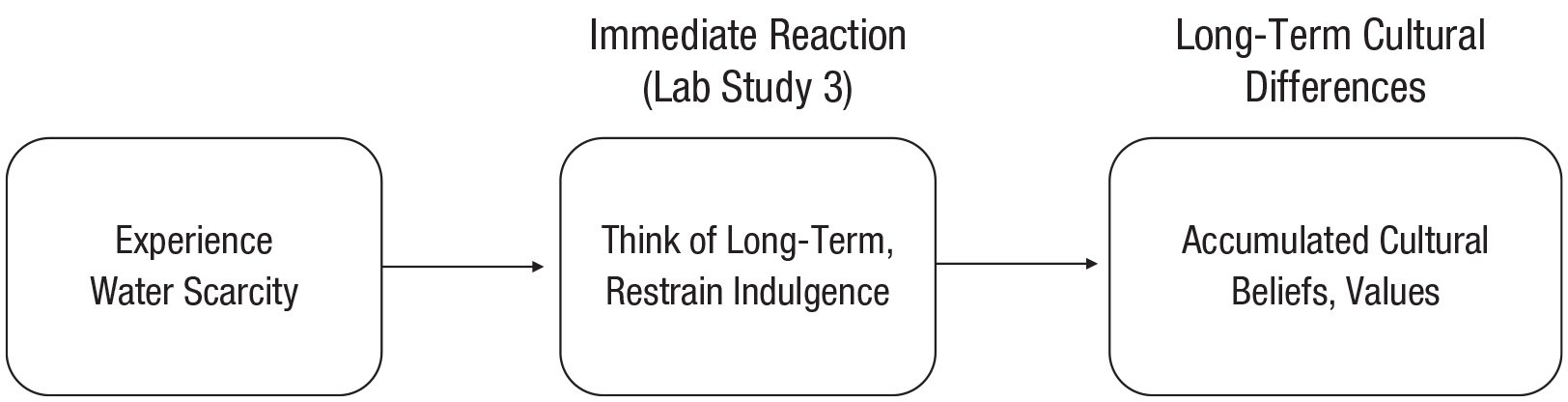
Conceptual model showing the path from experience of water scarcity to long-term cultural differences.
Long-Term Orientation
Hofstede (2001) defines long-term orientation as “the fostering of virtues oriented towards future rewards, in particular, perseverance and thrift” (p. 359). Societies that focus on the long term emphasize future payoffs and try to avoid waste. For example, people in long-term cultures tend to disagree with the idea that leisure is important in life (Venaik et al., 2013, p. 373). In an environment of water scarcity, cultures must reinforce long-term outcomes to justify restraining water use in the present, limiting waste, and working to save the water that does come, such as in traditional water reservoirs that people build in Yazd.
Long-term orientation is connected to meaningful societal outcomes. Nations that score high on long-term orientation tend to save more money (Venaik et al., 2013, p. 373). Even comparing students all in the same school system in Florida, students whose parents were from cultures with a long-term orientation had better test scores, fewer absences, and higher graduation rates (Figlio et al., 2019).
Statement of Relevance
Why do people in some cultures emphasize the long term, whereas others focus on the short term and enjoying life? We found evidence that water scarcity makes people focus on the long term. First, we compared two nearby cities in Iran that are highly similar, yet one has plentiful water, and one is dry. Iranians in the dry city endorsed long-term values more. Iranians in the dry city also submitted more résumés to a fictitious ad we posted for a stable, long-term job rather than a risky, flexible job. In the lab, Iranian college students we primed to think about increasing water scarcity responded by endorsing long-term values. Finally, we used survey data from 82 countries and found that nations that lacked water historically endorsed long-term values more.
Some data from Iran fit with these outcomes of long-term orientation. For example, water-scarce Yazd saved 46% more than Shiraz in 2020 as a share of gross domestic product (GDP; Table 1). Yazd also has a higher literacy rate and a higher percentage of university-age people attending school. These outcomes fit with the idea that long-term orientation encourages savings and investment in education.
Studies 1 to 3: Demographics of Shiraz (Water Rich) and Yazd (Water Scarce)
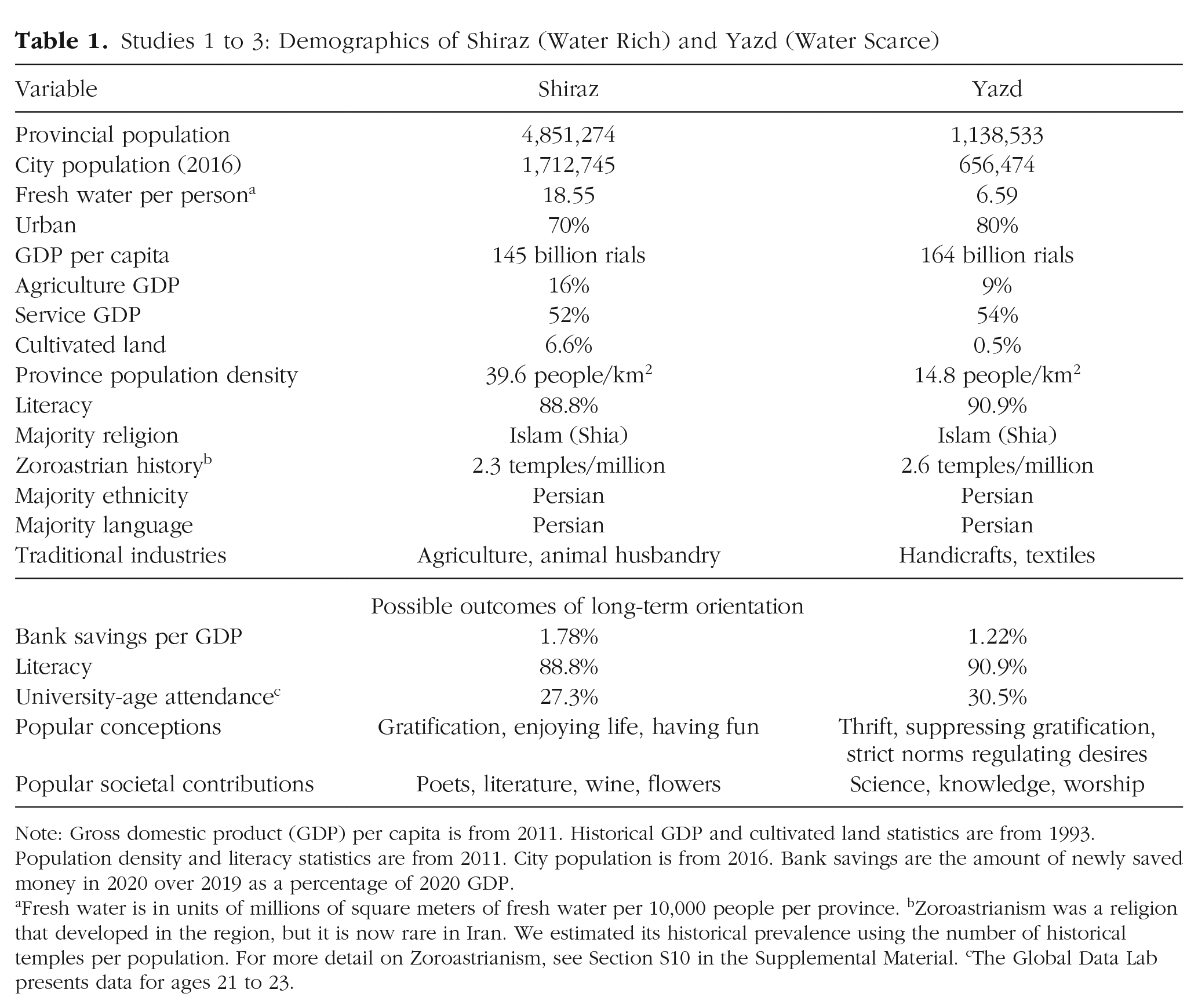
Note: Gross domestic product (GDP) per capita is from 2011. Historical GDP and cultivated land statistics are from 1993. Population density and literacy statistics are from 2011. City population is from 2016. Bank savings are the amount of newly saved money in 2020 over 2019 as a percentage of 2020 GDP.
Fresh water is in units of millions of square meters of fresh water per 10,000 people per province. bZoroastrianism was a religion that developed in the region, but it is now rare in Iran. We estimated its historical prevalence using the number of historical temples per population. For more detail on Zoroastrianism, see Section S10 in the Supplemental Material. cThe Global Data Lab presents data for ages 21 to 23.
Indulgence
We also tested for a related cultural dimension that Hofstede and colleagues (2005) call “indulgence.” They define indulgence as “a tendency to allow relatively free gratification of basic and natural human desires related to enjoying life and having fun” (Hofstede et al., 2005, p. 281). They define restraint as the opposite: “a conviction that such gratification needs to be curbed and regulated by strict social norms” (Hofstede et al., 2005, p. 281).
People in indulgent societies are more likely to be obese and approve of casual sex (Hofstede et al., 2005, p. 292; Wallace et al., 2019). Empirically, indulgence tends to be opposed to long-term orientation. Across nations, long-term-oriented cultures tend to score lower on indulgence, r(80) = −.44, p < .001. In an environment where water is scarce, overindulgence in using water would threaten survival.
Causes of Long-Term Orientation
Agriculture
In our international comparisons, we controlled for other documented influences on long-term orientation. One is agriculture. There is evidence that societies with a history of agriculture are more long-term oriented (Galor & Özak, 2016). The reasoning is that agriculture requires a lot of initial work for a later, uncertain payoff. Similarly, one study found that agricultural societies show more restraint than hunter-gatherer societies (Minkov, 2009).
Linguistic future tense
Economist Keith Chen (2013) argued that grammar influences people’s perception of the future. Languages such as English make a strong distinction between the present and the future. In contrast, languages such as German and Chinese make less of a distinction. For example, it is perfectly natural to say “I go tomorrow” (我明天去) in Chinese, using the same verb as the present tense. Chen argued that languages in which the future grammar is closer to the present grammar encourage people to think more for the long term.
Population density
Across human societies, people in more densely populated regions tend to get married later, have fewer children, and invest more in education—signs of what researchers call “a slow life history strategy” (Sng et al., 2017, p. 737). Animal experiments have found similar differences, such as when researchers put the same species of fish in crowded or uncrowded tanks (reviewed by Sng et al., 2017).
Slow strategies are also connected to other factors. For example, even holding population density constant, studies have shown that people in areas with long life expectancy tend to pursue slow strategies (Ellis et al., 2009; Low et al., 2008). Unpredictable environments, epidemic disease, and even people’s sensitivity to whether resources are readily available all influence whether people pursue slow strategies (Sng et al., 2018).
Water Is Not Merely Wealth
Is water scarcity similar to poverty? When researchers randomly assigned people to be poor or rich in economic games, poverty caused them to focus on the short term (Shah et al., 2012). They tended to neglect future costs. If we look at nations around the world, wealthy countries tend to have more long-term orientation in Hofstede’s data, r(81) = .31, p = .005 (Hofstede et al., 2005; Venaik et al., 2013). Thus, societies experiencing poverty have less long-term orientation—exactly the opposite of what we would predict if we were equating water scarcity with poverty.
Open Practices Statement
All original data, questionnaires, and analysis syntax for Studies 1 to 4 have been made publicly available on OSF and can be accessed at https://doi.org/10.17605/OSF.IO/6DR7Y. Studies 1 to 3 received approval from institutional review boards of the National Ethics Committee in Iran, The University of Chicago, and The University of Queensland. All participants provided informed consent.
Study 1
Method
In Study 1, we tested long-term orientation and indulgence in Yazd and Shiraz. These two cities present a natural test case. Both are ethnically Persian and Shia Muslim. Both cities are highly similar in ethnicity, religion, and language (Table 1). This effectively rules out Chen’s proposed linguistic effects of the future tense (Chen, 2013) and religious explanations such as Confucianism (Hwang et al., 2013).
Both cities are now similarly wealthy, which was important for testing the idea that long-run environmental history instills values that persist over time. In fact, the small difference between the two cities works in the opposite direction from our prediction. On the basis of GDP per capita, the more indulgent Shiraz is slightly poorer (145 billion rials) than Yazd (164 billion rials). If wealth causes indulgence, we would expect Yazd to be more indulgent.
What is starkly different between these two places is that one has a dry environment and one has a wet environment. Yet beyond water, their climates are similar. Yazd averages 19 °C, and Shiraz averages 18 °C. Both have an average low of 0 °C in January and highs of nearly 40 °C in July. This allows for a natural test case, where other variables are highly similar but water scarcity varies starkly.
A total of 331 local undergraduate students from Yazd University (50.0% female, mean age = 20.9 years) and Shiraz University (50.3% female, mean age = 23.0 years) rated long-term orientation and indulgence. During recruitment, we screened potential participants to select only students who were from the local provinces, not people who moved to the province. We posted recruitment flyers in each university with a goal of attaining 90% statistical power to detect the average effect size (d = 0.43) in social psychology (Richard et al., 2003). The final sample had 97% statistical power for this effect size.
Socioeconomic status was similar at the two sites. Participants ranked their socioeconomic status on a ladder scale from 1 (bottom) to 10 (top). On average, Yazdis rated themselves (M = 5.39) similar to Shirazis (M = 5.38, p = .992), near the middle of the scale. Participants completed the tasks in Persian using pen and paper in exchange for research participation credit. The Supplemental Material available online includes all of the original materials.
Long-term orientation and indulgence
We measured long-term orientation and indulgence using four items each from Hofstede’s values survey (Hofstede, 2013). For example, one long-term orientation question asks participants to rate whether “persistent efforts are the surest way to results” from 1 (strongly disagree) to 7 (strongly agree). For indulgence, participants rated the importance of values such as “moderation: having few desires” and “keeping time free for fun.”
Hofstede’s dimensions have demonstrated nation-level reliability in large-scale international surveys (long-term orientation: Cronbach’s α = .74, indulgence: Cronbach’s α = .79; Hofstede, 2001). We report group-level reliabilities rather than individual-level reliabilities for the group-level constructs of long-term orientation and indulgence because it would be inappropriate to use individual-level reliability to draw conclusions about group-level reliability. We discuss the group-level reliability distinction in more detail in Section S9 in the Supplemental Material.
Rating of other people
We followed research in cultural psychology that asks participants to rate their social environment rather than themselves (Gelfand et al., 2011; Schug et al., 2010; Thomson et al., 2018). Participants rated people in their community: “Please think about a person who was born and raised in your city. To what extent would you predict they would agree/disagree with each of the following phrases?”
These ratings tap into descriptive norms (Gelfand et al., 2011). Descriptive norms are social observations about how members of the culture think, feel, or act that are common in their society, community, or group (Cialdini et al., 1990). Some studies have found evidence that using descriptive norms finds different patterns and sometimes larger cultural differences than self-ratings (Peterson & Barreto, 2014; Shteynberg et al., 2009).
Having participants rate their community can also avoid methodological problems such as the reference-group effect (Heine et al., 2002). The reference-group effect explains the paradoxical finding that Canadians rated themselves higher on interdependence than people in Japan. The researchers found evidence that this was at least partly because the Canadians were implicitly comparing themselves with the average Canadian, who are supposed to be low on interdependence. But when researchers asked participants in Canada and Japan to rate their societies, Canadians scored lower on interdependence. There is some evidence that having participants rate their communities produces results that are more in line with actual behavior (Heine et al., 2008).
Despite these methodological benefits, ratings of a community run the risk of tapping into stereotypes that are not connected to reality. To deal with this possibility, in Study 2, we tested for evidence of these two values in people’s behavior. By measuring differences in behavior, we could test for converging evidence between people’s ratings and unobtrusively observed actions.
Results
Long-term orientation and indulgence
People from the water-scarce environment gave higher ratings for long-term orientation, t(329) = 2.41, p = .016, d = 0.27. People from the water-rich environment gave higher ratings for indulgence, t(329) = 2.20, p = .029, d = 0.24 (Fig. 2).
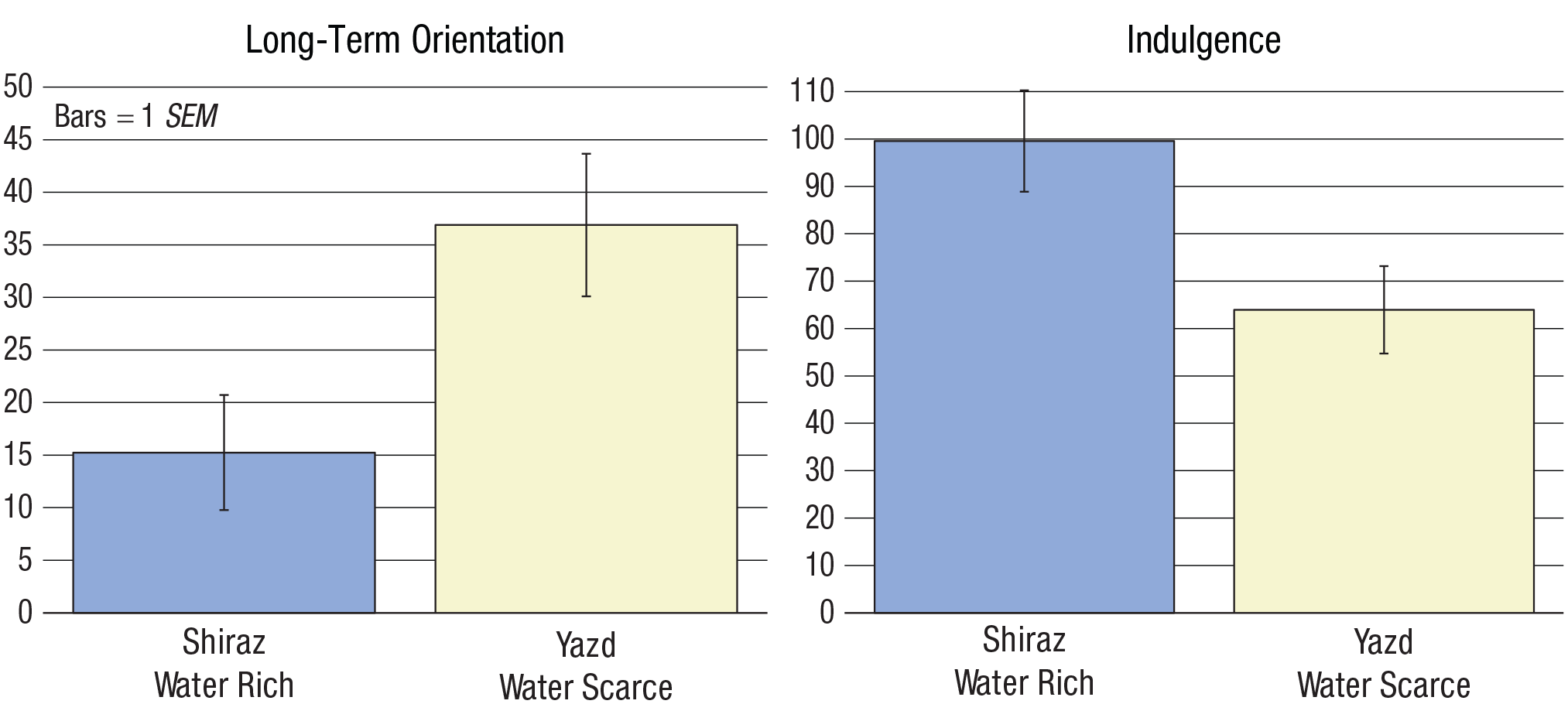
Study 1: mean ratings of long-term orientation and indulgence by citizens of Shiraz (a water-rich area) and Yazd (a water-scarce area). Error bars indicate ±1 SEM.
Demographic controls
We tested whether the differences between the two sites might be explained by demographic differences between the two samples. We ran regressions controlling for gender, age, marital status, and social status (Table 2). After controlling for demographics, we found that the cities still differed in long-term orientation (p = .018) and indulgence (p = .006).
Study 2: Results of Regressions Predicting Long-Term Orientation and Indulgence After Controlling for Demographics
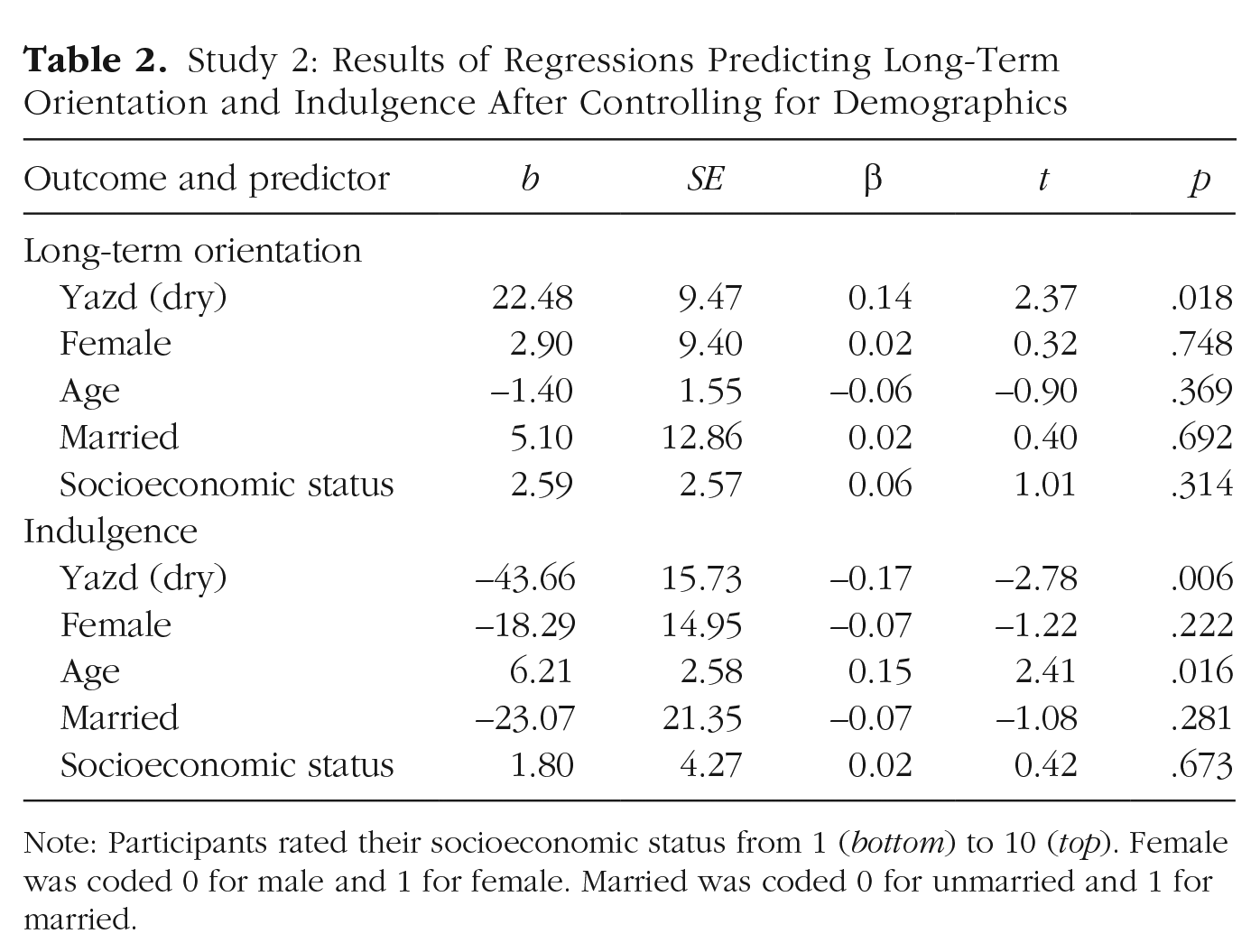
Note: Participants rated their socioeconomic status from 1 (bottom) to 10 (top). Female was coded 0 for male and 1 for female. Married was coded 0 for unmarried and 1 for married.
Furthermore, the results showed small to no effects on differences in gender or other demographic differences. This fits with previous research findings, which have shown that people who are asked to rate their social environment are largely able to look past their own experience and rate their environment (Thomson et al., 2018). The only significant demographic difference was that older people gave higher ratings for indulgence (β = 0.15, p = .016).
Study 2: Stable Versus Indulgent Job Postings
Study 1 found that people in the water-scarce environment reported more long-term orientation and less indulgence than people in the environment with more water. However, one shortcoming is that people’s ratings may not correspond to reality (Heine et al., 2008). This can be particularly worrisome in this case, because Yazd and Shiraz have popular reputations for these traits. To get around this problem, we conducted a field experiment in which people would not know they were being observed for a study.
Method
We posted job listings on one of Iran’s most-visited websites (divar.ir). Divar is an online marketplace similar to Craigslist, where people post ads and sell goods. Important for our goal of testing regional differences, Divar has separate subsites for different cities, like Craigslist does.
Job descriptions
We posted advertisements in Persian for three common job positions in Iran: computer programmers, customer service agents, and office assistants. We posted nearly identical ads for two companies that varied only in key attributes that would appeal to people who value (a) stability and security over the long term or (b) excitement and the potential for high reward. The stable job was at an established company with “30 years of experience” that can provide “long-term contracts” for a “full-time job with job security.” In contrast, the exciting job highlighted “flexible time shifts” for part-time employees at a start-up “where you can enjoy working” (Fig. 3).
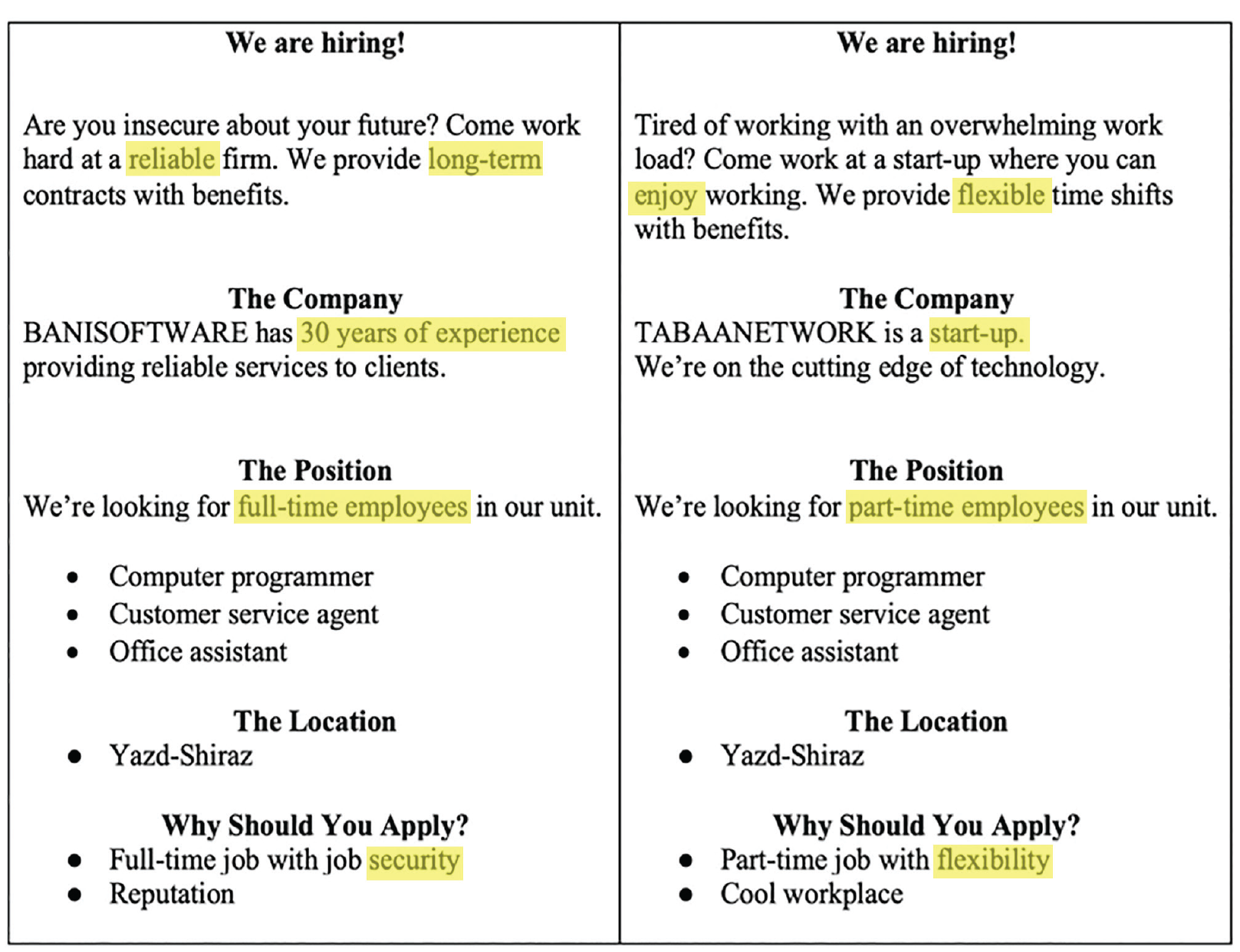
Study 2: translated job postings appealing to people with long-term (left) and short-term (right) orientations. The long-term job posting emphasized security and reliability. The short-term job positing emphasized enjoyment and flexibility. Separate participants rated the full-time job as appealing more to long-term thinking and the start-up job as appealing more to indulgence (ps < .001, ds > 1). The highlighting did not appear on the original Farsi-language ads.
Manipulation check
We tested our assumption that the two jobs appealed to the values we designed them to. Eighty-five participants rated the start-up ad as appealing more to indulgence than the stable job ad, t(84) = 11.38, p < .001, d = 1.24, and the stable job as appealing more to long-term orientation than the start-up job, t(84) = 10.78, p < .001, d = 1.17. This suggests that people interpret the jobs as appealing to the values we intended. (For more details, see Section S1 in the Supplemental Material.)
Applicants
We set up separate email addresses for the ads for applicants to send their résumés to so that we could track the results. We targeted a sample size of 117 applicants, based on a medium effect size (φ = 0.3) and 90% power. We posted the ads in the month of February and received 182 applications.
Slightly more men (52.2%) applied than women (47.8%). The demographics of the applicants were comparable in the two cities (Table S1 in the Supplemental Material). Gender was similar in Yazd (50.8% male) and Shiraz (52.9% male). Most applicants had college degrees (84.1%), again roughly similar in Yazd (84.1%) and Shiraz (84.0%). Applicants had 1.6 years of work experience on average (Yazd: 1.63, Shiraz: 1.58).
Results
In the water-scarce environment, more people applied for the job at the established company job (68.3%) than for the start-up job (31.7%). In the water-rich environment, the pattern was flipped (Fig. 4). Shirazis were slightly less likely to apply for the job at the established company (42.9%) than at the start-up (57.1%). The difference between the cities was significant, χ2(1, N = 182) = 10.64, p = .001, r = .24.
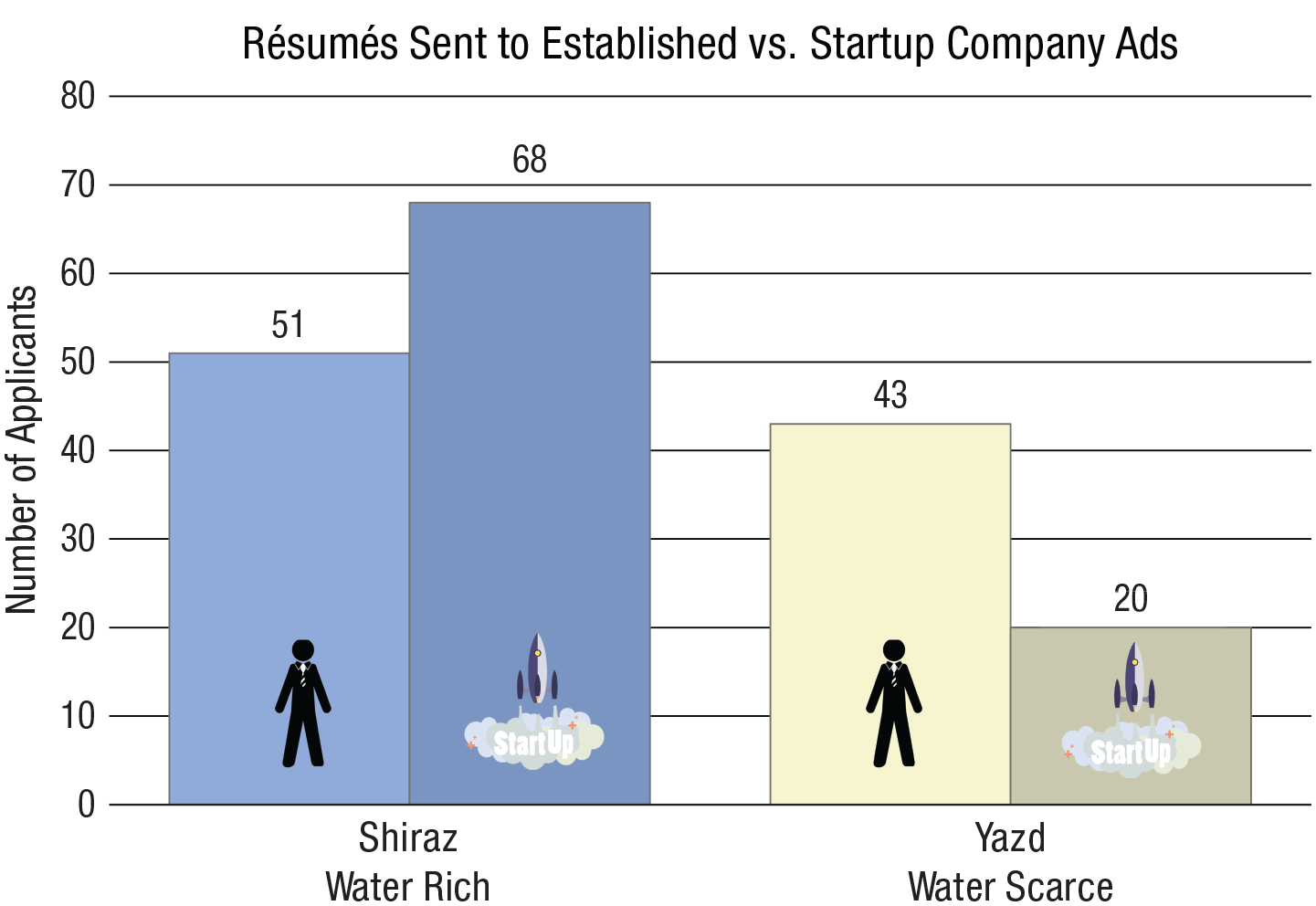
Study 2: number of resumes sent in response to job ads from an established company and a startup, separately for citizens of Shiraz (a water-rich area) and Yazd (a water-scarce area).
Differences between the cities remained significant after we took into account the gender, age, and education of the applicants. This result is similar to what we found in Study 1, in which demographics were generally weak predictors. By measuring real-world behavior plausibly connected to long-term orientation and indulgence, Study 2 provided convergent evidence that the perceptions in Study 1 corresponded to reality.
Study 3: Experimentally Inducing Perceptions of Water Scarcity Versus Abundance
In Study 3, we addressed a shortcoming of Study 1 and 2 by randomly assigning people to perceptions of water abundance versus water scarcity in the lab. We then tested whether water scarcity versus abundance influenced their attitudes toward long-term orientation and indulgence. This method gave more direct evidence of causality.
Method
We preregistered the hypotheses, methods, and analysis. To estimate the sample size, we ran a small pretest on Prolific and used the smallest effect size (d = 0.56) to estimate the sample size needed for 90% statistical power (N = 204). A total of 211 students completed the study in Farsi at the University of Tehran. Their average age was 21.5 years, with a roughly equal gender split (54.1% female, 44% male, 1.9% other). Following our preregistration, we excluded two participants who failed the attention check.
Experiment conditions
We randomly assigned each participant to a water-abundance, water-scarcity, or control condition. We manipulated perceptions of water scarcity by asking participants to read the abstract of scientific articles that made different predictions about water availability across the world and Iran. In the water-scarcity condition, participants read the abstract of an article in Science that we edited to be titled “Worst Global Water Shortage in 1,200 Years: Analyses of NASA World Weather Satellites Over Two Decades.” The abstract describes climate forecasts for the global precipitation rate from 2022 to 2032. The article predicts that both the world and Iran in particular will face severe water shortages. In the water-abundance condition, we used the same formatting but changed the prediction to describe a water surplus. The full text is given in the Supplemental Material. In the control condition, participants completed the survey questions directly, without reading an article.
Manipulation check
To check whether the manipulation had the intended effect, we asked participants, “Based on the results of the academic article you just read, please indicate whether the world will face either water resource scarcity or abundance in 2022-2032?” A one-way analysis of variance (ANOVA) revealed that the effect of condition was significant, F(1, 137) = 377.53, p < .001, η p 2 = .74. People in the water-scarcity condition rated abundance below “neutral” (M = 1.79, SE = 0.16), near “slightly low.” In the water-abundance condition, participants rated abundance above “neutral” (M = 5.78, SE = 0.13). Thus, the manipulations seemed to be successful.
Long-term orientation and indulgence
After the manipulation, participants answered the same long-term orientation and indulgence questions as in Study 1. However, we had participants rate their own attitudes rather than their community’s. We hypothesized that the mindset manipulation would affect people’s own attitudes more than their perceptions of attitudes in their community, which presumably change more slowly.
Future orientation
An anonymous reviewer asked whether long-term orientation is the same as two other traits in previous research: future orientation and frugality. To answer this question, we included the future-orientation scale from the Global Leadership and Organizational Behavior Effectiveness (GLOBE) study (House et al., 2004) and the frugality scale from Lastovicka and colleagues (1999). The GLOBE study defined future orientation as “the degree to which individuals in organizations or societies engage in future-orientated behaviors such as planning, investing in the future, and delaying individual or collective gratification” (House & Javidan, 2004, p. 12). On the future-orientation scale, participants rated questions such as “I believe that people who are successful should 1 (plan ahead), 7 (take life events as they occur).” Previous research has found high reliability for the future-orientation scale across countries (α = .80; House et al., 2004).
In our preregistration, we noted that there were logical reasons to predict both possibilities—that future orientation and frugality would produce similar results or different results from the measure of long-term orientation. On the one hand, the theoretical descriptions of long-term orientation and future orientation are similar. On the other hand, a study found that Hofstede’s long-term orientation and GLOBE future-orientation dimensions capture different aspects of time orientation (Venaik et al., 2013). Long-term orientation focuses on past (tradition) versus future (thrift) aspects of societies. Future orientation focuses on the present versus future (planning) practices of societies. Future orientation also asks about societal aspirations and preferences for planning. By measuring both future orientation and long-term orientation, we were able to test how strongly related they are and whether they produce contrasting results.
Frugality
We measured frugality using an eight-item scale from prior research (Lastovicka et al., 1999). For example, participants rated the statement “I believe in being careful in how I spend my money” from 1 (strongly disagree) to 7 (strongly agree). The frugality scale showed high reliability in our study (α = .86).
Is frugality the same as long-term orientation? On the one hand, they both involve a focus on the future. However, the frugality scale is mostly about spending money, buying things, and taking care of possessions to avoid having to buy new ones. In contrast, there are facets of long-term orientation that are different from frugality. For example, fresh fruit is often more expensive in American grocery stores than candy, but choosing to eat the fruit for long-term health would be an example of long-term orientation that is not the same as saving money. Similarly, spending an hour a day to learn a foreign language is an investment that will result in fluency only after several years. Spending time to learn a language would reflect long-term orientation without relating to frugality. Thus, despite overlap, there are reasons to think that frugality and long-term orientation are different.
Results
As confirmed by one-way ANOVAs, the experimental conditions significantly influenced long-term orientation, F(2, 206) = 4.28, p = .015, f = 0.04, and future orientation, F(2, 206) = 9.55, p < .001, f = 0.09. People endorsed long-term orientation more in the water-scarcity condition than in the water-abundance condition, t(136) = 2.82, p = .006, d = 0.48. Water scarcity also increased future orientation, t(136) = 4.20, p < .001, d = 0.72.
For indulgence, the overall differences between conditions did not reach significance, F(2, 206) = 1.84, p = .161, f = 0.02. However, a preregistered comparison found that people in the water-scarcity condition endorsed indulgence less than people in the water-abundance condition did, t(136) = −2.01, p = .047, d = 0.34. People in the control condition scored in the middle (Fig. 5). Comparing the two experimental conditions with the control condition suggests that both abundance and scarcity perceptions pushed people’s values in opposite directions.
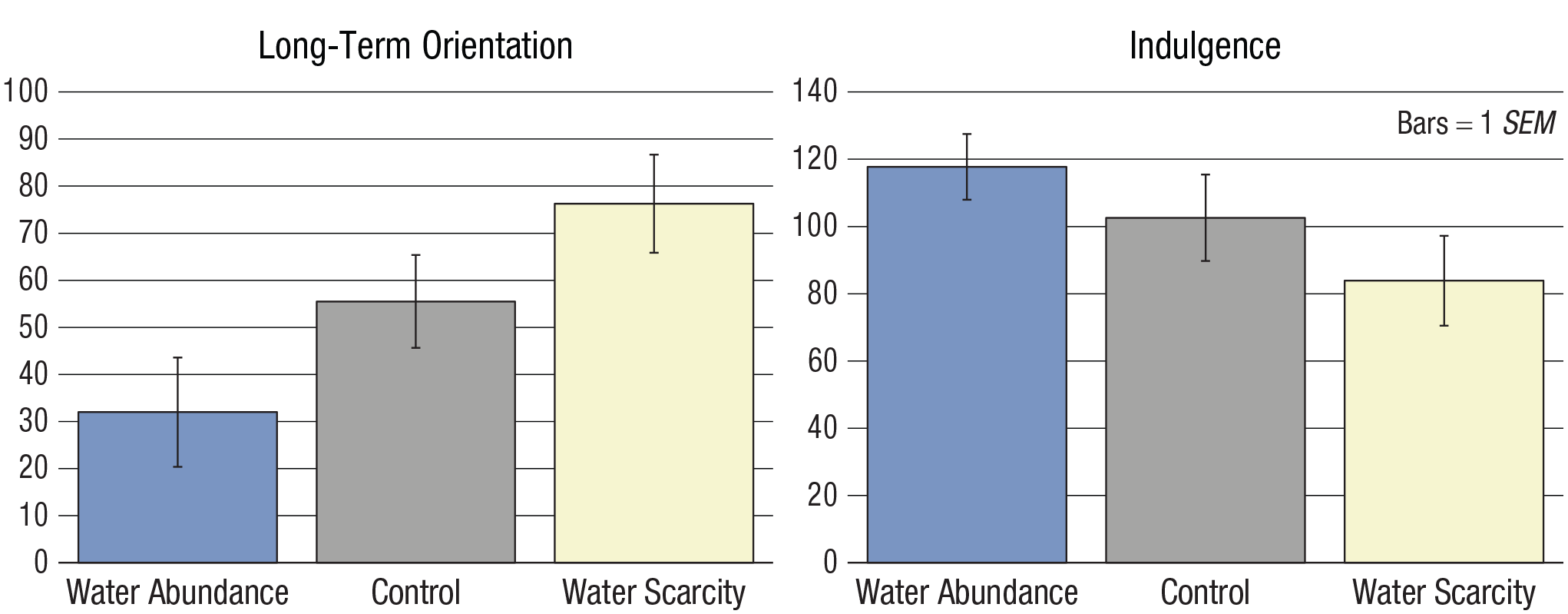
Study 3: mean ratings of long-term orientations and indulgence in the water-abundance, water-scarcity, and control conditions. Error bars indicate ±1 SEM.
The water-priming conditions had a marginally significant effect on frugality, F(2, 206) = 2.30, p = .102, f = 0.02. In a preregistered comparison, people endorsed frugality marginally more in the water-scarcity condition than in the water-abundance condition, t(136) = 1.73, p = .087, d = 0.29. The means were similar in the water-abundance condition (M = 5.41, SE = 0.09) and the control condition (M = 5.36, SE = 0.10).
Are frugality and future orientation the same as long-term orientation?
We analyzed whether the future orientation, frugality, and long-term orientation scales were measuring the same thing by testing the correlations between the scales (Table 3). For reference, one standard for establishing that two markers are measuring different concepts (discriminant validity) is a correlation (r) below .80 (Rönkkö & Cho, 2022). The correlations between the four scales were all below .30, which suggests they were measuring distinct concepts. Therefore, despite the small correlations between the scales, the concepts of long-term orientation, future orientation, and frugality seem to have meaningful differences.
Study 3: Correlations Between Variables
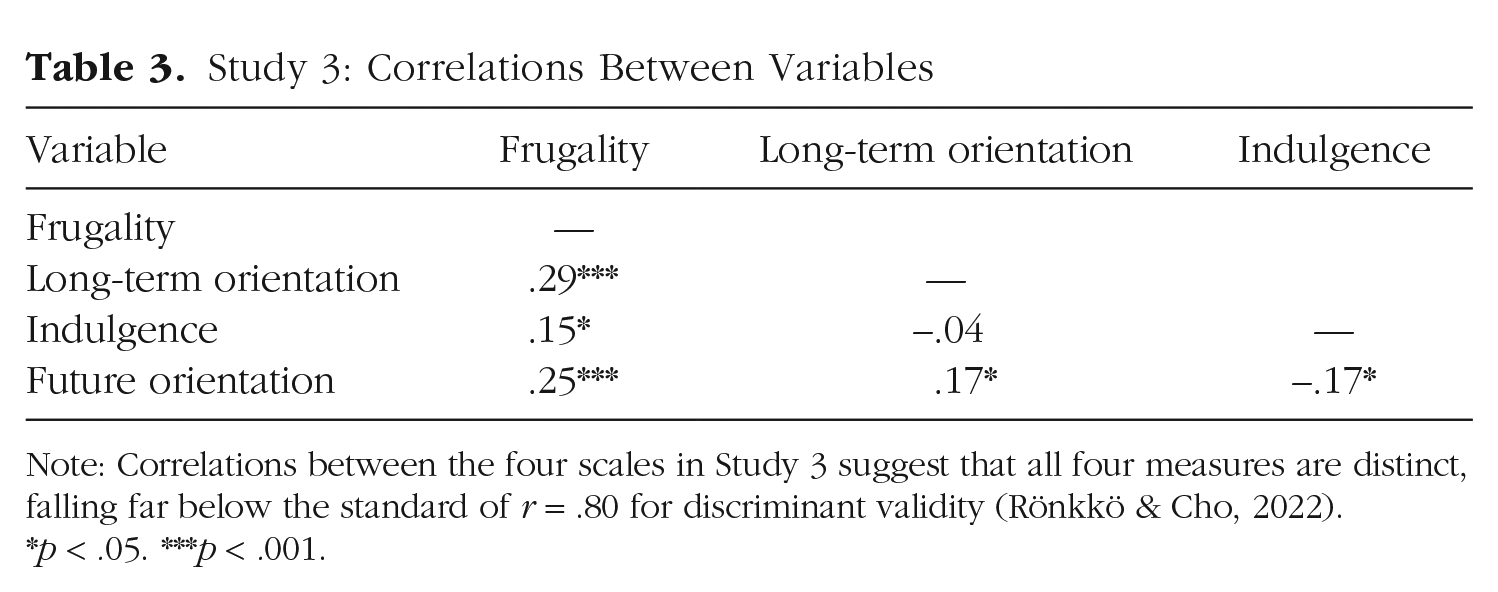
Note: Correlations between the four scales in Study 3 suggest that all four measures are distinct, falling far below the standard of r = .80 for discriminant validity (Rönkkö & Cho, 2022).
p < .05. ***p < .001.
Controlling for demographics
Differences between the dry and water-rich conditions remained significant after we controlled for age, gender, and social status. None of the demographic differences were significant.
Study 4: A Global Phenomenon?
Study 3 found that experimentally manipulating water scarcity increased long-term orientation and decreased indulgence. However, it is important to remember that we manipulated people’s perceptions of dryness and scarcity rather than the long-term cultural experience of these environments.
Study 4 helped address this shortcoming by using an objective measure of water availability across many countries. Also, Studies 1 to 3 left open the question of whether this finding is limited to Iran. To address this, Study 4 used a global sample.
Method
Long-term orientation and indulgence
Hofstede and colleagues (2005) report scores for long-term orientation in 87 countries and indulgence in 82 countries. Scores come from the World Values Survey, which polls nationally representative samples of adults. Indulgence and long-term orientation ratings come from three survey items each. For example, one indulgence item asks respondents to rank how important leisure time is in their life. One long-term orientation item asks participants whether thrift is a quality that children should be encouraged to learn at home.
Hierarchical analysis
When geographic differences are being analyzed, it is important to take into account the fact that countries are not strictly independent observations. For example, although Sweden and Norway are different countries, they share a larger cultural heritage. To account for this, we ran hierarchical models with countries nested in 10 cultural regions (Schmitt, 2004) using the LMER function in R in this pattern: lmer(long-term orientation ~ predictors + (1|regions)).
Freshwater availability
To measure freshwater availability, we used the United Nations Food and Agriculture Organization’s measure of internal freshwater resources per capita. This counts fresh water, not salt water. Thus, it does not count ocean coastline. It includes surface water from sources such as rivers and ground water that can be replenished from rainfall. To measure historical conditions, we used the earliest statistic available, which was from 1962. However, the number seems to be stable over time. The 1962 numbers correlate almost perfectly with the 2014 numbers, r(75) = .99, p < .001.
In the Supplemental Material, we consider alternative measures of water. We compare the predictive power of measuring water using water resources per capita, water resources per land area, and precipitation (Table S3 in the Supplemental Material). Although all measures of water were correlated with long-term orientation, water resources per capita was the strongest predictor.
Why is rainfall a weaker predictor? Rainfall implies that water is available, but there are plenty of exceptions. For example, rainfall flows away quickly on rocky landscapes. Areas with more intense sunlight lose that water to evaporation faster than countries with less sunlight. Perhaps most importantly, rainfall is only one source of water. In some regions, water comes from precipitation that falls elsewhere. In short, water availability is distinct from rainfall.
Other plausible causes of long-term orientation
We tested several other variables that could be plausibly linked to long-term orientation and indulgence. Table S4 in the Supplemental Material lists all national variables, sources, and theoretical rationales.
Temperature and latitude
Some researchers have argued that temperature affects culture (Kashima & Kashima, 2003). Other researchers have argued that distance from the equator is an important predictor separate from temperature (Van de Vliert & Van Lange, 2019). Both could plausibly be linked to water resources. Thus, we controlled for both.
Economic development
Key to our argument is the idea that these cultural habits persist even after people live in abundant, modernized environments. Thus, we tested log gross national income per capita for each country in the year 2000. For similar results using historical GDP and 2011 data, see Table S5 in the Supplemental Material.
Population density
Research has found that densely populated societies (even animals and plants) follow slow life-history strategies (Sng et al., 2017). These slow strategies are similar to long-term orientation and indulgence, such as investing in the future and mating for the long term (Sng et al., 2017).
Natural disasters
Lack of water is an environmental threat, but it is worth considering whether this is just one element of a larger vulnerability to natural disasters. For that reason, we tested an index of natural disasters from the Environmental Sustainability Index. It is not clear whether places prone to natural disasters would be more or less oriented toward the long term. Like dry environments, natural disasters could give people an incentive to save for the long term. On the other hand, natural disasters could work like warfare, periodically destroying resources, which could discourage people from planning for the long term (Fischer, 1991).
Corruption
Corruption could plausibly cause people to focus on the short term because corruption makes it more difficult to invest in long-term goals. Corruption could also reflect weak civic institutions, which make it riskier to hold onto long-term gains.
Agriculture
One possibility is that water is simply a proxy for agriculture. Water makes agriculture possible, and we know from several studies that agricultural styles influence culture (Berry, 1967; Galor & Özak, 2016; Talhelm et al., 2014; Uskul et al., 2008). To test for this possibility, we used data on the percentage of agricultural land from the United Nations Food and Agriculture Organization.
Farming
The statistics on agriculture from the United Nations include all forms of agriculture, such as farming and raising livestock. However, the authors of one study argued that farming specifically (not other forms of agriculture) influences long-term orientation (Galor & Özak, 2016). Thus, we tested the influence of farming by using the same data those researchers used. These data also came from the United Nations Food and Agriculture Organization, and they measure environmental suitability for farming in units of 10 million calories per hectare. In line with the idea that agriculture in general is not the same as farming in particular, analyses showed that these two variables were only modestly correlated, r(86) = .32, p = .003.
Religion
Because water is scarce in much of the Muslim world, it is important to test whether water explains long-term orientation beyond religion. Thus, we controlled for the percentage of Muslim population. Islam was the only religion that consistently correlated with long-term orientation and indulgence. Because researchers have argued that Confucianism encouraged long-term orientation, we also repeated the analyses excluding East Asian countries (Hwang et al., 2013).
Life expectancy
We analyzed data on life expectancy because life expectancy could plausibly affect people’s long-term orientation (Ellis et al., 2009). It would be logical if people in societies with longer life expectancies were more long-term oriented.
Warfare
There are reasons to think that a history of warfare could lead to short-term orientation. For one, historian David Hackett Fischer (1991) argued that Scotland’s history of frequent warfare led to a short-term cultural orientation, such as not wanting to invest in building more costly houses. In addition, research on life-history strategies has found that people pursue fast strategies in places where death rates are higher (Sng et al., 2017). We analyzed data on the number of conflicts from the International Crisis Behavior Project.
Disease
Research on life-history strategies has linked disease rates to fast life strategies (Sng et al., 2018). Thus, we tested for differences based on disease. To measure disease, we used World Health Organization data on disability-adjusted life years lost to communicable disease.
Climatic variability
One alternative possibility is that variability matters more than average environmental conditions. For example, if a country receives an extreme amount of rain this year and then no rain next year, the average conceals a dramatic challenge from the environment. To test for this idea, we used nations’ long-term climatic variability from an earlier global study (Giuliano & Nunn, 2021). Results showed that freshwater availability remained significant after controlling for climatic variability (Table S5).
Results
Results from the hierarchical linear models found that countries with more fresh water endorsed long-term orientation less (b = −3.16, p = .008, d = 0.68, r = .29) and indulgence more (b = 4.14, p = .002, d = 0.79, r = .30; Table 4, Fig. 6). Water explained differences in these values after analyses accounted for wealth, population density, natural disasters, and other potential confounds. Water remained significant after analyses accounted for Islam, languages with a strong future orientation, and agricultural suitability (Table 4). The results replicated the earlier finding that societies that are well suited for agriculture are more long-term oriented, but water was uniquely predictive. Water predicted lower indulgence, but agriculture did not. This suggests a distinction in the psychological effects of water apart from farming. Results were similar after we excluded East Asia and after we controlled for historical warfare, communicable disease, and the two survey waves of Hofstede’s data (Table S2 in the Supplemental Material).
Study 4: Results From Hierarchical Linear Models Predicting Long-Term Orientation and Indulgence
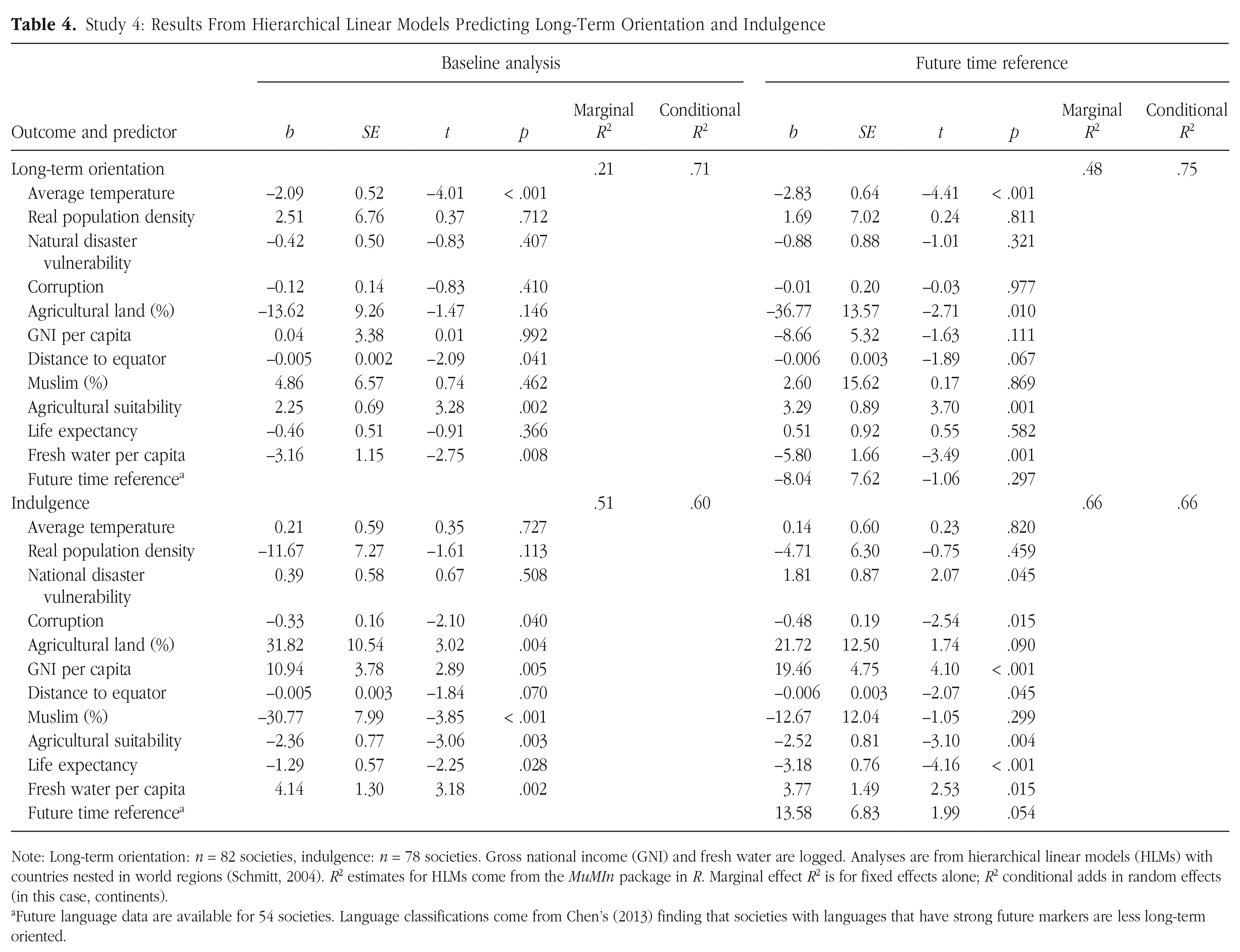
Note: Long-term orientation: n = 82 societies, indulgence: n = 78 societies. Gross national income (GNI) and fresh water are logged. Analyses are from hierarchical linear models (HLMs) with countries nested in world regions (Schmitt, 2004). R2 estimates for HLMs come from the MuMIn package in R. Marginal effect R2 is for fixed effects alone; R2 conditional adds in random effects (in this case, continents).
Future language data are available for 54 societies. Language classifications come from Chen’s (2013) finding that societies with languages that have strong future markers are less long-term oriented.
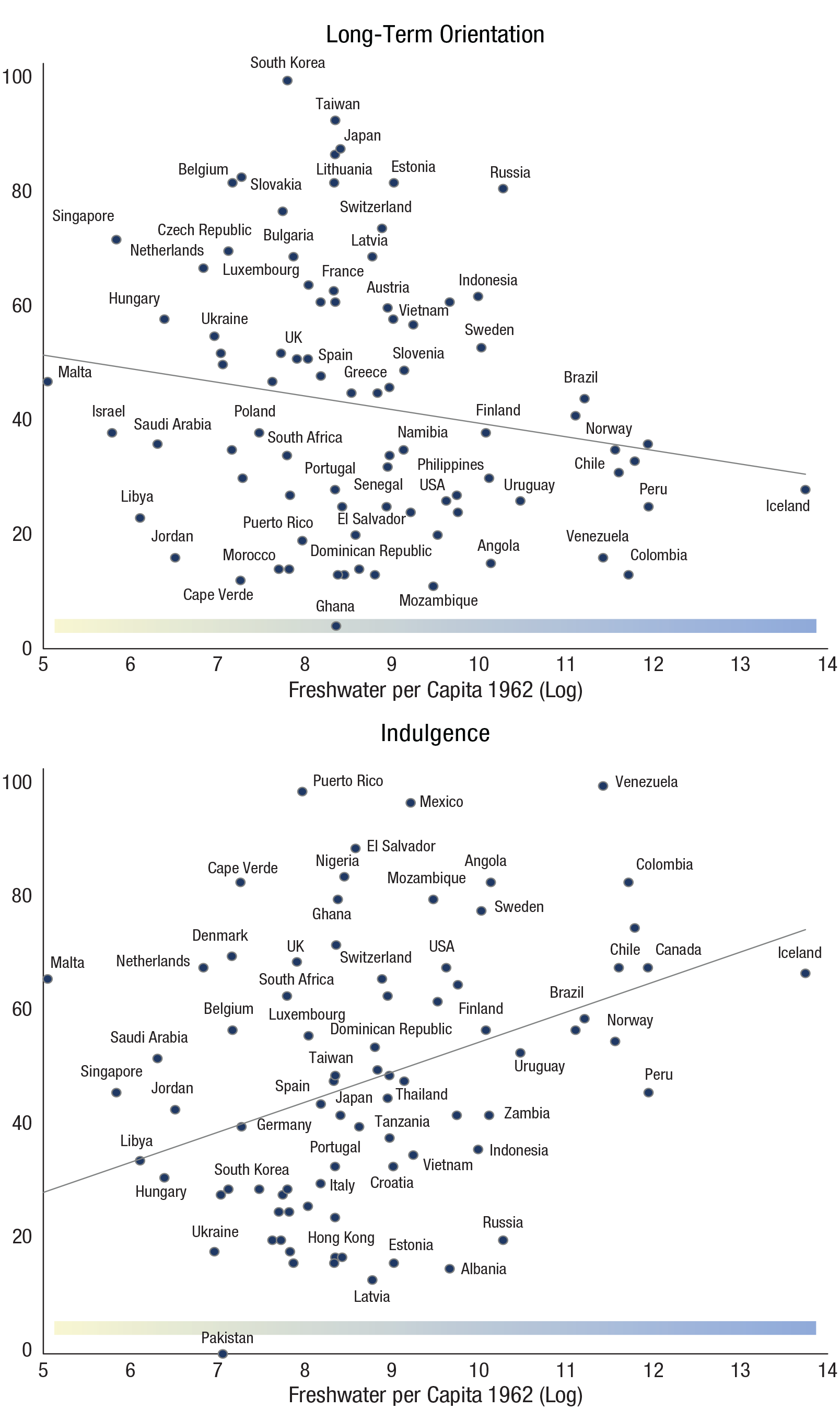
Study 4: scatterplots (with regression lines) showing the relationship of fresh water per capita with long-term orientation across 82 countries (top) and indulgence across 78 countries (bottom). Nation scores for long-term orientation and indulgence come from Hofstede’s reports on the World Values Survey (Hofstede, 2013; Hofstede et al., 2005). After taking into account the control variables, we found that fresh water alone explained 6% of the variation in long-term orientation (r = .25) and 11% of the variation in indulgence (r = .35).
Water availability significantly predicted both indulgence and long-term orientation across regression analyses taking into account different factors (Table 4). Agricultural suitability was also significant across all models. In line with previous research, results showed that farming societies are more long-term oriented and less indulgent.
Other variables were not significant across all models. Colder countries tended to value long-term orientation more (ps < .001), but temperature was unrelated to indulgence. Wealthy countries valued indulgence more (p = .011), but wealth was not significantly related to long-term orientation. Countries with larger Muslim populations valued indulgence less (p < .001) but did not differ in long-term orientation.
Table 5 presents simple correlations. Water availability was only marginally correlated with long-term orientation, but this seems to be because dry countries tend to be hotter and hotter countries tend to be less long-term oriented. In a partial correlation controlling for temperature, water was significantly correlated with long-term orientation, r(84) = −.28, p = .010. Thus, temperature seemed to be acting as a suppressor variable in the simple correlations.
Study 4: Simple Correlations Between Long-Term Orientation, Indulgence, and Characteristics of Countries
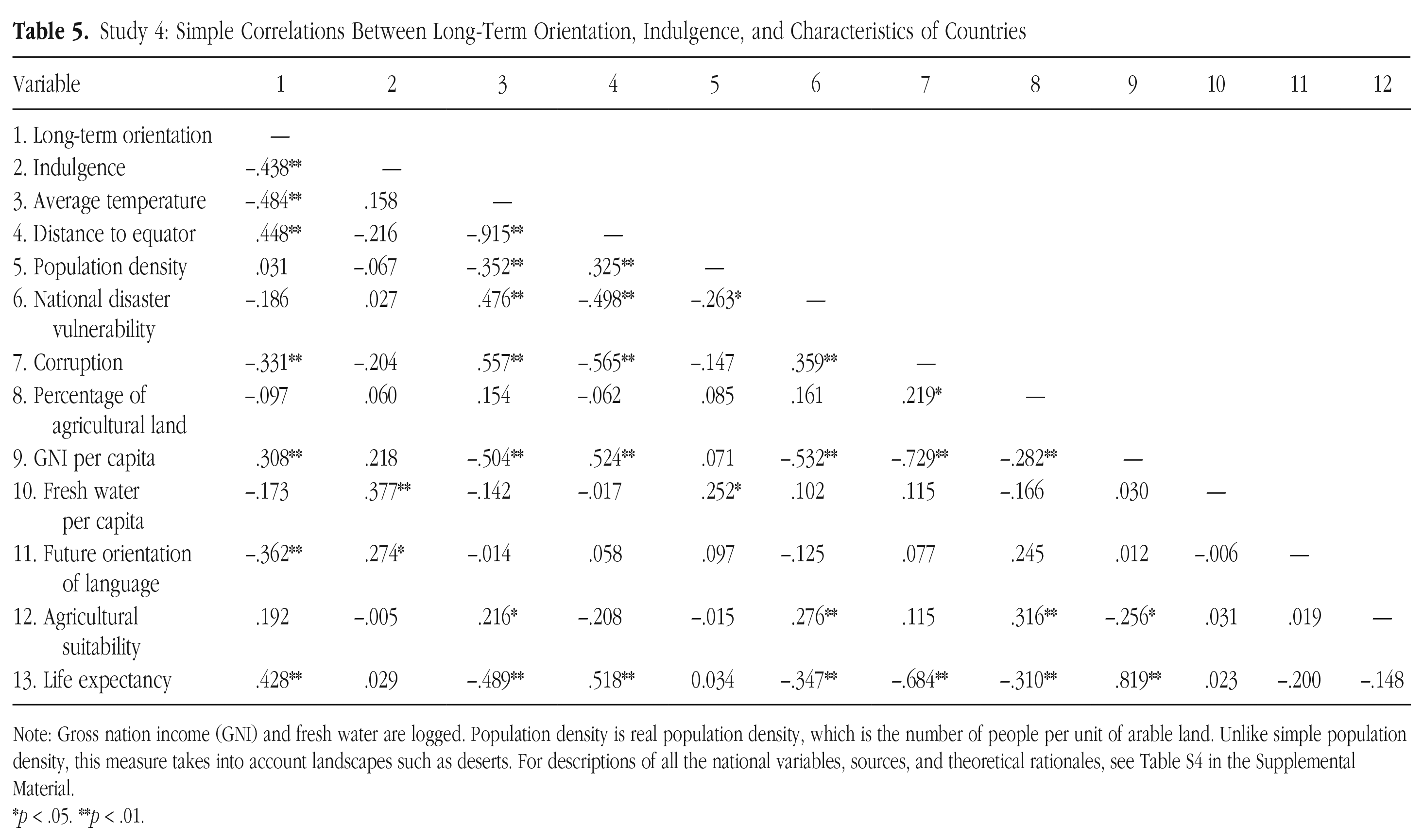
Note: Gross nation income (GNI) and fresh water are logged. Population density is real population density, which is the number of people per unit of arable land. Unlike simple population density, this measure takes into account landscapes such as deserts. For descriptions of all the national variables, sources, and theoretical rationales, see Table S4 in the Supplemental Material.
p < .05. **p < .01.
General Discussion
Data across four studies linked water scarcity to long-term orientation and a rejection of indulgence. A controlled comparison of two nearby cities in Iran found that the city with the historically water-scarce climate was more long-term oriented and less indulgent (Study 1). These differences extended to real-world behavior in résumé submissions to long-term versus short-term jobs (Study 2). Experimentally shifting people’s perceptions of water scarcity made them endorse long-term orientation more (Study 3). And across the globe, World Values Survey data revealed the same pattern, even after analyses accounted for wealth, temperature, and other factors (Study 4). These studies contribute new data to the field of researchers across psychology, economics, and anthropology trying to understand the causes of cultural differences in long-term orientation.
Implications for theory
Ecological psychology
The results add to the growing field of ecological psychology, which posits that the environment plays a role in shaping people’s psychology (Talhelm & Oishi, 2019). The findings are also consistent with the theory that humans adapt their behavior to the constraints and resources in their environment (Sng et al., 2018). However, there is still a need to test for direct evidence that these cultural responses are adaptive. Restraining indulgence seems to be a logical adaptation to water scarcity. However, our study and other similar studies have not directly tested whether these behaviors are adaptive (Galor & Özak, 2016; Talhelm & English, 2020).
Cultural persistence in the modern world
It may be surprising that the differences we measured appeared even among people in modern environments. Most people who live in dry areas such as Phoenix, Arizona, and Dubai, United Arab Emirates, can get water from the sink by turning a knob. It might seem irrational that historical water scarcity should influence people’s decisions to apply to an established company or a risky start-up. Yet recent research in socioecological psychology has uncovered enduring cultural differences linked to the environments of our ancestors—from climatic variability to plow use to rice and wheat (Alesina et al., 2013; Giuliano & Nunn, 2021; Talhelm et al., 2014).
Water is not wealth
The data showed that water had different effects from wealth. There are good reasons to argue that water is a fundamental resource rather than just an element of wealth. People can survive without money but not water. The data here showed that wealth and water had opposite relationships with long-term orientation. Wealthy countries are more long-term oriented on average (Table 5), but water-rich countries are less long-term oriented. Water is different from wealth.
Sample diversity
This study adds data from an understudied region in the world. Psychology studies do a poor job of representing the world’s population (Henrich et al., 2010). Other cultures can also be sources of diversity in theory. The theory for this study originated from the examples of two cities in Iran. Even if we look at studies done outside the West, many simply use non-Western cultures to replicate theories that originated in the West. Besides diversity of sampling, psychology can also benefit from diversity in theorizing.
Limitations
One important limitation of this study is causality. Study 3 experimentally manipulated perceptions of water scarcity, but perceptions are not the same thing as water scarcity experienced over a lifetime or generations. Another limitation is that these studies did not consider climate change. To be sure, there are stable differences between regions over time. Over the long run, Nevada is far drier than Florida. Yet there have been important shifts in climate during human history (Fagan, 2008).
What long-term orientation means for societies
Long-term orientation and indulgence are linked to important societal outcomes. Societies that think more about the long term save more for the future (Galor & Özak, 2016). They live healthier lives and practice safer sex (Chen, 2013). They get more schooling (Figlio et al., 2019) and tend to be wealthier (Table 5). Children who can resist the temptation to eat a marshmallow in front of them tend to do better in school later in life (Mischel et al., 2011; Watts et al., 2018).
Water scarcity may be more than a story of history. There is emerging evidence that groups that value the long term are already investing more in green strategies to fight the biggest environmental threat to our future—climate change (Saether et al., 2021). Thus, the cultural value that helped humans adapt to environmental threats of our long-term past might help us adapt to the world’s biggest environmental threat of the future.
Supplemental Material
sj-docx-1-pss-10.1177_09567976231172500 – Supplemental material for Cultures in Water-Scarce Environments Are More Long-Term Oriented
Supplemental material, sj-docx-1-pss-10.1177_09567976231172500 for Cultures in Water-Scarce Environments Are More Long-Term Oriented by Hamidreza Harati and Thomas Talhelm in Psychological Science
Footnotes
Acknowledgements
H. Harati and T. Talhelm contributed equally to this study.
Transparency
Action Editor: Yoel Inbar
Editor: Patricia J. Bauer
Author Contributions

References
Supplementary Material
Please find the following supplemental material available below.
For Open Access articles published under a Creative Commons License, all supplemental material carries the same license as the article it is associated with.
For non-Open Access articles published, all supplemental material carries a non-exclusive license, and permission requests for re-use of supplemental material or any part of supplemental material shall be sent directly to the copyright owner as specified in the copyright notice associated with the article.
