




Abstract
In this article, we analyse the structural causes of inequality in Lima – beginning with a review of the historical context – to propose a multidimensional approach to urban inequality. We discuss spatial, public-institutional and political-social fragmentation and how these factors contribute to the reproduction of urban inequality. We supplement this discussion by describing two initiatives that contributed to the creation of a collective understanding of inequality and strategies to deal with it. First, we worked with marginalized social groups promoting collective care practices to address food insecurity resulting from the COVID-19 pandemic. Along with this, we developed a National Housing and Urban Planning Policy with the Peruvian Ministry of Housing, Construction and Sanitation that included a definition of urban inequality and the creation of an index for urban inequality. In each case, we discuss the difficulties faced, whether by citizens or the state, in trying to reach relevant solutions to address inequalities.
I. Co-Production From Above And Below: Towards New Approaches To Address Multidimensional Inequality
The COVID-19 pandemic exacerbated inequality, both at national and international levels. Latin America was estimated as of 2022 to be home to 86 million people in extreme poverty,(1) implying a setback of 27 years, with five million people having been pulled into poverty in 2021. Some estimates also indicate that 13.8 million people in the region suffer from hunger, a 30 per cent increase between 2019 and 2020.(2)
In Peru specifically, inequality increased during the pandemic,(3) and the proportion in extreme (monetary) poverty rose from 2.9 per cent to 5.1 per cent, with the increase in monetary poverty being higher in urban areas than in rural settlements.(4) Historically marginalized and vulnerable groups in Metropolitan Lima were more seriously affected by the disease. There is a high degree of correlation within districts between pandemic-related deaths and income: the lower the income, the more deaths per capita. This correlation can be explained by the inability of people in need of a daily income to self-isolate at home. Much of the low-income population also has limited or no access to basic services, including basic health services.
The impact of the pandemic, different in diverse parts of the city, reflects the complexity and multidimensionality of urban inequality. The disparities in the impact in Lima call for new ways of understanding urban inequality in order to seek relevant solutions and tools to address the differentiated and localized impacts.
Understandings of inequality tend to ignore such key factors as temporal and historic dimensions of urbanization and the role time plays in the reproduction of inequality. Our historical analysis of the social and territorial transformations of Lima helps shed light on the consolidation of structural drivers of contemporary urban inequalities and their interaction within increasingly fragmented social, territorial and political urban processes.
Through this situated and contextualized analysis, we examine how inequality manifests itself and then discuss its impacts. Our reflections on the dimensions of urban inequality and the fragmentation that underpins it are then employed in a discussion of two practical initiatives in which we were involved. In one, we worked as consultants and public officials for the Ministry of Housing, Construction and Sanitation (Ministerio de Vivienda, Construcción y Saneamiento, MVCS) on the inclusion of inequality indicators in the new National Housing and Urban Planning Policy (Política Nacional de Vivienda y Urbanismo, PNVU). In the other, we collaborated with networks of grassroots organizations to develop infrastructure improvements for the Ollas Comunes (community-led kitchens) – a long-standing practice based on mutual aid that re-emerged in response to growing food insecurity during the pandemic.
The critical analysis of these two experiences, one from above, one from below, is based on our actual participation, but is also informed by more conceptual reflections on the dimensions of urban inequality and related fragmentation. These two initiatives, one state-led and one community-led, were an opportunity to ground our perspectives on these issues, adding a practical dimension to our understanding, which in turn was able to shed some light on the shortcomings experienced in these efforts to confront inequality. Unpacking the two approaches, with all their limitations, and listing the lessons learned, we seek to offer recommendations to improve the potential impact of co-production processes in the elaboration of public policies.
II. Approaching Urban Inequality In Metropolitan Lima
Here we describe the specific characteristics of Lima and the historical origins of its inequality, as a step in defining a conceptual framework. We insist on the importance of a multidimensional perspective to understand how long-term structures contribute to the reproduction of inequality,(5) and how inequality manifests itself in everyday life.
a. The making of an unequal city
Since Lima’s founding in colonial times, inequality has been a leitmotif and determining factor in its development. From early on, as in most colonial regimes,(6) the political system was based on the hierarchical coexistence of two separate republics – the “Republic of the Spaniards” and the subordinate “Republic of the Indians” (i.e. Indigenous Peoples) – each with different roles and obligations in colonial society. There was some social mobility within each republic for individuals depending on their ancestors’ place of birth. Positions of greater power and prestige, however, were reserved exclusively for the minority of European origin.(7) The segregation and exploitation of the Indigenous population by this minority had its spatial correlate in the establishment of the “reducciones of Indians”, a strategy to concentrate the dispersed Indigenous population through centralized relocation to facilitate control and plundering by priests and tax collectors. The colonial city assigned a location to each social group, thus preventing Indigenous Peoples and Europeans (or their criollo – creole – descendants) from mixing with each other. Hierarchical relationships were established that remained practically untouched until well into the twentieth century.
During the first half of the twentieth century, demographic and economic transformations in rural areas led to migratory flows into Lima, and the city’s population increased exponentially in the course of a few decades. By the second half of the century, the main modality of urban expansion was through the construction of shanty towns, called barriadas.(8) The term does not denote specific physical conditions as much as a mode of expansion. In contrast to the conventional modality, in keeping with municipal rules and regulations, families in barriadas occupy land and, once settled, begin a long process of self-urbanization.(9) Through neighbourhood self-organization and negotiations with the state, they gradually gain access to infrastructure and utilities, a process that usually takes decades.(10)
During much of the twentieth century, the barriada settlements, both as processes and urban spaces, welcomed newcomers and provided housing and services to the lower- and lower-middle class sectors of the city. The city resulting from this demographic and urban expansion was clearly divided between the traditionally urbanized central area, richer and with better access to services, and a peripheral, much poorer area, urbanized through barriadas and with a significant service and infrastructure deficit.(11) These peripheral slums(12) are perceived to be populated mostly by people of peasant and Indigenous origin, in contrast with a more “urban” and “white” city centre.(13) A sector typical of this type of barriada urbanization, in its different stages, is the district of San Juan de Lurigancho, with over one million inhabitants, where our collaborative experience with the Ollas Comunes, the community-led kitchens, took place.(14)
b. Fragmentation and precariousness in Metropolitan Lima
In the international literature, discussions of fragmentation and its effects on urban life cover various dimensions: including an infrastructural focus, as seen in the influential studies on Splintering Urbanism,(15) a sociocultural perspective,(16) a consideration of its manifestation in urban governance,(17) and more epistemological approaches that study the concept of the fragment.
On the latter, McFarlane’s(18) approach is particularly relevant to our research. He documents how urban infrastructure, services and even the houses in informal settlements of the global South comprise an array of fragments, mostly the half-finished and precarious products of community organization, private initiatives and productions emerging from negotiation and struggle with state agencies. He calls for the politicization of these fragments and the articulations around them towards the continuous promotion of urban justice.
Here, we describe fragmentation as a process that (re)produces urban inequality. We focus on its impacts in different aspects of the barriadas in Metropolitan Lima, how it is seen in different spheres, how these impacts reinforce each other, and their direct effect in reproducing urban inequality. As Calderón(19) points out, Lima is a city permanently in the state of being built, with unfinished houses and temporary or rationed urban services. At the same time, he acknowledges Metropolitan Lima as a dual city, with a well-served formal area, home to a small minority, and a larger informal area, characterized by precarity, where most people live.(20) In the informal areas, Lima’s urbanization can be classified into several periods.(21)
Since the late 1980s or early 1990s, barriada settlements have been characterized by three distinct kinds of fragmentation: spatial, public-institutional and political-social. Spatial fragmentation refers to the fragmentary nature of much of the lands informally or illegally occupied by low-income dwellers since the 1990s, and the resulting size of the settlements themselves. These occupied lands are mostly located on the slopes of the Andes, or in the small ravines between them, and are determined by the irregular topography. By contrast, prior to the early 1990s, popular urbanization occupied large desert-like areas around the existing city, and hundreds or even thousands of families lived in these settlements. The more recent asentamientos humanos (human settlements) are populated by fewer than 100 families and, in many cases, cover areas of just a few blocks. The small size of each neighbourhood unit means enormous public investment. To provide access to basic services (electricity, water and sanitation) in each formally recognized unit, the state has to introduce numerous micro-interventions that expand the service network to increasingly inaccessible areas. The competition between neighbourhoods to gain access to public investment exacerbates the political-social fragmentation.(22)
Public-institutional fragmentation refers both to the increasing atomization of the city’s governing bodies engaged in urban decision-making and budgeting (as new municipalities are created through the subdivision of pre-existing districts), and the creation of new institutions, dependent on the national government, with full responsibility over matters previously held by municipalities.(23) State resources for the provision of basic services, including urban infrastructure (such as roads and parks), health facilities, education, communal premises and others, are allocated and invested by different units within public institutions which have incompatible investment logics.(24) This fragmentation of public intervention has consequences for the effectiveness of investments,(25) which, in turn, exacerbate spatial fragmentation and, as explained below, reinforce the political-social fragmentation. This organization of state policies and interventions is highly incompatible with a capacity to address the multidimensional nature of urban poverty and inequality.
Finally, by political-social fragmentation we refer to the disintegration of the many popular and neighbourhood organizations that were a distinctive feature of urban social movements in the 1960s and 1970s. This is evident in the declining strength of existing organizations and their reduced capacity to coordinate actions with their counterparts in the city, as well as in the smaller size of the neighbourhoods they represent. Also, the logic behind their actions has shifted from demanding rights from the state to negotiating with the authorities on solutions for concrete and specific issues. According to Martín Tanaka, the reduction in organizational strength and capacity can be attributed, at least in part, to this shift from a rights-based model to one in which neighbourhood leaders function as “political brokers” whose legitimacy is constantly evaluated based on their ability to obtain infrastructure or other benefits from state actors.(26) This logic is also consistent with and reinforced by the fragmentation of public investment mentioned above.
Since the 2000s, a new actor has been more evident, namely the land traffickers who have partially – and perversely – replaced neighbourhood organizations, at least in the initial stages of new occupations. They grab a portion of public or private non-urbanized land, allocate potential housing plots (even in dangerous zones or protected areas) and sell families the “right” to settle there.(27) Usually, land traffickers abandon the “neighbourhood” after having extracted all the possible profit from the new residents, leaving neighbourhood organizations and the state – with all its fragmentations – to take care of the self-urbanization process.
c. How to understand urban inequality
At this point we need a more detailed definition of what we mean by urban inequality. The term is used to denote two things: on one hand, it refers to economic, environmental or other conditions of inequality identified in urban environments; on the other, it refers to the inequality that results from, or in direct relation to, urbanization conditions. In this article we refer to both: inequality that exists in the city and that produced by the city, along with the dynamics between these two dimensions of inequality.(28)
Inequality continues to be characteristic of Latin American cities despite the reduction in urban poverty rates in the last two decades. Approaches led by the state to understand inequality are mainly constructed via census data, which does not capture other dimensions or drivers of inequality such as differentiated access to quality public spaces, transport and services, and to fair and equitable working conditions. Moreover, the state approach reduces policies and programmes to abstractions designed to “solve” the quantitative problem, without transforming the structural dynamics that generate poverty, exposure to risk and inequality.
Challenging this narrow definition of inequality, Caren Levy defines urban equality as a process attained through the achievement of four main goals: (i) equitable and sustainable distribution of resources (income and services); (ii) reciprocal recognition of different social identities and the environment in the way urban activities are planned, operated and managed; (iii) parity political participation, actively engaging all citizens and their representatives in deliberations and decisions about the current and future city; and (iv) mutual care and responsibility, prioritizing relational responsibilities between urban citizens and between citizens and nature, actively nurturing the civic life of the city.(29) The more limited the possibilities of attaining any of these components, the greater the inequality experienced in a city. In this approximation, the analysis of the physical components of the city allows us to see the materialization of how the social components interact in the reproduction of inequalities.
In Latin American literature, the understanding of inequalities revolves around material conditions and structural urban characteristics, including location within the city, the freedom to mobilize and access resources; and the consequences of limited access and choice with regard to services.(30) Our lens for understanding inequality seeks to integrate other structural drivers as well, which allow for analysis of the relationship between urban space and socioeconomic inequality. In this scenario, we are particularly interested in exploring the ways in which spatial inequality in the city and its components help to shape the social reality in which citizens carry out their daily lives.
As Di Virgilio and Perelman(31) point out, the process of production and transformation of the urban space is, in itself, a process of allocation, conquest or deprivation of opportunities associated with other structural drivers of inequality. These spatial conditions facilitate or hinder inhabitants’ access to goods and resources produced and delivered by the city. The process of city making is understood as a power struggle between multiple agents and social groups which seek to gain access to the control and distribution of resources.
In the case of Metropolitan Lima, on the basis of the city’s urbanization history and its particular features, we consider that three basic dimensions must be taken into account in order to understand urban inequality: economic, social and spatial. These dimensions and some of the components to be taken into consideration in each are shown in Figure 1.
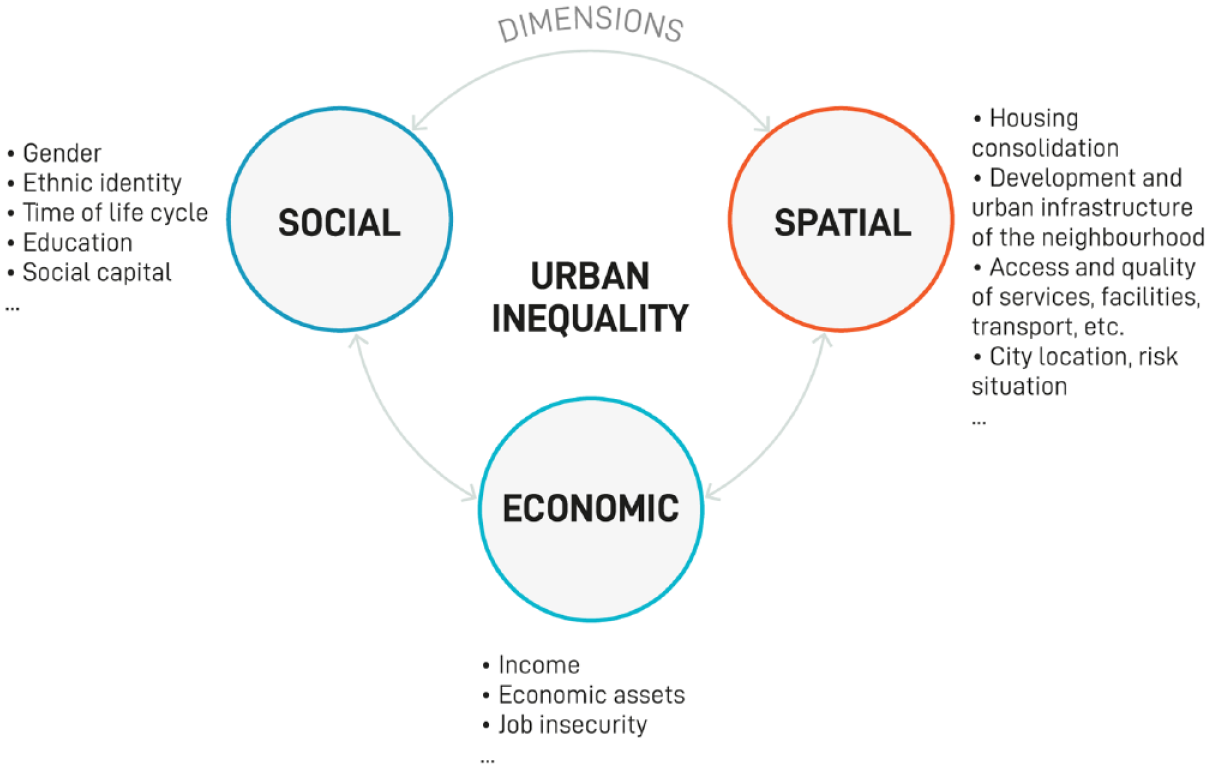
Dimensions of urban inequality
Di Virgilio and Perelman point out three main ways in which the characteristics of urban space affect the distribution and access to resources and opportunities:
“(i) The characteristics of the land market segment and the type of habitat in which the actors carry out their daily lives. (ii) The conditions of its location associated with differential forms of access to land, services, urban facilities, workplaces, etc. Thus, opportunities associated with location introduce important social differences between the places of residence and, also, between their inhabitants … constituting a critical factor of stratification. (iii) The flows, circulations, and interactions proposed through the characteristics, quality, and conditions of access to public spaces, social facilities, basic social services (health and education), and the urban transport system.”(32)
The relationship between urban inequality and the forms of fragmentation described above is neither simple nor unidirectional. As already noted, the different types of fragmentation – of social organizations (political-social), of public action (public-institutional) and of urban space (spatial) – reinforce each other in a system of interrelations that develops its own entanglements. Different types of fragmentation affect all dimensions of urban inequality, but this relationship is most evident in spatial inequality.
Spatial inequality feeds to a large extent on political-social fragmentation, inasmuch as social organizations have a limited capacity to raise the issues and to formulate more comprehensive urban policies for improvements in their living conditions. Nor are these organizations strong enough to demand from the state the implementation of such policies. Meanwhile, public-institutional fragmentation – constrained as it is by sectoral decision-making and resource atomization – hinders the kind of investment at metropolitan scale that could address the integrated problems that citizens face. Moreover, it stands in the way of interventions specifically aimed at fighting inequality. Such atomized public actions end up entrenching spatial fragmentation – as manifested in the small size of each neighbourhood and the discontinuous provision of infrastructure and services. The lack of comprehensive urban planning, in turn, makes it difficult to overcome political-social fragmentation. If we follow these chains of relationships, we can see how the three types of fragmentation – spatial, political-social and public-institutional – play a central role in the reproduction of urban inequality, albeit in different and quite complex ways.
In the following sections, we discuss two specific initiatives through which we aim to make the different dimensions of urban inequality visible, especially exploring how the types of fragmentation are linked to the dimensions of inequality and the interplay between them in each case. The two initiatives both aimed to challenge urban inequality and its manifestations. The first, promoted by social organizations in the human settlement José Carlos Mariátegui in the district of San Juan de Lurigancho, which sought to address an emergency situation, can be characterized as an initiative from below. The second, dealing with the reduction of urban inequality as part of the National Housing and Urban Planning Policy, developed by the Ministry of Housing, Construction and Sanitation, can be defined as an initiative from above. Although urban inequality, like fragmentation, is highly complex, with multiple dimensions that cannot be completely disconnected from one another, in each case we prioritize some of these dimensions and treat them more distinctly, while keeping the complexity of the phenomenon in mind.
III. Methods
The information and insights on the two cases stem from our direct participation in these initiatives, either as project leaders or as members of the teams in charge.
In the José Carlos Mariátegui case, two sites were chosen after a transect walk carried out by members of the NGO CENCA, community members of the group City of Hope (which works closely with CENCA in capacity-building workshops) and early career researchers from the Pontifical Catholic University of Peru (PUCP). The sites – 13 de Julio and Santa Rosita – were chosen due to their location (as they were accessible to residents beyond their community) and their level of social organization, which presumably indicated their capacity to work collectively in the implementation of the project.
From each site, we also drew on a participatory mapping and a series of semi-structured discussion meetings which took place every two weeks, both virtually and face-to-face, between July 2020 and February 2021. These exchanges were mostly with the 12 women who ran the community kitchens in each site. The KNOW-Lima team and the women had access to a shared messaging group so, although they were not always able to participate in the discussion meetings, the women could share their opinions through messaging. We also took into consideration information from the participatory evaluation workshops carried out at the end of the KNOW project in January 2022.
For the second case, in addition to our involvement in supporting the government initiatives, we reviewed and analysed the official documents of the National Housing and Urban Planning Policy and the Sustainable Urban Development Law, as well as their supporting reports.
IV. Infrastructures Of Care: Alternatives To Clientelist Modalities
As already mentioned, the socioeconomic impacts of the COVID-19 pandemic affected historically marginalized and vulnerable social groups the most. In this emergency situation, citizen-led initiatives emerged in Metropolitan Lima to provide mutual support and care to overcome the crisis. This includes the emergence of the Ollas Comunes (community-led kitchens), mainly in peripheral areas of the city (see Figure 2).(33)
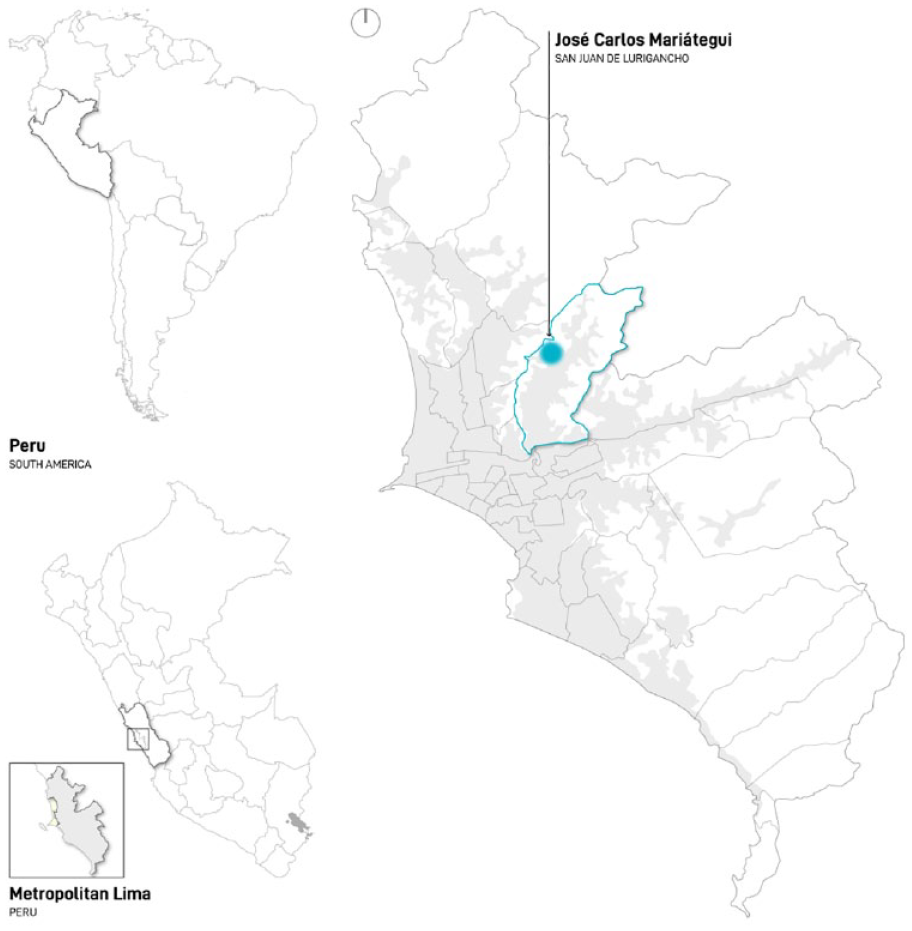
Location of the José Carlos Mariátegui sector in the district of San Juan de Lurigancho in Lima, Peru
a. Ollas Comunes in José Carlos Mariátegui, San Juan de Lurigancho
Ollas Comunes (OC, literally meaning “common pots”) are a type of community kitchen self-managed by organized groups of women who provide support to their communities in times of crisis. For instance, 13 de Julio provides food for 77 families while Santa Rosita prepares 100 portions of food per day. Women volunteers sell these meals at production costs and depend on food donations and on purchasing ingredients in bulk to keep costs down. The number of women volunteering ranges between three and five and they take turns to prepare meals while taking care of their own children. There is a well-known precedent in the Comedores Populares (communal kitchens, CP) that emerged in the second half of the twentieth century in the midst of economic and social crises.(34) OCs are predominantly found in peripheral areas of the city in the process of consolidation, whereas the CPs were founded in the 1970s and 1980s and are already recognized by the state. As was the case decades ago, the state’s support for these community actions is basically limited to the delivery of food donations while the work of the women running both types of kitchens remains unremunerated. Not surprisingly, this limited support has been harshly criticized both in academic circles and by the OC networks themselves.(35)
In the face of the COVID-19 emergency, a network of OCs, composed of local networks from different sectors of the city, quickly emerged to discuss, exchange experiences and make common demands. In addition, the Metropolitan Municipality of Lima (MML) set up La Mesa de Seguridad Alimentaria (or La Mesa, the Food Security Board), a dialogue platform in which 62 organizations participated, including 14 NGOs and social movements, three international cooperation agencies, five units within the MML, six state agencies and institutions, 32 OCs and six local networks of OCs.(36) Members of CENCA, the group of researchers from PUCP and some women leaders of the OCs in José Carlos Mariátegui (JCM) actively participated in the weekly meetings, which were held virtually.
The OC network, La Mesa and those networks of Comedores Populares that are still functioning seek social recognition and economic compensation for the voluntary care work of the women who manage these spaces. They also demand better opportunities and working conditions for these women. These networks are also interested in expanding the range of activities and services provided by the OCs beyond food preparation, such as nurseries and care for older people. This kind of support would allow women more time for other activities.
The networks seek to break the political-social fragmentation by coordinating the work of several OCs at metropolitan level. In addition, they challenge economic inequality by making visible the unfair conditions of daily work carried out by the OCs, stressing that their existence makes other economic activities possible. La Mesa at the same time seeks to address public-institutional fragmentation by getting several public and private institutions along with organized civil society to work together in the creation of care policies and programmes with a comprehensive approach to the food crisis and the recognition for care work. The success and sustainability of these efforts, beyond the exceptional conditions generated by the COVID-19 pandemic, are yet to be proven.
Within the framework of the action research project KNOW: Knowledge in Action for Urban Equality,(37) we worked on the collective production of material and technical proposals to improve the infrastructure for the OCs, developing strategies to facilitate dialogue and negotiation between citizens and different levels of government. The development institute CENCA,(38) the San Juan de Lurigancho (SJL) OC network, the Community Team of JCM and young researchers from PUCP – all of them members of La Mesa’s infrastructure committee – participated in the proposal development processes. SJL is Metropolitan Lima’s largest district, with more than one million inhabitants, a large percentage of whom live in monetary poverty and in precarious housing without access to basic services. JCM is one of the district’s most deprived sectors.
The material and spatial proposals to improve OC infrastructure (kitchen, storage facilities, urban agriculture and water and sanitation) were developed in a co-production process carried out through workshops and at online and face-to-face panel discussions. These proposals include a publication explaining the requirements and the investment needed for the replication of the improvement process, plus recommendations for the creation of a management committee for the use and maintenance of the infrastructure. This publication is aimed at public authorities so that the experience can be replicated elsewhere. The aim was to address spatial inequality in terms of access to care services and facilities in marginalized areas of the city. In this sense, it was important to define the location of this infrastructure and its uses, taking into account the particular context in which the activities are carried out. The infrastructures implemented allowed the OCs to continue operating (Santa Rosita now receives more food donations from the municipality, in part due to its recognition as an OC now that it has permanent infrastructure to provide its services) and the appearance of other community activities such as shared childcare in Santa Rosita and the flights of steps up the hills becoming a playground in 13 de Julio.
OCs show the innate capacity of citizens to organize and support each other in times of crisis, such as the COVID-19 pandemic. Rebecca Solnit highlights this capacity but also points out that these moments are often short-lived, waning over time, partly due to the inability of governments to incorporate these practices into existing or future support and development programmes or into their emergency response policies.(39) The OC experience in Metropolitan Lima shows the state’s inability to engage with organized civil society in co-production projects and actions or to partake in horizontal management. This is evidenced in how different levels of government relate to community kitchens mainly through the provision of food donations, portraying limited political will to engage in other interactions that could potentially provide longer-term sustainability for the kitchens. We argue that this inability is due, in part, to excessive sectorization, inflexibility and bureaucratization of processes, which seem designed to perpetuate short-termism and dependence. That is, this inability is a clear example of political-institutional fragmentation, which weakens the state’s capacity to respond and hinders the persistence of solidarity networks over time.(40) Conflicts between neighbourhood leaders can also hinder dialogue and cooperation, a situation that reveals how political-social fragmentation can also hamper collaborative and articulated work on a metropolitan scale.(41)
The co-production experience in Lima sought to create alternatives to this deadlock, generating tangible responses towards a collective construction of the city. These responses were based on a recognition of the symbolic value of self-built infrastructure for individuals and communities, as can be seen in peripheral neighbourhoods throughout Latin America,(42) and in Lima in particular.(43) It is also evident, however, that implementation and maintenance processes for urban infrastructure are based on the sociopolitical decisions of power groups that determine the locations in which investment in the city takes place. This forces less advantaged sectors to look for self-managed ways to access resources. Ash Amin notes that these decisions are “hidden” through the use of excessively technical and specialized language,(44) which limits the possibility of horizontal dialogue between citizens and government in decision-making processes for infrastructure investment, weakening rather than creating mutual understandings and more inclusive governance structures that would allow greater access to decision-making processes.
In this context, citizen-led initiatives reach a “ceiling” in their development when local organizations lack resources and management capacity, on top of the effects of political-social fragmentation. It can be difficult for self-managed projects to transcend the local and neighbourhood scale and, instead of articulating with others, these projects end up being replicated multiple times in a fragmented way throughout the city. Additionally, their leadership faces numerous limitations, such as a lack of capacity for management beyond the local scale,(45) excessive individualism(46) and a dependence on clientelism,(47) and their activities are often carried out without economic remuneration, causing challenges for leaders to carry on negotiating their rights.
The OC experiences allow us to see the limitations of citizen action, as well as the need for state participation to ensure sustainability over time and to be able to reach beyond the domestic and neighbourhood scale in the provision of services and access to infrastructure. The difficulties these collective actions face regarding sustainability over time are evident in neighbourhoods that have already reached a certain level of consolidation, especially in terms of access to basic services and property deeds for the land on which the houses are built. Once these objectives of collective struggle have been achieved, levels of solidarity and mutual support decrease, as can be seen in the reduced participation in community meetings and work.(48) When the collective dimensions of habitation are not addressed, and the provision of services remains at the domestic, singular level, social fragmentation is reproduced. Currently, mutual support exists and demands for its strengthening and continuation are clearly articulated by networks such as La Mesa. Government support through the provision of infrastructure and the recognition and institutionalization of the labour of the women that manage the OCs could potentially enable this sustainability over time and, with it, promote platforms for shared caring responsibilities.
As Mitlin and Bartlett point out, in order to move from individual interventions to a citywide scale or beyond, we must recognize that, however innovative and effective community groups may be, they need a committed state to achieve more far-reaching change.(49) Regarding the latter, the Ministry of Housing, Construction and Sanitation (MVCS) showed interest in including the spatial design component of the proposal for upgrading OC infrastructure in both public investment projects and in state-led programmes focused on employment opportunities for citizens, in which residents themselves could receive income for implementing the architectural modules in their community kitchens. The spatial design developed during this experience made it possible to broaden current comprehensions of collective infrastructures as understood and implemented by municipalities, recognizing OCs as one such collective infrastructure. Lessons learned were included in a guide produced by the MVCS aimed at capacity-building and replication at the municipal level nationwide.(50) The technical and replicable result made it possible to open the dialogue between the state and citizens, providing tools for material and tangible negotiations and demands.
V. Urban Inequality In The New National Housing And Urban Planning Policy
Between December 2020 and July 2021, the MVCS worked to update the National Housing and Urban Planning Policy (PNVU) and prepared the bill for the Sustainable Urban Development Law (DUS Law), establishing the principles and regulations for urban planning and management in Peru. These instruments were approved in July 2021 by the Council of Ministers and the Congress of the Republic and are currently fully operational.
Both the PNVU and the DUS Law aim to address inadequate living conditions among the country’s population, prioritizing low-income and vulnerable populations. According to the PNVU’s diagnosis, the main causes of this problem include the limited effectiveness of urban and territorial planning, the unsustainable dynamics of urban land creation, and limited access to adequate housing and urbanization solutions.(51)
The experience that we discuss here illustrates that fragmentation is not exclusive to social organizations but can be seen in the state’s actions and structure. The first difficulty during the elaboration of the PNVU was the state’s sectoral fragmentation regarding citywide actions, because different ministries are charged with studying, managing, planning and investing in the same space. For example, ministries of environment, health, transport, women and social inclusion all make investments in urban land but are not interconnected. Multisectoral bodies and commissions have limited powers and a short-term existence, and their coordination is insufficient and short-lived.
In addition to the state’s division by sectors, which greatly hinders the possibility of a multidimensional approach to urban inequality, the functions of the different political-administrative divisions often overlap with those of the central, regional, provincial and district administrations, as well as with those of the different sectors and of the neighbourhoods themselves in their neighbourhood organizations. The lack of formal coordination prevents multi-scalar work, which is as important as the multidimensional approach in addressing urban inequality. If the state could engage with multisectoral work and coordinate its different scales, it would not only be possible to face problems such as urban inequality, but also possible for policies to draw on and integrate knowledge emerging from existing co-production processes, for use by nationwide public investment processes.
In the elaboration of both the PNVU and the DUS Law, concepts and mechanisms were adopted from the legislation of other regional countries and from academia, including the notion of the right to the city, the right to decent and adequate housing and the recognition of justice as fundamental to social sustainability. Sustainability more generally was defined as taking into account the different realities of a complex national territory and linking it to risk and biodiversity.
The PNVU and the DUS Law stem from an understanding of inequality as a multidimensional phenomenon, affecting people’s chances of accessing and controlling economic and social resources and, ultimately, of fulfilling their fundamental rights. To address this inequality, the PNVU and the DUS Law promote, both in planning and urban and territorial management, effective citizen participation that goes beyond a bureaucratic requirement and towards co-production, which makes it possible to challenge sociopolitical fragmentation, promoting dialogue between civil society groups and state agencies. This requires a multisectoral and multi-scale government approach for which guidelines must be provided to address institutional fragmentation.
Table 1 shows the priority objectives for the PNVU, and the main indicators for each. Regarding the first objective (to guarantee sustainable growth and development through planning), PNVU’s definition of sustainability includes social sustainability, and our team took part in the development of an index of urban inequality in cities and population centres of the country as a corresponding indicator. This index, in attempting to define the notion of multidimensional urban inequality, seeks “to measure the economic, social and physical-spatial sustainability for the growth and development of cities and smaller settlements”.(52)
Priority objectives and indicators of the National Housing and Urban Planning Policy
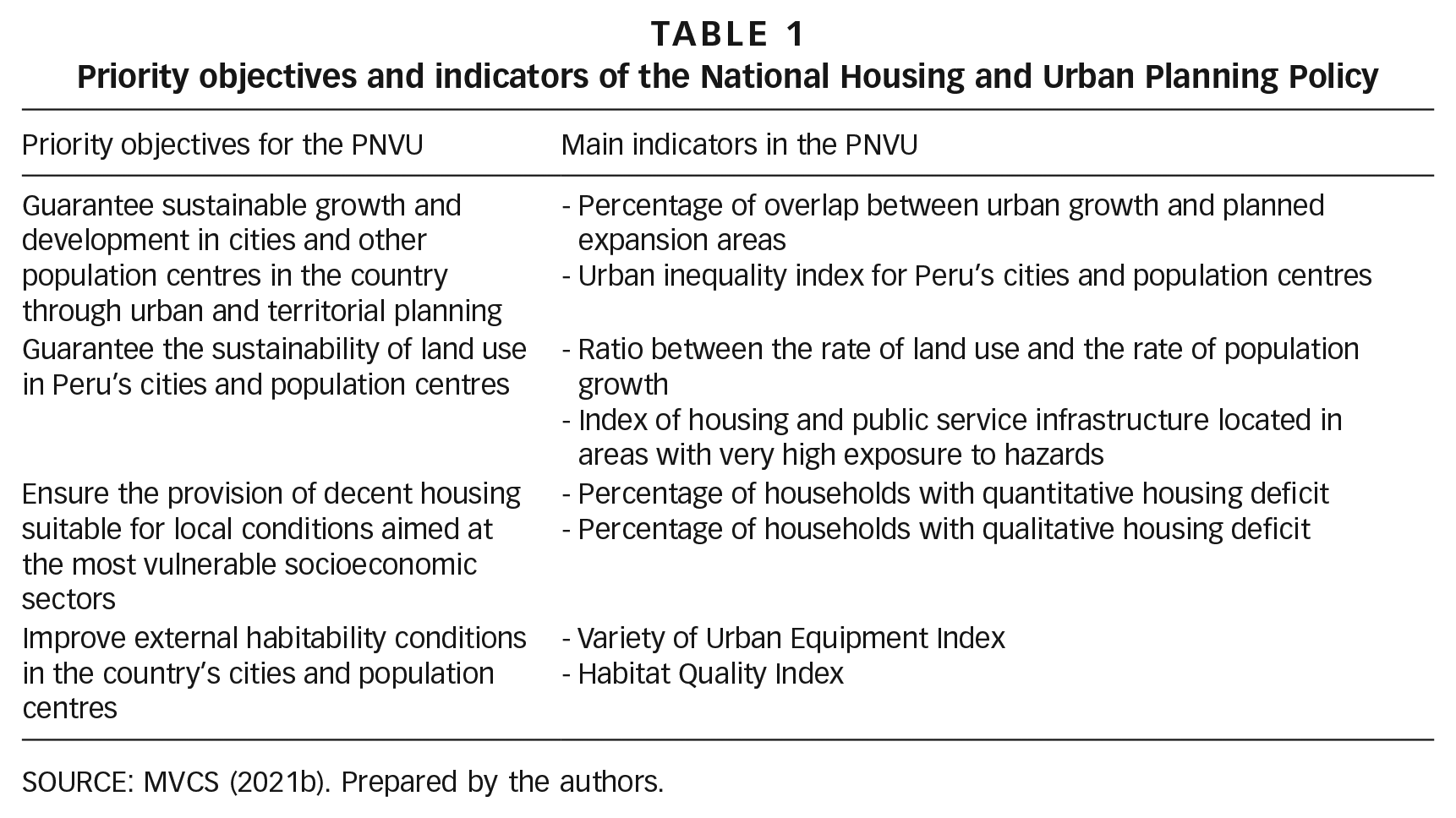
SOURCE: MVCS (2021b). Prepared by the authors.
The index weighs three components: (i) inequality between the maximum and the minimum value of land in an urban area; (ii) the proportion of the population below the poverty line compared to that above the same line in a city; and (iii) average travel time between the place of residence and the place of study or work. In this way, the spatial dimension is explicitly included in the understanding of urban inequality.
To obtain the first component (the economic value of land) the difference between the highest and lowest land value in a city is measured. Although land value increases for different reasons, the most significant factor is investment in infrastructure and services and their quality, including urban equipment and access to public space. This measure shows the inequality resulting from different urbanization modalities (traditional urbanization vs urbanization through self-built barriada settlements) in addition to the historical accumulation of investment in certain places to the detriment of others. It is obtained based on the official value of urban lands, which means it is subject to methodological risks as well as the frequency with which data on land value are updated.
The second component measures the homogeneity or diversity of households’ economic conditions within the determined urban area, drawing on existing poverty data. If the population falls mostly on one side of the monetary poverty line – that is, if it is a predominantly low-income or non-low-income area – it is rated as less socioeconomically mixed. The third component measures average travel time, for which the size of the settlements (whether metropolis, town or village) was taken into account.
The weighting of the three components has to meet two criteria. It depends, firstly, on the assessment of the severity of the impact of each component (direct or indirect) on quality of life. The average time of travel is an example of an indirect impact, as it affects the ability and cost of accessing urban resources and opportunities, especially given the size of the main Peruvian cities and the unequal distribution of resources in urban space. The second criterion is the ability to change the values of the component, assigning greater weight to the components that depend directly on state investment (i.e. public transport infrastructure and/or urban facilities and services), and a lower value to those that only indirectly depend on the state’s actions in the medium or long term.
As can be seen, the incorporation of a multidimensional index of urban inequality as a way to measure PNVU’s success or failure responds to a more comprehensive definition of sustainability. In light of the KNOW project work, the creation of this index sought to acknowledge the complexity of urban inequality and how it affects people’s everyday experience and concrete living conditions. Admittedly, however, the success of this attempt to include the complexity and multidimensionality of inequality in the index has been limited.
The three different components (land value, sociospatial segregation and travel times) do not fully account for the complexity and diversity of the three dimensions of urban inequality – economic, social and spatial inequality – or the relationships between them. In addition, no component in the index refers specifically to social inequality. It should be noted, however, that the PNVU more generally does incorporate objectives and defines public services, programmes and projects that affect all dimensions of urban inequality, although not all are represented in the index. The state’s requirement for quantitative indicators denies the use of qualitative and subjective elements, limiting the potential to generate relevant and localized strategies in response to the enormous diversity of realities at the national and metropolitan levels.
Also, despite the fact that the PNVU included the development of this urban inequality index, the methodology required by state regulations for formulating national policies hinders direct action on urban inequality. It requires services and actions to be defined by sector, following the logic underlying the state’s political-institutional fragmentation and hindering a multidimensional (perhaps more holistic) approach to complex problems, such as urban inequality.
The data and information processing structures at the National Institute of Statistics hamper the development of adequate indicators for measuring inequalities because their rather universalist approach runs counter to the diversity of Peru – and of Lima, for that matter. Ideally, the collection of information for the development of urban policies would take recent theoretical developments into account to avoid measuring inconsequential variables for current problems and approaches.
VI. Discussion and Conclusions
Understanding urban inequality in a way that aligns with the concrete experience of urban inhabitants requires that social, spatial and economic dimensions of urban inequality be identified, with attention given to the specific historical and territorial processes of, in this case, Metropolitan Lima, but which we believe are also applicable to other postcolonial cities. The different dimensions of urban inequality interact with and reinforce each other, and even gain cultural legitimacy in people’s daily lives, becoming traps that reproduce inequality. This interaction is what makes it possible to maintain, even to this day, a model of urban growth in which economic status, ethnic background and mode of access to land overlap, reproducing diverse manifestations and experiences of urban inequality.
In this article we discussed our involvement in two initiatives to address urban inequality and highlighted how different types of fragmentation – spatial, public-institutional and political-social – act as mechanisms that reproduce inequality or as obstacles in the fight against inequality. The aim was to explore and discuss multidimensional approaches to understanding and addressing the structural factors that contribute to the reproduction of both inequality and the underlying fragmentations. This approach makes it possible to prioritize actions that might contribute to breaking this vicious circle. The social organizations that make the OCs possible display a great capacity to respond to emergencies, highlighting the existence of an urban tradition of solidarity and willingness to take action when required. When seen from the perspective of persistent fragmentation, however, these efforts also reveal their limits. Small barriadas have less leverage to demand that the state address the structural causes of urban inequalities, and usually have to settle for specific, short-term demands. The scope of their action turns out to be as precarious as the scope of the organizations themselves, reflecting their limitations. Is it possible to weave together organizations and capacities to create the kind of agency that can move towards the fulfilment of their right to the city?
Just as sociopolitical fragmentation imposes limits on social organization, so does territorial fragmentation. The local literature has repeatedly pointed in the last two decades to land occupation and urban management as carried out by neighbourhood leaders in Lima. This builds a fragmented and inefficient demand for investment by responding to extremely localized needs, rather than to the wider, territorial scale at which most decisions regarding urban infrastructure, services, risk mitigation and more must be resolved to develop a sustainable city. By reproducing fragmentation processes, social organizations are left outside any meaningful attempt at urban planning and management.
Excessively sectorized public intervention and extreme targeting (a hallmark of neoliberal social policies) deny the reality of urban space as a system that is inhabited in its entirety, not only in segregated fragments. Any public policy aimed at addressing inequality that refuses to take into account the complex and diverse lived experiences over a wider territorial scale is doomed to reproduce the fragmentation of citizens and their realities. To promote a change to current approaches, social movements that articulate a greater diversity of spatial realities and interests are vital in claiming living spaces in all their complexity, as well as in forcing state institutions to overcome the inertia under which they currently operate.
It is clear that this transformation of the state and its policies will not happen in the short term. While the multidimensional definition of urban inequality can be useful to account for the complexity of the phenomenon and describe it more comprehensively, this definition is not functional in addressing the fragmentation of the state and of social organizations that we currently see. We believe that it is important that conceptual and operational tools be created, both within academia and in co-production processes, to allow and facilitate the concrete action of the state and the consolidation of the mobilization agendas of social movements. The urban inequality index in the PNVU, although it requires improvement, is one of these tools. The concrete actions in the José Carlos Mariátegui settlement to promote the community’s organization and infrastructures of care in an emergency situation is another.
Footnotes
Acknowledgements
We would like to thank the members of the KNOW-Lima team: Lia Alarcón, Paola Córdova, Luciana Gallardo, Kelly Jaime and Pablo Vega Centeno. Our thanks also to the CENCA team: Alberto Amanzo, Esther Álvarez, Juan Carlos Calizaya, Carlos Escalante, Jesús Quispe, Davis Morante, Freyre Pedraza and Abilia Ramos. Special thanks to the Metropolitan Municipality of Lima, the Ollas Comunes of San Juan de Lurigancho, La Mesa de Seguridad Alimentaria (Food Security Board) and the 2021 team of the Ministry of Housing, Construction and Sanitation. Last, but not least, our gratitude to the reviewers of this article for their comments and insights.
Funding
This article was written with the support of the research project KNOW: Knowledge in Action for Urban Equality, funded by UKRI’s ESRC under the Global Challenges Research Fund (GCRF), project number: ES/P011225/1.
9.
This process of self-urbanization is usually carried out simultaneously with self-building of houses.
10.
11.
Ramírez Corzo and Riofrío (2006), also  .
.
12.
The term “slum” usually has derogatory connotations and can suggest that a settlement needs replacement or can legitimate the eviction of its residents. However, it is a difficult term to avoid for at least three reasons. First, some networks of neighbourhood organisations choose to identify themselves with a positive use of the term, partly to neutralise these negative connotations; one of the most successful is the National Slum Dwellers Federation in India. Second, the only global estimates for housing deficiencies, collected by the United Nations, are for what they term “slums”. And third, in some nations, there are advantages for residents of informal settlements if their settlement is recognised officially as a “slum”; indeed, the residents may lobby to get their settlement classified as a “notified slum”. Where the term is used in this journal, it refers to settlements characterised by at least some of the following features: a lack of formal recognition on the part of local government of the settlement and its residents; the absence of secure tenure for residents; inadequacies in provision for infrastructure and services; overcrowded and substandard dwellings; and location on land less than suitable for occupation. For a discussion of more precise ways to classify the range of housing sub-markets through which those with limited incomes buy, rent or build accommodation, see Environment and Urbanization Vol 1, No 2 (1989), available at .
13.
King (2015); also . Nugent lucidly points out that in many contemporary Latin American societies, hierarchy does not function primarily through the exclusion or strict segregation of one group from another (as in the racist societies of the global North), but as a complex system of subordinations that are reproduced in everyday interactions.
15.
16.
Low (2006); also .
21.
Rodríguez Rivero (2017); also .
22.
; also Ramírez Corzo and Riofrío (2006). This constitutes an extreme version of the “splintering of infrastructure” to which Graham and Marvin (2001) refer. As we shall see below, this fragmentation is further exacerbated by the political logics of the state and the lack of social organizations with the capacity to consolidate common interests on a larger scale.
23.
For example, the population in the various districts of Metropolitan Lima varies from less than a thousand to more than a million inhabitants. Metropolitan Lima is divided into two provincial municipalities (Lima and Callao) and includes a total of 50 districts, with a great range of different conditions and characteristics. Provincial municipalities and districts are responsible for their own urban planning and for managing most of the urban services each one requires, but there are no formal or coordinating instances to liaise between them.
27.
Calderón (2016); also .
29.
For more information visit: www.urban-know.com; also Yap et al. (2021); .
44.
Amin (2014). For more on technical and specialized language see .