




Abstract
This paper provides a summary of the priorities and strategies stipulated by the major solid waste management (SWM) policies in Kenya. It also provides a brief assessment of their implementation in Nairobi and Mombasa, drawing on data from a 2016 community-based study. We found that SWM policies have evolved to specificity in terms of focus, functions and scope. There was a shift from criminalizing solid waste action or inaction to promoting good practices; from generic acts to specific ones; and from centralized mandates to more decentralized responsibilities. However, SWM remains a critical concern and a major challenge in Nairobi and Mombasa as a result of weak institutional structures and capacity, weak enforcement of regulatory frameworks, and the control of the sector by criminal cartels.
I. Introduction
Kenya, like many other low- and middle-income countries, is keen to ensure that it accelerates the pace of its industrial development, much of which is occurring in its major urban centres. Increasing urbanization, rural–urban migration, rising standards of living, and rapid development associated with population growth have resulted in increased solid waste generation by industrial, domestic and other activities.(1) It has been noted in other contexts too that increasing population, changing consumption patterns, economic development, changing income, urbanization and industrialization all contribute to the increased generation of waste.(2)
With the increasing urban population in Kenya, which is estimated to be growing at a rate higher than that of the country’s general population, waste generation and management will be a major challenge. The industrialization and urbanization process in the country, dominated by one major city – Nairobi, which has around four times the population of the next largest urban centre (Mombasa) – has witnessed an exponential increase in the generation of solid waste. The country’s urban population in 1999 was 5.4 million. By 2009 this had grown to 12.5 million, with 3,233,788 and 870,381 residing in Nairobi and Mombasa respectively. This translates to 299,439 households in Mombasa and 1,128,693 in Nairobi. It is projected that by 2030, about 50 per cent of the Kenyan population will be urban.(3)
Solid waste technically includes refuse from households, non-hazardous solid waste from industrial, commercial and institutional establishments, market waste, yard waste and street sweepings. Although it specifically excludes medical waste, hazardous waste and sewage, in the context of many low- and middle-income countries, municipal solid waste is often mixed. Its management aspect encompasses the functions of collection, transfer, treatment, recycling, resource recovery and disposal of municipal solid waste.
The first goal of solid waste management (SWM) is to protect the health of the population.
Decomposing organic waste is a rich medium for the growth of numerous micro-organisms, many of which can cause disease if not well handled and then passed on to humans.(4) Gastro-intestinal infections such as gastro-enteritis, typhoid fever, and helminths are commonly linked to poor SWM.(5) Medical waste is a recognized source of both viral and bacterial infections, such as hepatitis B, transmitted through skin cuts, mucous, needlestick injuries and contaminated surfaces.(6) Along with the population growth and rapid urbanization, poor solid waste management is emerging as a key risk for health in Kenya. Other SWM goals include the promotion of environmental quality and sustainability, support of economic productivity and employment generation.(7)
To address the potential risks associated with solid waste and its management, as well as addressing other secondary goals, Kenya has enacted a number of policies and legal provisions, as well as creating institutions and systems at different levels of governance. However, the chronological and progressive development of these policies and legal provisions has not been systematically investigated. The study reported in this paper described the evolution, devolution and segmentation of the SWM policy architecture over time, and assessed the evolution of institutional mechanisms for SWM policy implementation. It also described important global and regional SWM policies that might have influenced the development of SWM policy architecture in Kenya. The evidence presented could be useful in informing both the implementation of existing policies and the formulation of new SWM policies in the future.
II. Methods
a. Scope
This study focused mainly on country-level SWM policies in Kenya. To illustrate county-level SWM policies and the devolution of national-level SWM policies to the county level, SWM policy contexts in Nairobi and Mombasa were also included in the analysis. These cities represent a significant portion of solid waste generation and SWM problems in the country. The primary data used to supplement this study’s examination of the implementation of SWM policies were collected from communities living close to dumpsites in Nairobi and Mombasa.
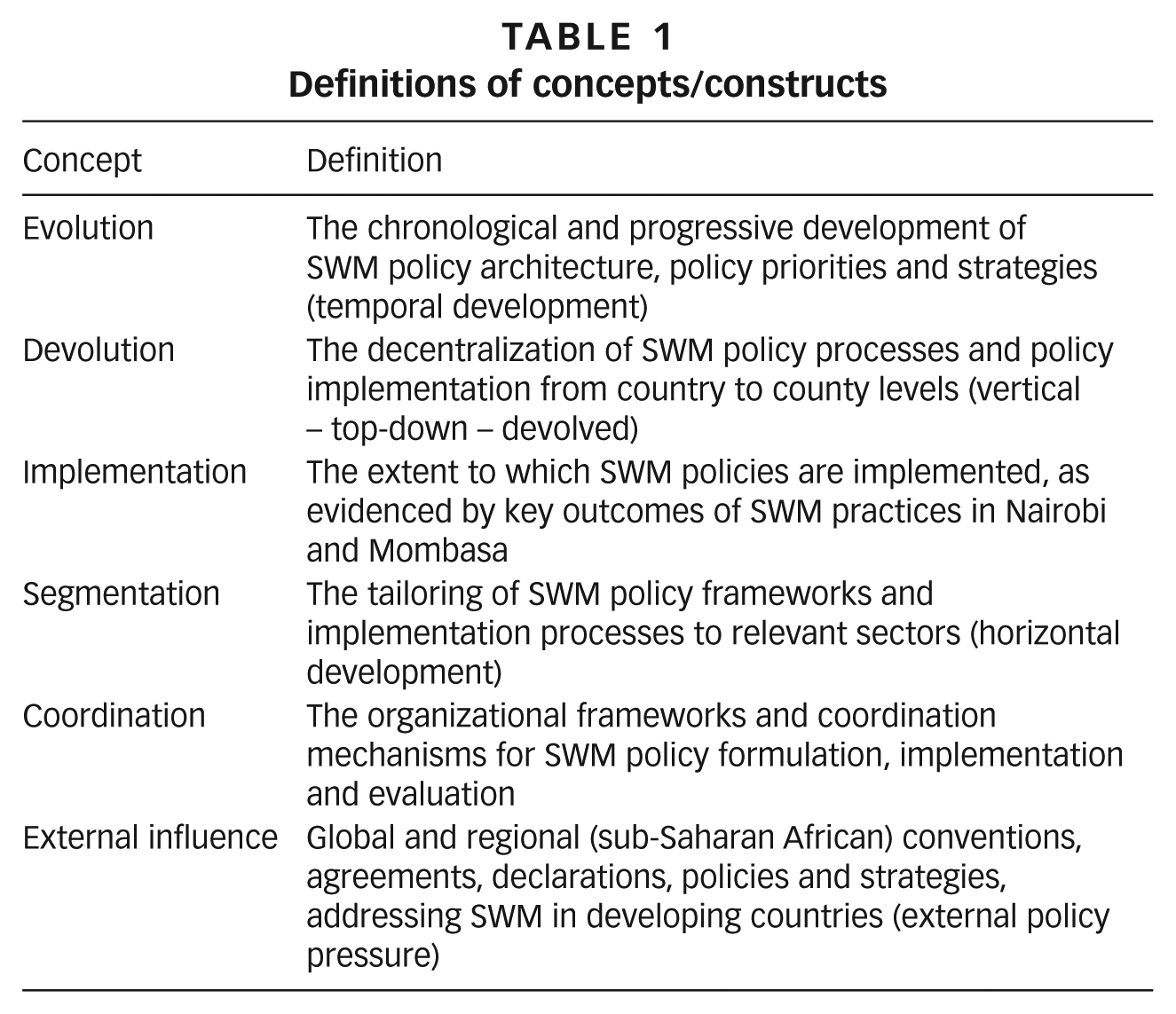
The timeframe considered here is from the inception of SWM policy frameworks in Kenya (marked by the oldest SWM policy text in 1948) to July 2015. This makes the study the most comprehensive in this regard as compared to previous reviews of SWM policies in Kenya.(8) The primary data were from a cross-sectional survey and qualitative interviews conducted in 2016. Definitions of key concepts used in this paper are given in Table 1.
Definitions of concepts/constructs
b. Data sources and search strategy
The main policy data sources for this study were SWM policy documents and SWM policy reviews in Kenya (national-level and for Nairobi and Mombasa), as well as some global and regional-level policy content. Electronic SWM policy documents were accessed through a general search engine and the websites of relevant organizations. The active involvement of an SWM policy expert in Kenya, who was familiar with most of the SWM policy documents, made it possible to identify most of the remaining SWM policy documents.
For the policy implementation component of the study, key indicators of SWM practices were drawn from a population-based household sample survey conducted with 1,158 (93 per cent response rate) households in Nairobi and 1,225 (99 per cent response rate) households in Mombasa between March and June 2016. The study focused on communities living closer to dumpsites – Korogocho/Dandora, Saika and Makadara in Nairobi, and Bamburi and Kisauni in Mombasa. These communities were selected based on the following criteria: Dandora/Korogocho are slum(9) locations primarily bordering the main municipal dumpsite (Dandora), which is the only official dumpsite in Nairobi; Saika is located farther from the dumpsite but is exposed to SWM-related secondary hazards such as pollution and flooding; and Makadara is a non-slum comparison study site. In Mombasa, Bamburi is next to one of the city’s dumpsites (Mwakirunge), located 15 kilometres from the city centre, and Kisauni is an area prone to secondary hazards such as flooding. All the study communities were selected purposively on the basis of their exposure to the risks associated with solid waste management.
There were two stages of sample selection in the survey. At the first stage, primary sampling unit clusters were selected. At the second stage, the households were selected for the interviews, using the systematic sampling method, proven theoretically to be identical to the simple random sampling method. Wherever possible, the head of the household was the survey respondent. In the absence of the household head, the next most senior household member was interviewed.
This survey was complemented between March and July 2016 by focus group discussions (FGDs), in-depth interviews and key informant interviews. FGD and in-depth interview participants were purposively selected on the basis of their residency within the target area and capacity to provide us with rich information on the issues that were being explored. Selection of key informants for interviews was based on the key role particular offices play in the management of SWM in the city or locality. They included officials from the county government and other national government agencies, such as the National Environmental Management Agency (NEMA), involved at technical and policy levels. Interviews were also conducted with private sector actors, especially those involved in waste recovery and recycling, as well as with representatives of community-based organizations (CBOs) and youth groups involved in waste management activities. The intention was to understand their activities, capacities, relationship with government, and views on SWM practices, as well as their knowledge, attitudes and practices in relation to the impacts of exposure to waste on health and local communities. In all, 15 key informant interviews, 15 in-depth interviews, and 10 focus group discussions were conducted.
c. Data extraction and analysis
Before actual extraction of information, a profile of SWM policy architecture was developed using a matrix that lists the identified SWM policy documents in chronological order. Relevant information from the identified policy documents was extracted by two experts based on its relevance to the main themes of the analysis, and using a matrix that provides the year, type and title of policy documents.
For the policy implementation component, indicator data were computed from household survey data. Data were extracted from the qualitative component of the study on the challenges of implementing SWM policies.
d. Analysis
Solid waste management policies can potentially be analysed from a health perspective (protecting the health of a population), but also, as noted, from environmental (promotion of environmental quality and sustainability) and economic (enhancing productivity and employment generation) perspectives. As these perspectives are interlinked, this study presented an integrated account of the evolution and implementation of SWM policies in Kenya. The information extracted from the SWM policy documents underwent an integrative synthesis (a qualitative evidence synthesis method that integrates themes across primary sources of information to build a “storyline” of an event, phenomenon or experience). Findings are presented in narrative summaries and tables, and the list of relevant SWM policy frameworks is provided in the annex.
III. Findings
a. Evolution of SWM policy architecture at country level
The first policy text relevant to solid waste management in Kenya is the Penal Code of 1948, which made it an offence for anyone to voluntarily “vitiate the atmosphere” in any place, to harm the health of persons dwelling or carrying on business in the neighborhood or passing along a public way (in Section 192); and to “corrupt or foul the water” of any public spring or reservoir, to render it less fit for the purpose for which it is ordinarily used (in Section 191).(10)
The next major development in SWM policy architecture was the Local Government Act, Chapter 265 (1963), which vested in local authorities (i.e. municipal/town/urban councils) powers to establish and maintain sanitary services for the removal and destruction or management of refuse and effluent, and where such service was established, to compel its use by persons to whom the services is available (Section 160a).(11)
The next major landmark policy framework was the Public Health Act, Chapter 242 (1986), on securing and maintaining health. It contains provisions regarding sanitation and housing. Section 115 of the Act states that no person shall cause a nuisance or cause to exist on any land or premises any condition liable to harm or endanger human health. It defines such nuisance or conditions under Section 118 as waste pipes, sewers, drains or refuse pits whose condition, placement or construction, in the opinion of the medical officer of health, would damage health. Other nuisances are any accumulation of materials or refuse that in the opinion of the officer is likely to harbour rats or other vermin.(12)
In order to provide a structured approach to environmental management in Kenya, the Environmental Management and Coordination Act 1999 (EMCA) was enacted as a framework law on the environment. The EMCA did not supersede the environmental provisions within the sectoral laws; instead these provisions were reinforced to better manage Kenya’s ailing environment. The EMCA provided for the development of several subsidiary laws and guidelines to govern environmental management and SWM.(13)
In 2007, Vision 2030, the long-term development plan for Kenya, included among its flagship projects the development of SWM systems in five major cities.(14)
The 2010 Constitution of Kenya in Article 42 states that every person has the right to a clean and healthy environment, which includes the right to have the environment protected for the benefit of present and future generations through legislative and other measures; and to have obligations relating to the environment fulfilled under Article 70, which guarantees a clean environment as a claimable right by any citizen who feels that this right has been infringed.(15)
The National Environment Policy (2013), formulated by the Ministry of Environment, Water, and Natural Resources, contains policy statements on waste management. According to these statements, the government will develop an integrated national waste management strategy; promote the use of economic incentives to manage waste; and promote establishment of facilities and incentives for cleaner production, waste recovery, recycling and reuse. This policy further states that the government will promote environmental health impact analysis (EHIA) as a component of environmental impact assessment (EIA) for all development projects; enhance the provision of occupational health and safety services; and promote capacity building in the field of health impact analysis.(16)
The National Solid Waste Management Strategy (2014) by the National Environment Management Authority (NEMA) is the most recent government action establishing a common platform for action between stakeholders to systematically improve waste management. It introduces a new approach for improved waste management in Kenya to create wealth and employment and reduce pollution of the environment. This strategy presents 10 minimum points for management of the existing waste management facilities so as to continuously promote compliance with the waste management regulations within the counties.(17)
Building on the series of SWM policies in Kenya, we identify four distinct categories of solid waste management policy frameworks in the country across the years under review, ranging from national frameworks, through legal and regulatory frameworks, to implementation guidelines, as summarized in Figure 1.
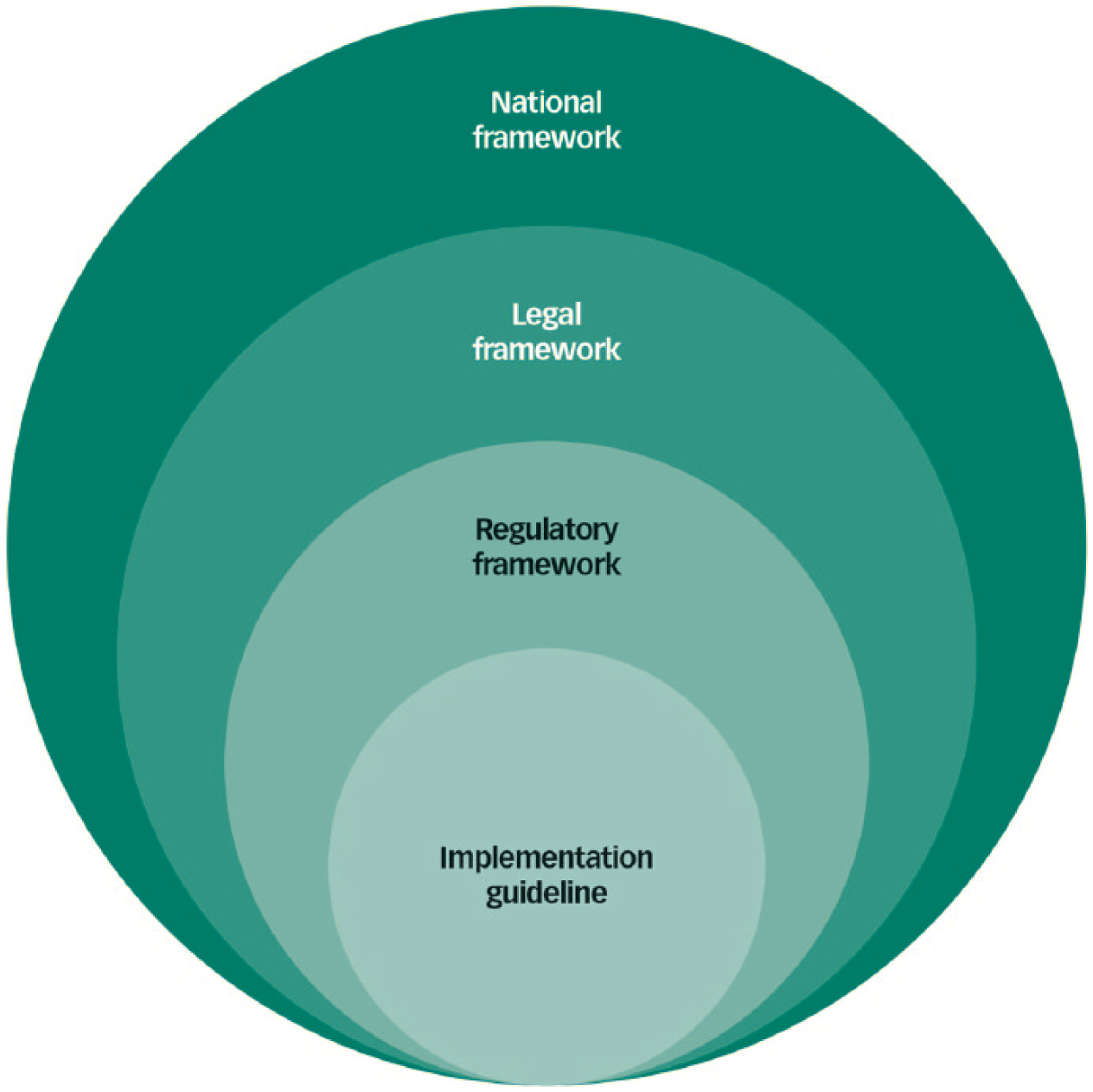
Categories of SWM policy frameworks
In Figure 2, we present our summary of how national, sectoral and local SWM frameworks apply to the cities of Mombasa and Nairobi over the observation years of our review.
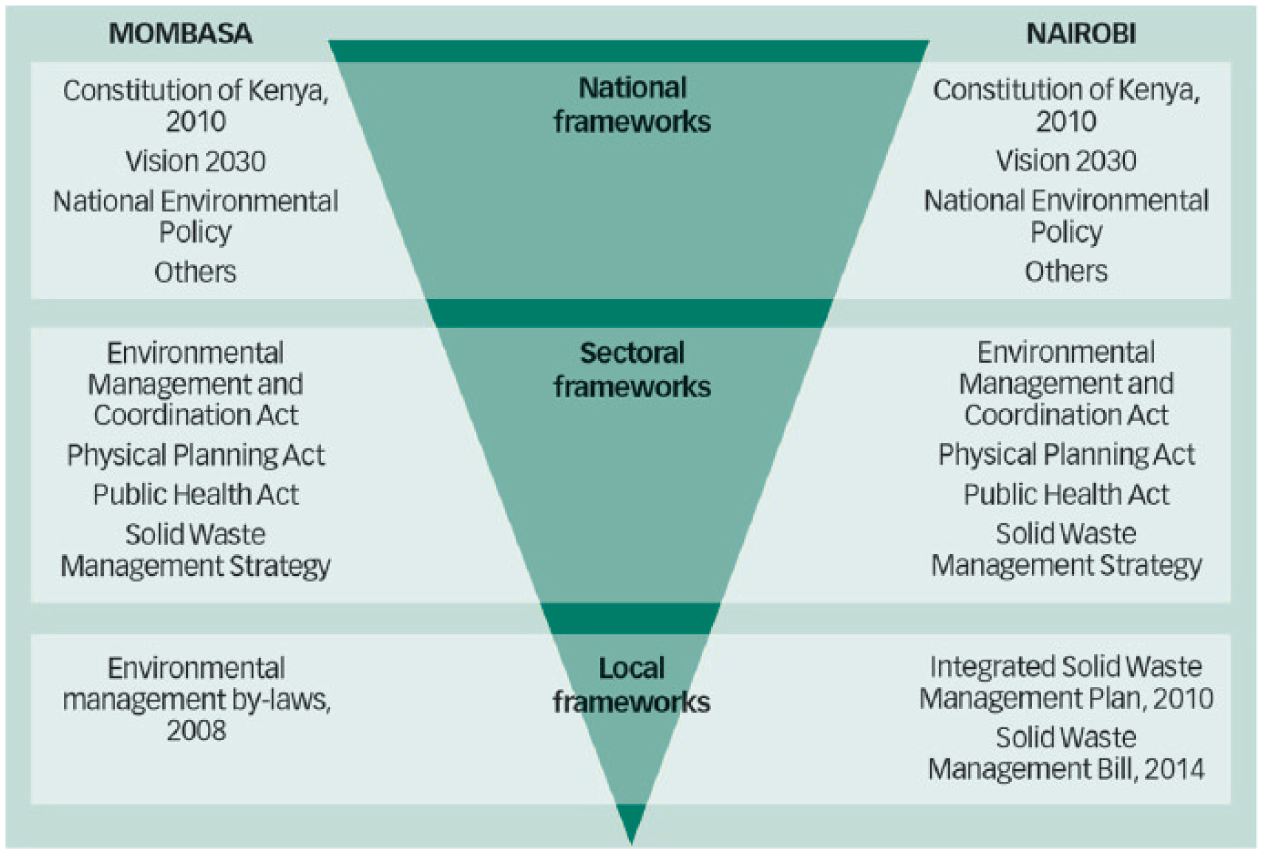
Hierarchy of SWM policy frameworks in Kenya
Through the chronological evolution of SWM policies, there has been a shift in the main focus. The first set of policy documents (e.g. the Penal Code) was punitive, making it an offence to vitiate the environment – focusing on “what not to do” regarding SWM. The next set of policies (e.g. the Local Government Act) focused on “who will control” SWM activities – vesting powers to responsible bodies. The main EMCA and its regulations included provisions on “what needs to be done” to address the problem of SWM. The more recent policy documents emphasize “how to manage/address” the challenges of SWM. However, they give little indication of how solid wastes can best be used as resources to drive economic development that is compatible with the health of the population and the environment.
b. Devolution of SWM policy frameworks to county levels
The first set of City of Nairobi by-laws that address solid waste management emerged in the 1950s and 1960s. These included by-laws on Nursing Homes and Maternity Homes (1950); and on Restaurants, Eating Houses and Snack Bars (1961); General Nuisance By-Laws (1960); and Part II of the City Council of Nairobi Conservancy By-Laws (1961).
The next set of Nairobi City County by-laws were published between 2006 and 2007, and included by-laws on medical facilities (2006); banning polythene bags (2007); wastewater conservancy (2007); and more general nuisance and SWM by-laws (2007).(18)
The City of Nairobi’s Integrated Solid Waste Management Plan (2010-2020) envisions a healthy, safe, secure and sustainable solid waste management system fit for a world-class city, in a time of increasing resource scarcity. Clean, healthy city environments form as much a part of this vision as resource-efficient processes of production and consumption. This plan aims to improve and protect the public health of Nairobi residents and visitors, to protect ecological health, diversity and productivity, and to maximize resource recovery through a participatory approach.(19)
The Nairobi City County Solid Waste Management Bill (2014) provides a county legal framework for solid waste management function, as spelt out in Part II of the fourth Schedule of the Constitution of Kenya; a framework for promoting public participation in the management, protection and conservation of the environment; and a legal basis for the implementation of the county’s integrated solid waste management plan and for the participation of the various actors involved in solid waste management in the county.(20) A comprehensive plastic waste management strategy for the City of Nairobi (2006) was also developed and piloted.(21)
The Nairobi Metro 2030 Strategy (2008), developed by the Ministry of Nairobi Metropolitan Development and envisioning a world-class African metropolis, estimates that the generation of solid waste in the city will increase to 1.83 million tons per year in 2030. This strategy indicates that employing waste in energy mechanisms and technology presents a useful opportunity for SWM.(22) The City of Nairobi Outlook (2007) presented a similar prospect.(23)
The Municipal Council of Mombasa issued its first Environmental Management By-laws in 2008, in line with the Environmental Management and Coordination Act (EMCA) 1999. This is the only standalone policy framework that addresses solid waste management in Mombasa.(24) However, the National Solid Waste Management Strategy (2014) considered Mombasa as one of the five cities for the flagship projects specified in Vision 2030. The project is intended to create a fully functional and compliant waste management system by developing strategies towards achieving sustainable waste management and a clean, healthy environment for all.(25)
Besides the county-specific SWM policy frameworks for Nairobi and Mombasa, there are additional generic policies with policy content primarily relevant to cities and urban areas. Among these is the Urban Areas and Cities Act (2011), which requires cities to have the ability to effectively manage and dispose of waste,(26) and the County Government Act (2013), which identifies solid waste management as a devolved service under each county government and assigns to it the specific task of implementing nationwide policies within its jurisdiction.(27)
c. Sector-specific SWM policies
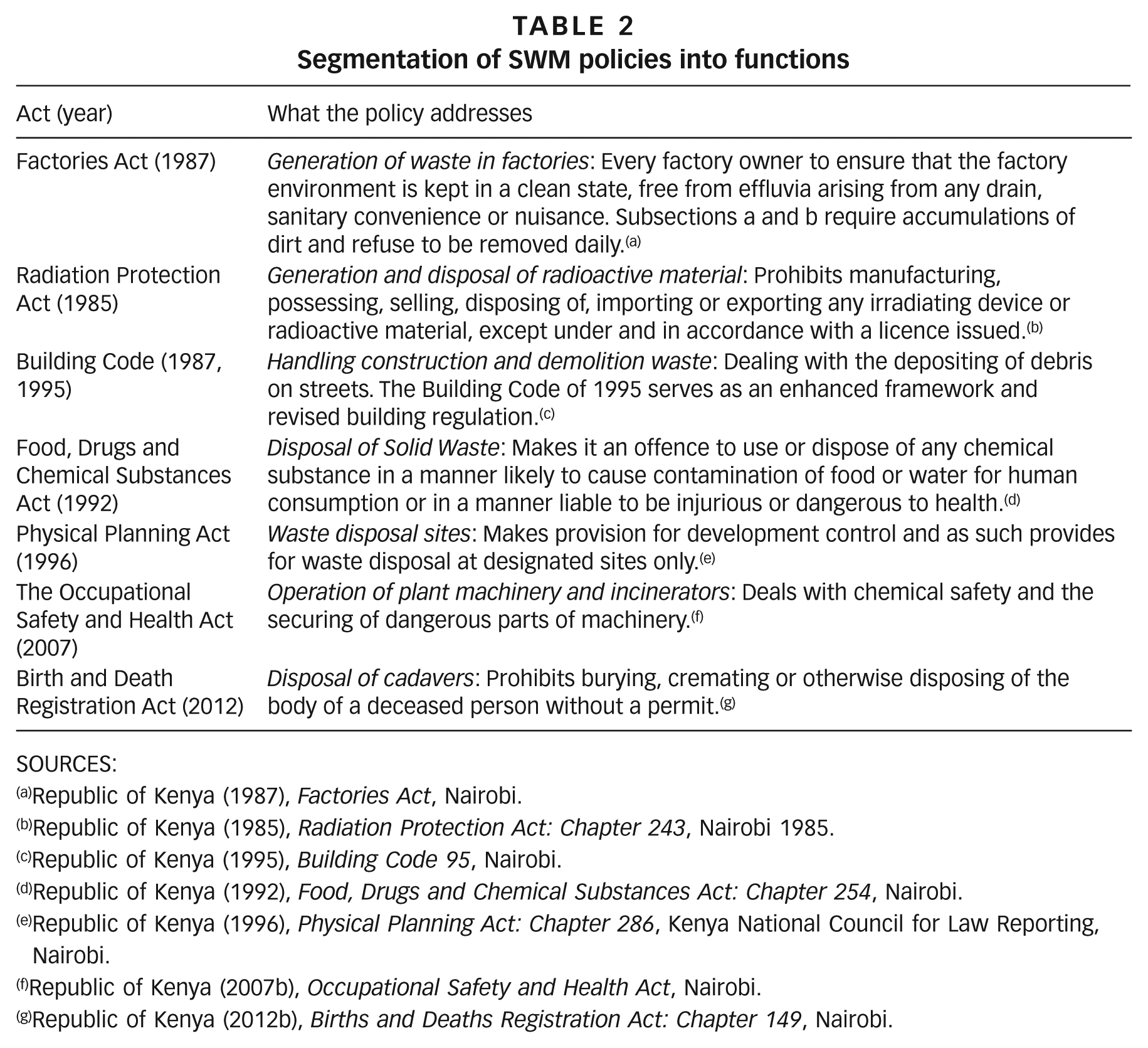
Among the policies for solid waste management are functional acts that streamline solid waste management into specific sectors (Table 2).
Segmentation of SWM policies into functions
SOURCES:
Republic of Kenya (1987), Factories Act, Nairobi.
Republic of Kenya (1985), Radiation Protection Act: Chapter 243, Nairobi 1985.
Republic of Kenya (1995), Building Code 95, Nairobi.
Republic of Kenya (1992), Food, Drugs and Chemical Substances Act: Chapter 254, Nairobi.
Republic of Kenya (1996), Physical Planning Act: Chapter 286, Kenya National Council for Law Reporting, Nairobi.
Republic of Kenya (2007b), Occupational Safety and Health Act, Nairobi.
Republic of Kenya (2012b), Births and Deaths Registration Act: Chapter 149, Nairobi.
d. Issue-specific regulations
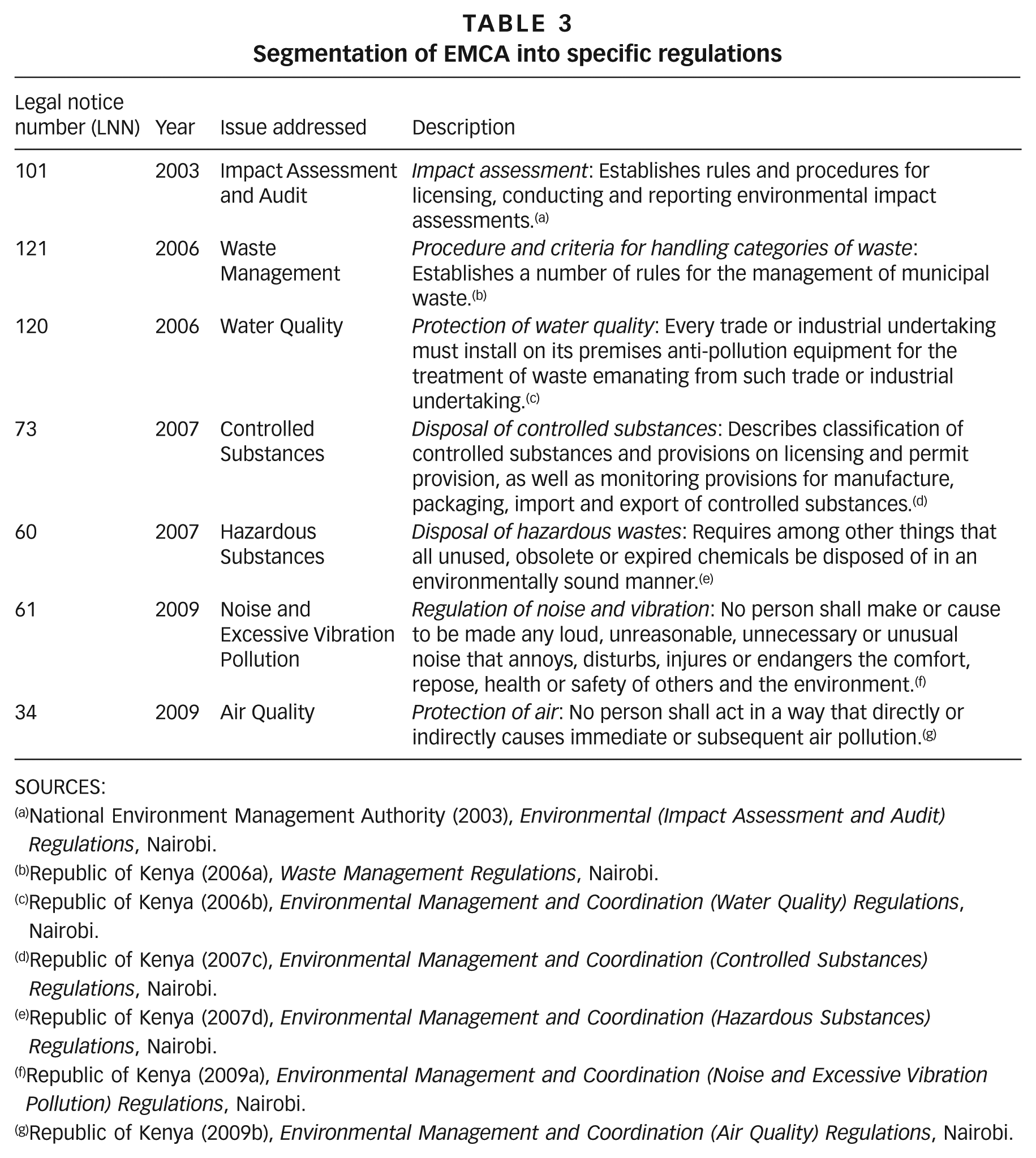
The generic Environmental Management and Coordination Act (EMCA) was segmented into issue-specific regulations (Table 3).
Segmentation of EMCA into specific regulations
SOURCES:
National Environment Management Authority (2003), Environmental (Impact Assessment and Audit) Regulations, Nairobi.
Republic of Kenya (2006a), Waste Management Regulations, Nairobi.
Republic of Kenya (2006b), Environmental Management and Coordination (Water Quality) Regulations, Nairobi.
Republic of Kenya (2007c), Environmental Management and Coordination (Controlled Substances) Regulations, Nairobi.
Republic of Kenya (2007d), Environmental Management and Coordination (Hazardous Substances) Regulations, Nairobi.
Republic of Kenya (2009a), Environmental Management and Coordination (Noise and Excessive Vibration Pollution) Regulations, Nairobi.
Republic of Kenya (2009b), Environmental Management and Coordination (Air Quality) Regulations, Nairobi.
e. Coordination mechanism for SWM policy processes
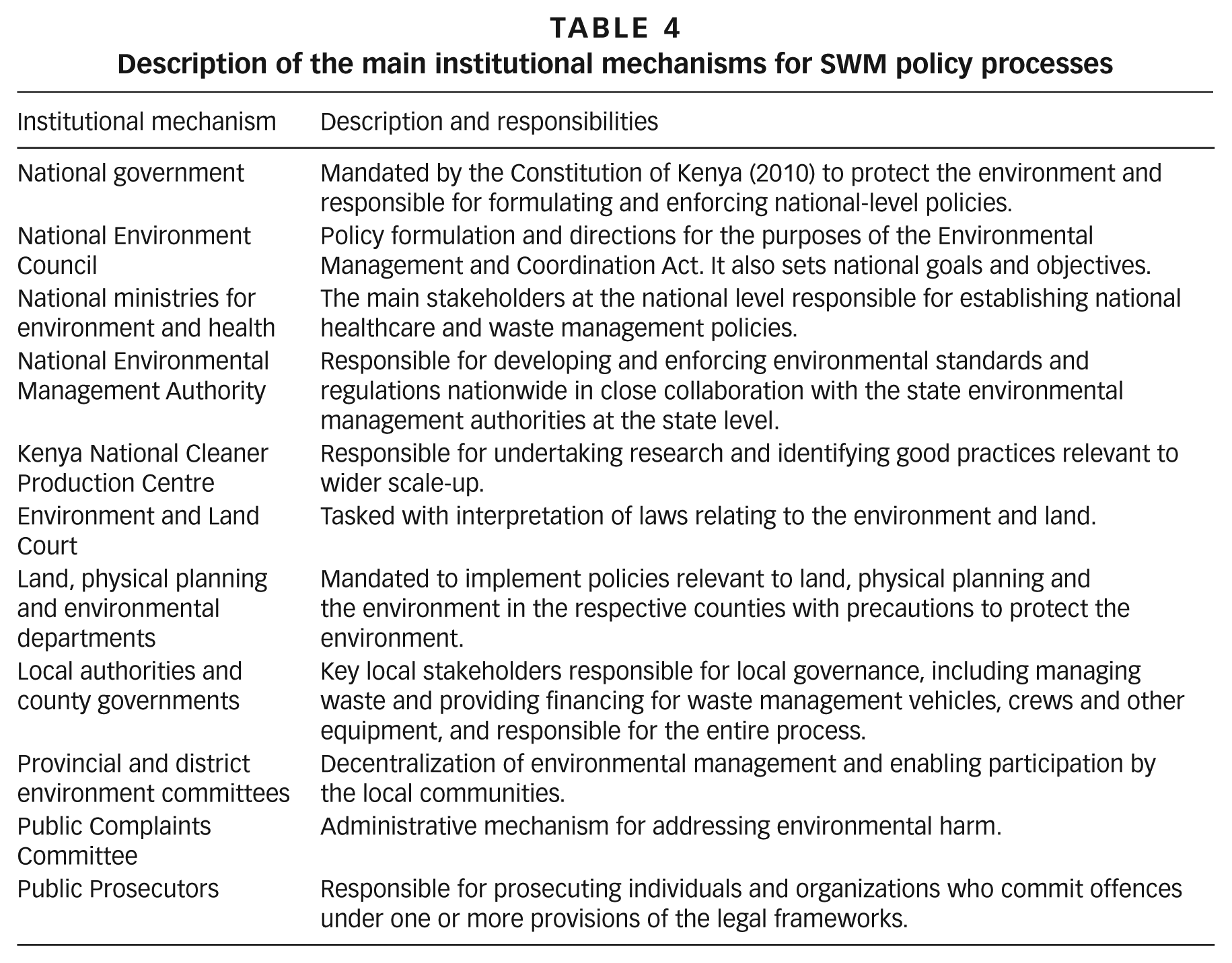
The institutional mechanisms for the implementation of SWM policies (Table 4) have also evolved through several developmental stages. Before 1990, the two main institutional mechanisms were local authorities (municipal/urban/town councils) and public prosecutors (for the Penal Code). Between 1990 and 2010, additional institutional mechanisms were established, including the National Environmental Management Authority, National Environment Council, Provincial and District Environment Committees, and Public Complaints Committee. In the post-2010 period, other institutions were added: the Environmental and Land Court; land, physical planning and environmental departments (country level); national ministries of environment and health; county governments; and the Kenya National Cleaner Production Centre. Further evidence would be needed to describe the capacity of these entities and how well the coordination within and among these mechanisms is progressing. The roles of private sector actors in the waste management cycle are not clearly outlined in the major policies.
Description of the main institutional mechanisms for SWM policy processes
f. Implementation of SWM policies
Despite the range of SWM policies developed in Kenya over the last decades, the problems with SWM remain a critical concern. In Nairobi, according to the City County, only half of the estimated 3,000 tons of waste generated daily is collected.(28) Our study found that 76 per cent of surveyed households in Nairobi had regular collection of household waste. However, the amount of waste generated and collected could vary in different parts of the city. The city has no means of safe waste disposal. As a result, about two-thirds of the waste generated in the city cannot be accounted for.(29) The risk associated with unsafe disposal and exposure to waste is also a concern, as more than 2,000 people earn their living through engagement in waste-related resource recovery.(30)
The evolution of SWM policies in Kenya is not matched by corresponding improvements in SWM practices. Until the mid-1970s, in Nairobi, over 90 per cent of the waste was being collected.(31) As years went by, and waste generation increased, there was a decrease in the number of vehicles used to collect waste. In the mid-1980s, the city authority collected only 20 per cent of the municipality’s total solid waste.(32) In 2010, the rate of municipal solid waste collection was about 33 per cent.(33) Over the same period the rate of waste reuse/recycling was reported to be only 3.7 per cent.(34) Over and above these figures, it should be kept in mind that the Dandora disposal site, Nairobi’s main dumpsite, is an open site and there are, in addition, more than 70 illegal dumping sites scattered throughout the city.(35)
In the city of Mombasa, approximately 700–800 tons of solid waste are generated per day. According to an independent assessment, only 68 per cent of this waste is collected, leaving 32 per cent to be burnt, thrown into streets or disposed of in open fields. What is collected includes that managed by many private companies registered to collect wastes. However, they are business oriented and the control mechanisms are weak.(36)
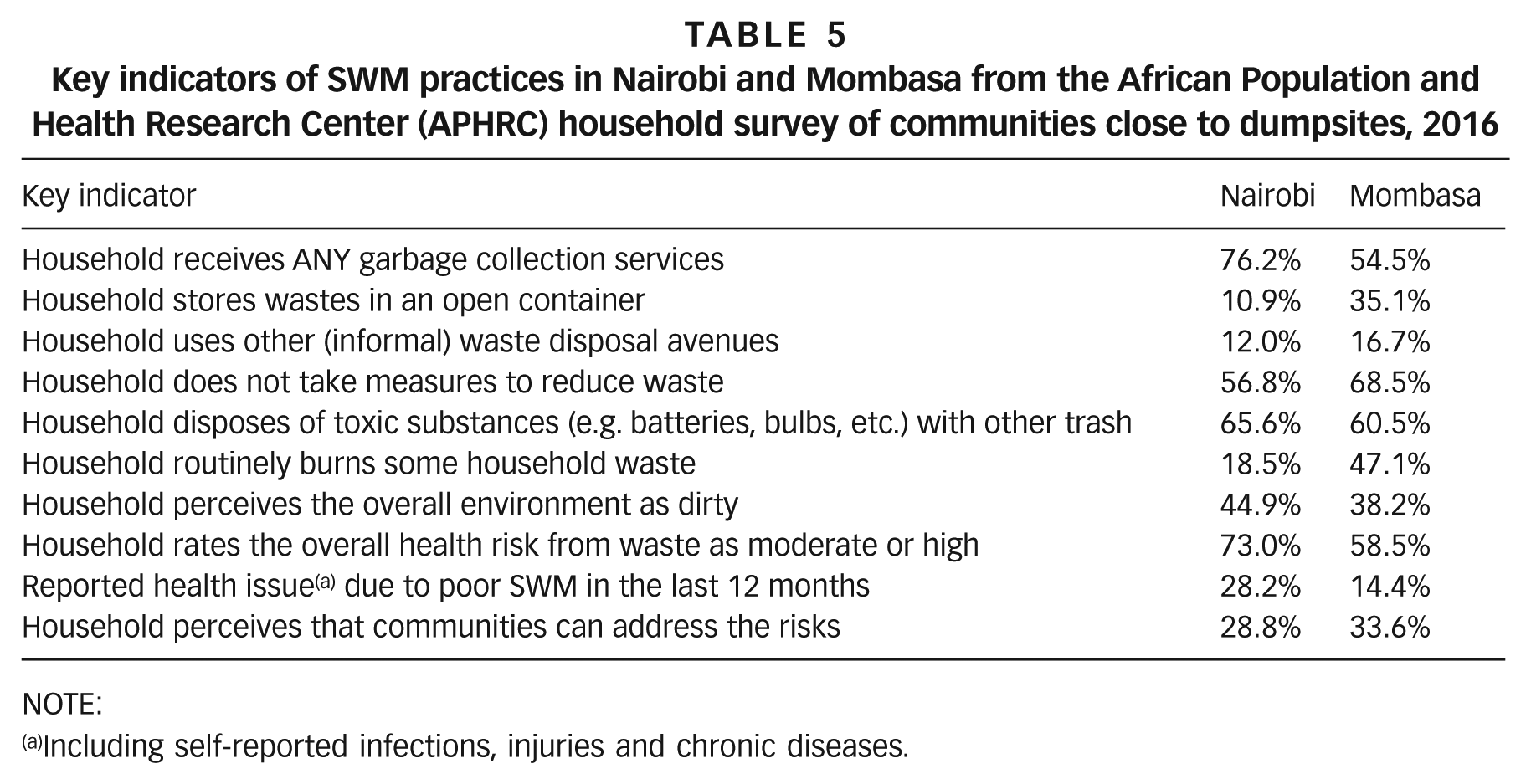
Our study showed that only about half of the waste in Mombasa communities living closer to dumpsites is being collected – less than the amount reported for the city as a whole. For Nairobi, we found a much higher rate of collection than that reported for the city (33 per cent for the city). In both cases, the key SWM indicators from our study’s Nairobi and Mombasa communities living closer to dumpsites, as shown in Table 5, indicate that the gaps and challenges in solid waste management are significant and opportunities for further action are immense.
Key indicators of SWM practices in Nairobi and Mombasa from the African Population and Health Research Center (APHRC) household survey of communities close to dumpsites, 2016
NOTE:
Including self-reported infections, injuries and chronic diseases.
The qualitative component of the study revealed a number of challenges that could explain the policy–action gap in both cities. The main ones were weak institutional structures that complicate coordination between county-level agencies, the mixing of wastes that makes reuse/recycling difficult, barriers related to moving dumpsites to another place, weak enforcement of new regulatory frameworks, inadequate staffing of implementing agencies, and rapid urbanization. Though these challenges are most severe in informal settlements and communities living closer to dumpsites, they are not limited to these residential domains. The challenges are unquestionably intensified by the crime associated with SWM, which is dominated in both cities by cartels that are more focused on profit and extortion, often through violent means, than on delivering the services contracted out by the municipalities. These practices are particularly prevalent at Nairobi’s official dumpsite in Dandora.(37)
In the Nairobi study sites, storage within the household is still rudimentary, with both organic and non-organic wastes mixed in layers of plastic bags. Collection and transportation are among the most visible aspects of SWM and are characterized by different models and strategies. Treatment of waste is still nascent, with an insignificant amount of SWM being processed. Disposal is still primarily at the open dumpsite at Dandora, which becomes impassable during the rains, giving rise to illegal dumping in other parts of the city.
All the respondents from the qualitative study in Nairobi confirmed that the Nairobi City County (NCC) provides a range of SWM services, either alone or with partners from government agencies and private sector organizations. These private sector organizations include CBOs, private companies, and youth groups. Despite the county government being considered the key actor in SWM, including working in concert with other players offering complementary services, its overall reach is considered inadequate. Its control over SWM is also further constrained by the powerful hold that some of these other players have over SWM. The county government lacks operational capacity in both staff and equipment to undertake SWM in the city. The regulator NEMA is equally challenged and cannot effectively supervise SWM in the city.
In addition to the environmental health concerns that inadequate collection poses for the public, there are specific health challenges for people engaged in waste collection and transport. Overall, there is a weak culture of using protection gear among SWM workers, and the cost of SWM protective gear is a concern that has yet to be addressed.
Waste reduction strategies either have been attempted or already exist – with some continuing, albeit at small-scale levels, across the city. There is an appreciation that separation of waste at source is possible, although waste pickers fear this may hurt their bottom line. There is also heavy use of organic recovered materials from Dandora as animal feed (for chicken, pigs and cattle), which is sold in the area and even in other parts of the city. Also common is unsafe and informal recycling by actors within the informal sector who are also selling recovered materials to third parties. This business is controlled by the cartels.
Mombasa’s SWM system, less extensive than that in Nairobi, also suffers from weak governance. It is also controlled by players who are not primarily driven by policy imperatives. Barely more than half of the surveyed households receive any form of waste collection, and close to half of those households routinely burn their wastes. This adds significantly to the negative health impacts. Despite the higher environmental health risks among the sample households in Mombasa, fewer respondents perceive a health risk as compared to those in Nairobi. In Mombasa too, there is hardly any sorting at the source. Scavengers and collectors noted that sorting at source would disadvantage them, leaving valuables in the hands of the generating households. There is also a lack of designated areas and equipment such as bulk containers to store waste at the community level. Most of the solid waste collection points are poorly located and are mainly along spaces reserved for road construction. Others are situated next to major markets, some of which sell food products. Residents and businesspeople complain about the bad smell and unsightliness of the garbage. As in Nairobi, waste pickers lack protective/safety materials and equipment and are exposed to health risks, and most of them have indicated being bruised by sharp objects.
IV. Discussion
Solid waste management policies in Kenya have evolved from a few policy statements in other, more general, policy frameworks to standalone environmental policies that give substantial focus to solid waste management, and later to solid waste management policy/strategic frameworks at national and county levels. Overall, there has been an expansion in the breadth and depth of solid waste management policy frameworks over the last two decades in Kenya. The EMCA (1999) was the landmark policy framework in the evolution of the SWM policy architecture in Kenya. It laid the main foundation for the development of other policies and strategies relevant to the environment and population health.(38) However, the emphasis has been more on ecological issues, such as cleanliness of the environment, than environmental health outcomes. Besides, the evolution of the SWM policies has not actually delivered regular collection services for all residents, or integrated management of various forms of wastes. The gap between policy and adequate action remains very large.
The devolution of national-level SWM policy frameworks has had mixed features. The devolution took longer in general but has been stronger in Nairobi County as compared to Mombasa County. In Nairobi County, SWM by-laws, a plan and a bill are well in place. In Mombasa County, SWM interventions rely heavily on national-level policy frameworks and a few SWM by-laws developed in the recent past. While the national-level policy frameworks could be relevant to overall guidance of SWM in the country and specifically in the counties, their utility as county-level policy frameworks requires the translation of national policies into county-level governance and administration systems. Local policies also need to focus on effective implementation, emphasizing ways to avert SWM problems that are fuelled by inadequate capacity in local governments, the poor economic status of a substantial proportion of the population, and high rural to urban migration in Kenya.(39)
This study has also described sector-specific segmentation and issue-specific segmentation. However, these two categories of policy frameworks have not been strongly linked and the segmentation process left aside how the two outputs of segmentation would work together. This has resulted in a gap in the implementation of the policies.
The description of institutional mechanisms has also shown that the evolution of institutional mechanisms for SWM policy processes and implementation at the national level are well aligned with the national-level policy frameworks. These governance bodies at county level would therefore be responsible for implementing several policy actions that emerge from several ministries at the national level. In the absence of a clear model of integrated policy implementation, this would challenge the capacity of county-level authorities. As evidenced by a study conducted in health care settings, provision of trainings and inclusion of SWM in training curricula are needed to enhance capacity at local institutional levels.(40)
More importantly, there is a need to change the views of the policymaking bodies towards solid waste. The policies put little emphasis on solid waste as a potential resource. Consequently, policy interventions are inclined towards collection, transportation and disposal, with little attention to recycling and reuse.
While the importance of roles of various stakeholders and actors in SWM is clearly articulated in the policy frameworks, these roles are not well operationalized and coordination mechanisms are not well stated in the policy guidelines. Moreover, the model of public–private partnership that should be applied for the management of solid waste in Kenya is not clear from the reviewed policy frameworks. A study from Lagos, Nigeria provides evidence from the region of the feasibility of this model.(41)
Furthermore, the evolution of SWM policies in Kenya has not been associated with a corresponding improvement in SWM practices. Data from our community-based quantitative and qualitative study suggest that the challenge of SWM remains a major problem in both Nairobi and Mombasa, the two biggest cities in Kenya. The qualitative analysis has found a range of challenges that are amenable to change. Among these are the challenges of patronage, corruption and crime that pervade SWM practice in both cities. Therefore, coordinated efforts are needed to translate the existing policy frameworks into practice in order to avert the risks and problems associated with poor solid waste management.
V. Conclusions and Recommendations
There has been a progressive development of solid waste management policy priorities and strategies in Kenya over time. While the prevailing focus on ecological outcomes is welcomed, health outcomes need to become a more central principle of solid waste management policy frameworks. As poor SWM is a critical risk factor for health, policies need to address health and the environment (or environmental health) in a more balanced manner.
The devolution and segmentation of the policy frameworks are not well aligned, and the institutional mechanisms converge in a top-down approach thematically, although they diverge geographically. Further analysis is needed to disentangle the real impacts of these processes and arrangements. However, current evidence suggests that fewer than 50 per cent of Kenyan households are served by solid waste management, and that major changes need to occur in the structure and oversight of implementation.
Despite the progressive evolution of SWM policies in Kenya, the SWM practices, as evidenced by the key indicators of SWM processes and risks, still pose a critical challenge in the development landscape of the country. Intensified efforts are thus needed to strengthen the implementation of the policies to improve SWM in Nairobi and Mombasa.
Footnotes
Appendix
Solid waste management policy frameworks in Kenya, Nairobi and Mombasa
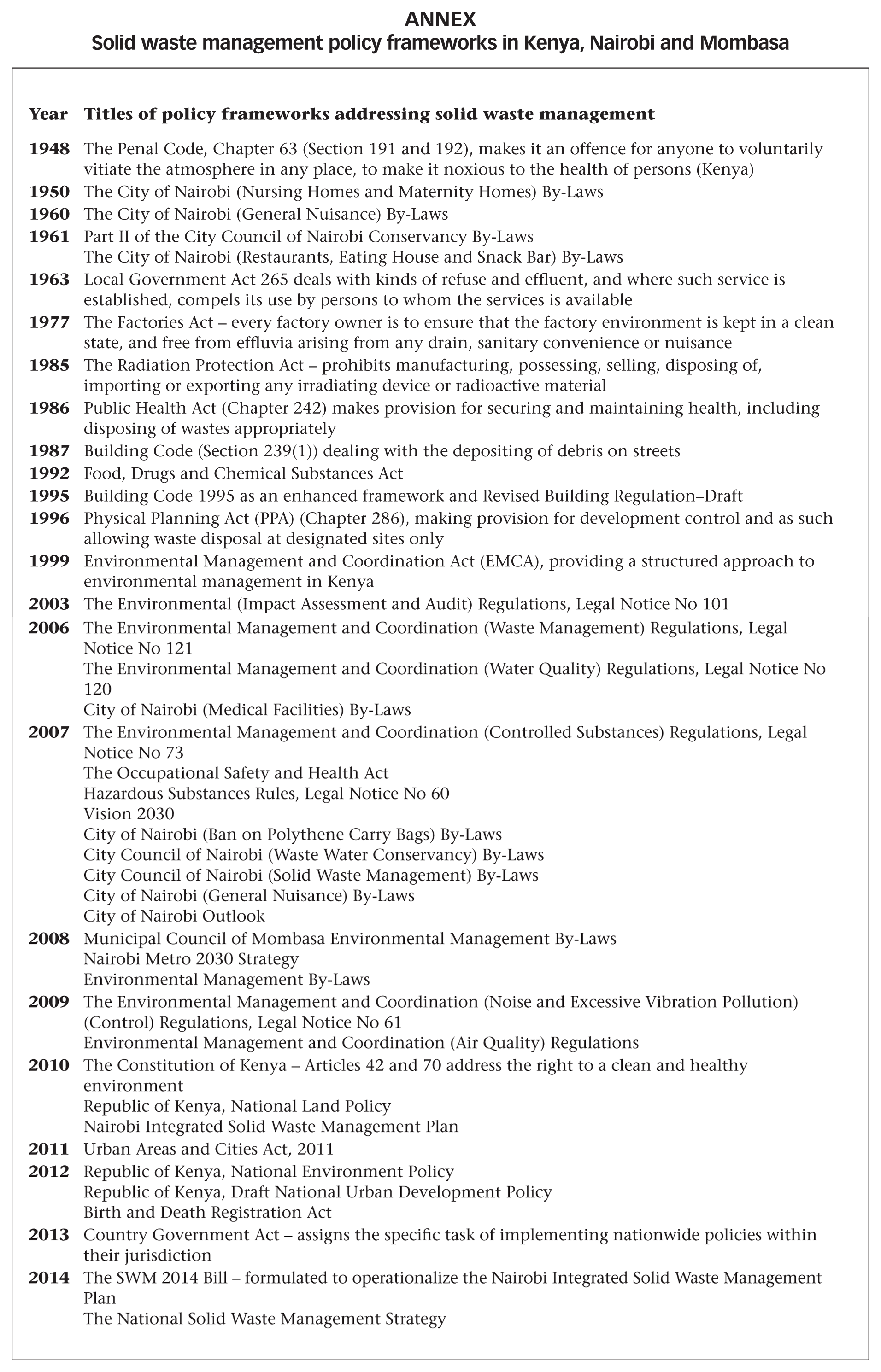
|
|
|
|
|
The Penal Code, Chapter 63 (Section 191 and 192), makes it an offence for anyone to voluntarily vitiate the atmosphere in any place, to make it noxious to the health of persons (Kenya) |
|
|
The City of Nairobi (Nursing Homes and Maternity Homes) By-Laws |
|
|
The City of Nairobi (General Nuisance) By-Laws |
|
|
Part II of the City Council of Nairobi Conservancy By-Laws The City of Nairobi (Restaurants, Eating House and Snack Bar) By-Laws |
|
|
Local Government Act 265 deals with kinds of refuse and effluent, and where such service is established, compels its use by persons to whom the services is available |
|
|
The Factories Act – every factory owner is to ensure that the factory environment is kept in a clean state, and free from effluvia arising from any drain, sanitary convenience or nuisance |
|
|
The Radiation Protection Act – prohibits manufacturing, possessing, selling, disposing of, importing or exporting any irradiating device or radioactive material |
|
|
Public Health Act (Chapter 242) makes provision for securing and maintaining health, including disposing of wastes appropriately |
|
|
Building Code (Section 239(1)) dealing with the depositing of debris on streets |
|
|
Food, Drugs and Chemical Substances Act |
|
|
Building Code 1995 as an enhanced framework and Revised Building Regulation–Draft |
|
|
Physical Planning Act (PPA) (Chapter 286), making provision for development control and as such allowing waste disposal at designated sites only |
|
|
Environmental Management and Coordination Act (EMCA), providing a structured approach to environmental management in Kenya |
|
|
The Environmental (Impact Assessment and Audit) Regulations, Legal Notice No 101 |
|
|
The Environmental Management and Coordination (Waste Management) Regulations, Legal Notice No 121 The Environmental Management and Coordination (Water Quality) Regulations, Legal Notice No 120 City of Nairobi (Medical Facilities) By-Laws |
|
|
The Environmental Management and Coordination (Controlled Substances) Regulations, Legal Notice No 73 The Occupational Safety and Health Act Hazardous Substances Rules, Legal Notice No 60 Vision 2030 City of Nairobi (Ban on Polythene Carry Bags) By-Laws City Council of Nairobi (Waste Water Conservancy) By-Laws City Council of Nairobi (Solid Waste Management) By-Laws City of Nairobi (General Nuisance) By-Laws City of Nairobi Outlook |
|
|
Municipal Council of Mombasa Environmental Management By-Laws Nairobi Metro 2030 Strategy Environmental Management By-Laws |
|
|
The Environmental Management and Coordination (Noise and Excessive Vibration Pollution) (Control) Regulations, Legal Notice No 61 Environmental Management and Coordination (Air Quality) Regulations |
|
|
The Constitution of Kenya – Articles 42 and 70 address the right to a clean and healthy environment Republic of Kenya, National Land Policy Nairobi Integrated Solid Waste Management Plan |
|
|
Urban Areas and Cities Act, 2011 |
|
|
Republic of Kenya, National Environment Policy Republic of Kenya, Draft National Urban Development Policy Birth and Death Registration Act |
|
|
Country Government Act – assigns the specific task of implementing nationwide policies within their jurisdiction |
|
|
The SWM 2014 Bill – formulated to operationalize the Nairobi Integrated Solid Waste Management Plan The National Solid Waste Management Strategy |
Acknowledgements
We extend our appreciation to the late Elijah Agevi, who provided very essential inputs into this study. Our acknowledgement also goes to Research Triangle Africa, which supported the collection of primary data.
Funding
We would like to extend our acknowledgement to the Economic and Social Research Council (ESRC) and the UK Department for International Development (DFID) for their financial support through the Urban Africa: Risk Knowledge (Urban ARK) programme.
1.
Gakungu, N K, A N Gitau, B N K Njoroge and M W Kimani (2012), “Solid Waste Management in Kenya: A case study of public technical training institutions”, ICASTOR Journal of Engineering Vol 5, No 3, pages 127–138.
2.
Ngoc, U N and H Schnitzer (2009), “Sustainable solutions for solid waste management in Southeast Asian countries”, Waste Management Vol 29, No 6, pages 1982–1995.
3.
Kenya National Bureau of Statistics (2009), Kenya Population and Housing Census Report; also  , “Kenya Vision 2030”, in Kenya Population and Housing Census, Nairobi.
4.
Adeyeba, O A and J A Akinbo (2002), “Pathogenic intestinal parasites and bacterial agents in solid wastes”, East African Medical Journal Vol 79, No 11, pages 604–610; also Achudume, A C and J T Olawale (2007), “Microbial pathogens of public health significance in waste dumps and common sites”, Journal of Environmental Biology Vol 28, No 1, pages 151–154; Boadi, K O and M Kuitunen (2005a), “Environment, wealth, inequality and the burden of disease in the Accra metropolitan area, Ghana”, International Journal of Environmental Health Research Vol 15, No 3, pages 193–206; and Boadi, K O and M Kuitunen (2005b), “Environmental and health impacts of household solid waste handling and disposal practices in third world cities: the case of the Accra Metropolitan Area, Ghana”, Journal of Environmental Health Vol 68, No 4, pages 32–36.
5.
See reference 4, Boadi and Kuitunen (2005a and ).
6.
Ziraba, A K, J Bwogi, A Namale, C W Wainaina and H Mayanja-Kizza (2010), “Sero-prevalence and risk factors for hepatitis B virus infection among health care workers in a tertiary hospital in Uganda”, BMC Infectious Diseases Vol 10, Art 191; also Rachiotis, G, D Papagiannis, D Markas, E Thanasias, G Dounias and C Hadjichristodoulou (2012), “Hepatitis B virus infection and waste collection: prevalence, risk factors, and infection pathway”, American Journal of Industrial Medicine Vol 55, No 7, pages 650–655; and Ream, P S, A F Tipple, D X Barros, A C Souza and M S Pereira (2016), “Biological risk among hospital housekeepers”, Archives of Environmental & Occupational Health Vol 71, No 2, pages 59–65.
7.
Schübeler, P (1996), Conceptual Framework for Municipal Solid Waste Management in Low-Income Countries, Swiss Centre for Development Cooperation in Technology and Management, St Gallen.
8.
Njoroge, B N K, M Kimani and D Ndunge (2014), “Review of Municipal Solid Waste Management: A Case Study of Nairobi, Kenya”, International Journal of Engineering and Science Vol 4, No 2, pages 2319–6483; also Mullally, Gerard and Niall Dunphy (2015), State of Play Review of Environmental Policy Integration Literature, National Economic and Social Council (NESC).
9.
The term “slum” usually has derogatory connotations and can suggest that a settlement needs replacement or can legitimate the eviction of its residents. However, it is a difficult term to avoid for at least three reasons. First, some networks of neighbourhood organizations choose to identify themselves with a positive use of the term, partly to neutralize these negative connotations; one of the most successful is the National Slum Dwellers Federation in India. Second, the only global estimates for housing deficiencies, collected by the United Nations, are for what they term “slums”. And third, in some nations, there are advantages for residents of informal settlements if their settlement is recognized officially as a “slum”; indeed, the residents may lobby to get their settlement classified as a “notified slum”. Where the term is used in this journal, it refers to settlements characterized by at least some of the following features: a lack of formal recognition on the part of local government of the settlement and its residents; the absence of secure tenure for residents; inadequacies in provision for infrastructure and services; overcrowded and sub-standard dwellings; and location on land less than suitable for occupation. For a discussion of more precise ways to classify the range of housing sub-markets through which those with limited incomes buy, rent or build accommodation, see Environment and Urbanization Vol 1, No 2 (1989), available at .
13.
16.
Ministry of Environment, Water and Natural Resources (2013), National Environment Policy, Nairobi.
25.
See reference 17.
28.
See reference 19.
29.
See reference 19.
30.
See reference 19.
31.
Gicheha, Mwangi J (1990), Solid Waste Management in Nairobi Metropolis, University of Nairobi.
32.
Esho, Lawrence Saloon (1997), An Assessment of the Role of the Private Sector in Urban Infrastructure Service Provision: A Case of Solid Waste Management in the City of Nairobi, University of Nairobi.
33.
City Council of Nairobi, JICA, CTI Engineering International and NJS Consultants (2010), Preparatory Survey for Integrated Solid Waste Management in Nairobi City in the Republic of Kenya, Final report.
34.
Kasozi, Allison and Harro von Blottnitz (2010), Solid Waste Management in Nairobi: A Situation Analysis, City Council of Nairobi/United Nations Environment Programme.
36.
Tan, Y J (2012), The Management of Residential Solid Waste in Mombasa, Kenya, Independent Study Project (ISP) Collection, Paper 1388.
37.
Gumbihi, H (2013), “Lords of the flies: Unmasking Dandora’s trashlords”, Standard, 26 October, available at .
38.
See reference 13.
39.
Henry, R K, Z Yongsheng and D Jun (2006), “Municipal solid waste management challenges in developing countries–Kenyan case study”, Waste Management Vol 26, No 1, pages 92–100.
40.
Nkonge, Njagi A, A Mayabi Oloo, J Kithinji and J Magambo Kithinji (2012), “Knowledge, attitude and practice of health-care waste management and associated health risks in the two teaching and referral hospitals in Kenya”, Journal of Community Health Vol 37, No 6, pages 1172–1177.
41.
Aliu, I R, O E Adeyemi and A Adebayo (2014), “Municipal household solid waste collection strategies in an African megacity: analysis of public private partnership performance in Lagos”, Waste Management & Research Vol 32, No 9, Suppl, pages 67–78.