




Abstract
This paper assesses the provision of sanitation services in two urban areas in northern Malawi, both with populations under 150,000, to determine the potential for private sector enterprises to contribute to longer-term self-reliance as part of the overall sanitation situation. The paper shows that most households in the two study areas use pit latrines and remain unserved with regard to both faecal sludge management and solid waste removal. Local governments have been unable to offer adequate coverage of sanitation services, and community-based organizations are doing very little that is relevant to the issue. This gap offers a viable business opportunity for private sanitation service providers. Of these two urban areas, Karonga Town has no formal private sector services, but Mzuzu City has pit emptying and solid waste collection services, plus some small-scale manufacturers of pre-made pit latrine slabs. The paper explores these activities, considering their accessibility to low-income customers. It closes with suggestions regarding the potential for building on what is currently available.
Keywords
I. Introduction
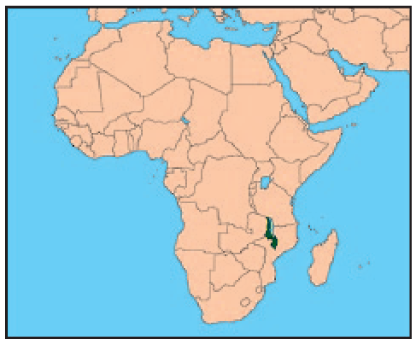
Open defecation is increasingly rare in many urban areas in low-income countries,(1) and Malawi, in Southern Africa, is no exception. But this trend implies the need for sanitation services that can keep pace with the growth in urban populations. This can be especially challenging in dense urban areas in many low- and middle-income countries, where conventional systems are both costly and difficult to install. Efficient solid waste management, similarly, can present considerable challenges. Andersson et al.(2) note that both high- and low-income countries will find it a challenge in the future to achieve sustainable urban sanitation, but low-income countries that still lack full coverage with conventional sewage and waste removal systems have a unique opportunity to go beyond conventional planning and to introduce innovative solutions.
One such innovation for filling public entity service gaps for the delivery of environmentally sound sanitation services has been the introduction of public–private–community partnerships, especially for the poor, as promoted by Franceys and Weitz.(3) And in areas where conventional systems are unrealistic, there is significant scope for enterprises offering faecal sludge management through onsite household emptying services.(4) In the area of solid waste removal, there are also practical solutions, responsive to challenging urban conditions. Yet other studies on Africa and Asia point to the difficulties in building private sector sanitation services.(5)
Cost is a major issue. Private sector sanitation services in Malawi, for instance, are unaffordable given the high consumer price index. This reflects monthly inflation, for both food and non-food services, of approximately 20 per cent(6) over a minimum wage of Malawian Kwacha (MK) 18,000/month (US$ 26/month). Research by Banana et al.(7) shows that in low-income urban informal settlements in Africa (Malawi, Tanzania, Zambia and Zimbabwe), the household income available for sanitation is no more than US$ 3–4 per month. This makes it a challenge for households to pay for most standard services.
In Malawi, the National Sanitation Policy aims “To ensure that all people in Malawi own and have access to improved sanitation facilities, practice safe hygiene, and practice safe recycling of liquid and solid waste for sustainable environmental management and socio-economic development.”(8) Together, the 1968 Public Health Act(9) and Local Government Act of 1998(10) provide regulatory authority to city and town councils with regard to household sanitation services. When sanitation is not managed correctly, it violates the Environmental Management Act of 1996,(11) which states, “Every person shall have a right to a clean and healthy environment.”
Most studies looking at the challenge of sanitation in informal urban settlements within Africa have focused primarily on residents or users.(12) This study focuses on sanitation service providers. The objective of this paper is to assess the sanitation situation in smaller urban centres in Malawi. This assessment is undertaken in order to consider the potential for self-reliant private sanitation services in this setting. A “self-reliant sanitation service” is defined here as a service provided, without household subsidies, to protect human health and the environment by eliminating contact between humans and solid or liquid waste.
Section II of the paper explains the research study locations and methods. Section III describes and contrasts the range of public and non-profit sector services available for household sanitation within two urban areas in Malawi, both with populations under 150,000. The paper then goes on in Section IV to consider the private sector sanitation services that are available, specifically including the construction of improved (cement) pit latrine slabs; the provision of liquid or solid waste collection, transport, and treatment services; the supporting supply chain; and the financing of these enterprises. Section V discusses the findings and Section VI concludes with recommendations.
This paper does not assess the impact of industrial activities or user or landlord willingness to pay. The identified opportunities and constraints form the basis for recommendations for longer-term self-reliance and improved urban sanitation in smaller urban areas of sub-Saharan Africa.
II. Research Study
The two research study sites, Mzuzu City and Karonga Township, are both in northern Malawi. There, the Malawi Red Cross Society is planning work on integrated water, sanitation, and hygiene interventions as part of improving the overall sanitation situation in these towns. Mzuzu University researchers collected data on sanitation services in both areas to design a programme for training self-reliant sanitation service providers, and the current study drew on these.
Mzuzu City covers 48 square kilometres and had a population of 134,000 in the last census, in 2008. It is estimated that up to 60 per cent of the Mzuzu population lives in informal settlements.(13) Karonga Township had a population of 41,000 in the 2008 census and covers an area of approximately 44 square kilometres.(14) Neither Mzuzu nor Karonga has a public sewer system; the majority of residents rely on pit latrines, while about 10 per cent of residents use flush toilets attached to a septic tank.(15) Both areas have solid waste dumping sites. Mzuzu City Council operates liquid waste disposal ponds, but Karonga has none.
Our study data were collected in 2015 and 2016 in the neighbourhoods of Mchengautuwa, Masasa, Chibanja, Chibavi and Katawa in Mzuzu, and neighbourhoods of Old Town and Kapachika Market in Karonga. The research used structured surveys to obtain information from private sector providers of improved (cement) pre-made pit latrine slabs (n=5), pit latrine emptying services (n=3), hardware shops for protective gear (n=17) and financial institutions (n=6). There were also focus group discussions with representatives of 11 community-based organizations (CBOs) and field observations (one truck counting study at Mzuzu’s liquid waste disposal ponds).
Producers of pre-made pit latrine slabs in Mzuzu were selected using a snowball approach, to determine the availability, scale and cost of this service. No producers were located in Karonga. Pit latrine emptying services were identified in both urban areas, however. For the protective wear supply chain assessment, researchers moved around Mzuzu and Karonga, locating hardware shops using a snowball approach, until no further shops were found within the area. Using a checklist, researchers looked there for disinfectants, protective clothing, soap, shovels, plastic boots, gloves and masks, all of which may be used to support sanitation service delivery providers. In trying to understand the role of financial institutions in promoting sanitation services, and the terms and conditions of loans, we surveyed two commercial banks and one microfinance institution servicing both Mzuzu and Karonga.
Neither Mzuzu nor Karonga had a formal database for CBOs performing sanitation activities, in contrast to information on HIV and gender activities that is tracked by local governments. In Mzuzu, four CBOs were identified by the City Council based on its knowledge of those involved in sanitation services in the targeted neighbourhoods. The researchers determined that three of these CBOs qualified for inclusion in the study, based on evidence of active provision of sanitation services. In Karonga, seven CBOs were identified by the Karonga Director of Planning, and researchers determined that five of these qualified for study inclusion.
The liquid waste disposal ponds in Mzuzu City were observed by researchers for 12 hours each day for three days in September 2015, the dry season for the area, to establish when and by whom the ponds are used. The Chilumba Barracks of the Republic of Malawi Defence Force (MDF), located 60 kilometres south of Karonga, extends its faecal sludge and liquid waste management service to some Karonga residents, but its ponds were not observed. The solid waste dumps in Mzuzu and Karonga were not observed due to the unregulated and unfenced nature of these areas, which made it impossible to differentiate between scavengers and private sector providers of solid waste services.
The study protocol received ethical clearance from the Republic of Malawi National Commission for Science and Technology.
III. Findings: What Local Government and The Non-Profit Sector Are Providing
In order to assess the potential role of private sanitation service providers in Mzuzu and Karonga, it is necessary first to provide an overview of the contributions of the local government and local CBOs, and to determine what the gaps are.
a. What are local government and the public sector providing?
Mzuzu
In Mzuzu City, sanitation services come under the oversight of the City Council and its Refuse and Rubble By-laws.(16) While these by-laws cover the enforcement role of health officers, they primarily cover the disposal of waste and material that is “injurious to health”. Enforcement is limited. The penalty applied under these by-laws for dumping waste indiscriminately into the environment (such as not using the liquid waste disposal ponds for disposal) is MK 2,000 (US$ 3).(17) This fine is lower than the disposal pond fee (money paid by companies to the City Council for dumping in the ponds). This is MK 9,500 (US$ 14) per trip, regardless of the volume, making it worthwhile for small-scale informal providers to take the risk of illegal dumping.
Mzuzu City used to have a vacuum tanker for emptying pits, but it broke down in 2007 and has not been repaired.(18) Currently the city provides no sanitation-related services for households, although it does make available the liquid waste ponds (both faecal sludge and wastewater) and the solid waste dump. The disposal ponds primarily support higher-income households located in places that vacuum tanker services can reach. During our truck counting exercise, the private company Mr Clean Malawi was the only observed user of the ponds. Although the disposal ponds are operated by the Mzuzu City Council with open hours from 7:30 am to 4:30 pm, we observed no staff member overseeing operations. The Mr Clean Malawi drivers were observed using the ponds before official opening hours on each of the three days of our study, demonstrating how little city oversight there is of how the ponds are used and whether fees are paid.
Mzuzu City also has a solid waste dump, but the city does not provide any household solid waste removal services. Nor are any treatment services or recycling services, such as composting, provided at the dump. The dump is open to anyone for use, although formally users are required to inform the City Council and pay fees of MK 7,500 (US$ 11) per 5-tonne load. In practice, this only happens with institutions. The site is surrounded by homes, and is unfenced and open for scavengers, especially children. A new, fenced, solid waste dump is currently under construction by the City Council on the northern edge of the city.
Karonga
Karonga has no sanitation-related by-laws.
While Karonga Township makes no pit latrine emptying services available, the town is partially served by a semi-public entity, Chilumba Barracks, which operates two vacuum tankers (whose size could not be verified by the researchers). While this service operates under the auspices of the military, civilians are hired to conduct the pit emptying services.
An employee of Chilumba Barracks said, “We do not promote ourselves as a business; we wait for those in need of our services to contact us. We are sort of a non-profit oriented entity, so we don’t advertise. Anyone in need of our services is assisted, any customer goes; households, institutions, and organizations, as long as they agree with the service charges.”
It was reported that regular Karonga customers included government and private institutions as well as a limited number of private higher-income household customers who were “added on”. These households pay a subsidized rate, given that the Council covers the fuel and daily allowances for employees, while the households only pay a service charge. Faecal sludge removal by a small tanker costs a service fee of MK 7,000 (US$ 10) and a meal allowance of MK 8,000 (US$ 11) per worker per day. The fuel cost is added, based on distance. Chilumba Barracks claimed that it charged less for low-income households, but there was no indication that its fee was affordable or that low-income households were actually using the service. An employee stated that it was rare for a household from Karonga to request the vehicle from Chilumba to empty its pit latrine or septic tank. Together with the fee structure, this indicates that while a limited number of higher-income customers were being served, the focus of the operation was primarily institutions.
On an average day, a tanker was reported to complete four to five trips to and from Karonga and the barracks disposal pond; however, when demand was high, the tanker from Chilumba Barracks completed up to seven trips per day, with the resulting revenue being invested into maintenance of the vehicles. When asked about its fee structure, Chilumba Barracks included the cost of milk for employees during work hours but did not quote the cost of personal protective health and safety equipment, which indicates that the health and safety of workers in faecal sludge management is not built into the organization’s arrangements. Researchers observed that there is a good working partnership between the Karonga Council and Chilumba Barracks on the provision of sanitation services, but that the Council’s interest is primarily ensuring that local institutions are adequately served. Beyond Karonga, the Chilumba Barracks geographic coverage area extends to nearby areas only on a limited basis. Chilumba Barracks disposal ponds are not secured with a fence, and the area is open to both children and other scavengers.
Karonga, like Mzuzu, has a solid waste dump, but the Township does not offer any household solid waste removal services. The dump is open to anyone to use. Although formally users are required to inform the town council sanitation engineer, in practice this does not often happen. No dumping fees are charged. The site does not offer any processing for reuse.
b. What role are CBOs playing?
Mzuzu
In Mzuzu, three CBOs, all registered with the government, were involved in sanitation activities: Kunthazi Arts Theatre, Forum for Youth Ladders (FOYOLA) and Vitumbiko. Kunthazi Arts Theatre is composed of youth members who are focused on being role models to the community, and who expressed a desire to work with the Mzuzu City Council on sanitation in neighbourhood open-air markets. FOYOLA is also composed of youth members whose primary goal is to promote general entrepreneurship and advocacy, including both sanitation and non-sanitation business ventures. Their activities are restricted to their neighbourhood. Vitumbiko members are people with physical disabilities, and their sanitation activities focus on advocating for improved citywide sanitary conditions. The sanitation activities of these CBOs consist primarily of awareness raising and of sweeping and picking up trash from neighbourhood streets as a voluntary activity and taking it to the solid waste facility in Mzuzu, although they were not paying disposal fees, or burning the trash onsite. The activities of all three CBOs are small in scale, limited to their immediate neighbourhoods. The results show that they make little more than a token difference to local waste removal needs.
Karonga
In the Karonga Township, four CBOs perform advocacy activities similar to those of the CBOs in Mzuzu. Shola CBO, Free Methodist Faith Based Organization CBO, St. Ambrose Faith Based Organization and Kanyighe CBO are involved in advocacy and small-scale promotion of household toilets. Shola CBO is unique in linking sanitation and nutrition issues.
One CBO registered with the government, Karonga Youth Entrepreneurs/Centre for Advancement of Youth Entrepreneurship (KAYE), is more actively engaged in dealing with solid waste. Its main activity is solid waste management and reuse of readily and freely available material for income generation. It makes fire briquettes using rice husks, jewellery using scrap paper, and compost using organic waste. Although on a small scale, its dedication is evident. KAYE has the potential to grow into a more significant player in the local solid waste management scene. The leader of KAYE holds a BSc degree and is focusing on innovation, networking, and making money as a CBO to generate jobs for unemployed youth. However, the amount of waste the organization collects and recycles is limited and does not yet contribute much to the sanitation situation in Karonga.
c. What role is the Malawi Red Cross Society playing?
In the study areas of both Mzuzu and Karonga, the Malawi Red Cross Society is promoting self-reliant private sector sanitation services with funding from the European Union. However, at the time of this study, the project was only at a planning stage.
d. What are the gaps in service provision?
Sanitation-related policy in Malawi suggests that service provision is being supported, but in fact good policy is not reflected in practice. In our two study areas, neither national policy(19) nor urban planning priorities(20) are being implemented or enforced. The gaps in service provision on the ground are clear.
In both areas, approximately 10 per cent of residents use flush toilets attached to a septic tank.(21) The remainder use pit latrines, which typically fill in about three years.(22) At that point the options are to empty the pit, to dig a new one, or to turn to open defecation. Pit emptying is dependent on the services available and their cost, but also on a pit’s structural capacity to bear the weight of sludge removal. Unlined pit latrines with no cement slab pose a high risk of collapsing during emptying. In consequence, for many residents it makes more sense to dig a new pit. Yet this is an impractical solution where settlements are becoming more densely occupied.
In Karonga, according to national figures, aside from the 10 per cent using flush toilets, an additional 6 per cent of households(23) use a ventilated improved pit (VIP) latrine that will eventually need to be emptied. For those households still using a traditional pit latrine (72 per cent) or practising open defecation (12 per cent),(24) sanitation services are needed to promote the transition to an improved (cement) pit latrine with a slab and lined pit walls, which can be emptied. The situation is especially urgent for the primarily low-income households in traditional and semi-permanent housing areas, which are most vulnerable to disasters, including floods and earthquakes.(25)
In Mzuzu, according to 2014 city figures, 66 per cent use an improved pit latrine, which can be emptied.(26) Common improved pit latrine designs in the study areas include: pour flush, VIP latrine, pit latrine with cement slab, and composting toilet. Chirwa et al. report that within some neighbourhoods in Mzuzu 46 per cent of traditional pit latrines had a (cement) pit latrine slab and that only 5 per cent had plastered cement walls below the ground surface.(27) Conservatively, this suggests that most of the existing traditional pit latrines in our study area would not be structurally sound enough for emptying.
In both Mzuzu and Karonga, the gap in solid waste services affects households regardless of income. Few households take their own waste to the dump, but rather dispose of it via household burn pits or dump it into their surrounding environment. Despite the existence of solid waste dumps, the local government in both areas concentrates on these for disposal of waste from public areas and institutions.
The sanitation needs of these towns are not being addressed in any meaningful way by either the public sector or by CBOs. The huge gaps in household service provision for both solid and liquid waste removal offer in theory an opportunity for the private sector. Among the unmet needs here are the provision of affordable improved (cement) pit latrine slabs; the collection, transportation and treatment of liquid or solid waste; the supporting supply chain; and financing of these enterprises.
IV. The Role and Potential for The Private Sector
a. What role is the private sector currently playing?
Neither city has licensing or registration requirements for private sector sanitation services. And as in the rest of Malawi, there is no price regulation for solid and liquid waste services offered by either the public or private sector.
Mzuzu
Most faecal sludge and liquid waste management in Mzuzu is provided by one private sector sanitation company, Mr Clean Malawi. This company has been in operation for more than 10 years, and has a near monopoly on the citywide emptying of pit latrines and septic tanks. Sanitation services are the company’s core business. This company has five vacuum tankers (3,000 litres, 4,000 litres, 9,000 litres, 10,000 litres and 18,000 litres). The company owner reported during the interview that it limits the geographical business area predominantly to Mzuzu, with more limited coverage in the northern and central regions of Malawi. The company primarily services institutions (such as police stations and hospitals). Household services do not contribute a large portion of its business, and those it serves are mainly middle- to upper-class households. In low-income unplanned areas, the company reports emptying 20 to 30 pit latrines per month during the rainy season, but only four to five during the dry season.
The company says its service prices are not fixed and that it charges the low-income households somewhat less for services, compensating with the higher prices paid by middle- to upper-class customers. Service charges are also based on four other criteria: 10 per cent withholding taxes paid to the Malawi Revenue Authority, the tanker size, the depth of the pit latrine or septic tank, and the fee paid for disposal. Thus, the service price for a typical faecal sludge removal job depends more on the vacuum tanker size than the amount of sludge to be removed. For a 3,000-litre tanker, it costs MK 18,000 (US$ 26), equivalent to the monthly minimum wage; a 4,000-litre tanker is MK 22,000 (US$ 31). The company charges low-income households living in unplanned areas MK 15,000 (US$ 21) for emptying, using the Gulper, a manual pumping device that is practical in places with poor road conditions that the company’s vacuum tankers cannot reach.(28) Liquid waste is then emptied into drums that are transported to the ponds.
Mr Clean Malawi also offers household solid waste management services to 15 household customers within Mzuzu, mostly higher-income, at a cost of MK 10,000 (US$ 14) per month. It has plans to expand service delivery. Currently solid waste is collected approximately weekly from household bins (such as a 100-litre plastic bucket), waste is sorted and composted by company staff, and non-recyclable material is taken by the company to the City Council’s solid waste dump twice a month. The company representative also described plans to buy a machine that is able to produce pelleted compost fertilizer from collected organic solid waste. When asked about the logistical challenge of purchasing this machine in Malawi, he stated, “If I cannot procure it from outside the country, I plan to modify one of my many vehicles for solid waste management.” The company has not had any loans for its sanitation business, but the owner stated that the business started small and has grown over time.
The owner of Mr Clean Malawi reported that the faecal and liquid waste business faces challenging operational barriers. Significant time and labour were reported to be spent first “fishing” out non-faecal materials (trash) prior to pit latrine emptying operations. This finding is consistent with other research in Mzuzu.(29) According to the owner, “This problem [of fishing out metals and plastics] is very prominent in low-income areas and it makes the work harder and more time consuming than usual.” In 2015, Malawi banned the use, sale, production, exportation and importation of plastic bags of less than 60 microns, and the impact of this ban for improved pit latrine emptying operations needs further study.
Another problem in terms of serving the lower-income population is the accessibility of customer households for company vacuum tankers given the poor road conditions and generally narrow roads, especially in informal settlements. There are also seasonal challenges. During the rainy season, pit latrines and septic tanks fill more rapidly, but access to customer households becomes a more serious challenge. On the other hand, during the dry season, the lower customer demand affects the business’s cash flow.
Another barrier reported by the owner is his lack of formal education in sanitation engineering. He stated, “I cannot be recognized in terms of [an] education qualification. I must back up my vast expertise with papers. Technically I know a lot, but I need an education [certificate].” Though household customers do not appear to question the company owner’s qualifications, the City Council might take his potential role more seriously in a public–private partnership for sanitation service provision and support of the business operations if he had supporting university-level educational qualifications.
The owner of Mr Clean Malawi is also a local politician, serving as a ward councillor for one of the study neighbourhoods. He claims that his position as a councillor has not benefitted his business. On the contrary, he cited conflicts with the City Council in May 2015, which prohibited his company from using the disposal ponds. Although the problem was eventually resolved and disposal resumed, the ban resulted in lost business and time. Another operational barrier he reported was that government institutions often are late in paying him for emptying services.
Apart from Mr Clean Malawi, there are reported to be four small-scale informal providers of pit latrine emptying services active in the local scene in Mzuzu, though only one of these providers was willing to be interviewed. This provider empties four to ten pit latrines per month, predominantly from low-income household customers in informal settlements. The provider uses a shovel-and-bucket system and dumps waste indiscriminately into the environment. The provider does not have a telephone, and depends on word of mouth for customers. He has one employee and they walk to the work site. He charges MK 30,000 (US$ 43) per pit emptied, and there is no indication that taxes are paid, although this fee is double that charged by Mr Clean. The percentage of low-income households served by this one informal provider and by Mr Clean Malawi is about the same. Mr Clean Malawi has not shown a willingness to collaborate with the existing informal sector as business partners.
The private sector in Mzuzu is also involved in the production of improved (cement) pit latrine slabs – no NGOs or CBOs were found to be involved in sales. These slabs are used to seal the pit latrine floor, separating the pit contents from the user, although with a hole for excreta disposal. They are generally made of sand and quarry stone (coarse aggregate) with reinforced steel to withstand user weight and pit emptying operations where these occur. The availability of these slabs varies by neighbourhood – half the target neighbourhoods had producers. The product prices ranged from MK 12,000 to MK 25,000 (US$ 17 to US$ 36) for single-holed slabs and MK 23,000 to MK 45,000 (US$ 33 to US$ 64) for double-holed slabs, depending on whether the slab is reinforced and whether the customers provided materials. At these prices, the slabs would not be easily affordable to low-income households.
Most of the businesses producing these slabs primarily make concrete grave markers, but report that they can make other concrete products upon request. The quality of slab production varied. For instance, not all were reinforced. Only the slabs of one producer, Zilele, were observed to be of good quality. More research is required to determine the strength of pre-made slabs. Capacity also varied. Zilele declared it could meet any customer demand. While two of the workshops were able to produce approximately three slabs at a time, the others could only produce a single pit latrine slab at a time. Based on the limited number of suppliers, their rate of production, and the prices they charge, it can be concluded that they are not making an important contribution to sanitation needs in these towns. There is room for the private sector to address the production of lower-cost improved pit latrine slabs for sale at a neighbourhood level.
In addition to its other private enterprises, Mzuzu City had many shops providing health and safety equipment for sanitation services. While materials are generally available for sanitation service support, they require retrieval from several shops, since no shop offered all the items needed.
Mr Clean Malawi is the biggest player in the overall household sanitation situation in Mzuzu, but still is not reaching anything close to the majority of households citywide. There is certainly the potential for this business to expand or for similar businesses to open. While Mr Clean Malawi charges lower pit emptying fees for low-income households and while improved (cement) pit latrine slabs are available in some areas, prices are still not within reach for most households.
Karonga
There are reported to be two small-scale informal providers of pit latrine emptying services in Karonga using a shovel-and-bucket system, though neither consented to be interviewed for this research. Other private sector services were provided by shops selling health and safety equipment. Only three of the seven sampled shops, however, had three or more of the items required, and no shop had every necessary item. Otherwise, there is no private sector sanitation-related activity in Karonga.
b. What is the role of financers?
Expanding the coverage of these private enterprises would undoubtedly require a source of capital. Yet there was little evidence of activity in this area. The microfinance institution surveyed had not been approached for a sanitation-related loan in either the Mzuzu or Karonga branch. Of the banks that were surveyed, only one in Mzuzu had been approached for such loans, which were granted to organizations, not individuals. Generally, financial institutions provide loans based on standard terms and conditions, without special consideration of the sanitation sector or the impact for public health. Loan terms require that the borrower be a customer with a steady flow of income and experience in the proposed business area. Banks lend money at the base lending rate set by the Republic of Malawi Reserve Bank, plus a margin that varies depending on the lending institution and type and risk level of the customer. The riskier the customer, the greater the margin. At the time of the interviews, the annual base lending rate was 35 per cent, one of the highest globally.
All the financial institution representatives interviewed indicated that private sector sanitation service was an unfamiliar concept, and one respondent appeared sceptical about the viability of private sector sanitation services within Malawi. Our results show that, at least in these two areas, finance institutions currently play no role in facilitating private sector sanitation services.
No would-be provider can reasonably consider entering the sanitation service provision domain without access to at least some start-up capital. For instance, in order to service more households in the study area through manual pit latrine emptying, a provider might need access to funds for a Gulper at a cost of MK 206,000 (US$ 294) and a start-up kit of health and safety equipment, including disinfectant, protective clothing, soap, a shovel, plastic boots, gloves and a mask, at around MK 30,000 (US$ 43). This would be exclusive of company overheads and bank fees. Given the current minimum wage, this could amount to almost a year of earnings – a prohibitive entry fee in the absence of a loan.
V. Discussion
The overall picture in these two urban areas and the gaps in provision show that the local governments here do not see it as their responsibility to provide household-level sanitation services. Aside from the provision of solid waste dumps in both places and the availability of liquid waste disposal ponds within the city in Mzuzu’s case, and in the military barracks for Karonga, there are no relevant services or amenities. Nor is the non-profit sector involved on a level that makes a discernible difference in either location. Despite a strong presence of CBOs in Karonga and Mzuzu, they struggle to do anything relevant on sanitation.
There is some private sector involvement, but even with existing private sector services, the volume of household solid or liquid waste being handled within the study areas is very low. While the dumps and disposal ponds provide a legal option for disposal, latrine emptying services are not affordable for lower-income households, and there are no waste collection services for this group, although Mr Clean Malawi is exploring this possibility.
The vast majority of the households in our study area have no option for formal sanitation services. Given that no small-scale informal providers were observed using the disposal ponds in Mzuzu, it has to be assumed that whatever informal solutions are in play most likely involve disposing of waste illegally, thus posing a risk to human health and the environment. It is not only the informal providers that may fall short here. Despite the existence of relevant by-laws in Mzuzu, though not in Karonga, neither private sector sanitation enterprises nor CBOs were operating under local government oversight.
The overall contribution of private sector enterprises, as noted, is extremely limited in scale when compared to the level of need in these areas. Except in the case of Mr Clean Malawi and the one small-scale informal provider interviewed, sanitation is not even the primary business activity for most of the surveyed enterprises. While Mr Clean Malawi operates in Mzuzu without subsidies, conservatively speaking, the company’s reach for low-income households is less than 1 per cent of the city’s population. The small-scale, informal pit latrine emptier we interviewed, who is also operating without subsidies, is also reaching less than 1 per cent of the population, and his scale of operation is likely to be similar to that of the other three informal emptiers. Nor have any of these enterprises introduced innovative solutions.
Meanwhile, in Karonga it may be difficult for any new private pit emptying business to enter the market and be competitive against the public-sector service currently being offered by Chilumba Barracks. Service prices here are lower than those of Mr Clean Malawi due to Chilumba Barracks’ status as a public entity, which does not require withholding taxes; nor does Chilumba Barracks pay fees for disposal because it has its own ponds. For any enterprise hoping to cross-subsidize costs for low-income households, this competition for higher-income households would be prohibitive.
Nor is the purchase of a pit latrine slab an affordable or even straightforward operation for low-income customers. Sometimes customers are expected to buy materials and hire labour, whereas at other times a pre-made product is purchased and transported to the site at costs beyond the means of most residents. Chunga et al.(30) report in low-income areas of Lilongwe and Blantyre (two cities in Malawi), property owners, concerned about their space constraints, were more likely to select pit emptying (at a reported cost of US$ 44) over the construction of new pit latrines.
Of greatest concern, given the scale of the need for sanitation services in these towns, is that our study found none of the public–private–community partnerships that could be critical as a means for building constructively on local resources.(31) In peri-urban areas of Latin America a strong link has been found between groups of residents organized as CBOs, serving as an intermediary between sanitation service providers and households.(32) These kinds of community linkages were not found in either Mzuzu or Karonga. Nor did we observe the local government hiring private sector entities for household services, as described in eThekwini Municipality (South Africa).(33) Meanwhile, the total lack of involvement on the part of the financial sector inhibits the start-up of any new enterprises or partnerships.
VI. Conclusions and Recommendations
Can the private sector survive profitably without subsidies by delivering sanitation services in small urban areas like Mzuzu and Karonga? Mr Clean Malawi suggests that it is possible – and while pit latrine slabs are not a core business for those who sell them, they are profitable enough to be worthwhile for the purveyors. However, while these few key stakeholders are viable as enterprises, they do not service the majority of households in these towns, and cannot currently be seen as a solution to the large gap in provision left by the local government and non-profit sector.
To address this gap, private sector sanitation services would need to expand considerably – allowing for greater consumer choice, especially for lower-income households, and potential market-driven solutions for a range of affordable sanitation options and services for the unserved majority. Both Mzuzu and Karonga have room for the expansion of affordable private sector activity to meet the needs of all households, and especially the potential for serving the unserved citizens of these towns. This potential could be significantly enhanced through well-targeted support, whether from government, the non-profit sector or the financial sector.
To support the private sector model, the local government would need to build an enabling environment for those who operate and support sanitation services. This might include reasonable disposal fees that encourage safe disposal in dumps and liquid disposal ponds, especially targeting low-income areas, as well as the supervision of sanitation service providers. A useful addition would be a desk at the local government office to provide household sanitation service information; private sector licensing to operate within the area; and a feedback system for monitoring private sector performance, as has been proposed in peri-urban Ghana.(34) The local government should consider prioritizing internal capacity to include sanitation engineers for oversight of the sanitation information desk and to ensure compliance and sustainability of required household service chains. The provision of such additional infrastructure as transfer stations to support solid and liquid waste collection would also be a priority, benefitting all households citywide but especially those in unplanned areas, that are hard to reach with large equipment. In order to encourage competition, semi-public entity services, such as those offered by Chilumba Barracks, could be restricted to government or military institutions, including schools, prisons, hospitals and police stations.
There is an opportunity here for the role of subsidized trainings (business and technical) to encourage new private sector operators to enter the industry and for mentoring to link them with financial services. The training and mentoring programme should be through a university or vocational training programme and in partnership with the local government. This technical training should promote services that would be affordable to most of the people in these urban areas, focusing on the potential for self-reliant (non-subsidized) private sanitation services. For instance, awareness could be promoted among potential entrepreneurs that low-cost, safe pit emptying service is possible, with training focusing on such manual emptying devices as the Gulper and reuse for end-use.(35) Innovation could also be supported in low-cost improved household pit latrines that allow for emptying in dense urban areas.
Support could be given also to solid waste services, with training focusing on organic and recyclable waste collection using push carts for transport. Such reuse of waste could include composting using organic waste – and even making jewellery using scrap paper, as in the case of one of the CBOs described here.
Training could also be focused on the upgrading of illegal or informal liquid or solid waste services to formal sanitation services. Mr Clean Malawi could be a facilitator in such a training and offer mentorship, in partnership with a local university.
An important conclusion is that potential entrepreneurs in these towns need access to bank loans. Loan conditions could be made more favourable, with a special consideration for small-scale sanitation enterprises, and reduced interest charges over the short term. Financial institutions have an important role to play in private sector sanitation services because they hold a capital resource that the private sector can use for growth. But it cannot be assumed that local financers know about the opportunities in sanitation services, and subsidies may be needed in the form of marketing to financial institutions about the potential for growth.
A sense of both the hurdles and the opportunities in these two areas suggests that there are great possibilities for improving private sector sanitation services in smaller urban areas in Malawi. In order to realistically pursue these possibilities, and to reach low-income households without household subsidies, however, a far more supportive environment would be needed. This would encourage the creation and proliferation of such enterprises, including building the private sector to provide more options for liquid or solid waste collection, transport and treatment services, construction services for improved latrines, and support for the supply chain and financers of these enterprises.
Footnotes
Acknowledgements
The authors appreciate the valuable feedback of the journal editors and anonymous reviewers and the technical editing by Dr Kip McGilliard.
Funding
This work was supported by the Malawi Red Cross Society and funded by the European Union under an award entitled “Integrated water, sanitation, and hygiene (WASH) intervention in low-income areas (LIA) in Mzuzu and Karonga (Malawi)” [Grant Contract Number FED/2014/344-934].