




Abstract
Urban India generates about 42 million tonnes of municipal solid waste per annum. By 2050, 50 per cent of the country’s population is projected to be urban, and the amount of waste will increase substantially. The 12th Schedule of the Constitution of India makes it obligatory for municipal authorities to keep cities and towns clean. Given their wide range of responsibilities, however, dealing with waste in both practical and environmentally sound ways is one of their most significant challenges, and innovative solutions are called for. This paper presents research on solid waste management in the city of Chandigarh, well known in India for its achievements in this regard. It provides an overview of the situation, discussing the strategies adopted and the continued and emerging challenges in waste management, as well as suggesting measures for possible solutions.
I. Introduction
Solid waste management has received relatively little attention in the urban development policies of most low- and middle-income countries. It does, however, attract growing public attention given the unpleasant visibility of waste in many cities and its health implications. There are concerns about its contribution to regional water resource pollution and global greenhouse gases. In June 2012 the United Nations Conference on Sustainable Development adopted a call for countries to develop and enforce comprehensive national and local waste management policies, strategies, laws and regulations.(1) This paper discusses the status of this issue in urban India, with particular reference to the case of Chandigarh City.
The total urban population in India in 2011 stood at 373.1 million and it is projected to reach 600 million by 2030, at which point urban dwellers will make up half the country’s population. Urban India generates 42 million tonnes of solid waste annually, or 115,000 tonnes a day – between 0.2 and 0.6 kilograms per person each day.(2) This quantity is estimated to increase by 5 per cent annually. Along with the reality of poor institutional capacity, financial constraints and lack of political will, waste management is among the most significant planning challenges faced by India in the 21st century, as is true for many developing and transition-economy countries.(3)
Although policy interventions by the government of India in this sector can be traced back to the 1960s, the plague epidemic in Surat in 1994 accelerated focused policy attention. In the late 1990s, the Supreme Court judgement in Almitra Patel vs Union of India (writ (civil) no.888/1996), pertaining to municipal wastes, stirred the nation. In the context of the growing amount of public interest litigation (PIL), the Supreme Court set up a committee that submitted its report in March 1999.
The following year, under the Municipal Solid Waste (MSW) Rules 2000, the government of India made all local governments in the country responsible for the implementation of local waste management. The 12th and 13th Finance Commissions sanctioned huge grants and funds for the improvement of municipal solid waste management under such flagship projects as Jawaharlal Nehru National Urban Renewal Mission (JnNURM) and Urban Infrastructure Development Scheme for Small and Medium Towns (UIDSSMT). Numerous other policy initiatives have also been undertaken in recent years (Table 1).
Important policy landmarks and initiatives by government of India on solid waste management
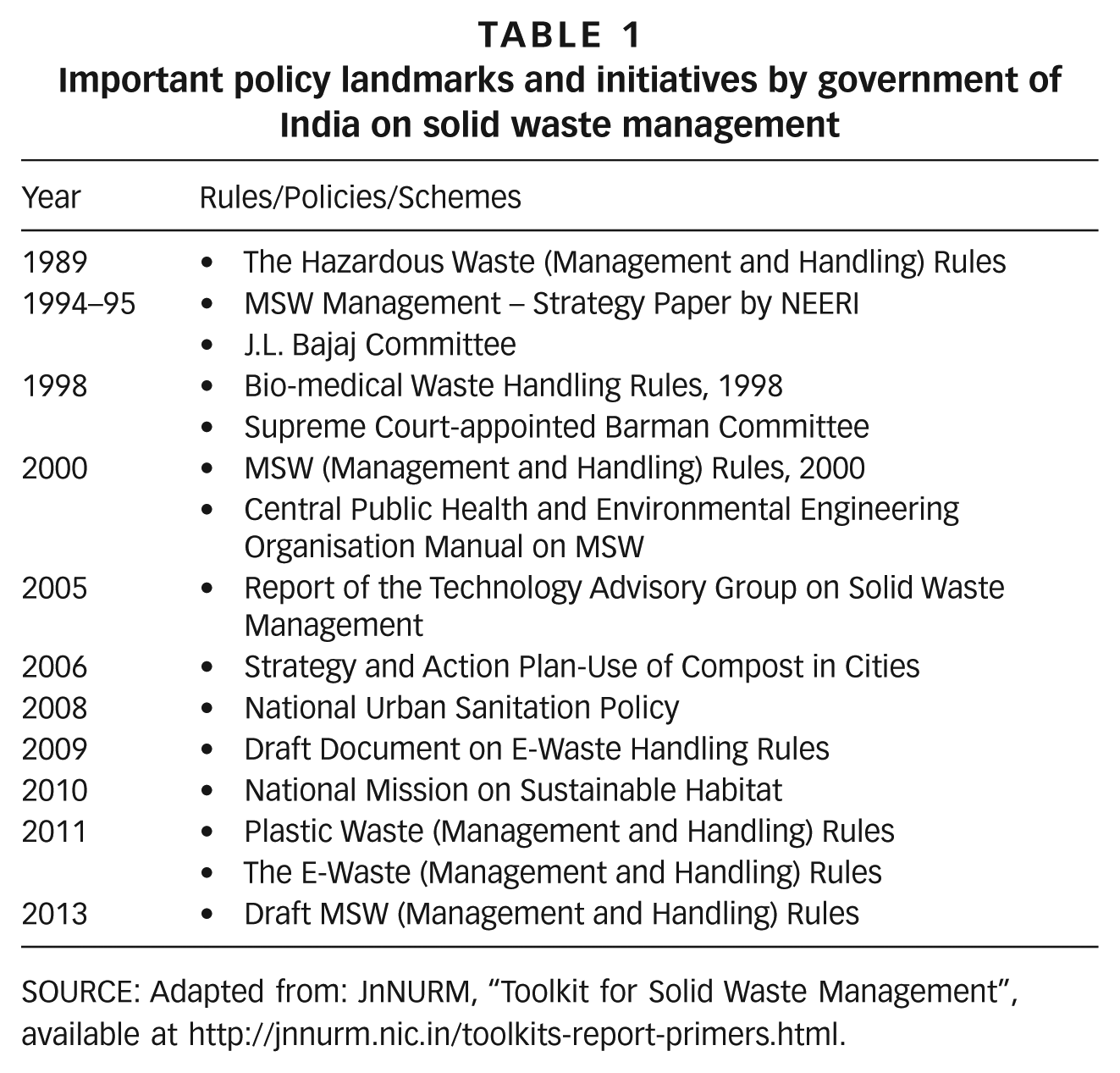
SOURCE: Adapted from: JnNURM, “Toolkit for Solid Waste Management”, available at http://jnnurm.nic.in/toolkits-report-primers.html.
Policy is just the beginning of the process, however. The more difficult challenge lies in the implementation stage. This paper describes the challenges within the city of Chandigarh, one of the most successful experiments in urban planning in modern India and rated one of the best cities in India to live in. It has also repeatedly been judged best in the country on sanitation.(4) Partial credit for this can go to the city’s effective solid waste management. Yet even in Chandigarh, with its excellent rating, there remains a considerable challenge. While the city was planned for just half a million people, it now is home to over a million in the same confined area of 114 square kilometres, with thousands of new migrants coming in search of better opportunities. One of India’s fastest growing cities, with a decadal growth rate of over 40 per cent, it now has a population density of 9,252 persons/square kilometres. This has led to the generation of far higher amounts of solid waste, around 370 metric tonnes daily, a daunting amount for the municipal authorities to manage effectively.
The study reported on here draws on both primary and secondary sources. The primary data came from interviews with 100 randomly selected households, some private door-to-door waste collectors, the head of the Workers’ Union and 20 rag pickers. In addition, questionnaires were administered to selected city officials responsible for solid waste management and those in charge of the Jaypee Garbage Processing Plant in the city. The secondary data were obtained from government of India reports, reports of the Chandigarh Municipal Corporation, journals, books, newspaper articles and the internet.
II. Municipal Solid Waste Management Strategies in Chandigarh
Chandigarh was formed as a union territory in 1966, and such functions as water supply, sewerage, storm water drainage, city roads and solid waste management were the responsibility of the respective departments of Chandigarh’s administration. The Municipal Corporation was formed in 1994 and took on the function of solid waste management in the municipal area; beyond that central area it is carried out by the Department of Rural Development. Besides this, the Chandigarh Pollution Control Committee is responsible for managing hazardous waste and biomedical waste.(5)
a. Quantity of solid waste generated
The total waste generated in Chandigarh is calculated by the municipality to be around 135,050 metric tonnes annually (370 metric tonnes per day), or around 355 grams per person daily. There are no data on the quantity generated by different sources; however, informal discussions revealed that about two-thirds of the waste generated is from domestic sources and about one-third from non-domestic sources. The actual quantity of waste generated is greater than the amount calculated by the Municipal Corporation, which measures waste at transfer stations and processing and disposal sites. These measurements do not include waste disposed of in unauthorized places or recovered by informal waste collectors from the streets, bins and intermediate transfer points.(6) A large share of non-domestic waste such as paper, plastic and tins is collected by the informal sector.(7)
b. Solid waste collection and storage
The waste collection and storage services in Chandigarh can be broadly divided into primary and secondary collection.
A well-synchronized primary and secondary collection and transportation system is essential to avoid overflow from containers and waste litter on streets.(9) According to Municipal Corporation employees in Chandigarh, 100 per cent of the city’s waste is collected daily. However, field visits revealed that certain collection bins are emptied on alternate days, since they do not fill as rapidly, and that this amounts to about 10 per cent of the waste each day (37 metric tonnes). Another concern is that with only 35 SSKs in the entire city, there is a greater reliance on collection from residences in carts. This service is disorganized and unreliable, with foul-smelling waste scattered around from uncovered carts, causing ground-level pollution and discomfort to residents.
c. Solid waste transportation
Transportation of waste depends upon such factors as the type of waste, the number and type of vehicles, their capacity and the number of trips they can make in a day. In Chandigarh, the waste from dustbins and primary collection centres (SSKs) is transported to either the garbage processing plant or the landfill site by way of tractors, dumper placers (skip loaders), refuse collection compactors, open trucks, hired tractor trolleys and three-wheelers (Table 2). These vehicles are owned by the Municipal Corporation or hired from private bodies.
Transportation vehicles for solid waste management in Chandigarh (2013–14)
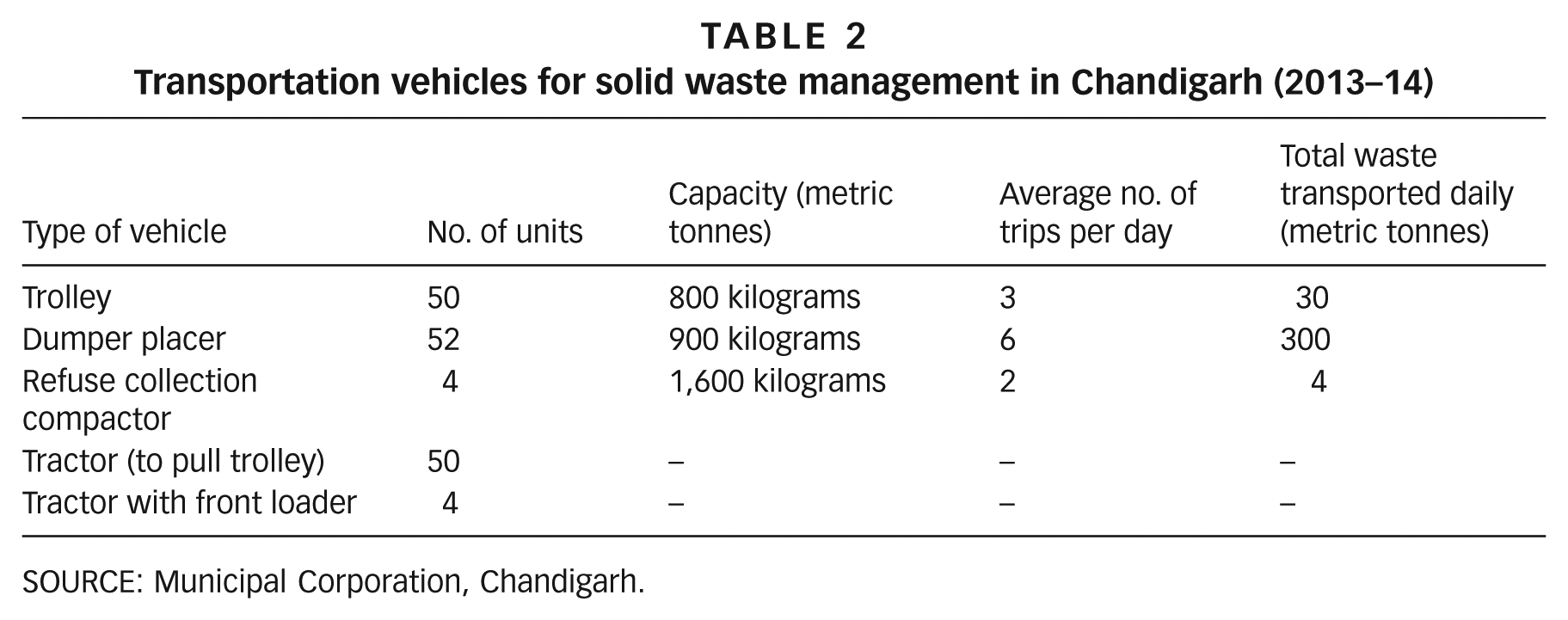
SOURCE: Municipal Corporation, Chandigarh.
The transportation vehicles need to be maintained in good order to be able to transport waste efficiently. The survey undertaken with Chandigarh’s solid waste management officials indicates that, on average, about 10 per cent of vehicles are out of order at any given point. As the Municipal Corporation does not have its own workshop, vehicle maintenance is done in private workshops. Officials said that while an in-house government workshop would facilitate more rapid and reliable repair, it would not be economically viable, since it would be impractical to provide all the different specialized machines and skills in one workshop.
d. Method of waste disposal
In Chandigarh, multiple disposal methods are used for various types of wastes. Of the 370 metric tonnes of waste that are generated each day, 125 metric tonnes (33.7 per cent) are disposed of through landfill. The landfill site, developed in Dadumajra Village, is about 45 acres in size, 25 acres of which have been filled, levelled and reclaimed in accordance with the Central Pollution Control Board’s guidelines. This site is partially fenced and partially surrounded by a brick boundary wall. There is one heavy chain bulldozer (BD-50) for compacting, pushing and levelling the garbage in low-lying areas on the landfill site, a JCB (backhoe loader) for digging fresh soil, and two trucks and two tippers for transporting soil and other inert material to lay over garbage, a process that happens daily. Pipelines have been laid and a leachate collection tank constructed to collect leachate from the landfill area. There is no provision for the collection of the methane gas generated since this is not considered commercially viable.
A garbage processing plant was set up in 2008 at the landfill site by Jai Prakash Associates Ltd. to produce refuse-derived fuel (RDF). Its average daily intake of solid waste is 280 metric tonnes, of which approximately 35 metric tonnes are rejected and dumped in landfill. In addition, around 90 metric tonnes of waste from hotels, vegetable markets, drainage pipes and so on are not taken by the plant and are directly disposed of in the landfill site (Table 3). As noted, the waste from the slaughterhouse is treated in its biomethanation plant, which treats 3 tonnes daily to generate electricity for use at the slaughterhouse.
Details of garbage generated/processed per day in Chandigarh (2013–14)
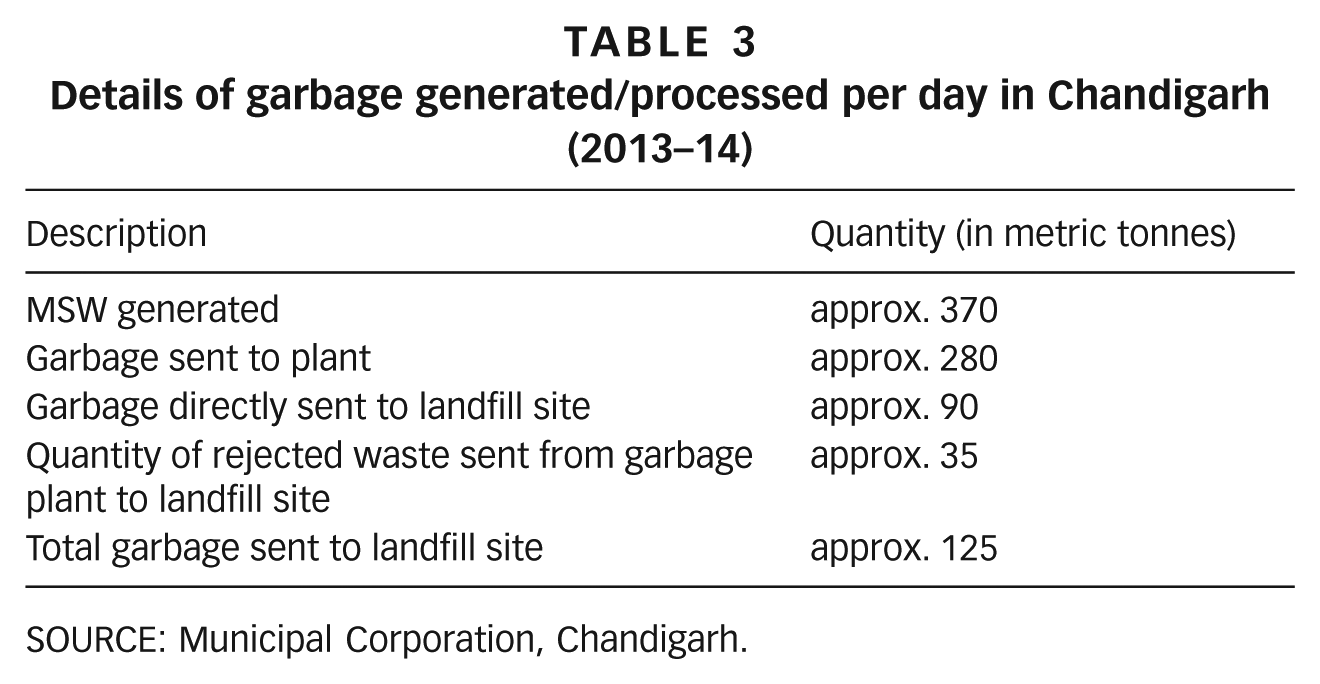
SOURCE: Municipal Corporation, Chandigarh.
III. Municipal Solid Waste Management in Chandigarh: Challenges
This section examines the current and emerging challenges in solid waste management in Chandigarh.
a. Waste segregation
Waste segregation is one of the biggest challenges in Chandigarh. At present, there is no mechanism for segregating waste in the city. Waste is not segregated at household level by the residents. Residents said they would find it inconvenient and that in any case there is no point segregating it unless the private collectors maintain the separation. The private collectors reject the idea of household waste segregation outright, indicating that it is not practical or economically viable for them to carry different carts for different types of waste. Besides, they would need more staffing for separate collection of segregated waste. Waste segregation at the source would also interfere with their capacity to separate out valuable materials from the waste at the time of household collection, a good source of income that they rely on. The segregation by the private waste collectors is not segregation in the true sense as they take out only the valuables like tins, glass bottles, cardboards, etc., leaving behind the rest of the organic and inorganic waste in mixed form.
Municipal officials asserted that segregation of waste must be done at the source of waste generation itself, since it is more difficult, dangerous, time consuming and costly to do it at a later stage, and because in the absence of this segregation, the subsequent processing is so much less efficient. Time and again, they stated, efforts have been made to encourage segregation at the source and various awareness initiatives have been undertaken; however, the resistance of both residents and private waste collectors has led to the failure of these efforts. No stakeholder is ready at this point to take responsibility for waste segregation.
b. Adequate staffing
Solid waste management is a labour-intensive service and adequate staff is essential for an effective system. Most local governments cope with a shortage of staff, which adversely affects their performance. The waste management hierarchy in Chandigarh is outlined in Figure 1.
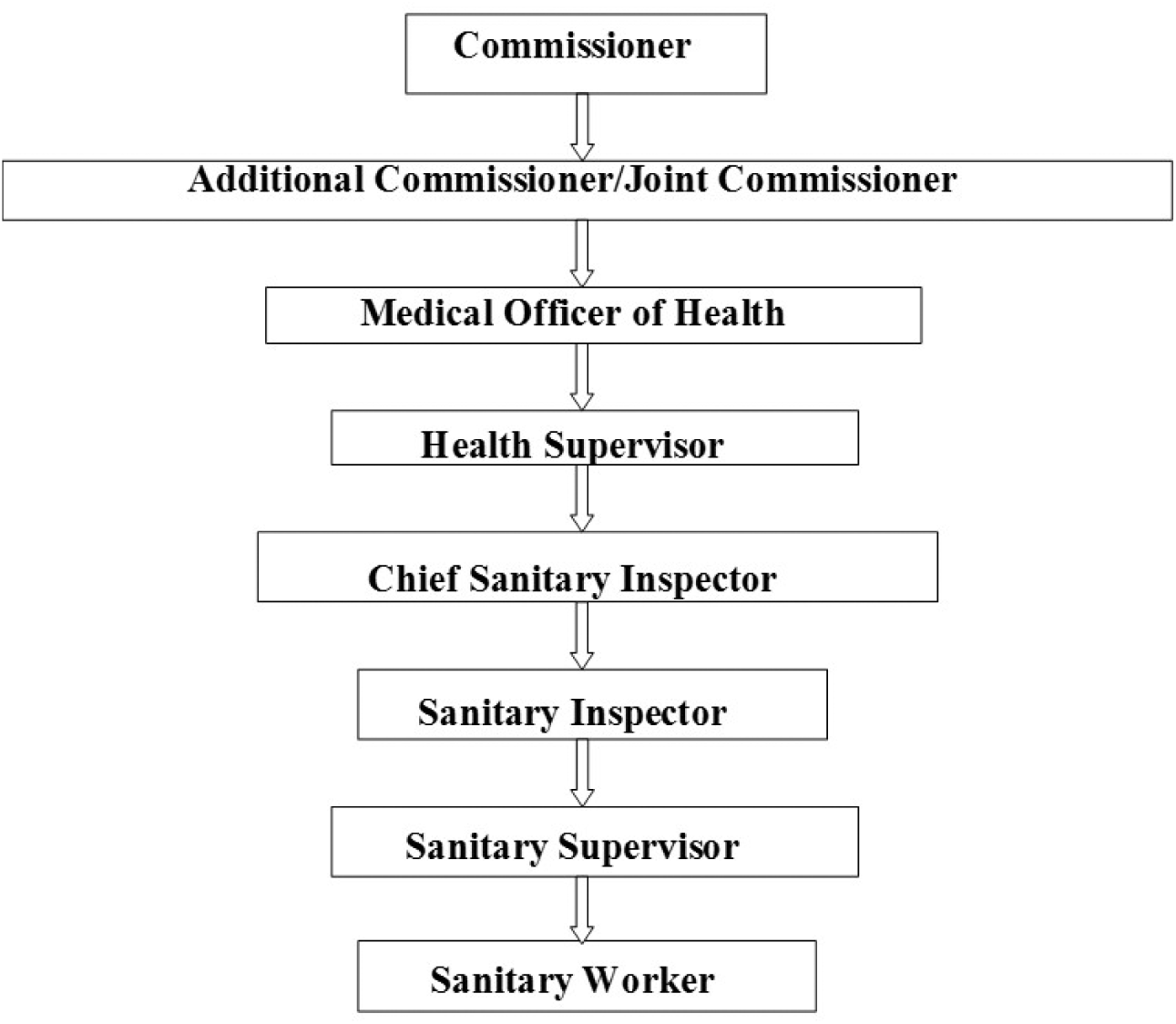
Solid waste management hierarchy in Chandigarh Municipal Corporation
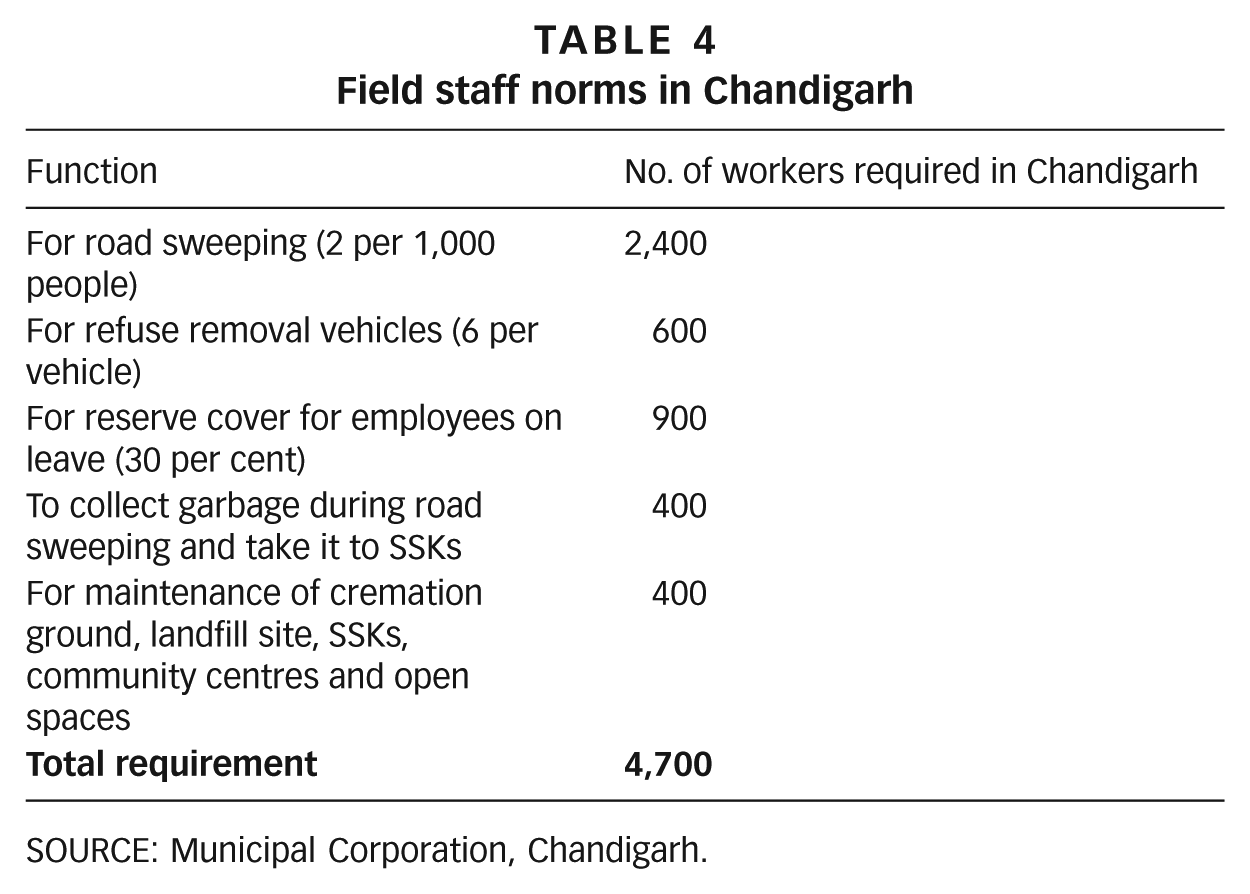
The adequacy of Chandigarh’s staffing for solid waste management can be discussed at two levels: supervisory staff and field staff.
The questionnaire revealed that Chandigarh has partially adopted these guidelines. Instead of engineers, specialists in public health have been appointed for solid waste management in the city. There is one medical officer of health, with overall responsibility for solid waste management. The city has been divided into three health zones for the purpose of solid waste management, each headed by a health supervisor. Besides this, there are seven chief sanitary inspectors, 43 sanitary inspectors (14 regular and 29 contractual) and 117 sanitary supervisors in the city. (Regular employees are permanent, while contractual employees have fixed-term contracts.) While there is an adequate number of supervisory staff in Chandigarh, officials noted that there is a shortage of regular supervisory staff in the field, especially sanitary inspectors, most of whom have had to be recruited on a contractual basis.
Field staff norms in Chandigarh
Source: Municipal Corporation, Chandigarh.
According to these norms, Chandigarh Union Territory, with a population of approximately 1.2 million as of early 2015, should have a total of 4,700 sanitary workers. This includes the number routinely required as a reserve to cover for workers absent or on leave. However, the survey revealed that there are around 3,450 sanitary workers (1,150 regular and 2,300 contractual) in the city, or a shortage of about 1,250. The officials stated that they are trying to fill these posts, and that 319 have already been advertised. Even if these 319 posts are filled, however, the corporation will still have a shortage of 931 sanitary workers, a large number considering the increasing population and increasing pressure of solid waste in the city.
Informal interviews with the officials revealed that the contracted sanitation workers hired by the municipality (the second category listed above) perform their work more efficiently than regular workers, and are less often involved in strikes. This may be because of their lack of job security. Some contractual workers revealed that they are unhappy with their status and the fact that they receive less pay than regular workers for the same work. At the same time regular workers were found to be poorly motivated because there was little prospect for promotion. Nor is the performance of workers in the areas outsourced to private contractors (the third category) satisfactory. Municipal Corporation officials noted that they frequently receive complaints from the residents of these areas. Officials make regular surprise visits to inspect the work of these contractors, who have been found not to be employing the requisite number of sanitary workers in the outsourced areas. Accordingly, penalties have been imposed on them. The contractors justify the quality of their performance, claiming that the areas contracted out to them include slums and villages where hygiene and levels of sanitation are generally lower to start with because of residents’ low income and awareness. The workers hired by the private contractors say they are poorly paid and that their salaries are often delayed. It is clear that there is considerable scope for improvement of solid waste management in the city – by motivating the regular workers, regularizing the second (contracted) category of workers, and more effectively monitoring the private contractors with regard to the number of sanitary workers they employ and their adequate and timely remuneration.
c. Public–private partnerships
In Chandigarh, public–private partnerships can be witnessed at various stages of the solid waste management process. The private sector is involved, first, in the primary door-to-door collection of household waste. Second, private contractors are engaged to supply workers to the municipality, and in some areas (especially village and slums), sweeping and solid waste collection have been wholly given over to the private contractors. The most prominent public–private partnership venture in Chandigarh is that between the Municipal Corporation and the Jaypee Group of New Delhi, which in 2008 installed the major municipal solid waste processing plant on the outskirts of the city at a cost of US$ 3.68 million. The land for the plant (10 acres) was provided by the Municipal Corporation at a nominal lease rent of US$ .016 per square metre for 30 years. The plant has the capacity to process approximately 600 tonnes of garbage daily. The state-of-the-art European technology, customized to the characteristics of Indian municipal solid waste (high moisture content and varying caloric value), converts the waste into densely packed fluff or pallets. There are certain practical problems with the arrangement, however.
As a part of the memorandum of understanding signed between the Municipal Corporation and M/S Jai Prakash Associates Ltd, the company was to utilize all of the processed waste in its own cement plant, located near Solan in Himachal Pradesh. However, environmental issues prevented the cement plant from becoming operational, and thus the company was unable to make use of the RDF, resulting in a considerable financial loss.
The fact that the waste plant is unable to process all types of waste also lowers its efficiency and productivity. For instance, it does not accept the daily 90 metric tonnes of waste from hotels and vegetable markets since this waste, largely organic with a high moisture content, cannot be converted into RDF, the only by-product that the plant manufactures. The capacity of the processing plant is thus considerably underutilized, and at present, it takes in only 280 metric tonnes of waste per day. Of these 280 metric tonnes, around 35 metric tonnes are rejected as inert/semi-processed solid waste and sent on to landfill. So in actual terms, the plant processes only 245 metric tonnes of solid waste every day. Because these 245 metric tonnes, not separated at the source, still contain a substantial proportion of organic waste that it is not practical to remove prior to processing, the result is a less efficient process and a smaller relative amount of RDF.
The Municipal Corporation has to deal with the waste that the plant does not take in, as well as the inert waste rejected by the plant, an overall amount that is higher than that mutually decided by the parties. This results in the additional cost of disposing of this waste in the landfill, which is being filled up faster than anticipated. Hence, the plant is not financially lucrative for Jaypee; nor does it provide an adequate solution for the Municipal Corporation. An alternative plan of action is needed. Despite all these limitations, the plant is more successful than most currently operating in the country.
d. Role of unions
In Chandigarh, all sanitary workers, regular and contractual, belong to the Safai Karamchari Union, which has 3,450 members. An informal interview with the union’s president revealed that the union’s efforts on behalf of its members has resulted in about a 10 per cent raise in their wages, as well as measures to ensure their health (such as gloves and masks, soaps, anti-fungal mustard oil, and hepatitis B vaccinations), a secure retirement pension, and sufficient and flexible paid leave.
However, according to an official in the Municipal Corporation, union demands have often been a major hurdle in introducing innovative measures to improve the city’s solid waste management. The “bin free sector project” in Sector 22, for example, could not be implemented because of resistance from the union. The union also resists measures for source segregation of waste, and at times it pushes for strikes on trivial issues rather than going for peaceful resolution of disputes with the city’s administration. These strikes adversely affect the health, hygiene and aesthetics of the city. Although the union has played a remarkable role in improving the quality of life of its workers, it is also important that it become an agent of change rather than working against more general progress.
e. Role of the informal sector
The role of rag pickers in solid waste management has been totally ignored in Chandigarh. No efforts have ever been made even to count the number of waste pickers in the city. This study found that rag pickers in Chandigarh operate at three different levels –collection of waste in the household, SSK and landfill site. Most of these waste pickers are women from socially marginalized groups or recent internal migrants from rural areas who survive on a meagre income. Informal discussions with 20 rag pickers revealed that few of them had any other source of livelihood. With no formal system of waste segregation in Chandigarh, they were forced to sort through waste themselves to pick out what was recyclable. Their long hours of exposure to waste without gloves or face masks make them vulnerable to many ailments such as tetanus, diarrhoea, eye problems, respiratory problems, skin infections and allergies. Most of these rag pickers complained of eye burning, redness, itching and watering as well as diminished vision. The consumption of unhygienic food contributed further to their poor health. These waste pickers are often accused of being an obstacle to regular collection services, since they scatter the waste around SSKs and make it more difficult for the municipal workers to collect. For effective solid waste management in the city, their integration into the chain must be a priority for the Municipal Corporation in Chandigarh.
f. Environmental impact assessment
There must be an environmental impact assessment of existing waste management practices to facilitate the analysis of gaps and deficiencies in the existing system. In Chandigarh, people living and working near the waste disposal sites are most at risk. Officials of the Municipal Corporation say the residents complain frequently about the foul smell from the garbage processing plant and landfill site. The waste also attracts insects, rats and other vermin, including disease vectors, and provides them with breeding grounds, a problem acknowledged by the officer in charge of the plant. In recognition of the problem, the Municipal Corporation has approved the creation of a soil boundary wall and the landscaping of the landfill area facing the residential colony in Dadumajra, both to maintain cleanliness and to deal with aesthetic concerns. The corporation has also approved the hiring of the National Environment and Energy Research Institute in Nagpur as a consultant for the city’s solid waste management, including the segregation of waste, scientific disposal of garbage on the landfill site, the treatment of its leachate and identification of a site for a new landfill for future use. There is an urgent need, as well, for a more long-term strategy to mitigate the environmental consequences of this waste in Chandigarh.
g. Community participation
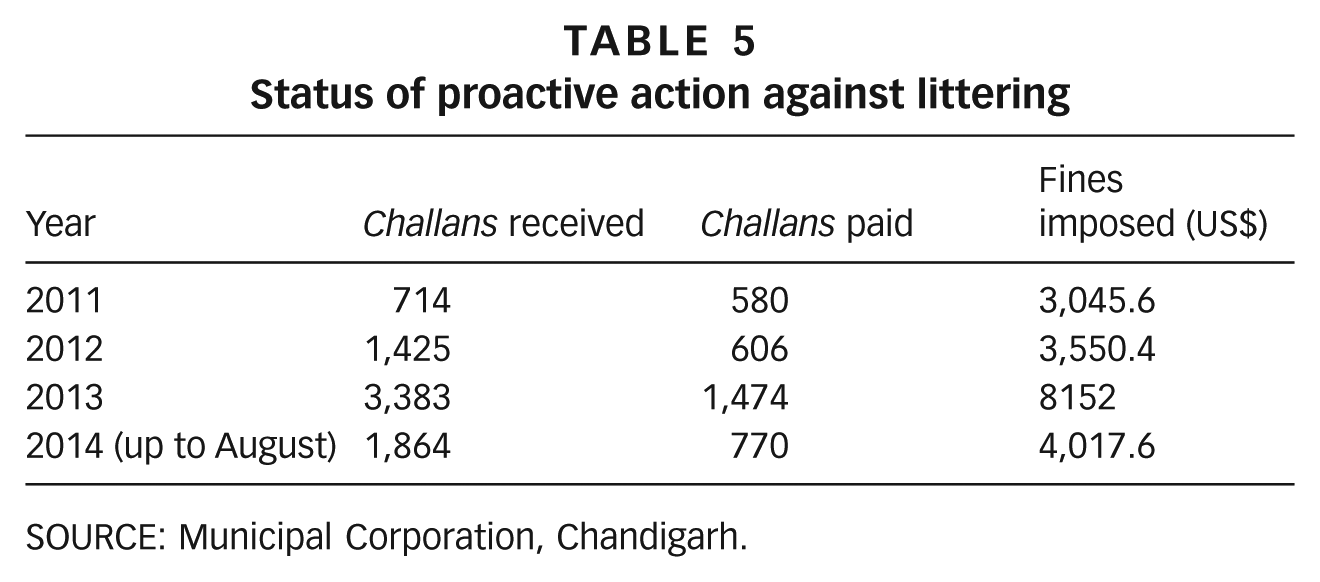
Recognizing the role of community participation in solid waste management, Chandigarh Municipal Corporation has initiated various policy measures. First, in order to reduce the volume of waste for disposal in landfill, resident welfare associations, NGOs, and institutions like hospitals, colleges, hotels and universities are being encouraged to participate in arrangements for the segregation and processing of organic waste on their respective premises. Second, regular meetings are held with resident welfare associations and market associations on issues related to cleanliness of residential and commercial areas. Third, awareness campaigns are carried out through radio and advertisements in newspapers as well as in schools and colleges. The Municipal Corporation has also taken proactive action against the violators of solid waste management norms, issuing challans (violation tickets) and imposing fines for littering (Table 5). Since 2013, the corporation has been prosecuting defaulters who fail to pay their fines (1,825 of them since 2013). This has made the enforcement procedure more effective.
Status of proactive action against littering
SOURCE: Municipal Corporation, Chandigarh.
Despite all these efforts, the Municipal Corporation has not been very successful in ensuring effective community participation in different phases of the waste management process, and this remains a prime challenge in Chandigarh.
h. Financial resources
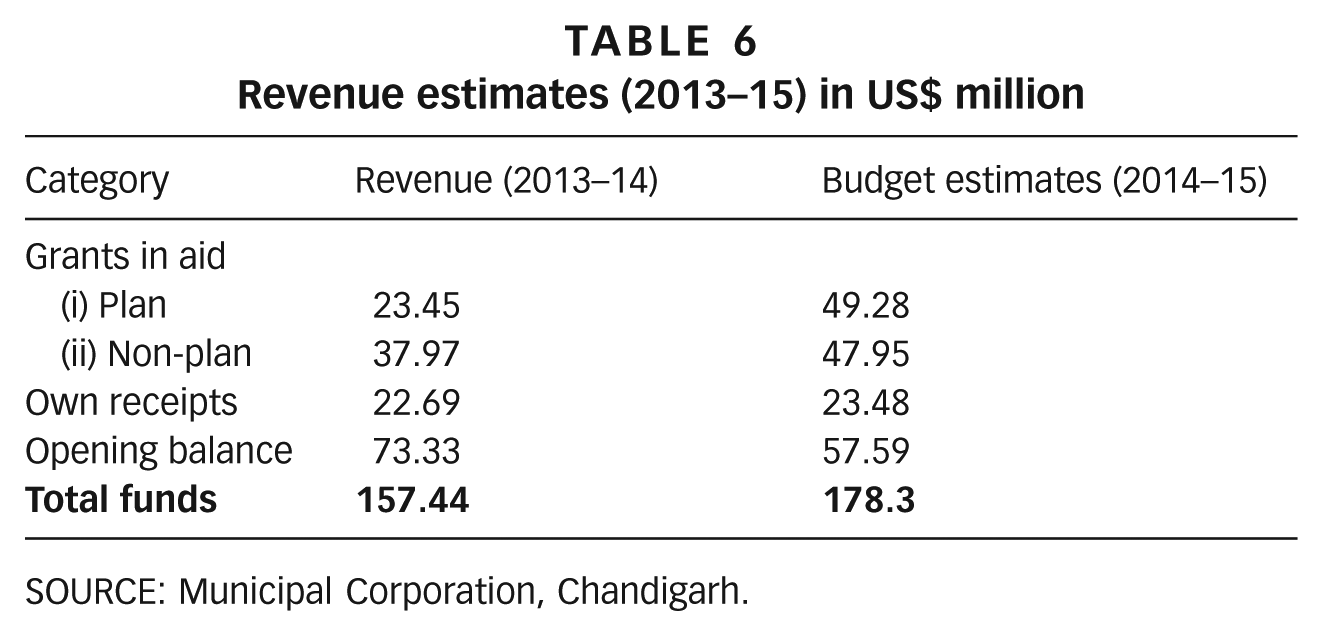
An efficient solid waste management system requires adequate financial resources to meet all relevant costs from predictable sources of revenue. The financial challenges can be studied at two levels, revenue and expenditure.
Revenue estimates (2013–15) in US$ million
Source: Municipal Corporation, Chandigarh.
The revenue generated from solid waste management services in Chandigarh is not substantial, however. The corporation has recently started a pilot project in Sector 22 in which charges for sanitation services are imposed on commercial establishments. The corporation is also recovering sanitation charges from functions like marriages in the parks and community centres in the city, and from fines imposed for littering in the city. In the first eight months of 2014, US$ 4,018 had already been collected from these fines. However, there is a need for innovative sources of revenue and better financial administration of solid waste services in the city.
IV. Recommendations
These significant challenges must be prioritized with practical short-term and long-term strategies. As the city’s population grows in the coming years, more rigorous efforts will be required for an effective solid waste management approach. Some of the more important measures are suggested here.
a. Segregation of waste
The quantity and composition of municipal solid waste generated in a city determine the appropriate collection, processing and disposal options. The segregation of waste at the source becomes critically important for efficient processing and must be enforced at the household level. The same applies to the roadside collection of waste. In Chandigarh, resident welfare associations can play an effective role in enforcing this. The corporation plans to start a pilot project on segregation of waste at source in Sectors 39 and 40, with different colour-coded bins for separate disposal of organic and inorganic waste, which can be replicated in the whole city at a later stage. To motivate private waste collectors, they will be allowed to take a share of the returns from the recovery of recyclable waste.
b. Community participation
All stakeholders must be adequately involved in the consultation, planning and decision-making processes. Although many efforts have been made by the Municipal Corporation to encourage community participation at various stages of the solid waste management process, these initiatives need to be regularized though group discussions and the involvement of community leaders, community associations, self-help groups and local residents who represent the interests of the community at large. More rigorous campaigns have to be undertaken in schools and colleges to bring about changes in attitudes and practice
c. Cost recovery from solid waste management
Cost recovery needs to be improved in order to provide people with better-quality service. The foremost mode of cost recovery is through the generation of “wealth from the waste”. Working in this direction, the Municipal Corporation is in the process of establishing two biomethanation plants of 5-metric tonne capacity each in collaboration with Bhabha Atomic Research Centre. The plants will process the organic waste from vegetable markets and use it for generating electricity. More such plants are planned throughout the city, near the source of organic waste generation.
Other new sources of cost recovery are also needed. Dumpsites are the largest greenhouse gas emitters in the waste sector. Capitalizing on the methane generated from the dumpsites, a large number of landfill gas capture projects have been initiated and proven successful all over the world. The waste sector therefore offers opportunities for avoidance of greenhouse gas emissions that could be monetized in the form of carbon credits or certified emission reductions.
d. Identification of additional sources of revenue
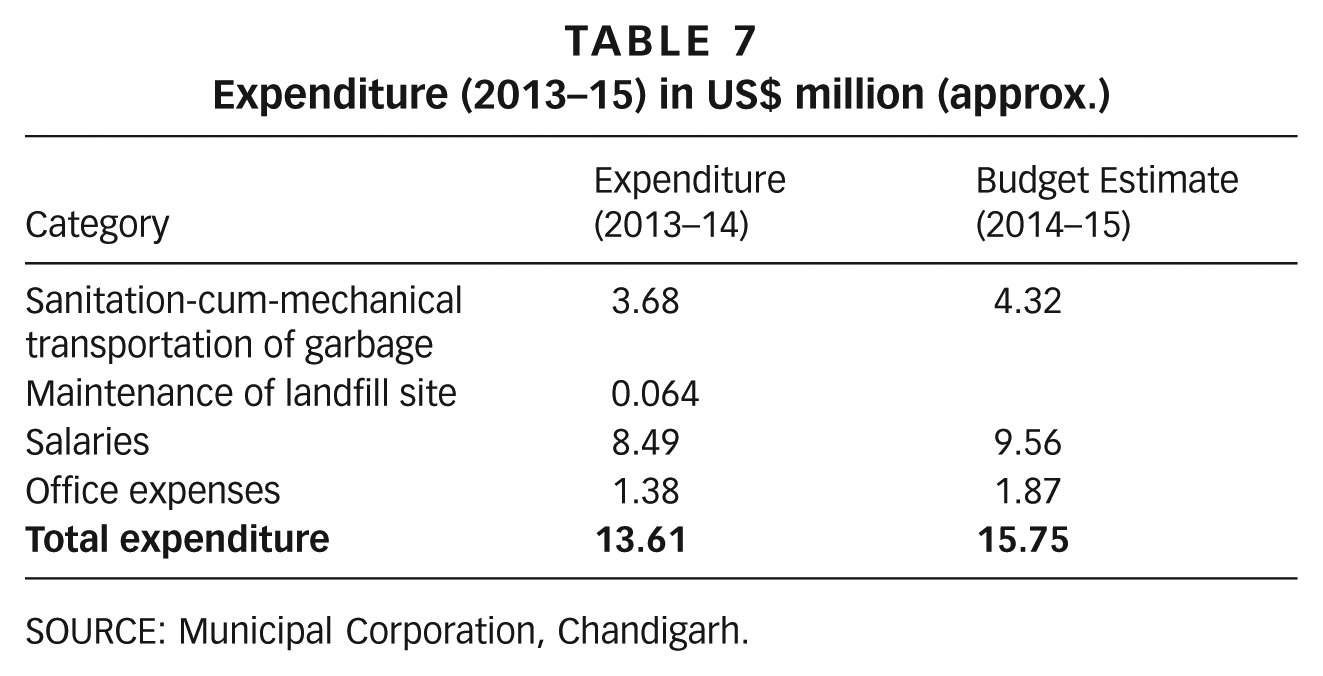
Around US$ 13.61 million was spent on solid waste management in Chandigarh in the year 2013–14 (Table 7). However, a very small proportion of this was generated from solid waste services such as sanitation charges or from fines on littering. Although Chandigarh, as a union territory, has enough funds for the management of municipal solid waste management, with most of its revenue coming from the central government in the form of grants, it is still important to focus on additional sources of revenue to make solid waste management services in the city “self sustaining”. Besides the traditional sources of finance for solid waste management activities such as property tax, user charges, grants and loans, new sources need to be identified. The Municipal Corporation is actively considering imposing sanitation charges on all the commercial areas in the city. More innovative sources of revenue are also needed. These could include the levy of a solid waste management tax along with property taxes, separate solid waste user charges, and user charges linked to utility (water/electricity) bills.(11) Besides this, certain principles such as the “polluter pays” principle, proportionality, and capacity to pay must be considered by urban local governments.
Expenditure (2013–15) in US$ million (approx.)
SOURCE: Municipal Corporation, Chandigarh.
e. Involvement of the informal sector
The experience and knowledge of informal waste pickers could be capitalized on by formalizing and organizing them. In Chandigarh, efforts must be made to bring rag pickers together in some formal association or union. Once they are formally recognized, measures could be initiated to provide them with healthcare, social security, and safety equipment – as well as the dignity of recognition. Pune’s waste pickers’ association, called Kagad Kach Patra Kashtakari Panchayat (KKPKP), is an example of how community mobilization can comprehensively and effectively succeed in improving the livelihoods of waste pickers. The same success story could be replicated in Chandigarh by involving rag pickers’ associations in the effective implementation of the city’s solid waste management plan.
f. Ensuring successful public–private partnership
In low-income countries, where local governments are always short of resources, the public–private partnership (PPP) model seems to be the most appropriate option for managing solid waste. However, contracting models should preferably be performance based and payment to the private partner should be measured using outputs reflecting the service quality levels defined in the contract. Private service providers have to be held accountable for the standard of service, and its effectiveness and efficiency. The Municipal Corporation in Chandigarh needs to implement the PPP agreement with the Jaypee plant more effectively by ensuring that the plant treats the full 370 metric tonnes of garbage generated in the city daily, including the 90 metric tonnes of waste from hotels and vegetable markets.
g. Scientific disposal of garbage on the landfill Site
The prime purpose of a sanitary landfill is the final disposal of solid waste on land designed and constructed with the objective of minimizing impact on the environment.(12) The Municipal Corporation must ensure that the recommendations, once they have been received from the National Environment and Energy Research Institute (NEERI, Nagpur), are implemented in their totality. This will help to enhance the life of the present landfill site and ensure effective disposal of waste with minimum impact on the environment.
Proper implementation of all the above measures could lead to the transformation of solid waste management from being focused on service delivery to managing resources for the future. The Commission on Sustainable Development (CSD), which currently works on waste management as one of its priority issues, claims that moving towards zero waste is an achievable goal. It is important that waste be considered a largely untapped opportunity to recover resources, realize environmental, economic and social benefits, and take a step on the road to a sustainable future.(13)
The UN-Habitat framework recognizes that three governance aspects are critical for sustainable solid waste management, namely: inclusivity (extending to both users and providers of services); financial sustainability; and sound institutions and proactive policies.(14) This requires rethinking and reorganizing waste management on a life-cycle basis and incorporating waste management into the developing “green economy”. A well designed and carefully implemented waste management policy will contribute to all three “pillars” of sustainable development (environmental, economic and social): by improving economic efficiency, especially in resource extraction and use (e.g. through waste prevention, reuse, recovery or recycling); by reducing the budget needed for solid waste collection services; by reducing or eliminating adverse impacts on health and the local and general environment; by delivering more attractive and pleasant human settlements and social amenities; and by creating sources of employment and potentially a route out of poverty for some of the poorest members of the community.(15) When these actions are implemented, the path to the future will encompass a succession of individual, pragmatic and incremental decisions on the ground, which taken as a whole will build momentum to carry this transition forward.
Footnotes
1.
2.
3.
See reference 1.
4.
The National Rating Survey Data on City Sanitation conducted by the Ministry of Urban Development, Govt. of India in 2010 adjudged Chandigarh as best (scoring 73.48 points) and categorized it in “BLUE City Colour Code”. JnNURM in 2012 listed 65 mission cities for financial assistance for urban development in the country. A survey of 423 cities did not find a single green city in the country. Chandigarh, however, was the first city to be ranked as “good in sanitation”. Besides this, Chandigarh was judged twice as “Best City for Cleanliness and Sanitation” in 2014, by ABP News and also by India Today Group.
5.
Under the Hazardous Waste (Management and Handling) Rules, 1989 and the Biomedical Wastes (Management and Handling) Rules, 1995.
6.
7.
This informally disposed of waste has been calculated in Delhi and Bengaluru to be 25 per cent and 15 per cent respectively of the total generated. UN-Habitat (2010), Solid Waste Management in the World’s Cities, United Nations Human Settlement Programme, Earthscan, London and Washington, DC, available at  .
.
8.
See reference 6.
9.
See reference 6.
10.
11.
See reference 6.
13.
See reference 1.
15.
See reference 1.