




Abstract
The delivery of urban basic infrastructure services is often guided by the modern infrastructure ideal, which aims for technical innovation, economic efficiency and uniformity through long-term, centralized management approaches. In rapidly growing urban centres of the global South, however, heterogeneous infrastructure configurations have long involved multiple systems in varying degrees of coexistence. This paper explores how community-based enterprises – organizations that aim not to turn a profit but rather to generate human well-being – contribute to, complement or conflict with wider municipal solid waste management strategies. It does so through two case studies, focused on Luchacos, a local enterprise turning waste into briquettes in an informal settlement of Kampala, Uganda; and the Self Employed Women’s Association (SEWA), a cooperative of waste pickers in Ahmedabad, India. Drawing on empirical data and policy analysis, the research finds that, given the necessary state support, community-based enterprises can contribute to a range of sustainability and development objectives.
Keywords
I. Introduction
Urban basic infrastructure services (UBIS) are fundamental for maintaining and improving the living standards of citizens, managing a city’s ecological footprint, and harnessing opportunities for prosperity.(1) These services include water and sanitation, waste collection and management, transport and energy, as well as housing, which is the primary means by which citizens access the other services.(2) Satterthwaite describes these infrastructures as forming “the foundation on which human settlements are built and function”.(3) However, rapid population growth and the associated pace of urbanization are placing significant pressure on the provision of UBIS, a challenge that is exacerbated by the adoption of fiscal austerity measures, high levels of social inequality, and environmental concerns, most notably climate change.
Delivering UBIS sustainably in the face of these challenges has often been framed as a matter of stimulating technical innovation and achieving economic efficiency and uniformity through long-term, centralized management approaches. In the rapidly growing urban centres of the global South, however, formal infrastructures exist alongside a multiplicity of off-grid and/or informal service provision models,(4) many of which long predate their networked counterparts. The ways in which pervasive socioeconomic and environmental problems can be addressed within these “heterogeneous infrastructure configurations”, as they are termed by Lawhon and other scholars, has become a significant area of enquiry,(5) with much attention given to the roles played by non-state and local actors.
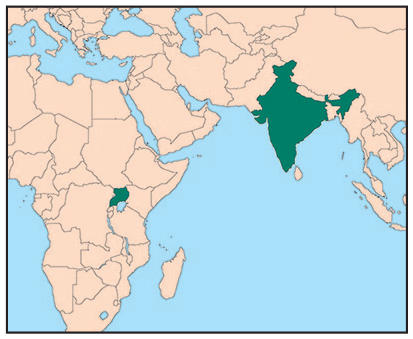
This paper aims to explore the extent to which community-based enterprises in Southern cities are enabled to participate in the sustainable and inclusive delivery of UBIS in contexts characterized by infrastructural heterogeneity. It does so by exploring two community-based enterprises operating in the municipal solid waste management (MSWM) sector: the Self Employed Women’s Association (SEWA), a cooperative and trade union of women waste pickers in Ahmedabad, India; and the Lubaga Charcoal Briquette Cooperative Society (Luchacos), a small enterprise that turns household waste into briquettes in Kampala, Uganda. Each case is embedded within an analysis of the policy context in which it operates. Specifically, the paper aims to answer these questions: in what ways and under what circumstances can community-based waste enterprises aid the transition to more sustainable and inclusive municipal solid waste management strategies; and how are the activities of such enterprises supported or constrained by the governance arrangements and policy context within which they exist?
Following this introduction, the paper reviews the concepts of heterogeneous infrastructure configurations and community-based enterprises, then situates these within the context of the MSWM sector in Southern cities. Next, the case studies are presented, and the opportunities and challenges associated with community-led UBIS delivery models are discussed. The paper concludes with a call for theory, practice and policy to incorporate a broader range of approaches to the delivery of UBIS in planning for environmentally sustainable and socially inclusive cities.
II. Heterogeneous Infrastructure Configurations in Southern Cities
Ninety per cent of all population growth to 2050 will take place in cities of the global South,(6) where at least one billion people already live in slum-like conditions,(7) many of them with little or no access to formally provided infrastructure and services.(8) In the face of chronic service deficiencies, a host of initiatives of varying degrees of formality and with varying levels of state support have evolved to provide critical and life-sustaining services to citizens. The majority of residents in Southern cities access UBIS – or augment their access to such services – via these decentralized and often informal channels, which have long existed alongside the more formal, centralized networked systems.(9) Scholars refer to these diverse arrangements as “heterogeneous infrastructure configurations”.(10)
The under-provision of infrastructure and services is typically characterized as a failure of the state,(11) with a set of modernist interventions seen as the ultimate solution. At the core of this normative agenda has been the assumption that infrastructure provision should be centralized, universal and uniform – what Graham and Marvin have called the “modern infrastructural ideal”.(12) However, these authors also note that greater engagement with critical urban geographies in the last two decades has brought about a more relational “infrastructural turn”(13) nowadays, the unprecedented scale and complexity of global infrastructure deficits, against a backdrop of pervasive socioeconomic and environmental instability, is leading to the increasing recognition that achieving the modern infrastructural ideal is neither feasible nor, in some cases, desirable.
It has become apparent that business-as-usual infrastructure development is not sufficient to produce the socioeconomic or environmental outcomes necessary to meet the goals of global sustainability agendas like the Sustainable Development Goals (SDGs), the New Urban Agenda and the Paris Agreement. Infrastructure – especially in the buildings, transport and energy sectors – is directly or indirectly responsible for 79 per cent of greenhouse gas emissions.(14) Yet even at this scale of operation it has failed to reach all populations equally. This is in part demonstrated by the growth of so-called slums, which, as Schäffler and Swilling note, is “perhaps the most striking representation of a global infrastructure crisis that has beset an increasingly resource-constrained world”.(15) In the global North, too, unequal access to adequate infrastructure has been identified as a key driver of social injustice.(16)
Accordingly, increasing attention is being paid to the role of ‘other’, non-governmental actors in providing UBIS. The opportunities associated with smaller-scale, self-built and community-based UBIS delivery systems, organized by actors including citizens and citizen-led cooperatives, non-governmental organizations (NGOs), and micro, small and medium-sized enterprises (MSMEs), are increasingly being considered as possible, radical alternatives to the modern infrastructural ideal.(17) While there has been considerable work on the motivations, resources and (economic) results of community-based actors, fewer studies have explored the linkages between such enterprises and the formal policy environment in which they operate(18) – an avenue of enquiry that is particularly relevant with regard to urban service delivery, so often perceived as being regulated by the state.
III. Community-Based Enterprises in Diverse Urban Economies
Community-based enterprises can be understood as organizations whose aim is not to maximize private profit but to contribute to the generation or enhancement of community well-being, particularly for marginalized groups.(19) Though these enterprises may involve different constellations of actors, key is that they are not state-led but are controlled to a large extent by citizens who are explicitly or indirectly attempting to experiment in building more just, human-centred, non-capitalist economic relations.(20) Despite this, community-based enterprises are – like capitalist enterprises – most often assessed based on their ability to turn a profit and succeed without indefinite (financial) support from a government, donor or philanthropic entity.
Such forms of enterprise are often presented as involving labour practices and livelihoods that are variously labelled as informal, non-standard, vulnerable or peripheral, particularly when they are established in Southern cities. The positioning of these practices as unconventional, or as failures, can be traced to a school of thought which considers capitalist economic practices the most efficient, modern, dynamic and innovative way to provide goods or services.(21) This perspective overlooks the diverse range of economic and infrastructural practices that actually interact to deliver UBIS, particularly outside of areas serviced by the state,(22) such as in informal settlements. Indeed, 61 per cent of the employed population globally are estimated to work in informal business or activities,(23) while MSMEs make up 90 per cent of the private sector in developing economies,(24) employ up to 78 per cent of the working population, and account for approximately 29 per cent of national gross domestic product (GDP).(25) As urban theory derived from the global North is deconstructed through the study of the lived realities in Southern cities, it is increasingly accepted that community-based practices are not marginal, nor are they features of a transitional phase during which Southern cities, catch up, and, converge, with their Western counterparts. Rather, community-based enterprises are, and will remain, an integral part of the Southern city.(26)
Despite this being increasingly widely accepted, high rates of entrepreneurial activity in the global South are still frequently attributed to there being a large number of so-called “necessity enterprises” – businesses said to be started by those who have no other alternatives, usually as a way to meet their basic needs.(27) Factors contributing to this include a high poverty rate, too few conventional job opportunities, and high barriers to gaining formal employment. Citizens are said to be pushed into enterprise formation for want of a better alternative. Necessity enterprises are often reported as having no effect on national economic growth and are thus considered to have a negligible or even detrimental impact on development – when analysed by traditional economic means. This is in contrast to the “opportunity enterprise”, which emerges in response to a gap in the market or a good business opportunity and which contributes to economic growth by adding to GDP. If entrepreneurship and innovation policies put in place by governments assess niche activities based only on their economic performance, profit margins or technological prowess, support will invariably be skewed towards initiatives that replicate capitalist economic practices, albeit perhaps those with what Castán Broto terms “a green flavor”.(28)
On the other hand, when formed in response to a specific infrastructural gap, community-based enterprises can be associated with specific societal outcomes such as the improved accessibility, equity and environmental performance of urban service delivery.(29) They can also lead to broader and more meaningful engagement on a structural level, for example by opening communication channels between formerly disconnected citizens and local government representatives.(30) Given adequate support, initiatives that are led by or involve the participation of local enterprises or community-based organizations can create jobs, bolster local economies and empower citizens. Such arrangements are often associated with positive environmental outcomes too, for example the sustainable use of natural resources.(31) They have also been shown to bring about institutional change,(32) for example by creating new partnerships that may endure beyond project boundaries.(33) Of course, there are trade-offs: community-based enterprises often struggle to access finance or upscale their activities, and power imbalances between small-scale, local actors and other stakeholders can persist if left unaddressed.(34) However, the aforementioned ecological and developmental benefits suggest that inclusive interventions to support community-based enterprises in Southern cities may address some of the fundamental drivers of vulnerability (such as poor public health, precarious livelihoods, social exclusion, and degraded natural environments), and accordingly could both reduce urban inequality and enhance community resilience to climate change.(35)
IV. Informal Economies and Waste Management
Municipal solid waste management (MSWM) is one of the most pressing challenges urban centres face. Cities will produce an estimated 2.2 billion tons of waste per year globally by 2025, almost double the 1.3 billion tons produced in 2012.(36) Improvements in waste management are therefore essential for delivering on climate goals like those set out in the Paris Agreement. The waste sector directly accounts for approximately 3–5 per cent of global greenhouse gas emissions. In addition, the inadequate collection, transportation, treatment and disposal of solid waste poses severe risks to the economy, society and the environment. These risks are especially pronounced in Southern cities, particularly in informal settlements, where waste management services are not available to large parts of the population. The accumulation of waste causes disease, provides a breeding ground for vermin and parasites, and leads to pollution of the air, water and land. Improper waste management frequently results in the build-up of refuse in drainage channels and rivers, degrading local ecosystems and exacerbating flooding and the risk of vector-borne diseases such as dengue fever and malaria.(37)
Meanwhile, reductions in the amount of waste that needs managing can also have far-reaching positive effects. Indirect mitigation measures such as the recycling, re-use and prevention of waste material could reduce overall greenhouse gas emissions by as much as 20 per cent (see Figure 1).(38) Recycling and re-use activities can also stimulate the local economy, with the transition to a ‘circular’ economy generating up to an estimated 25 million new jobs worldwide.(39)
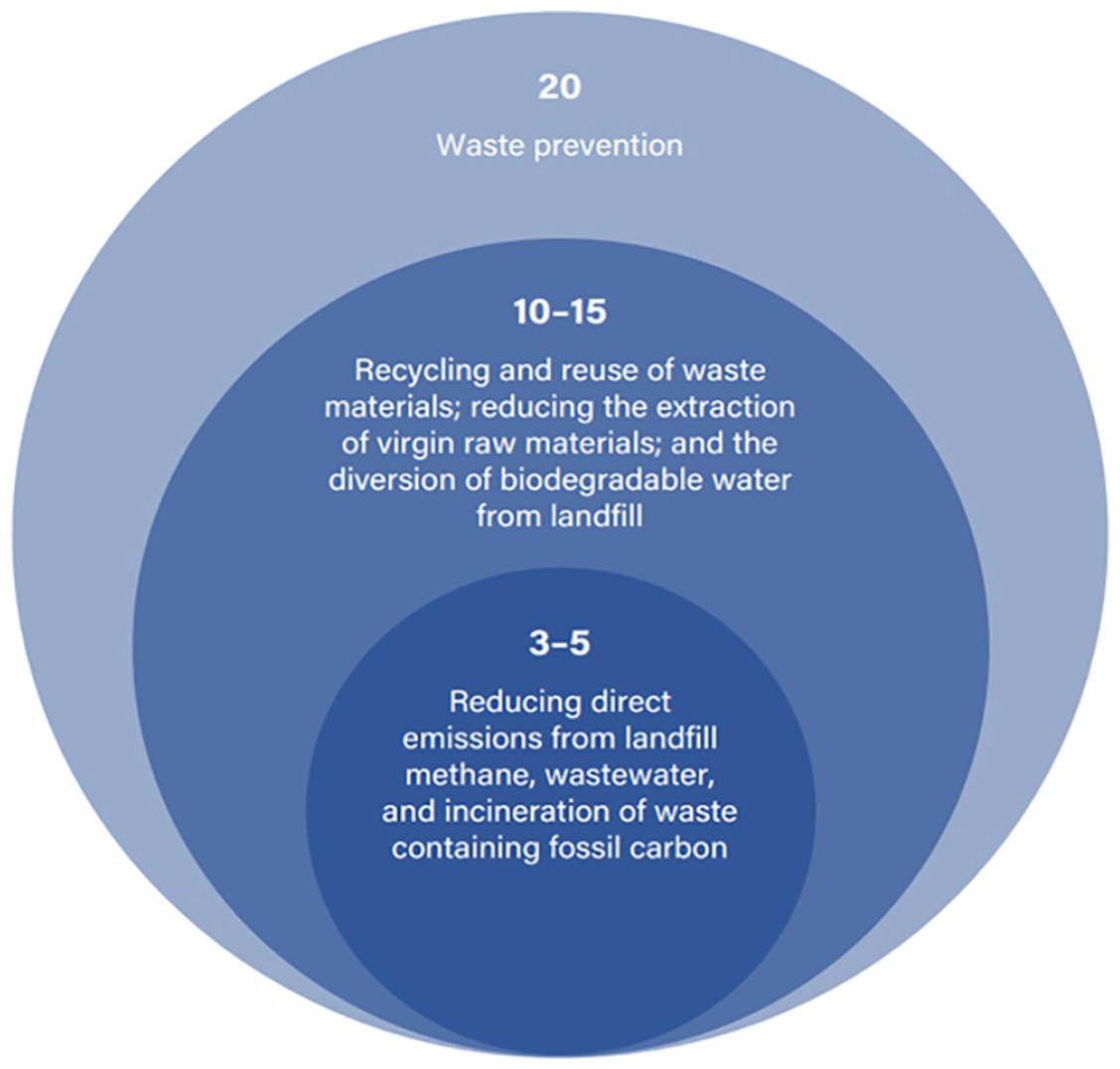
Percentage of global greenhouse gas emissions that could be avoided by making interventions at different stages of the waste hierarchy
In low-income contexts, the state does not always have the capacity, resources or political will – or some combination thereof – to provide basic services like waste management. Partly in response to this, most national governments implement neoliberal policies that encourage the privatization and decentralization of service delivery under the guise of increased efficacy.(40) As a result, service provision responsibilities are increasingly devolved from the state.(41) In the MSWM sector, this commonly manifests in partnerships with large private companies known for technology-intensive solutions such as waste-to-energy plants. This approach has been lauded for its efficiency advantages but, in reality, has not always been successful, particularly in the global South. For example, it is common for Southern cities to generate waste streams containing a larger proportion of organic waste than of non-biodegradable materials: such compositions are not suitable for waste-to-energy technologies because they are too wet to combust. In addition, high-tech solutions require large upfront capital investments and operational expenditures that low-income countries often struggle to finance.(42)
Technology-led approaches to waste management also place little value on the complex ecosystem of (often informal) actors involved in waste management in many Southern cities. An estimated 15–20 million people worldwide work in the informal waste sector, most of them self-employed informal waste pickers or informal service providers involved with community-based organizations and small enterprises.(43) Though it is often dangerous and heavily stigmatized work, in some cases the informal waste sector has been known to achieve recycling rates comparable to – and sometimes better than – those in high-income cities. For example, 30 per cent of materials are recovered by the formal sector in Rotterdam, the Netherlands, while the informal sector recovers 27 per cent in Delhi, India; 31 per cent in Quezon City, the Philippines; and 85 per cent in Bamako, Mali.(44) Such enterprises are also an important source of livelihoods for low-income and other marginalized urban residents. Community-based organizations and small enterprises involved in waste management disproportionately employ women – who often do not have the same range of income-earning opportunities as men – and citizens from other vulnerable groups, such as migrants.
V. Data and Methods
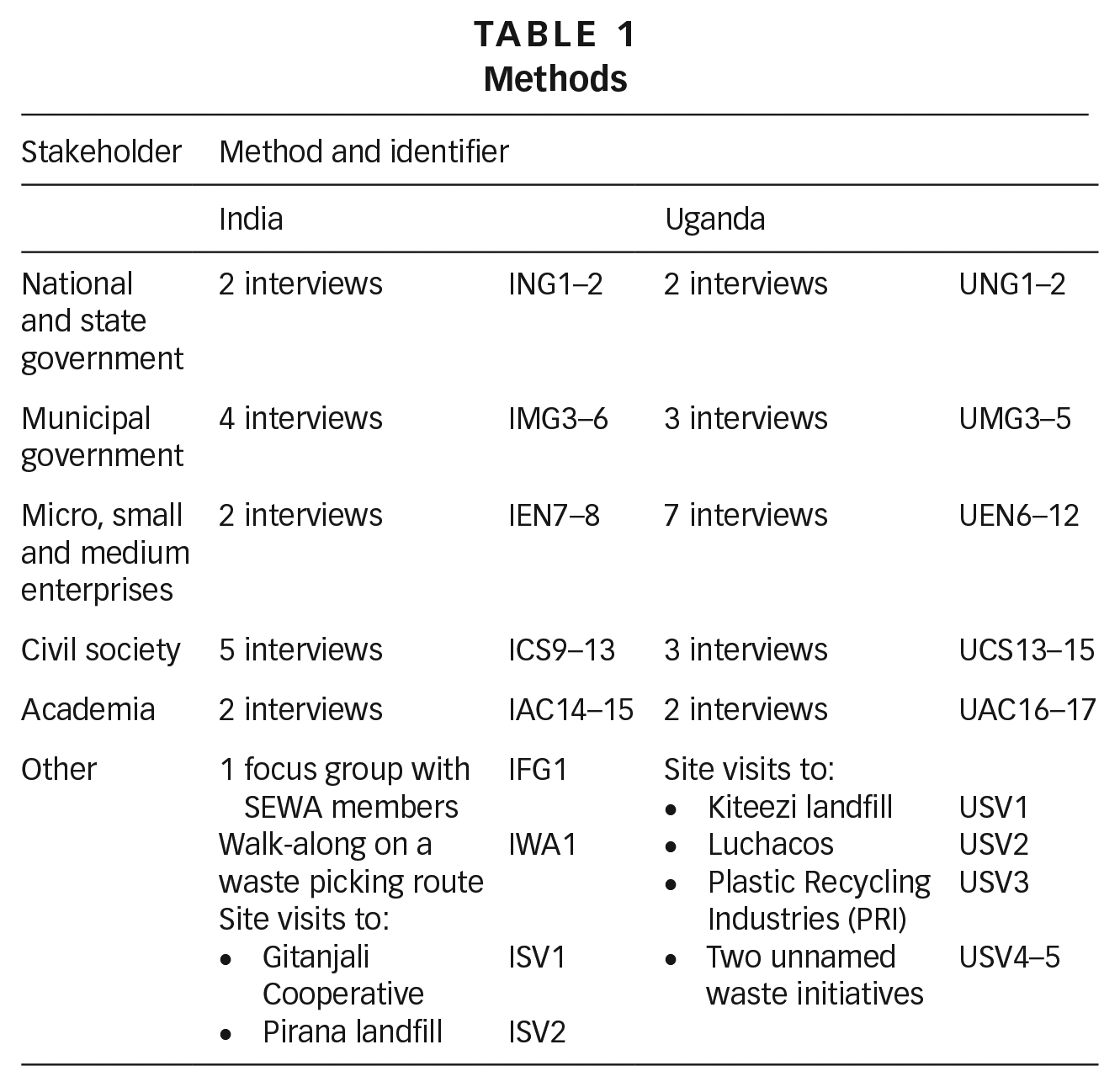
This paper draws on mixed methods research conducted in the cities of Ahmedabad, India and Kampala, Uganda between May and August 2018.(45) It is based on a total of 33 semi-structured interviews (16 in India and 17 in Uganda) with a wide range of stakeholders working in or closely with the MSWM sector (see Table 1), as well as on site visits to the premises of MSWM enterprises and landfill sites, and a walk-along on a waste picking route. In addition, the authors conducted an analysis of the policy environment in each case and an extensive review of relevant case-related documentation, including policy documents, contracts, legal proceedings and organizational reports.
Methods
VI. Ahmedabad, India and the Self Employed Women’s Association
a. The context
The improvement of waste management and sanitation has been a cornerstone of Prime Minister Narendra Modi’s Bharatiya Janata Party (BJP) government. The BJP’s flagship programme, launched in 2014, was the Swachh Bharat (“Clean India”) Mission (SBM), which has received widespread attention primarily due to the far-reaching awareness-raising media campaign made possible by high-level political support. Designed in part to complement SBM, the Smart Cities Mission of 2015 is a central government programme designed to stimulate urban renewal in 100 Indian cities by using technology-driven development to improve sustainable and inclusive core infrastructure.
Both missions offer incentives for the use of smart solutions to urban infrastructure challenges, such as waste-to-energy technologies, despite the fact that such strategies in India have thus far dramatically under-delivered, and also overlook opportunities for recycling, value creation and poverty reduction [IAC14].(46) India’s informal waste sector employs an estimated 1.7 million waste pickers who recover around 20 per cent of recyclable waste,(47) making them responsible for a significant proportion of the nation’s recycling efforts and contributing to a recycling system as efficient as that of many high-income countries. Despite this, the work is generally performed by some of the most marginalized members of society and waste pickers are frequently discriminated against based on their caste, gender and income status [ICS9–11, IWA1].
Despite progress under SBM, many city governments in India are unable to manage the volume of waste produced. The average municipality spends between Rs. 70 and Rs. 150 (US$ 1–2) per capita per year on solid waste management:(48) for comparison, this is less than 1 per cent of what is spent in Rotterdam in the Netherlands. The subsidies available through SBM and Smart Cities for waste management technologies, as well as other private and donor investments, have therefore been particularly attractive to municipalities.
b. The case study
The city of Ahmedabad in the state of Gujarat was part of the first cohort of Smart Cities. Ahmedabad is India’s seventh-largest city, with a population of 6.5 million. Though the city has a reputation for pioneering urban management [ING1, IMG3], having implemented the first large-scale Bus Rapid Transit (BRT) system in India, it faces human, financial and technical resource constraints similar to those of other cities. Despite this, it aspires to become “resource efficient and zero waste” by 2031, through efforts led by the city’s local government, the Ahmedabad Municipal Corporation (AMC) [IMG5].
Approximately 50,000 informal waste pickers work in Ahmedabad, of whom around 60 per cent are women [ICS9]. Many are members of the Self Employed Women’s Association (SEWA), a trade union and cooperative of mostly low-income women who work in the informal economy. SEWA advocates for improvements in its members’ wages and working conditions. It was established in 1972 in Ahmedabad, and nowadays counts more than 2.1 million members from across 16 states. For an annual membership fee of Rs. 5 (US$ 0.07), members have access to trade-specific cooperatives that provide benefits including childcare facilities, access to credit and social security [ICS9–11, IFG1].
SEWA’s members live primarily in rural areas and most are employed in agricultural activities. In Ahmedabad, however, women waste pickers are particularly active. Under the umbrella of SEWA, they are involved in various activities including forming agreements with textile mills, office buildings and households regarding the collection of waste, lobbying the AMC for recognition and managing several waste-related cooperatives [ICS9, IFG1]. The largest of these is the Gitanjali Cooperative, established in 2010, which turns recyclable waste into usable products, mostly stationery and clothing. Gitanjali received initial financial assistance, business advice and in-kind contributions (in the form of machinery) from three partners: WEConnect International, a global network that connects women-owned businesses with investors; Accenture, a multinational professional services firm; and Gopi Stationery, a local stationery company [ISV1].(49) Accenture still provides an annual contribution to the women’s salaries. The cooperative now sells its products both domestically and internationally. Its revenues have been increasing year by year, but it would not yet be viable without Accenture’s financial support.
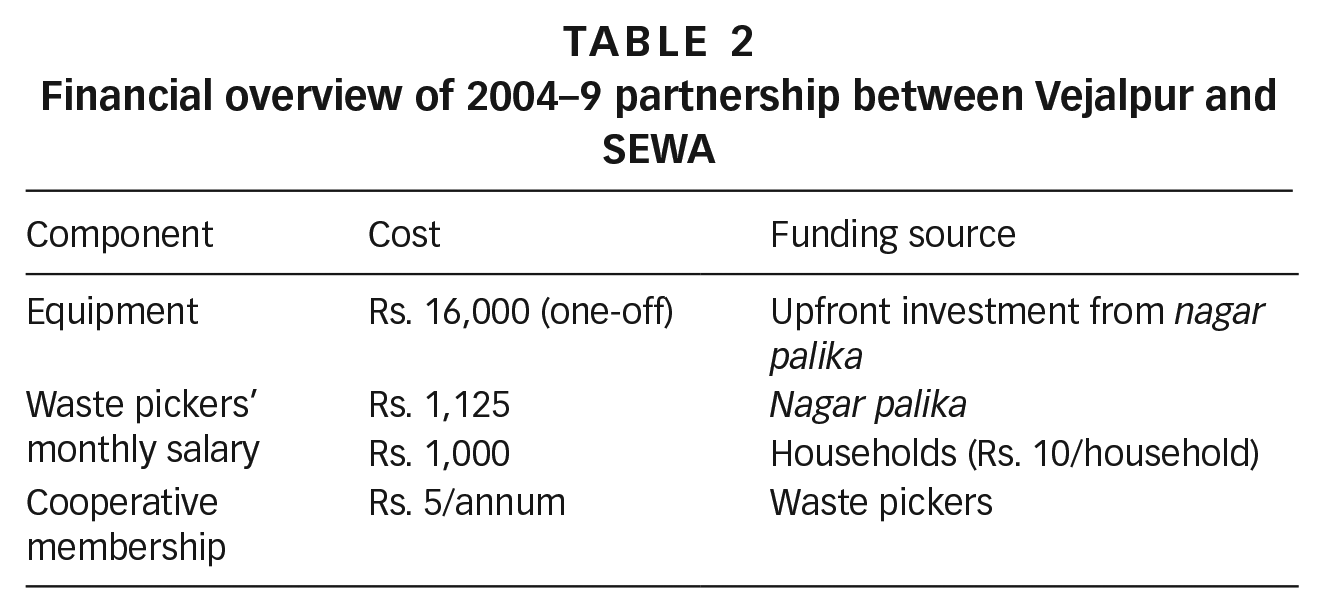
Between 2004 and 2009, prior to the formal establishment of the Gitanjali Cooperative, SEWA entered into partnership with the Vejalpur nagar palika, at that time a self-governing ward of the greater Ahmedabad district, to provide recycling services for more than 45,000 households. With an upfront investment of just Rs. 16,000 (US$ 230),(50) the nagar palika authority provided equipment including handcarts and gloves to the 400 waste pickers involved in the programme, who also received a monthly government-provided salary of approximately Rs. 1,125 (US$ 16) and an additional Rs. 1,000 (US$ 14) from household user fees (Rs. 10 per household per month) [IMG6] (see Table 2). The women reported also being able to generate additional income through the sorting and sale of recyclables [IFG1]. SEWA organized capacity-building activities related to customer service and the use of the equipment. This model had the dual effect of increasing the women’s overall monthly earnings from around Rs. 1,500 (US$ 22) to Rs. 6,000 (US$ 88) and achieving recycling rates of up to 70 per cent [ICS9–11, IMG6]. The women also reported enjoying the vastly improved occupational health standards and feeling more secure in their employment – thanks both to a regular salary and the recognition of their work afforded by being contracted by a government agency [IFG1].
Financial overview of 2004–9 partnership between Vejalpur and SEWA
In 2009, Vejalpur was incorporated into the jurisdiction of the AMC. Despite the apparent success of the partnership between SEWA waste pickers and the nagar palika, the AMC issued an invitation to tender for MSWM activities, ultimately awarding recycling work in Vejalpur to private companies in place of SEWA’s members [IEN7–8]. A key part of the new arrangement required contractors to transport waste directly from “door/gate to dump”.(51) SEWA’s waste pickers were not able to participate in the procurement process, primarily because a clause required potential candidates to make use of “innovative technology” and vehicles – a condition that the mostly low-income women were unable to meet [ICS9–11, IFG1]. Furthermore, as a result of the door/gate to dump strategy, there was significantly less waste on the streets citywide: a positive outcome in terms of cleanliness and efficiency, but waste pickers effectively lost access to their primary livelihood. Local government representatives assert that SEWA members were given the opportunity to participate but were “unwilling to modernize their practices” [IMG4]. However, the redirection of work away from the informal sector and towards private operators is undeniably emblematic of a wider national policy shift towards more technology-intensive solutions, driven by national programmes such as the SBM and the Smart Cities Mission [ICS9, IAC14].
VII. Kampala, Uganda and the Lubaga Charcoal Briquette Cooperative Society
a. The context
The city of Kampala – the capital of Uganda and its largest urban area, with a population of 3.5 million as of 2020 – generates around 2,200 tons of solid waste per day, amounting to almost 840,000 tons per year [UMG3]. This is expected to double at least by 2030 [UMG3, UCS13], in line with exponential population growth to 5.5 million by 2030. Around three-quarters of the city’s waste is organic and biodegradable, and a further 15 per cent consists of recyclables including plastics, paper, metal and glass.(52) The waste sector is the city’s second biggest contributor of greenhouse gas emissions after energy generation – 28 per cent of citywide emissions come from landfill, waste incineration and solid waste management collectively.(53)
The average annual municipal expenditure on solid waste management in Kampala is UGX 8.5 billion (US$ 2.25 million) [UMG3]. On average, this provides for half of Kampala’s generated waste to be collected – two-thirds of this by the Kampala City Central Authority (KCCA) and one-third by private entities commissioned by KCCA [UMG3]. It is then dumped, usually without treatment, at the city’s official dump site, Kiteezi [UMG4]. The uncollected half ends up in one of Kampala’s 59 illegal dump sites, 133 unofficial temporary storage sites, or 35 official temporary waste storage locations(54) [UCS13].(55) Still more is burned or thrown into waterways, where it accumulates and blocks drainage channels. This is particularly the case in areas classified as slums, which house approximately half of Kampala’s population.(56)
Officials estimate that there are currently around 3,000 people employed in the informal provision of solid waste management services in Kampala, as well as more than 100 formally registered companies, of which many are micro or small enterprises [UMG5, UCS13–14]. These actors are part of well-established but not always formal value chains for various waste streams. In some cases, KCCA has provided grants or non-financial support to these initiatives, for instance by allocating land that they can use to sort and treat waste. Various actors involved in recycling, turning waste into renewable energy sources, and raising awareness regarding the prevention and re-use of waste materials believe that utilizing and upscaling this existing ecosystem has the potential to improve the efficiency of the waste sector in Kampala, reduce the sector’s greenhouse gas emissions and provide sustainable livelihoods for the urban poor [UAC16, UCS13–14].
This conviction has been recognized in national policy. The National Urban Solid Waste Management (NUSWM) Policy of 2017 aims to establish national leadership on and clarify relevant legislation pertaining to MSWM. It also aspires to facilitate collaboration with diverse non-state actors, a goal that is complemented by the MSME Policy of 2015, which was designed to create a supportive policy environment for scaling up formal and informal MSMEs. However, decentralization imperatives of recent decades have increasingly devolved responsibilities for the provision of public services to municipalities, and indeed the Local Government Act (LGA) of 1997 specifies that waste management in Kampala is the concern of KCCA. The LGA also specifies that it is an offence to remove, collect or disturb solid waste in containers, effectively making informal waste picking an illegal activity. This policy incoherence was cited as a key reason that officials at the local level favour partnerships with formal actors [UMG4] – there are no clear guidelines for partnering with community-based enterprises set out in the NUSWM policy, while in contrast the rules prescribed by the LGA are familiar and well-established [UCS14, UAC16].
b. The case study
The Lubaga Charcoal Briquette Cooperative Society, or Luchacos, is a registered company that has been operating in an informal settlement of the Lubaga division of Kampala since 2006. It produces biomass briquettes from organic waste, which are then sold as an affordable source of energy for cooking to low-income households. Annually, 192 tons of waste are either collected by Luchacos employees or delivered to the organization by the 1,200 households in nearby informal settlements [UCS13]. This waste is enough to produce 24 tons of biomass briquettes each year. The briquettes are sold either to the participating households, who receive a discount, or to local institutions and other users. Though small-scale, the enterprise is the primary source of income for its 20 employees, who report that their work has significantly reduced the extent of the solid waste challenge in the Lubaga Parish [UEN6]. An analysis of their gross margins reveals that Luchacos turns a modest but positive profit,(57) making it a viable enterprise by conventional economic standards.
Luchacos credits some of its success to its participation in the project ‘Knowledge in Action for Urban Equality’ (KNOW), an ESRC-funded programme working across nine countries, with city-level teams working on specific cases of co-production, including in Kampala (KNOW Kampala). KNOW Kampala has focused on capacity-building in waste economies, and Luchacos was one of several community-based organisations selected to form a multi-stakeholder partnership with Makerere University, ACTogether Uganda (a local NGO), KCCA and the Ministry of Land, Housing and Urban Development. Luchacos received seed funding, materials and the opportunity to participate in a series of co-creation and co-production sessions. In addition to offering support in the early stages of business formation, KNOW Kampala stated the aim of creating platforms for transformative policy discussions between communities, academia and policymakers.
However, like many municipal authorities in East Africa, KCCA faces severe resource constraints [UNG1] and seeks partnerships with the private sector in order to provide urban services at as low a cost to the municipality as possible. Though ostensibly such partnerships could involve community-based waste enterprises, the processes for partnering with a single, formal company are more straightforward than coalitions involving multiple or informal actors: for example, to participate in public procurement processes, waste management candidates are required to provide bank guarantees of at least UGX 5 million (US$ 1,325) and have access to motorized vehicles. Community-based waste enterprises like Luchacos are therefore unable even to apply to be considered as part of KCCA’s formal strategy for managing waste. Furthermore, new technologies such as waste-to-energy generation, though expensive, are attractive for being modern and relatively simple to construct and operate. Though officials report that contracting service delivery work to smaller private and civic actors is a necessary and attractive option [UMG3], including in the waste sector, national policies continue to favour partnerships with large, formal actors [UCS15, UAC17].
In this context, the commercial viability of organizations like Luchacos is severely constrained. Though there is a growing market for waste-based products, community-based organizations and small enterprises are often unable to scale up their operations. For example, the United Nations Refugee Agency in Uganda has shown serious interest in purchasing large quantities of briquettes from Luchacos, but the organization is unable to meet the demand without upfront capital investment and new machinery [UCS13]. These are almost impossible to secure for Luchacos employees, most of whom are themselves residents of informal settlements with little or no formal education and limited, if any, access to formal finance systems [UAC17].
VIII. Key Findings from Sewa and Luchacos
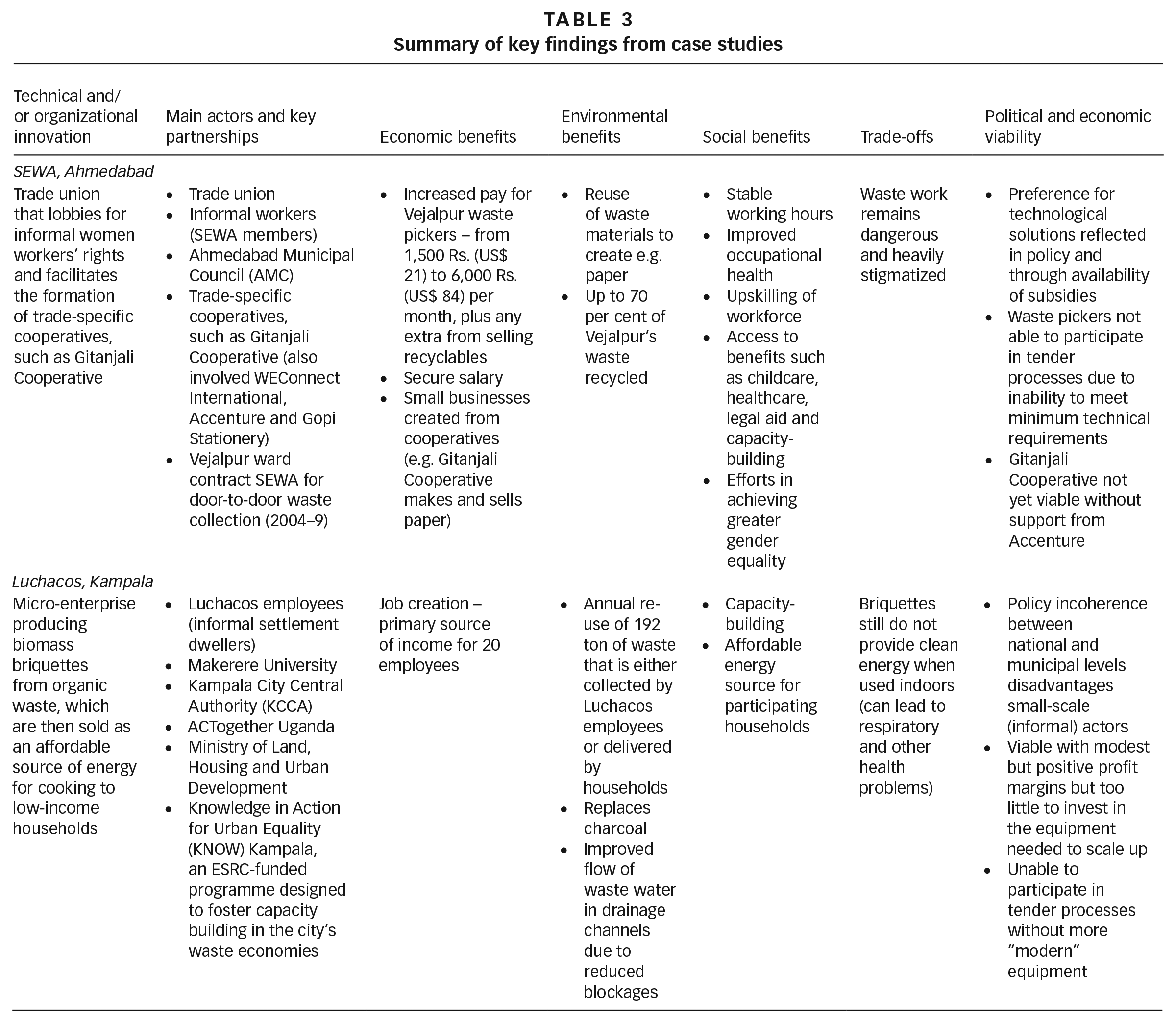
SEWA in Ahmedabad and Luchacos in Kampala both demonstrate ways in which community-based waste enterprises generate value through the re-use and recycling of waste resources, despite being small-scale and localized. While they may not explicitly contribute to economic growth when quantified in terms of GDP, they act in places not served by public agencies, generate employment opportunities for citizens who would be otherwise unlikely to find employment in the formal economy, and provide a safety net for the urban poor. In these ways, such enterprises generate benefits for society that are more challenging to measure in capitalist economic terms but that are no less valuable than the tangible financial gains generated by profit-driven enterprises. However, the case studies also highlight potential trade-offs for waste enterprises and their employees or members, some of which are exacerbated by an unfavourable policy environment. Table 3 summarizes the key findings from each case study.
Summary of key findings from case studies
IX. The Multiple Economies of Community-Based Waste Enterprises
Local involvement in waste management can stimulate both informal and formal economic development,(58) for instance through creating green jobs, like those offered by the Gitanjali Cooperative, and providing products in a more affordable or environmentally sustainable manner than might otherwise be the case, like the briquettes produced by Luchacos. Though the economic benefits were not calculated as part of this research, it is easy to imagine that they go beyond the creation of local livelihoods by offering public services, at little or no additional cost to the state, that might otherwise be financed through tax revenue.(59) This includes not only the contribution to MSWM but also the occupational and social health services that Gitanjali offers its members, for example. Furthermore, embedding low-emissions measures into local realities and existing livelihoods, for example by working with waste picker cooperatives to improve the efficiency of waste separation and recycling, has been proposed as a way to maximize the potential synergies between climate and developmental outcomes.(60) Such initiatives therefore offer the potential to deliver not only financial but also social and environmental benefits.
At the same time, it is important to avoid what Banks et al. describe as the “celebration of the tenacity of otherwise marginalized groups who exist amidst social, economic, political and geographic exclusion”.(61) Informal urban development frequently results in geographical marginalization, severe basic service deficits and exposure to poor and hazardous environments, while in informal employment, exploitation and human rights abuses are common, working conditions can be appalling, and social protection is often non-existent.(62) Informality is viewed by some as a bitter but necessary response to a system that excludes vast portions of the population, yet within which they must exist to survive. Undue faith in the self-help ideology could further orient policy towards economic neoliberalism,(63) shifting the responsibility of service provision onto citizens and organizations like SEWA and Luchacos. This is particularly pertinent for SEWA, given the disproportionate impact on (poor) women who are most likely to perform crucial unpaid labour, often under the rhetoric of women’s empowerment.(64) Endorsing the creation of green jobs like those of SEWA and Luchacos without simultaneously addressing the occupational health and marginalization of waste workers could put the environmental agenda in cities like Ahmedabad and Kampala strongly at odds with social justice efforts.(65) Indeed, the majority of the trade-offs between the different Sustainable Development Goals (SDGs) are attributable to a reliance on economic growth to generate human welfare at the expense of environmental sustainability, or vice versa.(66)
Both cases also highlight how excessive professionalization or formalization (for example, of public procurement procedures) can prohibit the participation of low-income groups.(67) In many countries in the global South, national waste management policy – and policy related to the delivery of public services more generally – is currently biased towards technological solutions.(68) This is in line with imaginaries of modernity and progress that such urban infrastructure is thought by many to represent.(69) As experienced by both SEWA and Luchacos, this often precludes community-based strategies to participate in tendering processes, severing them from the support and resources they require to continue their activities. Similarly, professionalization could lead to – or result from – efforts by formal actors to capture the value of the informal waste economy, effectively restricting access to a resource on which waste workers have long relied and dispossessing them of their livelihoods.(70) To avoid this, governments could consider replicating and upscaling emerging good practices, such as encouraging informal workers to organize into trade unions and cooperatives and including them in public–private partnerships. Indeed, if systemic injustices are not recognised and addressed, community-based actors will remain less well-positioned to compete with conventional market actors, as shown by the diminishing returns in both cases as the respective municipal authorities pursue modernization agendas.
Even still, problematizing the modern infrastructure ideal, and by extension traditional dichotomies – such as formal/informal (service provision), necessity/opportunity (entrepreneur) and socioeconomic/environmental (sustainability) – creates space to interrogate a far broader range of options in urban service delivery.(71) A governance challenge will be to create space for diversity and self-organization(72) while consistently addressing underlying structural exclusion. Going forward, policymakers in Southern cities could better support community-based and informal enterprises in their efforts to provide waste management services, create jobs and contribute to poverty alleviation,(73) but this must be done whilst ensuring that necessary social protections and regulations are in place.(74)
X. Thinking Beyond the Waste Sector
On thinking through heterogeneous infrastructure configurations, Lawhon et al. suggest that a key analytical entry point is to consider “whether and under what conditions these alternatives are more adept at responding to conditions of precarity”.(75) Both SEWA and Luchacos perform cost-effective service delivery that relieves the burdens on municipalities in cities where waste management is under-resourced and unreliable.(76) Such enterprises are also inherently important because the people pursuing them are typically those who are left behind by conventional development models, as are many of their clients. Considering social benefits such as poverty reduction and inclusion alongside the techno-economic aspects of service delivery could help cities to work towards global sustainability goals. This can be done when governments prioritize sociocultural as well as economic and environmental values.
This research has implications beyond the MSWM sector for cities pursuing sustainability goals more generally. The findings suggest the need for new ways of understanding and assessing the performance of community-based enterprises, which may not conform to the dominant capitalist economic paradigm. For example, we know that many things that add to GDP can be harmful: while the conversion of forests or the presence of polluting industry both contribute to economic growth in terms of GDP, neither conserved forests nor clean air have any market value. Similarly, community-based service delivery initiatives are not always considered viable when measured solely in terms of profit margins. Classifying enterprises as worthy of support only if they contribute to economic growth could be seen at worst as a subtle way for multilateral agencies and national governments to reinforce problematic economic norms and models. However, where national and municipal governments are willing to cultivate inclusive organizational forms as well as sustainable technologies, they could reduce policy barriers for community-based enterprises. This may offer an opportunity to steer urban transitions along more sustainable and inclusive pathways.
SEWA and Luchacos both demonstrate the potential for citizens to contribute to service delivery – but also highlight the vulnerability of many of the populations that do so. Formally recognizing the role of such initiatives and making it both legally possible and physically safe for them to participate in service delivery might improve the quality of life of some of the most marginalized citizens at the same time as it complements formal service provision systems that do not reach all citizens equally. At the grassroots level, replicating successful organizational approaches could help to upscale promising emerging practices. Encouraging informal workers to unionize or form cooperatives (like SEWA) and work in multi-stakeholder partnership with other local actors (like Luchacos did through KNOW Kampala) are fine examples. These organizations could then be supported through both financial and non-financial aid. Non-financial support could be organizational, such as offering partnership opportunities and capacity-building, and/or practical, such as granting land rights or providing equipment. Financial incentives that would allow community-based initiatives to increase productivity might take the form of subsidies, or finance could be channelled to grassroots initiatives by reforming public procurement policies to allow them to participate in tender and contracting processes. At the national level, the integration of a more multi-stakeholder, holistic approach to waste management should be recognized in coherent policies that facilitate structural collaboration with community-based enterprises as part of citywide service delivery strategies.(77)
The proposed support for community-based service delivery initiatives need not be in opposition to much-needed work on improving the social and environmental performance of networked infrastructure.(78) Taken alone, such community initiatives may not be transformative: they do not always tackle the underlying drivers of social injustice, nor can they reduce emissions at the scale required to avoid catastrophic climate change. For example, decarbonizing the electricity grid accounts for up to half of all urban mitigation potential to 2050,(79) while transport is responsible for 14 per cent of global greenhouse gas emissions(80) – yet even when carbon-intensive and polluting, such infrastructures provide vital services for millions of urban citizens. Further research could explore connections between local, place-based service delivery initiatives and large-scale, formal infrastructure networks, and the implications of these overlapping regimes for urban inclusion/exclusion(81) and managing climate change.
XI. Conclusions
This research explored the extent to which community-based waste enterprises might aid in the transition to more sustainable and inclusive municipal solid waste management strategies, in the context of heterogeneous infrastructure configurations in Southern cities. Much theoretical and empirical work on the transition to more sustainable urban infrastructure has focused on the generation and diffusion of innovations that can be upscaled and commercialized,(82) on technological efficiency,(83) and on management approaches that tend to rely on long-term centralized governance arrangements.(84) In contrast, the cases presented in this paper are emergent, place-based and organized around relatively low-tech micro-level innovations that are not necessarily intended for the profit-oriented market. They involve various self-organized agents and, directly or indirectly, tackle institutionalized inequalities through the provision of basic services.
Though it is also necessary to engage in more normative discussions around whose responsibility it is to ensure universal access to UBIS, the reality in Ahmedabad and Kampala – as in many cities of the global South – is that poverty and a shortage of public funds will continue to be a problem for years to come. Similarly, informality cannot (and, arguably, should not) be eliminated. Despite or because of such challenges, small-scale community-based waste enterprises are creating livelihoods and forging new partnerships whilst recycling and reusing waste resources. Inclusive waste management strategies that support those who work in informal or small-scale enterprises could generate multiple socioeconomic and environmental benefits in a sector notorious for appalling conditions and the vulnerability of workers. These enterprises may or may not be considered successful when analysed by traditional economic means. Yet they undeniably contribute to multiple sustainability objectives when considered within a particular spatial and temporal context.(85)
The intention of this research is not to endorse any one social or technological intervention at the expense of another.(86) Indeed, as Gibson-Graham and Dombroski explain, “there is no sense in dictating or designing one grand action strategy,
Footnotes
Acknowledgements
We are indebted to the women and men of SEWA and Luchacos, as well as to the other research participants who shared their time and knowledge. We are extremely grateful to Sarah Colenbrander and the three anonymous reviewers who provided incredibly thoughtful and constructive feedback on earlier versions of this paper.
Funding
This research was made possible by the Coalition for Urban Transition and the UK Department for International Development (grant ID 113550).
7.
In reality this number is certainly even higher, due to data deficiencies and the thresholds for the assessment of certain criteria being set too low (see Satterthwaite, 2016).
10.
16.
30.
45.
These case studies have previously been published as policy briefs as part of a series on frontrunning climate actions around the world. The series aims to strengthen the evidence on the economic and social implications of low-carbon, climate-resilient urban development. They are available at: https://urbantransitions.global/publications/?select-publication-series[]=frontrunners. See also Oates et al. (2019) and  .
.
50.
This and other exchange rates in this paper are based on those of May 2018.
54.
, page 198) identify three types of dumping sites: (i) official temporary storage sites are those served daily by KCCA and/or its operators, most often found at market areas, public parks, near large public organizations, and by busy roadsides; (ii) unofficial temporary storage sites are those not officially identified as collection points served by KCCA and/or its operators but there is a daily collection schedule, although this is not always reliable; and (iii) illegal dump sites are places where waste is dumped and not collected by KCCA and/or its operators at all.
62.
65.
74.
77.
87.
Gibson-Graham and Dombroski (2020), page 20, emphasis in original; see also .