




Abstract
Enterprise information systems play a significant role in the Industry 4.0 era and are the crucial component to realize smart manufacturing systems. However, traditional enterprise information systems have some limits: (1) lack of complete information, (2) only satisfy limited business needs, and (3) lack of seamless integration, business intelligence, value-driven processes, and dynamic optimization. Clearly, the existing enterprise information systems are unable to satisfy the requirements for smart manufacturing systems: (1) autonomous operation, (2) sustainable values, and (3) self-optimization. In addition, smart manufacturing systems have become more efficient and effective, demanding for seamless information flow in enterprise information systems, knowledge, and data-driven accurately decision. Therefore, a new enterprise information systems framework is needed to bridge gaps between the requirements for traditional manufacturing system and smart manufacturing system. In this article, the integrative framework is proposed based on the business process reengineering, lean thinking, and intelligent management methods, with inclusion of six enterprise information systems aspects to provide upgrading guidelines from traditional manufacturing to smart manufacturing. The procedure of this method contains three steps: (1) it identifies requirements and acquires best practices using AS-IS model, (2) it redesigns six aspects of enterprise information systems using TO-BE model, and (3) it proposes a new enterprise information systems framework. Finally, the proposed framework is validated by real cases.
Keywords
Introduction
Enterprise information systems (EISs), the key components for industrial enterprises to plan, organize, operate, and control their business processes, 1 are nowadays important investment for organizations to lean out their management process. In the Industry 4.0 and Industrial Internet of Things era, smart manufacturing systems are becoming more popular among the traditional manufacturing firms to improve their agility and competitiveness. It is well known that with only smart equipment or smart hardware, smart manufacturing system (SMS) cannot be achieved. Therefore, reforming EISs to perfectly satisfy the SMSs’ requirements is becoming indispensable to aid the traditional manufacturers in their transformation. EISs involve a large number of sub-information systems with multi-business relationships, complicated functional requirements, and effective networked architectures. Their mammoth scales pose challenges to interoperability among the sub-information systems, the problem that developers and cooperative enterprise are actively seeking for resolutions.2,3 Many literatures have researched factors leading to past failure of EISs implementations.
In the literature, the authors revealed that the technical challenges, which often considered a problematic obstacle when integrating EISs, are indeed not the main factor causing failure. It is more critical to the failures that enterprises’ current business process structures are not compatible with the standardized EISs packages. Although the attention has been drawn to investigate the EISs in the previous articles, the authors mainly focus on a single system, such as enterprise resource planning4,5 (ERP), product data management/product lifecycle management6,7 (PDM/PLM), supply chain management8,9 (SCM), manufacturing execution system 10 (MES), and partial integration11,12 (system and information). Some combined software architectures were also proposed. For example, service-oriented architecture (SOA), agent and multi-agent systems, and general purpose software packages encapsulate. The new characteristics of EISs contain data value chain management, context awareness, usability, interaction and visualization, and human learning and continuous education, 13 sustainable interoperability, 14 and co-citation analysis. 15 With the increasingly complex functionalities, the existing EISs framework is unable to direct the SMSs effectively.
To the best of our knowledge, the publication focusing on the EISs framework for SMSs is still absent. This article is motivated by real case study and seeks to fill the gap by developing a comprehensive framework of EISs for SMSs. To do this, we focus on developing a framework of EISs to suit the SMSs development. Different from the benchmarked researches, we propose a framework via the EISs’ six dimensions to achieve innovation management, real-time collaboration, and intelligence operation. The possible EISs redesign route is shown as Figure 1. The purpose of this article is tantamount to constructing a comprehensive framework using the business process reengineering (BPR) method to strategically enhance EISs’ fitting to business process adaptability and functional structure’s integrity. The contributions of this article can be summarized as follows:
This article proposes a comprehensive EISs framework which contains six aspects: value creation, business process, functional structure, information flows, data stream, and knowledge management. It resolves the information islands and unfitted problems in different aspects to meet EISs’ requirements.
This article provides effective procedure and design principle for EISs in SMSs. First, it identifies the EISs’ state question and challenge validity. Second, it defines the solution to the question with procedure and method. Third, it analyzes the method and potential benefits. In conclusion, it satisfies the enterprise’s need with value added and effective operation. The framework is designed to have access to relevant EISs functional modules and business process structure.
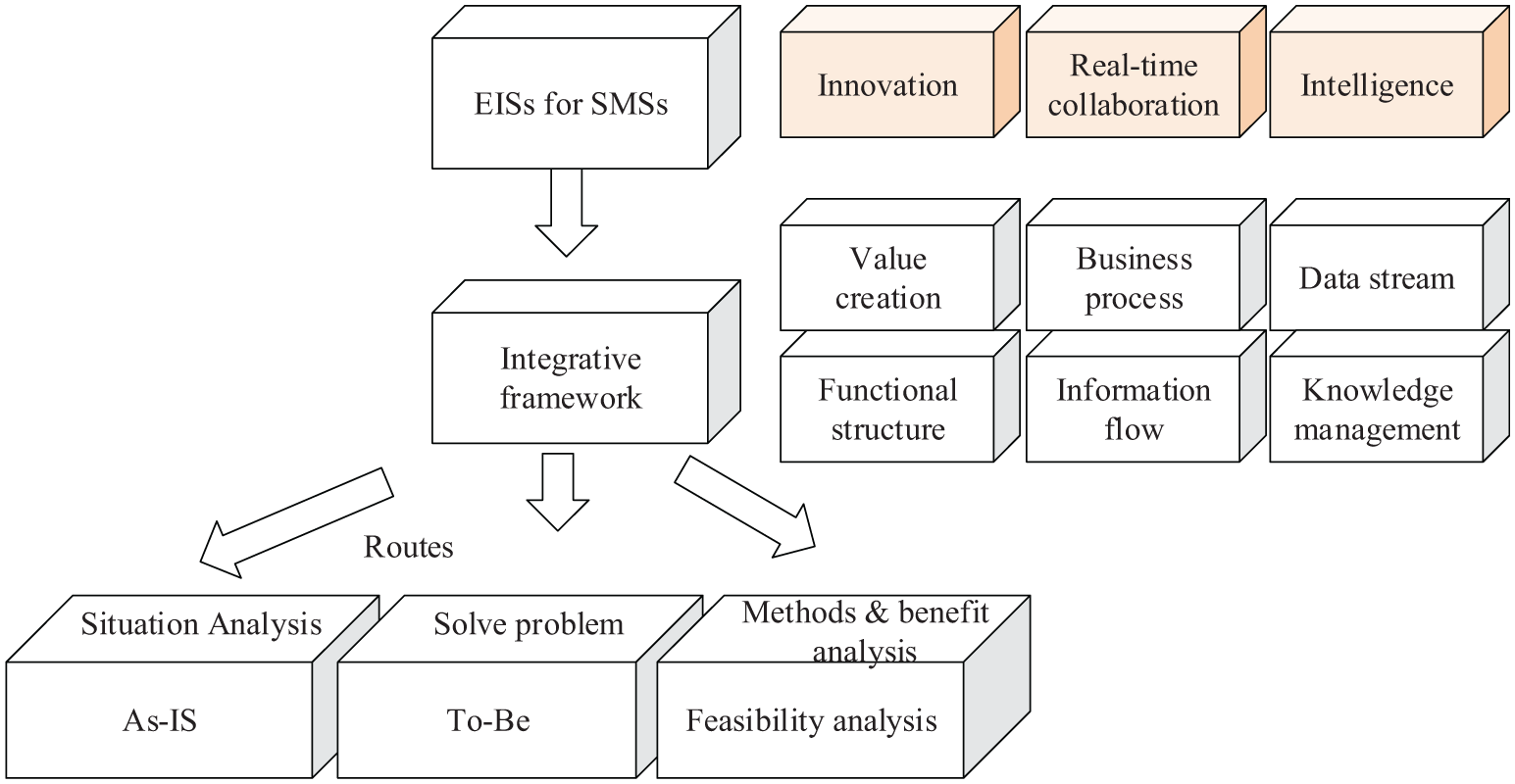
Six dimensions for improving the efficiency of EISs.
The rest of the article is organized as follows. Section “Backgrounds” is divided into three subsections to introduce the backgrounds. Section “Proposed framework” is used to propose the framework of EISs, BPR principle, and procedure of EISs. Section “Case study” uses the method mentioned above for a case study in heavy equipment industry (HEI). Section “Result and discussion” analyzes the result of the case and discusses the differences compare to the initial research. Section “Conclusion” presents conclusions, future perspective, and limitation of this article.
Backgrounds
Review smart manufacturing systems, EISs’ framework, and BPR
Smart manufacturing systems
The purpose of smart manufacturing systems 16 is to quickly respond to dynamic customer requirements and reduce the product lifecycle time. Satisfying dynamic customer requirements needs autonomous smart manufacturing systems to using information communication technology, information operation technology, and the Internet of things.17,18 The SMSs should have the ability to build the explicit models and perform robust optimization 19 based on the provided data to accommodate to dynamic requirements and solve uncertainty questions. 20 It is becoming popular to implement artificial intelligence (AI) technology in SMSs with more accurate decision-making capabilities and higher effectiveness. 21 Constructed from obsolete technologies, the traditional EISs no longer suit the manufacturing system requirements. Value creation is also a major sustainable factor for enterprise. 22 Unfortunately, there are too many discrete manufacturers in need to upgrade their manufacturing systems. Without uniform information flow, functional structure, data stream, and knowledge in the framework of EISs, SMSs cannot achieve real-time collaboration and business intelligence.
EISs’ framework
TOGAF 23 contains business, application, data, and technology architecture, lacking value creation and knowledge management. Kuna 24 proposes an EISs value framework without other requirements for functional structure and knowledge management. In the literature, the study defined four lifecycle stages for each process, named as the defining phase, the implementation phase, process analysis or change/process consolidation, and process decay. It has been observed that the same process evolves differently along with an organization or states any organization. 25 Some other papers introduced IT frameworks, where integrated PLM allows partner enterprises function as a seamless, extended enterprise. Enterprises all follow a single unified process, as opposed to disjoint and fragmented processes that are inconveniently connected via a data bridge with no process or information intelligence. 26 The strength and weakness of the present EISs are shown as in Table 1.
Strength and weakness of the present enterprise information systems (EISs).
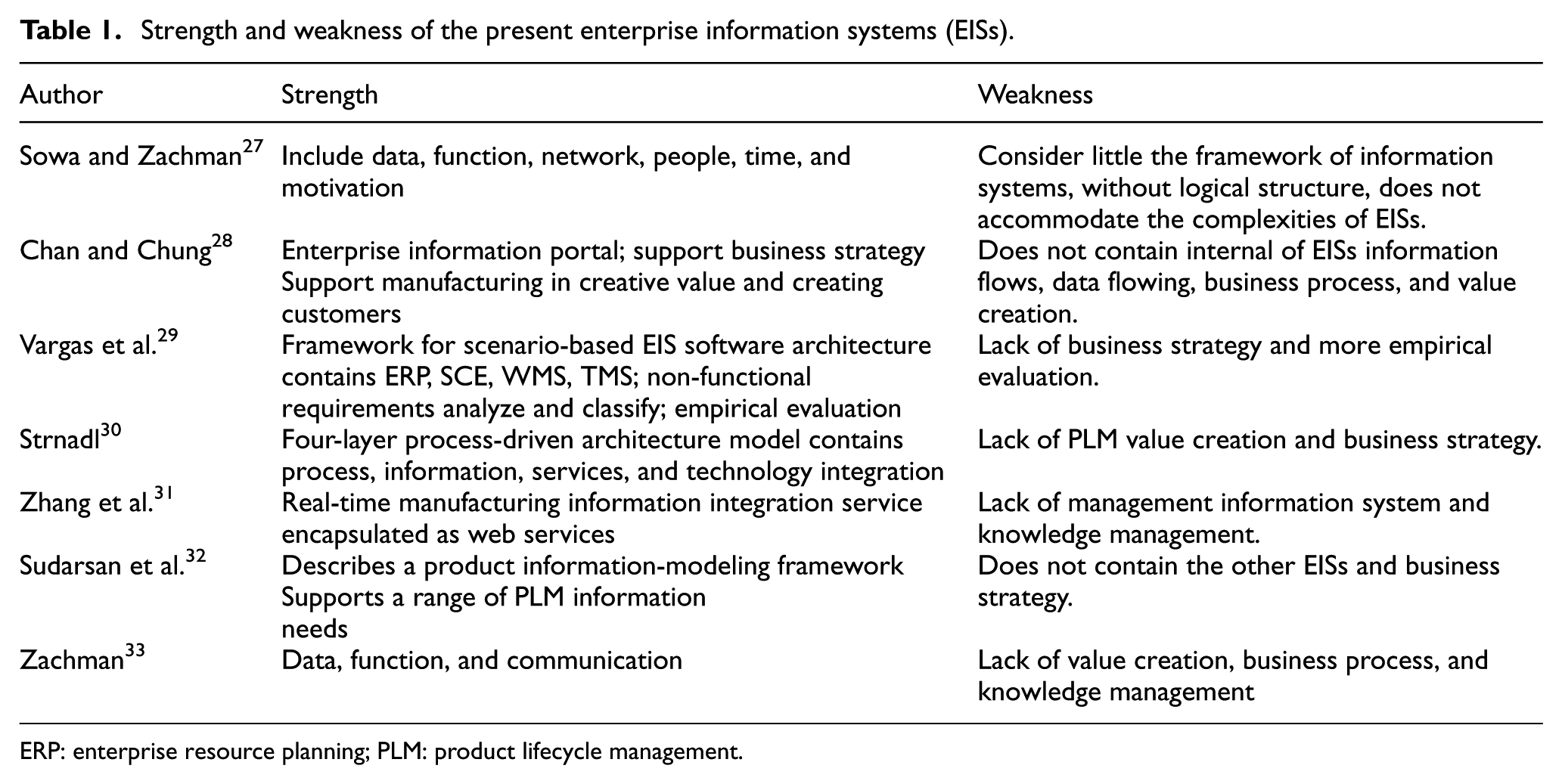
ERP: enterprise resource planning; PLM: product lifecycle management.
BPR review
BPR is a radical redesign of processes to gain significant improvements in cost, quality, and service. 34 At the same time, BPR has helped firms to achieve excellent performance in a variety of parameters like time, customer service, and quality. 35 In addition, BPR method is used in improving the process to create value for the users through products or services. 36 Cascini et al. 37 aims at removing business limits by identifying functional domain and functional needs. Borgianni et al. 36 used the BPR in the process value analysis to improve customer satisfaction. BPR is included in organizations to overcome challenges involving inefficiencies and inflated operating cost. Alhaji Musa et al. 38 gave the methods of knowledge source mapping and formal organizational ontology of the organization in the event of BPR. BPR is discussed and used here to reconstruct more optimally structured EISs. Applications of BPR are providing solutions on a much wider stage, associated with not only manufacturing but also many administrative processes in the service sector. The ultimate goal of all approaches is to improve system performance, not only in terms of efficiency and costs but also in product design, processing quality, flexibility, and speed.39,40 Companies that thrive in stable mass productions cannot easily succeed in a world where factors like customers, competition, and changes demand flexibility and quick responses. 41 With process-oriented measures, BPR can also create a cohesive working force among employees. 42 Table 2 analyzes the existing strength and weakness of related BPR method and its application. Detailed analysis of the hierarchical relations among each stakeholders’ requirements based on value creation of BPR is required to identify the requirements for EISs in SMSs.
Strength and weakness of related BPR method application.
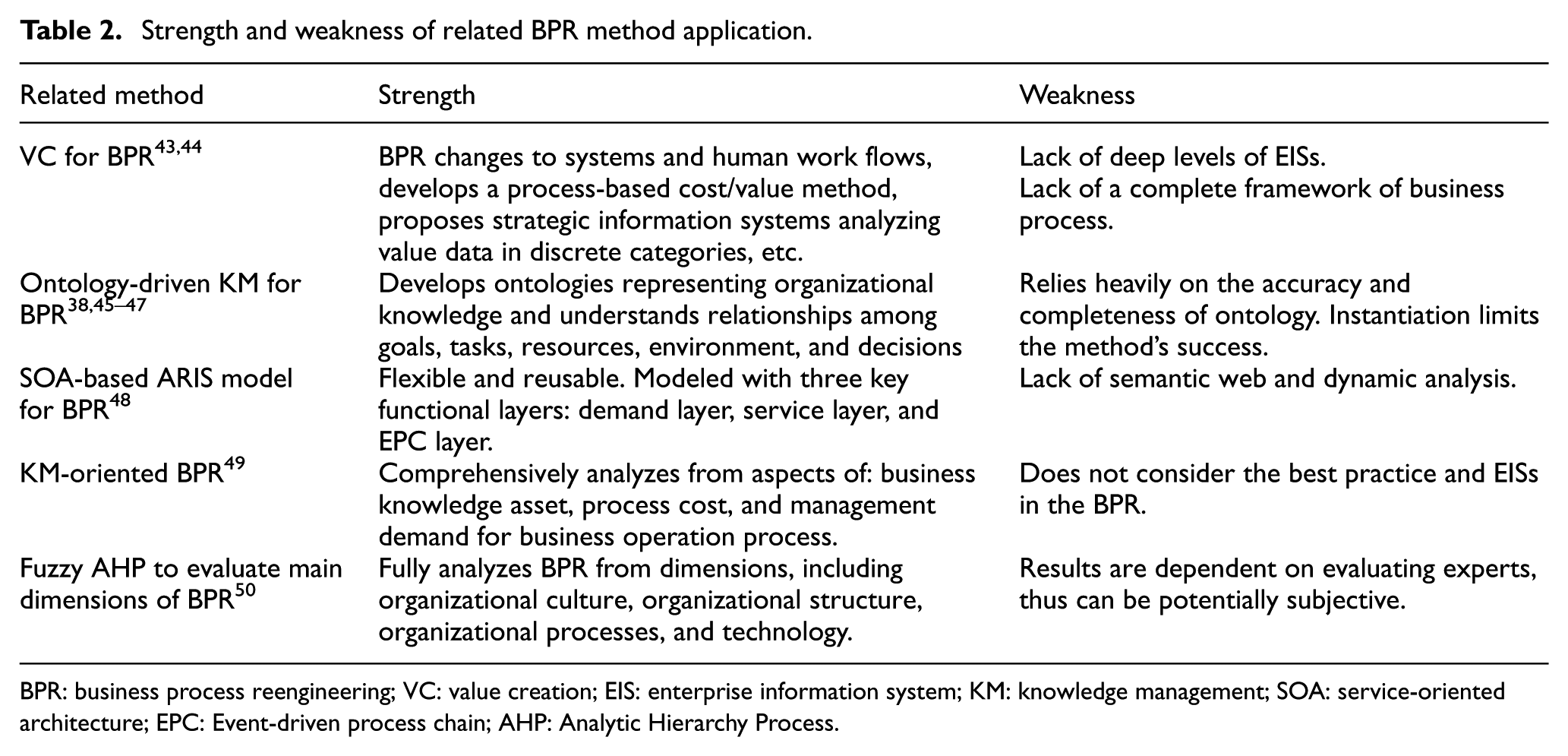
BPR: business process reengineering; VC: value creation; EIS: enterprise information system; KM: knowledge management; SOA: service-oriented architecture; EPC: Event-driven process chain; AHP: Analytic Hierarchy Process.
The linkage between BPR and EISs
Most papers related to BPR have identified major uncertain factors and risk sources. However, an effective method to implement BPR for EISs is in demand to describe an architecture or physical structure of components in the integrated computer, communication, or physical system. Today, the potentials with architectures are not being sufficiently explored. One of the reasons behind this phenomenon is the absence of proper architectural formal representation to support meaningful characterization of features and properties of EISs. Information integration is part of the core problems in cooperative information systems. 51 Two critical factors for the design and maintenance of applications requiring information integration are conceptual modeling of the domain, and reasoning support over the conceptual representation. A detailed description of the physical level is outside the scope of the article. 52 The current typology and emergent forms of ERP and enterprise application integration technologies are created in the context of understanding information and knowledge integration philosophies. Numerous BPR applications have been granted mainly on resource savings.53–55
BPR rapidly and radically redesigns strategic, value-added business processes and organizational structures that support them to optimize the workflows and productivity in an organization. 56 It is composed of financial, manufacturing, distribution, logistics, quality control, and human resources application systems and provides one-time data entry and the sharing of a fast, seamless access to one single facet of information. 57 The linkage between BPR and EISs is indicated by Table 3.
Relational matrix of BPR and EISs.
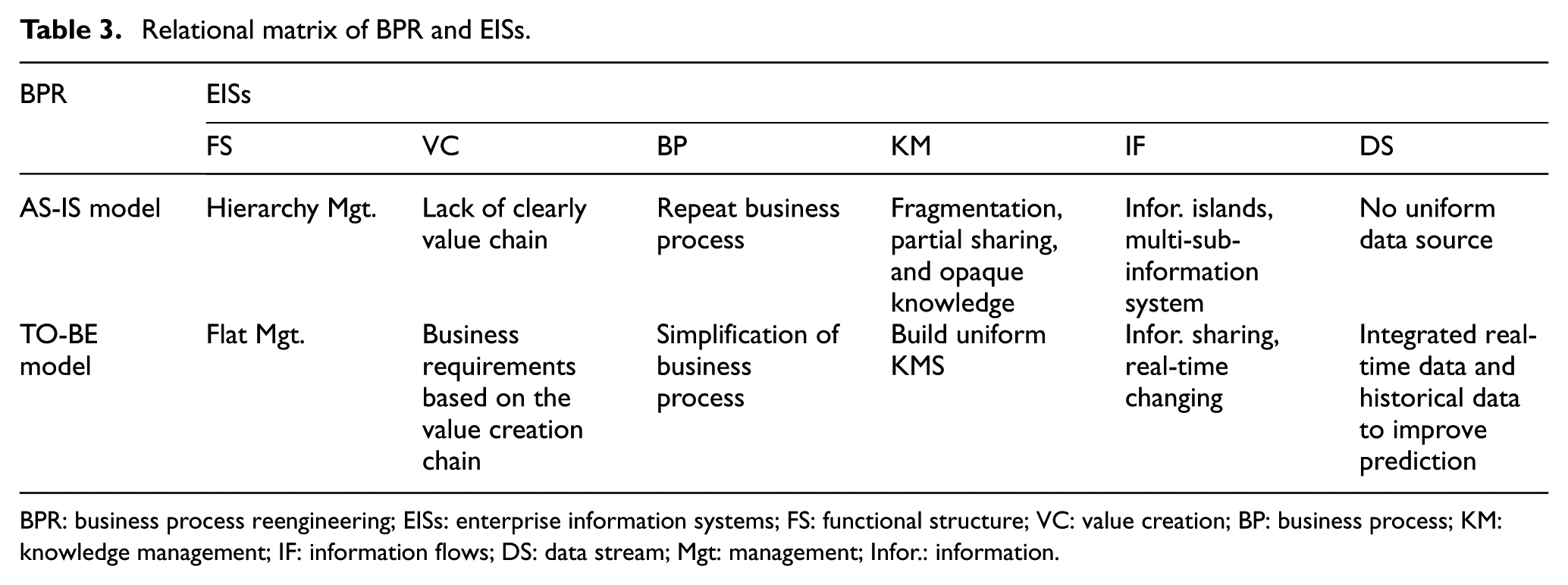
BPR: business process reengineering; EISs: enterprise information systems; FS: functional structure; VC: value creation; BP: business process; KM: knowledge management; IF: information flows; DS: data stream; Mgt: management; Infor.: information.
Motivation and objectives
This article aims to construct a comprehensive framework using BPR method and lean thinking to strategically enhance EISs fitting to business process adaptability and functional structure’s integrity. The proposed framework fulfills the need of enterprise in knowledge management, PLM, and value creation. EISs are designed to access the relevant functional modules and business process models. This article introduces the construction of EISs’ organizing layout, and the definition of design goal, principle, and procedure. The proposed framework of EISs is useful to identify and solve certain problems that directly affect systems themselves. These problems are subdivided into six main aspects, which are solved through the EISs’ framework including functional structure (FS), value creation (VC), business process (BP), knowledge management (KM), information flows (IF), and data stream (DS).
Proposed framework
The design of EISs should not only meet the needs of the local department but also consider the needs from business strategy and from the internal cross-sectors. Upgrading the existing EISs and managing relationship with newly installed EISs are crucial for the success of EISs to tackle this challenge; this article proposes BPR for constructing a comprehensive framework of EISs. It is composed of three steps. As previously discussed, the authors focus on the framework of EISs in SMSs, principles to construct EISs, and the procedures of EISs development based on the advanced BPR methodology. The subsection will introduce the method in detail.
Framework of EISs in SMSs
In the SMSs, customer requirements motivate the development of enterprise and suppliers. Customer requirements is the driving force for production activities with all stakeholder’s real-time collaboration in the uniform EISs platform. In the uniform platform, a comprehensive EISs framework is proposed in this sub-section, to satisfy the enterprise’s sustainable value added, internal information integrated, information and resources sharing, audit flexibility, and knowledge accumulated and shared requirements. The framework of EISs in SMSs is illustrated in Figure 2. From this EISs platform, customers’ requirements are translated into different information streams to suppliers and enterprise for the real-time collaboration.
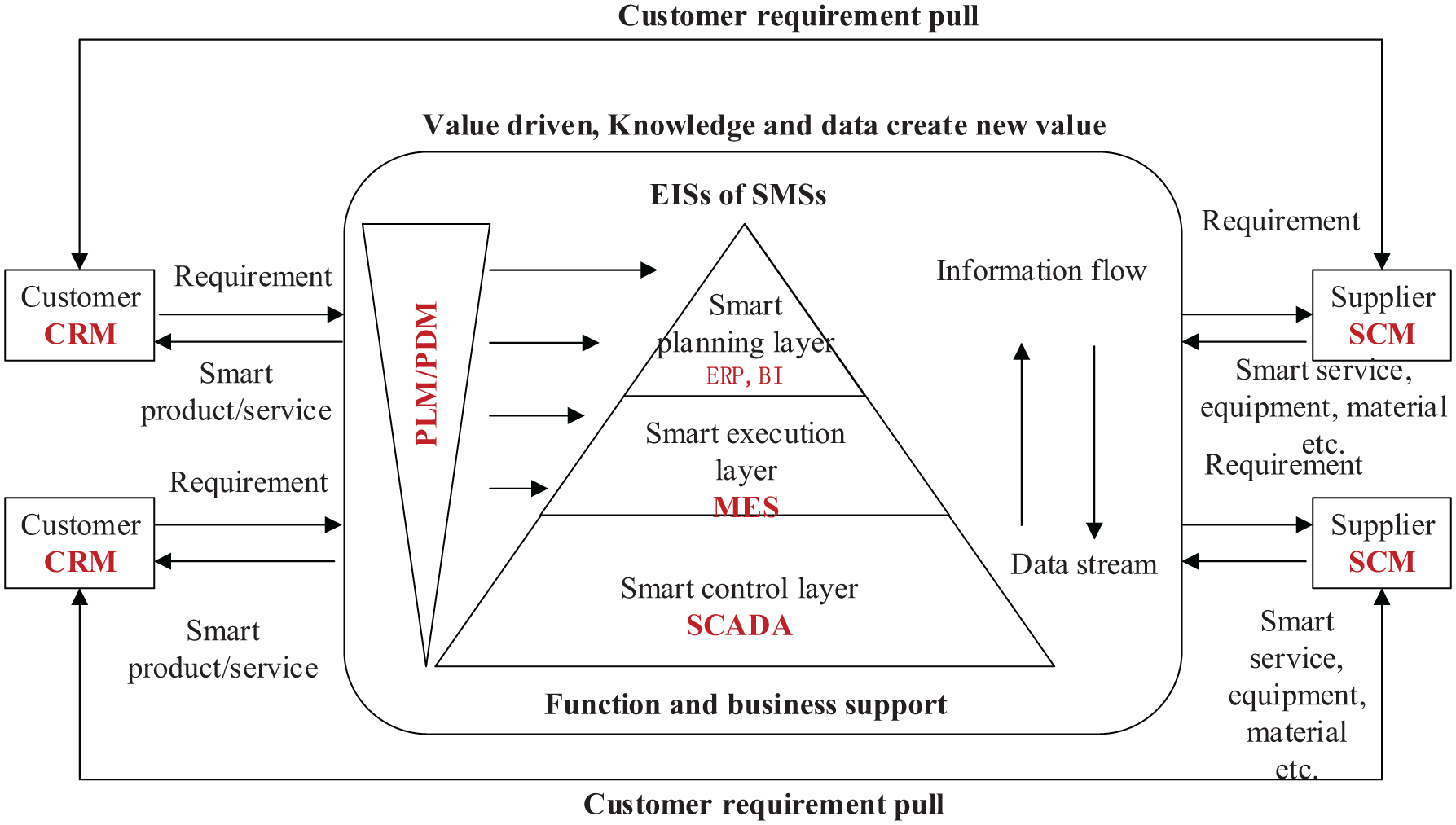
Framework of EISs in SMSs.
The elements of EISs are listed as follows:
Value creation. The EISs strategy is driven by values from various stakeholders. Based on the core value-added business process, we redesign the core functional structure and EISs implementation roadmap.
Information flows and business process connecting. Information flows is in the order of top-down, and it determines the enterprise operation. Its perspective is very important for BPR and EISs design, because it helps the designer to analyze the correctness of the business processes, value creation, and knowledge. Considerations on value creation and auxiliary business process are emphasized, aiming to flatten the management process. The authors have checked the business process logic structure and information stream and then explained the interoperability of different EISs’ data.
Functional structure. The functional structure is the main form of EISs. Based on an advanced management method, the functional structure resolves the enterprise operation management questions and integrates sub-information systems. It focuses on the functional needs of the department and the cross sectors. In order to design related functional model of EISs, this article analyzed the enterprise requirements to define the functional structure. We build the functional structure based on the information flow and business process between the related sectors.
Knowledge management and data stream. In the SMSs, large amount of knowledge and data can stimulate the enterprise innovations to satisfy the dynamic competition requirements. In the new framework, we integrate the knowledge management system into EISs to better manage knowledge, the combination of automatic knowledge, and accumulated knowledge. The essence of knowledge management contains the elements of identifying knowledge, acquiring knowledge, processing knowledge, and using knowledge. The knowledge is the basis of development for the enterprise. The large amount of is obtained from data of past experiences and real-time data. One basic requirement of EISs design is to have unified data sources. In this article, we focus on defining real-time capture methods, data type, data integration, and data management. In the SMSs, there are many real-time data automatically acquired from the bottom layer such as sensors and people. Enhancing integration among different sub-information systems help data transfer to the upper level of the enterprise, sharing with different departments. It also helps the enterprise achieve autonomous decision-making.
BPR principle of EISs
In this section, we propose the BPR principle, which mainly considers the requirements, standards, and organization of the enterprise to construct seamless information flow. In addition, the BPR principle of EISs is proposed to be driven by value creation and create new values in aspects except by-product design. The detailed principles are shown as in Table 4, including design requirements of EISs, centralization, and standardization. Together, the principles aim to establish data dictionary, uniform document format and sheet design, and standardize database.
BPR principle of EISs.
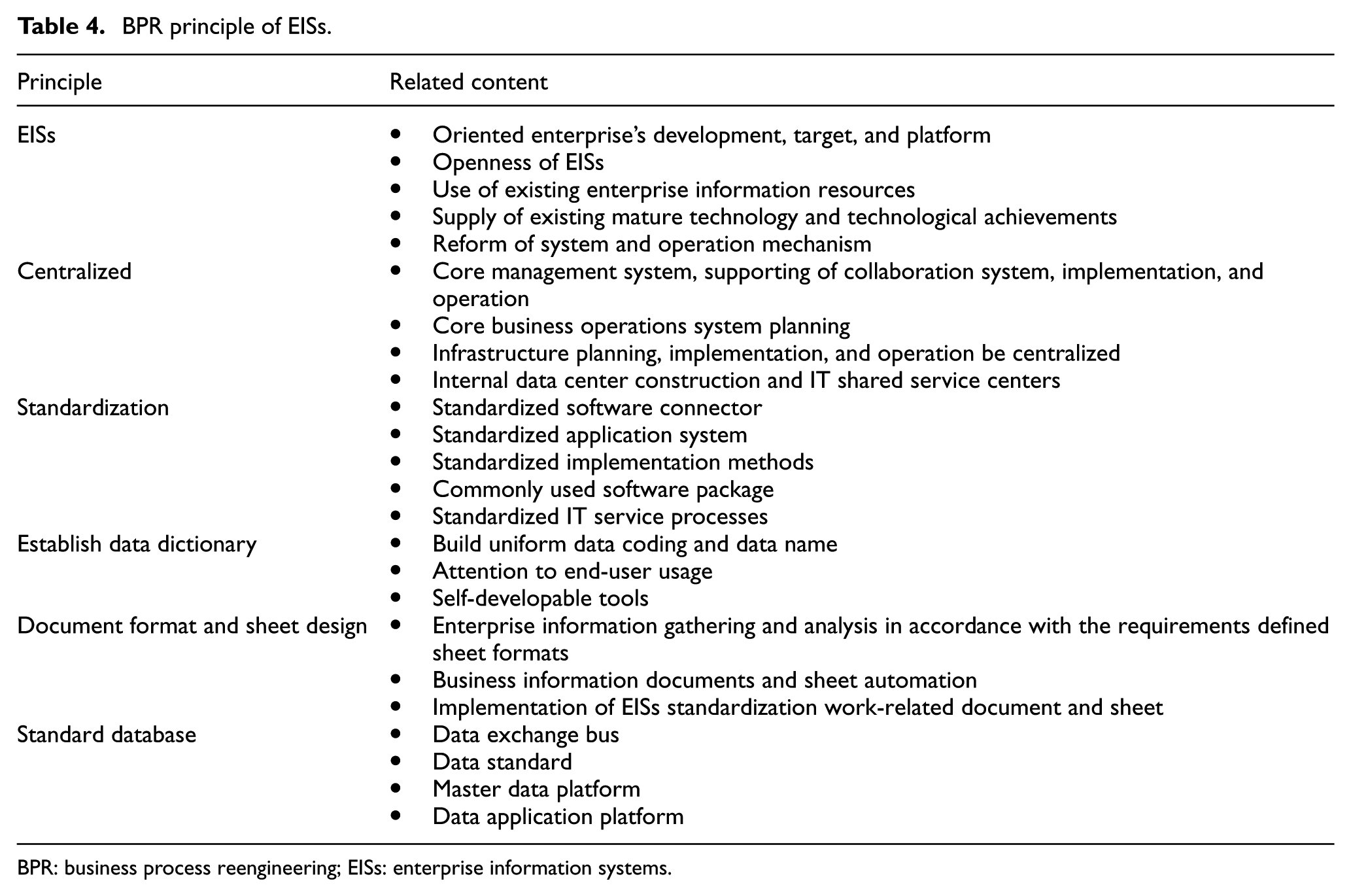
BPR: business process reengineering; EISs: enterprise information systems
BPR procedure of EISs in SMSs
In order to resolve challenges existing in information silos, upgrade and optimize EISs, this article proposes a general procedure of BPR for EISs to help traditional companies reducing economic input and getting more profits. The BPR procedure of EISs (Shown as Figure 3) includes three stages, such as (1) building EISs’ AS-IS model, (2) constructing TO-BE model, and (3) analyzing the feasibility of generating EISs paradigm. In different steps, it uses different tools and method, some with advanced tool and methods (Delphi analysis, lean thinking, UML, etc.). Just like any other engineering process, the procedure often requires iterations and constant reality checks to ensure that the work is done on track to fulfill the enterprise’s requirements and needs.
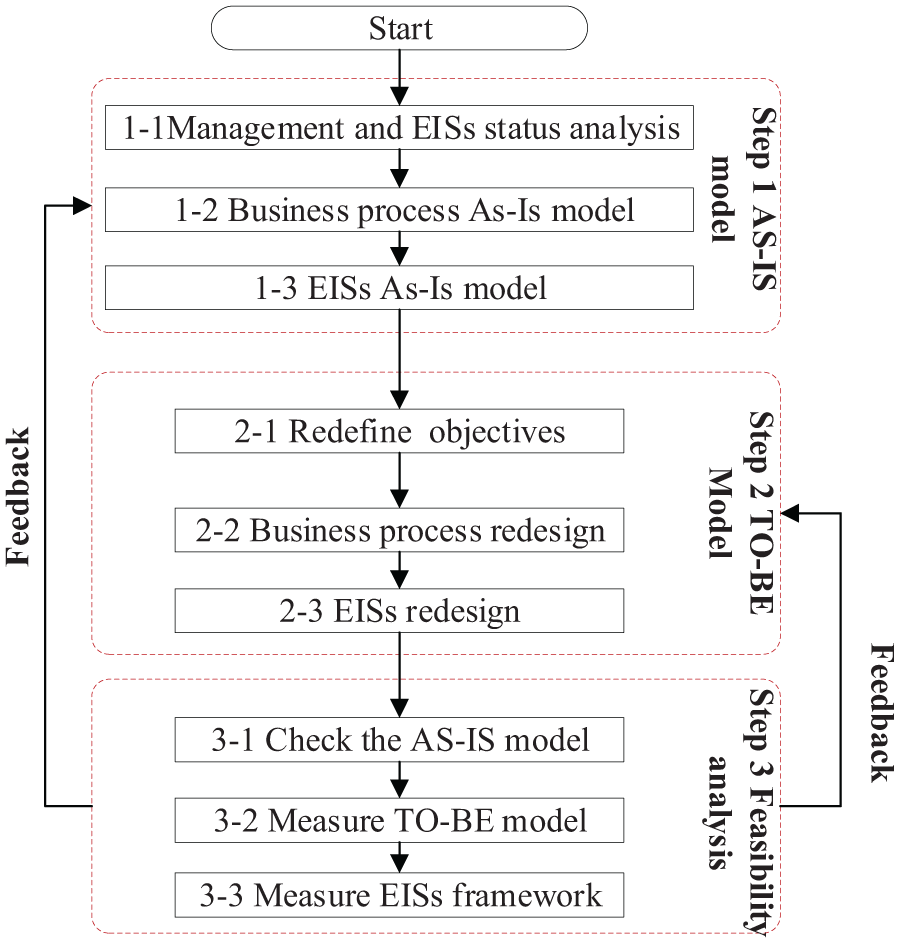
The procedure of EISs in SMSs via BPR.
AS-IS model
This part analyzes interactions between departments, and some core business processes. The authors used Delphi analysis in this step to obtain some expert opinion. In this stage, the best practice can be obtained through analyzing the existing processes by using the UML, SPIOC and SWOT method. With this approach not only the best practices are rigorously obtained, key issues in the current system are also identified. Thus, it is concluded that compared to other models found in literature reviews, As-Is, the model of EISs better reflects the real situation of the enterprise and is more capable of inheriting practices in current enterprise system with lower costs and reduced waste in resources. Our contribution is to have disposal in a way that can be used as a comprehensive process (see Figure 4) to analyze the EISs’ AS-IS model questions. The comprehensive process typically includes three steps: management and EISs status analysis, business process AS-IS model, and EISs AS-IS model.
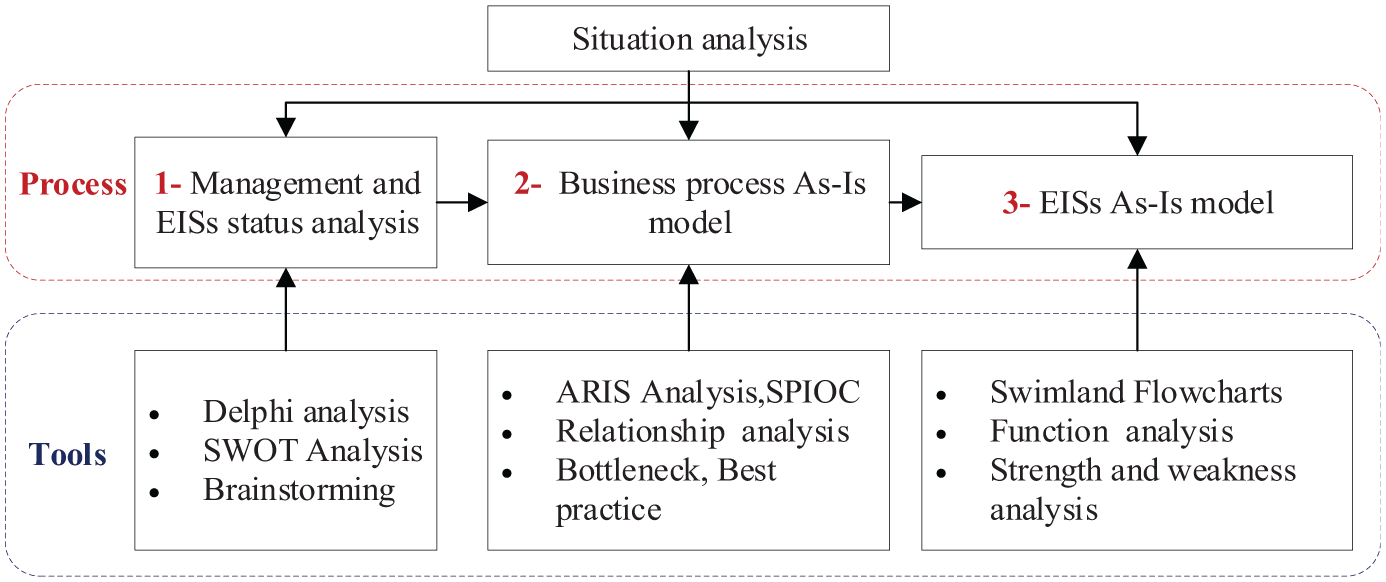
Process and tools used in AS-IS model for EISs.
TO-BE model
TO-BE model is the core stage to solve the issues in business management and EISs. This article introduces four steps in TO-BE model to construct the EISs, including objectives analysis (strategic, customer, and internal), technical methods, business process, and EISs requirements (software and infrastructures). The TO-BE model is designed with respect to two dimensions: the strategy achievement and PLM. Existing management processes are at the basis of BPR, whereas process analysis is carried out to build To-Be processes of technology infrastructure management. The authors give the TO-BE model roadmap for EISs to solve problems with regard to the enterprise management, business model, and EISs’ requirements. Therefore, the detailed roadmap of TO-BE model for EISs is shown as Figure 5.
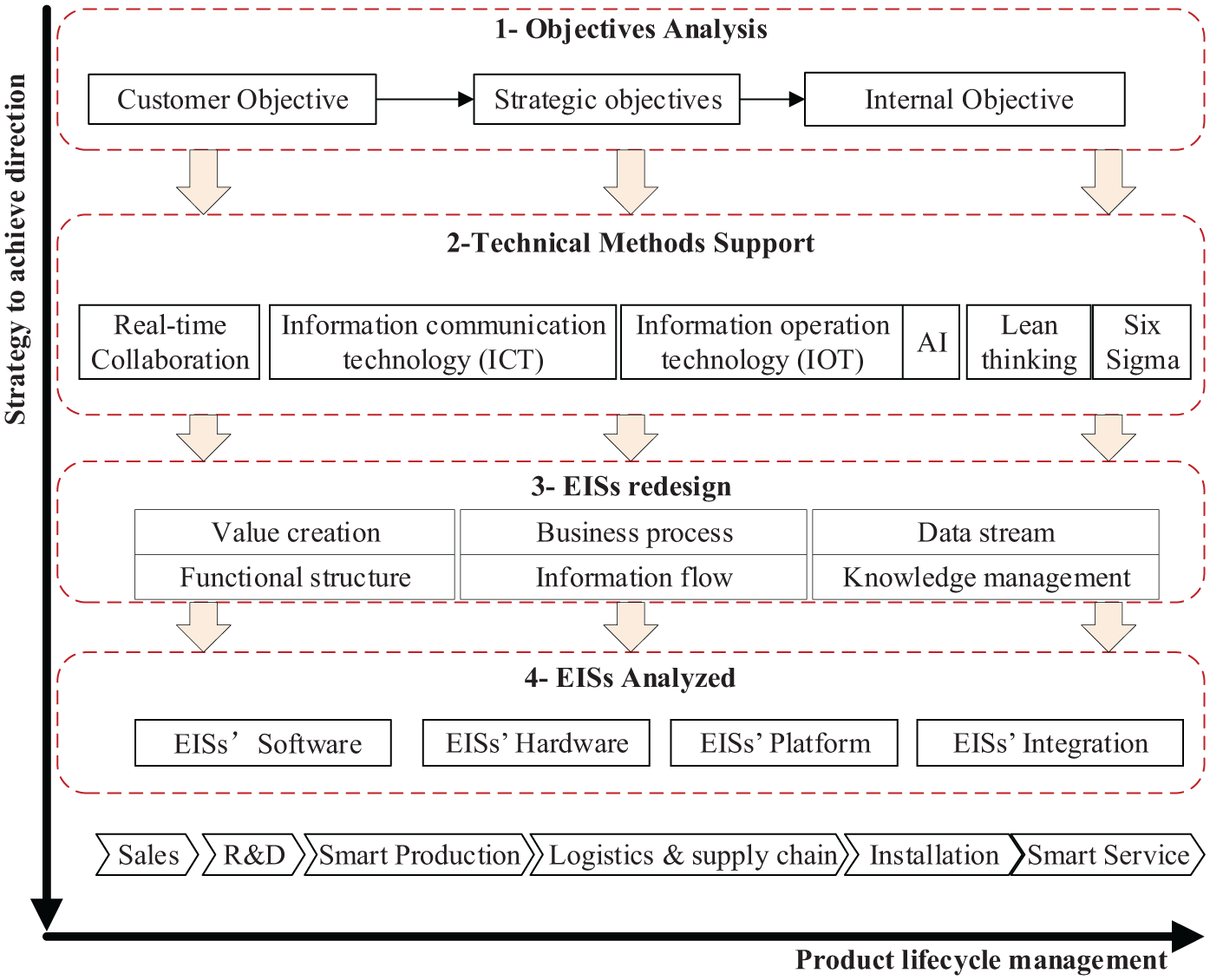
The roadmap of TO-BE model for EISs.
Feasibility analysis of the TO-BE model
Steps of feasibility analysis of the TO-BE model could be summarized as follows:
Use mature method to build the AS-IS model and analyze efficiency in the existing management process and EISs. The AS-IS model contains the identification, classification for the present business process and raised questions. The top layer is thinner and assesses the status of business processes for the overall impression.
Design the TO-BE model using top-down method. This method makes sure that EISs construction has a uniform goal aligns with customers’ requirements and corporate strategic goals, leadership, and management expectations. The TO-BE model not only utilizes the integration of lean thinking and professional consultation but also has good inheritance and makes full use of the best practice results of AS-IS analysis. Efforts are spent to make sure the To-Be processes used in the proposed model do come from best practices, combined with theoretical expression. Iterations and revisions again ensure the feasibility of the practice. In the processes of each step that proposed TO-BE model, business analysts jointly completed part of the validation analysis, so it is unreasonably and repeatedly revised, to achieve perfection. Having studied the existing management process and status quo enterprise practices, the authors also interviewed with management corresponsive on brainstorming strategy propositions and product lifecycles and values associated. The in-depth field investigation was carried out to ensure the feasibility of TO-BE model. TO-BE model and specific processes have been cross-checked and perfected by iterations. They have been verified by the end users.
Quantitative analysis method. It uses the recombination evaluation to analyze framework of EISs, ensuring the effectiveness of complex scheme. This article proposes the multi-criteria fuzzy decision-making method based on vague data set to analyze the TO-BE model. The presented article explores an economic feasibility analysis strategy which aims to make a logical decision by assessing the strengths and limitations of BPR for EISs compared with the benchmarked system. The relationship within EISs’ six dimensions is illustrated as Figure 6.
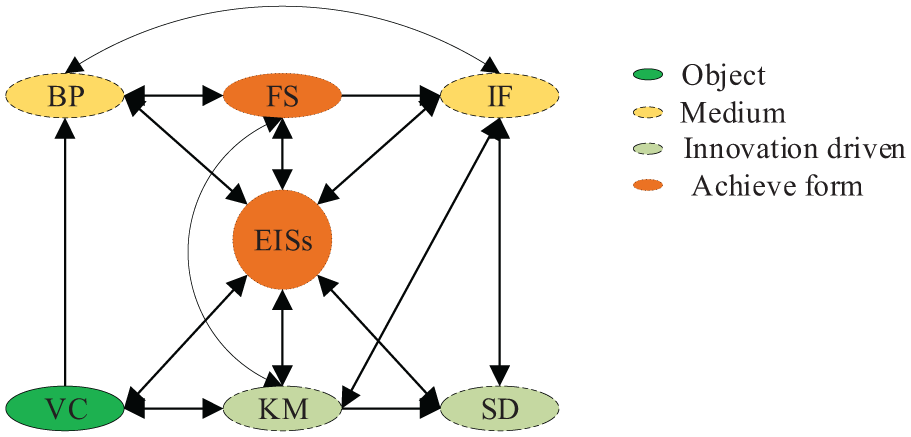
Relationship within six dimensions of EISs.
Case study
As a preliminary prototypical illustration of the methods elaborated in this article, this section presents a case study of HEI for a metallurgical manufacturer in China. In the S company, there are more customized products and it is more important to meet customers’ need in quality, cost, time and continues service. S has different information systems in R&D, marketing, HR (human resource), and finance management. The company has started to build EISs since 1985. EISs built since can meet requirements from independent sectors. Information and data cannot exchange across existing information systems. With development of the SMSs requirements, the company decided to reengineering their current EISs to suit the future needs. Therefore, it needs seamless integration, interoperability, and intelligence in EISs.
In the subsection, the redesign of the EISs framework through BPR and lean thinking method considers value creative dimension of PLM. The vertical dimension satisfies the intelligent business and constructs knowledge management system. In this case study, we redefine the system with BPR generated AS-IS and TO-BE models, so the system mitigates major issues of order tracking, and requirement synthesizing that are affecting company’s development.
Step 1: build the EISs’ AS-IS model in HEI
The traditional EISs comprises numerous experiences, data, and knowledge. This step aims to identify the best practice and challenges. Therefore, we build the EISs’ AS-IS model using Delphi, SWOT, brainstorming and EISs status analysis to classify questions in S Company:
Uses the ARIS analysis, SPIOC, relationship analysis bottleneck, and best practice to build business process AS-IS model.
Uses Swimland flowcharts, function analysis, and strength and weakness analysis to build the EISs’ AS-IS model.
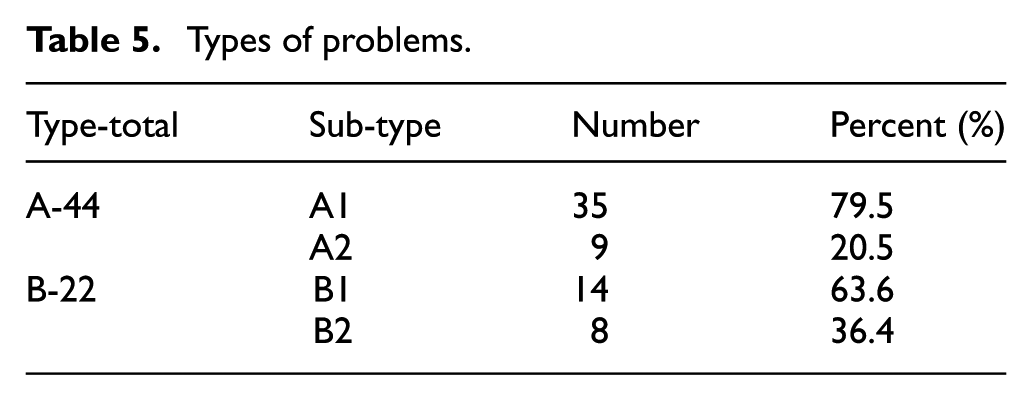
After constructing the AS-IS model, we obtain status quo regard current best practices and the core questions to be resolved. The core questions can be divided into two categories, four subclasses (see Table 5), such as A-the major management and B-EISs:
Type A1: Organizational structure, technical management foundation, and so on;
Type A2: Lack of effectively management method and tool, and so on;
Type B1: Questions about the EISs interface, function module, data integration and exchange, and so on.
Type B2: EISs does not match the actual business process.
Types of problems.
Step 2: construct EISs’ TO-BE model in HEI
When a clear understanding is established for the enterprise AS-IS model, it is possible to identify the goal of EISs. First, we identify and translate the customer requirements into part of the enterprise’s strategy. Second, the strategy of an enterprise is decomposed into the internal goals for each department. Third, according to the internal target, the business process of the enterprise is built, and the demand of the EIS is established by the analysis of the business process. The TO-BE model involves careful analysis of the relation between processes and their representations in EISs framework. EISs model constructed in this section is based on the legacy EISs. In the TO-BE model, we simplify the business construction of an organization, dividing business process into two layers, including management of auxiliary layer (MAL) and value creation layer (VCL). The new business process is proposed based on the value driven to help the enterprise redefine the model and structure of management and narrow the management process. For example, the S Company business processes and the value creation processes are shown in Figure 7. MAL and the VCL application system information relationship is indicated in Figure 8.
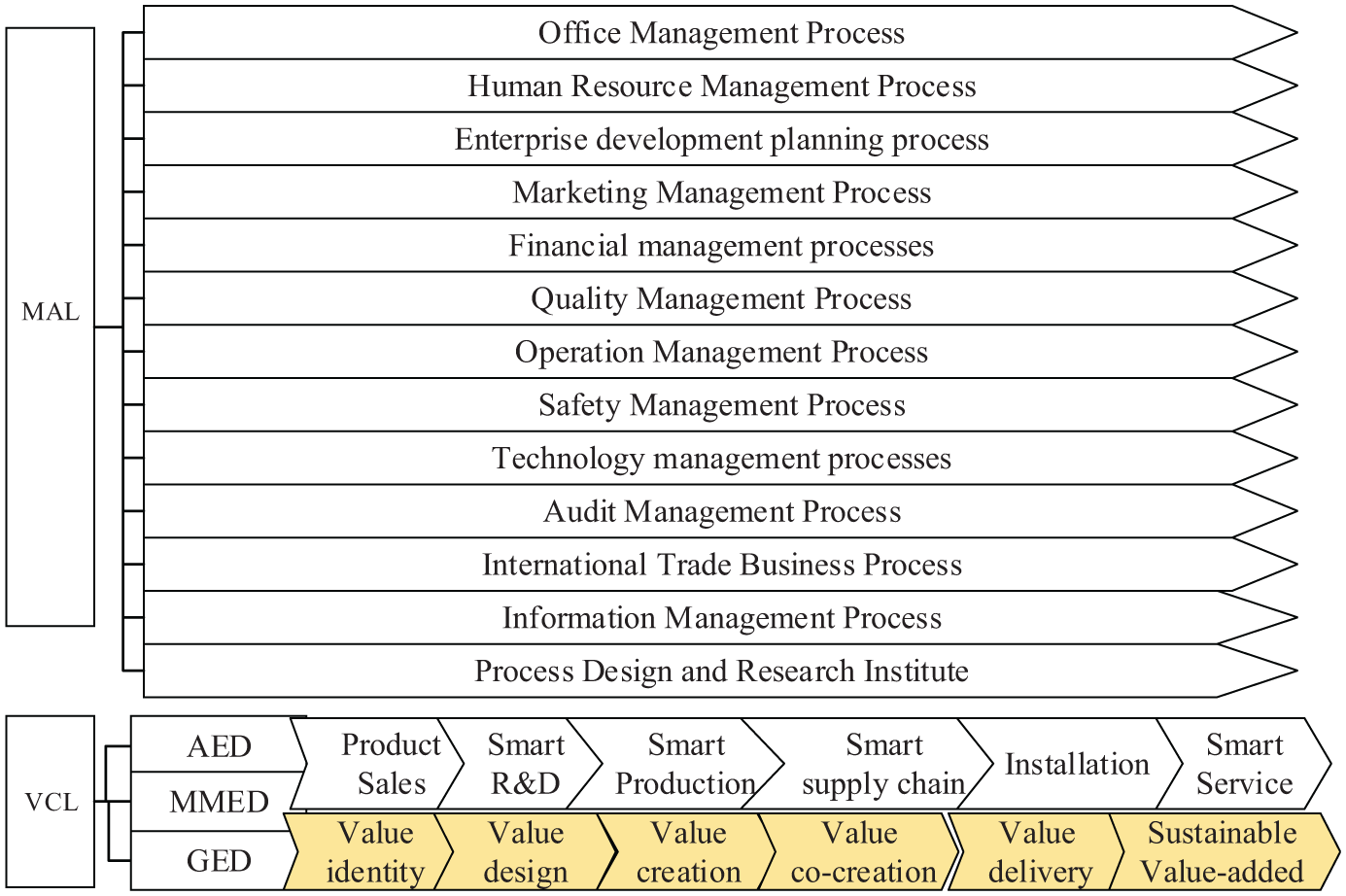
Business TO-BE model.
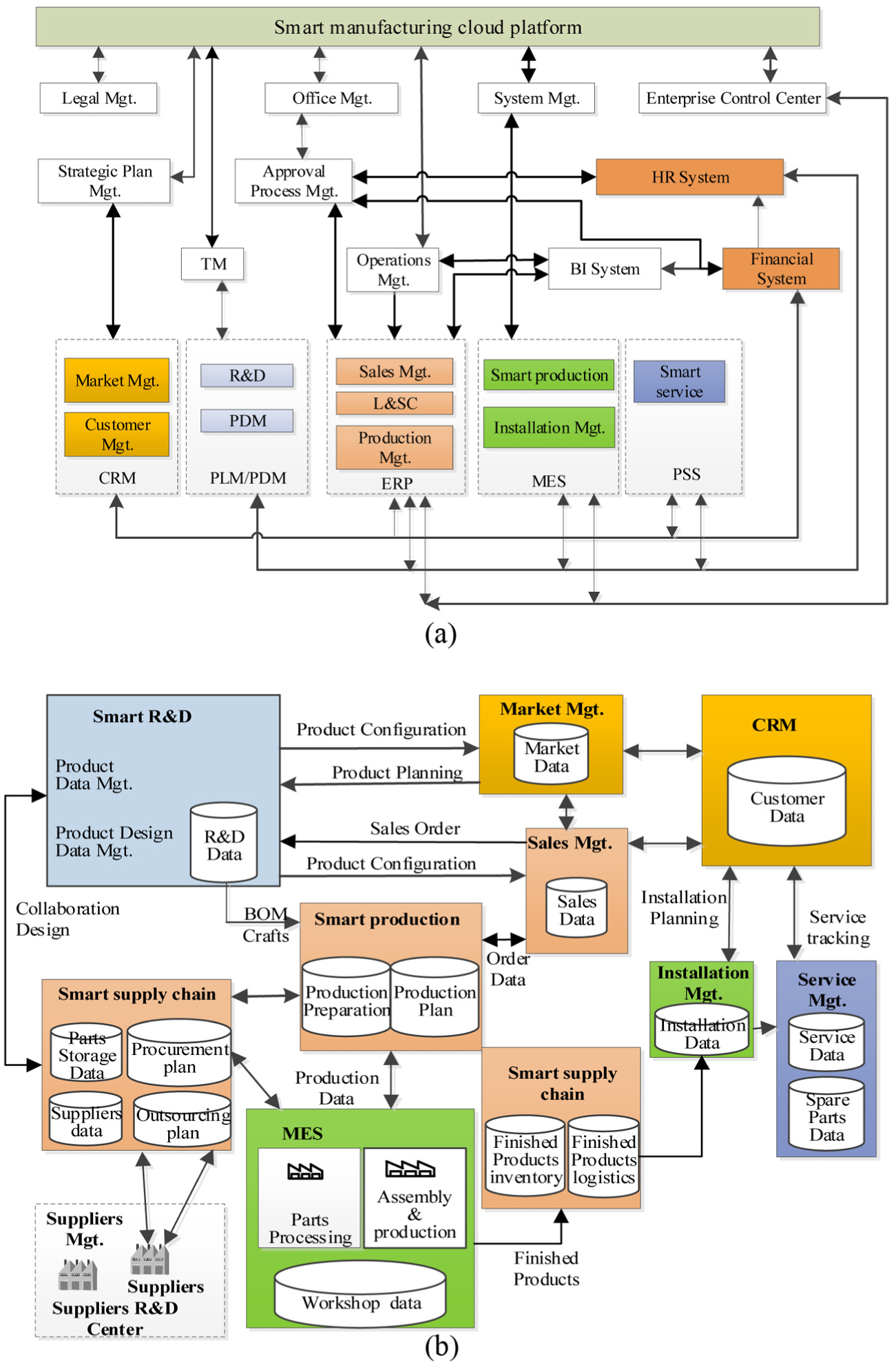
MAL and VCL TO-BE model EISs application layer. (a) MAL To-Be Information flows and (b) VCL To-Be Information flows.
Step 3: design the framework of EISs in HEI
Based on the related work above, we develop a flat organizational structure, transforming organization into a decentralized structure, reducing the workload level for management authorities to satisfy the HEI’s requirements. The rigid linear business processes are hereby replaced by synchronized inter-organizational operations. The hierarchical analysis of EISs framework in HEI contains three levels such as objective level, business process level, and information system level. In addition, we divide the business process level into auxiliary management level functional structure and value creation level functional structure. The hierarchy framework of EISs in HEI is shown at Figure 9.
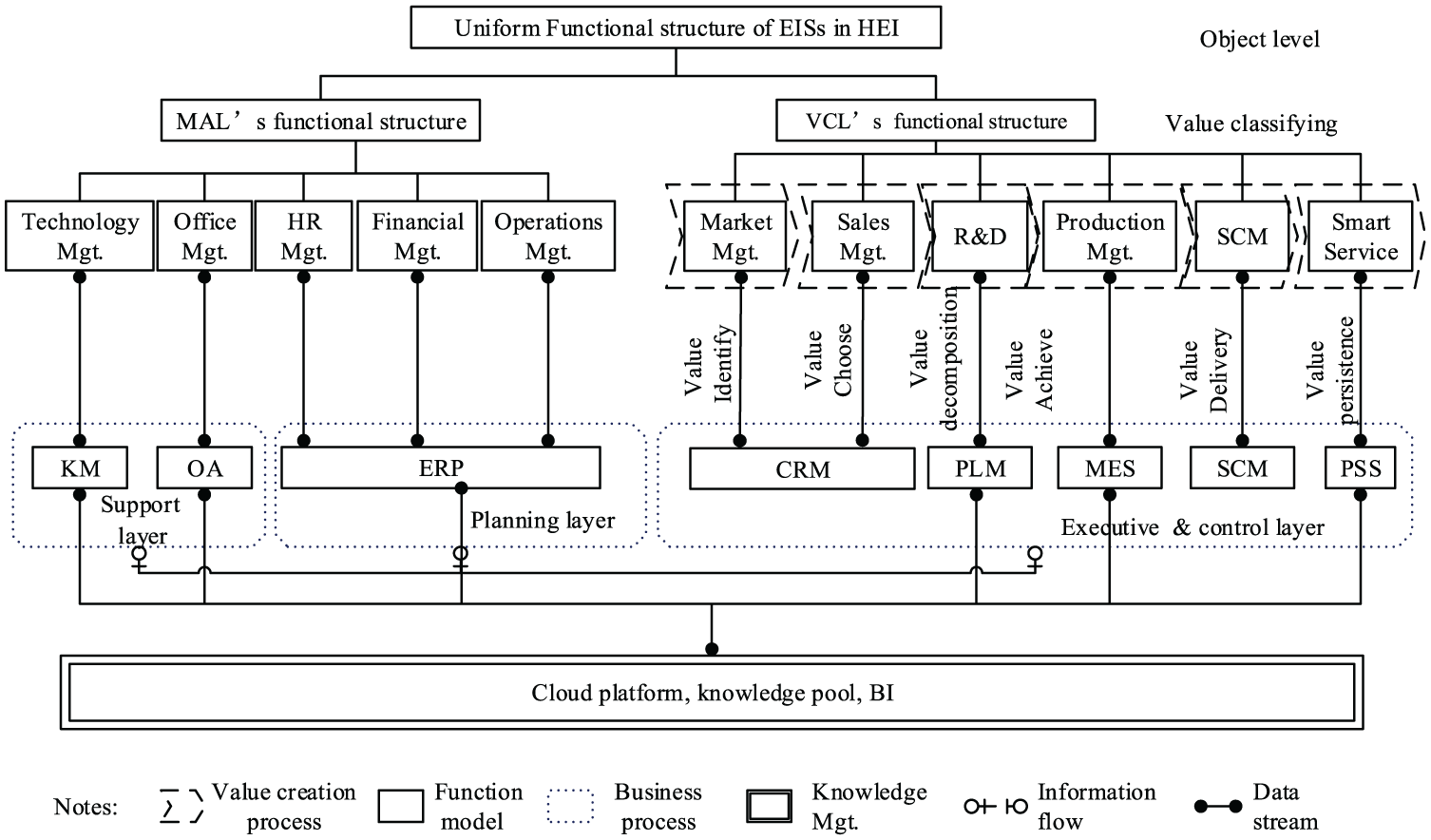
The hierarchy analysis of EISs framework in HEI.
Result and discussion
Result
The method was used in the two different discrete manufacturing companies: HEI and Marine Equipment Manufacturing (MEM). The case 1 for HEI transformation was discussed in the section “Case study.” The case 2 was also implemented in a Chinese company operating in MEM. Due to the length of the article, detailed methodology used the second case cannot be explained in detail. Table 6 displays a comparison between past and results after implementing the framework in the two cases. It is observed from the results that an effective framework of EISs help SMSs solved the turbulent value question, and business synchronization. As a uniform EISs platform, the framework helps manufacturer achieve real-time collaboration under the information and knowledge sharing. To conclude, this method efficiency helps traditional manufacturing to reengineering their EISs in transformation.
Comparison between past and results after implementing the framework in different Chinese companies.
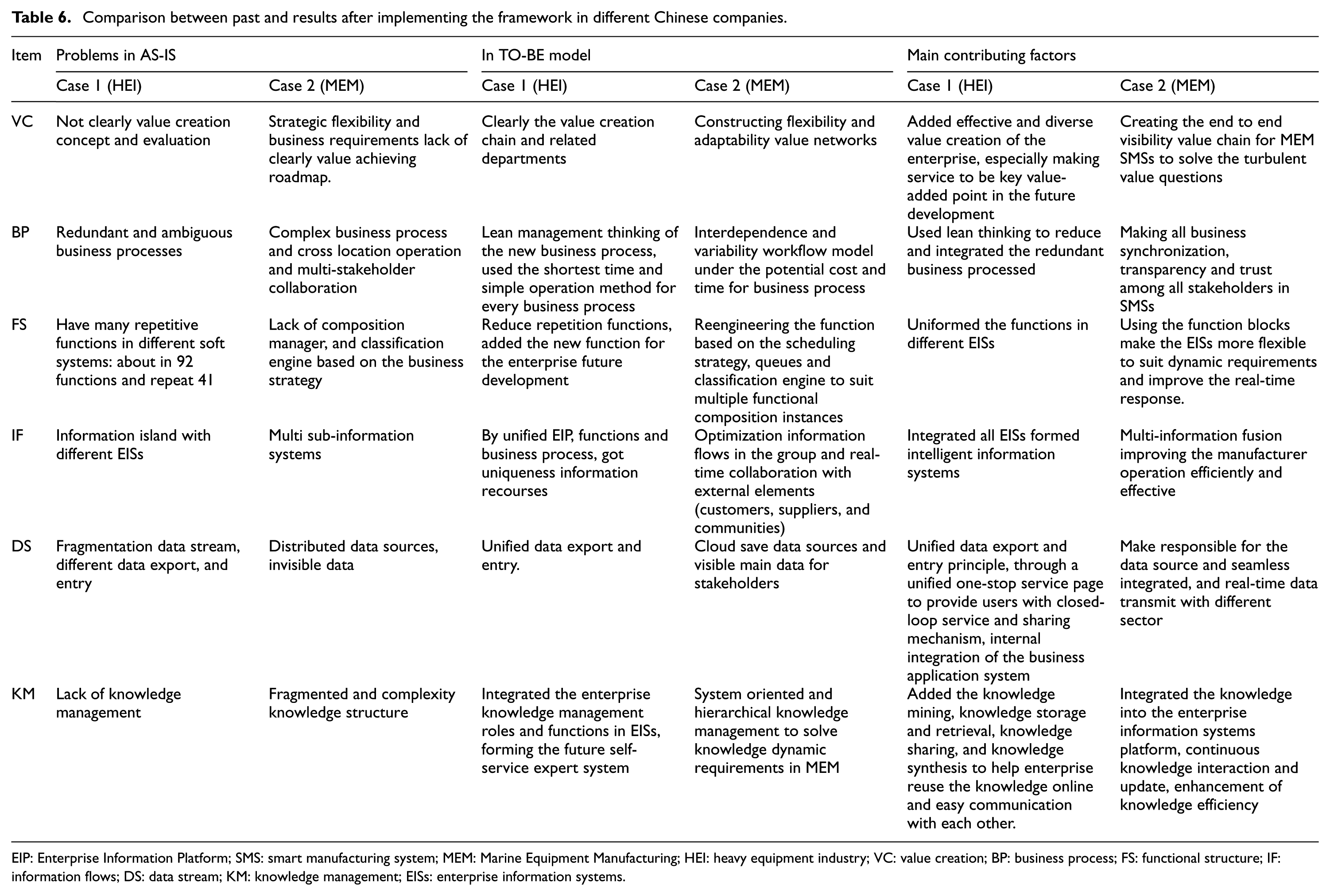
EIP: Enterprise Information Platform; SMS: smart manufacturing system; MEM: Marine Equipment Manufacturing; HEI: heavy equipment industry; VC: value creation; BP: business process; FS: functional structure; IF: information flows; DS: data stream; KM: knowledge management; EISs: enterprise information systems.
Discussion
The comprehensive framework of EISs was proposed in this article aiming to complement the existing frameworks, after pointing out their main limitations and weaknesses. By this reason the integrated framework provides a new procedure and structure based on value creation, business process, functional structure, information flows, data stream, and knowledge management. Integrating six dimensions of EISs significantly enhanced ability for intelligent adoption with information technologies to develop SMSs. The integration especially improved SMSs’ seamless information stream and intelligent operation. EISs are driven by the value creation and knowledge, uniform information flows, and data stream to reduce redundant business processes and functions. The integrated framework of EISs was efficient in solving integration questions from two dimensions: vertical integration of enterprise intelligent operation and horizontal integration of PLM. On the EISs platform, uniform information flow and data stream helped the companies to evaluate and improve the company’s performance and real-time collaboration, which in turn reduced opportunity loss from waiting and resource wastes in processes. This method helped more discrete manufacturing in Heavy Equipment Industries or Marine Equipment Industries. The method also enabled additional features to be included: product demand tracking for life cycle management, multi-sub-EISs integration, improved interoperability of EISs, and visualization of the enterprise operation and value chain. The framework significantly reduced response time and increased on-time delivery rate of orders. The existing BPR models benefited the proposed model for understanding business requirements for EISs and identifying the crucial activities for EISs in the company. Finally, the authors provided the researched content of related EISs and method shown as in Table 7.
Research content of related EISs and method.
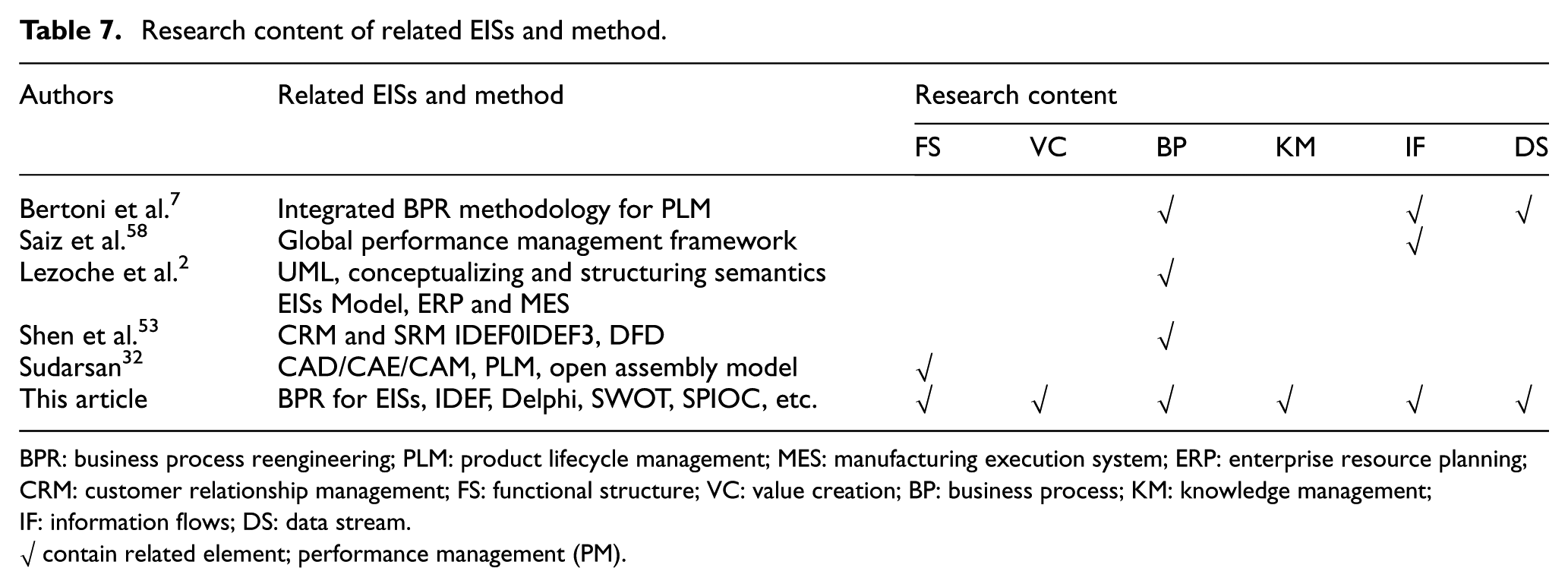
BPR: business process reengineering; PLM: product lifecycle management; MES: manufacturing execution system; ERP: enterprise resource planning; CRM: customer relationship management; FS: functional structure; VC: value creation; BP: business process; KM: knowledge management;IF: information flows; DS: data stream.
√ contain related element; performance management (PM).
Conclusion
In this article, an integrated framework of EISs was proposed, which realized the real-time collaboration with the external (customer and supplier) and the internal (departments/business) of enterprise. Meanwhile, six key factors of EISs were introduced to deal with the interoperability, uniform, information and knowledge sharing, value creation, and data creation value questions. Furthermore, design of EISs was driven by value, connected by the information flows and business processes, data and knowledge innovation direction, which was checked by the functional structure.
This article proposed the procedure and principle for EISs by using BPR and integrated lean thinking. This method can help more traditional manufacturer to reengineer their EISs to meet SMSs requirements. First, AS-IS model help the designer to identify the questions and best practices in the management and EISs. Second, the authors gave the top-down method to re-engineer EISs and implement it through the down-up method. While information should be synchronized with the implementation process of BPR. This approach presents equal applicability both to a single process and to the entire organization. The research result was verified by a case study of the HEI and marine equipment manufacturing in China. The results showed that the enterprise management had become more effective with the uniform platform using improved integrated EISs. It can potentially benefit from such transformation in that the data can be more effectively conveyed and transferred across companies. The EISs have accommodated to fulfill customer’s need for standardization during management and operational processes, which strengthens organization’s control on processes to prevent business risks. EISs also allow transparency in the management process and established balance between control on the business process and the level of decentralization.
In the further research, the requirements analyzing method of EISs should be conveyed through software to upgrade smart manufacturing systems for traditional manufacturing processes. In addition, it is necessary to extend this method to other smart manufacturing systems activities and business.
Footnotes
Declaration of conflicting interests
The author(s) declared no potential conflicts of interest with respect to the research, authorship, and/or publication of this article.
Funding
The author(s) received no financial support for the research, authorship, and/or publication of this article.
