



Abstract
The purpose of this article is to collect and structure the various characteristics, technologies and enabling factors available in the current body of knowledge that are associated with smart manufacturing. Eventually, it is expected that this selection of characteristics, technologies and enabling factors will help compare and distinguish other initiatives such as Industry 4.0, cyber-physical production systems, smart factory, intelligent manufacturing and advanced manufacturing, which are frequently used synonymously with smart manufacturing. The result of this article is a comprehensive list of such characteristics, technologies and enabling factors that are regularly associated with smart manufacturing. This article also considers principles of “semantic similarity” to establish the basis for a future smart manufacturing ontology, since it was found that many of the listed items show varying overlaps; therefore, certain characteristics and technologies are merged and/or clustered. This results in a set of five defining characteristics, 11 technologies and three enabling factors that are considered relevant for the smart manufacturing scope. This article then evaluates the derived structure by matching the characteristics and technology clusters of smart manufacturing with the design principles of Industry 4.0 and cyber-physical systems. The authors aim to provide a solid basis to start a broad and interdisciplinary discussion within the research and industrial community about the defining characteristics, technologies and enabling factors of smart manufacturing.
Keywords
Introduction
Smart manufacturing (SM), a term originated in the United States but increasingly used globally, has gained significant momentum in industry and academia in recent years. Many manufacturing systems are presenting themselves as SM systems (SMSs). SM is a set of manufacturing practices that use networked data and information and communication technologies (ICTs) for governing manufacturing operations. 1 ICTs deal with planning and control of production. 2 Traditionally, manufacturing was limited to a process or a sequence of processes through which raw material is converted into finished goods. However, the common understanding of manufacturing comprises much more. Manufacturing today considers the data-driven business operation at different levels leading to the growth of various paradigms in manufacturing, of which emerged SM. 3 Future SMS will possess unique properties of self-assembly to produce complex and customized products to exploit the new and existing markets. 4 SM uses information to continuously maintain and improve performance. 5 Several frameworks have been proposed in the SM realm. One of them is an accuracy assured framework, based on four factors, namely, physics conscious, operations planning, intelligent monitoring and on-machine shape measurement and error source estimation for an SMS. 6 Additionally, the President’s Council of Advisors on Science and Technology (PCAST) has mentioned in its report that the share of gross domestic product (GDP) by manufacturing has been decreasing recently, and advancement in science, technology and innovation will help the United States become a global leader in manufacturing. 7 However, despite the rapidly growing body of literature, applications and use of the term smart manufacturing in academia and industry, there is still a lack of commonly accepted understanding about what defines a manufacturing system as being “smart.” SM and other systems such as intelligent manufacturing, advanced manufacturing/advanced manufacturing systems,1,7,8 additive manufacturing, 9 digital manufacturing, 10 smart factory 11 and Industry 4.0 12 are actually being used synonymously on occasion by some authors.
The overarching question remains, “What aspects make a manufacturing system smart?” The literature on SM has suggested various characteristics, technologies and enabling factors that define a manufacturing system as “smart.” This article investigates the suggested characteristics, technologies and enabling factors through a literature review and tries to form clusters for the homogeneous items. This work collects a comprehensive list for each of the items based on a literature review of 83 articles that use the specific term “smart manufacturing.”
Research methodology
The schematic of the research methodology used in this article has been shown in Figure 1. First, the electronic journals of Taylor and Francis (T&F), Science Direct (SD), Wiley, Emerald, SAGE and Springer, and additionally Google Scholar (GS) and Google, were searched with the keyword “smart manufacturing.” In the second step, the title and abstracts of the articles found from step 1 were read for the initial screening. It was also made sure that these articles/reports are in English only. The literature available in other language was not considered. In the third step, all the articles found from initial screening were thoroughly reviewed to find their relevancy with SM. After this step there were 67 articles and 16 reports that were found relevant. Finally, the list of characteristics, technologies and enabling factors was prepared with the help of relevant literature. In this study, we focused on characteristics, technologies and enabling factors specifically associated with SM and kept characteristics, technologies and enabling factors associated with similar terms, for example, Industry 4.0, smart factory, advanced manufacturing, cyber-physical production system (CPPS) and other similar manufacturing initiatives out of our focus. The reason for this rather strict system boundary is that it allows us to create a comprehensive list of SM-specific characteristics, technologies and enabling factors, which later may be compared to the aforementioned concepts. This comparison will help analyze the similarities and differences among them and determine whether they are indeed synonymous with SM or whether there are certain distinct differences. This article is structured as follows: first, a literature review of current indexed scientific articles containing the term “smart manufacturing” is presented along with a comprehensive list of SM-associated characteristics, technologies and enabling factors. The characteristics, technologies and the enabling factors are classified based on how they are defined in the reference article and how the authors interpret them.
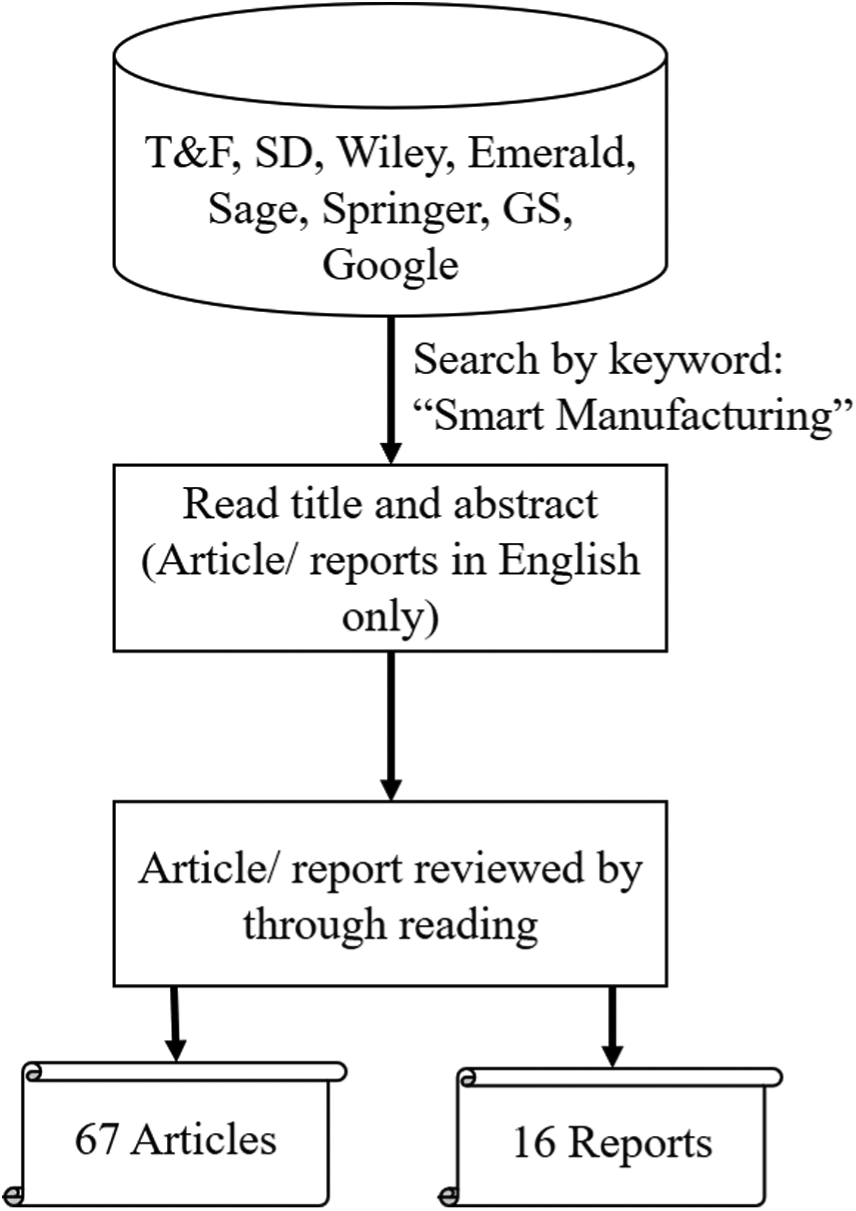
Schematic for methodology adopted in this article.
Interestingly, more than 95% of these articles and reports were published in and after 2013. This might be an indication of the novelty of SM (compared to more established terms such as “intelligent manufacturing” or “Industry 4.0”) and shows how fast its popularity in academia and industry has increased within recent years. There are several gray papers and reports published by federal agencies, for example, National Institute of Standards and Technology (NIST) and other institutions, for example, the Smart Manufacturing Leadership Coalition (SMLC) leading the newly established Clean Energy Smart Manufacturing Innovation Institute (CESMII). This gray literature was used mainly as motivation for this research and to define the system borders.
The following section defines and sensibly clusters the individual characteristics, technologies and enabling factors. The authors’ clustering was based on the use of established ontologies in relation to SM vocabulary (e.g. glossaries) and the consideration of the semantic distance between the terms being classified. Semantic similarity in this context is understood as a metric defined over a set of documents or terms, where the idea of distance between them is based on the likeliness of their meaning or semantic content as opposed to similarity which can be estimated regarding their syntactical representation (e.g. the string format).
13
Finally, a condensed list of characteristics, technologies and enabling factors associated with SM is presented as a basis for further discussion within the SM community. In a first attempt to compare the identified SM identifiers with other popular manufacturing initiatives, it is discussed how they compare to established design principles of (1) Industry 4.0 and (2) cyber-physical systems (CPSs). The various manifestations associated with these principles are also stated. The article concludes by providing a brief overview of the results and a discussion of the limitations of the study.
Literature review
Researchers have previously identified a variety of characteristics, technologies and enabling factors associated with SM. Some of these characteristics, technologies and enabling factors have been specifically mentioned as such. However, this is not always the case, and thus, the authors identified additional items that can be associated with these categories by thoroughly going through the relevant material. SMLC has suggested some SM platforms considering integration of different technologies in the system,1,14 From the facility level, SM is the vertical and horizontal integration of manufacturing systems. 15 Therefore, an SMS should be aware of the state of its predecessor machines, successor machines and the machines running in parallel. A computational-based learning system that incorporates interconnected data, integrated automation and intelligent information has also been used in literature 16 to create an SMS. Nevertheless, in this case, the SMSs’ scope is limited to computation. A strategic model for SM considering agility as the goal and a model that can be adapted to other goals has been presented by NIST. 17 Agility, asset utilization and sustainability were considered as the metrics for the classification of SMS. 18 Similarly, there are other characteristics and technologies that have been used to define SM. Four steps toward SM have also been mentioned: 19 (1) establish forums where problem definitions can be discussed, (2) develop cyber-platforms, (3) data sharing and (4) introduce SM-friendly policies. However, there is no research that presents a comprehensive list of characteristics, technologies and enabling factors that make a manufacturing system “smart.” The set of characteristics, technologies and enabling factors, which are required in an SMS, will differ. For example, a smart pharmaceutical system focused on improving drugs and other medicines may not require visual technologies such as augmented reality (AR). However, another healthcare system that, for example, develops artificial limbs may profit from using this technology. Therefore, this answers the question, whether an SMS has to incorporate all the identified characteristics, technologies and enabling factors simultaneously or whether it is sufficient to define a manufacturing system as smart when only a certain selection is used. The degree of SM engagement often varies significantly between SMEs and large corporations. Generally, it can be observed that only few SMEs, while often having partly automated processes installed, have an IT-based production management system in place. However, a majority of the large, multinational corporations already incorporate IT systems for real-time communication among other things. Of all companies, only a handful of high-tech organizations such as Tesla, LG, Samsung and Siemens already have a customized production based on Internet of Things (IoT) CPS in use. 20
To create a common basis for the following discussion, the terminology will be reviewed. A characteristic may be defined as a property that is particular to something and can be varied to make elements look similar or different. Examples for characteristics are modularity, heterogeneity and flexibility. Technology, however, is the use of science for practical purposes. This includes but is not limited to data analytics and three-dimensional (3D) printing. Technologies are also the identifiable parts of a larger construction that can provide a particular function or a group of related functions. Enabling factors are the standards and managerial practices that need to be maintained. For the successful implementation of characteristics and technologies in SM, this includes, for example, laws and regulations, innovative education and training of employees. This article presents a discussion on various SM-related characteristics, technologies and enabling factors that are essential for the installation and operation of an SMS. Table 1 presents a list of 27 characteristics identified in literature defining SM (or an SMS). The items will be analyzed for clustering in the next section.
List of characteristics associated with smart manufacturing.
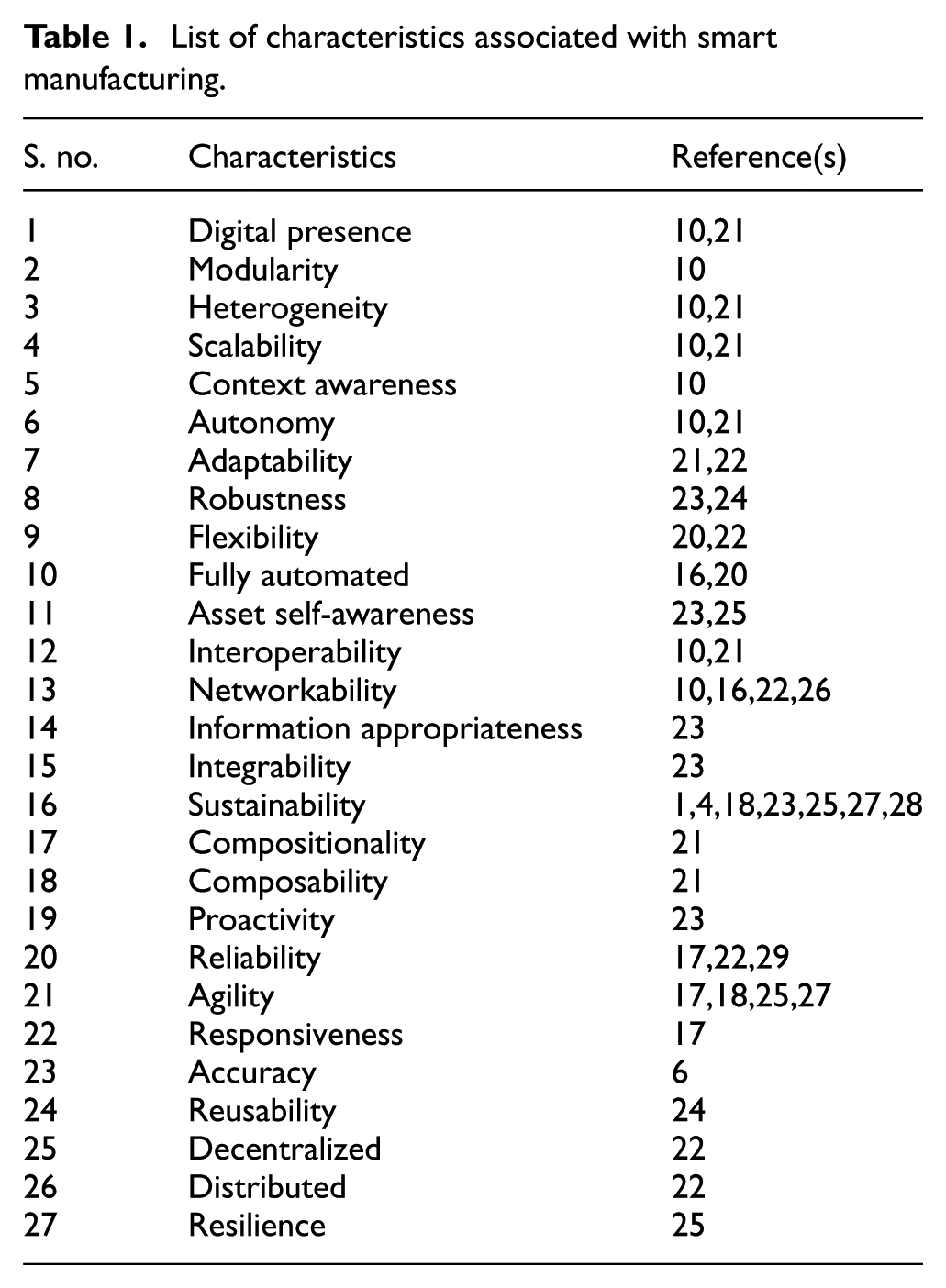
Table 2 presents a list of 38 technologies that are associated with SM. Some of these technologies can be merged and clustered together as certain items are rather closely related. This is motivated by two main reasons. First, different authors may use different terminology, as no established ontologies exist in the field of SM. Second, the level of detail that authors decided to use in their respective publications to describe relevant subcategories of technologies differs significantly as well. The clustering of closely related items based on their “semantic similarity” 13 is addressed in the following section.
List of technologies associated with smart manufacturing.
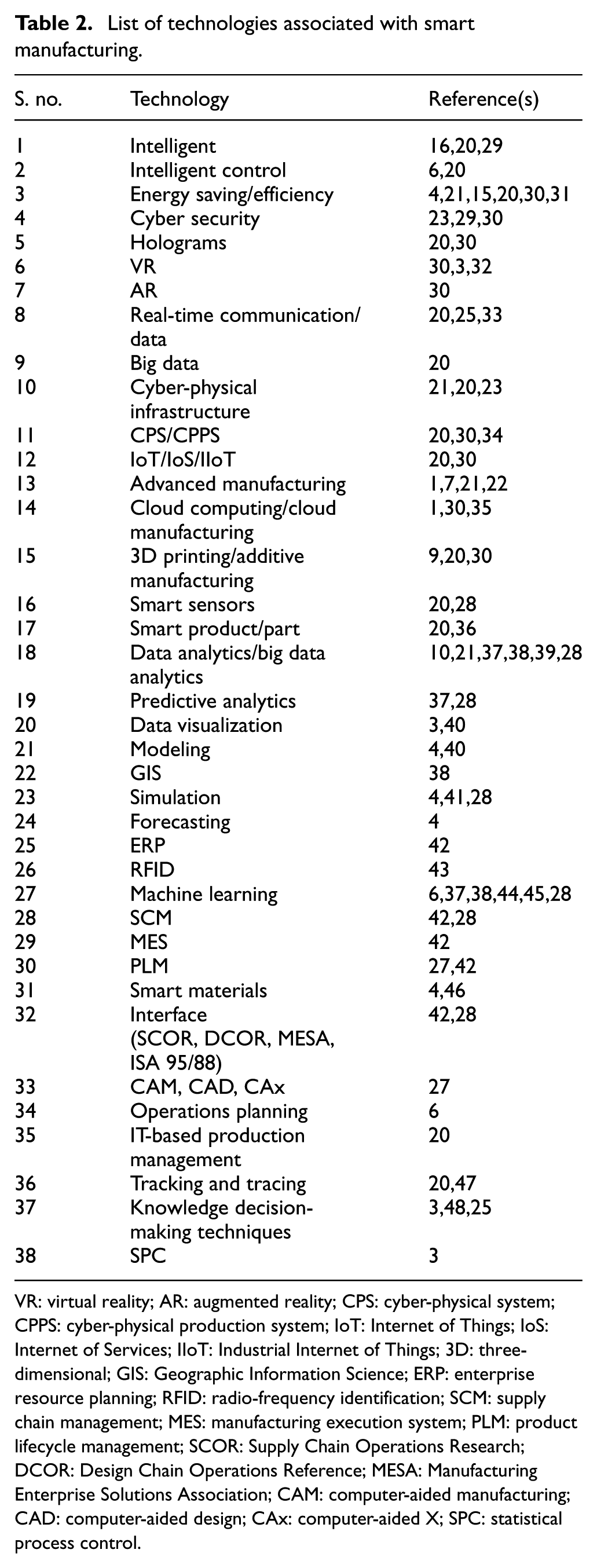
VR: virtual reality; AR: augmented reality; CPS: cyber-physical system; CPPS: cyber-physical production system; IoT: Internet of Things; IoS: Internet of Services; IIoT: Industrial Internet of Things; 3D: three-dimensional; GIS: Geographic Information Science; ERP: enterprise resource planning; RFID: radio-frequency identification; SCM: supply chain management; MES: manufacturing execution system; PLM: product lifecycle management; SCOR: Supply Chain Operations Research; DCOR: Design Chain Operations Reference; MESA: Manufacturing Enterprise Solutions Association; CAM: computer-aided manufacturing; CAD: computer-aided design; CAx: computer-aided X; SPC: statistical process control.
In addition to the various characteristics and technologies, there are a set of enabling factors, which facilitate the successful implementation of characteristics and technologies in SM. 3 These may also be referred to as guidelines that an organization has to maintain to adopt SM characteristics and technologies. Table 3 presents a list of seven enabling factors that may be associated with SM. It has to be considered that this selection is solely based on the available literature and (a) is most likely not complete and (b) the different enabling factors are not necessarily always required in combination.
List of enabling technologies associated with smart manufacturing.
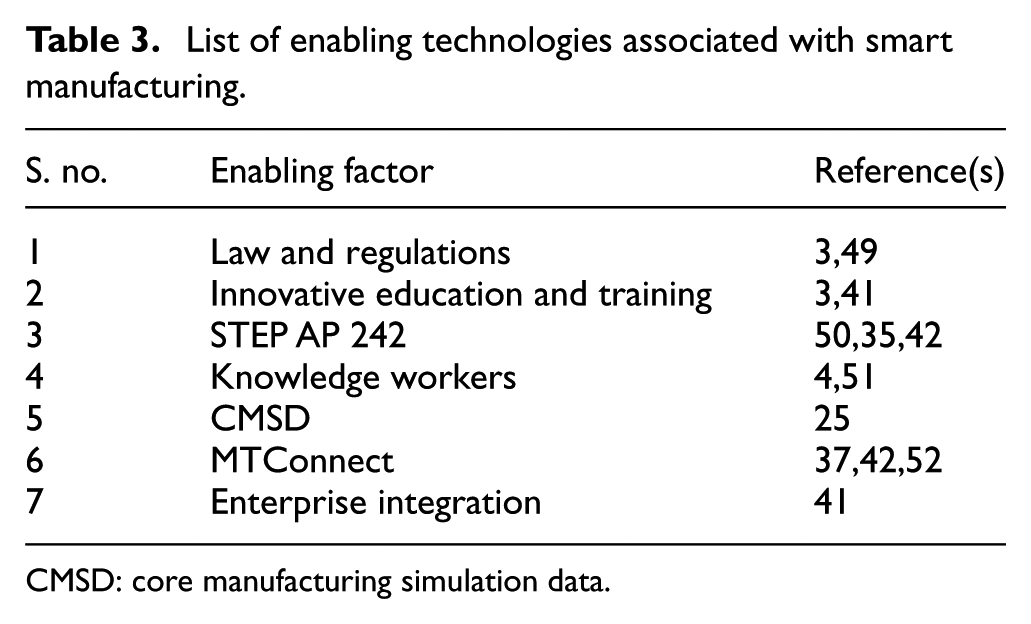
CMSD: core manufacturing simulation data.
The items presented in Tables 1–3 are derived from current literature. As mentioned, this leads to some of these items being rather similar. In the next section, we present a perspective on how the different characteristics, technologies and enabling factors can be clustered to create a consolidated list.
Analysis
The presented characteristics, technologies and enabling factors have been mentioned and described in current SM literature. However, the detailed definitions, as discussed in this article, suggest that some of these characteristics, technologies and enabling factors are used synonymously and may be merged to present a more focused result. In the following section, the previously identified characteristics, technologies and enabling factors (Tables 1–3) are critically discussed and a clustering is proposed to develop a more comprehensive and targeted list. Clusters will include a set of similar characteristics or technologies, or a combination of characteristic and technologies. It is also important to understand that the clusters may contain technologies and characteristics at the same time but after final review are considered to belong in either a technology or characteristic cluster. This is due to the overlaps in terminology and the strong interdependencies between various items. While this is not ideal and adds additional complexity, it is a reflection on the inherit complexity of the topic and the importance of starting to work toward a common understanding and terminology. The enabling factor clusters, dealing with guidelines for organization or people, cannot have characteristics and technologies, and similarly characteristics and technologies should not contain enabling factors.
In the forthcoming analysis, the following format has been chosen for better illustration and transparency: characteristics are represented in italics, whereas technologies are represented in
Characteristics clusters
Context awareness
Context awareness is an important characteristic of an SMS,10,53 and it can be seen as a combination of the following attributes:
Identity: An SMS should have a unique identity. As an SMS often operates in a digital environment, we may say that an SMS should have its own digital presence, thus providing with a unique identification in the digital world, for example, a network interface address. 10 Therefore, digital presence is inherent when we consider context awareness.
Location: It is used to describe the physical location of the system itself or sub-systems within.
Status: This is used to describe the present state of the activities that are being carried within the SMS. Asset self-awareness will also mean that the SMS should be able to know about its present state. 23
Time: The SMS should be able to define its timely priorities, and it might even need to consider the local time. Figure 2 presents the characteristics that make the context awareness cluster.

Visual representation of context awareness cluster with its corresponding characteristics.
Modularity
Modularity is the property of a system by virtue of which a unit can be decomposed into components that can be combined to form different configurations. 10 Composability is the property of the system when it could be developed from its sub-systems. 21 As both these properties consider a unit being made from sub-units and by modularity, we can have a different unit arising; therefore, composability may be considered as a part of modularity. Figure 3 visually represents composability that is included in the modularity cluster.

Visual representation of modularity cluster with its corresponding characteristic.
Heterogeneity
Heterogeneity considers the diversity and dissimilarities in the units and components. However, it does not consider the combination of units such as modularity, and as a result, it should be considered as a separate characteristic. 10
Compositionality
Compositionality is the property that deals with the understanding of the whole system based on the definition of its components and the combination of the constituents. 21 As neither modularity nor heterogeneity deal with the system or component definitions, compositionality should be considered as a separate characteristic.
Interoperability
Interoperability is the characteristic due to which, system units would be able to exchange and share information with each other,10,21 With the help of networkability, systems are able to collaborate in different process-related aspects, and for this collaboration, they have to allow each other to share and exchange information. 10 Similarly, distributed systems allow the information and data of one system to be accessed by other systems in the network. Therefore, networkability and distributed characteristics of systems are covered by interoperability. Information appropriateness describes that information is available, accessible and understandable when needed; this should be a characteristic of information to be shared, otherwise the information will be of no use. 23 Integrability is the characteristic due to which different units can be integrated, but two units are integrated only if they have an access to each other’s information. Therefore, this characteristic of integrability is included in interoperability. 23 Decentralized is the characteristic by virtue of which SM can be operated by other attached units, and consequently it may be considered as part of interoperability. However, integrability is different from modularity because modularity physically combines the systems resulting in a new configuration, whereas integrability is inclined toward the exchange of information between two systems and therefore it is a part of interoperability. It is important to discuss why interoperability and cloud computing/manufacturing are different. Cloud is like a database where information can be saved and accessed by all the systems that are part of this cloud. In contrast, interoperability also allows systems to access data and information, which has not been shared, for example, in the cloud. Figure 4 visually represents all the characteristics present in the interoperability cluster.
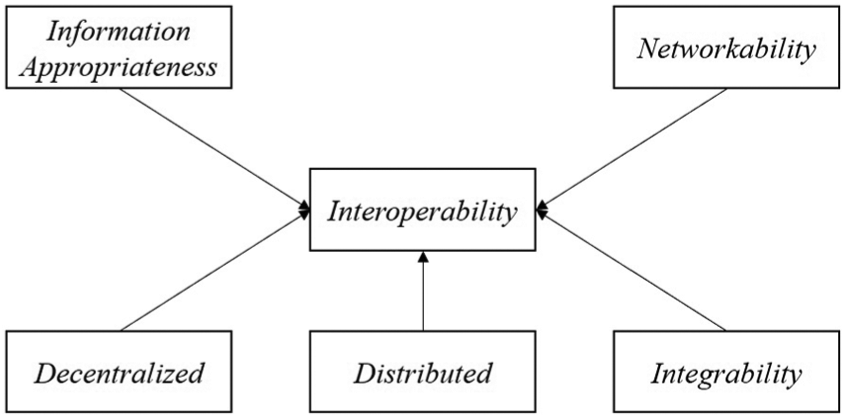
Visual representation of interoperability cluster with its corresponding characteristics.
Technology clusters
Intelligent control
An important characteristic of manufacturing systems is the speed of response to events. Responsiveness may be considered as the ability of an SMS to speedily provide the desired products to the customers. 17 Peer-reviewed papers refer to this response using various terms. Agility is the ability of a system to respond to external influences; in SMS, this could be the response to market changes. 17 Scalability is considered as the property by which it can easily handle the fluctuations in load, 10 hence the change in response. Adaptability describes the ability of the system to decide about its own diagnosis, prognosis and the best system performance even when it has uncertain information. 54 A system can be considered to have a high level of robustness when it can perform well under uncertain conditions, 23 and it possesses flexibility when it can adapt to changes in the external environment. 55 Reliability is the ability to perform activities as expected, and therefore it also makes the results predictable. 17 Accuracy is the ability to provide the result exactly or very close to the actual result. The definitions of all characteristics appear homogeneous and therefore are placed in the same cluster.
With the help of
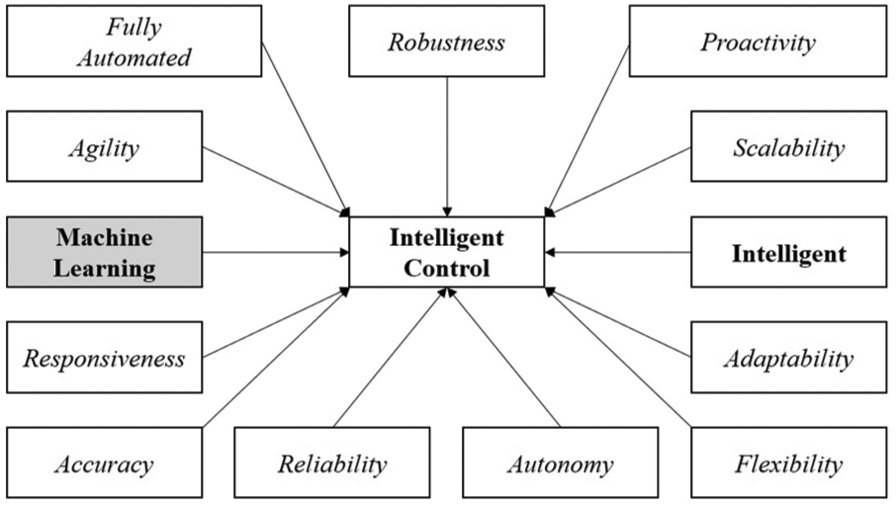
Visual representation of intelligent control cluster with its corresponding characteristics and technologies.
Energy saving/efficiency
Products and processes are said to possess sustainability if they are reusable and cause minimum environmental footprints,
23
thus making the products and processes more economical, social and environment-friendly. The importance of energy cost savings through SM has been discussed frequently, and energy saving is among the main drivers for SM.
15
A sustainable SM process for extracting olive oil has also been proposed.
57

Visual representation of energy saving/efficiency cluster with its corresponding characteristic.
Cyber security
Data should be secured from cyber threats. As SM is largely based on digitization and data-based services,
Visual technology
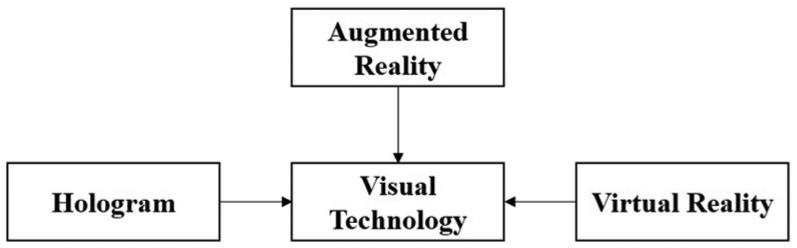
Visual representation of visual technology cluster with its corresponding technologies.
Data analytics
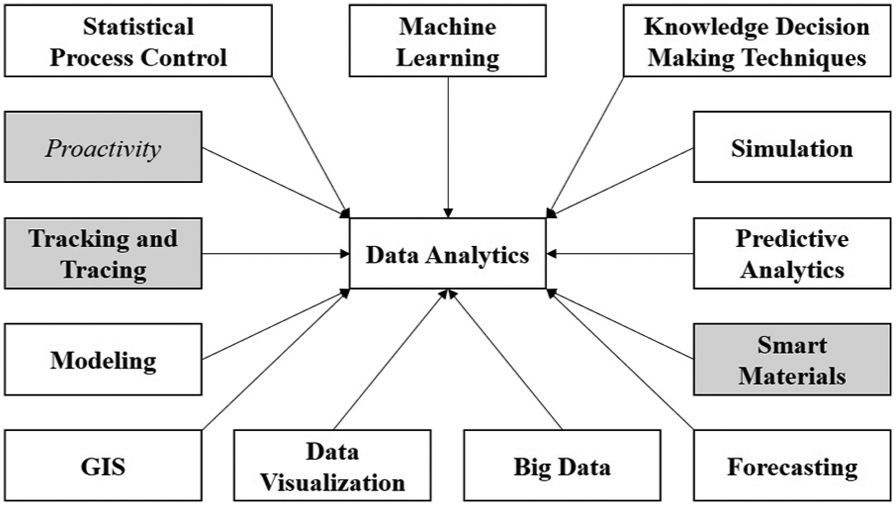
Visual representation of data analytics cluster with its corresponding characteristics and technologies.
CPS/CPPS

Visual representation of CPS/CPPS cluster with its corresponding technology.
IoT/IoS
The

Visual representation of IoT/IoS cluster with its corresponding technology.
Advanced manufacturing
Cloud manufacturing

Visual representation of cloud manufacturing cluster with its corresponding technologies.
3D printing/additive manufacturing
Smart products/parts/materials
Reusability is the property of products/parts/materials by which they can be recycled or used again in the system. It can be discussed whether reusability should be a part of energy saving/efficiency or smart products/parts/materials. If one considers the recycling part, then reusability can be included in energy saving; but if it is considered as a characteristic of a material that can change its configuration to be reused in the same form or other, then it is a smart material. In this article, we consider it as characteristic of smart material. Resilience is the ability by which a product/part/material would be able to retain its original form. Resilience can be placed in the intelligent control cluster because a part may require intelligent control to return in its original form. Nevertheless, it could be an inbuilt characteristic of smart materials as well.
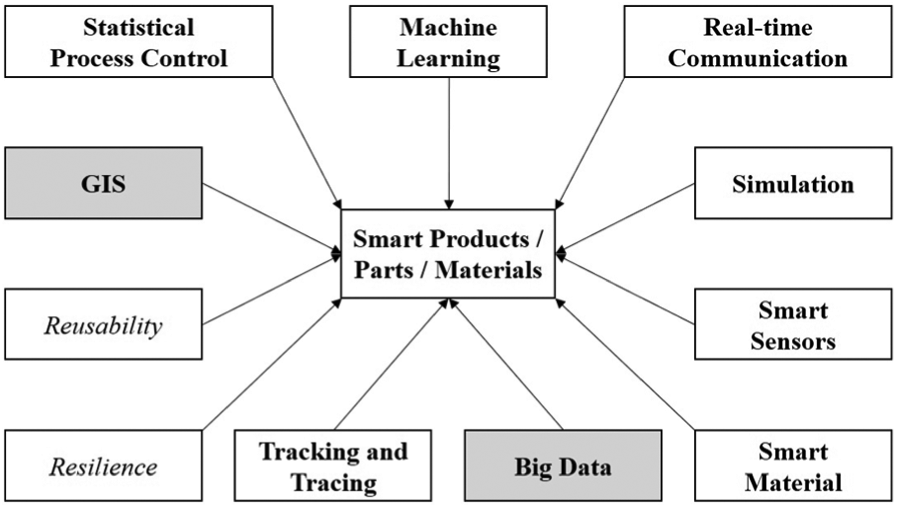
Visual representation of smart products/parts/materials’ cluster with its corresponding characteristics and technologies.
IT-based production management
Enterprise resource planning (
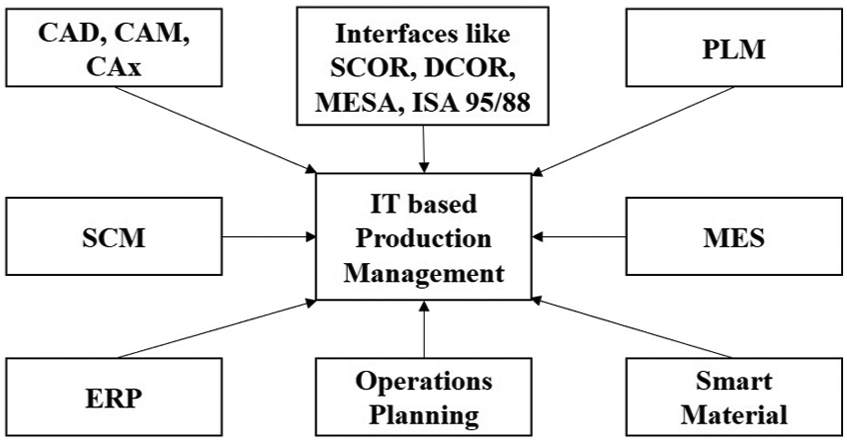
Visual representation of IT-based production management cluster with its corresponding characteristics and technologies.
Enabling factors
Characteristics and technologies are not the only platform required for SM. There are also standards and aspects of organization culture to be considered for a successful transformation toward SM. NIST has also presented some of the characteristics and technologies discussed in this article and considered them as standards. 91 However, this article has considered characteristics, technologies and enabling factors (similar to standards referred to by NIST) as different groups and has tried to merge the ones that overlap. In the following section, selected standards and aspects of organizational culture associated with SM in literature, referred to as enabling factors, are discussed.
Law and regulations
There are various laws and regulations such as environmental laws,92,93 intellectual property rights and labor law that an organization has to follow depending on the nature of its work. These laws should be strictly followed for continued operation of an organization.
Innovative education and training
Education should help an individual to not only do their own work but also think about how the product or service he or she is working for can be improved for the benefit of the end user. This knowledge and innovation mindset can only be instilled in the workers with the help of proper training and entrepreneurial culture. Therefore, knowledge workers should be a part of innovative education and training. For example, a case study presents the importance of people and their training in SM at Alcoa. 51 Figure 14 shows the cluster for innovative education and training.
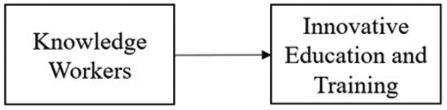
Visual representation of innovative education and training with its corresponding enabling factor.
Data sharing systems and standards
International Organization for Standardization (ISO) has defined STEP AP 242 and other STEP modules as universally standardized information models that can be used to exchange data and designs on common computer formats by various organizations. 50 Similarly, core manufacturing simulation data (CMSD) can share simulation data. 25 Enterprise integration also facilitates data sharing between small and medium enterprises (SMEs) and original equipment manufacturers (OEMs). A web-based visualization tool for energy management, following ISO 50001, has also been proposed. 94 All these organizations such as STEP AP 242 and CMSD are working to provide a common platform for exchange of information, and therefore, they might be considered as the standards for different data sharing systems and thus could be clustered in data sharing systems and their standards. The selected systems are some of the examples, as there are other systems available and in use with SMSs. The selection of these specific examples is again based on the identified reference in literature.
Interoperability is different from data sharing systems and their standards because interoperability is the characteristic to share data and access a system in the network, whereas data sharing systems and their standards would provide the license to do so. This is a standard platform set by the manufacturing industry to receive information from numerically controlled machines that could later be used for data analytics. Figure 15 shows the cluster of data sharing systems.
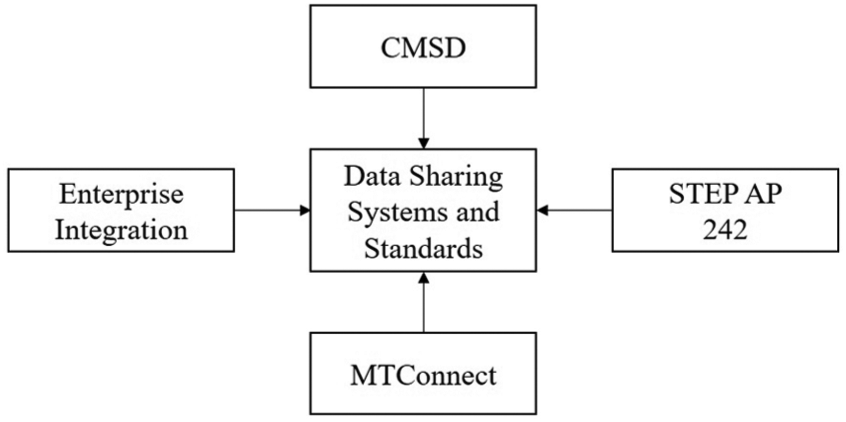
Visual representation of data sharing systems and their standards with corresponding enabling factors.
Discussion
From our analysis in section “Analysis,” we can observe that some of the identified characteristics act as building blocks of a technology, but the definition of technologies does not allow them to merge in a characteristic cluster. However, both technology and characteristic could be a part of another technology cluster. As a result, we have a lower number of characteristic clusters and a higher number of technology clusters. It can also be seen that the
Clusters mentioning the names and numbers of characteristics and technologies.
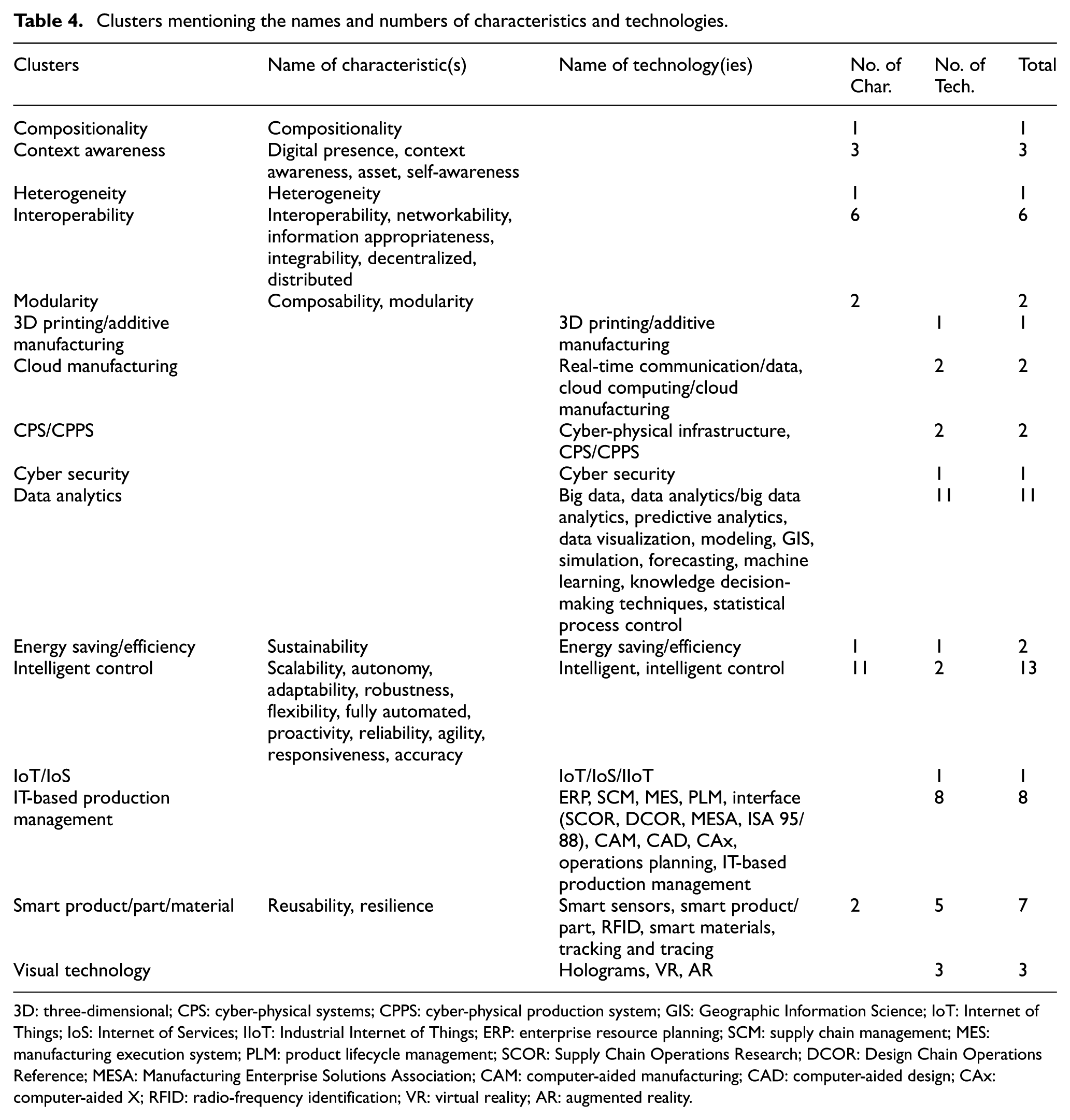
3D: three-dimensional; CPS: cyber-physical systems; CPPS: cyber-physical production system; GIS: Geographic Information Science; IoT: Internet of Things; IoS: Internet of Services; IIoT: Industrial Internet of Things; ERP: enterprise resource planning; SCM: supply chain management; MES: manufacturing execution system; PLM: product lifecycle management; SCOR: Supply Chain Operations Research; DCOR: Design Chain Operations Reference; MESA: Manufacturing Enterprise Solutions Association; CAM: computer-aided manufacturing; CAD: computer-aided design; CAx: computer-aided X; RFID: radio-frequency identification; VR: virtual reality; AR: augmented reality.
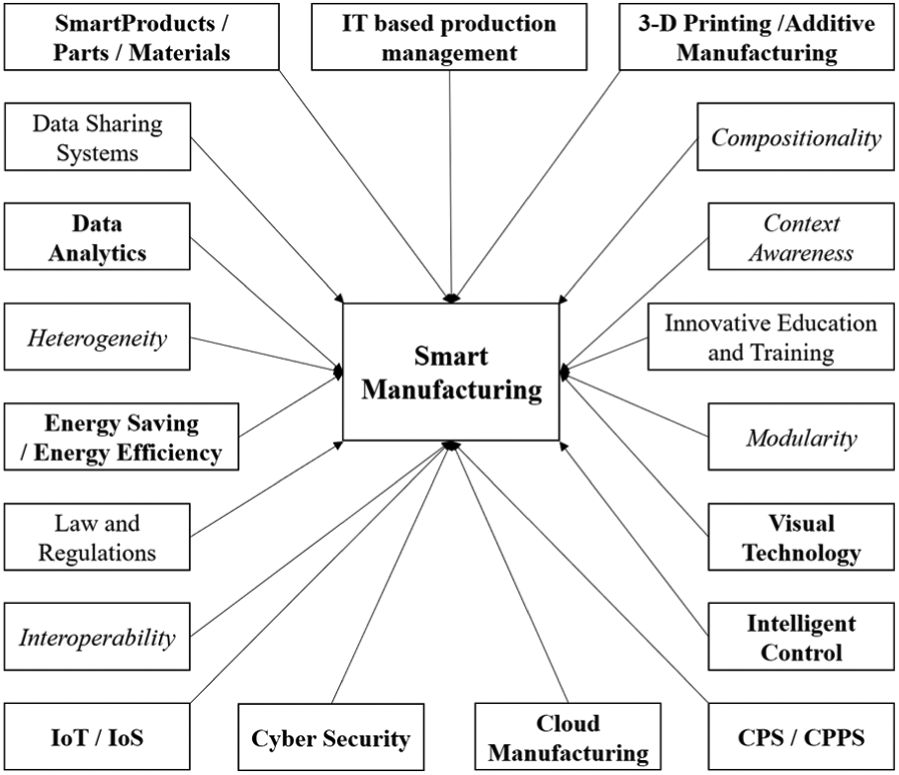
Visual representation of all characteristics and technologies that can define an SM.
From our discussion, we derived a comprehensive list of 27 characteristics and 38 technologies associated with SM in current literature. We propose that such characteristics become the aspiring “qualities of being” (QoBs) or smart features that current and future manufacturing systems should pursue in order to acquire a certain degree of smartness toward becoming an advanced “smart” manufacturing system. QoBs aim to act as the “smart features” that are necessary for considering a manufacturing system “smart” (see Table 5). Technologies will change, as they evolve with time, but the smart features will remain the same. Hence, only the characteristics have been defined and mentioned in Table 5.
Smart features for manufacturing system.
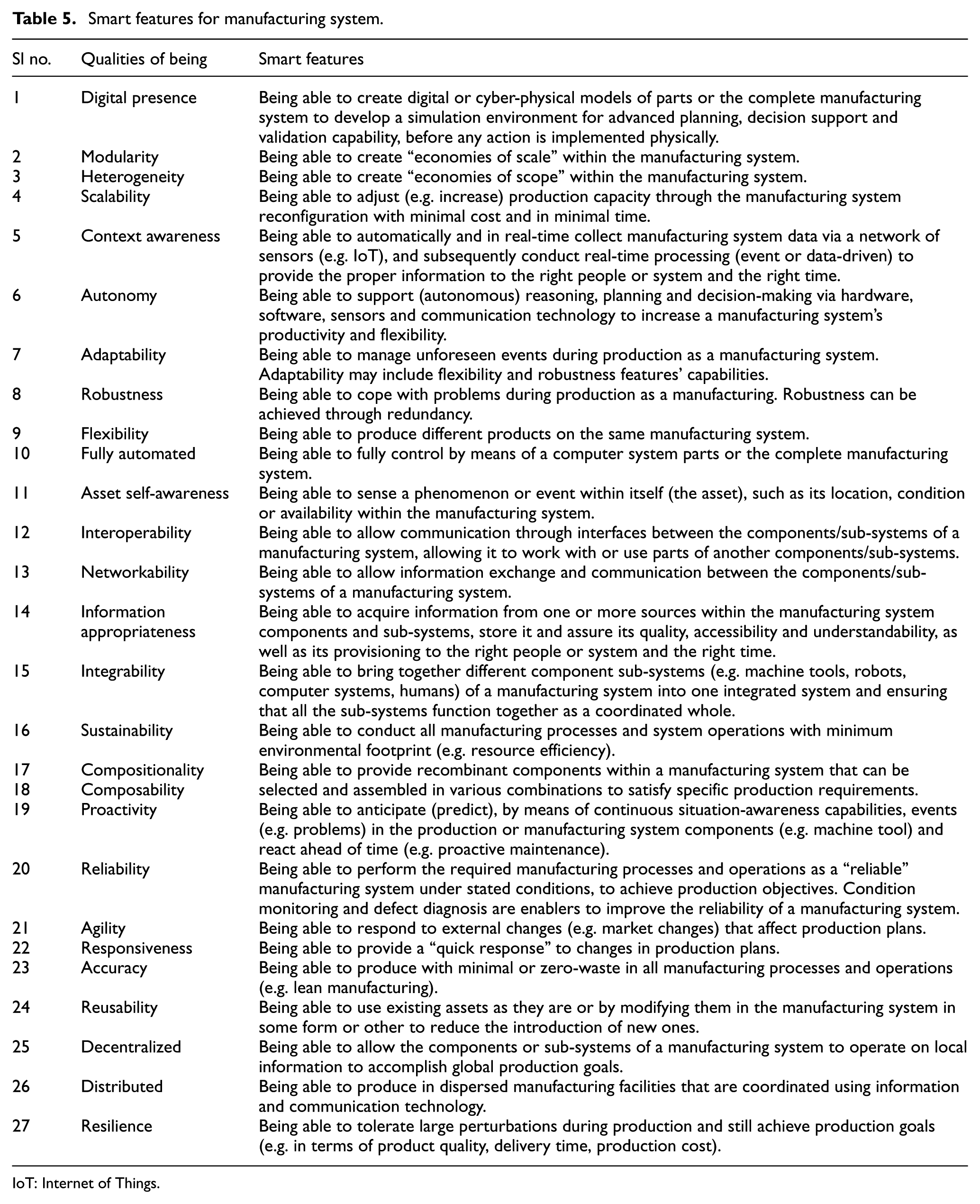
IoT: Internet of Things.
For example, a CPS-based architecture that uses PLCs and makes decisions for energy management 95 should be based on technology clusters such as CPS, smart product/part/material, data analytics and energy saving/efficiency. Another example of how VR and AR can lead to sustainability, better training and knowledge is presented in Blümel. 96 This example case includes the clusters visual technology, energy saving/efficiency for the technology cluster and innovative education and training as the enabling factor cluster.
Such key characteristics and technologies are aimed, on one hand, to act as the capabilities to enable SM to comply with the six design principles of Industry 4.0 scenarios. 97 These principles being (1) interoperability as the ability of SMSs and technologies (e.g. machines, devices, sensors, systems and people) to connect and communicate with each other in the IoT, Services and People (IoTSP) (also known as the Internet of Everything (IoE)); (2) virtualization or information transparency as the ability of manufacturing information systems to create a digital/virtual copies of things in the physical world, which are created by linking sensor data with virtual models and simulation models; (3) decentralization as the ability of SMSs and technologies to make decisions on their own and to perform their tasks as autonomous as possible, including exceptions, interferences and/or conflicting goals’ handling; (4) real-time capability as the ability to collect and analyze data and immediately provide the derived insights; (5) service orientation as the offering of services via the IoS and (6) modularity as the flexible adaptation of manufacturing systems (cf FMSs) to the changing requirements by replacing or expanding individual modules. Altogether, these key characteristics and technologies guide the design and engineering of SMSs that are Industry 4.0–enabled. Table 6 presents the SM characteristics and technologies associated with the Industry 4.0 design principles; 97 various manifestations corresponding to them are also mentioned.
Design principles for SMS readiness for Industry 4.0 scenarios.
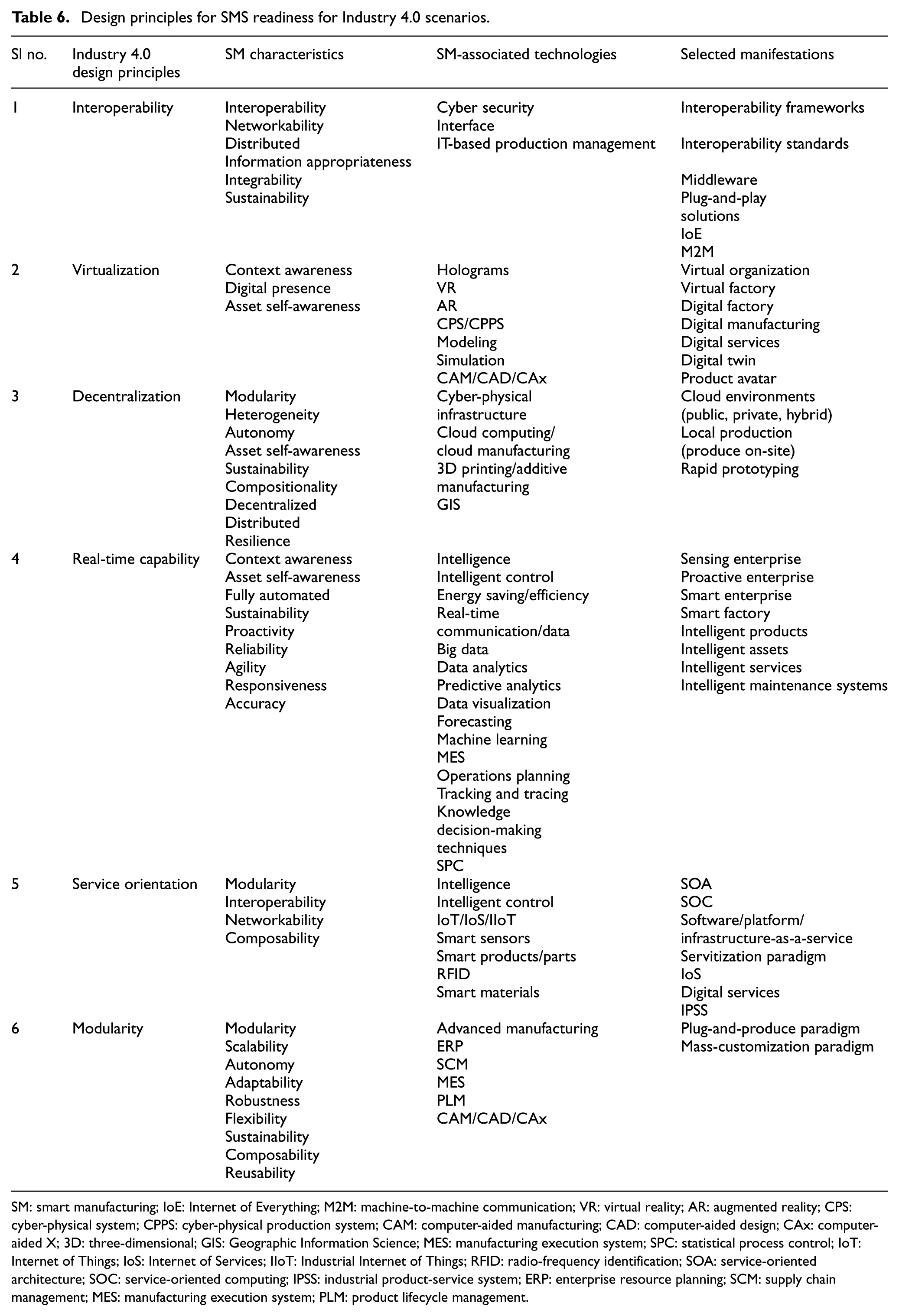
SM: smart manufacturing; IoE: Internet of Everything; M2M: machine-to-machine communication; VR: virtual reality; AR: augmented reality; CPS: cyber-physical system; CPPS: cyber-physical production system; CAM: computer-aided manufacturing; CAD: computer-aided design; CAx: computer-aided X; 3D: three-dimensional; GIS: Geographic Information Science; MES: manufacturing execution system; SPC: statistical process control; IoT: Internet of Things; IoS: Internet of Services; IIoT: Industrial Internet of Things; RFID: radio-frequency identification; SOA: service-oriented architecture; SOC: service-oriented computing; IPSS: industrial product-service system; ERP: enterprise resource planning; SCM: supply chain management; MES: manufacturing execution system; PLM: product lifecycle management.
However, the identified SM key characteristics and technologies should also be related to the 6Cs characteristics of CPSs and big data analytics 97 as core enabling technologies associated with the smartness attribute of manufacturing systems, including (1) connectivity with sensors and networks (e.g. IoT/IoS/IIoT), (2) cloud computing and data on-demand (e.g. cloud manufacturing), (3) cyber model and memory (e.g. CPSs), (4) content/context meaning and correlation (e.g. analytics), (5) community sharing and collaboration (e.g. intelligent control) and (6) customization through personalization and value (e.g. IT-based production management). In this way, SM will be enabled to provide useful insights to the shop-floor management to utilize data and information to increase the flexibility of manufacturing processes and respond rapidly to changes in demand at low cost to the SM enterprise. Table 7 presents the SM characteristics and technologies associated with the 6Cs characteristics of CPSs and big data analytics; 98 the various manifestations corresponding to them are also mentioned.
The 6Cs for smart manufacturing systems in cyber-physical environments.
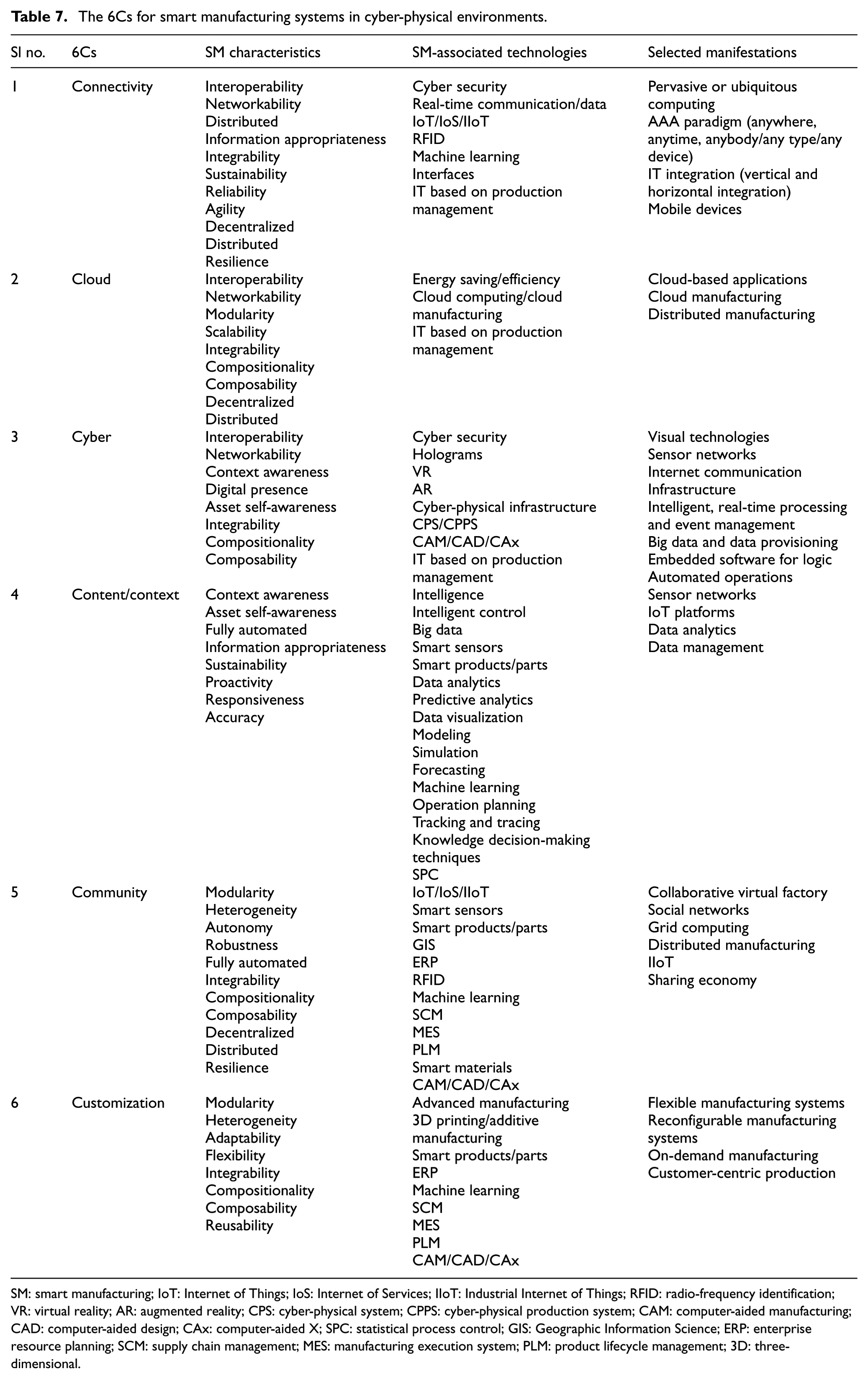
SM: smart manufacturing; IoT: Internet of Things; IoS: Internet of Services; IIoT: Industrial Internet of Things; RFID: radio-frequency identification; VR: virtual reality; AR: augmented reality; CPS: cyber-physical system; CPPS: cyber-physical production system; CAM: computer-aided manufacturing; CAD: computer-aided design; CAx: computer-aided X; SPC: statistical process control; GIS: Geographic Information Science; ERP: enterprise resource planning; SCM: supply chain management; MES: manufacturing execution system; PLM: product lifecycle management; 3D: three-dimensional.
Conclusion and limitations
This article identified, discussed and clustered characteristics, technologies and enabling factors that might be used to define SM and SMSs and thus provide a foundation for a future comprehensive SM ontology. Overall, it was determined that there are five characteristics, namely, context awareness, modularity, heterogeneity, interoperability and compositionality; 11 technologies, namely, intelligent control, energy saving/efficiency, cyber security, CPS/CPPS, visual technology, IoT/IoS, cloud computing/cloud manufacturing, 3D printing/additive manufacturing, smart product/part/materials, data analytics and IT-based production management; as well as three enabling factors, namely, law and regulations, innovative education and training and data sharing systems, that are required in SM. These characteristics, technologies and enabling factors might also be used to classify a manufacturing system as smart. Additionally, these characteristics and technologies were matched with the design principles of Industry 4.0 97 and the key characteristics of CPSs and big data analytics. 98 It was found that all the identified characteristics and technologies match with the design principles of Industry 4.0 and CPS.
In a next step, a very similar approach could be used to classify other popular initiatives such as smart factory, intelligent manufacturing and distributive manufacturing. Based on this clarification, a mapping of the different initiatives and a “degree of similarity” might be derived to identify overlaps and areas where these initiatives complement each other.
In this article, we can also observe that there are a smaller number of clustered characteristics compared to the number of clustered technologies. One possible explanation for this occurrence is that the technologies need certain characteristics as input and it would have been redundant to consider such characteristics separately. For example, scalability, flexibility, adaptability, robustness, autonomy, fully automated and proactivity were clustered in the technology intelligent control. However, we do not have technology/technologies clustered into a characteristic as they depend on later. Furthermore, it was also discussed why advanced manufacturing is a manufacturing system itself and should not be considered as a part of technologies.
Another finding this article addresses is that some of the technologies such as GIS, smart materials, tracking and tracing could be considered as part of both data analytics and smart parts/products/materials. It is the application of the technology which determines the cluster it will belong to. Therefore, the application will vary with the objective of SM.
The resultant list is to be understood as a first step in defining a comprehensive list of commonly agreed upon SM characteristics, technologies and enabling factors. The authors encourage industry and academic experts to provide feedback to further develop this list. This can lead to additional expansion or reduction in the current list. A similar development is expected if an increasing amount of new SM literature, including applications, is published in the future containing additional or more clearly defined characteristics, technologies and enabling factors.
There are several limitations in this article, which need to be mentioned. First, when the identified articles were thoroughly read to prepare a list of characteristics, technologies and enabling factors, it was found that many articles mention SM only once in the title and/or in the keywords. This might lead to the interpretation that the term is strongly associated with positive goals (e.g. federal funding opportunities, “hot topic”) and authors would incorporate SM in the title to be more visible. It has to be observed if this changes once SM is more established and the definition is broadly disseminated among academics and industry.
Furthermore, while extracting the characteristics, technologies and enabling factors from literature sources where they were not directly mentioned and classified as such, the subjective perspective of the authors plays a part in the decision of choosing either technology or characteristic as the defining element. These characteristics and definitions are from a small set of research and there might be some others, which were not reviewed. The clusters in this work are based on the knowledge, expertise, experience and perspective of the authors. Some of the characteristics and technologies were listed in the literature, but definitions were not explicitly provided. Therefore, these characteristics and technologies were defined from other articles and the authors’ knowledge. The authors tried to increase the transparency of the clustering by explaining the reasoning of the decisions. Another limitation of this article is that there was only one article covering Industry 4.0 and CPS that was considered by the authors to find the design principles of Industry 4.0 and characteristics of CPS. However, this article should be considered as a first step toward a commonly accepted list of defining characteristics and technologies for SM that eventually leads to a comprehensive SM ontology. Readers are actively encouraged to provide feedback and challenge the selection.
Footnotes
Acknowledgements
The authors would like to express their gratitude to the members of IFIP WG 5.1 and 5.7 as well as the SMLC for their valuable input and encouragement at the different stages of this study. Furthermore, the authors thank the participants of the NIST Smart Manufacturing workshop 2016 and 2017 for the inspiration. Finally, the authors would like to thank the reviewers for their valuable comments that helped to significantly improve the article. The article is an enhanced and extended version of the following publication “Mittal, S., Khan, M. & Wuest, T. (2016). Smart Manufacturing: Characteristics and Technologies. 13th International Conference on Product Lifecycle Management (PLM) 2016, July 11–13., 2016, Columbia, SC, USA.”
Declaration of conflicting interests
The author(s) declared no potential conflicts of interest with respect to the research, authorship and/or publication of this article.
Funding
The author(s) disclosed receipt of the following financial support for the research, authorship, and/or publication of this article: This work was supported by the J. Wayne & Kathy Richards Faculty Fellowship in Engineering at WVU.