



Abstract
The current research has proposed an innovative methodology to enhance PVA/CSP/AgNPs hybrid biocomposite films by integrating the CRITIC and CoCoSo multi-criteria decision-making (MCDM) frameworks with machine learning techniques. Bio composite films can be used in medicine, packaging, and environmental applications. The biocomposite films were developed by mixing polyvinyl alcohol (PVA), coconut shell powder (CSP), and silver nanoparticles (AgNPs) to attain better mechanical, thermal, and antibacterial properties. The experimental design comprises 25 distinct trials to assess the tensile strength (TS), Young’s Modulus (YM), percentage elongation (%E), and maximum degradation temperature (T) of the fabricated composite films. CRITIC method was adopted to evaluate the weights of the criteria in an unbiased way, and CoCoSo technique ranked the alternatives. The results were analyzed using supervised machine learning algorithms, including Random Forest, Neural Network, Linear Regression, and AdaBoost. AdaBoost algorithm demonstrated superior performance with an R2 value greater than 0.98 for all output responses. Decision tree analysis revealed that the composition of silver nitrate significantly influences tensile strength, while coconut shell powder affects Young’s modulus. The optimized film, composed of PVA/20%CSP/4 mM AgNPs, exhibited improved UV-shielding, reduced water absorption (26.2%), and decreased soil weight loss (41.4%). SEM images confirmed the uniform dispersion of AgNPs within the PVA matrix. The integration of CRITIC-CoCoSo with machine learning provides a scalable approach for designing multifunctional bio-composites with enhanced properties for sustainable applications.
Introduction
A combination of materials engineering with machine learning has resulted in a transformative period in the synthesis of advanced biocomposite materials, custom-made for specific features, especially for bio-medical, packaging, and environmental applications.1,2 Polyvinyl alcohol (PVA) is a biodegradable, non-toxic, water-soluble synthetic polymer that has excellent mechanical strength.3,4 Coconut shell powder (CSP), a lignocellulosic agricultural by product, presents a promising natural filler on account of its abundant availability, renewability, cost-effectiveness, and elevated carbon content. The fibrous characteristics of CSP and its interfacial compatibility with PVA are primarily responsible for the increase in mechanical properties and thermal stability of polymer matrices.5,6 AgNPs impart excellent antibacterial properties to PVA-based hybrid films, which have been known to be beneficial for packaging applications.7–10
Effective meeting of the various and often conflicting performance requirements of biocomposite film production necessitates the application of complex data-driven decision-making tools. 11 Optimization of experiments in the conventional way is problematic and inefficient when dealing with various formulation parameters and output characteristics. 12 In such a situation, Multi-Criteria Decision-Making methodologies offers a logical and quantitative way to select the alternative formulations considering many performance measures situationally. The CRITIC method is incomparable by its ability to yield objective criteria weights derived directly from divergence intensity and attribute correlation. Taking into account the variability of each property and its level of conflict or redundancy with others, agreements made in CRITIC resulted in logical, neutral assessment of property significance and thus diminished reliance on subjective appraisals.13,14
The CoCoSo approach, combined with CRITIC, offers a powerful decision support system by amalgamating a number of compromise programming approaches into one coherent ranking model. Unlike other MCDM approaches dependent on a specific concession function, CoCoSo merges weighted sum, exponential evaluation, and stable compromise procedures to generate robust and efficient ranking outcomes. In such a way, it is possible to identify the most promising material composition accurately, even in cases where characteristic complexity is high. 15 CRITIC and CoCoSo collectively establish a robust framework for objective computation and ranking of composite designs based on experimental datasets.
To extend the prediction accuracy and reduce the need for lengthy laboratory experiments, Machine Learning algorithms are hybridized with Multi-Criteria Decision-Making techniques to develop a hybrid optimization framework. Machine learning methods, such as Random Forests, Support Vector Regression, and Artificial Neural Networks, have been proved to be very effective for detecting nonlinear and multivariate relationships within polymer nanocomposite systems.16–18 These models leverage prior experimental data to generalize and predict material performance at untested compositions, enabling virtual screening and accelerating design. Machine learning-driven predictions enable constant decision calculation improvements, and therefore, increase the reliability of the multi-criteria decision-making ranking results.19–21
The integration of CRITIC–CoCoSo with Machine Learning develops a data-driven and adaptive optimization technique that can identify the most promising PVA/CSP/AgNPs hybrid biocomposite formulations exhibiting good mechanical strength, enhanced barrier resistance, and excellent antimicrobial activity. This systematic and analytic decision-support process enhances the fundamental understanding of structure–property relationships and significantly expedites the commercialization process of biodegradable biopolymer films. Finally, these hybrid optimization techniques foster the development of sustainable packaging and biomedical applications that align with global environmental and health objectives.
Materials and methods
Materials
The polyvinyl alcohol (99% hydrolyzed) and distilled water were procured from Sigma-Aldrich Chemicals Pvt. Ltd, Kochi, India. Silver nanoparticles (AgNPs) procured from Sigma-Aldrich Chemicals Pvt. Ltd, Kochi, India. The particle size of silver nanoparticles is 10 nm. The coconut shells were collected from a native coconut tree garden, Sivakasi, India. The collected coconut shells were hammered into small pieces and dried in the sunlight for 48 hours. The dried coconut shell slices were ground into nano-sized powder by using a planetary ball mill. The average particle size of ball-milled coconut shell powder is measured by using a Microtrac Particle Analyser. The average particle size of coconut shell powder is 333.2 nm.
Preparation of PVA/CSP/AgNPs hybrid biofilms
The preparation of coconut shell powder, AgNPs dispersed solution, and PVA/CSP/AgNPs biofilm was depicted in Figure 1. A pure PVA solution was generated by dissolving PVA granules in distilled water with continuous magnetic stirring at a temperature of 80–90°C for approximately 2 hours, resulting in a clear and homogenous viscous solution. Coconut shell powder was prepared by washing raw coconut shells thoroughly to remove impurities, then oven drying at 80°C for 24 hours. After drying, the shells were hammered and then ball-milled for 8 hours to make a fine powder with an average particle size of about 75 µm. This makes it easier for the PVA matrix to spread and stick to the surface. Silver nanoparticles (AgNPs) were synthesized through the sonication process from an aqueous solution of silver nitrate (AgNO3), in which the reducing agent, such as sodium borohydride or plant extract, reduces Ag+ ions into metallic Ag0. The resulting colloidal AgNPs solution with a concentration of 1–5 mM was subjected to ultrasonic treatment for 30 minutes to create uniform dispersion and to avoid agglomeration. After cooling the PVA solution to room temperature, dispersions of AgNPs and CSP filler were added sequentially. First, the AgNPs solutions with different concentrations (1–5 mM) were mixed into the PVA matrix under continuous stirring for 1 hour to ensure homogeneity, followed by the addition of CSP in varying wt.% (5%, 10%, 15%, 20%, and 25%) to form a total of 25 different hybrid compositions. The resulting mixtures were then subjected to mechanical stirring for 4 hours and then to ultrasonication for 20 minutes to uniformly distribute CSP and AgNPs, eliminate air bubbles, and promote strong interfacial bonding among the PVA matrix, CSP filler, and AgNPs. Homogeneous hybrid solutions were poured into clean, levelled glass Petri dishes for film casting. The solution was poured slowly without any force to avoid the formation of air bubbles. Films were cured at room temperature of 30°C for 48 hours to allow gradual evaporation of water for the formation of uniform defect-free films and oven dried at 50°C for 6 hours to remove residual moisture. Finally, the dried hybrid biofilms were cautiously unpeeled from the Petri dishes and stored in desiccators before characterization. Preparation of CSP, AgNPs dispersed solution and PVA/CSP/AgNPs hybrid biofilms.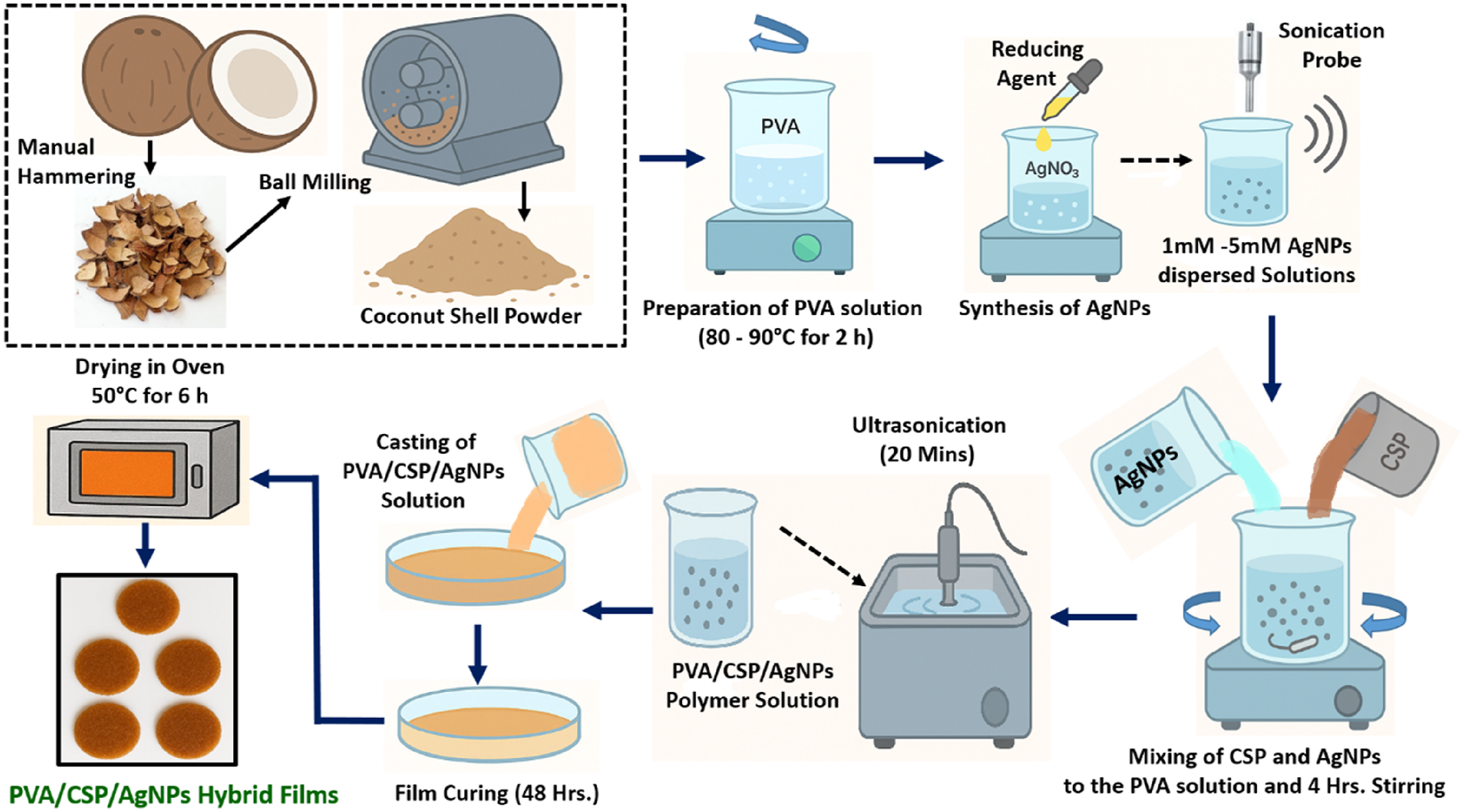
Experimental Approach
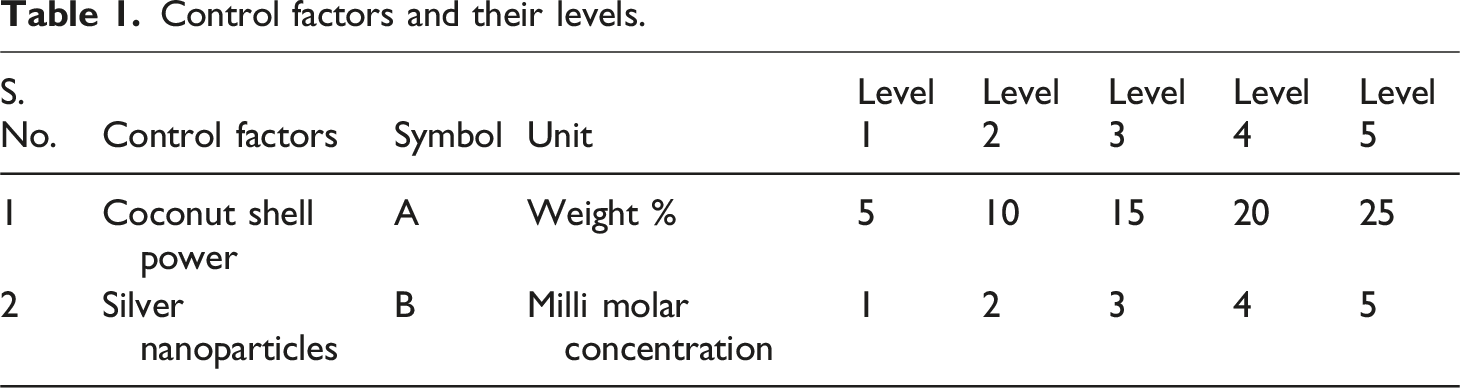
Development of an experimental design is of critical significance in the improvement of studies by maximising the use of resources, while at the same time reducing time and cost, and also facilitating an improvement of the precision of the results. In the current research, the efficiency of the developed biofilm was determined using an experimental design process. Investigating the effects of two essential controllable factors, each with five distinct levels, on the mechanical and thermal properties of the biofilm. Table 1 provides an inclusive summary of the factors and their corresponding levels. The four important response parameters evaluated in the evaluation of biofilm performance were. • Tensile Strength (TS) - Indicates whether the material can break or not when stretched (tension). • Young’s Modulus (YM) measures how stiff the biofilm is. • Percentage Elongation (%E) - Indicates the material’s ability to stretch before breaking. • Maximum Degradation Temperature (T) - Measured with a TGA to determine thermal stability. Control factors and their levels.
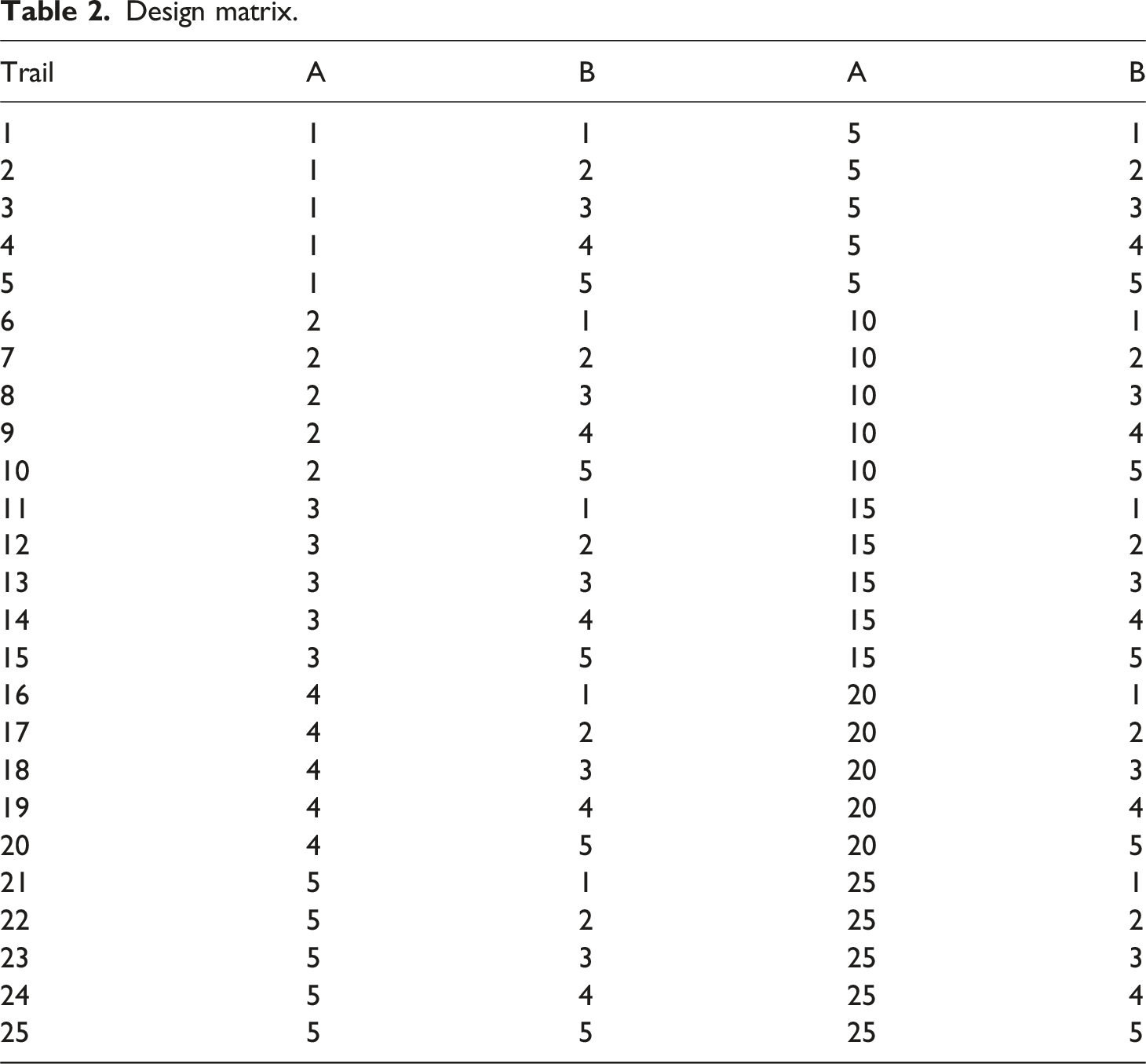
Design matrix.
Criteria: The Intercriteria Correlation (CRITIC)
In this work, an experimental design was performed based on the Taguchi method to systematically investigate the selected factors on the properties of biofilms. Herein, the L25 orthogonal array was chosen in order to study interactions between factors while minimizing needed experimental trials efficiently. The advantages of the Taguchi method allow you to find the best combination of process parameters while minimizing variability in results! Using Minitab software, a design matrix was developed which ensured that the experimental conditions were balanced, statistically sound, and represented a diverse representation of experimental actions. The L25 orthogonal array design matrix is detailed in Table 2 - through the use of this experiment and design matrix, the biofilm can be homogeneously prepared and tested. Furthermore, this will also give the reader insight into how the various parameters can influence the mechanical and thermal characteristics of the biofilm representation so that researchers may improve its formulation and process of manufacture.
Combined Compromise Solution (COCOSO)
A Combined Compromise Solution (COCOSO) methodology is an advanced method of multi-criteria decision-making, through which analysis and ranking of the most suitable alternative according to the evaluation of different criteria can be done. The method combines the ease of additive weighting with compromise ranking techniques in order to optimize the accuracy of the decision process. The method has proven to be particularly useful for complex optimization problems in engineering, materials science, and industry.
Characterization Techniques
Surface Morphology (SEM)
The SEM images of film samples were obtained out by Environmental Scanning Electron Microscope (ESEM) with a cryo attachment. The ESEM is an EVO 18 model with a low-vacuum facility, and photographs were taken at a Magnification of 1000x, with an accelerating voltage of 6 kV. To enhance the conductivity, the film samples were sputtered with platinum and tiny pieces (2 cm × 2cm) of film samples were placed on a copper grid of the SEM instrument.
UV- Transmittance
The UV–vis absorption spectra of Pure PVA and optimized film samples were carried out using a UV–vis spectrophotometer (Shimadzu UV 2600i Plus with ISR-2600 Plus). The measurements were collected from a wavelength range of 200 to 800 nm and a photometric range of −5 to 5Abs. The addition of the ISR improves S/N for diffusely transmitting film samples, enabling measurement of photovoltaic anti-reflective coatings and polycrystalline silicon wafers.
Water Absorption
The film samples were resized into 2.5 × 2.5 cm2 pieces, and the initial weight (Wini) was measured. Then film samples were immersed in a water tub containing distilled water for about 10 hours of immersion time. After 10 hours, film samples were taken out and excess water was wiped off with filter paper, and the final weight (Wfin) was measured. The % of water absorption of films was determined using equation (1).
Soil Burial Test
In the soil burial test, film specimens are cut into 4 cm diameter circular samples and weighed to their dry mass, and buried in a mud pot containing natural soil for 60 days to assess their biodegradability. The soil is kept at 60% humidity, and watered at regular intervals to maintain microbial activity. Following the burial duration, the films are removed once in 5 days, washed lightly to shed soil particles, and weighed. The % of weight loss is quantified to measure the degree of biodegradation of the film samples.
Results and Discussion
Output response.
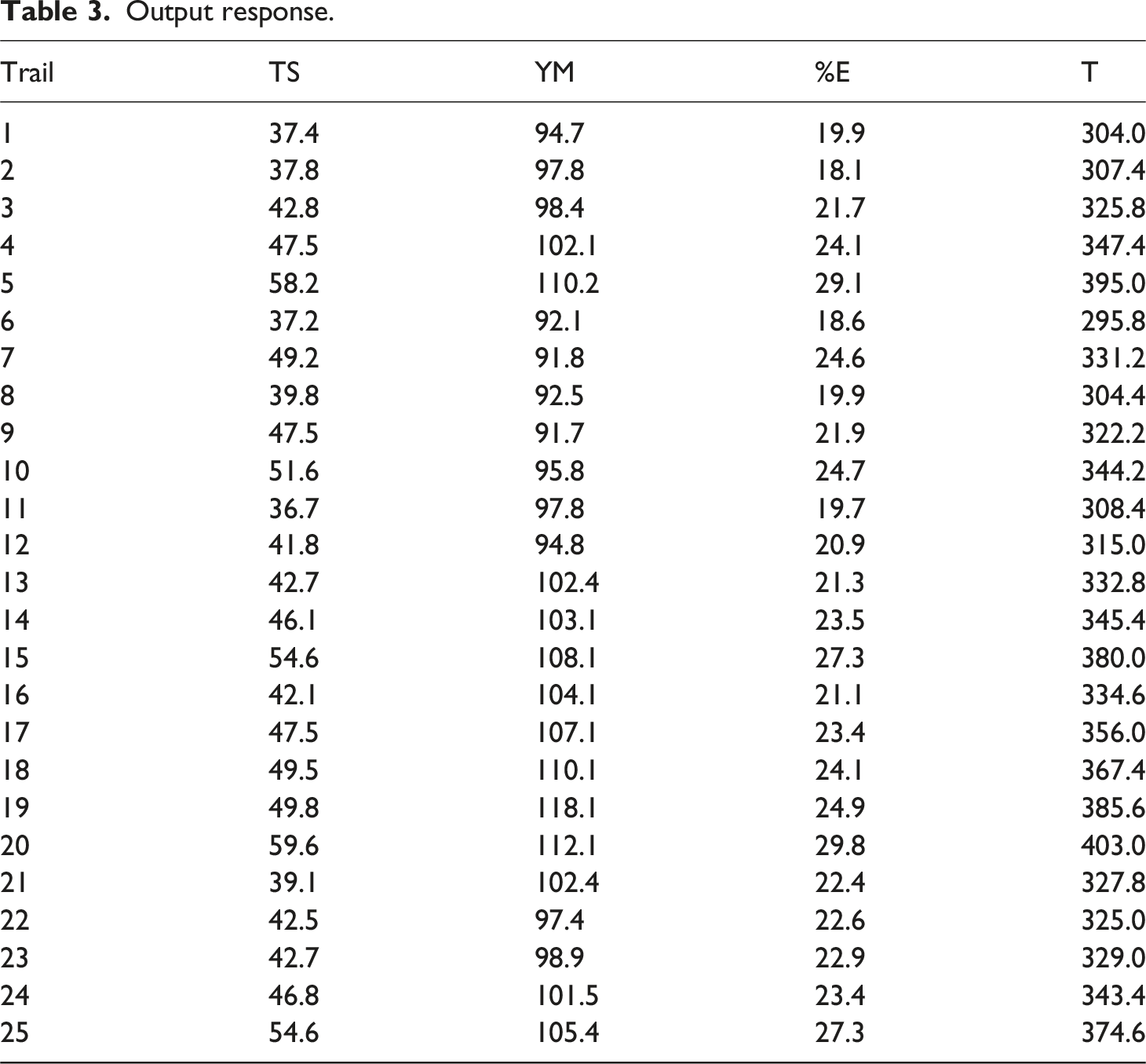
The experimental findings disclose the influence of control factors on the most significant mechanical and thermal characteristics: Tensile Strength (TS), Young’s Modulus (YM), Percentage Elongation (%E), and Maximum Degradation Temperature (T). The variation of the above responses reflects the importance of different process parameters in governing the functionality of the biofilm samples.
Effect of Control Factor on TS
Figure 2 shows the effect of CSP and AgNPs on the tensile strength of PVA/CSP/AgNPs hybrid films. Tensile strength is one of the important mechanical properties, which reflects the capability of the film to bear rupture under stress. The study proved that the tensile strength values ranged between 36.7 and 59.6 MPa, considering that the conditions of processing could have an immense influence. The highest tensile strength of 59.6 MPa attained in Trial 20 proves that the ratio of PVA to CSP used and the dispersion of AgNPs supported strong intermolecular forces and improved reinforcement behavior. Effect of CSP and AgNPs on Tensile strength.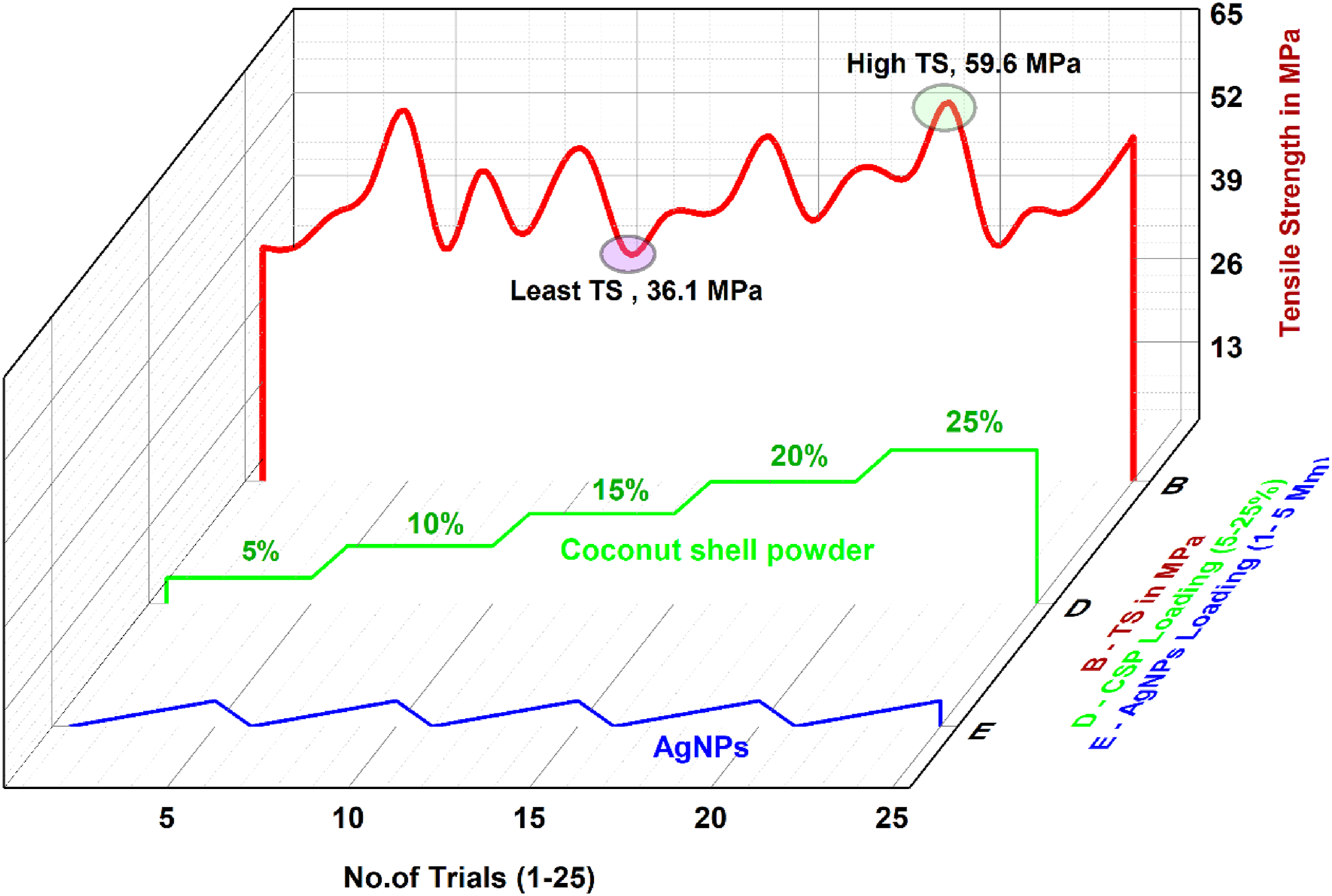
The integration of silver nanoparticles (AgNPs) in the PVA/CSP matrix enhances the mechanical strength due to enhanced stress transfer between the polymer chains. The lowest value of tensile strength of 36.7 MPa, recorded in Trial 11, could be brought about by various factors such as low interfacial bonding, high porosity, or non-optimal nanoparticles dispersion. Insufficient distribution of AgNPs can create shortcomings in the polymer network, which can lead to premature failure when subjected to tensile stress. Additionally, imbalance of the ratio of the polymer could diminish the generation of strong hydrogen bonds, consequently diminishing the structural stability of the entire matrix.
Effect of Control Factor YM
The Effect of CSP and AgNPs on Young’s modulus of PVA/CSP/AgNPs hybrid films are shown in Figure 3. Young’s modulus measures the stiffness of biocomposite films and the impediment to elastic deformation. The results show that Young’s Modulus (YM) varies between 91.7 MPa and 118.1 MPa, and it strongly correlates with material composition and process parameters. Effect of CSP and AgNPs on Young’s modulus.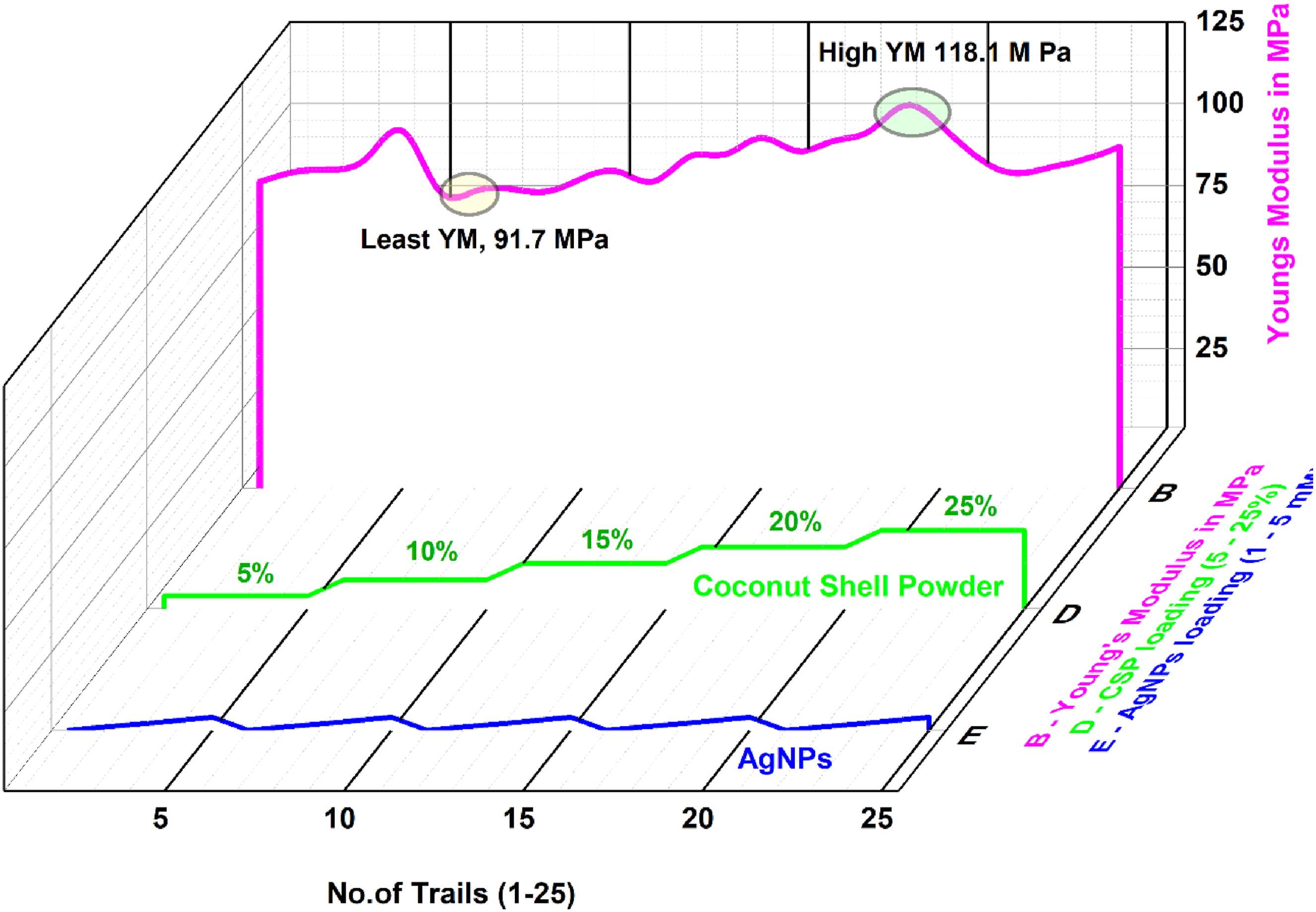
The highest modulus value of 118.1 MPa in Trial 19 will probably be due to a highly ordered molecular network, with nanoparticles distributed evenly and efficient crosslinking processes. Addition of AgNPs into the polymer matrix increases stiffness by reinforcing polymer chains and limiting molecular mobility. In contrast, the lowest modulus value recorded (91.7 MPa in Trial 9) might be due to a higher CSP concentration, which can generate hydrophilic sites, thereby causing higher water uptake and lower stiffness. Moreover, an excess of CSP will interfere with the orderly arrangement of PVA, resulting in a less dense and more flexible matrix. The results indicate that the appropriate nanoparticles concentration and the polymer content are important in the aspect of ensuring enhanced stiffness while guaranteeing structural integrity.
Effect of Control Factor %E
Figure 4 shows the effect of CSP and AgNPs on % of elongation of PVA/CSP/AgNPs hybrid films. Percentage elongation is a measure of the flexibility and ductility of the biocomposite film due to its ability to stretch before breaking. Experimental data of %E ranges from 18.1% to 29.8%, reflecting variability in flexibility depending on composition and processing conditions. Effect of CSP and AgNPs on % of elongation.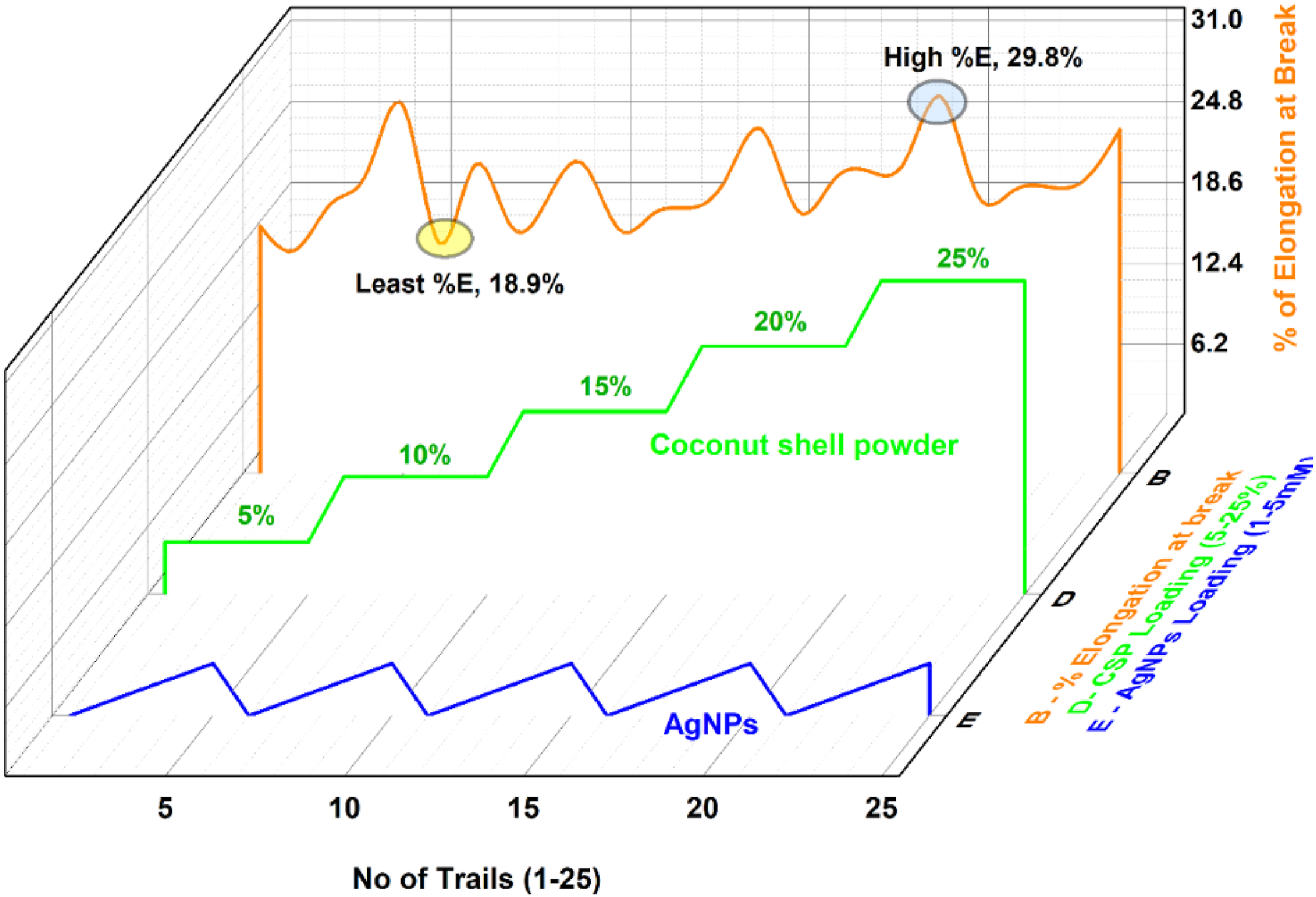
The maximum elongation at 29.8% in Trial 20 suggests an ideal PVA to CSP ratio, which provides greater mobility of polymer chains along with greater elasticity. AgNPs added at an optimal concentration can serve as a reinforcement agent to provide flexibility to the polymer matrix.
Minimum %E recorded in Trial 2 was 18.1%, indicating a more brittle structure. Such brittleness can be because of the high content of AgNPs or enhanced crystallinity within the polymeric matrix. High nanoparticle concentration in general can result in localized stress concentrations, which will reduce flexibility and increase the propensity to material failure. Poor polymer blending or poor plasticization leads to phase separation that further reduces elongation properties. These findings above indicate a need for careful formulation control to derive the right strength versus flexibility balance in hybrid bio composites.
Effect of Control Factor T
Figure 5 demonstrations the influence of CSP and AgNPs on the maximum degradation temperature of a PVA/CSP/AgNPs hybrid film. Normally, thermal stability is very important in the application of such biocomposite films at an elevated temperature. In this respect, the thermal degradation temperature of the films was in the range of 295.8-403.0°C, reflecting a marked impact of material composition on the thermal resistance. The highest thermal degradation temperature (maximum, 403.0°C in Trial 20) reflects the high interaction between polymer and nanoparticle that improves the thermal stability by restricting molecular mobility and reducing the thermal degradation rate. The Effect of CSP and AgNPs on Maximum degradation temperature.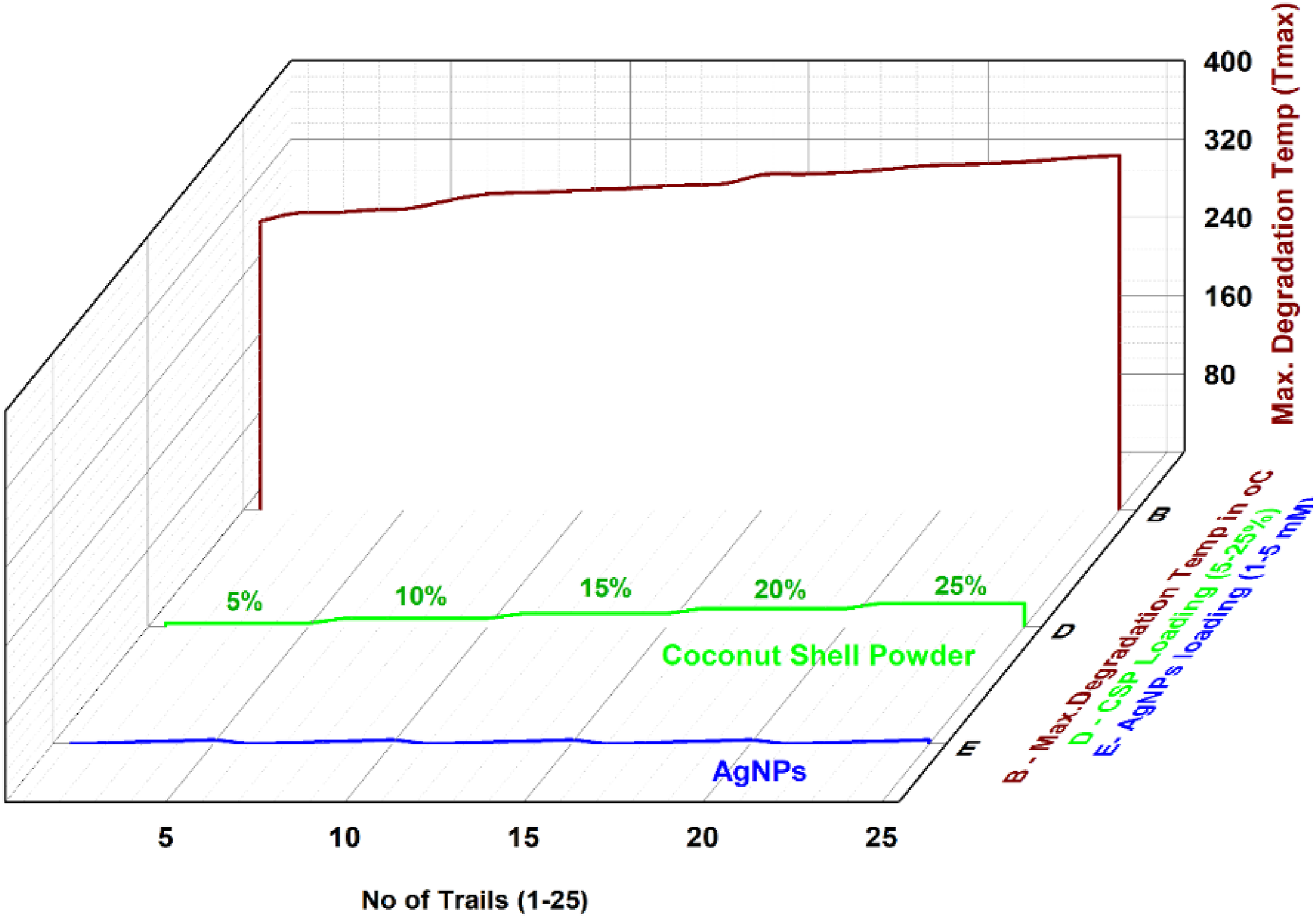
Application of AgNPs improves thermal stability by reinforcing the polymer matrix and preventing premature degradation. An optimum ratio of PVA to CSP improves thermal resistance due to the formation of a more stable and ordered polymer structure. The lowest temperature obtained at 295.8°C in Trial 6 proved poor crosslinking, increased porosity, or phase separation that facilitated the decomposition process at an earlier stage. Higher concentration of CSP may form hydrophilic domains, which enhance material susceptibility to thermal degradation due to improved water intake. Moreover, the absence of intermolecular forces and pore formation within the matrix might lead to a reduction of thermal resistance. It is clear from the results that different ratios of polymer to nanoparticles are important in enhancing the thermal stability of the hybrid biocomposite films of PVA/CSP/AgNPs.
CRITIC
The CRITIC (Criteria Importance through Intercriteria Correlation) method is a multi-criteria decision-making (MCDM) tool employed to ascertain the objective weights of criteria. It relies on statistical metrics, including standard deviation and correlation.
Step 1: Construct the Decision Matrix
The decision matrix (X) is composed of m alternatives and n criteria, with each element • • m signifies the number of alternatives • n represents the number of criteria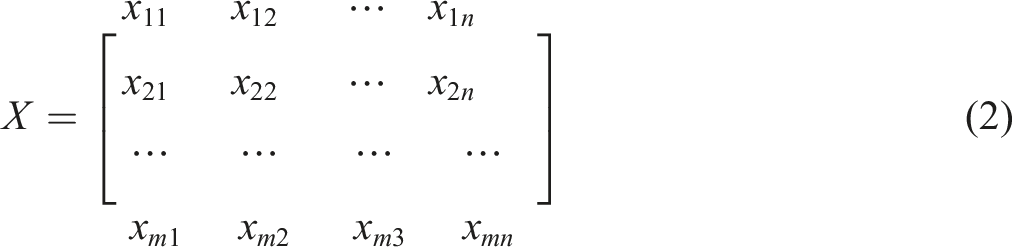
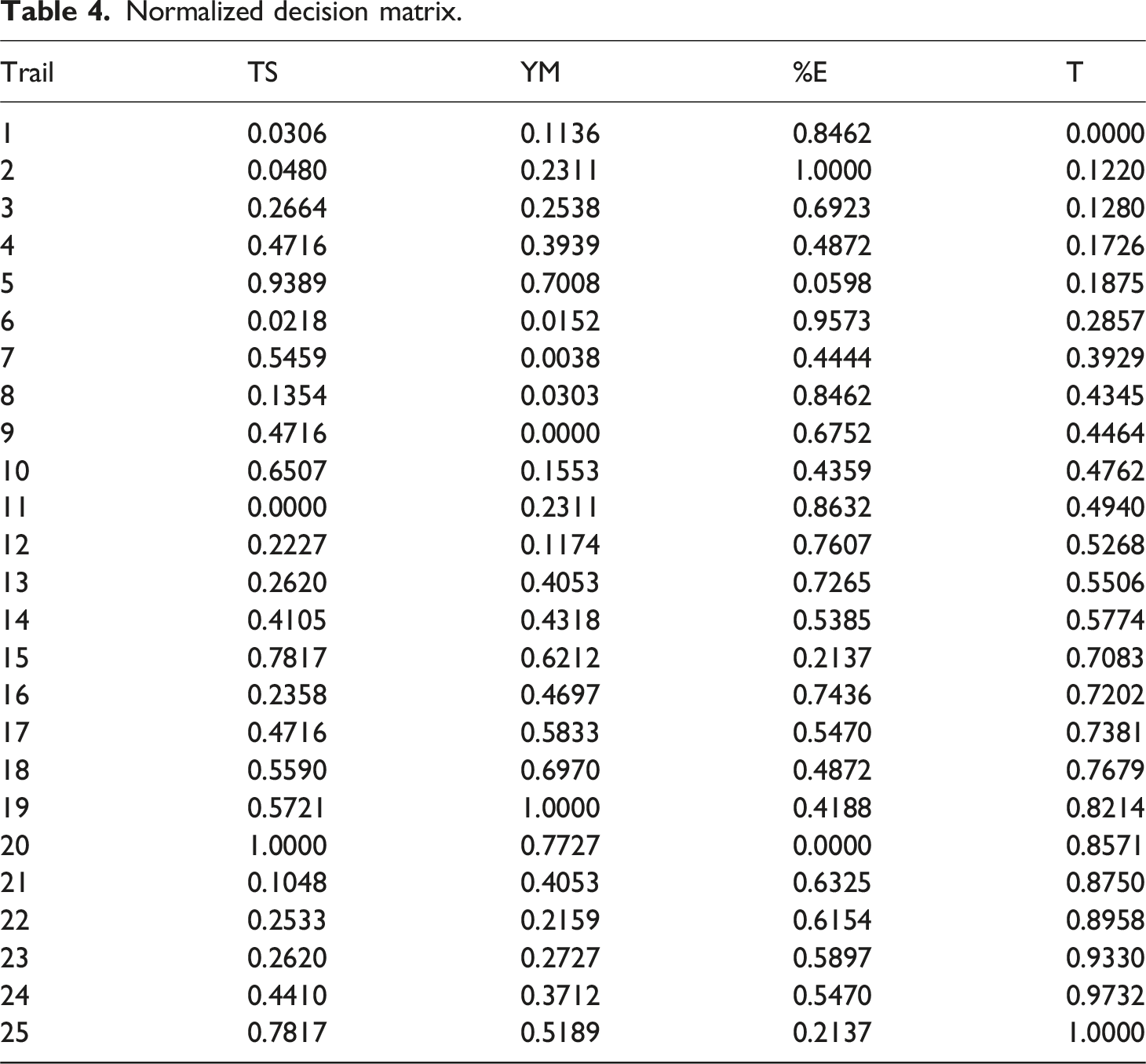
Step 2: Normalize the Decision Matrix

Normalized decision matrix.
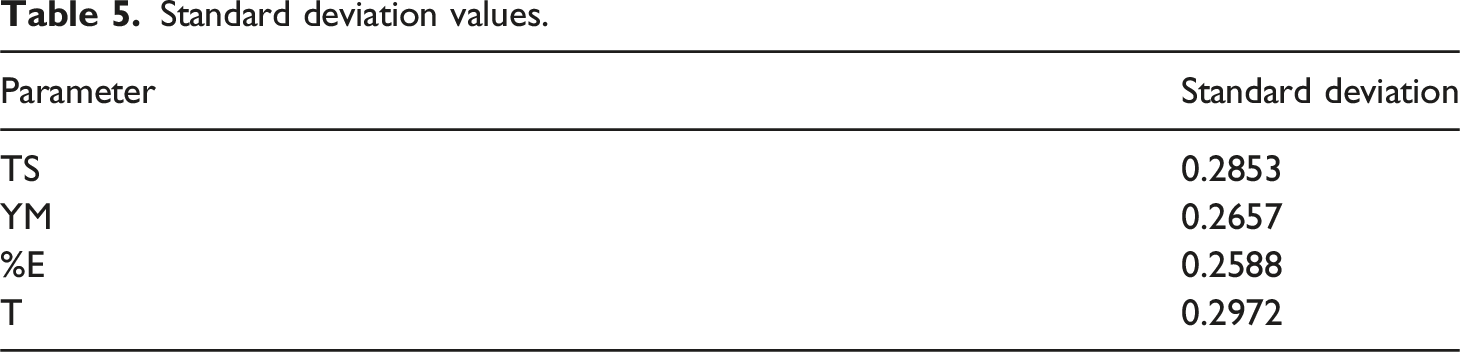
Step 3: Compute the Standard Deviation for Each Criterion

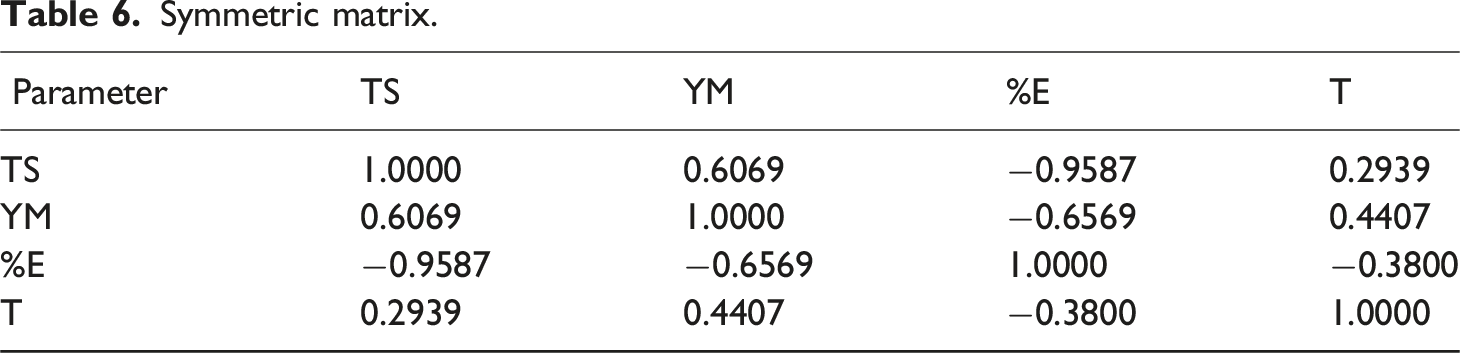
Step 4: Establish Symmetric Matrix

Step 5: Compute the Contrast Intensity for Each Criterion

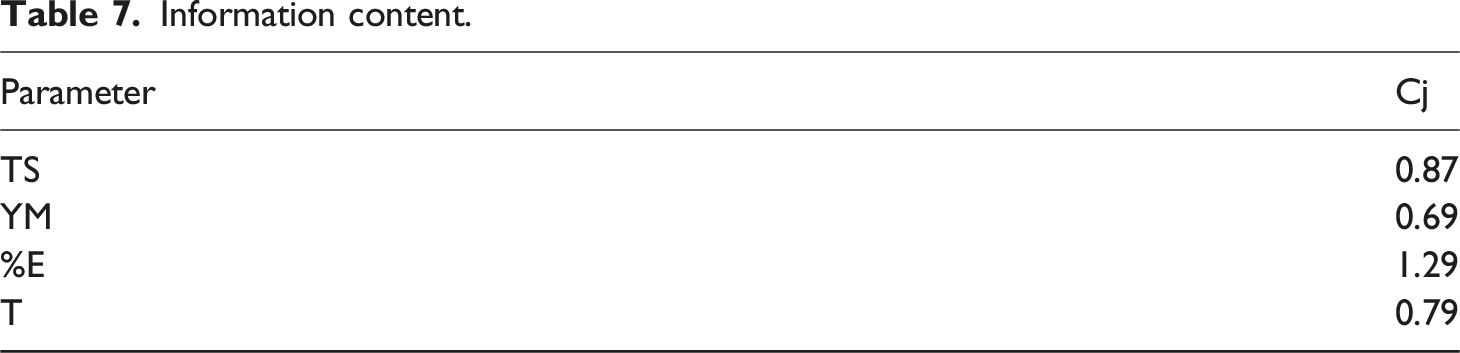
Step 6: Compute the Final Weights

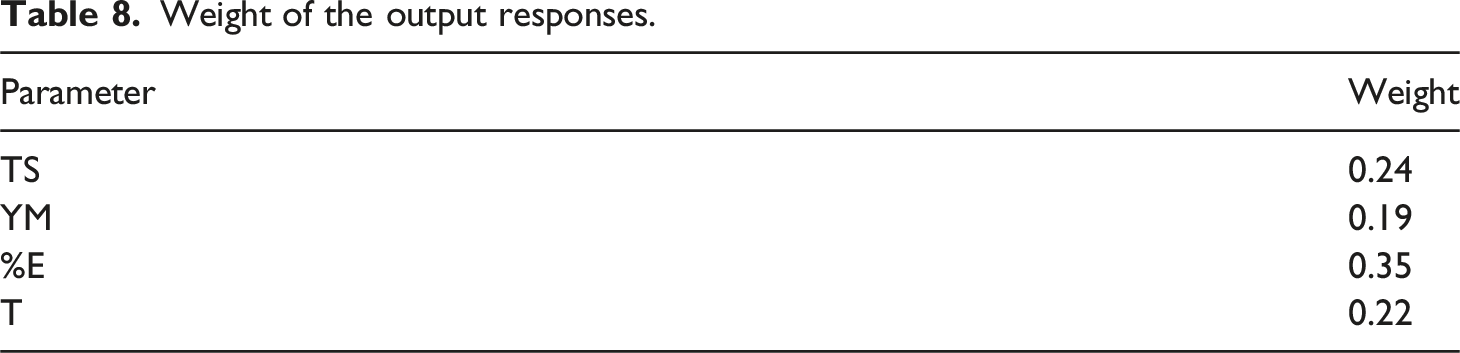
COCOSO
Step 1: Construct the Decision Matrix
The decision matrix (X) is composed of m alternatives and n criteria, with each element • • m represents the number of alternatives • n represents the number of criteria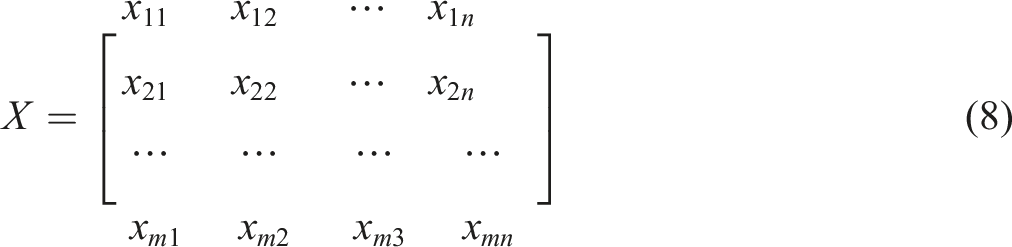
Step 2: Normalize the Decision Matrix
The fact that various criteria can possess distinct units, it is essential to normalize them to achieve a comparable scale. Normalization is conducted according to the specific criteria type:

Adjusted output response values according to CRITIC weight values.
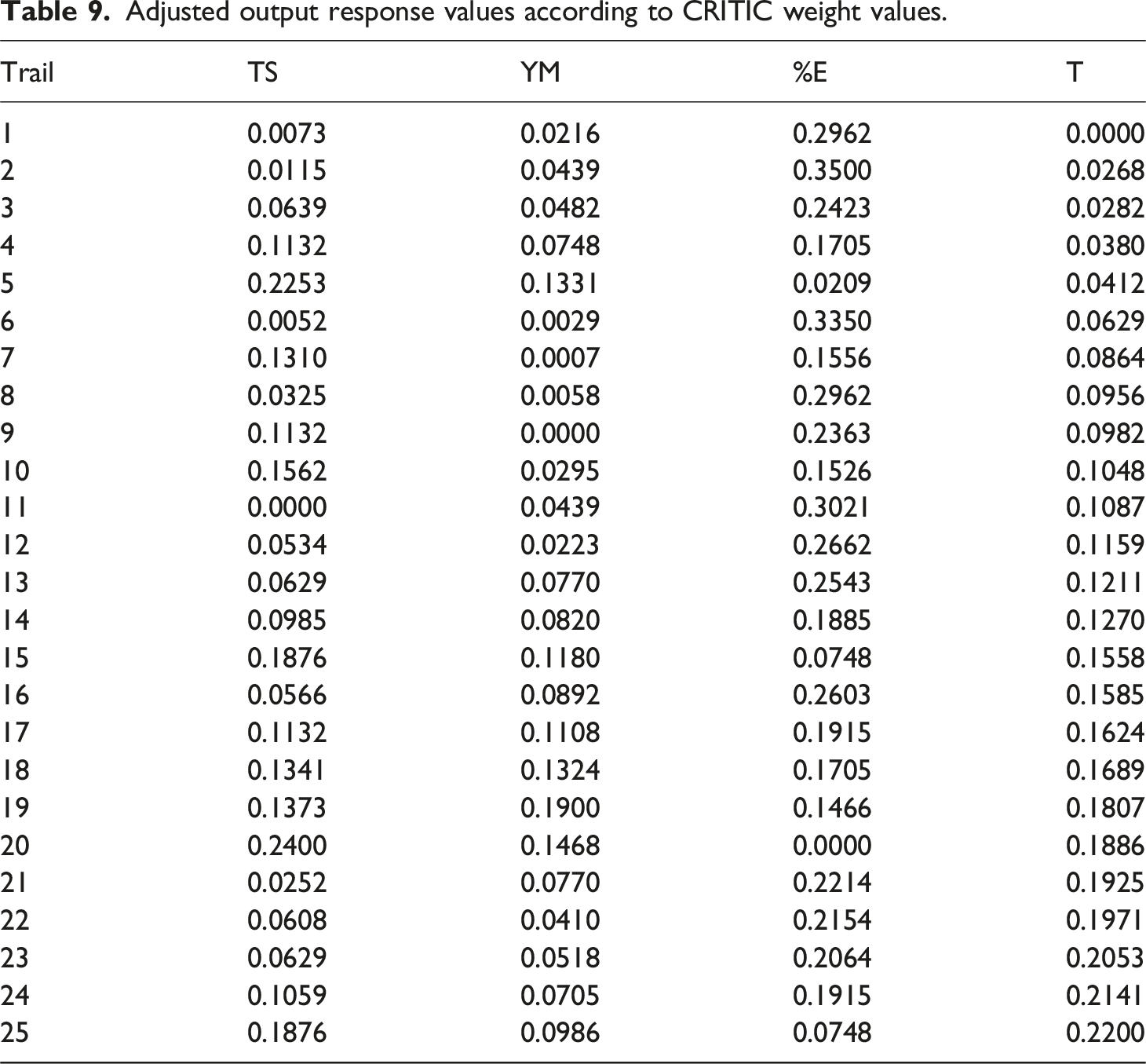
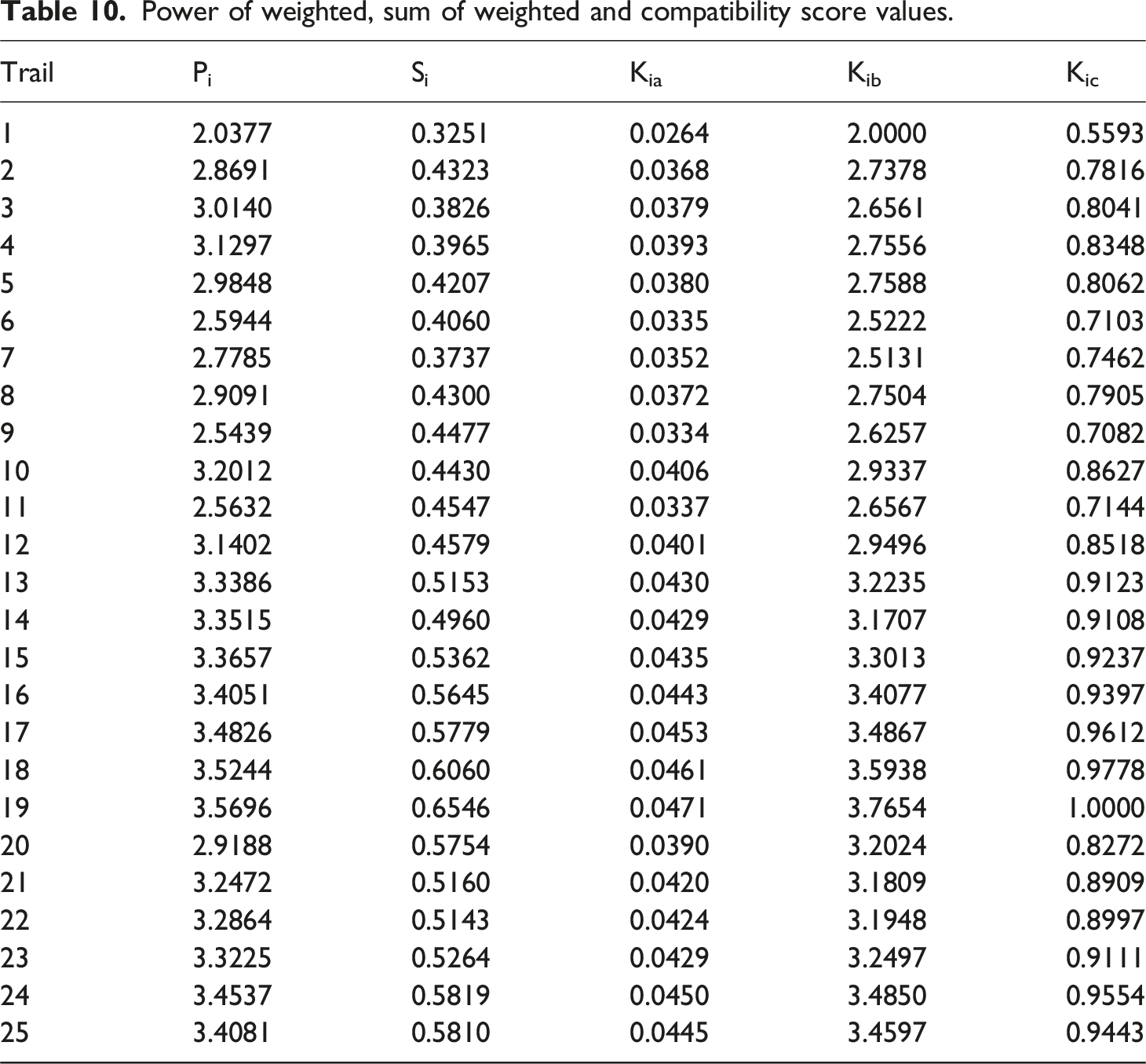
Step 3: Compute the Power of weighted (Pi) and sum of weighted (Si) Comparability Sequence Scores
• 

Step 4: Estimation of Appraisal Scores



Power of weighted, sum of weighted and compatibility score values.
Step 5: Compute the Final Appraisal Score

Appraisal score and alternative rankings.
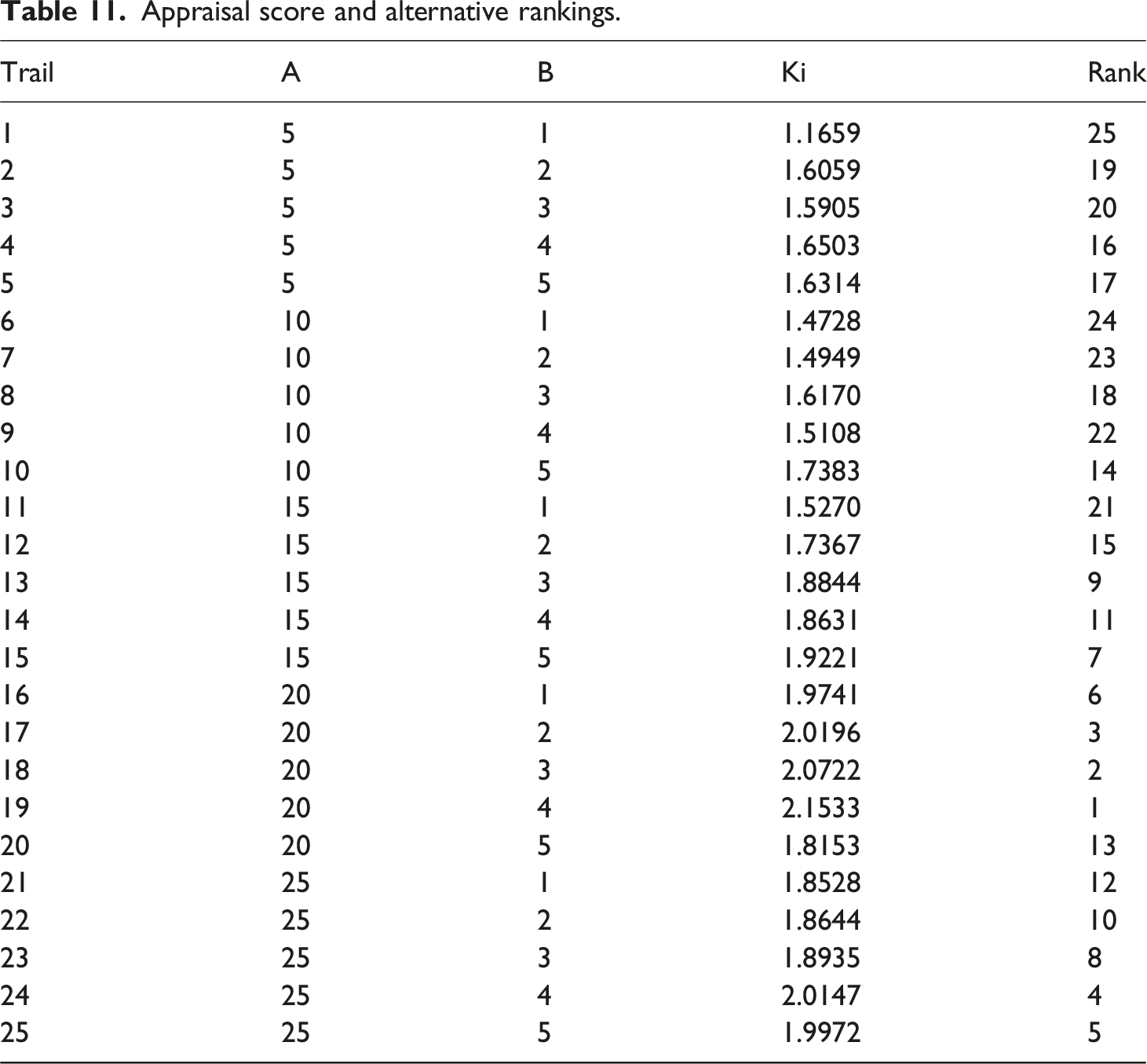
The alternative ranking follows the order in a way (19>18>17>24>25>16>15>23>13>22>14>21>20>10>12>4>5>8>2>3>11>9>7>6>1) that 19th experimental train which has the combination of 20 % coconut shell powder and 4 milli molar concentration of silver nanoparticles ranks top and on the contrary, the initial trial with combination of low level coconut shell powder combination of 5 % with 1 milli molar concentration of silver nanoparticles has been ranked as the worst alternative for the responses studied.
Supervised machine Learning Techniques
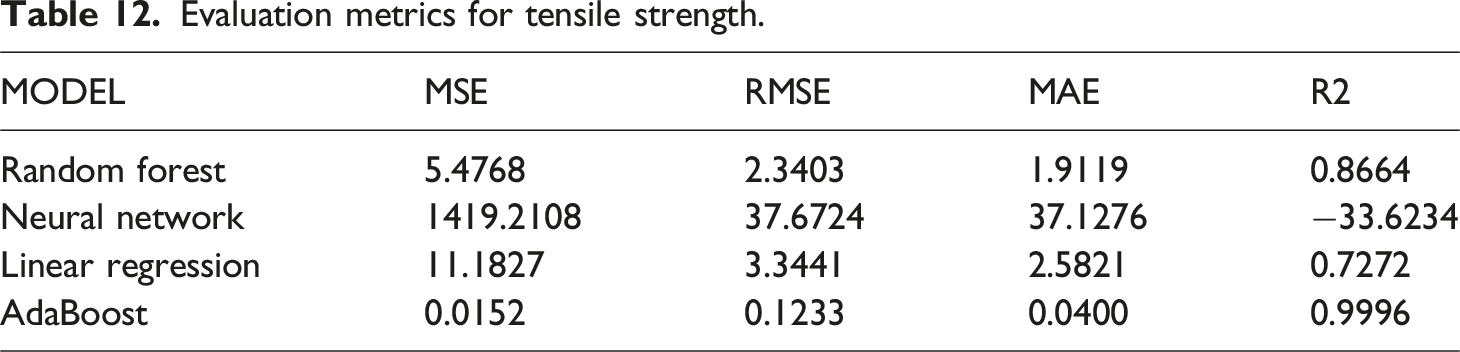
Controlled machine learning techniques entail training a dataset using algorithms to forecast both continuous and categorical variables. The training phase is repeated by modifying the algorithm parameters to reduce prediction errors and to discern the patterns connecting the input and output variables. Algorithms such as random forest, neural networks, linear regression, and AdaBoost may do both regression tasks. The present study has examined four distinct supervised machine learning techniques: random forest, neural network, linear regression, and AdaBoost algorithms, for analysing the experimental dataset at various training-test split ratios of 60:40, 70:30, and 80:20. The experimental dataset has been examined as both continuous and categorical variables to ascertain the ideal settings that enhance the output response and to discover the influencing factors.
Random Forest algorithm
The Random Forest algorithm is an ensemble learning technique that avoids overfitting and increases prediction accuracy by combining several decision trees. An independent decision tree is trained using each of the several subsets of the training dataset that have been separated. In the case of regression-based issues, the method takes into account the average value of all the individual trees, and for a classification task, it takes into account the majority voting for predictions. 22
Neural network
Neural networks are a category of machine learning algorithms modelled after the architecture and operations of the human brain. They consist of interconnected nodes known as neurones, which process information and relay it to other neurones. This network architecture allows them to learn and recognize patterns in data, enabling them to perform tasks like image recognition, natural language processing, and prediction. 23
Linear regression algorithm
Linear regression is also a type of supervised machine-learning algorithm that learns from the labelled datasets and maps the data points with most optimized linear functions which can be used for prediction on new datasets. It computes the linear relationship between the dependent variable and one or more independent variables by fitting a linear equation with observed data. It predicts the continuous output variables based on the independent input variable. 24
Adaboost algorithm
AdaBoost is an ensemble learning technique that utilises boosting, wherein numerous weak learners, usually decision trees, are amalgamated to create a robust classifier. Unlike Random Forest, which constructs trees independently, AdaBoost models are developed sequentially, assigning greater weight to misclassified samples to improve future predictions.
25
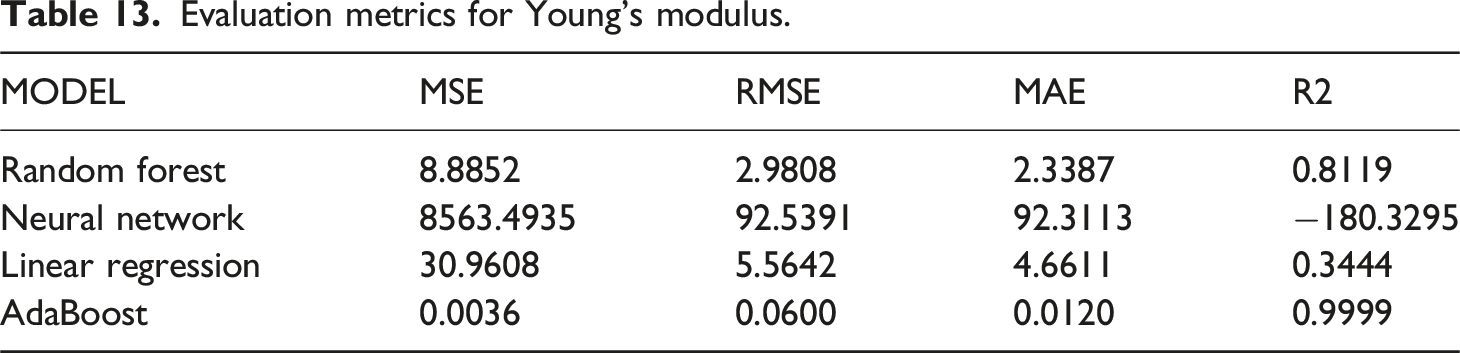
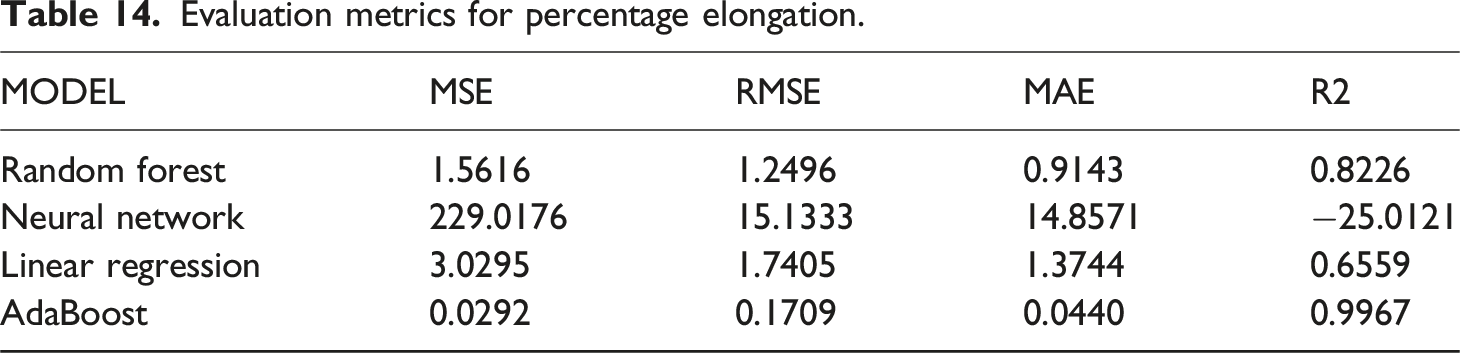
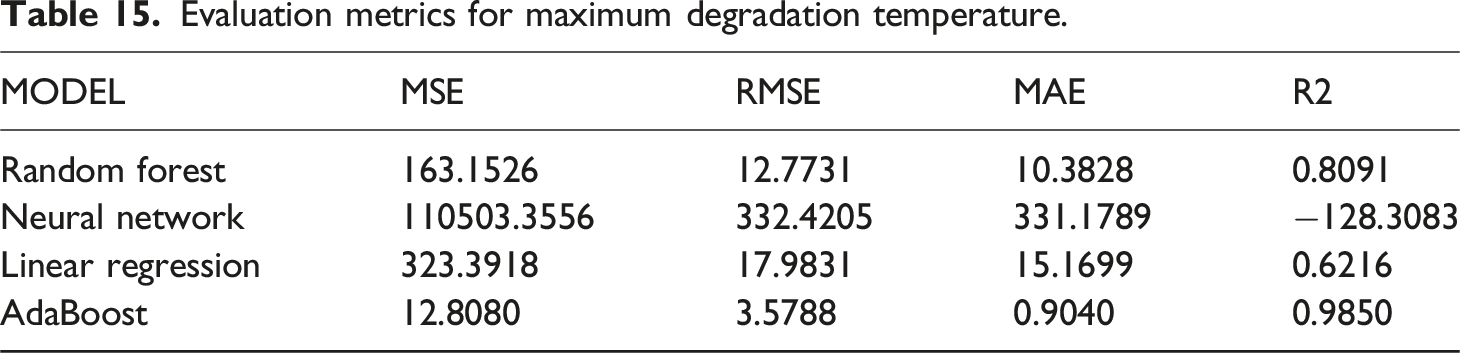
The input data has been saved in the form of a . csv file and examined by several algorithms to understand their performance based on the assessment criteria related with regression and classification jobs. Four distinct metrics mean square error (MSE), root mean square error (RMSE), mean absolute error (MAE), and coefficient of determination (R2)—have been utilised to assess the efficacy of regression algorithms. Figure 6 illustrates the machine learning pipeline utilised in Orange ML open-source software version 3.10. Machine learning workflow for regression modelling.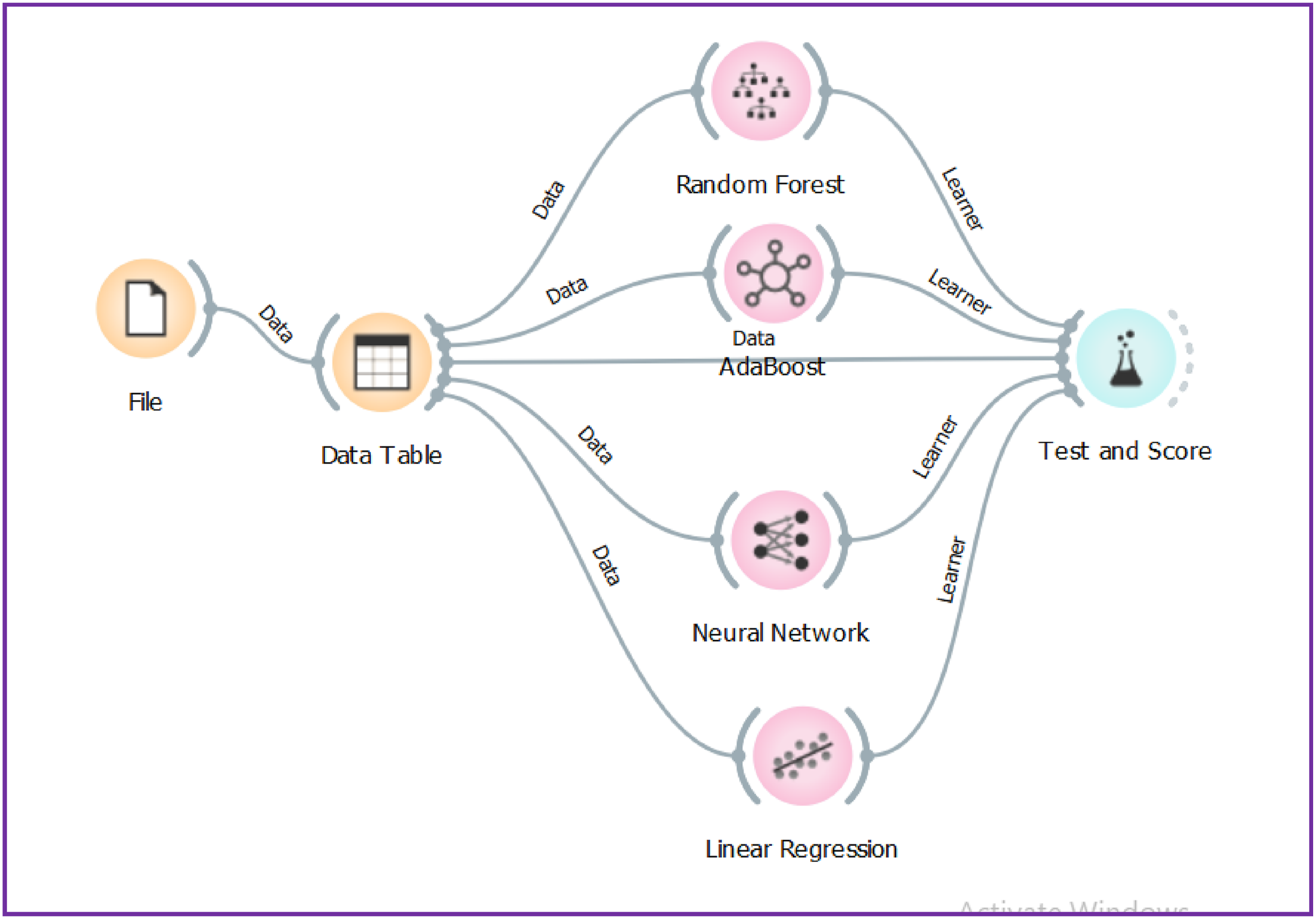
Evaluation metrics for tensile strength.
Evaluation metrics for Young’s modulus.
Evaluation metrics for percentage elongation.
Evaluation metrics for maximum degradation temperature.
Classification Modelling
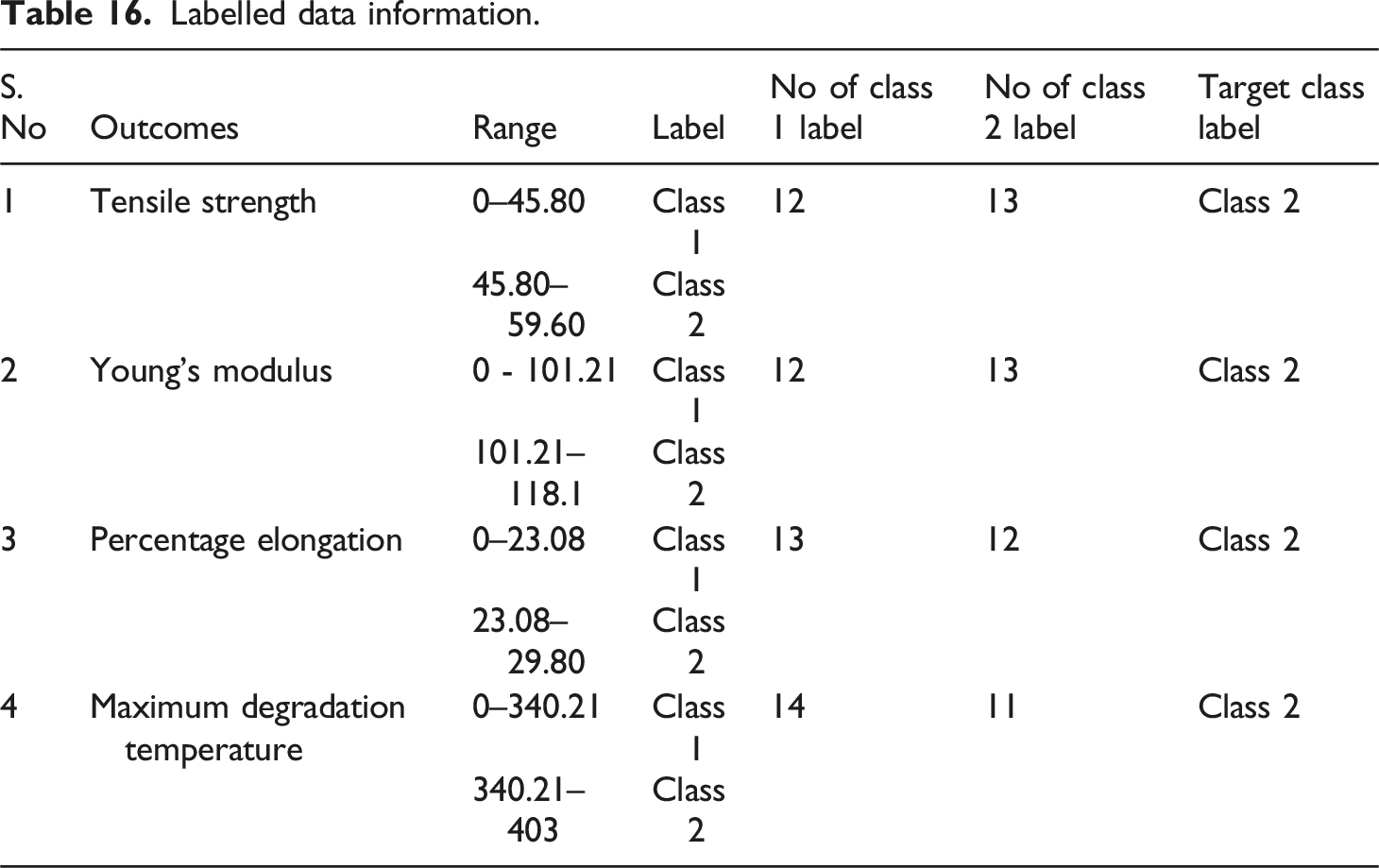
Segmentation is a supervised machine learning technique in which the model endeavours to predict the accurate label for a specified input set. The model undergoes complete training with the training data, followed by evaluation on test data, before making predictions on novel, unknown data. Figure 7 illustrates the machine learning workflow for categorization modelling. Machine learning workflow for classification modelling.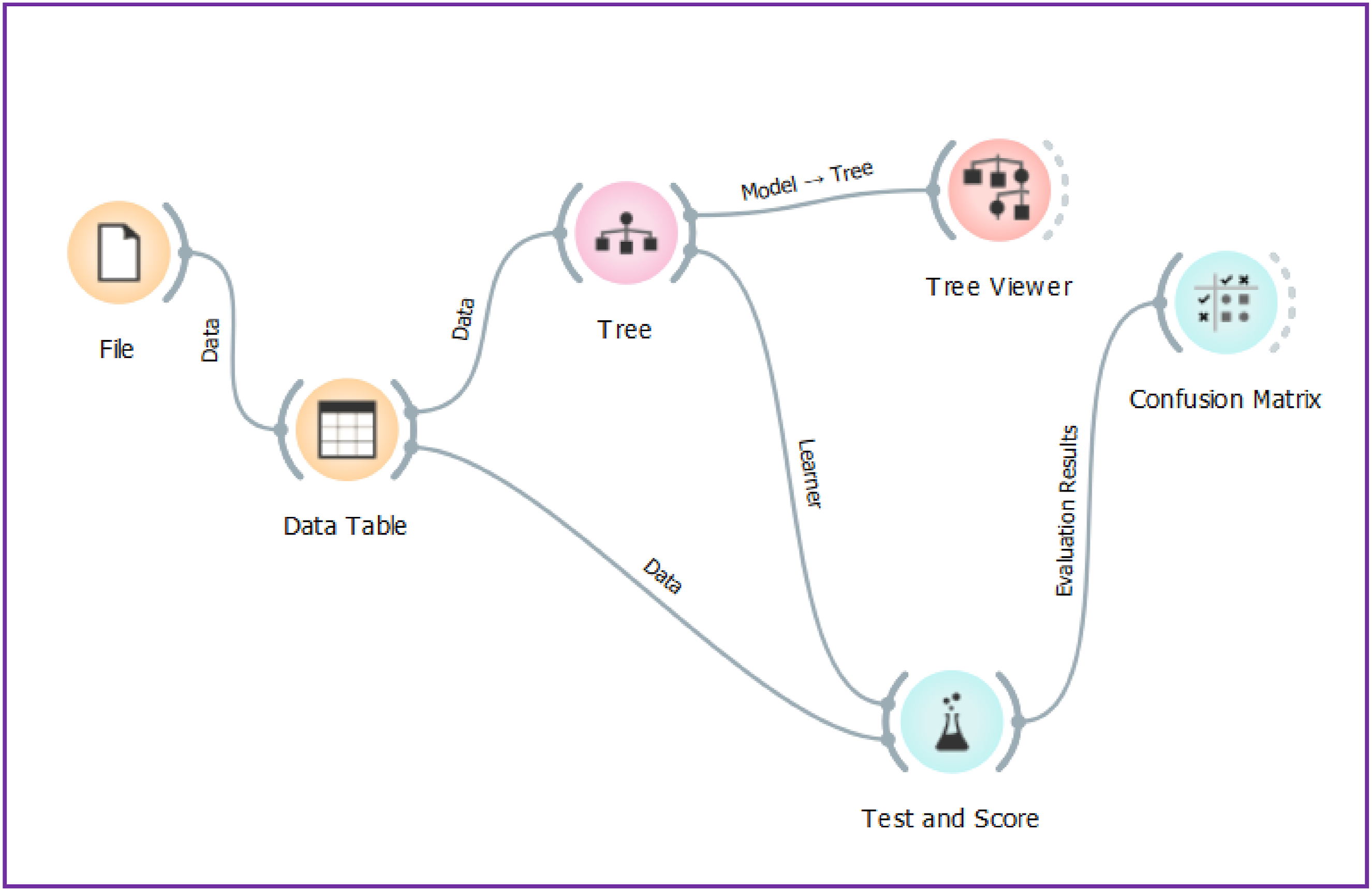
Labelled data information.
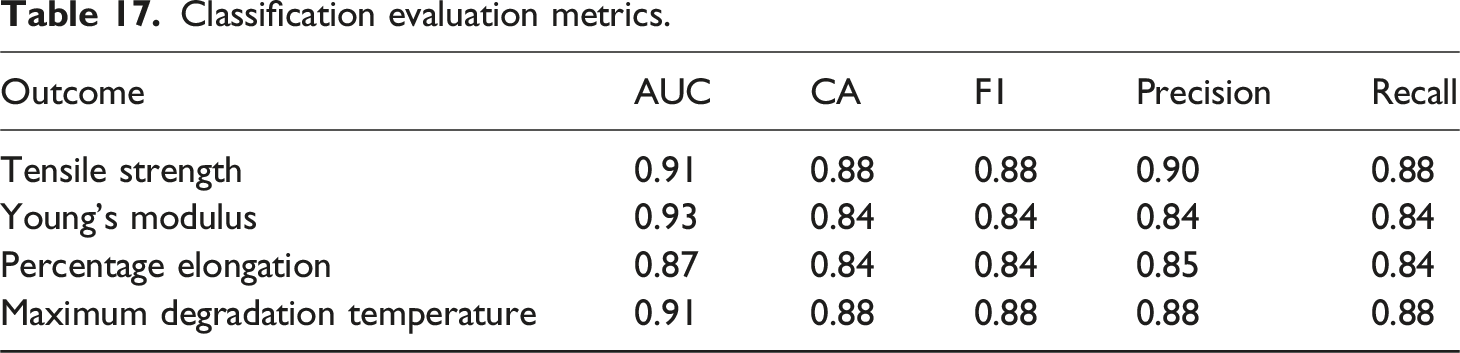
Classification evaluation metrics.
Decision Tree algorithm
The decision tree algorithm constructs a tree-like structure of nodes, including the root, internal branches, and leaf nodes, to illustrate potential outcomes derived from dataset training. The method can analyse extensive datasets with minimal pre-processing, commencing the study by selecting the optimal parameter for data segmentation. As per the experimental outcomes considered in the research, class 2 labelled data have been set as the target for maximizing the responses.
The decision tree structure developed for tensile strength consists of 7 nodes and 4 leaves. The tree represents the composition of silver nitrate as the most influencing parameter affecting the tensile strength of the developed biocomposite films. Figure 8 shows the decision tree for tensile strength. For maximizing the tensile strength of the developed composite, the composition of silver nitrate should be kept more than 3 mmol mole and fixing the silver nitrate values less than 3 milli mole and weight percentage of coconut shell powder less than or equal to 20 % reduces the tensile strength value. The decision tree algorithm has shown classification accuracy of 88 % with area under the curve value of 0.91. Decision tree structure for tensile strength.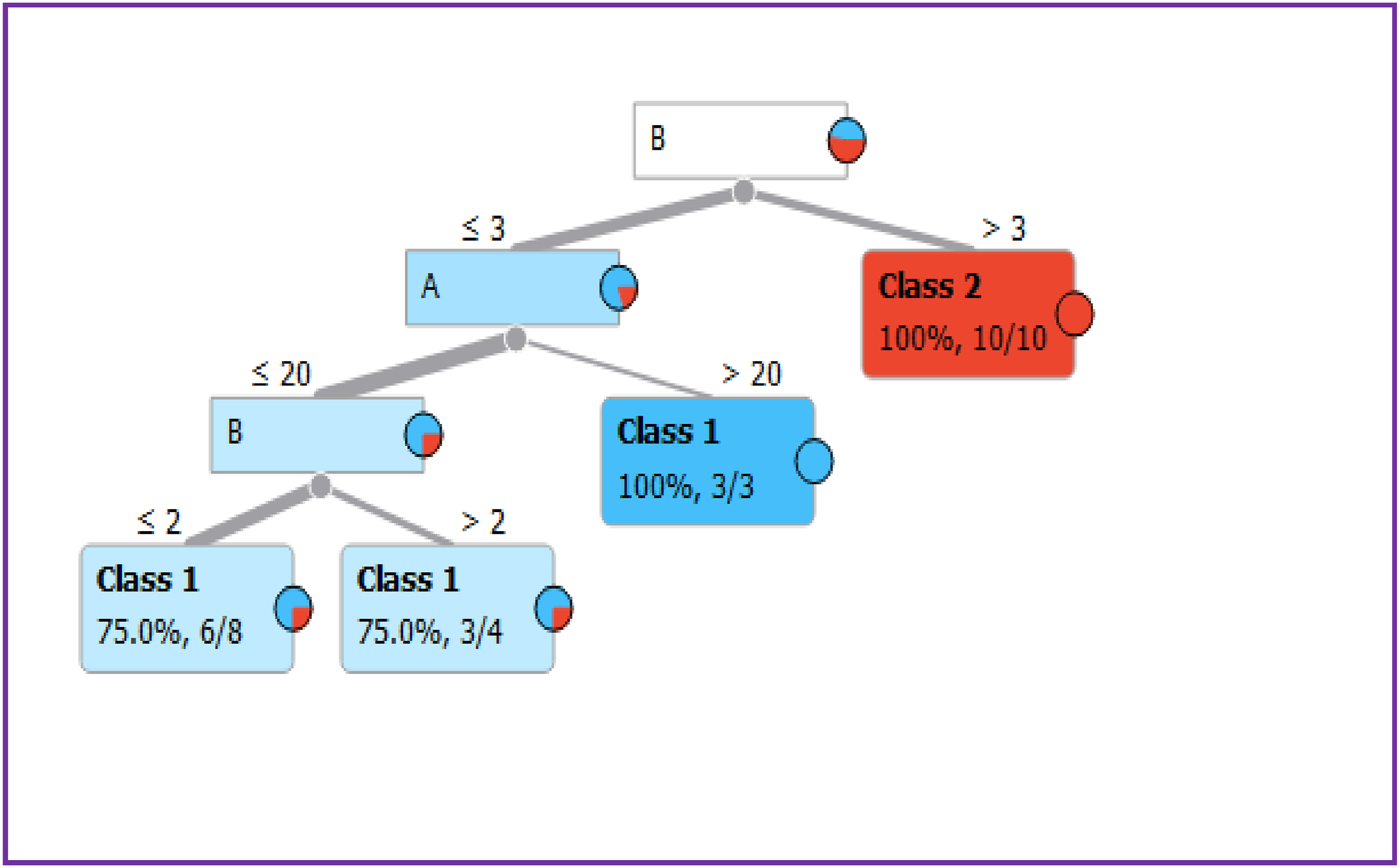
Figure 9 shows the decision tree structure for Young’s modulus and it has 11 nodes and 6 leaves. The tree represents the composition of the coconut shell power is the influencing parameter affecting the young’s modulus value. For enhancement of Young’s modulus, the weight percentage of coconut shell powder should be kept higher than 10 % and silver nitrate composition should be higher than 3 mmol. The decision tree algorithm has represented a classification accuracy of 84 % with an area under the curve value of 0.87. Decision tree structure for Young’s modulus.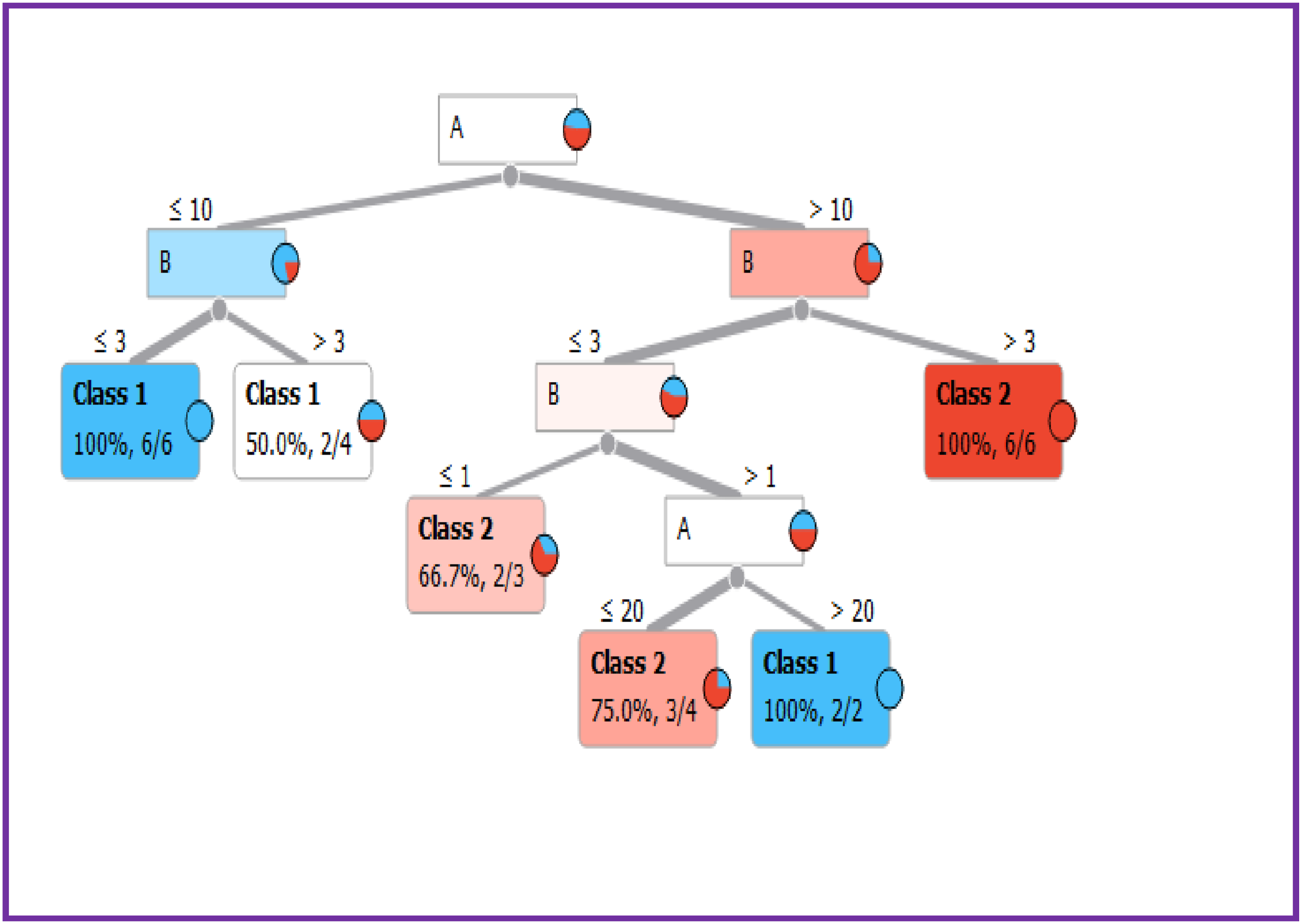
The Figure 10 shows the decision tree structure for percentage elongation and it has 9 nodes and 5 leaves. The tree represents the composition of silver nitrate as the influencing parameter affecting percentage elongation of the developed biocomposite films. For increasing percentage elongation characteristics of the developed biocomposite film, the silver nitrate composition should be kept higher than 3 milli mole and coconut shell power composition should be equal or lesser than 5 %. The decision tree algorithm has represented a classification accuracy of 84 % with area under the curve value of 0.93. Decision tree structure for percentage elongation.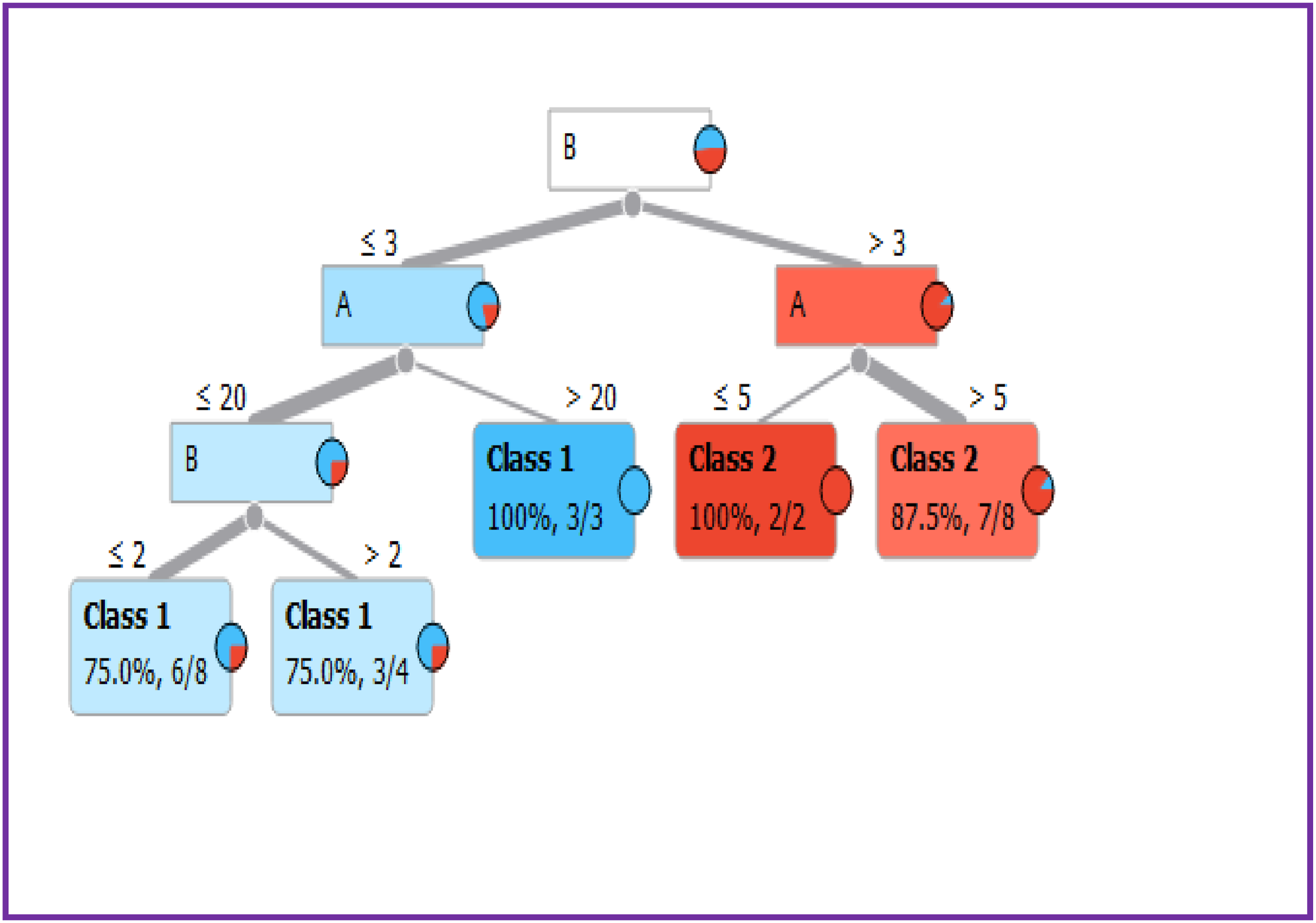
For maximizing the maximum degradation temperature of the developed biocomposite films, the optimal condition is similar to percentage elongation and silver nitrate is the highly significant parameter affecting the degradation temperature. The tree has attained a classification accuracy of 88% with an area under the curve value of 0.91 (Figure 11 represents the Decision tree structure for maximum degradation temperature). Decision tree structure for maximum degradation temperature.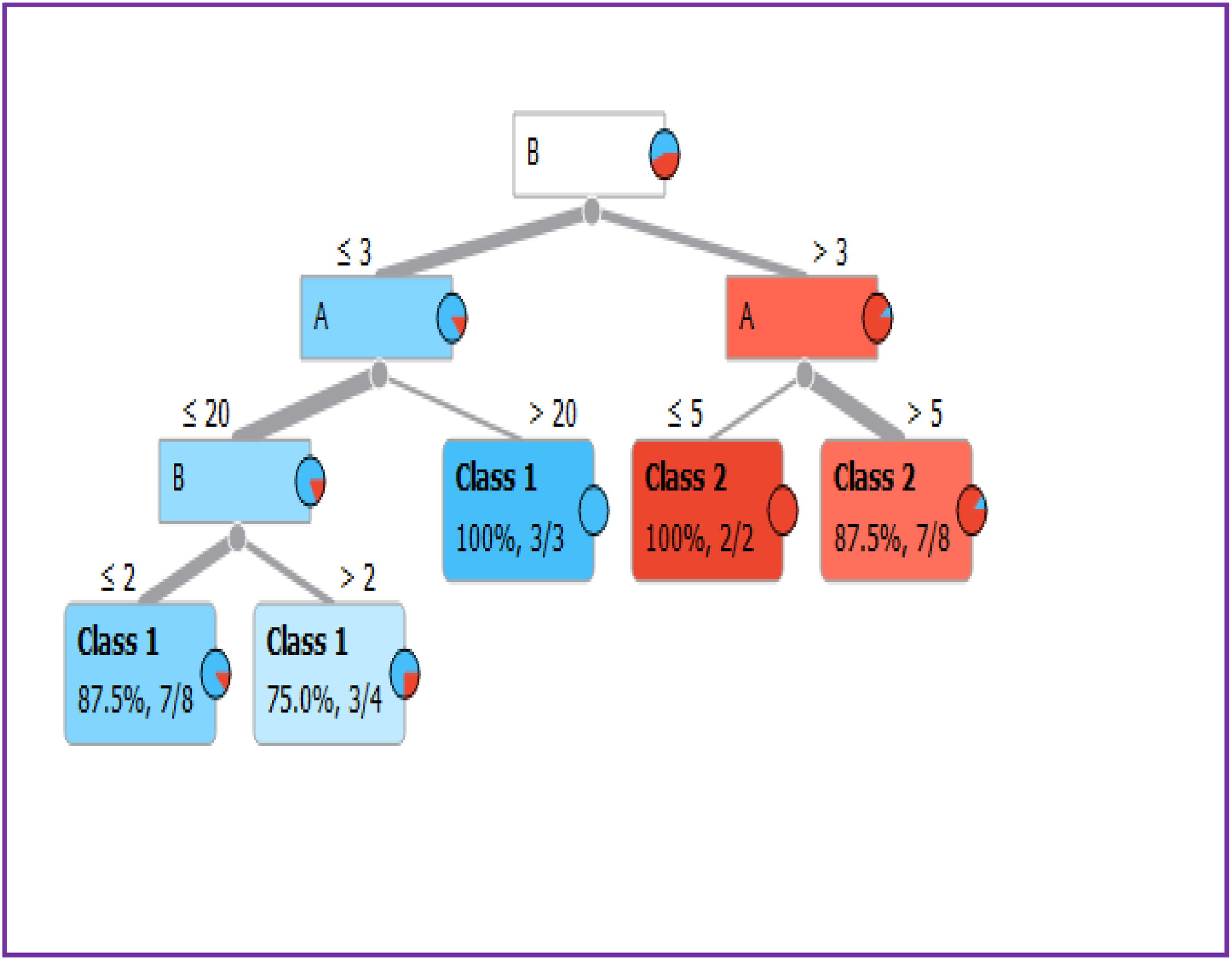
Confusion Matrix Figure 12
shows the confusion matrix for tensile strength ,Young’s Modulus , percentage elongation and maximum degradation temperature. A confusion matrix provides detailed information about the prediction capability of classification algorithms in analyzing a labelled dataset. The matrix represents the actual and predicted labelled dataset by individual algorithm, representing their accuracy and error in predictions. Confusion Matrix for (a) tensile strength (b) Young’s Modulus (c) percentage elongation (d) maximum degradation temperature.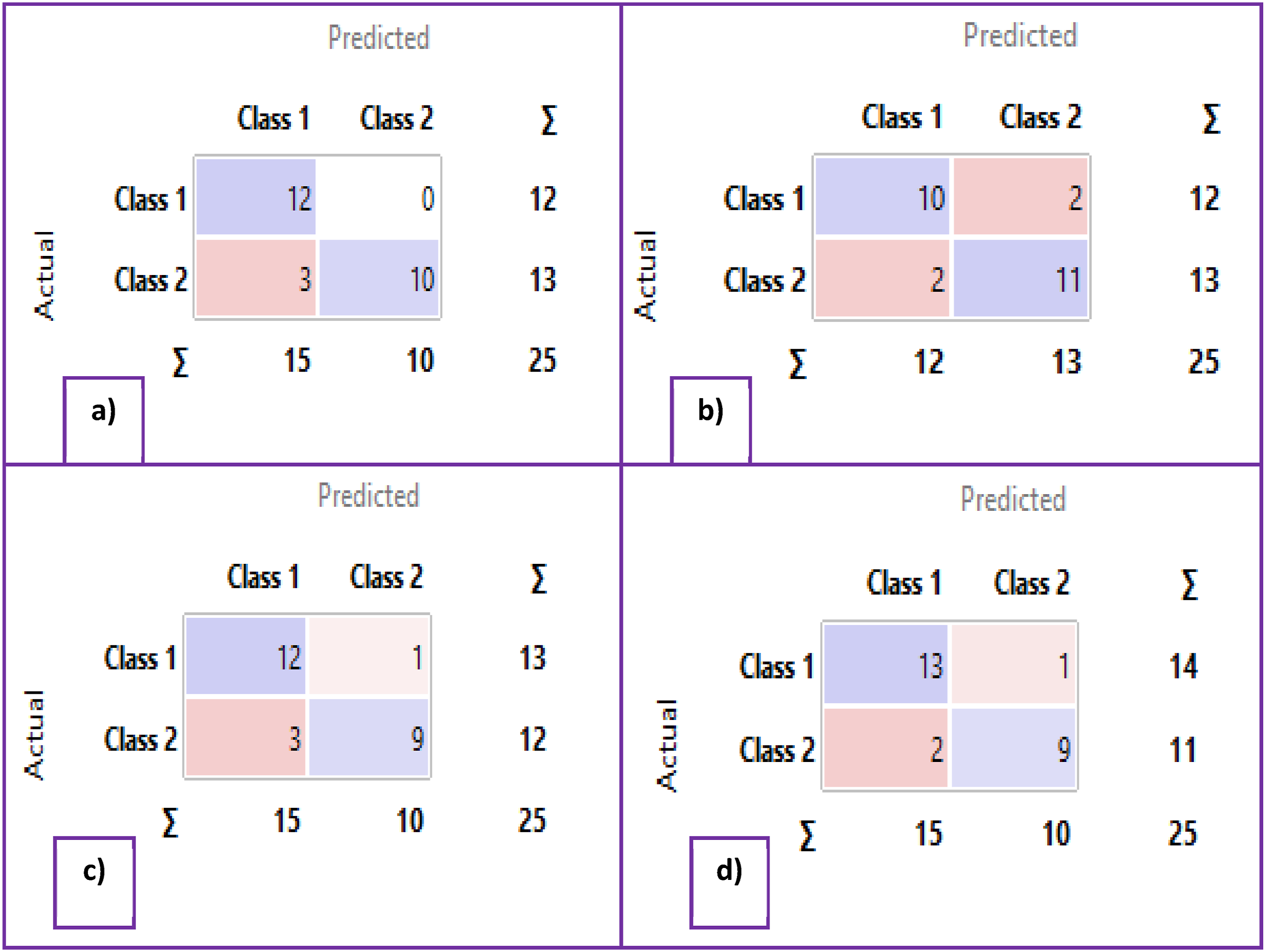
The confusion matrix developed for tensile strength indicates that decision tree algorithm has wrongly predicted 3 class 2 labelled data as class 1 labelled data. It has correctly predicted all the class 1 labelled data in an accurate manner without any wrong prediction. For young’s modulus, the algorithm has wrongly predicted 2 class 1 labelled data as class 2 and vice versa. Similarly for percentage elongation, one class 1 labelled data has been wrongly predicted as class 2 and 3 class 2 labelled data has been wrongly predicted as class 1 labelled data. On the contrary, for the maximum degradation temperature labelled dataset, one class 1 labelled data point has been wrongly predicted as class 2 and 2 class 2 labelled data points as class 1. The lowest prediction error by the decision tree algorithm represents the accurate prediction ability of the algorithm for the labelled dataset.
The proposed framework of CRITIC CoCoSo, ML can be applied to actual packaging problems with the definition of application-oriented performance requirements and determination of weights for the criteria. For example, more importance can be assigned to elongation and tensile strength in the case of flexible dry food packaging materials, whereas more importance can be assigned to Young’s modulus and dimensional stability in the case of semi-rigid packaging materials. Other factors, such as UV resistance, can also be added depending on the application conditions.
Characterization
Structure – Property relationship for PVA/CSP/AgNPs Biofilms
The interfacial adhesion mechanism for PVA/CSP/AgNPs films is shown in Figure 13. The interfacial adhesion in the optimized PVA/CSP/AgNPs thermoplastic composite film is primarily attributed to hydrogen bonding, mechanical interlocking, and nanoparticle-polymer interactions that occur during the film casting process. The hydroxyl (–OH) groups of PVA strongly interact with the lignocellulosic groups on the surface of CSP through hydrogen bonding, which suppresses the mobility of the polymer chains and enhances stress transfer, thereby improving tensile strength and elongation.
26
The rough and porous surface of CSP also favors mechanical interlocking in the PVA matrix. The dispersed AgNPs on the surface of PVA interact with the polymer through electrostatic and van der Waals forces, which act as localized physical cross-linking points that suppress chain mobility and enhance thermal stability and water resistance
27
. CSP (Coconut Shell Powder), which is rich in lignocellulosic hydroxyl and polar functional groups, strongly interacts with the –OH groups of PVA through strong hydrogen bonding, thus limiting the mobility of the polymer chains, increasing rigidity, and improving stress transfer. The rough surface morphology of CSP also favors mechanical interlocking and strong interfacial interactions. AgNPs (Silver Nanoparticles) function as nanofillers and interfacial modifiers owing to their high surface energy and large surface area, thus inducing strong nanoparticle-polymer interactions and physical crosslinking points that improve the modulus and thermal stability.
28
They also improve the compatibility of PVA with CSP by decreasing the interfacial voids and enhancing dispersion. The combined effect of CSP and AgNPs generates a synergistic effect based on hydrogen bonding, mechanical interlocking, and nanoparticle-induced confinement, thus improving interfacial interactions, mechanical properties, and viscoelasticity. Interfacial adhesions between PVA,CSP and AgNPs.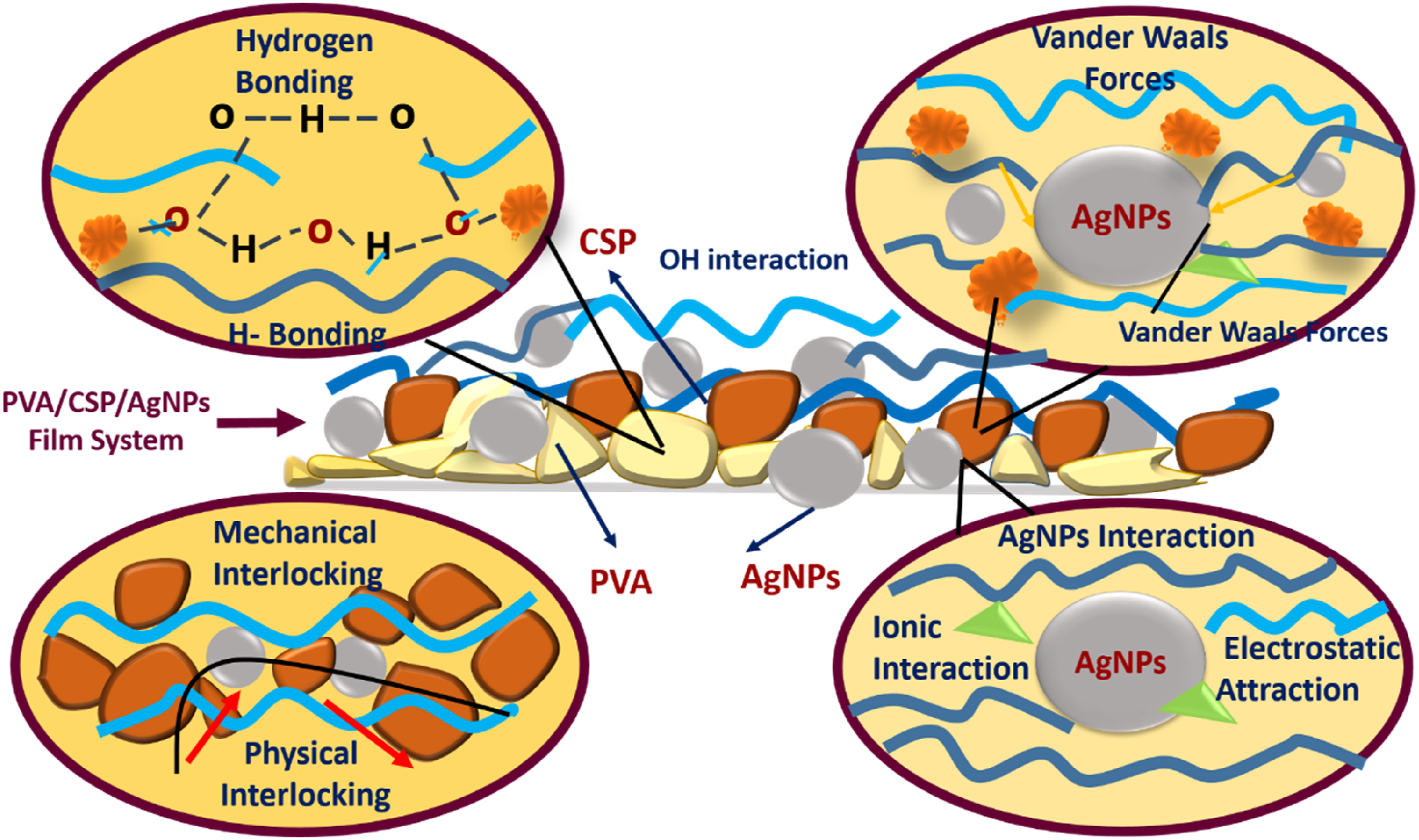
Surface Morphology
The SEM images of pure PVA and PVA/20%CSP/4 mM AgNPs film are shown in Figure 14. The SEM micrographs of the neat PVA film show a smooth and flat surface morphology, reflecting a homogeneous polymer structure with effective chain entanglement and a lack of filler-induced heterogeneities. Conversely, the optimized PVA/20%CSP/4 mM AgNPs composite film shows small voids and visible pull-outs of coconut shell powder (CSP), which can be explained by non-optimum interfacial adhesion between the hydrophilic PVA matrix and relatively rigid CSP filler particles. The 20% filling of CSP causes a degree of discontinuity within the polymer network due to filler agglomeration and poor polymer–filler interfacial compatibility, which generates only a slight disturbance in the structural uniformity of the film.
29
Yet, the existence of evenly dispersed AgNPs over the surface validates successful incorporation and interaction of the nanoparticles within the PVA matrix as well as in the vicinity of CSP particles, indicating successful in situ reduction and stabilization of AgNPs by the hydroxyl groups of PVA as well as CSP surface functionalities.
30
This homogenous AgNPs dispersion promotes interfacial adhesion, which may enhance the antimicrobial, mechanical, and barrier properties of the composite regardless of the slight morphological defects induced by filler loading. SEM images of pure PVA and PVA/20%CSP/4 mM AgNPs film.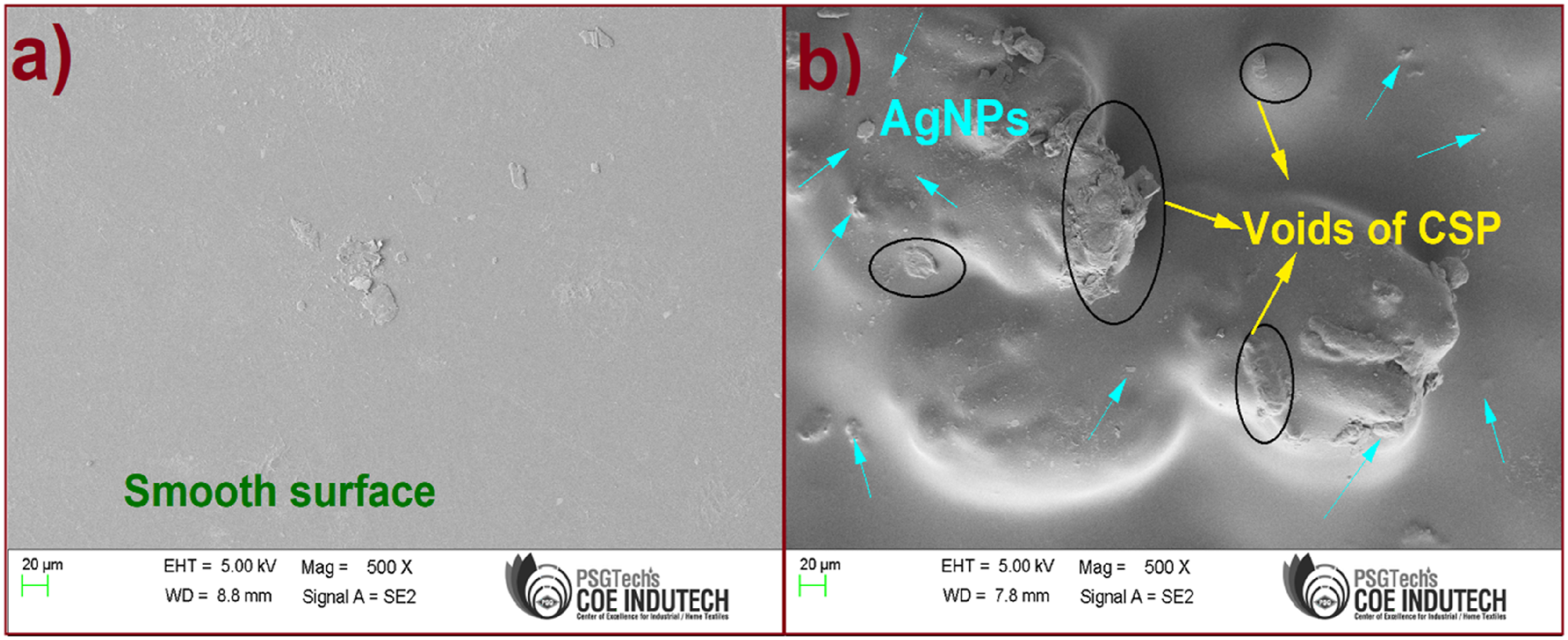
UV- Transmittance
The UV-Transmittance of pure PVA and PVA/20%CSP/4 mM AgNPs film is shown in Figure 15. The UV–visible transmittance spectrum shows that the pure PVA film has high optical transparency (86.5%) in the visible spectrum (300–400 nm), typical of its amorphous structure and lack of light-scattering particles. The decline in transmittance to 54.6% seen for the optimum PVA/20%CSP/4 mM AgNPs composite film is, however, indicative of improved UV-shielding effectiveness due to the synergistic action of the CSP and AgNPs fillers. The addition of coconut shell powder brings lignin and carbonaceous content with aromatic and phenolic structures that absorb and scatter UV radiation efficiently.
31
The incorporation of silver nanoparticles also helps in high UV attenuation by surface plasmon resonance and light-scattering effects, which again check photon penetration within the film matrix.
32
The combined result of these fillers raises optical density and produces multiple interfaces, which result in reflection and absorption of incident light. This enhanced UV barrier property not only indicates effective filler dispersion in the PVA matrix but also increases the film’s prospects for packaging and biomedical applications where UV protection and stability are crucial.
33
UV Transmittance of pure PVA and PVA/20%CSP/4 mM AgNPs film.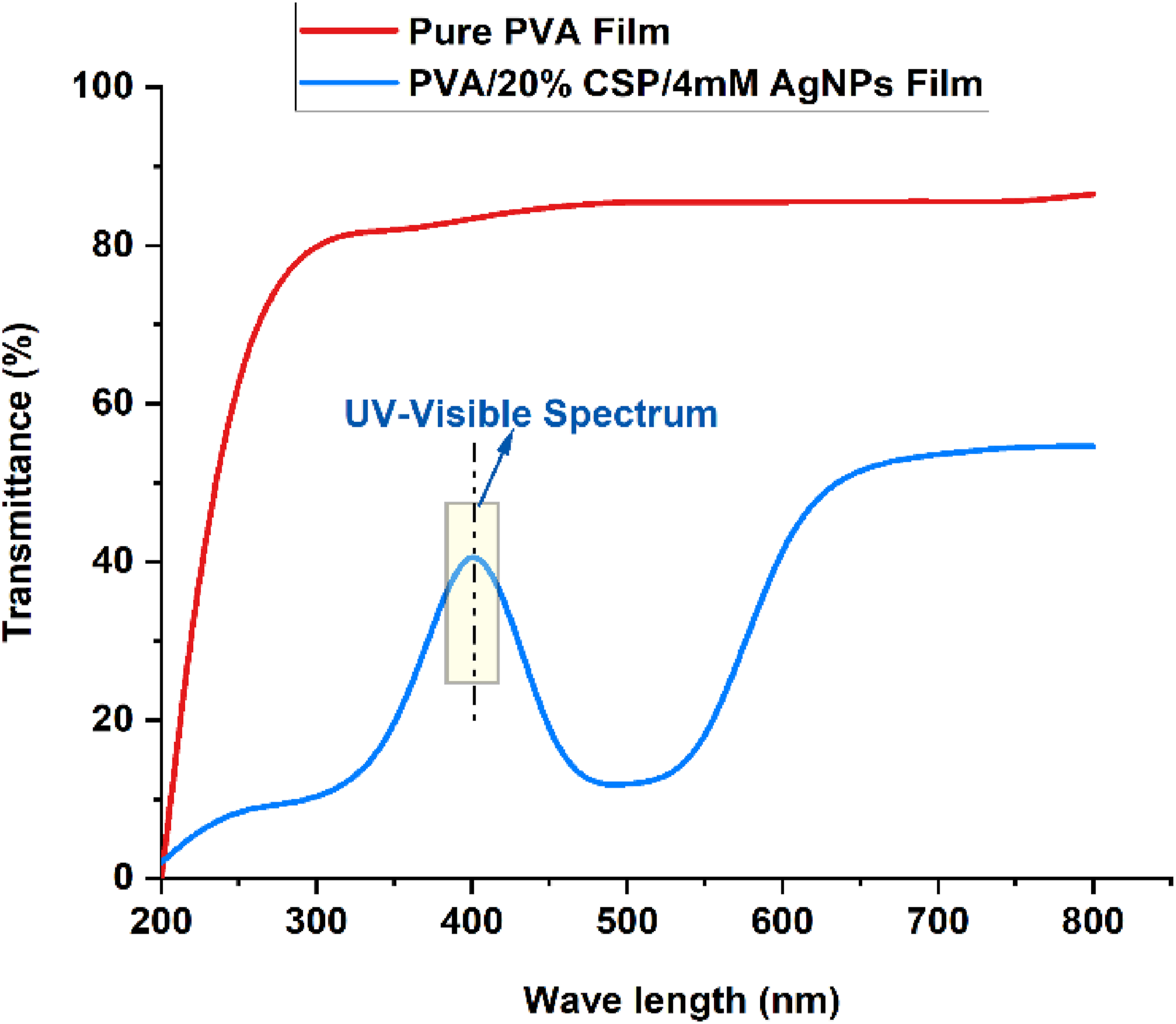
Water Absorption
The % of water absorption of pure PVA and PVA/20%CSP/4 mM AgNPs film is shown in Figure 16. The absorption properties of the films unambiguously illustrate the impact of coconut shell powder (CSP) and silver nanoparticles (AgNPs) in enhancing the moisture resistance of PVA-based composites. The pure PVA film showed a high water absorption value of 46.7% in 10 hours of immersion due to the rich hydrophilic hydroxyl (–OH) groups present in its molecular structure, which easily establish hydrogen bonds with water molecules. However, the PVA/20% CSP/4 mM AgNPs film was improved with a remarkably low water absorption of 26.2%, indicating enhanced water barrier properties. The addition of CSP included lignocellulosic particles that were carbon-dense, which limited the hydrophilic sites and added a more tortuous pathway for the movement of water molecules.
34
At the same time, the evenly dispersed AgNPs facilitated the densification of the polymer matrix by occupying the micro voids and enhancing the interfacial adhesion between PVA and CSP, thus leading to a dense structure with a reduced porosity.
35
The co-filler effect lowered the free volume and limited the mobility of the PVA chains, reducing the diffusion of water in the film.
36
Hence, the synergistic effect between CSP and AgNPs efficiently contributed to hydrophobicity as well as structural strength of the composite film, resulting in a considerable reduction in water uptake relative to neat PVA. % Water absorption of pure PVA and PVA/20%CSP/4 mM AgNPs film.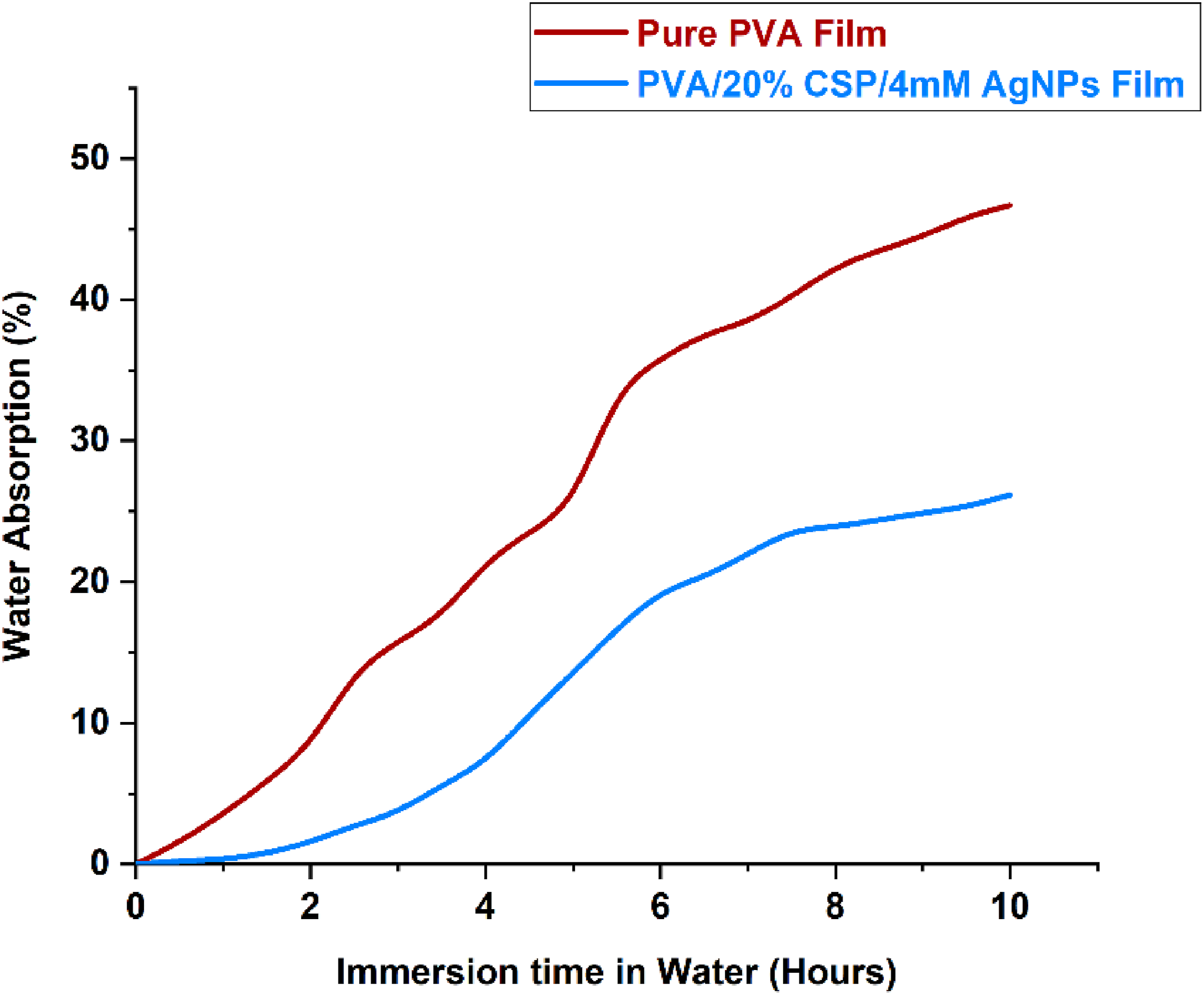
Weight loss in Soil
The % of weight loss of pure PVA and PVA/20%CSP/4 mM AgNPs film in soil is shown in Figure 17. The soil burial results show that the pure PVA film reveals a higher weight loss of 67.5% after 60 days of burial time. The higher weight loss of pure PVA ensures its faster biodegradation rate due to its hydrophilic nature and ease of microbial outbreak on the hydroxyl-rich polymer chain. On the other hand, the optimized PVA/20% CSP/4 mM AgNPs composite film exhibits a weight reduction of 41.4% for 60 days of burial time, which is 39.1% lower than pure PVA films. The reduction of the weight of optimized film signifies an improvement in environmental stability and resistance to biodegradation.
37
The addition of Coconut shell powder contains lignocellulosic components such as lignin and hemicellulose, which will improve the structural stability of the film and reduce the microbial attacks associated with PVA chains.
38
Furthermore, the presence of AgNPs strengthens the antimicrobial properties that prevent microbial colonization and enzymatic degradation in the soil environment. The synergetic effect of CSP as a natural filler and AgNPs as microbial growth inhibitor leads to reduced hydrophilicity and slower diffusion of moisture. Thus, the reduced weight of optimized film with enhanced durability makes it suitable for sustainable applications requiring environmental stability. % weight loss of pure PVA and PVA/20%CSP/4 mM AgNPs film in soil.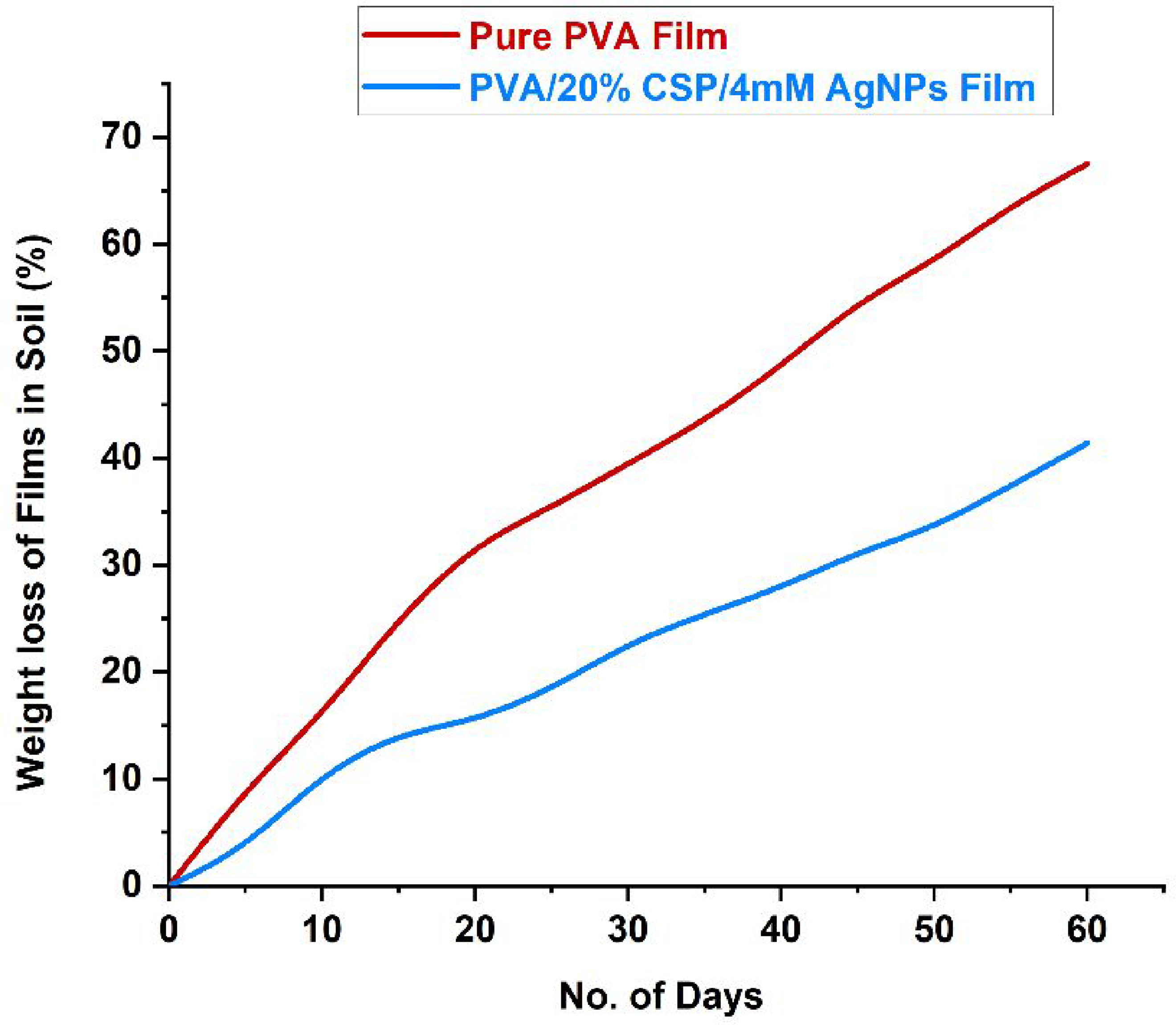
Conclusion
The current research work was conducted on the optimization of a thermoplastic composite film based on polyvinyl alcohol (PVA), reinforced with coconut shell powder (CSP) and in situ synthesized silver nanoparticles (AgNPs) for packaging purposes. A comprehensive approach using design of experiments, criteria weighting based on CRITIC, CoCoSO multi-criteria decision-making technique, and machine learning strategies was adopted to improve major packaging properties such as tensile strength, percentage elongation, Young’s modulus, and maximum degradation temperature. The criteria weights were determined using the CRITIC approach, which gave maximum weight to percentage elongation (35%), followed by tensile strength (24%), degradation temperature (22%), and Young’s modulus (19%), and the optimal composition was determined by the CoCoSO technique as the 19th experimental trial. Among the regression models, the AdaBoost algorithm performed best with R2 = 0.99, and the decision tree classifier resulted in more than 88% accuracy, indicating that silver nitrate content was the most significant factor for tensile strength, elongation, and degradation temperature, and CSP content was significant for Young’s modulus. The morphological study validated the in situ uniform dispersion of AgNPs in the optimized film. The incorporation of CSP and AgNPs decreased the optical transmittance (86.5% to 54.6%), enhanced UV blocking, reduced water absorption (46.7% to 26.2%), and reduced soil weight loss (67.5% to 41.4%) owing to their reinforcing capacity. The addition of CSP and AgNPs lowered the optical transmittance, improved the UV-blocking property, reduced the water absorption, and improved the thermal stability, proving that the optimized thermoplastic composite film has better mechanical, barrier, and durability properties. Future research will directly integrate these environmental durability factors into the multi-criteria optimisation framework for application-specific packaging design. UV-shielding, water absorption, and soil degradation were assessed as post-optimization validation parameters to validate the multifunctional performance of the CRITIC–CoCoSo–ML optimised film.
Footnotes
Acknowledgements
The authors thank the Faculty of Industrial and Manufacturing Technology and Engineering, Universiti Teknikal Malaysia Melaka, for providing the expertise and resources that supported the completion of this research.
Authors contributions
All authors equally contributed to Conceptualization, Methodology, Writing – original draft, Writing – review & editing.
Declaration of conflicting interests
The authors declared no potential conflicts of interest with respect to the research, authorship, and/or publication of this article.
Funding
The authors received no financial support for the research, authorship, and/or publication of this article.
AI tool usage declaration
During the preparation of this work, the authors used Grammarly in order to improve language clarity, grammar, and spelling. After using this tool, the authors reviewed and edited the content as needed and take full responsibility for the content of the publication

Data Availability Statement
The data that support the findings of this study are available on request from the corresponding author. The data are not publicly available due to privacy or ethical restrictions.