



Abstract
The automotive industry stands at a critical juncture, compelled by the imperative of sustainability to seek innovative materials for eco-friendly light-weighting. Natural fiber reinforced polymer composites (NFRPCs) have gained popularity due to their environmentally friendly nature and excellent engineering capabilities. This review paper comprehensively examines the landscape of NFRPCs in the context of automotive applications. Beginning with an overview of the ecological urgency and regulatory framework driving sustainable automotive materials, the review navigates through key advancements in NFRPC technology. The paper delineates the diverse array of natural fibers employed as reinforcements, elucidating their intrinsic properties, sources, and processing considerations. Concurrently, an in-depth analysis of various polymer matrices showcases their compatibility with different fiber types, emphasizing the critical interplay between fiber and matrix for optimal composite performance. A pivotal facet of this review manuscript lies in the rigorous evaluation of NFRPC performance across an array of metrics, including mechanical, thermal, and environmental considerations. Studies examining the interfacial interactions between natural fibers and polymers, as well as enhancements through additives and treatments, are critically assessed. Environmental and economic considerations are paramount in the quest for sustainable automotive materials. While economic evaluations delve into the viability and cost-effectiveness of widespread adoption, life cycle assessments and environmental impact analyses are evaluated to estimate the ecological footprint of NFRPCs. The paper also surveys current trends and prospects, offering insights into forthcoming innovations and directions for research. Therefore, this review article consolidates a comprehensive body of knowledge on NFRPCs for eco-friendly automotive light-weighting. By synthesizing findings from diverse studies, it provides a holistic perspective on the potential, challenges, and future trajectory of NFRPCs in the automotive sector.
Keywords
Introduction
The automotive industry stands at a pivotal moment in its evolution, facing increasing pressure to transition towards more sustainable and eco-conscious practices. 1 With the rising awareness of environmental concerns, coupled with stringent regulations to curb emissions and promote sustainability, there is an urgent need for innovative materials and technologies that can drive this transformation. 2 Among the myriad strategies, the integration of natural fiber reinforced polymer composites (NFRPCs) has emerged as a promising avenue, offering a potential solution for eco-friendly light-weighting. 3
In this transformative phase, the automotive industry is not only redefining the materials used in manufacturing but also reimagining the very principles that govern it. Figure 1(a)–(d) illustrate key concepts: the principle of the weight spiral, CO2 emission standards in Germany, the potential of lightweight construction—material substitution in structural applications, and the reversal of the weight spiral. These illustrations encapsulate the essence of the need and industry’s endeavor shift towards materials and practices that not only enhance performance but also reduce environmental impact.
4
Illustrates (a) the concept of the weight spiral, (b) CO2 emission regulations in Germany, (c) the potential of lightweight construction through material substitution in structural applications, and (d) the reversal of the weight spiral.” Ref.
4
copyright Elsevier @ 2015.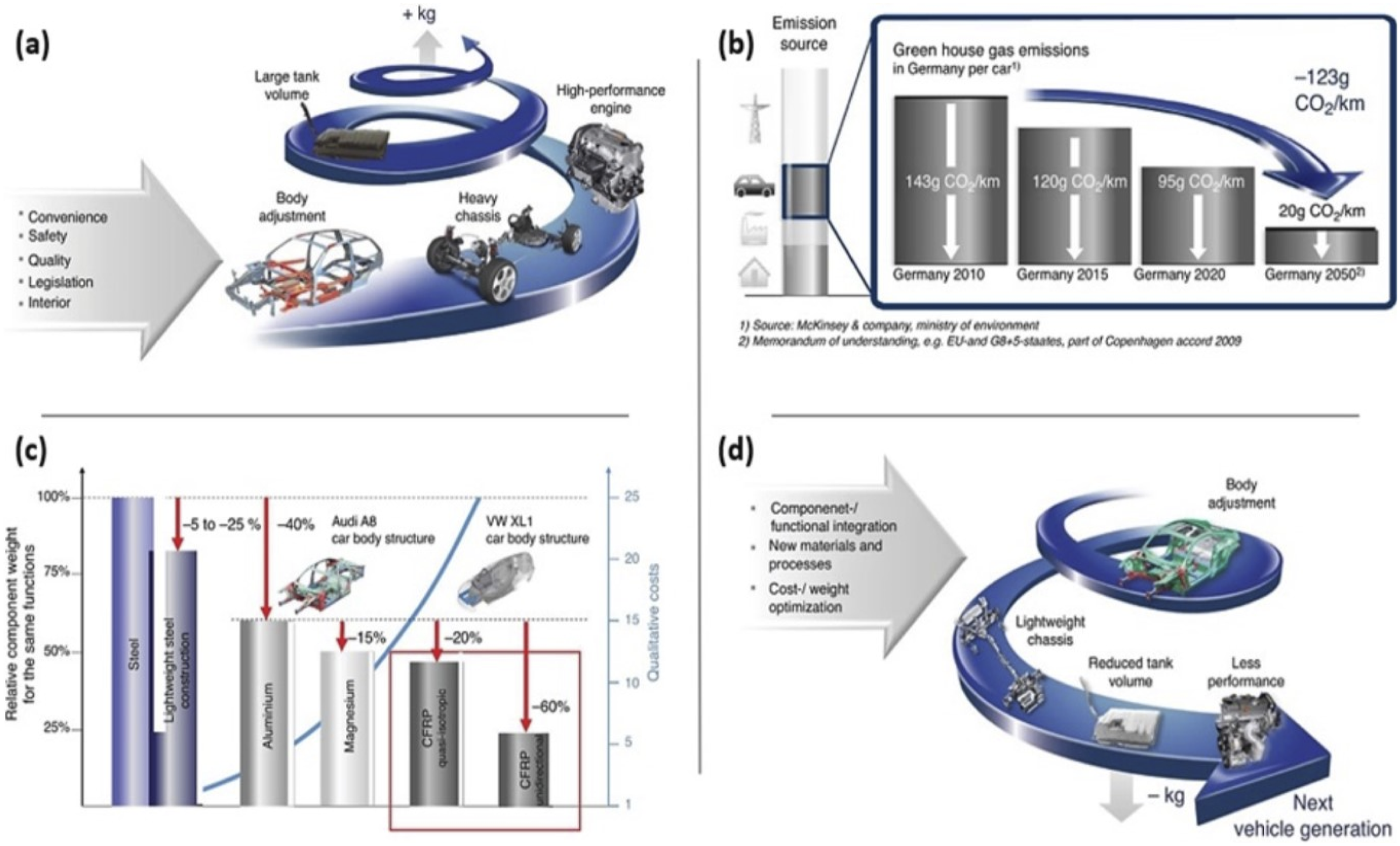
The quest for lightweight materials in the automotive sector has long been fueled by the pursuit of enhanced fuel efficiency and reduced greenhouse gas emissions.5,6 Traditionally, this endeavor has been dominated by conventional materials such as metals and synthetic polymers.7,8 However, these materials are often associated with significant environmental burdens, stemming from resource-intensive extraction, energy-intensive production processes, and end-of-life disposal challenges.9,10
In this context, NFRPCs have garnered substantial attention as an environmentally sustainable alternative. 11 These composites amalgamate natural fibers, derived from renewable sources such as flax, hemp, jute, kenaf, and others, with polymer matrices, forming a class of materials characterized by their inherent lightweight, renewability, and biodegradability. 12 This unique combination of attributes positions NFRPCs as a compelling contender for applications in the automotive industry, where the demand for high-performance, sustainable materials is paramount. 13
The integration of natural fibers as reinforcement in polymer matrices not only imparts desirable mechanical properties but also significantly reduces the reliance on non-renewable resources. 14 Furthermore, the biodegradability of natural fibers offers an environmentally benign end-of-life disposal option, circumventing the challenges associated with the recycling of traditional composite materials. 15 As a result, NFRPCs have gained prominence as a cornerstone in the paradigm shift towards sustainable automotive manufacturing.16,17
To exemplify, Das et al. 18 utilized fibrous biocomposites from nettle girardinia diversifolia and poly Lactic acid fibers for automotive dashboard panel applications. Dehury et al. 19 explored the use of sea purslane fiber (SP) as a reinforcing material with epoxy polymer, a widely employed thermosetting polymers. Meanwhile, Gu et al. 19 conducted a study on Kenaf natural fiber-embedded nonwoven materials for automotive pillar trim applications, observing that sound absorption properties were highly dependent on weight and thickness, significantly impacting sound absorption coefficient. The incorporation of natural fibers demonstrated their effectiveness in enhancing the acoustic performance of these components. In a different study, Dattatreya et al. 20 utilized natural waste fibers (coconut coir and sugarcane) and neem wood powder for hybrid composite development. The results highlighted the potential of these composites for use in vehicle industries. Hadiji et al. 21 evaluated the dynamic properties of nonwoven flax, hemp, kenaf, and glass fiber-reinforced polypropylene composites. The nonwoven composites reinforced by natural fibers exhibited higher loss factors compared to those of the glass-PP composite, making them attractive for automotive applications where vibration dissipation is crucial.
Hence, this comprehensive review aims to provide a detailed assessment of the state-of-the-art in NFRPCs for automotive light-weighting, synthesizing insights from a diverse array of research endeavors. Through an exploration of the underlying ideas, an analysis of their characteristics, and an explanation of their different uses in automotive components, this paper seeks to completely analyze the potential of natural fiber composites in promoting sustainability in the automobile sector.
Natural fibers for reinforcement
The foundation of NFRPCs is natural fiber, which provides lightweight, structurally sound, and environmentally beneficial qualities. Figure 2(a) depict the benefits of natural fibers for reinforcement in NFRPCs.
22
This section offers a detailed examination of various natural fibers commonly employed as reinforcements in the fabrication of automotive components. (a) Advantages of utilizing natural fibers as reinforcement in NFRPCs. (b) Key components of CULT: (i) Backrest panel. (ii) Instrument carrier made of ash wood. (iii) Subfloor featuring a central tunnel and seat anchorage elements made of beech plywood. Adapted from ref.
23
copyright Taylor and Francis @ 2020.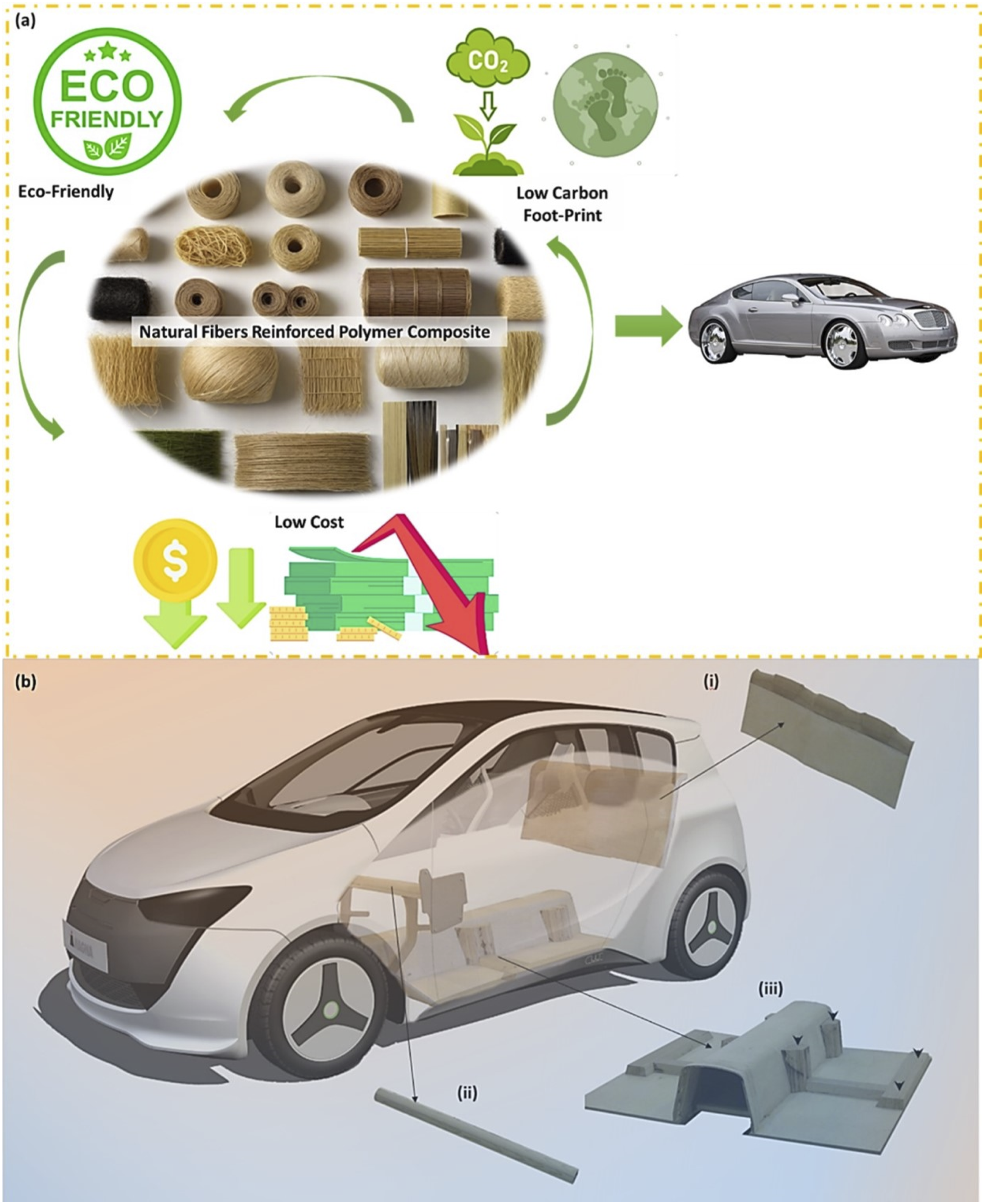
Cellulosic fibers
Cellulosic fiber reinforced polymer composites
Natural fibers, specifically those derived from cellulosic sources, have garnered significant attention in the realm of Natural Fiber Reinforced Polymer Composites (NFRPCs) due to their distinctive properties and sustainability. In this context, wood fibers, derived from wood pulp, stand out prominently. Their widespread availability, economic viability, and commendable mechanical attributes make them a prime choice for various automotive applications. Notably, their remarkable strength-to-weight ratio renders them suitable for applications necessitating structural integrity. The hierarchical structure of wood fibers enhances load distribution within the composite matrix, thereby augmenting overall mechanical performance.
In the pursuit of sustainable light-weighting solutions, Magna Steyr Engineering (MSE) introduced the concept car CULT (Cars UltraLight Technologies) as a case study. The goal of this creative project was to investigate the technological and economic possibilities of Engineered Wood Composites (EWCs). The study focused on critical components, including the instrument carrier, subfloor encompassing the tunnel, and the rear backrest (Figure 2(b)(i)). The results underscored the promising prospects of EWCs in achieving lightweight yet robust automotive structures. 23
Another compelling contender in the realm of cellulosic fibers is bamboo. Renowned for its rapid growth and renewability, bamboo has emerged as an eco-conscious alternative for natural fiber reinforcement. Bamboo fibers exhibit notable tensile strength and stiffness, positioning them favorably for structural applications within automotive components. The fibrous morphology, coupled with a cellulose-rich composition, facilitates efficient load transfer, further enhancing their suitability for automotive applications.24–27
For instance, Abedom et al. 25 delved into the experimental study of composites developed from bagasse fiber and bamboo charcoal. By investigating their diverse mechanical and thermal insulating properties, the study aimed to harness the potential of these natural fibers for technical applications. The results revealed impressive tensile strength, comparable to that of artificial fiber composites, signifying the viability of bagasse fiber/bamboo charcoal composites for a range of automotive interior applications.
Furthermore, Talib et al. 28 embarked on formulating friction materials using bamboo fiber as a reinforcing component. Three different formulations with different porosity, hardness, friction, and wear characteristics were created using rigorous powder metallurgical techniques. The study concluded that bamboo fiber, when incorporated in appropriate proportions, exhibits promising potential as a reinforcing fiber in friction materials, meeting or surpassing industry standards.
In a parallel endeavor, Parvez et al. 27 ventured into the manufacturing and mechanical characterization of composites reinforced with rattan and bamboo fibers. The study involved an intricate process of fiber extraction, chemical treatment, and composite fabrication. The resulting composites displayed notable improvements in flexural and impact strength, particularly in the case of the Rattan (12%) and Bamboo (12%) Fiber Composite (RBFC), showcasing their potential as lightweight, high-strength materials for automotive applications.
Therefore, cellulosic fibers, exemplified by wood and bamboo, offer compelling prospects in the development of Natural Fiber Reinforced Polymer Composites (NFRPCs) for eco-friendly automotive light-weighting. Their abundant availability, sustainability, and commendable mechanical properties make them formidable contenders in the pursuit of sustainable automotive solutions. Through meticulous experimentation and engineering, these fibers hold the promise of revolutionizing the automotive industry towards a more sustainable and environmentally conscious future.
Bast fiber reinforced polymer composites
NFRPCs have increased the popularity of bast fibers due to their exceptional mechanical properties and eco-friendliness.29–31 This section delves into the critical evaluation of two key bast fibers: flax and hemp.
Flax fiber
Flax fiber stands out for its exceptional tensile strength and stiffness, making it a sought-after reinforcement in NFRPCs. Its compatibility with various polymer matrices and low environmental impact aligns well with the goals of automotive light-weighting. By incorporating flax fibers, composites can achieve reduced weight without compromising on mechanical strength.29–31 Khalfallah et al. 29 introduced an innovative approach, utilizing long technical flax fibers arranged unidirectionally without any weft and twist. The fibers were bonded using a pectin cement reactivation process, and a polyester thermoset matrix (Acrodur) was used for impregnation. This resulted in unidirectional (UD) laminates exhibiting an elastic modulus of 18 ± 1 GPa with 55% flax fiber content and a low density of 0.93 g/cm³. The optimized biocomposites demonstrated high stiffness-to-weight ratios, showcasing potential for integration in automotive applications. 29
In a different study, Deng et al. 32 employed a combined approach, utilizing the generalized rule-of-mixture (ROM) model and Ashby material selection method for life cycle assessment (LCA) of flax fiber reinforced polymers (FRPs) and glass FRPs (GFRPs). The study provided valuable insights into the environmental impacts of different composite structures and fiber formats. Notably, under equal stiffness criteria, flax mat polypropylene (flax mat-PP) composites showed a substantial reduction in life cycle environmental impacts compared to their glass counterparts. This suggests a promising avenue for reducing the ecological footprint of automotive components. 32
Meanwhile, Fairlie et al. 33 delved into the impact of stacking sequence and fiber orientation on the damping properties of hybrid flax/carbon fiber-reinforced composites. The study’s findings indicated that the addition of an external flax layer significantly enhanced the damping ratio of the composite, with potential implications for improving the damping properties of automotive components. 33
Hemp fiber
Hemp fibers exhibit an impressive combination of high tensile strength and low density, rendering them a compelling reinforcement option. Their eco-friendly cultivation further underscores their suitability for sustainable applications.34,35 Murugu et al. 34 investigated the hybridization of glass fiber with both untreated and treated hemp fibers, providing valuable insights into the mechanical properties of these composites. The results highlighted the potential for utilizing these natural fiber hybrid composites in applications where high impact strength and hardness are paramount.
To exemplify, Sullins et al. 35 focused on how material treatment affected the mechanical properties of composites made of hemp fiber reinforced polypropylene (PP). The study showed that material treatments improved the bonding between hemp fibers and the polypropylene matrix. Examples of these treatments included chemically modifying the hemp fiber and adding maleic anhydride grafted polypropylene (MAPP) to the PP matrix. This resulted in composites with significantly improved mechanical properties, with the addition of 5 wt.% MAPP showing the most promising results.
Furthermore, Lee et al.’s 36 study compared hemp fiber reinforced sheet molding compounds (SMCs) to conventionally reinforced glass SMCs. In terms of cost, density, and mechanical qualities, the results highlighted hemp fiber’s potential as a competitive substitute for fiberglass, indicating possibilities for use in the automobile sector. 36
In general, bast fibers, particularly flax and hemp, exhibit remarkable potential as reinforcements in Natural Fiber Reinforced Polymer Composites (NFRPCs). Their exceptional mechanical properties, coupled with their eco-friendly attributes, position them as sustainable alternatives for light-weighting in automotive applications.
Leaf fiber
Leaf fibers are attracting attention in NFRPCs due to their potential in the automotive industry.37–40 These fibers come from sources like pineapple, sisal, and agave and offer advantages like low density, high strength, and rigidity. Leaf fiber composites have found significant utility in the manufacturing of automotive interior components, ranging from seats to body parts. Using them leads to increased material durability and decreased need for non-biodegradable alternatives. Furthermore, these composites exhibit competitive specific mechanical properties, contribute to the sequestration of carbon dioxide, and demonstrate lower eco-toxicity, positioning them as a sustainable choice over traditional composites. Although concerns regarding the manufacturing costs of bioplastics persist, it is expected that as demand increases, the prices of leaf fiber composites will become more affordable, thereby driving their adoption in the automotive sector.41–46
Sisal fiber
Sisal fibers, derived from the agave sisalana plant, stand out for their exceptional stiffness and impact resistance. This makes them a compelling choice for reinforcing NFRPCs, particularly in automotive components subjected to dynamic loading conditions. Sisal fiber composites show potential in applications that require a delicate balance between weight reduction and mechanical performance. 24
Composites based on virgin and recycled polypropylene (PP and rPP) reinforced with 15 wt.% sisal fibers, with and without alkali treatment, have exhibited promising characteristics for the production of lightweight automotive components. 38 The density of these composites remained within the desirable range, ensuring suitability for lightweight applications. Although a slight reduction in hardness was observed for rPP composites, water absorption was higher but still within acceptable limits. The impact resistance of PP and its composites exceeded that of rPP, indicating their durability for automotive applications.
In addition, experimental studies on sisal fiber composites have demonstrated their potential as substitutes for conventional materials in vehicle body applications. By utilizing the inherent characteristics of sisal fiber, these composites offer a lightweight alternative that contributes to overall vehicle weight reduction. Different fiber orientations were explored, showing improved mechanical properties of the sisal fiber composite material. 47
Abaca fiber
Originating from the Philippines, abaca fibers provide an intriguing natural reinforcement option. Abaca fiber composites are highly flexible and have great tensile strength. They also have exceptional impact resistance, which makes them ideal for automotive components that are subjected to different loading situations.48–50
A composite material consisting of Abaca fiber reinforced with Epoxy resin was developed using the Hand Lay-up method, enhanced by Glass Fiber Reinforced Plastics. The fibers were strategically arranged in alternating layers to optimize strength and stiffness. According to mechanical tests, the natural fiber’s strength and the interfacial adhesion between the reinforcement and matrix determined the composite material’s tensile strength. This composite shows promise for applications in the production of automobile dashboards and mudguards and could also be extended to various industries including biomedical, electronics, and sports goods manufacturing. Additionally, its resistance to saltwater damage positions it as a viable option for marine products. 48
In brief, leaf fiber composites procured from materials such as sisal and abaca manifest notable promise as reinforcements in non-fossil fuel-based reinforced polymer composites (NFRPCs). The extraordinary mechanical characteristics they possess, in conjunction with their environmentally friendly nature, render them viable substitutes for reducing weight in automotive implementations.
Grass fiber reinforced polymer composites
Grass fibers, including kenaf and jute, have emerged as noteworthy contenders in the realm of Natural Fiber Reinforced Polymer Composites (NFRPCs), showcasing distinctive properties that render them valuable in automotive applications. 51
Kenaf fiber
Cultivated predominantly in Asia and Africa, kenaf fibers have garnered attention for their impressive attributes, including high tensile strength and low density. These characteristics position them as adept reinforcements for enhancing impact resistance and stiffness in composite materials. Kenaf fiber composites find wide-ranging applications in automotive components, contributing significantly to both light-weighting and structural reinforcement. 51
Researchers have explored the use of kenaf composites in automotive applications, focusing on enhancing their mechanical performance. Various studies have investigated the incorporation of kenaf fibers into different polymer matrices, including epoxy, polypropylene, and polylactic acid. The research efforts have yielded notable improvements in tensile strength, impact resistance, and flexural strength. By optimizing fiber content and processing techniques, kenaf-reinforced composites have demonstrated their potential for applications such as battery trays, where their unique properties can be effectively harnessed. 52
In research by Jeyanthi et al., 53 partially eco-friendly hybrid long fiber reinforced thermoplastics with natural kenaf fiber were explored for automotive structural components. The study aimed to enhance mechanical properties and reduce production costs, and the results indicate improved tensile strength and flexural properties in the new material.
The work by Owen et al. 54 focused on the use of waste recycled plastic, specifically recycled polyethylene terephthalate (RPET) bottles, as the matrix compounded with chemically modified natural kenaf fibers. Analysis of treated and untreated composites revealed that the former had superior mechanical qualities, enhanced impact resistance, and enhanced thermal stability. This suggests that RPET could be used as a substitute for virgin PET in composite formulations.
Moreover, Mohd et al. 55 ’s innovative technique for preparing untreated kenaf fiber resulted in high tensile strength and exceptional interfacial bonding. This suggests the potential use of untreated kenaf composites for automotive parts generation, including dashboard and door panels.
Arumugam et al. 56 explored the use of silver nanoparticles and chemical treatments to enhance the mechanical properties and reduce water absorption in nano biocomposites made from unsaturated polyester resin and woven kenaf fibers. The study demonstrated that the combined treatment significantly increased mechanical properties and reduced water absorption in these materials, making them suitable for automotive interior and exterior parts.
Shahril et al. 57 focused on the use of natural rubber mixed with kenaf for automotive rubber mounts. The study revealed that the percentage of kenaf fibers significantly impacted tensile strain and tensile strength. The optimal combination showed the best tensile strength, making it a potential material for such applications.
Jute fiber
Derived from the Corchorus plant, jute fibers offer an appealing combination of affordability and favorable mechanical attributes. With commendable tensile strength and modulus, jute fibers find suitability as reinforcements in polymer matrices. This makes them a viable option for interior car components, where it’s important to strike a compromise between performance and affordability. 58
Studies have focused on hybridizing jute fibers with other materials, such as basalt fibers, to further enhance mechanical properties. Researchers have looked into hybrid composite laminates constructed of jute and basalt fiber woven textiles mixed with an epoxy matrix. The findings have demonstrated improvements in ultimate tensile strength, young’s modulus, toughness modulus, bending strength, and more. These efforts represent a step towards achieving sustainable and lightweight solutions for automotive applications.59–61
For instance, incorporating basalt fiber into jute fiber composites was studied by Alshahrani et al. 62 hybridizing jute and basalt fibers enhanced the tensile, bending, shear, and bearing characteristics of the composite laminates, suggesting their potential in lightweight automotive construction.
In a different line of research by Savage et al., 63 adhesive bonding of natural fiber-reinforced polymer composite materials was explored. The study aimed to improve the joint efficiency of these composites and showed that hybridizing jute and glass fibers enhanced the mechanical properties of the composites.
However, in another study by Shumao et al.,
64
it was reported that the adhesion in natural fiber-reinforced polymers can be greatly affected by the additives that are added. The treatment ramie fibers with ammonia phosphate (APP) resulted in the hinderance of the interaction in the fiber/polymer interface as shown by Figure 3(a)(i-iv). Thus, affecting the mechanical properties, the interfacial bonding in fiber/polymer composite is known to greatly influence the mechanical properties. Scanning Electron Microscope (SEM) images displaying impact fracture surfaces: (i) PLA-NF; (ii) PLA-FNF; (iii) FPLA-NF; (iv) FPLA-FN, ref.
64
copyright John Wiley & Sons, Inc @ 2010, (v) The incorporation of natural fibers in automotive and various other industries. Ref.
65
copyright Elsevier @ 2019.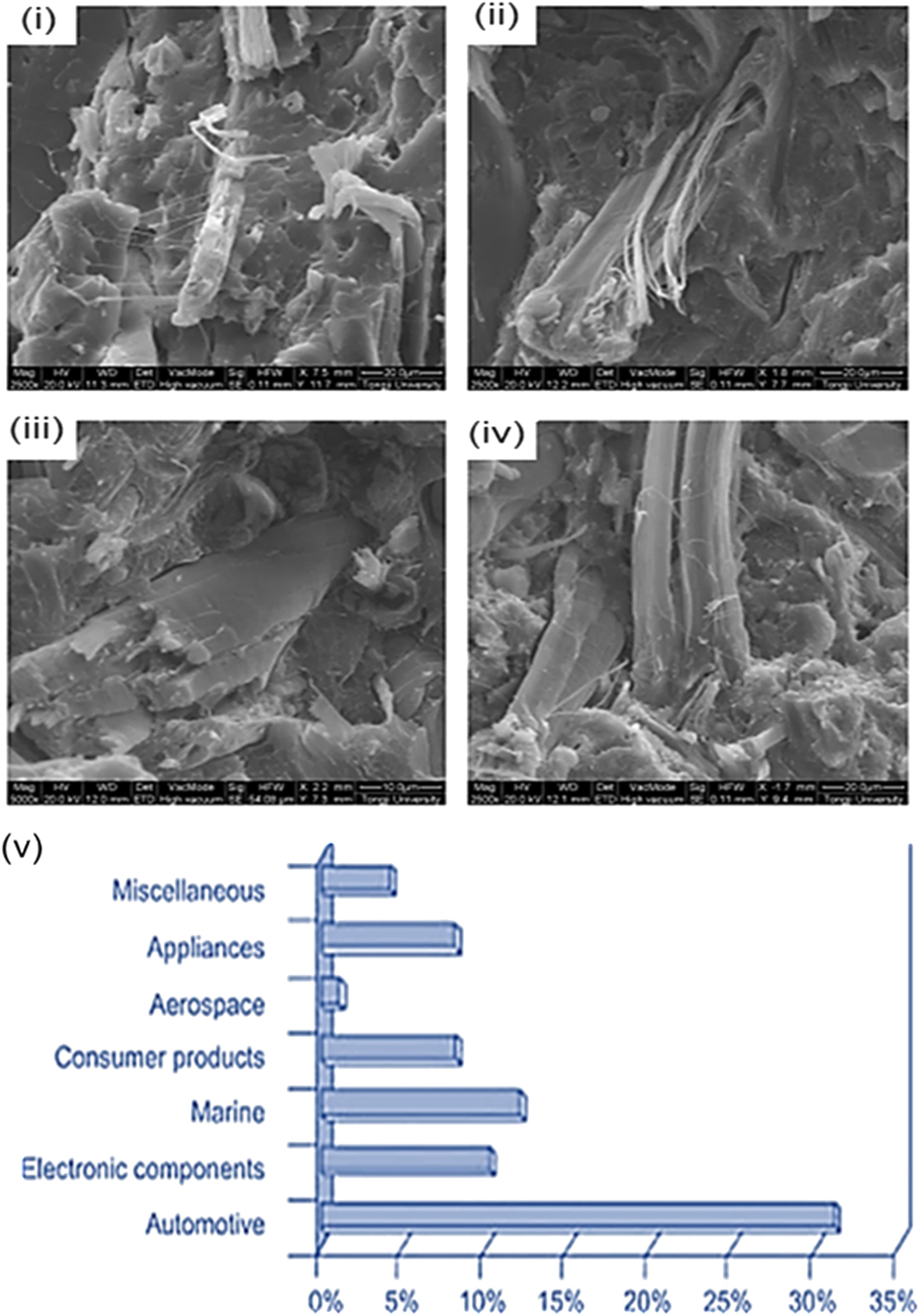
Incorporating grass fibers, whether kenaf or jute, into polymer composites offers a compelling avenue towards sustainable light-weighting in the automotive industry. These fibers offer a special combination of characteristics that may be adjusted to satisfy certain performance demands. Efforts are being made to maximize the processing methods and combinations of materials in order to fully realize the potential of grass fiber reinforced polymer composites. In general, natural fibers hold huge potential in automotive industry compare to other sectors as shown in Figure 3(v). 65
Polymer matrices for natural fiber composites
The choice of an appropriate polymer matrix plays a crucial role in the development of natural fiber reinforced polymer composites (NFRPCs) for eco-friendly lightweight automotive applications. This section explores different polymer matrices commonly used in combination with natural fibers to create composite materials with improved mechanical performance, sustainability, and versatility.41,66,67
Polypropylene (PP)
Polypropylene, a widely used thermoplastic polymer, holds a prominent position in the field of NFRPCs for automotive purposes. Its favorable combination of properties, such as low density, good chemical resistance, and high tensile strength, aligns well with the objectives of light-weighting. Moreover, the processability and recyclability of PP contribute to its popularity as a matrix material for natural fiber composites.21,68–71
Polyvinyl chloride (PVC)
Polyvinyl chloride, recognized for its excellent chemical resistance and flame-retardant properties, has entered the domain of NFRPCs for lightweight automotive applications. Although PVC-based composites may have lower mechanical properties compared to other polymers, their inherent cost-effectiveness and suitability for specific applications, such as interior components, make them a viable choice.72,73
Poly (lactic acid) (PLA)
Poly (lactic acid), a biodegradable and renewable thermoplastic polymer derived from plant-based sources, provides a sustainable alternative for natural fiber composites. PLA’s commendable mechanical properties, biocompatibility, and low environmental impact align with the overarching goal of eco-friendly automotive materials. However, careful integration into composite formulations is necessary due to considerations regarding processing temperatures and degradation kinetics.18,74–78
Polyamide (PA)
Polyamide, characterized by its excellent mechanical properties, thermal stability, and chemical resistance, has gained attention as a potential matrix material for NFRPCs. Polyamides based on nylon exhibit notable toughness and impact resistance, making them suitable for components subjected to dynamic loading conditions. The compatibility of polyamides with natural fibers bodes well for their integration into lightweight automotive strategies.79,80
Therefore, the selection of a polymer matrix significantly influences the properties and performance of natural fiber reinforced polymer composites in automotive applications. Each polymer offers distinct advantages and considerations, necessitating a careful evaluation of the specific requirements of target components. The subsequent section explores the processing techniques and methodologies utilized in the creation of non-fossil fuel-based polymer composites (NFRPCs). This analysis provides valuable perspectives on the practical aspects of producing composite materials. In brief, leaf fiber composites obtained from materials such as sisal and abaca demonstrate considerable potential as reinforcements in NFRPCs. These composites possess exceptional mechanical properties and, in addition, are environmentally friendly, rendering them sustainable alternatives for reducing weight in automotive applications.
Natural fiber reinforced polymer composites
Criteria affecting the selection of products made from natural fiber composite materials on various levels.
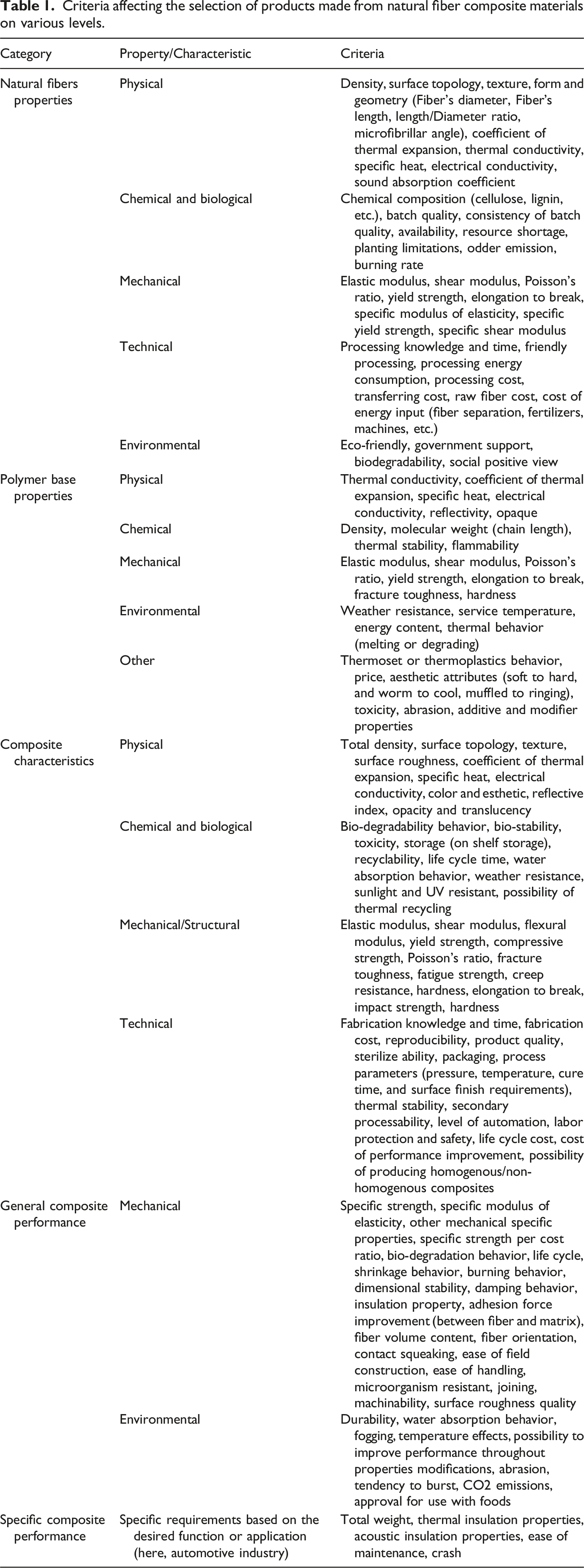
The selection of materials for NFPCs involves evaluating various criteria across different tiers. At the natural fiber properties level, factors like density, surface characteristics, chemical composition, and mechanical properties are crucial, along with technical considerations and environmental impact. Similarly, at the Polymer Base Properties level, attributes like thermal conductivity, chemical properties, mechanical strength, and environmental considerations play a significant role. Moving to the composite characteristics level, factors such as overall density, biological aspects, and mechanical properties are considered, alongside technical and cost-related factors. Finally, both general composite performance and specific composite performance levels are essential, encompassing aspects like strength, environmental resilience, and application-specific requirements such as weight, insulation, and crash behavior.
Considering these comprehensive criteria across different levels ensures a thorough evaluation and selection process for products made from natural fiber composite materials. This systematic approach is essential for achieving optimal performance, cost-effectiveness, and environmental sustainability in various applications, including the automotive industry. The intricate balance of these properties and characteristics ultimately leads to the development of high-performing, eco-friendly composite materials. 16
Performance evaluation of natural fiber reinforced polymer composites
NFRPCs’ mechanical characteristics are essential to their use in the automobile sector. NFRPCs must meet or surpass existing materials’ performance standards in order to be considered viable for use. 81 Important mechanical characteristics, including impact resistance, flexural strength and modulus, and tensile strength and modulus, are rigorously examined in this section along with how adding natural fibers impacts these characteristics.
Tensile strength and modulus
Tensile strength and modulus are fundamental indicators of material performance, particularly when applied to structural components in the automotive sector. Numerous investigations have demonstrated that adding natural fibers can improve these mechanical qualities. However, the degree of improvement varies according on surface treatment, orientation, and kind of fiber. 82
For instance, Munoz et al. 82 conducted research on polyolefinic door panels reinforced with compatible polyolefin fibers, demonstrating a remarkable improvement in tensile strength. The functional groups on the fiber surface promote efficient intermolecular interactions, which enhance stress transmission inside the composite and account for the improvement in tensile strength. These composites also performed better mechanically than the most advanced glass fiber and carbon fiber-based polyolefin composites. These results highlight how natural fibers may increase modulus and tensile strength, improving the structural integrity of automobile parts.
Similarly, Onyedum et al 83 studied the effects of varying fiber length and percentage composition on the tensile strength of okra and banana fiber reinforced composite. The results provided insights into the optimization of fiber content and length for improved tensile strength, which is vital for automotive applications.
Rajan et al 84 investigated the influence of slag waste and coir fiber combinations on the mechanical properties of automotive brake friction materials. The results showed that variations in slag waste and coir fiber content affected density, hardness, shear strength, and ash content, with implications for automotive applications.
Flexural strength and modulus
In the realm of automotive light-weighting, the flexural properties of materials are of paramount importance, particularly for components subjected to bending loads. The incorporation of natural fibers as reinforcement has demonstrated a promising ability to enhance flexural strength and modulus.
85
Venkatesh et al.
86
developed epoxy hybrid composites that were hybridized with graphite particles and had varying weights of coconut coir and jute. These composites exhibited varying hardness, tensile, and flexural strength (Figure 4(a)), highlighting the potential of natural fiber composites in automotive applications.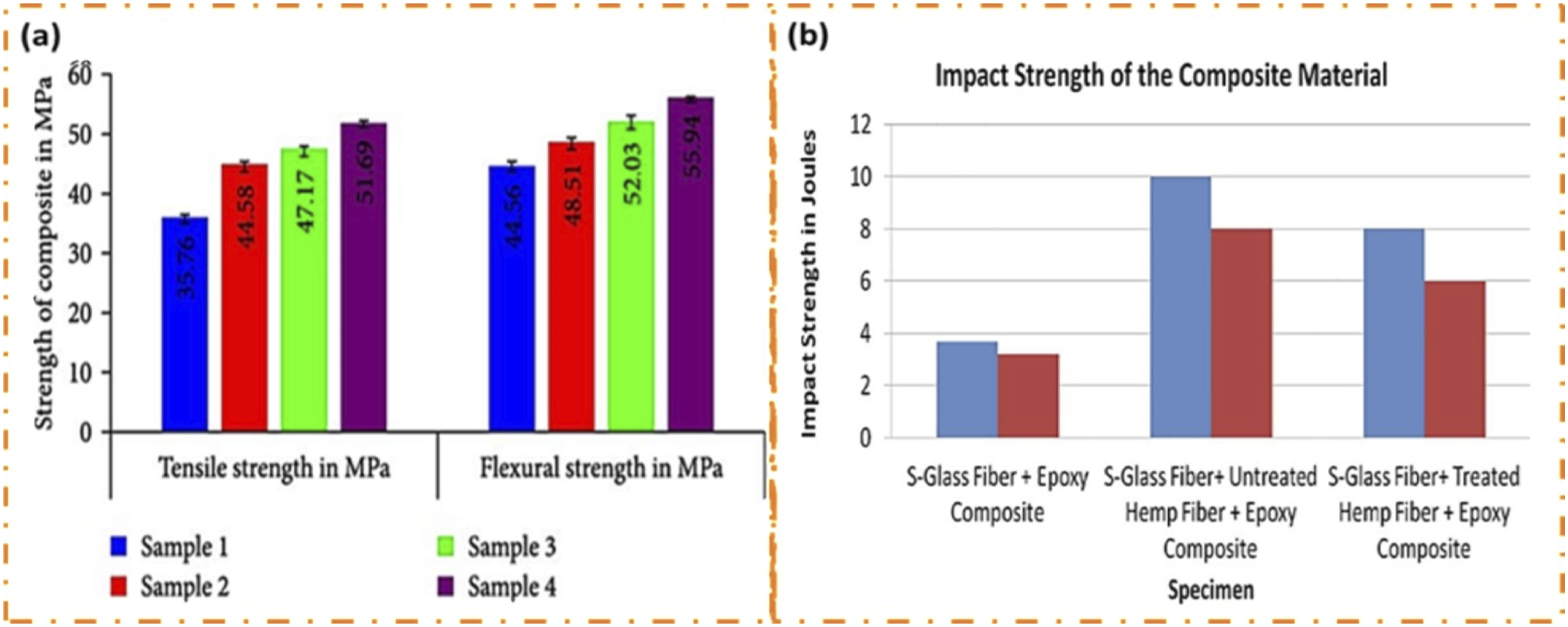
The study shows that the composite’s tensile strength rises with increasing jute fiber and decreased coconut coir proportions, especially when graphite particles (up to 5 w%) are added. Tensile strength increases noticeably as a result, by as much as 44.5 %. The flexural strength exhibits a noteworthy enhancement with the incorporation of 5 w% graphite nanoparticles, demonstrating a 9 % rise in flexural strength relative to the baseline sample. The combination of higher jute fiber content, reduced coconut coir, and the presence of graphite nanoparticles significantly contributes to the enhanced flexural strength of the composite.
Impact resistance
Impact resistance is a critical aspect of automotive components, ensuring occupant safety in the event of collisions or accidents. The integration of natural fibers in composites has yielded positive results in terms of impact resistance. Díez-Pascual 87 reported a substantial increase in impact strength for composites incorporating treated hemp fibers. This enhancement of the composite materials’ total impact resistance can be ascribed to the natural fibers’ capacity to absorb energy and withstand fractures.
In the same light, Murugu et al. 34 conducted experiments to study the effect of hybridization of glass fiber with untreated and treated hemp fiber on mechanical properties. The results indicated that natural fiber hybrid composites, particularly those with high impact strength (Figure 4(b)), have potential applications in the automotive industry.
These findings collectively emphasize the promising mechanical properties of NFRPCs and their potential for use in various automotive applications. As demonstrated by a range of studies, the incorporation of natural fibers contributes to improved tensile and flexural strength, making them strong contenders for light-weighting strategies in the automotive industry. Additionally, the enhanced impact resistance offered by these composites reinforces their suitability for components that demand occupant safety. Natural fiber composites’ adaptability and environmental friendliness make them an appealing choice for those looking for environmentally responsible automobile solutions.
Environmental performance of natural fiber composites for automotive
Life Cycle Assessment (LCA) has emerged as a crucial tool for evaluating the environmental impact and sustainability of materials, particularly in the context of NFRPCs for automotive applications. Several studies have utilized LCA to gain insight into the eco-profile of NFRPCs, providing valuable data for decision-making.88–90
A notable a study conducted by Boland et al.
91
compared the environmental impact of automotive components made from different fiber composites. Specifically, they assessed the life cycle energy demand and greenhouse gas emissions associated with substituting natural cellulose and kenaf for glass fibers (Figure 5). Depicts energy and greenhouse gas savings from replacing glass fiber with kenaf fiber in the 2013 Lincoln MKX and 2013 Ford Explorer, (a) with and (b) without powertrain resizing.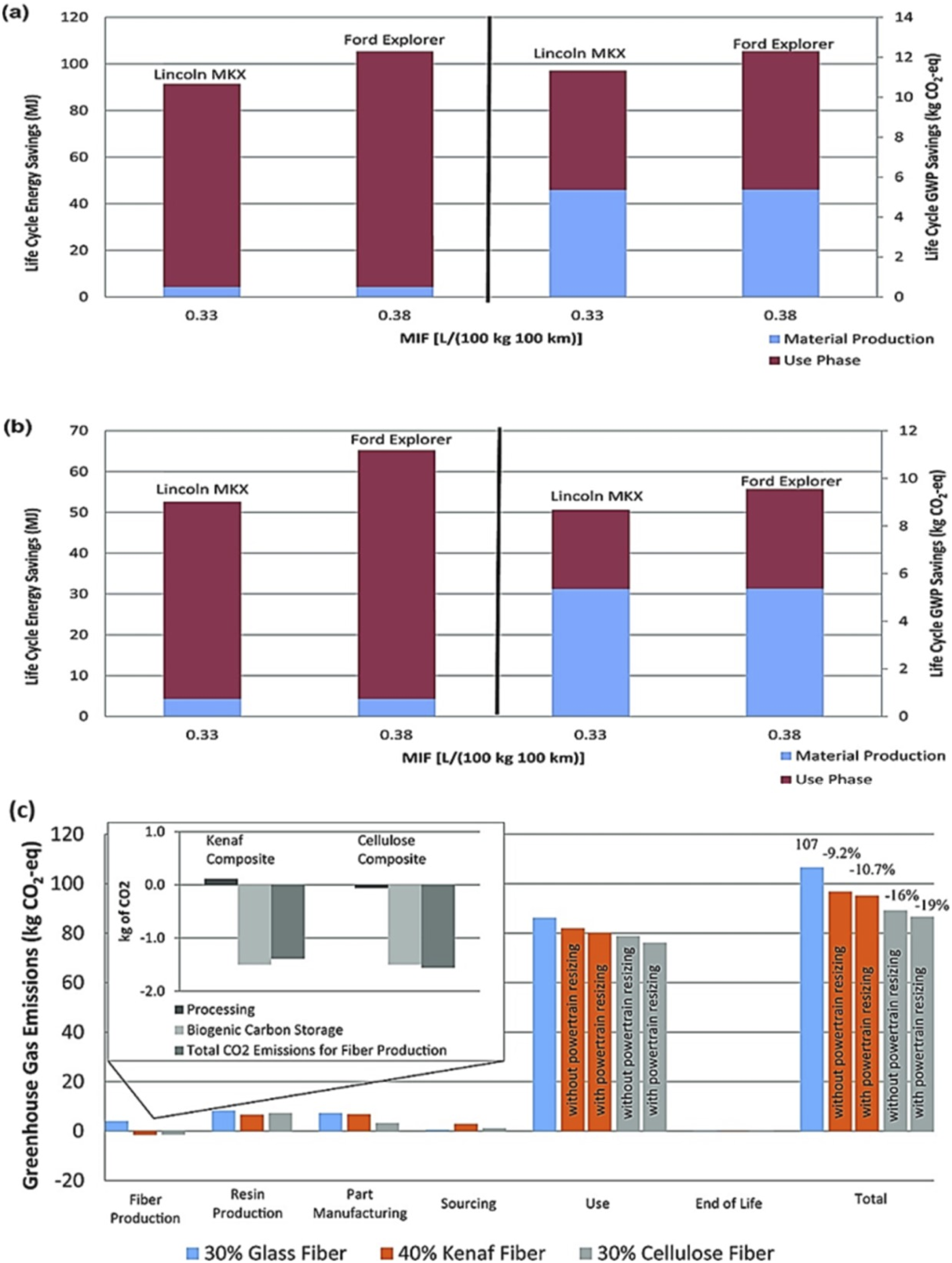
It also shows (c) greenhouse gas emissions for different composite components in the 2013 Ford Fiesta. Ref. 91 Copyright John Wiley & Sons, Inc @ 2015.
The results indicated significant reductions in both energy demand and GHG emissions for vehicles incorporating natural fiber components. The weight reduction contributed to substantial savings in use-phase fuel consumption, demonstrating the potential environmental benefits of utilizing natural fibers in automotive components.
In another study by Wu et al. 92 the mechanical properties and water resistance of NFRCs were enhanced through the impregnation of magnesium hydroxide (MH) into kenaf fibers. The modulus of rupture and tensile strength significantly increased as a result of this alteration, suggesting that the kenaf fibers and the polymer matrix were more compatible. Additionally, the study demonstrated notable reductions in water absorption and thickness swelling, highlighting the potential of MH-impregnated NFRCs for applications demanding enhanced performance.
Roy et al. 90 on the other hand, conducted a comprehensive evaluation of automotive components produced from biocomposites relative to those made from conventional composites. The study utilized LCA methodology to assess the life cycle environmental impacts. Interestingly, despite slightly greater environmental impacts at a unit mass level, the innovative biocomposite component emerged as environmentally favorable over its conventional counterpart. The global warming potential (GWP) of the innovative component was notably lower, suggesting potential compliance with fuel economy emission regulations.
Moreover, Deng et al. 32 employed a combination of the generalized rule-of-mixture (ROM) model and the Ashby material selection method to conduct a parametric LCA for flax fiber reinforced polymers (FRPs) and glass FRPs. The study revealed that under certain design criteria, flax FRPs can lead to substantial reductions in life cycle environmental impacts compared to glass FRPs. The study emphasized the importance of considering specific parameters in material selection for environmentally conscious automotive applications.
These studies collectively underscore the significance of LCA in assessing the environmental performance of NFRPCs for automotive applications. LCA gives useful insights into the possible advantages and trade-offs connected with the use of natural fiber composites in the automobile sector by analyzing a variety of aspects including energy consumption, greenhouse gas emissions, and material qualities.
Recyclability
An essential component of sustainable practices in the automobile sector is the recyclability of materials. NFRPCs present an opportunity for increased recyclability, contributing to the eco-friendliness of automotive applications. 93 Owen et al. 54 underscored the positive environmental impact of recycling practices in reducing waste and resource consumption. Their study focused on the utilization of waste recycled polyethylene terephthalate (RPET) bottles as the matrix material in engineering plastics composites for automotive applications. The RPET bottles, which were mechanically recycled, were processed into flakes and then melt-mixed with short chemically modified natural kenaf fibers. The composites were subsequently compression-molded under optimized conditions.
Hence, by repurposing waste materials and incorporating natural fibers, these composites offer a greener alternative to conventional materials, aligning with the industry’s goals towards eco-friendly practices. This research underscores the importance of considering recyclability as a key factor in the development and adoption of NFRPCs for automotive light-weighting.
Future trends and prospects
In the realm of natural fiber reinforced polymer composites (NFRPCs) for eco-friendly automotive light-weighting, several promising trends and prospects are emerging. Researchers are increasingly focused on exploring novel combinations of natural fibers, harnessing their unique properties, with hybrid reinforcements, like integrating flax and hemp fibers, showing potential for tailored material properties to meet specific automotive application needs.
Surface modification and functionalization of natural fibers are offering opportunities to enhance interfacial adhesion, water resistance, and compatibility with polymer matrices. Moreover, the integration of bio resins and biodegradable polymers in combination with natural fibers represents a growing area of interest, aligning with the automotive industry’s shift towards fully sustainable materials.
To ensure the successful widespread adoption of NFRPCs in the automotive industry, collaborative efforts across disciplines are essential. Engineers, material scientists, environmental experts, and policymakers must work together to optimize material formulations, manufacturing processes, and supply chain logistics. This multidisciplinary approach will be crucial in overcoming technical, economic, and regulatory challenges. Further research to enhance the compatibility between natural fibers and polymer matrices, along with innovative surface modification techniques, will be imperative in achieving seamless interfacial adhesion and unlocking the full potential of NFRPCs. Additionally, comprehensive life cycle assessments (LCAs) and the implementation of circular economy practices for end-of-life composite products will be pivotal in advancing sustainability goals. Standardized testing protocols and regulatory frameworks will also play a key role in instilling confidence in the performance and applicability of NFRPCs, requiring engagement with regulatory bodies and industry associations. Educational initiatives targeting industry professionals and end-users, along with emphasizing economic advantages, will be instrumental in driving market adoption of NFRPC-based automotive components. Encouraging collaborative research and knowledge sharing within the scientific community and industry will further accelerate advancements in NFRPC technology, ultimately realizing a more sustainable and eco-friendlier.
Conclusion
In sum, this review highlights the pivotal role of natural fiber reinforced polymer composites (NFRPCs) in achieving eco-friendly light-weighting solutions for the automotive industry. By judiciously harnessing renewable natural fibers, coupled with advancements in surface treatments and nanofiller integration, NFRPCs exhibit commendable mechanical properties while reducing environmental impact.
Furthermore, it sets forth a compelling foundation for researchers, engineers, and industry stakeholders to propel the integration of NFRPCs in the automotive sector. The automobile industry’s environmental impact is reduced and a route towards a more resilient, sustainable, and environmentally friendly future is forged by adopting sustainable materials and production techniques.
Footnotes
Acknowledgements
We would like to thank the Tshwane University of Technology, Pretoria 0001, South Africa for financial support.
Author contributions
The manuscript was written with the sole contribution of the author Sifiso John Skosana, edited and corrected by Prof Caroline Khoathane and Dr Thomas Malwela.
Declaration of conflicting interests
The author(s) declared no potential conflicts of interest with respect to the research, authorship, and/or publication of this article.
Funding
The author(s) disclosed receipt of the following financial support for the research, authorship, and/or publication of this article: This work was supported by the Tshwane University of Technology.
