




Abstract
This study aimed to develop environmentally friendly PVC composites for automotive by incorporating plantain fiber (PF) and calcite particles (CP) as reinforcements. Different weight percentages of PF and CP (ranging from 3% to 15%) were utilized. The mixtures underwent compounding and compression molding at 150°C for 10 min. The mechanical and thermal properties of the resulting composites were analyzed, and their fracture surfaces were examined using SEM. Results indicated that the inclusion of these reinforcements significantly enhanced the properties of the composites compared to unreinforced samples, with the hybrid composites exhibiting the best performance. Optimal compositions were identified within the range of 6-8 wt% PF and 3-4 wt% CP. The composite containing 6 wt% PF/3 wt% CP showcased the highest ultimate tensile strength (63.77 MPa), optimum elongation at break, and best insulating property (0.24 W/Mk). The composite with 8 wt% PF/4 wt% CP demonstrated the highest tensile modulus (4.79 GPa), flexural strength (91.35 MPa), and flexural modulus (8.2 GPa). Impact strength peaked at 10 wt% PF/5 wt% CP, reaching 107.02 J/m2. These findings indicate that the developed hybrid reinforced biocomposite compositions hold great promise for various automotive applications, including instrument panels, sun visors, headlining, seals, floor coverings, and protective strips
Keywords
Introduction
Researchers are increasingly prioritizing the use of green and biodegradable materials derived from agricultural waste, driven by factors such as environmental concerns, regulations, global warming, waste management challenges, and limited fossil resources. This focus on sustainable development is leading to extensive research and the adoption of eco-friendly alternatives by industries. The popularity of these materials is steadily growing due to their potential to offer long-term sustainability solutions.1–3 Polymer composites have gained significant attention in materials research due to their diverse applications, including lightweight structures in automotive and aerospace industries, energy storage, and flexible electronics. 4 Among these composites, Polyvinyl Chloride (PVC) stands out as a highly utilized material in various sectors such as home appliances, medical devices, aerospace, and automotives. PVC is favored for its outstanding mechanical properties, corrosion resistance, flame retardancy, affordability, and easy availability.5–7 PVC stands out among thermoplastics due to its unique modifiability through the incorporation of additives and fillers, resulting in advantageous composite materials. These PVC composites have successful applications in the construction, automotive, and furniture industries.8,9 In the automotive sector, PVC is extensively utilized in various components for its lightweight properties and fuel economy enhancement.10,11 The use of natural fiber-based composites has been proposed in studies to achieve lightweight materials for automotive applications. The increasing global awareness of environmental impact and sustainability has fueled interest in polymer-natural fiber-based composites. Natural fibers offer several advantages, including wide availability, high specific strength, biodegradability, low thermal expansion, affordability, and eco-friendly properties. Plantains, primarily cultivated for their fruit, generate agricultural waste in the form of matured stems and trunks, providing an opportunity for utilizing these natural fibers.12,13 The waste materials generated from plantain pseudo stems are often discarded in landfills or left to decompose in farm fields after fruit harvest.14,15 However, these fibers can be utilized in industrial and engineering applications without additional cost once the leaves and fruits have been utilized. 16 Environmental conditions can affect the shape and cross-sectional area of natural fibers, resulting in a reduction in the load-bearing capacity of composites used in various applications. To overcome this, fillers are commonly added to polymer composites to enhance mechanical properties and reduce costs. Calcite, an inorganic filler, is extensively used in PVC composite processing due to its ability to improve strength, toughness, hardness, elastic modulus, and size stability while reducing resin quantity and costs.17,18 Natural fibers, either alone or in combination with other fibers, have been employed as reinforcement/fillers in polymer composites to enhance mechanical properties such as tensile strength, impact strength, flexural modulus, flexural strength, and fracture toughness. 2 Several studies have investigated the potential of using plantain-reinforced PVC composites in various applications. In one study by Dan-Asabe, 19 a composite consisting of 8% plantain stem particulates, 72% PVC, and 20% kankara clay exhibited promising mechanical properties, including a young modulus of 1.3 GPa and a long-term stress value of 25 MPa. Over 32 years, the composite experienced a 40% loss in strength. Additionally, it showed a 38.6% increase in thermal stability compared to pure PVC and offered significant cost savings compared to carbon steel and PVC. Another study focused on PVC composites filled with wood flour (WF) and precipitated calcium carbonate (PCC). The addition of WF and PCC enhanced the thermal stability of the PVC composite while reducing its density and cost. However, higher weight percentages of fillers led to decreased tensile and flexural strength due to non-uniform distribution within the PVC/WF matrix. The study concluded that lower filler content resulted in a more uniform dispersion of PCC particles, enhancing thermal stability and acting as an acid acceptor for PVC stabilization. 20 In another study by Dangtungee et al., 21 Poly (hydroxybutyrate-co-hydroxyvalerate) (PHBV) biocomposites were created by incorporating sisal fibers of different lengths (0.25 mm and 5 mm) and clay particles using hot compression technique. Silane treatment was applied to improve the properties of these hybrid composites. Tensile strength, stiffness, and impact strength increased with higher long sisal fiber content, while hardness improved with increased short sisal fiber content. Silane treatment with 20 wt% loading enhanced tensile strength by 10% and impact strength by 750% compared to neat PHBV, confirmed by scanning electron microscopy. Additionally, the addition of clay particles increased hardness and water resistance in PHBV/sisal composites. In the realm of epoxy-based composites, researchers found that incorporating rod-like calcium carbonate nanoparticles improved the degradation temperature of the epoxy composite. Furthermore, the inclusion of both cube-like and rod-like calcium carbonate nanoparticles enhanced the flexural strength, flexural modulus, and fracture toughness of the epoxy composites. However, exceeding a certain filler content resulted in a decline in mechanical properties. 22 Another investigation by Schlickmann et al. 23 examined the effects of micro and nanoparticles of calcium carbonate on PVC properties for industrial applications. The study revealed that micro-calcium carbonate exhibited poor particle size distribution, while nano-calcium carbonate showed agglomerated particles. The combination of micro and nano-calcium carbonate particles yielded superior results compared to using either micro or nanoparticles alone. These studies collectively demonstrate the potential of natural fibers, such as those derived from plantain, as reinforcements in composite materials. However, achieving maximum strength remains a challenge, even with the inherent stiffness of natural fibers. To optimize composite fabrication, it is crucial to fine-tune the parameter combinations during the formulation process. The current study aims to investigate the impact of incorporating calcite-plantain reinforcements into polyvinyl chloride-based composites in developing biocomposites with improved properties for automotive applications. A previous study by Borisade et al. 24 considered the influence of alkaline treatment on the tensile properties of plantain fiber where a fiber strength of 611.93 MPa and modulus of 10.06 GPa was achieved. Hence, the fiber was projected as a potential agrofiber for composite development.
Materials and methods
Materials used for this research are plantain fibers (PF) (Musa paradisiacal L) obtained from plantain stem (agro-waste) from farmland in Akure, Ondo state, polyvinyl chloride pellets (PVC), calcite particles (CP), and sodium hydroxide (NaOH) purchased from Pascal Scientific Limited, Akure, Ondo State.
Processing and treatment of the plantain fibers
To obtain plantain fibers from the waste plantain plant's pseudo stem, the stem was dried by exposing it to sunlight for 3 days. The dried stem was then cut into 8 mm to obtain short-length fibers and subjected to alkaline treatment to improve surface roughness. The treatment was carried out by immersing the fibers in a 1M sodium hydroxide (NaOH) solution at 100°C for 2 h using a shaker water bath. After the treatment, the fibers were thoroughly washed with tap water and rinsed with distilled water to neutralize them. Finally, the fibers were dried in an oven at 60°C for 8 h for further processing.
Formulation and fabrication of the biocomposites
Formulation of the biocomposites.
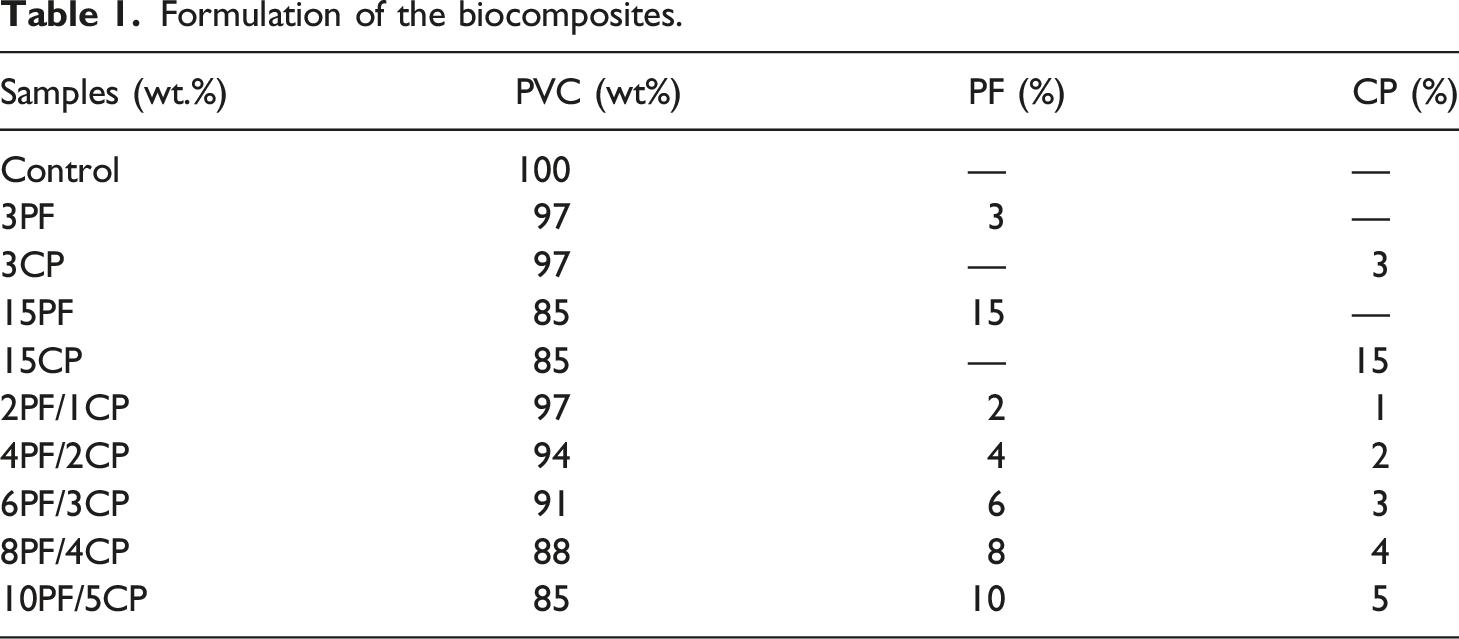
Characterization and evaluation of the fabricated biocomposites
Scanning electron microscopy
The surface's morphological characterization was performed using the EVO MA 15 microscope by Carl Zeiss SMT. Before the examination, the samples were coated with a layer of gold sputter to enhance electrical conductivity.
Tensile test
The tensile tests were performed following the ASTM D3039 standard using an Instron series 3369 model universal testing machine. The specimens, measuring 300 × 25 × 3 mm, were utilized for the tests. A crosshead speed of 5 mm/min and a 10 kg load cell were employed during the testing process. Three samples were tested for each case, and the average values were recorded and reported.
Flexural test
The flexural properties of the samples were assessed using a three-point bending test. A universal testing machine, specifically the Instron series 3369 model, was employed for conducting the tests. The displacement control rate was set at 10 mm/min. To perform the test, the samples, which had dimensions of 150 x 50 x 3 mm, were positioned under a three-point bend fixture. For each composition, three samples were tested, and the average value was determined as the representative value.
Impact test
A Charpy impact test was conducted on the sample following ISO 179 standards. The samples were prepared by cutting them into dimensions of 80 x 10 x 3 mm and notching them at the center. Placing the samples horizontally on the machine, a distance of 60 mm was maintained between the lines of support. The initial reading of the gauge was recorded, and then the suspended handle, which swings and fractures the sample, was released. The final reading was taken after the sample had fractured. For each sample, three test pieces were evaluated, and the average value was considered the representative value.
Wear test
The wear procedure adhered to the CS-10 Calibrase standard. The wear test was conducted using Taber abrasers, specifically Model ISE AO16. A standard load of 500g and a revolution speed of 200 RPM were applied. To fix the test piece onto the machine, a center hole with a diameter of 10 mm was created on the sample. The sample was securely fastened to the instrument platform, which consisted of a motor driven at a constant speed, and the corresponding values were recorded. Each specimen had a flat, round disc shape with an approximate area of 100 mm2 and a standard thickness of approximately 6.35 mm. The wear resistance was evaluated using the weight difference before and after abrasion, employing the weight loss technique. Special care was taken to eliminate any loose particles adhering to the specimens during testing, particularly before weighing. The wear index of each sample was calculated using equation (1).
Thermal test
A thermal test was carried out using Lee’s disk apparatus to determine the thermal conductivity of the fabricated biocomposites. To determine the thermal conductivity of these samples, equation (2) was used.
Water absorption test
Water absorption tests were conducted following ISO 175 guidelines. For the test, clean plastic containers were filled with 250 cm³ of water. The initial weight of each sample was measured using a chemical weighing balance (FA2104A model) with a precision of ± 0.0001g. Readings were taken daily for 7 days. Before each measurement, the samples were retrieved, cleaned with a cloth, and then weighed. The collected data was utilized to calculate the weight gained and the percentage of water absorption, using the formulas provided in equations (3) and (4), respectively.

Results and discussion
SEM images of the plantain fiber
Figure 1(a) and (b) display the SEM of untreated and alkaline-treated plantain fibers, respectively. The chemical modification had a significant impact on the fiber's macromolecular properties, crystallographic structures, and morphology, as evident in Figure 1(b). The removal of surface contaminants resulted in increased fiber roughness through the chemical treatment. This treatment greatly enhanced the mechanical properties of the plantain fiber, making it more suitable as reinforcement in composite materials by improving matrix permeability.
24
This was in agreement with Oladele et al.
25
where the influence of short fibers from treated plantain stem fiber (PSF) and plantain leaf fiber (PLF) on certain selected properties of epoxy composites was investigated. The findings from the research show that the chemical treatment adopted to modify the surface of the plantain fibers improves the surface morphology and contributes to good interfacial adhesion between the fiber and the matrix. PSF gave more enhancements in all the properties than PLF except impact strength. Hence, these bio-based fibers were recommended for eco-friendly and biodegradable polymer-based composites for various applications to advance the development of green composites which have been increasingly becoming popular in structural applications in recent years. SEM images of (a) Untreated plantain fiber and (b) Treated Plantain Fiber.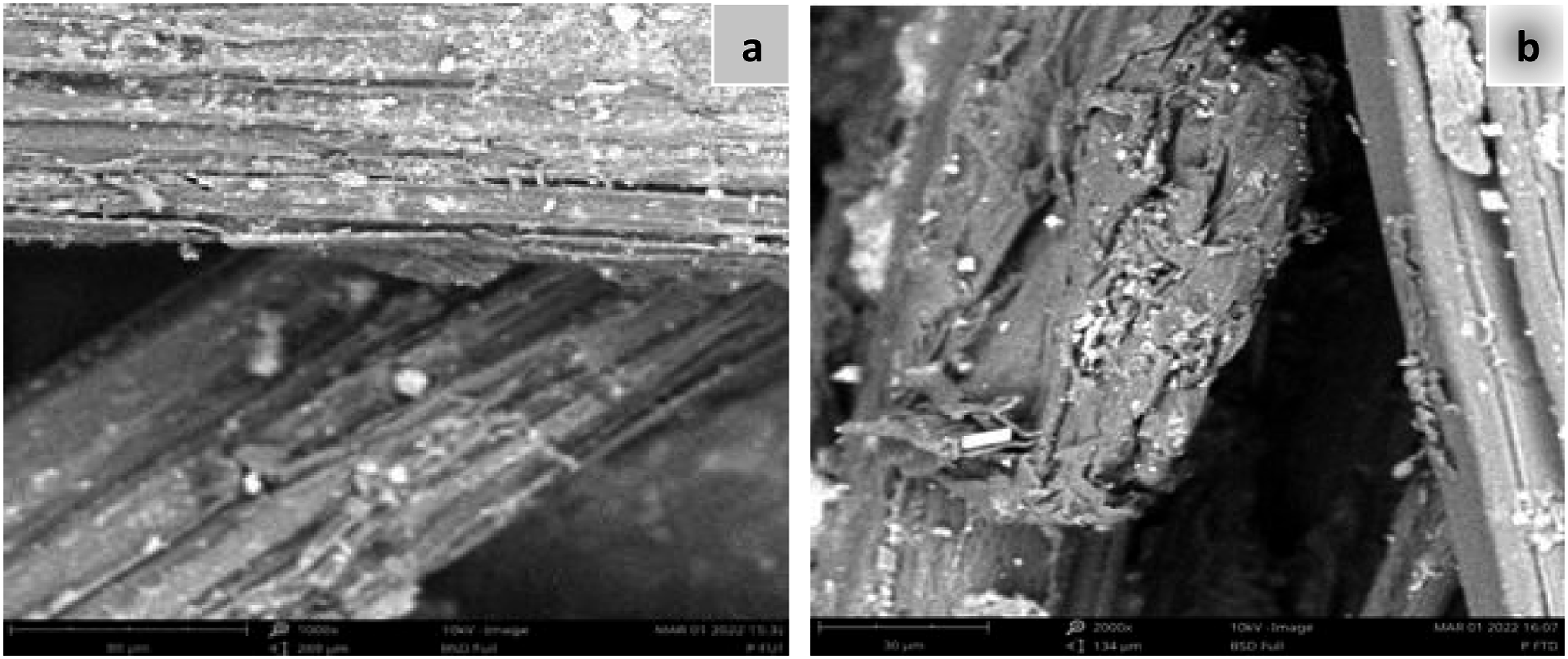
Ultimate tensile strength
Figure 2 illustrates the effects of reinforcements on the ultimate tensile strength of PVC composites. The influence of single and hybrid reinforcements was considered and it was noticed that the addition of calcite and plantain fiber at 3 wt% loading in single reinforced PVC gave enhanced tensile strengths compared to 15 wt% reinforcement level. In the hybrid composites, an initial enhancement in tensile strength was observed with increasing reinforcement up to 6/3 wt% PF/CP, followed by a decline. It noticed that rapid enhancements were achieved within 6-8 wt% PF and 3-4 wt% CP additions, respectively. The hybrid composite with a 6/3 wt% PF/CP loading showed the highest tensile strength of 66.82 MPa, representing about 90% improvement compared to the control sample. The improved strength resulted from effective adhesion between the plantain fibers, calcite particles, and the PVC matrix, as well as the presence of evenly distributed high-strength fibers and the filling of voids by the particles.
26
Cellulose content, particularly in plantain fiber, plays a crucial role in determining tensile strength. Plantain fiber possesses a fibrous structure and high hydrogen content, contributing to its strength according to previous studies.27–29 Effect of plantain and calcite variation on tensile strength of PVC composites and the control.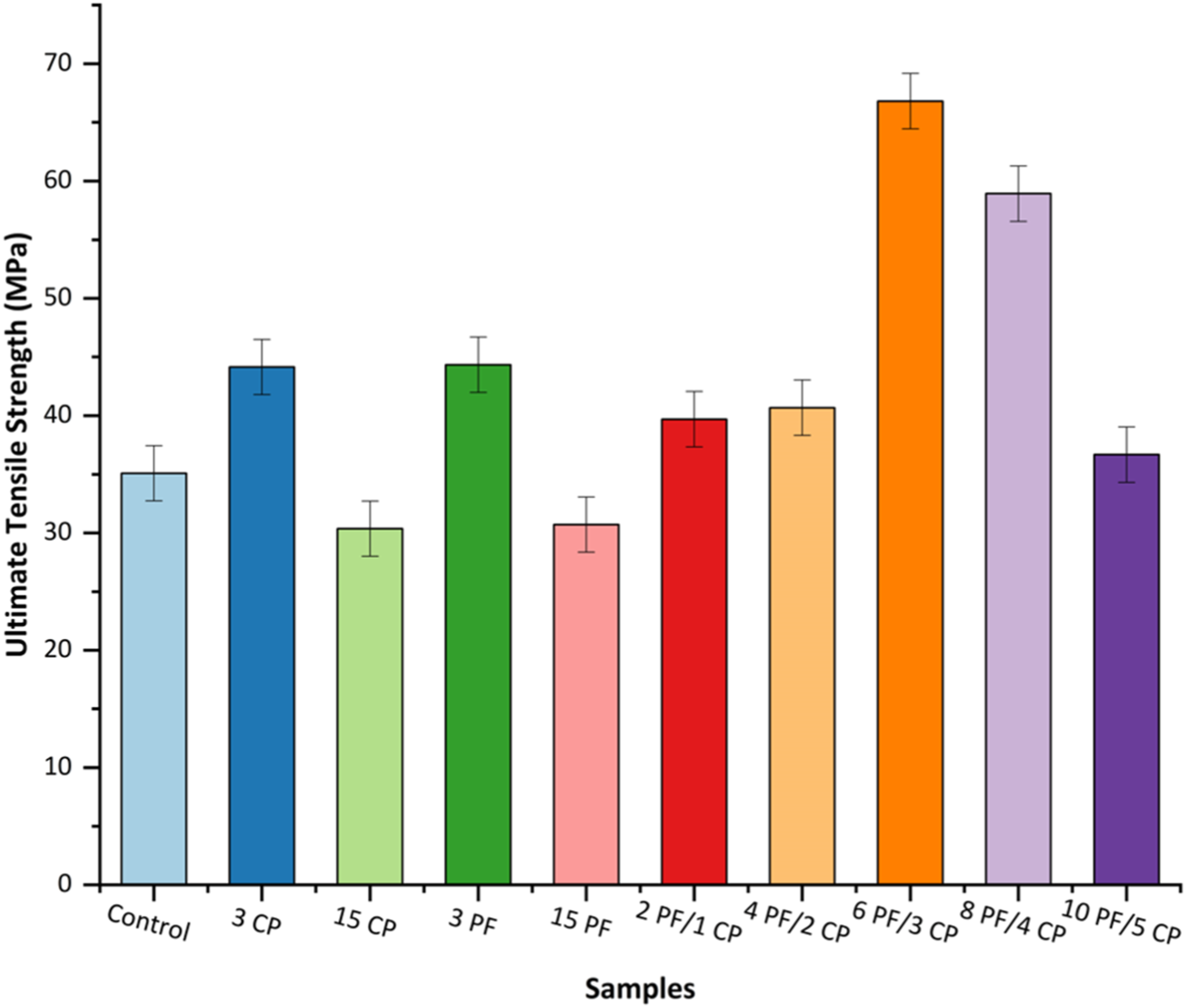
Tensile modulus
In Figure 3, the tensile modulus of polyvinyl chloride (PVC) composites with single and hybrid reinforcements, as well as the control sample, is presented. The response of the materials to tensile modulus due to the addition of calcite particles and plantain fibers to PVC followed a similar trend to the tensile strength in the single-reinforced PVC composites in Figure 2. However, the values at 15 wt% were higher than the control to connote improvement relatively and, contrary to the results in Figure 2. Also, in the hybrid reinforced PVC composites, most composites exhibited an increase in tensile modulus as the fiber loading increases with rapid enhancement occurring within 4-10 wt% PF and 2-5 wt% CP additions, respectively. It was discovered that, a composite with 8/4 wt% PF/CP loading demonstrated the highest tensile modulus of 4.79 GPa, compared to the control sample's 2.28 GPa. This culminated in about 110% enhancement in the tensile modulus of the PVC composites. This improvement can be attributed to good compatibility between the reinforcements and the matrix. These results suggest that the inclusion of calcite particles played a significant role in augmenting the stiffness of the composite materials. This improvement in tensile characteristics mirrors the findings reported by Nahar et al.
30
where the incorporation of natural fibers (jute and bamboo) resulted in increased tensile strength, tensile modulus, and bending modulus in polypropylene-based composites. Effect of plantain and calcite variation on tensile modulus of PVC composites and the control.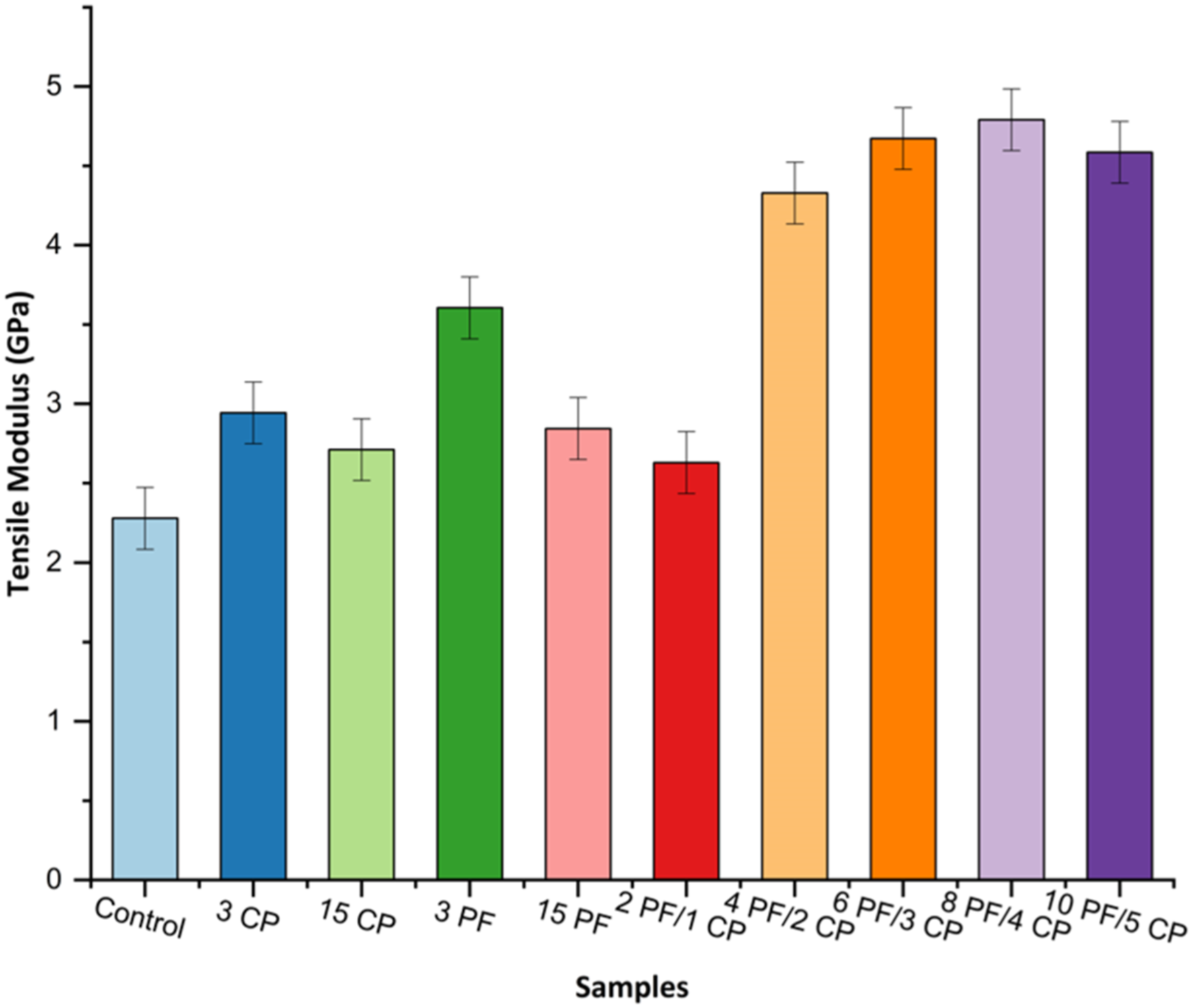
Elongation at break
Figure 4 illustrates the percentage elongation at break in polyvinyl chloride (PVC) composites with single and hybrid reinforcements, along with the control sample. The results showed that low reinforcement content gave improved percentage elongation than what was obtained at high contents for both reinforcements compared to the control sample similar to the responses of the materials to other tensile properties. While in the hybrid-reinforced composites, a notable increase in elongation at break was observed with an increase in fiber loading up to the composite reinforced with 6/3 wt% PF/CP loading, reaching approximately 173.25% followed by a slight decrease at 8/4 wt%. The decline in elongation at higher additions of PF and CF may be attributed to the increased stiffness and rigidity of the composite as their proportion grows. This heightened stiffness can restrict the composite's capacity to stretch and deform prior to fracture. Additionally, as fiber content rises, inadequate adhesion between the plant fibers and the polymer matrix can arise, resulting in stress concentrations at the interface. This inadequacy in bonding weakens the composite's ability to deform and elongate before reaching failure, thus, a reduction in elongation at break. Effect of plantain and calcite variation on elongation at break of PVC composites and the control.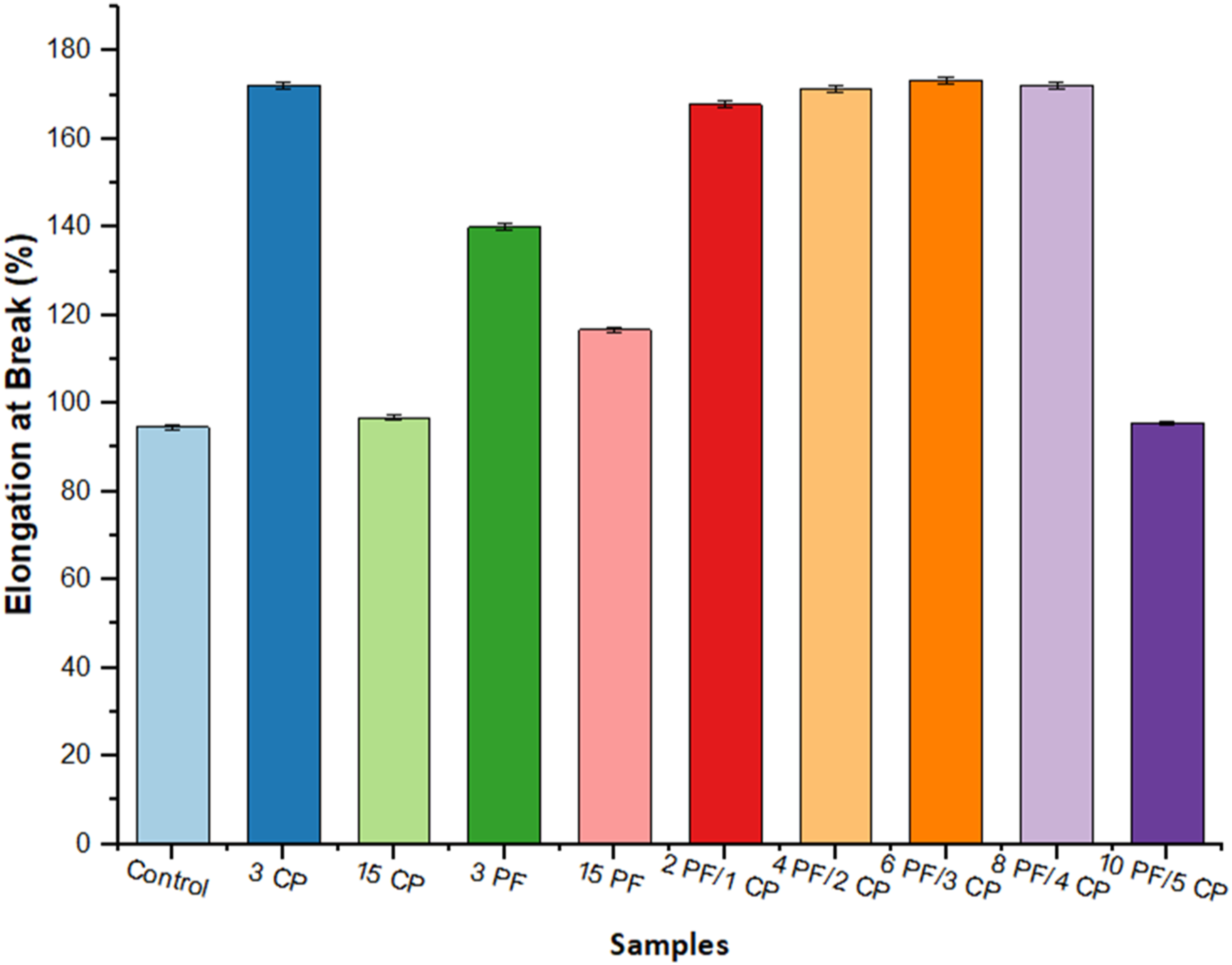
Flexural strength
Figure 5 presented the effect of reinforcements on the flexural strength of PVC composites where it was noticed that the addition of calcite particles and plantain fiber improved the flexural strength of the composites in all the contents used compared to the control sample. In single-reinforced composites, higher reinforcement contents led to improved flexural strength for plantain fiber-based composites while it led to a decrease for calcite particulate-based composites. In the hybrid reinforced PVC composite, gradual enhancement occurred within 4-8 wt% PF and 2-4 wt% CP additions, respectively before a decrease. The flexural strength initially increased with higher reinforcement loading until reaching 8/4 wt% PF/CP, after which it declined. The composite with an 8/4 wt% PF/CP loading exhibited the highest flexural strength of 91.35 MPa, representing about 71% improvement compared to the control sample's 59.10 MPa. This enhancement can be attributed to the compatibility achieved between the fiber and the polymer surface through sodium hydroxide treatment, resulting in improved resistance to deformation under loading. Additionally, good adhesion between the reinforcements and the PVC matrix contributed to the overall improvement in flexural strength. Effect of plantain and calcite variation on maximum flexural strength for PVC composites and the control.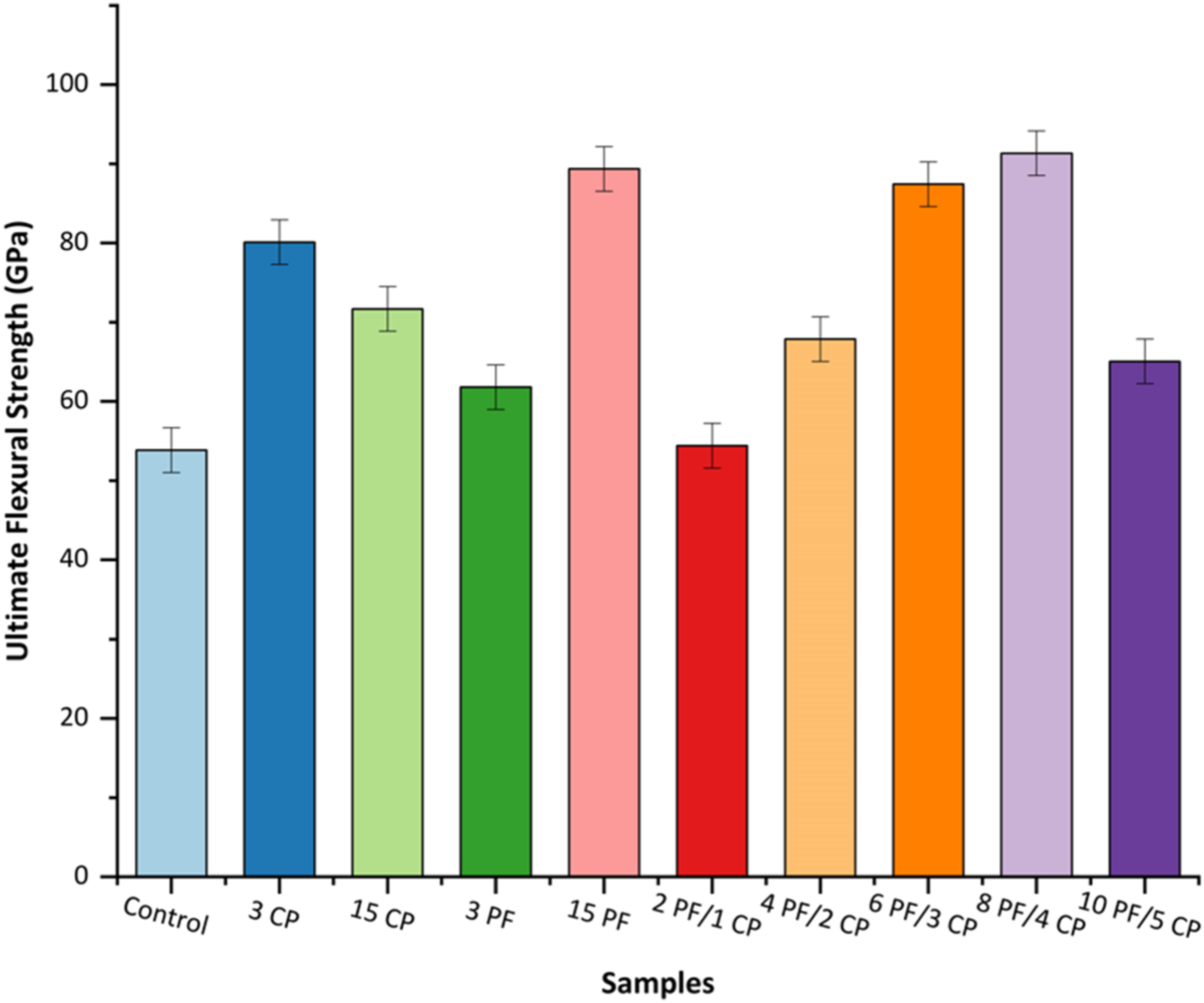
Flexural modulus
Figure 6 displays the flexural modulus of single and hybrid reinforced polyvinyl chloride (PVC) composites at different reinforcement loadings, along with the unreinforced sample. The inclusion of calcite particles and plantain fibers improved the flexural modulus compared to the unreinforced PVC matrix, highlighting the desirability of reinforcements. The flexural modulus followed a similar trend as the flexural strength shown in Figure 4 for both single and hybrid-reinforced PVC composites. Composite with 8/4 wt% PF/CP reinforcement loading exhibited the optimal flexural modulus of 8.2 GPa, resulting in a 78% improvement in flexural property compared to pure PVC. This finding indicates that the combination of plantain fiber and calcite particles yields the greatest enhancement in flexural rigidity, attributed to the even distribution of each constituent and excellent interfacial bonding between them and the PVC matrix. Effect of plantain and calcite reinforcement variation on flexural modulus for PVC composites and the control.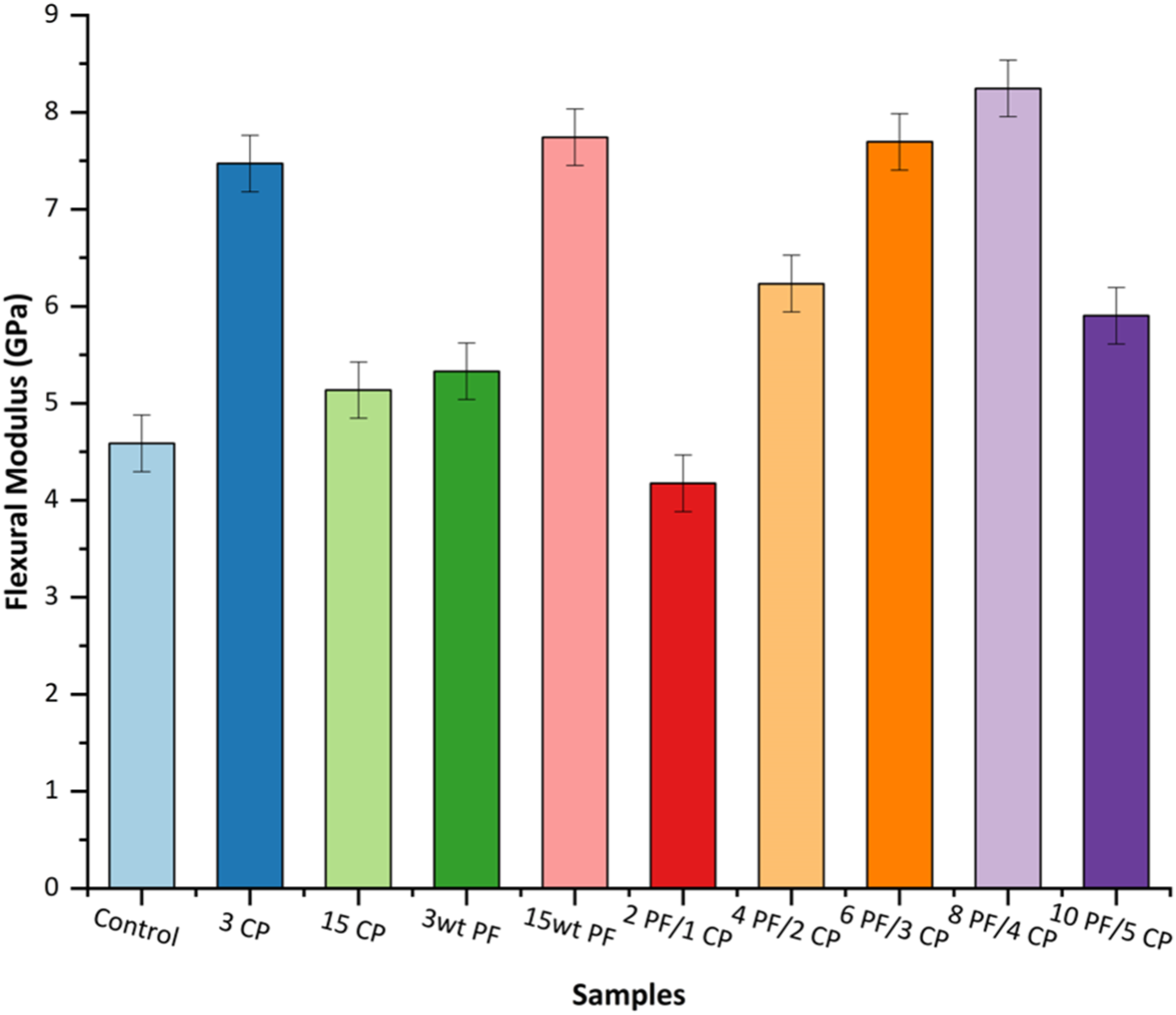
Impact strength
Figure 7 displays the impact strength variations of single and hybrid reinforced polyvinyl chloride (PVC) composites at different reinforcement loadings, including the unreinforced samples. Increasing the proportions of plantain fiber (PF) and calcium particles (CP) in the PVC improves the impact strengths of the composites in single-reinforced composites. In the same vein, the impact strengths increase as the reinforcement contents increase in the hybrid composites where a rapid increase at 4/2 wt% PF/CP was followed by a gradual increase. The composite with 10/5 wt% PF/CP loading exhibits the highest impact strength, achieving a peak value of 107.23 J/m2. When compared to pure PVC, which has an impact strength of 76.45 J/m2, this represents an enhancement of approximately 40%. The synergistic effect of combining PF and CP fibers contributes to this improvement whereby PF provides stiffness and strength while CP-filled voids would have to create difficulty in transferring load and, thus, offers superior impact resistance. This combination enables the composite to effectively absorb and distribute impact energy over a larger area. The crack resistance of PF hinders crack propagation, and the dispersion of CP contributes to high strength and resistance against crack propagation. Both reinforcements play essential roles in enhancing impact strength by resisting crack propagation and facilitating load transfer and agreement with previous research outputs.
31
Effect of plantain and calcite variation on impact strength for PVC composites and the control.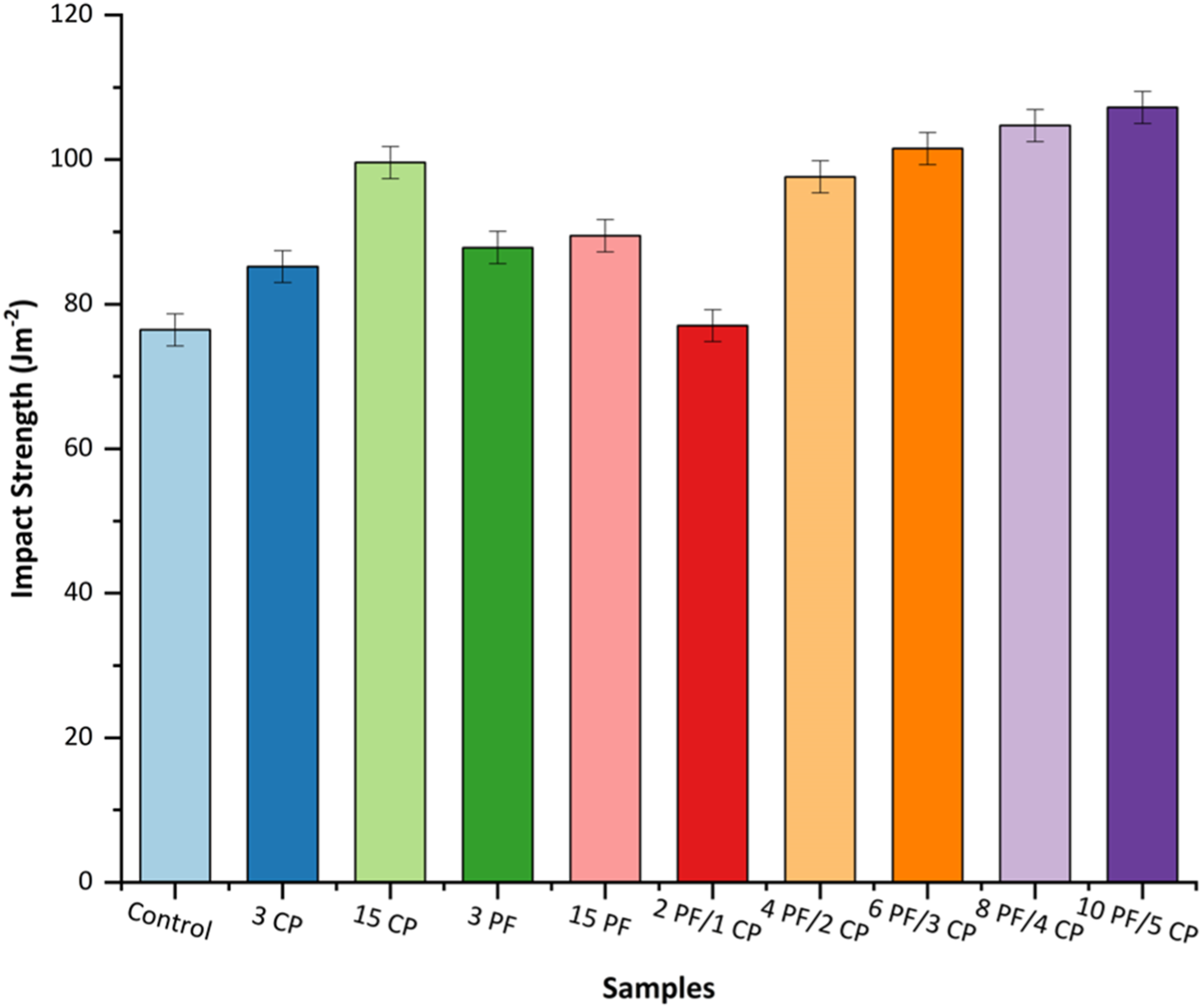
Hardness
In Figure 8, the inclusion of PF and CP significantly enhanced the hardness of polyvinyl chloride composites. The hardness property exhibited an increasing trend with higher levels of reinforcement loading for both single and hybrid reinforced composites. The observed improvements can be attributed to the high proportion of calcite and cellulose content present in PF, which contributed to the enhanced performance. In the same vein, the hardness increases as the reinforcements contents increase in the hybrid composites where a gradual increase was followed by a rapid increase at 8/4 wt% PF/CP. The measured hardness values were highest at 15 wt% PF single reinforced composites with a value of about 90 HS, representing 38% enhancement over the control value of 66 HS. Remarkably, single-reinforced composites showed higher hardness compared to hybrid-reinforced composites indicating the most substantially improved hardness property. The observed relatively low hardness properties of the hybrid composites could be due to improper adhesion bonding at the interface between the constituents since there were enhancements from the single reinforcements samples. Effect of plantain and calcite variation on hardness strength for PVC composites and the control.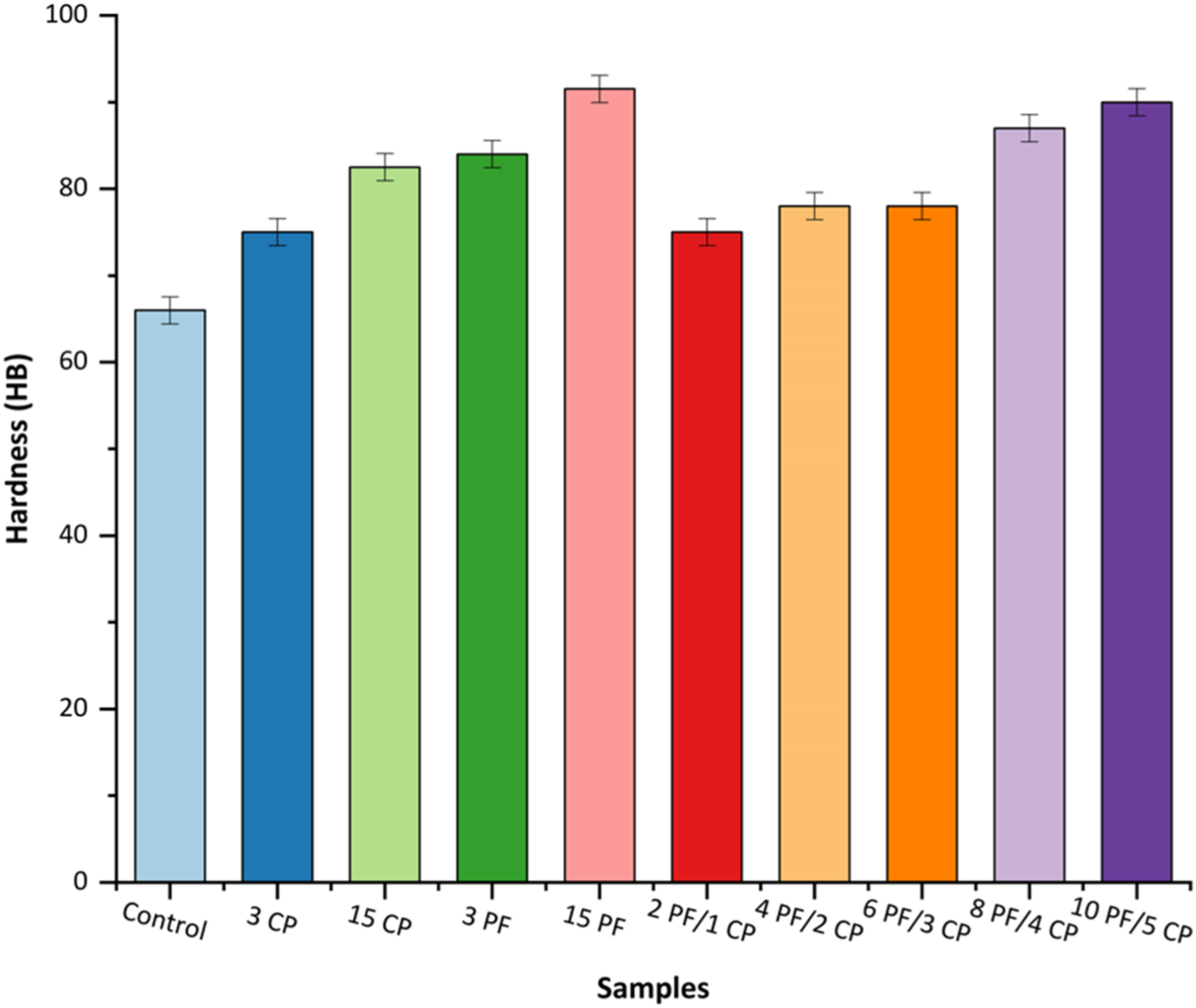
Thermal conductivity
In Figure 9, the thermal conductivity variations of single and hybrid reinforced polyvinyl chloride biocomposites were examined at different fiber loadings. The results showed a significant increase in thermal conductivity compared to the control sample. Notably, calcite-reinforced composites gave the highest conductivity results relatively where the composite with a fiber loading of 15 wt% CP exhibited the highest thermal conductivity, measuring 0.49 W−1mK. This notable increase in thermal conductivity can be attributed to the interfacial resistance of the reinforcement, which hinders the movement of phonons within the matrix (known as Kapitza resistance). Conventional PVC-based materials, due to their integration of numerous components within a large surface area-to-volume ratio, tend to experience power loss, shorter lifespans, and diminished performance in electronic applications when exposed to higher system temperatures. It was discovered from the results that a hybrid composite with 6/3 wt% PF/CP gave the lowest thermal conductivity value of 0.24 W−1mK representing material with the most insulating potential. Thus, with its good mechanical properties and insulating potentials, the material's compositions can be adopted for automotive applications. It was noticed that the conductivity tends to increase as calcite content increases both at single and hybrid levels. This can be attributed to the interplay between PVC and calcite particles, where the presence of calcite particles retards the emission of volatile compounds at higher temperatures, while also indicating strong adhesion between the fibers and the matrix. This aligns with findings in a study which reported a synergistic improvement in thermal stability when nano clay and banana fiber were added to form a composite. Effect of plantain, and calcite variation on thermal conductivities for PVC composites and the control.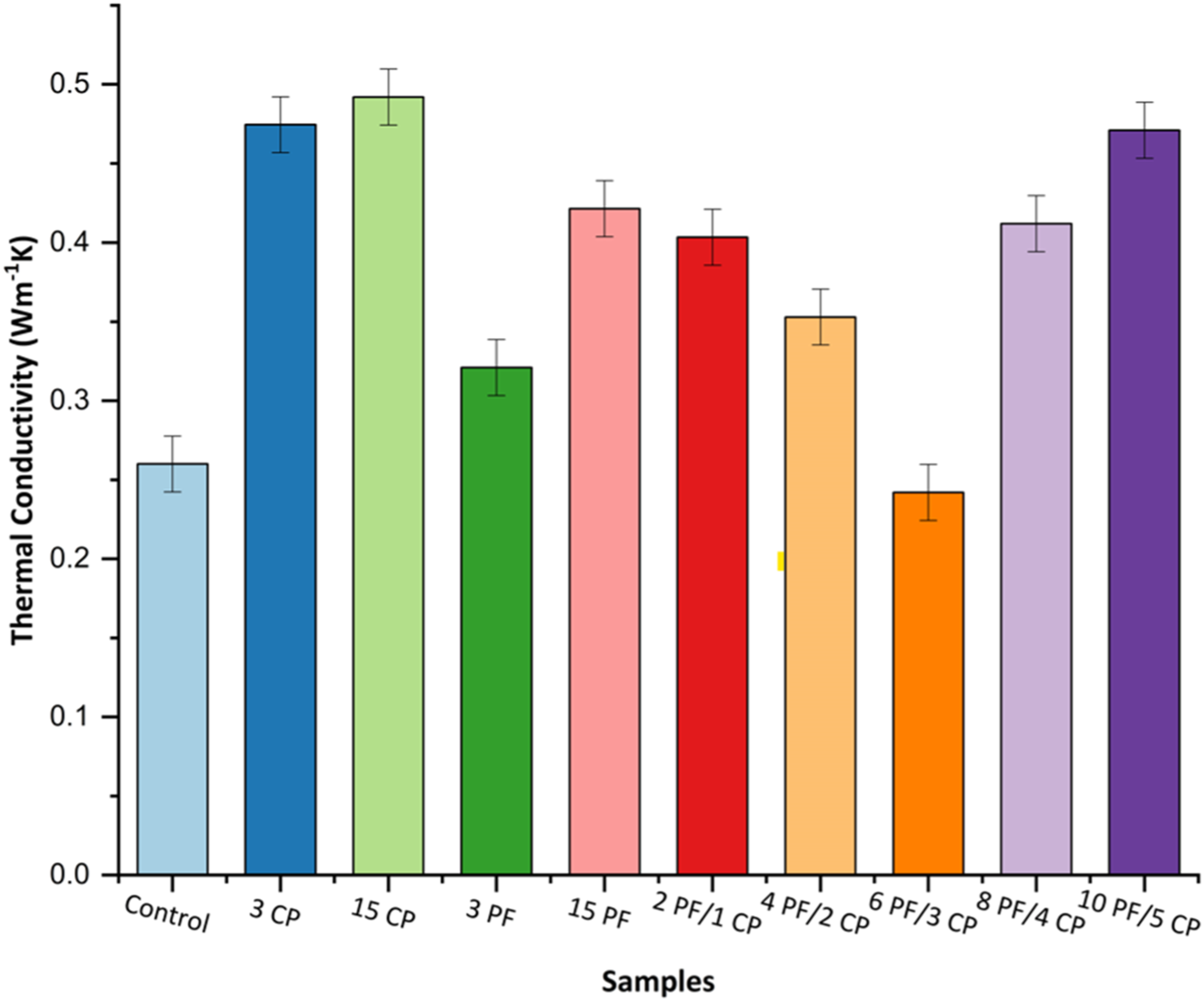
Microstructural analysis
In Figure 10(a), the microstructure of the fractured surface of a composite having optimum properties was depicted. This composite exhibited a combination of the best properties among all the samples examined. The image reveals a strong attachment between the reinforcements and the matrix leading to enhanced mechanical characteristics. Figure 9(b) displays the outcomes of an analysis conducted using an energy dispersive spectrometer (EDS) to determine the oxide content of plantain pseudostem fiber and calcite particle specimens. The EDS examination indicated higher weight fractions of elements such as O, Si, C, Ca, and Al in the developed composite. These elements likely contributed to the overall enhancement in the mechanical properties of the hybrid reinforced PVC composite. (a) SEM image and (b) EDS spectrum of composite with optimum properties.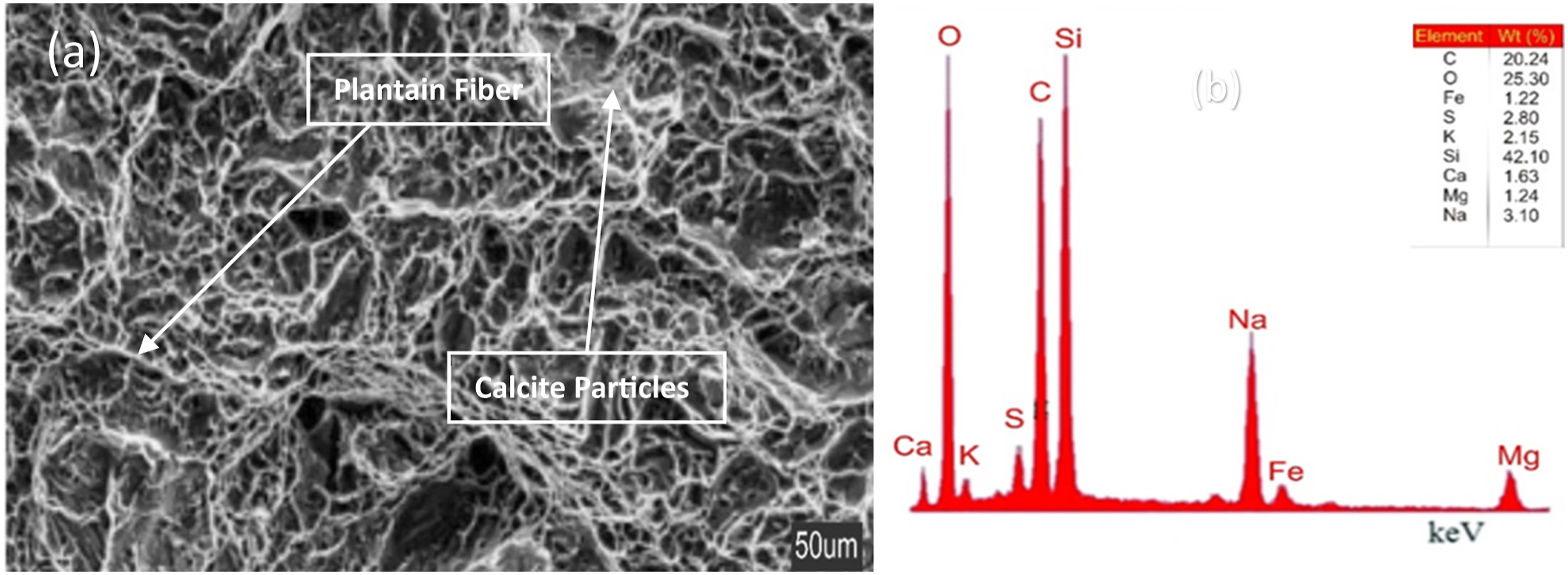
Conclusion
The objective of this study was to develop composites that are suitable for automotive applications by incorporating plantain fiber (PF) and calcite particles (CP) into a polyvinyl chloride (PVC) matrix using single and hybrid reinforcement techniques. The inclusion of these reinforcements resulted in significant improvements in the properties of the composites compared to the unreinforced samples. The findings revealed that the hybrid reinforced system generally exhibited greater enhancement in most mechanical properties compared to the single reinforced system. In particular, all properties, except for hardness, showed notable improvements when compared to the unreinforced polyvinyl chloride. The optimal composition range for the developed hybrid composites was found to be 6-8 wt% PF and 3-4 wt% CP additions. Among the composite compositions, the one with 6 wt% PF and 3 wt% CP demonstrated the highest ultimate tensile strength (63.77 MPa), best elongation at break (173.25%), and excellent insulating properties (0.24 Wm−1K). On the other hand, the composite with 8 wt% PF and 4 wt% CP exhibited the highest tensile modulus (4.79 GPa), flexural strength (91.35 MPa), and flexural modulus (8.2 GPa). The impact strength peaked at 10 wt% PF and 5 wt% CP, reaching 107.02 Jm−2. The composites containing 15 wt% PF exhibited the maximum hardness (91.53 HS). Based on these findings, the developed composite compositions hold great promise for a wide range of automotive applications, including instrument panels, sun visors, headlining, seals, floor coverings, and protective strips. These composites offer enhanced mechanical properties and can potentially contribute to the advancement and improvement of automotive components.
Footnotes
Declaration of conflicting interests
The author(s) declared no potential conflicts of interest with respect to the research, authorship, and/or publication of this article.
Funding
The author(s) received no financial support for the research, authorship, and/or publication of this article.
