




Abstract
The purpose of this article is to analyze the effect of different forms of violence on Mexican women’s attitudes and decision-making capacity. Specifically, attitudes toward gender equality are included as a mediator between violence and women’s decision-making capacity. Results reveal that attitudes are a partial mediator between physical, sexual, and psychological violence and women’s decision-making capacity. While physical, economic, and sexual violence negatively affect women’s decision-making capacity, economic violence against women increases their involvement in decision-making.
During the second half of the 20th-century, women’s activism played an important role in placing women’s rights on the agenda of international organizations. By the late 1980s, a new trend, identifying women as agents and beneficiaries in all stages of countries’ development, emerged as a basis for governments’ and international agencies’ actions. International arenas such as the World Conference on Women in Nairobi and Beijing focused on promoting women’s empowerment and participation in development. Local and national governments, especially in Latin America, have adopted actions in favor of women and paid special attention to combat violence against women, defend their rights, and promote women’s empowerment (Alméras, Bravo, Milosavljevic, Montaño, & Nieves-Rico, 2004).
However, in many poor and developing countries, violence against women continues to be highly prevalent (Fidan, 2012). In Mexico, in 2010, 33.3% of women older than 15 years experienced intimate partner violence and 60.0% of women experienced at least one episode of violence in their lives (INEGI, 2011). Violence constitutes an aspect that frames women’s future attitudes toward their well-being and endangers their ability to make decisions (Casique, 2006, 2010; Koenig, Ahmed, Hossain, & Mozumder, 2003; Lloyd, 1997; Nussbaum, 2005; United Nations, 2006). Attitudes and decision-making capacity constitute crucial elements for women’s well-being and for the implementation of social programs geared toward their advancement (Molyneux, 1985). Women’s attitudes toward gender equality define the exercise of their rights, the translation of their capabilities into decision-making, predispositions to act, and bargaining processes around their well-being (Abrams, 1999; Casique, 2010).
The approach of defending women’s rights, securing a life free of violence, and promoting their empowerment is supported by the notion that “the expansion of assets and capabilities of poor people to participate in, negotiate with, influence, control, and hold accountable institutions” affect women’s lives positively (Narayan, 2005, p. 5). The core of human development is to expand people’s opportunities, choices, and capabilities, but these aspects can be constrained by individuals’ attitudes. Therefore, aspects that trigger changes to egalitarian attitudes become crucial for human development.
Most studies on intimate partner violence focus on determining what factors trigger violence against women (Koenig et al., 2003; Kramer, Lorenzon, & Mueller, 2004), but a few explore the consequences of violence on women’s attitudes and decision-making capacity. Knowledge of the impact of violence on women’s attitudes and decision-making capacity is essential for promoting women’s development, especially in countries such as Mexico, characterized by a culture of machismo and marked gender asymmetries. Moreover, identifying the effects of various forms of violence on women’s attitudes is relevant in designing social policies in favor of women. In general, each particular form of violence has been analyzed individually (Grych & Swan, 2012).
The purpose of this article is to analyze the effects of different forms of violence on Mexican women’s attitudes and decision-making capacity. For this, we use structural equation modeling. The information for this study comes from the National Survey on the Dynamics of Households Relationships, 2011, in Mexico. This article proceeds by first presenting a literature review on violence against women and its relationship with attitudes and decision-making capacity. Subsequently, data and methods are presented, followed by conclusions and discussion.
Literature Review
According to the United Nations (2006), domestic violence is the most common form of violence that women experience. The World Health Organization (WHO, 2002) defines violence as any “intentional use of physical force or power, threatened or actual, against oneself, another person, or against a group or community, that either results in or has a high likelihood of resulting in injury, death, psychological harm, maldevelopment or deprivation” (p. 4).
Intimate partner violence is typically divided into four groups: sexual, psychological, physical, and economic. Sexual violence against women is comprised of events that restrict reproductive rights and decisions on women’s sexuality (Jejeebhoy & Bott, 2003). Psychological violence is defined as psychological battering and emotional abuses using verbal or nonverbal expressions (Coker et al., 2002). Physical violence includes actions that range from slapping to actions that may cause injury or death (Eshelman & Levendosky, 2012). Economic violence refers to episodes when the partner has control over women’s economic resources or activities. Episodes of economic violence may involve maintaining complete control over household’s income and forcing women to beg for money (Fawole, 2008).
Violence against women is highly prevalent, especially in developing countries, and violence inflicted by the partner is one of the primary hidden types of oppression that women experience (Alméras et al., 2004; INEGI, 2011). Women who suffer violence in one domain typically experience abuses in other spheres (Grych & Swan, 2012; Smith, White, & Holland, 2003). Violence has been documented as a factor that negatively affects individuals’ lives. When women experience episodes of violence, they may suffer early death either directly or indirectly. It has been found that women who suffer psychological violence are more likely to commit suicide. Homicides, AIDS, drugs and alcohol abuse, premature delivery, and other sexual diseases are also consequences of violence against women (Eshelman & Levendosky, 2012). Although there is a lack of studies that analyze the effect of violence on women’s attitudes, several studies have identified detrimental consequences in women’s depression levels (Eshelman & Levendosky, 2012; Huang, Yang, & Omaye, 2011; Rodriguez et al., 2008).
When women suffer violence, episodes of abuses become part of their experiences. People’s attitudes tend to maintain consistency with their life experiences (Inglehart, 1990). In the presence of new information or experiences, individuals’ attitudes change (Bell, 1976). New information produces inconsistencies between attitudes and behavior, and individuals naturally reduce those discrepancies (Katz, 1960; McGuire, 1960). According to Triandis (1971), direct experiences alter the three components of attitudes (cognitive, affective, and behavioral), which in turn determine individuals’ behavior. As each form of violence involves different types of experiences, the effect of violence on women’s attitudes depends on the form of violence with which women live. Thereby, it can be argued that all forms of violence against women convey traditional roles of women. When men exercise violence, they use their power to sanction women and promote a subordinated role of women in households and society. Gender equality encompasses different spheres such as marriage, family organization, abortion, and child rearing, among others. Traditional attitudes toward gender equality include notions of limiting women’s roles and promoting their subordination to men in private and public spheres.
From a Marxist feminist approach, women’s subordinated role in society is a consequence of patriarchy (Jackson, 1998). Marxist feminists, furthermore, identify a patriarchal capitalist system as the responsible for confining women exclusively to the domestic context (Rendón, 2008). That is, one of the sources of power men hold over women is through the sexual division of labor. According to Connell (1987), such gendered division of labor allocates particular types of work to people of determinate sex, and thus, for Marxist feminists the sexual division of labor represents a social structure that constrains women’s behavior and reproduces their subjugation by men (Connell, 1987; Rendón, 2008).
Such subjugation can be explained through the theory of planned behavior, which postulates that perceived control influences intentions to act and behavior; and the effect of perceived control of one person over others is determined by one person’s concurrent behavior (Ajzen, 1991). For example, if a woman has tried in the past to introduce a discussion about her participation in the workforce and found that her partner was aggressive, the woman may feel that she had little control over her entry into the labor market. Drawing on the theory of planned behavior, this experience of low control may dissuade her future intentions to work. As partners obtain control over women through violence, women’s perceived control of their partner may motivate the development of traditional attitudes.
According to Allport (1935, p. 810), an attitude denotes a “mental and neural state of readiness, organized through experience, exerting a directive or dynamic influence upon the individual’s response to all objects and situations with which it is related.” Attitudes are ideas charged with emotions that affect people’s behavior (Triandis, 1971) and are comprised of beliefs and feelings toward situations, objects, or behaviors, which in turn guide individuals’ intentions (Fidan, 2012). Individuals’ attitudes toward equality are influenced by their roles in society and within households (Goldin, 1990) and created through personal experiences and socialization processes (Merton, 1959). Basically, attitudes support and give meaning to individuals’ behavior (Triandis, 1971).
In turn, individuals’ behavior is interconnected to their sense of self. According to Akerlof and Kranton (2000), individuals’ “sense of self is associated with different social categories and how people in these categories should behave” (p. 748). In this regard, individuals’ socialization experiences define their subjective orientations, which in turn shape their responses to situations that may determine their well-being (Chase, 2006). Violence, however, restricts women’s ability to make crucial decisions with respect to their well-being and the exercise of their capabilities (Nussbaum, 2005). Violence has a negative impact on women’s decision-making capacity, identity, anxiety levels, psychological, and physical health as well as their social and economic development (Casique, 2010; Koenig et al., 2003; Lloyd, 1997; United Nations, 2006). The employment of coercive actions may lead women to redefine their opinions about their attitudes and roles (Lloyd, 1997; United Nations, 2006). Exposure to traditional ideas and patriarchal practices through episodes of abuse constrains women’s awareness of their opportunities and capabilities (Bolzendahl & Myers, 2004). According to Inglehart (1990), people who experience continuous levels of insecurity, as that related to exposure to habitual violence and abuse, tend to develop mistrustful values, traditional division of roles, practices of authority, and religion-oriented values. Meanwhile, individuals with high levels of security emphasize values related to their quality of life and self-expression.
In sum, attitudes bear a close relationship to decision-making reflecting people’s intentions to act (Triandis, 1971). Decision-making capacity, then, is the translation of intentions into actions. Meanwhile, domestic violence represents the intention of partners to act by maintaining control over women (Eshelman & Levendosky, 2012). Côté and Lapierre (2014) point out that different variables affect women’s decision-making capacity in the household, but all of them can be influenced by episodes of violence. Moreover, Kahneman and Tversky (1984) demonstrate that threatened people make conflicting choices. In other words, risky environments threaten evaluations of outcomes. In general, violence against women may affect their decision-making capacity through two channels. On one side, violence affects women’s experiences, which shape their attitudes toward their roles in households and society. These changes in attitudes may reduce their decision-making capacity. On the other side, abuses can affect directly women’s decision-making capacity.
Data
The data for this study come from the National Survey on the Dynamics of Households Relationships (ENDIREH), 2011. ENDIREH is a national-level representative survey conducted in Mexico by the National Institute of Statistics and Geography (INEGI) and the National Institute for Women. The purpose of the survey is to collect information regarding violence levels that women experience in different spheres. It also contains data concerning women’s decision-making, opinions on women’s and men’s roles in society and households, and sociodemographic characteristics. The sampling design was probabilistic, stratified, two-stage cluster with random selection of homes and women. The target population is comprised of married or cohabiting women older than 15 years old residing in rural and urban areas of Mexico. The data set contains 87,169 cases. The missing data problem was minimal, less than 2% of the cases had missing data. In order to deal with missing data, we used listwise deletion and obtained 85,782 valid cases. The design of the ENDIREH allows for analysis on how past events of violence affected women’s current attitudes and decision-making.
Variables Operationalization
Decision-Making Capacity
The outcome variable of this study consists of women’s capacity to make decisions. This latent variable is measured through their involvement in decision-making regarding their lives and households. Women were asked who decides (1) if they can work, (2) if they can go out, (3) what to do with their income, (4) if they can buy things for themselves, (5) if they can participate in the social or political life in their community, (6) how they spend the household’s income, (7) what to do with their couple’s income, (8) about their children’s education, (9) where to live, (10) when they have sexual relations, (11) if they use contraceptives, (12) who uses contraceptives, and (13) the number of children they have. Answers were coded as 4 if the woman decides, 3 if the woman and her partner decide, 2 if the partner decides, and 1 if another person makes the decision. These 13 variables are used as observed variables of the construct of women’s decision-making capacity.
Attitudes
Through respondents’ opinions about their roles inside and outside the household, attitudes were measured. They responded on whether they agreed or disagreed with the following questions: (1) Does a good wife have to obey her husband in everything he orders? (2) Can a woman choose her friends even if her husband does not like them? (3) Does a woman have the same ability as a man to earn money? (4) Is it a woman’s duty to have sexual intercourse with her husband even if she does not want to? (5) Are women free to decide if they work outside the home? (6) Men have the right to hit women, (7) Should men and women share caregiving tasks? (8) Do you agree that men and women should have the same rights to make their own decisions? (9) Do you agree that men and women should have the same freedoms? (10) Do you agree that women have the right to defend themselves and denounce any physical harm or aggression? (11) Do you agree that women have the chance to decide over their own life? (12) Do you agree that women have the right to live a life free of violence? (13) Do you agree that women should have the right to decide when and the number of children they have? If women responded with an egalitarian position, the answer was coded as 1 and 0 otherwise. The 13 items were added to create a composite scale, which varied from 0 to 13. Larger numbers indicated more egalitarian attitudes.
Physical Intimate Partner Violence
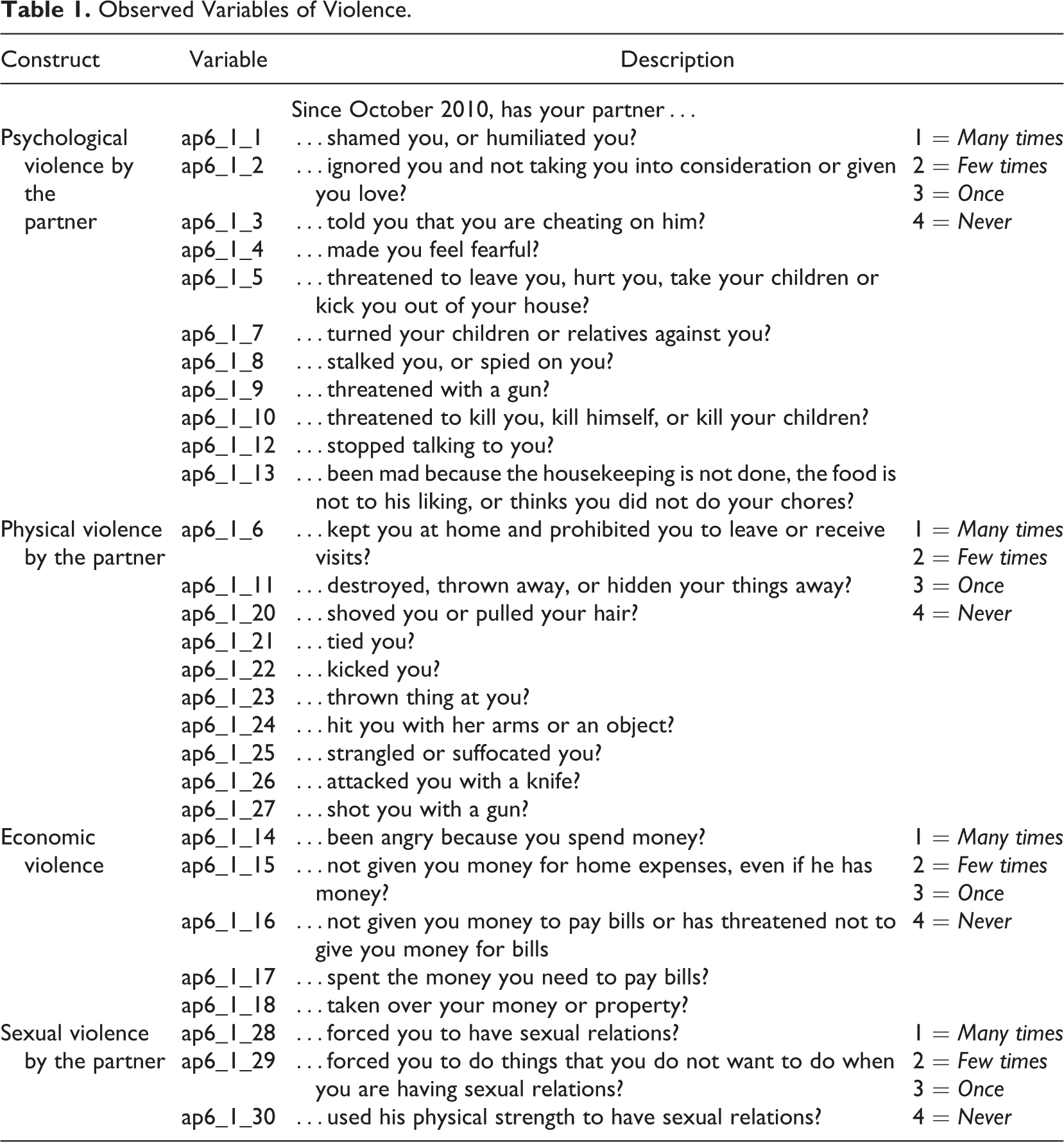
Women were asked about the frequency of physical violence exercised by their partner. They responded if their partner had inflicted violence many times (3 points), few times (2 points), once (1 point), or never (0 points). Table 1 shows the questions related to physical intimate partner violence. These items constitute the observed variables of the physical intimate partner violence construct.
Observed Variables of Violence.
Sexual Intimate Partner Violence
As shown in Table 1, sexual intimate partner violence is indicated by the frequency of occurrence as noted in the questions. Responses were coded as 0, if the respondent has never experienced violence by their partner, 1, if 1 time; 2, if a few times; and 3, if experienced many times. Sexual intimate partner violence is operationalized as a latent variable.
Psychological Violence Inflicted by the Partner
Variables related to psychological violence, indicated in Table 1, were utilized to create the latent variable psychological violence inflicted by the partner. They responded if their partner inflicted violence many times (3 points), few times (2 points), once (1 point), or never (0 points).
Economic Violence Inflicted by the Partner
Women were asked how frequently they had experienced economic violence inflicted by a partner. Responses were coded as 0, if the respondent has never experienced violence by their partner, 1, if once; 2, a few times; and 3, for many times. Economic violence is operationalized as a latent variable and items related to this construct are shown in Table 1.
Method and Theoretical Model
Based on the literature review presented herein, it is hypothesized that all forms of violence against women promote the acquisition of more traditional attitudes toward their roles in society and within the household. Women’s adoption of more traditional attitudes results in a detriment of their decision-making capacity within the household. In addition, the different forms of violence against women affect their decision-making capacity directly. That is, violence has a direct and indirect impact on women’s decision-making capacity. The indirect impact is mediated by women’s attitudes toward gender equality.
In order to determine whether women’s attitudes mediate the effect of episodes of violence on women’s decision-making capacity, two models were estimated. In Model 1, all forms of violence affect women’s decision-making capacity. In Model 2, women’s attitudes toward gender equality mediate the effect of events of violence on their decision-making capacity. Figure 1 shows both hypothesized models.
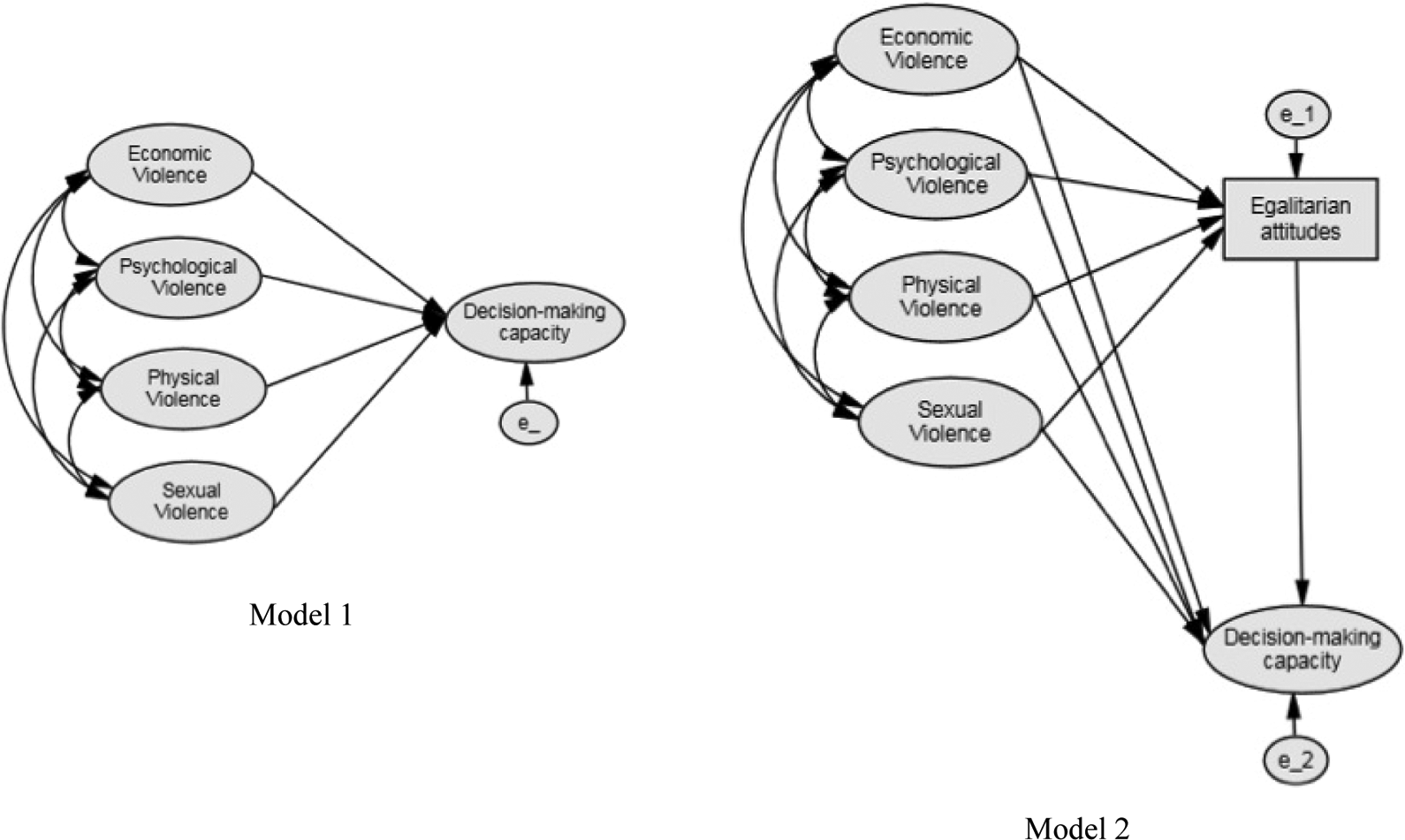
Hypothesized model.
The analysis of the impact of violence on women’s attitudes and decision-making capacity was undertaken in two stages. First, in order to test the constructs in Figure 1, violence against women and their decision-making capacity were evaluated separately using confirmatory factor analysis (CFA). Following Grych and Swan (2012), to evaluate CFA for violence against women, all forms of violence are assumed to be correlated. In other words, women who experience any type of violence—physical, psychological, economic, and sexual—are more likely to face other forms of abuses. Then, to determine the effect of events of violence on women’s attitudes toward gender equality and their decision-making capacity, structural equation modeling was used.
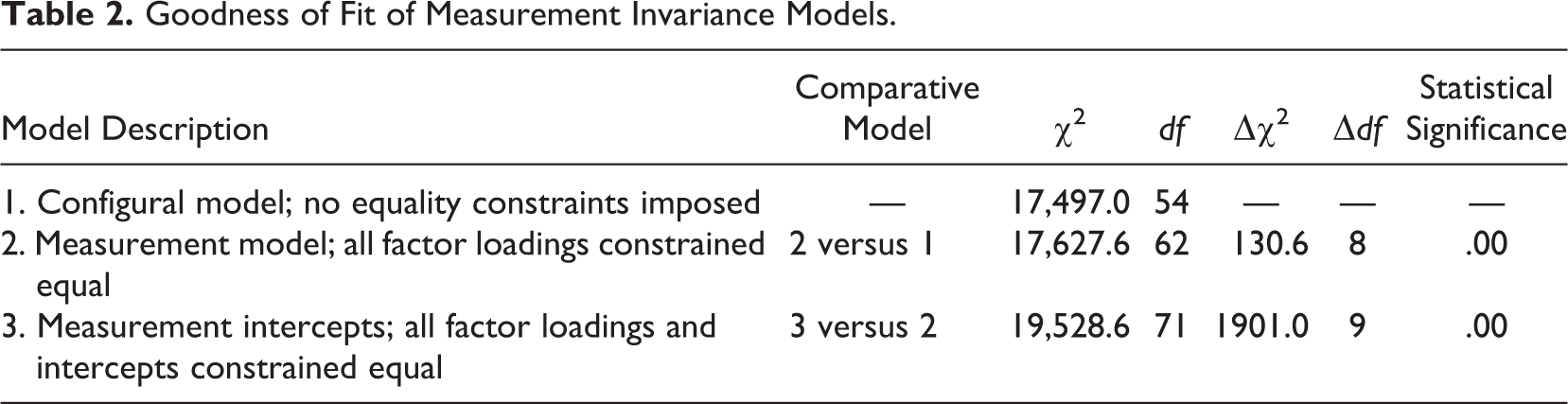
There could be some women who already held traditional attitudes or low levels of decision-making capacity prior to experiencing violence. To support our model, we tested for noninvariance across women who have suffered violence and women who have not experience abuse. Table 2 presents the p value associated with the χ2 difference of the invariance tests. Results indicate that there exists metric noninvariance between women who have suffered violence and women who have not experienced abuses, which means that estimates across groups vary. More importantly, since the difference in χ2 values between the constrained (metric) and the unconstrained (configural) models are significant, metric invariance is not supported. It can be argued that even when some women could have low levels of decision-making capacity before experiencing abuses, it is still impacted by incidents of violence.
Goodness of Fit of Measurement Invariance Models.
Results
Tables 3 and 4 show the estimates from the CFA of the four different forms of violence against women and decision-making capacity, respectively. Although the squared multiple correlation value for a few indicators is less than .250, indices of goodness of fit for the respective constructs suggest a high level of theoretical validity for both decision-making capacity and violence with all the respective factor loadings significant at the .01 level.
Factor Loadings, Squared Multiple Correlation Value, and Goodness of Fit of Violence Against Women.
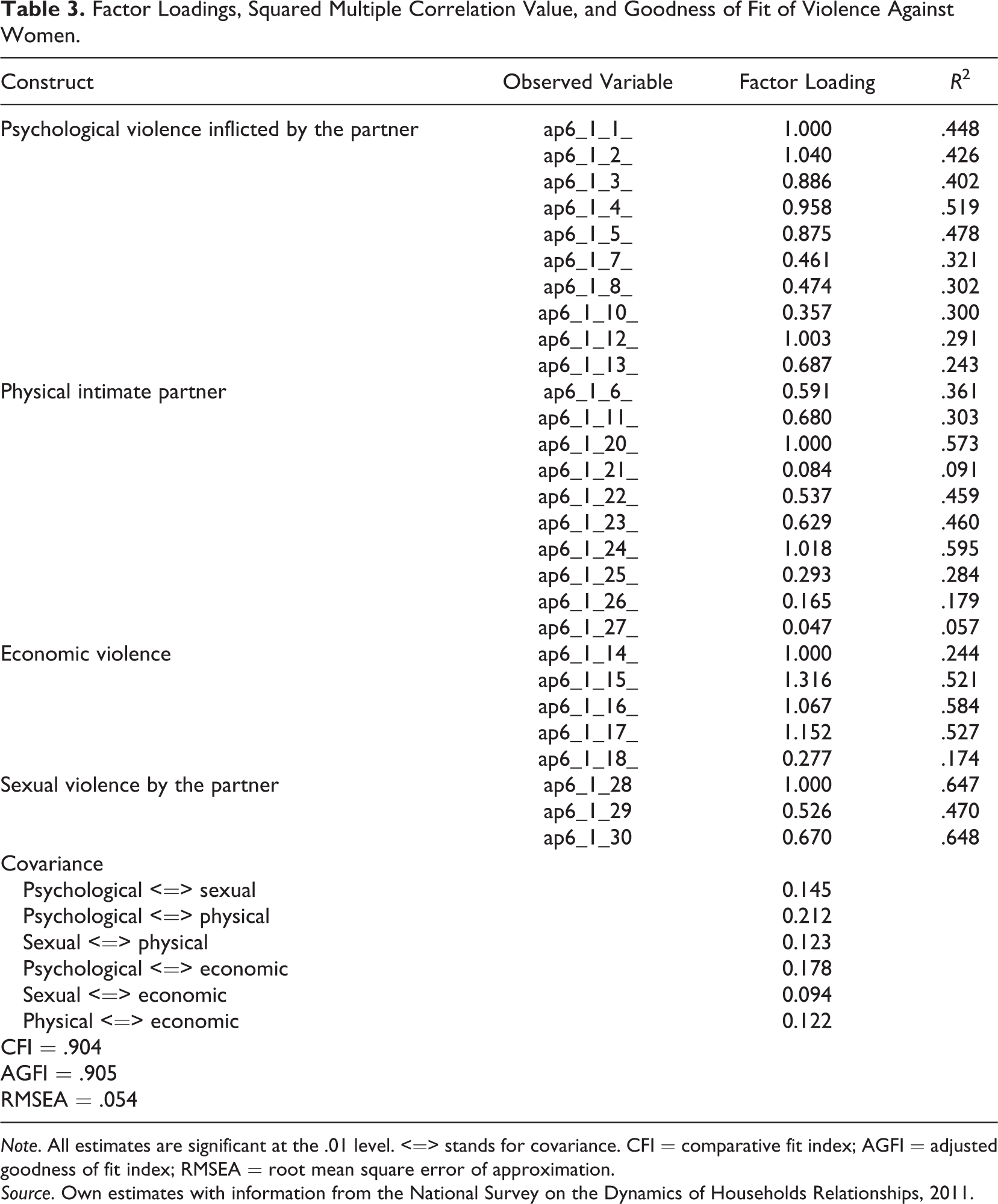
Note. All estimates are significant at the .01 level. <=> stands for covariance. CFI = comparative fit index; AGFI = adjusted goodness of fit index; RMSEA = root mean square error of approximation.
Source. Own estimates with information from the National Survey on the Dynamics of Households Relationships, 2011.
Factor Loadings, Squared Multiple Correlation Value, and Goodness of Fit of Women’s Decision-Making Capacity.
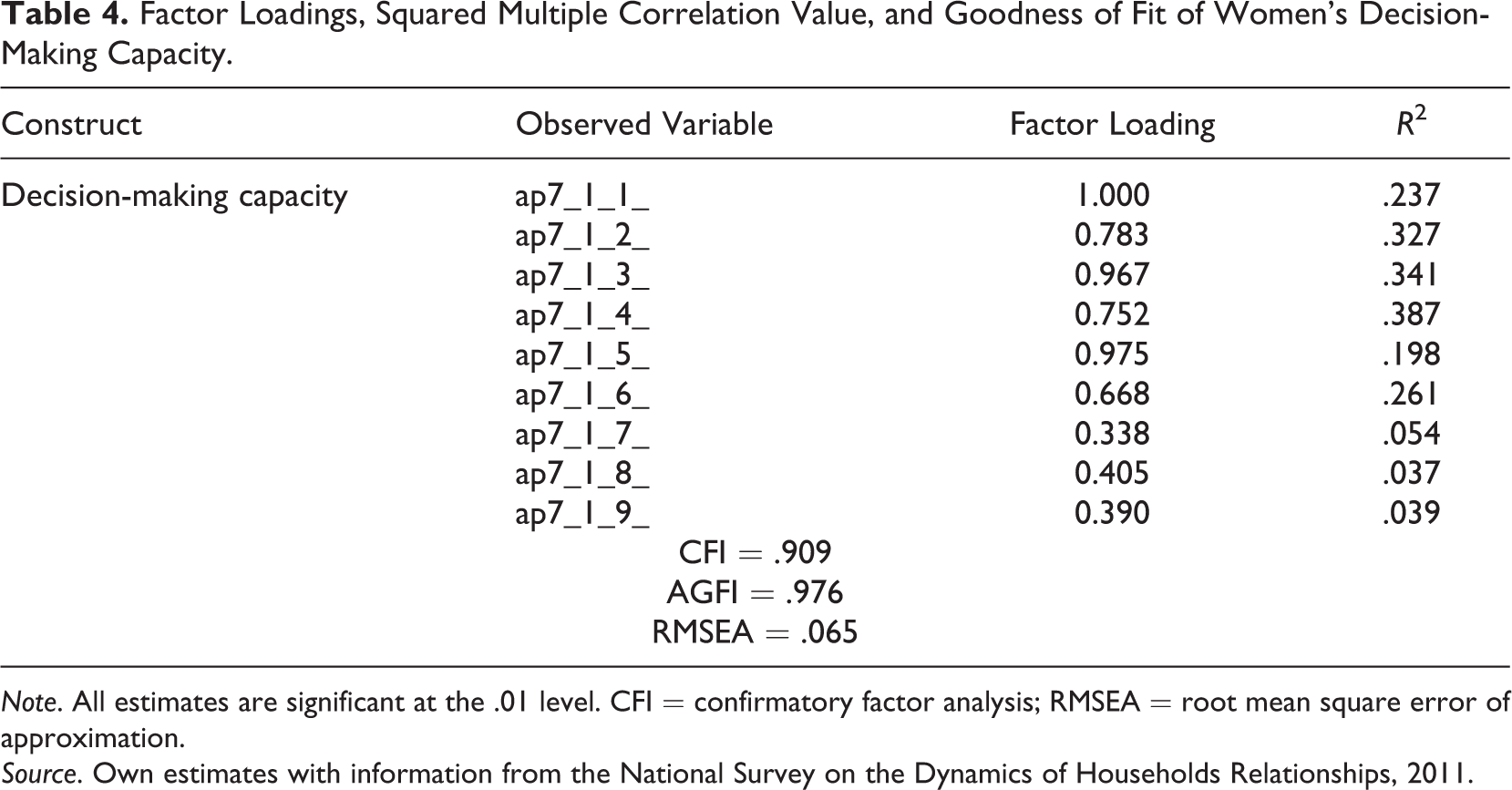
Note. All estimates are significant at the .01 level. CFI = confirmatory factor analysis; RMSEA = root mean square error of approximation.
Source. Own estimates with information from the National Survey on the Dynamics of Households Relationships, 2011.
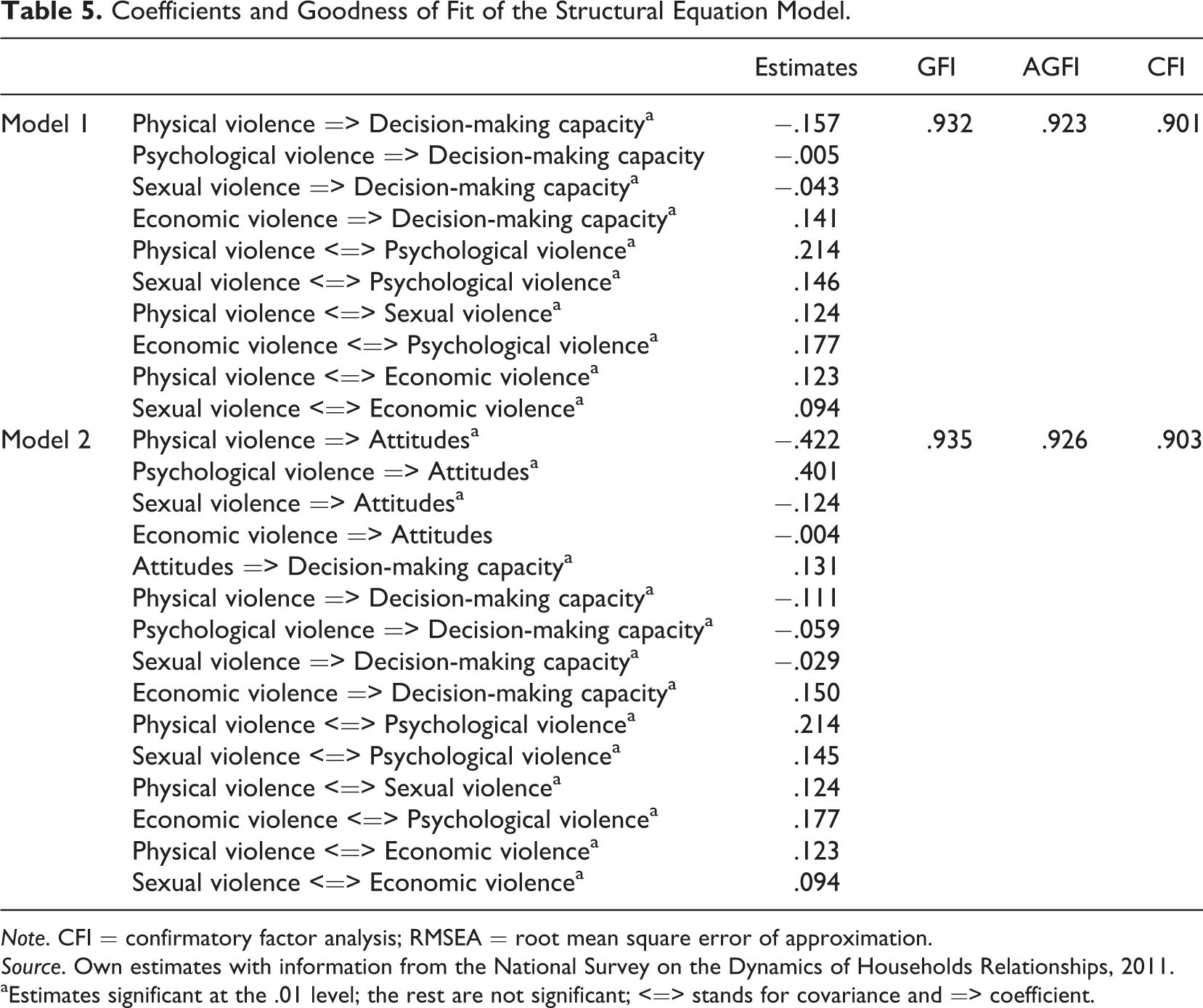
Table 5 presents the results from the estimation of the structural equation model for both models shown in Figure 1. Based on the results from Model 1, physical and sexual violence committed by the partner reduces women’s decision-making capacity. On the other hand, economic violence is related to higher levels of women’s participation in decision-making, and psychological violence does not have a significant impact on their decision-making capacity. When incorporating attitudes toward gender equality as a mediator between all forms of violence and decision-making capacity, the direct effect of sexual and physical violence on decision-making capacity decreases from −0.043 to −0.029 and from −0.157 to −0.111, respectively. The difference between both models measured through the difference in the χ2 statistics and degrees of freedom is significant. Meanwhile, when including women’s attitudes as a mediator, psychological violence does have a negative effect on their capacity to make decisions, and economic violence shows a positive effect on their decision-making capacity.
Coefficients and Goodness of Fit of the Structural Equation Model.
Note. CFI = confirmatory factor analysis; RMSEA = root mean square error of approximation.
Source. Own estimates with information from the National Survey on the Dynamics of Households Relationships, 2011.
aEstimates significant at the .01 level; the rest are not significant; <=> stands for covariance and => coefficient.
Regarding the impact of violence on women’s attitudes toward gender equality, women who endure physical and sexual violence inflicted by their partner are more likely to adopt traditional views concerning their roles. Meanwhile, the effect of psychological violence on women’s attitudes is positive. Economic violence, however, does not have a significant effect on their attitudes toward gender roles.
Findings show increases in women’s egalitarian attitudes lead to higher levels of decision-making capacity. These results reveal that women’s egalitarian attitudes function as a partial mediator between episodes of psychological, physical, and sexual violence and women’s decision-making capacity. Before including women’s attitudes as a mediator, psychological abuses did not have a significant effect on their capacity to make decisions. This reveals the importance of attitudes in the model as a relevant component in women’s decision-making capacity and as a process of change where women internalize occurrences of psychological, physical, and sexual violence.
Discussion and Conclusion
Women’s egalitarian attitudes and decision-making capacity are crucial elements for promoting their well-being. When women possess a less traditional view of their roles and are entitled to make decisions, they are more likely to defend their rights and improve their well-being. However, episodes of violence may affect these components. The purpose of this study was to identify the effect of different forms of violence against women on their attitudes toward gender equality and decision-making capacity. Working from a hypothesis that women’s attitudes toward gender equality are a mediator between all forms of violence and their capacity to make decisions, we acknowledge the importance of first analyzing the different forms of violence. By distinguishing among all forms of violence, findings from this study contribute to a more accurate understanding of the direct and indirect effects of violence on Mexican women’s decision-making capacity and their adoption of egalitarian attitudes.
Although violence and time span may lead women to underreport abusive incidents, this study finds relevant negative effects of experiences of violence on women’s decision-making capacity and attitudes toward gender equality. Chiefly, findings of this study point out dissimilar impacts on women’s decision-making capacity and attitudes toward gender equality depending upon the type of violence women experienced. Physical, sexual, and psychological violence constrains women’s capacity to make decisions. In contrast, women’s participation in decision-making increases after being exposed to economic violence. To confront economic violence, women are likely to seek strategies to maintain economic stability in the household (Turshen & Holcomb, 1993). When Mexican women experience economic violence to the point that households’ basic needs are not met, they adopt actions to fulfill essential needs such as demanding more resources from the government or selling food (Turshen & Holcomb, 1993). In Mexico, the informal labor market is mainly composed of women due to its flexible conditions and easy entry that allow women to perform both productive and reproductive activities (Cerrutti, 1997). Despite the fact that most women are raised with the idea that families should be headed by men and women’s role is domesticated and subordinated, and in many cases partners forbid women to work, women in Mexico who suffer violence are more likely to participate in the labor market than women who do not because a salary might help them survive without their partner’s support (Casique, 2012). Thereby, it can be argued that in the presence of economic violence, women are forced to draw on strategies to fulfill household members’ basic needs, which in turn leads them to increase their involvement in household economic decision-making. Results of this study indicate a higher involvement of women in decisions when they experience economic violence, but it is important to note that these decisions could be relegated solely on domestic issues rather than their lives, in general. In addition, economic violence against women may imply a detriment of their opportunities at work, their commitment to education attainment, and children’s nutrition and educational level. Economic violence also promotes children’s involvement in the labor force and sexual exploitation of women (Fawole, 2008).
Results from this study point out that psychological violence increases women’s egalitarian attitudes but decreases their decision-making capacity. To explain attitude change, Bolzendahl and Myers (2004) classify approaches as interest-based and exposure-based approaches. The theoretical foundation of the interest-based approach is that individuals are more likely to develop or change their attitudes toward gender equality when they benefit from more egalitarian positions of women in society. Meanwhile, the exposure-based perspective postulates that people’s equitable attitudes are developed through mechanisms that expose them to egalitarianism. According to the exposure-based perspective, when women suffer violence they experience awareness raising of such existing inequalities and, based on the interest-based approach, we can argue that they adopt more egalitarian positions because women benefit from equality. On the other hand, victims of violence may develop adaptation strategies, but they are not necessarily resilient (Perry, 1997). Drawing on psychological arguments and behavioral economics, victims of psychological violence may consciously comprehend that women should have the same rights as men or develop an understanding of such an ideal egalitarian world, but their actions do not necessarily reflect these ideas but rather the abusive situations with which they live. Kahneman (2013) distinguishes two modes of thought used in decision-making: reasoning and intuition. Intuition is characterized by automatic and emotionally charged actions, which are difficult to control or modify. Meanwhile, reasoning is controlled and generally rule governed. This implies that women who experience psychological violence may develop adaptation strategies such as egalitarian opinions about women’s positions in households and society, but when making decisions, unconsciously their behavior shows the tangible consequences of emotional abuses.
Implications for Social Work
Effective actions to eradicate violence are impossible without a deep understanding of the effects of the different types of violence against women. Social workers need to fully understand the complexity around women’s responses to abuses. In this regard, social workers need to understand women’s context and clearly identify their demands and needs. Also, social workers need to correctly identify the type of violence that women experience. Women who suffer one type of violence typically experience other forms of abuses (Grych & Swan, 2012; Smith et al., 2003). In many cases, when women suffer economic, physical, or sexual violence, they tend to minimize the episodes of psychological abuses. As shown in this study, the impacts of abuse widely vary depending on the form of violence that women live. Thereby, social workers need to be able to identify multiple types of violence and their consequences adequately. As found in this article, consequences of violence in women can be confusing and lead social workers not to identify all types of violence that women have experienced. For instance, if social workers do not focus on analyzing women’s autonomy to make decision on their lives, answers to questionnaires of women suffering psychological violence may indicate the lack of abuses in their lives. Questionnaires to detect violence against women may underestimate the episodes of violence with which women may live. The identification of the type of violence that women suffer influences social workers’ intervention. Asking more detailed questions regarding potential abuse and issues of power and control, the identification of abuse history, and incorporating a feminist approach in practice could be helpful for social workers to identify and understand the complex effects of all forms of violence in women’s lives.
Violence is supported by institutional asymmetries and a cultural framework (Marshall & Furr, 2010). Psychological violence may be minimized not only by the victim but also by authorities. A framework of legal recognition of women’s rights is of central importance for gender equality in society and within households (Marshall & Furr, 2010). Protecting women’s rights in societies where violence is highly prevalent requires changes of structures at different levels.
To receive support and assistance from institutions when women live with violence, most social programs and legal frameworks in Mexico include legal proceedings, organization rules, and women’s participation. As this study found, when women suffer abuses, they are often unable to make the kind of decisions which would help them to denounce the events of violence against them or enter into legal proceedings. In this regard, social programs that seek to prevent abuses and raise men’s awareness may produce more effective actions than promotion to denounce violence. In addition, social workers play an important role in accompanying and empowering victims to denounce abuses.
Social workers may find restriction on practice by legal proceedings, such as masculinist language and organization rules (White, 2006). By empowering women and promoting feminist activism, social workers can promote women’s representation in political institutions and participation in policy making, which in turn is likely to bring about changes in laws and policies that affect the well-being of women as well. Feminist social work practice plays an important role in liberating women from cultural stereotypes and promoting egalitarian values in society. If social workers heighten women’s interest in and promote egalitarian attitudes among women, egalitarian gender roles may arise.
A challenge for future research is to explore the effects of different forms of violence on women’s attitudes toward gender equality by groups, such as working and nonworking women. It is important to mention that although violence may restrict the development of capabilities due the detrimental physical and health consequences, this article only focuses on the effects related to women’s attitudes and capacity to make decisions. Also, this article does not control by other socioeconomic variables that might affect the impact of violence on women’s attitudes and decision-making capacity. Future studies should explore and test alternative associations between abuses and women’s decision-making. This study was primarily limited by the lack of longitudinal data of intimate partner violence in Mexico. The lack of longitudinal data limited the analysis of the long-term effects of violence on women’s decision-making capacity and development of egalitarian attitudes. In terms of operationalization, owning to the lack of a large number of variables, this article did not distinguish among the effects of violence on the different domains of women’s attitudes toward gender equality and decision-making capacity. Gender equality and decision-making are multidimensional concepts that encompass different areas such as female education, participation in the labor market, abortion, sexual rights, family organization, and child rearing, among others.
Footnotes
Declaration of Conflicting Interests
The author(s) declared no potential conflicts of interest with respect to the research, authorship, and/or publication of this article.
Funding
The author(s) received no financial support for the research, authorship, and/or publication of this article.