




Abstract
Immediate and strategic action is needed to improve environmental sustainability and reduce the detrimental effects of climate change. Climate change is already adversely affecting the health of Canadians related to worsening air pollution and wildfire smoke, increasing frequency and intensity of extreme weather events, and expansion of vector-borne and infectious illnesses. On one hand, radiology contributes to the climate crisis by generating greenhouse gas emissions and waste during the production, manufacture, transportation, and use of medical imaging equipment and supplies. On the other hand, radiology departments are also susceptible to equipment and infrastructure damage from flooding, extreme temperatures, and power failures, as well as workforce shortages due to injury and illness, potentially disrupting radiology services and increasing costs. The Canadian Association of Radiologists’ (CAR) advocacy for environmentally sustainable radiology in Canada encompasses both minimizing the detrimental effects that delivery of radiology services has on the environment and optimizing the resilience of radiology departments to increasing health needs and changing patterns of disease on imaging related to climate change. This statement provides specific recommendations and pathways to help guide radiologists, medical imaging leadership teams, industry partners, governments, and other key stakeholders to transition to environmentally sustainable, net-zero, and climate-resilient radiology organizations. Specific consideration is given to unique aspects of medical imaging in Canada. Finally, environmentally sustainable radiology programs, policies, and achievements in Canada are highlighted.
This is a visual representation of the abstract.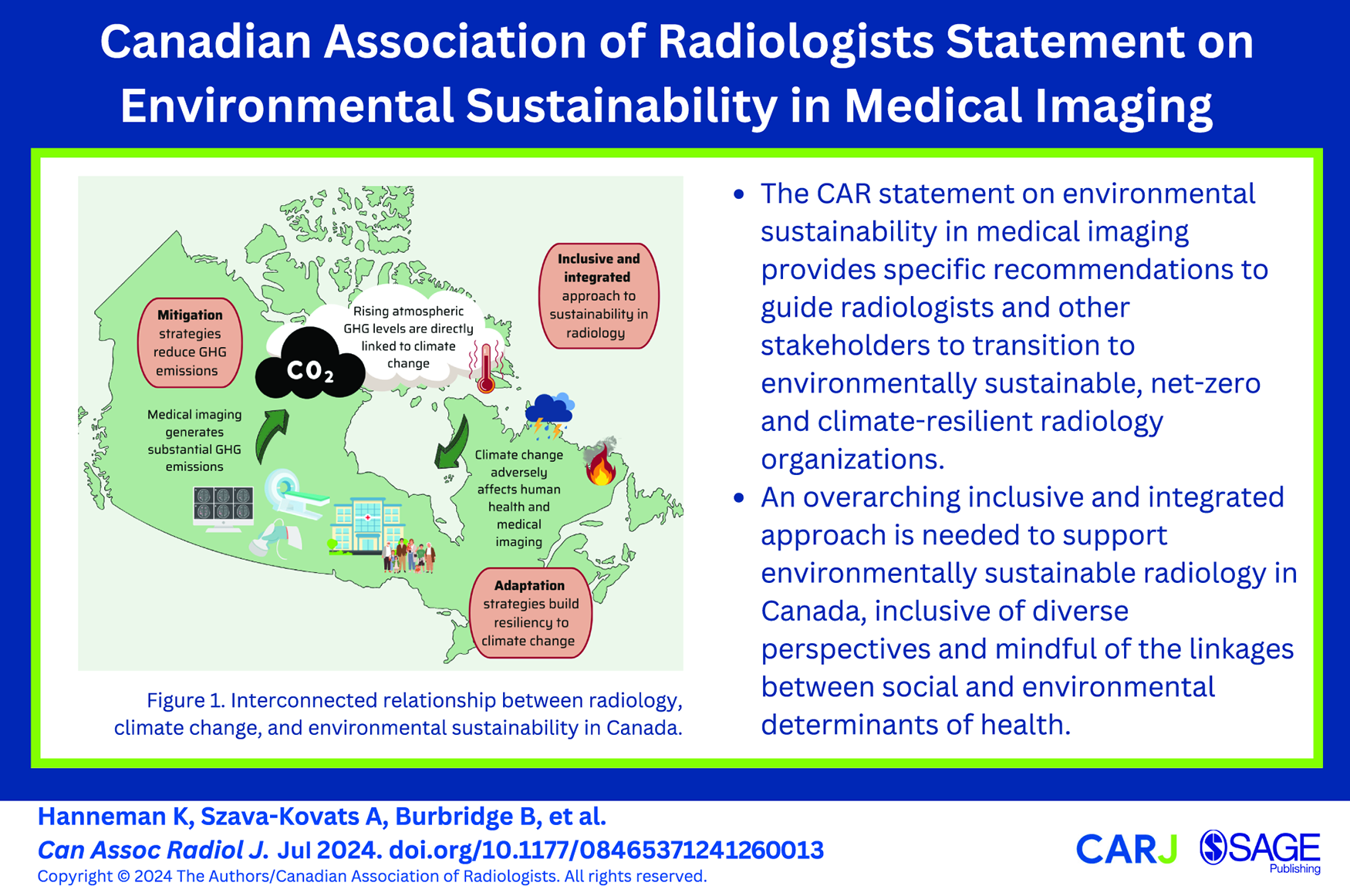
Background and Rationale
Immediate and strategic action is needed across sectors to improve environmental sustainability and reduce the detrimental effects of climate change. The predominant driver of climate change is human activities related to burning fossil fuels, which increase atmospheric greenhouse gas (GHG) levels, leading to rising global temperatures and disruption of climate and weather systems. A 2018 life cycle analysis estimated that Canada’s healthcare system was responsible for 33 million tons of carbon dioxide equivalents (CO2e) annually, accounting for 4.6% of the national total of GHG emissions. 1
Radiology contributes to the climate crisis by generating GHG emissions and waste during the production, manufacture, transportation, and use of medical imaging equipment and supplies.2-4 A cross-sectional analysis of a single large Canadian hospital-based radiology department demonstrated substantial GHG emissions of 3235 tons CO2e annually, equivalent to the energy consumed by 422 single-family homes. 5 Mitigation strategies to reduce GHG emissions and achieve net-zero, environmentally sustainable radiology departments are needed. At the same time, radiology departments must also build resiliency to current and future impacts of the climate crisis. 6
Climate change is already adversely affecting the health of Canadians related to worsening air pollution and wildfire smoke, increasing frequency and intensity of extreme weather events, and expansion of vector-borne and infectious illnesses. 7 These health effects result in higher health needs and healthcare utilization among the patients and populations served by medical imaging departments in Canada. Climate change affects everyone; however, vulnerable and disadvantaged individuals and groups are disproportionately affected due to health inequities. 8 Radiology departments are also susceptible to equipment and infrastructure damage from flooding, extreme temperatures, and power failures, as well as workforce shortages due to injury and illness, potentially disrupting radiology services and increasing costs. 9
The Canadian Association of Radiologists’ (CAR) advocacy for environmentally sustainable radiology in Canada encompasses both minimizing the detrimental effects that delivery of radiology services has on the environment and optimizing the resilience of radiology departments to increasing health needs and changing patterns of disease on imaging related to climate change (Figure 1). An overarching inclusive and integrated approach is needed to support environmentally sustainable radiology in Canada, inclusive of diverse perspectives and mindful of the linkages between social and environmental determinants of health.
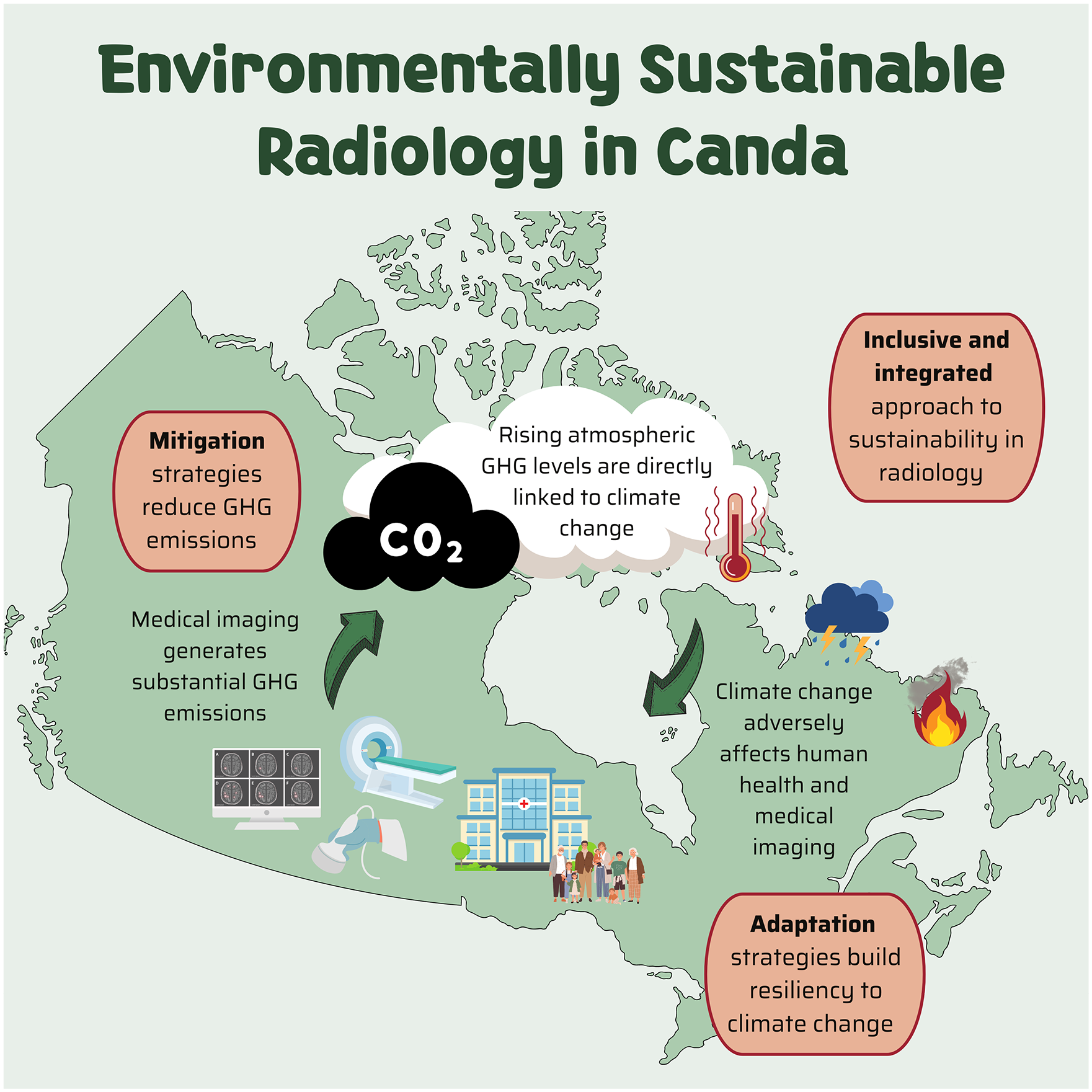
Interconnected relationship between radiology, climate change, and environmental sustainability in Canada. Mitigation strategies reduce greenhouse gas (GHG) emissions. Adaptation strategies build resiliency to current and future impacts of the climate crisis. An inclusive and integrated approach is needed to support environmentally sustainable radiology, inclusive of diverse perspectives and mindful of the linkages between social and environmental determinants of health.
This document was inspired by and modelled after the Canadian Medical Association’s policy on Environmentally Sustainable Health Systems in Canada. 10 The CAR environmental sustainability statement provides specific recommendations and pathways to help guide radiologists, medical imaging leadership teams, industry partners, governments, and other key stakeholders to transition to environmentally sustainable, net-zero, and climate-resilient radiology organizations. Specific consideration is given to unique aspects of medical imaging in Canada including the public payor system administered in each province and the vast geography with implications related to equitable access to medical imaging in rural and remote communities.
Environmentally sustainable radiology programs, policies, and achievements in Canada are highlighted including energy and cost-savings associated with powering down CT units when not in use in Vancouver (Figure 2), 11 unnecessary repeat imaging avoided with implementation of a provincial-wide clinical information and picture archiving and communication system in Alberta and other provinces (Figure 3), 12 implementation and evaluation of remotely controlled, robotic ultrasound in remote northern communities in Saskatchewan (Figure 4), 13 GHG emission and cost savings associated with implementation of portable low-field MRI in a remote Ontario community (Figure 5), 14 and energy and GHG emission savings associated with implementation of abbreviated MRI protocols in Toronto (Figure 6). 15 However, further action is needed to achieve sustainable and climate-resilient radiology departments in Canada and to ensure a healthy and sustainable future for current and future generations.

Energy and cost-savings associated with powering down CT units when not in use. 11
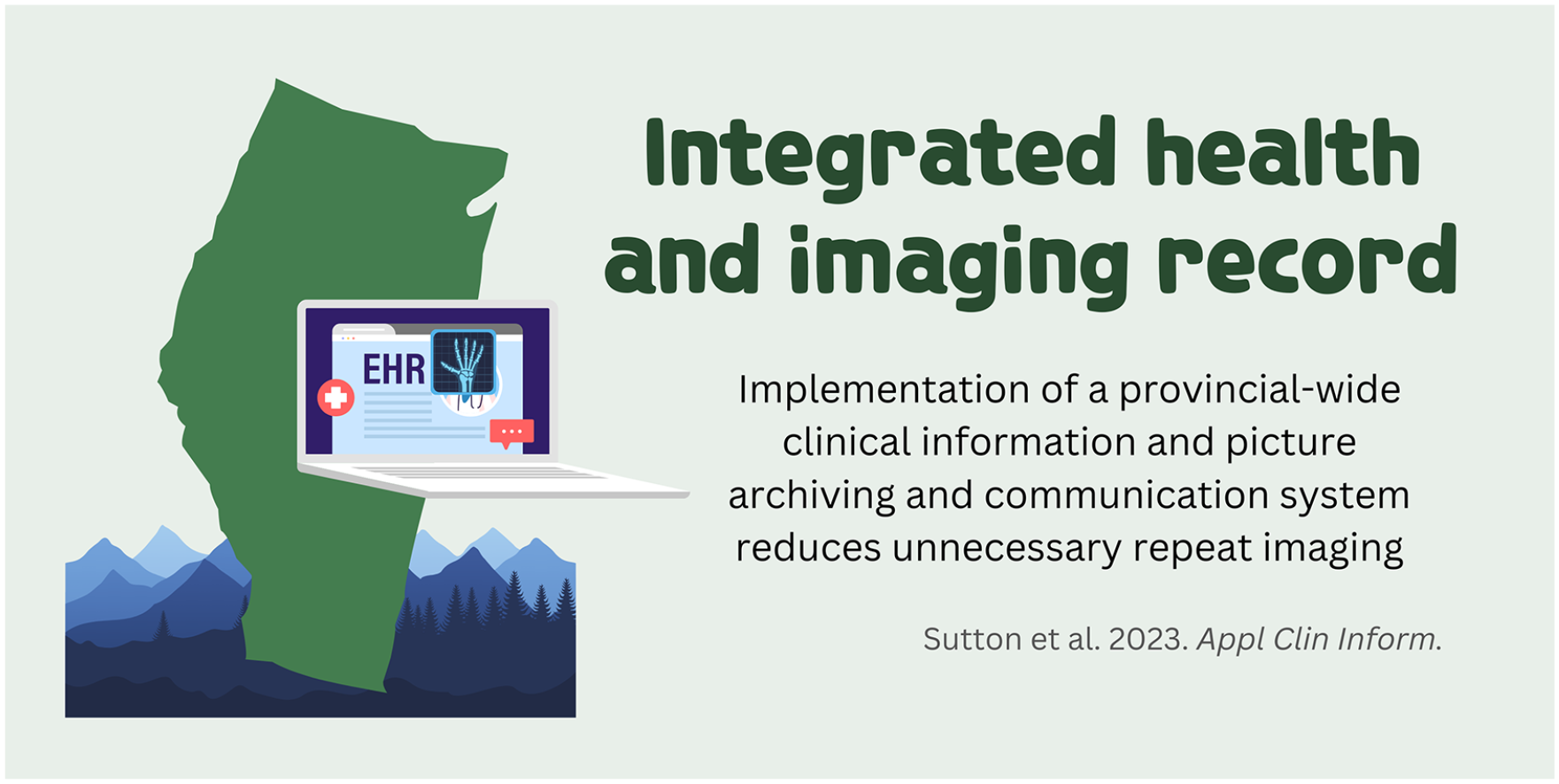
Integrated provincial-wide clinical information and picture archiving and communication system can reduce the need for repeat imaging and associated greenhouse gas emissions. 12

Remotely controlled robotic ultrasound can potentially reduce patient travel and greenhouse gas emissions while improving access to medical imaging. 13

Portable low-field MRI can potentially avoid greenhouse gas emissions associated with patient and radiologist travel and reduce cost. 14

Implementation of an abbreviated cardiac MRI protocol reduces time, energy use, and greenhouse gas emissions. 15
Recommendations
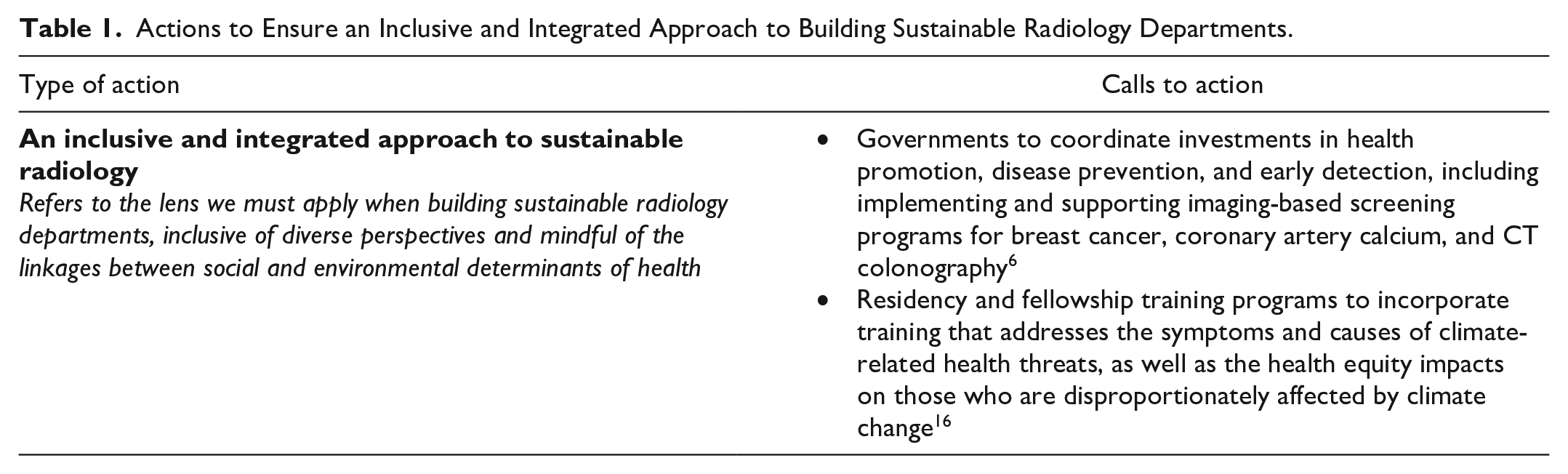
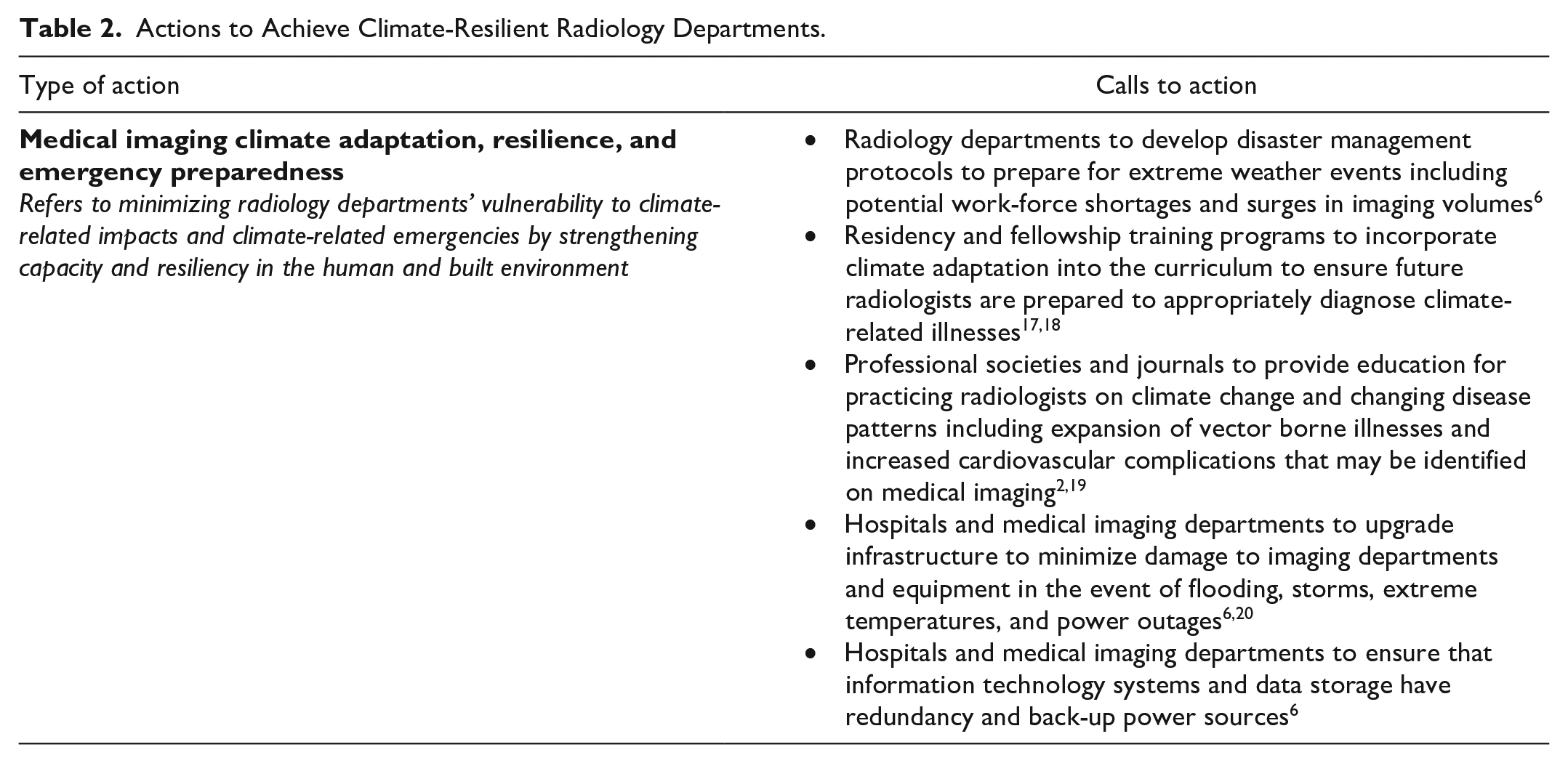
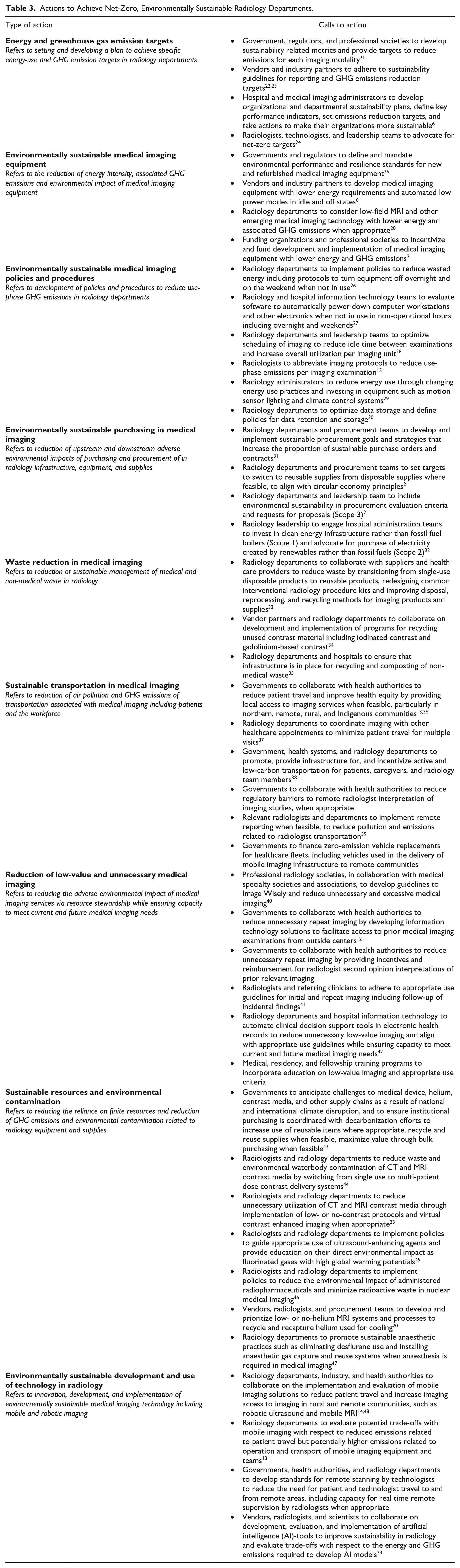
The CAR board has endorsed multiple recommendations and actions regarding radiology environmental sustainability in Canada. To ensure an inclusive and integrated approach to building sustainable radiology departments, the CAR calls for an inclusive and integrated approach to sustainable radiology (Table 1). To achieve climate-resilient radiology departments, the CAR calls for medical imaging climate adaptation, resilience, and emergency preparedness (Table 2). To achieve net-zero, environmentally sustainable radiology departments, the CAR calls for energy and greenhouse gas emission targets, environmentally sustainable medical imaging equipment, environmentally sustainable medical imaging policies and procedures, environmentally sustainable purchasing in medical imaging, waste reduction in medical imaging, sustainable transportation in medical imaging, reduction of low-value and unnecessary medical imaging, sustainable resources and environmental contamination, and environmentally sustainable development and use of technology in radiology (Table 3).
Actions to Ensure an Inclusive and Integrated Approach to Building Sustainable Radiology Departments.
Actions to Achieve Climate-Resilient Radiology Departments.
Actions to Achieve Net-Zero, Environmentally Sustainable Radiology Departments.
Footnotes
Acknowledgements
Mark Given, Andra Morrison, Margorie Gonzalez, Pete Tonseth.
Declaration of Conflicting Interests
The author(s) declared the following potential conflicts of interest with respect to the research, authorship, and/or publication of this article: KH: Co-Chair CAR Environmental Sustainability Working Group; Deputy Lead Sustainability, JDMI; Chair, ISMRM Environmental Sustainability Working Group; Member, RSNA Sustainability Task Force; Member, AUR Sustainability Committee; Associate Editor, Canadian Association of Radiologists Journal. AH: Regional Department Head, Medical Imaging VCH and PHC; Vice-President, Canadian Association of Radiologists. MJB: Co-Chair CAR Environmental Sustainability Working Group; Co-Chair BC Cancer Planetary Health Unit; Member, AUR Sustainability Committee; Member, Canadian Association of Physicians for the Environment.
Funding
The author(s) received no financial support for the research, authorship, and/or publication of this article.
