




Abstract
Palaeoclimatic reconstructions necessitate an understanding of the various biotic and abiotic responses to develop a modern analogue. The interpretation and calibration of the modern data allow us to check the lead-lag effect in different proxy parameters, which could be applied for robust palaeoclimatic reconstructions. We, in the present study, analysed pollen and diatom (biotic proxies), as well as grain size, magnetic susceptibility and geochemistry (abiotic components) of the modern soil samples, collected from the states of Madhya Pradesh and Chhattisgarh, the Core of the Monsoon Zone (CMZ) in central India. The weathered materials of the Palaeocene Cretaceous extrusive rocks and sedimentary rocks of the Late Triassic to the Upper Carboniferous are underlying the soil cover in these areas, respectively. The study revealed that the overall pollen and diatom preservation is comparatively good in the areas where the Palaeocene Cretaceous extrusive rocks are found except for the areas of human settlements, whereas the preservation of pollen and diatom was comparatively poor in areas where sedimentary rocks of the Late Triassic to Upper Carboniferous are found. The most plausible reason for this difference is the availability of nutrients which are supplied more abundantly by the easily weatherable Deccan basalt rocks compared to their sedimentary counterparts. The present study will serve as baseline information about biotic-abiotic interactions operating in the central Indian Core Monsoon Zone (CMZ). Since the intensity and duration of the rainfall in the CMZ are largely governed by the annual Indian summer monsoon rainfall (AISMR), therefore, the present study could help trace the weak or intense monsoon periods (break and active spells, respectively) of the past hundreds to thousands of years by studying the sediment profiles/cores.
Keywords
Introduction
The ecology and its environment comprise an intrinsic network of interactions among various biotic and abiotic components that are influenced by both internal and external driving factors. At present, most of the natural ecosystem interacts with variable sources in varying capacities and causes unbalanced oddity in nature. A significant transformation for a short duration or a prolonged period can be caused by a slight or a considerable imbalance. Since the instrumental record of climate is meagre and scanty, it is difficult to assess the long-term climatic fluctuations. Therefore, the proxy-based climatic assessment is the only option left to reconstruct the past conditions having wider implications. In proxy-based studies, it is wise to do multi-proxy studies that enable delivering a wide range of valued information about environmental deviations in the present and past. The amalgamation of several physical/abiotic and biotic proxies aims to disentangle valuable information and strengthen consequent environmental reconstructions as a single-proxy-based study has its limitations. Furthermore, the multi-proxy studies clubbed with statistical analyses provide robust inferences to any research problem. The findings can be fortified if the interactions among the multi-proxy data can be validated by the modern analogue of various inputs on the same set of samples. Given the understanding of the complex nature of the ecosystem and environment, it is anticipated to acquire information from several (abiotic and biotic) proxies to achieve a wider overview of the environmental condition (Smol, 2002). The dynamics of the present-day ecosystems associated with their landscape, geology and vegetation aim to provide subtle variations that can provide clues for reconstructing past ecosystems, biotic responses and natural and anthropic climatic variability. Vegetation is an integral and basic composition of the ecosystem of an area, which is sensitive to and governed by climatic changes. The distribution pattern of vegetation is strongly dependent on the climatic conditions (precipitation, temperature), soil characteristic and altitude, as well as on human impact (Chen et al., 2006; Faegri & Iversen, 1964; Gasse et al., 1991; Ivanov et al., 2007; Kar et al., 2022; Kar & Quamar, 2019; Mishra et al., 2022; Quamar & Kar, 2020b; Sun & Wu, 1987 and references cited therein). Moreover, characterising pollen, which is produced by the vegetation itself, and its spatial distribution in a geological past regarding the existing vegetation structure of an area is crucial for understanding past climatic changes (Birks & Birks, 1980, 2005; Gaillard et al., 1992; Gosling et al., 2005; Jackson & Williams, 2004; Kar & Quamar, 2019; Mohanty et al., 2024; Quamar, 2020; Quamar & Kar, 2020a; Quamar et al., 2023, 2024; Traverse, 1988 and references cited therein). Rational knowledge and understanding of modern pollen-vegetation relationship is, moreover, imperative and prerequisite for the reconstruction of past vegetation and climate change through studying the fossil pollen records (Bradshaw & Webb, 1985; Birks & Berglund, 2018; Faegri & Iversen, 1989; Jackson, 1994). The study serves as a modern analogue and minimises the bias, which arises owing to several influencing factors, such as taphonomy, bioturbation, translocation and destruction, as well as differences in pollen production and dispersal between taxa of angiosperms and gymnosperms, the structure of the surrounding vegetation, taxonomical pollen resolution and differential pollen preservation among taxa (Bush & Rivera, 2001; Faegri & Iversen, 1964; Jackson & Lyford, 1999; Poska & Pidek, 2010; Prentice, 1985; Prentice et al., 1987; Quamar & Kar, 2020a; Sugita, 2007; Tauber, 1965 and references cited therein).
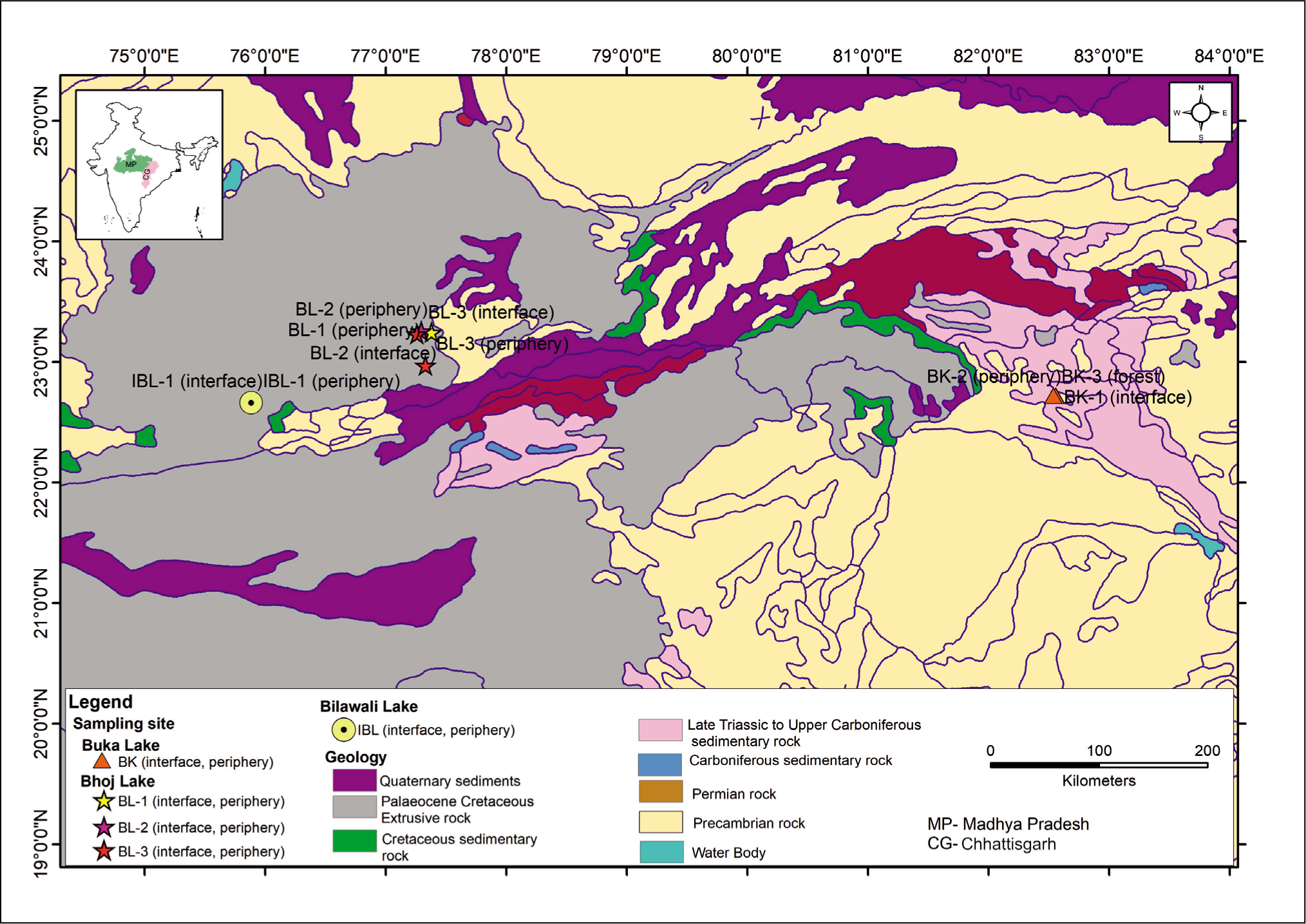
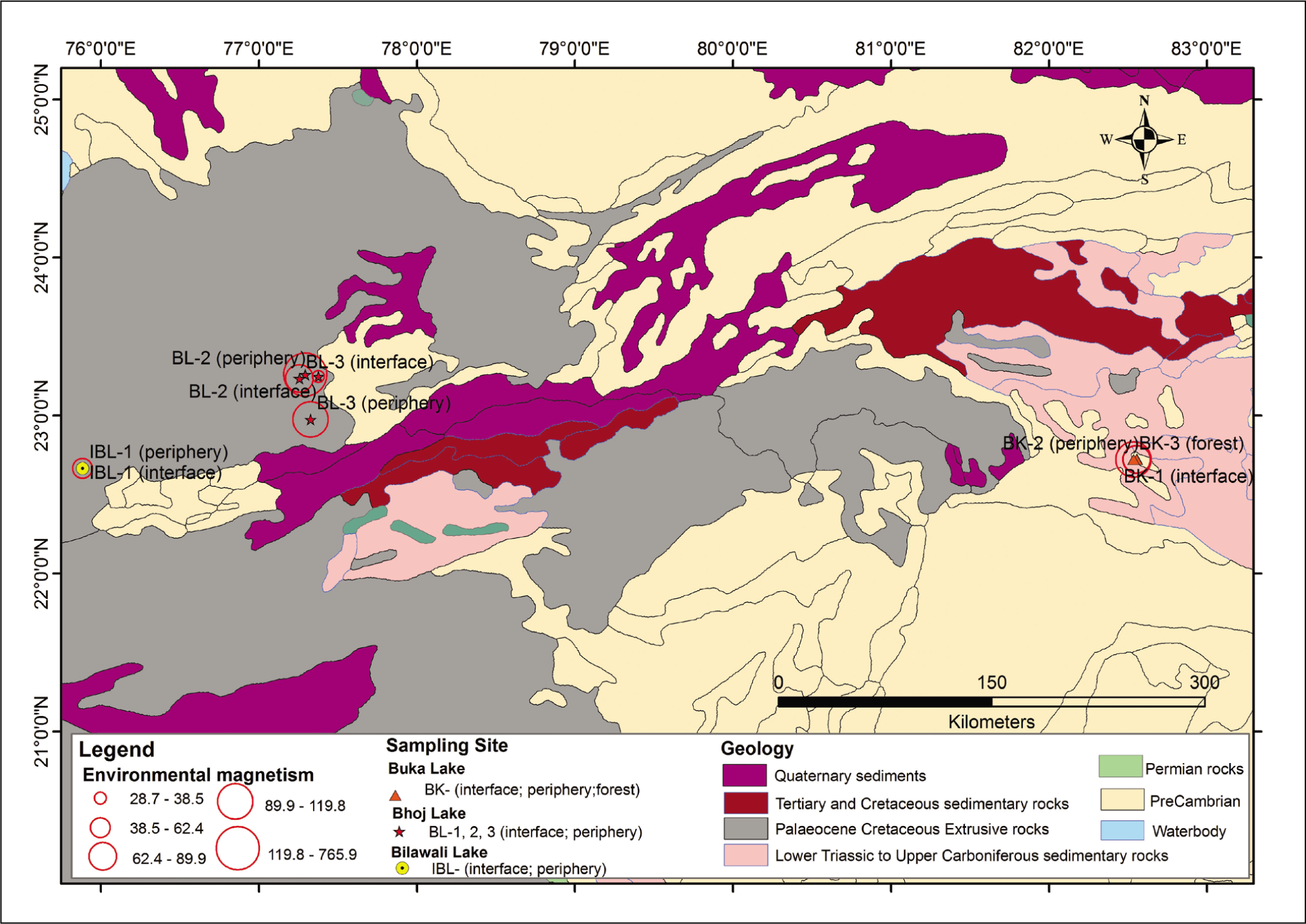
The present study aims to create a baseline protocol and provide information about biotic-abiotic interactions in the central Indian Core Monsoon Zone (CMZ), which serves as a modern analogue and transfers the down core data for the accurate interpretation of the palaeoclimate studies (ongoing) in this region. The CMZ represents well the rainfall variations during July and August, and, thus, defines the intensity of annual Indian summer monsoon rainfall (ISMR). Being extremely sensitive to the variations in Indian Summer Monsoon (ISM) precipitation, it is also the key region for the identification of weak or intense monsoon periods, referred to as break and active spells, respectively (Gadgil & Rajeevan, 2008; Rajeevan et al., 2010; Zorzi et al., 2015). To investigate the spatial effect of modern-day properties of the sediment on the climatic and geological variation, sampling was done in an East-West transact (Figure 1). The multi-proxy study using pollen/spore, diatoms, textural analysis, magnetic susceptibility (MS) and major oxides was conducted to construct a modern analogue for vegetation change, limnology, sediment transport, weathering indices for proximal and distal trends in the modern environment, which can be applied to sediment cores to reconstruct long term climatic records. The objective is to establish the integration of results from biotic components, such as pollen and diatom, as well as from abiotic components. Moreover, the study focuses on unravelling the biotic relation because of the sediments properties and different nutrients, supplied to every lake which suffices the local and regional vegetation components, soil characteristics and limnic behaviour which respond due to the natural and anthropogenic factors.
Geological map of central India, showing the locations (‘yellow circle’, ‘red star’ and ‘orange triangle’) of the study area.
study area, geology and soil
Madhya Pradesh (21°N–27°N: 74°E–82°E) and Chhattisgarh (18°N–24°N: 79°E–85°E) are the two main states/regions of central India, located within the central Indian CMZ (Quamar et al., 2024). The study area, in general, is a flat region utilised for agricultural practice by the local inhabitants. However, uneven land surfaces with deep gorges can also be seen. Hilly soils, red-yellow, red sandy soils, sandy soil and alluvial soils, as well as laterite soils, are found (Quamar, 2019; Quamar & Chauhan, 2012; Quamar & Bera, 2020; Quamar & Kar, 2020b; Quamar et al., 2021 and references cited therein).
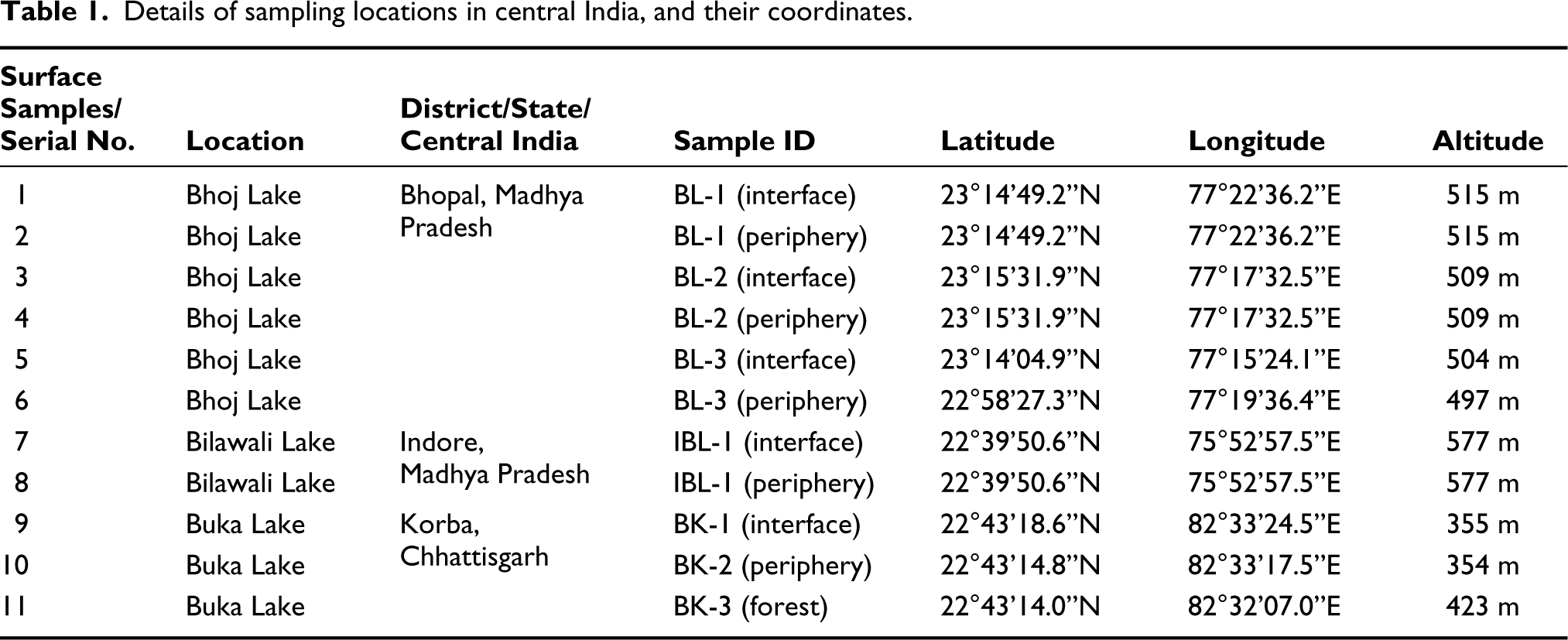
The sediment samples were collected from lakes and forests area in the geological settings of Deccan Basalt, Late Triassic to Upper Carboniferous sedimentary rocks and Precambrian rocks, lying roughly between 22º–23º latitude and 76º–84º longitudes. The three lakes selected across the transact are Bilawali (22°39’50.6”N: 75°52’57.5”E; 577 m a.m.s.l.), Bhoj (23°14’49.2”N:77°22’36.2”E; 515 m a.m.s.l.) and Buka (22°43’18.6”N: 82°33’24.5”E; 355 m a.m.s.l.) from west to east
Details of sampling locations in central India, and their coordinates.
Vegetation
The vegetation is characterised by the presence of tropical deciduous forests (both moist and dry types) (Champion & Seth, 1968; Quamar & Kar, 2020a). Different types of forests constitute the vegetation especially (i) Sal (Shorea robusta Gaertn. f.) dominated forest in eastern Madhya Pradesh, (ii) Teak (Tectona grandis L. f.) dominated forest in south and southwestern Madhya Pradesh and (iii) Mixed deciduous forest in Chhattisgarh State (Chauhan & Quamar, 2010; Quamar & Chauhan, 2012; Quamar et al., 2021). The common associates of the forests can be seen in Quamar and Chauhan (2012) and Quamar and Bera (2017a).
Climate
The entire region experiences a tropical savannah-type climate (Aw), as well as a mesothermal—Gangetic Plain-type climate (Cwg; Köppen, 1936; Quamar & Kar, 2020b). The mean annual temperature is 25.66 ºC and the mean annual precipitation is 972.44 mm in Madhya Pradesh, whereas 25.69 ºC and 1242.56 mm are the mean annual temperature and mean annual precipitation, respectively, in Chhattisgarh State. Most of the precipitation (~90%) occurs through the South West Monsoon during June to September (JJAS), whereas some precipitation also takes place in these two States during October, November and December (OND) due to the northeast Monsoon (NEM) or Winter Monsoon (Quamar, 2022).
Materials and Methods
Sampling Design
Surface sediment samples were collected by the hand pick method and also with the help of spatula from multiple locations in central India to study the pollen deposition pattern in the (core monsoon) region (Table 1). All samples were put into separate ziplock bags to avoid contamination and mixing and were preserved till maceration and further analysis. The rationale adopted to collect modern sediment samples from the interface, periphery and also from the forested area of the Bilawali Lake (Indore; sample code: IBL) and Bhoj Lake (Bhopal; sample code: BL), Madhya Pradesh, as well as from the Buka Lake (Korba; sample code: BK), Chhattisgarh, central Indian CMZ, respectively was to assess and understand the spatial variation of the biotic and abiotic proxy responses in an east-west transact, wherein the weathered soil materials of the Palaeocene Cretaceous extrusive rocks and sedimentary rocks of the Late Triassic to the Upper Carboniferous, respectively, are underlying.
A multi-proxy study using pollen/spore, diatoms, textural analysis, MS and major oxides was conducted at the Quaternary Laboratory and Sophisticated Analytical Instruments Facilities (SAIF) in the Birbal Sahni Institute of Palaeosciences (BSIP), Lucknow, India (
Protocol for Sample Processing
For the methodology and protocol for sample processing, please see Supplementary File 1.
Results
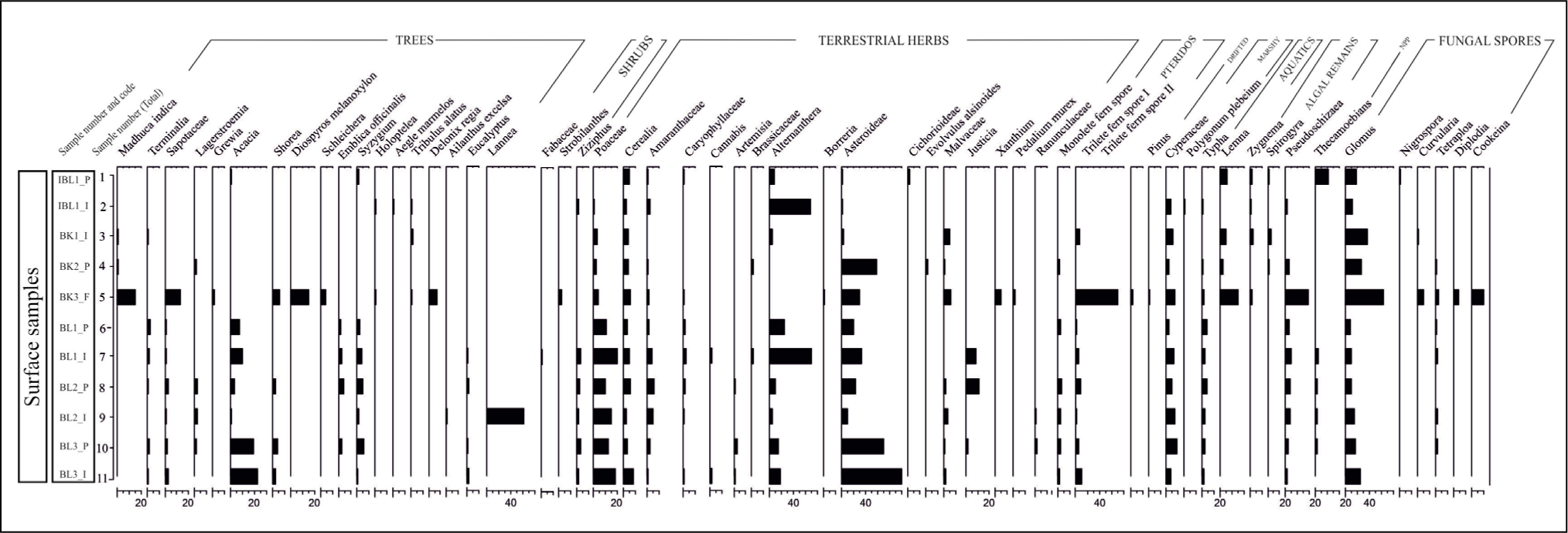
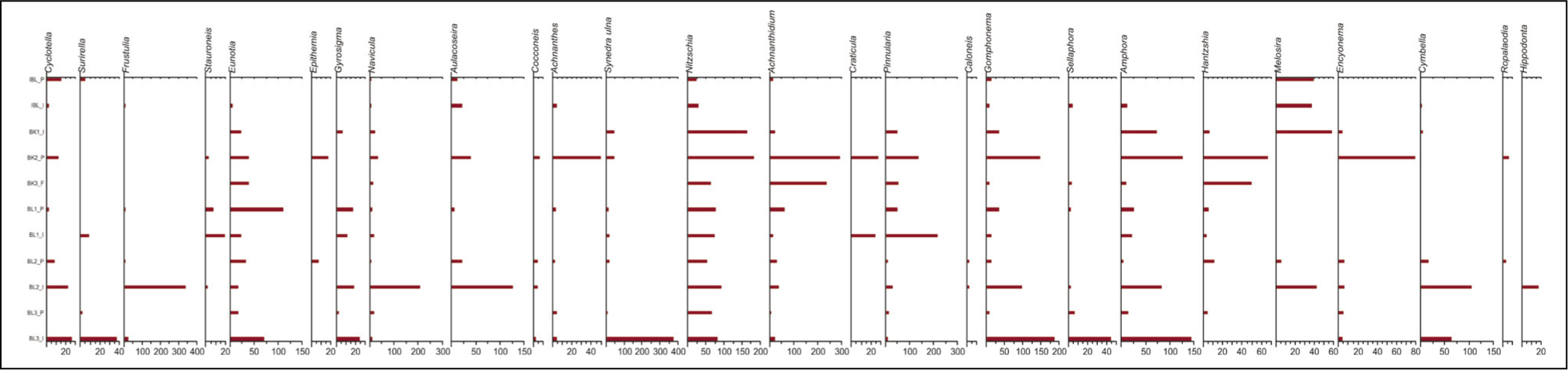
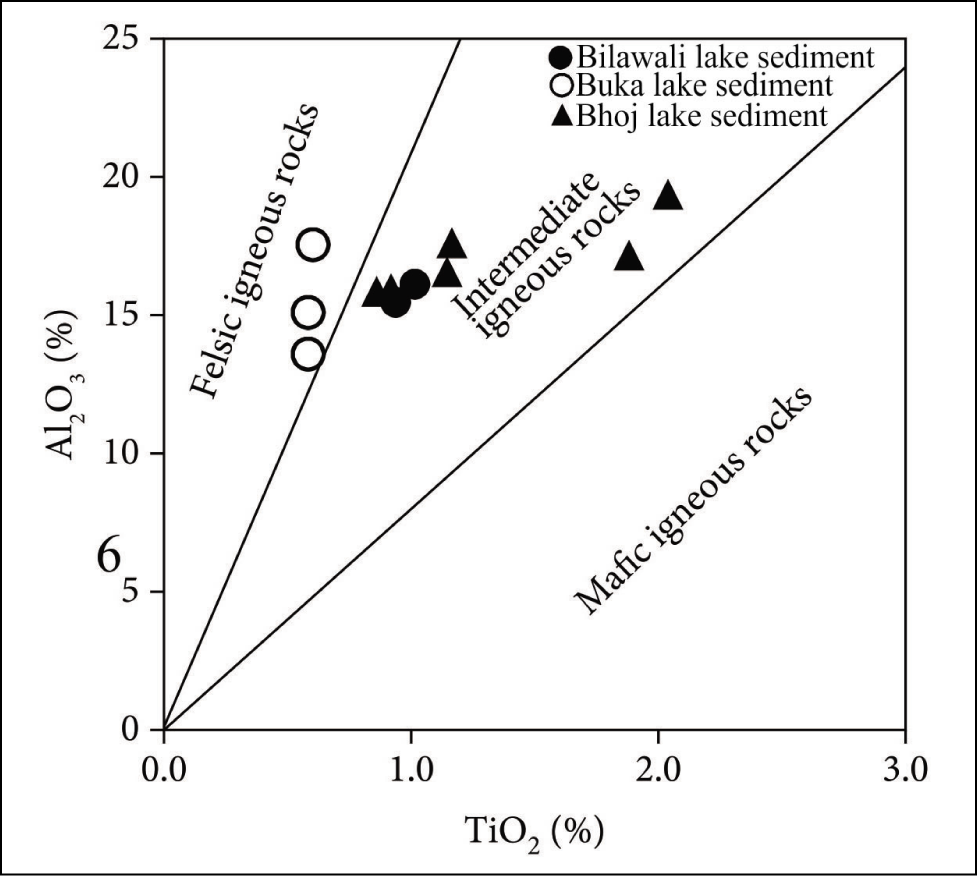
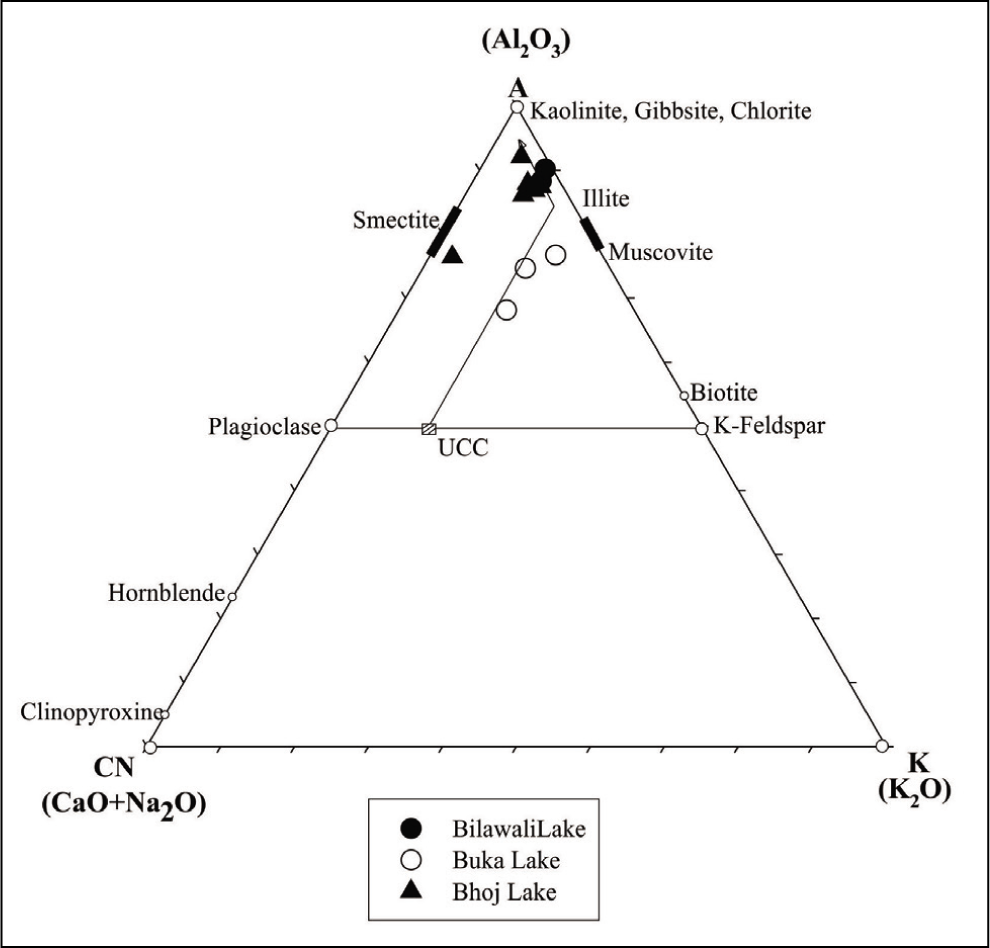
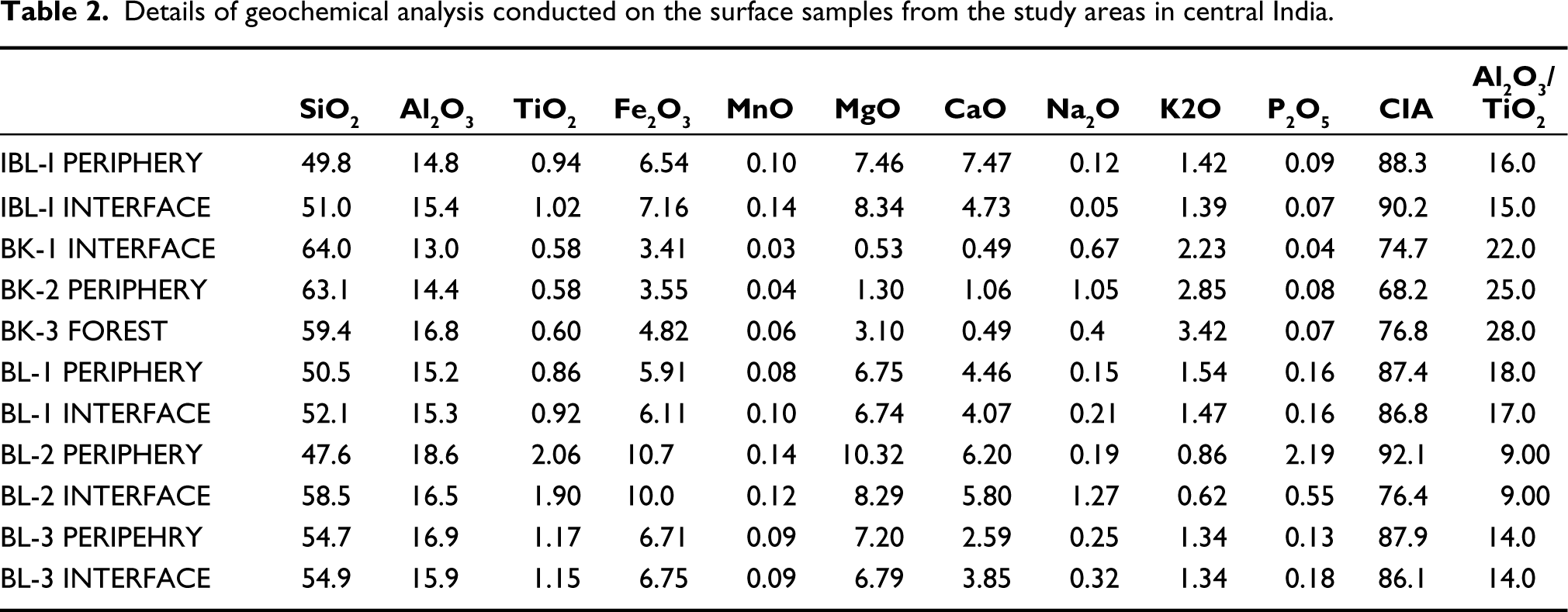
The pollen spectra, diatom distribution chart and geochemistry records are shown in Figures 2–4, respectively. However, Figure 5 shows the sampling locations along with MS values of the samples overlaid on the geological map, and Figure 6 shows the measured MS values of sediment samples from the three studied lakes. Table 2 shows the details of the geochemical analysis conducted on the surface samples from the study areas in central India. Further details can be found in Supplementary File 1.
Modern pollen spectra from the study area in central India.
Frequency distribution chart of diatoms from the study area in central India.
Biplot of Al2O3-TiO2 for understanding the provenance characteristics from the studied sites of central India.
Magnetic susceptibility (MS) range of the studied sites in central India overlaid on the geological map.
Ternary A-CN-K plot of the studied samples from central India.
Details of geochemical analysis conducted on the surface samples from the study areas in central India.
Interpretation
Inferences on Modern Pollen-Rain/Vegetation Relationship
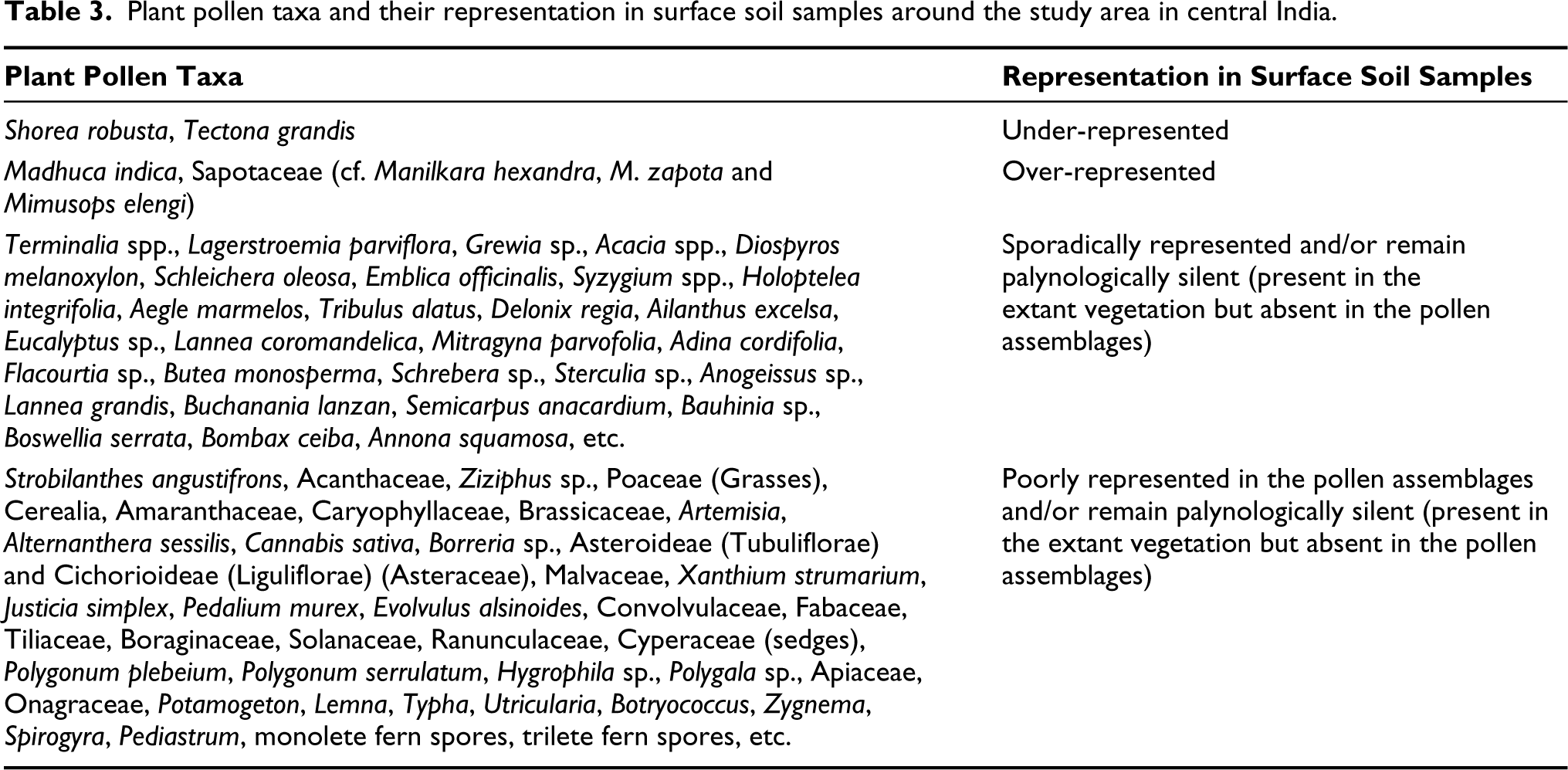
Understanding the relationship between modern pollen-rain and extant vegetation or pollen deposition pattern of an area is an indispensable and crucial aspect of pollen analysis. The information on the modern pollen-rain/vegetation relationship serves as a modern analogue for the precise interpretation of fossil pollen records for understanding the past vegetation dynamics and associated climate change in any region. The pollen spectra revealed the dominance of non-arboreal taxa (NAPs; herbs) over the arboreal pollen taxa (APs; trees and shrubs). Among the tree taxa of the arboreals, S. robusta (Gaertn. f.), despite being an enormous pollen producer (about 60,000 pollen grains/flower [Atluri et al., 2004]; however, 61,020–94,600 pollen grains have also been reported per flower [Bera, 1990]), and a dominant taxon in eastern Madhya Pradesh and also one of the chief constituents of the mixed tropical deciduous forest in Chhattisgarh, is encountered with an average value of <1% pollen only in the pollen spectra. This abnormality in the behaviour of Shorea plant pollen could be ascribed to its poor preservation in the surface samples, as well as low (pollen) dispersal efficiency. Tectona grandis (L. f.) is also a high pollen producer with a 7,500 average number of absolute pollen/flower (Bhattacharya et al., 1999). But, despite being a high pollen producer and also a dominant taxon in western Madhya Pradesh and Chhattisgarh, this taxon remained palynologically silent (present in the extant vegetation, but absent in the modern pollen assemblage), which could mainly be attributed to its poor dispersal capacity, as well as poor preservation potential (Quamar & Bera, 2014a; Quamar & Kar, 2020a). Therefore, it is suggested that when these two dominating taxa are represented in the profile samples in the lower values, as represented in the modern soil samples, then, it would be of either sal-dominating forest or teak-dominating forest around the study area. Furthermore, Sapotaceae (e.g. Manilkara hexandra and Mimusops elangi) are comparatively recorded in good values (in the total pollen-rain), which could be attributed to its high pollen dispersal efficiency, as well as good pollen preservation in the surface samples, however, Madhuca indica has lesser values as compared to the other members of the family Sapotaceae. Besides, Terminalia, Syzygium, Acacia, Emblica officinalis, Lagerstroemia, Grewia, Schleichera, Diospyros, Holoptelea, Aegle marmelos, Tribulus alatus, Delonix regia, Ailanthus excelsa and Lannea have moderate to low values and has sporadic representation in the pollen-rain, which could be due to their good preservation, as well as preponderance around the sampling location. In addition, it is a well-known fact that a major fraction of pollen gets deposited within a distance of 100 m or so immediately after its discharge from the parent plants as the dense canopied forest prohibits its easy and longer exit, contrary to that of the open cultivated area where a distance of 200 m from the source has been observed to be a normal range for the deposition of bulk pollen load after dispersal (Luna et al., 2002). Therefore, this aspect should not also be ruled out here. Moreover, the other tree taxa, such as Adina, Mitragyna, Lannea, Combretum, Anogeissus latifolia, Anacaediaceae, Annona, Gardenia, Moraceae, Dalbergia sissoo, Albizia lebbeck, Azadirachta indica, Nyctanthes arbor-tritis, Melia azadirach, Ficus religiosa, F. benghalensis, Anthocephalus spp. and others remained palynologically silent, despite their occurrence around the region. The complete absence of all these taxa of the forest constituents in the recovered pollen record could be ascribed to their low pollen productivity because of entomophily (Quamar & Bera, 2014a, 2014b, 2017b; Quamar & Kar, 2020a; Vincens et al., 1997 and references cited therein). Besides, vegetation structure and density around the sampling location, timing of collection of surface samples and long-term sampling strategy (this aspect ward off the existing differences in flowering periodicity), climatic factors and human pressure, differences in pollen transport distance, high pH value of the soil and microbial degradation of their pollen could be affecting the pollen deposition pattern and might also have been detrimental for the scarcity of pollen of these plants in the studied natural pollen trapping substratum/medium (Quamar, 2019; Quamar & Bera, 2014a, 2014b, 2017b, 2019; Quamar & Kar, 2020a; Quamar et al., 2021a) (Table 3). The shrubby taxa contribute scarcely to the modern pollen-rain and are represented in lesser values.
Plant pollen taxa and their representation in surface soil samples around the study area in central India.
Among the herbaceous taxa, Poaceae (grass family) have relatively high frequencies. Cerealia, other cultural plant pollen taxa, such as Amaranthaceae, Alternanthera, Caryophyllaceae, Brassicaceae, Cannabis sativa, Artemisia and Borreria, as well as other terrestrial herbaceous elements, such as Asteroideae/Tubuliflorae, Malvaceae, Cichorioideae/Liguliflorae, Evolvulus alsinoides, Justicia, Xanthium, Pedalium murex and Ranunculaceae, besides Poaceae, reflect their partial presence on the ground vegetation. Nonetheless, the presence of Asteroideae/Tubuliflorae in good values indicates the pastoral activities around the study area (Mazier et al., 2006). The presence of Cerealia, and other cultural plant pollen taxa, such as Amaranthaceae, Alternanthera, Caryophyllaceae, Brassicaceae, C. sativa, Artemisia and Borreria, however, indicates agricultural practice and other human activities around the study area. Caryophyllaceae and Artemisia also signify the grazing activity around the study area, indicated by the open landscape type (van Joolen, 2003). Monolete and trilete fern spores suggest damp and shady environments around the study area as these remain dominant in regions of high rainfall, reflecting high water dependence and the presence of mesic habitats (Kato, 1993). Cyperaceae and other marshy/wetland taxa, such as Polygonum plebeium suggest wet conditions around the study area. The pollen records of aquatic taxa, such as Typha and Lemna, as well as algal spores (e.g., zygospores of Zygnema and Spirogyra, as well as Pseudoschizaea) indicate the presence of water bodies around the area of investigation (Pišút et al., 2010). The meagre record of pollen of Pinus is due to their exclusive long-distance wind transport from the Himalayas. The presence of Glomus, Nigrospora, Curvularia, Tetraploa, Diplodia and Cookeina suggest, in general, a warm and humid climate around the area of investigation (Mandaokar et al., 2008; Quamar, 2015 and references cited therein). Glomus could be indicating soil erosion (Van Geel et al., 1989, 2011). Limaye et al. (2007) suggested that its presence is a good indicator of soil conditions, associated with aridity and stressed environments. Spores of Glomus sp. and Tetraploa sp. may also be related to drier climate phases (Musotto et al., 2012). Thecamoebians (Testate amoebae or Testacea or simply Thecamoeba—unicellular amoeboid protists; Arcella-type) are also recorded sparsely, which may indicate freshwater conditions around the sampling location and also could suggest changes in environmental conditions, such as temperature, pH and conductivity (Farooqui & Naidu, 2010; Farooqui et al., 2010).
Diatom
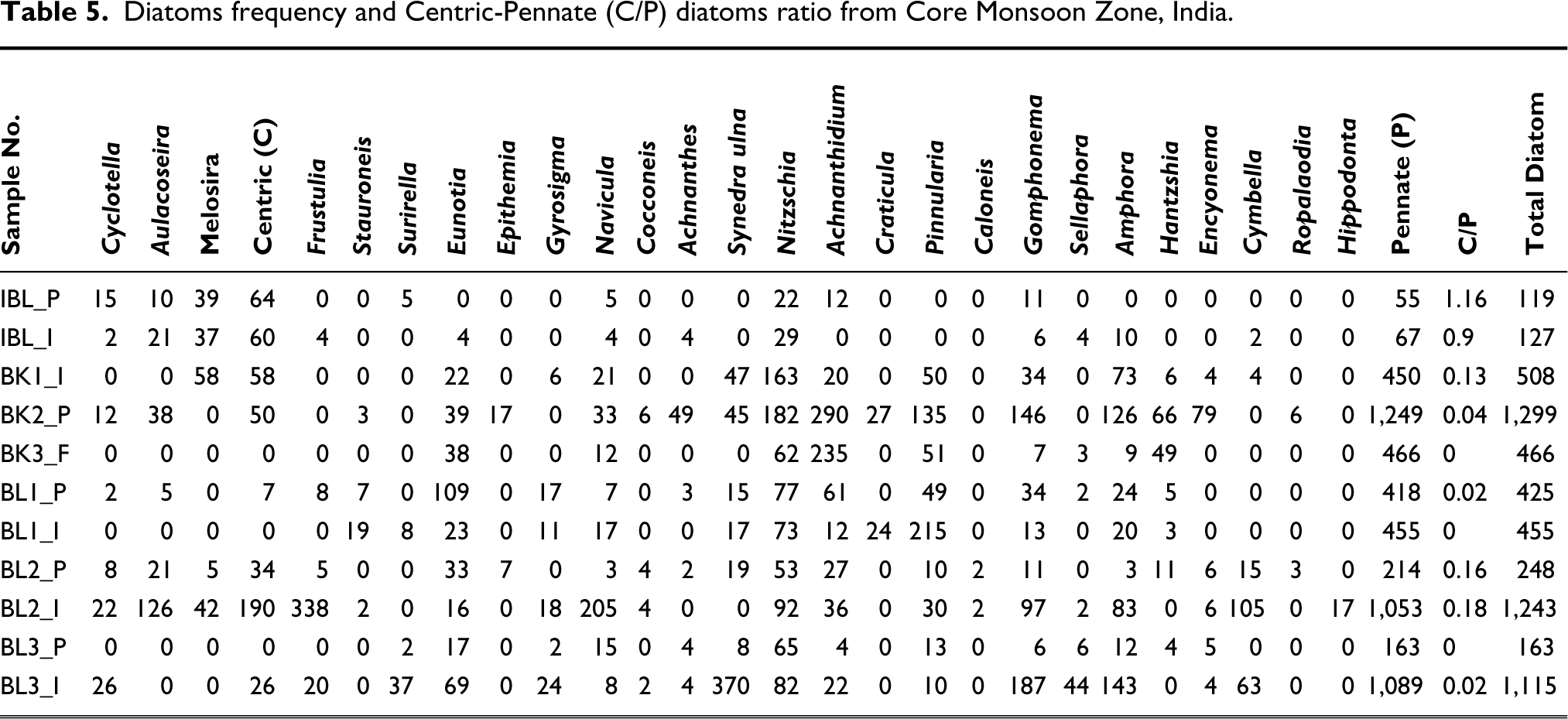
It is observed that in Bilawali Lake the total frequency of diatoms is lower as compared to Bhoj Lake and Buka Lake. The planktic diatoms are slightly higher in Bilawali Lake as compared to benthic forms. The Centric to Pennate (C/P) diatoms ratio in the Bilawali Lake suggests that even in the peripheral and interface part the water depth is high. The prevalence of Melosira, Aulacoseira, Nitzschia and Gomphonema indicates moderate to high suspended particles in the Bilawali lake (Fernandes et al., 2016).
The Buka Lake and forest record a high frequency of benthic diatoms over centric ones. The C/P ratio shows very shallow lake levels. In the forest region of Buka Lake, the centric forms are absent. The peripheral and interface part of the lake show a high frequency of epiphytic taxa Achnanthidium, Nitzschia, Gomphonema, Pinnularia, Amphora, Encyonema and Hantzschia, indicating high nutrient conditions with electrolytic conditions. This also reflects the occurrence of various macrophytes taken under similar conditions (Compte & Cazaubon, 2002; Fernandes et al., 2016; Mutinová et al., 2016). The Buka Lake and forest record a high frequency of benthic diatoms over centric ones. The C/P ratio shows very shallow lake levels. In the forest region of Buka Lake, the centric forms are absent. The peripheral and interface part of the lake show a high frequency of epiphytic taxa Achnanthidium, Nitzschia, Gomphonema, Pinnularia, Amphora, Encyonema, Hantzschia, indicating high nutrient conditions with electrolytic conditions. This also supports the occurrence of various macrophytes taken under similar conditions (Compte & Cazaubon, 2002; Fernandes et al., 2016; Mutinová et al., 2016).
The Bhoj Lake shows a wide variety of diatoms occurring in its periphery and interface. The variable frequency of diatoms is correlatable to the surrounding vegetation, limnic conditions, macrophytes, soil litter and nutrient conditions. The high abundance of benthic diatoms over planktonic forms suggests very low depths along the peripheral and interface parts. The high abundance of Frustulia, Navicula, Cymbella in BL2_I suggests acidic soil conditions with low conductivity and with moderate wavy nature of water circulation. The high frequency of Aulacoseira provides evidence of turbid water conditions and can be attributed to high silt content. The other diatoms, such as Nitzschia, Achnanthidium, Gomphonema, Amphora, can be related directly to the deteriorating aquatic conditions probably due to human interference in this sediment unit. The high abundance of Synedra (S. ulna), Gomphonema, Amphora, Nitzschia in BL3_I gives evidence for high nutrients and eutrophic conditions in this part of the lake and also be associated with the disposal of both sewage and organic pollution. The high occurrence of Pinnularia in BL1_I as a major taxa can be corroborated by high phosphate values. In defining the limnic behaviour of lakes, dissolved oxygen is the second important factor (Hallock & Hallock, 1993) and Pinnularia provides acute grounds for the same. In the BL1_P the high record of Eunotia, Nitzschia and Achnanthidium with low counts of Pinnularia, Gomphonema and Amphora is suggestive of low altered/ degraded environmental conditions with mild acidic and suspended particles. Thus, the Bhoj lake water and sediment chemistry changes with subtle variation in limnic conditions and, hence, is useful for biomonitoring of aquatic conditions.
Abiotic Proxies
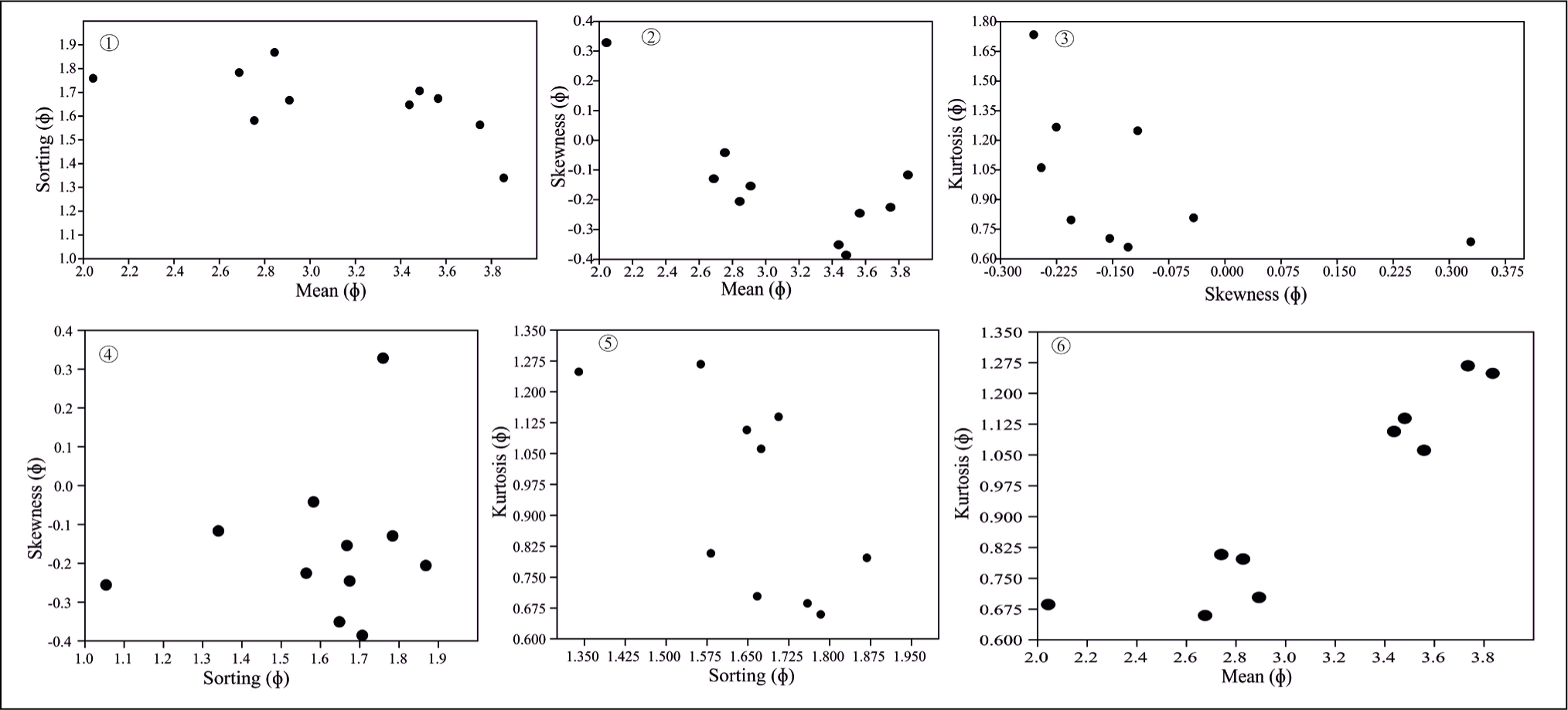
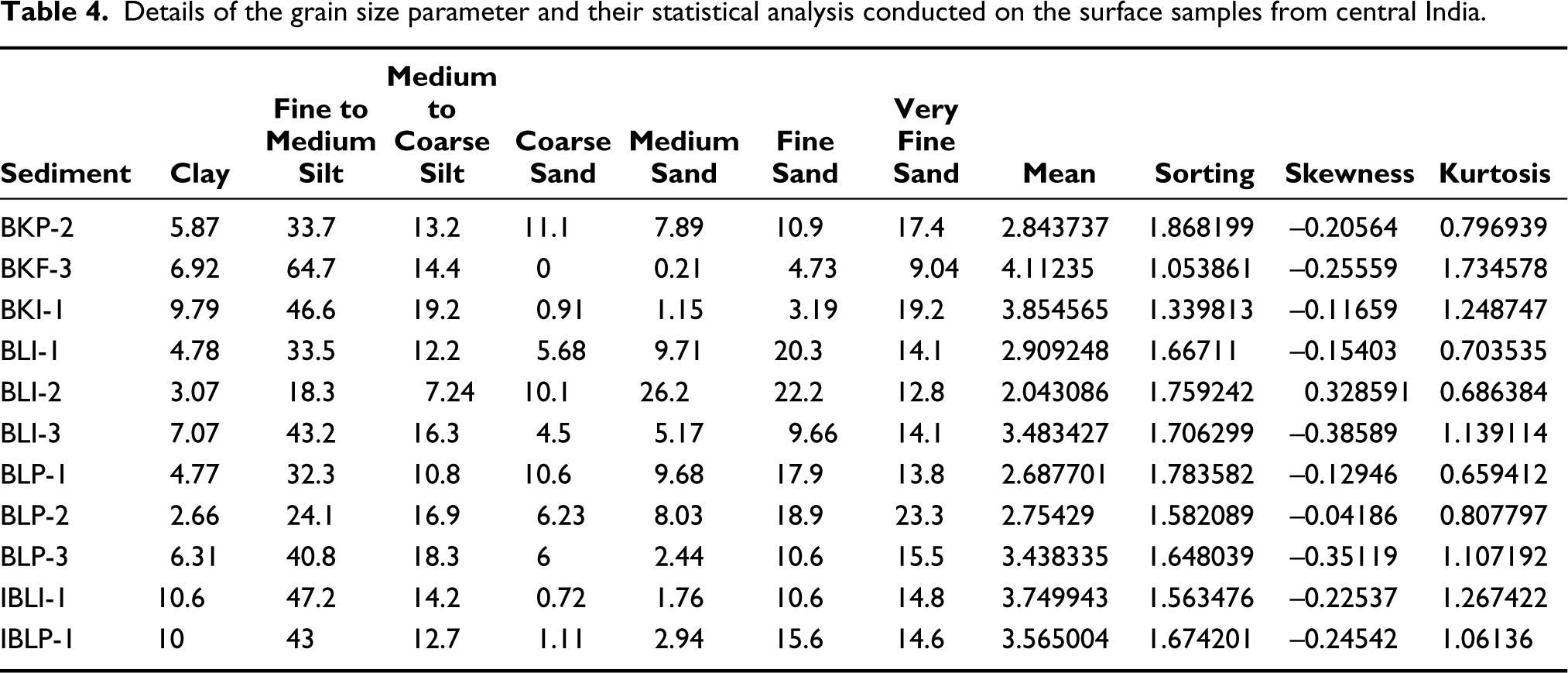
The grain size statistics and frequency curves for the Buka Lake and forest, Bhoj and Bilawali Lake samples reveal that all the samples are either unimodal or bimodal with poor sorting. In the Bilawali Lake, the sediments are bimodal, poorly sorted varying from very coarse silt to fine sand with coarse skewed and meso to leptokurtic character suggesting consistent or steady depositional process during which the sediments were settled under low-energy conditions (Duane, 1964). A further indication of the negatively skewed values are indicative of areas of erosion or non-deposition (Duane, 1964) (Figure 7). The Buka Lake and forest sediments vary from unimodal to bimodal sediment type with poor sorting and grain size distribution from very coarse silt to very fine sand. The sediments are coarse skewed with very lepto kurtic to platykurtic and have a textural content of muddy sand to sandy mud. Similar to the Bilawali Lake, the Buka Lake also poses negatively skewed values, which suggests areas of erosion or non-deposition (Duane, 1964). The Bhoj Lake sediments are also poorly sorted with sediments grading from very coarse silt to medium sand and having unimodal to bimodal sediment type. Further, the samples show skewness such as symmetrical, very fine skewed, coarse skewed and very coarse skewness kurtosis values ranging from platykurtic to leptokurtic and mesokurtic (Duane, 1964). Most of the samples are negatively skewed, indicating areas of erosion or non-deposition, while the positive skewness (BLI-2) suggests evidence to deposition (Table 4).
Grain size statistics of surface samples from the Core Monsoon Zone of India.
Details of the grain size parameter and their statistical analysis conducted on the surface samples from central India.
Thus, the entire sedimentary process in the samples of Bilawali Lake, Bhoj Lake and Buka Lake can be attributed to lowered coarser sediments from riverine input or lacustrine environment, followed by the unidirectional transport or the deposition of sediments in low energy environment due to higher occurrences of negatively skewed sediments (Prabhakara Rao et al., 2001; Seralathan & Padmalal, 1994; Waznah et al., 2010). Further, the sediments suggest low to moderate energy conditions in the depositional environment may be due to winnowing or longer transportation of the sediments.
MS values are comparatively higher in Bhoj Lake sediments as compared to Bilawali and Buka Lake sediments. MS signals are mainly affected by the concentration and types of iron oxides present in different rocks and sediments and are utilised as a proxy parameter to identify provenance (Maher, 2011; Nie et al., 2007; Sun & Liu, 2000; Wang et al., 2017a; Zan et al., 2019) as variation in susceptibility is controlled by many factors like lithology, provenance, climate and anthropogenic activity. The Bilawali Lake rests on the Deccan Basalts which have a high concentration of magnetic minerals. The MS values are high for the basement rock and can be as high as 500–1000 (× 10–8 m3 kg–1) (Basavaiah et al., 2012). Hence, the MS values are expected in the higher range as compared to the eastern parts dominated by the Late Triassic to Upper Carboniferous sedimentary rocks and Precambrian rocks (granites and granodiorites). However, this site shows moderate (57.45) MS values from the different sample locations and thus is not totally lithologically governed. As the lake is in the Indore City, magnetic depletion may have caused the moderate values. The Bhoj Lake which is also on the Deccan Basalt shows a lithological control recording higher MS values. Interestingly, both lowest (28.8) and highest (765.9) values were recorded from this site. The reason for lower values in the lake sediment could be due to the dilution by organic constituents. Towards the east, the Buka Lake shows moderate values (97.2) as a result of the weathering of the sedimentary and felsic igneous rocks in the vicinity.
The enrichment/depletion of immobile/mobile elements in the sediment is a function of rock–water interaction, however, other factors, such as a change in the catchment, climate, vegetation, topography and lithology also play an important role (Mackereth, 1966; Pedrazas et al., 2021; Sun et al., 2010; Thorpe et al., 2019). The Buka Lake sediments are derived from felsic igneous rocks, whereas Bilawali and Bhoj Lakes sediments are mainly derived from intermediate to basic igneous rocks. It is further supported by the Al2O3/TiO2 ratio, which can serve as a good indicator of source rock (Paikaray et al., 2008). The Buka Lake sediment samples experienced relatively less chemical weathering as compared to Bilawali and Bhoj Lakes sediments.
Synthesis of biotic and abiotic proxies’ results and interpretation
Various geological units are observed in the states of central India, however, the sampling has been conducted in the regions displaying varied lithology—Palaeocene Cretaceous extrusive rocks and Sedimentary rocks of the Late Triassic to Upper Carboniferous in a west-east transact.
The Bilawali Lake in Indore city, which is a part of the Malwa Plateau at the base overlain by Deccan Basalt, has a dense human settlement and very low vegetation cover. The palynological study records show having sporadic representation of tree taxa (e.g., Acacia spp., Syzygium sp.), whereas the terrestrial herbaceous taxa are comparatively higher. Besides, low percentages of marshy taxa, aquatic elements, as well as algal remains, fungal spores and thecamoebians have also been reported. The diatom is also at its lowest frequency with slightly higher planktic diatoms as compared to the benthic forms. The lake environment is typically muddy and silted as can be observed with the dominance of Aulacosira, Nitzschia and a few others (Figure 8). The grain size is also very fine-grained with silt and a little sand fraction, indicating low energy conditions with low kinetic energy and velocity in the depositional settings with moderate concentration of magnetic minerals.
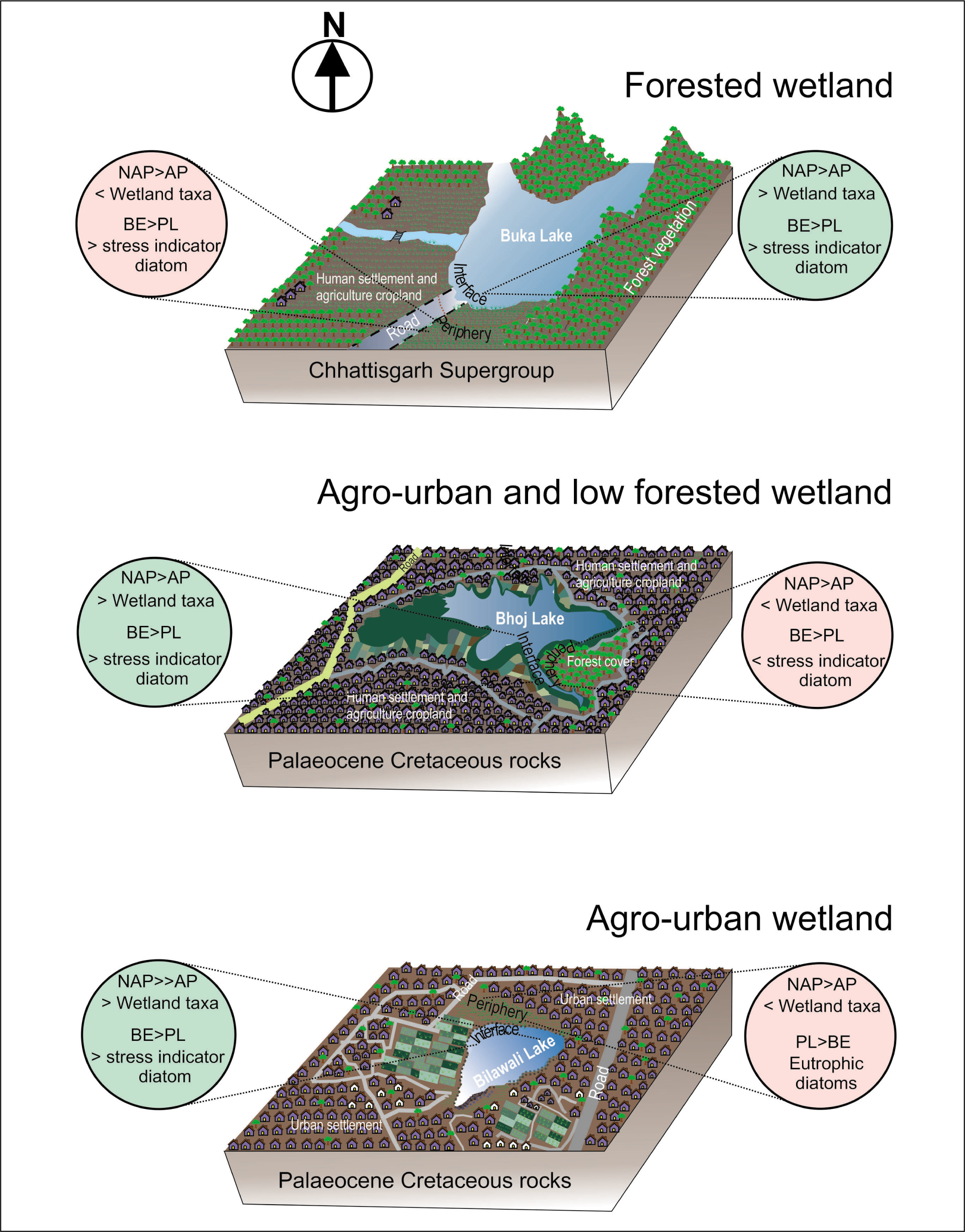
The Bhoj Lake in Bhopal with extrusive rocks of the Palaeocene Cretaceous as its basement, is a widespread lake, surrounded with flourished vegetation, agricultural croplands, disposal sites and human associations. The pollen data in this unit overall shows a comparatively higher representation of tree taxa, such as Acacia spp., Sapotaceae, Terminalia spp., Lagerstroemia, Syzygium sp., Emblica officinalis, Lannea coromandelica, Eucalyptus sp., along with a wide spectrum of terrestrial herbaceous taxa, such as Poaceae, Cerealia, Amaranthaceae, Asteroideae, Caryophyllaceae, C. sativa, Artemisia, Justicia, Malvaceae that are associated with natural and anthropogenic activities (Figure 8). The occurrence (low to moderate) of aquatic and marshy taxa along with algal spores helps to retain the aquatic condition or limnic character of the study site which further aids to provide insights into the association of various palynological data that can respond to the different taphonomical biases or preservation. The frequencies of diatoms vary considerably in different parts of the study site owing to its proximity to peripheral and interface regions. The abundance of Frustulia, Navicula and a few others at site BL 2_I suggest acidic conditions with low to moderate conductivity and the wavy nature of the water column. The abundance of Aulacosera also brings out the high turbidity in the water column and a few diatoms, such as Nitzschia, Achnanthidium, Gomphonema and Amphora are correlated to the deteriorating aquatic condition either due to the agricultural practices or due to the enhanced organic pollution. Similarly, the abundance of Synedra (S. ulna), Gomphonema, Nitzscia and Amphora at BL 3_I shows high trophic levels with raised nutrient supply and eutrophic conditions. This can also be due to the high sewage discharge at this site. Furthermore, the high frequency of Pinnularia at BL 1_I corresponds to a high phosphate value that is associated with agricultural practices in and around the site which has affected the MS values recording the low values due to dilution. High records of Eunotia, Nitzschia and others at site BL 1_P suggest mild acidic conditions with a load of suspended particles. The grain size reveals low energy conditions and can be established from the various grain size statistical parameters, such as sorting, skewness and kurtosis. High values of MS show a lithological control except in one lake sample (BL 1_1).
The Buka Lake is a reservoir situated in the sedimentary rocks of the Late Triassic to Upper Carboniferous Age. The region is well forested, less disturbed and comprised of sediments with fine-grained texture. The pollen data shows a comparatively good representation of tree taxa, such as M. indica, Sapotaceae, Terminalia spp., Diospyros melanoxylon, Lagerstroemia, Grewia, Schleichera, Syzygium sp. Holoptelea, A. marmelos, as well as variable distribution of terrestrial herbs, such as Poaceae, Cerealia, Asteroideae, Amaranthaceae, Caryophyllaceae, Brassicaceae, Malavaceae, Xanthium, along with monolete and trilete fern spores, marshy taxa, aquatic taxa, algal spores and fungal remains. High frequency of the benthic forms of diatoms and very low value of planktic forms are recorded in this zone; however, in the soil sample collected from the forested part, no planktic diatoms were recovered (Figure 8). The C/P ratio also shows a very shallow lake level (Table 5). Most of the diatom taxa comprise epiphytic taxa that mainly occurred due to the surrounding vegetation and also occurred due to the enhanced nutrient conditions with high electrolytic content and organic matter. The epiphytic diatom taxa are mainly associated with the vegetal litter and in this region due to high forest diversity, it can be a controlling factor for the recovery of diatoms and their assemblages. The grain size data vary mainly from the silt and very fine sand to the fine sand category and this is indicative of a typical structure of a reservoir (character). The fine-grained sediment texture emphasises lower energy conditions and the skewness character in this depositional site, suggesting transient erosional surfaces, which may be attributed to slow-flowing channels, winnowing activity or human activities surrounding the lake or river complex. Similarly, the kurtosis value also suggests a low energy level, reworking associated with the short supply of materials with a low transport capacity of the geological agent. The weathering has a control on the concentration of magnetic minerals too. The lower values of Al2O3 (13–16%), Fe2O3 (3–5%) TiO2 (0.58–0.60%) and higher values of Al2O3/TiO2 (22–28>21) indicate the felsic source of igneous rocks in the catchment area. In addition, Chemical Index of Alteration (CIA) values are also less (68–76), showing less chemical weathering in the sediments. The Buka Lake sediments are derived from felsic-rich Gondwana sedimentary rocks, whereas Bilawali and Bhoj Lakes sediments are mainly derived from intermediate rocks of basaltic provenance.
Diatoms frequency and Centric-Pennate (C/P) diatoms ratio from Core Monsoon Zone, India.
Conclusions and Prospects
The multi-proxy study conducted on the modern soil samples collected from the central Indian CMZ provides baseline information for further studies on palaeovegetation and palaeoclimatic reconstruction. Moreover, the pollen assemblages suggest the open forest vegetation and mixed tropical deciduous forests around the study areas. However, diatoms indicate typical muddy and silted to vegetal, turbid and eutrophic lake environments with varying degrees of acidity and low energy conditions.
Agricultural practices and anthropogenic/human activities around the study areas have also been suggested, based on the significant presence of Cerealia, Amaranthaceae, Caryophyllaceae, Cannabis sativa, Artemisia, Alternanthera and Brassicaceae, as well as Pinnularia (high values).
The presence of Asteroideae in good values indicates the pastoral activities around the study area. Besides, Caryophyllaceae and Artemisia, although in low values, also signify the grazing activity around the study areas, indicated by open landscape type.
The texture of sediments further signifies the effect of local lithology, where the easily weatherable fine-grained Deccan basalt provides fine detritus supported by the higher concentration of Al2O3, Fe2O3, TiO2 and MgO in the soil/sediments. The relatively lower Al2O3/TiO2 values (<21) also support the lithological control on the sediment composition.
Much higher CIA values (76–92) indicate favourable weathering conditions where the rocks are chemically altered to a larger extent compared to sediments derived from sedimentary and felsic rocks. The relatively lower CIA at the Buka Lake invokes a plausible tectonic control thereby the rocks were exposed relatively recently and did not get enough time to produce chemically mature sediments.
Further study with a large number of samples from the study areas is imperative to have a robust picture of the modern analogue for the palaeoclimatic study. In our ongoing pursuit of a detailed study, we are collecting surface samples in a gridded pattern covering an area of 250 × 300 km2 at 8 to 10 km intervals. For longer climatic history, sedimentary cores from the centre of the strategically selected lake sites are also in progress. The results and inferences of the present study will help us to provide high-resolution climatic records of thousands of years, which may also help in understanding the monsoon behaviour over time having wider implications.
Supplemental Material
Supplemental material for this article is available online.
Footnotes
Acknowledgements
We are thankful to the Director, Birbal Sahni Institute of Palaeosciences, Lucknow, India for providing the infrastructure facilities needed to complete the research work and also for permission to publish. Technical help from the Quaternary Palynology Laboratory; Palaeomagnetism Laboratory and the Geochemistry Laboratory, BSIP is acknowledged. This work is done under the BSIP_QLDP (Quaternary Lake Drilling Project: Project Number 8). We are also thankful to the three learned reviewers for their thoughtful reviews and suggestions. M.F.Q. sincerely thanks Dr. Mukund Sharma, Chief Editor, JPSI for his kind encouragement and cooperation.
Declaration of Conflicting Interests
The authors declared no potential conflicts of interest with respect to the research, authorship and/or publication of this article.
Funding
This work was supported by the grants (Grant number BSIP/RDCC/2020-2024/8) received from the Birbal Sahni Institute of Palaeosciences (BSIP), Lucknow (Uttar Pradesh), India—a Department of Science and Technology (DST), Ministry of Science & Technology, Government of India, New Delhi, India—funded Research Organization. Anupam Sharma and Binita Phartiyal have received research support from the BSIP.
The authors declare that no funds, grants, or other support were received during the preparation of this manuscript.
References
Supplementary Material
Please find the following supplemental material available below.
For Open Access articles published under a Creative Commons License, all supplemental material carries the same license as the article it is associated with.
For non-Open Access articles published, all supplemental material carries a non-exclusive license, and permission requests for re-use of supplemental material or any part of supplemental material shall be sent directly to the copyright owner as specified in the copyright notice associated with the article.
