




Abstract
The present work reports the distribution of Ostracoda from the surface sediments around Appa Island in the Gulf of Mannar, Tamil Nadu, southeast coast of India. In total, 33 surface sediment and bottom-water samples were collected for this study. In the study area, 34 Ostracoda species belonging to 30 genera, 17 families, 4 superfamilies, 3 suborders, 2 orders and 2 subclasses have been identified. Distribution of species as abundant, common and rare, for every station is being recorded. Among the identified 33 ostracod species, 5 are abundant, 4 are common and the remaining 24 are rare. The total population is higher in the southern part of the island, whereas the northern part of the island has a lower population comparatively. The Ostracoda are indicative of high energy, oxygenated environments in the study area, not conducive for juvenile forms. The ratio of carapaces to open valves of Ostracoda indicates a relatively moderate rate of sedimentation.
INTRODUCTION
Ostracods are broadly classified into two groups benthic and nektonic. They are successful inhabitants of every aquatic environment from shallow to deep oceans, including estuaries, lagoons, freshwater, salt lakes, hot springs and even dump terrestrial environments. Their shells are equally and widely distributed as fossils from Ordovician to Recent. Ostracods are sensitive to changes in a wide spectrum of environmental variables. Even slight distortion in such parameters can be reflected in the modification of the species composition and structure of living populations. Factors influencing ostracod distribution at different scales are governed by temporal and physicochemical stabilities of the ecosystems where ostracods are living and can be estimated by scaling the alpha and beta diversity of the assemblages (Smith & Horne, 2002). Several studies have been conducted on ostracod fauna from the Indian subcontinent (Baskar et al., 2015; Hussain, 1998; Hussain et al., 2006, 2007; Nazeer et al., 2018; Nishath et al., 2015, 2017; Radhakrishnan et al., 2022; Rajkumar et al., 2020; Sridhar et al., 2002, 2019). The study about ostracods is very scarce in the fragile islands of the Gulf of Mannar. The present work has been carried out for the first time in Appa Island to study the distribution of benthic Ostracoda and their ecological implications in the study area.
STUDY AREA
The Gulf of Mannar, located between India and Sri Lanka, is a shallow embayment of the Bay of Bengal. It is a zone of transition between the Arabian Sea and the Indian Ocean and is connected with the Bay of Bengal through a shallow strait, the Palk Strait. The Gulf of Mannar biosphere reserve extends from Rameswaram Island to Tuticorin and lies between 8° 45′ N to 9° 25′ N and 78° 5′ E to 79° 30′ E, for 140 km. There are 21 islands in the Gulf which occur almost parallel to the southeast coastline of India and are situated at an average distance of about 8 km from the coastline in the Gulf of Mannar; one of these is the Appa Island between 8° 47′ N to 9° 15′ N and 78° 12′ E to 79° 14′ E.
MATERIALS AND METHODS
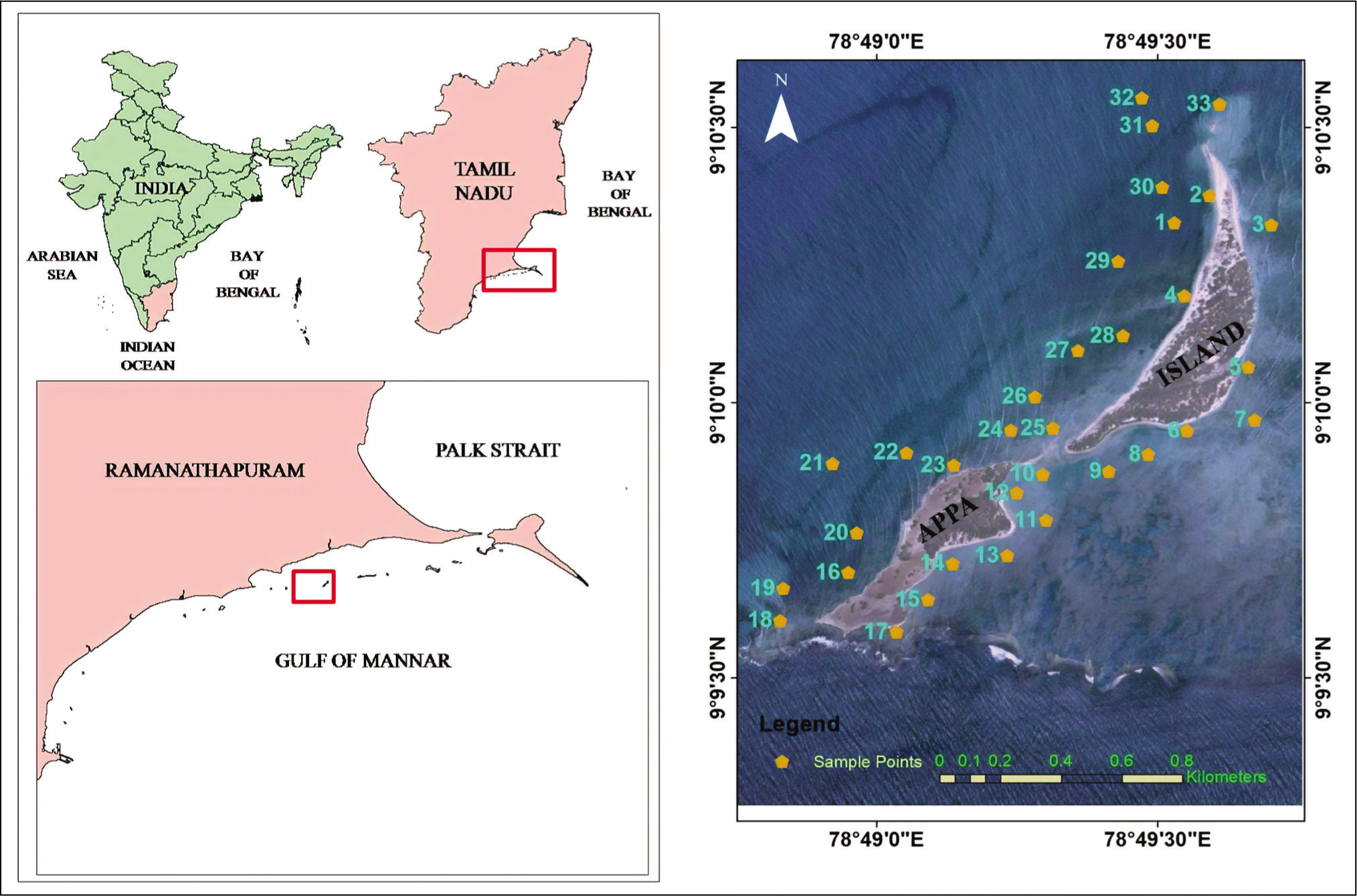
Extensive fieldwork was conducted in and around the Appa Island in November 2016. In total, 33 surface sediment and bottom water samples within a water depth range of 1 to 3 m were collected following a grid method (Figure 1). The depth of the water column was measured at each site using an Aqua trap water sampler. A portable, multi-parameter handheld probe was used to measure the in situ temperature and pH of the bottom water samples. At each sampling station, 500 mL of bottom water sample was collected for subsequent laboratory analysis (Knudsen, 1901) and 100 mL of bottom water was collected for dissolved oxygen estimation using the Winkler method (Strickland & Parsons, 1968).
Study area map showing sampling locations from Appa Island, Gulf of Mannar.
The percentage distributions of sand, silt and clay in the sediment samples were determined using the pipette method following the procedure adopted by Krumbein and Pettijohn (1938). Calcium carbonate and organic matter in the sediments were determined by adopting the methodology recommended by Piper (1947) and Gaudette et al. (1974), respectively. All ostracod specimens occurring in a 20 mL wet aliquot of each sample were extracted and studied under a stereo-binocular microscope.
RESULTS AND DISCUSSIONS
Sediment parameters
The nature of bottom sediments such as grain size, sorting coefficient and the presence or absence of bottom vegetation has a significant influence on the Ostracoda distribution (Hussain et al., 1997). In the present study, an attempt was made to bring out the relationship between the nature of substrate and the ostracod population. Sand content varies from 87.16% to 99.72 %, silt content from 0.17% to 12.26% and clay content ranges from 0.11% to 0.66%. Trefethen’s (1950) textural nomenclature has been used to describe the sediment types of the present area. The actual population of ostracod species concerning sediment types was given (Table 1). The higher values of sand fraction are due to the abundance of shell fragments and coral debris, as observed from the samples under the microscope. The sediments in the present study are a mixture of quartz sand, biogenic carbonate and shell fragments. The high amount of sand suggests high energy conditions of deposition. The presence of maximum (2.27% in Station No. 13) and minimum (0.91% in Station No. 20) (Table 1) value of organic matter in the study area could be due to the abundance of seaweeds and high sand content, respectively.
Values of sediment textural parameters estimated at the sampled locations at Appa Island, Gulf of Mannar.
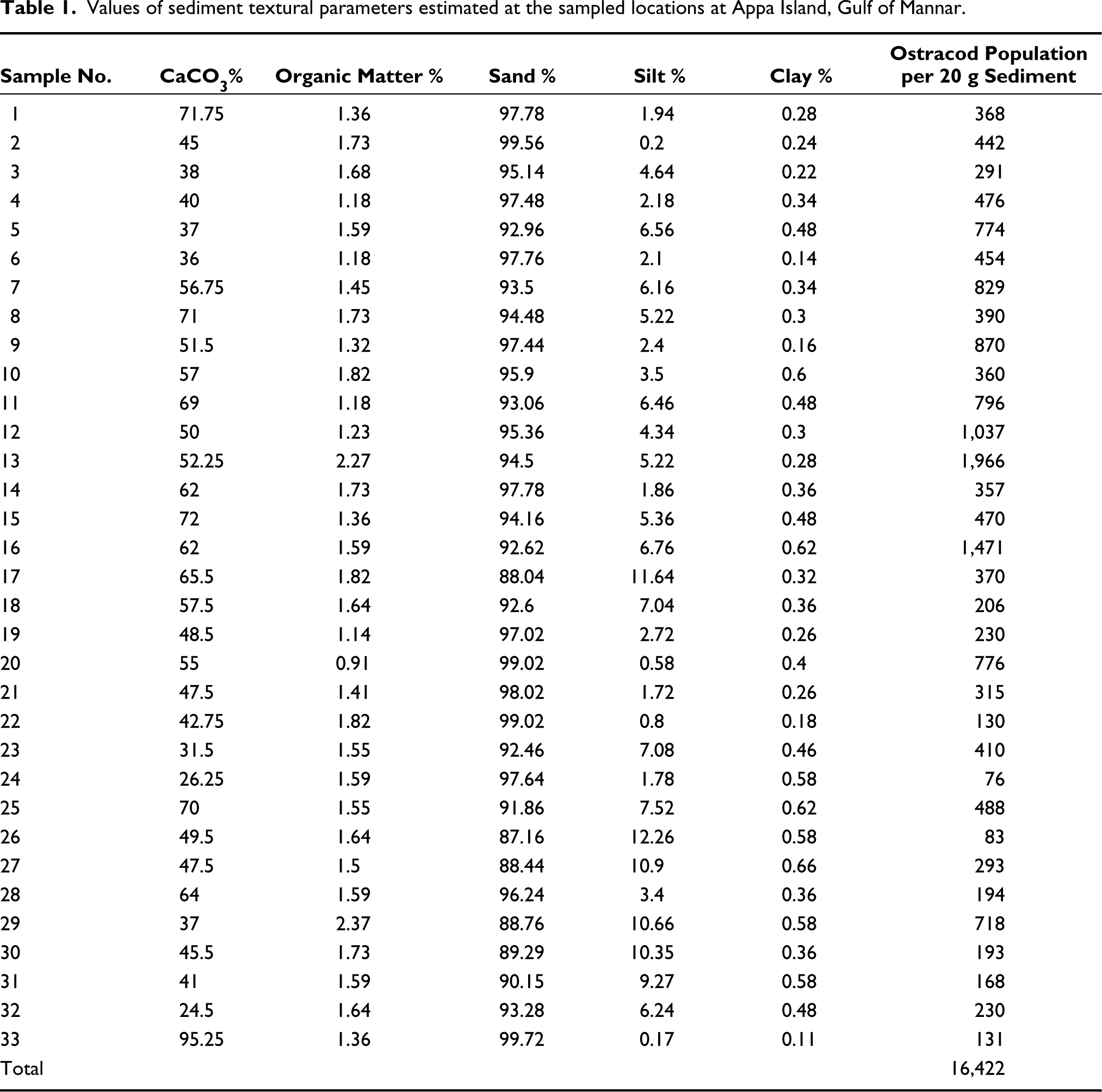
The lowest value of calcium carbonate is recorded in Station No. 32 (24.5%) and the highest value is recorded in Station No. 33 (95.25%) (Table 1) and it is due to an excessive supply of shell fragments and coral debris. The major sources of carbonate in the continental shelf sediments are the shell fragments of the organism and the dilution of biogenic calcite detritus in the sediments. The CaCO3 is associated with coarse grain. Instead of rock weathering, the primary source of carbonate may be the precipitation of CaCO3 by marine organisms. Hussain et al. (1997) observed a relative decrease in the organic matter along with an increase in the CaCO3 content of the sediments patronising a maximum population of Ostracoda in the Gulf of Mannar, off Tuticorin. However, there is no proper correlation between sediment parameters and total population in the present study.
Water parameters
The different parameters measured on the bottom water samples, such as depth, temperature, pH, EC, TDS, salinity and DO are tabulated in Table 2. These parameters are discussed spatially and correlated with the recovered total ostracod population.
Bottom water parameters and ostracod abundances recorded at Appa Island, Gulf of Mannar.
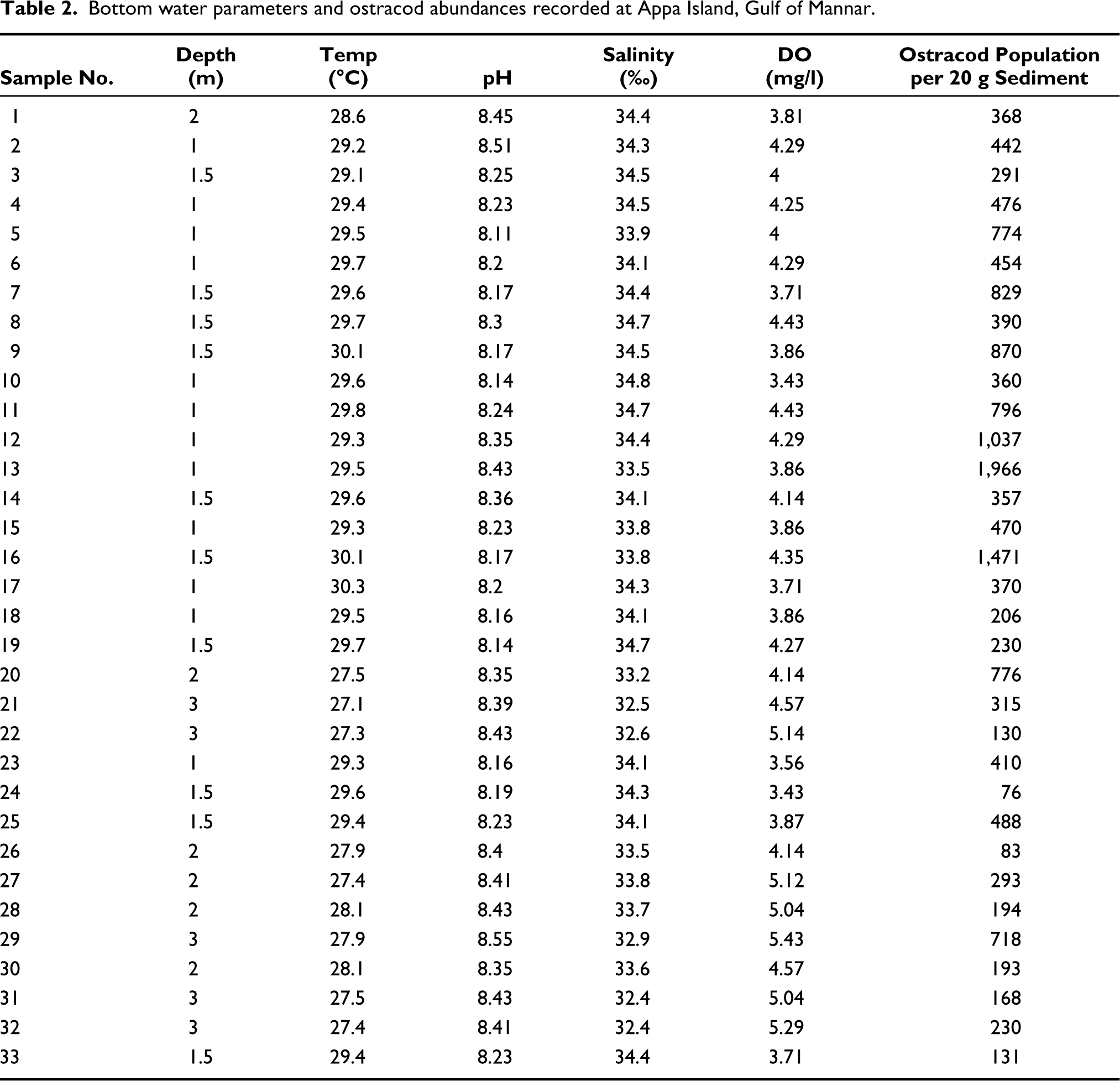
De Deckker et al. (1988) attributed the lack of correlation between depth and spatial distribution of the total ostracod population to the lack of significant variation in depth in any area. It is difficult to assess the individual influence of depth, as other critical factors change in close correlation with depth. The depth of the water column in the study area ranges between 1 and 3 m. In the study area, there is a decrease in abundance with an increase in depth (Figure 2a). However, it appears as if depth is an important limiting factor in the study area.
The temperature ranges from 27.1°C to 30.3°C with an average of 28.9°C. Though it appears that no correlation exists between the temperature with the total population spatially, maximum abundances are seen at sites with temperatures higher than 29oC (Figure 2b).
In the present study, salinity ranges from 32.4 to 34.8‰. Higher abundances are seen at locations with salinities higher than 33.5‰ (Figure 2c).
The pH shows a minimum of 8.11 at Station 5 and a maximum of 8.55 at Station 29, with an average of 8.30 in the study area. There does not seem to be any correlation between pH and ostracod abundance (Figure 2d).
In the present study, the DO is a minimum of 3.43 mg/L at Station 10 and a maximum of 5.43 mg/L at Station 29. Although there does not seem to be a significant correlation between ostracod abundances and DO, maximum abundances are seen at locations characterised by DO of about 4 mg/L (Figure 2e). The specimens obtained from the surface samples are long and large and dominantly milky white colour, which is an indication of oxygenated environment, where the dissolved oxygen level is optimum (Venkatachalapathy, 1978).
Correlation of Ostracoda abundances with bottom-water physicochemical parameters measured in the study area (the various parameters are plotted on the X-axis and the total abundances are plotted on the Y-axis).
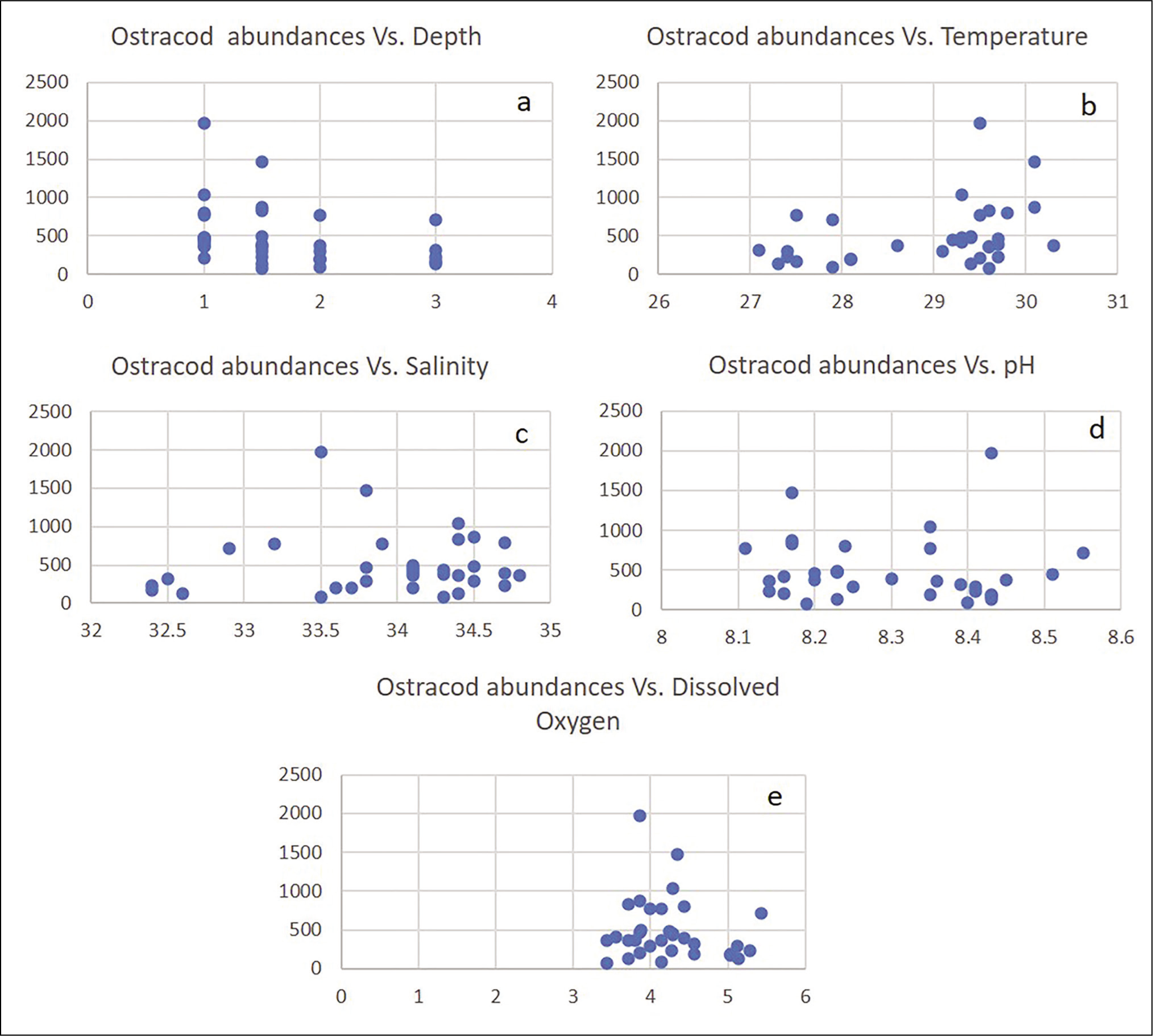
Given the foregoing, it can be inferred that shallower locations, characterised by higher DO support higher abundances of Ostracoda at Appa Island. This ecological preference explains the higher abundances at locations with higher temperatures.
Distribution of Ostracoda
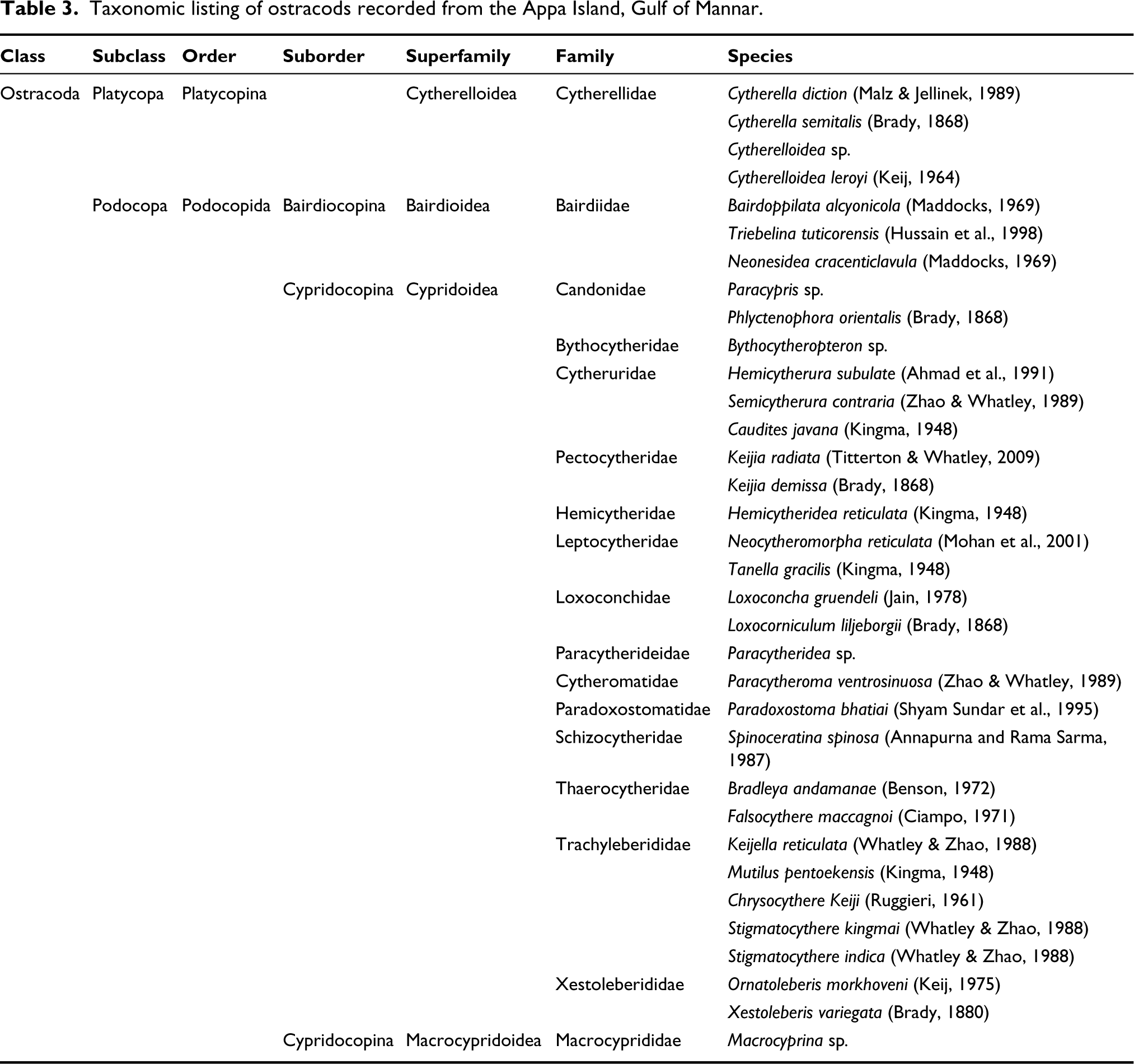
To record the ostracod taxa, the classification proposed by Hartmann (1974) along with other relevant literature has been followed in the present work. From the total recovered population of 16,422 ostracod specimens, 34 Ostracoda species are identified which belong to 30 genera, 17 families, 4 superfamilies, 3 suborders, 2 orders and 2 subclasses are identified in the study area (Table 3). The relative abundance of the species is represented by the ACR (abundant–common–rare) chart (Table 4). This study categorises populations into the following three categories: rare, common and abundant. When a population is recorded up to 10, it is categorised as rare; between 11 and 30, it is categorised as common; and more than 30, it is categorised as abundant. Similar work has been done by Sridhar et al. (2019). Among the 34 species, 5 species were found to be widespread and abundant; in the study, they are Mutilus pentoekensis, Xestoleberis variegate, Stigmatocythere indica, Tanella gracilis and Loxoconcha grundeli. Four species were found to be common, namely Phlyctenophora orientalis, Ornatoleberis morkhoveni, Keijella reticulata and Chrysocythere keiji. The remaining 14 species are recorded as rare species.
Taxonomic listing of ostracods recorded from the Appa Island, Gulf of Mannar.
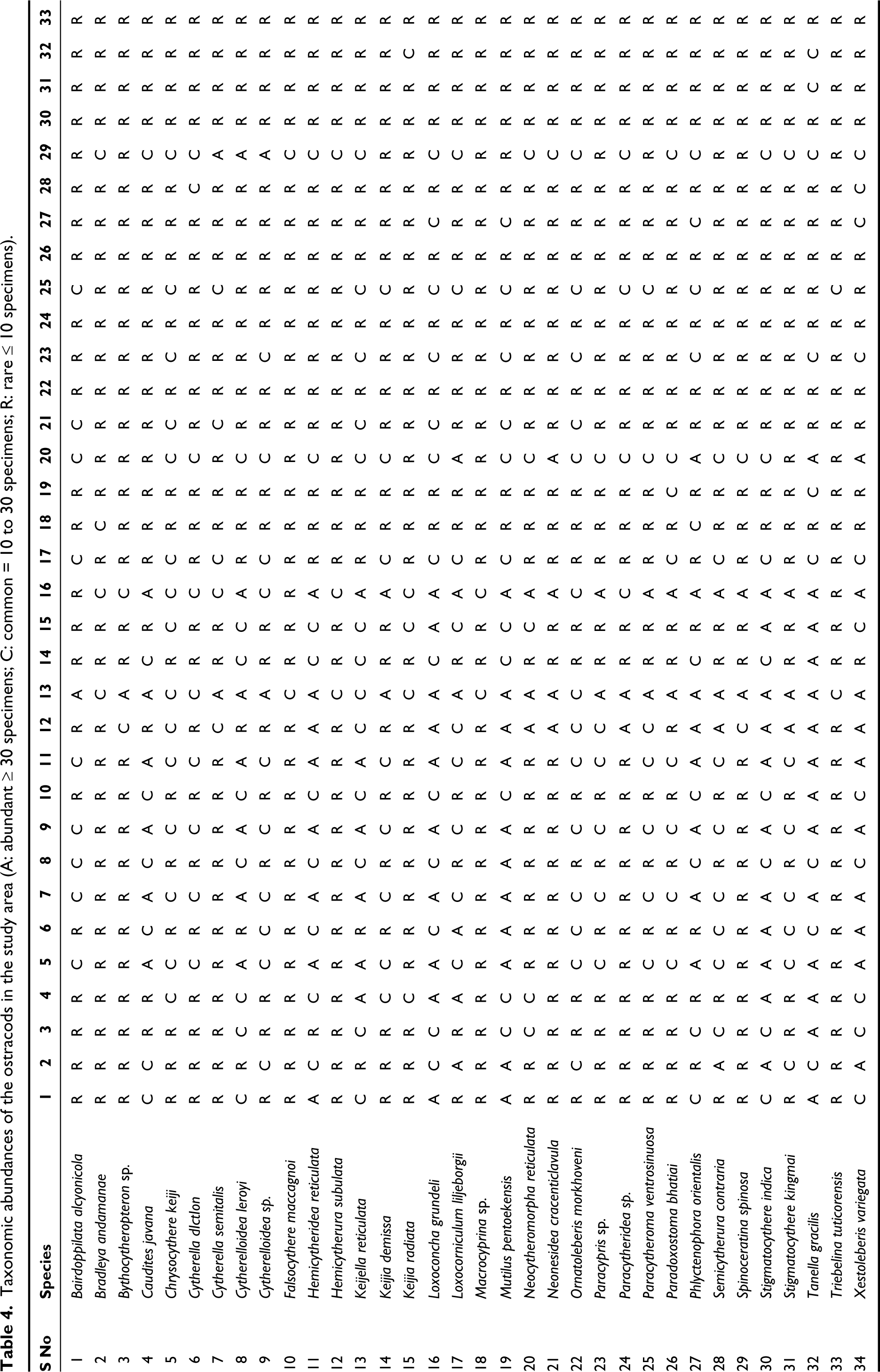
Taxonomic abundances of the ostracods in the study area (A: abundant ≥ 30 specimens; C: common = 10 to 30 specimens; R: rare ≤ 10 specimens).
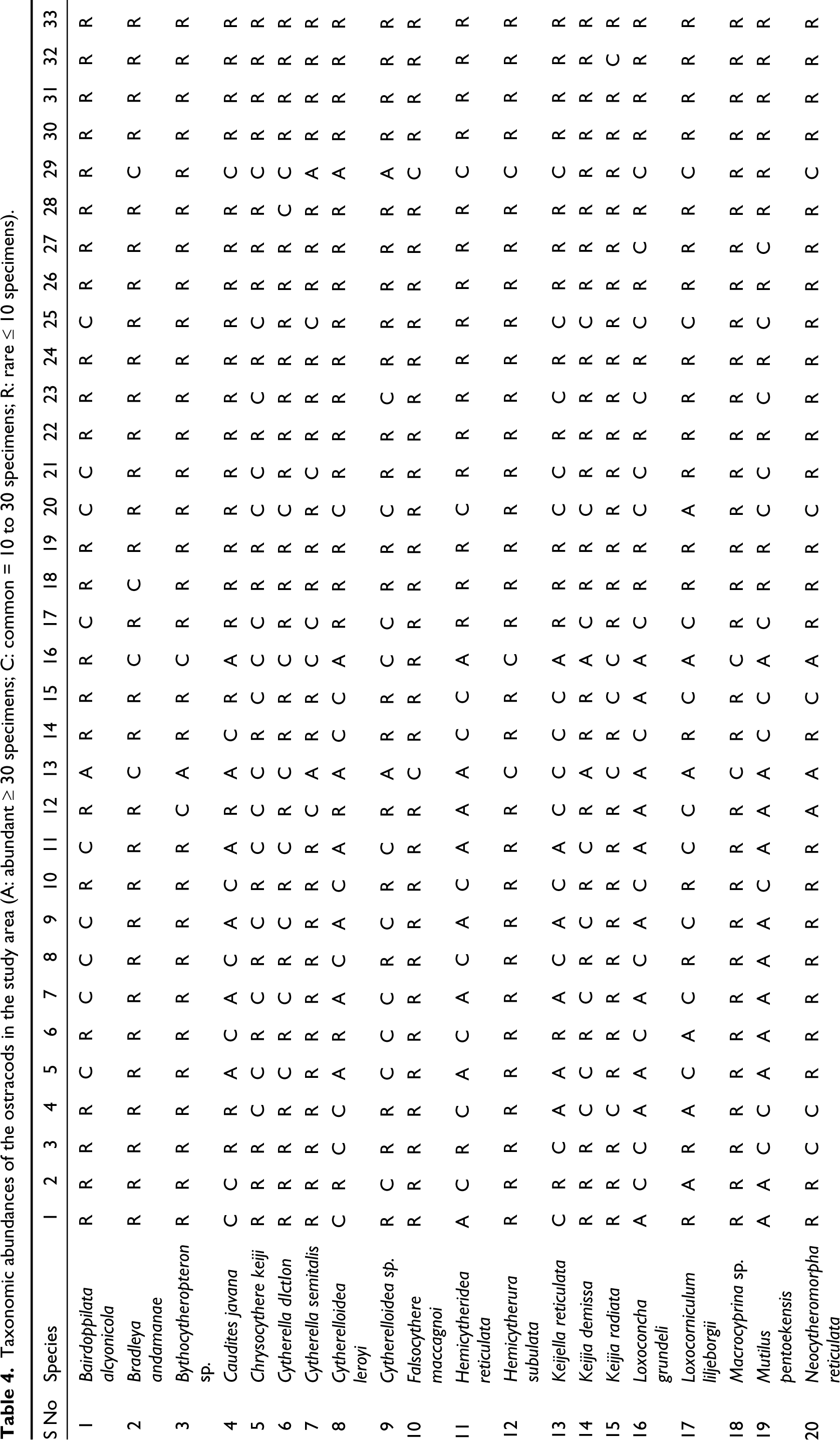
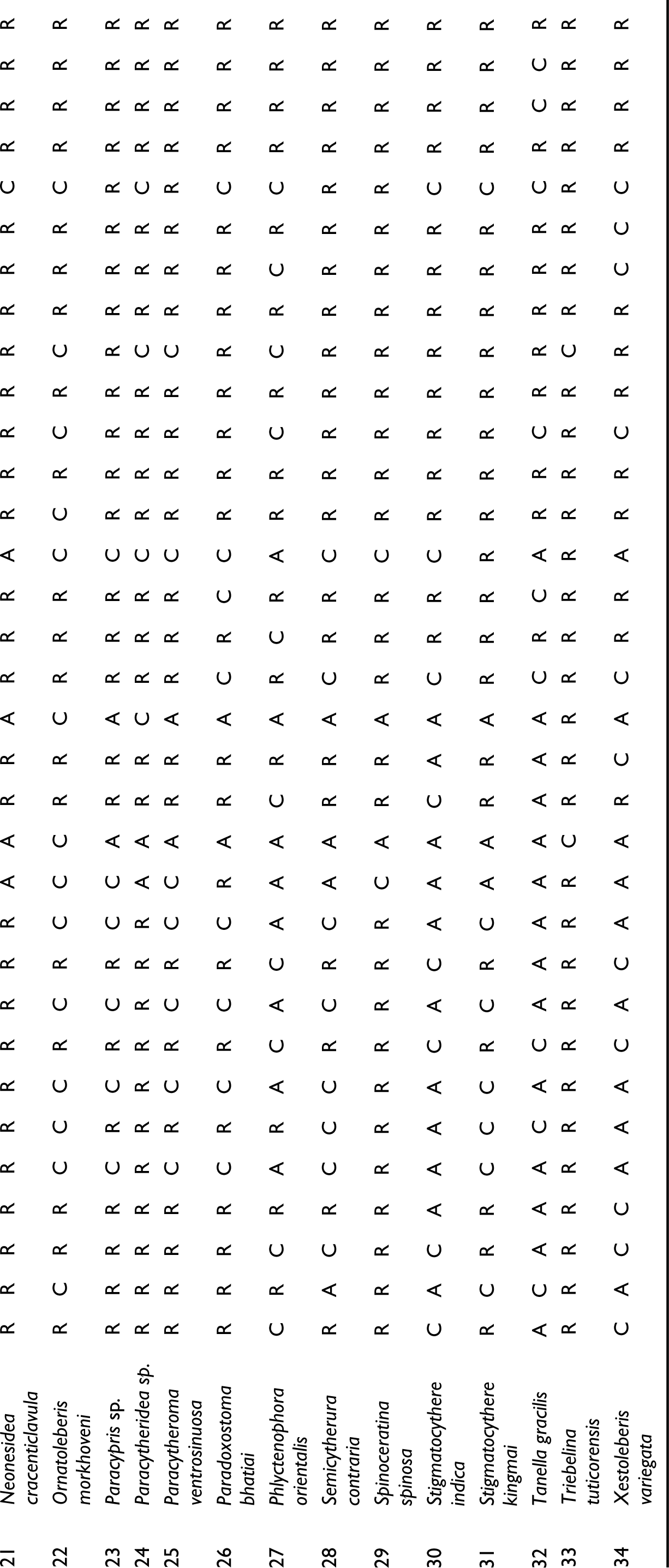
Based on the ACR chart it is noted that higher abundances are found at locations lying in the southern part of the island and lower abundances in the north. This can be explained by the well-known long-shore drift prevailing in the region.
Ornamentation in Ostracoda
The observations acquired from the surface ornamentation of ostracod carapaces can directly be related to their substrate type. The majority of the specimens from the current study have ornate, often heavily calcified carapaces, which suggests that they are typically found in sandy substrates and high-energy shallow water environments (Hussain et al., 1997).
Carapace–Open valve ratio
The carapace to open valve ratio is studied to understand the relative rate of sedimentation It is suggested that when the ratio is high there is rapid burial with minimal disarticulation of the carapace into open valves (Oertli, 1971). The mean value of open valves in the present study is 193, and the average value of carapace count is 290. The overall ratio of carapace and open valve of the collected 33 samples signifies that open valves are lesser than carapace (mean ratio = 0.66), which indicates that the rate of sedimentation in this region is relatively moderate and the ostracods are likely to open up by littoral drift action.
The observations made on the ostracod shells also suggest that the number of adult specimens is more abundant than the juvenile forms. Higher juvenile forms were observed only in a few stations, such as Station Nos. 12, 16 and 20. An abundance of adult forms indicates a high current index and littoral drift prevalent in this region, a process identified by Hussain et al. (2007) to cause such distribution.
CONCLUSIONS
The present study documents 34 ostracod species from the study area. The higher abundances and white-coloured shells of the ostracods are suggestive of the study area is well-oxygenated. The ornamentation of ostracods is typical of the coarse substrate, indicating higher energy conditions attributable to longshore currents prevalent in the strait around Appa Island. The ostracod carapace to valve ratio suggests moderate rates of sedimentation with higher chances of reworking sediments. The high energy due to prevalent currents is not very conducive to the occurrence of juvenile ostracods.
Footnotes
Acknowledgements
The authors are very much thankful to Dr P. Saravanan, and Dr S. Krishnakumar of the Department of Geology, Malankara Catholic College, Kanyakumari for helping in sample collection. The authors are also thankful to the Head, the Department of Geology, University of Madras for providing the necessary facilities to carry out this work. The authors are thankful to the reviewers for their valuable suggestions and corrections.
Declaration of Conflicting Interests
The authors declared no potential conflicts of interest with respect to the research, authorship and/or publication of this article.
Funding
The authors received no financial support for the research, authorship and/or publication of this article.