




Abstract
Background:
The causes of acute malnutrition are complex and time and geography variant and need to be better understood in order to both design more effective nutrition programs and evaluate them. The findings reported here are part of an evaluation of a 4-year multisectoral nutrition program led by Concern Worldwide in the Sila Region of eastern Chad.
Objective:
To present evidence and learning about the relationships between acute malnutrition and potential drivers in Sila, Chad.
Methods:
Quantitative household-level data from a clustered randomized control trial were collected in November/December 2014. The survey was complemented with water quality testing and qualitative data collected in February and March 2013 and 2014.
Results:
Households who reported not regularly cleaning the container used for transporting water for household consumption were almost twice as likely to have a malnourished child. Households living in villages with larger concentrations of cattle and having more livestock sharing the same water source as for human consumption were significantly more likely to have a malnourished child. However, cleaning the water container mediated the negative impact of living in a village with a large cattle concentration on wasting.
Conclusion:
These results demonstrate that hygiene practices and livestock water management are correlated with acute malnutrition in Sila, Chad. These findings provide a hypothesis for a possible pathogen driving acute malnutrition rates—Cryptosporidium—as part of a complex water chain, whereby the source of infection may be mitigated by hygiene behaviors with important implications for humanitarian programs.
Introduction
A better understanding of the determinants of acute malnutrition is necessary to design more effective programs and policies to address the nutrition needs of the population and evaluate their impact. In most humanitarian settings, anthropometric nutrition surveys are now routine, providing estimates of the prevalence of acute malnutrition (less than −2 z scores weight-for-height World Health Organization reference standards) among children younger than 5 years. This indicator has become an established and almost universal tool for nutritional assessments, monitoring and evaluation, early warning systems (note 1), and planning nutrition programs in emergencies. 1 –3 However, while the prevalence of acute malnutrition is routinely estimated in emergencies, there is less emphasis on gathering evidence that examines the drivers of acute malnutrition in a particular context and exploring their implications for ongoing humanitarian programs. This is in part because of the challenges of establishing causality in epidemiology and in relation to malnutrition. 4,5 Causal pathways to malnutrition are long and complex, involving biological and behavioral steps that are subject to effect modification. Although there may be statistical associations between certain factors and malnutrition, further evidence is required to develop plausible arguments that the relationships and pathways are causal. 6
Chad has a long history of developmental and humanitarian nutrition programs to address malnutrition, most of which has focused on treating acute malnutrition, addressing food security, primary health-care quality (and access), and efforts to improve infant and young child feeding and care practices. 7 The design of the “Community Resilience to Acute Malnutrition” (CRAM) program led by Concern Worldwide was influenced by the recent renewed interest in a multisectoral approach to addressing malnutrition in low-income countries, which in some countries has been shown to result in positive nutrition outcomes. 8,9
This type of multisectoral approach encompasses both nutrition-sensitive interventions that address the underlying causes of acute malnutrition (including food security, care practices, and health environment and services) and nutrition-specific interventions designed to address the immediate causes of acute malnutrition. 10,11 Programs addressing the underlying determinants of malnutrition can potentially complement and enhance the effectiveness of nutrition-specific interventions, thus achieving greater improvements than the latter can produce on their own. 11 It is agreed there is a dearth of “experiential learning and systematic evidence” about these approaches and how such efforts can be made more effective. 12 (p562) This article argues that an improvement to programs requires analysis of the plausible underlying drivers of acute malnutrition in order to design a program that recognizes the locally specific relationships and addresses them directly. “Off-the-shelf” responses may fall short in reducing acute malnutrition since they often do not address the specific nutritional risks in a given context.
Malnutrition in Chad: A Continuing Challenge
Although child mortality rates have declined slightly in the past years, Chad persistently has some of the highest levels of acute and chronic malnutrition in the world—16.0% global acute malnutrition (GAM), 6.0% severe acute malnutrition, and 39.0% stunting. 13 Of the 10 most affected countries in the world, Chad ranks sixth in terms of the prevalence of wasted children. 14 Exclusive breast-feeding is one of the lowest in the world at only 3.0%, 13 and despite efforts to improve infant and young child nutrition, little progress has been made. To date, severe wasting in Chad has been explained by diarrhea and fever, poor treatment-seeking behavior, late initiation of breast-feeding, poor food security, and having an unprotected water source. 15
Chad is both a Scaling Up Nutrition country and a member of the Renewed Efforts Against Child Hunger and Undernutrition partnership. 16,17 In 2013, nutrition stakeholders in Chad worked to establish a national multisectoral plan and national nutrition policy, which reflects agreement on priority interventions. Concern has been operational in Chad since 2007 and in 2011 began the CRAM approach to assist communities in increasing resilience by building their capacity to withstand and recover from shocks, while recognizing that there may be a need for humanitarian intervention. This approach is based on (1) the introduction of long-term programming to build community resilience to shocks and (2) timely and appropriate response to early indicators of emergencies when they do occur, particularly for predictable (or slow onset) emergencies. This approach also serves to link together many of Concern’s existing interventions with a common aim to address the multiple causes of acute malnutrition.
The aim of this article is to present evidence and learning about the relationships between acute malnutrition and potential underlying causes and their interactions. This includes a quantitative household-level survey complemented by qualitative data collection, as part of an impact evaluation of the multisectoral CRAM program led by Concern Worldwide in eastern Chad. The survey revealed a possible pathway between the water source, hygiene practices, livestock water management, and acute malnutrition. This article explores the implications of the research for the ongoing program, generates potential lessons for the global nutrition and humanitarian community, and recommends further research to test the presented hypothesis.
The rest of the article includes a description of the methodology, followed by the results, discussion, and conclusions. The results review a significant relationship between the water chain and related factors, including diarrheal disease, water-related hygiene practices, food insecurity, and livestock. The plausibility of this being a causal pathway is explored, as well as the implications for humanitarian programing, future research, and wider learning.
Methodology
The analysis presented here is based on the original United Nations Children’s Fund (UNICEF) conceptual framework of malnutrition, first adopted by UNICEF as part of their strategy for improved nutrition in the 1990s, 18 which has since been widely adopted with a few variations. 19 The conceptual framework shows that the causes of malnutrition are multisectoral and classified as immediate, underlying, and basic, whereby factors on one level influence the other levels. For the purposes of this research, the original framework with its distinctions between the 2 immediate (food intake and disease) and 3 clusters of underlying causes (household food insecurity, inadequate care, and access to health services) of acute malnutrition served to help identify and explore individual links to acute malnutrition and plausible causal pathways.
The household and child-level data were collected as part of an impact evaluation of Concern Worldwide’s programming in Sila Region, Chad. Quantitative data were collected in November/December 2014. The survey was complemented with qualitative data collected in February and March 2013 and water analysis data collected in 2013 and 2014 (note 2). Oral consent was required for participation in the survey, and all instruments were approved by the internal review board of Tufts.
The sampling universe included all sedentary households in Concern’s catchment area that were identified for a blanket food aid distribution in 2010. Households were identified according to their female head, because of the polygamous nature of the population. These women also served as the survey respondents.
The sample size was selected to accommodate the randomized control trial clustered design. Each village served as a cluster. Given a power of 0.80, a significance level of 0.05, a minimum effect size of 0.22, and an intraclass correlation of 0.06, the study required a total of 1400 households clustered in 69 villages. Data were collected from 69 villages encompassing 1246 households and 1577 children.
For the analysis, the data were adjusted for the sampling design and each village was assigned population weights according to the village registration provided by Concern Worldwide. Relationships are identified as significant if the P value is less than 10%. All analyses were carried out using STATA 12.
Qualitative data collection was undertaken in February/March 2013, including a total of 21 focus groups and 16 key informant interviews in 24 villages within Concern’s program area, with the aim of deepening understanding of livelihoods in the local context. The qualitative data and analysis would also allow further exploration of the plausibility of causality in the significant relationships observed in the quantitative data. Villages were selected purposively in an effort to represent a variety of perspectives, reflecting the villages’ experiences of recent conflict and displacement, predominant livelihood activities, ethnicities, previous Concern programming, locations, and sizes.
Focus groups were composed of 5 to 8 women from the village and were organized around specific themes—livelihoods and wealth, agriculture, community mapping, gender, health and hygiene, risk and vulnerability, and coping strategies. Key informant interviews were conducted with village chiefs about the history of the community, land tenure practices, and relationships to other local communities.
Limitations of the Study
Although the Sila Region is comprised of both a sedentary agrarian population and a pastoralist community, the data and programming were limited to the predominately agrarian population. Furthermore, in order to keep the sample size in each cluster equal, villages that had fewer than 20 households were excluded from the selection. Thus, the study is representative of sedentary households living in medium or large villages in the Sila Region of Chad but does not capture transhumant pastoralists passing through or within the region.
The timing of the survey coincided with the immediate postharvest period (November and December). This postharvest period generally coincides with a seasonal improvement in food security, associated with a decreasing prevalence of acute malnutrition. This contrasts with the preharvest period when households may have food shortages and acute malnutrition tends to peak (note 3). Therefore, the nutrition results should be considered as potentially optimal for that agricultural year. Surveys that are conducted postharvest also potentially miss the peak of rainy season-related morbidity.
Seasonality is an important variable for many of the indicators in the study, including acute malnutrition, food security, morbidity, and water access. However, the annual data collection only allows for a snapshot of the nutrition situation and its links during a single season—the harvest period. Depending on the timing of the data collection, these indicators and relationships may look very different. Thus, without a similar intrayear analysis, these findings cannot be extrapolated beyond the harvest and initial postharvest period.
Results
Exploring the Links to Acute Malnutrition
Using the UNICEF conceptual framework of malnutrition, we explored a host of factors with possible links to acute malnutrition. The survey measured 3 established food security indicators—household dietary diversity index, months of food insecurity, and a coping strategies index. 20 Surprisingly, data suggest no statistical association and hence no link between these food security indicators and wasting at the time of the survey. The qualitative and quantitative findings help to provide deeper insights into food security and livelihoods. Agricultural cultivation was the dominant household livelihood activity and source of income in the region. This was confirmed by the baseline survey; 71% of households were engaged in farming as their main livelihood activity, whereas 85% of households owned some livestock. Livestock were also an important source of livelihood, particularly serving as an asset that can be sold in times of stress, to provide cash for other necessities. Commonly owned livestock included goats and sheep, chickens, donkeys for transportation and work in the fields, and a few cows among the wealthier families who can afford them. Labor migration was identified in many villages as an important livelihood strategy, though only for men.
Although cultivation serves as the primary activity of both male and female village residents in the rainy season, the qualitative findings indicated that in the dry season household livelihood portfolios are broadened to include other activities, indicating a seasonal dimension to food security. The qualitative investigations revealed significant diversity in the region in terms of village histories, ethnic backgrounds, and experiences of conflict and other shocks.
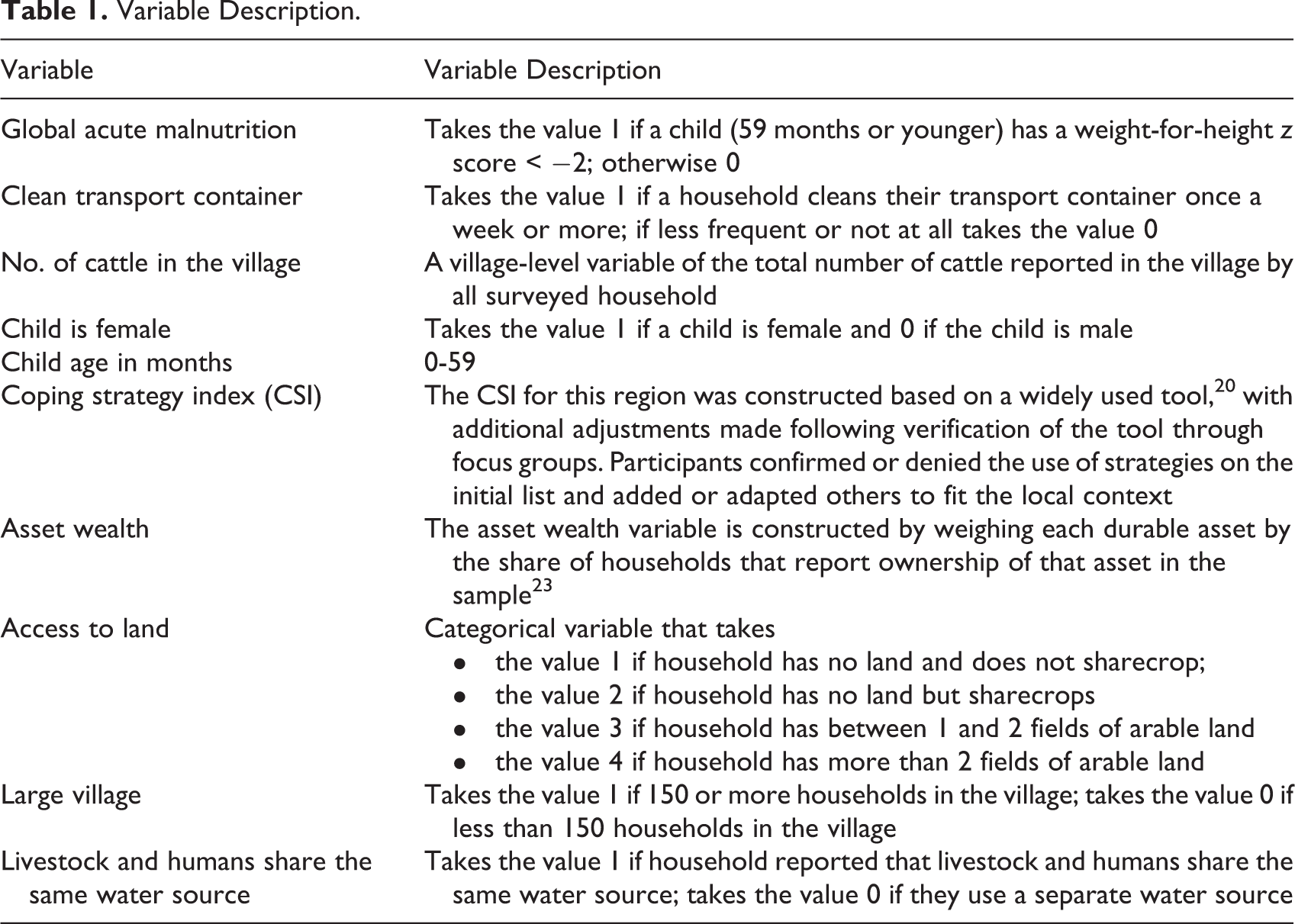
Other possible pathways to acute malnutrition from the UNICEF conceptual framework of malnutrition were also explored, including morbidity, sanitation practices, infant and young child feeding practices, access to health, access to potable water, type of livelihood, household livelihood diversity, decision-making around child health, livestock wealth, and asset wealth. Of all the variables, only experience of diarrhea in the past 2 weeks was correlated with acute malnutrition (P value < .05). Diarrhea is often both a cause and an effect of acute malnutrition; diarrhea reduces nutrient absorption and can decrease dietary intake, whereas acute malnutrition can impair barrier protection and immune function, leading to increased duration and severity of infection. 21,22 For a description of the variables used in the regression analysis, refer to Table 1.
Variable Description.
Hygiene Practices More Important Than Water Source in Predicting Acute Malnutrition
Water contamination was assessed along the water chain on a seasonal basis by Concern (note 4; Table 2). Coliform levels significantly increase 15- to 70-fold from the borehole to the transport container, depending on the year and time of year (with higher levels of contamination of the transport container at the end of the dry season as compared to harvest time). The majority of contamination for households with potable water access occurs at the level of transport, not at the source. The level of coliform contamination in the transport container potentially explains why no impact on wasting by water source alone was observed in the data, despite the fact that many organizations have focused on improving access to potable water in Chad, including CRAM, which included the construction of a borehole in every treatment village in the program area.
Coliform Contamination by Point on Water Chain (Colonies per 100 mL of Water Sample).
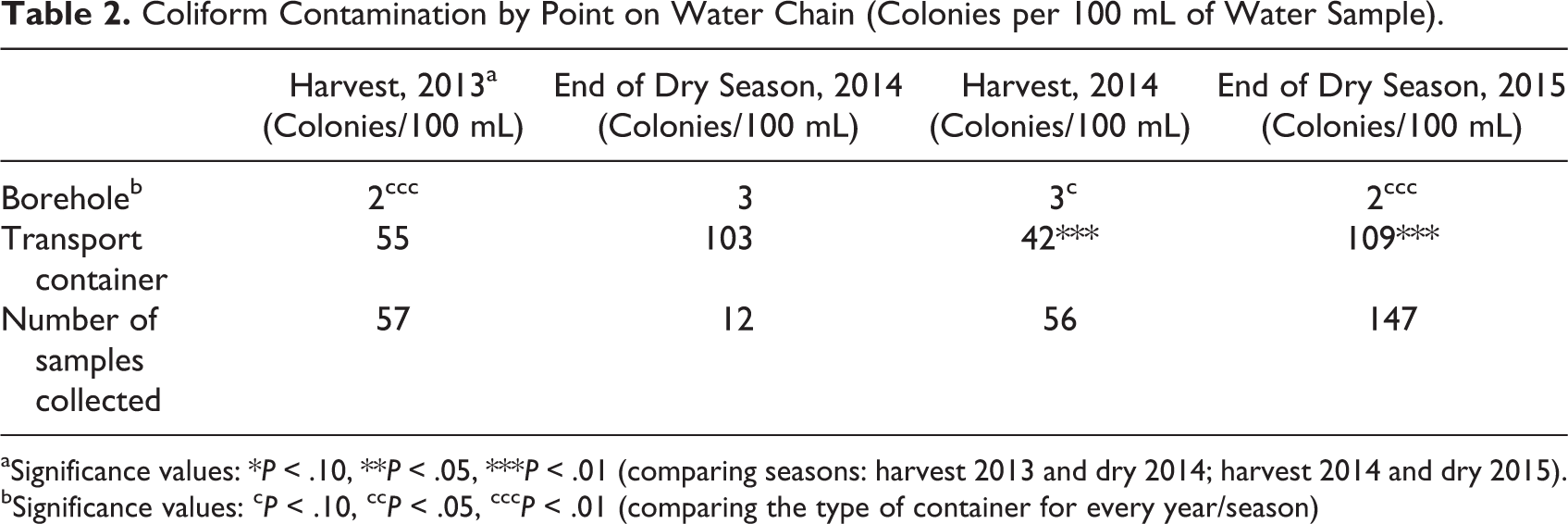
aSignificance values: *P < .10, **P < .05, ***P < .01 (comparing seasons: harvest 2013 and dry 2014; harvest 2014 and dry 2015).
bSignificance values: c P < .10, cc P < .05, ccc P < .01 (comparing the type of container for every year/season)
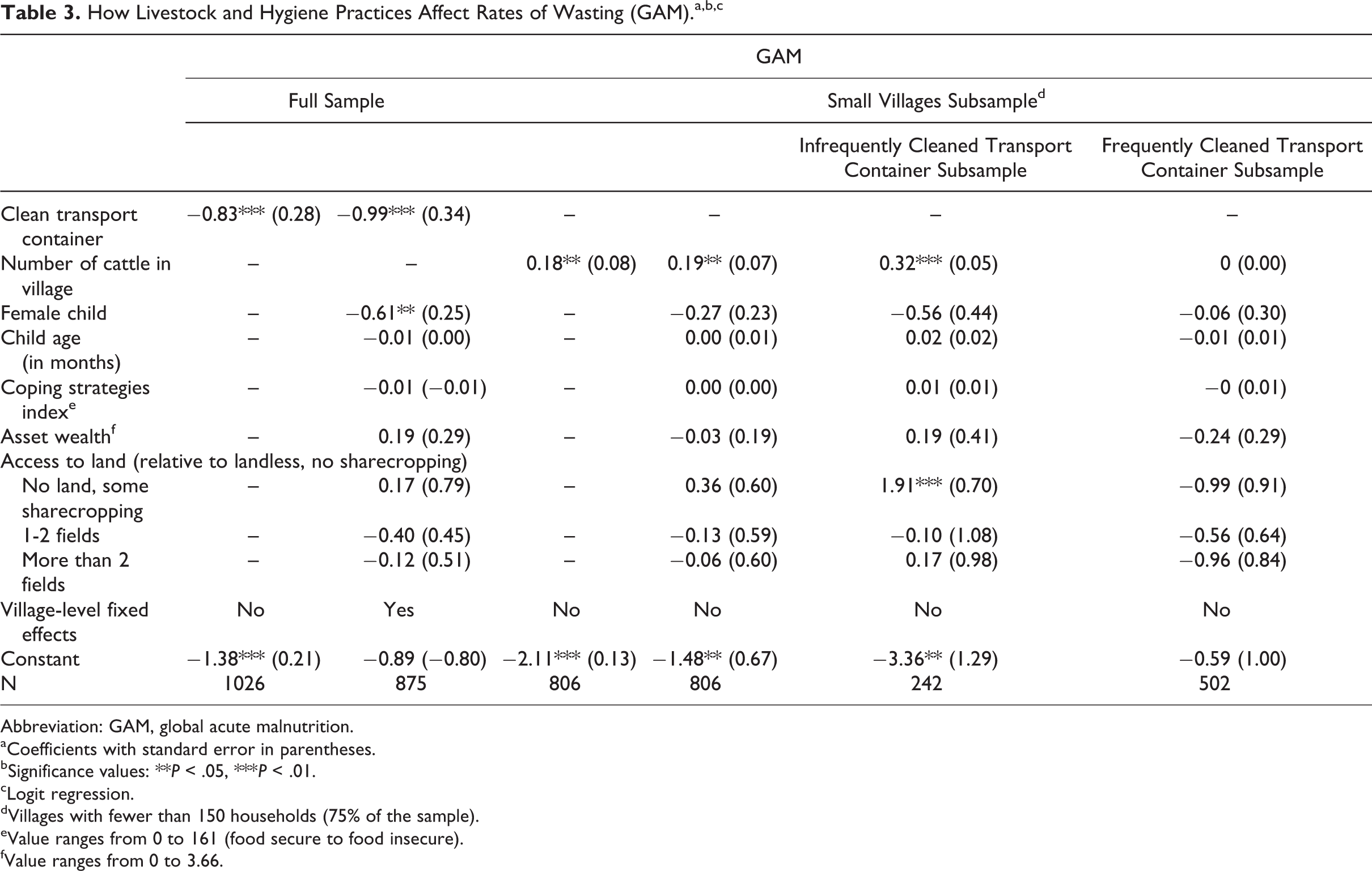
Whether or not a household reported washing their water transport container was significantly correlated with having a wasted child in the household. There was a significant and large difference in wasting in relation to how frequently households cleaned their transport container—among households that cleaned their transport container less than once a week, the GAM prevalence was double (20% of children) among children living in households who cleaned their transport container regularly (10% of children). The relationship and the strength of the relationship were extremely robust to the inclusion of child (age and gender), household (food security, wealth, and land access), and intrinsic village-level characteristics (Table 3).
How Livestock and Hygiene Practices Affect Rates of Wasting (GAM).a,b,c
Abbreviation: GAM, global acute malnutrition.
aCoefficients with standard error in parentheses.
bSignificance values: **P < .05, ***P < .01.
cLogit regression.
dVillages with fewer than 150 households (75% of the sample).
eValue ranges from 0 to 161 (food secure to food insecure).
fValue ranges from 0 to 3.66.
Although there was a significant relationship between diarrheal illness and acute malnutrition, it is important to note that no relationship was observed between diarrhea rates and water access or with whether the household cleaned their water container. This has important implications for identifying the pathogen involved in potentially driving acute malnutrition rates and is explored in the Discussion section.
Numbers of Livestock and Shared Use of Water Sources Linked to Acute Malnutrition
Although agricultural cultivation serves as the dominant source of food or income for food in the survey population (for 75% of households), livestock production was also integral with 85% of households owning goats, sheep, chicken, donkeys, and/or cattle. Livestock are an important source of livelihood, particularly serving as an asset that can be sold in times of stress, to provide cash for other necessities as explained in the focus group discussions.
The analysis revealed 2 significant relationships between livestock and acute malnutrition: numbers of cattle in the vicinity of the villages and proximity of livestock to the water supply chain for domestic consumption. In villages with fewer than 150 households (note 5), the more cattle were reported in that village, the more likely a child in the village was wasted. The second relationship related to livestock was the concentration of livestock at the water source and wasting. The larger the proportion of households that utilized the same water source for both human and livestock consumption in a village, the more likely a child in the village was wasted.
Furthermore, seasonal variation in human and livestock concentrations around different water sources follows the same patterns as coliform contamination—households and livestock are significantly more likely to share a borehole or surface water in the dry season compared to the harvest or rainy season and more likely to share a traditional well in the dry season compared to the rainy season (Table 4). During the wet season, over half of all households use the river stream or pond to provide water for their livestock; as the water dries out in these sources following the end of the wet season, so more households become reliant on traditional wells and boreholes for their livestock. Hence, a potential link is observed between livestock and human concentration at a water source and coliform contamination—coliform levels in the transport container increase 3 to 4 times between the harvest and dry seasons (Table 2), further supporting the relationship between livestock and water contamination.
Percentage of Households Reporting Using Water Source for Livestock by Season (With 95% Confidence Intervals in Parentheses).
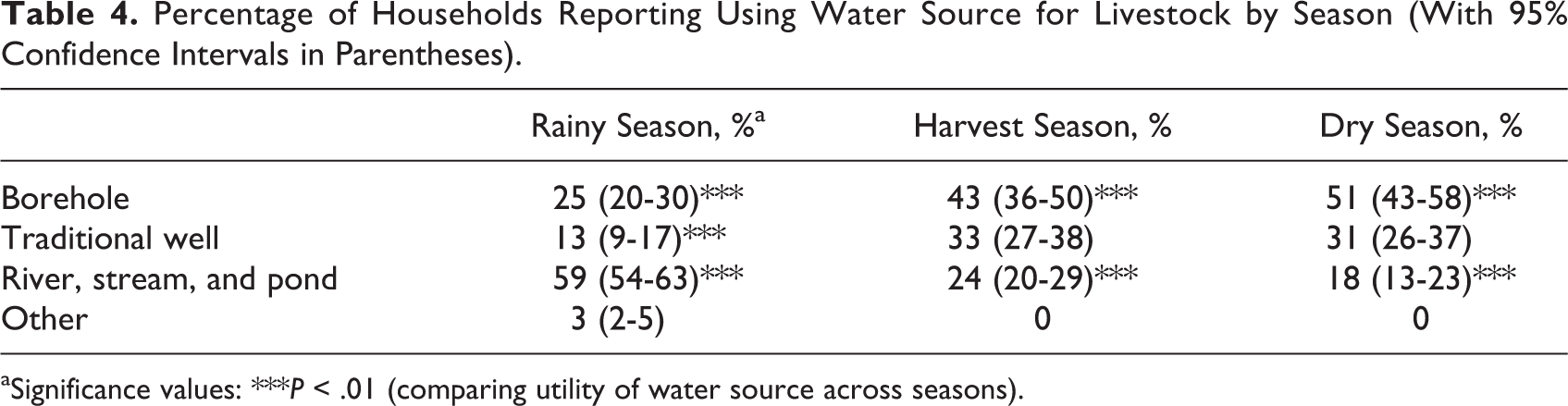
aSignificance values: ***P < .01 (comparing utility of water source across seasons).
Modifying Effects on Livestock as a Link to Acute Malnutrition
The number of cattle in the village and the proportion of households with livestock consuming water at the same water source as for household consumption were not correlated with wasting if the household reported cleaning their water transport container at least once a week. However, if households did not report practicing this behavior, the relationship between livestock (both total number and sharing a water source) and wasting was stronger and larger (Table 3). Both of these associations were present when controlling for child and household-level characteristics. These findings indicate that while the presence and concentration of livestock at a water source in the village correlate with a greater possibility that a child in that village is wasted, the relationship is mitigated by routine cleaning of the household’s water transport container.
Discussion
Acute malnutrition has many causes, and the significance of each may vary between contexts and seasons. This article explores the links to acute malnutrition among sedentary households in Sila Region, Chad, following the harvest period in 2014. In this section, we discuss the implications of these findings in terms of a hypothesis for an associated pathogen, future research, and program implications.
Advances in Understanding the Water Quality Pathway and Relationship to Acute Malnutrition
Although it is well established that diarrhea may result in anorexia, dehydration, and intestinal malabsorption, 22 there remain unanswered questions surrounding the environmental enteropathy/malnutrition complex. Although there is momentum toward addressing the linkages between sanitation, hygiene, and nutrition outcomes, there is a limited understanding of what points on the water chain have the most significant relationship with acute malnutrition. The common narrative related to malnutrition and sanitation focuses on the link between open defecation and stunting. 25 In the Sila studies, no relationship was identified between open defecation and wasting or stunting. However, important links were identified between hygiene practices—specifically, cleaning of the water container and acute malnutrition—and between livestock concentrations and acute malnutrition, most likely as a result of livestock contaminating the water chain.
The data show a clear and significant positive correlation between livestock concentration at the village level, particularly, around the water source, and wasting rates. These also indicate that households who report routinely cleaning their water transport container are significantly less likely to have a wasted child. More so, for the subset of households who routinely clean their water transport container, the relationship between livestock concentration on the village level and acute malnutrition is disrupted. Although the data are able to show us how these variables relate to each other, they do not explain the nature of the association, and there are at least 2 possible interpretations. One hypothesis is that as the number of livestock at a water source increases so does the level of contamination, and while households might primarily only consume potable water from a borehole, they could use the same transport container for carrying nonpotable water from the contaminated sources. Thus, the contents of the transport container are contaminated irrespective of the source of water for human consumption. Another hypothesis is that cleaning of the transport container is a more general proxy for household hygiene practices that reduce overall contamination and/or contact with pathogens in general.
The link between livestock, particularly cattle, and wasting, in the context of water consumption and hygiene, also provides a possible hypothesis for what pathogen might be linked to acute malnutrition in Sila. A recent Global Enteric Multicenter Study using a prospective multicountry case–control study identified the 5 most common pathogens associated with diarrhea and death. These included Rotavirus, Cryptosporidium species, Shigella species, Heat-stable enterotoxins (ST)/Enterotoxigenic Escherichia coli (ETEC), and typical enteropathogenic Escherichia coli. 26 Of the 5 pathogens, only Cryptosporidium is directly linked with livestock, particularly cattle, 27 and can be asymptomatic for diarrhea. 28 Outbreaks of Cryptosporidium are usually waterborne and associated with the bovine type of Cryptosporidium (C parvum). 29 Drinking and recreational water use (rivers, streams, wadis, etc) are the most common ways by which the disease is spread.
This zoonotic species is particularly severe because it persists both symptomatically and asymptomatically with no identified treatment option. Cryptosporidium causes inflammation of the intestine that can cause the villi to become stunted and the intestine then becomes more porous or “leaky,” thus reducing the absorption of nutrients. 30 This is generally referred to as “environmental enteropathy.” Evidence suggests that if children younger than 12 months have contracted cryptosporidiosis, the child’s intestinal mucosa never fully recovers. 31 Thus, Cryptosporidium is said to cause, rather than simply exacerbate, acute malnutrition. 26
However, while several studies have shown a relationship between cryptosporidiosis and child stunting, the relationship with wasting is less consistent. For example, a recent study in Bangladesh shows an association of Cryptosporidium infection with stunting but none with wasting, 32 whereas a study coming out of Peru showed that an infection of Cryptosporidium affects weight gain 33 and hence would impact child wasting.
Thus, additional research needs to be undertaken to identify the possible pathogen(s) linked to acute malnutrition rates in Sila and potentially confirm the role and presence of C parvum (as opposed to C hominis or other common subtypes). Follow-up research, testing both wasted children and calves for Cryptosporidium and its genotypes alongside with anthropometric measurements is critical in order to test the hypothesis presented in this article. Furthermore, given the seasonal distribution of Cryptosporidium infection, 34 any follow-on study would require multiple points of data collection between and within years. Once a pathogen has been identified, additional research needs to be conducted to explore the mechanisms for transmission and potential interventions related to the water chain and livestock water management.
Program Implications
Poor water and sanitation have been highlighted as a major cause of malnutrition over the past 30 years. However, a recent meta-analysis shows that interventions in these areas in nonemergency contexts have a minor effect on stunting and none on wasting. 35 The findings presented in this article, as well as the hypothesis related to C. parvum, potentially point to the importance of integrating nutrition within other sectors, such as livestock, in eastern Chad and possibly elsewhere in order to have an impact on acute malnutrition.
In emergency settings, the provision of water for domestic use is coordinated by the Water, Sanitation and Hygiene (WASH) cluster (note 6). 9 However, water for livelihood purposes tends to get little attention, even though it can account for up to 50% of household use. 36 Water for livestock in emergencies is covered by the Livestock Emergency Guidelines and Standards (LEGS), which state that “water delivery programmes should either cater simultaneously for the needs of people and their livestock, or make use of different quality water for the two groups.” 37 (p37, 2nd ed) There is little or no attention in LEGS regarding the issue of livestock contaminating the domestic water chain and how this might be minimized (note 7) 10 nor on the nutritional benefits of separating delivery systems and addressing behavior change for humans and livestock.
Thus, these findings point to the need for greater integration between different programs such as WASH, Health, Nutrition, Farming, and Markets, and so on, based on contextual analysis of the relationship with acute malnutrition. Although external funding mechanism may treat these areas as independent sectors, at the level of the household and local community they invariably interact and can potentially have a positive or negative synergistic effect on acute malnutrition. Currently, there is limited program guidance demonstrating how to address WASH to improve wasting outcomes. The CRAM analysis demonstrates the unique links between the water chain and wasting as an outcome.
Why No Discernible Impact of Food Security on Nutritional Outcomes?
The findings that the food security indicators were not associated with acute malnutrition are somewhat unexpected, given the known food insecurity in the region and variable agricultural production and rainfall between years 38 as well as previous research highlighting the relationship between food security and nutrition. 39,40 Population displacement and refugee influxes have further affected food security and contributed to humanitarian needs. Large numbers of Chadians have recently returned from Libya and Central African Republic (CAR), needing support to resettle. 41 Thus, poor food security is a characteristic of the region. The findings show that farming is the primary livelihood strategy and that household crop production does not last the year, so households must rely on markets to make up the difference. However, starting in September, the food security situation in parts of the Sahelian zone improves with the arrival of early crops and increased the availability of milk. By the time of the harvest, all farmers should have replenished their own stores; households are less dependent on market purchases, and food consumption improves.
These postharvest improvements in food security are likely to have positively impacted the nutritional status of the entire population in the survey, thereby producing no discernible impact of food security on the malnourished. Furthermore, it is possible that 6 months earlier during the “hunger gap” or preharvest period when food stores were low, the situation probably looked very different. The lesson here is to be aware of the limitations of cross-sectional surveys in analyzing trends and the importance of qualitative approaches for confirming seasonal trends and highlighting how they might affect potential causal pathways.
There are a number of lessons to be learned from this work, first in relation to the evidence that demonstrates the importance of the water chain and how this is impacted by livelihoods (livestock ownership at the village level and shared use of water sources by livestock and people). At the same time, the evidence shows these effects may be mitigated by routine hygiene behaviors—regular washing of the transport container. This confirms the complexity of acute malnutrition causality and the interconnectedness and potential effect modification (or synergy) between underlying causes. Viewing each factor and hence potential association with acute malnutrition in isolation from other factors produces a short unilinear pathway that risks missing more complex realities.
Footnotes
Authors’ Note
The views and opinions expressed in this article are those of the authors and not necessarily the views and opinions of the United States Agency for International Development, European Union, or Irish Aid. A.M. and E.N.B. designed and carried out the research. A.M. performed the statistical analysis with support and discussion with H.Y. and E.M.B. H.Y., A.M., and E.M.B. wrote, reviewed, and edited the manuscript. All authors have read and approved the final manuscript.
Acknowledgments
This work would not have been possible without the support of the Concern Chad team, including the country director, base chief, program managers, and data collection enumerators and supervisors. The authors would also like to specifically acknowledge Anne Laure Bauby for her work on the water quality analysis and key inputs into the water causal chain. The research is based on findings from a program that was funded by Irish Aid and the European Union.
Declaration of Conflicting Interests
The author(s) declared no potential conflicts of interest with respect to the research, authorship, and/or publication of this article.
Funding
The author(s) disclosed receipt of the following financial support for the research, authorship, and/or publication of this article: This research and publication was funded by Irish Aid.