




Abstract
Background:
Almost half of all children in South Asia are stunted. Although agriculture has the potential to be a strong driver of undernutrition reduction and serves as the main source of livelihood for over half of South Asia’s population, its potential to reduce undernutrition is currently not being realized.
Objective:
The Leveraging Agriculture for Nutrition in South Asia (LANSA) research consortium seeks to understand how agriculture and agrifood systems can be better designed to improve nutrition in South Asia. In 2013 and 2014, LANSA carried out interviews with stakeholders influential in, and/or knowledgeable of, agriculture–nutrition policy in India, Pakistan, and Bangladesh, to gain a better understanding of the institutional and political factors surrounding the nutrition sensitivity of agriculture in the region.
Methods:
Semistructured interviews were carried out in India, Bangladesh, and Pakistan with a total of 56 stakeholders representing international organizations, research, government, civil society, donors, and the private sector.
Results:
The findings point to mixed perspectives on countries’ policy sensitivity toward nutrition. There was consensus among stakeholders on the importance of political commitment to nutrition, improving nutrition literacy, strengthening capacities, and improving the use of financial resources.
Conclusions:
Although there are different ways in which South Asian agriculture can improve its impact on nutrition, sensitizing key influencers to the importance of nutrition for the health of a country’s population appears as a critical issue. This should in turn serve as the premise for political commitment, intersectoral coordination to implement nutrition-relevant policies, adequately resourced nutrition-specific and nutrition-sensitive programs, and sufficient capacities at all levels.
Introduction
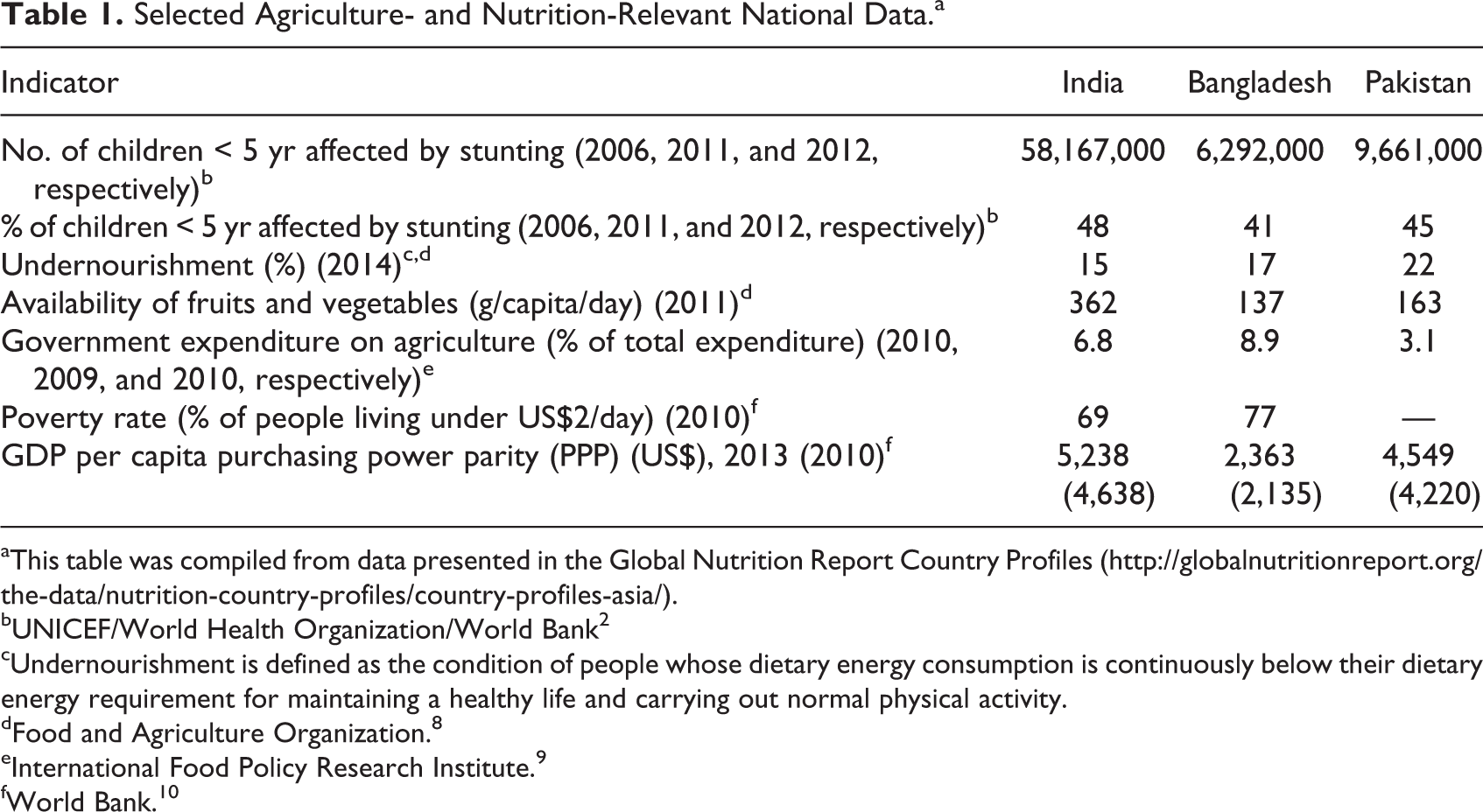
In South Asia, approximately 39% of children under 5 years of age are stunted. Although the prevalence of stunting in the region has declined by a third in the past 20 or so years (from 61% in 1990 to 39% in 2011), three of the six countries that globally have the highest number of stunted children are part of this region. 1 India, Pakistan, and Bangladesh have stunting prevalence rates of 48%, 45%, and 41%, respectively, and the number of stunted children in India is far higher than that in any other country. 1,2 Compared with other regions, South Asia also has the highest prevalence of wasting, with one in six children moderately or severely wasted, and India, Pakistan, and Bangladesh again representing three of the six countries with the highest number of wasted children under 5 years of age. 1 i
Agriculture continues to takes up a significant share of these countries’ economies, accounting for between 17% and 25% of GDP in 2013. 4 A large proportion of the population is employed in the agricultural sector, from 45% and 47% in Pakistan and Bangladesh, respectively 5,6 , to 58% in India. 7 However, the potential of agriculture to reduce undernutrition is currently not being realized in the region due to volatile environmental and political conditions, disconnects between agriculture and nutrition 5,7 , ii and declining shares of agriculture in the economy. 7 Table 1 shows data on several nutrition- and agriculture-relevant indicators for all three countries.
Selected Agriculture- and Nutrition-Relevant National Data.a
aThis table was compiled from data presented in the Global Nutrition Report Country Profiles (http://globalnutritionreport.org/the-data/nutrition-country-profiles/country-profiles-asia/).
bUNICEF/World Health Organization/World Bank 2
cUndernourishment is defined as the condition of people whose dietary energy consumption is continuously below their dietary energy requirement for maintaining a healthy life and carrying out normal physical activity.
dFood and Agriculture Organization. 8
eInternational Food Policy Research Institute. 9
fWorld Bank. 10
Although agriculture has the potential to reduce undernutrition and deliver high economic returns to investment 11,12 , improvements in food production and consumption do not, per se, lead to improvements in nutrition and health outcomes. iii Although there is substantial evidence on the impact of agricultural interventions on intermediary nutrition outcomes, such as indicators of knowledge of health and nutrition, production, consumption, and expenditure, there is little evidence for the impact of agricultural interventions on final nutrition outcomes such as stunting, wasting, and micronutrient status, and very little evidence on the “pathways of impact” 12,15 -18 . iv Other factors that can negatively affect nutrition, such as poor sanitation, agriculture-related diseases, women’s disempowerment, and inadequate quality of health services, can prevent agriculture from having a positive impact on nutrition outcomes.
There is now a growing global consensus on the importance of nutrition-specific and nutrition-sensitive interventions (including nutrition-sensitive agricultural interventions) to improve nutrition outcomes. v In addition, recent literature has placed particular emphasis on the importance of an “enabling environment” for nutrition, which refers to the sociocultural, economic, political, institutional, and policy contexts that govern the design and implementation of nutrition-relevant actions. 1,12,19 Taking into account these three types of determinants of malnutrition, the Leveraging Agriculture for Nutrition in South Asia (LANSA) research consortium (2012–18) vi seeks to improve understanding of how South Asian agriculture and related food policies and interventions can be better designed and implemented to increase their impacts on nutrition in India, Pakistan, Bangladesh, and Afghanistan. vii This paper shares results from stakeholder interviews carried out in 2013 and 2014 as part of LANSA’s research pillar on enabling environments. The next section of the paper outlines the three factors of the enabling environment we used for this study, as well as background on the LANSA research consortium. We then outline the objectives of the study and the methodology, followed by results, conclusions, and recommendations.
Conceptualizing Enabling Environments for Nutrition-Sensitive Agriculture
As part of the 2013 Lancet Nutrition Series, Gillespie et al. highlighted the importance of an “enabling environment” for nutrition, defined as the “political and policy processes that build and sustain momentum for the effective implementation of actions that reduce undernutrition”. 19 Three factors, they suggest, are critical for building and sustaining an enabling environment for nutrition: politics and governance (including vertical and horizontal coherence within and among sectors and stakeholders, positive contributions from the private sector and civil society, and strengthening accountability); knowledge and evidence (including the generation, framing, communication, and use of different forms of nutrition-relevant data, evidence, and knowledge); and individual, organizational, and systemic capacity and financial resources. 19
Two of LANSA’s three research pillars examine how agricultural interventions can better improve nutrition, and how the nutritional impacts of agrifood value chains can be strengthened. A third pillar examines how enabling the social, political, and economic context is important in linking agriculture and agrifood systems to other determinants of nutritional status such as sanitation or women’s status, and aims to identify some of the barriers and facilitators to nutrition-sensitive agricultural development in the region. This research pillar is structured according to the understanding of an enabling environment, as provided by Gillespie et al., 19 in order to better inform its research approach toward enabling environments.
As part of this third research pillar, LANSA carried out several mapping and review activities and interviews. These consisted of evidence reviews of the pathways between agriculture and nutrition in the LANSA countries viii ; country policy reviews that map out the key agriculture, food, and nutrition policies and programs in each country ix ; stakeholder mapping and interviews in order to better understand the current policy landscape in relation to agriculture and nutrition x ; and national stakeholder consultations in order to share, discuss, validate, and critique the findings of the reviews and the interviews. xi The next two sections outline the objectives and the methods used for this study.
Objectives
The first objective of the study was to capture the views of key stakeholders on the political and institutional context and dynamics related to nutrition-sensitive agriculture in their respective countries. The second objective was to understand stakeholders’ knowledge about agriculture–nutrition linkages, and their perceptions of the availability of relevant data and evidence. As part of this objective, we also sought to understand stakeholders’ information sources, communication practices, and how they perceive and use evidence. The third objective was to identify capacity needs for agriculture to become more nutrition sensitive, including the availability and use of financial resources. The interview findings are presented in the Results section of this paper. xii
Methodology
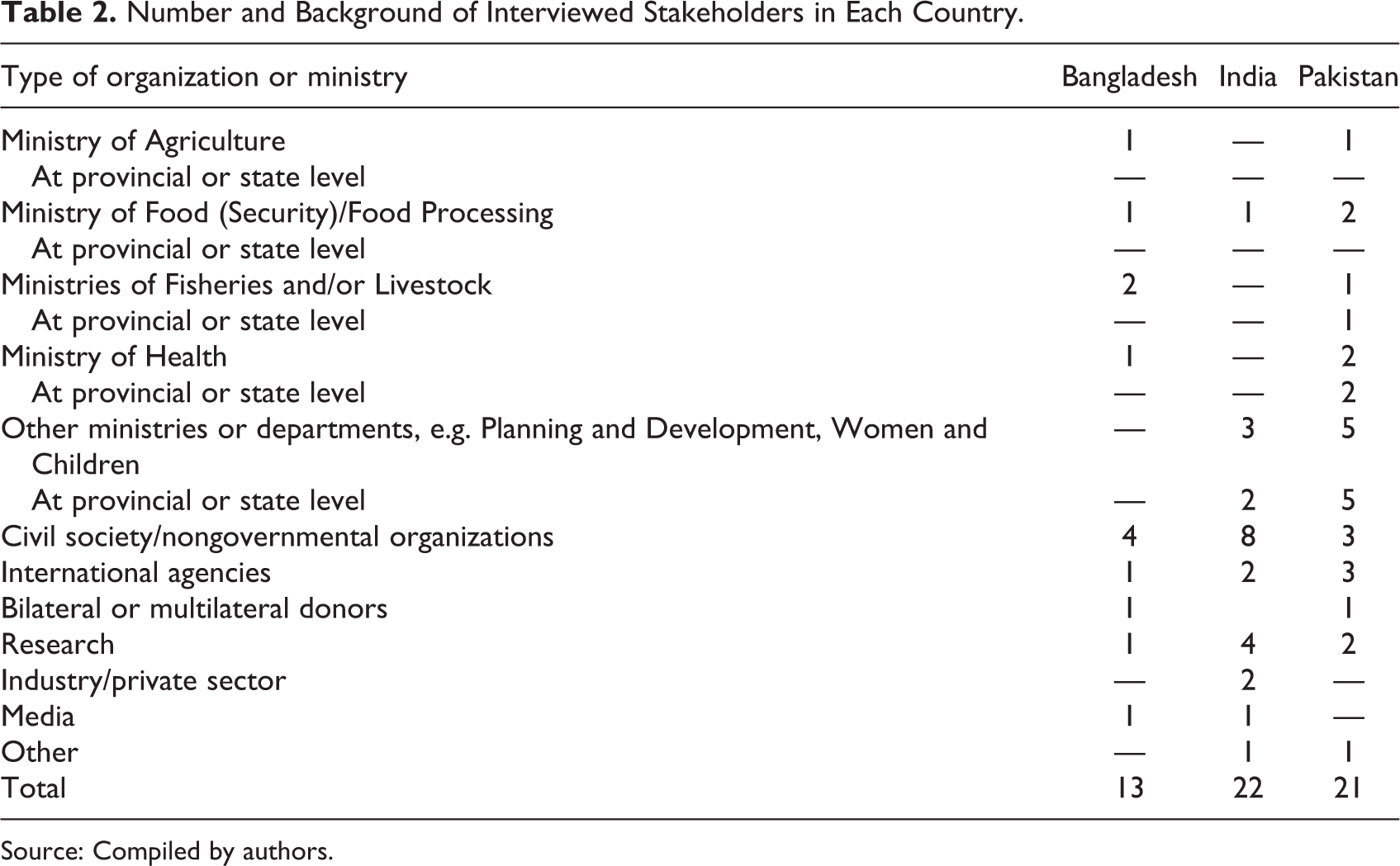
As a first step to identify key players in the agriculture–nutrition space in each of the three countries, mapping exercises were carried out in 2012, xiii followed by country policy reviews and informal conversations with experts in agriculture, nutrition, and health. Based on these findings, “long lists” of key stakeholders were generated in each country, consisting of representatives from government, research/academia, nongovernmental organizations (NGOs)/civil society organizations, bi- and multilateral organizations, the media, and the private sector, all of whom had varying levels of expertise in agriculture, nutrition, and/or health. The stakeholders were then categorized according to their level of influence in the agriculture–nutrition policy space, their support for improving the nutrition sensitivity of agriculture, the sector(s) and organization within which they primarily worked, the reasons that they were included in the list, and whether they had been interviewed recently on a similar topic. This allowed the lists of stakeholders to be narrowed down to “short lists” of those considered most important to interview for this study. A total of 22 stakeholders were ultimately interviewed in India, 21 in Pakistan, and 13 in Bangladesh (Table 2). Informed written consent was obtained from the stakeholders prior to the interviews in India; in Pakistan and Bangladesh, the interviewees were informed what the information would be used for before the interview took place. In all countries, the interviewees were told that their responses would be kept anonymous.
Number and Background of Interviewed Stakeholders in Each Country.
Source: Compiled by authors.
The interviews were recorded when possible and transcribed, and/or interview notes were written up. The interviewers (usually accompanied by a note taker) conducted the interviews with the support of an interview guide with open-ended questions based on the three objectives outlined in the previous section: the political and institutional context of agriculture and nutrition, xiv knowledge and evidence, xv and capacity and resources. xvi Information from interview transcripts and notes was categorized in an Excel matrix according to codes representing the three factors of the enabling environment used for this study, based on Gillespie et al., 19 and subcodes capturing more specific information that surfaced during the interviews. Data analysis and writeup were based on information captured in the matrix.
Study Limitations
Considering the multisectorality of nutrition, the various levels at which policy or programmatic changes can take place, and the plurality of individuals involved, the findings of this study are based on a relatively small number of stakeholders in the three LANSA countries. It is therefore not possible to make broad generalizations about the views of those working in these sectors. However, the in-depth nature of the interviews provides access to key insights into both common and specific concerns across the three countries. These concerns can be validated on a larger scale and, as part of a deeper analysis, inform understanding about how agriculture can be made more nutrition-sensitive in each of these three countries. A second limitation is that the study is slightly unbalanced in the level of the stakeholders who were interviewed. For example, whereas stakeholders interviewed in Pakistan represented both national and provincial levels, in Bangladesh and India the majority of stakeholders interviewed worked at the national level. Identifying and interviewing several more stakeholders at the state and substate levels might have given more insight into the local level perceptions of agriculture–nutrition linkages in these two countries and might be something worth exploring in future LANSA research.
Results
In this section we share the interview findings using the three key factors of the enabling environment outlined earlier. We first discuss the political and institutional context of agriculture and nutrition, including stakeholder perceptions of barriers and facilitators to nutrition-sensitive agriculture and actions required to improve nutrition-sensitive agriculture, as well as countries’ policy formulation processes. The next section, on knowledge and evidence, includes a discussion of stakeholder understandings of agriculture–nutrition linkages, their views on availability of data and evidence on agriculture–nutrition linkages, and what type of evidence is most appropriate for influencing policy. Last, we discuss findings regarding capacity and resources to leverage agriculture for nutrition. The findings are hence based on the perceptions of the interviewed stakeholders.
Political and Institutional Context of Agriculture and Nutrition
Policy, priorities, and politics: Barriers to and facilitators of nutrition-sensitive agriculture
In India, Bangladesh, and Pakistan, stakeholders were divided about whether nutrition is sufficiently considered in the agriculture/agrifood sector. In India, representatives from government (in both agriculture and nutrition), industry, and multilateral organizations (10/22) xvii felt that nutritional considerations are starting to be considered in agricultural policies and programs. The reason for this increasing recognition of nutrition is India’s consistently high malnutrition rates, despite its rapid economic growth and investments in the agricultural sector, as well as the country’s achievements in agricultural production, allowing for more space for nutrition in policy discussions. Two catalysts mentioned for the increased attention to nutrition—events that could be described as “agenda setting” in the policy process literature 20,21 —were the 2011 New Delhi 2020 conference “Leveraging Agriculture for Improving Nutrition and Health” and India’s 2013 Food Security Bill. The interviewees reported that Indian states have started to emphasize and invest in biofortification and nutrition-sensitive agriculture, such as kitchen gardens, horticultural produce, and promoting nutrient-rich agriculture in rural areas, including promoting the inclusion of nutrition in agriculture departments in universities. This finding resonates with the country policy review for India, which found that, for example, India’s National Rural Livelihood Mission has the potential for linkages with the agricultural sector to improve nutrition outcomes, and that in general the government has started to think multisectorally about nutrition. xviii
By contrast, over half of interviewees in India (12/22)—from research, civil society, industry, government, and the media—asserted that consistent emphasis on staples such as wheat and rice (including in programs like the Public Distribution System) has shifted policy and programmatic focus away from pulses, vegetables, fruits, and micronutrients, as well as indigenous and traditional farming systems. Additionally, bureaucrats frequently rotate between ministries, which means little continuity in terms of policy and programming. The lack of understanding of nutrition among policy makers, inefficient knowledge transfers from national to state levels, including associated language barriers, and a gap between policy-making and implementation present further challenges. Moreover, although the Ministry of Women and Child Development has the official mandate to convene different departments on nutrition, it is not perceived to have the status and the political power to do so effectively. Hence, nutrition is perceived to gain attention within agriculture only when political pressure is applied or there are particular political incentives to do so.
Furthermore, stakeholders reported a lack of leadership (even a resistance to change within the government and the Ministry of Agriculture) and ineffective coordination between sectors from the central to the community level. xix Last, the country’s diversity of agroclimatic zones and the lack of evidence on cost-effective interventions, high operational costs, lack of skilled agricultural labor or stable employment, reduced interest in agriculture and subsequent migration, lack of incentives to produce nutritious foods, and decline in the agriculture extension system were reported as challenges to devising appropriate nutrition-sensitive, agriculture-related policies and programs. These are findings that resonate with recent literature on increasing incentives (and decreasing disincentives) regarding availability, access, and consumption of nutritious, diverse, and safe foods 23 , as well as the importance of a workforce with appropriate skills to ensure proper implementation. 24
Similar concerns were voiced in Bangladesh. Stakeholders from government, research, and industry stated that while there is still a tendency to focus on rice and wheat production, the government and several other development actors are beginning to recognize the importance of making agriculture more nutrition sensitive and diversifying diets, but emphasized that the agenda continued to be driven by development partners (7/13). Following the 1996 World Food Summit, the country’s policy environment has broadened its understanding of food security to accessibility, availability, utilization, and stabilization, in the form of the National Food Policy (2006), the National Food Policy Plan of Action (2008–15), and the Bangladesh Country Investment Plan on Agriculture, Food Security, and Nutrition, which has led to the implementation of several agriculture-for-nutrition programs as well as school feeding programs. Several high-level policy makers now recognize the role of nutrition in preventing disease and achieving other development outcomes. xx
About half of the stakeholders in Bangladesh—from civil society, government, and the media (7/13)—found that nutrition remains a marginal consideration in policy discourse, research, and agricultural extension because of a lack of coordination between sectors, insufficient understanding or interest in other sectors or other types of interventions (the current focus is primarily on nutrition-specific interventions), and an absence of accountability, leading to ineffective implementation of policies. While the Ministry of Health has a separate nutrition wing, other ministries do not, making it challenging to collaborate on nutrition. And although collaboration between sectors is improving, especially at the policy level, coordination in implementation is still largely absent.
In Pakistan, one-third of those interviewed (7/21)—from government, international organizations, research, and donors—felt that nutrition is not a priority in the agricultural sector. Government representatives (primarily from the agriculture, food security, and planning departments) emphasized that food security is a priority, seemingly based on the assumption that the production of sufficient quantities of food accompanied by sound agricultural practices (irrigation, timely harvesting) would result in improved nutrition. The focus for certain stakeholders was primarily on increasing agricultural production and income generation. One official from a provincial department stated: “Our focus is on […] self-sufficiency. We might get into enhancing nutritional value once we have addressed these issues. [Once] food security [is] ensured [and] we have exportable surplus, then this [nutrition] might be the priority.” As nutrition is generally considered the mandate of the provincial departments of health, this leads to a lack of cooperation and coordination between government departments on nutrition and inadequate inclusion of nutrition indicators in other sectors. xxi Leadership and technical capacity within the government were identified as further challenges, as well as a lack of knowledge of the importance of nutrition and its impact on the economy. This means that “tangible” issues, such as electricity and construction, are emphasized more during elections than issues like “hidden hunger.”
One-third of interviewees in Pakistan (7/21) reported that nutrition was gaining prominence. The introduction of the Intersectoral Nutrition Strategy has provided a structure for various provincial departments to coordinate. Furthermore, Pakistan has joined the Scaling Up Nutrition (SUN) movement, and there are an increasing number of nutrition-sensitive agricultural programs and improvements in agricultural technologies such as biofortification. xxii As one provincial government official stated: “After the 2011 National Nutrition Survey, which showed the poor nutritional status of mothers and children, it was decided that in Punjab a multisectoral integrated nutrition strategy should be developed. Nutrition had to be integrated into health, food, agriculture, education, social protection, and WASH [water, sanitation, and hygiene].”
Perceptions of actions to improve nutrition-sensitive agriculture
Stakeholders in India stated that the government and other actors are addressing nutrition in a variety of ways. At the state level, for example, training modules for NGO and government staff are being developed, and pulses and vegetables for feeding programs are being procured locally to encourage local production and consumption. Furthermore, research on biofortification is developing. Making existing programs, such as the Public Distribution System, more nutrition sensitive, increasing production of more nutritious products, including program indicators not just on productivity but also on nutrition and health, and raising awareness of nutrition at all levels were all deemed critical to move the nutrition agenda forward. In Bangladesh, stakeholders reported that the Department of Agricultural Extension was working on implementing an agenda to ensure balanced diets and that the government was providing support by privatizing the seed market, allowing farmers to import seeds for profitable vegetables. Value chains need to be strengthened, however, in order to minimize wastage.
In Pakistan, the Planning Commission has been nominated as the focal body for nutrition at the national level and the Planning and Development Departments at the provincial level. However, although these departments have substantial political power, there is a general feeling that they also suffer from capacity issues. Several development partners—in the form of the Pakistan Nutrition Development Partners’ Group—are working toward establishing a designated authority on nutrition at the federal and provincial levels. Following the launch of SUN in 2013 by the Ministry of Food Security and Research, the government will move to develop multistakeholder mechanisms and actions, along with United Nations agencies and NGOs, to take the nutrition agenda forward. The government is also seeking to modernize agriculture by focusing on new technologies and new varieties of seeds and vegetables, fish, and poultry, and improving regulation. North–South and South–South exchange programs are providing a way for people from institutions in Pakistan to receive training elsewhere. Stakeholders at the provincial level reported that multisectoral policies are starting to be developed and that some programs are working on health and WASH.
Stakeholders in all three countries—representing civil society, research, government, and international organizations—emphasized that there is a need to improve collaboration on nutrition between sectors (horizontal coherence), from ministries to extension workers (vertical coherence), xxiii and to raise awareness among policy makers and in communities about the importance of nutrition so that appropriate interventions can be implemented and properly funded and behavior change could be achieved. To do this, capacity-strengthening, such as nutrition training and training on water and sanitation and health, is important to improve awareness of the multisectorality of nutrition. In Pakistan in particular, provincial-level government officials emphasized the importance of mainstreaming gender considerations into their programs, raising awareness of the role of women in agriculture, and hiring more female extension workers. Political leadership, commitment, and accountability, in order to develop and implement nutrition-sensitive agricultural programs, was another theme identified across countries.
Policy formulation processes, influences, and opportunities for input
Although most stakeholders in all countries agreed that policies were formulated based on thorough consultation processes, they also indicated several challenges. Some respondents found that evidence is not always taken into account when policy decisions are made, policies are often developed based on emotional arguments and sentiments, and policy makers do not always have time to wait for evidence and are often pressured by interest groups and powerful lobbies. Because the same people are usually involved in policy formulation, a shift in mindset does not easily take place within the agricultural sector.
Representatives at the provincial level in Pakistan stated that although it is possible for nutrition-sensitive policy to be formulated, implementation is challenging. With regard to agricultural policy in particular, although it is driven by the public sector, there is a need to balance the mandate of the public sector with the role of the private sector. Others stated that they were not aware of how policy is formulated in Pakistan, but were aware of agricultural research institutes providing recommendations to the Department of Agriculture.
Several opportunities exist across countries for influencing policy formulation. Individual leadership 19,20,22 was seen as an important driver of policy influence and change in India and Pakistan—whether within government or by champions outside the government who have constructive relations with policy makers. Furthermore, particularly in India and Pakistan, issues that are more likely to win elections and give policy makers recognition are perceived to be prioritized, such as construction and infrastructure or electricity, as well as personal incentives related to financial benefits, job creation, or family. xxiv One of the respondents suggested that although nutrition does not tend to be a vote-winning issue, including it in policy makers’ plans will provide an incentive to pay attention to this issue.
Respondents in India and Pakistan reported that evidence can inform policy-making but that policy makers often do not have the time to wait for results or scrutinize evidence in detail. Because accountability is often lacking, there is not much incentive to use research and/or conduct analyses. Evidence needs to be communicated in such a way that policy makers can understand it and be convinced by it, such as in the form of short policy guidance notes with clear policy recommendations. Stakeholders in India found that policy makers are often especially interested in evidence from small projects that can be replicated or scaled up, cost-effectiveness of programs, and examples of the types of policies and programs that have been successful in other countries. xxv Furthermore, they reported that both convening power and “political pull” are key for a Ministry. One NGO representative in Pakistan said: “We can actually convince them [policy makers], because we know that they are educated people and if you can put forward the facts and the figures, it is always possible that we can convince them.” Donors, and hence funding arrangements, were also mentioned as influencing policy decisions in both Bangladesh and Pakistan.
In light of the above, there are various opportunities for influencing policy formulation. Timing is key, with the period before an election presenting a clear opportunity for influencing parties’ manifestos. Also, when five-year plans are developed (India) or when the Prime Minister is deciding on the development strategy (Pakistan), there are opportunities for input; if nutrition becomes part of the overall development strategy, it “will have some chances of basically going an extra mile” (NGO representative, India). In India, the Planning Commission and the ministries collect feedback through their websites on five-year plans and specific policy proposals. In Pakistan, Annual Development Programs at the departmental level are discussed with a variety of stakeholders who provide their inputs. Furthermore, formal consultations are held during the policy formulation process with key stakeholders (such as NGOs, industry, and consumers) through workshops or by putting draft policies on ministries’ websites.
Interviewees across countries also emphasized that to ensure that research findings can have an influence on the policy-making process, it is important to have ongoing engagement and interaction with policy makers. One of the interviewees cited the International Food Policy Research Institute’s establishment of the Pakistan Strategy Support Program as an example, as well as its continuous engagement with the government on policies related to wheat procurement, measurement of poverty, and electricity subsidies. Another stakeholder mentioned that the Food and Agriculture Organization (FAO) had worked with the Khyber Pakhtunkhwa and Balochistan governments to assist these provinces to draft their agricultural policies. At the national level in Pakistan, the FAO has helped the Ministry of Food Security and Research formulate a national policy on agriculture and food security (all supporting nutrition) and has supported policy formulation in Azad Jammu and Kashmir. Researchers thus have the opportunity to influence policy, but research needs to be robust and implementable. Civil society also has the capacity to influence policy by, for example, carrying out social audits; the Right to Food Campaign in India was mentioned as an example of successful influence by civil society.
Influence and pressure from the media and civil society seem to have positively influenced accountability mechanisms in India and Bangladesh. For example, in Bangladesh, a planning and monitoring cell in the Department of Fisheries monitors the development of projects and conducts field visits to ensure that activities are on track. Others mentioned that each year the Ministry of Food monitors progress on projects of the government and development partners and that the National Food Policy Plan of Action and the Community Investment Plan Monitoring Report 2013 are ways to ensure accountability.
Several others found that there is limited accountability in place. In India, some respondents were concerned that those in positions of power were only interested in taking the initiative on issues for which they would receive credit. Furthermore, they felt that policies are formulated and/or changed without being informed by evidence. Even within research institutions, this behavior among more senior researchers leads to frustration for younger researchers. In Pakistan, stakeholders were of the opinion that since decentralization, there have been limited accountability frameworks in place at the provincial level and limited political will; policy makers are not incentivized to use research and conduct high-quality analyses. In Bangladesh, weak enforcement of the salt iodization law (1989) was mentioned as being due to a lack of capacity and governance.
Knowledge and Evidence
Perceptions of agriculture–nutrition linkages
Almost two-thirds of all interviewees highlighted that agriculture mainly affects nutrition through the production (and therefore improved availability) of food, not only staple crops but also animal-source foods, fruits, and vegetables. Soil quality, agricultural practices, and technologies such as biofortification, as well as dietary practices, were said to further influence this pathway. Agriculture was also perceived as an important source of income for agricultural workers as well as producers. The interviewees highlighted the impact of agricultural policies on prices, affecting farmers’ income as well as consumers’ purchasing power and therefore food intake. Respondents in Pakistan stated that this is especially important, as 60% of people are net food buyers. Value chains were also identified as a key way in which nutrition security can be enhanced, for example, by reducing wastage during transportation and processing or by adding micronutrients.
About one-fifth of the respondents reported other pathways. Women’s empowerment and their control over household resources were highlighted as ways to improve the nutrition of households and especially children. The impact of agriculture on women’s health and hence their ability to care for their children, as well as the impact of women’s health on their capacity to contribute to agriculture, was mentioned. In Pakistan in particular, the role of female extension workers was mentioned as important by provincial-level government officials, particularly with regard to communicating with female farmers about poultry, milk, and grazing. Other intermediary factors, especially the role of access to safe water and improved sanitation and hygiene, were considered important in all countries, as well as issues that determine access to nutritious foods in other ways, such as social safety net programs in rural areas (employment schemes, cash transfers), health-related behaviors and practices, lack of access to and ownership of land, and issues of caste and gender.
In all three countries, the respondents—from government, international organizations, civil society, and research—felt that one of the key ways in which agriculture can become more nutrition sensitive is through further improvement of agricultural technologies. Biofortification was highlighted, as well as using research and development to develop higher-yielding and more nutrient-dense crop varieties, and increasing the production of pulses and horticultural crops in a way that is attractive and beneficial to farmers as well as consumers. Respondents in India and Pakistan in particular emphasized the role of the private sector in introducing seed and crop varieties that are more nutritious and disease- and pest-resistant, as well as promoting home gardens and animal-source foods. Issues such as improving infrastructure to reduce food wastage and prevent postharvest losses were mentioned across all three countries, primarily by representatives from government and international organizations.
Furthermore, representatives from government, international organizations, and civil society mentioned that raising awareness about nutrition and the way in which agriculture affects nutrition was seen as an important approach to improve the impact of agriculture on nutrition (for example, through behavior change communication and awareness raising among policy makers). A stronger focus on the role of women in agriculture, their education, and their broader empowerment was also considered critical for maximizing the impact of agriculture on nutrition outcomes. xxvi In India in particular, a representative from an international organization mentioned that the way in which caste affects access to food is an important issue that needs to be addressed. xxvii
Availability of data and evidence
In India, data are available from a variety of sources, such as the National Family Health Survey (NFHS), the National Institute of Nutrition (NIN), the Food and Agriculture Organization (FAO), the World Health Organization (WHO), and the FAO-established Codex Alimentarius Commission (CODEX). In Pakistan, sources for data include the DHS (Demographic and Health Survey), the HIES (Household Integrated Economic Survey), agriculture surveys, and the NNS (National Nutrition Survey) – which can be triangulated. In Bangladesh, the Centre for Policy Dialogue (CPD) and the Bangladesh Institute of Development Sciences (BIDS) are considered the most reliable producers of evidence, as well as the International Food Policy Research Institute, BRAC, FAO, the International Centre for Diarrhoeal Disease Research, Bangladesh (ICDDR, B), and the media. Others found that although there are sufficient data, they are not used effectively or there is an overwhelming amount of data and help is needed to pull out key details.
Respondents in India found that there are sufficient studies on soil composition, livestock, irrigation, mitigation of negative nutritional impacts (e.g., from soybean), as well as good quality evidence from microbiology linking agriculture to nutrition and good documentation on the linkages between health, drinking water, and nutrition. However, there were also a significant number of respondents who found that there is not enough evidence on agriculture–nutrition linkages (such as the impact of agricultural production on nutrition outcomes) and that the evidence that does exist is scattered, mainly from pilot projects or agricultural interventions with specific nutrition outcomes. For example, in India, the National Family Health Survey has not been carried out since 2005. Similarly, in Pakistan, the NNS is not carried out frequently enough (every 10 years instead of every 5 years). Furthermore, agricultural statistics data are often outdated and unreliable and analysis is not thorough. xxviii More research is needed on value chains (preserving, storing, transporting) and nutrition, micronutrients as opposed to staples, and scaling up of nutrition-sensitive pilot projects.
Evidence most appropriate for influencing policy
In all three countries, one of the primary ways in which evidence is most effectively communicated to policy makers is through short policy briefs with clear policy recommendations. For example, in Pakistan, nutrition policy guidance notes were prepared in collaboration with different departments; academic papers tend to be more difficult for policy makers to digest. Furthermore, individuals who champion the use of evidence are also helpful, whether they are technical experts, government representatives, or other types of nutrition champions, and face-to-face meetings are an effective way to communicate and influence policy makers. Evidence of what works at scale is important, as well as evidence from the field and from other countries such as Brazil. The media plays a key role in gathering and reporting on field-level information, highlighting research findings, and mobilizing and educating people.
Capacity and Resources
Capacity—at the individual, organizational, and systemic levels—is considered a key element of an enabling environment for nutrition. 19,28 In all three countries, interviewees reported that, at an individual level, there is a lack of understanding about nutrition and agriculture–nutrition linkages at all administrative levels. In Bangladesh, stakeholders—primarily from international organizations—emphasized that it is important for the government to invest in nutrition (as well as WASH and health) training for community-level workers, but also for those at the top levels, so that technical skills can be strengthened and collaboration between sectors improved. Furthermore, they emphasized that subsistence farmers need to be empowered with regard to technology and knowledge of value chains. In India, civil society representatives found that there is a need to strengthen extension workers’ knowledge about cropping and seeds but also about infant and young child feeding (IYCF), WASH, and healthcare, and that the capacity of small farmers and NGOs with regard to management needed strengthening so that they can plan and implement scale-up. They also highlighted that approaches to enhancing the nutrition sensitivity of agriculture are lacking at the district and block levels and that there are challenges in translating resources from the central level to local languages in different states. In Pakistan, government representatives stated that civil servants in departments of agriculture and health, including those in field-based posts, lack sufficient knowledge about agriculture–nutrition linkages. Furthermore, respondents from research stated that there is a need to train middle- and top-level policy makers on how to use research to inform policy so that they have the capacity to use evidence. Capacity of researchers was also said to be deteriorating in some countries due to brain drain (e.g., the National Agricultural Research System [NARS] in Bangladesh) or because people enter jobs through the back door without the necessary qualifications, as reported in Pakistan.
At an organizational level, interviewees in Bangladesh from research, civil society, and international organizations gave examples of some of the institutions that have seen a decline in their research capacity, such as the Bangladesh Agriculture University, the Bangladesh Standards and Testing Institution (BSTI), and the Bureau of Statistics and Planning Ministry. Government representatives in Bangladesh argued that capacity-strengthening is needed for institutions working on value chains for fisheries, and programs working on food production needed better coordination and improved knowledge. In both India and Pakistan, interviewees reported that more research is needed on the role of women in agriculture and that gender-friendly agriculture models need to be scaled up.
At a more systemic level, one of the main challenges in India was perceived to be the movement of bureaucrats between different ministries, leading to a lack of capacity on nutrition. Even if research capacity exists, the bureaucracy does not have the capacity to pull different actors together or the political will to do so. Similarly, in Pakistan, stakeholders experienced a lack of integration between ministries on nutrition. One research organization representative in Pakistan stated: “The governments seem to lurch from one thing to another almost everywhere, things seem to catch them off guard and they have to have a reaction and it’s sometimes good and often poor.” In Bangladesh, there were differences in perceived capacity between ministries; for example, one research stakeholder stated that the Ministry of Livestock and Fisheries had low research and implementation capacity (and funding) compared to other ministries (like the Ministries of Agriculture and Health), and a government representative mentioned that every ministry needs three or four people who could work on translating research findings to policy. Several stakeholders—primarily from international organizations and government—mentioned that value chains need to be strengthened (more investments, better storage capacity, better networks, better processing, better knowledge and technologies). About half of interviewees in Bangladesh stated that overall, a lack of manpower is the primary capacity issue.
With regard to sufficiency of financial resources, a substantial number of interviewees in India (9/22) agreed that these are adequate for the agriculture/agrifood sector to improve nutrition. They stated that many ministries do not manage to spend their budgets and that there were sufficient financial resources for researchers and for interventions to increase production. Improvement is needed, however, on how resources are spent in a more meaningful way; long-term impacts should be prioritized. At the state level, however, budgets seem to face challenges. Others mentioned that the amount of financial resources required depends on the extent of scale-up, and that there is not enough evidence of cost-effectiveness of programs and of targeting to the poor (urban, migrants, tribals) to determine what financial resources are needed. In Pakistan, although there is not necessarily a shortage of financial resources, respondents found that there is a need for improved capacity in relation to how resources should be spent (8/21), with poor investment in agriculture, for example, especially agricultural research and development. A few respondents (4/21) were concerned about the political motivations attached to spending decisions (e.g., war on terror or defense, water, physical infrastructure development) and felt that the capacity to adequately allocate financial resources is a challenge. Stakeholders in all three countries indicated the importance of managing resources better, rather than merely increasing them—a finding that differs from recent studies that indicate a demand for increasing funding for implementation of nutrition-sensitive agricultural polices. 29
Conclusions and Recommendations
While most stakeholders highlighted production, income, and food prices as pathways through which agriculture can influence nutrition, a much smaller proportion highlighted the role of women in agriculture and how this impacts their health, use of time, and control over resources. This seemed to inform their views on how conducive the policy environment is in their respective countries to nutrition-sensitive agriculture, and how this enabling environment can be improved.
Across the three countries, there were clearly mixed views among stakeholders on whether the policy environment is conducive to strengthening agriculture–nutrition linkages. While nearly half of all stakeholders emphasized that nutrition-sensitive agriculture is gaining political traction—exemplified by high-level events, relevant policies, and improvements in agricultural technologies (such as biofortification), as well as nutrition-sensitive programming—another half believed that the general policy environment continues to emphasize staple crops and that a lack of intersectoral coordination prevents nutrition from being adequately addressed.
Several key challenges were highlighted across countries, such as inadequate nutrition literacy and technical capacity, from policy makers to extension workers to communities; lack of political leadership on nutrition and a related lack of accountability, as well as influence by powerful private sector lobbies that dominate the political agenda; insufficient coordination between relevant sectors on nutrition issues; infrequent collection and limited availability of quality data on both agriculture and nutrition (in the same surveys); ineffective communication of evidence to policy makers; and insufficient technical capacity among extension workers, civil servants, and even researchers.
Across the three countries, interviewees highlighted the need to improve collaboration among sectors from ministries to extension workers and to raise evidence-based awareness among policy makers and in communities about the importance of nutrition. Influence and pressure from the media and civil society can positively influence accountability mechanisms (as mentioned by stakeholders in India and Bangladesh), and this resource has not been mobilized enough in the region.
Despite challenges, there are ways in which all countries are taking steps toward an increasingly nutrition-sensitive policy environment. For example, Pakistan joined SUN in 2013 and has taken steps to develop an intersectoral nutrition strategy. Bangladesh has developed several relevant policies and programs, such as the National Nutrition Council and the Country Investment Plan on Agriculture, Food Security, and Nutrition, and several Indian states have established nutrition missions and are working on improving the nutrition sensitivity of agricultural programming. Several high-level events and initiatives have also served as ways to raise the profile of nutrition and its relevance to other sectors, such as the National Nutrition Survey in Pakistan, the World Food Summit in Bangladesh (1996), and the 2011 IFPRI conference “Leveraging Agriculture for Improving Nutrition and Health” in India.
In light of this, and based on stakeholder feedback, several issues emerge as being particularly important for improving the nutrition sensitivity of the agricultural sector in Pakistan, Bangladesh, and India: Ensuring that systems are in place that facilitate coordination among different departments, especially those related to health, WASH, nutrition, and agriculture; Ensuring simultaneous, regular, and integrated collection and analysis of appropriate and high-quality data on agriculture, nutrition, and health; Carrying out thorough evaluations of agriculture–nutrition policy processes to further understand how policies are shaped and how they can be best informed by relevant research; Effectively and succinctly communicating research findings in a timely manner to policy makers (e.g., by policy briefs, face-to-face meetings, and nutrition champions); Strengthening strategic, operational, and technical capacities at all levels, especially with regard to technical knowledge, communication, and networking skills and design and operationalization of nutrition-sensitive programs; there is a particular need to expand nutrition literacy, from policy makers to extension workers and communities, as well as widen and deepen knowledge of agriculture and nutrition pathways (especially the pivotal role of women); And finally, improving the use of existing financial resources for nutrition-sensitive agriculture.
Footnotes
Acknowledgments
We would like to thank R. V. Bhavani (MSSRF) for supporting the set-up of the interviews in India and identifying key stakeholders and Julia Powell (LANSA Research Uptake Manager, IDS) for her support to the interviewers during the interview process and for helping develop the stakeholder interview tool. We are also grateful to R. Ayyapan, Joshua Mathew, Kannan, and M. John (all MSSRF), who transcribed the recorded interviews in India. In Pakistan, Haris Gazdar (CSSR) helped contact key stakeholders for the interviews; Rashid Mehmood and Ayesha Mysorewala (both CSSR) helped transcribe the interviews. In Bangladesh, Mahabub Hossain (BRAC) helped contact key stakeholders; Nusrat Abedin Jimi and Fahmida Akter (all BRAC) helped transcribe and carry out the interviews. Sunny Kim (IFPRI) provided valuable advice on analyzing qualitative data, and Judith Hodge (consultant, IFPRI) helped with data analysis. Finally, we thank the 56 interviewees who so generously gave of their time to discuss agriculture and nutrition in their respective countries.
Authors’ Contributions
Mara van den Bold, Neha Kohli, and Sangeetha Rajeesh (MSSRF) together carried out the interviews in India, and Samar Zuberi (CSSR) and Barnali Chakraborty (BRAC) carried out the interviews in Pakistan and Bangladesh, respectively. Stuart Gillespie set up the study, led on development of design and methodology, provided guidance on structure and content, and undertook reviews and revisions to drafts of this paper.
Declaration of Conflicting Interests
The author(s) declared no potential conflicts of interest with respect to the research, authorship, and/or publication of this article.
Funding
The author(s) disclosed receipt of the following financial support for the research, authorship, and/or publication of this article: This study is part of the research generated by the Leveraging Agriculture for Nutrition in South Asia (LANSA) research consortium and is funded by the UK Government. The views expressed do not necessarily reflect the UK Government’s official policies.