




Abstract
Background:
Agriculture policies and strategies designed, purposefully, to address malnutrition are considered nutrition-sensitive and are a critical component of global efforts to address malnutrition in all its forms. However, limited evidence exists on extent and how nutrition is being integrated into agriculture sector policies, strategies, and programs. A review was conducted to address 2 questions: How nutrition-sensitive are agriculture policies, plans, and investments in selected Sub-Saharan African (SSA) and Asian countries? and Which capacity and leadership gaps limit scale up of nutrition-sensitive agriculture policy and programs?
Methods:
The review of existing policies was conducted for 11 selected focus countries (9 in SSA and 2 from Asia) of the CGIAR (Consultative Group on International Agricultural Research) Collaborative Research Programme on Agriculture for Nutrition and Health led by the IFPRI (International Food Policy Research Institute). The Food and Agriculture Organization (FAO)’s 10-point key recommendations for designing nutrition-sensitive agricultural interventions was used as an analytical framework. Additionally, a rapid systematic review of published peer-reviewed and grey literature was carried out to identify capacity gaps based on the United Nations Development Program’s capacity assessment framework.
Results:
We found that there is nutrition sensitivity of the policies and strategies but to varying degrees. There is limited capacity for optimum implementation of these policies, programs, and strategies. For most of the countries, there is capacity to articulate what needs to happen, but there are important capacity limitations to translate the given policy/program instruments into effective action.
Conclusions:
The gaps identified constitute important evidence to inform capacity strengthening of nutrition-sensitive actions for desired nutrition and health outcomes in Africa and Asia.
Background and Objectives
Globally, suboptimal diets and malnutrition in all its forms are common and linked with disease and impaired health outcomes. 1,2 Although there is more than enough food produced to feed the earth’s almost 8 billion people, 3,4 an estimated 820 million people are undernourished. 2,5,6 Even more people (about 3 billion) are exposed to sub-optimal diets which are linked with various forms of malnutrition and ill-health. 1 Such poor diets, partly, explain why about 151 million young children are stunted, and more than 2 billion people have insufficient intake of essential micronutrients from their diets. 7 On the other hand, overweight and obesity rates are rising in every region of the world, among children and adults, due to rapidly changing dietary patterns and food systems. 1,8
To address this challenging food and nutrition situation, several commitments and actions have been initiated. In 2014, a key commitment to address the food system was made at the second International Conference on Nutrition to enhance sustainable food systems by developing coherent public policies that span from production to consumption, and which also link relevant sectors to provide year-round access to food that meets people’s nutrition needs and promote safe and diversified healthy diets. 9 Earlier in 2012, the United Nations initiated the Zero Hunger Challenge which aims to end hunger as well as malnutrition in all its forms. 10 The core principles of all these initiatives are embedded in the Sustainable Development Goals which seek to end poverty, protect the planet, and ensure that all people enjoy peace and prosperity. 11 However, there is a clear mismatch between the gains that have been made in improving agricultural productivity and the high prevalence of undernutrition, as well as increasing levels of overweight, obesity, and noncommunicable diseases.
A critical aspect of improving the food system for nutrition is to better understand the important role agriculture plays in supplying adequate amounts of quality food, in a sustainable fashion, across different contexts. It is also important to understand existing individual, and institutional capacities, needed to harness agricultural value chains for improved nutrition outcomes. Such capacities should include not only the technical but also transformational leadership competencies needed to design nutrition-sensitive agricultural investments within a wider sustainable food system and supported by broader multisectoral nutrition action. 12 Current evidence on nutrition-sensitive agriculture calls for promoting not only the capacity to enhance food productivity, diversity of foods produced, and market viability but also nutrition and health outcomes. 13 Although the evidence on nutrition-sensitive agriculture is still emerging, it has been demonstrated that a combination of strategies, such as diversifying production, targeting the most vulnerable populations, and generating demand for nutrient-rich foods, contributes to addressing the immediate and underlying causes of malnutrition. 13
It has been previously demonstrated that transforming agriculture systems to become nutrition-sensitive requires a range of capacities at multiple levels of program implementation. 14,15 A key capacity that is critical to this transformation is to foster closer working relationships between the agriculture and health/nutrition institutions. Nutrition has traditionally been hosted in ministries of health in most countries and thus the reference we make to health/nutrition sectors. Unfortunately, the food/agriculture and nutrition/health sectors do not have a history of working together. 16 These sectors have often worked with different goals in mind. Agriculture sector policies have focused primarily on developing and translating food production technologies that enhance productivity and market viability of produce. On the other hand, actors in nutrition working within health systems and have focused on promoting optimal nutrient intake through nutrient supplementation and also behavior-change communication strategies that address disease control and diet quality/quantity improvement but without paying much attention to how communities could access the desired foods.
More recently, with a goal of harnessing intersectoral capacities for nutrition, the Scaling Up Nutrition (SUN) movement has championed cross-sectoral actions that integrate agriculture and health, along with other sectors, to promote better nutrition and health outcomes. 17 The SUN movement emerged in 2011 as a response to bridging the fragmentation in nutrition actions within and across countries. 18 It recognized the synergistic impact of collective and coordinated action across government, civil society, United Nations, donor, business, and academic agencies as necessary to addressing malnutrition. More specifically, initiatives such as US Agency for International Development (USAID)’s Feed the Future programme, which is working across multiple countries, are focusing on addressing malnutrition through agriculture value chains with a nutrition focus. 19
Within the context described earlier, across countries and subregions in Africa and Asia, efforts are currently underway to promote mainstreaming of nutrition within agricultural investments, thus making it nutrition-sensitive. In Africa, key initiatives that aim to address malnutrition by leveraging agriculture have included the Malabo Declaration on Accelerated Agricultural Growth and Transformation for Shared Prosperity and Improved Livelihood, 20 the Comprehensive Africa Agricultural Development Programme (CAADP), the Agriculture to Nutrition initiative, and Leveraging Agriculture for Nutrition in East Africa. 14 In Asia, the Leveraging Agriculture for Nutrition in South Asia and the Regional Strategic Analysis and Knowledge Support System for Asia are examples of initiatives that have a nutrition-sensitive orientation. 15 Through these initiatives, some countries have made efforts to mainstream nutrition in their agricultural programs.
There is a diverse landscape of actors involved in the development and implementation of interventions in agriculture, nutrition, and health. These actors have diverse institutional arrangements, mandates, strategic orientation, reporting mechanisms, indicators of progress, capacities, and leadership orientations. At the country level, the identified actors should contribute to national goals for mainstreaming nutrition in the agricultural activities that they implement. However, these actors are used to working independently and rarely coordinate their efforts. If at all, collaborative efforts occur centrally, at national levels, and are limited in thier capacity to function at subnational levels. Effective collaborative modalities within institutions or sectors from national to community level (vertical), and across sectors and institutions (horizontal), have remained, largely, elusive. 21 Yet it is known that effective collaborative action to sustain the desired progress need to coalesce within most vulnerable communities and households. Therefore, multiple stakeholders and sectors need to work together at all levels to enhance the nutrition-sensitivity of agriculture.
For the needed coordination and collaboration described above to be successful, different types of functional, technical, and core capacities (at the individual, institutional, and system levels) need to be operational and optimal to effectively identify policy gaps, and to leverage opportunities and potential synergies across sectors and stakeholders. 22 Effective harnessing of these diverse capacities is critical to the initiation and sustained implementation of integrated and coherent nutrition sensitive agriculture policies, programs, and investments. Ideally, the policies, programs, and investments should make provision for building and sustaining the needed capacities.
This review focuses on selected focal countries of the Consultative Group of International Agriculture Research (CGIAR) Collaborative Research Programme on Agriculture for Nutrition and Health (A4NH), led by the International Food Policy Research Institute (IFPRI). The first A4NH phase (2012-2016) demonstrated that synergies are needed to enhance the linkages between agriculture and the desired nutrition and health outcomes. 14,15,23,24 But also recognizes that the needed actions should include a focus on women’s empowerment and leveraging the contribution of other key sectors such as water and sanitation for nutrition and health. In the second phase (2017-2021), A4NH actions seek to build on the knowledge gained in the first phase by strengthening capacities of decision-makers toward promoting use of this evidence along the policy, program development, and implementation continuum. For this, there is need to understand, better, how national agriculture programs and strategies, including investment plans, are structured, and what inherent capacity gaps might be reflected in such policy instruments so that they can be addressed.
To contribute toward strengthening the needed capacities, we reviewed existing evidence relating to gaps in leadership and other capacities needed to strengthen and scale up nutrition sensitive agriculture policies and programs in highly vulnerable settings. Previously, studies on capacity for these programs have been mainly limited to country level, 14,15 with a few exceptions. 25
The goal of this capacity review, therefore, was to: (1) review and describe the nutrition sensitivity of agricultural policies and investments of selected A4NH focus countries in Africa and Asia and (2) complement the findings with a review of the literature to identify and describe leadership and capacity gaps that may serve as barriers to effective nutrition-sensitive agriculture policies and programming. The gaps identified through the review will inform leadership and capacity strengthening actions and recommendations for both country and regional programs in the short and long terms.
Methods
The review targeted Sub-Saharan Africa (SSA) and Asia with a focus on 11 selected countries (Benin, Ethiopia, Nigeria, Tanzania, Ghana, Burkina Faso, Zambia, Malawi, Nepal, Vietnam, and Bangladesh). Although Benin and Ghana were not focus countries for A4NH phase 2, they were included because they were both focus countries for the EVIDENT (Evidence-informed Decision-making in Nutrition and Health) project associated with A4NH in phase 1, and there was anticipation for additional engagement during phase 2. The literature review synthesized evidence using 2 data collection methods: (1) desk review of agriculture policies and programs of the given countries and (2) review of published literature (peer-reviewed and grey) on leadership and capacity in relation to agriculture.
In the desk review of the agriculture sector, 27 accessible policies, strategies, and investment documents for the selected countries were reviewed (23 from SSA, and 4 from Asia; documents from one additional Asia country were identified but could not be translated into English and thus were not included). In addition to the country documents, published policies and strategies of subregional/regional institutions (n = 8) which were focused on agriculture were also selected for inclusion; 7 were focused on SSA and 1 on both SSA and Asia. Documents were eligible for inclusion if they were published or endorsed as official government policies or strategies, between 2010 and 2018. Documents identified that were not labelled either as agriculture policies or strategies were excluded. In each country, 2 documents were included, except for Ghana where more than 2 documents were included, because several eligible documents were identified. Documents in French were translated into English prior to review using the Microsoft word Translate tool.
The documents were obtained by reviewing the websites of national agriculture ministries of the 11 countries. For the African countries, the New Partnership for Africa’s Development (NEPAD)/CAADP webpages were also reviewed as an additional source. The online sources were complemented by performing key word search on institutional websites (World Bank, IFPRI, and FARA) Forum for Agricultural Research in Africa and Google Search Engine. Key word search terms used included “agriculture,” “policy,” “strategy,” “plan,” and combinations with country name. Further, additional documents were obtained through key informants. Two reviewers independently read and extracted relevant information from the documents using a data extraction template developed based on the Food and Agriculture Organization (FAO)’s 10-point key recommendations for designing nutrition-sensitive agriculture investments (Box 1). 26 The extracted data were then summarized to describe which nutrition-sensitive strategies were included in each of the respective country/institutional policies/strategies.
The FAO 10-point checklist on designing nutrition-sensitive agriculture programs/projects. (FAO indicates Food and Agriculture Organization).
Incorporate nutrition objectives and indicators
Assess the context
Target the vulnerable and improve equity
Intersectoral coordination and collaboration
Improve the natural resource base
Empower women
Enhance production diversification and nutrient-dense foods
Improve processing and preservation
Expand market access for nutritious food
Nutrition promotion
The review used systematic rapid review techniques to identify and synthesize existing evidence of capacity gaps in published and grey literature. This review identified literature that reported both quantitative and qualitative data focused on agriculture and nutrition.
The review of capacity gaps was guided by the United Nations Development Program (UNDP) framework on capacity which describes 3 dimensions for assessment: (1) functional and technical capacity, (2) points of entry, and (3) core issues to be addressed. 22 This analysis focuses on the functional and technical capacity assessment as well as the points of entry. Functional capacity refers to core implementation competencies needed to complete tasks, and these cut across all the 3 points of entry (ie, individual, organizational, and enabling environment). Technical capacity refers to the specific expertise in agriculture and nutrition needed for nutrition-sensitive actions.
Using systematic keyword search, various combinations of search terms were applied including “Agriculture AND Capacity,” “nutrition sensitive agriculture AND capacity,” “food security AND Capacity,” “nutrition security and Capacity,” “biofortification AND capacity,” and “agriculture AND leadership”). The online search was conducted in 4 databases (MEDLINE, AGRICultural OnLine Access (AGRICOLA), Electronic Development and Environment Information System (ELDIS), AGORA (Research in Agriculture), and IFPRI) and 4 institutional websites (NEPAD/CAADP, United Nations Educational, Scientific and Cultural Organization, FAO, and FARA). The search was conducted between February and March 2018. The search range was limited to the period between 2008 and 2018. In addition to the online search that was performed, a list of literature extracted from the IFPRI library for this study was added to the search results. This list included peer-reviewed publications in the IFPRI library that were identified as A4NH phase 1 outputs.
A stepwise literature screening process was used by 2 reviewers, working independently. The identified literature was placed into an excel database and sorted by title to eliminate duplicates. Thereafter, title screening, and subsequently, abstract screening allowed selection of documents eligible for inclusion in the full-text screening and data extraction. During both title and abstract screening, 10% of each reviewer’s output were selected randomly and reviewed by the other reviewer to identify congruence. This process allowed the reviewers to clarify and reach consensus on the inclusion and exclusion of each document based on the a priori criteria. The inclusion criteria were English language documents, focused on Asia and Africa, and reporting on capacity for nutrition-sensitive agriculture. Excluded literature were policy briefs and conference abstracts. Subsequently, full-text screening and data extraction were performed using an excel data extraction tool. At this stage, any full-text document not meeting the inclusion criteria was removed.
Findings
Nutrition Sensitivity of Policies and Strategies Reviewed for the Selected Countries
A total of 96 policy and strategy documents were identified, and 35 of these were included in the review (Figure 1). Eight of the documents were regional/institutional documents. All but one of the regional documents were focused exclusively on Africa, as similar documents at regional level could not be located for Asia through the online webpage search. Only 3 of the included documents were published before 2010; 23 of the reviewed documents were published between 2010 and 2015 (Supplemental Table 1). Figure 2 indicates the number of policy or strategy documents which included specific FAO key recommendations for nutrition-sensitive agriculture at the regional (Figure 2A) or country (Figure 2B) levels. Only 2 of the regional/institutional documents had indicated all 10 of FAO’s key recommendations for nutrition-sensitive agriculture policies or strategies. At the country level, 44% (n = 12) had all the 10 FAO key recommendations indicated in the documents. Half of regional and institutional documents had less than 7 of the FAO recommendations met; at the country level, only 11% of documents (n = 3) met less than 7 of the FAO nutrition-sensitive agriculture recommendations. These 3 documents were all from West African countries (Figure 2B; Supplemental Table 1).
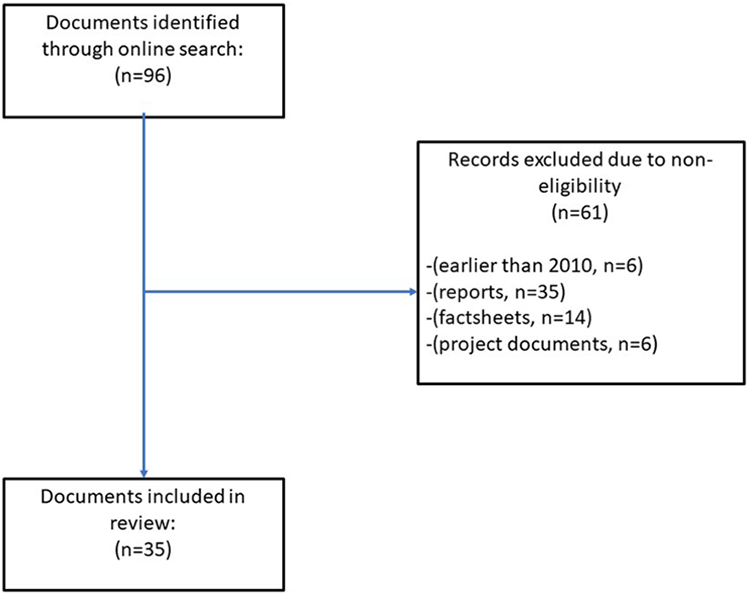
Flow diagram on inclusion of documents for policy and strategy review, 254 × 190 mm (96 × 96 DPI).
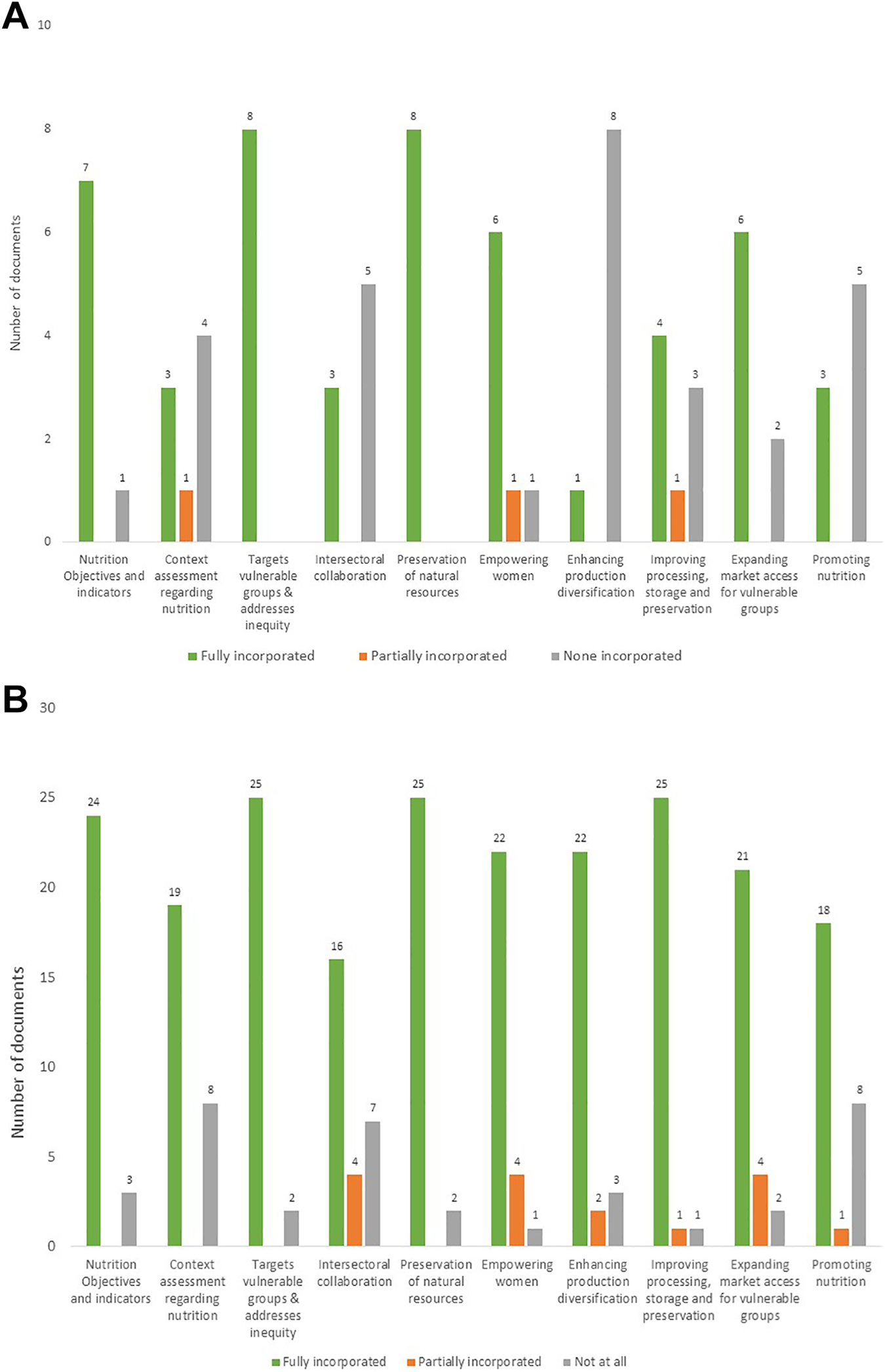
A, Incorporation of FAO nutrition-sensitive recommendations in agriculture policies, strategies, and investment documents at regional level (n = 8) 254x190 mm (96 x 96 DPI). B, Incorporation of FAO nutrition-sensitive recommendations in agriculture policies, strategies, and investment documents for selected countries of sub-Sahara Africa and Asia (n = 27), 254 × 190 mm (96 × 96 DPI). FAO indicates Food and Agriculture Organization.
Two-thirds of all policies and strategies reviewed (70% at country level and 50% at regional level) indicated either food insecurity, hunger, undernutrition or poor diet quality as a challenge at the national or regional level. However, about 90% (n = 31) of documents stated objectives or commitments to address nutrition situation, mostly referring to dietary or child growth indicators (and diet diversity, stunting, and underweight). Four documents did not state any nutrition-related objectives; 2 of these were documents from the same country. Except for 2 country documents, all others identified vulnerable groups (those considered most susceptible to hunger and malnutrition) as targets for intervention actions. The most commonly indicated vulnerable groups were women, youth, small holder farmers, and their families, and in the case of Nepal, lower caste population groups and indigenous communities.
Maintaining and sustaining natural resources as well as empowering women were almost universally indicated as important agriculture sector strategies / action (94%, n = 33) documents. Most policies targeted promoting increased opportunities for women’s participation in agriculture through provision of financial incentives and gender-sensitive value-adding technologies as well as providing services that target women (including financial incentives, capacity enhancement, participation in decision-making, and gender-sensitive value-adding technologies). Other documents specifically expressed intention to increase women’s participation in decision-making and energy saving technologies.
Production diversification was indicated in most country documents (89%, n = 25) and only in a minority of regional documents (13%, n = 1). Almost all country documents (96%, n = 26) had indicated commitment to increasing value addition to agricultural produce as well as commitment to enhancing market opportunities for vulnerable groups (93%, n = 25). The indicated market enhancement opportunities included elimination of barriers to movement of goods, creation of local markets, and elimination of unfair competition against smallholder farmers. Thirteen (37%) of the documents did not report nutrition promotion as strategies for improving nutrition; 5 of these were regional documents (Supplemental Table 1).
Capacity Gaps for Nutrition-Sensitive Agriculture
The literature search resulted in 6613 citations. After screening the titles and abstracts, 65 articles were selected for full-text review. Thereafter, 16 articles were identified that had relevant data for extraction. In addition, 6 documents which were not picked up by the systematic search strategy but which had relevant information were identified through reference lists of identified documents, documents known to the reviewer, and/or provided by key stakeholders. Thus, the total number of documents included in the review was 22 (see Figure 3). Majority of the documents included (85%) were published between 2012 and 2015. Almost half (n = 11) of the documents had a global perspective; 7 were focused solely on Africa and 2 solely on South Asia. Two documents covered both Africa and Asia.
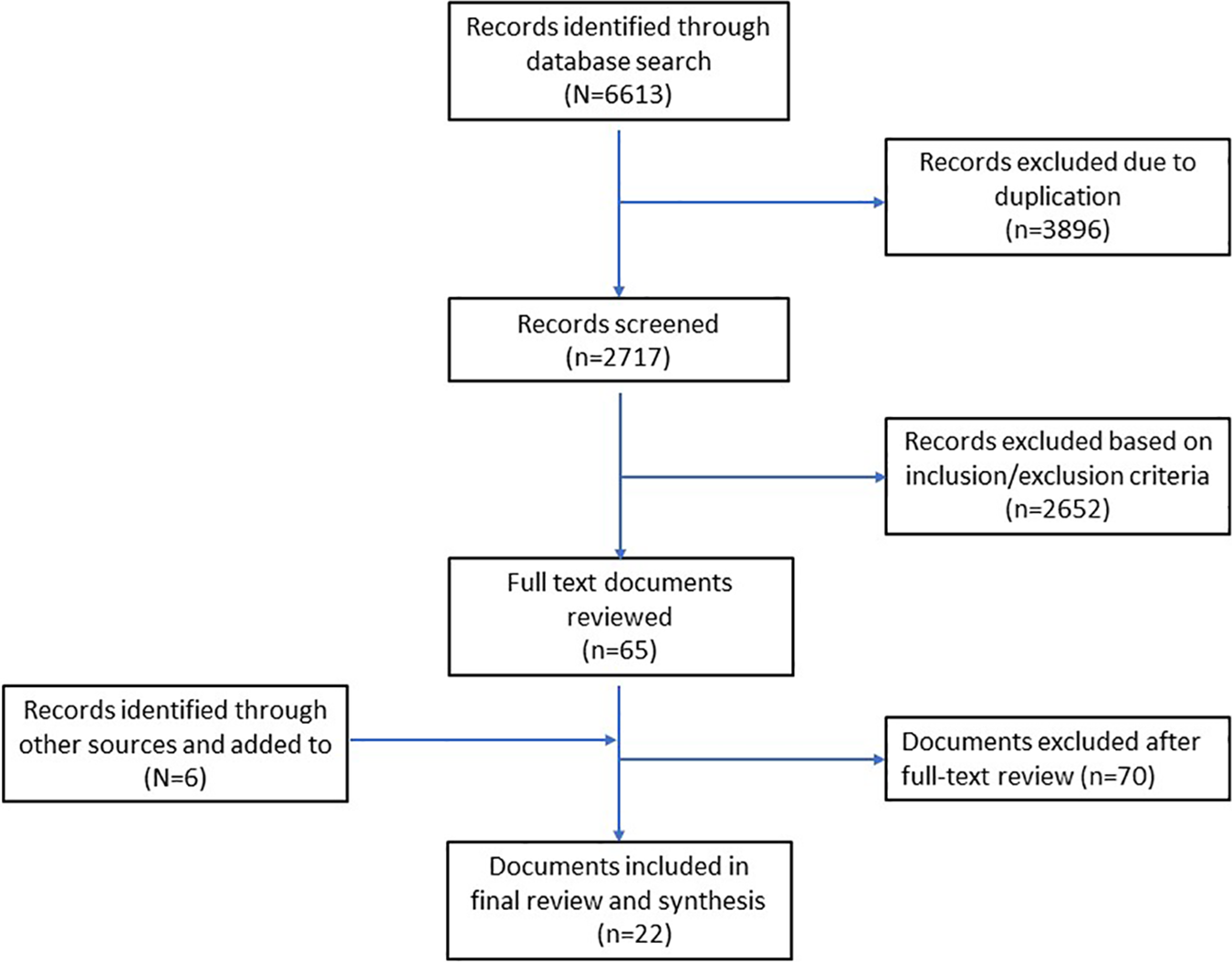
Flow diagram for inclusion of documents for the peer-reviewed and grey literature, 254 × 190 mm (96 × 96 DPI).
The identified capacity gaps have been described based on functional capacity (Supplemental Table 2) as well as point of entries that need to be addressed.
Functional and Technical Capacity Challenges
Different aspects of functional and technical capacity challenges were identified by the review of published and grey literature. These included:
Cross-sectoral action: Inability of the agriculture sector to collaborate with other government sectors was a commonly reported challenge at national and subnational levels.
14,27
-35
This finding is, however, context specific. In some cases, collaboration was happening at national level but not at subnational levels and vice versa.
25,30
As a result, there were reported situations where different sectors gave conflicting messages to households in the same community; for example, development agents (agriculture extension workers) promoted selling produce for income while health workers encouraged them using the produce for food.
27
This limitation was frequently linked with 2 main reasons: (1) decision-makers in the agriculture sector either did not have knowledge of nutrition or how agriculture is linked with nutrition and (2) decision-makers were not convinced that nutrition should be an agenda for the agriculture sector. In some settings, agriculture staff at all levels were simply not interested in working with other sectors.
34,36
Limited capacity for collaboration across government, civil society, international organizations, and research sector was also identified. Capacity to act collaboratively was also linked with weak skills and nonexistent incentives for coordination.
15
Another dimension is the lack of capacity to engage across the hierarchies of administration.
27
Limited capacity for envisioning long-term action: Only 1 of the documents reported limitations in capacity related to the role of strategic vision in the linkage between nutrition and agriculture. It reported key informant perception that policy makers were frequently looking for short-term solutions and therefore lacked the capacity to plan for and set agendas to address actions whose outcomes could be delivered over a longer term, as is the case with nutrition in the agriculture sector.
Linking policy to action: Capacity regarding policy processes was varied. Limitations identified were linked with prioritization of nutrition-sensitive policies and programs,
25,35
capacity to link programs with policies that address nutrition,
28
and use of research to inform policy.
37
The identified challenges in policy formulation were observed both at country and regional levels. A review of World Bank actions over the past 5 decades showed shifting policy priorities and interest over time regarding how agriculture will address nutrition.
38
This would be positive if indicated as improvement in the ability to effectively link nutrition within the given policy instruments.
Program implementation challenges: The evidence showed that implementation of nutrition-sensitive agriculture was limited by poor understanding of what nutrition-sensitivity means. Even in situations where a clear policy existed, there was a lack of clarity on how nutrition-sensitive agriculture should be implemented, practically.
27
A key capacity gap identified was how to design nutrition-sensitive agriculture policies and interventions that respond to existing challenges in nutrition situation for the given setting.
38
Further, nutrition-sensitive agriculture implementation was limited by insufficient allocation of resources, generally to the agriculture sector, but also within programs and projects specifically including nutrition components.
39
In some settings, the agriculture sector did not receive adequate funding, and as a result, nutrition actions were not prioritized during allocation of funds.
14
In other settings, it was reported that funding allocation was not the problem but rather poor capacity to utilize available funding and resources in a meaningful manner.
25
In such situations, there is need for improving capacity for resource allocation, based on priorities and specific nutrition sensitive actions that bring about synergy within the agriculture interventions.
40
Limitations in systems for training: Weaknesses in training regarding nutrition competence was identified. In both preservice and in-service training, nutrition was not prioritized. Nutrition literacy gaps were identified at all levels. Gaps which need to be filled include training of existing frontline staff to have nutrition competence, to be provided with appropriate working tools to enable delivery of nutrition actions, to hire staff with nutrition competence, and capacity to create public awareness of the links between nutrition and agriculture.
Gaps in transformative leadership: Different kinds of leadership capacity needed for nutrition-sensitive agriculture were identified as lacking. First, the government systems are designed in a way that limits emergence of cross-sectoral champions. Leadership skills that fosters leading people across multiple agencies is thus needed.
29,31
Beyond technical agriculture capacity, the need for “soft skills” including communication, facilitation, and gender sensitivity was identified as important leadership skills deficits. Leaders with the ability to develop strategy, design, and manage complex programs were identified as lacking.
25,40
In some situations, leadership skills were needed to stimulate changes in an institutional culture that limits nutrition-sensitive agriculture program implementation.
15
Limited capacity for using evidence for action: Three categories of capacity limitations were identified regarding monitoring and evaluation. The first was a lack of data and monitoring systems to guide policy and implementation of nutrition-sensitive agriculture.
14,25,28,37,41
In one case, it was identified that the agriculture system collects lots of data,
27
but these data do not include nutrition-sensitive indicators or links to diet quality needed for decision-making and tracking of progress from nutrition-sensitive interventions.
27,38,40
Related to this challenge was the lack of skills to carry out research to understand the linkages between agriculture and nutrition as well as the areas needing interventions within different national/subnational contexts.
40
Second, there was need for analytical skills to be able to analyze and translate existing data systems into a form that decision-makers could utilize.
25,27,32,37
The third challenge in capacity was the lack of understanding on how to utilize nutrition-sensitive information systems
15,40
that are for the most part still lacking. These limitations represent barriers to implementing nutrition-sensitive actions that are informed by evidence.
Technical capacity: Technical capacity deficits were identified as follows. Two documents reported suboptimal training in nutrition in preservice agriculture training institutions.
42,43
Half of final year agriculture students in Ethiopia could not demonstrate adequate knowledge and skills in nutrition-sensitive agriculture. This deficit was attributed to inadequate nutrition content in the curriculum. In Ghana, a study of agriculture training institutions found that nutrition is not specifically covered in the curriculum, except for one university program where an introductory nutrition and food science course was required for all agriculture students. These gaps in training, partly, explained the suboptimal nutrition knowledge of extension and support services
37
among agriculture staff. A second technical capacity deficit reported frequently was the lack of understanding of the linkages and pathways between agriculture and nutrition.
27,28,43,40
This limitation has been found at different levels of implementation including policy makers
25,37
middle level managers
31
and among staff providing extension and support services to farmers and agricultural communities.
37
A third deficit is the nonavailability or insufficient number of nutrition staff hired by ministries of agriculture to support implementation of nutrition-sensitive agriculture interventions.
14,38,43
These gaps would need to be addressed effectively for agriculture to contribute meaningfully to nutrition outcomes.
Capacity Entry Points
Based on what has been discussed earlier, we identify capacity strengthening entry points at different complementary levels:
Individual level capacity gaps: Individual-level capacity gaps included deficits in awareness of nutrition and how it is linked with agriculture across all levels of organization and activity implementation. This deficit is linked with lack of competencies for implementing nutrition-sensitive agriculture in a practical way. Other key individual level capacity gaps reported frequently in the literature included misperception of nutrition as an agenda for other sectors, inability to generate a vision for nutrition-sensitive agriculture and the changes that need to happen in the short and long terms, how to best prioritize nutrition in the agriculture sector policies and actions,
44
and analytical skills for working with monitoring and evaluation data generated through the agriculture sector toward addressing nutrition goals. Additionally, lack of inspirational leadership to champion cross-sectoral policy development and action, soft skills deficit by frontline implementers (particularly for engaging women) for communicating and interacting in a gender sensitive manner, inability to generate demand for nutritious food, and the deficits in technical knowledge in both agriculture and nutrition-sensitive agriculture are important individual level capacity gaps. The implication of the findings on individual capacity is that leadership or functional skills are critical for individuals involved to meaningfully navigate the complex landscape of linking agriculture to improved nutrition outcomes. Nutrition education for agriculture professionals also needs serious attention.
Organizational level capacity gaps: At this level, the institutional limitations that affect implementation of nutrition-sensitive agriculture included: (1) insufficient allocation of funds to nutrition-sensitive agriculture or inability to appropriately utilize allocated funds or both; (2) lack of robust monitoring and evaluation systems for decision-making that generates data needed for guiding nutrition-sensitivity of agriculture programs as well as how to use the output of analysis for decision-making; (3) limited incentives and tools to promote cross-sectoral action in agriculture; (4) limited integration of activities across hierarchies of implementation; and (5) focus on interventions that yield short-term outcomes without attention to what is needed for long-term outcomes to be achieved. In addition, other organizational level gaps in capacity included institutional barriers that prevented prioritization of nutrition, including institutional policy-making capacity and ineffective capacity to translate policy across hierarchies of operation and governance.
Systemic capacity gaps: Capacity gaps that were beyond individuals and institutions included suboptimal coordination mechanisms that will foster cross-sectoral action for nutrition-sensitive agriculture. Another systemic capacity gap is the mono-discipline approach to training agriculture, nutrition, and other relevant disciplines who are needed to formulate and implement nutrition-sensitive agriculture actions.
Discussion
The current study was designed to answer 2 questions. First is, “How nutrition-sensitive are agriculture policies, plans, and investments in selected SSA and Asian countries?” The second question was to identify, “Which capacity and leadership gaps limit scale up of nutrition-sensitive agriculture policy and programs?” We sought to answer these questions by reviewing national and regional policy, program, and strategy documents with nutrition-sensitive agriculture goals. This was complemented by a review of published peer-reviewed and grey literature.
On nutrition sensitivity of national policies, programs, and strategies, the answer to the posed question is important to guide and inform better structuring of such policy instruments to ensure that the agriculture sector can contribute to addressing existing high burdens of malnutrition in all its forms. The evidence gathered demonstrates that majority of the country policies/strategies reviewed incorporated most of the FAO key recommended actions for designing nutrition-sensitive agriculture interventions. But there is variation on how well this is done. The 2 FAO recommended actions that were least incorporated at country level were analysis of the nutrition situation and promotion of nutrition (Figure 2B). These 2 were also less frequently incorporated in documents developed by subregional institutions (Figure 2A; details of extent to which each recommended action was incorporated at the country- and regional levels are provided in Supplemental Table 1). This is not surprising since the technical competence for these actions are usually lacking in the agriculture sector. 28 Yet, situation analyses are critical to understanding the context for designing appropriate interventions, while nutrition education is critical to foster the needed behavior changes linked with consumption of quality diets within the given contexts. The fact that contexts within a country can vary significantly across subnational settings makes lack of attention to these important issues significant barriers to effectively attaining nutrition and health benefits from agriculture policies, programs, and interventions.
Generally, regional/institutional documents had fewer number of the FAO recommendations included and this is not unusual since at the regional level, we do not expect to find specific interventions listed. However, it is still important to make provision for all the 10 FAO recommendations to have an adequate basis for regions to evaluate the progress on the areas countries should pay attention to. Intersectoral collaboration and value addition were 2 other recommendations which were infrequently indicated in regional/institutional documents. Given the difficulties being faced with both vertical and horizontal coordination not only by countries but also at the regional level, these are also important barriers to creating synergy that can foster better linkages between agriculture and nutrition. These findings should draw attention to countries and regional/institutional partners to address the observed gaps so that future agricultural strategies and investments are better structured for enhanced nutrition-sensitivity. At the time of this review, many African countries were involved in developing the second generation of CAADP-influenced National Agricultural Investment Plans. Currently, there is no empirical evidence which demonstrates that agriculture interventions yield better nutrition outcomes if their planning is preceded by nutrition context assessment. However, given that context assessment offers opportunity to identify nutrition problems and to better target most at-risk groups and specific behavior change needs, 45 it is recommended that greater attention should be paid to addressing the 10 FAO recommendations when designing/developing agriculture policies, programs, and interventions.
The second question for the study was to identify, “which capacity and leadership gaps limit scale up of nutrition-sensitive agriculture policy and programs?” In this study, capacity gaps were conceptualized as barriers to the development, implementation, or scale up of nutrition-sensitive agriculture. 22 The review identified a range of capacity gaps that can be addressed at individual, organizational, and systemic levels. Perhaps, the most important individual level capacity that needs to be addressed is clarity and understanding of what constitutes nutrition-sensitive agriculture, at all levels of agriculture governance. Building the knowledge of key decision-makers at the ministerial and senior government levels could yield much dividend because they are the purse holders and influencers of political will. Action at this level can, therefore, transform policies and programs into investments that yield nutrition benefits. The identified gap in knowledge could be addressed through direct and sustained in-service training as well as limiting attrition of champions who can be cultivated through such training activities. 15 To sustain capacity at the individual level, a system of mentoring is needed to ensure that early career staff benefit from competencies of more senior staff or indeed those among their peers who may have the needed competencies.
Direct in-service training at the higher (national and district) levels is necessary but insufficient to address capacity needs for understanding and providing nutrition extension and support services at the community level. 37 Training is also needed for mid-level leaders at district/regional stations 31 where important translation of policies and programs into action takes place to drive the desired changes in outcomes at district/community level. In countries where capacity assessments have been implemented, it was reported that there is either gross shortage or nonexistent nutrition personnel at the Ministries of Agriculture. This is a gap that calls for action through pre-service training as well as continuing academic and professional training in nutrition. In Ethiopia, there have been efforts in 2017 to integrate nutrition components in training curricula for university and vocational training center curricula; this effort was supported by the USAID’s Feed the Future programme (personal communication with Ethiopian implementers). It remains to be seen what impact this will have on the nutrition knowledge base for new graduates going forward.
At the organizational level, the main capacity gaps which need to be addressed were those linked with how to better use existing human and logistic resources to generate nutrition dividends from agriculture. While food and nutrition security is prioritized on paper as an important goal (as indicated in most of the policies reviewed), insufficient resources were allocated to nutrition actions. 25 Whenever there were limited resources, nutrition actions were less likely to be prioritized. 23,28 Another important organizational gap that needs to be prioritized is the lack of incentives to work across sectors. Government institutions are, unfortunately, typically designed to work in silos. 29 As a result, the agriculture sector lacks capacity to reach out or participate effectively in collaborative interventions across all levels. 37 This is a gap not only for government sectors but also among development partners (personal communication with an experienced development worker in the African region). Therefore, beyond individual organizations, there is need for mechanisms that facilitate and motivate collaboration. In settings where collaboration exists, it was found to be challenged by limited coordination capacity. Coordination capacity has described as including ability to convene, plan, and incentivize action across sectors or institutions. 23
Together, the findings on the 2 questions highlight the need for diverse kinds of capacity across multiple entry points. The following recommendations are therefore suggested as action points:
Revisions of country and regional policies and strategies should make use of the FAO’s key recommendations for designing nutrition-sensitive agriculture interventions more comprehensively to ensure that the critical components of the 10 recommendations are considered. While the development of these documents is important, it is even more important to ensure that the operationalization also considers the 10 FAO recommendations. This will strengthen the possibility of enhancing nutrition sensitivity more comprehensively.
Training for nutrition competence at individual level should be addressed from 2 perspectives. First is to provide sustained knowledge provision for existing agriculture staff at all levels, but also critically, for high level decision-makers at central and regional levels.
To in-service training providers and academia for preservice training, in-service professional training for current staff should be complemented with preservice training that is based on revised and updated curriculum that integrates nutrition-sensitive components with adaptability to context.
Those who have the skills for program management need to mentor those who will become decision-makers in the future; clear processes of how such mentorship and competency transfer could be realized need to be developed and implemented.
Specific technical skills were identified as lacking which can also be developed through the approaches indicated earlier. The needed technical skills include statistical analysis, resource allocation, evidence-informed decision-making, and how to lead implementation of complex policies and programs.
A key action that is needed across all stakeholder institutions and sectors is the need to strengthen country coordination and collaboration mechanisms to support multisectoral action that fosters the ability of agriculture to deliver more effectively on nutrition. This is possible if there is high level political will and highly motivated champions. To achieve this, advocacy skills need to be a key capacity of all leaders in the agriculture and related agencies in both the public and private sectors.
Transformational leadership skills are needed to prioritize interventions in the agriculture sector and to navigate the complex relations that prevail and are needed. Deliberate efforts to train and nurture leaders who are knowledgeable about nutrition and who can effectively link agriculture to nutrition outcomes are needed for country and African subregional agriculture institutions.
Finally, researchers must pay greater attention to the needed synergies at all levels, continental, national, and subnational contexts. This can be partly achieved by incorporating the needed strategies and leadership skills for nutrition-sensitive agriculture and collaborative programming in preservice training and research programs.
The findings in this article are limited by some challenges in the process for data gathering. The policy documents reviewed were only for the selected 11 countries and it is therefore difficult to generalize the findings more broadly. Thus, the findings should be interpreted considering this limitation. Furthermore, the issues and associated recommendations raised in this article are certainly not new. Levinson has reported how previous efforts to address these issues in various settings achieved varying degrees of success. 21 Indeed the actions that are currently being championed by the SUN movement align with some of these recommendations. 18 However, emerging evidence suggests that robust success will depend on the extent to which various aspects (capacity, investments, leadership, coordination, political will, and evidence) align optimally within specific settings. 46 However, all these aspects do not have to be fully optimal and operational for the agriculture sector to contribute better to improved diets, and in turn, nutrition outcomes. For example, in the case of leadership, it has been reported that champions at various levels have been able to catalyze effective change that builds political will and subsequently increased investments in nutrition. 47 Those in opportune positions of influence need to be deliberate in creating the momentum for change that will trickle throughout the institution. Finally, one other limitation was inability to obtain sufficient number of documents from Asia, partly as a result of language translation barriers. Although Vietnam was targeted as one of the countries, no information was obtained on Vietnam due to the difficulty of obtaining the national documents on time and the translation that would have been needed.
The current study concludes that for the selected countries included in the review, and others with similar contexts, there is nutrition-sensitivity of policies and strategies but to varying levels. The literature review on the other hand reflected that there is limited capacity for optimum implementation of these policies and strategies. The gaps identified are an important contribution to informing capacity strengthening work that targets enhancing the nutrition-sensitivity of agricultural policies and programs for countries and at the regional level. In most countries, there is the capacity to articulate what needs to happen but there are important capacity limitations to translate the given policies, programs, and strategies into action. This calls for countries to come to terms with what their specific challenges at different levels from national to community levels are, in order to address them concretely and contextually.
Supplemental Material
Supplemental Material, Supplementary_Table_1_Policies_and_programs - A Review of Leadership and Capacity Gaps in Nutrition-Sensitive Agricultural Policies and Strategies for Selected Countries in Sub-Saharan Africa and Asia
Supplemental Material, Supplementary_Table_1_Policies_and_programs for A Review of Leadership and Capacity Gaps in Nutrition-Sensitive Agricultural Policies and Strategies for Selected Countries in Sub-Saharan Africa and Asia by Richmond Aryeetey and Namukolo Covic in Food and Nutrition Bulletin
Supplemental Material
Supplemental Material, Supplementary_Table_2_Functional_Capacity_Limitations - A Review of Leadership and Capacity Gaps in Nutrition-Sensitive Agricultural Policies and Strategies for Selected Countries in Sub-Saharan Africa and Asia
Supplemental Material, Supplementary_Table_2_Functional_Capacity_Limitations for A Review of Leadership and Capacity Gaps in Nutrition-Sensitive Agricultural Policies and Strategies for Selected Countries in Sub-Saharan Africa and Asia by Richmond Aryeetey and Namukolo Covic in Food and Nutrition Bulletin
Footnotes
Declaration of Conflicting Interests
The author(s) declared the following potential conflicts of interest with respect to the research, authorship, and/or publication of this article: This manuscript is the result of a commission of University of Ghana by the International Food Policy Research Institute.
Funding
The author(s) received financial support from the CGIAR Program on Agriculture for Nutrition and Health (A4NH) led by IFPRI for the research, authorship, and/or publication of this article.

Supplemental Material
Supplemental material for this article is available online.
References
Supplementary Material
Please find the following supplemental material available below.
For Open Access articles published under a Creative Commons License, all supplemental material carries the same license as the article it is associated with.
For non-Open Access articles published, all supplemental material carries a non-exclusive license, and permission requests for re-use of supplemental material or any part of supplemental material shall be sent directly to the copyright owner as specified in the copyright notice associated with the article.
