




Abstract
Background:
Formal prosthetic/orthotic education has evolved greatly since its inception in the 1950s. The International Society for Prosthetics and Orthotics has established guidelines and recognition for prosthetic/orthotic programs worldwide. However, the current state-of-the-science in prosthetic/orthotic education is largely unknown.
Objectives:
To evaluate and synthesize available prosthetic/orthotic education research.
Study design:
Systematic review.
Methods:
Three bibliographic databases were searched and quality of included articles assessed using criteria from the National Institutes for Health Quality Assessment Tool for Observational Cohort, Cross-Sectional Studies, and the Critical Appraisal Skills Programme Qualitative Research Checklist, and Delphi quality criteria.
Results:
This review included 25 articles from 23 studies. Included studies explored description, development, implementation, and/or assessment of the teaching/learning methods, curriculum, program, or country/region level. Studies were conducted in 18 countries and published in 14 journals. Methodological quality was rated high in 6 articles, moderate in 6, and low in 13. Content synthesis was not attempted due to the heterogeneous literature.
Conclusion:
This systematic review suggests that prosthetic/orthotic education research is only being conducted at a limited level. There is a strong need for high quality, collaborative education research to be conducted and published in peer-reviewed journals to improve prosthetic/orthotic education and build a global conversation.
Clinical relevance
Research in prosthetic/orthotic education is limited. The current body of literature is not sufficient to inform and guide future education of prosthetic/orthotic students. Opportunities to improve prosthetic/orthotic education research include academic collaborations, a dedicated education special issue or journal, and disciplinary support for prosthetic/orthotic education research.
Background
Globally, prosthetics and orthotics (P&O) is a relatively young discipline within rehabilitation medicine. The first formal university-based P&O professional preparation programs were established in the 1950s in the United States 1 with New York University producing the first graduates with a degree in Orthotics and Prosthetics in 1965. 2 The first published documentation on international education of prosthetists/orthotists was from a meeting held in Denmark in 1968. 3 The International Society for Prosthetics and Orthotics (ISPO), established in the 1970s, has since used this foundational document and numerous subsequent meetings to develop and refine educational philosophy and international standards for global P&O education. 4
ISPO has gone to the extent of detailing appropriate professional preparation programs for both professional prosthetists/orthotists and orthopedic technologists who work under the supervision of prosthetists/orthotists. 4 Meetings and publications developed through ISPO largely guide current educational standards worldwide. 4 There are currently 36 ISPO recognized P&O professional preparation programs listed on the ISPO website. 5 As international educational programs in low- and middle-income countries (LMICs) continue to be developed, educators worldwide will seek teaching resources, educational references, and model programs to emulate.
In many high-income countries (HICs), educational standards in P&O have evolved to a Bachelor’s entry-level degree with a subsequent internship (also termed a residency). In the United States, a Master’s entry-level degree is now required. These higher educational requirements are directly linked with the global healthcare transition toward evidence-based practice. Prosthetic/orthotic students are now being trained not only as clinicians but also as consumers, implementers, and producers of scientific evidence. 6 This shift toward evidence-based practice has been made possible through a growing network of doctoral level P&O researchers and an expanding knowledge base of peer-reviewed literature. However, this development of scientific evidence has largely focused on clinical practice with less emphasis on the need for evidence in P&O education. 7
In 2014, ISPO initiated a Global Educators Meeting (GEM) with “the purpose of ongoing exchange, professional development and supportive learning.” 8 The GEM reflects a growing demand for educator collaboration and development yet stops short of establishing and promoting the development of a peer-reviewed literature base for P&O education. While a recent review attempted to draw associations between P&O clinician education and patient outcomes, the review focused upon clinical impact rather than outcome assessment in education. 9 Therefore, the first step toward an established P&O education knowledge base is an assessment of the current state-of-the-science in formal P&O education.
The aim of this systematic review was to describe the range of formal education research that has been conducted and published in the peer-reviewed literature. The specific objectives were twofold: (1) to evaluate and synthesize the educational methods and techniques researched in P&O education worldwide and (2) to identify priorities for future research to expand existing evidence in P&O education. Understanding the current state-of-the-science in P&O education has a number of far-reaching implications for global P&O professional preparation programs in terms of how they design, implement, and evaluate their programs.
Methods
For manuscripts to be included in this systematic review, they had to describe the outcome of a research study on formal education of prosthetists and orthotists. Both qualitative and quantitative study designs were included in the review to ensure a complete description of current evidence in global P&O education.
Literature search
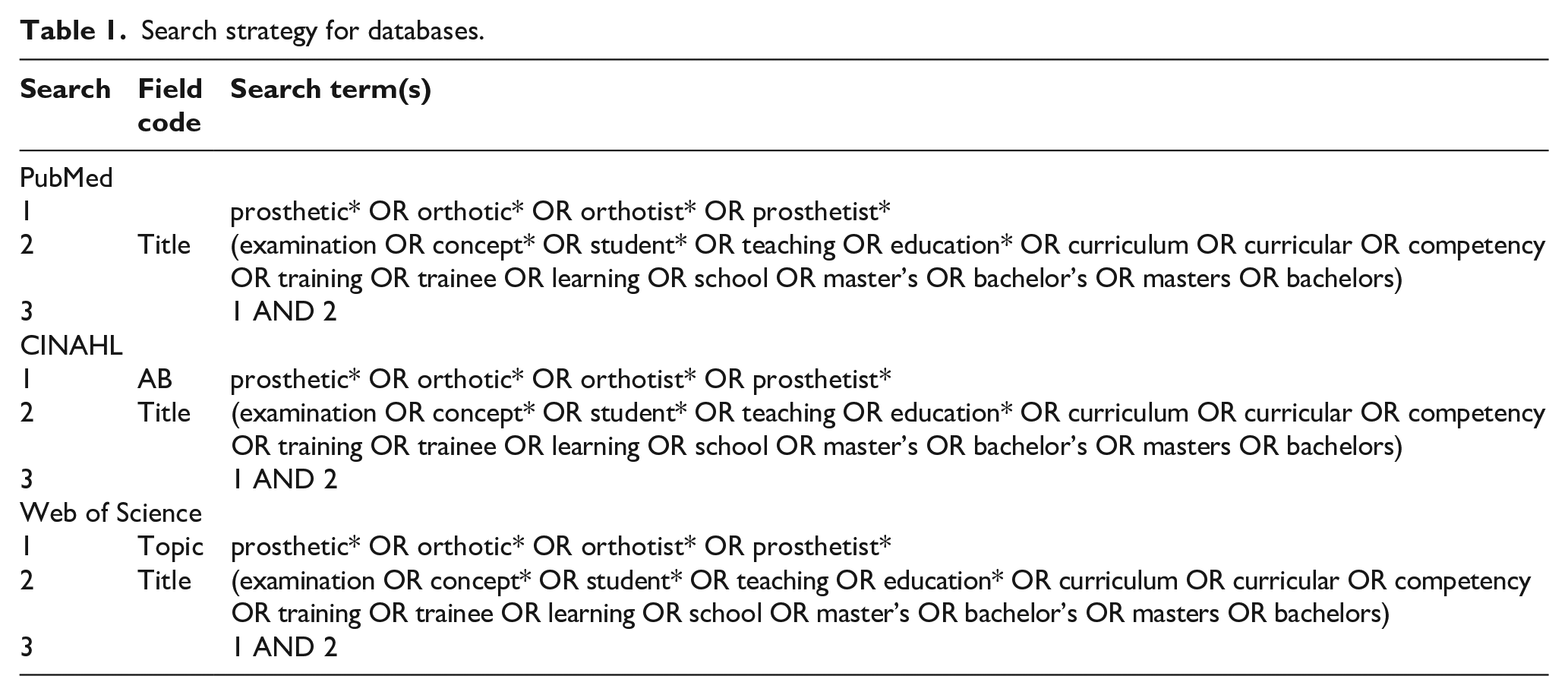
A systematic search of the literature was conducted in August 2019 using several databases, including PubMed (1966 to January 2019), CINAHL (1981 to January 2019), and Web of Science (1900 to January 2019). Search strategies for the three databases are provided (Table 1). In addition, the references of key P&O education documents4,10 were hand searched. Finally, conference proceedings available online from ISPO (2004–2016), American Academy of Orthotists and Prosthetists (AAOP) (2013–2018), GEM (2014 & 2018), and OTWorld (2018) were hand searched for relevant abstracts. Authors of identified abstracts were then contacted to inquire about current or future plans for publication.
Search strategy for databases.
Eligibility criteria
Specific eligibility criteria were established a priori to ensure inclusion of literature relevant to the stated purpose of this review. Articles were included if they (1) were written or translated into English, (2) were published in peer-reviewed journals, and (3) examined formal education of prosthetist/orthotists. Articles were excluded if they (1) were not original research (e.g. review or opinion), or (2) solely examined patient education in the clinical context or continuing education for P&O practitioners. Conference proceedings, gray literature, and dissertations and theses were not included, but authors were contacted to inquire about current peer-reviewed publication. Author responses were used to locate peer-reviewed articles not otherwise identified through the database search. Studies were not excluded based on design or methodological quality. All observational, experimental, and qualitative studies were considered to ensure adequate review of the state-of-the-science in P&O education.
Data extraction, analysis, and synthesis
Pertinent study characteristics and outcomes were extracted and organized into evidence tables. Information regarding robustness of methods was also extracted to allow for assessment of methodological quality.
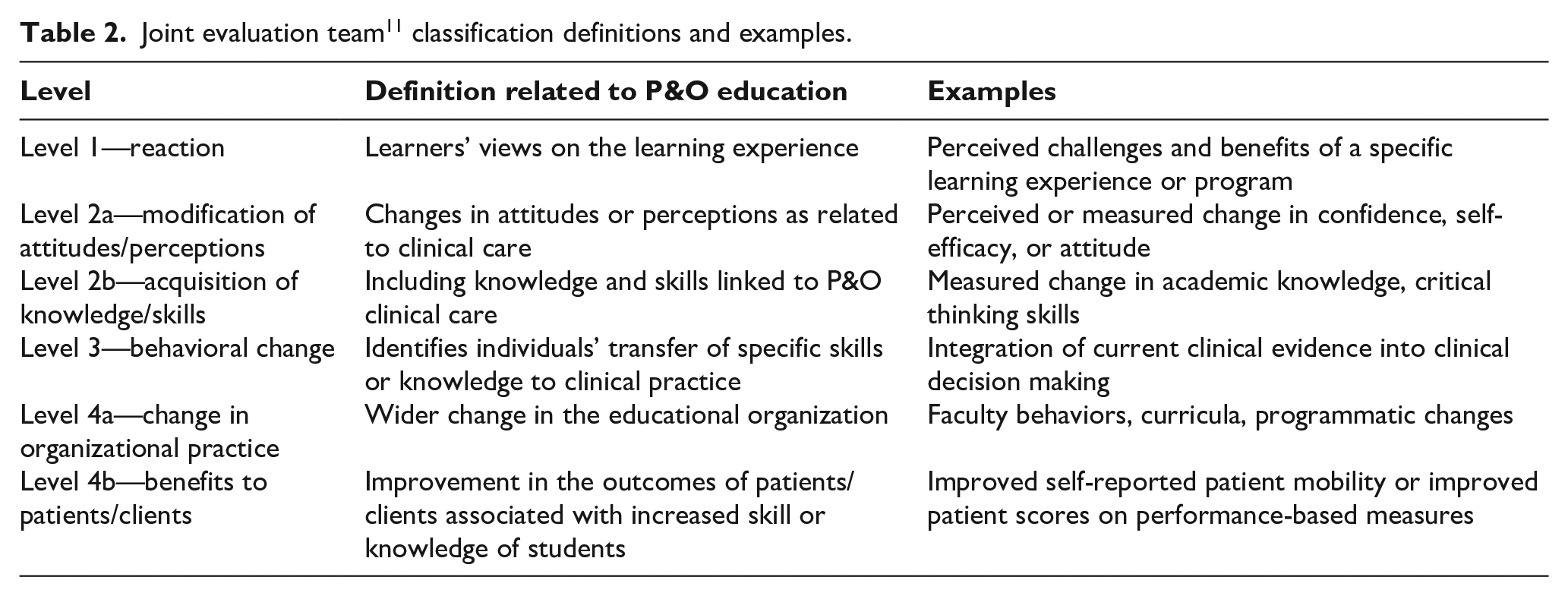
To further guide evaluation and synthesis of heterogeneous studies, a modified version of Kirkpatrick’s model of educational outcomes entitled the joint evaluation team (JET) classification was used (Table 2). 11 JET expands the Kirkpatrick four-point typology of educational outcomes (learner reaction, acquisition of learning, behavioral change, and changes in organizational practice) to include six categories. The six categories are (1) learner reaction (level 1), (2) modification of attitudes/perceptions (level 2a), (3) acquisition of knowledge/skills (level 2b), (4) behavioral change (level 3), (5) changes in organizational practice (level 4a), and (6) benefits to patients/clients (level 4b) (Table 2). Outcomes are discussed according to this model of classification.
Joint evaluation team 11 classification definitions and examples.
Assessment of methodological quality
Methodological quality was assessed independently by two researchers who then met to achieve consensus. Quality was assessed using one or more checklists, as determined by study design. Study design was determined by author description of study methodology. Qualitative studies (i.e. studies in which the researcher served as the data collection instrument) were assessed using the Critical Appraisal Skills Programme (CASP) qualitative research checklist. 12 CASP has a 25-year history of training health professionals and developing critical appraisal tools. The CASP qualitative checklist has a history of use to assess qualitative prosthetic literature. 13 Observational study quality was assessed using the National Institutes for Health Quality Assessment Tool for Observational Cohort and Cross-sectional Studies. 14 The NIH tool was developed as one of a set of quality assessment tools to assist reviewers with critical appraisal of the internal validity of studies. 15 Mixed-methods studies were assessed using a combination of both checklists as applicable. Delphi method studies were assessed using the NIH tool in combination with criteria from a recent systematic review, 16 to provide a comprehensive assessment. Quality rating was assessed based on the percentage of applicable checklist criteria each article met. Articles were given 1 point if a criterion was fully met, 0.5 if partially met, and 0 if unmet. Criteria found to be not applicable to a specific article were omitted. High quality was defined as >75% of checklist criteria, moderate quality as between 60% and 75% of checklist criteria met, and low quality was <60% of checklist criteria met.
Results
A total of 1552 articles were retrieved after eliminating duplicates. One reviewer scanned the titles and abstracts to ensure appropriateness to the research question. Those not addressing formal P&O education were removed. Full text was retrieved and reviewed for 64 articles. Of these 64, 39 were excluded as opinion papers without outcome data or as not examining formal education of prosthetist/orthotists. Twenty-five articles from 23 independent studies were included in the final review (Table 3). Given that this review is exclusively descriptive, multiple articles from the same overarching research have been included for two studies.17–20 Figure 1 illustrates the study selection process.
Characteristics of studies of P&O education research.
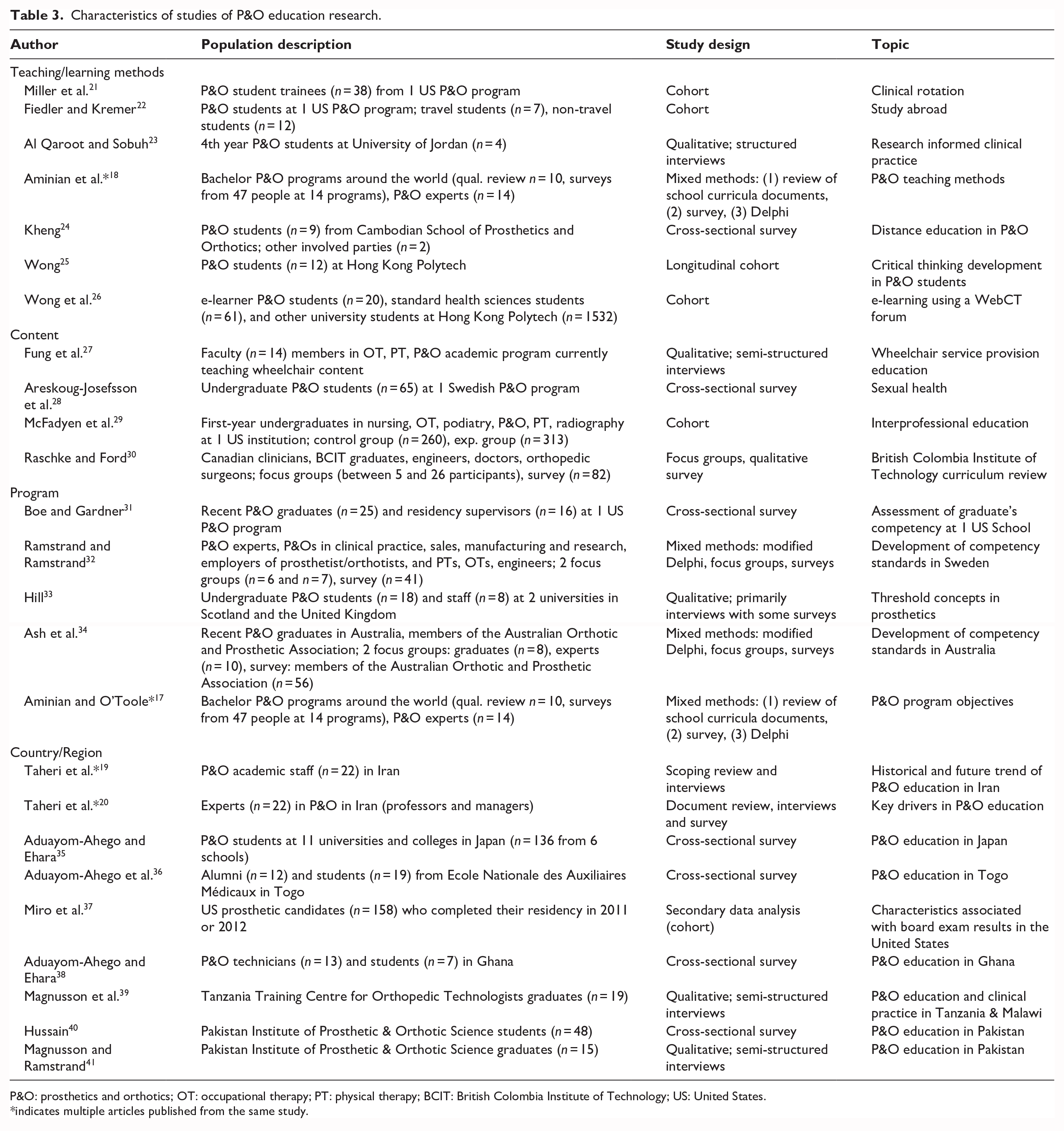
P&O: prosthetics and orthotics; OT: occupational therapy; PT: physical therapy; BCIT: British Colombia Institute of Technology; US: United States.
*indicates multiple articles published from the same study.
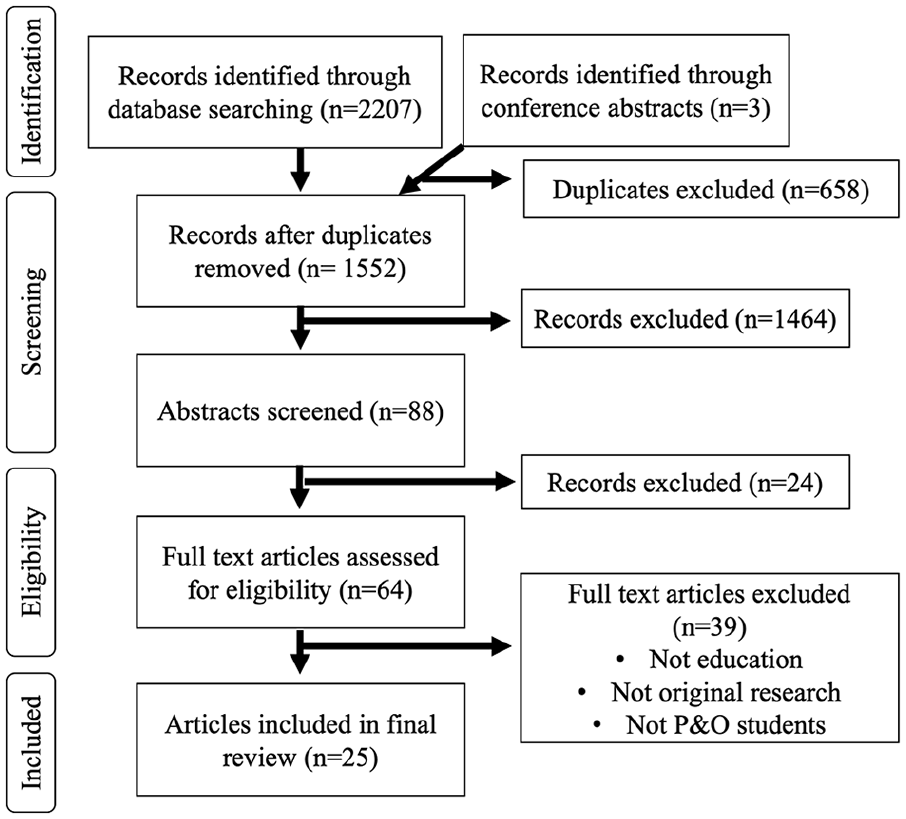
Flow diagram of article selection process.
Seventy-one conference abstracts on P&O education were retrieved through hand searching of available conference proceedings. Of these abstracts, 39 were not research and five were already included in this review as full manuscripts. Authors of 27 abstracts were contacted to inquire about overlooked publications in peer-reviewed journals. Authors of six abstracts reported currently seeking publication or having plans to publish in the near future. Three had no plans for publication, two reported a lack of time, and one stated that this was not the intention of the study. Fourteen inquiries received no response (Supplemental Appendix A). Three unique peer-reviewed articles not previously identified through database searching were found through this review of abstracts and contact of authors. These three additional articles were included in this review (Figure 1).
Characteristics of the conference abstracts not included in this review as full manuscripts are provided in Supplemental Appendix B. Conference abstracts were not assessed for quality nor synthesized due to variability and inconsistency in abstract reporting. Conference abstracts were split across topics with 11 abstracts examining specific teaching approaches, eight providing descriptions of current P&O education, and five addressing curriculum level topics. Topics ranged from physical tools for teaching in P&O to novel P&O assessment methods. Most studies used cross-sectional methods with a number of studies providing insufficient detail to determine study methods (Supplemental Appendix B).
Study characteristics
Of the 25 articles from 23 unique studies included in this analysis, four were mixed methods,17,18,32,34 12 were quantitative,21,22,25,26,29,31,32,35–38,40 eight were qualitative,19,20,23,27,30,33,39,41 and 1 used a purely qualitative survey. 24 Researcher-developed surveys,17,18,20–22,24,26,30,31,35,36,38,40 semi-structured interviews,19,20,27,33,39,41 or Delphi methods17,18,32,34 were used in most studies. Included studies represented a wide international breadth with multiple multi-country collaborations. Countries of conduct included Australia, Cambodia, Canada, China, Ghana, Iran, Japan, Jordan, Malawi, Norway, Pakistan, Scotland, Sweden, Tanzania, Togo, the United Kingdom, and the United States (Figure 2).
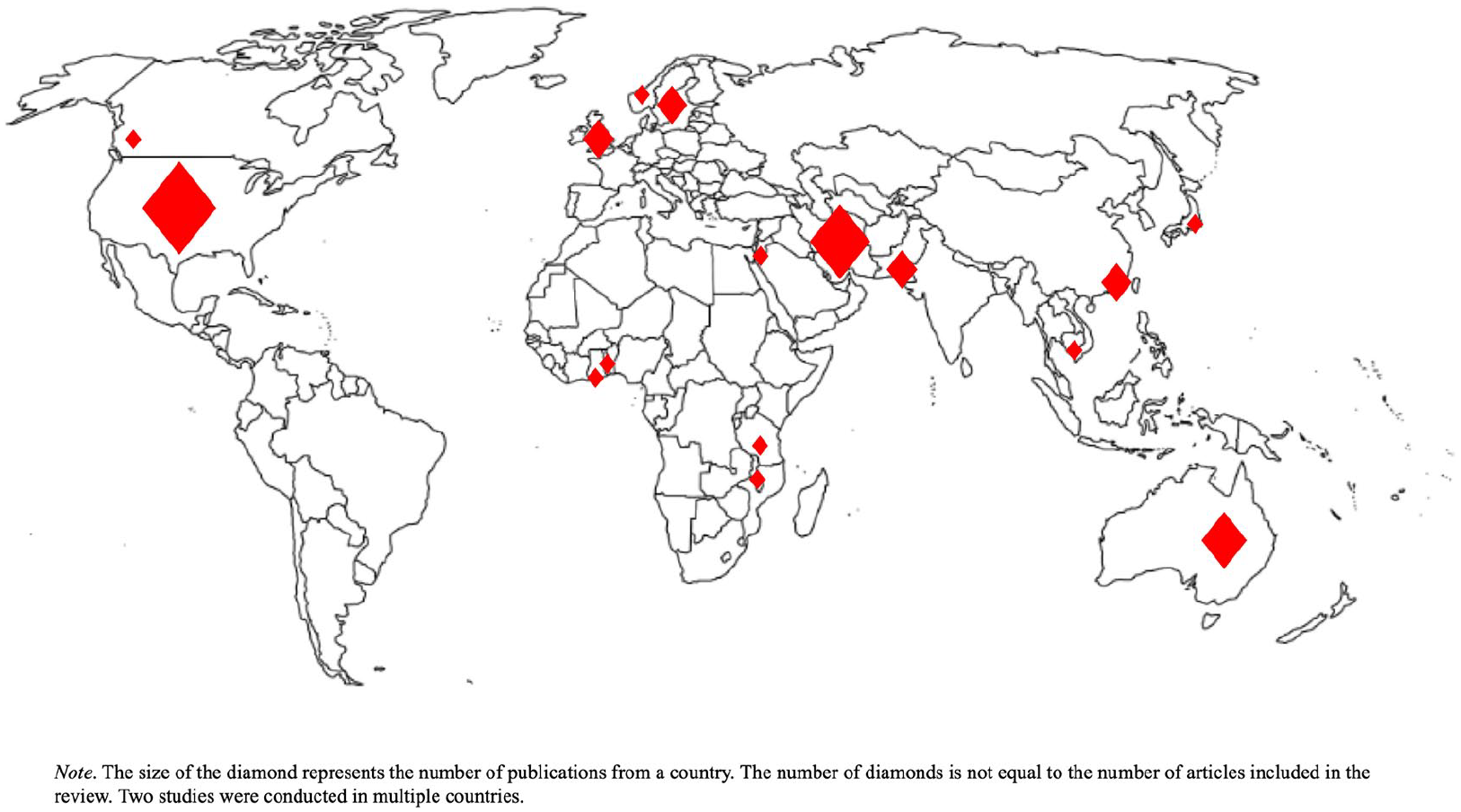
Locations of included prosthetic/orthotic education studies.
Methodological quality assessment
Of the 25 articles included in this review, 13 were solely assessed with the NIH Observational and Cross-sectional quality checklist,21,22,25,26,28,29,31,32,35–38,40 and eight were solely assessed with the CASP qualitative checklist.19,20,23,24,27,33,39,41 Four articles were assessed with multiple tools. All four underwent additional assessment using criteria specific for Delphi method.17,18,32,34 One article was assessed with the NIH and CASP checklists as well as Delphi criteria due to the mixed-methods study design. 34
Six articles were rated as high quality, six were moderate quality, while the remaining 13 articles were of low quality (Table 4). Numerous limitations were identified in the reviewed articles. Among quantitative articles, many reported conducting statistical analyses but failed to adjust for confounding factors.21,22,26,28,31,37 In addition, few articles reported measuring exposure prior to outcome, instead conducting cross-sectional data collection.22,24,26,28,31,35–38,40 Few articles reported use of outcome measures with evidence of psychometric properties, instead relying upon researcher-developed instruments.17,18,20,21,22,24,26,30,31,35,36,38,40 Finally, reported sample size was small in many articles.17,18,22,25,26,34–36,38
P&O education research measurement, findings, limitations, and quality.

Mod: moderate; RICP: research informed clinical practice; P&O: prosthetics and orthotics; WHO: World Health Organization; IPE: interprofessional education; ABC: American Board of Certification; SD: standard deviation; EBP: evidence-based practice; LLO: lower limb orthotics; LLP: lower limb prosthetics; TATCOT: Tanzania Training Centre for Orthopaedic Technologists; PIPOS: Pakistan Institute of Prosthetic and Orthotic Sciences.
*indicates two articles published from the same study.
Among qualitative articles, the most common omission was the failure to discuss the prior relationship between researchers and participants. Only one study adequately reported on prior relationships. 41 In qualitative research, these relationships must be explicitly disclosed to allow the reader to understand the context of data collection and identify potential influences the researcher may have had on participant responses and interpretation of participant responses. In addition, methods to assess saturation of data (i.e. the point at which no new information is discovered during data analysis) were not adequately described in any of the qualitative articles, which impedes the readers ability to assess transferability of study findings. Topic guides and interview questions were omitted in three articles,20,30,32 described in four articles,19,27,33,41 and provided verbatim in three (Figure 3(b)).23,34,39
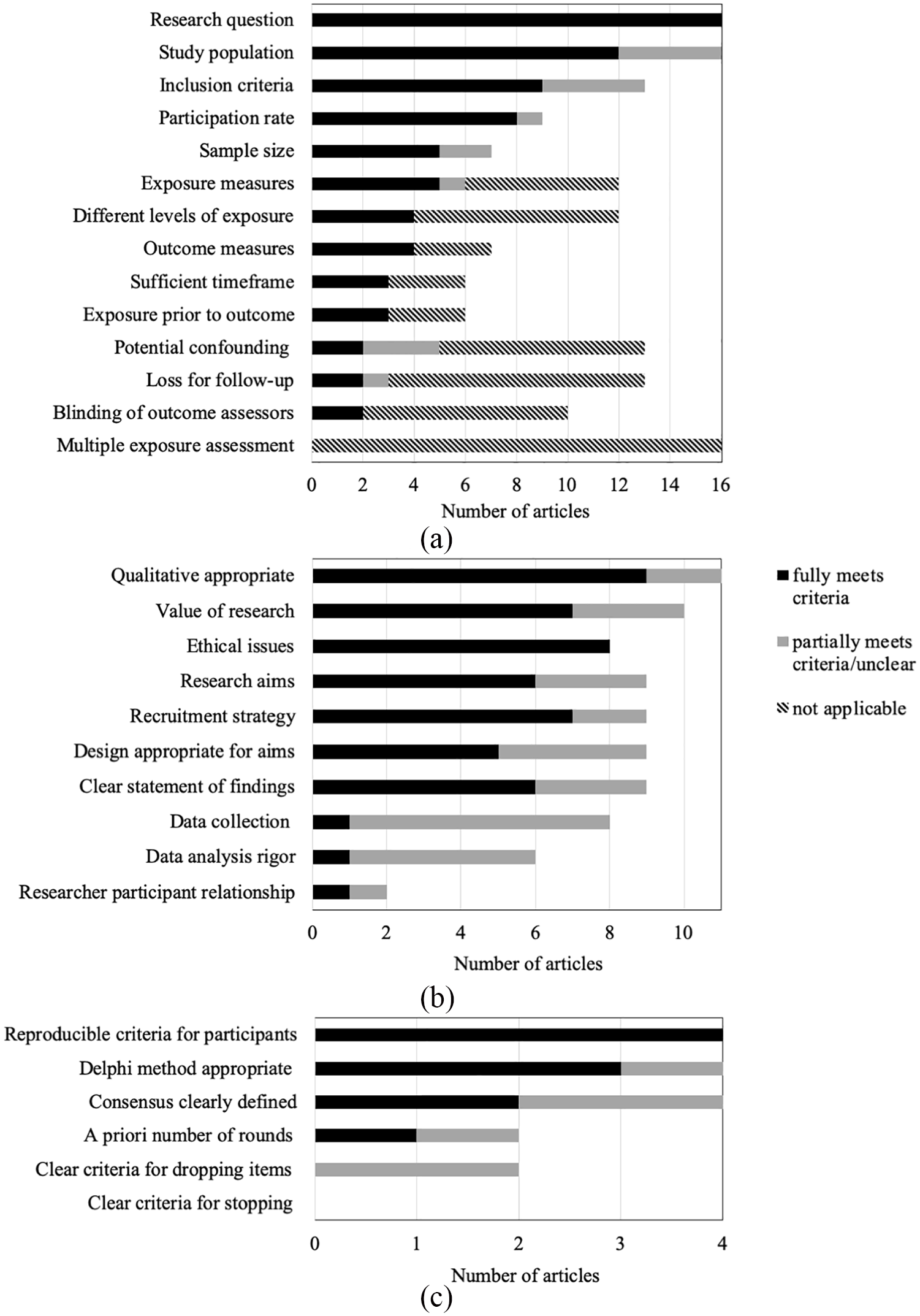
(a) Number of articles that fulfill each National Institutes of Health quality criteria. (b) Number of articles that fulfill each Critical Appraisal Skills Programme quality criteria. (c) Number of articles that fulfill each Delphi quality criteria.
For Delphi studies, none of the articles described clear criteria for stopping the study other than number of rounds. Only one study clearly stated that the number of rounds was established a priori (Figure 3(c)). 34
Topics of research
Table 3 provides a summary of described teaching methods and employed study designs.
Of the 25 articles included, seven examined teaching/learning methods. Two articles explored web-based and e-learning approaches,24,26 while the remaining five articles explored various other education strategies such as research informed clinical practice (RICP), 23 study abroad experiences, 22 critical thinking development, 25 and general teaching methods18,21 in student prosthetists/orthotists. Four articles examined aspects of curriculum, including sexual health, 28 interprofessional education, 29 wheelchair service provision, 27 and general curriculum development. 30 Five articles explored program level topics such as competency standards,32,34 objectives, 17 theoretical concepts, 33 or graduate competency. 31 Finally, nine articles explored country/region level topics such as a description of current clinical practice and education,19,20,35,36,38–41 and country level outcomes. 37
Given the heterogeneity of the available evidence, no conclusions are drawn regarding efficacy of specific techniques or methods. Rather, a descriptive review of evaluation methods and reported outcomes is presented, followed by a suggested way forward and call to action.
Evaluation methods
Most articles conducted evaluation either during or following the activity or program of interest with one time point for data collection, reflecting an overall focus on short-term outcomes and the difficulty with assessing educational retention long term.21,25,29 Seven articles reported longitudinal data collection17,18,21,25,29,32,34 with four of these doing so via Delphi methodology.17,18,32,34 Six articles reported follow-up with graduates, providing some assessment of long-term outcomes.22,31,36,37,39,41 In addition, only three articles reported use of a comparison group.22,26,29
Not surprisingly, surveys were the most common method to collect data. Surveys ranged from Likert-type scales and statistically assessed agreement17,18,31,40 to strengths, weaknesses opportunities, and threats (SWOT) analysis. 24 Only three articles reported use of outcome measures with published evidence of reliability and validity,25,28,29 reflecting the need for access, awareness, and availability of instruments with published evidence of psychometric properties in P&O education research.
Twelve of 25 articles used more than one data source (i.e. students, instructors, graduates). Students were the most common source of data collection used in 14 articles,21–26,28,29,32,33,35,36,38,40 followed by instructors in five articles.17,18,24,27,33 Those which attempted to compile data from multiple sources included technicians, 38 clinicians,19,21,30–32,34 other rehabilitation professionals,30,32 recent prosthetist/orthotist graduates,22,30,31,34,36 and government decision makers.19,20
Reported learner outcomes
Reported learner outcomes were categorized by the JET classification. 11 Nine articles did not report learner outcomes but rather conducted descriptive research at the programmatic level (i.e. curriculum development or review, defining education concepts).17–20,27,30,32–34 These articles were not categorized using the JET classification (Figure 4).
Level 1: Reaction. Nine studies assessed learner reaction.23,24,26,35,36,38–41 Reaction included students’ satisfaction, perception of program usefulness, program challenges, and perceived value of the activity. Students’ reactions were most often measured with a researcher-developed survey immediately following the program or activity.
Level 2a: Attitudes/perceptions. Five studies assessed changes in attitudes and perceptions of students.22,23,25,28,29 Examples of attitudes and perceptions included self-efficacy, enthusiasm to conduct research, positive professional identity, and readiness for interprofessional learning. Changes in attitudes and perceptions were measured by interview or self-report measure. Two studies used self-report measures with evidence of reliability and validity. One used a researcher-developed survey.
Level 2b: Knowledge/skills. Six studies assessed changes in student knowledge and skills.21,23–25,31,37 Skills acquired by students were critical appraisal of scientific literature, clinical reasoning, and critical thinking. Surveys and interviews were used to assess change in knowledge and skills. The only performance-based measure used was the ABC Prosthetist Board Exam (pass/fail). 37
Level 3: Behavior change. Two studies reported on behavior change among students.21,23 The examined behavior was the use of scientific literature in clinical decision-making. Behavior change was self-reported rather than measured through performance-based measures.
Level 4a: Organizational practice. No studies assessed organizational practice. Examples of organizational practice might include development of new programs or curricula, retention of faculty, and change in teaching methods.
Level 4b: Patient benefit. No studies assessed patient benefit. Examples of patient benefit might include self-report or performance-based outcomes of students’ patients as they relate to student skill and knowledge (i.e. assessment of patient outcomes before and after a student provides an intervention).
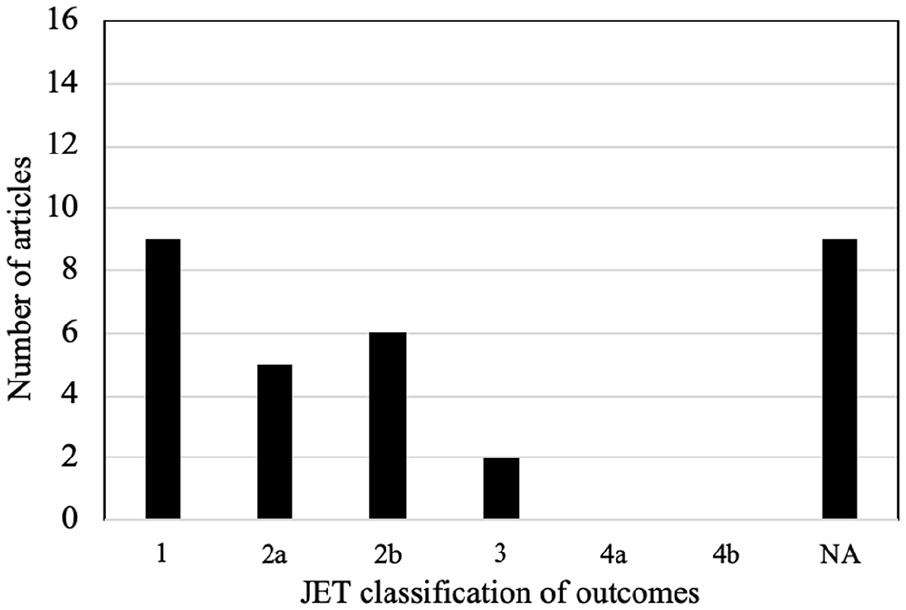
Joint Evaluation Team classification of outcomes.
Discussion
This systematic review provides the first detailed overview of the current state of peer-reviewed P&O education literature. It therefore sets the stage for future considerations regarding integration of empirical assessment in P&O education. The small body of evidence resulted in an exclusively descriptive review of the wide range of heterogeneous studies. Consensus statements were not possible given the paucity of consistent evidence; however, some patterns in methodology and outcome assessment were found.
The 25 articles from 23 studies included in this review can be categorized into one of four general categories: (1) teaching/learning method description, development, implementation, and/or assessment; (2) curriculum description, development, implementation, and/or assessment; (3) program level description, development, implementation, and/or assessment; and (4) country/region level description, development, implementation, and/or assessment. Articles were fairly evenly distributed among the four categories with slightly greater emphasis on country/region description and teaching/learning methods. Notably absent were articles exploring topics related to faculty description or development.
Twenty-one of the 25 articles included in our review were published within the last decade, suggesting a recent shift toward education research and publication. While this shift is encouraging, room for improvement exists as the majority of included studies were rated as low quality. Only three studies assessed outcomes with an established outcome measure that had evidence of reliability and validity.25,28,29 Instead, most studies employed researcher-developed surveys, which provided descriptive information but had limited value without published evidence of psychometric properties. 42 Researchers in P&O education can look to other rehabilitation disciplines for examples of tools with published evidence of validity and reliability to measure student skills and knowledge such as clinician decision-making 43 and patient education. 44
Reliance on self-reported data is a common thread throughout the available evidence, likely associated with the ease of collection. While some evidence exists that self-reported student learning is closely associated with actual performance,45 this association has not been examined among P&O students. In addition, while students can self-report perceptions at all levels of the JET classification, performance-based assessment may more accurately reflect changes in student knowledge/skill, behavior change, and patient benefit. Currently in the literature reviewed, the most common level of assessment was JET classification level 1: reaction, which is the student’s view on the learning experience. Level 1 is the easiest level to measure but also provides limited evidence on the impact of the teaching method of interest. Future education research should seek assessment at multiple levels and strive to include higher levels of assessment such as level 3: behavioral change, level 4a: organizational change, or level 4b: benefit to patients. While seven studies in this review included multiple data sources, no studies collected data at the level of P&O patients, thereby excluding a key stakeholder in P&O education. Integration of measures such as those used in physical therapy to assess professional competency 46 and patient outcomes 47 into P&O education research would strengthen study conclusions and promote holistic assessment of teaching practices.
Despite the limited literature available for this review, we found consistent objectives for conducting P&O education research. Primarily authors noted the deficit of P&O specific educational evidence and emphasized the need to scientifically explore P&O education and publish the results in peer-reviewed journals to establish a knowledge base in P&O education. Compared to other rehabilitation professions such as occupational and physical therapy, which have journals dedicated to education research (i.e. Journal of Physical Therapy Education (JOPTE), Journal of Occupational Therapy Education (JOTE)), P&O currently lacks an established forum for peer-reviewed education research. The 25 articles included in this review were published in 12 different journals. Such diffuse publication may impede access to dissemination and implementation of research findings, especially in low-resource settings.
Limitations
This review has several limitations. First, we primarily searched bibliographic databases and conducted limited hand searching of references. In addition, authors of published articles were not contacted to request unpublished data or further unpublished details. This search strategy provided an efficient source of material but also limited us to the resources included in the databases we chose to search (PubMed, CINAHL, Web of Science). In addition, by selecting these databases, our search was limited to a specific geographic and language (i.e. English) distribution potentially restricting the number of articles from LMICs.
Recommendations for future research
On the basis of this review, we propose the following recommendations for future research in P&O education. First, researchers and educators associated with well-established professional preparation programs (e.g. the United States, the United Kingdom, Canada, Australia, Cambodia) should approach program evaluation and self-review with an eye toward publication. Ramstrand and Ramstrand 32 and Ash et al. 34 serve as examples for how program development processes can be conducted systematically and disseminated. Transparency in program development, critique, and refinement could serve as invaluable learning tools and models for emerging P&O professional preparation programs working to pursue ISPO recognition.
Funding for such P&O education research and publication must become a priority for relevant organizations such as ISPO and the Orthotic and Prosthetic Education and Research Foundation (OPERF). A recent Best Evidence in Medical Education (BEME) review explored ways to support education research among clinical educators. 48 Identified interventions to promote education research are directly applicable to P&O educators and largely rely upon organizational and institutional investment: (1) protected time, (2) mentorship and/or collaboration, (3) departmental and institutional commitment and leadership, and (4) financial support. 48 P&O educational institutions, national and international organizations must work together to support P&O educators to make a foundational shift toward evidence-based education.
ISPO’s GEM provides an excellent opportunity for collaboration among P&O educators; however, the current structure is limited to in-person participation every 4 years. 8 Publication of abstracts, presentations, and/or collaboration to publish a special issue of the ISPO journal, Prosthetics and Orthotics International, could expand the impact of GEM and contribute to a movement toward peer-reviewed publication of P&O education research. Dissemination is key to building a global community and prompting conversation among international P&O educators, administrators, and governing bodies. With only 36 ISPO recognized institutions globally, 5 P&O education is a uniquely intimate discipline with huge potential for international collaboration.
Multisite studies and collaborative research could allow for growth of an international conversation, as well as more compelling empirical evidence. Multisite studies can also explore the complex ways in which different cultural, organizational, and contextual factors shape the success of a P&O educational program. Continued and more robust collaboration between researchers in LMICs and HICs will result in improved methodological quality and reporting, further advancing the quality and quantity of available evidence. Mixed-methods designs should be encouraged to provide rich multidimensional data. 49 By combining both quantitative and qualitative methods, research can explore both the teaching processes and the outcomes of these processes. In addition, including a wider range of data collection sources (i.e. patients, educators) and outcomes assessed will allow for a more inclusive reflection of program efficacy and identification of areas for further exploration.
Finally, the need for the use of theoretical frameworks in designing evaluation studies is essential to the growth and substance of P&O education literature. 50 A substantial body of literature exists on graduate level education, providing an accessible foundation upon which to build the evolving education of prosthetists/orthotists. Examples of relevant frameworks include principles of adult learning, 51 experiential learning, 52 and reflective practice. 53 The trend of evidence-based medical education and the Best Evidence Medical Education (BEME) initiative 54 serve as key examples in support of empirical foundations for teaching methods and curriculum development in P&O education.
Conclusion
In conclusion, the findings of this systematic review demonstrate a paucity of P&O education research worldwide. An increase in articles in recent years points toward a growing interest in P&O education research. As P&O educators and members of the global community, we must capitalize on this interest to mirror recent efforts in evidence-based practice by: (1) increasing attention on and funding for evidence-based education, (2) collaborating where appropriate with the international community of P&O educators, and (3) instituting a culture shift toward peer-reviewed publication in P&O education.
Supplemental Material
10.1177_0309364620912642_Appendix_A – Supplemental material for A systematic review in prosthetics and orthotics education research
Supplemental material, 10.1177_0309364620912642_Appendix_A for A systematic review in prosthetics and orthotics education research by Cody L McDonald, Deborah Kartin and Sara J Morgan in Prosthetics and Orthotics International
Supplemental Material
10.1177_0309364620912642_Appendix_B – Supplemental material for A systematic review in prosthetics and orthotics education research
Supplemental material, 10.1177_0309364620912642_Appendix_B for A systematic review in prosthetics and orthotics education research by Cody L McDonald, Deborah Kartin and Sara J Morgan in Prosthetics and Orthotics International
Footnotes
Author contributions
All authors contributed equally in the preparation of this manuscript.
Declaration of conflicting interests
The author(s) declared no potential conflicts of interest with respect to the research, authorship, and/or publication of this article.
Funding
The author(s) received no financial support for the research, authorship, and/or publication of this article.

Supplemental material
Supplemental material for this article is available online.
References
Supplementary Material
Please find the following supplemental material available below.
For Open Access articles published under a Creative Commons License, all supplemental material carries the same license as the article it is associated with.
For non-Open Access articles published, all supplemental material carries a non-exclusive license, and permission requests for re-use of supplemental material or any part of supplemental material shall be sent directly to the copyright owner as specified in the copyright notice associated with the article.
