




Abstract
The Cambodian School of Prosthetics and Orthotics (CSPO) in collaboration with La Trobe University, Australia, has established an upgrade programme from ISPO Category II level to a Bachelor Degree in Prosthetics and Orthotics. One group of students have completed the course and following a review process, a second group are now enrolled. The upgrade curriculum focuses on clinical reasoning and development of learning skills. A survey aimed to investigate the challenges of the programme using long distance education was prepared and data was gathered by questionnaires delivered to the organizer, host, coordinators, lecturers and students of the programme. Eleven subjects from various backgrounds participated in the questionnaire. The questionnaire showed the programme improves the capacity of the clinicians and future educators in Cambodia and the region. The distance education course delivery method was found to be beneficial for the students and allows them to remain in their home country. In addition, there is a cost reduction compared to full-time study in Australia.
Keywords
Introduction
The Cambodian School of Prosthetics and Orthotics (CSPO) was founded in 1994 and its initial objective was to train enough Cambodian Prosthetist/Orthotists to cater for the needs of people with physical impairments in Cambodia. On achieving this target and following the achievement of ISPO Category II accreditation in 1999, CSPO expanded to take greater regional roles by enrolling students from Lao PDR, East Timor, Papua New Guinea, Iraq, Afghanistan, Kiribati, Georgia, Malaysia, Indonesia, PDR Korea, the Philippines, other low income countries. One student came from Japan. To date, 125 students from 15 low income nations CSPO students have graduated with ISPO Category II qualifications. CSPO also initiated a programme, in which P&O schools from Pakistan, Thailand, Sri Lanka, Vietnam and other schools in the region work together in staff exchange programmes and resource sharing. This program for ISPO Category II qualified to a BSc level will ensure in future that the skills and expertise of the prosthetics and orthotics (in both practice and education), will reside in local workers. This is critically important in low income countries as majority of professional contribution come from expatriates.
In 2000, CSPO established an objective of upgrading the skills and knowledge of local prosthetists and orthotists from CAT II to CAT I, effectively to replace all qualified expatriates. Apart from financial sustainability implications, the locally qualified clinicians are crucial for the development and maintenance of sustainable clinical services. The 30-month full-time upgrading course (including 12 months of English preparation) was developed as a distance learning program with student selection criteria established by La Trobe University's National Centre for Prosthetics and Orthotics (NCPO) and CSPO. This program for ISPO Category II qualified clinicians to a Bachelor of Prosthetics and Orthotics (BPO) will ensure in future that the skills and expertise in prosthetics and orthotics clinical practice, leadership and education will reside in local workers. This is critically important in low income countries as majority of professional leadership and teaching contribution presently comes from expatriates. The primary aim of this paper is to provide an overall students' perspective on the upgrade programme from ISPO Category II to a bachelor degree level by distance education.
Prosthetics and Orthotics professional profile
Based on guidelines for training personnel in developing countries for prosthetics and orthotics services (ISPO and WHO 2005); three levels of prosthetics and orthotics personnel were identified:
Prosthetist/Orthotist (ISPO Category I)–responsible for the provision of direct care for people with disabilities; management and supervision; training and education; community services; research and development. Orthopaedic Technologist (ISPO Category II)– responsible for the provision of more common levels of prosthetic/orthotic devices. For more difficult conditions s/he will normally have access to a prosthetist/orthotist either for advice on treatment or for onward referral. Technician/Bench worker (ISPO Category III)–responsible for direct assistance to the prosthetist/orthotist or orthopaedic technologist in fabrication and assembly of prosthetics and orthotic devices and taking part in their maintenance, repair and replacement.
The prosthetic and orthotic needs are catered by the Orthopaedic technologist (ISPO Category II) in both Cambodia and the surrounding regions. The demand for Category I Prosthetist/Orthotists is also high as programs more further towards localization, requiring a higher level of education to bring leadership and teaching skills to the country presently provided by expatriates. With the current facilities in the country, Cambodia is unable to offer the ISPO Category I level training. Thus the initiation and monitoring of the upgrading programme by the CSPO to enhance the quality of prosthetic/orthotic education and service provision in Cambodia and the region in the represents a significant endeavour.
In Cambodia, as in many low income countries the clinical team approach is weak, due to the lack of resources and expertise. While this shortfall might result from the educational backgrounds of prosthetic and orthotic practitioners in these countries, it also reflects the lack of investment in the other professions commonly seen on a clinical team. Thus, a bachelor degree programme should improve skills, knowledge and practice of the prosthetic/orthotic practitioners. It was hoped it might also elevate the professional recognition of prosthetist/orthotists in the country where they are practicing.
Overview of the upgrade programme
La Trobe University was chosen to be the course provider for the upgrade programme. It had a high profile and a commitment to teaching in the region, and considerable experience of distance education for conversion course delivery to diploma graduates inside Australia. It already offered an upgrade course for Japanese diploma level students; this upgrade programme was the newest to be developed by La Trobe University. The learning being undertaken at a distance, it attempted to create a learning community across cultures, experiences and geographical differences, with the use of a blended mode of education for ISPO Category II professionals. In September 2007, nine students (seven men and two women) graduated form this programme. The upgrade programme was attended by ISPO Category II graduates from Pakistan, Sri Lanka, Lao PDR and Cambodia and it commenced with 12 months of English proficiency preparation, which centered on learning techniques, research techniques, and information handling, and continued with four semesters of prosthetic and orthotic specific subjects.
The main mode of teaching distance learning mentored delivery was ‘online’ for semesters 1, 2 and 4. Semester 3, was and on-campus block mode, delivered in Melbourne during the university summer break. The 10 weeks of practical work in Melbourne were spent in the La Trobe University (LTU) NCPO. The upgrade programme covered 22 different units from anatomy, to clinical based decision making, and interdisciplinary professional practice. Some of the units were delivered as block units of three weeks while others were delivered over a four-month time frame. The programme was considered to be as a blended mode of education, a combination of online, off shore and on campus teaching. Online tuition was provided by lecturers who were physically based in Australia. Off shore teaching consisted of lectures given in Cambodia by volunteers, LTU staff and also a local mentor was appointed to coordinate the progress of the students in Cambodia, under approval from LTU. Campus teaching was given at La Trobe during the clinical placement period. The majority of materials were presented online with practical projects (See Table I).
Layout of the upgrading units.
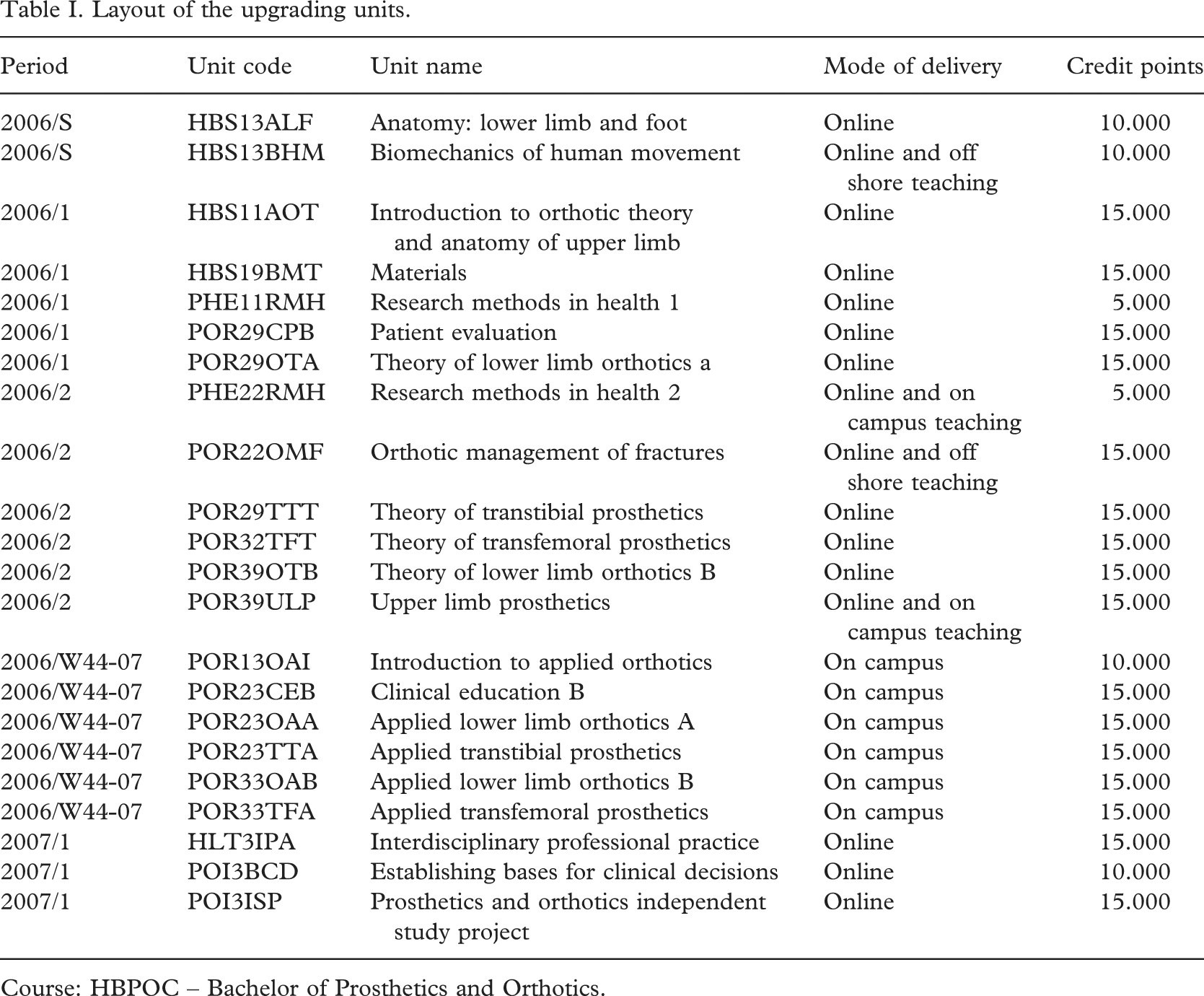
Course: HBPOC–Bachelor of Prosthetics and Orthotics.
Course materials
The teaching materials were presented online through the Web Course Tool (WebCT®), DVD and demonstration sessions were provided both on campus and on DVD. The use of WebCT aimed to promote interaction and communication between the academic staff and the off shore students. A number of course manuals were sent to the students based in Cambodia with sets of DVDs from on campus lectures to ensure that they had access to the same support as the on-campus students. The materials and prescribed readings were available online or through the library service.
Teaching and learning
The usual teaching techniques through the online course delivery of the LTU faculty was a new learning strategy for the CSPO students. In addition to WebCT®, off shore students used live online communication tools such as webcams and live chat programmes. Teaching and learning relied heavily on the information technology, secure internet capacity, computer processing interaction and the computing skills of students (see Figures 3 and 5). The off shore students required a high level of self-study and personal time management to progress through the programme. Teamwork was another crucial component time in the success of distance education.
Practical projects
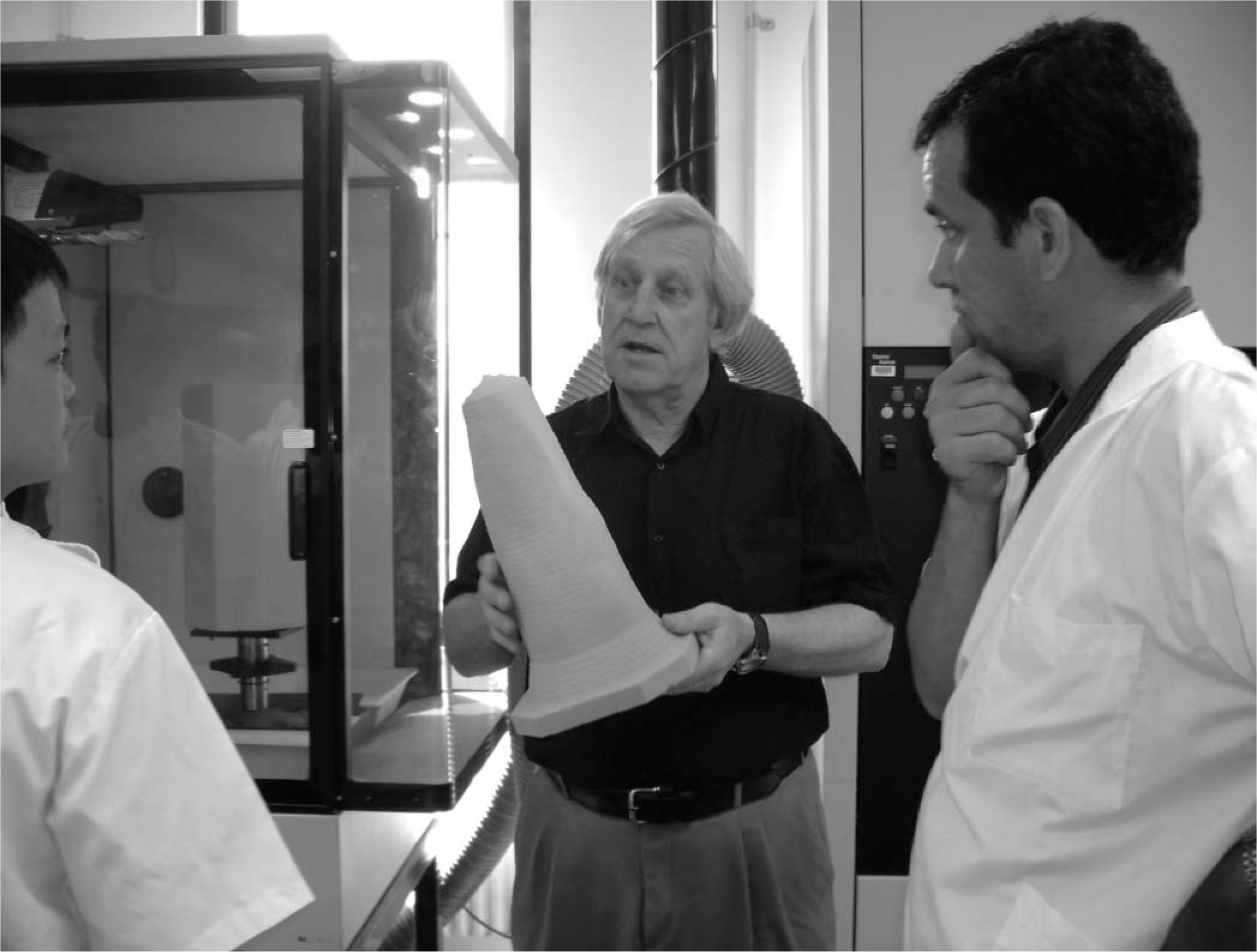
The practical projects were spread over the applied units. Practical sessions were supervised by the assigned faculty staff so as to ensure that proper techniques and optimal application of theories and materials were maintained. The practical projects were performed both in Cambodia and Australia. The Fracture Management Unit requires a high level of practice and demonstration sessions were delivered with significant student interaction. This made an impact on the students as it was a new subject for those students in Cambodia (See Figures 2 and 4).
Assessments and evaluation
Student assessments were made via online quizzes, written exams, tutorials, practical sessions, online presentation and assignments. Assessment criteria were provided before each written task. The arranged tutorial sessions were beneficial to the off shore students and allowed them to interact with the faculty, and consolidate the content of course materials. The concept of written assignment completion was new to the students as majority of the students from CSPO were familiar with practical project evaluation, oral and written exams but not assignments. The students struggled to fulfil the requirements set by LTU as writing was one of the weakest areas for many clinicians from low income countries. The upgrade programme places considerable emphasis on written communication and the research skills of the students. The exposure to literature reviews and searching for available resources or evidence was a huge step forward in the development of the analytical skills of the students. Similarly, students improved their public speaking skills through the presentations required during the course (See Figure 1).
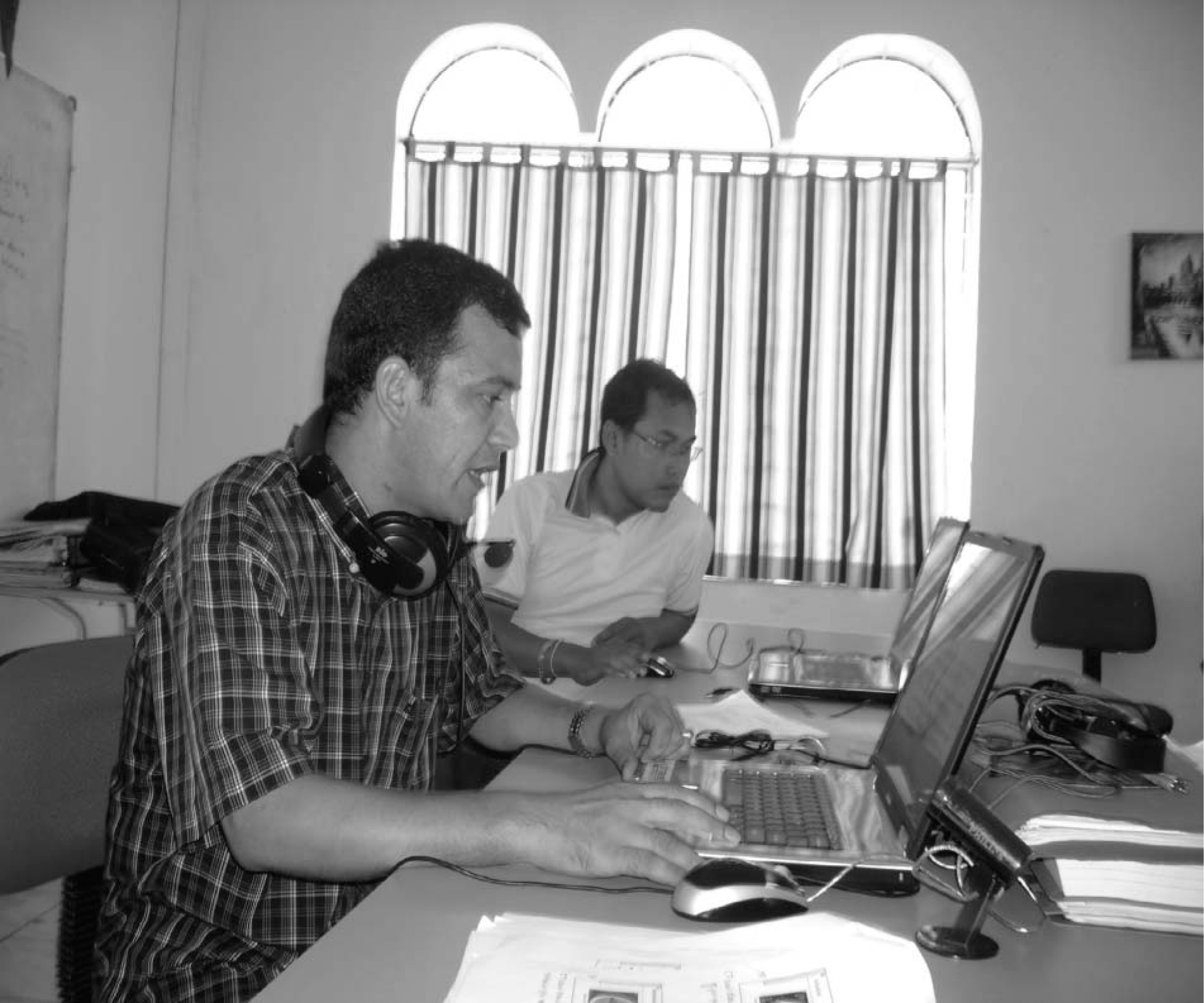
A student giving an online presentation via webcam.
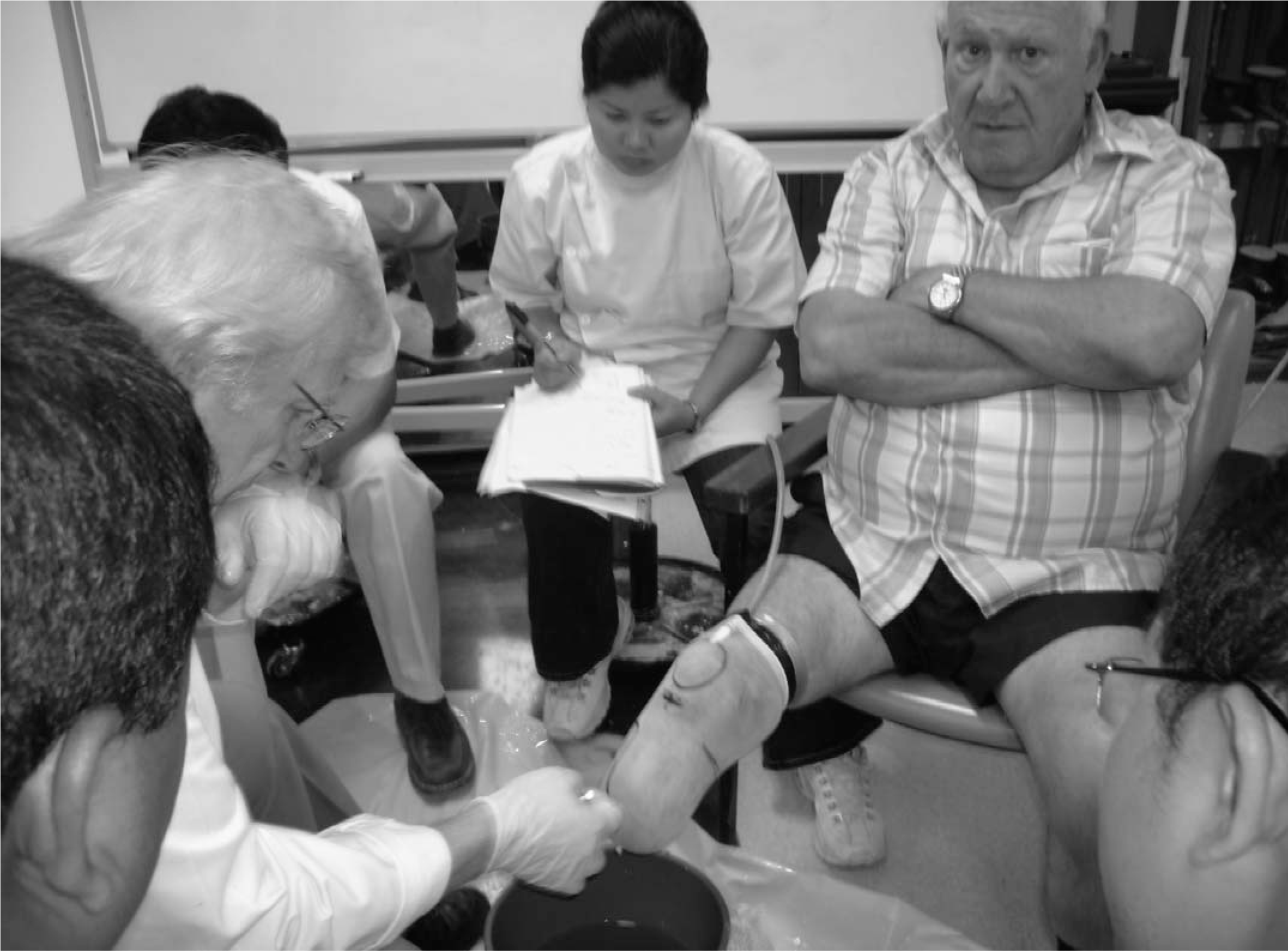
Demonstration sessions delivered as on-campus unit.
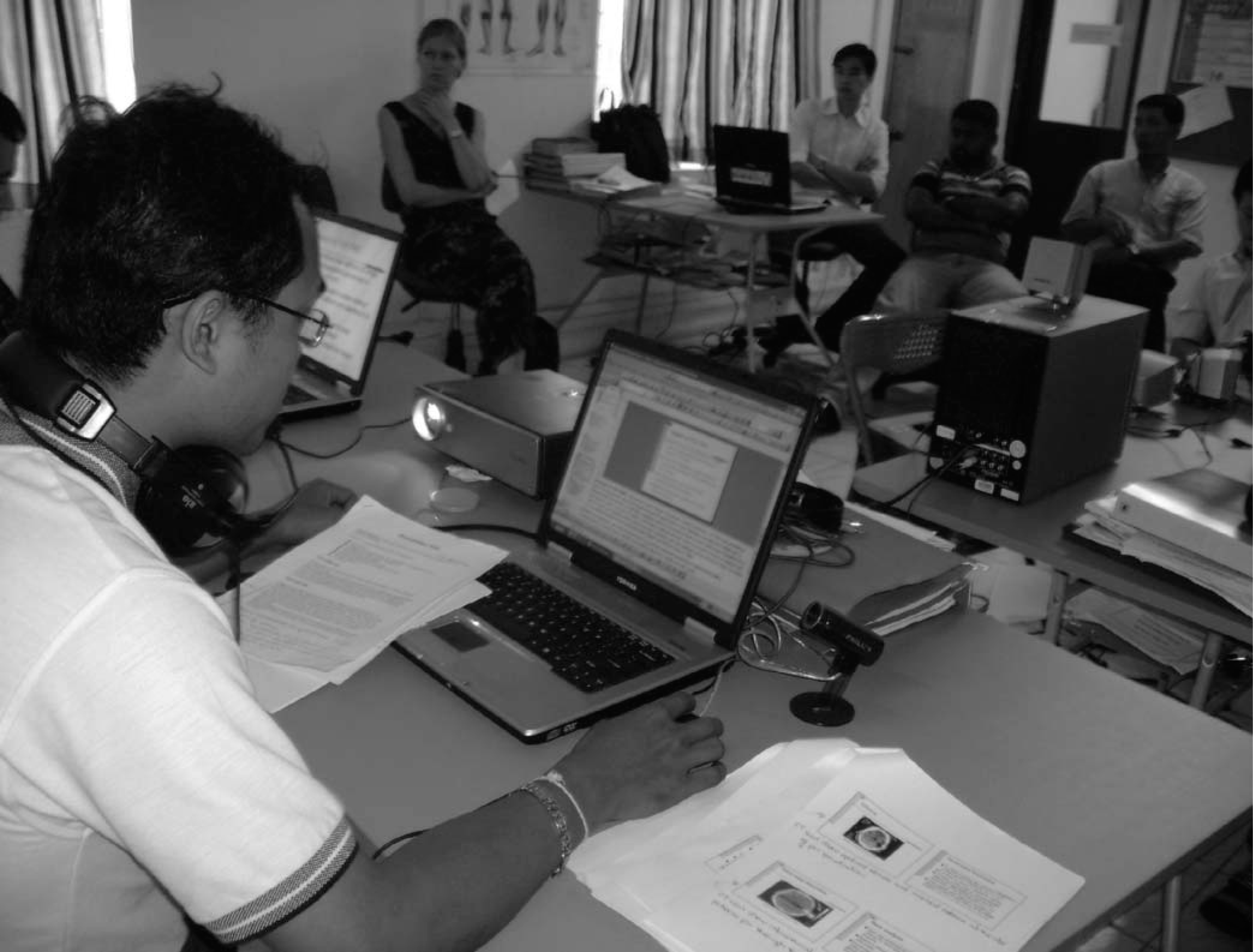
Students attended online tutorial delivered in Cambodia by lecturers based in La Trobe, Australia.
A workshop class on CADCAM fabrication technique.
Off shore students placement on campus.
The use of the blended mode of education increased the understanding and standard of practice of students. The application of new technologies of both digital communication and advanced clinical exposure enhanced the learning capacity of students. For example: the Total Surface Bearing (TSB) socket casting was relatively new for students, for many it was also their first experience of using ICEX® cast. The on-campus practices with components used in developed countries promoted the understanding of the application of prosthetic and orthotic appliances with different technologies and componentry (Table I).
Methods
Subjects
The study aimed to gather data from as many of the people involved in the programme as possible. The 23 persons were: The nine students of the programme, one from the host institution (CSPO) and 13 lecturers from LTU. An invitation to participate in the survey and an information sheet was sent out to the all the people involved in the course, the program development and course delivery. The covering letter included an indication of the timeframe for data collection and a promise of feedback by means of a summary of the results.
Responses were received from 11 subjects including all nine students from the course, a lecturer from La Trobe and the representative from the CSPO. Thus the overall results reflect more the perception of the students and the host of the course on the programme than the perspective from the staff of LTU.
Tools
Apparatus
The questionnaire methodology used Strengths, Weaknesses, Opportunities and Threats (SWOT). The questionnaire contained 24 items with six different subheadings; general information from the respondent (three items); strengths of the programme (six items); weaknesses of the programme (six items); threats to the programme (three items); required improvements for the programme (three items); and general feedback (three items).
Procedures
The notification of the survey was sent to the course coordinator, the host of the programme, the lecturers and the students. The survey was carried in the last semester of the programme, while majority of the faculty and students were busy with marking and finishing off the assignments. The information on the survey and the questionnaire was sent out to individuals via email and the return of questionnaire was 14 days after the date of dispatch. Interestingly, while the replies could be either via email attachment or hard copy, all the nine students in the class provided response by hard copy. The questionnaire used qualitative scale for responses (See the attached questionnaire and sample answers in the Appendix).
Data analysis
This survey was initiated by a student in the upgrading programme aiming at understanding the impacts, benefits, and weakness of the course. The descriptive data was collected and analyzed to create a synthesis of the findings. The depth of the response is shown with cross-reference checking of the results. It was a subjective exercise.
Results
Strengths
A broad range of strengths of the programme were identified from the respondents. All students agreed that the use of a blended mode of education, including the use of internet, DVDs, on line lecture notes, face to face lectures and practical projects, promoted the quality of student learning. Similarly, all students commented that the utilization of a variety of assessment methods, including assignments, practical work, online quizzes, online presentations, written exams and clinical case studies helped to develop clinical reasoning and the critical thinking skills of the students. The forum on WebCT®, such as online course material, mail, chat, discussion board, announcement board, timetable, virtual team, results, discussion forum on WebCT® the promoted the student learning ability through the use of information systems and digital processing as well as computing skills. All the respondents said that the upgrade programme was an effective strategy to develop regional capacity as there are needs of locally trained educators and leaders with a higher level of prosthetics and orthotics training (at least a bachelor level or preferably with post graduation degrees) to undertake a greater role in providing clinical and educational services in these countries. Ten out of the 11 subjects believed that the students in this course were provided with the training opportunity to take over from the expatriates in the future. Nine subjects among the 11 commented that the course strengthens the life-long learning concept through the use of information technology and establishes professional communication for prosthetics and orthotics education and international interaction.
None of the CSPO upgrade students had experienced online learning and teaching prior to the programme. The use of a blended mode of teaching both off shore and the 11 weeks of clinical placement in NCPO clinic, provided the opportunity for professional growth for the upgrading of students from Lao PDR, Sri Lanka, Pakistan and Cambodia enabling them to better comprehend the rehabilitation system in Australia. It also gave an insight into channels of funding in prosthetic and orthotic care, the roles and responsibilities of the Prosthetist/Orthotist in interdisciplinary teams in patient care, and the exposure to different Australian clinical settings and technologies in providing physical rehabilitation services. Students who completed the upgrade programme qualifying with a Bachelor Degree, then return to their institutions and are now playing leading roles in clinical practice as well as education. This reduces the reliance on expatriate Prosthetists and Orthotists.
Weaknesses
The students stated a number of concerns which might have influenced the success of the programme. All students commented that the block-mode style of teaching was too intensive and gave very little time for consolidated learning. The lack of face-to-face communication with many lecturers and other prosthetic and orthotic students contributed to a poor environment for professional communication and the exchange of learning experiences.
The use of the internet as a tool in course delivery was beneficial. However a number of constraints arose. All students in the programme noted that the lack of face-to-face teaching placed demands on students and lecturers to develop specific schedules and to provide adequate assistance to support the teaching. However, the off shore students commented that the exchange of ideas can promote a better learning environment and professional interaction as well as developing international networks.
Students also stated that the communication and awareness of the programme between the students and coordinators as well as among faculty staff could be improved. That was an expected criticism from students since few had experience of self-learning, a skill that is intrinsic to CAT I courses, also most students came from a background of rote learning and expected ‘to be taught’ rather than ‘to learn’.
Finally, The lack of proper guidelines, schedules, planning, and course syllabus for students was said to be the cause of frustration for students when the assessments were expected.
Opportunities
A wide range of opportunities were noted from the course. The respondents noted that the upgrade programme from ISPO Category II level to Bachelor Degree level in prosthetics and orthotics is a huge step forward in ensuring that the workforce sustainability of the physical rehabilitation sector and educational institutes with required skills, knowledge and Quality to undertake leadership roles. The upgrading programme introduced the concept of life long learning and research and development methodologies in prosthetics and orthotics. The students commented that the upgrading program is a good initial development for a potential international and regional interaction across educational institutions in developing countries. Six of the subjects commented that the course is an opportunity to improve the liaison between La Trobe University and prosthetic and orthotic institutions in low income countries in Asia and expose students to the Australian health care system and university studies. All students thought that the use of different learning techniques and assessment methods were beneficial for the promotion of students' understanding of various approaches to assessment and evaluation.
Threats
A number of threats were identified by the respondents and classified into two categories: Immediate and possible long-term threats.
The major immediate threat was identified as the non recognition of the programme by ISPO prior to the commencement of the course. However, ISPO has shown interest in the recognition of this programme and the evaluation from ISPO will be arranged accordingly.
Additionally the completion of the course had a number of social and financial requirements:
The high cost of funding for the programme; The commitment of involved authorities and the students themselves; The support from the students' workplace and well as the organizer and the supplier of the programme; The high requirement of English proficiency, and information technology skills; The need to fine-tune organization and planning of the course.
Long-term possible threats were recorded by three subjects in that graduates may decide to leave their home countries for jobs in Europe, America or Australasia, although, the first group of students commented that they had made a substantial commitment to their own countries. Another area for problems in the future was the potential for poor student selection procedure; although the first group of students were carefully selected and found to be mature. In addition, all respondents commented that the administrative; managerial; and financial commitments toward the success of the programme are critically essential for the successful completion of the programme.
Differences of ISPO Category II programme and Bachelor Degree
The level of the student's ability in problem-solving, critical thinking skills, prosthetics and orthotics theoretical knowledge, and English language proficiency were commented on ‘as improving’ by the organizer of the program as well as the students themselves. The students asserted that the clinical based decision-making skills of the students were developed with a comprehension of the involvement and responsibilities of the interdisciplinary team, health research units and self-study strategies. Such fundamental skills were seen as essential for the Bachelor graduates so as to ensure that standards of professional quality and practice comply with the benchmarks of a Prosthetist/Orthotist in charge of Orthopaedic Technologist (ISPO Category II) and Orthopaedic Technicians (ISPO Category III). Bachelor graduates are perceived to be the supervisors or mentors of Category II or Category III professionals, particularly when ISPO Category I (Prosthetists/Orthotists) qualified are scarce in developing nations (ISPO 2007). The building up of knowledge and skills of students based on their Category II training and work experience was identified as being a good strategy to develop a high interest in the programme. The proper preparation of students in academic English, self-learning techniques, various assessment methods and the utilization of educational resources online, prior to the commencement of the course can enhance the quality of learning of the students.
The average age of the off shore students was older than the on campus students. The use of an assessment scheme and requirement guidelines set by the NCPO was a valuable tool in assisting students to develop throughout the programme. The review of feedback was undertaken by students themselves upon the return of the assessed task. The comments of the faculty on the functions and outcomes of the fabricated devices were a constructive strategy for the students in improving their technical and clinical skills, and reasoning ability. The perception on the impacts of the upgrade programme in physical rehabilitation service provision and enhancement of Category II training was positive and evolving.
Discussion
It was observed that the off shore upgrade programme as an innovative approach to learning and teaching, especially in the prosthetics and orthotics field (Hovorka et al. 2002). It has also been noted by Postanik and Capper (1998) and Gilbert (1995) that distance education through Computer Mediated Communication (CMC) was beneficial in response to the enormous needs of higher education, particularly in developing countries where there are limited resources, although it is understood that the access to communication technologies and information systems will be a major hurdle to overcome in ensuring the success of the programme. In this survey, the off shore students from four low income countries were given the opportunity to upgrade their prosthetics and orthotics skills, with the use of information technology and this has proven to be beneficial in increasing their learning capacity. Quality assurance, learning support, cost effectiveness calculation and technology reliance must be taken to account when delivering the distance education as it can shadow the curriculum, instructional quality and dropout rates of the student (Postanik & Capper 1998; Petracchi 2000). Similarly, the students at CSPO presented in their feedback the frustrations caused by the uncertainties of the progress of the programme; particularly the assessment flow in the first two semesters. However, all students commented that the on-campus units and the final semester went well. This might reflect the experience and expertise of the unit coordinators learned from the delivery of the previous units.
In 1999, Cravener commented on the impact of distance education on learning and teaching. It has been observed as an increase in faculty to work, providing enhanced access to education, better use of technology and gained influences on instructional quality when both face to face and online teaching were delivered as modes of teaching (Cravener 1999; Easton 2003). Certainly, it was true for the course for the CSPO group, as many of the units in the course were not delivered in parallel with on campus students. In addition, online programmes have the potential to improve student access to learning resources including individualized communication with their tutors and peers as well as enhancing an active learning environment among geographically scattered students of virtual class (Cravener 1999; Isman 2004). Most of the students from CSPO had not experienced the use of a virtual library, so it was a hurdle for them initially. However, after the completion of the first two semesters, students were fully acquainted with both the virtual library use and the virtual classroom.
It has been said that distance education requires self-disciplined students to successfully complete the programme due to its high reliance on individual control, overtime and space freedoms for learning (Thorpe 1998; Wernet et al. 2000; Isman 2004). Interestingly enough, CSPO students provided similar feedback, except they also commented that they relied heavily on teamwork and support from their classmates to understand the use of WebCT tools and completion of tasks. In addition, the need to fine tune the online course delivery is a high priority to ensure optimal suitability and acceptability to the learners from a different range of educational profiles and backgrounds (Valenta et al. 2001).
It was interesting that the CSPO upgrade students recorded the weaknesses of the distance education in a similar manner to the negative aspects documented by Valenta et al. 2001): Reduction of face to face interaction, concerns over technology and logistics and an increase of student workload.
Educational background and the pre-exposure of the students played a major role in successful completion of the programme. The experience of guided studies and rote learning impacted the qualigy of learning of the students. Particularly, the study technique (Independent study style) was a huge struggle expressed by the students. As Wagner and the colleagues asserted that an evaluation of student satisfaction is critical in every educational activities; nevertheless; distance learning approach is a complex model where the learners achieved success through the reliance on their personal experience; individual learning style and their own environment. Thus, the educators must listen, assess and monitor the student progress against their satisfaction throughout the programme (Wagner, Werner, and Schramm, 2005).
Monitoring and evaluation of the course can be carried out in the future to follow up on the effectiveness of the programme during course delivery. Similarly, it is recommended that coaching and mentoring mechanism could be developed to follow up on the students and necessary support could be offered for their professional growth as post graduation activities.
In the future, a comparative study between the students' expectations prior to the commencement of the programme and the success of the programme should be developed in parallel with a similar study on the faculty. This will ensure both parties have similar expectations and it will enhance the transparency and mutual understanding of the development and implementation of the course.
Conclusion
CSPO has achieved a unique development milestone in contributing to the building of the local human resource and most of all, improving the quality of care in prosthetics and orthotics to people with disabilities in Cambodia and the surrounding region. The upgrade course from ISPO Category II to a Bachelor level delivered by La Trobe University used a blended mode of education: A combination of distance education, on-campus placement and classroom teaching. The mixture of various teaching and learning techniques promotes learning flexibility through a collaborative learning environment, better use of digital processing and communication technology in learning prosthetics and orthotics, and exposure to a life long learning concept for Prosthetist/Orthotists in low income countries such as Cambodia. The impact of the programme from La Trobe University is high in relation to the improvement of quality of prosthetic and orthotic training and education as well as physical rehabilitation services in Cambodia and the region. However, to deliver this programme, huge resources and energy are required. If institutions want to follow a similar path, they need to be aware of the issues stated and ensure that the required resources are available.
Footnotes
Acknowledgements
The author wishes to thank the Nippon Foundation for financially supporting the upgrading programme in Cambodia and all those involved in the programme, who gave their time to this study. Special thanks to the staff of La Trobe University and CSPO and Australian patients,; whose contributions motivated the upgrade students to learn for a better service for the people with disabilities in Cambodia and the region.