




Abstract
Objectives:
This study aimed to evaluate and compare a newly designed suspension system with a common suspension in the market.
Study design:
Prospective study.
Methods:
Looped liners with hook fastener and Iceross Dermo Liner with pin/lock system were mechanically tested using a tensile testing machine in terms of system safety. A total of 10 transtibial amputees participated in this study and were asked to use these two different suspension systems. The pistoning was measured between the liner and socket through a photographic method. Three static axial loading conditions were implemented, namely, 30, 60, and 90 N. Furthermore, subjective feedback was obtained.
Results:
Tensile test results showed that both systems could safely tolerate the load applied to the prosthesis during ambulation. Clinical evaluation confirmed extremely low pistoning in both systems (i.e. less than 0.4 cm after adding 90 N traction load to the prosthesis). Subjective feedback also showed satisfaction with both systems. However, less traction at the end of the residual limb was reported while looped liner was used.
Conclusion:
The looped liner with hook fastener is safe and a good alternative for individuals with transtibial amputation as this system could solve some problems with the current systems.
Clinical relevance
The looped liner and hook fastener were shown to be good alternative suspension for people with lower limb amputation especially those who have difficulty to use and align the pin/lock systems. This system could safely tolerate centrifugal forces applied to the prosthesis during normal and fast walking.
Background
Statistics show that almost 1.6 million people suffered from limb loss in the United States, 1 and this value will be increased to 3.6 million by 2050. Amputation causes a permanent disability, and amputees rely on prostheses for daily living activities. Therefore, prosthetic technology development is vital to improve amputees’ quality of life.2,3
Choosing an appropriate suspension system, based on amputees’ functional needs and satisfaction, is an important step in the prosthetic rehabilitation process.2–6 A number of prosthetic suspension systems are available in the market for lower limb amputees.3–5,7 Silicone liners were introduced to the rehabilitation market in 1986 to improve prosthetic suspension.2,8 Several methods (i.e. lock system) are used to hold the silicone liner inside the prosthetic socket. Lanyard, distal pin/lock, suction by sleeve or hypobaric seals, and magnetic lock are some of these methods.2–5,7,8 A standard lock system for all amputees has not been defined as no suspension system can fulfill the needs of all users.3,5
Based on recent systematic reviews,3,5 while silicone liners with distal pin/lock and suction systems offer proper suspension, some problems are still associated with their usage.3,5,9 In pin/lock systems, milking (distal tissue stretching) happens during swing phase10–12 that can lead to pain, discoloration, and thickening of stump skin (distal). Furthermore, the use of this system is hardly advisable for amputees with a long residual limb or contracture. Suction or vacuum systems could solve the above-mentioned problems and reduced gait asymmetry, stump pain (distal end) and skin sores.3,10,13,14 While vacuum systems may improve amputees’ quality of life, these systems may not be appropriate for all amputees since the knee sleeve could decrease knee range of motion and donning the prosthesis requires more procedures.9,15
Rotation and vertical movement between the socket and residual limb can be avoided by a proper suspension system.3,4,9 Klute et al. 9 showed that stump pistoning was significantly less (0.1 cm) with the vacuum system than a pin/lock system (0.6 cm). Another study 16 also revealed that adding up to 90 N loads to the prosthesis caused more pistoning in a pin/lock system (0.5 cm) compared to a suction socket (0.2 cm).
Different methods were used to measure pistoning inside the prosthetic socket such as ultrasonic equipment, X-ray, transducers, and three-dimensional (3D) motion systems.9,15–20 Nevertheless, these methods are frequently too complex in nature to be performed in clinics because of substantial time and expense or due to ethical considerations related to the X-ray exposure.16,18 Recently, a simple and accurate method was used to measure pistoning inside the socket using a high-resolution camera and dead weights in static positions. 21 The weights were intended to mimic the centrifugal force created during the swing phase of gait.15,16,19,21
Based on the literature, comfort, safety, function, easy donning/doffing and durability are the main factors that should be considered when designing a prosthetic suspension system.2,3,5,22 To solve some of the problems of the existing prosthetic suspension systems, a suspension system that incorporates silicone liner (with loop fabric) and hook fastener was introduced by researchers at the Department of Biomedical Engineering, Faculty of Engineering, University of Malaya.
In previous studies,23,24 hook and loop fasteners (HOLO system) were used, and two small openings were created on the transtibial socket walls (medial and lateral) in the proximal and distal regions. Two pieces of loop fastener23,24 were attached to the silicone liner’s fabric using Pattex glue, and the hook fastener was on the socket wall (i.e. rolling belt). While the HOLO system could easily tolerate the load applied to the prosthesis during gait, 23 the loop fastener (100% polyester) decreased the liner elasticity, and two openings in the socket wall might sacrifice the socket strength. After the primary experiments, Össur agreed to produce the looped liner prototype and covered the silicone liner with the loop fabric. This study intended to assess mechanical and clinical characteristics of this new system and compare it with a common suspension system in the market (i.e. Iceross Dermo Liner with pin/lock).
Methods
The Iceross Dermo Liner (3 mm profile) and Iceross looped liner were used in this study. The only difference between the two liners was the outer fabric material. The Dermo Liner was covered with nylon fabric and Icelock Clutch 4H 214 was used as a lock mechanism. The Icelock weighed 186 g and total build height was 2.5 cm. The looped liner (3 mm profile) was covered with looped fabric, and hook fastener was used to fix the liner’s distal end inside the socket. The hook fastener was lighter (20 ± 5 g) than pin/lock system with 0.2 cm in thickness.
Mechanical testing
Before testing the looped liner and hook fastener on transtibial amputees, a mechanical testing was performed using the Instron testing machine to measure displacement between the socket and liner when different traction loads were applied. One reusable positive mold with cylindrical shape (without any negative angle) was fabricated from plaster of Paris to provide a repeatable and uniform socket and stump surrogate. The positive mold’s mandrel and the socket’s distal adapter were attached to the Instron’s superior and inferior grip, respectively, and ramped tensile loads were applied (Figure 1). The Dermo Liner with Icelock Clutch and the looped liner with hook fastener were tested (three trials). Hook fastener with three different sizes was evaluated in the mechanical testing (58, 78, and 98 cm2).
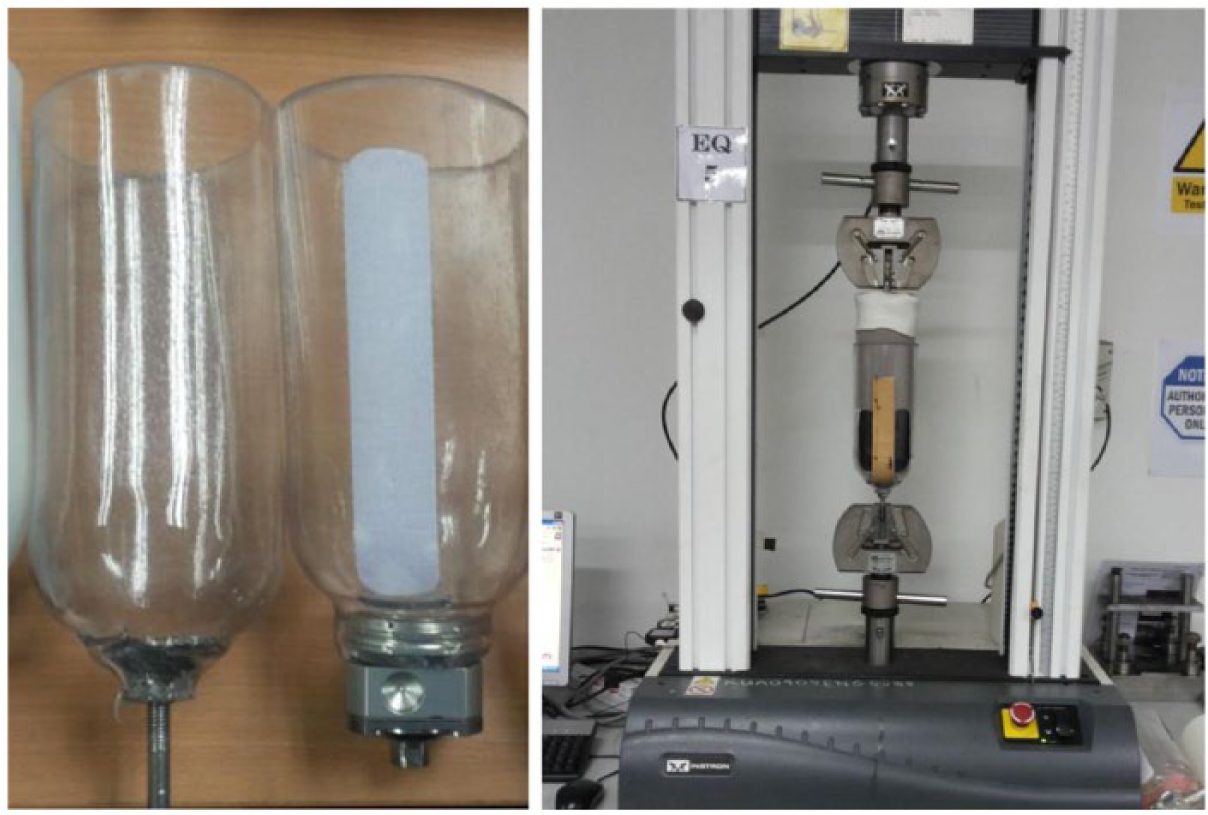
Cylindrical test sockets used in this study (left) and the tensile testing machine (right).
Clinical evaluation
A convenience sample of 10 people (nine males and one female) with unilateral transtibial amputation was selected to participate in this study. The study was conducted with the University of Malaya, Kuala Lumpur, Malaysia approval and the subjects entered the study with a submitted written consent. The inclusion criteria were transtibial amputees with a mature residual limb, stable limb volume during the last year, no pain or wound in residuum, intact upper limbs (hand strength), and mobility without assistive devices, such as cane.
One prosthesis was designed and aligned for each amputee by a registered prosthetist to avoid variability caused by fabrication, fitting, and alignment technique. All participants were fitted with a transparent total surface bearing (TSB) socket, Dermo Liner, Icelock Clutch 4H 214, Aluminum Pylon (A-762111), and Assure foot (Össur) (Figure 2). The participants were requested to walk in the prosthetics laboratory to be familiar with the new prosthesis. Afterward, the Dermo Liner was replaced with the same size looped liner, and hook fastener was used instead of Icelock Clutch 4H 214 (Figure 2). The same socket and alignment was used with the new system. The subjects were asked to use both systems only in laboratory sessions for at least 4 weeks (2 weeks for each system).
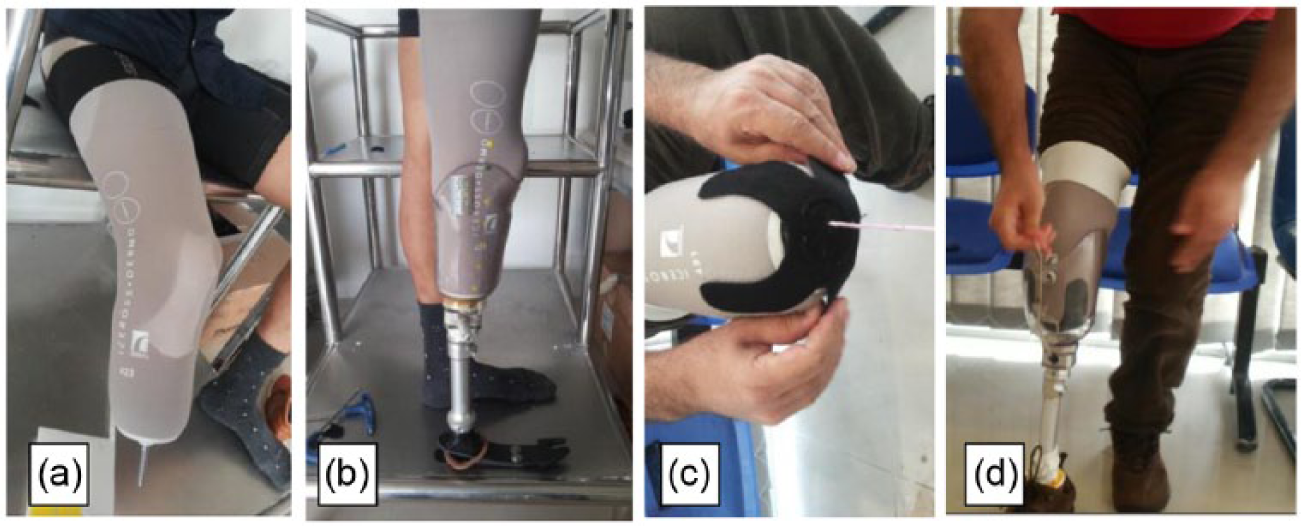
(a) Dermo Liner and pin/lock, (b) transparent socket and Icelock, (c) looped liner and hook fastener, and (d) donning procedure.
The following equipment used to measure pistoning movement inside the prosthetic socket: 21
Markers;
A digital camera (12-megapixel resolution);
A reference ruler fixed to the lateral socket to measure the actual displacement;
30, 60, and 90 N loads.
From a certain distance (1 m), a photo was taken for each of the following positions:
Standing semi-weight bearing on prosthesis (i.e. double-limb support) as the baseline condition (Figure 3);
Standing with extended knee, no bearing weight on prosthesis;
Application of loads (30, 60, and 90 N) consecutively along the longitudinal axis of the prosthesis.16,18,21
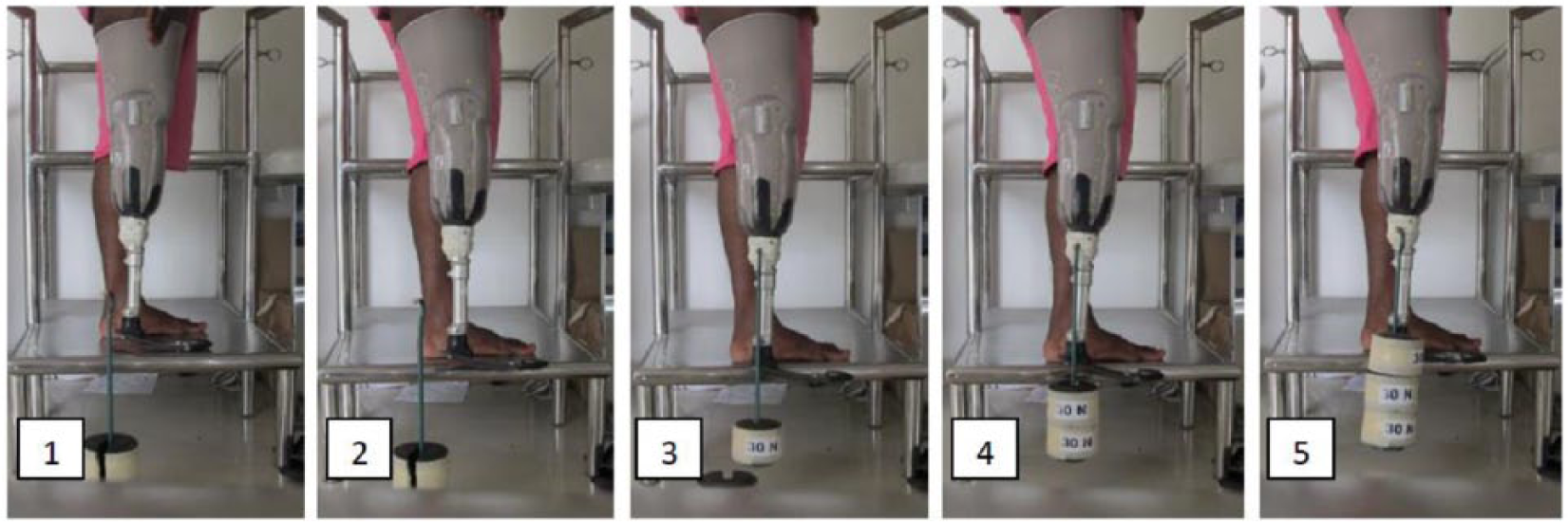
The static positions used in this study (1 = semi-weight bearing, 2 = non-weight bearing, 3 = 30 N load, 4 = 60 N load, and 5 = 90 N load).
The loads were added to mimic the centrifugal forces that are likely to move the prosthetic leg during normal and fast walking.15,16,21 The ruler was employed as a measurement reference for the markers’ displacement.
Two markers were attached to the proximal and distal ends of the transparent socket. Moreover, four markers (paper-thin two-dimensional (2D) markers) were attached over the liner below the knee level. In double-limb support position, the distance values between the markers (on the liner and socket wall) were used as baseline values, and the remaining conditions were compared to such values. The average displacement between the socket and liner was computed in different static conditions (five trials).
Furthermore, subjective feedback for each system was obtained. A subset of the Prosthesis Evaluation Questionnaire (PEQ) was used in this study (author-designed questionnaire based on the PEQ).6,25 The subjects were asked about the ability to place and remove the prosthesis (donning and doffing), socket fit, ambulatory ability with the prosthesis, ability to walk upstairs and downstairs, and pain. Moreover, the subjects shared their comments with the prosthetist during laboratory sessions.
Data analysis
Displacement of the silicone liners inside the cylindrical socket was recorded for three trials and extracted using the Instron software (Bluehill 2 software). The extracted data were summarized as average and standard deviation (SD). Statistical data were analyzed using SPSS 22 (Chicago, IL, USA) and p-values of 0.05 or less reflected statistical significance. Normality of data (variables) was also assessed using the Shapiro–Wilk test. Paired sample t tests were used to evaluate and compare the systems.
Results
Mechanical testing
The accuracy of measurement was high (0.001 cm). Tensile test results showed that the average for movement between the positive molds and sockets was small and looped liner and hook fastener (different sizes) could safely tolerate centrifugal forces applied to the prosthesis during normal and fast walking. Less movement was measured with 98-cm2 hook fastener (0.05 ± 0.02 cm) compared to 78 cm2 (0.06 ± 0.01 cm) and 58 cm2 (0.10 ± 0.06 cm) when 90 N traction load was applied. When 90 N load was applied, 0.08 ± 0.02-cm movement was recorded for Dermo Liner and Icelock Clutch 4H 214. The average displacement was 0.77 ± 0.37 cm for the looped liner and hook fastener (average for all sizes) compared to pin/lock system (0.65 ± 0.25 cm) after 180 N load was applied (Figure 4).
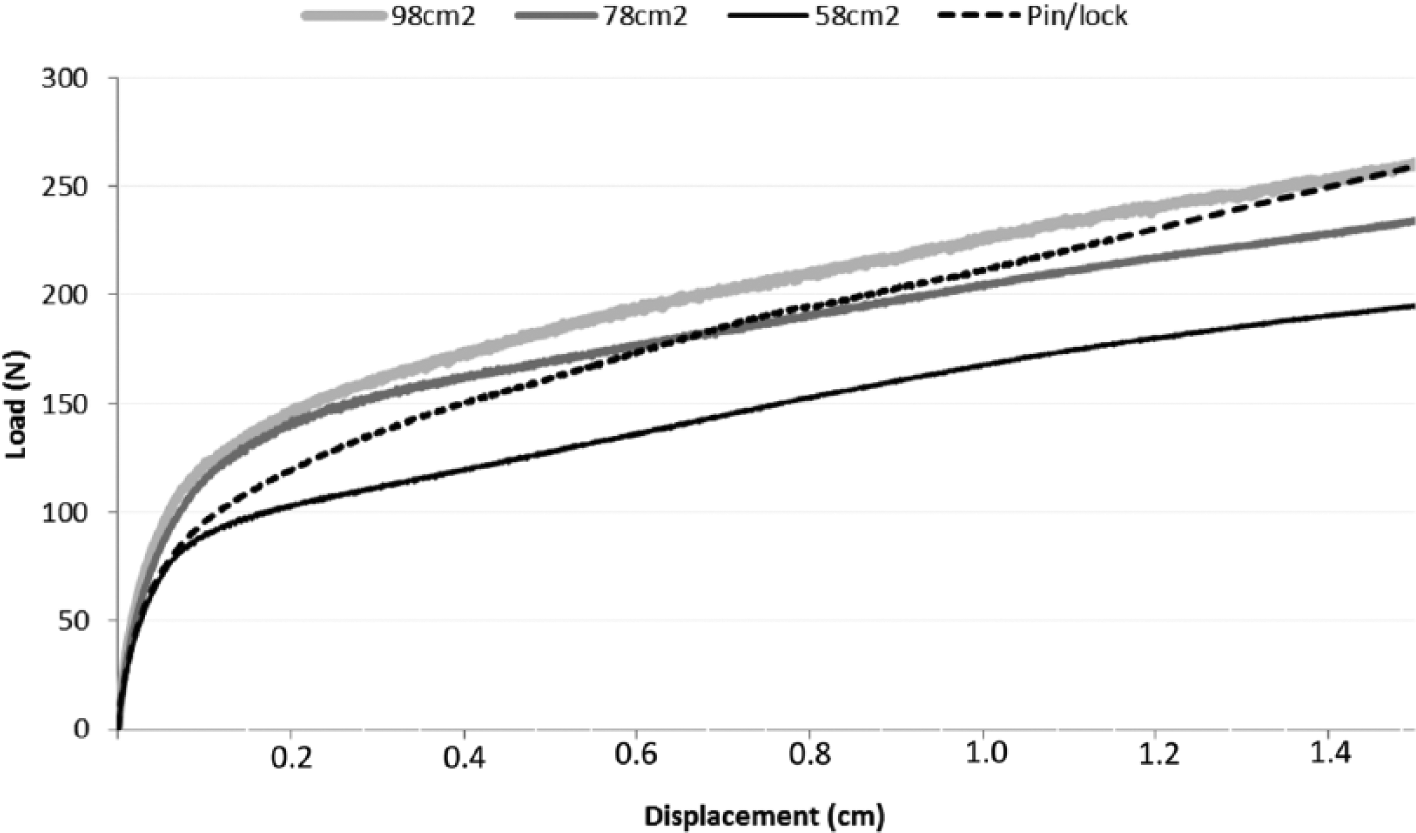
Average displacement (mechanical test results).
Clinical evaluation
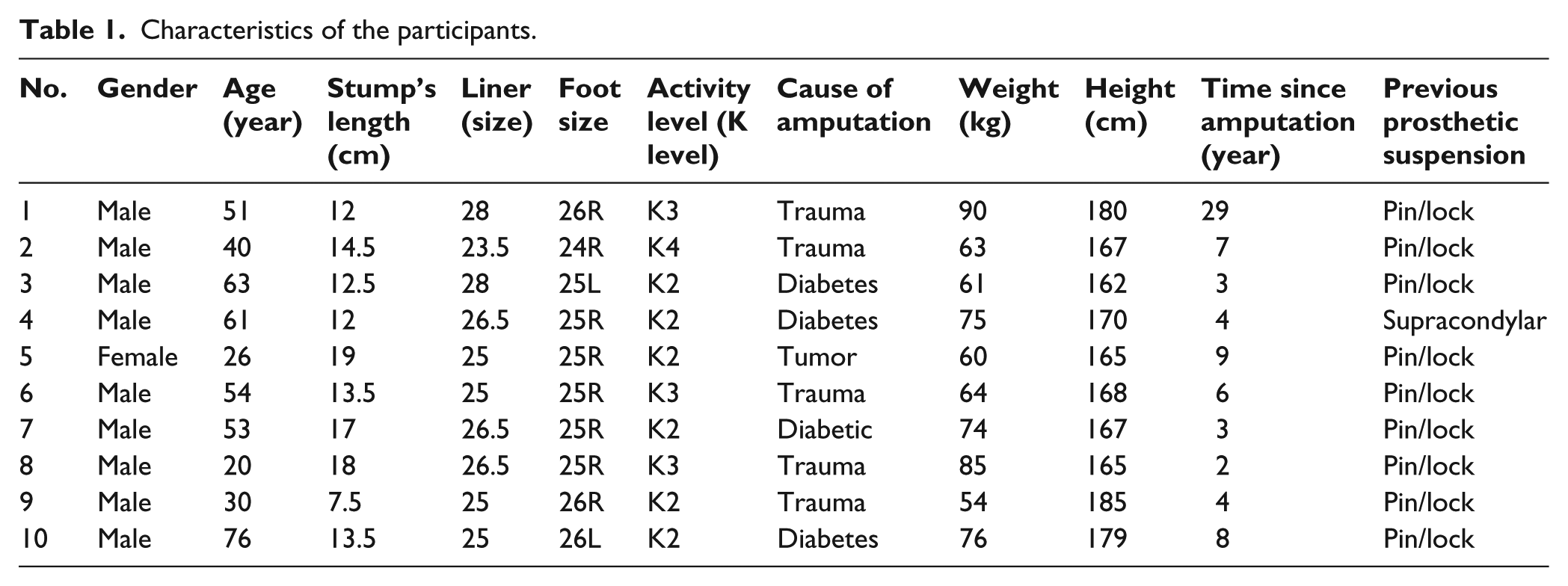
A total of 10 subjects, composed of nine males and one female, participated in this study (Table 1). Diabetes, trauma, and tumor were the common causes of amputation among the subjects. The mean age (year), height (cm), and weight (kg) of the participants were 47.4 ± 18, 170.8 ± 7.7, and 70.2 ± 11.7, respectively (Table 1). On average, the participants went through amputation 6.8 ± 5.8 years prior to this study. Furthermore, the average stump length was 13.9 ± 3.4 cm.
Characteristics of the participants.
The findings of static evaluation revealed a significant difference between the systems (p < 0.05). Less movement was seen in pin/lock with Dermo Liner compared to the looped liner. However, both systems could control pistoning even after the addition of 90 N load. Figure 5 depicts mean displacement between the socket and silicone liner in different static positions. When the position was changed from semi- to non-weight bearing, 0.03 ± 0.02 and 0.1 ± 0.03-cm displacement was seen in pin/lock and hook fastener system, respectively. The mean displacement was 0.16 ± 0.11 cm after the addition of 30 N load for the new system, and 0.07 ± 0.05-cm pistoning was noted for the Dermo Liner and pin/lock system (p < 0.004). Data analysis indicated maximum pistoning after 90 N load was applied to both systems.
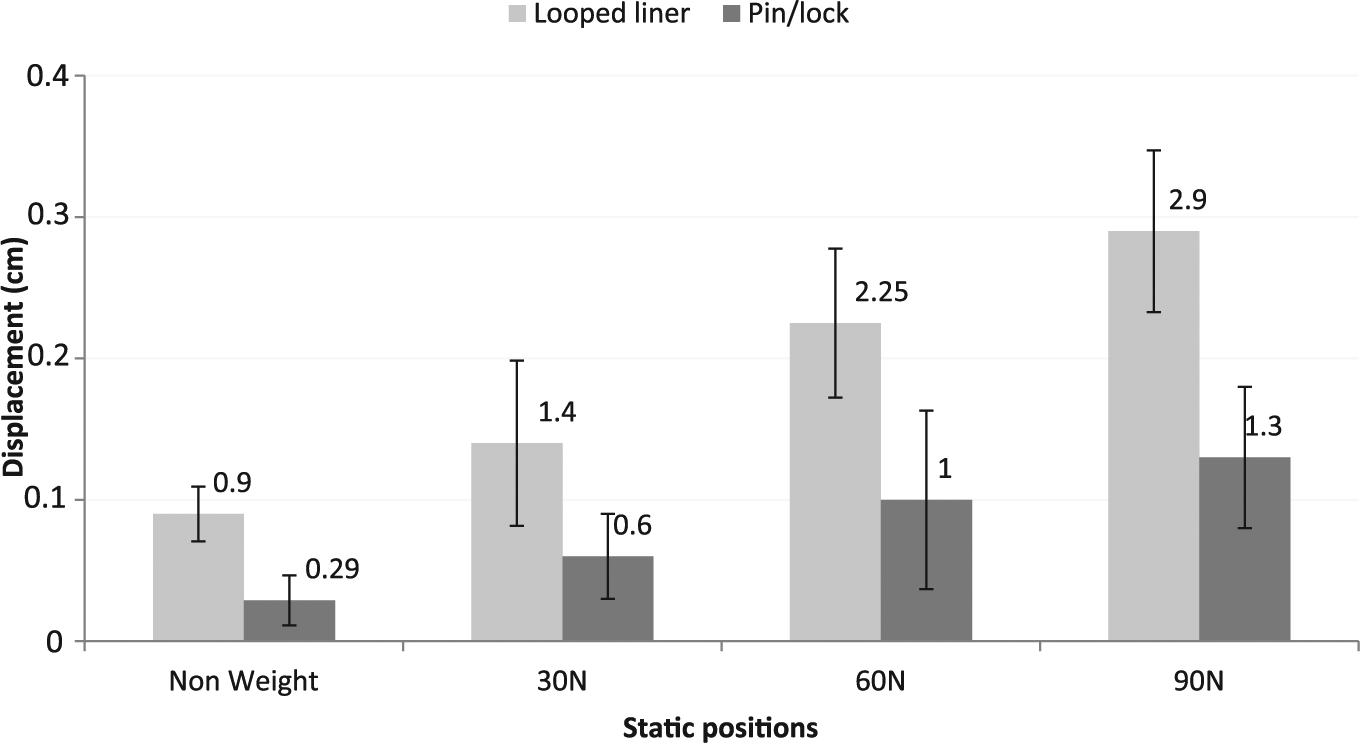
Average displacement between the two systems in non-weight bearing and after the addition of load in 10 subjects (clinical evaluation).
Overall, the participants were satisfied with both systems during ambulation (Table 2). Donning and doffing were easier and required less time with the pin/lock system. However, for two subjects, the pin was difficult to align. With the looped liner and hook fastener system, the subjects experienced better fit within the socket.
Questionnaire results (author-designed questionnaire based on the PEQ).
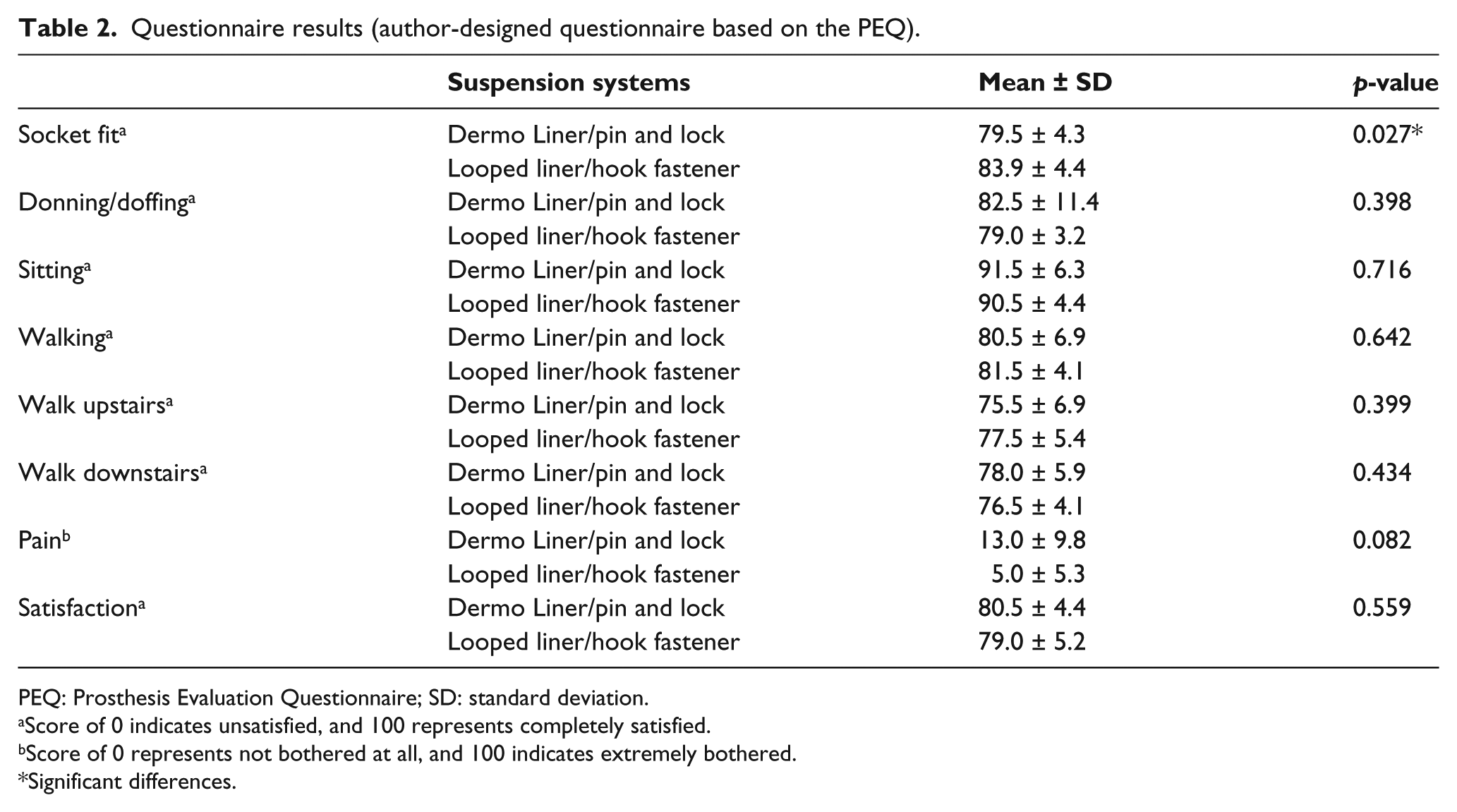
PEQ: Prosthesis Evaluation Questionnaire; SD: standard deviation.
Score of 0 indicates unsatisfied, and 100 represents completely satisfied.
Score of 0 represents not bothered at all, and 100 indicates extremely bothered.
Significant differences.
Discussion
In this study, the Iceross looped liner and hook fastener were evaluated (mechanically and clinically) and compared with the Iceross Dermo Liner and pin/lock suspension system. Mechanical test results showed that both systems could safely tolerate regular activity loads during ambulation. Clinical evaluation also confirmed low pistoning and amputees’ overall satisfaction with these systems.
Mechanical testing
Literature has shown that between 30 and 90 N, traction load is applied to the suspension system during swing phase16,18,19,21 (depending on prosthetic weight and walking speed). In this study, ramped tensile loads were applied to the positive mold’s mandrel and socket’s distal adapter to evaluate the suspension system. Mechanical testing showed that after 90 N load was applied to the prosthesis with the looped liner and hook fastener, there was only 0.07 ± 0.03 cm movement within the socket (average for all hook fastener sizes). A similar result (0.08 ± 0.02 cm) was found in the Dermo Liner and pin/lock suspension system.
Less than 1 cm of pistoning inside the prosthetic socket was said to create a sense of extra fit and security to the prosthesis users. 19 Even though after 180 N traction load (nearly four times higher than the load generated during typical walking), less than 1 cm movement was seen within the socket in both systems. Previous study 23 showed that HOLO system could tolerate more load than looped liner and hook fastener that were used in this study. This might be due to different socket shapes and loop/hook fastener materials that were used in the previous research work. Cylindrical positive cast without any negative angle was used in this study to find the exact effect of hook fastener on controlling the movement inside the socket.
Clinical evaluation
Pistoning measurement within the transtibial socket (10 subjects) also confirmed extremely low pistoning in both systems and was similar to the values obtained in the previous studies.4,9,16,18 Only 0.15-cm pistoning was seen after the addition of 90 N load to the Dermo Liner and pin/lock system, whereas 0.3 cm pistoning was recorded for the looped liner and hook fastener system. These results were similar to the findings of Board et al. 4
Klute et al. 9 measured pistoning in non-weight-bearing position using a 3D motion analysis system. They found 0.1-cm pistoning with harmony suspension system and 0.6-cm pistoning with pin/lock system. Gholizadeh et al. 16 revealed that adding up to 90 N loads to the prosthesis caused 0.2 cm pistoning in a suction socket using Seal-In X5 liner. The results of this study also showed 0.1 and 0.3 cm pistoning with the looped liner and hook fastener in non-weight-bearing position and after adding 90 N load, respectively. These results showed that new system is safe and is a good alternative for individuals with transtibial amputation. The amount of pistoning movement was a bit higher than mechanical testing results as there were more variables in clinical testing such as residual limb soft tissue consistency, stump volume changes, amputees’ stump length, and socket shapes.
The PEQ is a common tool to assess different prosthetic components with good validity and reliability. 25 The subjects felt more comfortable with the looped liner and hook fastener system at the end of the residuum. This finding can be attributed to less distal skin stretch in this system. The subjects stated a higher level of fit within the socket with the hook fastener system. Literature has shown that firm attachment between the socket walls and liner could develop a feeling of higher confidence during walking.3,5
Overall, donning and doffing were easier and required less time with the pin/lock system. These might be due to familiarity of the subjects with the pin/lock systems as mostly they had used pin/lock system before entering to the study (Table 1). However, during the laboratory sessions, two subjects mentioned that the pin was difficult to align. Literature shows the pin/lock system can be difficult for users with contracture and long residual limbs.3,5 One of the advantages of the looped liner and hook fastener is that this system does not require additional space at the end of socket. Moreover, amputees with contracture can still benefit from this system. The looped liner and hook fastener system can provide a lighter prosthesis. However, the same socket was used for both suspension systems in this study to avoid inconsistency caused by fabrication, alignment technique, and socket size.
In this study, only short-term effect of the looped liner and hook fastener system was evaluated in laboratory environments. The durability and performance of the looped liner and hook fastener need to be investigated after being exposed to different environments (i.e. water, dirt, and sweat).
Conclusion
The looped liner and hook fastener were shown to be good alternative suspension for lower limb amputees and could be a good option for amputees who have difficulty to use and align the pin/lock systems. Future research should consider testing on a larger number of amputees and to provide a prescription guideline for this suspension system.
Footnotes
Acknowledgements
The authors would like to extend their deepest gratitude to Knut Lechler, Þorvaldur Ingvarsson, Kristleifur Kristjánsson, Egill Egilsson, and Ása Guðlaug Lúðvíksdóttir for providing technical advice and support.
Author contribution
All authors contributed equally in the preparation of this manuscript.
Declaration of conflicting interests
The author(s) declared no potential conflicts of interest with respect to the research, authorship, and/or publication of this article.
Ethical approval
Ethical approval was obtained from University of Malaya.
Funding
The author(s) disclosed receipt of the following financial support for the research, authorship, and/or publication of this article: This research was supported by the UM/MOHE/HIR grant (project no: D000014-16001) and by Össur (Reykjavik-Iceland).