




Abstract
This article describes the use of a computer-aided design and manufacturing (CAD/CAM) 3D metal printed adjunctive orthodontic appliance that can be used with palatal miniscrews for molar distalization. CAD/CAM technology was used to fabricate a customized framework for bone-anchored pendulum appliance effectively based on the patient’s palatal contour, location, and the number of implants to be placed.
Keywords
Introduction
Maxillary molar distalization is the most frequently used non-extraction treatment in the correction of Class II malocclusions. To prevent anchorage loss, intraoral distalization appliances use support from the skeletal structures with the help of temporary anchorage devices. 1 Bone-anchored pendulum appliance (BAPA) is a modified pendulum appliance anchored to the palatal bone with miniscrews supported by an acrylic button. The most common problems associated with the acrylic button are palatal mucosal irritation and plaque accumulation due to its excessive thickness and palatal coverage. 2 Due to the distalization, anterior reciprocal forces are generated against the palatal acrylic and the palate causing soft tissue compression. 3 There is a need to make the appliance compact, hygienic, and also rigid enough to resist the reciprocal forces. CAD/CAM technology can help in fabricating a customized framework for the BAPA based on the patient’s palatal anatomy to replace its acrylic component.
This article describes a customized CAD/CAM 3D printed framework fabricated using cobalt chromium alloy for a patient with hypersensitivity to acrylic in conventional BAPA.
Appliance Design
Maxillary impression was made and the casts were scanned using 3D Maestro scanner (AGE Solutions S.r.l., Pontedera (Pisa), Italy). Direct intraoral scanning of the patient’s maxillary arch can also be done. The scanned image in Stereolithographic (STL) format was imported to exocad software (exocad GmbH., Darmstadt, Germany) for appliance designing (Figure 1).
Prototype Design of the Metal Framework in Exocad Software.
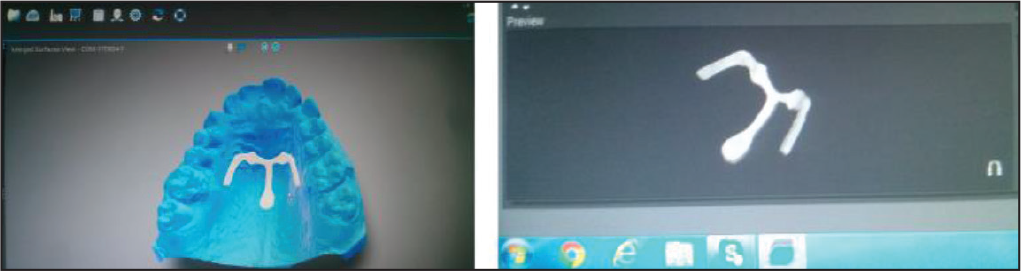
The metal framework was designed with a thickness of 1 to 1.5 mm except at the implant slot region where it was kept at 2.5 mm. The design of the framework was done to support the implants and also offer rigidity to the appliance. The STL file of the designed metal plate was imported from the software for printing using Magic 20 software (Materialise, Leuven, Belgium).
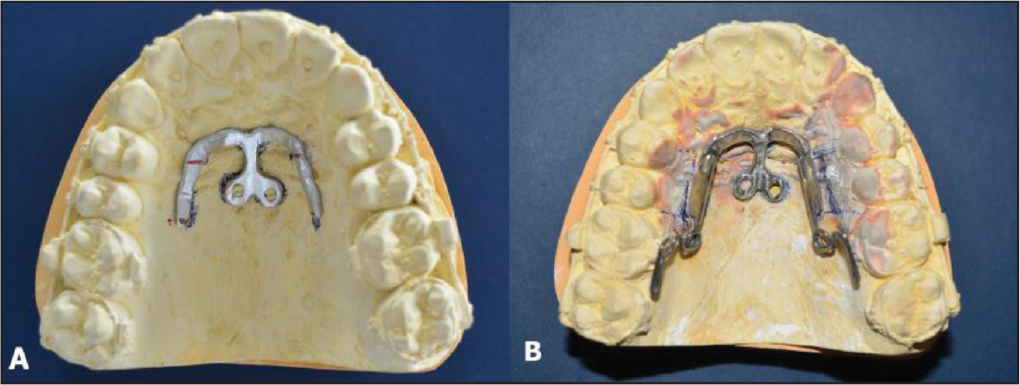
The designed plate was printed with cobalt chromium alloy using SLM 125 3D printing machine (SLM Solutions Group AG, Germany). After fabrication, an 18 gauge hollow metallic tube was soldered to the arms of the 3D printed framework. This tube was used for insertion of the pendulum spring arms (Figure 2). This enabled the pendulum spring to be detachable and also be converted to a retention appliance post distalization. The tubes can also be designed and printed directly without the need for an additional soldering procedure.
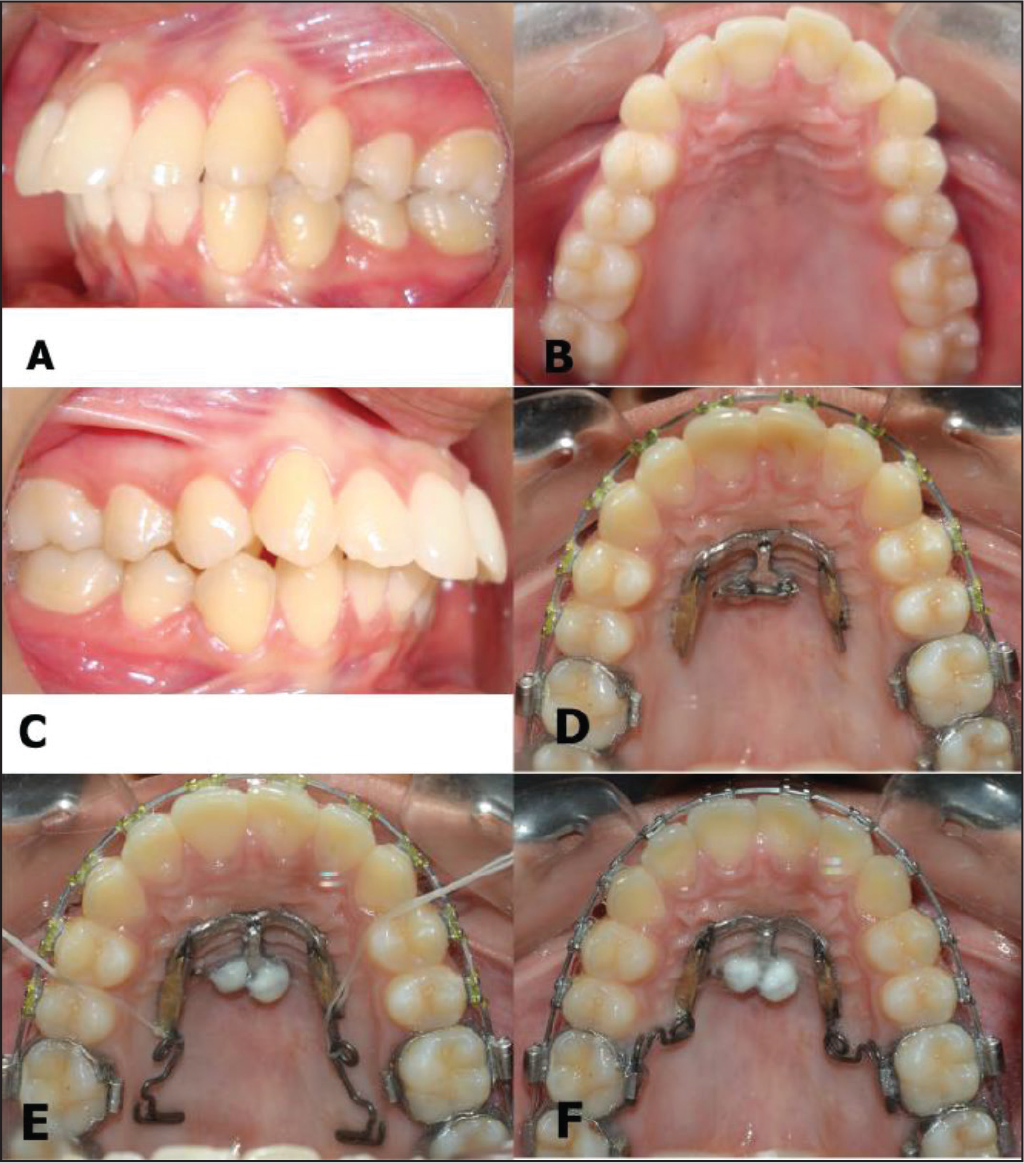
The metal framework was fitted into the implants and adapted over the palate. The implant placement can be done at a later stage also, utilizing the metal framework as a guide. Pendulum distalizing springs were inserted into the soldered metal tube on the framework. They were pre activated and inserted into the molar lingual sheaths. An open coil spring can also be included to the arms of the pendulum spring to enhance activation (Figure 3).
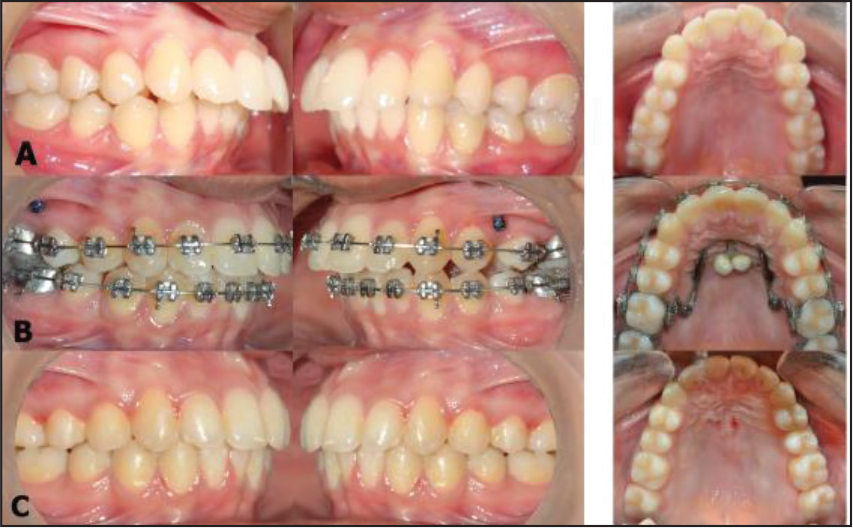
Figures 3 and 4 illustrate the use of the CAD/CAM designed customized appliance for a patient with severe palatal reaction to the acrylic button of a conventional BAPA. This appliance was fabricated to cover minimal area but still provides adequate rigidity to support the appliance.
Discussion
Orthodontics continues to make significant advances with the development and incorporation of various digital technologies in diagnosis and treatment planning. The evolution of this advancement can also be expected in the adaption of 3D printing of traditionally laboratory custom-made appliances. 4
In conventional approach, the palatal miniscrews were integrated to the pendulum appliance with the help of an acrylic button. The acrylic button is known to cause plaque accumulation and palatal mucosal inflammation. Also, to resist the anterior reciprocal forces of distalization, a larger area of palatal acrylic is needed, which can cause discomfort and speech difficulties. To overcome all of these shortcomings, a CAD/CAM designed metal framework was designed. The framework can make the appliance less bulky and comfortable and enable oral hygiene maintenance. Additionally, it can also be used as an implant placement guide and a retainer. This method can also benefit patients with unusual palatal forms. The advantages of this method are fewer clinical appointments, accurate appliance fabrication, cost effectiveness, and greater patient comfort. 4 Although complete customization of the appliance was not done, the framework acts an economical 3D printed customized alternative to the acrylic button to support the miniscrews for BAPA.
(A) CAD/CAM Designed Customized Metal Framework. (B) Tubes Soldered to the Metal Framework and Pendulum Springs Fabricated and Inserted into the Assembly.
(A to C) Pretreatment Intraoral Photographs of a 23-Year-Old Patient with Class II Division 1 Subdivision Malocclusion. (D to F) Metal Framework with Soldered Tubes Placed Intraorally and Pendulum Springs Are Inserted and Activated. More Activation Was Done on the Left Side.
Comparison Photographs. (A) Pretreatment Intraoral Photographs; (B) Post-distalization Photographs—A Buccal Miniscrew Was Placed to Simultaneously Retract the Anteriors; and (C) Post-treatment Photographs.
The application of CAD/CAM in orthodontics is vast. Graf et al 5 have developed a CAD/CAM designed hyrax expander. The report highlights one aspect in the versatility of the customized 3D printed framework. However, it can be used in a variety of situations such as fabrication of customized frameworks for distraction, obturators for cleft palate patients, rapid maxillary expansion appliances, and fixation in orthognathic surgeries.
Conclusion
The CAD/CAM designed metal framework for BAPA is a multipurpose adjunct to acrylic button, and it makes the treatment more efficient, patient friendly, less bulky, hygienic, and economical.
Statement of Informed Consent
Informed consent was not sought for the present study because no identifiable images were used.
