




Abstract
Aim:
The purpose of this study is to assess the amount of surface wear and opposing wear of four Computer-Aided Design/Computer-Aided Manufacturing materials consisting of three hybrid materials (Vita Enamic, Cerasmart, Lava Ultimate) and a feldspathic ceramic (CEREC Blocs) after artificial aging.
Materials and Methods:
Samples were 400,000 mechanical loadings simultaneously with 500 thermal cycling, by using antagonist abrasive balls. The surface wear and roughness results were evaluated with one-way variance analysis and multiple comparisons were evaluated using the post-hoc LSD analysis methods (p = .05).
Results:
The surface wears of Computer-Aided Design/Computer-Aided Manufacturing materials were, in order from lowest to highest, CEREC Blocs, Vita Enamic, Cerasmart, and Lava Ultimate. The differences among all groups wear results were statistically significant (p < .05). After the chewing simulations of the antagonist balls were evaluated, there was only significant difference between the Cerasmart and Lava Ultimate (p < .05).
Conclusions:
The hybrid materials showed more surface wear than the feldspathic ceramic.
Keywords
Introduction
As a result of the effect of technological advances in dentistry and patients’ orientation to a more natural appearance, complete ceramic restorations have gained importance. 1 The marginal edge and biological adaptations of full ceramic restorations, wear resistance, chemical durability, and color stability are the features that make them attractive. 2 Several studies have been performed to provide the desired aesthetic effect and to improve mechanical qualities. Thus, today’s resin matrix, glass matrix, and polycrystalline ceramics have been introduced. 3
Important progress has been made with the improving of nanoparticle fillers in existing resin composite technology. 4 Nanofilled resin composites have been reported to show better mechanical properties, 5 improved surface properties and aesthetics, 6 better gloss retention, 7 reduced polymerization shrinkage, 8 and less wear. 9 With the development of technology, Computer-Aided Design/Computer-Aided Manufacturing (CAD/CAM) resin composites containing nanoparticles have also become available for clinical use. 10 They are produced by high-pressure and temperature polymerization, which provide developed physical properties that can make them more suitable for materials ranging from inlays to single krone restorations. 11 Besides, restorations made of CAD/CAM resin composites can be produced and repaired more easily than those made of CAD/CAM ceramics. 12
Some hybrid materials’ compositions and inorganic fillers (content) are, respectively, Vita Enamic (VE); TEGDMA, UDMA, and feldspar ceramic strengthened with aluminum oxide (86.0 wt%), Lava Ultimate (LU); bis–GMA, UDMA, TEGDMA, bis–EMA, and SiO2, ZrO2, aggregated ZrO2/SiO2 cluster (80.0 wt%), Cerasmart (C); and bis–MEPP, UDMA, dimethacrylate and silica, barium glass (71.0 wt%). There are a limited number of independent studies on CAD/CAM resin composites for the need of an assessment of their physical properties. Measurement of parameters such as bending properties and simulated wear will provide a new perspective on the dynamic behavior of CAD/CAM resin composites under simulated occlusal loads. 13 As a result of the emergence of aesthetic concepts and advancements in dental materials in modern dentistry, aesthetic restorative materials have found a common usage area. The amount of wear of these materials also affects their use in the mouth environment. The amount of wear that occurs in line with the pH and temperature values that can vary in the mouth environment is vital in the selection of aesthetic materials. 14
The aim of this study is to evaluate the amount of CAD/CAM monolithic materials, comprising three hybrids and one feldspathic ceramic, after artificial aging in the chewing simulator, and to examine the antagonist wear caused by these materials. The null hypotheses of this study were the following: first, there would be no difference among the hybrid materials and feldspathic ceramic in terms of their wear volume loss after chewing simulation, and second, hybrid materials would produce less antagonist wear.
Materials and Methods
This study was carried out with VE (Vita Zahnfabrik), C (GC), and LU (3M ESPE), which are CAD/CAM hybrid materials, and CEREC Blocs (CB) (SIRONA) which is a CAD/CAM feldspathic ceramic. Four groups were formed, including the eight samples from each material.
All the CAD/CAM blocks were cut vertically at 2 mm thick with a low-speed diamond blade (Norton Diamond Blade) in the Isomet device (Isomet 1000, Buehler, USA) under water cooling (n = 8) and prepared to be a total of 32 samples in four groups. The sample size of 8 per material was selected based on studies.15,16 All procedures were performed by the same researcher with light contact pressure according to the manufacturer recommendations. All samples were abraded with 400, 600, and 1,200 grit SiC abrasive paper 17 (3M ESPE), respectively, for 30 sec under running water. The samples were cleaned in an ultrasonic cleaner (KUDOS HP series 53 kHz, China) for 10 min. In the first step of the polishing procedure, all samples were pre-polished with large-grain pink polishing tires at 10,000 rpm for 60 sec, and in the second step, full-gloss polishing was performed with small-grain gray polishing rubbers at 8,000 rpm for 60 sec. The Vita polishing kit was used in these procedures (VE Polishing set technical, Vita Zahnfabrik). After all the samples had been washed and dried, the dia polisher diamond polishing paste (GC Diapolisher Paste Tokyo, Japan) was applied at 10,000 rpm for 60 sec with a soft brush. An electric micromotor was used in polishing process in slightly circular movement. After polishing, the samples were cleaned again in an ultrasonic cleaner for 10 min.
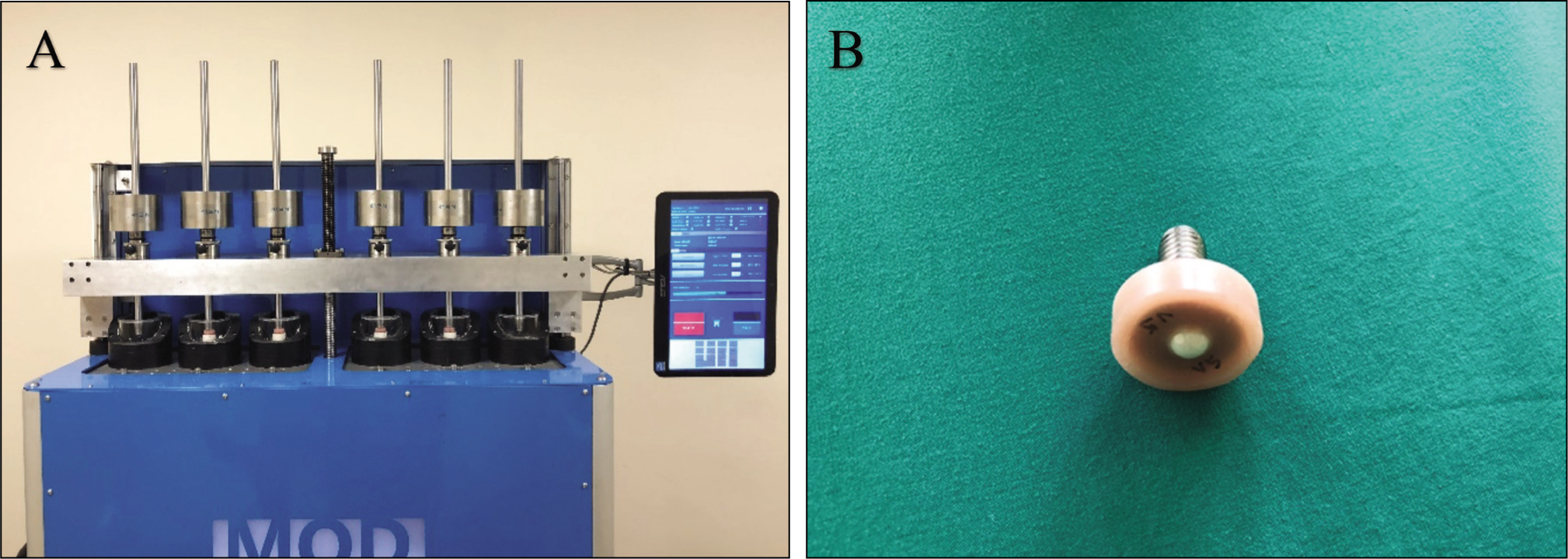
All the CAD/CAM samples were embedded with acrylic resin (Imicryl, Konya, Türkiye) in 25 mm diameter and 40 mm high polyester molds suitable for the chewing simulator we used. By preparing the polyester molds in parallel, the CAD/CAM materials were ensured to be parallel to the ground in the chewing simulator. Thermomechanical aging was applied to samples (n = 8), in a dual axle chewing simulator. In the chewing simulator, abrasive antagonist balls (close to the hardness value of natural human enamel) were used for each sample with a total of 32 pieces of 6-mm diameter. The abrasive antagonist balls (ceramic steatite— 6 mm diameter sphere) were then mounted on metal styli and stabilized with self-cure acrylic (Imicryl, Konya, Türkiye). In the chewing simulator (Mod Dental, Esetron Smart Robot Technologies, 220 V AC–50 Hz–3500 W, Ankara, Türkiye) (Figure 1A), 400,000 chewing cycles (50 N, 1.6 Hz, lateral movement: 1 mm, vertical movement: 2 mm) and simultaneously thermal cycling (5–55°C, distilled water, every 2 min) were applied to the samples.
In this study, the surface wear (mm3) and surface roughness (µm) of CAD/CAM materials were calculated by a 3D optical profilometer, and the surface wear of the antagonist balls was calculated by measuring the percentage of weight loss (mg) of the balls with a precision scale. Since the shape of the antagonist abrasive balls was spherical, the wear measurement was obtained by measuring the weight loss as a percentage. Surface roughness was evaluated by measuring the average roughness values of the area where surface wear was measured. 3D profilometer is successful in measuring surface roughness because the average values of recesses and protrusions on the entire surface are measured.
The wear volume losses in the ceramic samples were measured by using a 3D-optical profilometer (Bruker ContourGT, Germany). The weight loss of the antagonist abrasive balls (Steatite, Hoechst CeramTec AG, Wunsiedel, Germany) (Figure 1B) was measured after cleaning the balls with an ultrasonic cleaner before and after simulation. After that, the weight measurements were calculated by repeating this procedure three times with precision scales (RADWAG AS 220.R2 Analytical Balance, Poland) and recording the mean values.
The SEM (FEI-QUANTA FEG-250, OCTANE PRO, Germany) images (×500, ×2,000) of the four CAD/CAM material groups (CB, VE, C, and LU) were taken before and after chewing simulation. The differences among the means of the quantitative variables according to the groups were analyzed by one-way variance analysis (ANOVA). The LSD post-hoc analysis was used for the multivariate analysis after the one-way ANOVA (p < .05). The calculations were performed with ready-to-use statistical software (IBM SPSS Statistics, v20, SPSS Inc., IBM Co., Somers).
(A) Dual-axis Chewing Simulator and (B) Antagonist Abrasive Ball.
Results
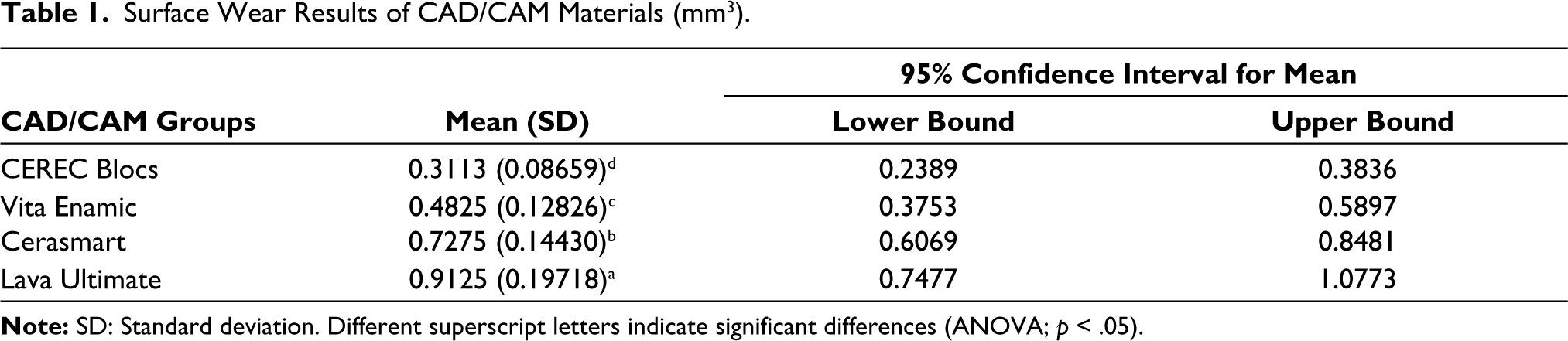
The surface wear of CAD/CAM materials is given in Table 1 and they were in the form of CB, VE, C, and LU, respectively, from the lowest to the highest (Figure 2A). All group’s surface wear results were statistically significant (p < .05).
Surface Wear Results of CAD/CAM Materials (mm3).
(A) Box Chart of Surface Wear Results of CAD/CAM Materials and (B) Box Chart of Surface Roughness Results of CAD/CAM Materials. (a–d) Values Exhibit Significant Differences (p < .05).
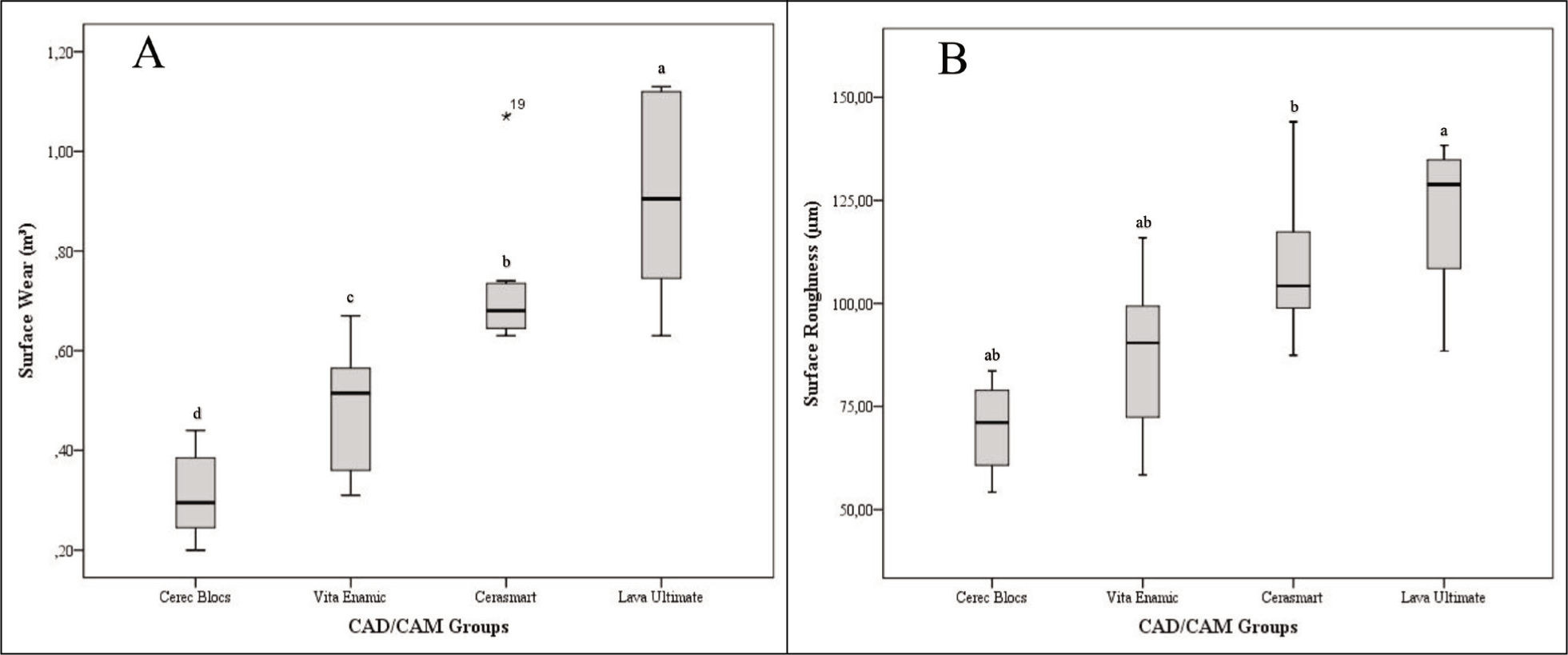
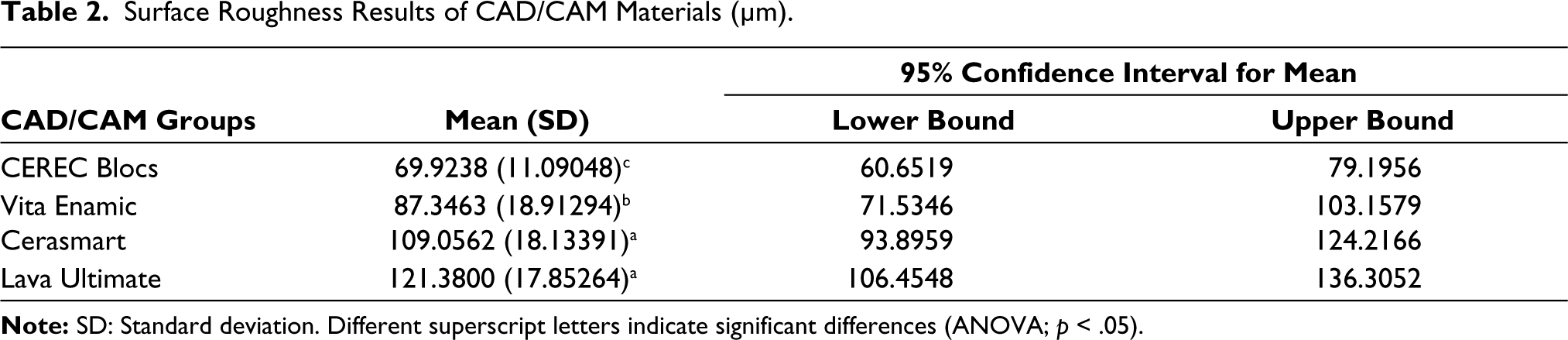
The surface roughness results of CAD/CAM materials are shown in Table 2 and they were LU, C, VE, and CB, from highest to lowest, respectively (Figure 2B). While the difference between LU and C was insignificant (p > .05), the differences among other groups were significant (p < .05).
Surface Roughness Results of CAD/CAM Materials (µm).
Pearson correlation coefficient (0.319) was used to measure the degree of linear relationship for two continuous variables. A positive significant relationship was found between surface wear and surface roughness variables. After that, the F-test of the overall regression was statistically significant between surface wear (x) and surface roughness (y) variables [F(1,30) = 85.05 (p < .001), R2 = 0.739, y = 47.3 + 81.5x].
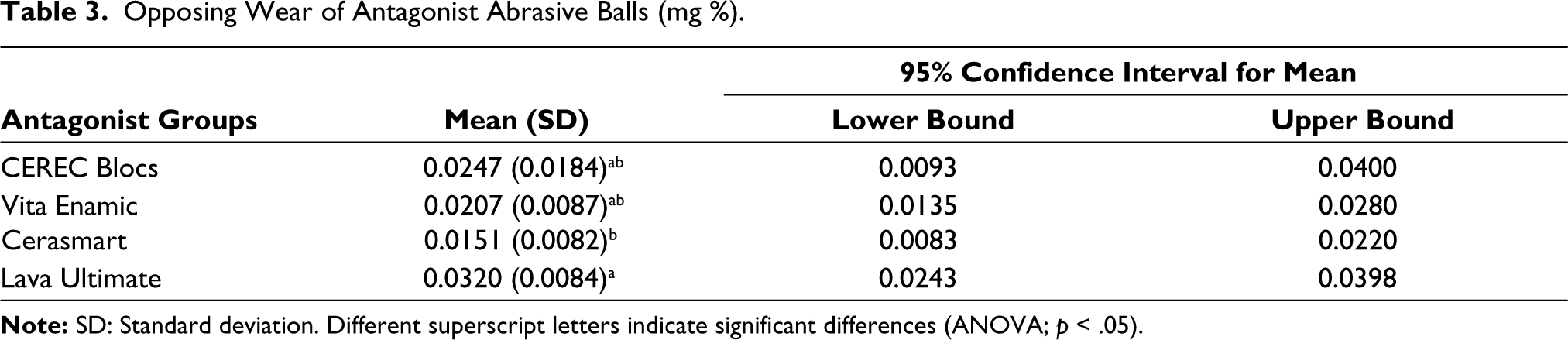
The results of the antagonist wear are shown in Table 3. According to these results, the lowest antagonist wear was found in the C group, while the highest antagonist wear was found in the LU group. The results of the VE and CB were similar to the results of both the groups of C and LU, and the differences among them are insignificant (p > .05). Statistically, while the difference between the C and LU was significant (p < .05), the differences among the other groups were insignificant (p > .05).
Opposing Wear of Antagonist Abrasive Balls (mg %).
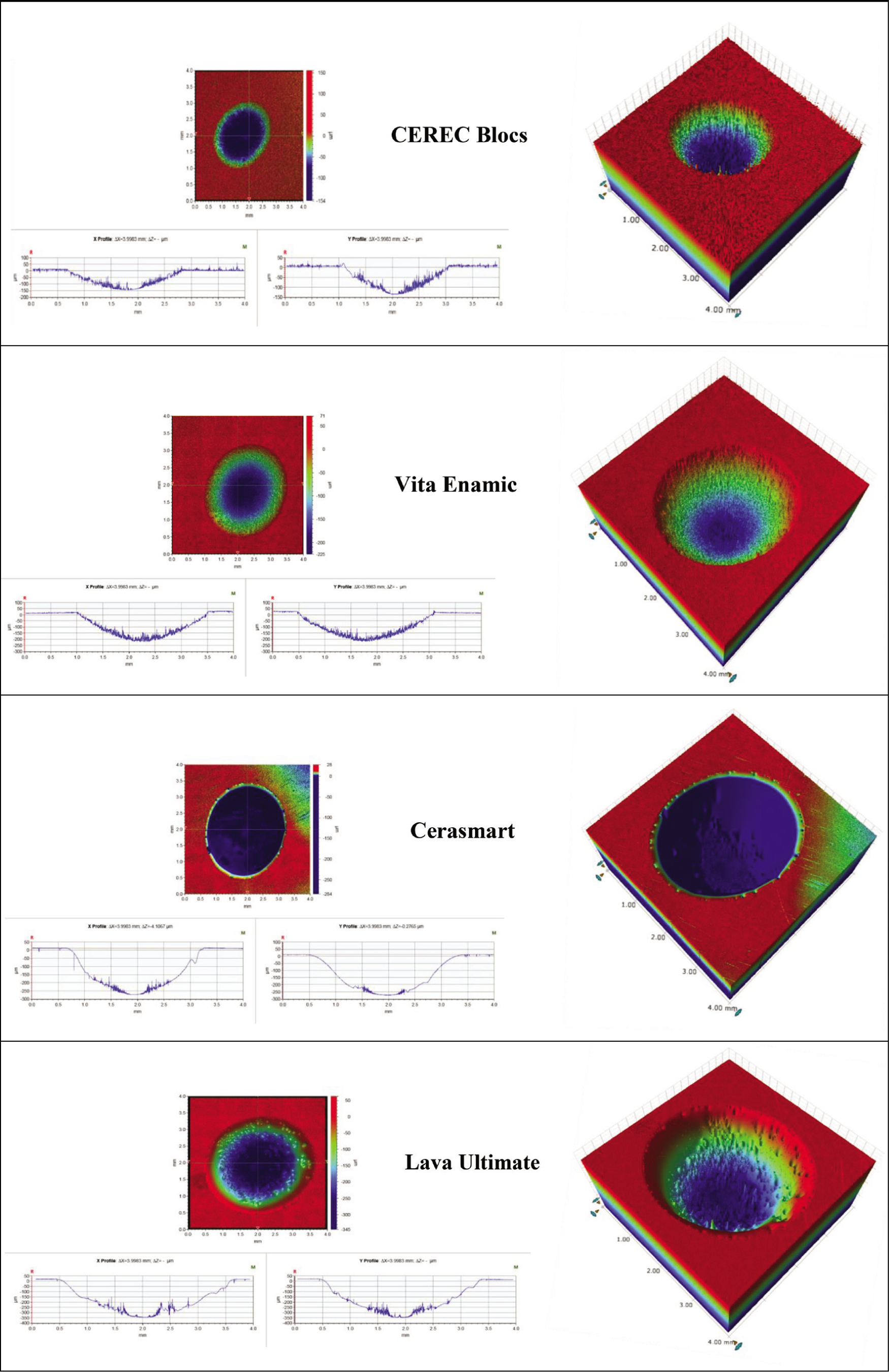
The surface wear of the CAD/CAM materials was evaluated by measuring the volume loss (mm3) formed by a three-dimensional optical profilometer. The scanning procedures were performed on an area of 4 × 4 mm2. The images of the four CAD/CAM groups are displayed in Figure 3. Horizontal distance and height difference values of the groups overlapped with the surface wear results of CB, VE, C, and LU from lowest to highest, respectively.
3D-optical Profilometer Images of CAD/CAM Materials.
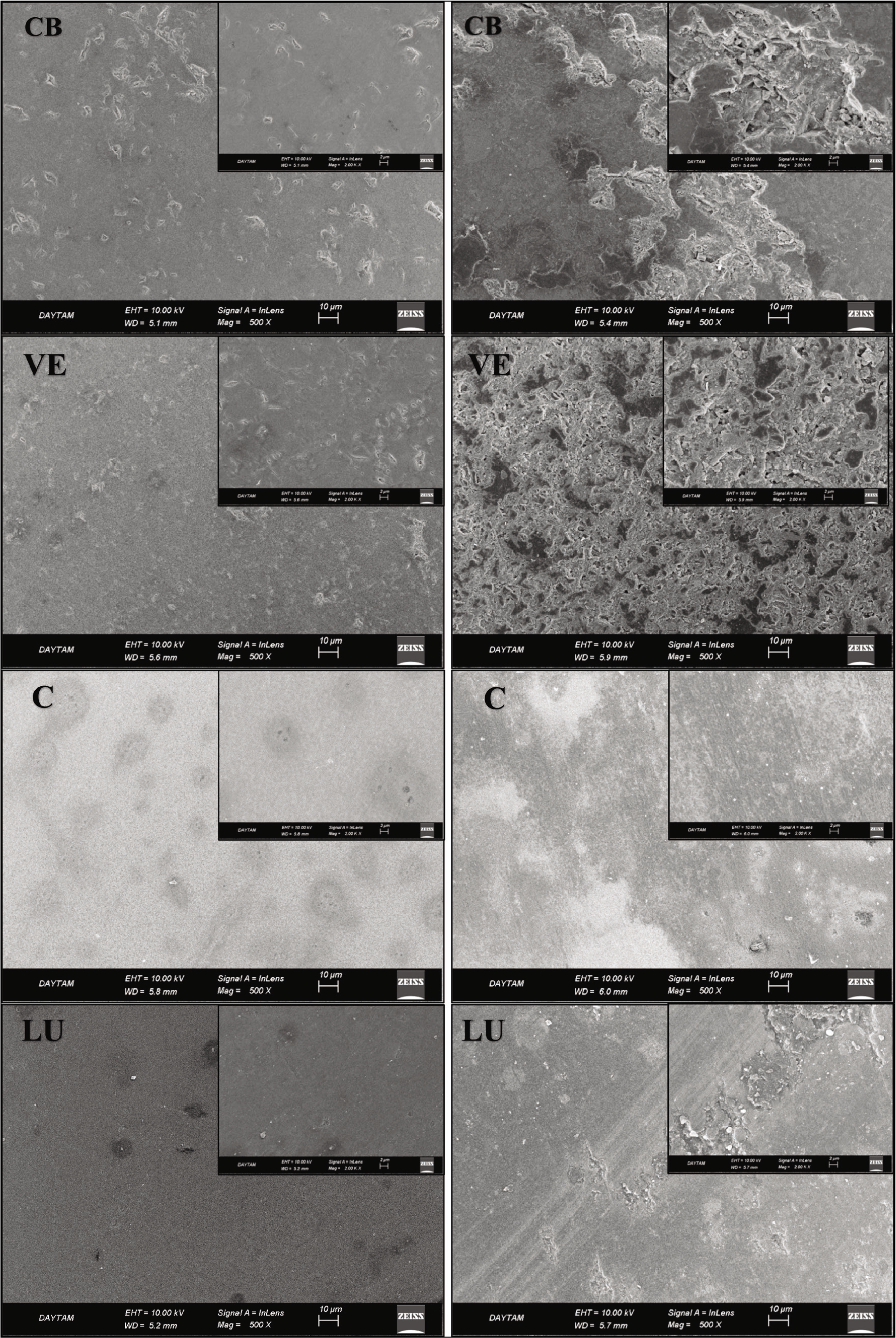
SEM images (×500, ×2,000) of CB, VE, C, and LU, before and after chewing simulation, are also seen in Figure 4. After the chewing simulation, CB SEM images showed microcracks and some chipping on the surface, VE SEM images showed widespread microcracks and residual spaces remaining from breaking polymer fragment out of the resin matrix, C SEM images showed parallel scratches and relatively smooth surface was observed, and LU SEM images showed deep cavities in the direction of wear, breaks in the material, and adhesion of the broken pieces to the surface.
SEM Images of CB (CEREC Blocs), VE (Vita Enamic), C (Cerasmart), and LU (Lava Ultimate). Left Column Before Tests and Right Column After Simulation (Magnification ×500, ×2,000).
Discussion
This study aims to compare wear and opposing wear of different CAD/CAM hybrid materials and commonly used feldspathic ceramic through chewing simulation.
In this in-vitro study, when wear amount of four CAD/CAM monolithic material group, consisting of three hybrid and one feldspathic ceramic, after 400,000 chewing simulations and thermal cycling is examined, it is found that hybrid materials show more wear than feldspathic ceramic. The maximum wear value was observed in the LU samples, while the minimum wear value was observed in the CB (feldspathic ceramic) samples and the difference among all groups was statistically significant. The surface roughness results were LU, C, VE, and CB, from highest to lowest, respectively. While the difference between LU and C was insignificant (p > .05), the differences among other groups were significant (p < .05). Both surface wear results and surface roughness results were LU, C, VE, and CB, respectively, from highest to lowest. Pearson correlation coefficient (0.319) was used and a positive significant relationship was found between surface wear and surface roughness variables. The results of the antagonist wear showed statistically, while the difference between the C and LU was significant (p < .05) and the differences between the other groups were insignificant (p > .05). C may have shown the lowest opposing wear values despite high surface wear values, thanks to its flexible nanoceramic microstructure.
When all the results of the study were taken into consideration, the hybrid materials showed more wear than the feldspathic ceramics. Thus, the first null hypothesis that there was no difference among the hybrids materials and feldspathic ceramic in terms of their wear volume loss after chewing simulation was rejected. The second null hypothesis that CAD/CAM hybrid materials produced less antagonist wear was also rejected, except LU.
In fixed partial dentures, fractures in cases where porcelain causes wear on dental antagonist and negative factors such as bruxism have brought new-generation CAD/CAM resin matrix ceramics on the agenda 18 ; in other words, the wear values of the hybrid composite resin are close to the natural tooth. 19 In addition, when exposed to intraoral stresses, they show a deformation capacity to a natural tooth, making it less likely that stress will occur between the restoration and the tooth and cause a fracture. 20
Tsujimoto et al., 13 as a result of the studies of six different composite resins, after 400,000 chewing simulations, stated that unlike this study, there was insignificant difference between the VE’s and C’s surface wear and, similar to this study, stated that, the LU showed more surface wear. Zhi et al. 21 studied the wear resistance of four different composite resins, one feldspathic ceramic and five CAD/CAM materials after 200,000 chewing simulations. As a result of this study, they stated that, similar to this study, feldspathic ceramics showed the lowest wear, but unlike this study, there was insignificant difference between the wear values of composite resins.
Enamel antagonists are required to reflect the clinical conditions in simulation tests. However morphological and structural differences from enamel can cause high variations in wear results and complicate standardized wear tests. 22 Because of the thickness of enamel and the variety of enamel geometry, the storage conditions of the teeth can make the enamel more fragile. 22 While some researchers have used the enamel as abrasive, others have used stainless steel material as an abrasive because it was easy to manufacture and find, although its success has yet to be thoroughly investigated. It is also asserted in the literature that several ceramic systems are used as an abrasive. 23 In order to ensure standardization in the chewing simulation, steatite antagonists were also used. Although steatite balls are not thought an ideal substitute for enamel due to their tribological and mechanical properties, their suitability as an antagonist material for in-vitro studies on wear resistance has been documented. 22
Lawson et al. 24 in their study evaluated the mechanical properties of different CAD/CAM materials after chewing simulations. In the results of their study, similar to this one, the VE samples showed lower surface wear than the C and LU samples. After chewing simulations, Naumova et al. 25 used three different CAD/CAM materials and natural tooth antagonists, and it was found that the LU showed the highest surface wear, which was similar to the results of this study.
There are various studies on the measurement of the surface roughness of restorative materials. The increase in the surface roughness causes materials to increase the surface area and decrease the surface energy, thus increasing bacterial and plaque retention. 26 In a study which examined the wear characteristics of different materials (zirconia, lithium disilicate ceramics, composite resin, and tooth enamel) against natural dental antagonists, it was stated that the increase in the surface roughness of all the materials was significant. Besides, the variance of the surface roughness values of the samples between each other at the end of the process was found to be statistically insignificant. 27 One of the applications for aging dental materials is the thermal cycle. 28 In these methods, the constant wetness of the samples can cause additional aging. 29
Coldea et al., 30 who studied the mechanical properties of polymer-infiltrated ceramic-network materials (PICN), reported that the mechanical properties of the material could be improved when polymer-infiltrated into the feldspathic ceramics in the porosity structure. Resin matrix ceramic materials contain the positive features of both composites and ceramics. One of the purposes of the production of these materials is to protect the natural tooth structure. Polymer-infiltrated resin matrix ceramics have mechanical properties similar to natural teeth. These materials can be produced as thin layers, and also the interlocking polymers in the network provide strength to the material by preventing fractures. Minimally invasive or noninvasive restorations can be performed according to the clinical conditions. For this reason, PICN materials can be used to treat young patients, 31 those with amelogenesis imperfecta and similar hereditary disorders, 32 as well as patients with bruxism or dental wear. 33
In the studies, the difference in wear results can be associated with the different devices used to examine the amount of wear, the wear values according to the device to be given in different units such as surface, volume or length, and preferred to different antagonist materials. Parameters associated with mechanical loading and thermal cycle have been selected by several in-vitro studies in the literature. 34 In the mechanical loading test in the chewing simulator, ceramic balls (r = 3) resembling tooth enamel in terms of Vickers hardness were used as antagonists. 35 In studies on wear and substantial losses, wear value measurements are carried out in various ways. Zhi et al. 21 calculated the wear values according to the height changes of materials and the depth of the field lost. However, in such calculations, the wear field is considered homogeneous. In other words, the morphological structure of the wear field is not really taken into account that much.
With the monolithic CAD/CAM blocks, the technician and laboratory procedures were eliminated, and the error rate was reduced, and the time spent during production was shortened. Although the monolithic crown design reduces potential problems that clinicians may encounter in the two-layer systems, further clinical studies are required to support this situation in detail. 36 CAD/CAM hybrid materials have many advantages over other materials. Besides increasing workability, easier intraoral repair is achieved with lightweight polymerized restoratives, and there is no need for baking after milling, which speeds up production. Inlays, onlays, crowns, veneers, and small anterior and posterior bridges are among the indications for hybrid ceramic materials. 37 The first criterion for determining the material used is that the material has adequate mechanical properties against the masticatory forces and can protect the remaining dental tissue. 38
Chewing simulation cannot completely mimic the oral environment; further studies can be done by adding saliva-like liquids and performing three-body abrasive wear testing. Nowadays, in dentistry, the number of sessions is gradually reduced and, if possible, treatments are tried to be completed in a single session. For this reason, hybrid ceramics, whose wear and opposing values are close to feldspathic ceramics, are promising with much shorter session times, as they are easy to glaze and do not require firing. Although opposing wear is lower with hybrid materials, surface wear of the material itself limits long-term performance. Therefore, since hybrid materials are easy to polish intra-orally, repeating these processes periodically can ensure that they remain smooth and cause less opposing wear.
Conclusion
The surface wear results of the CAD/CAM materials were in order from CB, VE, C, and LU, from the lowest to the highest, respectively.
Feldspathic ceramics (CB) showed less surface wear value than hybrid ceramics.
The lowest antagonist wear was found in the C, while the highest antagonist wear was found in the LU.
No difference was found in antagonist wear values between feldspathic ceramic and hybrid ceramic groups.
Footnotes
Acknowledgements
Some of the experiments of this thesis study were carried out in the Research Laboratory of Atatürk University Faculty of Dentistry.
Authors’ Contributions
The study methodology was designed by R. E. Sakarya and N. Dinçkal Yanıkoğlu. Experiments were carried out by R. E. Sakarya. Conceptualization, investigation, analysis, supervision, editing, and validation were performed by all authors.
Data Availability Statement
The data that support the findings of this study are available on request from the corresponding author.
Declaration of Conflicting Interests
The authors declared no potential conflicts of interest with respect to the research, authorship, and/or publication of this article.
Ethical Approval
Not applicable.
Funding
The authors received no financial support for the research, authorship, and/or publication of this article.
Informed Consent
Not applicable.