




Abstract
Choosing an orthodontist is one of the most important decisions patients need to make for their beautiful smiles. What are the factors that lead a patient to choose an orthodontist for their treatment? To find an answer, a survey was conducted to explore information from patients about the factors influencing them for choosing an orthodontic practice.
The questionnaire focused on the role of social media, qualification, patient feedback, general dentist referral, treatment cost, reputation of the dentist, latest technologies used, age and gender of the practitioner, and location of clinic in the selection of an orthodontist by the patient. The research included 400 new orthodontic patients visiting dental college and orthodontic office.
The study concluded that advertising tools such as social media, qualification and reputation of the practitioner, feedback from previous patient, age and gender of the practitioner, and dentist referral were important criteria in selecting an orthodontist.
Introduction
Orthodontic treatment is rendered because there is either a need or desire for it. The demand for orthodontic treatment is determined by the need for treatment and resources available. 1
Almost 40% of orthodontic consumers do some “shopping” for an orthodontist. The reason patients are attracted to a particular orthodontic office is not clear. Therefore, it is important for orthodontists to know what patients evaluate, and these factors should to be identified and weighed. 2
It is not surprising since the submissive patients, prevalent in the past, have given way to more informed and proactive patients of modern times. These patients are concerned about receiving optimal orthodontic care. They are interested in being informed of the treatment options and desire for an active role in treatment decisions. 2
Orthodontic practitioners who wish to maximize their patient inflow and income potential must be able to adapt to the shifting nature of modern dentistry as well as to the changes in consumers’ attitude.
Keeping one’s practice successful in this challenging economic climate requires increase in strategic business techniques. 3 Effective marketing strategies are almost as important as good clinical skills in ensuring a successful orthodontic practice. 2
Most established orthodontic practices rely on internal marketing strategies to inspire referrals from patients and parents. In contrast, external marketing is promotional communication directed toward potential patients and referral sources including advertisements, sponsorships, sale promotions, public relations, 4 and social media. 5
Traditionally, most new orthodontic patients come from general dentist referral and patient referral, which yields satisfactory patient number. 6 It seems important for an orthodontist to provide high-quality treatment, maintain good reputation in the community, and develop strong relationships with referring general dentists. 7
Website designs and media advertising in orthodontics are helpful business tools. 8 Social networking is a newer trend to interact with patients requiring orthodontic treatemnt. 9 Incorporating technology with social networking websites and 8 Internet communication via email and video interaction 10 are the keys to productivity in this modern era.
The purpose of this study was to elucidate the decision-making process and specific practice preference criteria of patients in selecting an orthodontic office. A questionnaire was framed to elicit information from prospective orthodontic patients, about the different criteria that help the patients’ choose an orthodontist. The questions included were as follows: the relative importance of advertising tools, feedback from previous patients, reputation and experience of the orthodontist, general dentist referral, Internet services used, qualification of the doctor, location of dental clinic, latest technology used in the clinic, treatment cost, and age and gender of the practitioner in orthodontic practices.
Materials and Method
The present study was carried out after approval from the ethical committee of the institution. This study was based on a questionnaire which consisted of 15 questions framed in 3 different languages (English and two regional languages; 1(a)-(c)). The survey questions were framed by analyzing previous well-regarded questionnaires from published literature.
The survey focused on the factors considered by patients in selecting orthodontic treatment. The questionnaire followed an objective format with multiple options for each questions. Sociodemographic details including name, age, gender, locality, educational qualification, and average annual income were recorded at the end of the questionnaire to avoid stereotype threat.
A total of 400 participants were included in the study. Sample size was determined using power analysis with a confidence level of 95% and margin of error of ±5%, with the help of the following formula;

where
z denotes statistics at 5% level of significance,
d denotes margin of error, and
p denotes anticipated prevalence rate.
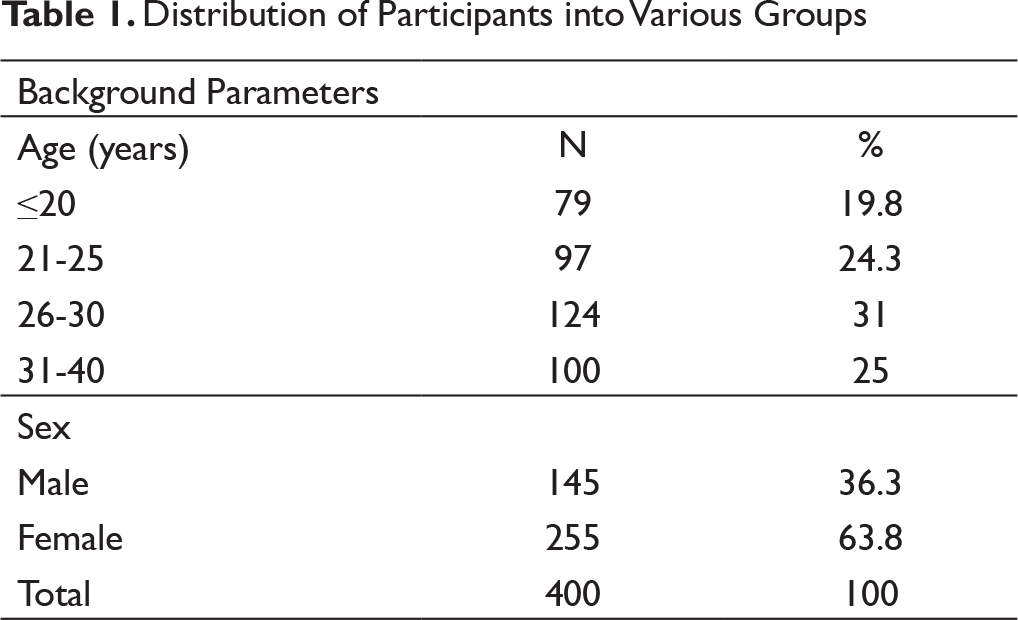
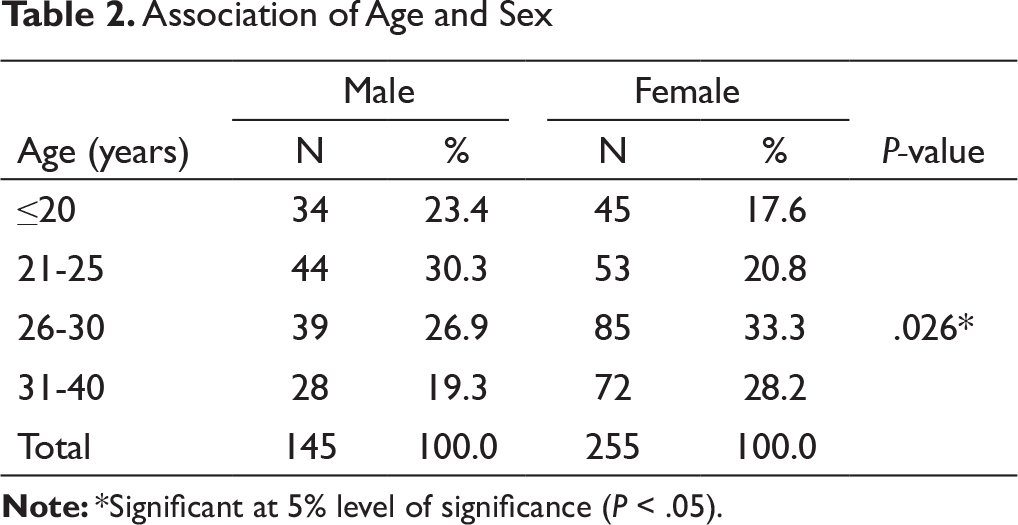
Samples were divided into two major groups based on age and gender of the participants. Distribution of samples into each group is presented in Tables 1 and 2.
Distribution of Participants into Various Groups
Association of Age and Sex
Inclusion criteria considered for the study were, subjects interested in orthodontic treatment and those who were above 18 years of age. Participants who have previously undergone orthodontic treatment or are presently undergoing the treatment and are below 18 years of age were excluded from the study.
Questionnaire forms were distributed to all new patients seeking orthodontic treatment in dental colleges and dental offices. Patients were asked to fill the form before commencement of the treatment. These forms were collected, and the data were compiled. Statistical analysis was performed using a master chart developed from the collected data. This anonymous involuntary survey was completed within a span of 6 months.
Statistical Analysis
All the data were summarized descriptively. For continuous variables, the summary statistics of mean ± standard deviation (SD) were used. For categorical data, the number and percentage were used in the data summaries and diagrammatic presentation. Chi-square (χ2) test was used for finding the association between two categorical variables. Logistic linear regression analysis was employed to assess the adjusted effect of determinants of categorical study variable. If the P-value was < .05, then the results were considered to be statistically significant; otherwise, they were considered as statistically insignificant. Data were analyzed using SPSS software v.23.0 and Microsoft Office 2007.
(a to c) Questionnaire in English and Two Regional Languages

Results
Distribution of Cases According to Selected Parameters
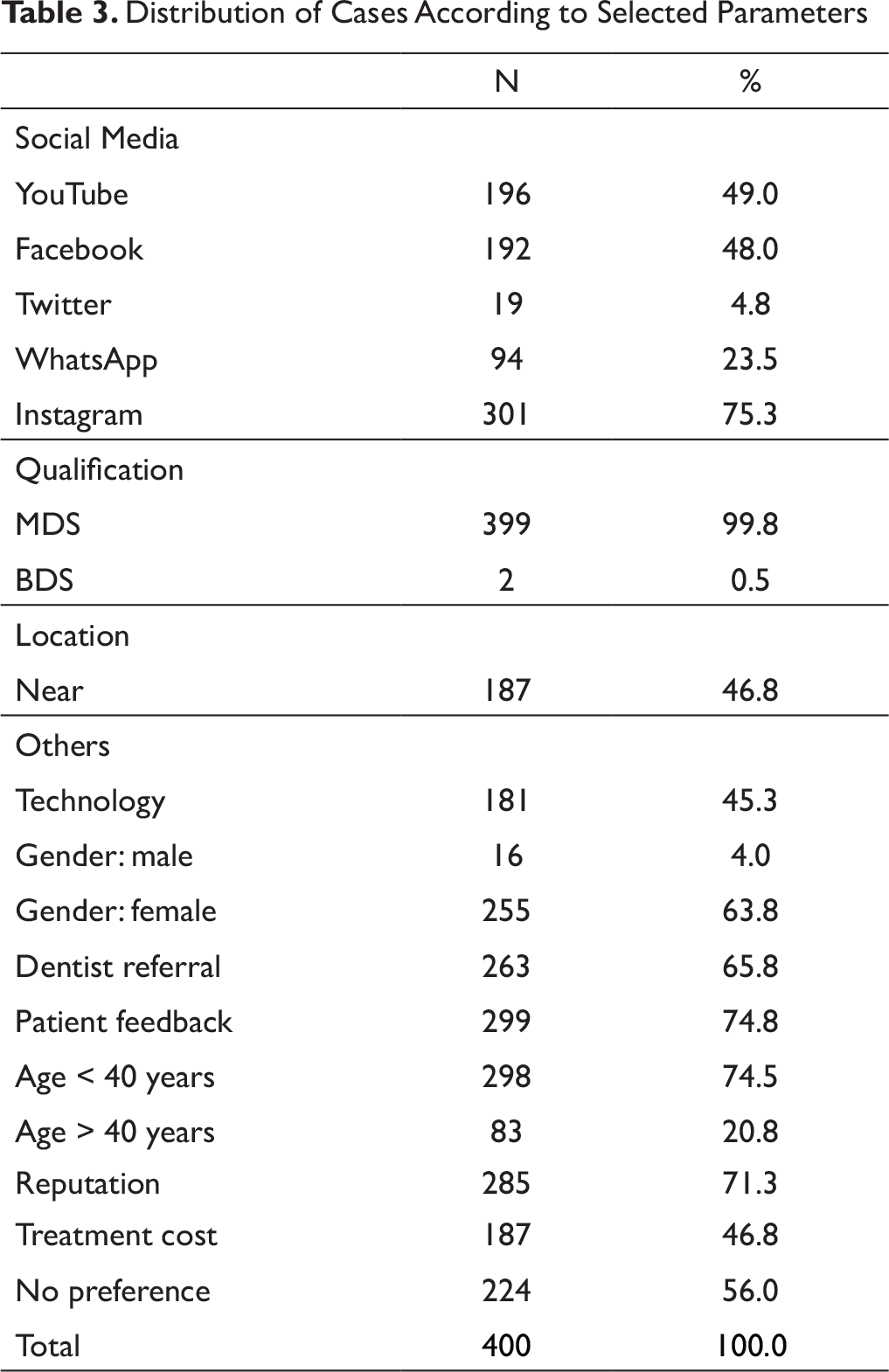
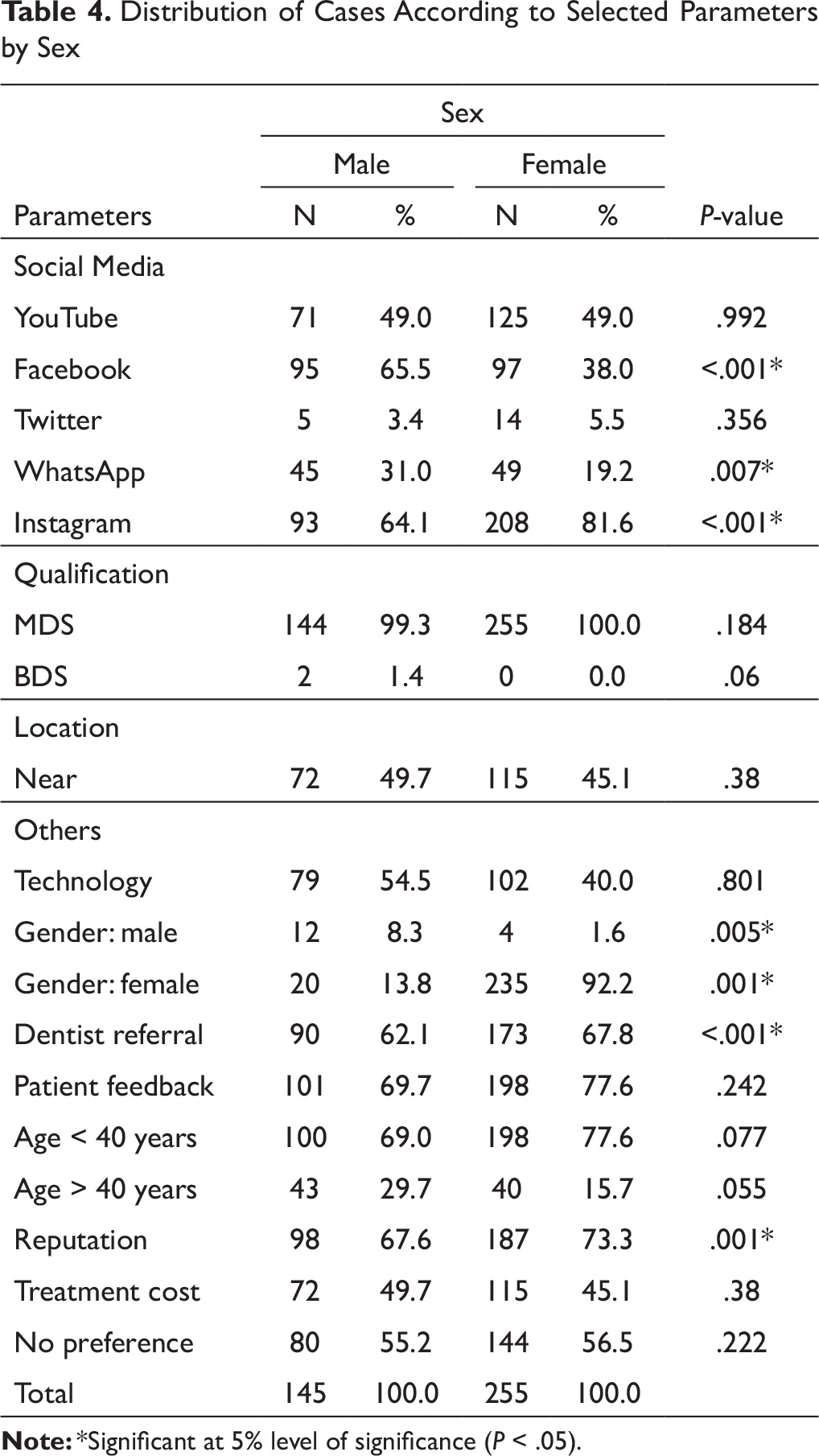
Sixty-five percent male patients belonging to <20 and 21 to 25 age groups used Facebook as an access tool for orthodontist selection, whereas 81% of female patients belonging to 26 to 30 age group prefer Instagram as a valuable source for orthodontist selection. All groups except <20 age group wanted their treatment to be carried out by an MDS certified orthodontist. Female patients were found to be more particular about qualification of the practitioner than male subjects, though there is no statistically significant difference. It was found that female patients belonging to elder age group (26-30 years, 31-40 years) preferred orthodontic dental office to be near to their residences. It was noted that 54.5% of male patients wanted the orthodontic office to be updated with latest technologies. Female orthodontists were preferred by 92.4% of female patients belonging to the younger age group (<20 years, 21-25 years) for their treatment. Referral from general dentist is the main reason behind the elder (26-30 years, 31-40 years) female group seeking an orthodontic treatment.
Distribution of Cases According to Selected Parameters by Sex
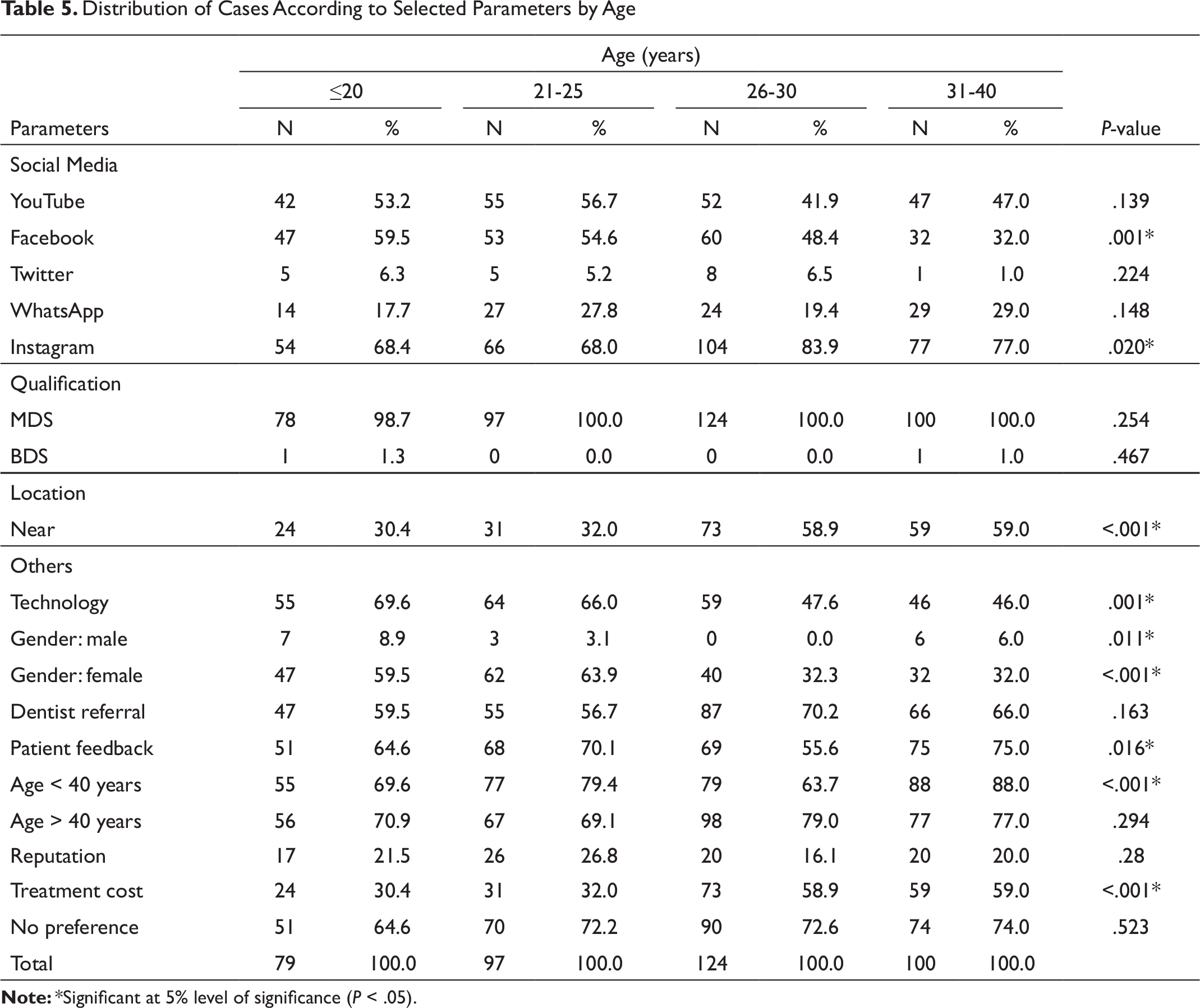
Distribution of Cases According to Selected Parameters by Age
Logistic Regression Analysis of Effect of Demographic Factors on the Use of Advertising Tool and Social Media Preferences in the Preference of the Orthodontist
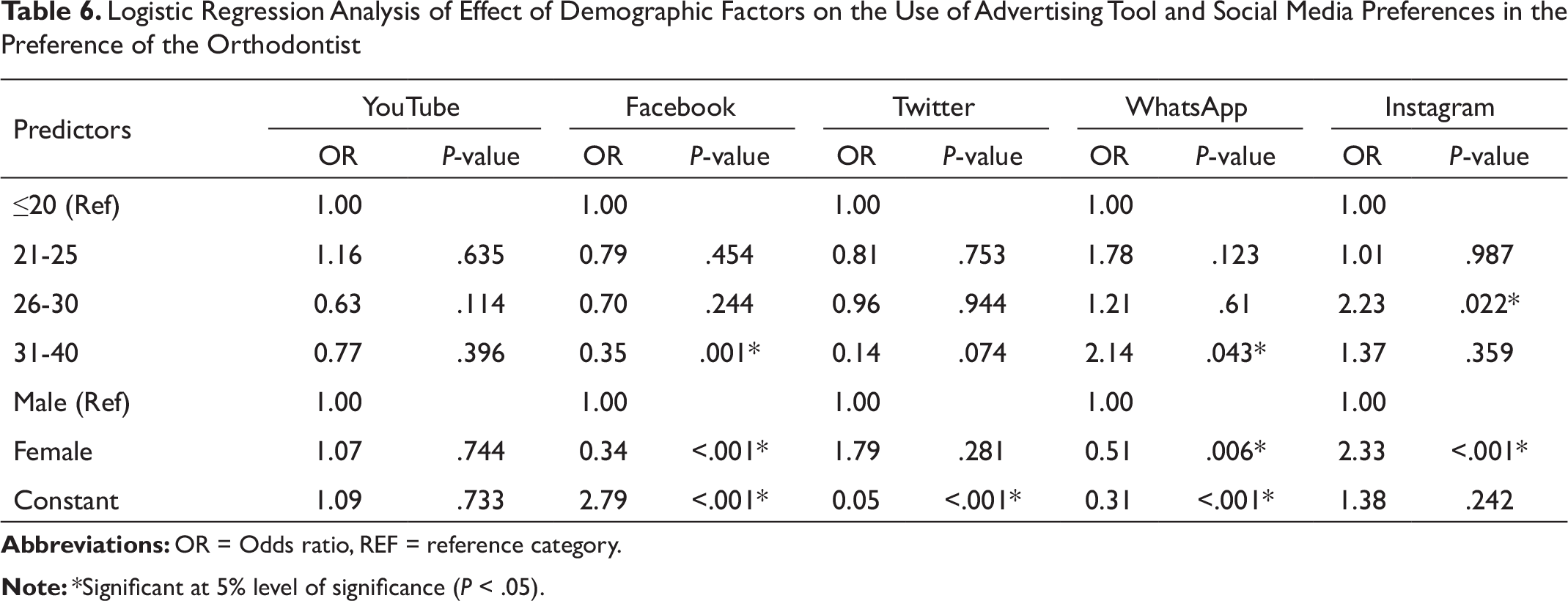
Table 6 presents the influence of social media on patients of different age and gender in selecting an orthodontist. It shows the likelihood of preferences of the orthodontist decreases on YouTube, Facebook, and Twitter, but it increases on WhatsApp and Instagram with respondents more than 20 years of age compared to less than 20 years. Female participants are more influenced by social media platforms such as YouTube, Twitter, and Instagram in the preference of an orthodontist, whereas Facebook and WhatsApp are the preferred choice among males participants for choosing an orthodontist.
Discussion
This questionnaire-based survey comprised a series of questions that were administered to new prospective adult patients seeking orthodontic care. The study evaluated the consumer preferences in selection of an orthodontic practitioner. The result of such a questionnaire-based study is valid and reliable when administered to prospective adult patients. This information can assist orthodontists in setting priorities when designing their practices. 12
The results of the present study suggest that majority of patients do some research through social media networking for choosing their orthodontist. Logistic regression analysis explained that the likelihood of preferences of the orthodontist decreases on YouTube, Facebook, and Twitter, but it increases on WhatsApp and Instagram in >20 years age group when compared to <20 age group. However, female patients are more influenced by social media platforms such as YouTube, Twitter, and Instagram in the preference of the orthodontist, but male patients prefer Facebook and WhatsApp for selecting an orthodontist.
When advertising was used as a marketing tool, newspapers and magazines were more favorable in yester years. 2 The present study focused on the fact that with growing interest and availability of Internet, which is so handy, advertising in social media, and feedback and rating from previous patients are the most important means for patients to reach out to their orthodontist. 2
Paquette was the first to state that social networking websites can be linked to orthodontic practice websites. 8 Revankar and Gandedkar considered Internet communication via e mail and video interaction and concluded that technology is always evolving and administrative efficiency is the key to productivity. It enables practitioners to communicate with their patients regarding new treatment technologies, events, contents, or anything of interest. 10 A careful, well-designed Facebook or Instagram page that focuses on patient–doctor relationship and the services provided in the clinic will help to create positive connection and greatly enhances chances of successs. 13
Starting a business Facebook page and linking it with a dental office website is a less expensive way to promote practice on Internet. Social networking services offer an opportunity for communication and commercial exchange among members of the online community. Social networking is less about marketing and more about interaction. 13 Also, such services help patients understand the need for orthodontic treatment, which enhances patient’s smile, builds confidence, improves self-esteem and overall well-being of the individual.
Females of all the age groups were concerned about the qualification of practitioner before the start of the treatment and preferred a certified orthodontist with a postgraduate degree of Master of Dental Sciences to carry out their treatment. According to the present study, qualification of the practitioner is an important concern for patients while choosing an orthodontist, which is in concordance with study conducted by Walley et al 1 Patients consider orthodontic skills and knowledge to be an important factor in selection of an orthodontist. 14
The next important factor for patients is the reputation of the practitioner. selected by 73.3% of female patients to initiate their treatment. Significance was given to reputation of practitioner in all the groups of this study. Personal characteristics of orthodontist, which includes caring attitude, good reputation, and helpful staff are important factors that affect the potential decision when selecting a practice.2, 11 In a study conducted by Bedair et al, they found that all the age groups of patients preferred a doctor with caring attitude, 11 which is similar to the present study.
Patients selected an orthodontist through general or other dentist referral; subjects above 26 years of age approached an orthodontist mostly because of general dentist referral. This is similar to the study conducted by Kothari et al 7 in which a pediatric dentist referred patients to the orthodontist. Therefore, it is important for an orthodontist to provide high-quality treatment, maintain good reputation in the community, and develop strong relationships with referring dentists. 7
In the present study, 76% of patients contacted their orthodontist through previous patient feedback. During the course of this study, it was clear that patient feedback 6 is an important factor for choosing an orthodontist. It is rightly said by Haeiger and Colberg that “satisfied patients paves the way for new patients.” 14 Hence, internal marketing involves interacting with existing patients in a deliberately effective and positive manner, encompassing practice philosophy, practice climate, office design, interior décor and quality of customer services. 4
Location of dental office was a major concern for both male and female elder patient groups in selecting a practitioner, which is comparable to the study conducted by Walley et al, where the author found convenience of access and ability of the personnel to portray a caring and welcoming image help increase the inflow of new patients. 1
Clinics updated with latest technologies are preferred by male patients of younger age group in the present study; this could be attributed to the perception of younger age group patients toward newer treatment ideas being conveyed through social networking.
Ninety-three percent of female subjects had gender preferences and desired to be treated by a female orthodontist. A small fraction of male patients also insisted on being treated by a female orthodontist. The present study revealed that gender of the practitioner is an important factor in selecting an orthodontist with an increased preference for female orthodontist; this could be attributed to the saying that “a dentist should have a lions heart, ladies finger and an eagles eye,” which seems to be the patients’ outlook. This finding can be corroborated with the viewpoint of De Souza-Constantino et al 15 who justified the observation based on the statement that “Women are considered to be trustworthy, addressed to have more patience and dedicate more attention toward patients.” In contrast, Alsarheed 16 noted higher preference for male dentist among children seeking orthodontic treatment, who were not a part of this study.
More than half of the respondents preferred a young orthodontist less than 40 years of age in initiating orthodontic treatment. This finding was in close association with the result obtained by De Souza-Constantino et al 15 where younger age groups of patients preferred younger practitioners for treatment. The reason could be the active and vibrant nature and updated knowledge expected to be seen in young practitioners. The elder patient group takes experience of the practitioner into account before the start of the treatment, leading to a deviant preference.
Cost of treatment was a major concern for both male and female elder age groups. Walley et al quoted that it was surprising to know that parents of younger group patients were less bothered about the treatment cost 1 ; rather, treatment outcome was given prime importance.
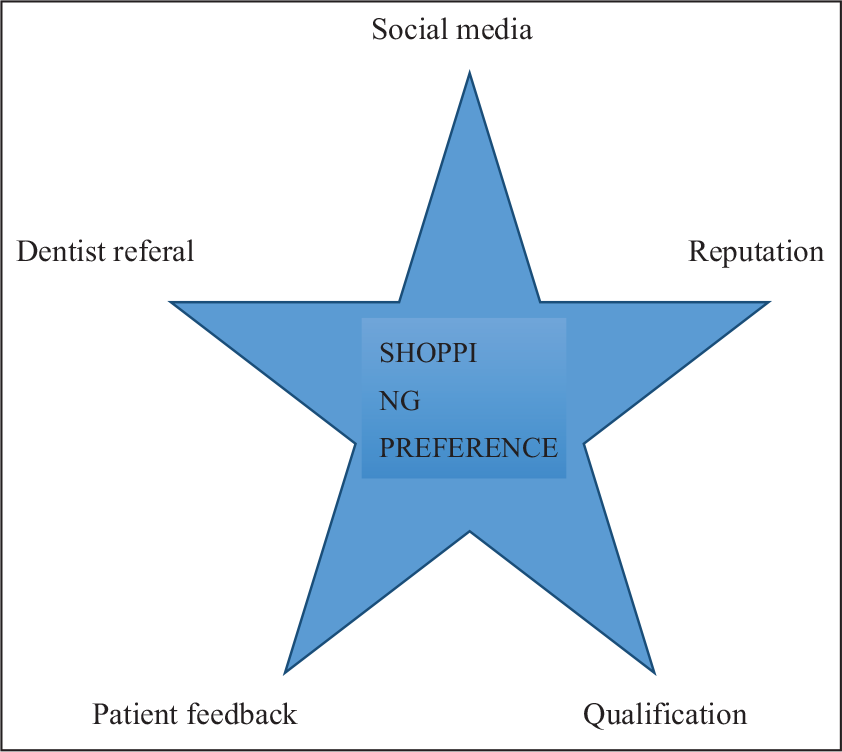
This study is of importance since practitioner perceptions may be quite different from consumer perceptions. Developing a comprehensive strategic marketing plan can turn orthodontists who are technical professionals into strategically oriented businessmen and women. 5 Such right mix can create a marketing masterpiece for orthodontic practice (Figure 2). By strategically marketing orthodontic services, the number of patients seeking orthodontist treatment will be maximized, and orthodontists’ success and control over their speciality will be maintained. 2 Continued research is needed in the area of marketing in orthodontics to ensure the highest advantage from marketing efforts.
Star Graph Showing Important Patient Perspectives
Conclusion
In this digital era, a meticulously designed marketing strategy, thoroughly implemented with the inclusion of social networking for the present technology savvy generation will further enhance orthodontic awareness and treatment needs. Imbibing such platforms will be a tool for orthodontists to understand the patients’ choice and attitude toward treatment.
