




Abstract
The olive ridley sea turtle (Lepidochelys olivacea), considered the most abundant sea turtle species, is listed as vulnerable on the International Union for Conservation of Nature Red List. The most important nesting areas are located in the Eastern Pacific, and congenital malformations have been previously reported in this species. The present study was conducted in a single population at El Verde beach, one of the most important nesting beaches for the species in the northwestern Mexican Pacific. The study was based on embryos that had been incubated in a controlled environment. Schistosomus reflexus syndrome (SRS) was observed in 124 of 20 257 olive ridley embryos (0.6%), comprising 124 of 400 (31%) cases of congenital malformations over a 7-month period. Affected embryos had malformations of the carapace, bridge, or plastron, resulting in exposure of the abdominal or thoracic viscera, as well as spinal malformation and abnormal positioning of limbs adjacent to the head with subsequent ankylosis. SRS phenotypes (although lethal) varied from mild to severe, although most cases were severe. SRS was mostly associated with congenital malformations in the neck (short neck, 80%), tail (anury, 38%), and flippers (different types of dysmelias, 53%). In most cases of severe SRS, ankyloses were present. Documenting these findings could be important to identify the cause of the developmental defects, and identification of the cause of the defects may be of significance to the population and to our efforts to manage this and other populations at risk.
Keywords
Sea turtles are listed in the International Union for Conservation of Nature (IUCN) Red List under some degree of extinction risk, with exception of Natator depressus (considered data deficient 21 ). One of the main causes of sea turtle population declines was the intense commercial exploitation in the middle of the past century; however, unknown intrinsic or extrinsic factors may also undermine population dynamics. The persistence of a species or a population depends on successful reproduction and survival. For sea turtles, for instance, reproductive success requires adequate egg incubation and a high hatching success. 30 In many species across numerous taxa, successful completion of embryonic development depends on physical fitness and optimal environment for development. Any alteration during early development, either by genetic or environmental factors, can drastically affect embryonic processes or generate congenital malformations.
The olive ridley sea turtle (Lepidochelys olivacea) is considered the most abundant sea turtle species. 1,32 The most important nesting areas for this species are located in the Eastern Pacific coast; 28,32 nesting sites in Mexico extend from the southernmost tip of the Baja California peninsula to the coastline of Chiapas state. 28
A variety congenital malformations have been previously reported in olive ridleys 5 but not schistosomus reflexus syndrome (SRS). SRS is a rare and lethal congenital malformation occurring primarily in ruminants, mostly cattle. 25 SRS is grossly characterized by the presence of exposed abdominal and or thoracic viscera due to a severe form of abdominal herniation or fissures on the ventral or midventral abdominal wall (schistosomus) and marked spinal inversion of either dorsiflexion or retroflexion, producing a distinctive ventral convex curvature (reflexus). 14 Other minor defining characteristics include limb ankylosis, positioning of the extremities adjacent to the head, and hypoplasia of the lung and diaphragm. 27 Only those cases displaying both exposed viscera and spinal inversion are considered true SRS; however, variation among these defining features has been reported. 27 It is suspected that the embryonic origin of SRS could occur as early as the postgastrulation phase, involving abnormalities of the paraxial, lateral, and intermediate mesoderm. 9 Although the cause of SRS remains unclear, the hypothesis that genetic factors are involved is supported by epidemiological evidence of case clusters. 10,12,22
SRS has been frequently reported in cattle 22,27 but occasionally in sheep 14 and goats. 2,18,38 Sporadic cases have been reported in other domestic mammals, 6,16,24,29,31 as well as in nondomestic animals. 20,26 Most of these studies are case reports describing anatomical findings, and only a few mention the prevalence of SRS; the highest prevalence is believed to occur in cattle, 33 ranging from 0.01% 37 to 1.3%. 25
The prevalence of congenital malformations in embryos and hatchlings of sea turtles ranges from 0.2% to 2%, with the highest rate occurring in the olive ridley. 5 A wide variety of isolated and multiple congenital malformations have been reported in this species, 5 but there were no reports of SRS until it was observed in embryos from a Mexican Pacific hatchery. Thus, the purpose of the present study was to characterize the morphology and determine the overall prevalence of schistosomus reflexus in olive ridley sea turtles in this specific nesting beach in which conservation programs have been running uninterruptedly for 39 years and to establish the potential impact of this syndrome in the population.
Materials and Methods
The study was undertaken at one of the most important nesting beaches for olive ridleys in northwestern Mexico at El Verde on the Pacific Coast (23°44′22′′N, 106°58′27′′W). The site is located 25 km north of Mazatlán city and is relatively isolated, with sparse coastal settlements in its vicinity that allow for a relatively undisturbed environment for the nesting turtles.
3
El Verde beach has been nationally certified as a “clean beach” by the National Water Commission (CONAGUA). Nests and nesting females were monitored nightly between the hours of 8
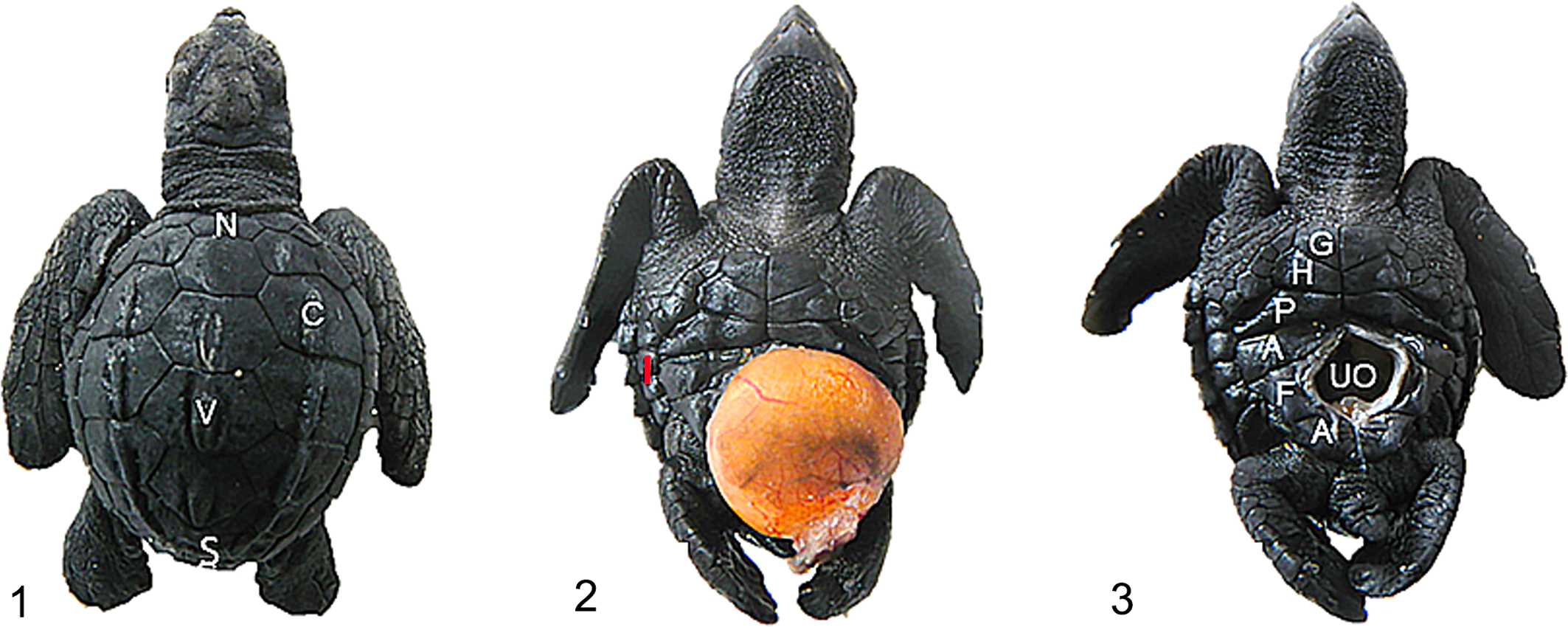
We consider an embryo to be any stage of development found inside unhatched eggs. The embryos of olive ridley sea turtles progress through 31 stages of development, and the embryo is considered fully developed at stage 29 (Fig. 1). 30 At this point, shell components, carapace, plastron, and bridge are well formed; embryo volume is 1.5 to 4 times that of the yolk sac; and the umbilical opening extends the length of the femoral scutes, indicating that the embryo is in the prepipping stage. 30 The normal scute pattern for olive ridley turtles consists of (1) carapace: 6 or more vertebrals and costals, 1 nuchal, and 2 supracaudals; (2) bridge: 4 pairs of inframarginals with pores; and (3) plastron: arranged in a cephalocaudal direction, 1 intergular and 6 pairs on the plastron (gulars, humerals, pectorals, abdominals, femorals, and anals) (Figs. 1–3). 40 Determining the severity of SRS in olive ridley embryos was based mainly on malformations of the carapace, bridge, and plastron.
Results
Of the olive ridley sea turtle embryos examined, SRS was observed in 72 of 209 (34%) nests (clutches) and 124 of 20 257 (0.6%) embryos (124 SRS cases in 72 clutches). SRS was found in successive clutches from 6 (of 25) females. SRS was not identified in 38 successive clutches from 19 different females, from which 1903 embryos were examined from the first and 1574 embryos from the second of the pairs of clutches. SRS was identified in 12 successive clutches from 6 different females: the syndrome was identified in 17 of 592 (2.9%) and 8 of 621 (1.3%) of embryos examined from the first and second of the pairs of clutches, respectively. In 6 pairs of successive clutches from the same females that were affected by SRS, the number of embryos with SRS and the total number of embryos examined for the first and second successive clutches were 2 of 91 and 2 of 83, 2 of 113 and 1 of 113, 3 of 106 and 2 of 104, 1 of 92 and 1 of 107, 1 of 115 and 1 of 100, 8 of 75 and 1 of 114. All successive clutches presented at least 1 SRS embryo: 6 clutches had 1 case, 4 clutches had 2 cases, 1 clutch had 3 cases, and 1 clutch had 8 cases (Fig. 4). Of all embryos with congenital malformations, 124 of 391 (32%) exhibited SRS. Classification of the embryonic development stage revealed that SRS was present from stages 23 to 29.
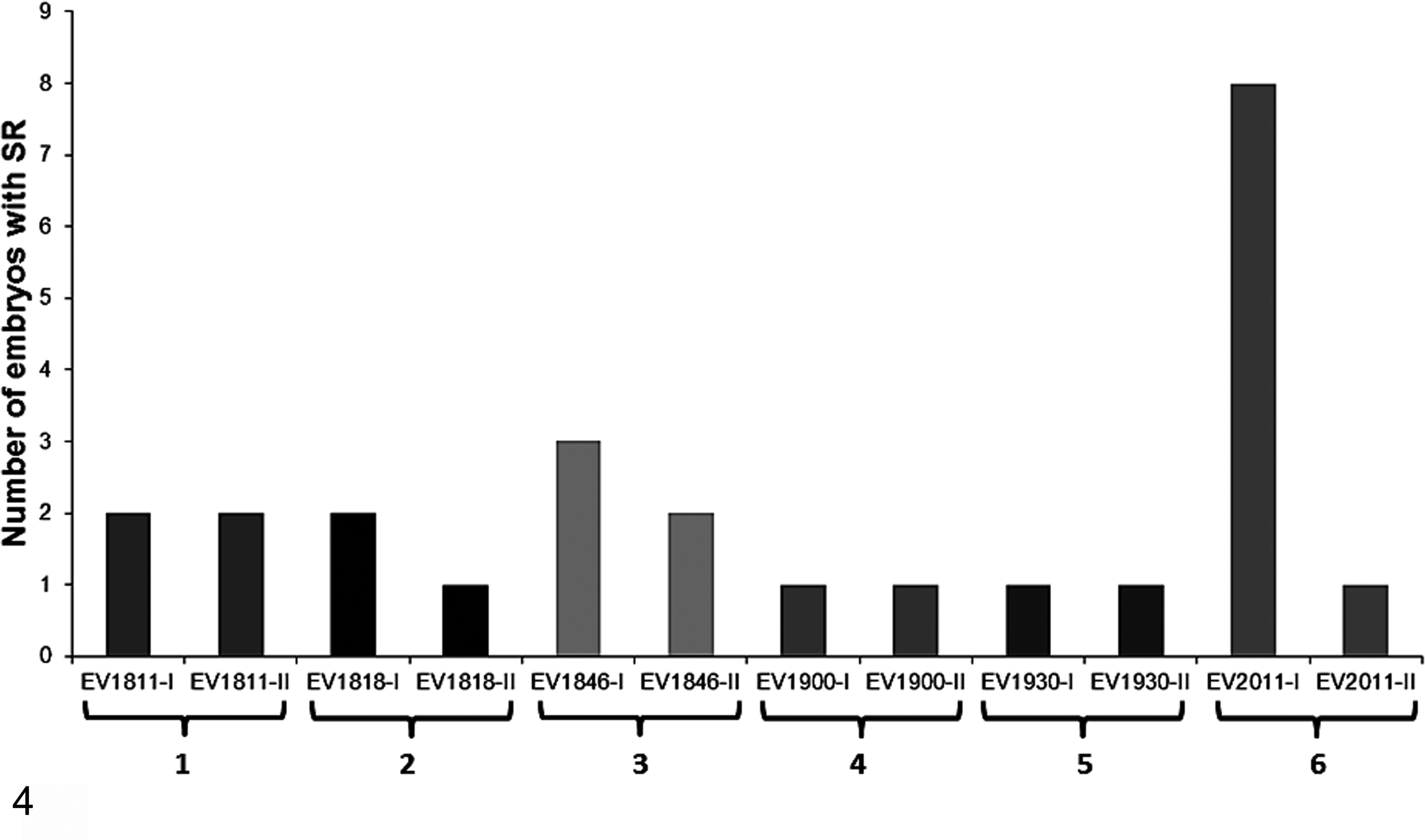
Number of embryos with schistosomus reflexus (SR) in successive clutches from 6 different females (Nos. 1–6). Each clutch is labeled according to the female number, followed by I and II indicating the first and second clutch, respectively.
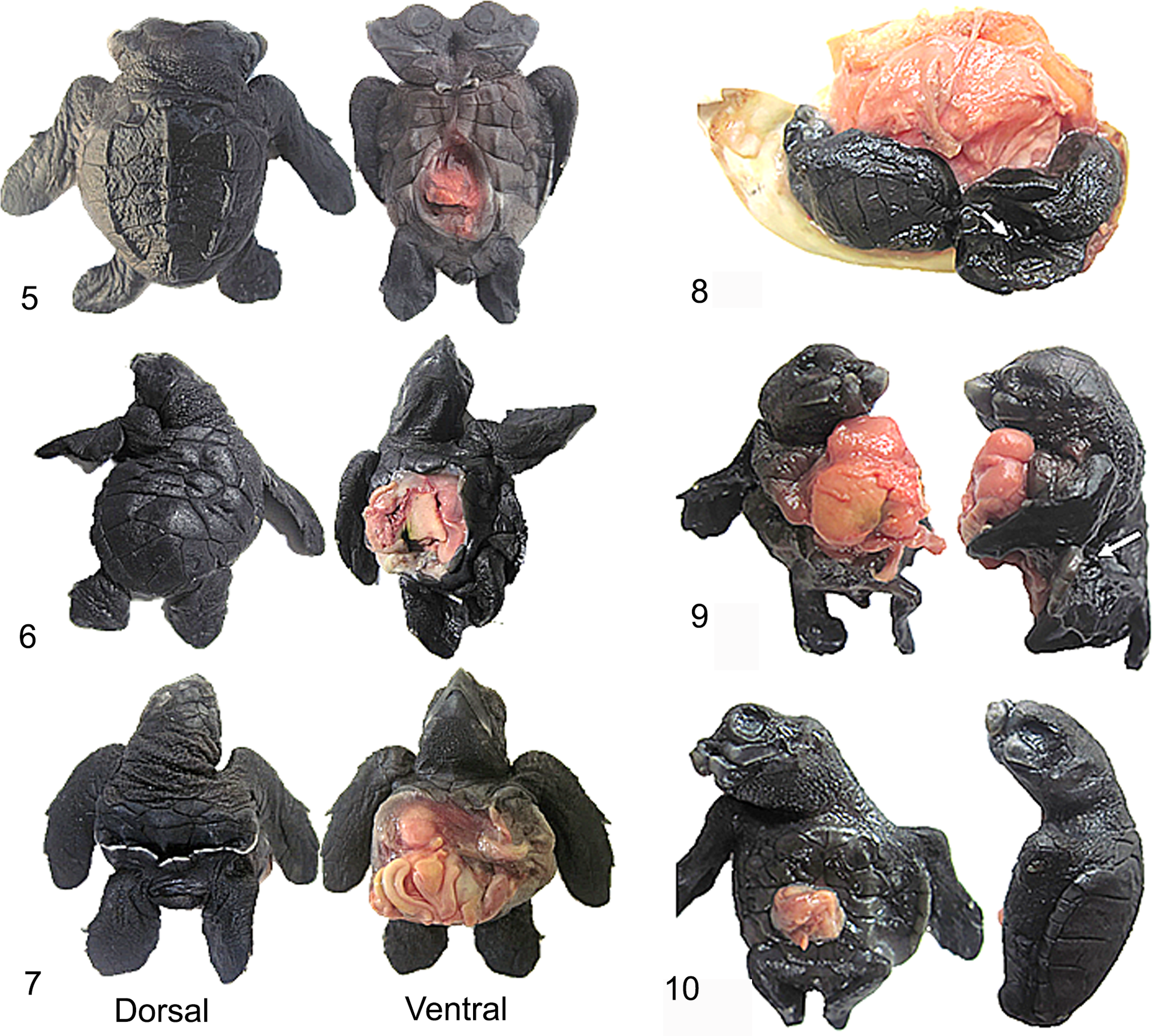
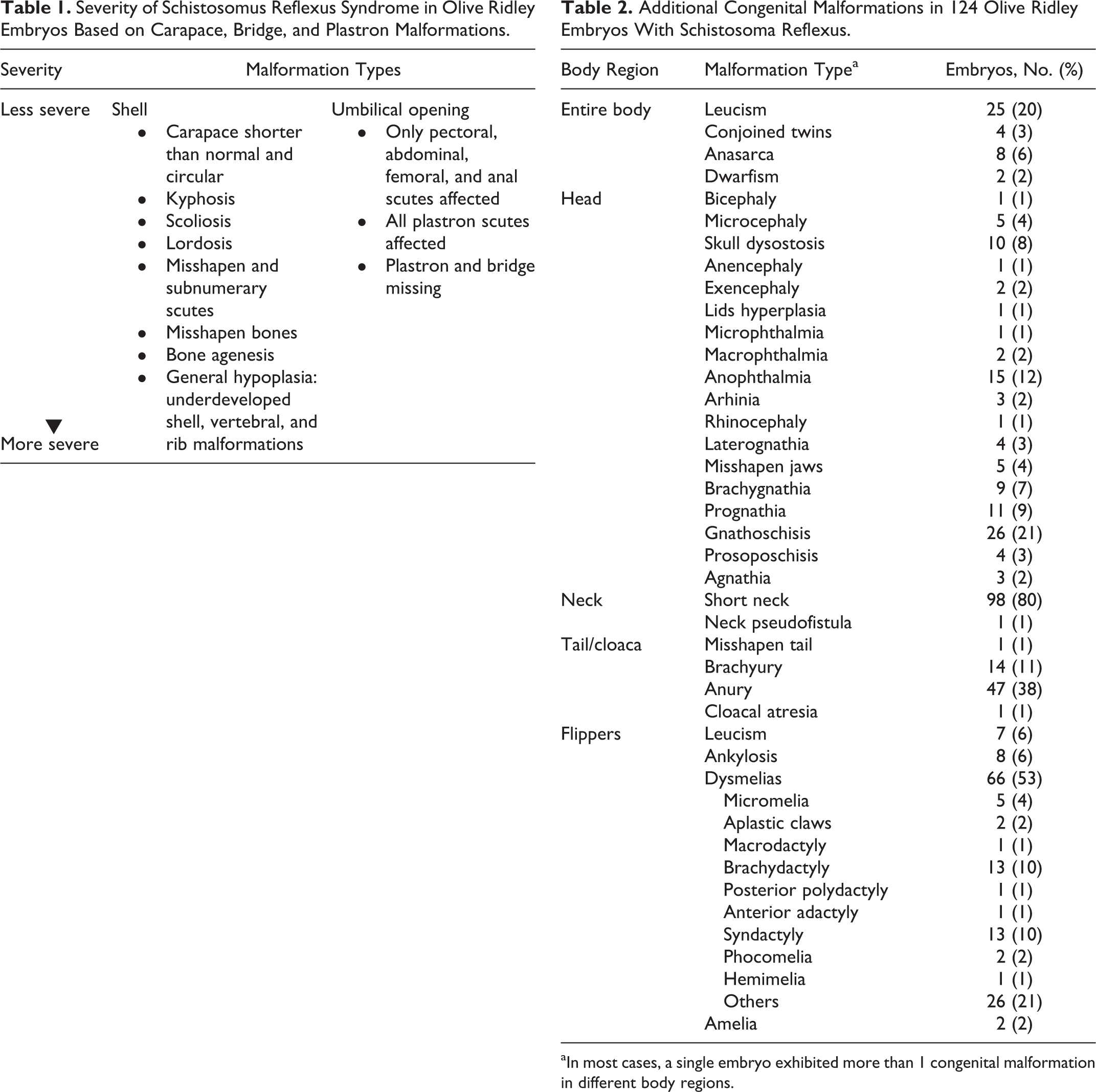
SRS in olive ridley embryos was characterized by malformations of the carapace, bridge, or plastron, resulting in exposure of the abdominal or thoracic viscera, as well as spinal malformation and abnormal positioning of limbs adjacent to the head with subsequent ankyloses (Figs. 5–7). These changes are detailed in Table 1 and were variable among embryos. All SRS cases had shell malformations, exposure of viscera, and spinal malformations (except for 1 omphalopagus twin with exposed abdominal viscera but no spinal malformations; Figs. 8, 10), whereas 53% of SRS cases had malformations of the flippers. Regarding consecutive clutches of embryos from the same female, no pattern was detected in the type, severity, or frequency of SRS.
Severity of Schistosomus Reflexus Syndrome in Olive Ridley Embryos Based on Carapace, Bridge, and Plastron Malformations.
Association With Other Congenital Malformations
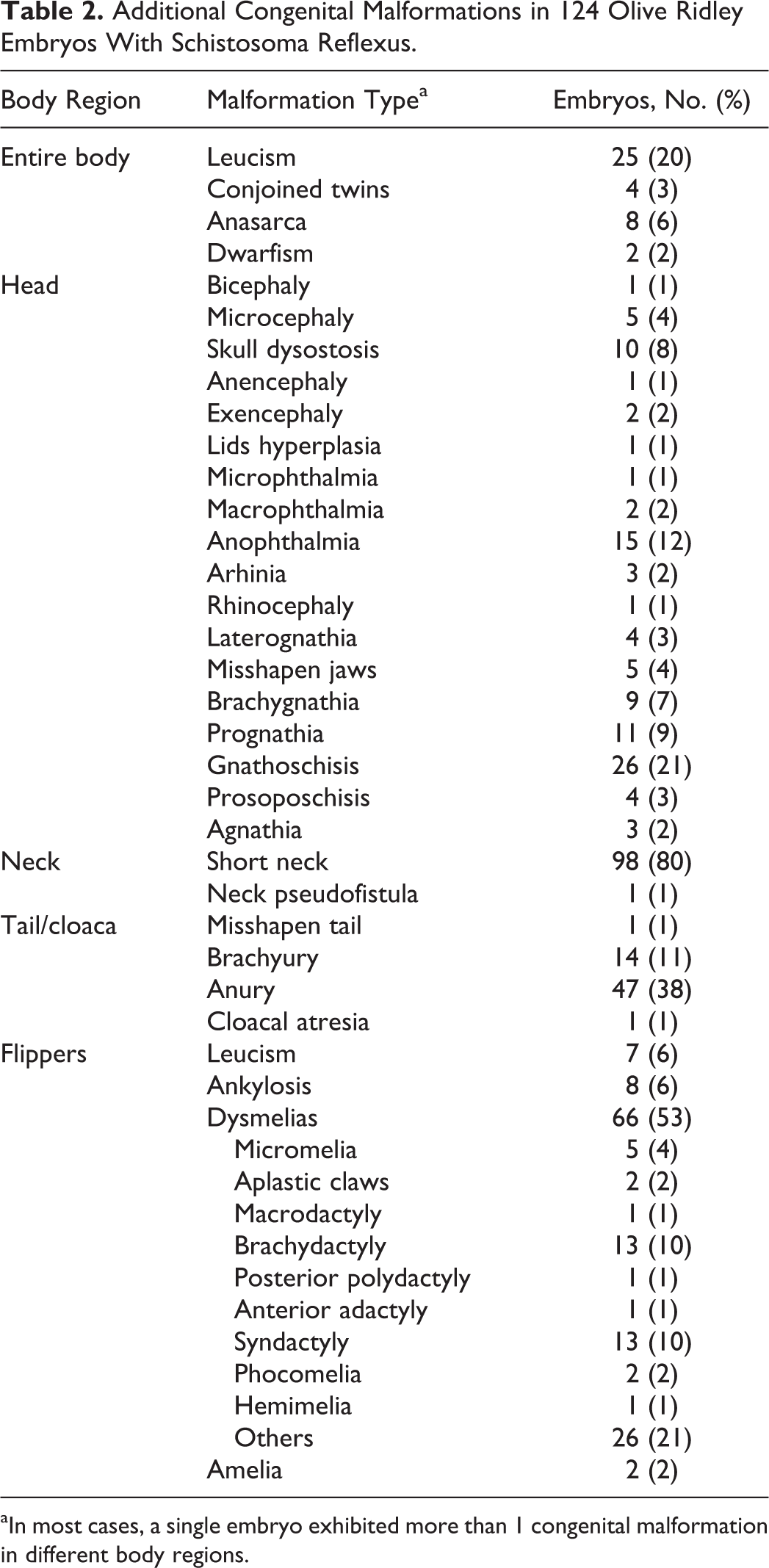
Forty congenital malformation types were recorded for the 124 SRS cases. Various forms of dysmelia were found in the flippers in 53% of SRS cases, accompanied by ankylosis (6%) in the more severe cases of SRS. Some dysmelia types in the flipper region did not correspond to a named condition and are listed as “others” in Table 2.
Additional Congenital Malformations in 124 Olive Ridley Embryos With Schistosoma Reflexus.
aIn most cases, a single embryo exhibited more than 1 congenital malformation in different body regions.
Of the 124 SRS cases, 98 (80%) had a short neck or other malformations in the neck region. Other associated malformations were anury (38%), gnathoschisis (21%), leucism (20%), and anophthalmia (12%).
Four sets of conjoined twins were found; 2 pairs were omphalopagus and 2 were parasitic. In 1 set of omphalopagus twins, 1 embryo had SRS and the second had exposed abdominal viscera with no spinal malformations (Figs. 8–10). A mild SRS phenotype was observed in both sets of the parasitic conjoined twins.
Discussion
SRS is documented in this study of olive ridley embryos that were removed from a single nesting site and developed in incubators. Embryos with SRS had exposure of abdominal or thoracic viscera, spinal inversion, and limbs adjacent to the head with subsequent ankylosis. In the case of reptiles, only one incident of SRS has been reported for the bearded dragon (Pogona vitticeps), 20 and another study 36 mentions the presence of schistosoma with no spinal malformations in a pit viper (Bothrops jararaca).
Overall, the prevalence of SRS in these olive ridley embryos was 0.06%. In cattle, the prevalence of SRS has been reported as 0.01% from 7132 cases over a 46-year period 27 and 1.3% out of 6901 cases over a 20-year period. 25 In the case of sheep, SRS was observed in 0.01% out of 7191 cases over a 3-year period. 34 The prevalence of SRS in olive ridley embryos is therefore comparable to the range reported for cattle and higher than the value reported for sheep. However, of cases of congenital malformation in olive ridley turtles, 5 124 of 400 (31%) had SRS, whereas SRS has been observed in 3% and 1% of the total congenital malformation cases in cattle and sheep, respectively. 27,34 Thus, SRS accounts for a high proportion of congenital malformations in this population of olive ridley turtles. However, it is difficult to compare the prevalence of SRS and congenital malformations in reptiles and mammals due to important differences in reproductive biology (eg, higher fecundity in reptiles compared with mammals).
SRS phenotypes in olive ridley embryos were variable in severity and accompanied by other malformations. The variable severity has been observed in both the extent of visceral exposure and degree of spinal alterations across several studies in ruminants. 27 In humans, those harboring the same gene mutation for a specific syndrome may show widely divergent clinical manifestations, suggesting modulation by several genes and/or environmental factors. 15 A distinctive feature of SRS in the present study was the regular occurrence of a short neck and tail and flipper malformations. The turtle shell is unique to the order Chelonia. Ribs and vertebrae from the central portion are elongated, inflexible, and fused with the bony layer of the shell to support the carapace, while the small vertebrae of the neck and tail allow a high degree of flexiblility. 17 It is possible that alterations of the shell also affect the vertebral column, including the neck and tail regions. Urogenital defects are associated with SRS in ruminants, 27 and this is also consistent with our findings since urogenital structures in turtles are located in the tail region. 40
Although SRS occurs primarily in ruminants, 7 3 human malformative syndromes display similar phenotypes to those observed in animals with SRS: “pentalogy of Cantrell,” 9 “thoracoabdominal syndrome,” 10 and “limb-body wall complex,” 35,39 These syndromes exhibit a variety of ventral body wall closure defects associated with malformations of the spine, diaphragm and thoracic organs, internal and external genital organs, and limbs. Interestingly, in limb-body wall complex, there is a high prevalence of facial clefts, 35,39 and gnathoschisis was the third most common malformation in olive ridley embryos with SRS.
Four sets of conjoined twins with SRS were found in olive ridleys. There are several reports of SRS occurrences in ruminant twins, mostly in nonconjoined twins. 33 In cases of SRS in conjoined twins, the non-SRS twin is normal, 11,13 in contrast to our findings where SRS affected both twins. A positive association between twin embryos and SRS has been suggested. 33
Hypotheses about the cause of SRS in animals include superfetation, inbreeding, 18,22 chromosomal aberrations, 31 and environmental teratogens. 20 Most reports of SRS involve single cases, but the few studies documenting SRS occurrences in ruminants within short time periods have shown that the main cause for SRS presence is a hereditary factor, and an autosomal recessive pattern is suggested in cattle. 12,27 In the present study, SRS was observed in embryos from consecutive clutches from 6 individual females. Most females had 1 or 2 SRS cases per clutch (1%–2%); interestingly, 1 female had 8 cases in the first clutch (10%) and 1 case in the second (0.8%). Considering the multiple paternity behavior in this species, 19,23 a genetic cause could be suggested, but we do not have conclusive evidence. Pathogenesis for those human syndromes reminiscent of SRS in animals includes genetic factors (chromosome abnormalities, X-linked Mendelian mutations, and autosomal genes) as well as teratogen exposure. 25
This study describes the prevalence, stage of development, and morphology of SRS in 1 population of olive ridley sea turtle embryos and associated abnormalities in affected embryos. There was variation among embryos in the distinctive carapace, bridge, and plastron malformations, and affected embryos commonly had additional malformations of the neck, tail, and flippers. This is important because the species is listed as vulnerable, and there are considerable conservation efforts in maintaining this specific population. It is possible that the high prevalence of SRS could be unique to this population, probably related to the artificial incubation strategy. Documenting these findings could be important to identify the cause of the developmental defects, and identification of the cause of the defects may be of significance to the population and to our efforts to manage this and other populations at risk. Future studies should evaluate the incidence of SRS in the olive ridley in different nesting locations and incubation conditions, as well as the cause and pathogenesis of this condition.
Footnotes
Acknowledgements
We thank Daniel Ríos-Olmeda and Raquel Briseño-Dueñas for their valuable support during this project. We also thank the Wild Life Department of the Ministry of the Environment in Mexico (DGVS-SEMARNAT) for capture permits, the staff of the National Commission of Natural Protected Areas (CONANP) for assistance in collecting olive ridley nests, and CONACyT (Mexico) for the scholarship granted to ABI. Special thanks to the editors and anonymous reviewers for their constructive comments to this manuscript.
Declaration of Conflicting Interests
The author(s) declared no potential conflicts of interest with respect to the research, authorship, and/or publication of this article.
Funding
The author(s) received no financial support for the research, authorship, and/or publication of this article.