




Abstract
Postmortem findings in 241 equids admitted to a teaching hospital that were at least 15 years old at autopsy were reviewed (1) to determine disease prevalence, (2) to compare the cause of death (or euthanasia) in equids 15 to 19 years of age (n = 116) with that in equids ≥20 years of age (n = 125), and (3) to catalog coexisting lesions in equids with pituitary pars intermedia dysfunction (PPID). Breed and sex were evenly distributed between the age groups. Death or euthanasia was attributed to disease of the digestive system (41.5%), pituitary gland (12.9%), locomotor system (10.0%), nervous system (7.9%), cardiovascular system (4.6%), urinary system (4.6%), reproductive system (4.2%), respiratory system (4.2%), integumentary system (4.2%), lymphoid system (2.5%), liver (2.5%), or systemic neoplasia (1.2%). Nervous system disease was more common in the 15- to 19-year group; urinary tract disease was more common in the ≥20-year group. Neoplastic disease, regardless of systemic location, was the basis for death or euthanasia in 18.7% of all equids. Squamous cell carcinoma, lymphoma, and melanoma were the most common malignant neoplasms. PPID was the most common specific diagnosis, based on the postmortem presence of hyperplasia or adenoma, and was the reason for euthanasia in 47.7% of 65 equids with PPID. The most common nonpituitary causes for death or euthanasia in equids with PPID were colic, lameness, cancer, and spinal cord disease. Coexisting conditions in equids with PPID that were not considered the basis for euthanasia included neoplasms, infections, lameness, and recurrent airway obstruction.
Keywords
At what chronologic age can a horse be considered old? This is an important question because “old age” was cited by US owners as the most common reason for death or euthanasia in equids >6 months of age, accounting for 24.8% and 30.4% of the total equine population in 1998 and 2005, respectively. 42 The question is of increasing interest to the equine industry and to equine medicine. 39 The horse has the longest life span of the domestic species, and as a companion animal, working animal, or athlete, it more commonly survives to the geriatric stage of life than do the large animal species raised for food or fiber production.
An increase in the average age of horses that are presented to veterinarians has been attributed to improved husbandry and owners’ willingness to keep animals that no longer perform their intended function. 39 In the United Kingdom, 13% of the equine population is estimated to be ≥20 years of age. 16 Differences in the breed distribution, use, and age of the equine population limits extrapolation from European studies to North American equids. The proportion of equids ≥20 years in the United States was estimated at 7.6% in the National Animal Health Monitoring System (NAHMS) Equine 2005 study. 41 The NAHMS study collected data from operations in 28 states, representing nearly 80% of the US equine population. Horses constituted about 87% of the equine population, with donkeys or burros, mules, ponies, and miniature horses contributing 4%, 2%, 3%, and 4%, respectively. 41 The annual mortality rate (during the year preceding the 2005 study) was 1.1% and 1.2%, respectively, for equids 6 months to 5 years of age and 5 to 20 years of age, but it rose to 6.7% for equids 20 to 29 years of age and to 45.7% for those ≥30 years of age. 41 After “old age,” the second- and third-most commonly reported causes for death or euthanasia in equids >6 months were traumatic injury (16%) and colic (15.2%).
Commonly cited diseases of aging, such as pituitary pars intermedia dysfunction (PPID) and alterations in the immune system, could lead to increased risk for mortality. 13,22 Other age-associated lesions, such as mesenteric lipoma, 4,10,11 can be a direct cause of death by intestinal strangulation, which is reportedly more common in equids >15 years. 36 Increasingly, equids have become models of geriatric diseases, particularly immunosenescence and “inflamm-aging” (an exacerbated inflammatory response in aged animals). 13 PPID, a common condition in aged equids, has pathogenetic similarity to Parkinson disease, as both involve oxidative damage to dopaminergic pathways. 22 Likewise, osteoarthritis is an important cause of debility in aged humans and equids. 16,17,21
In the NAHMS Equine 2005 study, 41 the cause of disease or death was based on reports of clinical signs by study participants and was not necessarily confirmed by a veterinarian or by postmortem examination. For example, the percentage of equids that had become nonambulatory in the preceding year was ≤0.5% for all age groups <20 years, at which age it increased to 1.8%; after 30 years of age, 10.4% of equids were nonambulatory. Even though the outcome for 71.6% nonambulatory equids was death (or euthanasia), only 2% underwent autopsy. Close collaboration between clinicians and pathologists facilitates the correlation of clinical disease with postmortem lesions. The purposes of this study were (1) to determine postmortem disease prevalence in mature or aged equids that died or were euthanized in a veterinary teaching hospital, (2) to compare the cause of death (or reason for euthanasia) in mature equids (15–19 years of age) with that in aged equids (≥20 years of age), and (3) to catalog coexisting lesions in equids with PPID.
Materials and Methods
Case Selection
The Veterinary Teaching Hospital medical records of the Purdue University College of Veterinary Medicine were searched from January 2003 through December 2013 for equids reported to be ≥15.0 years of age at the time of death or euthanasia and submission to the Indiana Animal Disease Diagnostic Laboratory for autopsy. The equids were then grouped in the mature category (15–19 years) or the aged category (≥20 years).
Cause of Death
The cause of death was defined as the disease or condition considered most responsible for the death (or the decision to euthanize or donate the animal) and was determined by review of Veterinary Teaching Hospital medical records and Animal Disease Diagnostic Laboratory submission forms and diagnostic reports. The cause of death was categorized by organ system. Most postmortem examinations were performed systematically according to standard protocol, but selected cases were evaluated by a problem-oriented autopsy depending on the case history and the assigned pathologist. Musculoskeletal disease and disease of the feet or hooves were included in the locomotor system. Ophthalmic disease was included in the nervous system. Vulvar or preputial disease was included in the reproductive system.
If a neoplastic disease was considered the cause for death or for euthanasia, it was included in the affected organ system or, if not confined to an organ system, classified as systemic neoplasia. Neoplasms were also tallied separately, irrespective of their systemic location, even if not considered the cause for death. Strangulating mesenteric lipomas were tabulated as digestive system disorders, but mesenteric lipomas (strangulating or not) were not tabulated as a neoplasm, because they may have been underreported at autopsy, were not consistently evaluated histologically, and tended to lack histologic features that distinguished them from nonneoplastic adipose tissue.
Pituitary Pars Intermedia Dysfunction
Pituitary pars intermedia (PI) lesions were categorized as adenomatous hyperplasia or adenoma (microadenomas or macroadenoma) according to published criteria. 29 In brief, pituitary glands were graded histologically as 1 or 2 (no proliferative lesions or only focal or multifocal PI hypertrophy or hyperplasia), 3 (diffuse PI adenomatous hyperplasia), 4 (PI adenomatous hyperplasia with microadenomas [1- to 5-mm diameter]), or 5 (PI adenoma [>5-mm diameter]). Grades 1 and 2 were considered within normal limits for a mature or aged equid. Grade 3 was classified as adenomatous hyperplasia. Grades 4 and 5 were classified as pituitary adenoma. In equids with a diagnosis of PPID, coexisting (nonpituitary) lesions were tabulated, whether or not they were considered the cause for death.
Statistical Analysis
Sex, breed, cause of death, and major lesions at autopsy were tabulated for mature equids (15–19 years) and aged equids (≥20 years). Associations between categorical variables were assessed by the chi-square test of independence. When any expected frequency was ≤2 or when 20% of cells had expected frequencies ≤5, the Fisher’s exact test was used. Distributions of age groups by organ system were compared if an organ system was diagnosed in >10 cases; comparisons were made between an organ system and the collective frequencies of systems more common than it. Odds ratios were calculated for differences between age groups that were determined to be statistically significant. Statistical significance was set at an alpha error rate <5%.
Results
Records of 265 equids that met the inclusion criteria were retrieved from the medical records search. Cases with no established cause for death were then excluded, leaving 241 equids in the study. Age ranged from 15.0 to 35.7 years (median, 20.7 years). There were 116 equids in the 15- to 19-year age group (median age, 17.6 years) and 125 in the ≥20-year age group (median age, 24.1 years). Sex distribution (Supplemental Table 1) did not differ between the age groups. Breed distribution in the database (Supplemental Table 2) did not differ between the studied age groups; however, draft breeds were less common in either group than in equids <15 years of age.
Cause of Death
Death was most commonly attributed to disease of the digestive system, pituitary gland, locomotor system, or nervous system (Table 1; Figs. 1, 2). Disease of the digestive system was considered the cause of death in 100 animals (49 of the 15- to 19-year group and 51 of the ≥20-year group). Gastrointestinal impaction or rupture (n = 14), intestinal displacement/volvulus or other strangulating lesion (n = 10), and intestinal inflammation (enteritis, typhlitis, or colitis) with diarrhea (n = 10) were the more common diagnoses in the 15- to 19-year age group. Intestinal displacement/volvulus or strangulation was the most common diagnosis (n = 19) in the ≥20-year age group; a mesenteric lipoma was the cause for intestinal strangulation in 11 of 19 aged equids, in comparison to 3 of 10 mature equids (P = 0.245). Gastrointestinal impaction or rupture was the diagnosis in 14 aged equids; diarrhea was diagnosed in 5. Neoplasia of the digestive tract was diagnosed in 6 aged equids and in 1 mature equid.
Cause of Death or Reason for Euthanasia by Organ System and Age Group in 241 Equids Discharged From the Veterinary Teaching Hospital for Autopsy (2003–2013).a
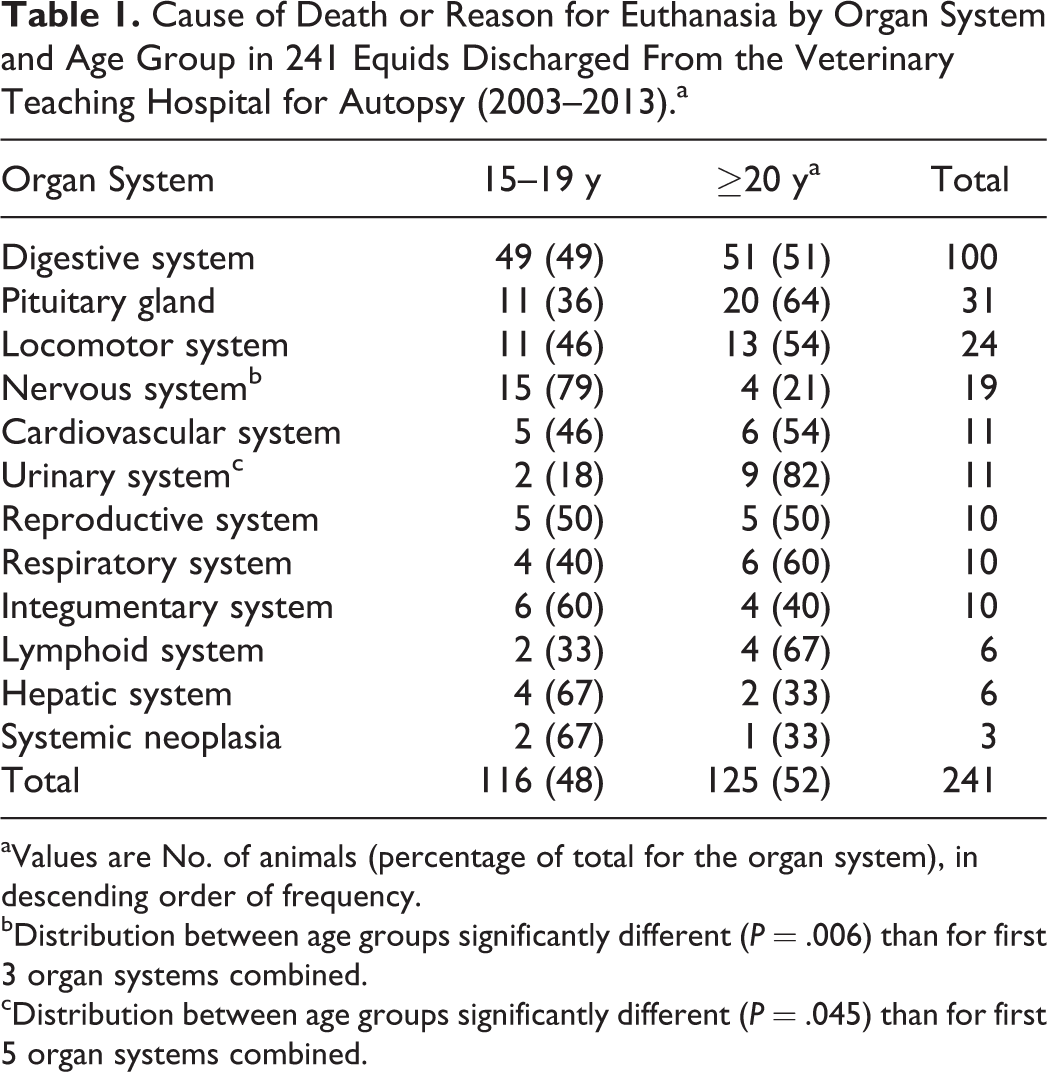
aValues are No. of animals (percentage of total for the organ system), in descending order of frequency.
bDistribution between age groups significantly different (P = .006) than for first 3 organ systems combined.
cDistribution between age groups significantly different (P = .045) than for first 5 organ systems combined.
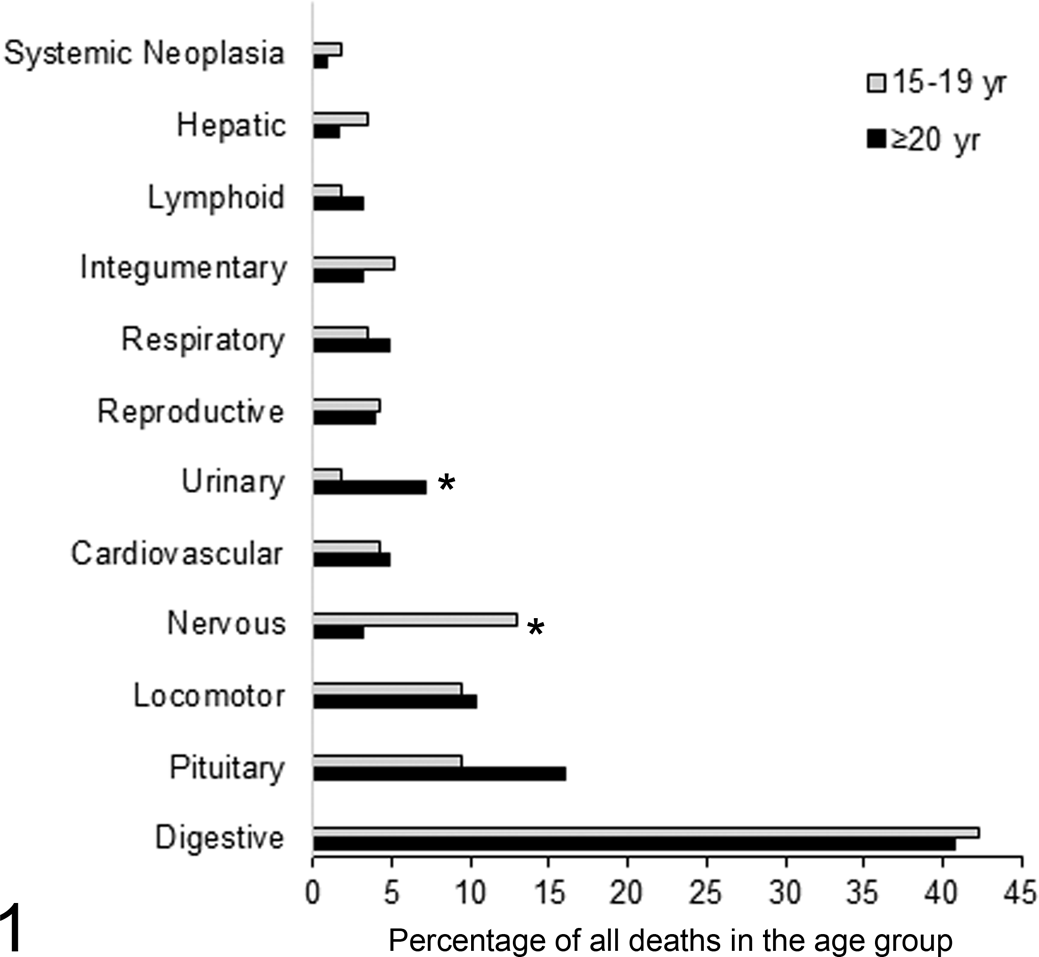
Cause of death (including euthanasia) of 241 equids discharged from the Veterinary Teaching Hospital for autopsy (2003–2013) by organ system and age group (116 equids, 15–19 years of age; 125 equids, ≥20 years age). Bars represent percentage of all deaths for the respective age group that were attributed to each organ system (from top to bottom in ascending order of frequency). Asterisks mark organ systems for which the case distribution between age groups differed significantly (P < .05) from that for more frequently affected organ systems.
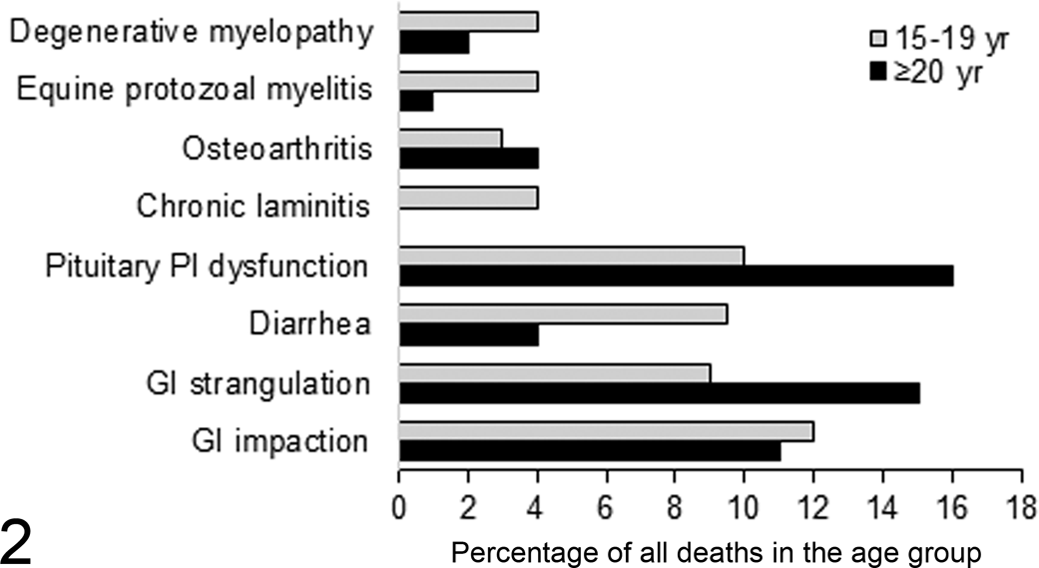
Cause of death in the 4 most frequently affected organ systems in 241 equids discharged from the Veterinary Teaching Hospital for autopsy (2003–2013) by diagnosis and age group (116 equids, 15–19 years of age; 125 equids, ≥20 years age). Bars represent percentage of deaths attributed to each diagnosis. GI, gastrointestinal; PI, pars intermedia.
PPID was the basis for euthanasia in 31 equids: 11 mature equids (4 mares, 7 geldings) and 20 aged equids (15 mares, 5 geldings). Pituitary adenoma was the diagnosis in 23 of 31 cases; 17 of 23 adenomas were in the aged group. Remaining PPID cases were classified as PI hyperplasia.
Disease of the locomotor system, presenting as lameness, was the cause of death in 24 equids and was evenly distributed across the 2 age groups. Musculoskeletal lesions explained the lameness in 15 animals, with osteoarthritis accounting for 3 of 6 cases in the mature equids and 6 of 9 cases in the aged equids. Lesions of the feet or hooves explained the other 9 cases of lameness; chronic laminitis was the diagnosis in 7 of the 9.
Disease of the nervous system was the cause for death in 19 equids. Case distribution between the age groups differed significantly (P = .006) from that for the preceding 3 organ systems, with 15 of 19 (78.9%) cases in the mature group and only 4 of 19 (21.1%) in the aged group. A mature horse was 4.5 times (95% confidence interval: 1.3–19.0) more likely to have a neurologic disease diagnosis than an aged horse. Degenerative myelopathy (5 cases in mature equids, 2 in aged equids) and protozoal myelitis (5 cases in mature equids, 1 in aged equids) were the most common diagnoses. Ocular disease, manifested as idiopathic uveitis and bacterial panophthalmitis, was the cause of death in 1 mature and 1 aged horse, respectively.
Disease of the cardiovascular system was the cause for death in 11 equids; cases were evenly distributed between age groups. Three horses had hemangiosarcoma; 3 had cardiac valvular disease; and 2 had myocardial degeneration or necrosis. One pony had verminous cranial mesenteric arteritis, and 1 horse each had aortic/iliac arterial thrombosis and hemoabdomen from a cecal artery tear.
Disease of the urinary system was the cause for death in 11 equids. The distribution of cases between the age groups differed significantly (P = .045) from that for the preceding 5 organ systems, with 2 (18.2%) cases in mature equids (chronic interstitial nephritis and squamous cell carcinoma of the bladder) and 9 of 11 (81.8%) in aged equids (4 cases of squamous cell carcinoma of the bladder, 2 of chronic interstitial nephritis, and 1 case each of renal cell carcinoma, cystitis, and hematuria of unknown cause). An aged horse was 4.4 times (95% confidence interval: 1.0–20.9) more likely than a mature horse to have a urinary disease diagnosis.
Disease of the reproductive system, the cause for death in 10 equids, was evenly distributed between age groups. Seven mares had 2 cases of ovarian carcinoma/mesothelioma, 2 of vulvar or pelvic squamous cell carcinoma, and 1 case each of metritis with septic peritonitis, abdominal abscess adhered to the uterus, and vaginal laceration with hemoabdomen. The gelding had a preputial squamous cell carcinoma with nodal and pulmonary metastasis. One stallion had paraphimosis; the other had metastatic seminoma.
Respiratory disease, the cause for death in 10 horses, was evenly distributed between age groups. One horse had a nasal polyp; another had sinusitis. One horse had guttural pouch empyema due to infection with Streptococcus equi subsp zooepidemicus; another had guttural pouch mycosis. Three horses had pneumonia; 1 had multinodular pulmonary fibrosis due to infection with equine herpesvirus 5. Two horses had recurrent airway obstruction (bronchiolitis at postmortem).
Integumentary disease, the cause for death in 10 horses, was evenly distributed between age groups. All 10 cases were malignant neoplasms: 7 melanomas, 2 squamous cell carcinomas of the eyelid, and 1 subcutaneous lymphoma.
Disease of the lymphoid system, the cause for death in 6 horses, was evenly distributed between age groups. All 6 cases were multicentric lymphoma.
Hepatic disease, the cause for death in 6 horses, was evenly distributed between age groups. Pyrrolizidine alkaloid toxicosis was suspected in 3 cases and serum hepatitis in 2. Another horse had a ruptured hepatic abscess with peritonitis.
The 3 cases categorized as systemic neoplasia were horses with disseminated cancer of unknown origin: 2 carcinomas and 1 sarcoma.
Neoplastic Disease
Neoplasms were the cause of death in 45 of 241 (18.7%) equids: 18 (15.5%) of the mature group and 27 (21.6%) of the aged group. Neoplasms that were considered the cause of death were classified by organ system in Table 1 but were also included in the classification of all neoplasms (Table 2 and Figure 3), whether or not the cause of death. In total, 108 neoplasms were diagnosed in 86 of 241 (35.7%) equids. Thirty (28%) of the 108 neoplasms were in 26 of 116 (22.4%) mature equids; 78 (72%) were in 60 of 125 (48%) aged equids.
Classification of 108 Neoplasms by Histologic Type and Age Group in 86 Equids Discharged From the Veterinary Teaching Hospital for Autopsy (2003–2013).a
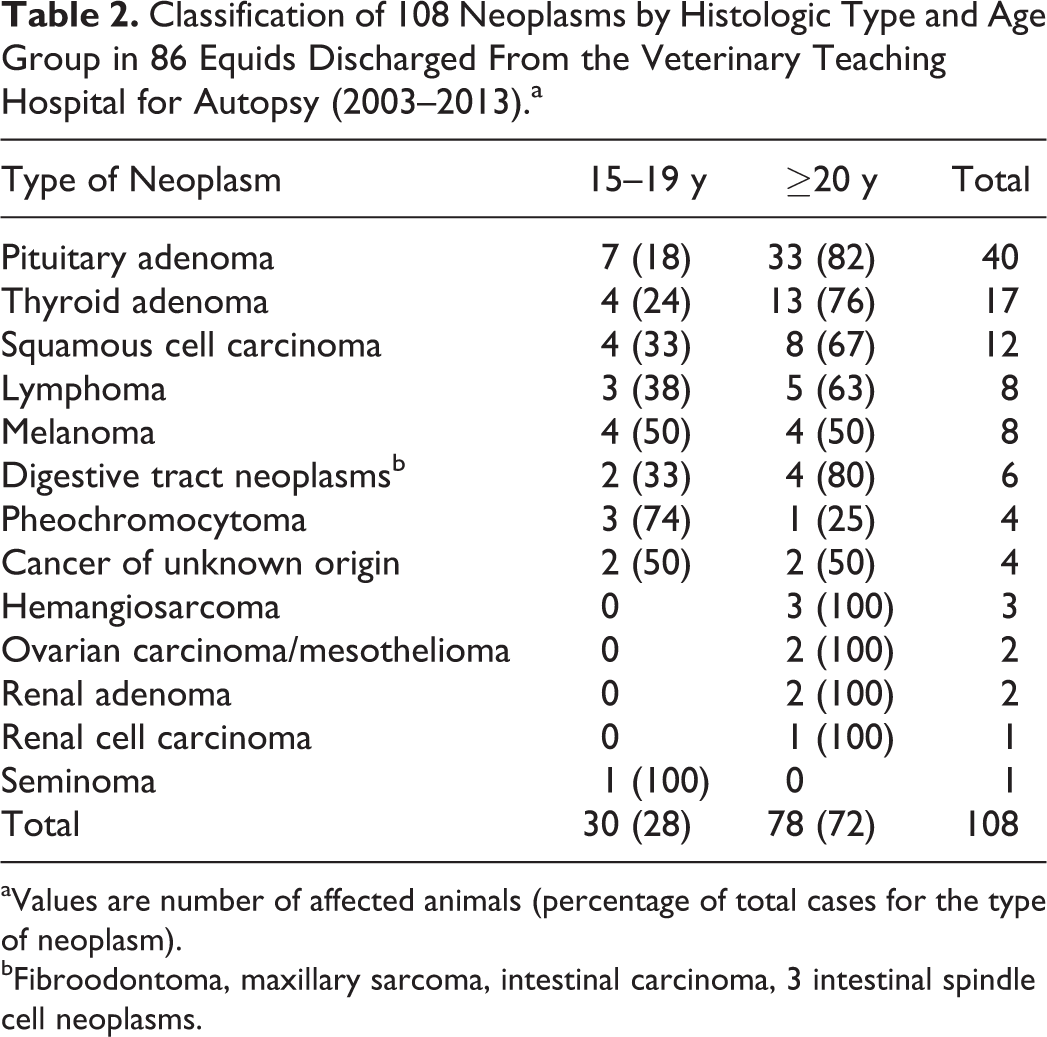
aValues are number of affected animals (percentage of total cases for the type of neoplasm).
bFibroodontoma, maxillary sarcoma, intestinal carcinoma, 3 intestinal spindle cell neoplasms.
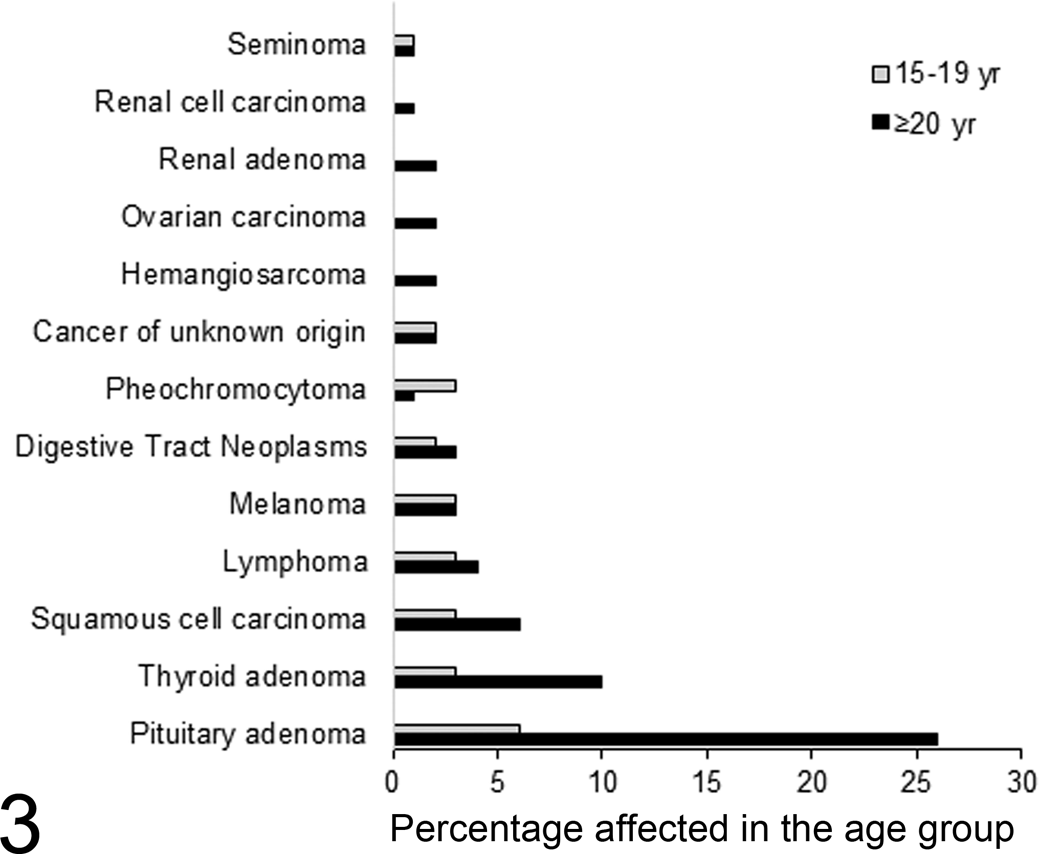
Neoplasms in 241 equids discharged from the Veterinary Teaching Hospital for autopsy (2003–2013) by histologic classification and age group (116 equids, 15–19 years of age; 125 equids, ≥20 years age). Bars represent percentage of equids in the respective age group affected by each type of neoplasm.
Pituitary PI adenoma was the most common neoplasm; 33 of 40 (82.5%) equids with pituitary adenoma were in the aged group. Twenty-three horses were euthanized because of the pituitary adenoma.
Thyroid adenoma was the next-most common neoplasm. Thirteen of 17 cases were in aged equids; all thyroid adenomas were considered an incidental finding.
Twelve horses (8 in the aged group) had squamous cell carcinoma, making it the most common malignant neoplasm. The most common site of squamous cell carcinoma was the urinary bladder; 4 of the 5 bladder squamous cell carcinomas were in aged equids.
Lymphoma (3 cases in mature and 5 in aged equids) and melanoma (4 cases in mature and 4 in aged equids) were the next-most common types of malignant neoplasm.
Pituitary PI Dysfunction
A total of 65 equids (15 mature and 50 aged equids) had pituitary PI adenomatous hyperplasia (n = 25) or adenoma (n = 40). The 65 equids were 34 mares, 30 geldings, and 1 stallion. The 40 pituitary adenomas were in 24 mares and 16 geldings.
PPID was the most common specific diagnosis and, as the basis for euthanasia of 31 equids, the second-most common cause of death. In the other 34 equids, death was attributed to nonpituitary disease (Table 3). Disease of the digestive system, mainly colic due to gastrointestinal impaction or strangulation, was the cause of death in 11 of 65 equids with PPID (11% of the 100 deaths attributed to the digestive system for all 241 equids in the study). Two of the 3 cases of intestinal strangulation were caused by mesenteric lipoma. Disease of the locomotor system accounted for 9 of 65 deaths in equids with PPID (38% of the 24 deaths attributed to the system). Eight deaths of equids with PPID attributed to cancer constituted 18% of the 45 deaths attributed to malignant neoplasia. Degenerative myelopathy or protozoal myelitis accounted for 5 deaths of equids with PPID (26% of the 19 deaths attributed to the nervous system). Pleuropneumonia led to the death of 1 horse with PPID (19% of the 10 deaths attributed to the respiratory system).
Cause of Death or Reason for Euthanasia in 65 Equids Diagnosed With Pituitary Pars Intermedia Dysfunction in the Veterinary Teaching Hospital and Discharged for Autopsy (2003–2013).
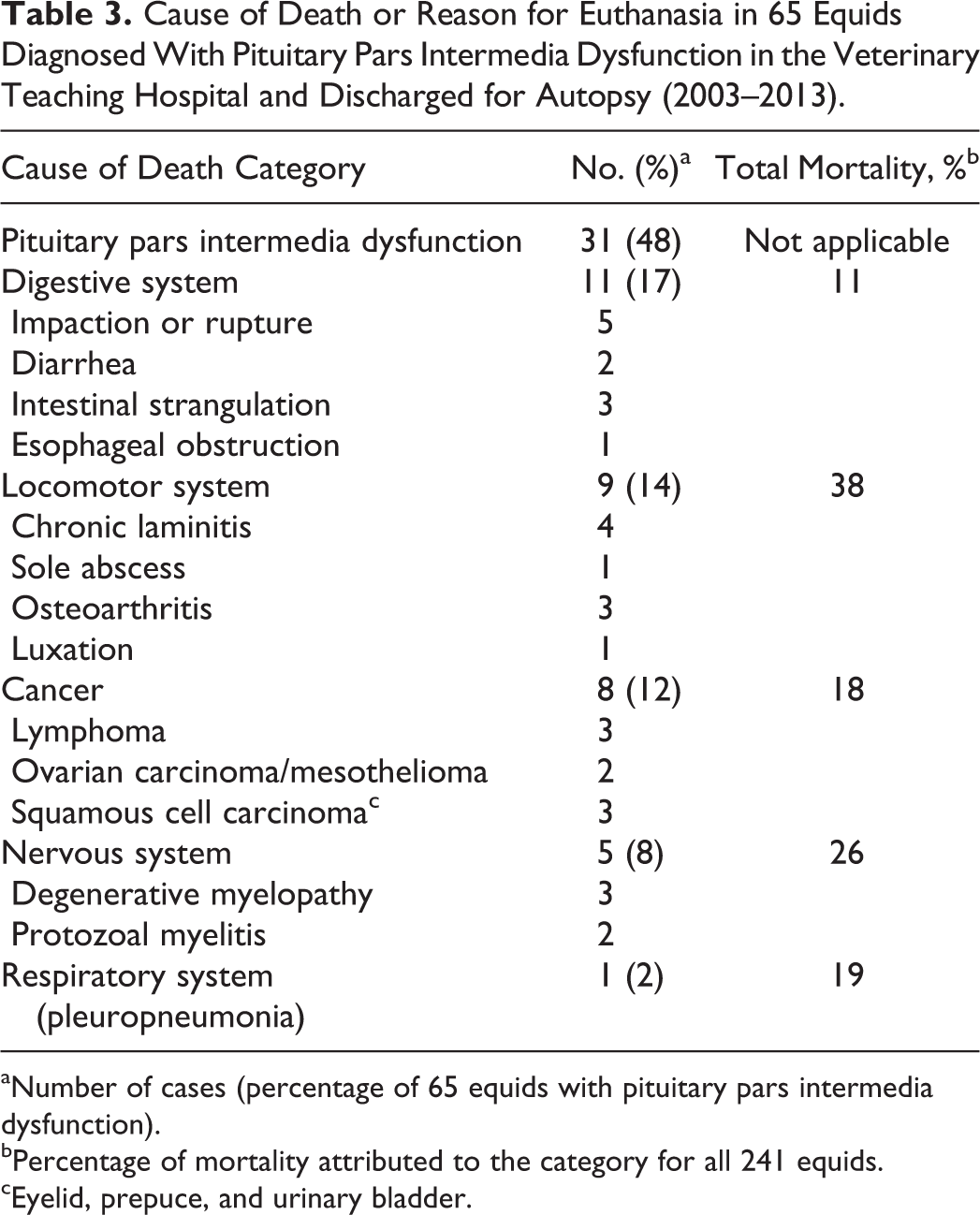
aNumber of cases (percentage of 65 equids with pituitary pars intermedia dysfunction).
bPercentage of mortality attributed to the category for all 241 equids.
cEyelid, prepuce, and urinary bladder.
Coexisting nonpituitary disease in 65 equids with PPID that was not considered the cause of death (Table 4) included hyperplasia or neoplasia in 17 (26%), inflammatory disease in 15 (23%), lameness in 8 (12%), and recurrent airway obstruction in 3 (5%). Thyroid adenoma, with 13 cases, was the most common coexisting neoplasm in equids with PPID. Inflammatory disease usually involved the upper respiratory system or lungs. Chronic laminitis was the most common cause for lameness.
Concomitant Disease in 65 Equids Diagnosed With Pituitary Pars Intermedia Dysfunction in the Veterinary Teaching Hospital and Discharged for Autopsy (2003–2013).
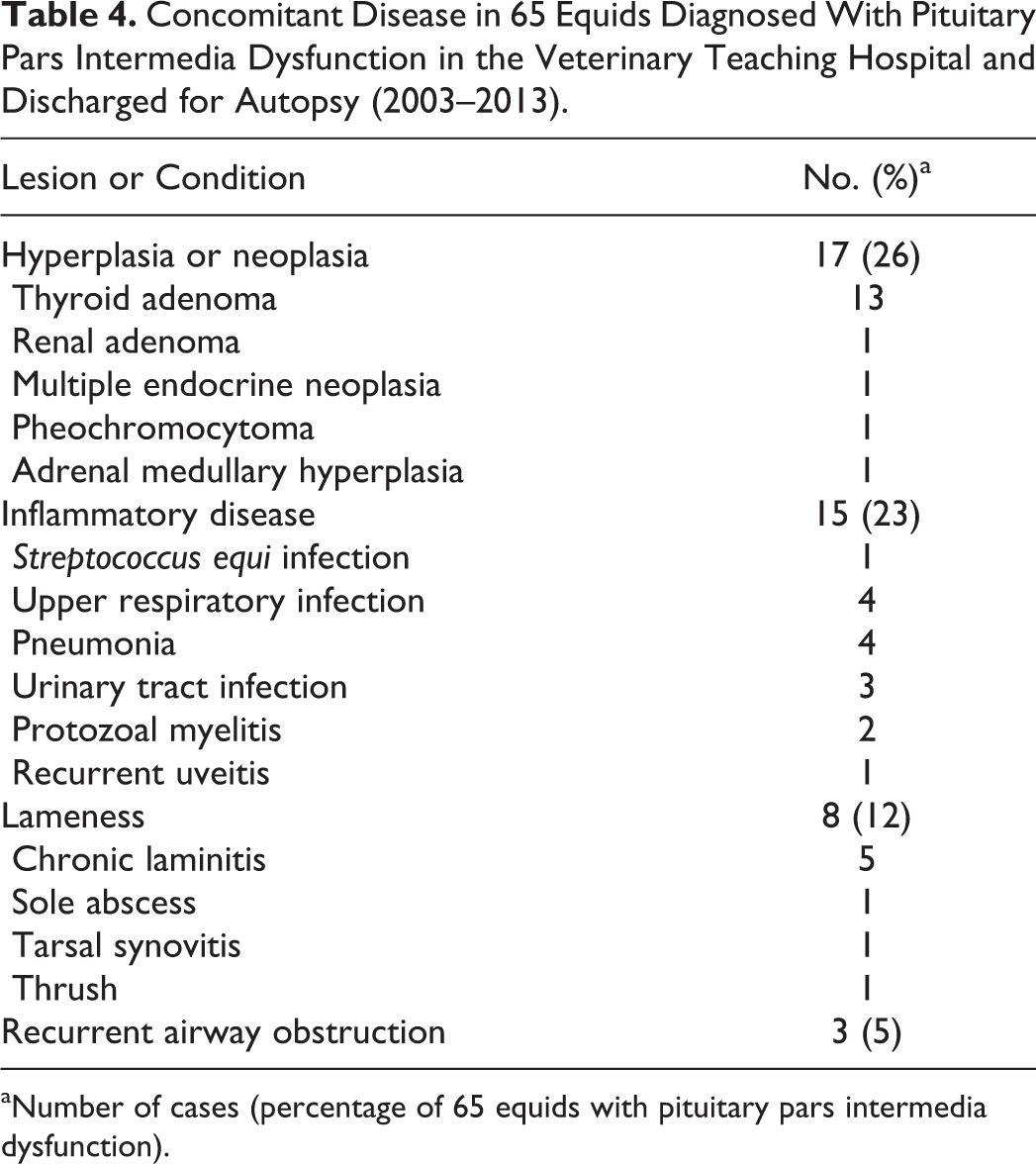
aNumber of cases (percentage of 65 equids with pituitary pars intermedia dysfunction).
Discussion
In >80% of the 241 equids in the current study, the cause of death or the decision for euthanasia was disease of (in descending order of frequency) the digestive system, pituitary gland, locomotor system, nervous system, cardiovascular system, or urinary system. Nervous system disease was more common in equids 15 to 19 years of age; urinary tract disease was more common in equids ≥20 years. Neoplastic disease was the cause of death in 18.7% of all equids in the study. Squamous cell carcinoma, lymphoma, and melanoma were the most common malignant neoplasms and were generally considered the reason for death or euthanasia. Of the 2 most common benign neoplasms, pituitary adenoma was the basis for euthanasia in over half the affected equids, whereas thyroid adenoma was considered an incidental finding.
Little is known of the causes for death of horses ≥15 years. In a survey of 908 older horses in the United Kingdom, 16 the cause of death or reason for euthanasia was determined by an owner questionnaire for the 118 horses that died during the study period. All but 7 of the dead horses had been euthanized, usually because of lameness, colic, or chronic illness, but only 2 of 118 dead horses had been examined postmortem (autopsy). Strangulating lipoma 36,44 and cecal impaction 6,8 are 2 causes of colic that are thought to be more prevalent in older horses. In the current study, it was not determined whether mesenteric lipomas were more common in equids after 20 years of age or in those with PPID; however, a mesenteric lipoma explained a larger proportion of intestinal strangulation cases in the ≥20-year age group and in equids with PPID than in those 15 to 19 years of age. Factors associated with increased mortality rate 16 were advanced age (the mortality rate in horses ≥30 years of age was >5 times that in horses 15–19 years old), breed (Cob, Thoroughbred, and their crosses), low body weight (although more horses were classified as overweight than underweight in a separate clinical study 17 ), owner-reported clinical signs (especially those of osteoarthritis or PPID), and owner-perceived pain.
In a postmortem study of 817 horses >15 years in Kentucky, 44 digestive, musculoskeletal, and reproductive disorders accounted for most diagnoses. The most commonly diagnosed specific entities were strangulating lipoma, laminitis, and pituitary adenoma. Ruptured uterine artery was the most commonly diagnosed reproductive disorder, which probably reflects the nature of the equine population in Kentucky, which has a large number of breeding farms. Neoplasia was more common after 25 years of age than in horses 15 to 24 years of age. The most common types of neoplasia (pituitary adenoma, melanoma, squamous cell carcinoma, and lymphoma) were also common in the current study.
The basis for determination of the cause of death varies among studies. In 1 study, 2 the cause of death was determined by postmortem examination of 480 horses in England from 1958 to 1980, but the largest age group was <1 year of age, and only 26 of 480 horses were ≥15 years of age. Alimentary disorders were most common in juvenile (1–4 years of age) and older (>15 years of age) horses. Death was commonly attributed to musculoskeletal disease, particularly to fractures, but mainly in horses under 5 years of age. The authors noted the rarity of infectious diseases (except in foals) as well as chronic respiratory, neoplastic (the only neoplasm with >2 cases was lymphoma), or metabolic diseases. In a separate article, 3 diseases recorded at autopsy of the same 480 horses that were not considered the cause of death were tabulated. The alimentary, cardiovascular, respiratory, and musculoskeletal systems were most commonly affected by nonfatal disorders. Alimentary disorders were more common in horses aged 1 to 4 years and >15 years. In the endocrine system, adrenal, thyroid, and pituitary nonfatal disorders were noted in 6, 4, and 2 horses, respectively. Only the pituitary disorders were classified as neoplastic. The difference in the age of horses in that study (mostly <15 years of age) and in the current study (all equids ≥15 years of age) limits comparison of results.
In 200 horses or ponies ≥15 years of age and randomly selected for clinical examination, the most commonly identified abnormalities were dermatologic conditions (71%), hirsutism or abnormal shedding (22%), palpable thyroid gland enlargement (17.5%), cardiac murmurs (20%), nasal discharge (18.5%), abnormal respiratory sounds on thoracic auscultation (22%), lameness (50.5% at a trot), and dental abnormalities (95.4%). 17 Melanoma accounted for 9.5% of the dermatologic conditions in that study and was an important skin cancer in the current study. The palpable thyroid enlargement was presumably thyroid adenoma, a common benign neoplasm in the current study. Reported prevalence of thyroid adenoma is 75% in horses >20 years of age. 40 The prevalence of cardiac murmurs consistent with aortic or mitral valve regurgitation 17 was similar to the previously reported prevalence. 37 In the current study, cardiac valvular disease was noted at postmortem examination in only a few cases. Recurrent airway obstruction is considered more prevalent in older horses 13,18 and could account for abnormal respiratory sounds in many older equids. 17 Bronchiolitis consistent with a clinical diagnosis of recurrent airway obstruction was considered the reason for euthanasia in 2 horses in the current study and was a coexisting lesion in 3 of the horses with PPID.
In a study of insured Swedish horses, 9 mortality rates increased with increasing age. Each insurance claim could have only 1 diagnostic code, which was assigned by the attending veterinarian. Inflammatory joint disease was the most commonly claimed reason for death or euthanasia. Autopsy was not required, and horses >21 years of age were excluded because of low numbers in the study population, limiting comparison with the results of the current study.
In a US study that compared clinical disorders in 345 horses >20 years with 345 younger horses, 34 digestive tract disorders were more common in the older equids. Musculoskeletal disorders were less common in the older group. Differences in the results of that study from those of the current study or other studies could reflect differences in age groups, its clinical design (based on physical examination, clinical pathology parameters, and treatment outcome), or the nature of the practice with a high proportion of animals admitted for emergency or critical care rather than for chronic disease.
In the current study, sex differences in the risk for pituitary adenoma or PPID were not detected. The sex predisposition of PPID is controversial, with no bias reported in some studies. 7,43 However, in a study of 217 horses, gelding sex was weakly associated with PPID. 31 In studies with fewer animals, female sex was associated with PPID. 1,14 In a review with meta-analysis of 6 studies, sex was not identified as a risk factor for developing PPID. 32
Discrepancies between findings of the current study and those of previous studies could be explained by study design, sampling differences, or geographic differences in the breed distribution, use, and number of equids in the population. Another potential explanation for discrepancies is the confounding effect of age. Rohrbach et al 31 suggested that any female predisposition for PPID could be confounded by longer survival of mares rather than a true predisposition.
PPID was the most common clinical diagnosis in the current study. The pituitary lesion was classified as hyperplasia in 38.5% and adenoma in 61.5% of the 65 cases of PPID and was considered the reason for death (almost always by euthanasia) in 47.7% of the PPID cases. Nonpituitary causes for death or euthanasia in equids with PPID were attributed most commonly to colic, lameness, cancer, or spinal cord disease (myelopathy or protozoal myelitis). Coexisting lesions that were not considered the cause of death in equids with PPID were categorized as neoplastic in 21 equids, infectious in 15, lameness in 8, and recurrent airway obstruction in 3.
PPID has a poor prognosis, with 50% of horses euthanized or dead 4.6 years after diagnosis and 75% at 5.3 years after diagnosis. 31 In 73% of cases, the reasons for euthanasia are associated with the classical clinical signs of PPID (hirsutism, laminitis, muscle atrophy, hyperhidrosis, weight loss, polydipsia, polyuria, lethargy, ataxia, and seizures). 31 Presumably, the remaining equids with PPID die or are euthanized for other reasons.
Surprisingly, although PPID is common in aged horses, 23 the associated postmortem lesions are seldom reported. Osteoarthritis appears to be fairly common in equine PPID. 1,5 Hyperextension of the fetlocks in horses with PPID was associated with degeneration (proteoglycan accumulation) of the suspensory ligament. 15 Bone fractures are also reported in horses with PPID. 5,35 Muscle atrophy in PPID, which has been linked to the loss of type 2B fibers, 1 could explain cases of colic secondary to diaphragmatic hernia. 5,20,33
Laminitis is commonly reported in PPID. 32 Equids with PPID were >5 times likely to develop laminitis in 1 report. 45 It has been assumed that, as in equine metabolic syndrome, hyperinsulinemia and insulin resistance were the cause of laminitis. However, in recent studies, only 32% of horses with PPID were hyperinsulinemic, and only 23% were insulin resistant, suggesting that PPID and equine metabolic syndrome are distinct diseases and that the pathogenesis of laminitis might also differ. 20,27 Hoof lesions other than laminitis, such as hoof abscesses and hoof deformities, are also reported in horses with PPID. 24,35,45 The development of hoof abscesses (or other infections in PPID) could be the result of immune system dysregulation. 24 Chronic infections were noted in equids with PPID in the current study and others. The most commonly reported sites of infection were the respiratory tract (sinusitis and pneumonia), skin, eyes, and hooves. 5,19,23,24,26,28,35
With age, horses tend to develop a proinflammatory profile (often called “inflamm-aging”) with increased expression of interleukin 6, interleukin 8, interferon gamma, and tumor necrosis factor alpha. 25 Horses with PPID, however, tend to have an anti-inflammatory profile. 25 The increased susceptibility to infection in PPID could reflect a defect in the early phases of immunity. 32
Cancer was the apparent cause of death in 8 of the equids with PPID in the current study. Uterine carcinoma was reported in 2 mares with PPID. 12,38 Both mares were presented for infertility, a common clinical feature of PPID. 23,35 Lymphoma (multicentric or alimentary) has also been reported as a reason for euthanasia of horses with PPID. 7,30
Weaknesses of the current study include its retrospective and diagnostic nature. Furthermore, all animals were patients in the Veterinary Teaching Hospital, which is a referral rather than primary care practice and may not represent the prevalence of disease in the regional or US equine population. In addition, postmortem examination was performed by multiple pathologists over an 11-year period and was problem oriented, rather than systematic, in some cases. Because the study design mandated the selection of 1 condition as the reason for death, the categorization would underestimate nonfatal diseases. For example, PPID, unlike many digestive disorders, such as intestinal strangulation or rupture, is seldom fatal in its own right. Thus, PPID was considered the reason for euthanasia in less than half the cases in this study. Furthermore, because PPID is increasingly common with increasing age, the presence of PPID comorbidities, some of which are considered incidental changes in aged equids, does not imply a causal relationship.
In summary, the most common cause of death as determined at autopsy of equids ≥15 years of age was disease of the digestive system, pituitary gland, locomotor system, or nervous system. Nervous system disease was more common in equids 15 to 19 years of age; urinary tract disease was more common in equids ≥20 years of age. Neoplastic disease (mainly of the pituitary gland or lymphoid, urinary, or integumentary system) was also a common cause for death in older equids. PPID (based on postmortem identification of hyperplasia or adenoma) was the most common specific diagnosis and the second-most common cause of death. However, the death of 52.3% of equids with PPID was attributed to nonpituitary disease.
Footnotes
Acknowledgements
We thank referring veterinarians, attending veterinarians in the Veterinary Teaching Hospital, and pathologists and pathology residents of the Indiana Animal Disease Diagnostic Laboratory.
Declaration of Conflicting Interests
The author(s) declared no potential conflicts of interest with respect to the research, authorship, and/or publication of this article.
Funding
The author(s) received no financial support for the research, authorship, and/or publication of this article.

References
Supplementary Material
Please find the following supplemental material available below.
For Open Access articles published under a Creative Commons License, all supplemental material carries the same license as the article it is associated with.
For non-Open Access articles published, all supplemental material carries a non-exclusive license, and permission requests for re-use of supplemental material or any part of supplemental material shall be sent directly to the copyright owner as specified in the copyright notice associated with the article.
