




Abstract
Nipah virus is a paramyxovirus in the genus Henipavirus, which has caused outbreaks in humans in Malaysia, India, Singapore, and Bangladesh. Whereas the human cases in Malaysia were characterized mainly by neurological symptoms and a case fatality rate of ∼40%, cases in Bangladesh also exhibited respiratory disease and had a case fatality rate of ∼70%. Here, we compared the histopathologic changes in the respiratory tract of Syrian hamsters, a well-established small animal disease model for Nipah virus, inoculated oronasally with Nipah virus isolates from human cases in Malaysia and Bangladesh. The Nipah virus isolate from Bangladesh caused slightly more severe rhinitis and bronchointerstitial pneumonia 2 days after inoculation in Syrian hamsters. By day 4, differences in lesion severity could no longer be detected. Immunohistochemistry demonstrated Nipah virus antigen in the nasal cavity and pulmonary lesions; the amount of Nipah virus antigen present correlated with lesion severity. Immunohistochemistry indicated that both Nipah virus isolates exhibited endotheliotropism in small- and medium-caliber arteries and arterioles, but not in veins, in the lung. This correlated with the location of ephrin B2, the main receptor for Nipah virus, in the vasculature. In conclusion, Nipah virus isolates from outbreaks in Malaysia and Bangladesh caused a similar type and severity of respiratory tract lesions in Syrian hamsters, suggesting that the differences in human disease reported in the outbreaks in Malaysia and Bangladesh are unlikely to have been caused by intrinsic differences in these 2 virus isolates.
Nipah virus is a paramyxovirus in the genus Henipavirus. Nipah virus was first identified in an outbreak in 1998 to 1999 in Malaysia, where it caused encephalitis and respiratory signs in pigs and encephalitis in humans who had contact with infected pigs. 2,4 Since 2001, Nipah virus has caused outbreaks in humans in Bangladesh almost every year. Whereas the initial outbreak in humans in Malaysia and Singapore was characterized mainly by neurological symptoms with occasional respiratory symptoms and a case fatality rate of approximately 40%, 2 human cases in Bangladesh exhibited respiratory as well as neurological disease with a case fatality rate up to 92% in individual outbreaks. 14 The main histologic changes in humans infected with Nipah virus in Malaysia were multiorgan vasculitis, fibrin thrombi, fibrinoid necrosis, and occasional endothelial syncytia; vascular lesions were often associated with parenchymal necrosis and hemorrhage, especially in the brain, with lesser involvement of the lung. 19 In the Malaysia outbreak, Nipah virus was transmitted from its natural reservoir, Pteropus spp fruit bats, to pigs. It is suspected that pigs were infected by ingesting fruit contaminated with urine, feces, or saliva from Nipah virus–infected fruit bats. 13 Pigs acted as an intermediate, amplifying host for Nipah virus and transmitted this virus to humans through direct contact. 3,15 Histologic lesions in Nipah virus–infected individuals from Bangladesh have not been described; however, the Bangladesh isolate has been reported to cause clinical symptoms similar to those in the Malaysia outbreak with the addition of acute respiratory distress syndrome. 12 In the outbreaks in Bangladesh, epidemiologic studies suggest that Nipah virus was transmitted from fruit bats to humans through ingestion of raw date palm sap contaminated with Nipah virus through bat saliva, urine, or feces. 14 Infected humans then transmitted the virus to other humans, likely through close contact with respiratory tract secretions. 10 Nipah virus isolates from Malaysia and Bangladesh have been shown to share a sequence identity of 91.8% on the nucleotide level and >92% on the amino acid level. 11
Comparisons of a Nipah virus isolate from Malaysia to a Nipah virus isolate from Bangladesh in oronasally inoculated ferrets and intraperitoneally inoculated hamsters have been reported. Clayton et al 5 showed that ferrets inoculated oronasally with either Nipah virus isolate developed similar clinical signs and multisystemic inflammation with vasculitis, yet ferrets inoculated with the Nipah virus isolate from Malaysia occasionally developed meningitis, while those inoculated with the Bangladesh isolate did not. Intraperitoneal inoculation of Syrian hamsters with either the Nipah virus isolate from Malaysia or Bangladesh resulted in similar histologic lesions, although the lesions developed more rapidly in hamsters inoculated with the Nipah virus isolate from Malaysia. 8
Here, we compare histologic lesions in the respiratory tract of Syrian hamsters oronasally inoculated with 107 TCID50 (50% tissue culture infectious dose) of a Nipah virus isolate from Malaysia (NiV-M) or Bangladesh (NiV-B). Although a previous study compared lesions caused by intraperitoneal inoculation of NiV-M or NiV-B in hamsters, this inoculation route may not accurately represent natural disease progression in humans. In our study comparing oronasally inoculated hamsters, differences in the severity of respiratory tract lesions in hamsters caused by NiV-B and NiV-M were minimal and only noted at 2 days postinoculation (dpi), with NiV-B causing slightly more severe lesions.
Materials and Methods
Ethics Statement
All animal experiments were approved by the Institutional Animal Care and Use Committee of the Rocky Mountain Laboratories and performed following the guidelines of the Association for Assessment and Accreditation of Laboratory Animal Care International (AAALAC) by certified staff in an AAALAC-approved facility.
Case Selection and Histology
Archived microscope slides from 6- to 8-week-old female Syrian hamsters (HsdHan:AURA; Harlan Laboratories, Indianapolis, Indiana), from previously published studies, 6,7 euthanized 2 or 4 days after oronasal inoculation with 107 TCID50 NiV-M or NiV-B in a total volume of 100 μl or 80 μl, respectively (50 or 40 μl/nostril), were analyzed histologically. Slides were originally prepared as 5-μm-thick sections of formalin-fixed, paraffin-embedded tissues adhered to microscope slides and then stained with hematoxylin and eosin or Verhoeff–Van Gieson stain. The Nipah virus isolates from Malaysia and Bangladesh were kindly provided by the Special Pathogens Branch of the Centers for Disease Control and Prevention (Atlanta, GA). NiV-M was isolated from the cerebrum of an infected fatal human case in 1999. NiV-B was isolated from a throat swab collected from a fatal human case in 2004.
In the archived Nipah virus microscope slides, 5 hamsters were inoculated with NiV-M; 3 of these hamsters were euthanized at 2 dpi (case Nos. 1M–3M), and 2 hamsters (case Nos. 4M, 5M) were euthanized at 4 dpi. Eight hamsters were inoculated with NiV-B; 4 hamsters each were euthanized at 2 dpi (case Nos. 6B–9B) and 4 dpi (case Nos. 10B–13B). Examined tissues included the lung, nasal cavity (transverse or mid-sagittal sections through the skull), and brain. All tissues were analyzed for the presence of lesions and scored in a nonmasked manner by 2 pathologists (L.B., D.P.S.). Any discrepancies in scoring values were discussed and a final score was mutually agreed on by the pathologists. Lesion severity was scored as follows: 0 = the lesion was absent, 1 = up to 25% of the described tissue or cell type was affected, 2 = up to 50% of the described tissue or cell type was affected, 3 = up to 75% of the described tissue or cell type was affected, and 4 = 75% to 100% of the described tissue or cell type was affected.
Immunohistochemistry
Immunohistochemistry was performed on all tissues examined histologically using a rabbit polyclonal antiserum against the Nipah virus nucleoprotein 1 (1:5000; kindly provided by L. Wang, CSIRO Livestock Industries, Australian Animal Health Laboratory, Geelong, Victoria, Australia) as a primary antibody for the detection of Nipah virus antigen. The tissues were then processed for immunohistochemistry using the Discovery XT automated processor (Ventana Medical Systems, Tucson, AZ) with a DAB Map kit (Ventana Medical Systems). All tissues were scored based on the percentage of the tissue that was immunopositive for Nipah virus nucleoprotein: 0 = negative, 1 = up to 25% of the tissue was immunopositive, 2 = up to 50% of the tissue was immunopositive, 3 = up to 75% of the tissue was immunopositive, and 4 = 75% to 100% of the tissue was immunopositive. Scoring was performed in a nonmasked manner by 2 pathologists (L.B., D.P.S.); any discrepancies in scoring values were discussed and a final score was mutually agreed on by the pathologists.
Statistical Analysis
A Fisher's exact test was performed using GraphPad (Prism version 6.02 for Windows, GraphPad Software, La Jolla, CA) to determine statistical significance between the scoring values of animals inoculated with NiV-B or NiV-M at each time point and for the presence or absence of Nipah virus nucleoprotein in arteries or veins in the lung. P < .05 was considered statistically significant.
Results
Nasal Cavity
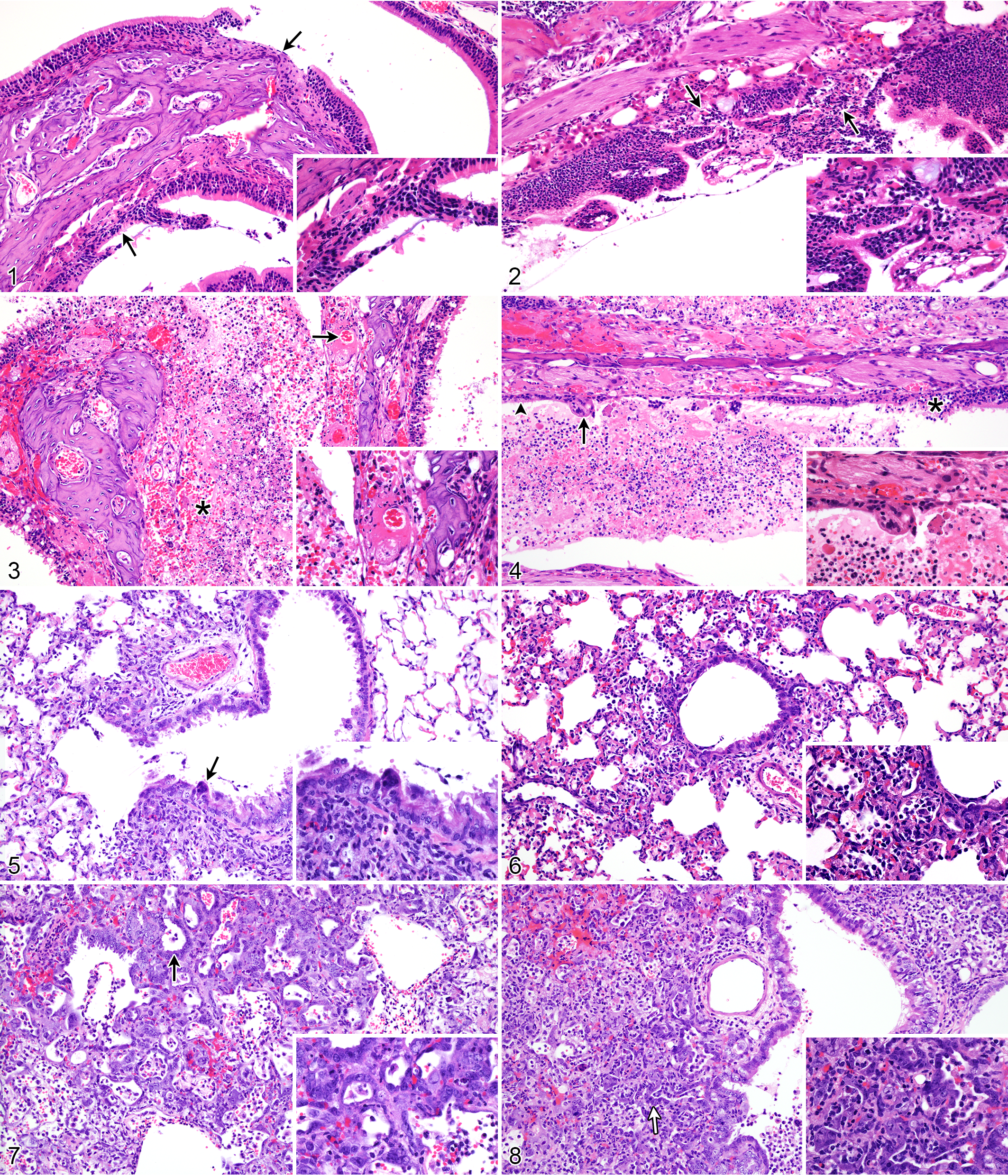
In the nasal cavity, the histologic differences between hamsters inoculated with NiV-B and NiV-M were minimal and observed on day 2 only (Table 1). Differences in lesion severity were seen in the submucosal glands and respiratory and olfactory epithelium. Submucosal gland epithelial degeneration on 2 dpi was present only in hamsters inoculated with NiV-B. NiV-B caused slightly more severe olfactory epithelial lesions than NiV-M 2 dpi, whereas NiV-M caused slightly more severe respiratory epithelial lesions. Both Nipah virus isolates caused mild neutrophilic rhinitis with respiratory and olfactory epithelial degeneration, necrosis, and syncytia formation (Figs. 1, 2). Rhinitis caused by NiV-B was multifocal to coalescing and affected up to 10% of the nasal cavity, whereas rhinitis produced by NiV-M was often focal and affected 5% or less of the nasal cavity. Nasal cavity lesions were more severe at 4 dpi than at 2 dpi for both NiV-B and NiV-M. Lesion severity and distribution were similar at 4 dpi for both virus isolates (Table 2; Figs. 3, 4), with up to 50% of the nasal cavity being filled with inflammatory infiltrate. Multifocal to coalescing ulcers and submucosal gland epithelial degeneration, necrosis, and syncytia were present. Prominent vascular lesions were observed at 4 dpi, including fibrinoid degeneration and fibrin thrombi in multiple nasal submucosal small- and medium-caliber vessels.
Histologic Severity of Respiratory Tract Lesions in Syrian Hamsters Inoculated With a Nipah Virus Isolate From Malaysia or Bangladesh at 2 Days Postinoculation.
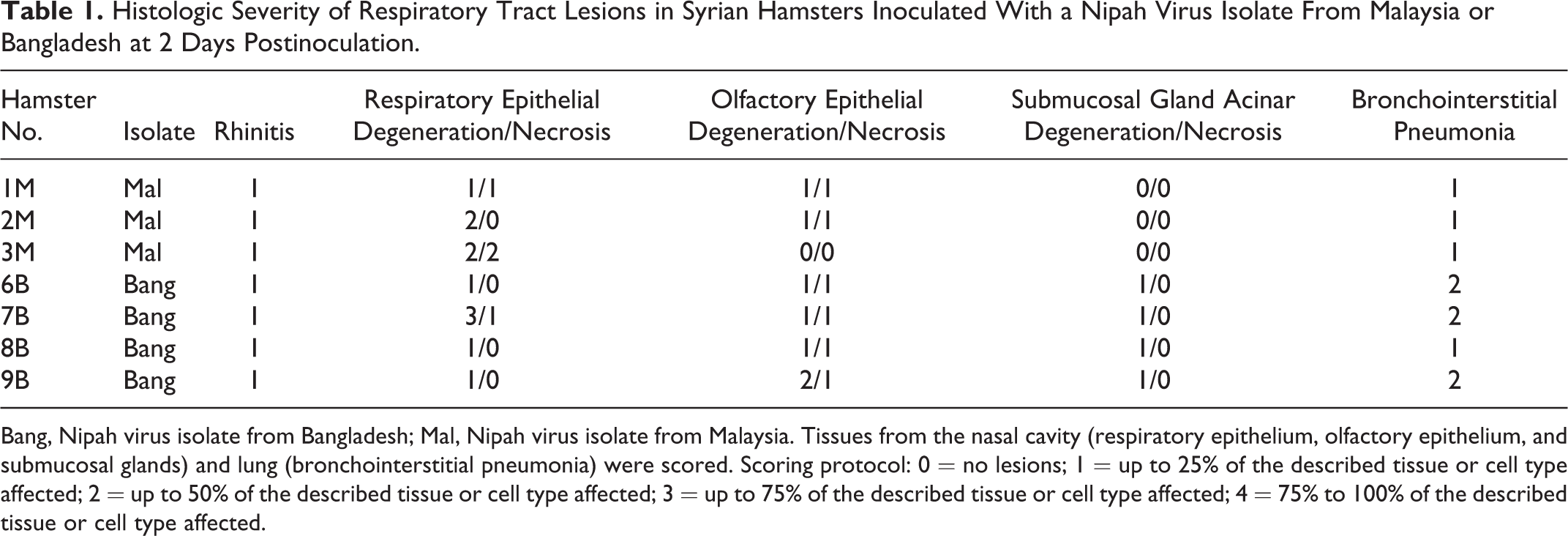
Bang, Nipah virus isolate from Bangladesh; Mal, Nipah virus isolate from Malaysia. Tissues from the nasal cavity (respiratory epithelium, olfactory epithelium, and submucosal glands) and lung (bronchointerstitial pneumonia) were scored. Scoring protocol: 0 = no lesions; 1 = up to 25% of the described tissue or cell type affected; 2 = up to 50% of the described tissue or cell type affected; 3 = up to 75% of the described tissue or cell type affected; 4 = 75% to 100% of the described tissue or cell type affected.
Histologic Severity of Respiratory Tract Lesions in Syrian Hamsters Inoculated With a Nipah Virus Isolate From Malaysia or Bangladesh at 4 Days Postinoculation.
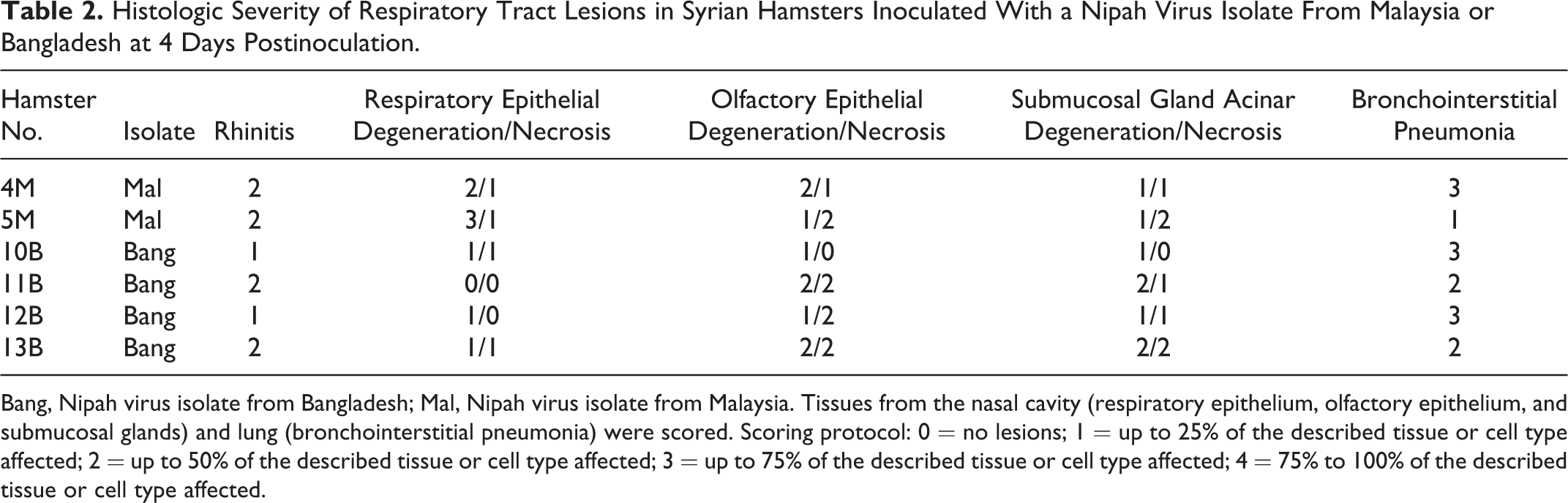
Bang, Nipah virus isolate from Bangladesh; Mal, Nipah virus isolate from Malaysia. Tissues from the nasal cavity (respiratory epithelium, olfactory epithelium, and submucosal glands) and lung (bronchointerstitial pneumonia) were scored. Scoring protocol: 0 = no lesions; 1 = up to 25% of the described tissue or cell type affected; 2 = up to 50% of the described tissue or cell type affected; 3 = up to 75% of the described tissue or cell type affected; 4 = 75% to 100% of the described tissue or cell type affected.
Nipah virus antigen was detected in the same cell types in hamsters inoculated with either NiV-M or NiV-B, and antigen was more abundant at 4 dpi compared with 2 dpi (Suppl. Table S1). Multifocally, Nipah virus antigen was present in the cytoplasm of nasal cavity olfactory, respiratory, and submucosal gland acinar epithelium, mononuclear leukocytes, and neutrophils (Suppl. Figs. S1–S4). Nipah virus antigen was also present in the cytoplasm of endothelial cells in small- to medium-caliber vessels in the nasal submucosa in all hamsters inoculated with NiV-M at 4 dpi but was not present at 2 dpi. In hamsters inoculated with NiV-B, 1 of 4 hamsters (25%) at 2 dpi and 3 of 4 hamsters (75%) at 4 dpi expressed Nipah virus antigen in endothelial cells.
The only statistically significant difference (P < .03) between NiV-M and NiV-B in the nasal cavity was the presence of submucosal gland epithelial degeneration in hamsters inoculated with NiV-B, but not NiV-M, at 2 dpi, as determined by a Fisher's exact test.
Lung
Differences in lesion severity caused by NiV-B and NiV-M were minor and noted only at 2 dpi, and they involved the extent of the bronchointerstitial pneumonia (Table 1) and formation of bronchiolar epithelial syncytia. Both Nipah virus isolates caused a multifocally distributed bronchointerstitial pneumonia centered on terminal bronchioles with scattered fibrin thrombi in alveolar septal capillaries in all hamsters at 2 dpi. NiV-B caused more extensive bronchointerstitial pneumonia at 2 dpi than did NiV-M, affecting up to 50% of the lung compared with less than 25% of the lung, respectively (Figs. 5, 6). Multiple small- and medium-caliber blood vessels in the lung exhibited vasculitis with disruption of the vascular wall and rare endothelial syncytia in hamsters inoculated with either virus isolate. Bronchiolar epithelial syncytia were seen at 2 dpi in all hamsters inoculated with NiV-M but were present in only 1 of 4 hamsters inoculated with NiV-B. At 4 dpi, bronchiolar epithelial syncytia were present in 1 of 2 hamsters inoculated with NiV-M and 1 of 4 hamsters inoculated with NiV-B. At 4 dpi, the bronchointerstitial pneumonia caused by NiV-B and NiV-M had a similar distribution and severity (Table 2), was more extensive than at 2 dpi, affected up to 75% of the lung, and exhibited multifocal type II pneumocyte hyperplasia (Figs. 7, 8).
In the lung, the location of Nipah virus antigen was similar for both NiV-B and NiV-M (Suppl. Figs. S5–S8), and the amount of antigen present for both virus isolates increased from 2 dpi to 4 dpi (Suppl. Table S1). Nipah virus antigen was detected in the cytoplasm of multiple alveolar septal capillary endothelial cells, type I pneumocytes, and mononuclear leukocytes at 2 dpi in all hamsters. Nipah virus antigen was present in the endothelium of rare small-caliber blood vessels at 2 dpi in 1 hamster inoculated with NiV-M (case No. 2M) and 1 hamster inoculated with NiV-B (case No. 9B). At 4 dpi, Nipah virus antigen was also present in scattered type II pneumocytes, endothelial cells, and vascular smooth muscle cells in hamsters inoculated with either NiV-B or NiV-M.
Pulmonary Vasculature
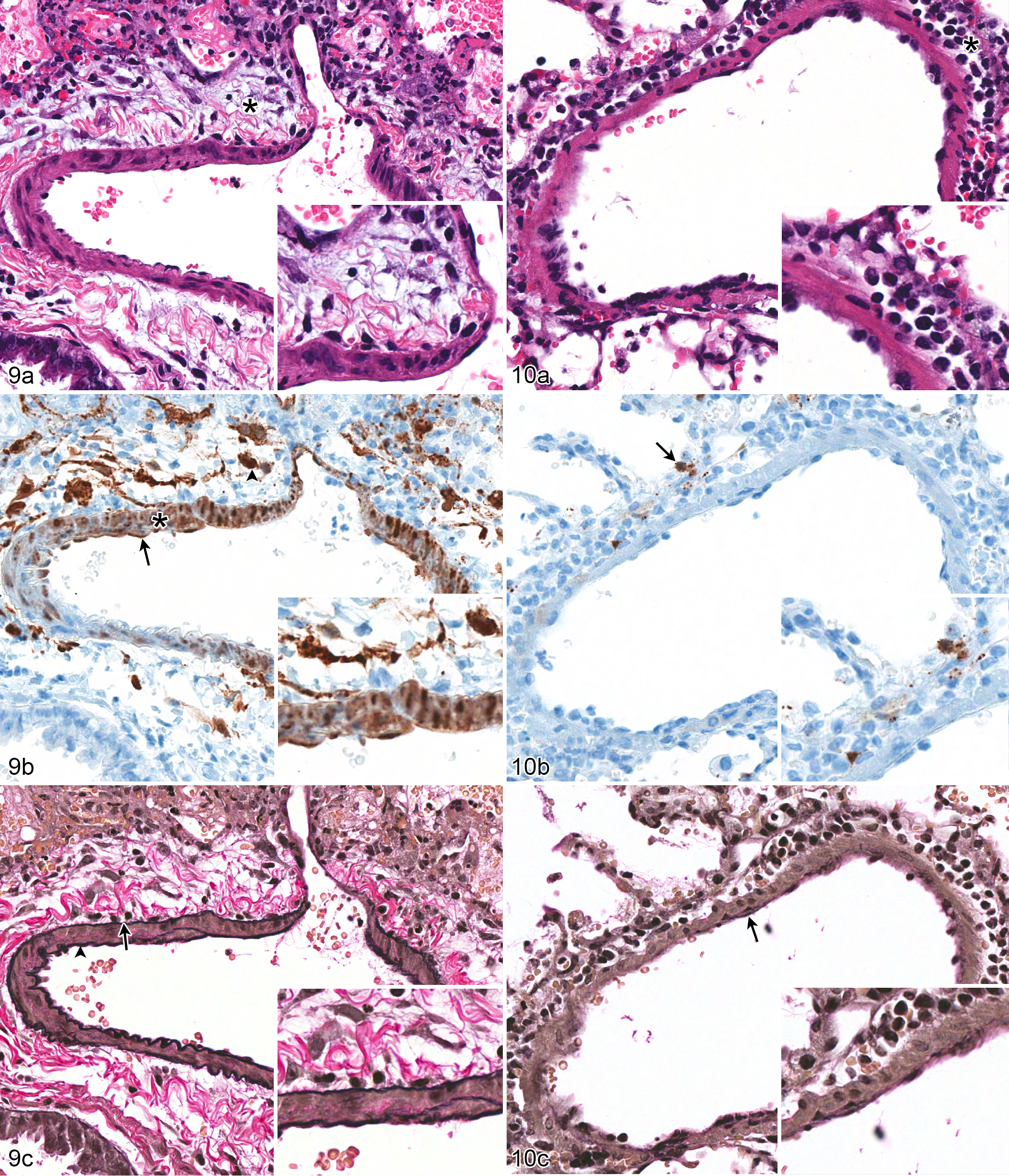
Nipah virus antigen was present in endothelial and smooth muscle cells in multiple small- and medium-caliber blood vessels at 4 dpi in the lung of hamsters inoculated with either NiV-B or NiV-M. Through the comparison of hematoxylin and eosin (HE) and Nipah virus antigen immunohistochemistry on sequential sections of lung, it appeared that Nipah virus antigen had a tropism for arteries rather than veins. Since it can be difficult to differentiate small- and medium-caliber arteries and veins in the lung on HE, a Verhoeff–Van Gieson stain was performed on sections of lung to identify the presence or absence of internal and external elastic laminae in blood vessels. A comparison of HE, Verhoeff–Van Gieson, and immunohistochemistry using anti–Nipah virus nucleoprotein antibody on serial sections of the lung was performed on all hamsters inoculated with either NiV-B or NiV-M that were euthanized at 4 dpi to elucidate if there was an arterial tropism. Ten arteries and ten veins were analyzed in each hamster. Multiple small-caliber blood vessels were not included in the analysis since their scanty tunica media made it difficult to discern if there was 1 lamina or 2 laminae that were barely separated by a thin tunica media. In each hamster, the endothelium of at least 5 of 10 arteries examined contained Nipah virus nucleoprotein (Fig. 9), whereas none of the veins did (Fig. 10). This arterial tropism was observed in hamsters inoculated with either virus isolate and was statistically significant (P < .003) compared with the absence of Nipah virus nucleoprotein in venous endothelium using a Fisher's exact test.
Brain
Lesions were not present in the brain in any hamster inoculated with either Nipah virus isolate. Nipah virus antigen was not observed in the brain parenchyma in any hamster at either 2 dpi or 4 dpi.
Discussion
Syrian hamsters were used as an animal model to investigate histopathologic differences between NiV-M and NiV-B since they recapitulate the disease caused by Nipah virus in humans. 6,8,16,18 In Nipah virus–infected hamsters, clinical signs and histologic lesions depend on the infectious dose and route of inoculation. Hamsters oronasally inoculated with a high dose of Nipah virus develop acute severe respiratory disease, while low doses initially cause mild respiratory disease and then subsequent neurological signs. 16 High doses of NiV-B or NiV-M have both been shown to be uniformly lethal in oronasally inoculated hamsters. 6,7 In this study, all hamsters were inoculated with a high dose of either NiV-B or NiV-M to evaluate the respiratory component of these diseases. At the time points that were examined, Nipah virus antigen had not yet disseminated to the brain, as determined by immunohistochemistry, and lesions were not present in this tissue. Oronasal inoculation of hamsters with NiV-B or NiV-M resulted in subtle differences in lesion severity in the respiratory tract at 2 dpi, with NiV-B causing slightly more severe lesions at that time point. Immunohistochemistry for Nipah virus antigen in the nasal cavity 2 days after oronasal inoculation with NiV-M or NiV-B in Syrian hamsters showed that a higher percentage of epithelial cells in the nasal cavity contained Nipah virus antigen in hamsters inoculated with NiV-B. Although this may have been due to the different inoculum volumes used, it could also indicate that NiV-B entry into epithelial cells lining the nasal cavity is more rapid than NiV-M entry into cells or that NiV-B replicates faster within epithelial cells than does NiV-M. This is one scenario that may also explain the observed lesions in the submucosal gland epithelium in NiV-B–infected hamsters on 2 dpi, as a faster replication rate may have resulted in a faster progression to infection of this deeper-lying tissue.
On 2 dpi, NiV-B showed a slight predilection for damaging olfactory epithelium and NiV-M exhibited a slight predilection for damaging respiratory epithelium in oronasally infected hamsters. The exact mechanism behind these predilections is unknown but could possibly be due to genetic differences resulting in phenotypic variation in the glycoproteins G and F between these 2 isolates, 11 which may affect cell entry of these viruses through host receptor binding on olfactory or respiratory epithelium. In addition, a combination of viral genetic differences and variations in cellular structure and function between respiratory and olfactory epithelium may have caused differences in the viral replication rates in these 2 epithelial cell types.
By 4 dpi, the type and severity of lesions in the lung and nasal cavity were similar for both Nipah virus isolates. Although disease progression was initially more rapid for NiV-B, by 4 dpi, both Nipah virus isolates caused essentially the same severity of pulmonary and nasal cavity lesions in Syrian hamsters. Similarly, in ferrets oronasally inoculated with NiV-B or NiV-M, the clinical respiratory signs and respiratory tract histologic lesions were comparable. 5 Intraperitoneal inoculation of Syrian hamsters with NiV-B or NiV-M also did not result in differences in lesion severity between the 2 isolates, although disease onset and lesion development were faster with NiV-M than with NiV-B. 8 However, all studies to date comparing NiV-M and NiV-B have used the same 2 isolates, and the results would be strengthened if these studies could be repeated using virus isolates from different outbreaks in Bangladesh.
To our knowledge, this is the first study that describes the tropism of Nipah virus for endothelium within arteries and arterioles but not veins. Other studies have examined the presence of Nipah virus antigen within blood vessels but have not exclusively localized antigen to endothelium in arteries and arterioles rather than veins. 9,19 This tropism correlates with the expression of ephrin B2, the main receptor for Nipah virus, in arterial but not venous endothelium; venous endothelium typically expresses Eph-B4, 17 which is not a receptor for Nipah virus.
Taken together, the results presented here do not explain the increased case fatality rate seen in humans infected with NiV-B; rather, the results suggest that differences between the outbreaks in Malaysia and Bangladesh were not caused by intrinsic differences between NiV-B and NiV-M. Other factors, such as the route of infection or dose of the virus received, which were identical in hamsters inoculated with either NiV-B or NiV-M in this study, may have played a role in the differences in disease outcome in infected humans in Malaysia and Bangladesh. For instance, in the Malaysia outbreak, humans were exposed to the virus through close contact with pigs, 15 whereas in the Bangladesh outbreaks, humans were thought to be infected by drinking Nipah virus–contaminated date palm sap or through direct contact with respiratory secretions from infected humans. 10,14 In addition, differences in the availability of health care facilities, willingness to seek medical care early in the infection, the role that family members play in caring for the ill, or other cultural differences may play a role in the differences noted between the outbreaks in Malaysia and Bangladesh in humans.
Footnotes

Acknowledgements
We thank Trenton Bushmaker, Tina Thomas, Rebecca Rosenke, and Dan Long for their excellent technical assistance and Anita Mora and Austin Athman for help with graphics.
Author Contribution
L. Baseler contributed to conception and design; contributed to acquisition, analysis, and interpretation; drafted manuscript; critically revised manuscript; gave final approval; and agrees to be accountable for all aspects of work ensuring integrity and accuracy. E. de Wit contributed to conception and design; contributed to acquisition, analysis, and interpretation; drafted manuscript; critically revised manuscript; gave final approval; and agrees to be accountable for all aspects of work ensuring integrity and accuracy. D. P. Scott contributed to acquisition, analysis, and interpretation; critically revised manuscript; gave final approval; and agrees to be accountable for all aspects of work ensuring integrity and accuracy. V. J. Munster contributed to conception and design, contributed to acquisition and analysis, critically revised manuscript, gave final approval, and agrees to be accountable for all aspects of work ensuring integrity and accuracy. H. Feldmann contributed to analysis and interpretation, drafted manuscript, critically revised manuscript, gave final approval, and agrees to be accountable for all aspects of work ensuring integrity and accuracy.
Declaration of Conflicting Interests
The author(s) declared no potential conflicts of interest with respect to the research, authorship, and/or publication of this article.
Funding
The author(s) disclosed receipt of the following financial support for the research, authorship, and/or publication of this article: This work was supported by the Intramural Research Program of the National Institutes of Health, National Institute of Allergy and Infectious Diseases. Dr Baseler is supported in part by the National Institutes of Health Comparative Biomedical Scientist Training Program.
References
Supplementary Material
Please find the following supplemental material available below.
For Open Access articles published under a Creative Commons License, all supplemental material carries the same license as the article it is associated with.
For non-Open Access articles published, all supplemental material carries a non-exclusive license, and permission requests for re-use of supplemental material or any part of supplemental material shall be sent directly to the copyright owner as specified in the copyright notice associated with the article.
