




Abstract
From 2002 to 2007, 101 camelid abortions and stillbirths were submitted to the Veterinary Diagnostic Laboratory at Oregon State University (84 alpacas [Vicugna pacos], 13 llamas [Lama glama], 4 unknown). For most cases (n = 67), a cause was not determined by routine testing. Eighty-five submissions included placenta for microscopic examination, of which 55 were from abortions to unknown causes (idiopathic). Microscopic features of placentas from abortion/stillbirth were compared with those from 19 camelids delivered normally (6 alpacas, 12 llamas, 1 unknown) and with those from 4 alpaca fetuses of known gestational age collected during the dam’s necropsy. The most common microscopic findings in abortion/stillbirth placentas were mineralization (n = 57) and mucinous edema (n = 27) of the chorioallantoic stroma. One or more of these features were also observed in 22 of 23 placentas from normal pregnancies/deliveries and therefore interpreted as incidental findings. The comparison of alpaca placentas after matching for gestational parameters (crown–rump length, weight, days of gestation; n = 41) revealed hypoplasia of placental villi in 5 of 22 idiopathic abortions and in 1 abortion due to umbilical torsion; hypoplasia was further suspected in an additional 6 abortions of unknown cause and 2 abortions of known cause. The identified villous hypoplasia is assumed to have resulted in placental insufficiency. When placental insufficiency is included as cause, idiopathic abortions are reduced from 66.2 to 47.9% of alpaca cases with histopathologic examination of placenta and from 66.3 to 52.5% of alpaca and llama abortions overall. This study also permitted the generation of a linear regression curve correlating alpaca fetal crown–rump length with fetal age.
Annual infertility rates of alpacas (Vicugna pacos) and llamas (Lama glama) range from 30 to 50%, with abortions and stillbirths adding approximately 10% to reproductive losses. 37 In most cases, the etiopathogenesis of alpaca and llama abortions remains undetermined. 6,24,37 The large percentage of idiopathic abortions and stillbirths in New World camelids, combined with the void in the current literature on abortions and their causes in these species, presents a problem for attending veterinarians and diagnosticians 20,37,40 and precludes the development of preventative strategies. In cattle, a portion of idiopathic abortions may be due to abnormal genetic, hormonal, metabolic, or developmental factors, which are difficult to identify in routine diagnostic laboratory submissions. 4 Placental abnormalities, including placental insufficiency, that may result in fetal distress syndrome and death are commonly diagnosed causes of equine abortions and stillbirths. 13,16,25,35 As in the horse, the placenta of alpacas and llamas is epitheliochorial and diffuse, and the maternofetal interface develops synchronously. 11,28,29 This raises the question to whether microanatomic anomalies of the placenta contribute to the large percentage of abortions with undetermined cause in alpacas and llamas. To objectively evaluate placental development, accurate estimation of the gestational age is imperative. Charts correlating gestational parameters—specifically, fetal crown–rump length (CRL) to gestational fetal age—have been published for other species, including cattle and horses. 31,32 Only limited information is available for the changes in CRL and weight during gestation of llamas and alpacas, 5,12,15 revealing another gap in our knowledge of camelid reproduction.
The specific aims of the study presented here were twofold. The primary purpose was to test the hypothesis that a portion of alpaca and llama abortions currently classified as idiopathic are due to microanatomic anomalies of the placenta similar to those seen in cases of placental insufficiency in other species. The secondary purpose of this study was to provide a means to estimate fetal gestational age based on other gestational parameters—specifically, fetal CRL and fetal weight.
Materials and Methods
Cases
Cases retrieved from the database: Retrospective study
Entries in the database of the Veterinary Diagnostic Laboratory (VDL) at Oregon State University from 2002 to 2007 were analyzed to identify cases of camelid abortions and stillbirths (n = 98). Further case information was retrieved from the original submission sheets as needed. The diagnostic codes used to identify the 98 abortions and stillbirths were as follows: bacterial, idiopathic, nutritional, parasitic, toxic, twinning, viral, and “other” abortions; placentitis; anomaly/congenital defect; and dystocia.
Case submissions: Prospective study
Additional cases were collected from camelid farms to generate reference material for samples of placenta and/or gestational parameters (n = 36). A questionnaire was designed to collect measurements of the placenta (weight) and fetus (CRL, weight, and sex), gestational age at delivery, and species. The questionnaire also provided a schematic depicting placental sites to collect for histopathology and checkoff boxes to record sample collection (gravid horn, nongravid horn, and body of the allantochorion; allantoamnion). Cases reported as normal deliveries (n = 27) were entered into the database as such. The cases reported as abortions (n = 3) were added to the abortion cases retrieved from the VDL database. Examination was limited to gross morphologic evaluation of the fetus in 1 of these 3 cases, whereas the other 2 were worked up by routine abortion screen. In addition, 4 fetoplacental units with known gestational age were collected during necropsy of the dam and utilized as part of the cohort of normal tissues.
Gestational Parameters
Gestational parameters of alpacas were collected from abortions, normal deliveries, and fetuses harvested during necropsy of the dam when available and included gestational age provided by the breeder (denoted as term or listed as days), fetal CRL (in centimeters, measured as curved CRL), and fetal weight (in kilograms). Cases with and without histology samples were included. Curves were calculated using these data to obtain a best-fit model between gestational age and the other gestational parameters measured (see Statistical Analysis). Gestational parameters were used to identify alpaca fetuses aborted at the same or a similar gestational age for evaluation and comparison of placental development and to generate graphs correlating CRL or fetal weight with gestational age (see Statistical Analysis).
Microscopy
Microscopic evaluation was performed on all available placentas from abortion cases, normal deliveries, and cases collected at necropsy of the dam. Of the 101 abortion cases and 27 normal deliveries, 85 and 19 samples were available for histologic examination, respectively. Multiple samples of placenta were collected for histopathology during necropsy of 4 pregnant alpacas. Placentas submitted fresh were examined grossly, and samples from the gravid horn, nongravid horn, and body of the allantochorion were collected into buffered formalin. Care was taken to not sample the physiologically poorly villous areas of the allantochorion along the medial aspect of the horns. When allantoamnion was available, a random sample including prominent arteries was collected and formalin fixed. None of the cases included a sample of the “fourth” membrane, a thin membrane comprising multiple layers of keratinocytes that covers the entire fetus and whose function is undetermined. These samples and formalin-fixed placental samples from normal deliveries collected in the field were trimmed into 3- × 22-mm strips and routinely processed. If the topographic location of the sample had been recorded, sections were arranged in the order of gravid horn, body, and the nongravid horn in the cassette to allow identification of anatomic sites in histologic preparations. Three- to five-micrometer sections of paraffin-embedded placentas stained with hematoxylin and eosin were evaluated by light microscopy by 2 of the authors (D.L.S., C.V.L.). The quality of cellular infiltrates, deposits of acellular material within the tissues, and exudate on the placental surface or in the stroma were described. Villus architecture was recorded in terms of villus size (length of villus in relations to its width: short = length of villus less or equal to 2 times the width of the villus, medium = length of villus more than 2 times and less than 4 times the width of the villus, long = length of villus more than 4 times the width of the villus) and degree of folding and branching on a subjective scale (poor, moderate, complex). When indicated, serial sections were stained with alcian blue (pH 2.5) to demonstrate mucin, von Kossa stain to highlight mineralization, Prussian blue for iron deposits, and Gram and periodic acid–Schiff stains for identification of microorganisms. Microanatomic and histopathologic findings were recorded for all available sections of placenta and categorized according to several microanatomic criteria as placentitis, mineralization, mucinous edema (mucin), and villous hypoplasia.
Statistical Analysis
The program package StatsGraphics (Statpoint Technologies, Inc., Warrenton, VA) was used to determine whether data had a normal distribution, to calculate medians and means, and to generate plots of fitted models for the correlation of CRL (n = 45) and fetal weight (n = 21) versus gestational age. The program package was also used to calculate the correlation coefficient, r value, standard error of the estimate, and mean absolute value.
Results
Abortions
Of the 101 reported cases of abortions, 13 were llamas and 84 were alpacas; in 4 cases, the species was not provided on the submission sheet. For 67 of 101 abortions (66.3%), a cause was not identified (idiopathic abortion category). 24 Among the remaining cases, the most common causes of abortion included bacterial infections, umbilical torsion/asphyxiation, anomalies, and placentitis without identification of a causative agent by routine abortion screen. 24
Gestational Parameters
One or more gestational parameter was available for 94 of 101 abortions (93%), 25 of the 27 normal deliveries (92.6%), and the 4 fetuses collected at necropsy of the dam—represented by 80 alpacas and 13 llamas, 10 alpacas and 15 llamas, and 4 alpacas, respectively; note that the animal species was not identified on the submission sheet for 1 abortion for which gestational parameters were available. The gestational age was provided by the referring veterinarians or animal owners either on the VDL submission sheet or the questionnaire for 54 alpacas and 20 llamas and for 1 case in which the species was not identified. Estimated gestational duration of normal deliveries ranged from 329 to 361 days for llamas (mean = 344.8). Only for 1 normal alpaca delivery was the gestational duration reported in days (350 days). Reported gestational age at time of abortions ranged from 48 to 365 days for alpacas (median = 243) and 105 to 385 days for llamas (median = 304). The range of fetal weight, provided by animal owners for normal deliveries or recorded during necropsy at the VDL, was as follows: 0.012 to 9 kg for 26 aborted alpacas (median = 4.3), 1 to 11.4 kg for 5 aborted llamas (median = 2.5), 7.4 to 9 kg for 9 normally delivered alpacas (mean = 8.29), and 8.64 to 14.5 for 16 normally delivered llamas (median = 13.18). The range of the CRL, provided by animal owners for normal deliveries or recorded during necropsy at the VDL, was as follows: 6 to 87 cm for 66 aborted alpacas (median = 54.5), 4.5 to 86 cm for 10 aborted llamas (median = 70.5), 47 to 66 cm for 7 normally delivered alpacas (mean = 59.3), and 57.1 to 78.7 cm for 16 normally delivered llamas (mean = 68.8). The relationship of fetal weight and estimated gestational age for alpaca follows a hyperbolic curve (Fig. 1a). A linear relationship was identified for fetal CRL and estimated gestational age (Fig. 1b). Calculation of the statistical significance at the 95.0% confidence level resulted in a P value of 0.297 and 0.657 and a correlation coefficient of 0.824 and 0.884, respectively. Calculations based on fitted curves for the examined comparisons for alpacas only are as follows: gestational age (days) vs fetal weight (kg): gestation age = 156.902 + (23.2697 × fetal weight, kg); gestational age (days) vs CRL (cm): gestational age = 72.8968 + (3.60853 × CRL, cm).
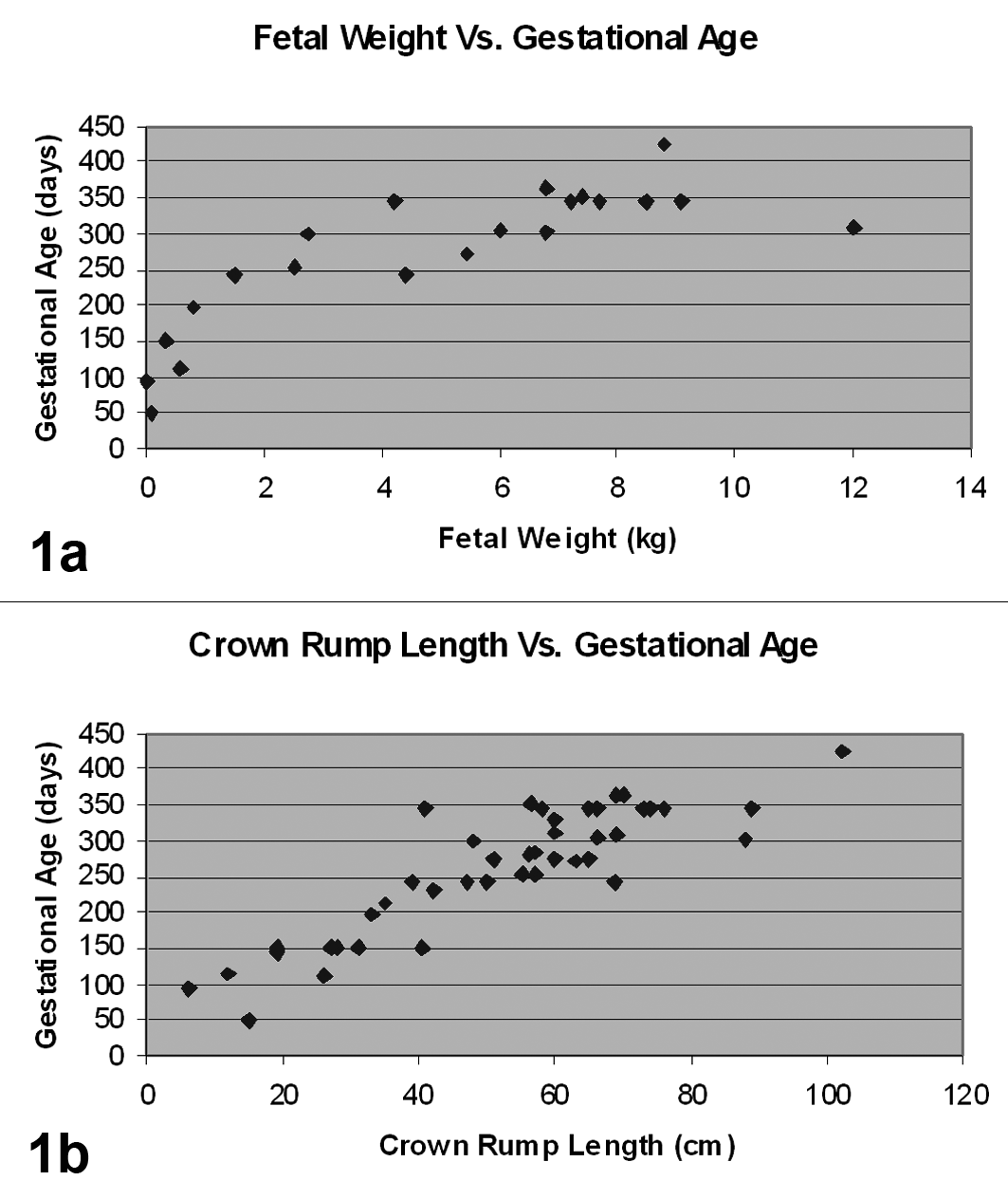
Gestational parameters of alpacas. a, fetal weight (kg) versus gestational age (days). A total of 21 cases were examined: 3 normal deliveries and 18 abortions. The relationship between gestational age and fetal weight follows a hyperbolic curve, and the calculation based on fitted curves is as follows: gestation age = 156.902 + (23.2697 × fetal weight, kg).
Placental Microanatomy and Histopathology
Placenta was available for microscopic evaluation from 85 of 101 abortion cases (84.2%), 19 of 27 normal deliveries (70.4%), and all 4 cases collected at necropsy of the dam. Of the histologically examined cases, 71 abortions were from alpacas (83.5%), 10 from llamas (9.9%), and 4 from an unspecified camelid species (4.7%), whereas 6 normal deliveries were from alpacas (31.6%), 12 from llamas (63.2%), and 1 from an unspecified camelid species. All 4 cases collected at necropsy of the dam were alpacas. Care was taken to not sample the physiologically hypovillous areas of the allantochorion along the medial aspect of the horns of the placenta (Fig. 2).
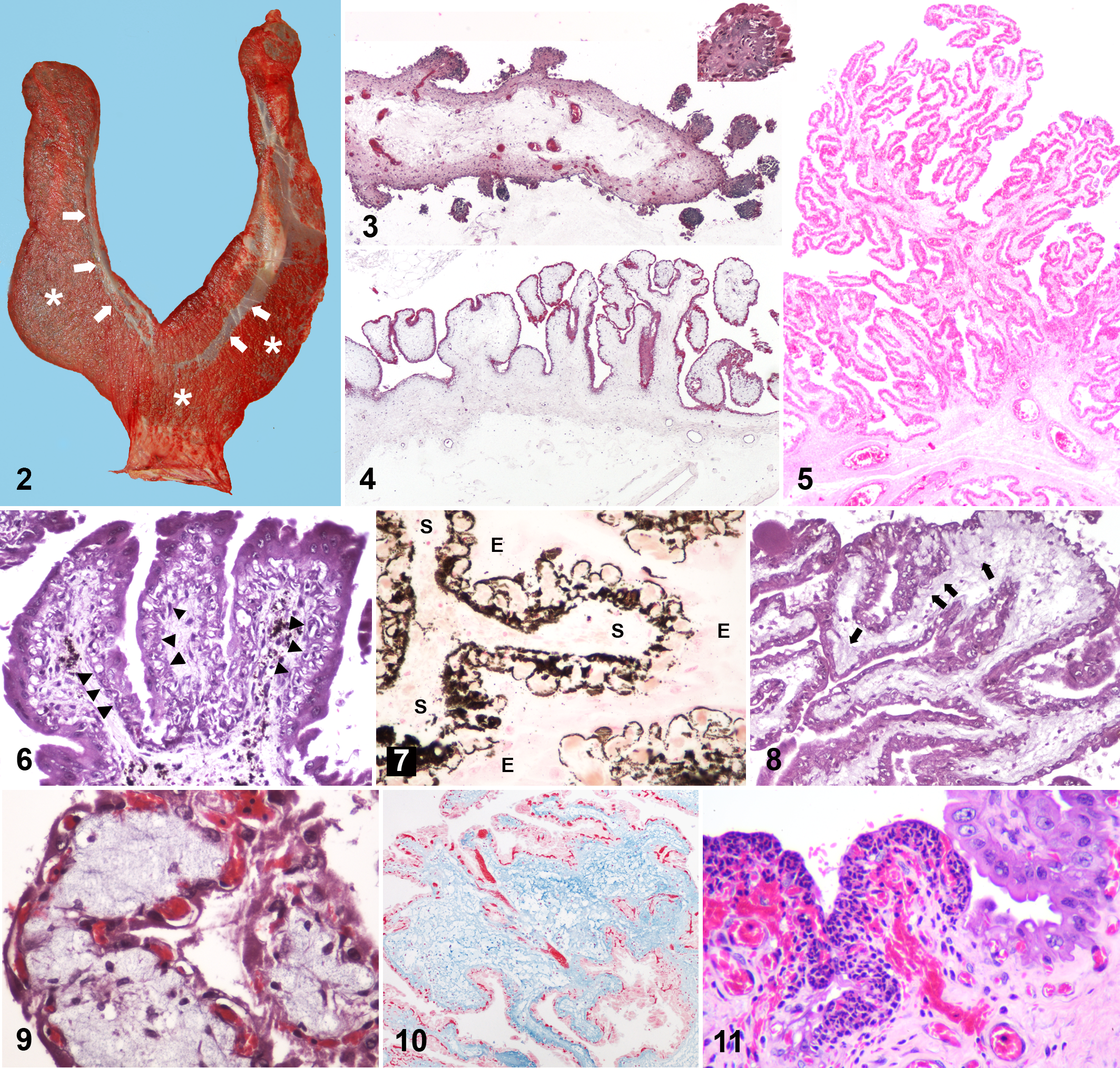
Placenta, alpaca; normal delivery; cria No. 1. The physiologic hypovillous areas (arrows) of the allantochorion run along the medial aspect of each horn. Asterisks indicate sites collected for histopathologic examination of allantochorion to include the body and both horns.
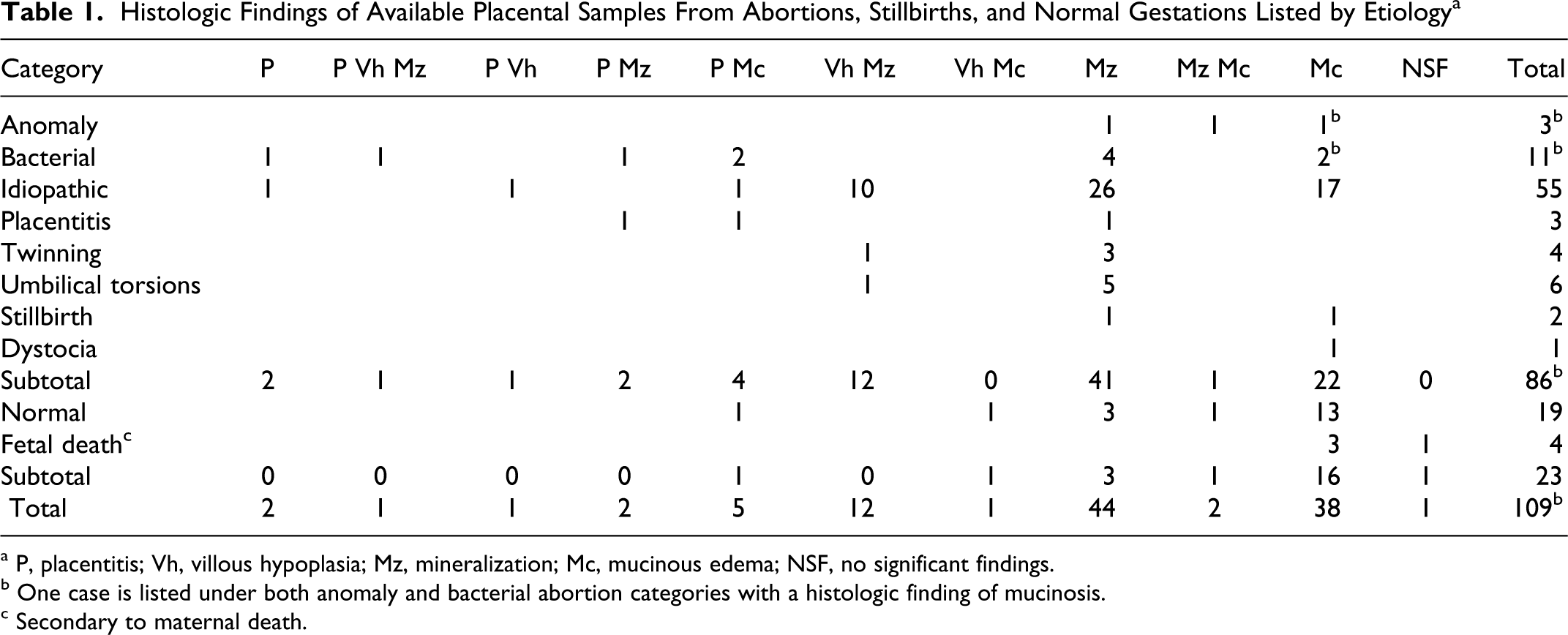
Microanatomic architecture recorded for abortions ranged from simple, semicircular-to-circular (balloon-shaped) placental villi without branching (Fig. 3) to short with plump, simple chorionic projections (Fig. 4) to long and intricately folded (Fig. 5). All normal deliveries had long and intricately folded placental villi typical of term alpaca and llama fetus. 29 In all cases with semicircular to balloon-shaped or marginally branching villi, there was some degree of stromal mineralization (n = 33). Mineralization presented in the form of sickle-shaped to semicircular apical mineral deposits (dubbed “mineralized caps”; Fig. 3) or, rarely, as diffuse linear mineralization along the superficial chorionic stroma at the junction to the trophoblast cell layer. This second type of placental mineralization was more commonly seen in placentas with well-developed, long, and slender villi with prominent ramifications in the form of linear deposits of variable thickness, ranging from 1 to 100 μm, and was usually limited to the apical portion of villi (n = 24; Fig. 6). Both types of mineral deposits stained brown to dark brown in von Kossa–stained recuts (Fig. 7). Linear mineralization occurred either alone or in combination with mucin deposits (edema) or, rarely, in combination with poorly developed placental villi. Mucin was present in the chorion of most placentas either as a bandlike stromal deposit of variable thickness along the basement membrane zone (Fig. 8) or as a diffuse expansion of the chorionic stroma, including that of placental villi (Fig. 9). In alcian blue–stained recuts, mucin was highlighted in the characteristic bright blue (Fig. 10). Placentitis was diagnosed in 10 of the 85 placentas available from abortions. Placentitis presented as neutrophilic to lymphoplasmacytic and histiocytic infiltration of the chorioallantoic stroma (Fig. 11) with or without accumulations of neutrophils, cellular debris, and/or fibrin on the placental surface and, rarely, with short segments of trophoblast necrosis. Acute suppurative to necrotizing placentitis was present in 4 of 5 cases for which an etiology was determined and 3 of 5 cases for which an etiology was not determined, whereas subacute suppurative to lymphoplasmacytic inflammation was diagnosed in 1 case with a known cause and 2 idiopathic abortions. The described microanatomic features of placentas from abortions and stillbirths are summarized in Table 1.
Histologic Findings of Available Placental Samples From Abortions, Stillbirths, and Normal Gestations Listed by Etiology a
a P, placentitis; Vh, villous hypoplasia; Mz, mineralization; Mc, mucinous edema; NSF, no significant findings.
b One case is listed under both anomaly and bacterial abortion categories with a histologic finding of mucinosis.
c Secondary to maternal death.
Two to three sections of placenta each from 19 normal deliveries were examined. In 15 cases, allantochorion and allantoamnion were collected; in 4 cases, allantochorion only. Of the 19 normal deliveries, 1 showed minimal placentitis in combination with mucin deposits; 1 had segmental villous hypoplasia and diffuse mucin deposits; 3 showed mineralization; 1 had mineralization and mucin deposits; and 13 had mucin deposits only (Table 1).
Four cases of fetal death occurred secondary to maternal death. The death of the dam of case No. 1 was attributed to a perforated gastric ulcer with septic peritonitis. The male fetus had a CRL of 55 cm and weighed 3.6 kg at an estimated gestational age of 252 days. The placenta weighed 1 kg and showed marked mucin deposits and long broad villi with minimal to mild branching in 1 section taken from the body and 1 from the gravid horn of the placenta. The allantoamnion had multifocal squamous metaplasia. The dam of case No. 2 was euthanized due to right-sided heart failure and had endocarditis, suppurative bronchopneumonia, and chronic passive congestion of the liver. Its male fetus had a CRL of 69 cm and weighed 12 kg at an estimated gestational age of 309 days. The placenta weighed 2.2 kg, and villi in a section from the body were long and intricately folded and in a section from the gravid horn, long and mildly folded. There were no other significant findings in the allantochorion or the allantoamnion. The dam of case No. 3 died of metabolic derangement with severe hepatic lipidosis and had a uterine torsion. The male near-term fetus had a CRL of 76.2 cm and weighed 10.9 kg. The placenta weighed 1.82 kg. Placental villi were long, those of the body intricately folded, those of the gravid horn long and moderately well folded. Chorionic stroma in both locations had moderate amounts of mucin. The dam of case No. 4 had severe aspiration pneumonia and was euthanized. The alpaca’s male fetus, at an estimated gestational age of 300 days, had a CRL of 46 cm and a weight of 2.75 kg. The placenta weighed 1.25 kg. On histopathology, the 3 sections had elongated thick villi with plump branches and diffuse marked mucin deposits.
Additional histologic findings were noted in several abortions and normal deliveries, including hemorrhage, hyperemia, pigment deposits, and amniotic plaques. Hemorrhage was noted in the placentas of 28 abortion cases and 5 normal deliveries. It occurred predominantly in a mild, multifocal pattern. It was severe and diffuse in 2 abortion cases, 1 idiopathic, and 1 case of twinning. Hyperemia, mainly within capillaries of placental villi, was noted in 24 abortion cases and 17 normal deliveries. A brownish-tan pigment was noted within the trophoblast cells of placental villi in 30 abortion cases and 1 normal delivery. Special stains were not done to determine whether the pigment was hemosiderin or phagocytosed meconium.
The villus architecture of placentas from idiopathic abortions was compared to that of age-, size-, and/or weight-matched abortions with an identified cause and, when of a similar gestational age, to placentas from 4 alpaca fetuses at 252, 300, or 309 days of gestation or near term obtained during necropsy of the dam. Only placentas from alpaca abortions (n = 41) were compared because too few placentas from llama abortions were available. Placentas from fetuses of up to 152 days of gestation with a CRL below 31 cm and a weight of up to 0.3 kg were from 5 idiopathic and 2 bacterial abortions and 1 abortion with umbilical torsion. All 8 placentas had only simple, balloon-shaped chorionic projections of approximately equal height and width that lacked branching (Fig. 3). Placentas from fetuses with a CRL ranging from 31 to 42 cm, a weight ranging from 0.3 to 1.5 kg, and an estimated gestational age of 153 to 243 days included 6 abortions of undetermined cause, 2 abortions due to twinning, and 1 abortion each due to umbilical torsion and bacterial infection. Placental villi from all idiopathic cases, the bacterial case, and 1 twinning case were simple, short, plump chorionic projections that lacked branching similar to those of the less mature fetuses mentioned above, whereas placentas from 1 case each of umbilical torsion and twinning had plump but slightly elongate chorionic projections with primitive ramification (Fig. 4). Placentas from 11 idiopathic abortions and 12 abortions with an identified cause had a fetal CRL of more than 43 cm, a weight of 1.5 kg or more, and an estimated gestational age over 243 days. Five idiopathic cases and 1 umbilical torsion case had primitive, short chorionic projections with minimal ramification to moderately elongate chorionic projections with plump short branches. In contrast, placentas from all remaining abortions in this group (idiopathic, n = 6; bacterial, n = 3; umbilical torsion and placentitis, n = 2), 1 case of dystocia, and the fetuses collected at necropsy of the dam had placental villi that ranged from moderately elongate to long with moderate plump ramification to very long with abundant and intricate ramification (Fig. 5). Poor development of placental villi was diagnosed in 10 cases and suspected in 4 of the 41 cases available for the direct comparison by gestational parameters and was interpreted as villous hypoplasia rather than atrophy. Interestingly, villous hypoplasia was neither observed as sole change nor in combination with both mineralization and mucinous edema.
For allantochorion from 3 normal deliveries and all 4 cases collected at time of necropsy of the dam, samples with topographic identifiers (uterine body, gravid horn, and nongravid horn) were available. Comparison of villus development across these 3 locations revealed no readily identifiable differences in the subjectively determined villus length and branching patterns with 1 exception. One case had a segment of marked reduction in villus length and complexity of branching and was interpreted as a sample collected from the transition of the hypovillous to avillous band along the medial aspect of the uterine horns (Fig. 2) to villous allantochorion.
Discussion
Proper development of the maternofetal interface is absolutely essential for successful establishment of a pregnancy and continuation to term. Placentation in alpacas and llamas is epitheliochorial and diffuse with a synchronously developing maternofetal interface. 28,29 Placentation is most similar to that in Old World camelids and horses, followed by that in pigs. 23 Placental insufficiency due to villous hypoplasia is an accepted cause of equine abortions and is characterized by markedly attenuated microcotyledons with absence or poor development of chorionic villi. 13,38,39 Routine microscopic examination of alpaca and llama placentas as part of diagnostic abortion screens in our study suggested poor development of placental villi in a portion of cases originally classified as idiopathic. 24 To examine if this change corresponded to villous hyoplasia of the equine placenta, a detailed comparison of placentas from idiopathic abortions to placentas from age-, weight-, and/or size/CRL-matched fetuses from abortions with known causes first required an examination of the relationship of the utilized gestational parameters as well as a comparison to previously published data, 5 as gestational age was not included in all case histories. There were strong similarities between conceptus-related measurements found in our study to previous reports in cattle and horses. Similar to the situation in bovine 31,32 and equine fetuses 32 and in contrast to previous observations in alpacas, 5 a strong linear relationship was identified between gestational age and fetal CRL in alpacas (Fig. 1a). When fetal growth of alpacas and llamas is measured by biparietal diameter, it follows a linear function until day 150 of gestation, after which the distribution apparently becomes exponential. 12 A hyperbolic relationship was identified for gestational age and fetal weight in the alpaca population examined in our study (Fig 1b). This type of relationship is also seen in cattle and horses, 32 and it is in line with previously reported rapid increase in body weight of alpaca, llama, and camel fetuses in the last trimester 5,8,34,36 but differs from the linear relationship of fetal weight to gestational age of llamas after the 185 days of gestation reported by others. 15 The pattern suggests that any retardation of fetal growth that might have occurred with some causes of abortion or stillbirth had either no influence or a negligible effect on our overall data set. Seasonal changes in gestational length and birth weights in alpacas, as reported by others, 7 and their possible effects on fetal development were not evaluated in this study.
In camelids, trophoblast projections and uterine depressions are almost perfectly interlocked. 11,28,29 At the beginning of the third trimester, elongation and branching of villi are evident, and ramification becomes remarkably more intricate from that point forward. 28,29 The rudimentary placental villi of all alpaca fetuses aborted before day 152 of gestation with a CRL of up to 31 cm and weight up to 0.3 kg (n = 18) corresponded to those of the normal-developing alpaca fetus experimentally harvested at day 150 of gestation. 28 Placental villi from alpaca fetuses aborted between 153 and 243 days of gestation with a CRL of 31 to 42 cm and a weight of 0.3 to 1.5 kg were expected to be further developed with a villus length of 2 to 3 times its width and short plump branches. Six idiopathic abortions matched for gestational parameters, 1 case of twinning, and the single bacterial abortion in this group had balloon-shaped villi with mineralized caps. Even though differences were less striking in this group than in placentas from the third trimester (see below), this finding was interpreted as villous hypoplasia, and placental insufficiency was suspected as cause of or contributing factor to abortion. Placentas from fetuses with a CRL of more than 43 cm, weight of 1.5 kg or more, and estimated gestational age over 243 days (third trimester) were expected to have placental villi ranging from moderately elongate to long with moderate ramification to very long with abundant and intricate ramification similar to that of normal alpaca fetuses experimentally harvested at or after 264 days of gestation. 28 In contrast, 5 idiopathic cases and 1 umbilical torsion case in this group presented with primitive, short chorionic projections with minimal ramification to moderately elongate chorionic projections with plump short branches. The lack of more advanced stages of placental development was interpreted as villous hypoplasia and identified as cause of abortion based on similarities to equine placental insufficiency. 13,33,38,39
The etiopathogenesis of placental villous hypoplasia is poorly understood. Improper development of the maternofetal interface in general with villous hypoplasia may be the result of low maternal body weight as seen in the mare and ewe, in which maternal body size seems to control for fetal growth via gross area of the allantochorion and microcotyledon density and complexity. 1,2 Maternal weight was not recorded in the study presented here. Localized villous hypoplasia in the horse may be observed in areas of endometrial fibrosis, in the uterine horns in cases of body pregnancies, and in the contact area of placentas of twin pregnancies. 10,14,19 It is possible that at least some of the cases with villous hypoplasia may have been caused by similar underlying problems. The areas of villous hypoplasia detected in 3 alpaca abortions due to twinning may have been collected from the placental contact area. Pregnancies in the alpaca and llama are usually carried in the left horn. 9 It is not possible to determine with certainty which horn carried a pregnancy by examination of fetal membranes only. Uterine body pregnancies are a recognized cause for abortion in the horse. 10 Our study did not identify any abortions due to uterine body pregnancies in alpacas and llamas. However, this condition can be easily missed and is impossible to diagnose on submissions including an incomplete placenta. In human pregnancies with chromosomal anomalies, an association is found between placental villous hypoplasia and fetal cardiovascular defects, and it is hypothesized that decreased villous circulation and reduced nutrient supply are responsible. 17 Placenta was available for histopathologic examination only from 1 alpaca and 1 llama fetus with congenital anomalies—neither sample had villous hypoplasia and neither fetus had cardiovascular defects.
When placental insufficiency due to villous hypoplasia is considered as possible cause of abortion, the percentage of idiopathic abortions in alpacas in this study is reduced from 66.2 to 47.9% of the microscopically examined cases and 67.9 to 51.2% of all alpaca abortions, whereas idiopathic abortions of alpacas and llamas overall are reduced from 66.3 to 52.5%. This places the percentage of abortions for which a cause is not identified more in line with those in other large animal species. 3,16,21,22,25,26,35 Placental insufficiency may result in fetal distress syndrome due to hypoxia to the fetus and/or diminished fetal growth. A possible association of villous hypoplasia and fetal distress syndrome, as defined by defecation of meconium and aspiration of fetal fluids in utero, was beyond the scope of the study presented here. Too few placentas from idiopathic and other llama abortions were available for comparison based on gestational parameters in this species. Therefore, the importance of villous hypoplasia in pregnancy failure in llamas remains speculative at this point in time. When evaluating the development of chorionic villi, it is important to notice that a bandlike avillous to hypovillous area runs longitudinally along the medial aspect of each horn (Fig. 2). This area was observed in all placentas examined grossly and was interpreted as a physiologic phenomenon. It was avoided in collection of placenta samples for histopathology from normal deliveries, cases of fetal death secondary to maternal death, and abortions and stillbirths examined at the laboratory (Fig. 2). The observation of a segment of poorly developed placental villi in the allantochorion from a single, normally delivered alpaca was interpreted as sampling error, as the fixed sample of placenta originated from a submission collected in the field.
The most common histopathologic features identified in placentas from alpaca and llama abortions other than architectural anomalies of placental villi were stromal deposits in form of mineralization (57 of 85) and mucin (27 of 85), with 1 case containing both. Surprisingly, stromal deposits of mucin (16 of 19) and mineral (4 of 19) were a common finding in placentas from normal alpaca and llama deliveries and were also present in 3 of 4 placentas collected at necropsy of pregnant dams. Mineralization was present along the junction of chorionic stroma and trophoblast layer or as caps or spheres in the stroma of hypoplastic villi. It was noted as a concurrent lesion in all but 1 case with villous hypoplasia. Mineralization was less commonly seen in abortions with identified causes, 2 of 3 of the anomalies, 6 of 11 bacterial cases, 1 case each of the 2 cases of stillbirths and placentitis, and all cases of twinning and umbilical torsion. Deposition of mineral occurs in the placenta of many species from about the end of the first to the middle of the second trimester. 33 The degree of mineral deposition is quite variable, and it is undetermined why mineral is deposited or what, if any, place it has in placental economy. 33 Based on the large percentage of concurrent mineralization and villous hypoplasia, it is conceivable that mineral deposits interfere with adequate nutrient supply to villi and lead to inadequate villus growth and formation. Alternatively, an underlying unidentified problem, such as inadequate vascularization, may cause poor development of villi as well as their mineralization, or mineral may accumulate after fetal death as trophoblasts continue to transport calcium across the maternofetal interface even though utilization by the fetus has ceased. With the information currently available, it cannot be determined whether the mineralization seen in the camelid placentas was a result of metastatic mineralization as in human placentas or due to other mechanisms of mineralization. 18,30,33
Mucin, a carbohydrate, was seen in the placental stroma of idiopathic abortions, abortions and stillbirths of known causes, normal deliveries, and placentas harvested at necropsy of pregnant dams. It was identified in 27 of 85 (31.8%) of all abortion cases and in 17 of 55 (30.9%) of the idiopathic subgroup. Even though there is a paucity of literature on the occurrence of placental mucin deposits, its identification in 16 of 19 (84.2%) of the normal alpaca and llama deliveries and in 3 of 4 placentas from pregnant dams at necropsy suggests that the presence of mucin is an incidental histologic finding in the allantochorion of alpacas and llamas. Mucin deposits are interpreted as a form of placental edema, and in severe cases, an underlying problem such as circulatory disturbances may be suspected, as the most severe case of mucin deposits was observed in the placenta of a prematurely delivered alpaca fetus diagnosed with an enlarged ductus arteriosus.
Surprisingly, placentitis was seen in only 10 of 85 (11.8%) alpaca and llama abortions with histologically examined placenta. Bacteria were the only identified infectious cause of placentitides and were isolated from 5 of 10 cases. The other half of the placentitis cases were of undetermined etiology.
In summary, the detailed comparison of placentas from idiopathic abortions and stillbirths to those from age-, weight-, and/or size/CRL-matched fetuses from abortions and stillbirths with known causes in our study determined that villous hypoplasia occurs in alpacas aborted in the third trimester and possibly second trimester and may contribute to pregnancy failure in this species. Care should be taken to avoid the bandlike hypovillous to avillous areas running longitudinally along the medial aspect of the horns when collecting placental samples from alpacas and llamas to prevent incorrect diagnoses of villous hypoplasia. Based on anatomy and function of the digestive tract, alpacas and llamas are often considered “small ruminants.” Given the placental anatomy as well as our findings of microanatomic placental anomalies in alpacas and llamas, camelid abortions and stillbirth have more commonality with those in horses than those in sheep or goats. 3,16,21,22,26,27
Footnotes
Acknowledgements
This article is dedicated to Glen Pfefferkorn in recognition of his generous support of research projects on alpaca and llama diseases conducted by faculty at Oregon State University. We thank our colleagues Drs Beth Valentine, Jerry Heidel, and Howard Gelberg for the routine diagnostic workup of some of the cases, the local llama and alpaca owners for submission of samples and data-recording sheets, and Misty Corbus, Kay Fischer, and Renee Norred for excellent assistance with histotechnology. The work was presented at the 2010 annual meeting of the American College of Veterinary Pathologists in Baltimore, Maryland. Dr Schaefer now works at Aumsville Animal Clinic, Aumsville, Oregon.
The authors declared no potential conflicts of interest with respect to the research, authorship, and/or publication of this article.
The authors disclosed receipt of the following financial support for the research, authorship, and/or publication of this article: This study was supported by the Merck Merial Veterinary Scholar Program (D.L.S.) and matching funds from the College of Veterinary Medicine at Oregon State University.