




Abstract
Background:
Patients with bipolar disorder demonstrate increased sensitivity to appetitive/rewarding stimuli even during euthymia. On presentation of arousing pictures, they show a peculiar response, suggesting heightened vigilance. While responding to looming arousing cues, studies show subjects with anxiety spectrum disorders exhibit increased reaction time (RT), explained by the “looming-vulnerability model.” This study aimed to investigate the responses to looming arousing cues in euthymic bipolar patients and their first-degree relatives, as compared to healthy controls.
Method:
A looming appetitive and aversive cue paradigm was designed for assessing the RT of patients to process appetitive and aversive cues. The behavioral inhibition/activation and sensitivity to reward/punishment amongst the groups were also assessed.
Results:
The bipolar group showed significantly longer RT to process appetitive cues irrespective of the looming condition. Aversive cues elicited significantly longer RT in both the bipolar group and in first-degree relatives, but only when presented with the looming condition. Significant looming bias was elicited in the bipolar group which suggested a particular cognitive style to looming cues. A composite measure of RT along with sensitivity to reward/punishment distinguishes the bipolar group and their first-degree relatives from the healthy controls.
Conclusion:
The looming vulnerability model may provide important insights for future exploration of cognitive endophenotypes in bipolar disorder.
Keywords
Reward hypersensitivity trait is marked in bipolar patients even during euthymia. Bipolar disorder patients and their first-degree relatives show altered responses to appetitive/aversive affective looming cues. RT to looming cues and behavioral scores of reward sensitivity in the bipolar group, their first-degree relatives, and healthy controls were able to predict group membership adequately. The looming affective cue paradigm may be a promising method for future exploration of bipolar endophenotypes.Key Message::
The Global Disease Burden study accounts bipolar disorder for 9.9 million disability-adjusted life years (DALYs) 1 despite a remission rate of 62.63%. 2 One of the best strategies to reduce the disease burden is the accurate identification of subsyndromal states. The National Mental Health Survey of India found the treatment gap in bipolar disorder to be 70.4% with a median interval of 11 months between onset and consultations, suggestive of a prolonged period of subsyndromal states and poor role functioning during periods of remission. 3 Several factors contribute to the subsyndromal states in bipolar disorder. One important factor is the difficulty in regulating the response to desire and pleasure and a higher behavior activation that makes bipolar patients vulnerable to impulsivity and substance use. 4 Behavioral activation is also a significant predictor of time until the recurrence of mania, but not depression. 5 Additionally, enhanced sensitivity to reward is a feature of bipolar patients even during euthymic periods. 6 It is manifested as a tendency to show excessive goal-striving behavior and a sense of excessive dejection during a loss of reward, 6 which further contributes to prolonged subsyndromal states. This has been tested in remitted bipolar patients using the “affective startle modulation” paradigms that have investigated the startle-blink response to affect-driven picture cues of appetitive and aversive variety.7,8
Another interesting feature that needs to be explored is the vulnerability to “looming perceptual cues.” It is the ability to react to approaching cues that may or may not pose a threat unless one can respond in time to it. 9 An “arousing stimulus” that shows movement onset in a direction relevant to the subject (approach) captures the primary motor response more than that of the same “arousing stimuli” presented in a nonapproaching direction. This phenomenon is termed as the looming vulnerability. 10 Elevated looming vulnerability is when an approaching threat that shows dynamic changes in time demands responses that range from increased avoidance reactions of flight (measurable as reduced RT) or defensive reactions of freeze (measurable as prolonged RT). 11
People who are vulnerable to mood and anxiety disorders show increased RT, suggesting freeze-like responses to looming or approaching pictures, irrespective of the valence and arousal of pictures. 12 No studies have evaluated the same in remitted patients with bipolar disorder who might still show subsyndromal states. One study has evaluated affective startle modulation using appetitive pictures in remitted bipolar subjects and their first-degree relatives (FDRs), which found comparable startle responses, suggesting that reward hypersensitivity may be a potential trait marker of bipolarity. 13 No study has so far evaluated the reaction to looming cues in remitted bipolar subjects. Despite studies indicating a possibility of exploring endophenotypes using these domains, no studies have explored the reaction to looming cues in FDRs of patients with bipolar disorder. 13
We hypothesize that remitted bipolar subjects may show differential RTs to appetitive/aversive looming (AVL) cues as compared to nonlooming cues, and the pattern of responses may differ from that of their FDRs and healthy controls (HC). We also hypothesized that the composite measures of RT to looming affective cues, behavioral measures of behavioral inhibition/activation, and sensitivity to reward/punishment taken together may accurately classify bipolar group (BG), FDRs, and HC with a good sensitivity/specificity, and provide insights to explore potential endophenotypic markers of bipolarity.
Materials and Methods
Participants
This hospital-based cross-sectional study recruited 30 patients in BG, currently in remission, and their unaffected FDRs, using a purposive sampling technique. The data was collected between July 2017 and February 2019 at the K.S. Mani Centre for Cognitive Neurosciences in Central Institute of Psychiatry, Ranchi. The BG samples were diagnosed using the ICD-10 DCR criteria for bipolar affective disorder, currently in remission, F 31.7, 14 and also the Present State Examination-10 and a structured diagnostic interview schedule. 15 A detailed cognitive assessment was conducted during the clinical examination, namely, serial subtraction test for attention, digit span test for immediate working memory, similarity test for abstraction, and arithmetic tests for rote, complex verbal, and written calculation. Subjects with any clinically evident cognitive impairment were not considered for the study. The inclusion criteria for the BG included Young’s Mania Rating Scale (YMRS) score of < 4 16 and the Hamilton Depression Rating Scale (HAM-D) score of < 7. 17 The exclusion criteria included current substance abuse, comorbid psychiatric diagnoses, and having received ECT in the past six months. The FDRs chosen were same-sex parent/offspring or same-sex siblings within the age group 18–60 years. The FDRs were excluded if they had any current medical or psychiatric illness and if their GHQ 12 score was > 3. 18 Thirty age-matched HCs whose GHQ-12 score was < 3 were selected from the geographical vicinity of the institute. The approval of the Institutional Ethical Committee and appropriate informed consent was taken from the participants.
Measures
Duration of illness in terms of the total number of months in which the patient was symptomatic during each mood episode was recorded. The age of onset of the first episode was also recorded.
The individual’s tendency to activate behavioral systems while anticipating reward or punishment was assessed using the Behavioral Inhibition/Activation System Scale (BIS/BAS) 19 and Sensitivity to Reward and Sensitivity to Punishment Questionnaire (SPSRQ) 20 which were applied to all the groups.
BIS/BAS Scale and SPSRQ
The BIS/BAS scales were constructed based on approach/avoidance motivation to rewarding or punishing cues, based on the biopsychosocial theory of personality, 21 and included measurement of four domain scores: behavioral inhibition (BIS) and three subcategories of behavioral activation, that is, BAS drive, BAS reward sensitivity, and BAS fun-seeking.
SPSRQ, 20 which explicitly measures sensitivity to reward/punishment cues, was measured using the scores across the two domains of sensitivity to punishment (SP) and sensitivity to reward (SR).
Experimental Task
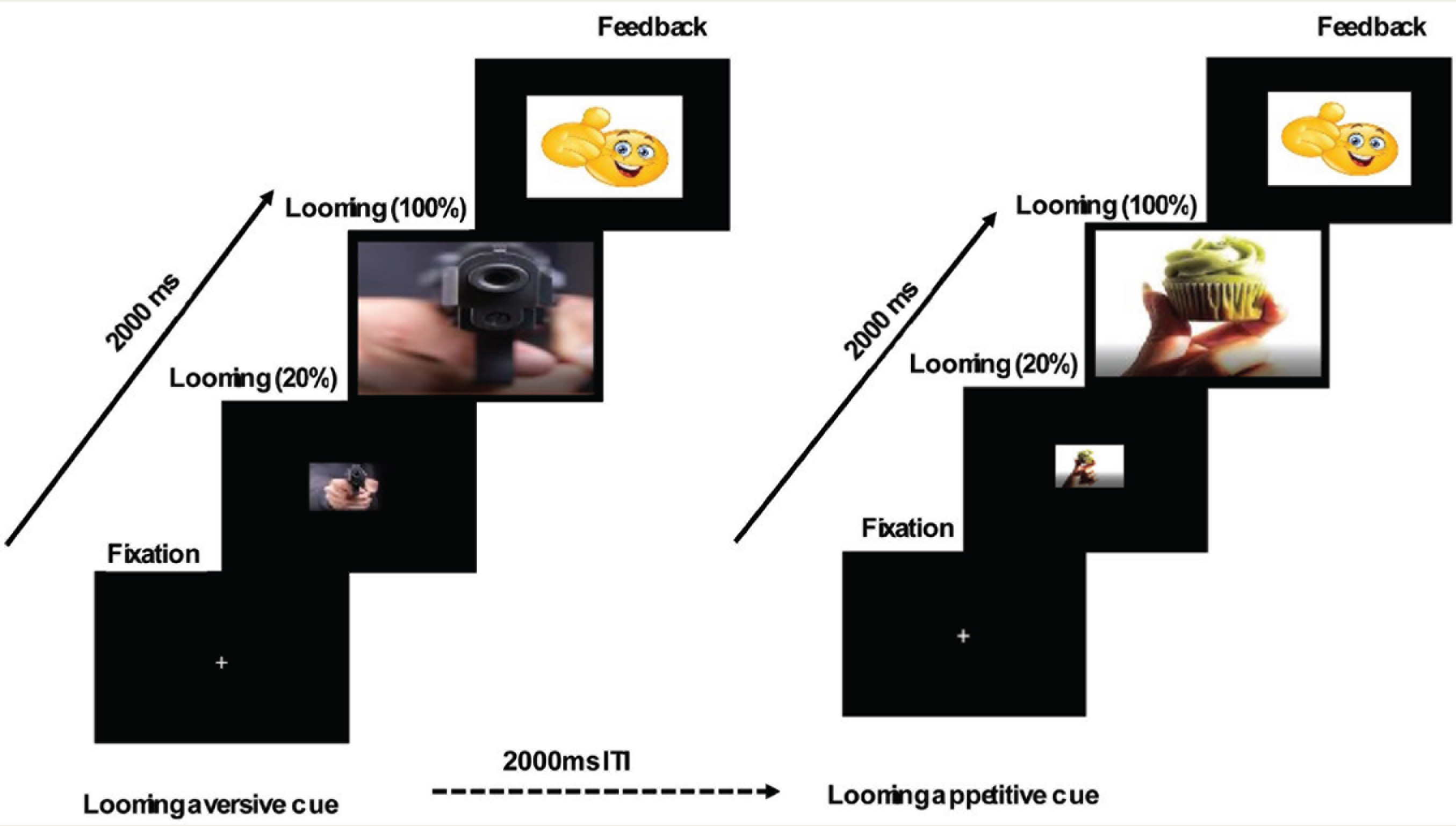
All participants were subjected to a task that measured their RTs in milliseconds taken to process and respond to the four types of animated looming cues presented: appetitive looming (APL), aversive looming (AVL), appetitive nonlooming (APNL), and aversive nonlooming (AVNL). Looming pictures are those cues presented as an image that progressively looms towards the subjects in up to five sequential cue positions, each presented bigger and closer than the previous cue position, thereby creating a perception of an approaching stimulus. Appetitive pictures are those which are considered to be rewarding/pleasurable to the subject and rated high in their degree of valence (extent of positive likeability). Aversive pictures are those which are considered to be punishing/undesirable and rated least in their degree of valence. The pictures were originally shot using a DSLR camera at various looming levels. Each image had the dimension of 1200 × 800 pixels. Looming cues were synthesized using these images that were subsequently animated (Windows Media Video .wmv format at 30 frames per second) using Windows® Live Movie Maker. A total of 20 sets each of appetitive and aversive cues were created and were shown as both looming and nonlooming conditions. The animated cues were then shown to 10 mental health professionals to determine their valence and arousability (the extent to which a strong emotional response is elicited). They had to rate the images on a Likert scale of –5 to +5, in terms of the degree of valence and arousal. Ten appetitive cues (high arousal and high valence) and ten aversive cues (high arousal and low valence) were chosen based on the responses. The nonlooming appetitive/aversive cues were essentially selected from the same set, which was presented without the looming effect. The task was integrated and presented using E-Prime 2 software® for Windows® to measure the RT. The task was displayed on a 15 inches computer screen while the subjects were sitting comfortably at a distance of one meter from the screen. The participants were first asked to identify whether the cues were appetitive/aversive and looming/nonlooming (four predefined keys on serial response box) as fast as they can. The participants were explained about the various cues they come across, for example appetitive cue (fist full of money/choco-chip ice-cream held in hand, etc.) or aversive cues (hand pointing a gun/angry face/creepy mask, etc.). They were also asked to keenly observe whether the cues appear to loom progressively closer towards them (i.e., become larger) to the viewer in up to five sequential cue presentations (cue “positions”). 22 If the button press is correct and fast enough, the participant receives a social reinforcer on the screen displayed as a smiling emoticon, and a sad emoticon if the button press is wrong or slow (>3000 ms after onset). The looming occurred at 500–2000 ms (25%–100%). Each cue was presented randomly, with an intertrial interval of 2000 ms (Figure 1). The experiment was conducted between 9 am and 12 pm in a laboratory setting, which was a sophisticated, sound-attenuated, illuminated, and nondistracting room. This task was designed to elicit event-related potentials as a part of a much larger study that explored neuro-electrophysiological indices of bipolarity using this novel paradigm, and the preliminary data is presented here.
Looming Affective Picture Paradigm with Appetitive and Aversive Cues
Statistical Analysis
Sociodemographic data were analyzed across BG, FDRs, and HC using the χ2 test. Continuous variables were compared using one-way ANOVA. The descriptive analyses of BIS/BAS and SPSRQ scores were done and compared using ANOVA. The RTs of each group were assessed, and the mean and SD were calculated for each type of cue. Comparisons were made using ANCOVA; Bonferroni correction was applied, and the significance level of 0.016 level was taken. The results were further assessed in post hoc analyses. Receiver operating characteristic (ROC) curve was plotted to measure the area under the curve (AUC) for each group based on their RTs, to determine the sensitivity/specificity of the RT to the cues. Finally, a composite linear discriminant function analysis was done to predict group membership based on the predictor variables. The Statistical Package for the Social Sciences® (SPSS) version 25 for Windows® was used for analysis.
Results
Sociodemographic Profile
The three groups were similar in terms of gender, religion, habitat, family type, and monthly income (Table 1). There was a 2:1 male to female ratio in all the groups. One-way ANOVA revealed a significant difference in age among the groups (F = 12.66, P < 0.001). The FDRs chosen were either same-sex parent or same-sex offspring which led to a wide variation in the age groups. In terms of education in years, HCs had significantly higher years of education than the other two groups (F = 10.27, P < 0.001). Hence, we took both age and education as covariates as they could influence the overall results. In the BG, the mean age of onset of illness was 20.33 ± 6.78 years. The mean duration of illness was 14.36 ± 7.43 years.
Comparison of Sociodemographic Variables (
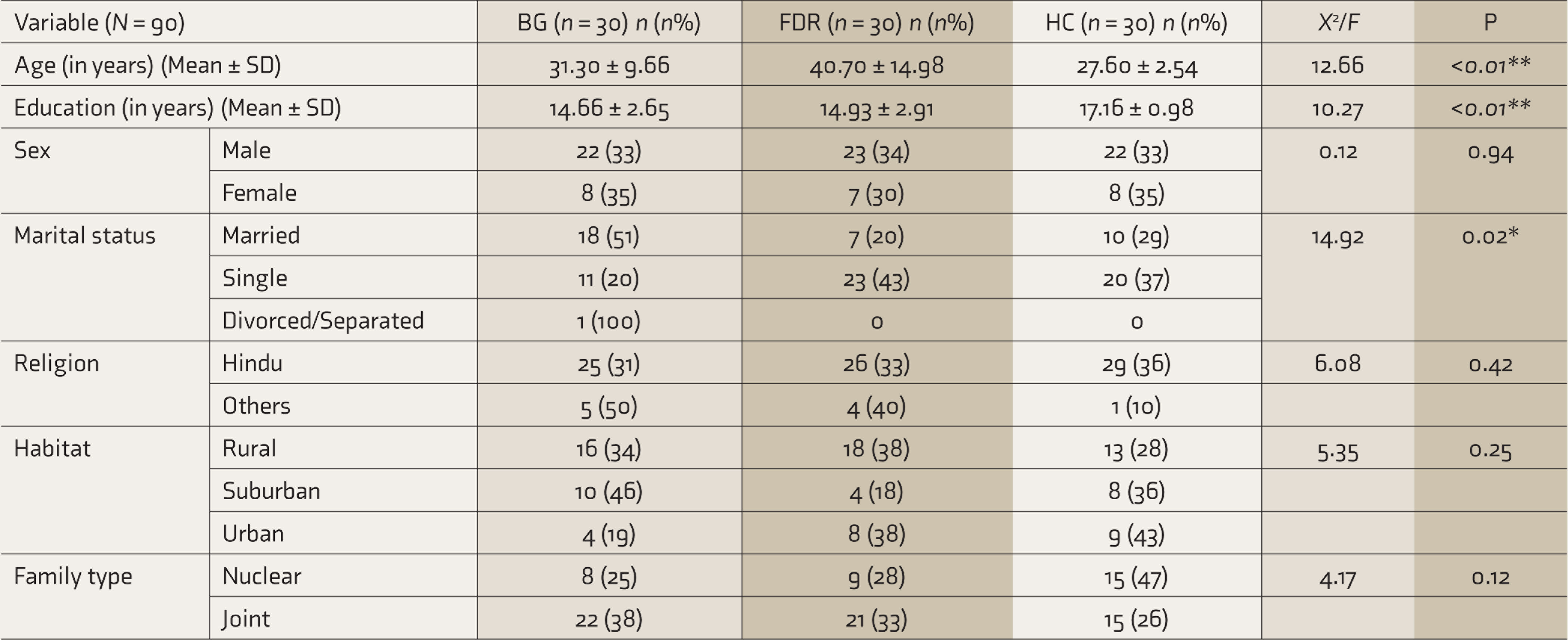
BG: bipolar group, FDR: first-degree relatives, HC: healthy controls. *P < 0.05, **P < 0.01. Italic p values highlight the statistical significance.
BIS/BAS and Sensitivity to Reward and Punishment
The mean and SD of the BIS/BAS and SPSRQ scores were obtained for each domain (Table 2) and compared using one-way ANOVA. Bonferroni post hoc analyses were done. There was a significant difference between HC as compared to the other two groups in BAS-fun-seeking scores (F = 13.84 and P < 0.001). There was a pattern of significant differences between all groups in SR scores (F = 18.82 and P < 0.001) with BG > FDR > HC in post hoc analysis.
Behavioural Inhibition/Activation (BIS/BAS Scale) and Sensitivity to Reward and Sensitivity to Punishment (SPSRQ)
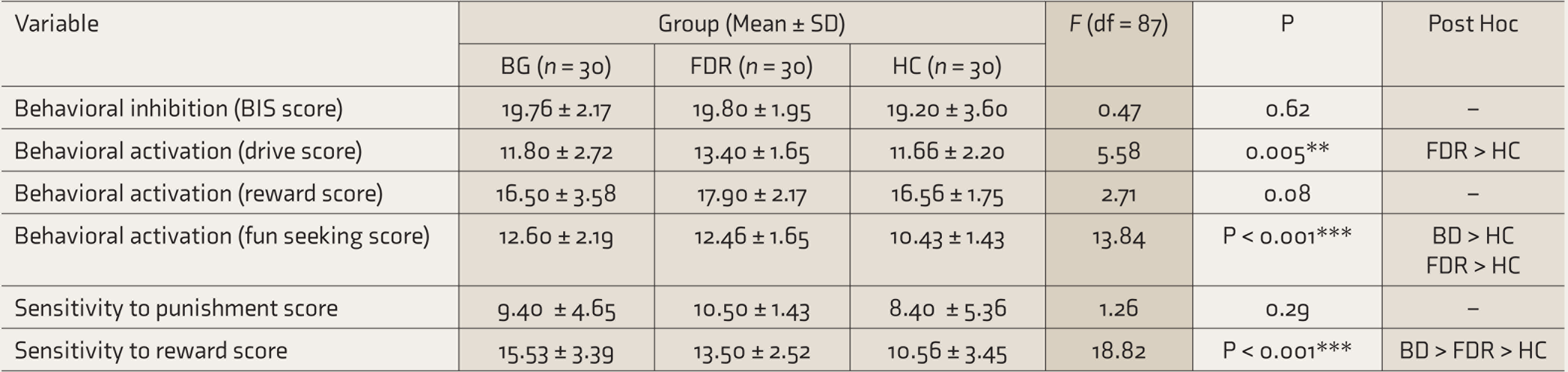
BG: bipolar group, FDR: first-degree relatives, HC: healthy controls. **P < 0.01, ***P < 0.001, Bonferroni correction: P < 0.016.
Appetitive Looming (APL) Cues
The mean RTs of each group were estimated and compared using ANCOVA (Table 3), where the BG’s RT was significantly different from other groups (F = 3.43 and P < 0.05). The RT of BG was higher in comparison to HC on Bonferroni post hoc analysis, while no difference between FDR and HC was noted.
Aversive Looming (AVL) Cues
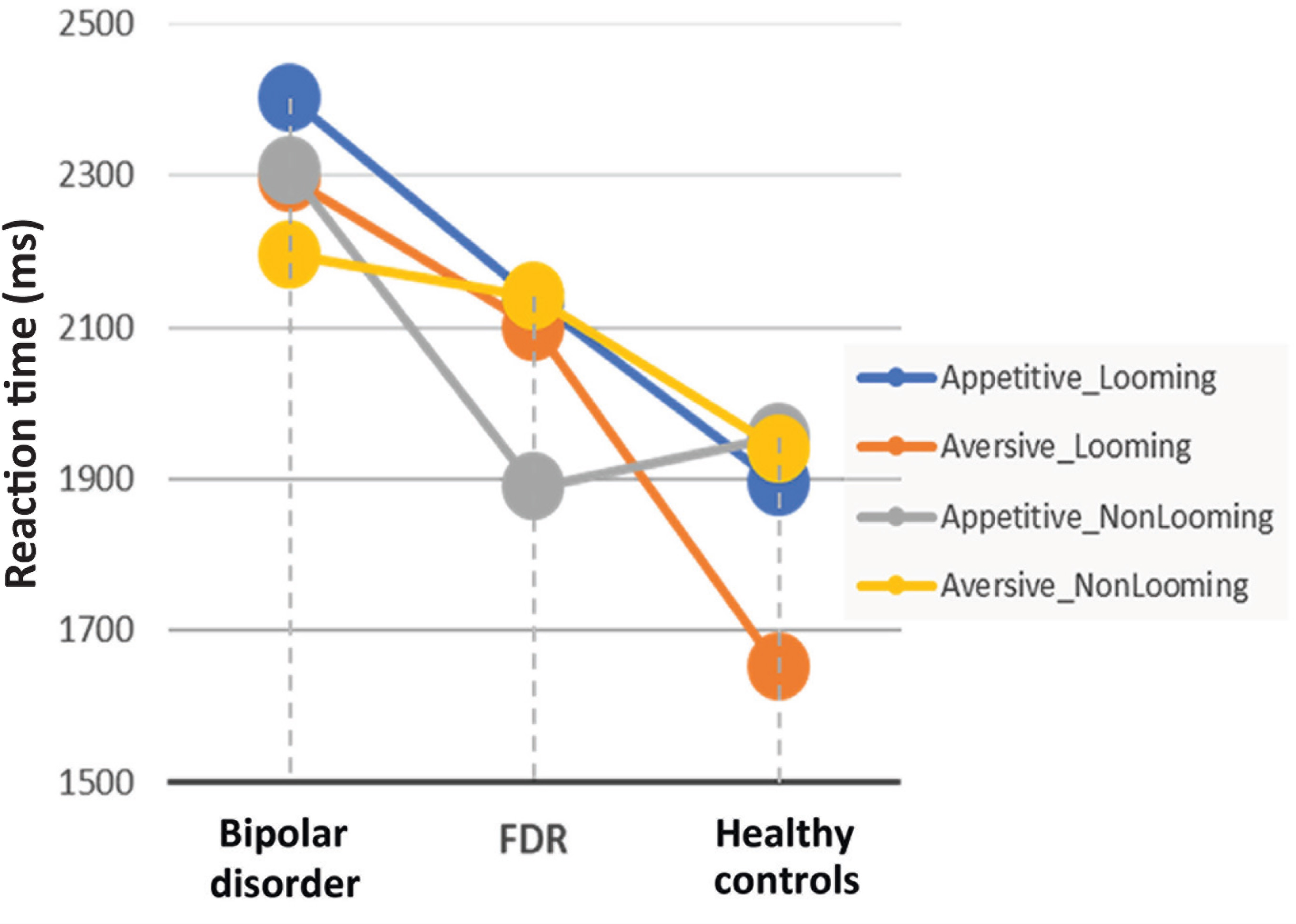
The mean RTs revealed the BG and FDR groups to show a significant difference from HC (F = 6.91 and P < 0.001) (Table 3). The post hoc analyses revealed BG to have significantly higher RT compared to HC, while the FDR group also showed higher RTs in comparison to HC (Figure 2a).
Drop Line Plots of RT Between Groups for Four Different Animated Looming and Nonlooming Cues
Appetitive Nonlooming (APNL) Cues
In this condition, we found a significant difference between BG and the other two groups, with F = 3.38 and P < 0.05 (Table 3). The post hoc analyses showed that BG had significantly higher RTs than FDR and HC (Table 3). Here, no difference between FDR and HC was seen.
Aversive Nonlooming Cues (AVNL)
No significance was found, and no difference between groups on post hoc analyses was noted (Table 3).
Comparison of Reaction Time (Milliseconds) to the Visual Cues
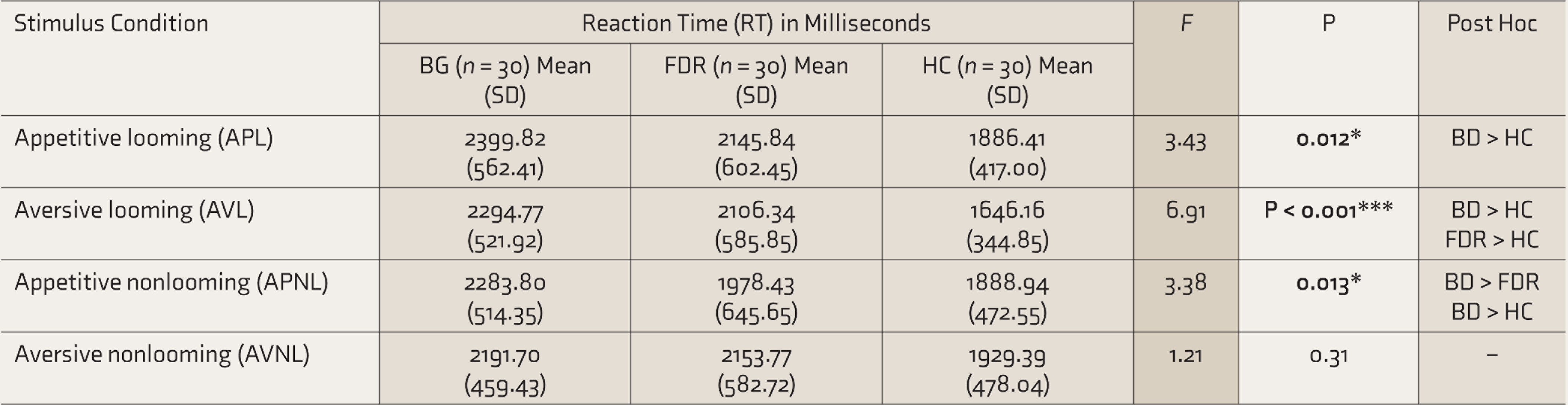
BG: bipolar group, FDR: first-degree relatives, HC: healthy controls (covariates in this model were evaluated at value of age = 33.20, education = 15.58). *P < 0.05, ***P < 0.001, Bonferroni correction: P < 0.016. The bold characters show the statistically significant p values.
Looming Bias
The tendency of misinterpreting nonlooming cues as looming was elicited from the responses as an index to measure looming bias. Thus, the analyses of the number of responses where APNL was responded as APL (appetitive L/NL bias) and the number of responses where AVNL was responded as AVL (aversive L/NL bias) was counted (Figure 2b).
Error Bars for Each Group Depicting Mean Number of Responses Suggesting Looming Bias
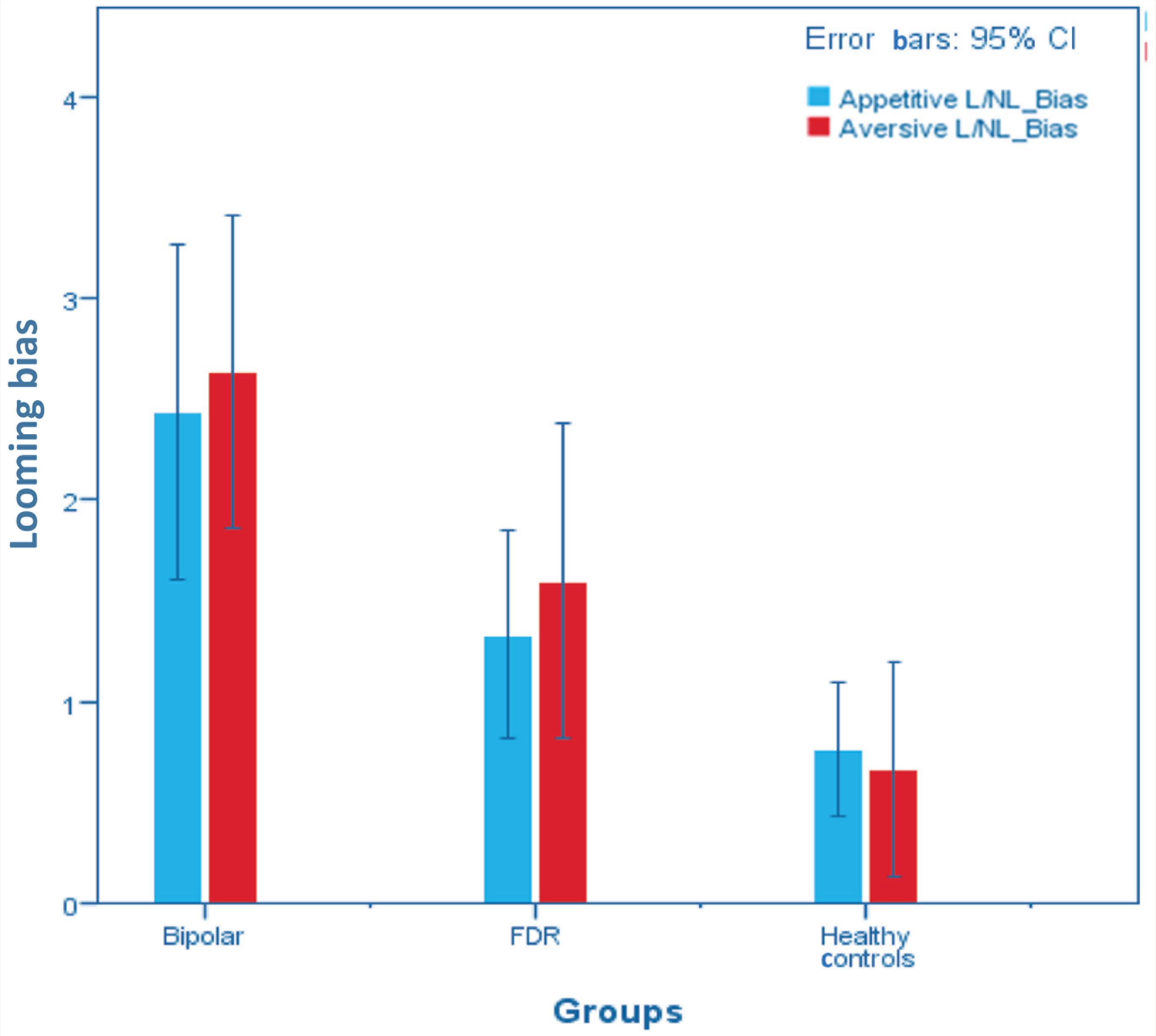
On post hoc analyses, we found BG to have significantly more appetitive L/NL bias compared to both FDR (P = 0.008) and HC (P = 0.001). For aversive L/NL bias, BG was significantly more than HC (P < 0.001). No difference between FDR and HC was found in either of the biases.
Receiver Operating Characteristic Curve
Based on the RTs to the mentioned four affective cues, the ROC curve was plotted, and the AUC was measured for each group. The AUC values were considered only when above 0.70 and classified as fair (0.71–0.80) or good (0.81–0.90). 23 Among the cues, the looming cues (APL, AVL) alone were able to give fair to good AUC, namely in BG (AUC for APL = 0.73; AUC for AVL = 0.72) and HC (AUC for APL = 0.78; AUC for AVL = 0.87). The AUC values in FDRs were less prominent than those in the other groups (AUC for AVL was 0.66 and for the rest of the cues, below 0.5).
Discriminant Functional Analysis
The above measured RTs to four cues (namely, APL, APNL, AVL, AVNL) were taken along with the scores of BIS/BAS and SPSRQ scales together as a composite measure to assess predicted group membership. The values together showed a significant discrimination of the groups (Wilk’s lambda = 0.325; χ2 = 92.62; p <0.001), with a 77.8% correct classification of originally grouped cases. The respective group membership was 73.3% BG, 66.7% FDR, and 93.3% HC.
Discussion
This study attempted to understand reward sensitivity 6 along with the looming vulnerability, 9 which might be a potential measurable trait in the bipolar population, using an optimally designed paradigm. First, some novelty in the study design was warranted so that the study of reward and threat perception could be done using looming stimuli (i.e., prioritize one’s attention and memory for a dynamic stimuli such as looming cues), and this may have been dealt with by using the looming vulnerability model. It was hypothesized that such design may allow eliciting a particular “looming cognitive style” 24 in remitted bipolar population. This unique cognitive style may predispose them to develop significant excitation, anxiety, and depressive states due to abnormal perception of threat and gain present even during euthymia. 6 Moreover, such designs have been studied in the general population and in those with anxiety spectrum disorders, to understand the effect of looming cues in perception and engagement of the defense cascade.24,25
The findings of objective measures of reward and punishment sensitivity using BIS/BAS and SPSRQ scales revealed directive findings in the domains of BAS-fun seeking and SR, which follows the model of elevated reward hypersensitivity 6 and has been reported to be a biological marker of “trait-bipolarity.” 26 The findings further solidify the tendency of increased novelty-seeking/behavioral activation (fun-seeking) exhibited by bipolar subjects even during euthymia.6,13 Here, the scores for SR were significantly different for each group in a pattern of BG > FDR > HC, which points towards a potential area for seeking measurable endophenotypes.
The results of the RT measurements demonstrated a unique predisposition of remitted bipolar subjects towards rewarding/pleasurable cues. Increased response times to appetitive (high arousal/high valence) cues may be due to increased responsiveness to the positive emotional stimuli and activation of the BAS. Highly arousing appetitive cues may tend to capture attention in people with high reward sensitivity, such as the BG.27–30 Interestingly, similar results were also observed in APNL cues. On the contrary, a prolonged RT in the BG was specifically seen only in the looming aversive cues. The nature of this observation points towards a possible freeze-like reaction contributed by the looming condition, as observed in several studies. 31 Earlier studies have demonstrated that passive viewing of threat-related images/films could also potentiate unique autonomic responses. The simultaneous activation of the sympathetic and parasympathetic nervous systems may be responsible for a defensive response to an impending threat, called “freeze-like reaction.” 31
FDR samples showed a tendency towards delayed reactions towards AVL cues, characterized by significantly higher RT as compared to HC. These findings indicate a tendency to increased behavioral inhibition in people vulnerable to mood disorders. 6 This observation, although not decisive enough to point towards signs of bipolarity, still shows a pattern of increased looming vulnerability in FDRs as demonstrated by prolonged RTs while processing AVL threats. 32 Furthermore, a characteristic looming cognitive style to aversive cues even in FDR of bipolar patients further contributes to their vulnerability to freeze-like reactions. 11 We also observed a possible endophenotypic pattern from the line graph of RTs (Figure 2a). It was more pronounced for the looming appetitive/aversive cues as compared to the nonlooming ones. This reflects a unique pattern and requires a more comprehensive exploration.
We analyzed the specific patterns of error in the form of responses where nonlooming cues were wrongly interpreted and responded to as looming, which suggests a possible “looming bias.” Here as well, it was found that BG showed an increased tendency to interpret both APNL and AVNL cues as looming. Looming threats instantly capture primitive brain circuits triggering a defensive response. 33 Thus, looming bias may indirectly hint towards a possible tendency of increased threat or reward sensitivity even during remission. The bar plots also revealed that looming bias increased from HCs to FDRs to BG (Figure 2b). These patterns of reward hypersensitivity and freeze-like reactions in BG and FDR suggest a distinct pattern of looming bias and looming cognitive style occurring more significantly in a population with vulnerability to develop mood disorders. 11
The looming cues (APL and AVL) showed adequate sensitivity and specificity in identifying the BG and HC groups based on their AUC values. However, such findings were not seen in the FDR group, suggesting a lack of reliability in their response patterns to looming cues. A possibility of the wide dispersion in the age of FDRs may have influenced the eventual outcome. Nonetheless, the findings help in understanding the utility of looming affective cues to further segregate the BG from HC.
To further study the effect of affective cues, a discriminant function analysis using the RTs to all cues, along with scores of BIS/BAS and SPSRQ, taken together as composite measures, was done. The results showed a classification figure of 77.8% of the originally grouped classes, which further adds value to the observation of using looming affective cues along with behavioral measures, which helps in further exploration of endophenotypic markers of bipolarity.
The study has several limitations. A major one is the use of psychotropic medications in remitted bipolar patients (maintenance phase prophylaxis), which may alter their processing speed. 34 Evidence also suggests that in bipolar patients, cognitive deficits may occur due to multiple past psychotic episodes . 35 Furthermore, the age groups within the FDRs were significantly dispersed due to the selection of parent–offspring pairs. Future studies should consider unaffected siblings as FDR, to reduce age-related confounding factors. The looming affective cues designed and used in this study are novel for the Indian population and remain to be validated.
Conclusion
Bipolar subjects demonstrate a significantly different and unique style of response to appetitive and looming cues, which determines the possible looming bias even during euthymic periods. The overall results point toward a potential area for further exploration of endophenotypes. Euthymic bipolar patients and their FDRs exhibit a unique cognitive mechanism while reacting to looming arousing stimuli that are directly influenced by altered perception, which may be due to the subsyndromal mood state. Future exploration with these paradigms with more neurophysiological indices could be attempted in search of potential biological markers of bipolarity.
Tribute to Prof. C.R.J. Khess
This research is dedicated to the ever vibrant spirit of our late professor who was a thorough gentleman with a huge heart. He has been a lantern for us all through the dark and testing journey of scientific realms.
Footnotes
Declaration of Conflicting Interests
The authors declared no potential conflicts of interest with respect to the research, authorship, and/or publication of this article.
Funding
The authors received no financial support for the research, authorship, and/or publication of this article.